

From andBeyond’s storied rim palace to Gibb’s Farm’s coffee-scented hills, these are the luxury safari lodges turning Ngorongoro Crater into East Africa’s most spectacular stay.
Few landscapes on earth compress so much wilderness into so small a stage. The Ngorongoro Crater — a collapsed volcanic caldera roughly 260 square kilometres wide, cupping one of Africa’s densest concentrations of wildlife — is the reason most travellers add northern Tanzania to their bucket list in the first place.
Because demand for a room on its rim has always outstripped supply, the luxury safari lodges around Ngorongoro Crater are some of the most coveted addresses in African travel, each competing to frame the same impossible view of near-vertical walls dropping 600 metres to a floor patrolled by lion, elephant and the crater’s famous black rhino.

Formed some two to three million years ago when a vast volcano collapsed in on itself, the crater is now a self-contained ecosystem that keeps most of its resident wildlife within its walls year-round, rather than migrating with the rains as herds do on the open Serengeti. That permanence is what makes a stay here so reliable: unlike migration-dependent safaris elsewhere in Tanzania, a night at one of Ngorongoro Crater’s luxury lodges all but guarantees a full descent into the caldera and a genuine shot at the Big Five in a single, unhurried day.
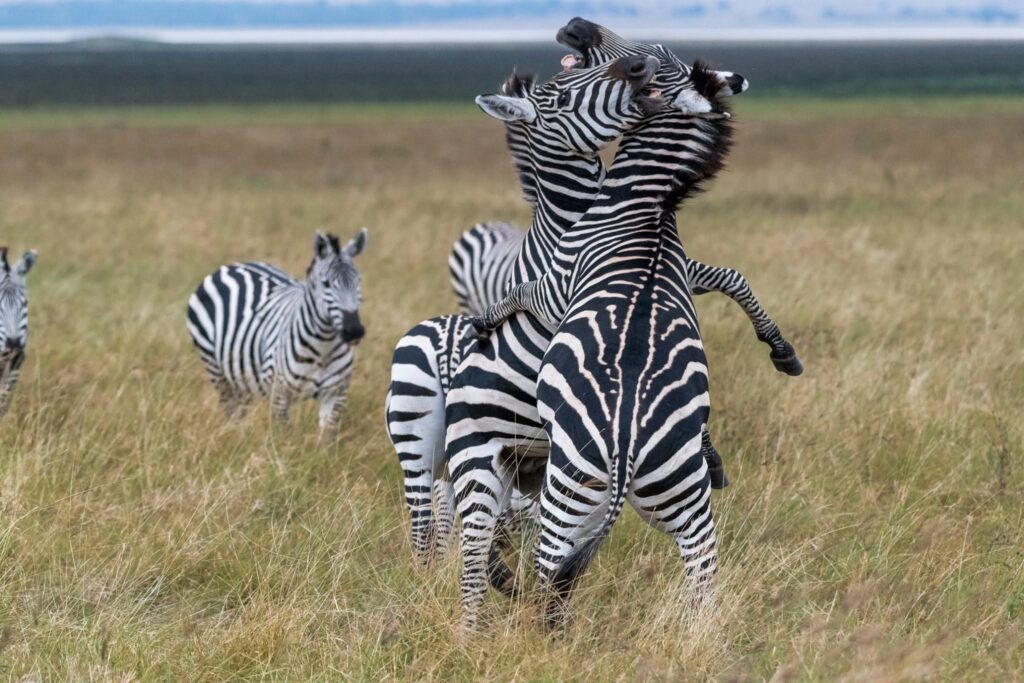
The properties ringing the rim range from opulent, chandelier-lit palaces to bare-bones- buried in cloud forest, and no two occupy quite the same stretch of crater edge. As a big fan of the Crater, these are my favourite lodges and camps and the ones I’d suggest are most worth booking for a genuine once-in-a-lifetime night above one of the world’s great natural theatres.
Here are the finest luxury safari lodges and camps on and around the Ngorongoro Crater.
&Beyond Ngorongoro Crater Lodge

Few properties anywhere in Africa are as theatrical as &Beyond Ngorongoro Crater Lodge, the three-camp compound perched directly on the crater’s rim that its owners describe, only half-jokingly, as “Maasai meets Versailles.”
Thirty hand-built suites of mud, thatch and reclaimed timber are dressed in beaded chandeliers, gilt-framed antiques and chandelier-lit marble bathtubs — a deliberately over-the-top counterpoint to the raw wilderness beyond the floor-to-ceiling windows.
Each of the three camps has its own dining room, sitting area and viewing deck, and every suite comes with a personal butler for bedside tea, drawn baths and turned-down beds.
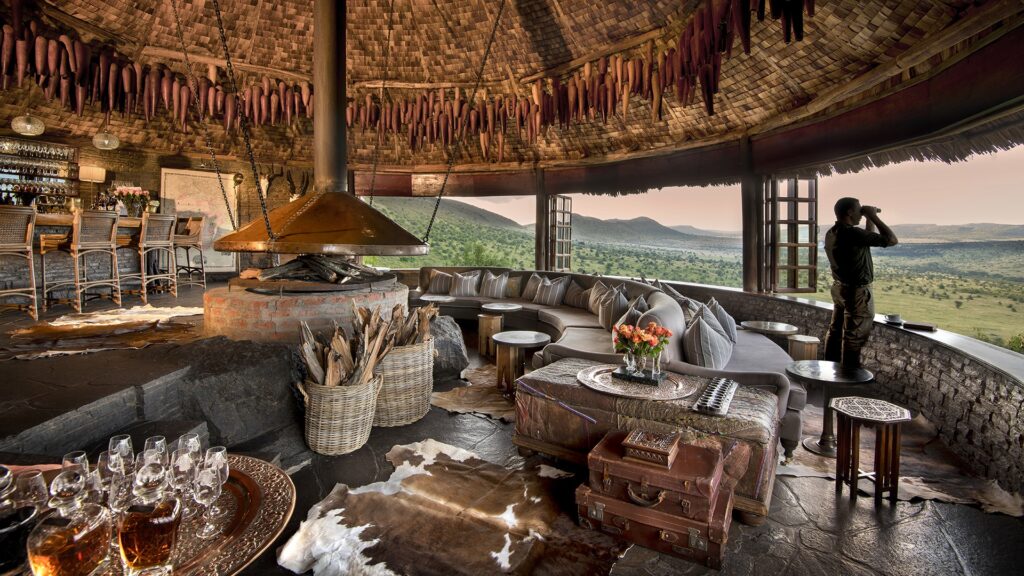
The lodge is currently closed for a full renovation, with a reopening scheduled for January 2027 — reason enough to start planning a stay for its next chapter now.
Insider’s Tip: Book early once the calendar opens — demand for the rim’s most storied address has never really cooled, renovation or not.
Ngorongoro Lodge, Member of Meliá Collection
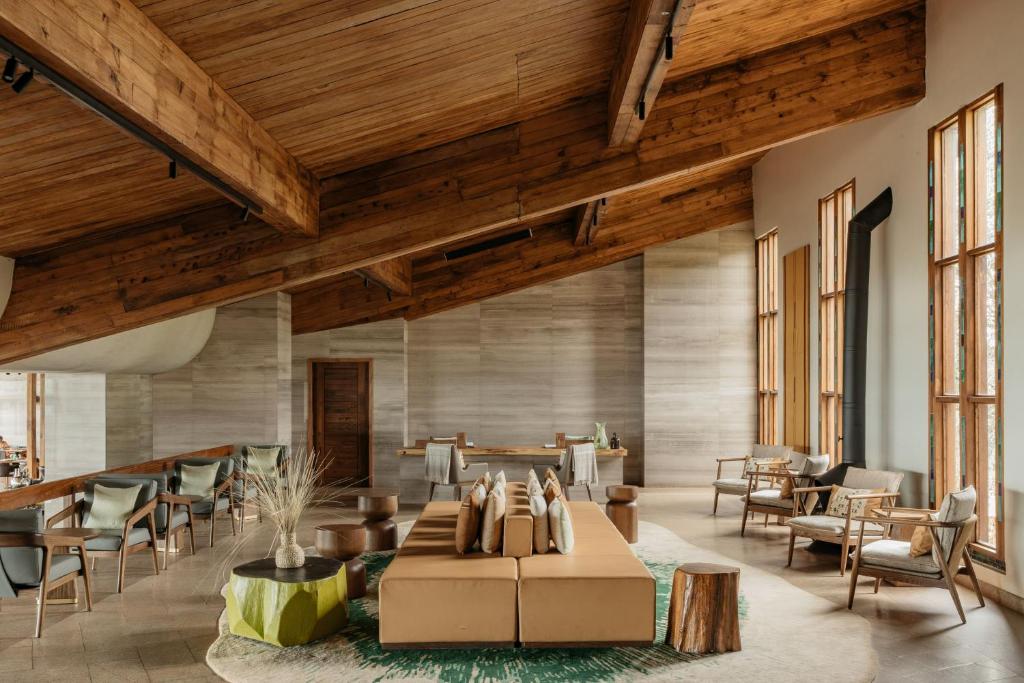
One of the newest arrivals on the crater rim, Ngorongoro Lodge — a member of the Meliá Collection and part of The Leading Hotels of the World — brings big-hotel polish to a setting long dominated by intimate tented camps.
Sixteen room categories run from compact Rim Rooms to the sprawling 400-square-metre Ngorongoro House villa, all finished in Maasai-inspired décor, natural stone and warm timber (although we’re partial to the Ngorongoro Suite with its two king-size beds and private terrace).
Guests can also choose between a heated pool, an infinity pool and a further outdoor pool, three distinct dining venues — including the African-Asian fusion Crater Lounge — and a spa built around Tanzanian beauty products.
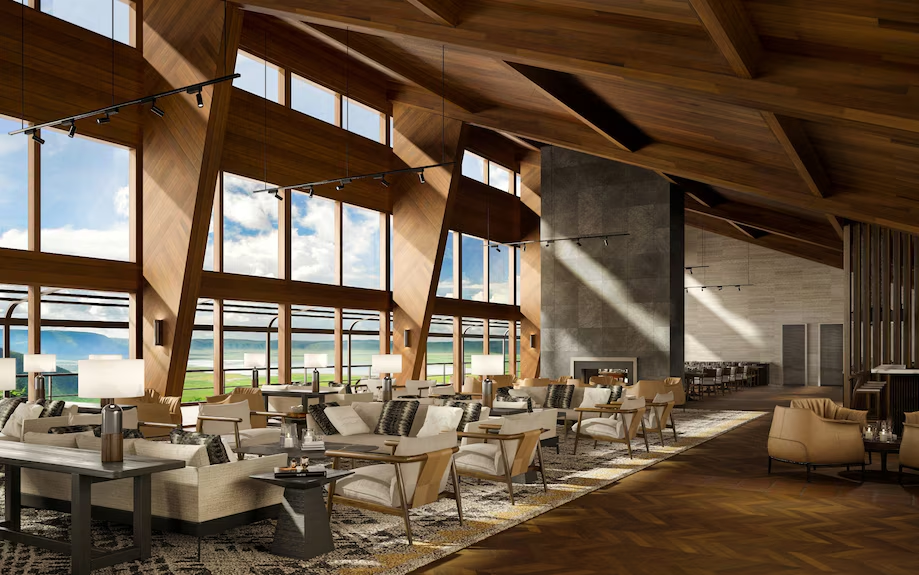
For travellers who want five-star consistency and a genuine choice of room type without sacrificing crater-rim proximity, this is the pick.
Insider’s Tip: Request a Presidential or Royal Suite category if travelling as a family — the interconnecting configurations are rare on this stretch of rim.
Elewana The Manor at Ngorongoro

Set among one of East Africa’s oldest coffee plantations just outside the Ngorongoro Conservation Area, Elewana The Manor at Ngorongoro trades crater-edge drama for the languid charm of a Cape Dutch farmhouse.
Its 18 rooms and suites, plus one family cottage, are furnished with fireplaces, sitting rooms and deep Victorian bathtubs, scattered across manicured grounds framed by coffee bushes and jacaranda.

A working stable means horseback rides through the plantation are as much a signature here as the game drives, and the kitchen leans heavily on produce grown on the estate.
It’s the most romantic base on this list, making it better suited to travellers building in a day or two of downtime than those chasing back-to-back crater descents.
Insider’s Tip: Arrange a private lunch inside the crater itself — The Manor is one of the few properties that can lay on a table on the caldera floor.
The Highlands Lodge

For travellers who find the main crater rim too crowded, The Highlands (my personal favourite) trades the obvious view for altitude and originality.
Eight perspex-and-canvas geodesic domes are scattered through cloud forest on the slopes of Olmoti, a smaller, little-visited volcanic crater about an hour from Ngorongoro itself, with each suite warmed by a wood-burning stove against the chill of high elevation. A central dome houses the lounge and dining room, alongside a small spa with sauna — the perfect antidote to frosty evening.
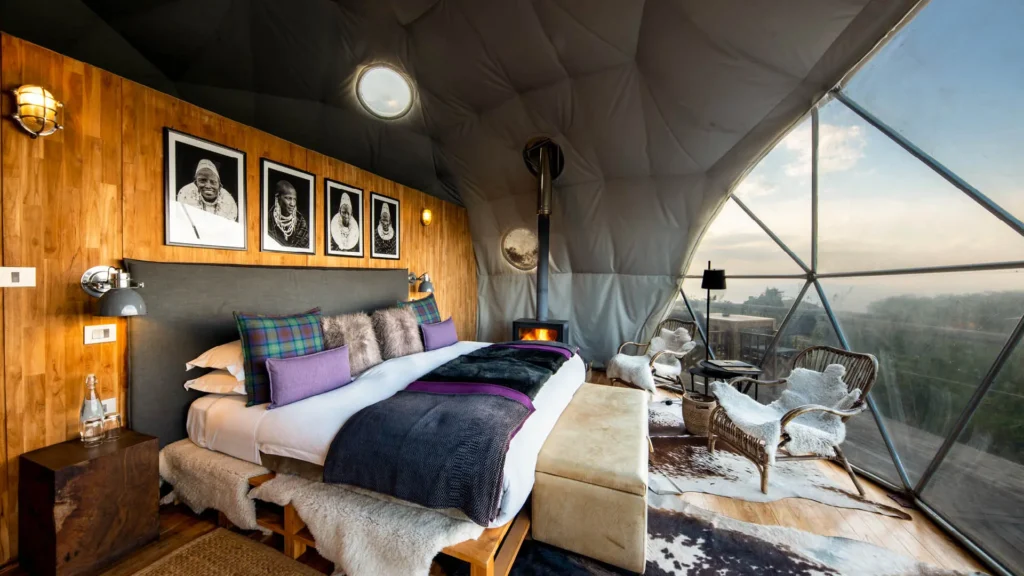
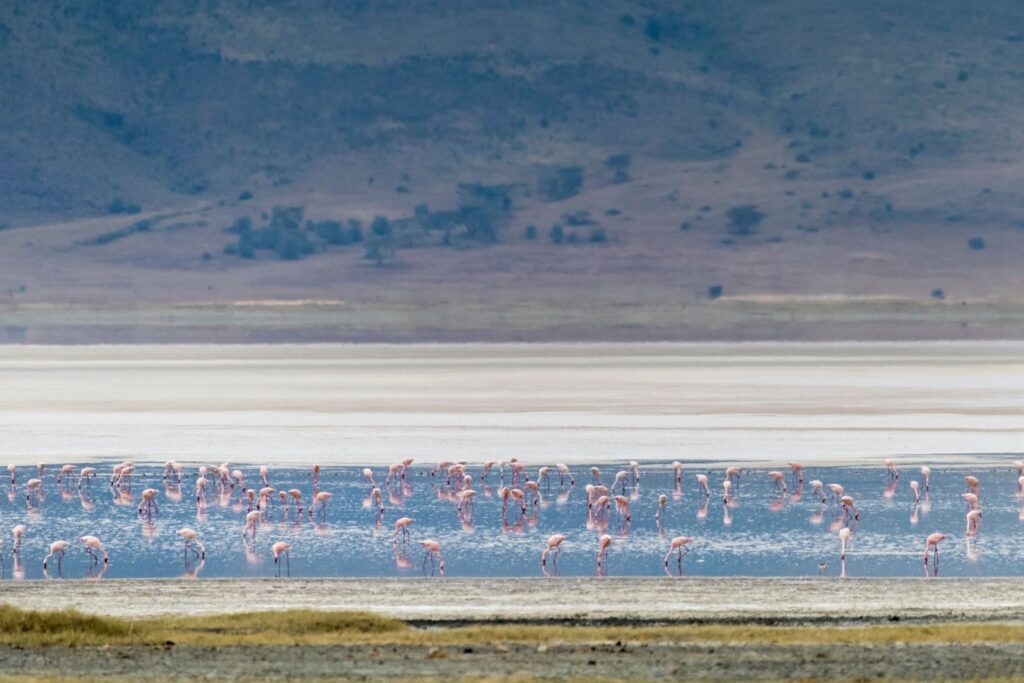
Days here mix a full Ngorongoro Crater game drive with hikes into Olmoti and Empakaai craters, the latter home to thousands of flamingos, and visits to neighbouring Maasai communities.
Insider’s Tip: Pack warm layers as nights on Olmoti’s forested slopes are markedly colder than the crater floor below.
Lemala Osonjoi Lodge

On the quieter eastern rim near the Lemala Gate, Lemala Osonjoi Lodge takes its name from the osonjoi tree, prized by the Maasai for its medicinal and symbolic value — a fitting emblem for a lodge built to blend into its forest surroundings rather than dominate them.
Its 20 contemporary suites, including two family-friendly two-bedroom units, are wrapped in glass to pull in maximum light and crater views, while the lounge, bar and a rare indoor heated pool make for a sincerely comfortable retreat after an early crater descent.

The eastern rim sees noticeably lighter traffic than the busier western entrances, and Osonjoi can arrange full catered lunches down on the crater floor for guests who want to linger.
Insider’s Tip: Ask for a 6 am game-drive departure — Osonjoi’s proximity to Lemala Gate gets you onto the crater floor well ahead of the tour-group convoys.
Entamanu Ngorongoro

Occupying the remote northwestern rim, deep in Maasai country and a genuine distance from the crater’s more visited gates, Entamanu Ngorongoro is the choice for travellers who want the drama of the caldera without the crowds.
Its cottage-style rooms sit raised on wooden platforms, built almost entirely from removable glass, canvas and timber so the surrounding forest and crater views are never obscured, with interiors drawing on Maasai design worked by local artisans.
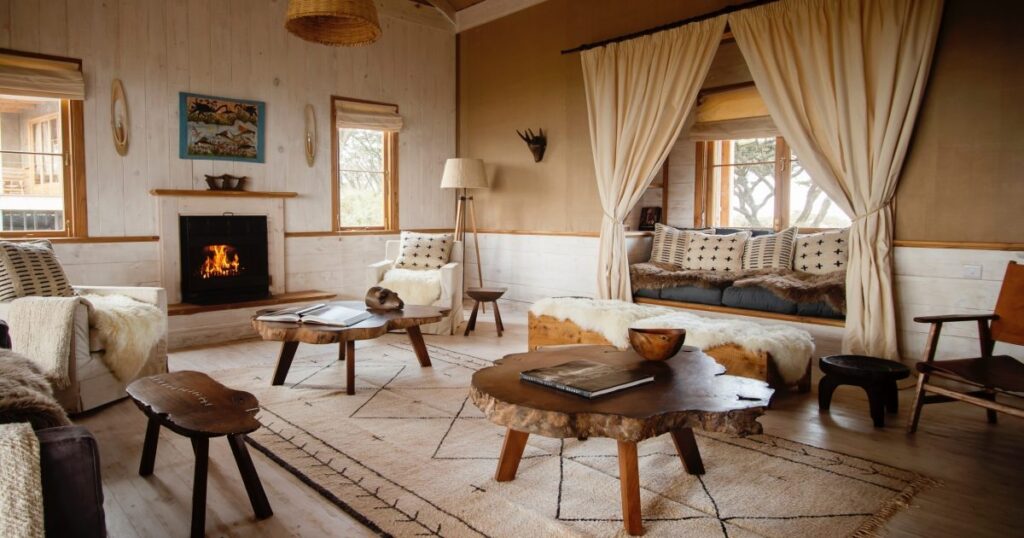
From camp, views swing from the crater floor on one side to the Serengeti’s plains on the other — and giraffe, absent from the caldera itself, are a regular sight on the highland approach.
Entamanu partners closely with its Maasai neighbours, and access to the historic “Wishing Tree” and nearby bomas feels unusually genuine rather than staged.
Insider’s Tip: Add a rim walking safari before or after your crater descent — this stretch is one of the few where it’s genuinely permitted.
Gibb’s Farm
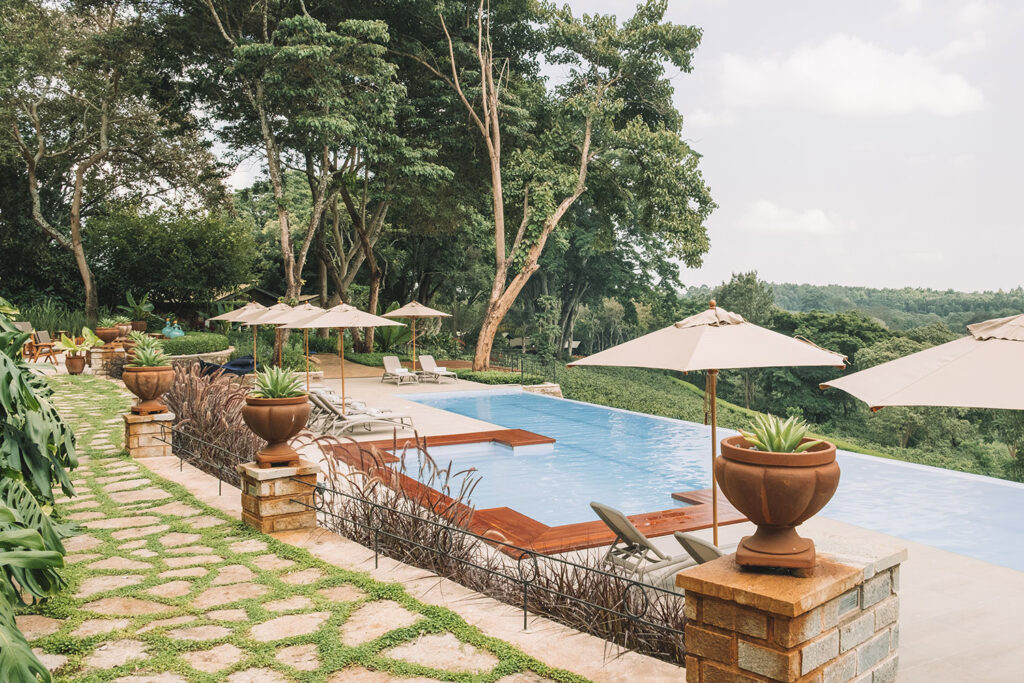
On the outer slopes above Karatu, overlooking the Great Rift Valley, Gibb’s Farm has welcomed guests to its working coffee estate since the 1920s, making it the most storied address on this list and one of only a handful of Relais & Châteaux properties in East Africa.
Its farm cottages and houses — recently refurbished, each themed around a different corner of East Africa — sit among vegetable gardens and coffee bushes that supply the kitchen’s authentic farm-to-table cooking, among the most consistently praised in the region.
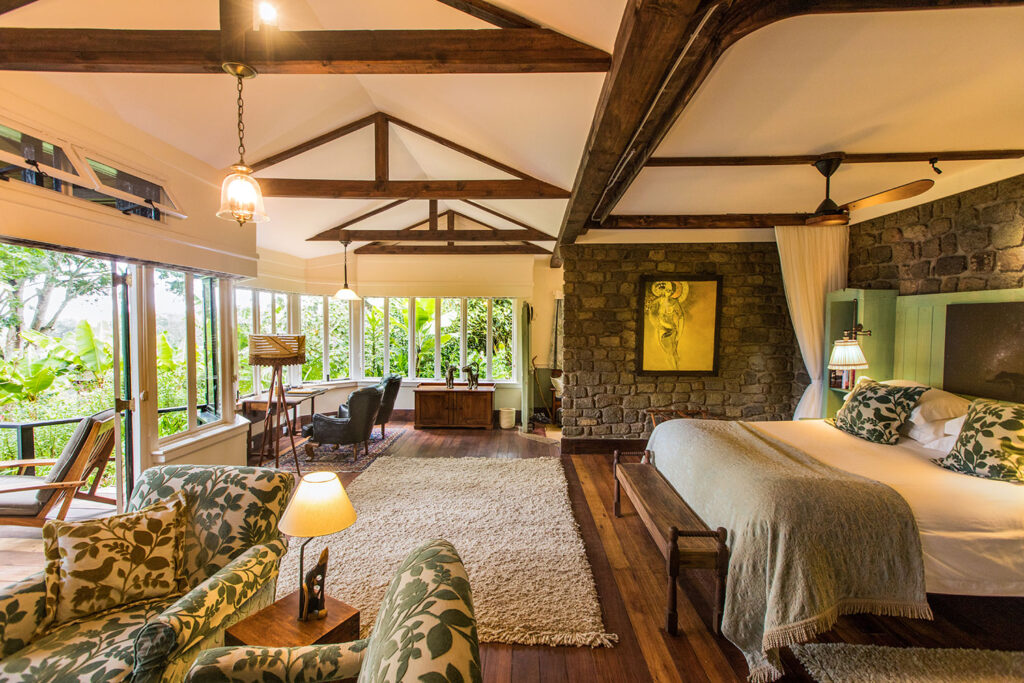
A spa, guided farm walks and milking sessions round out a stay built as much around slowing down as around the crater itself.
Insider’s Tip: Build in a free morning to walk the coffee route from cherry to cup — it’s one of the best low-key experiences in the whole Ngorongoro area.
Ngorongoro Crater Safari: Your Questions Answered
Planning a trip to the Ngorongoro Crater? Here are quick, practical answers to the questions travellers ask most before booking a luxury safari lodge stay.
How much does it cost to stay at a luxury lodge on the Ngorongoro Crater rim?
Expect rates from around US$700–900 per person, per night at more accessible properties such as Lemala Osonjoi or The Highlands, rising well past US$1,500–2,000 per person, per night at the most exclusive rim addresses during peak season (July–September and the Christmas/New Year period). Rates typically include full board, two daily game drives and park fees. However, it’s always best to confirm exactly what’s covered before booking.
How do you get to the Ngorongoro Crater?
Most visitors fly into Kilimanjaro International Airport (JRO) or Arusha, then transfer by road — roughly 3.5 to 4.5 hours — or by light aircraft to an airstrip near the crater rim, depending on the lodge. Many itineraries include a stop at Lake Manyara or Tarangire National Park along the way.

Do you need a visa to visit Tanzania for a Ngorongoro Crater safari?
While most nationalities require a Tanzania visa, obtainable in advance through the official e-visa portal or on arrival at major airports, citizens of Brunei, Hong Kong, Malaysia, Macao, and Singapore can visit visa-free. Visa requirements and fees change periodically, so check the current rules for your passport well before departure.
What wildlife can you see inside the Ngorongoro Crater?
The crater floor holds an estimated 25,000 to 30,000 large mammals year-round, including one of East Africa’s best chances of spotting endangered black rhino, alongside lion, elephant, hippo, hyena, buffalo and vast herds of wildebeest, zebra and gazelle drawn to the caldera’s permanent water and grazing.

How many days should you spend at Ngorongoro Crater?
I’d suggest that one night is enough to complete a full crater floor descent, but two nights allow a second game drive at a different time of day — early-morning light on the crater floor is exceptional — plus time to properly enjoy the lodge itself, worthwhile given how far most rim properties sit from anywhere else.
Is Ngorongoro Crater a good safari destination for families?
Yes. Several properties on this list, including Ngorongoro Lodge Meliá Collection, Lemala Osonjoi and Elewana The Manor, offer interconnecting or two-bedroom family suites, and the single-day crater descent format — rather than multi-day walking or fly-camping — tends to suit younger children well.

When is the best time to visit the Ngorongoro Crater?
The crater is a genuine year-round destination, since its wildlife doesn’t migrate out with the rains, but the June–October dry season offers the clearest game viewing and driving conditions. The short rains of November and long rains of March–May bring greener scenery, fewer vehicles and lower rates for travellers happy to trade a little certainty for better value.
For more on planning a wider northern Tanzania trip, see our companion guides to luxury African safaris, the best luxury lodges in the Serengeti, Chobe, Namibia and the Okavango Delta, our favourite safari destinations in South Africa, the best safari cruises on the Chobe and Zambezi rivers, our safari photography tips and how to pack for your safari adventures.