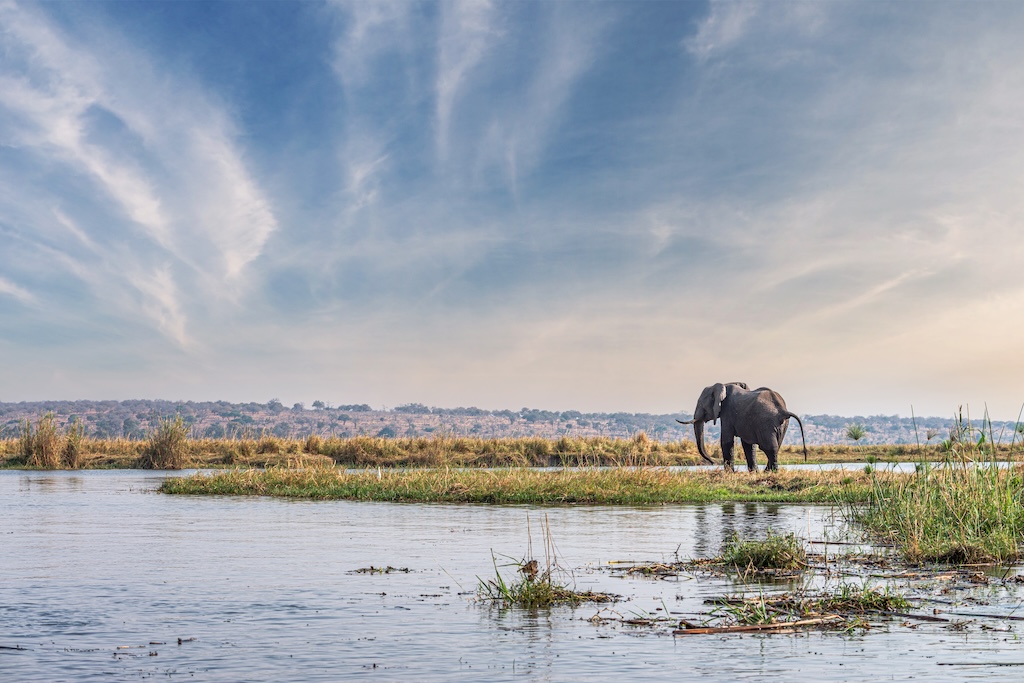

Home to Africa’s largest elephant population, Chobe National Park pairs dramatic riverside wildlife encounters with some of Botswana’s most understated, yet exceptional, luxury safari camps.
Few places on earth stop you in your tracks quite like Chobe. Home to Africa’s largest elephant population — up to 120,000 individuals — and a landscape that ranges from lush riverine forest to the legendary predator plains of the Savuti Marsh, Botswana’s first national park remains one of the continent’s most viscerally thrilling safari destinations.
An Eden For Elephants
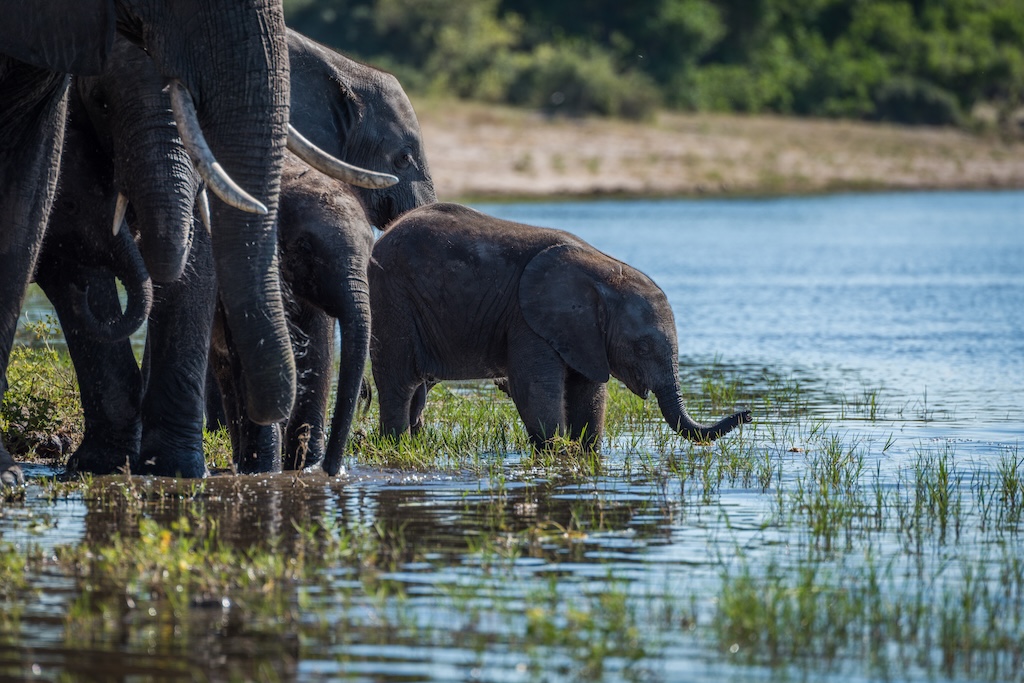
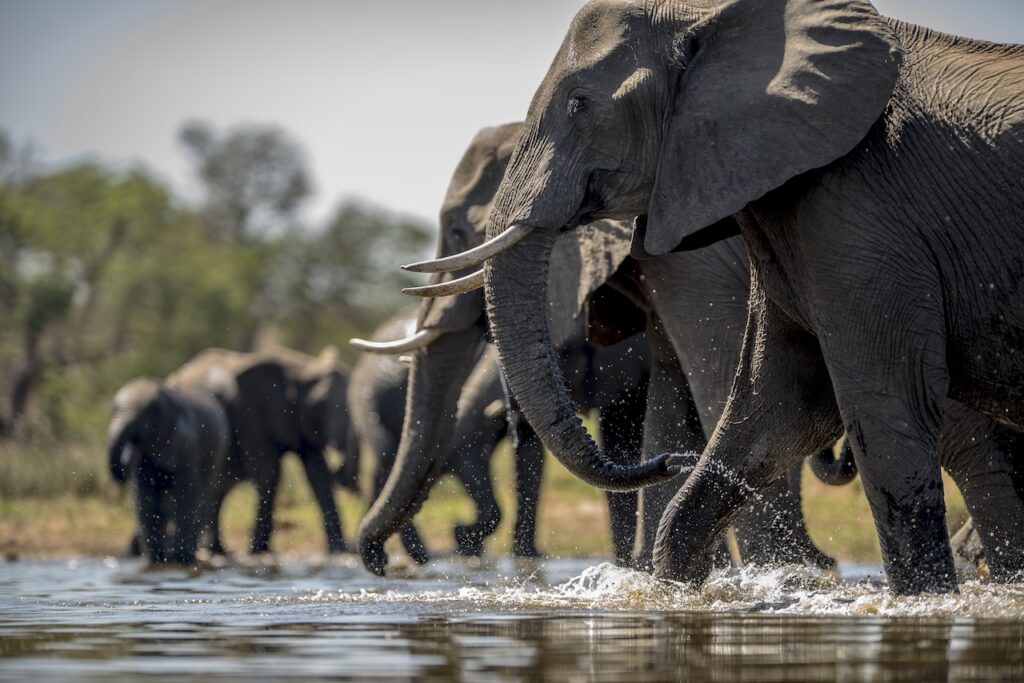
I can tell you from personal experience, the numbers are almost impossible to absorb. Chobe National Park, in the far north of Botswana, is home to between 50,000 and 120,000 elephants. This represents the largest concentration of savannah elephants anywhere on earth, in a park of 11,700 square kilometres where the wildlife gatherings along the Chobe River deliver one of the great unscripted spectacles of the natural world.
On a single afternoon game drive along the riverfront, it’s possible to encounter hundreds of elephants moving to the water in overlapping herds, some small family groups of a dozen individuals, others massing in the hundreds, the calves splashing in the shallows while the matriarchs survey the opposite bank with the calm authority of long experience. It’s a scene of extraordinary scale. Africa, operating at full volume.
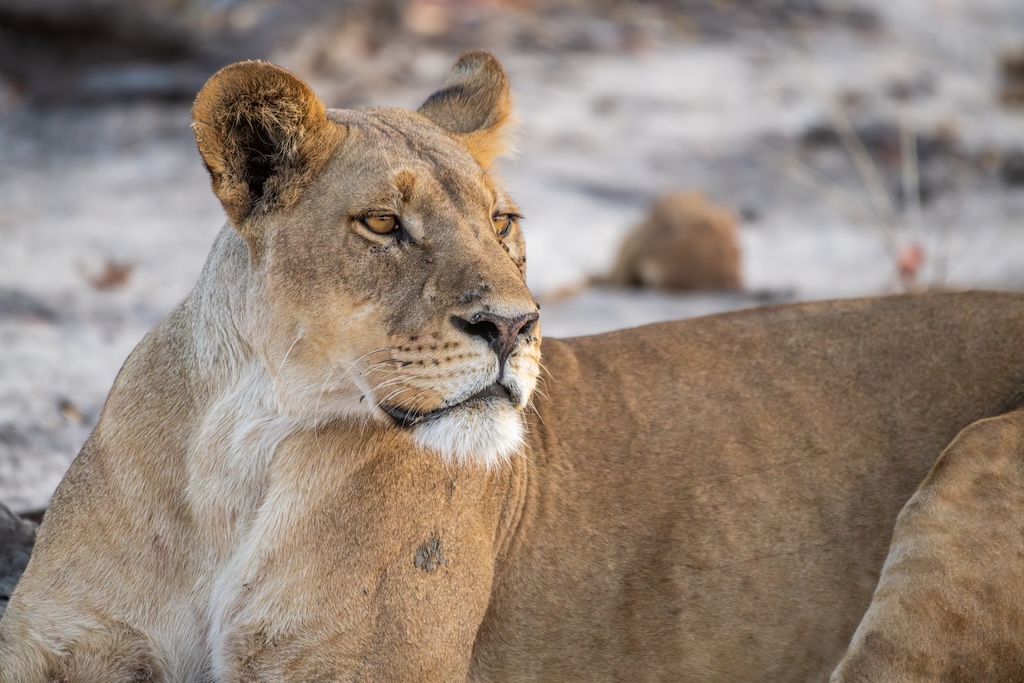
But Chobe is considerably more than elephants. Botswana’s first national park — established in 1967 and covering terrain that ranges from lush riverine forest and papyrus-lined channels to the sweeping open grasslands of the Savuti Marsh and the remote acacia woodland of the Linyanti — delivers four distinct safari ecosystems within a single protected area.
Its position in northern Botswana, where the country’s borders converge with Zimbabwe, Namibia, and Zambia in a remarkable four-nation ecological corridor, makes it one of the most accessible safari destinations in southern Africa, particularly for travellers combining it with Victoria Falls (ninety minutes by road or a short light aircraft transfer) or the Okavango Delta to the southwest.
An Environment of Extremes
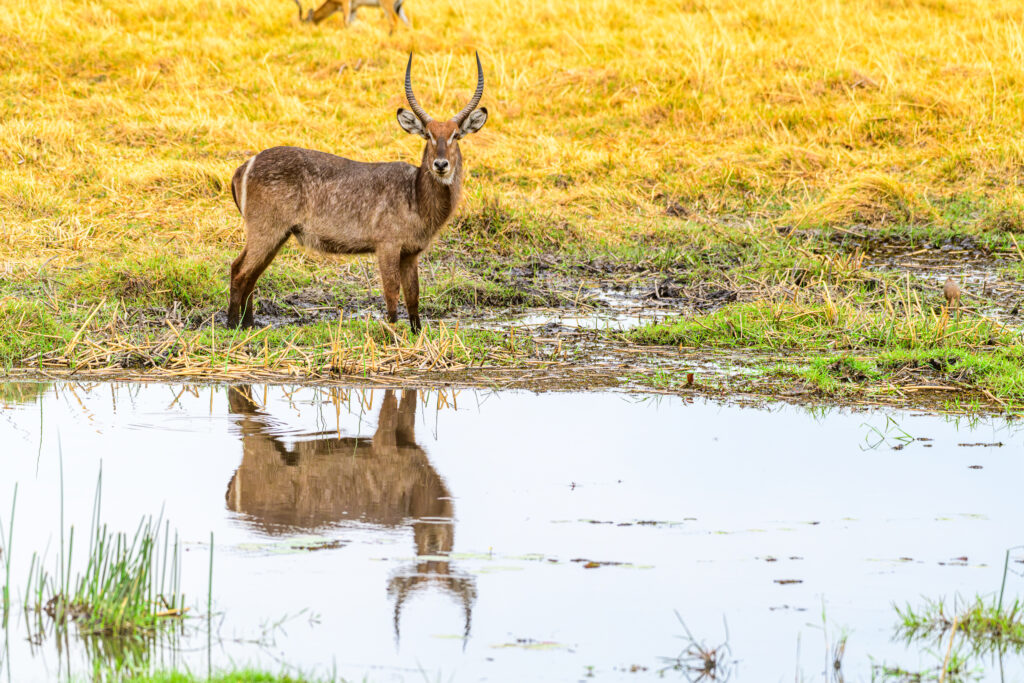
The park divides into four distinct areas, each offering a fundamentally different safari experience. The Chobe Riverfront — the park’s most visited and most dramatically productive stretch — extends along the northern boundary from Kasane westward, where the Chobe River draws wildlife from across the surrounding woodland in a daily pageant of density and drama.
Meanwhile, the Savuti Marsh in the west is a landscape of geological eccentricity: fed by the capricious Savute Channel, which has dried up and flowed again at unpredictable intervals throughout recorded history, it’s a classic predator landscape, renowned for lion prides that have developed the extraordinary behaviour of hunting elephants, and for equally exceptional leopard, cheetah, and African wild dog sightings.
The Linyanti in the northwest is the park’s most remote and exclusive quadrant, a wilderness of marshes, floodplains, and dry woodland that supports exceptional concentrations of wildlife in a near-total absence of other visitors. Finally, the hinterland between these areas — the vast Chobe Forest Reserve and the Mababe Depression — completes a park of rare ecological diversity.
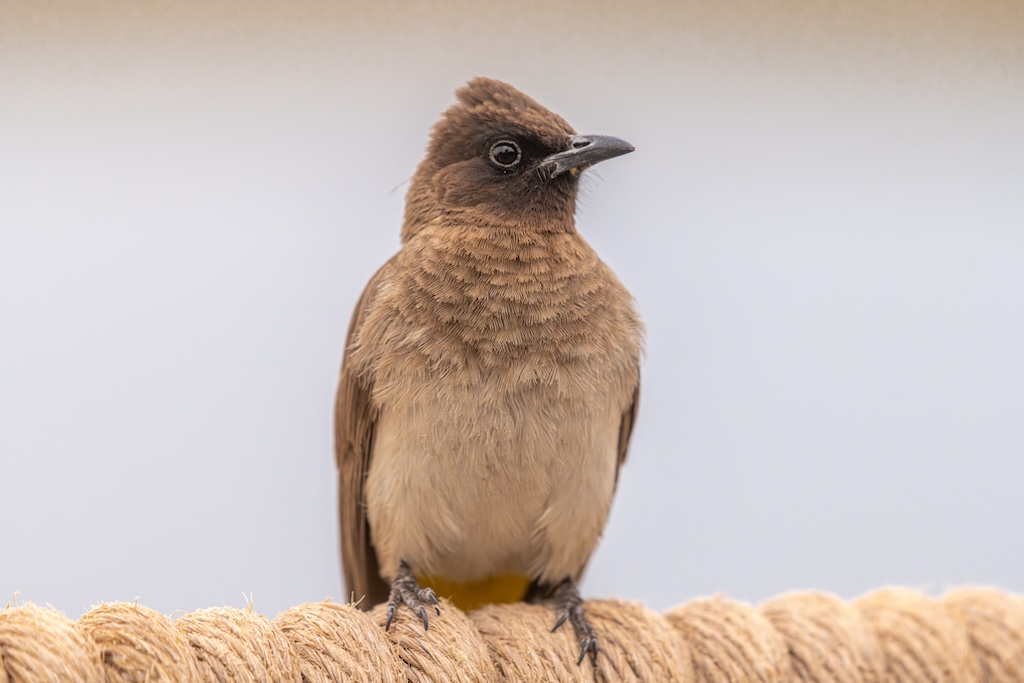
The Chobe Riverfront supports the most accessible luxury lodge network in Botswana, within easy reach of Kasane International Airport and, for those combining Botswana with Zimbabwe, a short transfer from Kasane’s border crossing or a forty-five-minute flight from Victoria Falls. The lodges here are among the most diverse in Africa, ranging from intimate tented camps on exclusive private concessions to hilltop properties with panoramic views across the floodplains that redefine what a Botswana sunset can look like.
Here are the finest luxury camps and lodges across Chobe’s extraordinary range.
The Chobe Riverfront
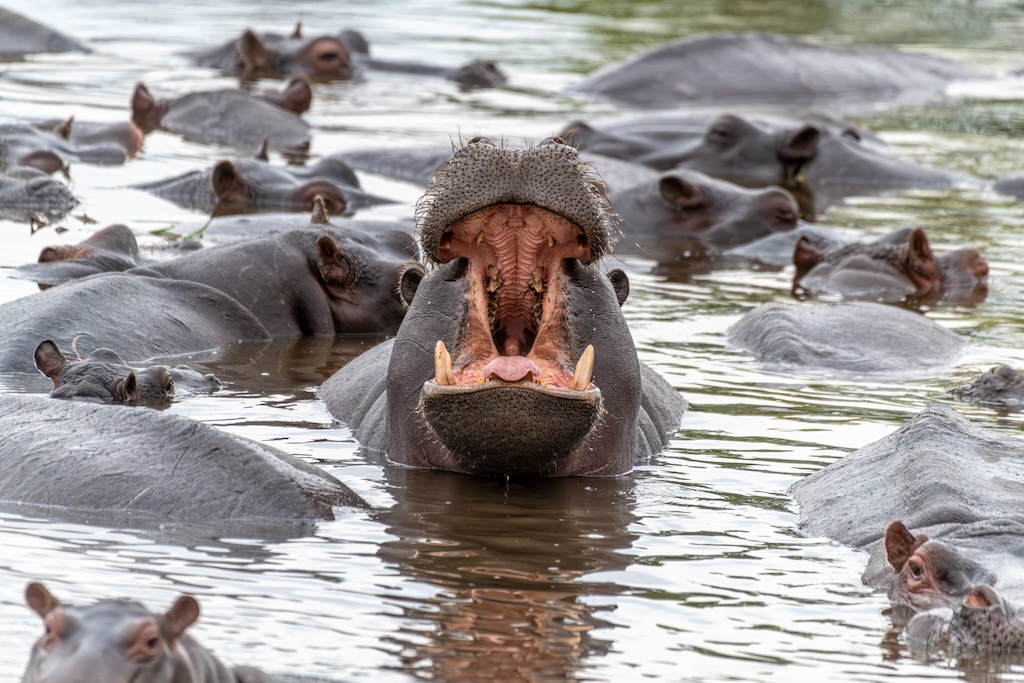
Stretching along northern Botswana, the Chobe Riverfront draws elephant herds, buffalo, lions and hippos to its floodplains daily, forming one of Africa’s richest wildlife corridors.
Chobe Game Lodge
Inside the Park, Five-Star Credentials
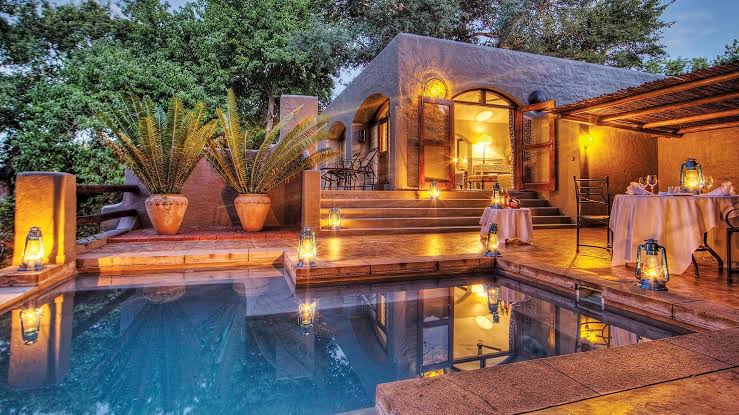
The only five-star lodge, which is owned and operated by Desert & Delta Safaris, situated inside the national park boundaries along the riverfront, Chobe Game Lodge occupies a stretch of prime real estate directly on the Chobe River within Kasane that no other property can match. Its eco-credentials are well established (you can even take a solar-powered game drive) and its all-female guiding team, one of Africa’s longest-running conservation-focused tourism initiatives, provides an added dimension of purpose to a property already distinguished by its position.
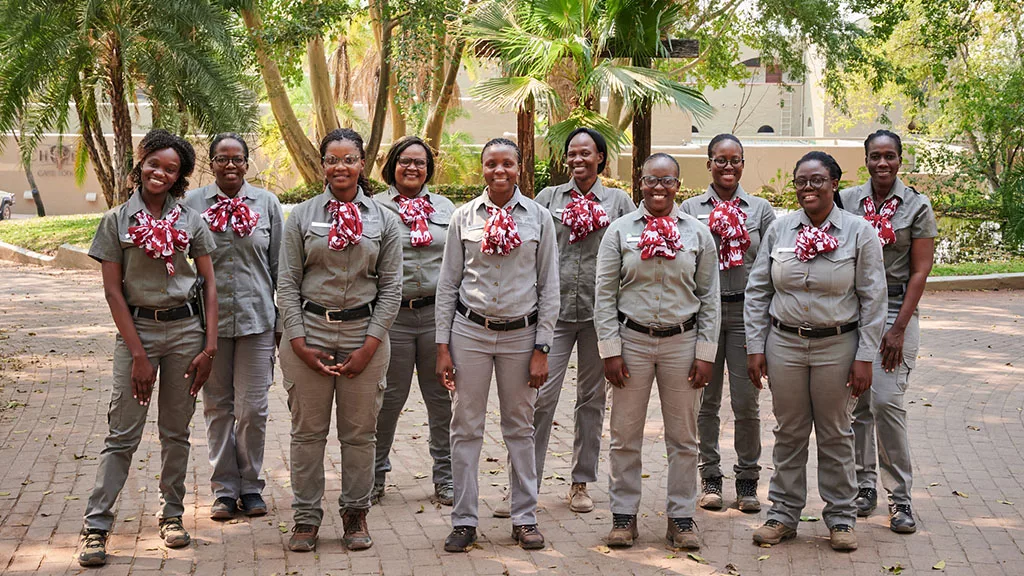
Thirty-seven rooms spread along the river provide the full safari hotel experience: a swimming pool overlooking the floodplain, a spa, multiple dining areas, and the constant spectacle of wildlife at the water’s edge from every vantage point. For those who want direct park access combined with the infrastructure and consistency of a full-service lodge, Chobe Game Lodge remains the benchmark address on the riverfront.
Chobe Chilwero Lodge
Hilltop Luxury Above the Floodplains
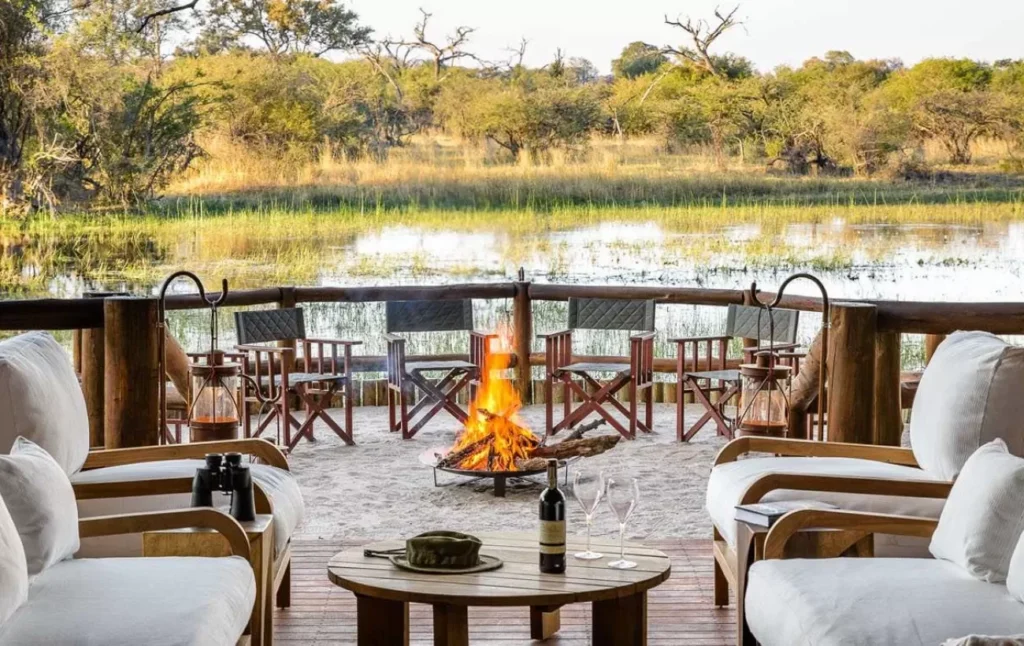
Perched on a rocky hill above the Chobe River just outside the park boundary near Kasane, Chobe Chilwero Lodge, an A&K Sanctuary, delivers a panoramic perspective on the landscape that the river-level lodges cannot replicate. Fifteen thatched cottages — each spacious and meticulously furnished, with large freestanding baths, indoor and outdoor showers, sitting areas, and air conditioning — look down across sweeping views of the Chobe floodplains and the river beyond, creating a sense of elevated grandeur that suits those who want luxury as well as wilderness immersion.
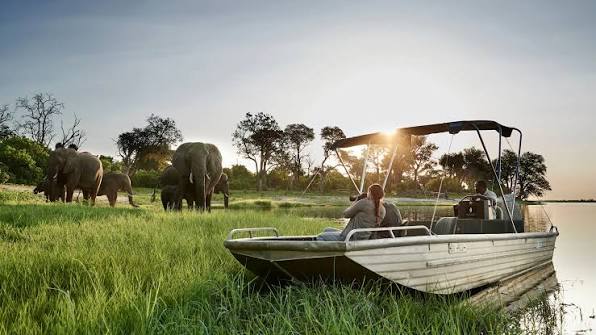
A split-level swimming pool, a spa with treetop treatment rooms, a library, and a level of culinary ambition that has made the lodge’s kitchen one of the most praised on the Botswana circuit complete one of the park’s most compelling propositions. Prepare yourself for game drives and sunset boat cruises on dedicated motorised river craft, part of a full activity programme tailored to the individual preferences of each guest.
Ngoma Safari Lodge
The Quieter Riverfront Revealed
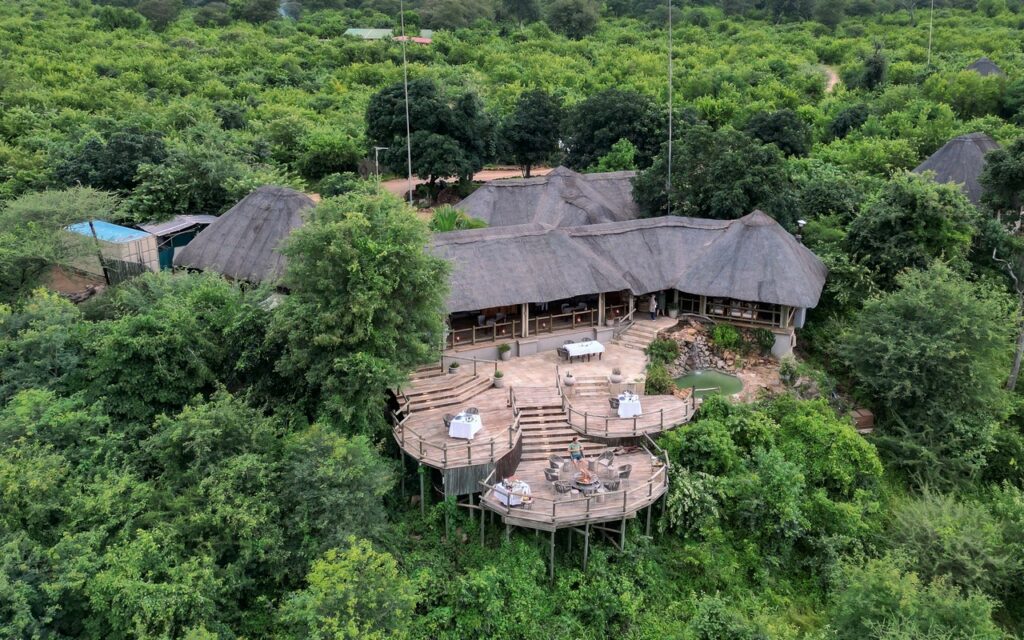
Fifty-five kilometres from Kasane in the Chobe Forest Reserve — the quieter, less-visited western section of the park’s riverfront area — Ngoma Safari Lodge sits on an elevated rocky outcrop with 180-degree views across the Chobe floodplains and beyond.
Built into the natural hillside with a design that uses stone, thatch, and timber to blend the structure into the escarpment rather than impose upon it, Ngoma’s 12 luxury suites with private plunge pools offer the most architecturally considered experience on the riverfront (and the most private). Recently reopened after a refurbishment, Ngoma features enhanced interiors that build on a lodge already widely regarded as the finest in its segment.
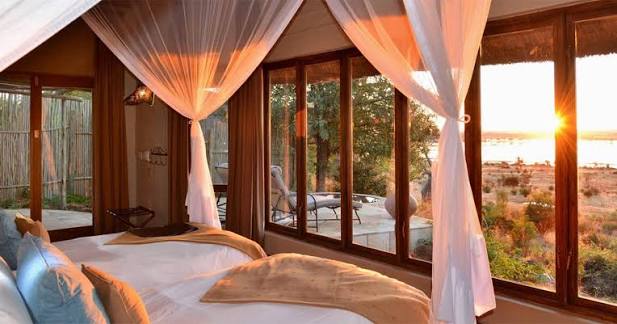
Its position in the Chobe Forest Reserve — where game-viewing vehicles from Kasane do not penetrate — creates an exclusivity of experience that the more accessible riverfront lodges, for all their quality, cannot replicate.
&Beyond Chobe Under Canvas
The Mobile Riverfront Experience
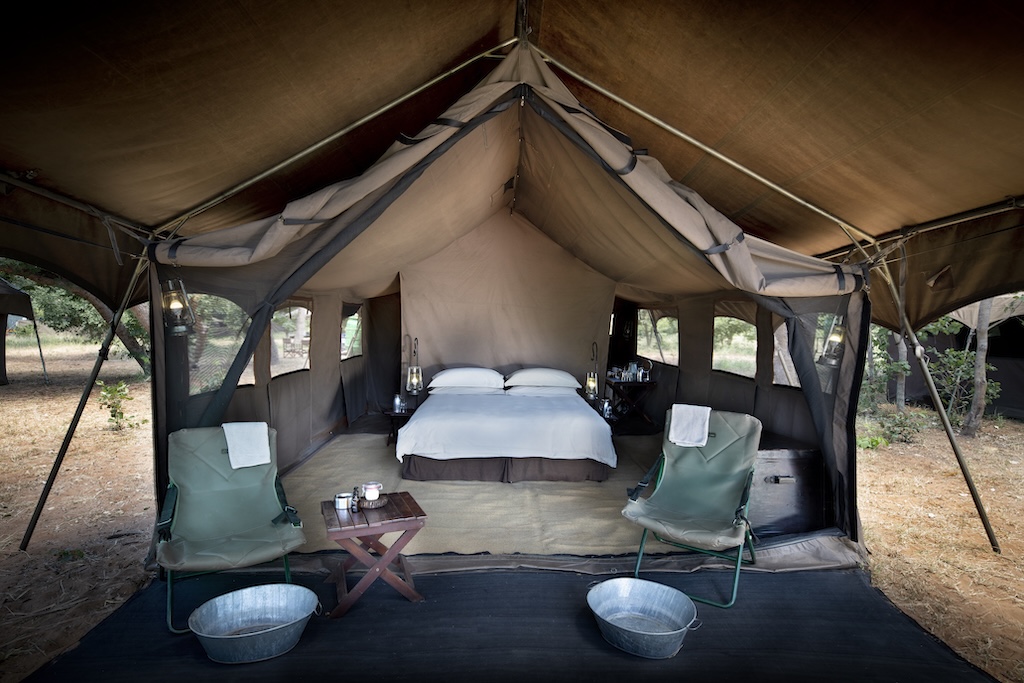
Safari company &Beyond‘s semi-permanent tented camp moves between sites close to the Chobe River within the northern park area on a bi-weekly rotation, positioning itself precisely where the game-viewing activity is most compelling at any given moment.
Five luxury tented suites offer a more intimate, adventurous version of the Chobe riverfront experience than any fixed lodge can provide — canvas walls, the sounds of the river at night, and the particular quality of closeness to the landscape that permanent structures inevitably mediate.
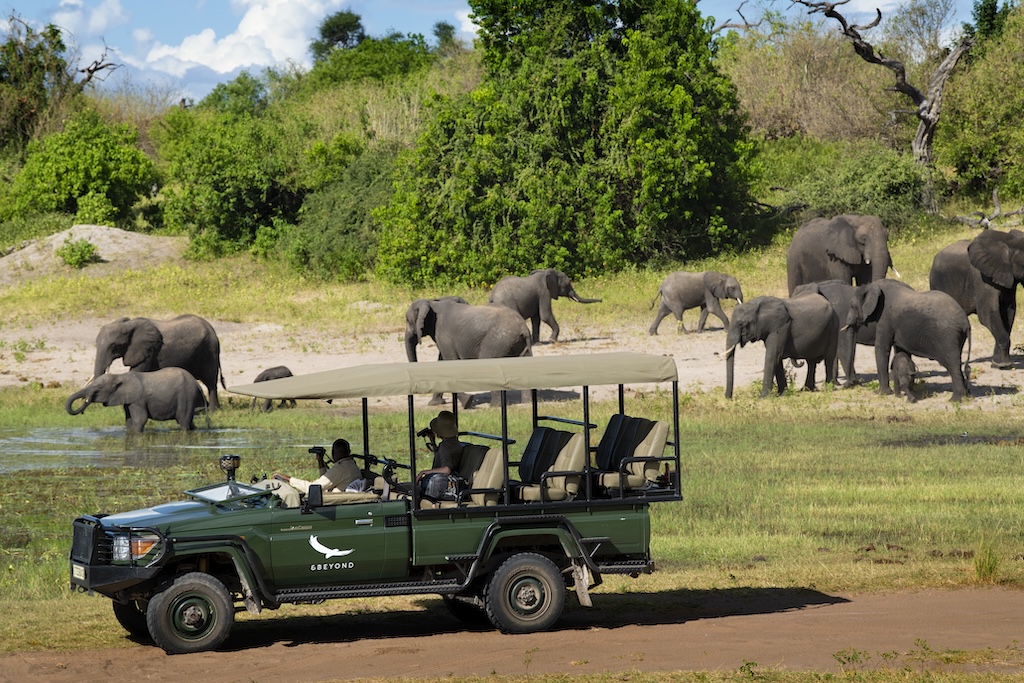
The &Beyond service standard and guiding philosophy — consistent throughout the operator’s Botswana portfolio — ensure the experience carries the depth of engagement that the mobile format demands.
The Savuti Marsh
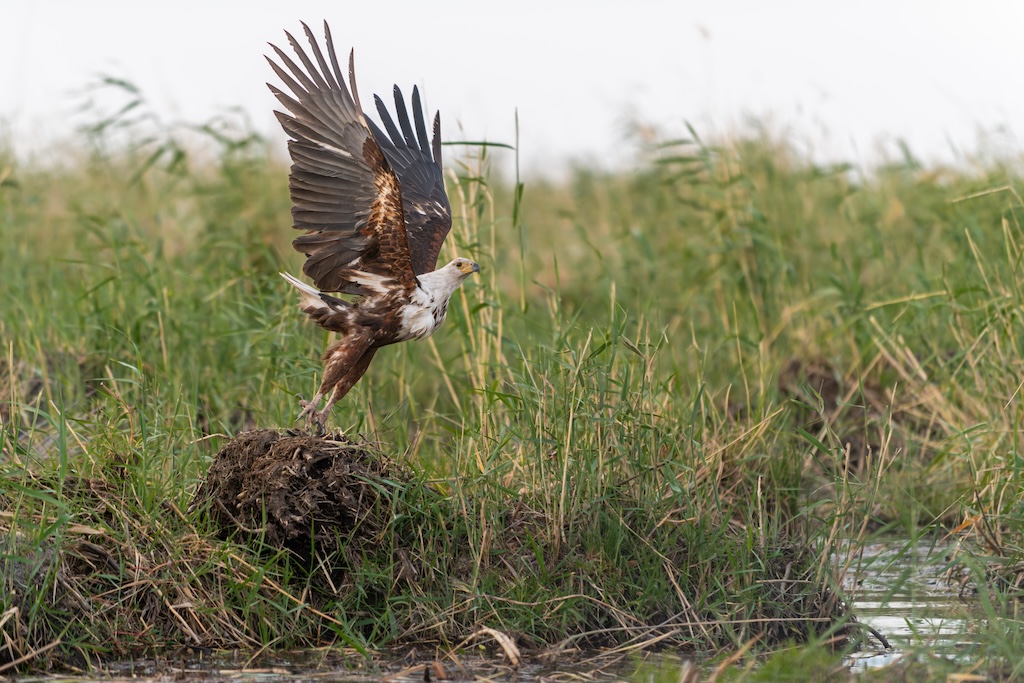
The Savuti Marsh, fed by an unpredictable channel that periodically dries and floods, is renowned for dramatic predator encounters between Chobe’s lion and hyena clans.
Belmond Savute Elephant Lodge
Colonial Elegance in Big Game Country
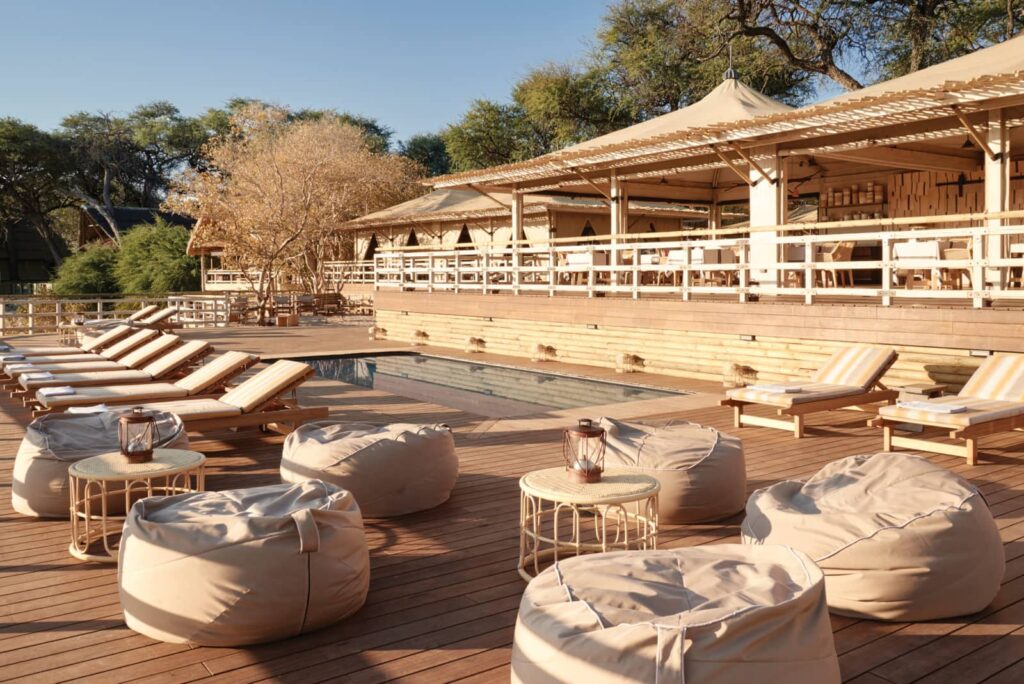
At the edge of the Savute Channel in the western reaches of Chobe National Park, Belmond Savute Elephant Lodge is the reference luxury address for the Savuti Marsh, a hauntingly beautiful landscape of ancient dead trees, dry floodplains, and extraordinary predator activity that the National Geographic documentary Savage Kingdom brought to worldwide attention.
Twelve luxury tented rooms raised on wooden platforms look directly over a waterhole where the parade of wildlife is constant: elephants coming to drink in the morning calm, hyenas circling at dusk, and the lion prides that have made Savuti Africa’s most celebrated elephant-hunting territory.
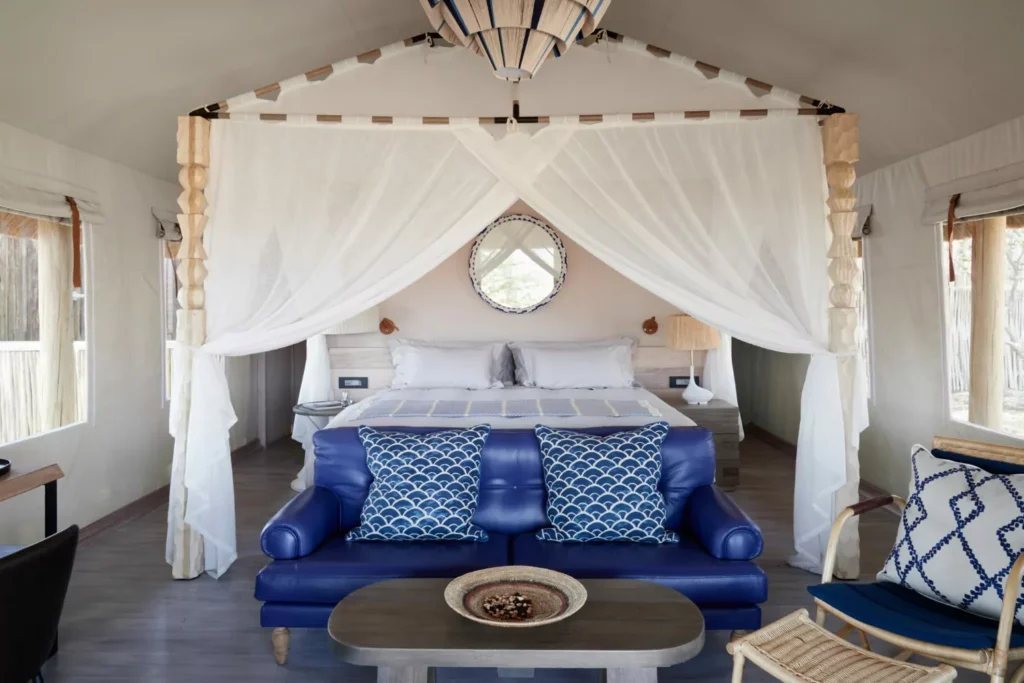
A spa tent, boma dining by campfire, a dedicated wildlife-viewing hide at the waterhole for dawn and dusk observation, and Belmond’s characteristic combination of colonial elegance and impeccable service give the lodge an unforgettable refinement.
The carmine bee-eater migration — hundreds of these vivid crimson birds passing through the area, sometimes hitching rides on the backs of kori bustards — is one of the most remarkable annual natural events in Botswana, and Savute Elephant Lodge is perfectly positioned to witness it.
Ghoha Hills Savuti Lodge
Elevated Savuti Views
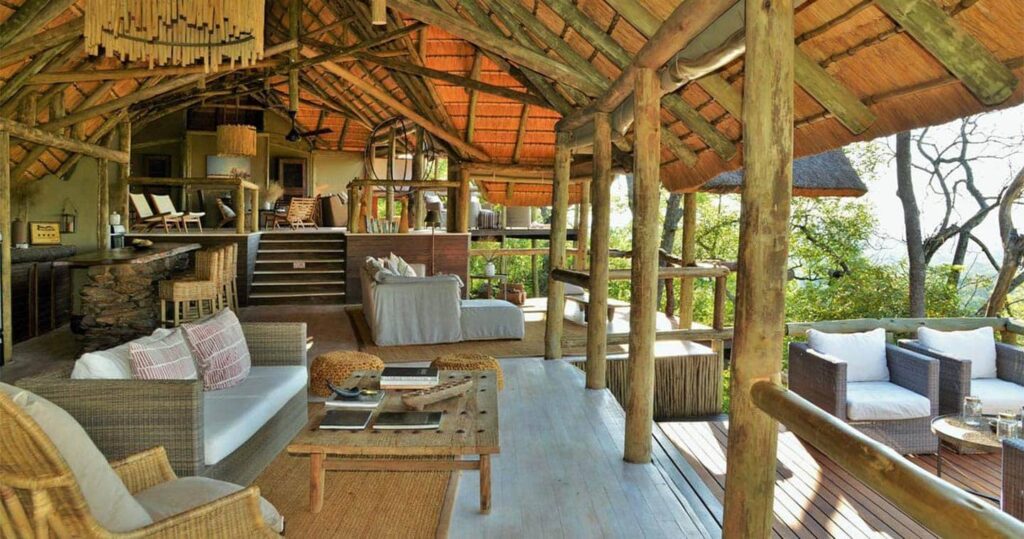
On a rocky ridge above the Savuti grasslands, Ghoha Hills Savuti Lodge offers one of the most striking elevated perspectives in the Chobe area, with a 180-degree view of savannah and waterhole from each suite’s private deck delivering constant, unprompted wildlife theatre.
Solar-powered and eco-focused, the lodge sits high enough above the surrounding terrain to provide a game-watching platform that feels more hide than lodge. The game viewing from the property itself — without leaving the deck — is exceptional, with elephant, giraffe, lion, and hyena all regularly using the waterhole directly below.
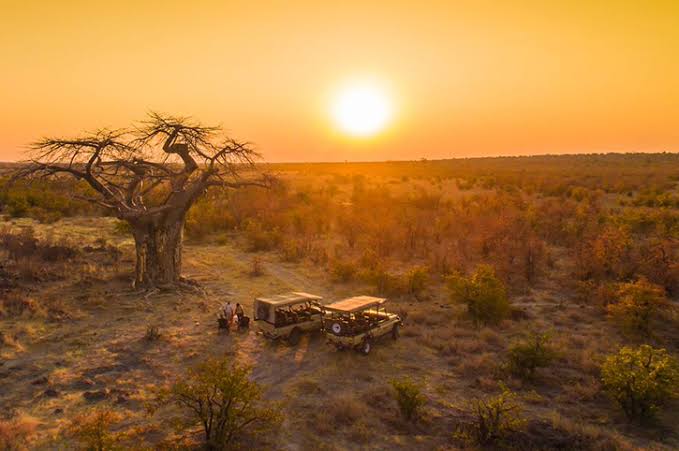
For guests who want active participation in Savuti’s wildlife drama, guided game drives into the surrounding Chobe grasslands extend the experience throughout the day.
Savute Safari Lodge
The Waterfront Gateway
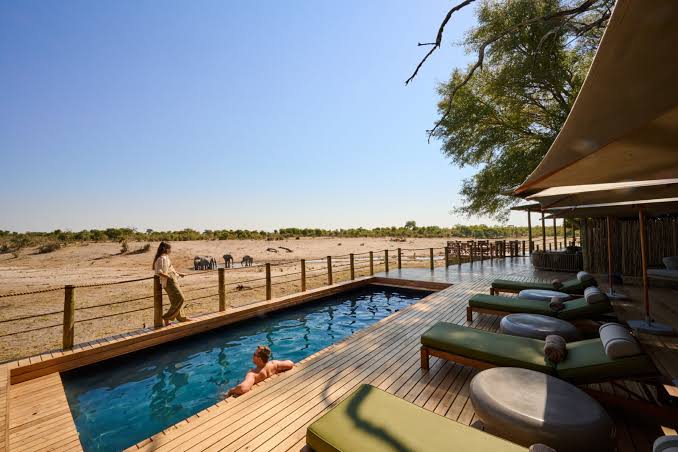
Savute Safari Lodge, operated by Desert & Delta Safaris, sits on the banks of the Savute Channel in the western reaches of Chobe National Park, a waterway so unpredictable it’s earned the nickname “the river that flows in both directions,” vanishing for decades at a time before mysteriously returning.
Just 11 chalets and one family chalet, capped at 24 guests, sit on raised timber decks facing the channel and its waterhole, where elephants are near-constant visitors. A photographic hide brings guests eye-level with the wildlife below, while a high-level deck doubles as a stargazing platform.
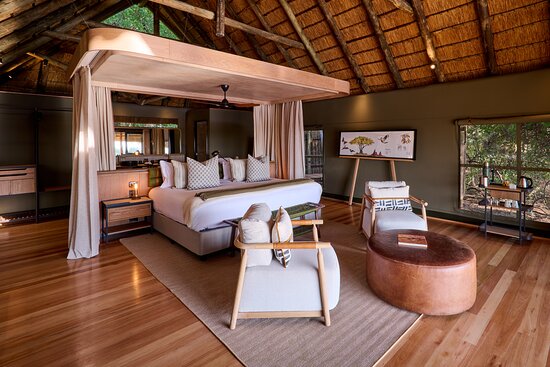
Game drives explore the Savute Marsh, where the channel’s historic path cuts through some of Botswana’s most intense predator activity, alongside visits to ancient San rock paintings at nearby Gubatsa Hills. Time it right, and Savute delivers Africa’s second-largest zebra migration, when herds pour south in search of rain-fed grasslands, trailed closely by lions and hyenas.
The Linyanti
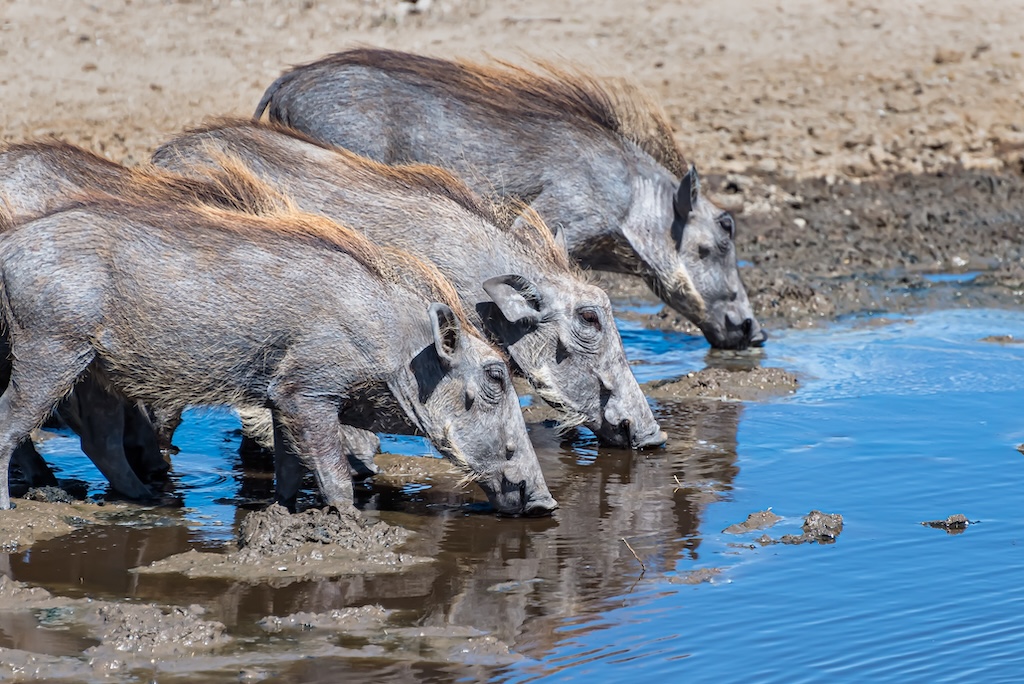
The Linyanti is a wild, water-rich concession bordering Chobe National Park, where the Linyanti River sustains dense elephant populations, predators and floodplain wildlife across remote, largely untouristed northern Botswana.
Camp Linyanti
Remote and Exceptional
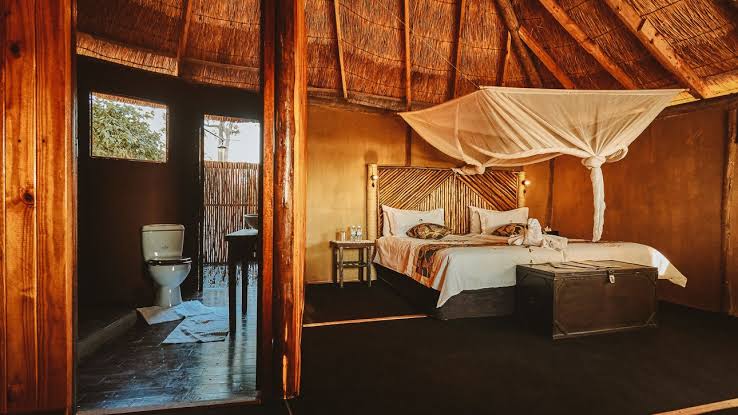
Tucked into the remote northwest corner of Chobe National Park, where the Linyanti Marsh and the Linyanti River form a boundary with the Kwando Reserve and the Selinda Spillway, Camp Linyanti offers an authentic safari experience of a kind that the more accessible areas of Chobe cannot replicate.
The Linyanti is one of southern Africa’s great predator areas, with lion, leopard, cheetah, African wild dog, and spotted hyena all present in exceptional density across an area that receives a fraction of the visitor numbers of the Chobe Riverfront. The combination of river, marsh, and dry woodland creates a mosaic of habitats that supports remarkable biodiversity.
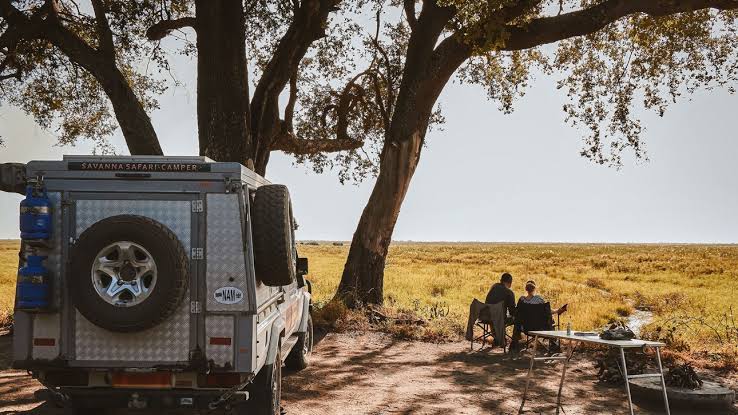
A small, intimate camp with just five rustic en-suite tents (including one honeymoon tent), Camp Linyanti has the genuine atmosphere of a remote bush lodge and delivers on the Botswana promise of exclusivity and wilderness in full measure.
Linyanti Ebony
The Family Favourite
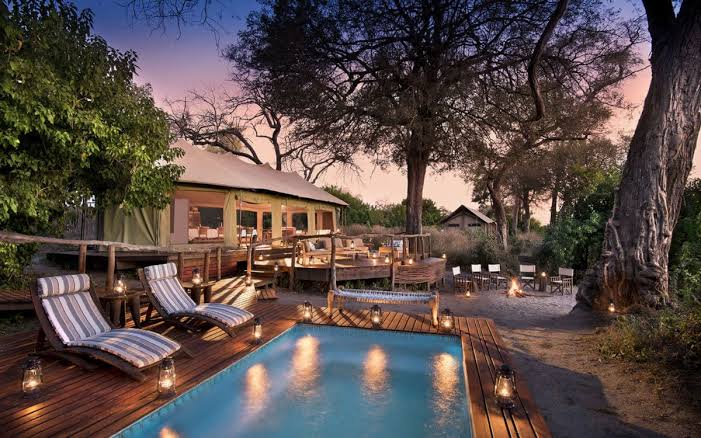
Linyanti Ebony Camp, run by African Bush Camps, sits in the remote Linyanti Reserve within the Chobe Enclave, and offers an intimate camp experience with just four tents, including one family tent, each set on wooden decks with a private viewing area over the surrounding wet-and-dry mosaic landscape.
En-suite rooms are simply but elegantly furnished, with twin or double beds, sofas, writing desks and tea/coffee stations. The camp offers day and night game drives with off-roading, walking safaris, boating and mokoro excursions, water levels permitting. Game viewing peaks from May to October, when animals cluster around the Linyanti River.
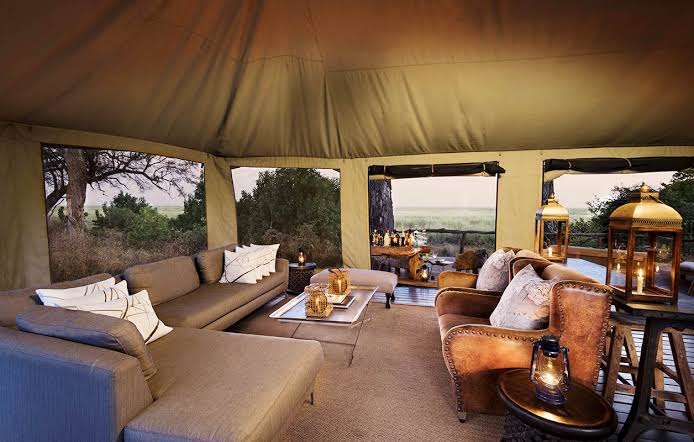
Linyanti Ebony welcomes children of all ages, with a dedicated Ngwana Club running family-friendly activities, though walking and mokoro outings require guests to be at least 16.
Wilderness Linyanti Tented Camp
The Affordable Option
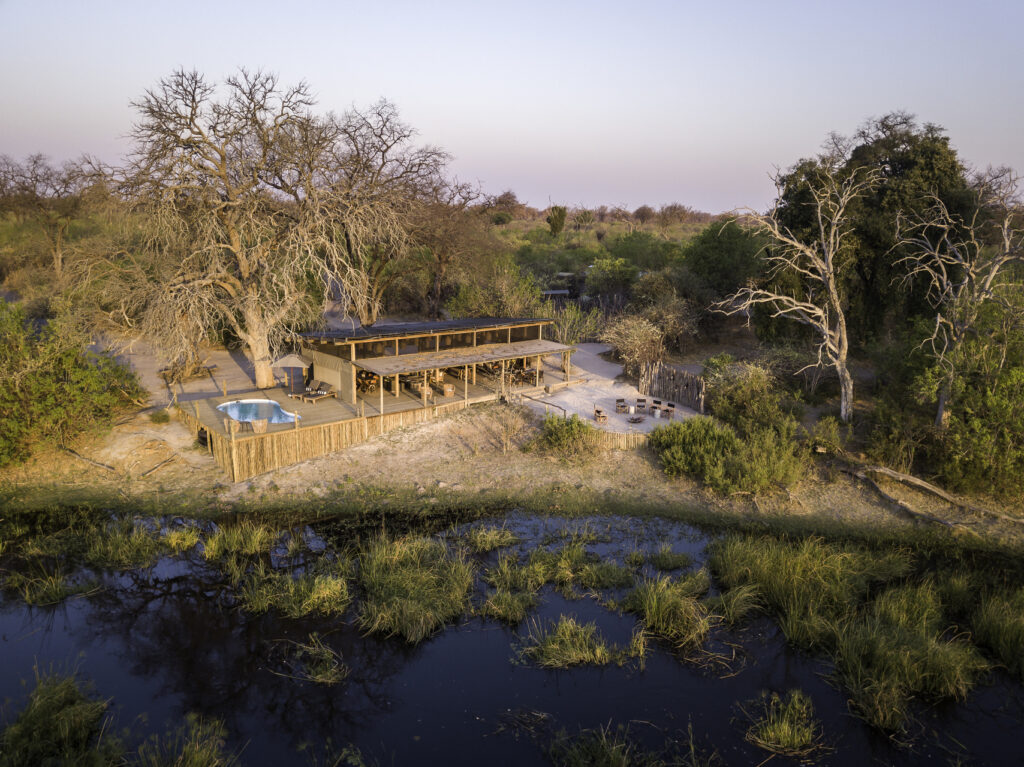
Wilderness Linyanti Tented Camp sits in the remote 126,000-hectare Linyanti Wildlife Reserve, part of the unfenced Kavango-Zambezi Transfrontier Conservation Area. It’s Wilderness’s most accessible price-point option within the exclusive Linyanti Concession — the same concession as premium sibling camps DumaTau, Little DumaTau and King’s Pool — offering the same wildlife-rich ecosystem in a simpler, “olde worlde” tented style designed to evoke the era of early African explorers.
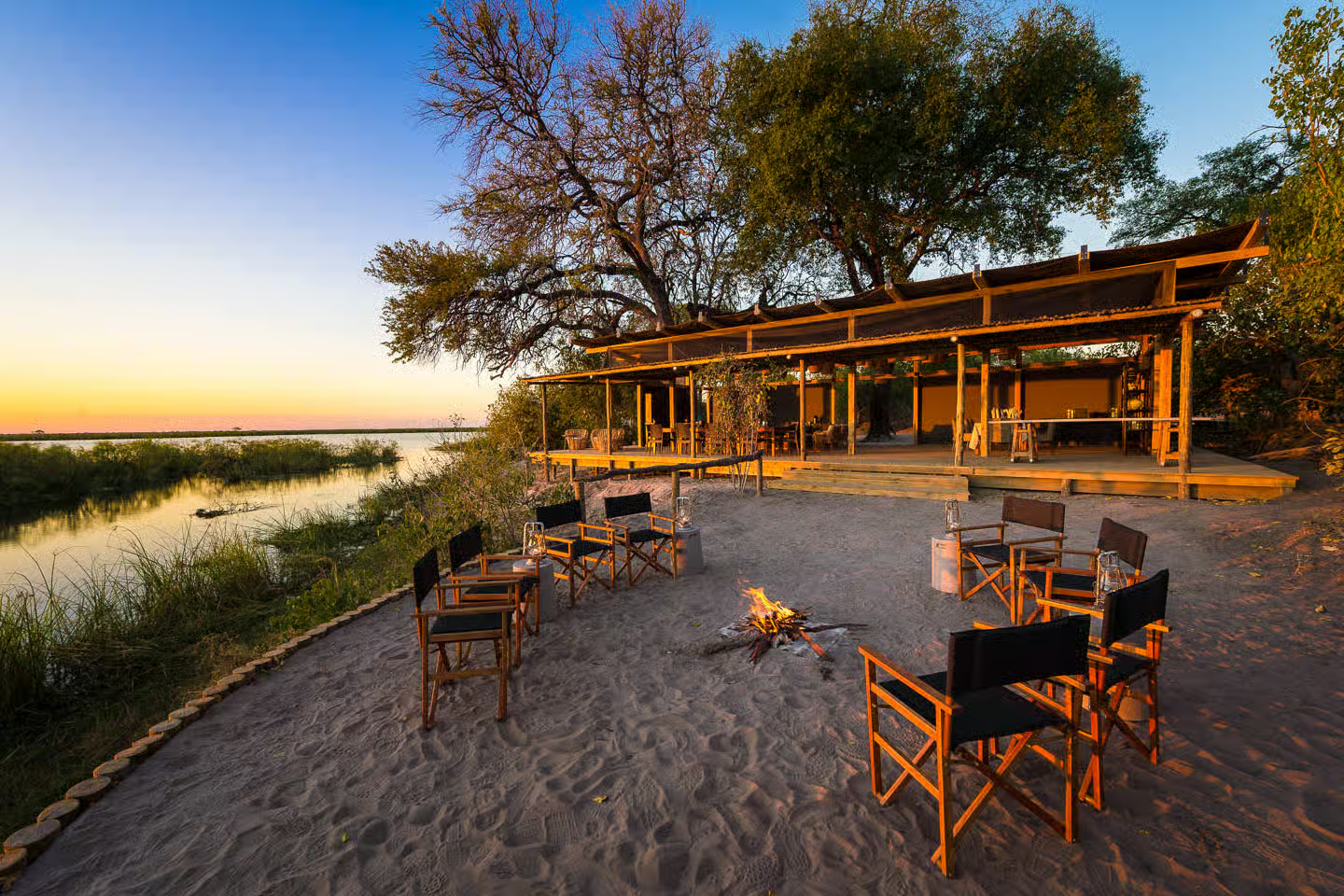
The camp has four spacious, en-suite tents, ideal for small groups, with sublime views over the Linyanti Marsh from the main area, and facilities include a pool, a log-pile hide for eye-level wildlife viewing and a boma dining area where meals are cooked over an open flame.
The Linyanti is renowned for exceptional elephant density, with over 2,000 animals converging on the permanent Linyanti River during the July-to-October dry season, alongside lion, leopard, spotted hyena, roan antelope, waterbuck and one of Botswana’s healthiest African wild dog populations. Activities include game drives, night drives, birding (400+ species) and helicopter safaris, with access via Wilderness Air charter flight from Maun.
Wilderness DumaTau
Linyanti’s Most Considered Address
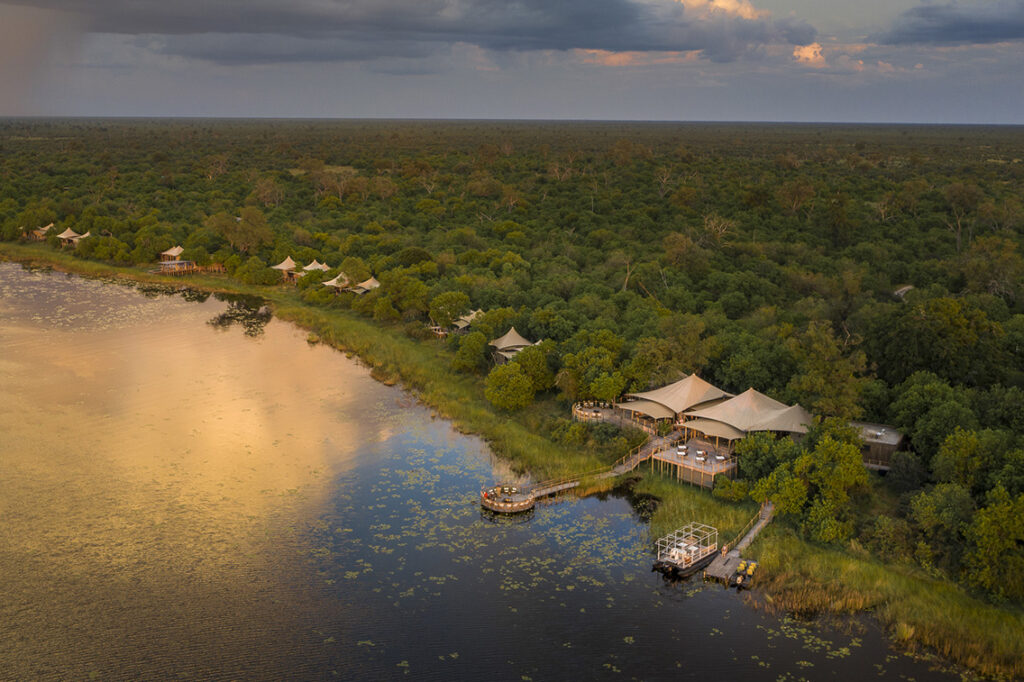
While DumaTau sits technically within the Linyanti Wildlife Reserve rather than Chobe National Park proper, its position on the Osprey Lagoon makes it the natural inclusion on any Chobe-area itinerary — and the most compelling way to experience the extraordinary elephant gatherings of the dry season.
Rates on the Osprey Lagoon, where between July and October some of the highest elephant concentrations on earth collect as the surrounding landscape dries, include five supremely luxurious tented suites and the Osprey Retreat wellness facility — gym, spa, and lap pool — that make DumaTau the most complete lodge in the broader Linyanti ecosystem.
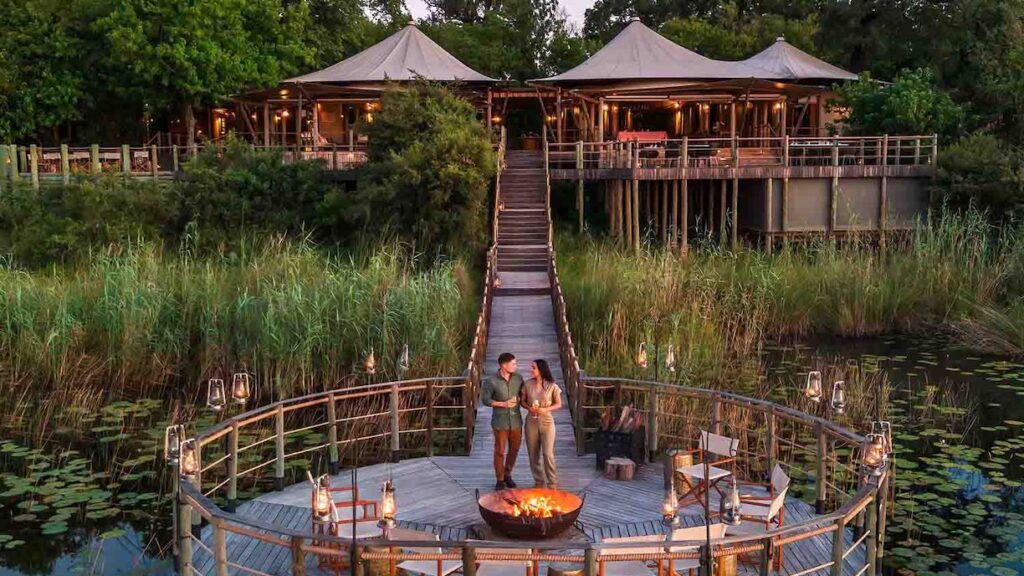
The transition from Chobe Riverfront to DumaTau, separated by a forty-five-minute light aircraft flight, is one of the most effective two-camp combinations in northern Botswana. Read about my adventures at DumaTau.
The Chobe Houseboat Experience
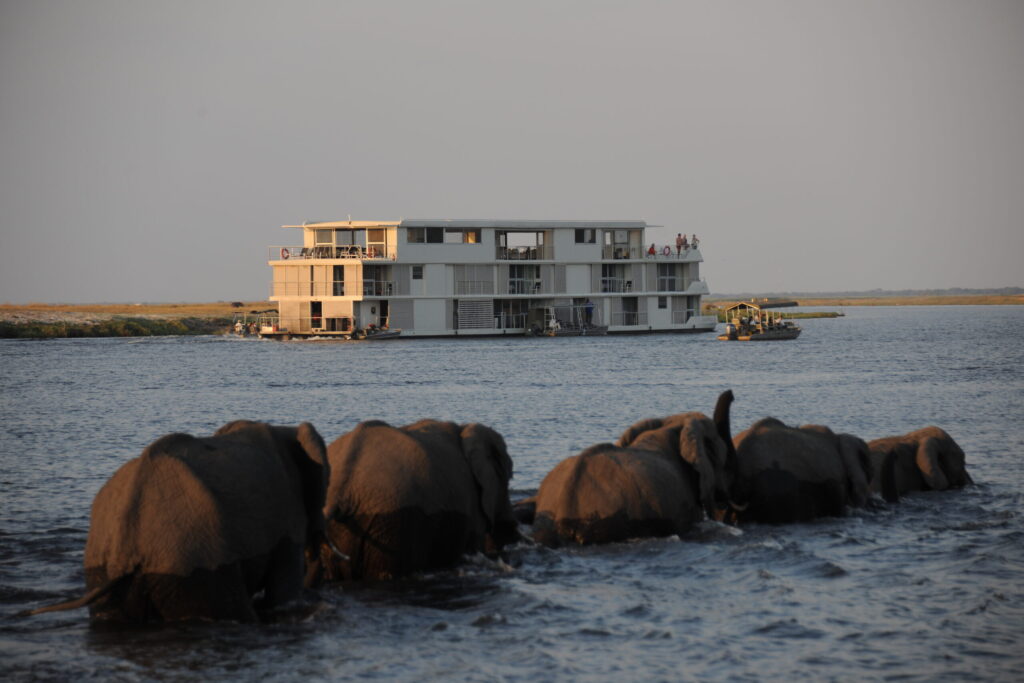
Aboard Chobe Princess houseboats or the flagship Zambezi Queen, guests cruise the Chobe River, combining tender boat game viewing, fishing and birding in all-inclusive luxury.
No guide to luxury in Chobe is complete without acknowledging its most distinctive accommodation category. The Zambezi Queen, the Pangolin Voyager, and the three Chobe Princess houseboats offer a fundamentally different relationship with the Chobe River, floating slowly along the waterway, pausing at game-dense banks, sleeping on the river with hippos surfacing alongside the hull and elephants wading across channels in the dawn light.
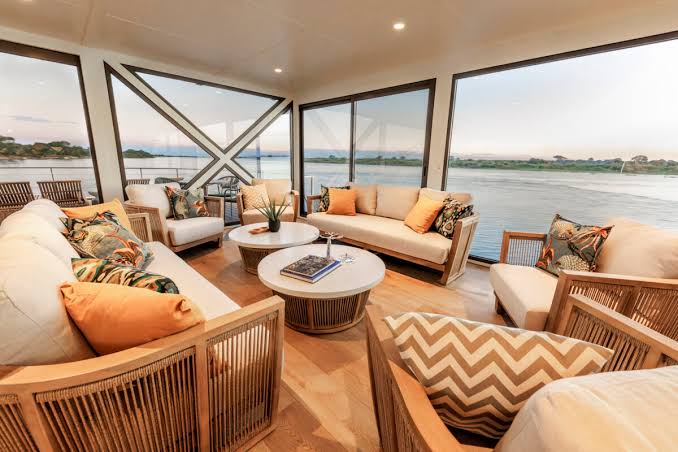
Photography cruises at golden hour, fishing for tigerfish in the shallows, and the simple, profound pleasure of watching Africa from the water make the houseboat experience unlike anything available from the bank.
Most operators combine two nights on a houseboat with two to three nights at a land-based lodge, and the contrast between the perspectives is one of the most compelling combinations in Botswana. For more information on this unique take on the classic Botswana safari, check out our guide to cruising the Chobe and Zambezi rivers.
Planning a Chobe Safari
What is Chobe National Park famous for?
Chobe is defined by elephants, and the sheer scale of them. Botswana is home to the largest elephant population on earth, and tens of thousands converge on the Chobe River during the dry season, forming some of the most extraordinary concentrations of wildlife anywhere in Africa. Herds of a thousand or more at the water’s edge are not unusual. Beyond elephants, Chobe supports large buffalo herds, lions, leopards, wild dogs, hippos, and exceptional birdlife. However, it’s the elephants that make it singular.
When is the best time Chobe?
The dry season from May to October is Chobe’s definitive safari window. As water sources outside the park dry up, wildlife concentrates along the Chobe River in extraordinary density, with the peak elephant gatherings typically occurring July to September. This is also the best period for predator activity in the Savuti Marsh.
The green season from November to April brings dramatic skies, lush vegetation, the arrival of migratory birds including carmine bee-eaters in October and November, and the possibility of witnessing elephant calves born in the wet season. Game viewing is more dispersed, but rates are significantly lower.
How to Get There
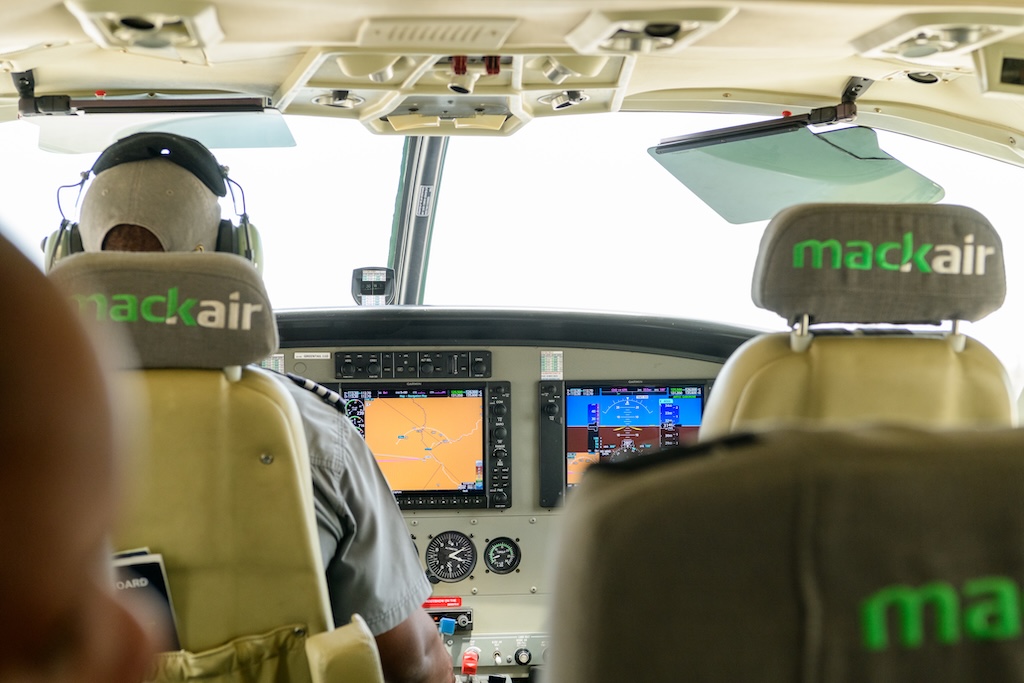
Kasane International Airport serves the Chobe Riverfront area with direct connections from Johannesburg (South Africa) and domestic links via Maun (Botswana). From Victoria Falls Airport in Zimbabwe — one hour by road or a short flight — Kasane is one of the most accessible safari destinations in southern Africa. Light aircraft transfers connect Kasane to the Savuti and Linyanti areas in 45 minutes.
What are the signature safari activities?
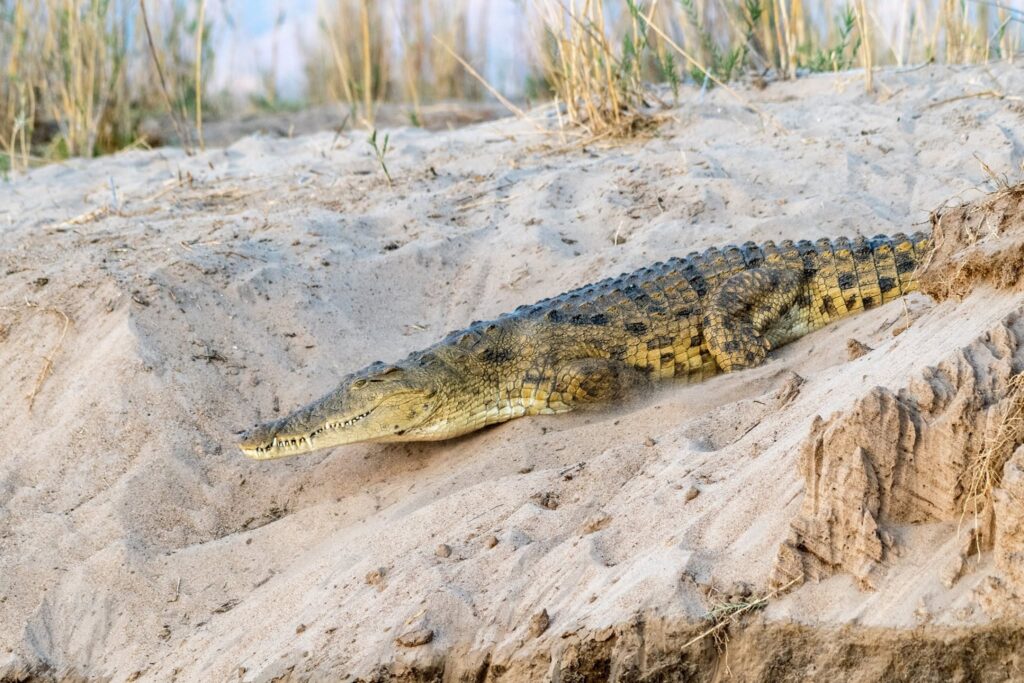
Chobe is the rare destination where a game drive and a boat cruise are equally essential, and cover entirely different ground. Morning game drives take you into the park’s interior to track predators and large herds across open savannah. Afternoon boat cruises on the Chobe River bring you level with elephants swimming across channels, hippos at arm’s length, and crocodiles on the banks, with prolific birdlife overhead.
The combination of land and water in a single day is one of Chobe’s great appeals. Night drives, walking safaris, and fishing are available through certain camps, particularly in the more remote Savuti and Linyanti sectors.
How does Chobe compare to other safari destinations in Botswana?
Chobe National Park divides into four distinct areas, each with a different character. The Chobe Riverfront, near Kasane, is the most visited and offers the densest elephant and game concentrations. Savuti, in the park’s centre, is wilder and less trafficked and better known for its lions, cheetahs, and the famous Savuti marsh, which fills seasonally to draw enormous wildlife aggregations. Linyanti, in the west, is one of southern Africa’s most exclusive safari areas: small, remote camps, private concessions, and the kind of solitude that is increasingly rare. The Ngwezumba Pans in the north see almost no visitors and reward those willing to go off the beaten track.
Do I need a visa to visit Botswana?
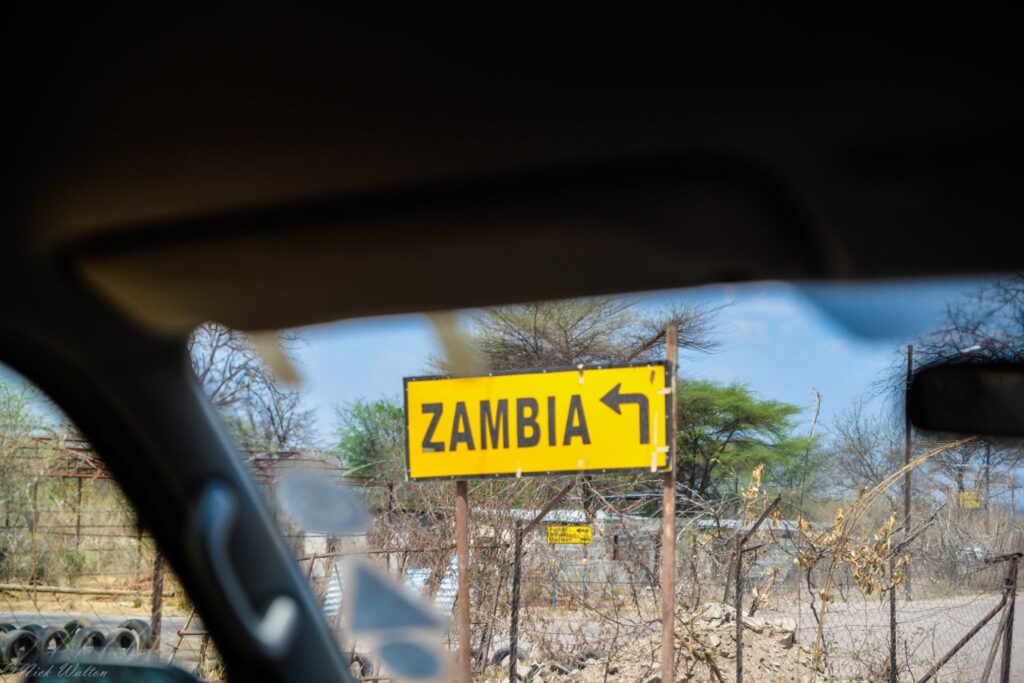
Most nationalities, including citizens of the UK, US, EU, Australia, and Canada, as well as Japan, South Korea, Singapore and Hong Kong, do not require a visa for Botswana and can enter for up to 90 days as tourists. Those who do require a visa can apply through Botswana’s online system before travel. Your passport should be valid for at least six months beyond your planned departure date. Chobe’s position at the meeting point of four countries — Botswana, Zimbabwe, Zambia, and Namibia — makes it a natural hub for multi-country itineraries, and border crossings in the region are generally straightforward.
What vaccinations and health precautions do I need?
No vaccinations are mandatory for entry into Botswana if you are travelling from a non-yellow fever endemic country, though a certificate is required if you are arriving from or transiting through an infected area. The CDC recommends hepatitis A, hepatitis B, typhoid, and rabies for those spending time in remote bush.
Malaria is present in the northern regions of Botswana — which includes Chobe — year-round, with highest transmission during the wet season (November to March). The strain is chloroquine-resistant, so consult a travel health specialist about appropriate prophylaxis before departure. Take standard precautions: long sleeves at dusk, DEET repellent, and mosquito nets. See your doctor or travel clinic at least six to eight weeks before your trip.
How long should I spend in Chobe?
A minimum of three nights allows two full days in the park. This is enough for morning game drives, afternoon boat cruises, and a genuine sense of place. Four nights is the sweet spot for most visitors: it accommodates a day trip to Victoria Falls (just 80 kilometres away), time in both the riverfront and one of the more remote sectors, and an unhurried pace. Those combining Chobe with Savuti and Linyanti typically spend seven to ten days in the broader Chobe ecosystem, staying in a progression of camps from accessible to genuinely wild.
Can I combine Chobe with other destinations?
Easily, and most itineraries do. Victoria Falls is a 90-minute drive from Kasane, making it a natural pairing; a night or two on the Zambian or Zimbabwean side of the falls adds one of the world’s great natural spectacles to the safari.
The Okavango Delta, a short charter flight away, is the obvious complement: where Chobe concentrates wildlife at scale, the Delta offers intimacy, from mokoro canoe trips through papyrus channels, to walking on delta islands, and the feeling of being entirely off the grid. A seven to ten-day southern Africa itinerary taking in Victoria Falls, Chobe, and the Okavango is one of the continent’s classic journeys.
Is Chobe suitable for families and first-time safari visitors?
Very much so. The accessibility of the Chobe Riverfront — with well-established lodges, year-round game visibility, and the immediate spectacle of the river — makes it one of the most forgiving introductions to African safari. The boat cruise in particular is ideal for those new to game viewing: relaxed, stable, and extraordinarily productive. Most camps welcome children aged six and above on game drives, and some have specialist family programmes. For those with very young children, the boat cruise is often the activity of choice.
If you’re contemplating a luxury African safari, check out our safari travel guide and our recommendations for the best camps in the Okavango Delta, Serengeti, Masai Mara, South Africa, and Rwanda, as well as our guide to safari photography.


