
From the art of reading animal behaviour and working the extraordinary African golden hour to mastering your vehicle as a camera platform and capturing the decisive moment with big cats — the ultimate guide to luxury safari photography.
A luxury safari is among the finest photographic opportunities on earth. The great wildlife reserves of East and Southern Africa — the Serengeti, the Masai Mara, the Okavango Delta, Ruaha, South Luangwa, and the Sabi Sand — offer a density and variety of megafauna photography that no other destination approaches. A lioness with cubs in long golden grass, a leopard draped over an acacia branch against a bruised evening sky, a herd of elephants crossing a dry riverbed in a column of ochre dust — these are images that test every technical and creative resource a photographer possesses.
The good news: the vehicle, the guide, and the extraordinary proximity that a luxury safari provides give you tools unavailable in any other wildlife photography context. These techniques will help you use them to maximum effect.
Master the African Light — Your Most Important Asset
Nothing shapes a safari photograph more than light. In the African bush, it shifts from soft rose-gold at dawn to a harsh bleaching white by mid-morning — learn to work with it, not against it.
The Golden Hours
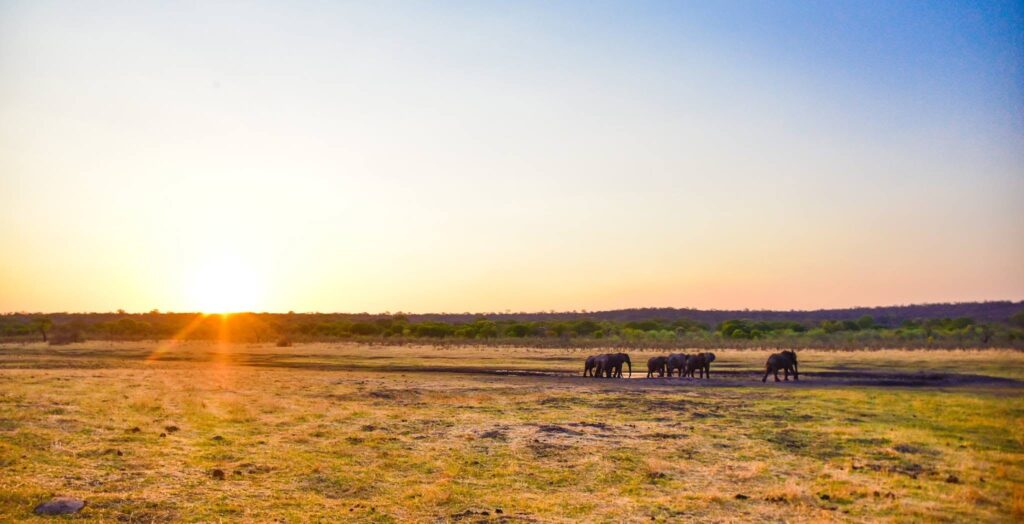
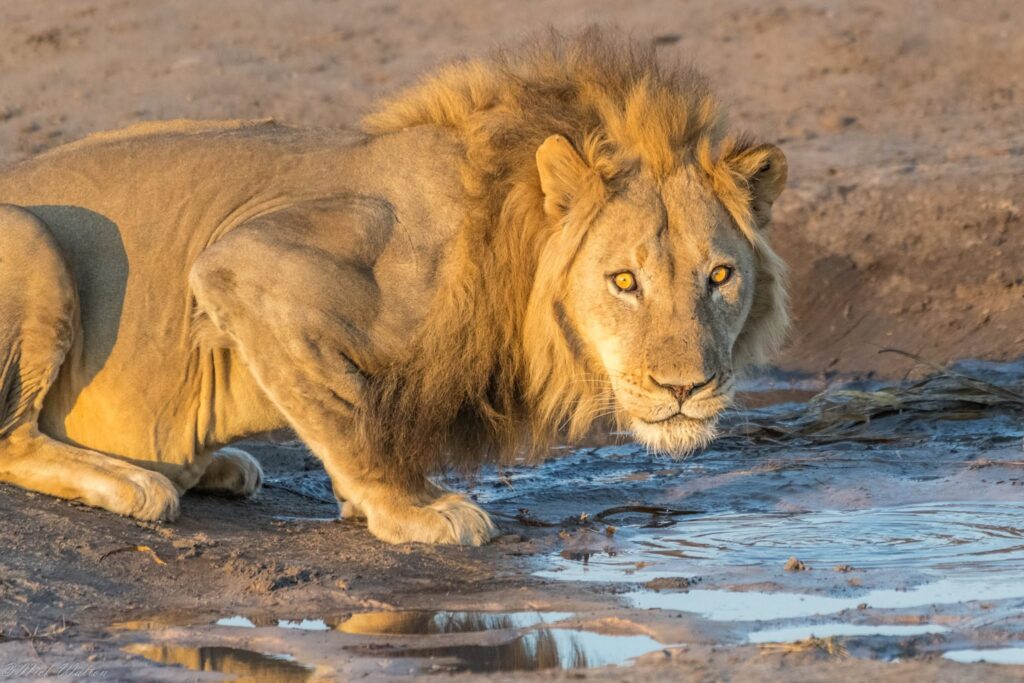
African light is the most celebrated in wildlife photography for good reason. In the hour after sunrise and the hour before sunset, the low-angled sun bathes the savannah in a warm, directional amber that flatters every subject — a lion’s mane glows like burnished copper, the dust raised by a moving elephant herd becomes a luminous fog of gold, and the eye of a leopard catches the light with extraordinary intensity.
These two hours bookend every game drive on a luxury safari, and they represent the primary photographic opportunity of the day. Everything else — the mid-morning and afternoon drives, the vehicle positioning, the hours of patient waiting — is preparation and practice for these moments.
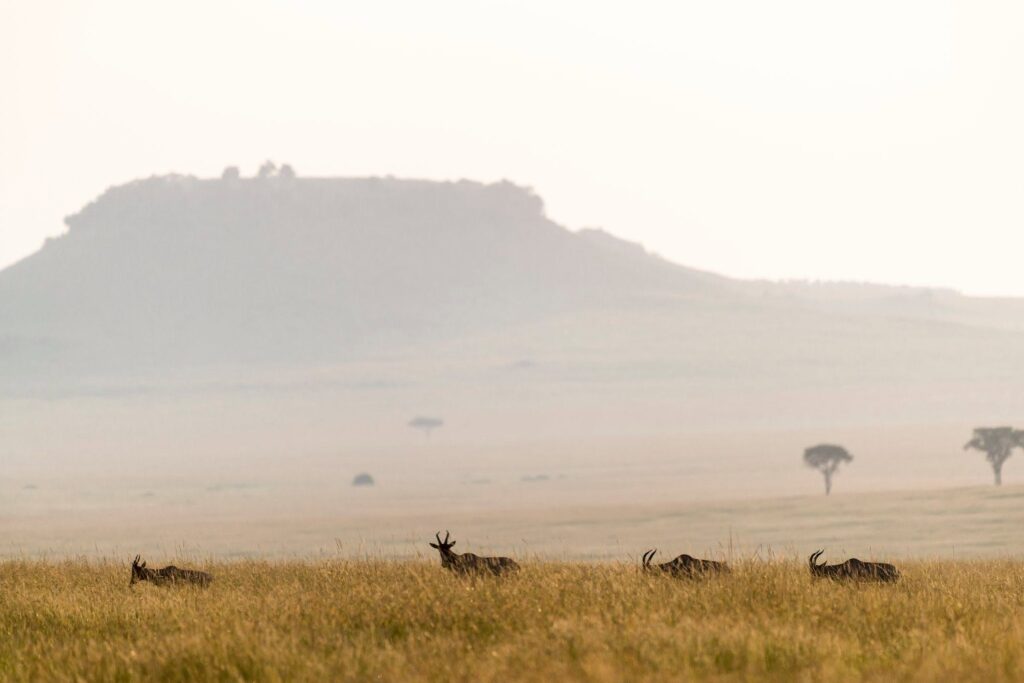
During the golden hour, shoot with the sun behind you and slightly to one side. Subjects lit from the front-quarter retain colour saturation and facial detail; side lighting accentuates texture and three-dimensionality; backlight, used deliberately, transforms dust, grass, and fur into translucent, glowing halos of light. All three are worth pursuing, and the luxury of a private vehicle means your guide can position you for any of them.
Overcast and Storm Light
The most dramatic safari images are often made not in perfect golden light but in the moments before and after an afternoon storm — when the sky turns from deep blue to charcoal, the air pressure drops, and the animals become suddenly, electrically alert.
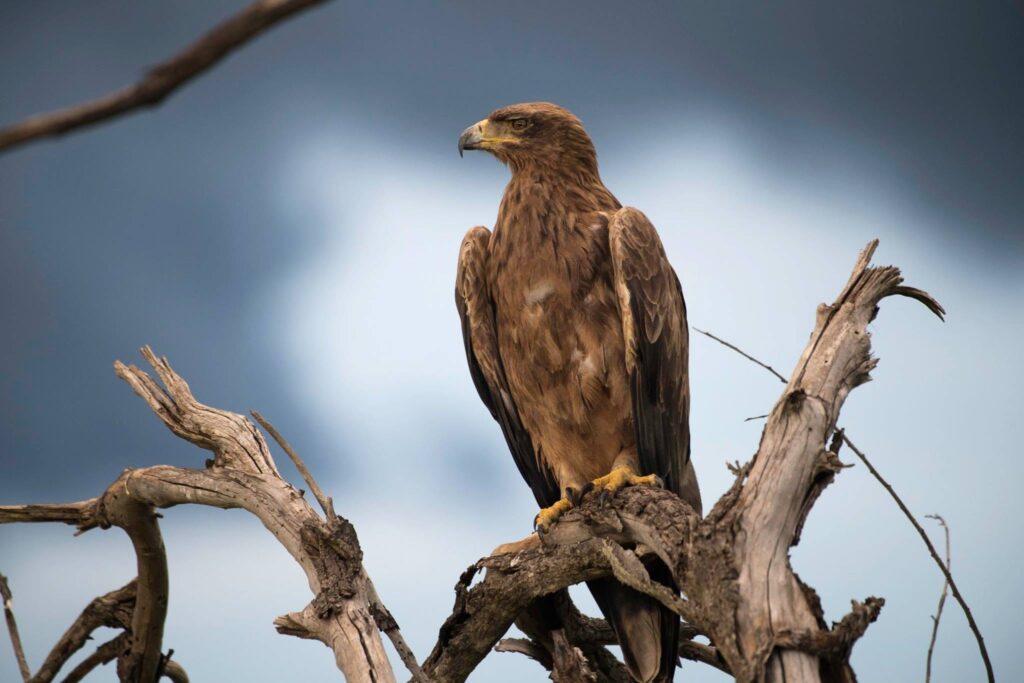
The contrast between a dark storm sky and the warm ochre tones of the African landscape produces images of extraordinary atmosphere, and the flat, even light of full overcast eliminates the harsh shadows that make mid-day shooting in direct sun so challenging. Never put your camera away when the weather turns — these are frequently the best photographic conditions of the day.
Your Vehicle is Your Hide — Use it as One
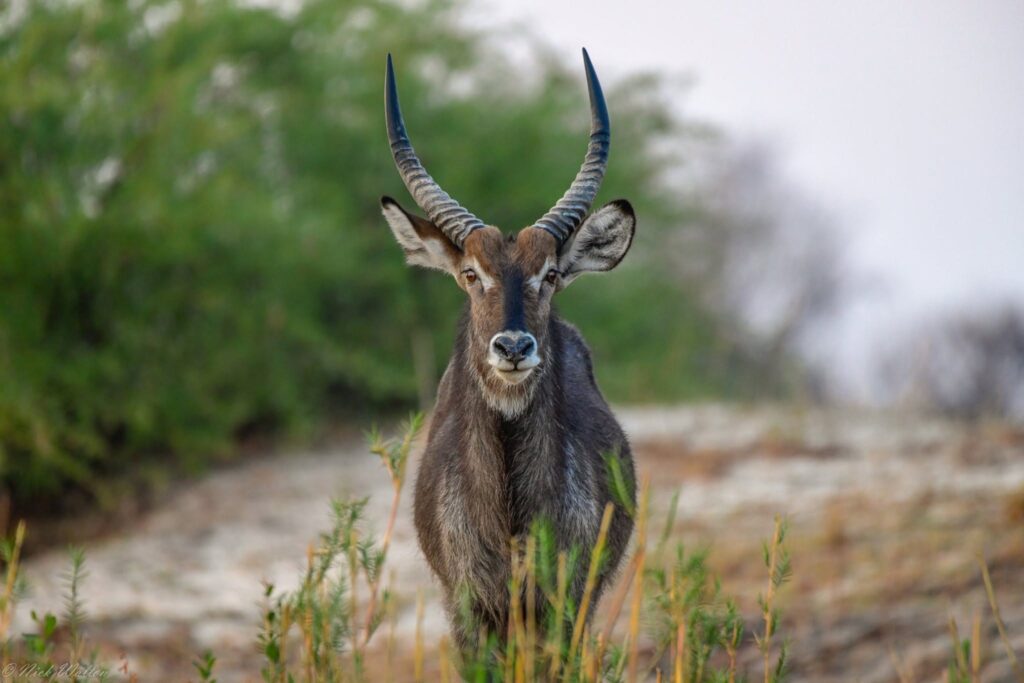
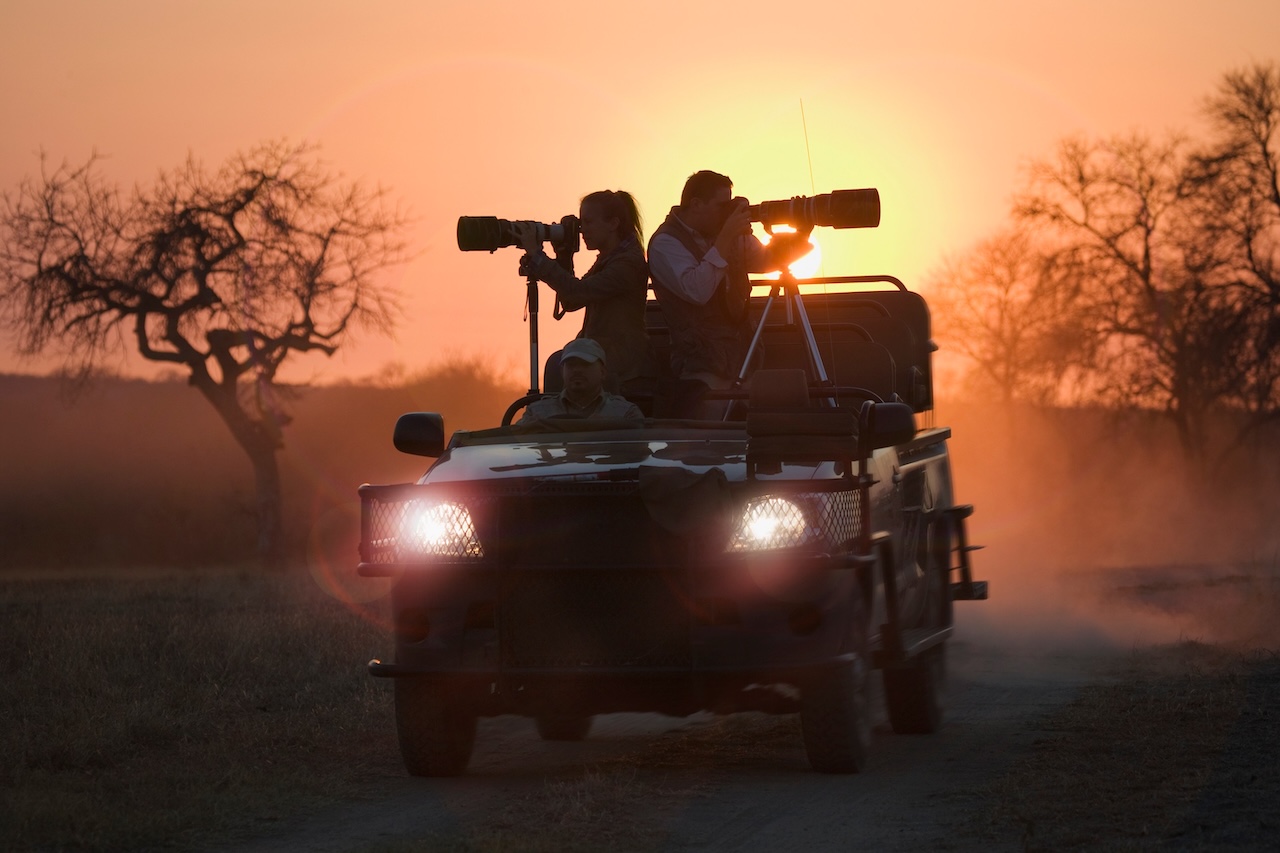
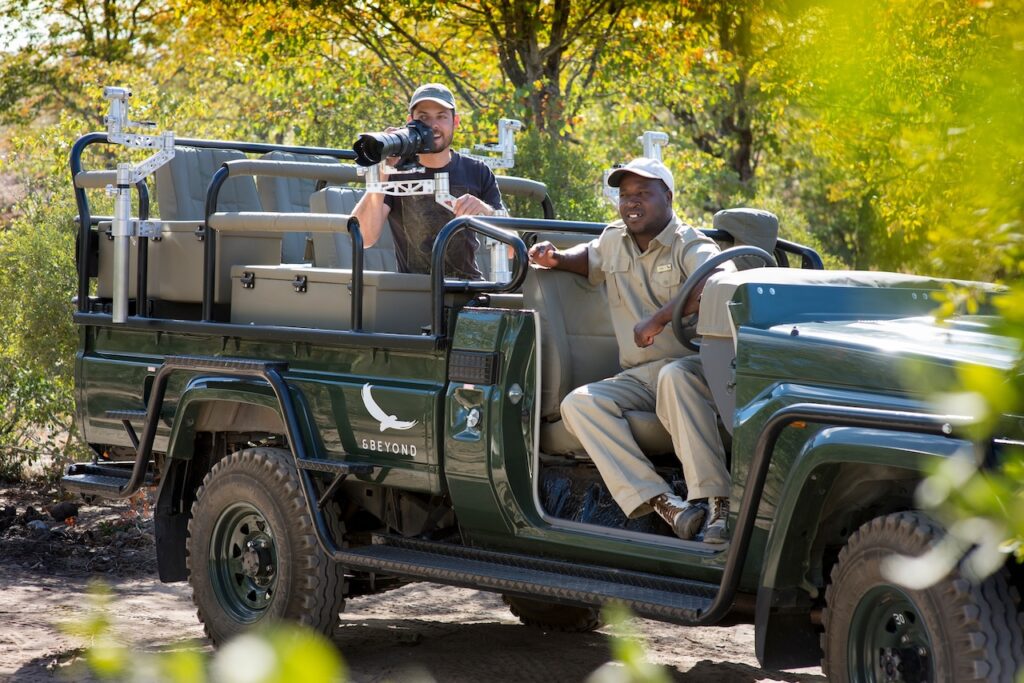
The single greatest photographic advantage of a luxury safari is the game drive vehicle itself. African wildlife is habituated to vehicles in the major reserves — a lion will ignore a Land Cruiser parked two metres away, whereas the same lion would flee a human on foot at fifty metres. The vehicle is effectively an invisible hide, and everything about how you use it affects the quality of your images.
Stabilise Your Camera
A long telephoto lens on a moving or vibrating platform produces blurred images regardless of shutter speed. Always use a beanbag — placed on the vehicle’s window frame or roof edge — to support the lens, and ask your driver to kill the engine when you are shooting. Even a vehicle idling transmits vibration through the chassis that is detectable at 500mm or longer.
Most luxury safari guides and drivers understand this instinctively and will switch the engine off without being asked; if yours doesn’t, make the request early and explain why.
Vehicle Positioning and Angles
Work with your guide to position the vehicle for the best photographic angle — light direction, background, and height relative to the subject all matter enormously. A lion photographed from a high vehicle with a downward angle looks small and dominated; the same lion photographed from a low angle with the lens almost at ground level looks immense and powerful.
Many luxury safari vehicles have pop-up roofs or lowered sides specifically for photography — use them, and communicate constantly with your driver about where you need to be relative to the subject and the light.
Patience is the Defining Skill
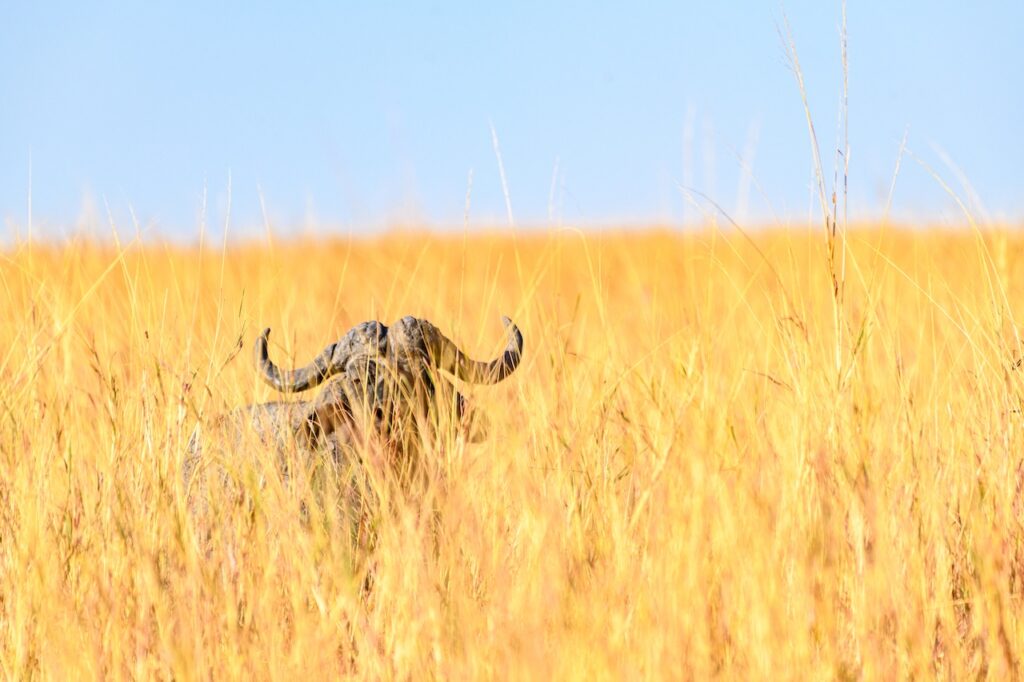
The most important safari photography technique is not technical — it is the willingness to stay with a subject rather than moving on. A resting leopard may do nothing for an hour, then stretch, yawn, descend from its tree, and move through golden grass in a sequence of images of extraordinary beauty. A cheetah sitting on a termite mound may remain motionless for twenty minutes, then explode into a chase that produces the most compelling action sequence you have ever captured.
The luxury safari’s private vehicle and experienced guide make extended waits entirely practical — resist the temptation to move on and trust the moments that patience produces.
Camera Settings for African Wildlife
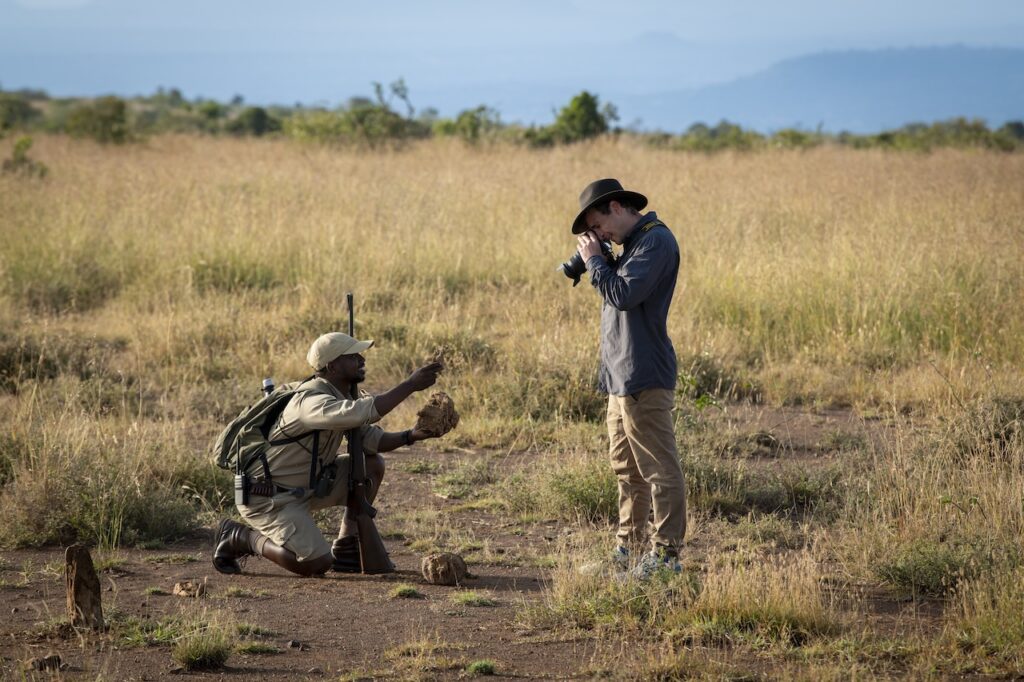
Sharp eyes and fast instincts only get you so far — the rest comes down to your settings. African wildlife moves fast, light changes faster, and hesitation costs you the shot.
Shutter Speed: The Non-Negotiable
Motion blur is the enemy of safari photography, and the solution is a fast shutter speed. For stationary subjects, 1/500 second is a minimum at long focal lengths; for moving animals, use 1/1000 second as a baseline and push to 1/2000 or faster for running cheetahs, leaping impala, or birds in flight. In the golden hour’s lower light, maintaining these shutter speeds requires a higher ISO — modern mirrorless cameras (Sony Alpha series, Nikon Z series, Canon R series) handle ISO 3200 and beyond with noise levels that are perfectly acceptable for large-format printing (that said, I still love my Nikon D850, it’s built stronger than the Land Cruisers!).
Aperture: Isolation and Depth of Field
A wide aperture (f/2.8 to f/5.6) isolates wildlife subjects from complex savannah backgrounds — placing a sharp cheetah against a smoothly blurred horizon of golden grass rather than a distracting tangle of vegetation. The exception is group shots — a pride of lions or a breeding herd of elephants requires more depth of field (f/8 to f/11) to ensure that subjects at different distances from the lens are all acceptably sharp.
Continuous Autofocus and Burst Mode
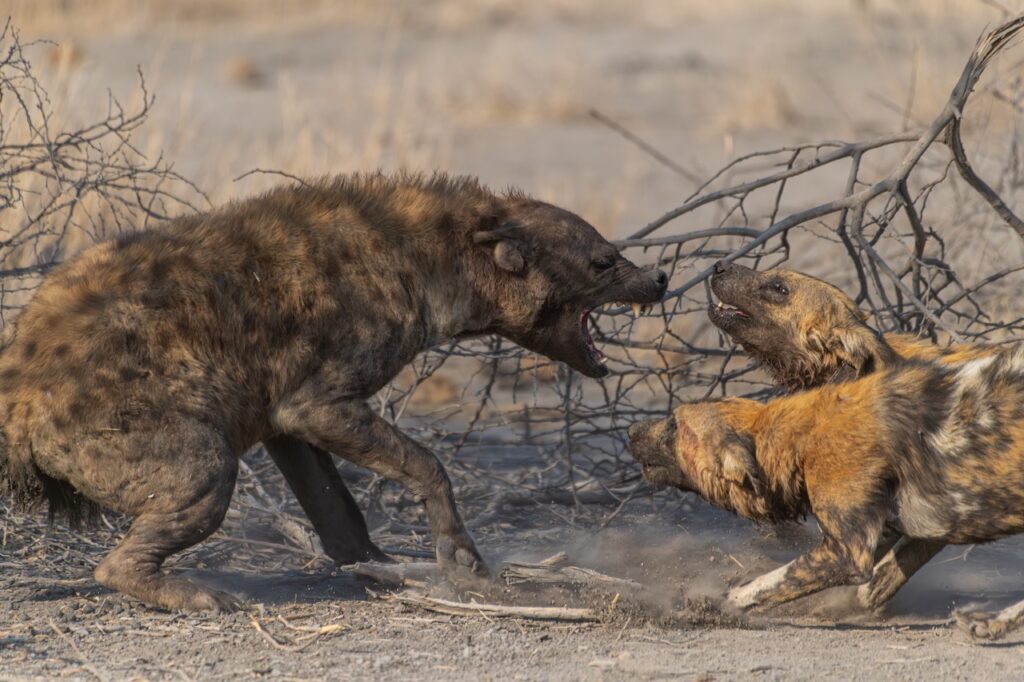
Set your camera to continuous autofocus (AF-C on Nikon, AI Servo on Canon, Continuous AF on Sony) and use the highest burst rate your camera offers for action sequences. Modern mirrorless cameras track moving wildlife subjects with extraordinary accuracy — the Sony A1, Nikon Z9, and Canon R3 all feature animal-recognition autofocus that locks onto eyes and faces in real time, dramatically increasing the percentage of critically sharp frames in a high-speed sequence. Review your burst sequences with the LCD magnified to 100% to identify the frames where the eye is sharpest — this is the image.
Lens Choices for Safari
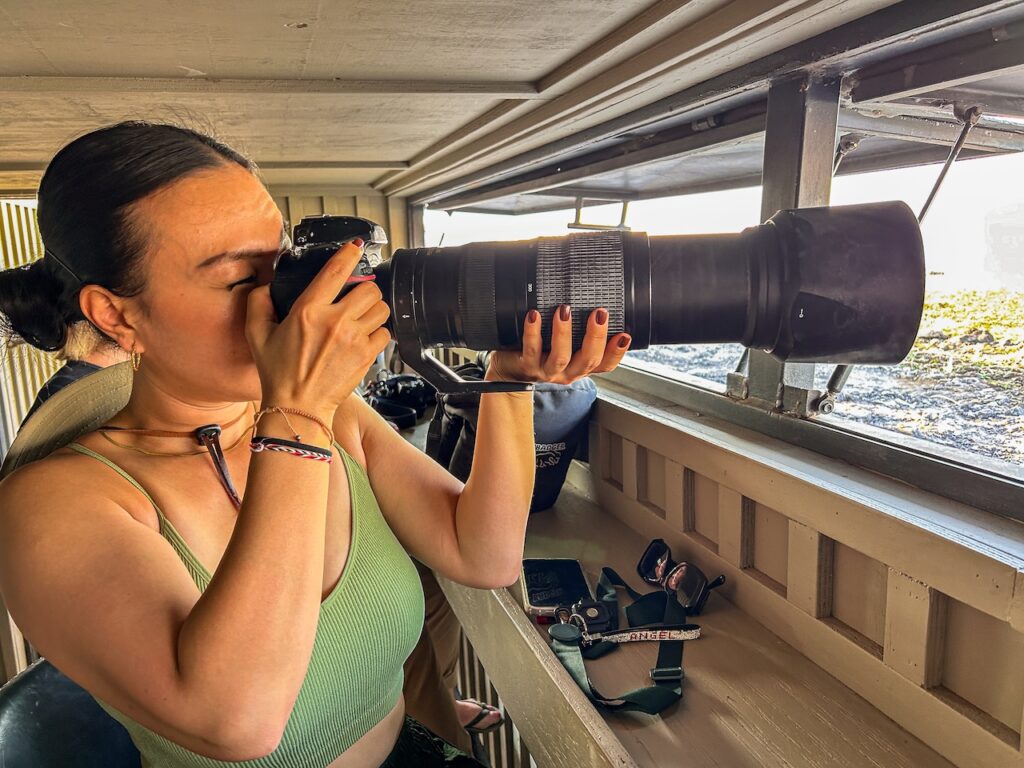
The lens you bring on safari will define the photographs you come home with. Get it right and you’ll fill your memory card with frame-worthy shots; get it wrong and you’ll spend the week watching great moments slip out of range. Check out our luxury safari packing guide for more tips.
The Long Zoom: Your Primary Tool
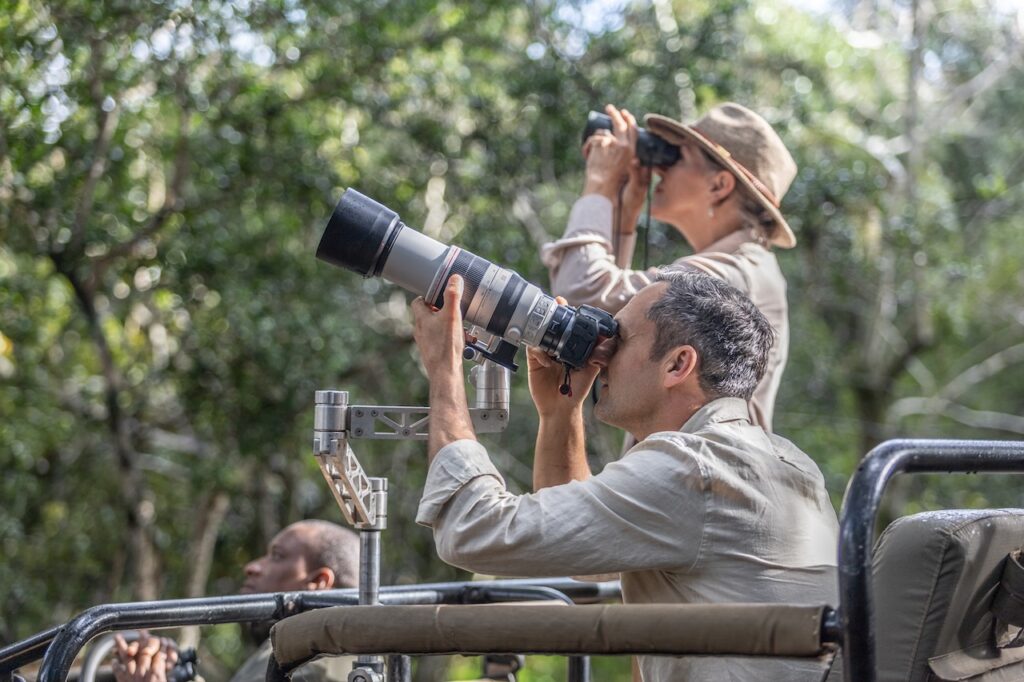
A telephoto zoom covering 100-500mm or 200-600mm is the core safari lens — versatile enough to frame a pride of lions at distance, tight enough to isolate a single eye in a close-focus portrait (I use a lightweight Nikkor 200-500mm f5.6). The Sony 200-600mm f/5.6-6.3, Canon 100-500mm f/4.5-7.1, and Nikon 180-600mm f/5.6-6.3 are the current benchmarks for this category — all produce images of outstanding sharpness at the long end, and all autofocus with sufficient speed and accuracy for moving wildlife.
A 70-200mm for Closer Encounters and Context
A 70-200mm f/2.8 is the safari photographer’s second lens — used for the close-range encounters (lions beside the vehicle, elephants crossing directly ahead) where a 500mm would be too long, and for the environmental portraits that place wildlife in the context of the African landscape. The f/2.8 maximum aperture produces the shallowest depth of field available in this focal range, ideal for isolating a subject from a complex background at close quarters.
Teleconverters
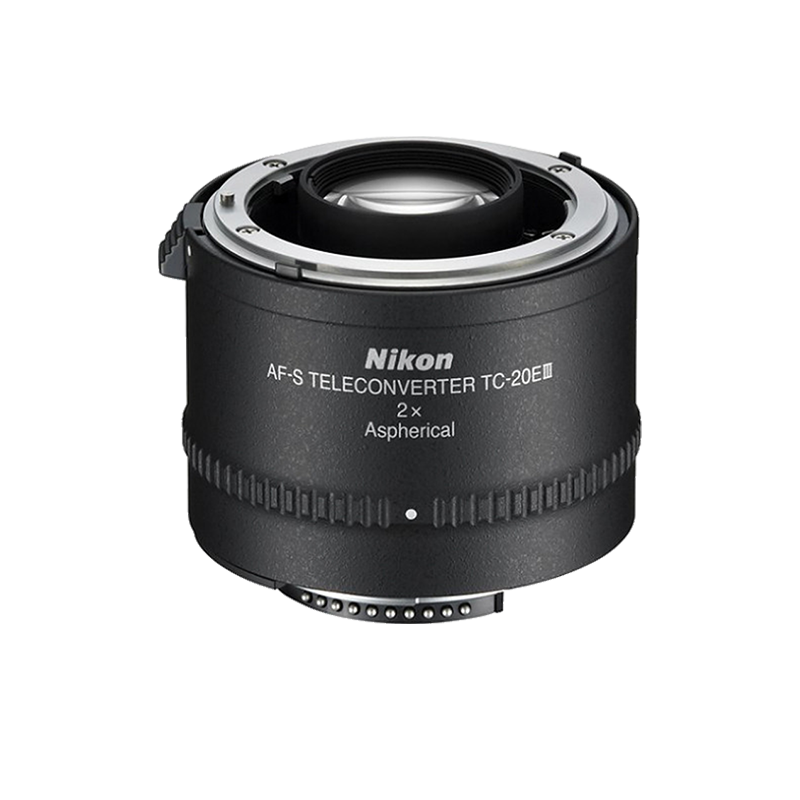
A 1.4x teleconverter extends the reach of a 500mm lens to 700mm at the cost of one stop of light — a worthwhile trade-off in golden hour conditions when the light is abundant and a leopard in a tree is thirty metres distant. A 2x converter, while tempting, typically degrades autofocus speed and sharpness to a degree that outweighs the reach advantage on most modern systems.
Shooting Specific Safari Subjects
Every animal on safari demands a different approach. A lion dozing in shade needs different treatment than a cheetah at full sprint, and knowing how to adapt your technique to each subject is what separates a good safari photographer from a great one.
Big Cats: The Priority
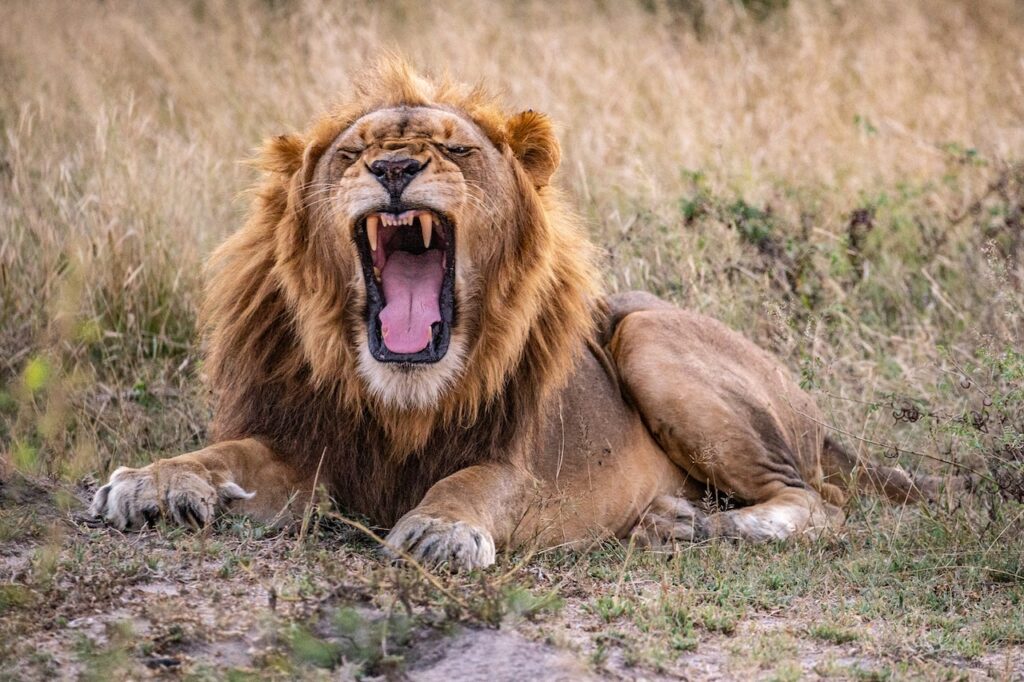
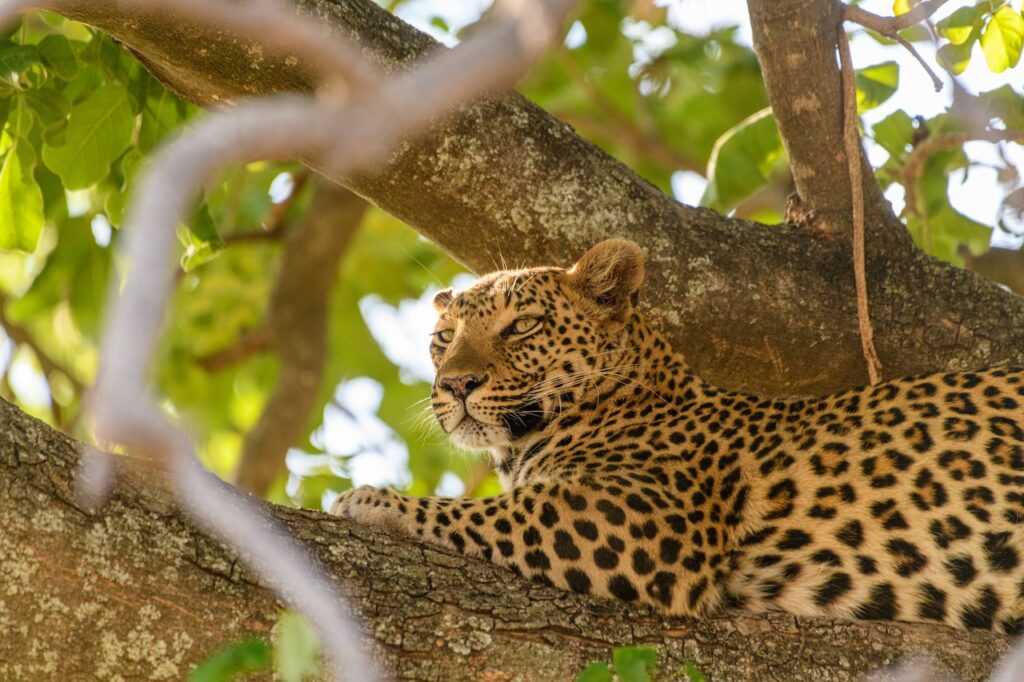
Lions, leopards, and cheetahs are the subjects most photographers prioritise, and each demands a different approach. Lions are largely stationary — the priority is light quality, expression, and eye contact; wait for the yawn, the interaction between pride members, the moment a cub climbs over a resting adult.
Leopards are cryptic and frequently in poor light conditions — a leopard in dappled tree shade requires the camera pushed to its ISO limits and a fast prime lens if available. Cheetahs are the action photographers’ cat — the full sprint, reaching 120 kilometres per hour, lasts only a few seconds and demands 1/2000 second or faster, continuous burst mode, and the tracking autofocus pushed to its absolute limits.
Elephants: Scale and Intimacy
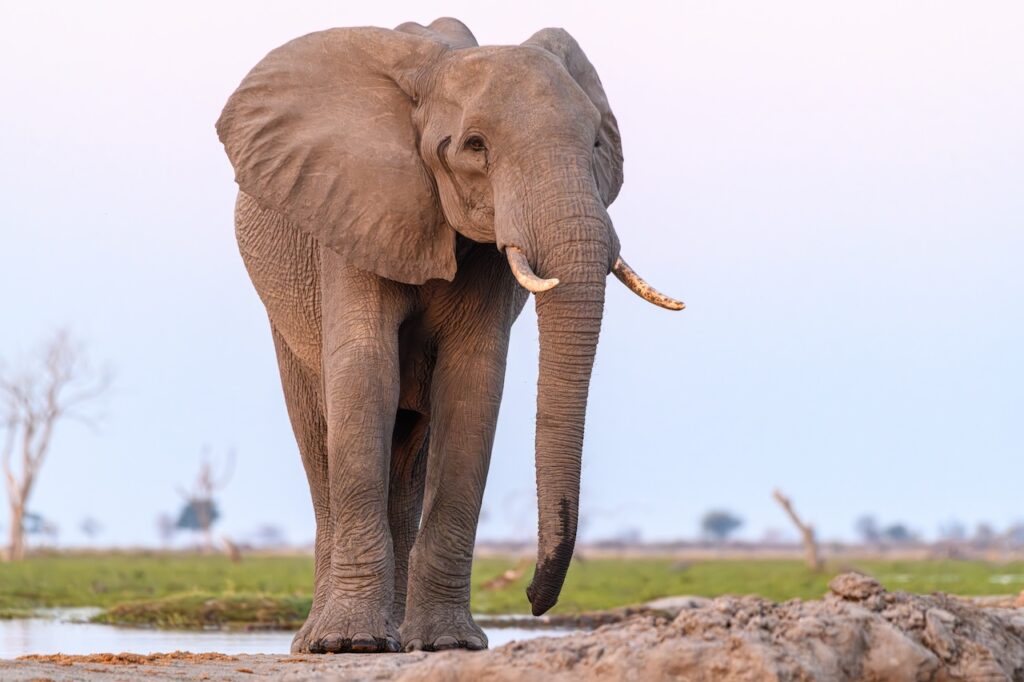
Elephants reward wide and long lens treatment equally. Use the 70-200mm for environmental portraits that capture the scale of a breeding herd against the landscape; switch to the long zoom for intimate portraits of individual faces — the extraordinary detail of aged elephant skin, the expressiveness of the eyes, and the extraordinary variety of ear patterns that make every elephant an individual.
The most powerful elephant images are often made at watering holes, where the animals’ behaviour is at its most uninhibited and their physical immersion in water produces images of remarkable beauty.
Birds: The Overlooked Opportunity
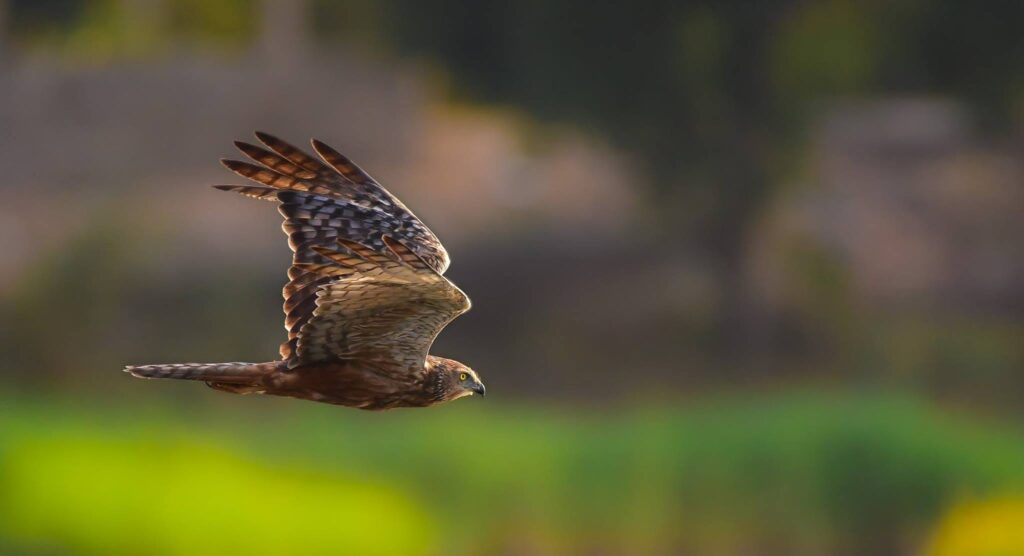
Africa’s birds are among the world’s most spectacular, and a luxury safari provides access to photographic opportunities with raptors, ground hornbills, lilac-breasted rollers, and the extraordinary carmine bee-eater colonies of the Luangwa Valley that rival any big-game encounter for sheer visual impact.
Set the camera to the highest burst rate for perched raptors launching into flight — the moment of departure, with wings fully extended and the subject still in its original location, is one of wildlife photography’s most rewarding and repeatable challenges.
Post-Processing Safari Images
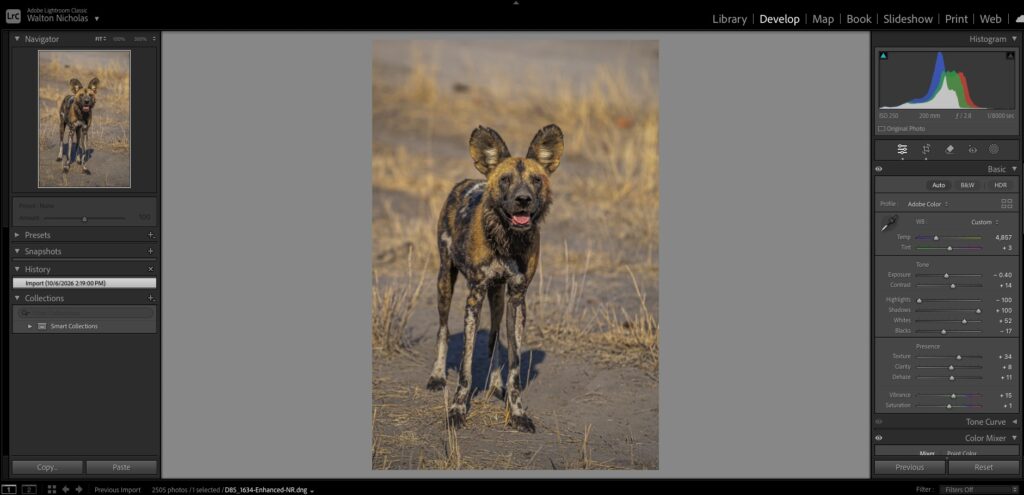
African savannah images almost always benefit from a warming of the white balance — push the temperature slider slightly toward amber to enhance the golden tones of the grass and the warm light on animal fur. Bring highlights down aggressively in dusty or bright conditions, lift shadows to recover detail in the shaded undersides of large animals, and use targeted HSL adjustments to deepen the blue of African skies without pushing the warm earth tones into artificiality.
A gentle application of texture and clarity on wildlife subjects enhances the extraordinary detail of elephant skin, lion mane, and leopard rosettes without making the image look over-processed. Finally, crop deliberately — most safari images benefit from a tighter frame than the one captured in the field, removing distracting elements from the edges and concentrating the viewer’s attention on the eyes and expression that make wildlife portraiture compelling.
The luxury safari gives you proximity, time, and extraordinary subjects. Your technique takes you the rest of the way.
If you’re contemplating a luxury safari, be sure to check out guides to safari travel in Africa, the best luxury safari lodges and camps in the Okavango Delta, the Masai Mara, the Serengeti, and Rwanda, and read about what a luxury safari in Botswana is really like.


