
The Masai Mara is one of the world’s greatest wildlife destinations, a vast, rolling savannah teeming with the Big Five, dramatic predator action, and the legendary Great Migration. Here’s where to stay when you visit.
There is a moment, every year between July and October, when the southern plains of the Masai Mara become the most extraordinary stage in Africa. A million and a half wildebeest, a quarter of a million zebra and tens of thousands of Thomson’s gazelle thunder north from the Serengeti in pursuit of fresh grass, marshalling along the swollen Mara and Talek rivers in the only natural spectacle on Earth that rivals the migrations of seabirds and Pacific salmon.
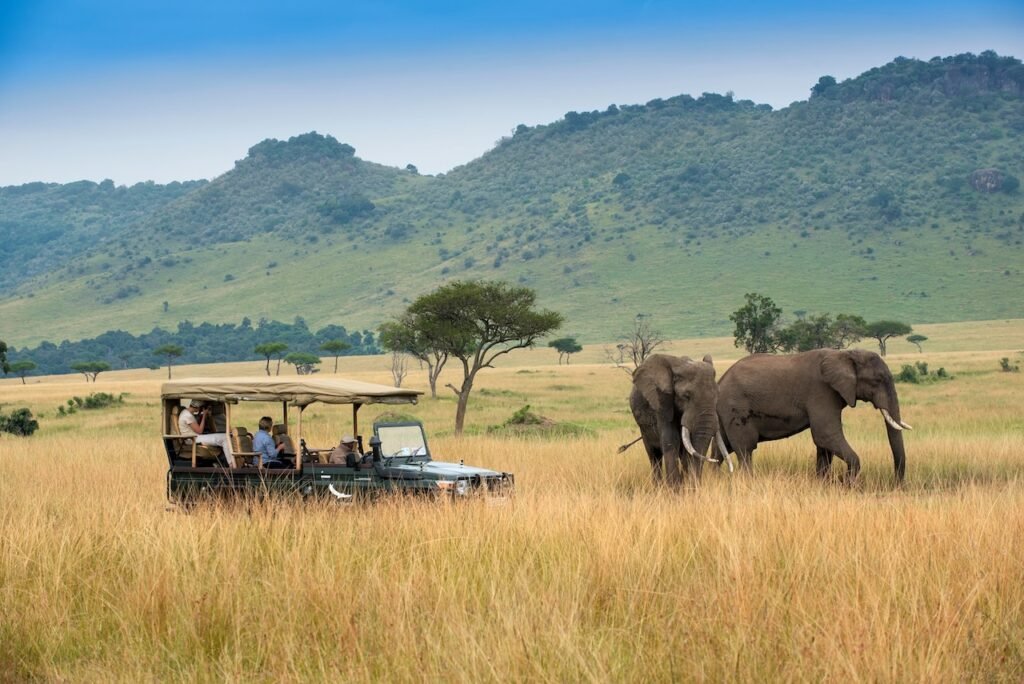
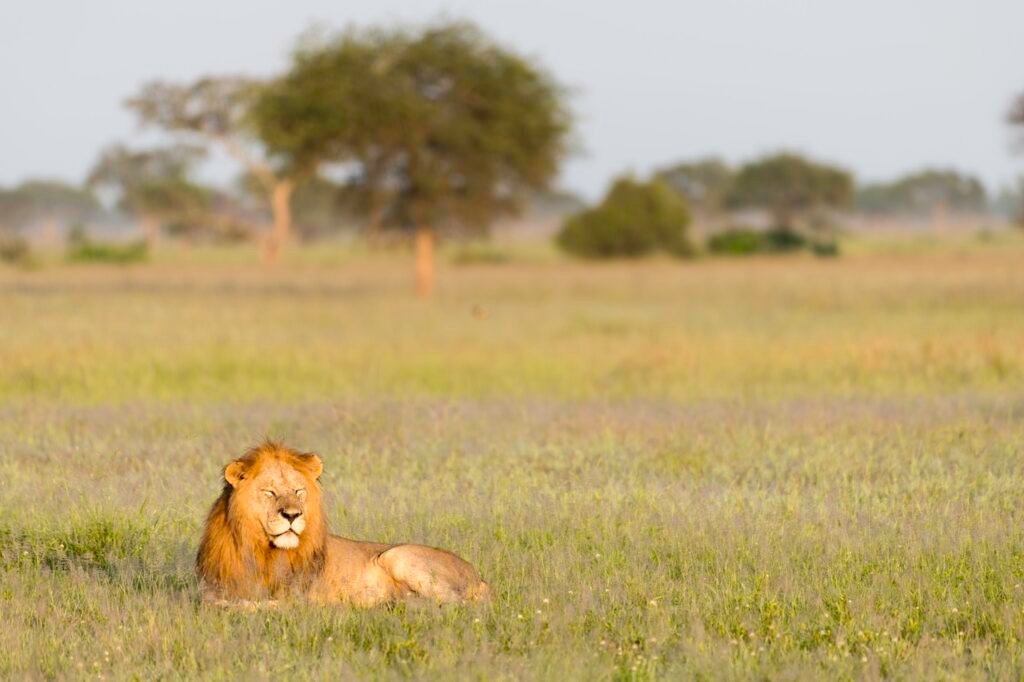
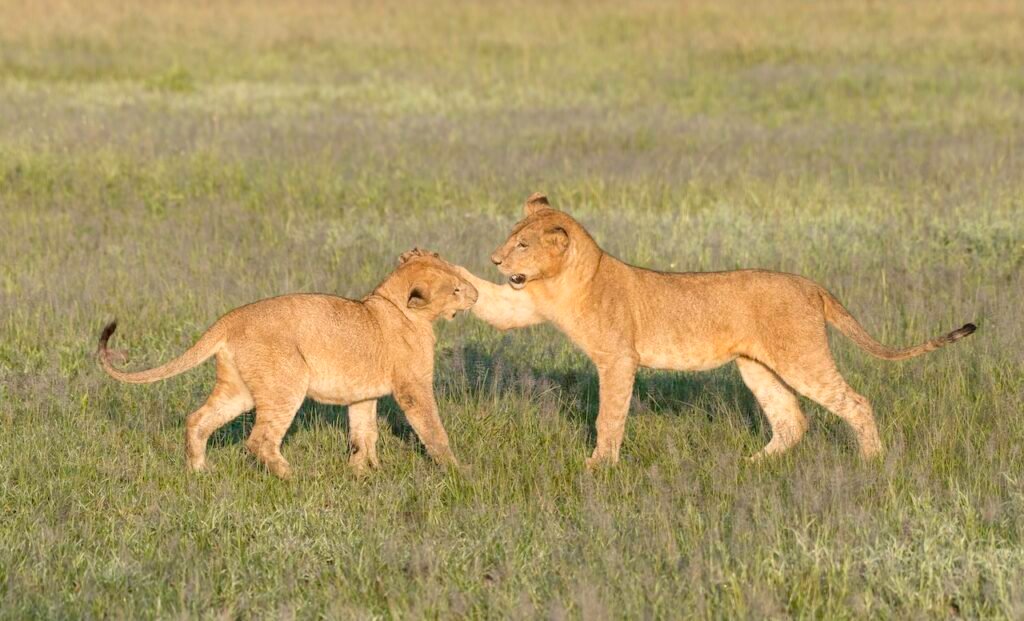
However, to define the Mara by the Great Migration alone is to miss its quieter genius. This is a year-round wildlife destination of unrivalled density, where lion prides hold court on every kopje, leopards drape themselves across sausage trees, and cheetah silhouettes appear in the long grass like calligraphy.
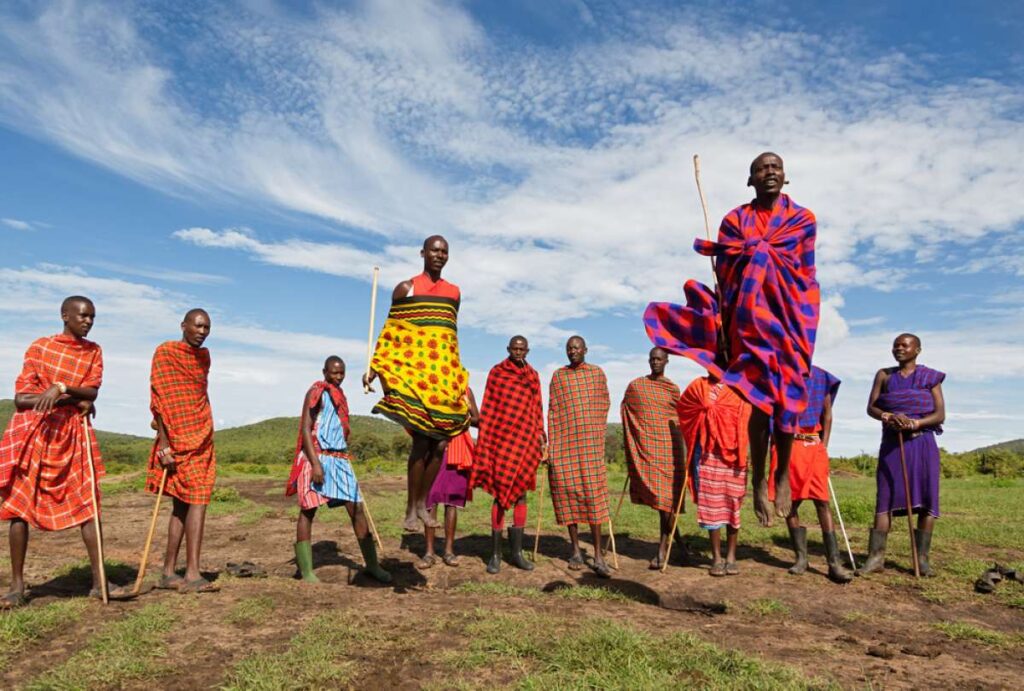
Equally distinctive is the way the Mara is now organised. The 1,510-square-kilometre Maasai Mara National Reserve sits at the heart of a much larger ecosystem, ringed by a constellation of community-owned conservancies — Olare Motorogi, Mara North, Naboisho, Olderkesi, Olalashe and others — where Maasai landowners lease their land to a small number of low-density camps. Vehicle numbers are strictly limited, off-roading is permitted, walking and night drives are allowed, and the lease income flows directly back to the community.
The result is some of the most exclusive game-viewing on the continent. The lodges below — five permanent classics and three mobile or semi-permanent camps — represent the very best of both worlds.
The Permanent Classics
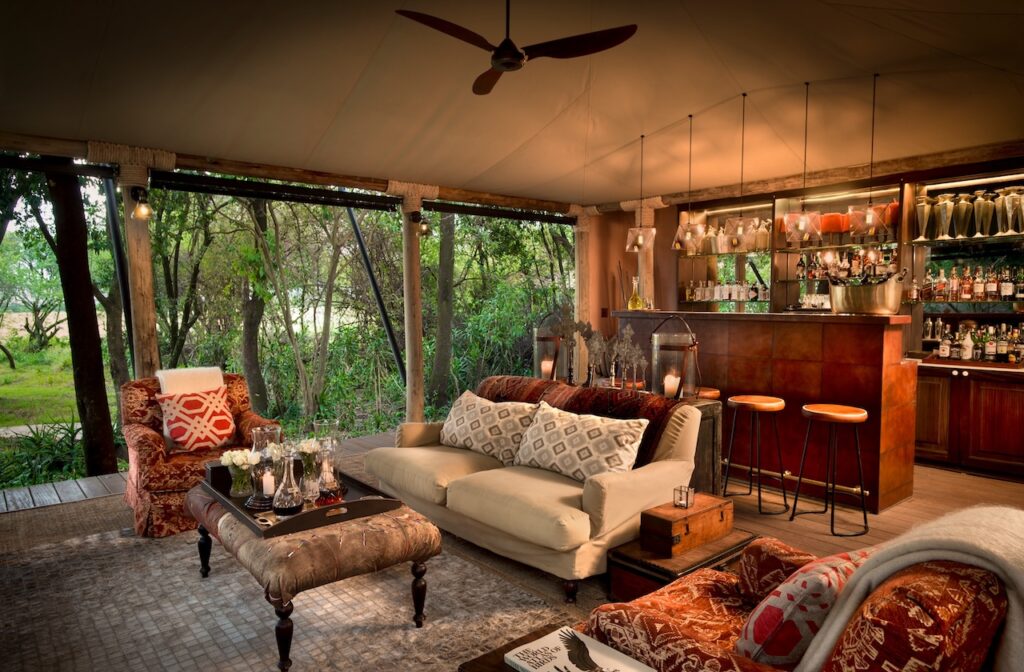
The Masai Mara’s permanent camps offer something fleeting tented camps cannot: deep-rootedness. Built to endure, they develop mature gardens, established staff communities, and a sense of place that improves with each season. Many of these iconic properties have cultivated their own histories, with guides who have tracked the same plains for decades. Staying in a permanent camp means inheriting that accumulated knowledge.
The Mara’s drama — the river crossings, the predator-rich grasslands, the vast skies — remains unchanged outside; inside, you have genuine comfort, consistency, and the feeling that this particular corner of Africa truly knows you’re coming.
Angama Mara
Angama
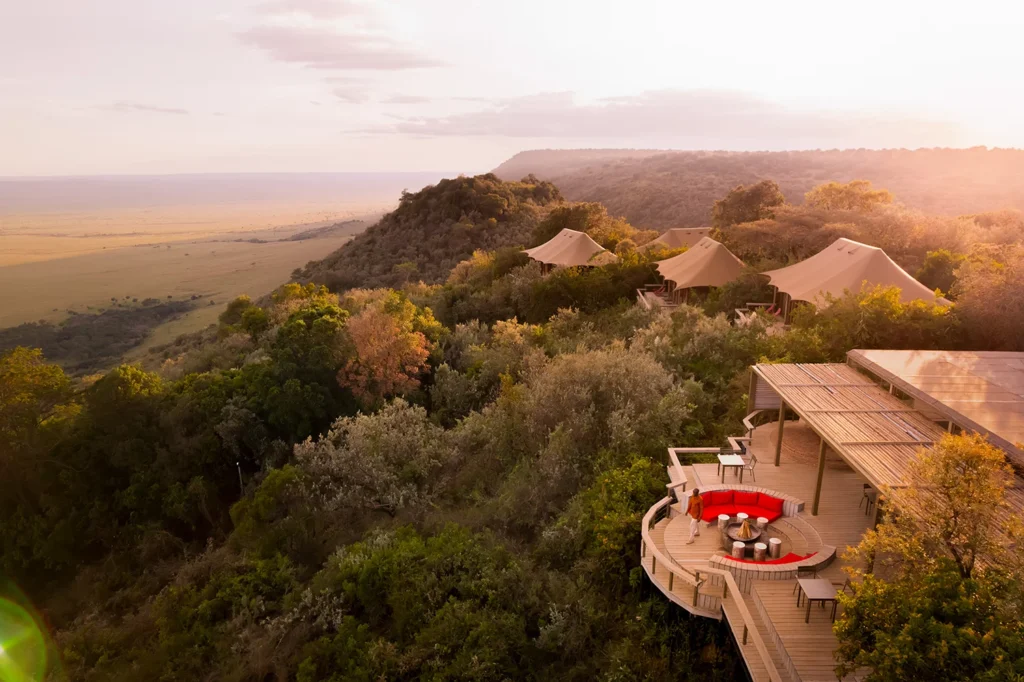
Few African lodges enjoy a setting as cinematic as Angama Mara, and the comparison is literal. The 30-suite property sits 1,000 feet above the Mara Triangle on the Oloololo Escarpment, looking down on the precise stretch of plain where Sydney Pollack filmed Robert Redford and Meryl Streep in Out of Africa.
Founded in 2015 by Steve and Nicky Fitzgerald (formerly of &Beyond), the camp is split into two intimate 15-tent wings — Angama North and South — each with its own pool, lounge and dining pavilion.
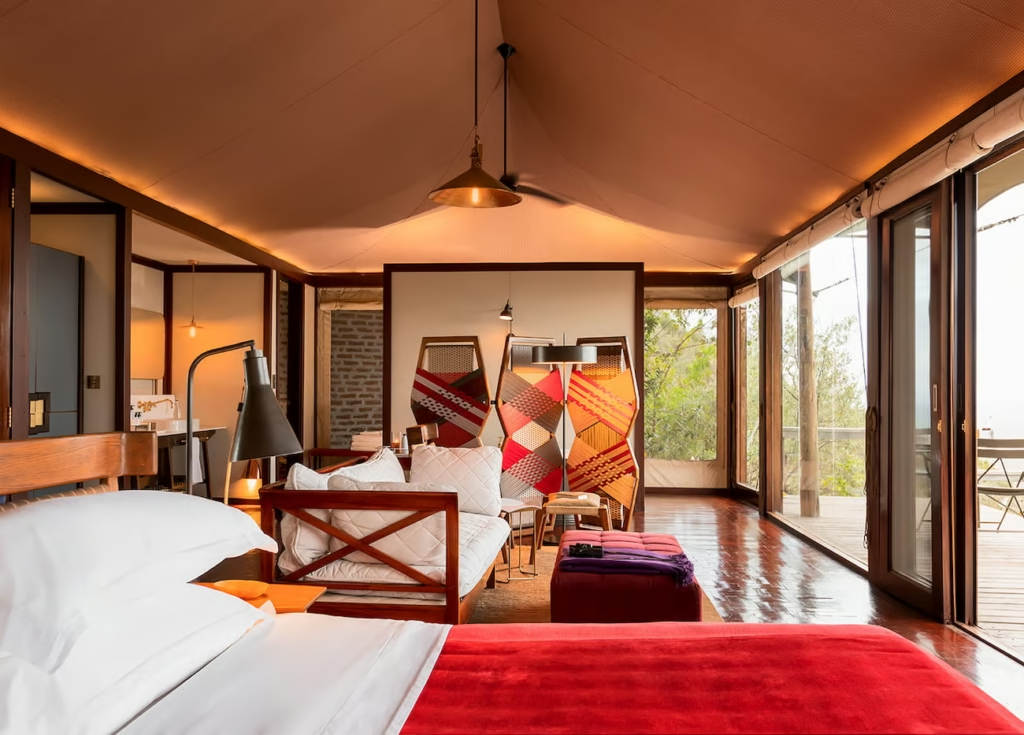
Architects Silvio Rech and Lesley Carstens designed the suites as forward-leaning glass pavilions on raised teak platforms, so that every bed, every bath and every reading nook frames the same hallucinatory view.
A photographic studio, the Pavilion (an open-air guest space with library and infinity pool), and the on-site Maasai Beadwork Collective lift it well beyond the standard luxury offering. Best from July to October for the migration river crossings, but the year-round resident game is exceptional.
Mara Plains Camp
Great Plains Conservation
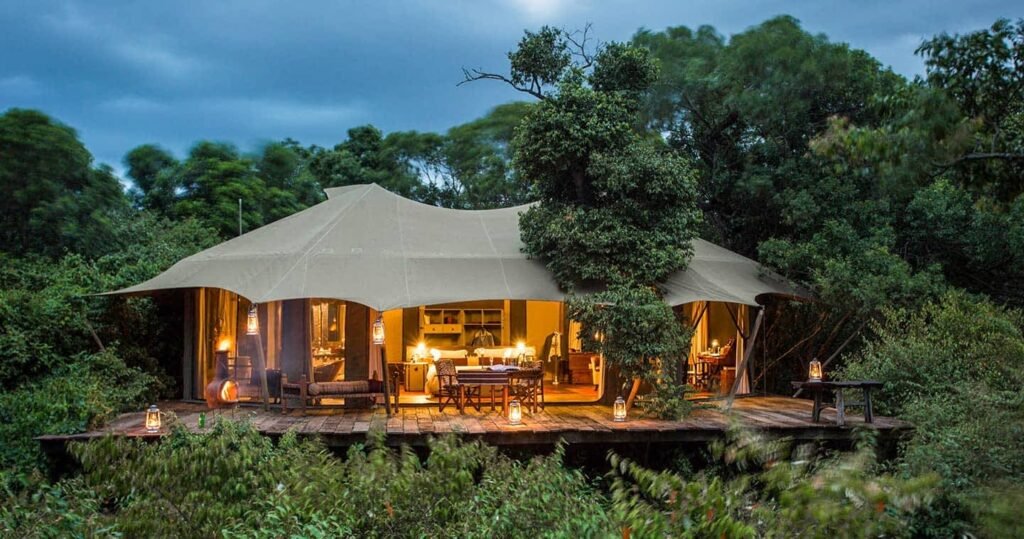
In the 35,000-acre Olare Motorogi Conservancy on the northern boundary of the National Reserve, Beverly and Dereck Joubert’s Mara Plains has long been the conservation purist’s choice.
Just seven tented suites raised on timber stilts above a riparian forest of yellow-fever acacias, the camp does sumptuous in the most considered way possible: brass campaign furniture, four-poster beds beneath white-cotton mosquito nets, copper bathtubs and Persian rugs underfoot.
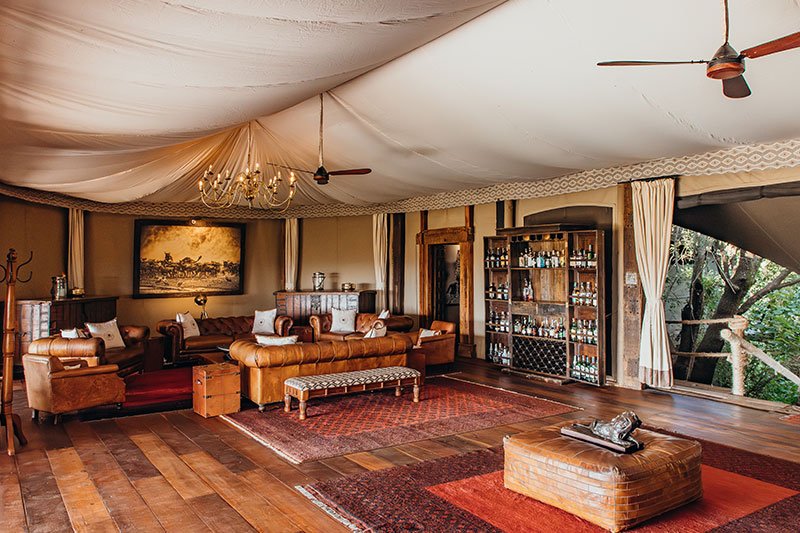
Conservancy rules cap vehicle numbers and prohibit minibus tourism entirely, so even at the height of the migration window your guide can pause for as long as a sighting deserves. The food is restaurant-grade, the cellar deep, and the on-property archive of Beverly’s wildlife photography is itself worth a long browse.
The two-bedroom Jahazi House next door — exclusive-use, with private chef, vehicle and pool — is one of East Africa’s finest family or multi-generational hires.
Bateleur Camp
&Beyond
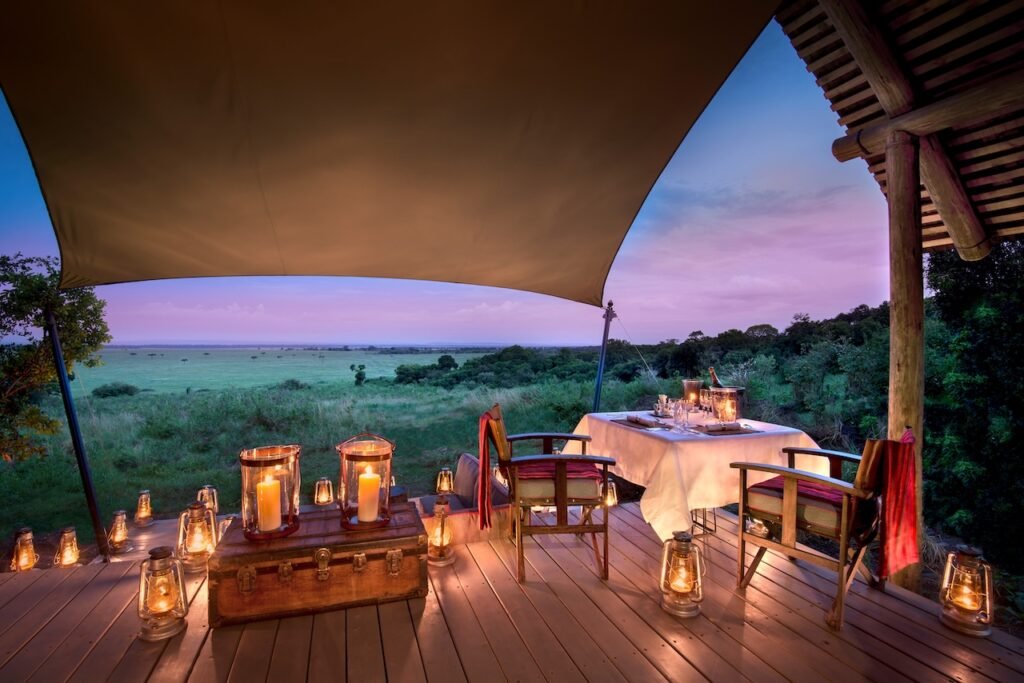
The grande dame of the National Reserve itself, &Beyond’s Bateleur Camp (one of my all-time favourites) sits in a rare patch of riverine forest at the foot of the Oloololo Escarpment, looking out across the open plains where the migration crossings unfold.
Two intimate adjoining nine-tent camps recall the gilded age of safari travel: silver tea services on the verandah at dawn, Persian rugs on polished timber floors, four-posters draped in white cotton, and bathtubs positioned to face the bush.
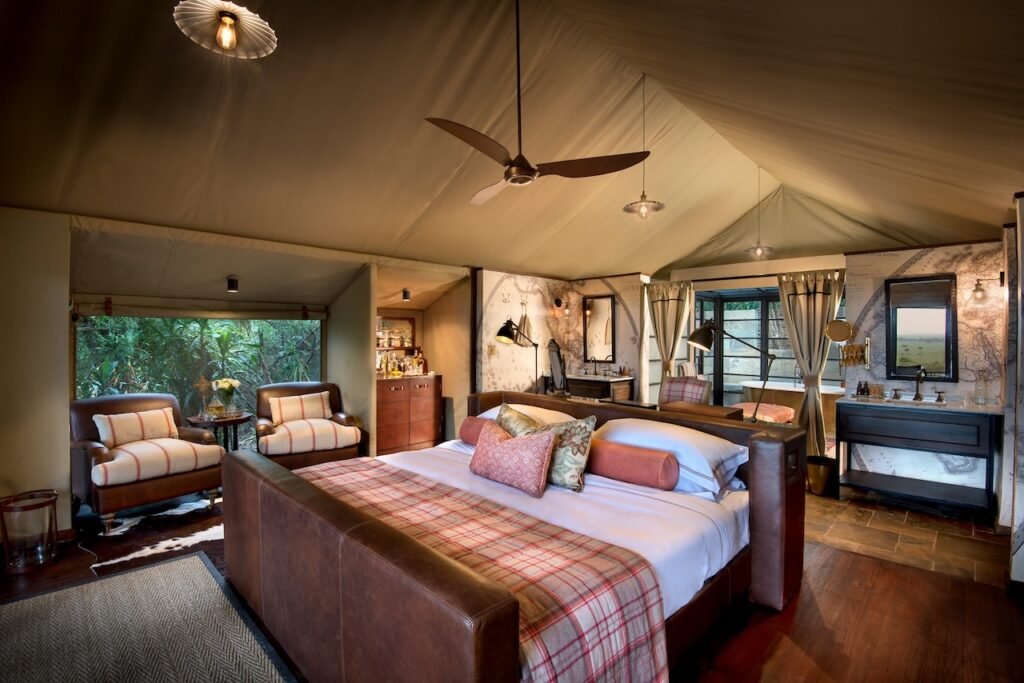
Named after the bateleur eagle that wheels overhead, the camp benefits from one of only a handful of luxury locations actually inside the National Reserve, which means front-row access during the July-to-October river crossings without the long pre-dawn drive from the conservancies.
The food, the guiding and the &Beyond WildChild family programme are all of a standard the group is justifiably famous for. The camp is most popular from May to October.
Cottar’s 1920s Camp
Cottar’s Safaris
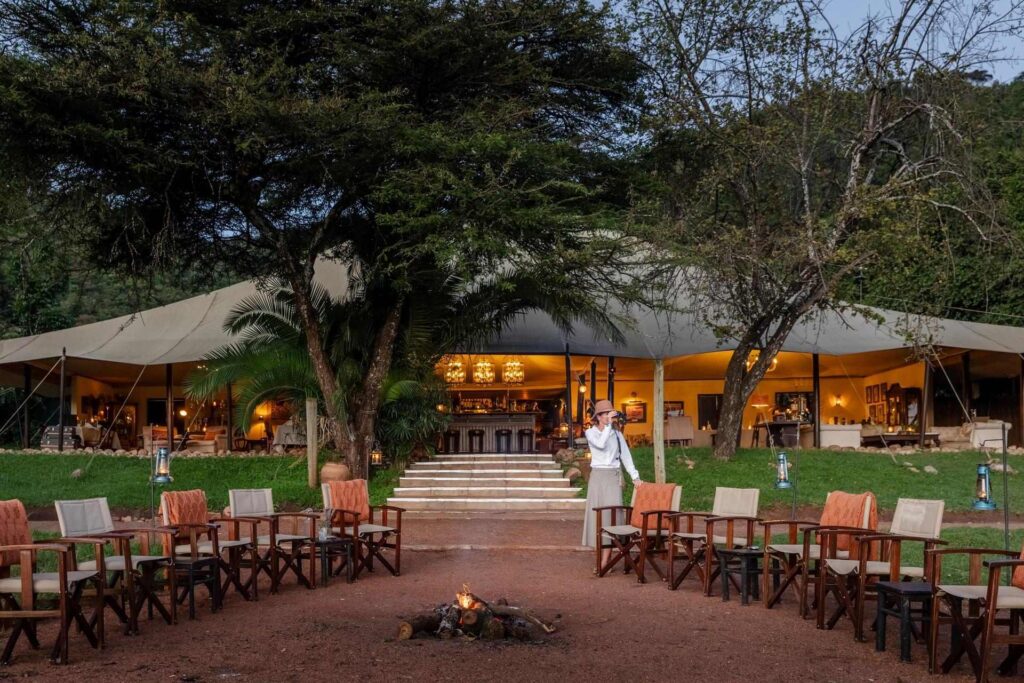
The Cottar family have been outfitting safaris in East Africa since 1919, and their flagship 1920s Camp is the most thoroughly themed luxury lodge in the Mara.
Set in the family’s privately-leased 7,608-acre Olderkesi Conservancy, on the southern boundary of the National Reserve where the wildebeest first cross from Tanzania, the camp’s ten enormous canvas tents are an unapologetic love letter to the golden age of safari: leather steamer trunks, gramophones, claw-foot baths, polished mahogany campaign desks and Maasai-shuka throws on cast-iron beds.
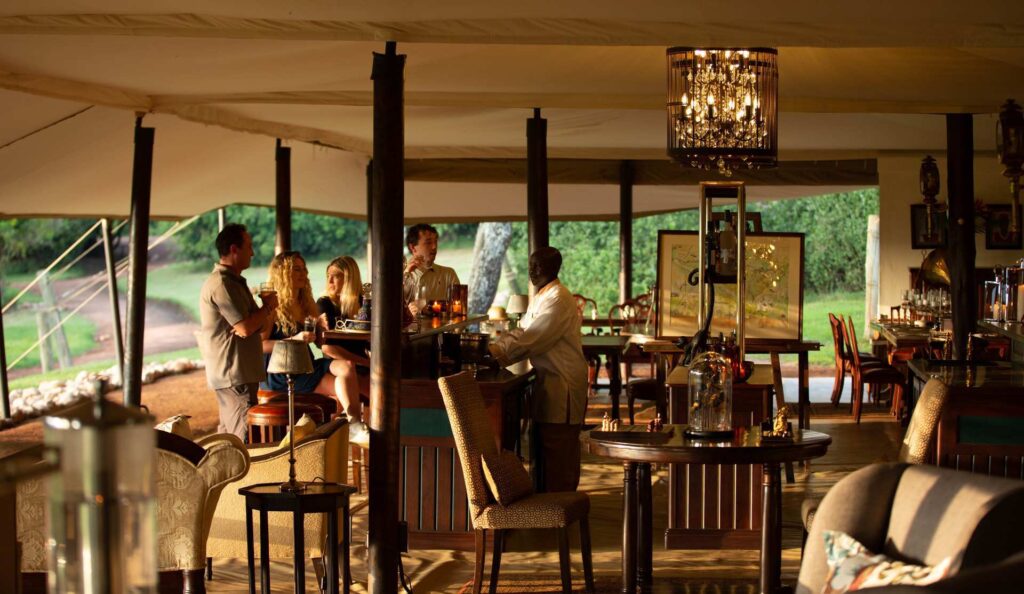
A separate Bush Spa, an exclusive-use Cottar’s Private Homestead with its own pool and chef, and one of the most experienced guiding teams in Kenya complete the picture. Because Olderkesi borders the Reserve directly to the south, this is also one of the surest spots from which to track the early-season migration.
This camp is available year-round, with peak crossings July to early October.
Mara Bushtops
Bushtops
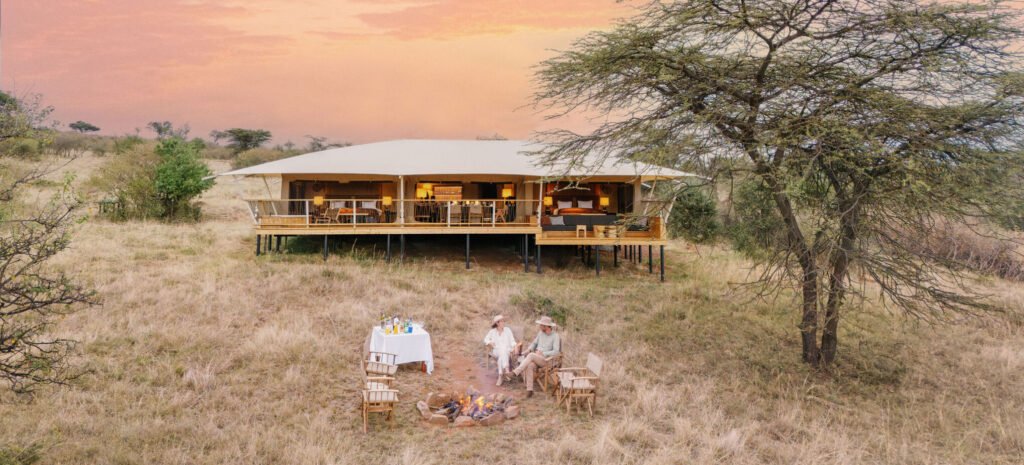
On the eastern flank of the Mara ecosystem, in the privately-managed Olalashe Conservancy, Mara Bushtops occupies a different point on the luxury spectrum: more polished resort than rustic camp, but no less serious about its conservation credentials.
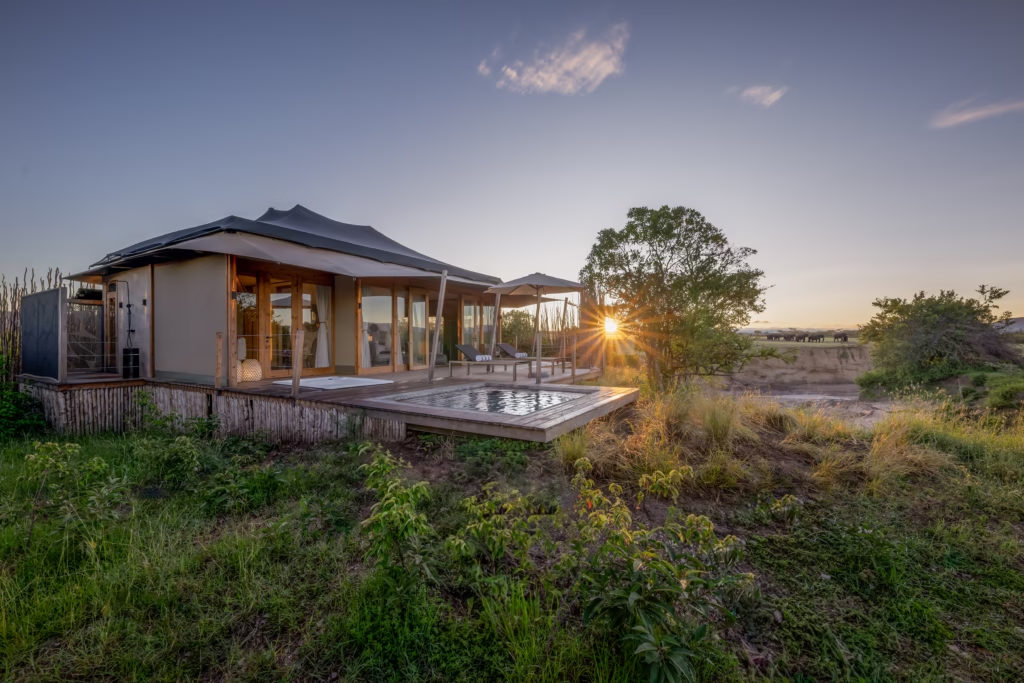
The 12 enormous tented suites — among the largest in East Africa — each come with private viewing deck, outdoor whirlpool with its own butler-stocked bar, Bose sound system, and a fireplace lit nightly by a discreet attendant.
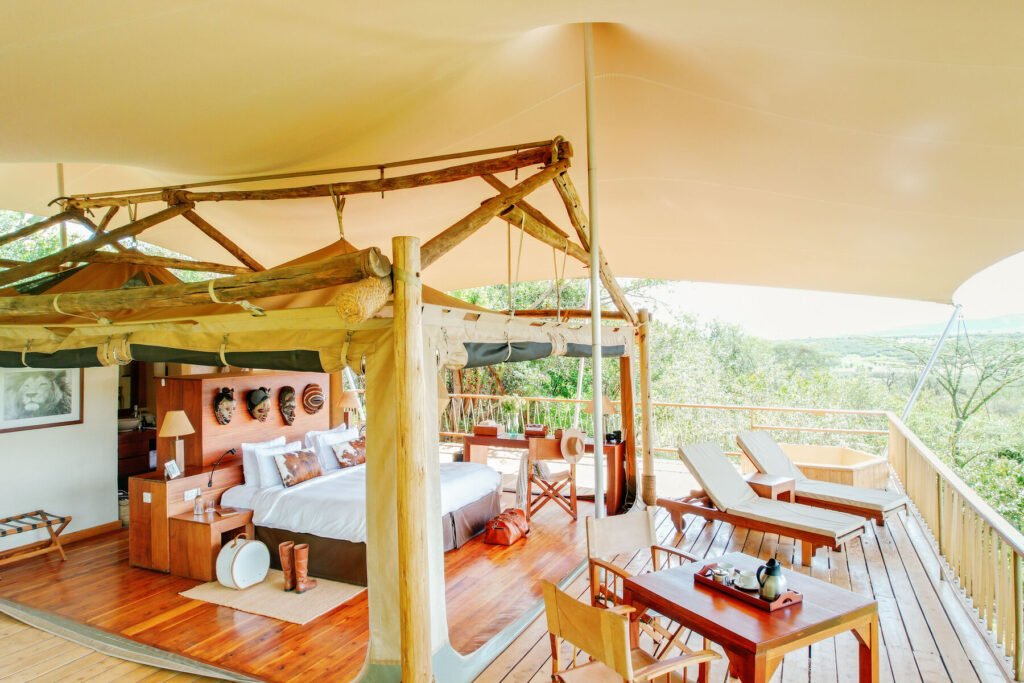
A 25-metre infinity pool, a full spa with hammam, and a wine cellar of more than 6,000 bottles are unusual indulgences in a safari setting, but Bushtops manages them without sacrificing the bush experience: the conservancy is privately leased and largely free of other vehicles, and the resident lion, leopard and cheetah are habituated to the photographic safari pace.
A strong choice for first-time safari-goers, honeymooners and travellers who want a touch of resort polish alongside their game drives.
The Mobile & Semi-permanent Camps
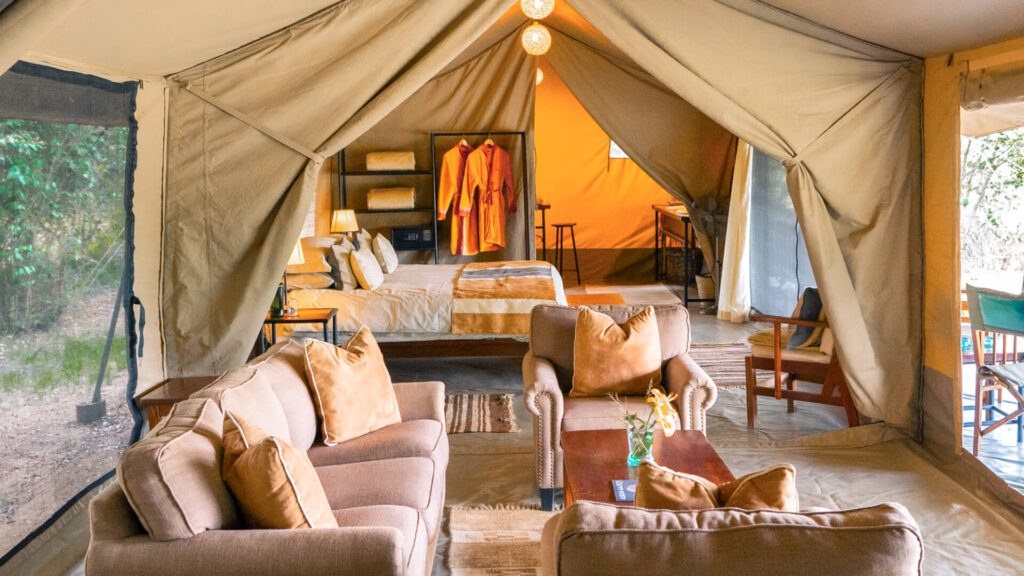
Mobile camps offer what permanence never can: the thrill of being exactly where the wildlife is. Following the Great Migration across the Mara-Serengeti ecosystem, they strike and rebuild in the heart of the action — a pride’s territory one week, a crossing point the next. The lack of fixed infrastructure is the point. Fewer guests, lighter footprint, and a rawer connection to the bush, including waking to sounds unfiltered by garden walls, with nothing between you and the savannah but canvas.
Mara Expedition Camp
Asilia Africa
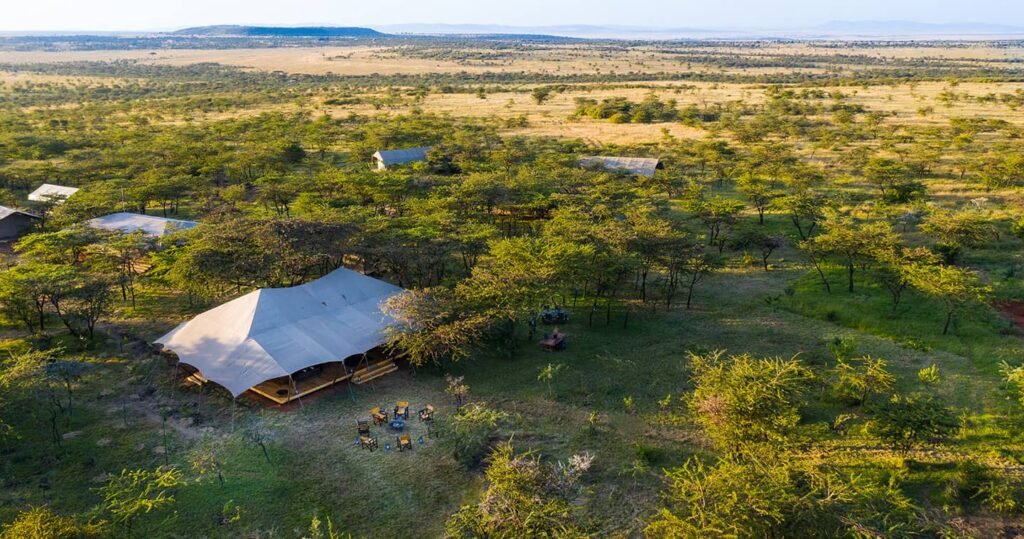
Asilia’s flagship Mara mobile-style outpost is, in spirit and aesthetic, a faithful tribute to the great expeditionary safaris of Karen Blixen’s day — though delivered with thoroughly contemporary comforts.
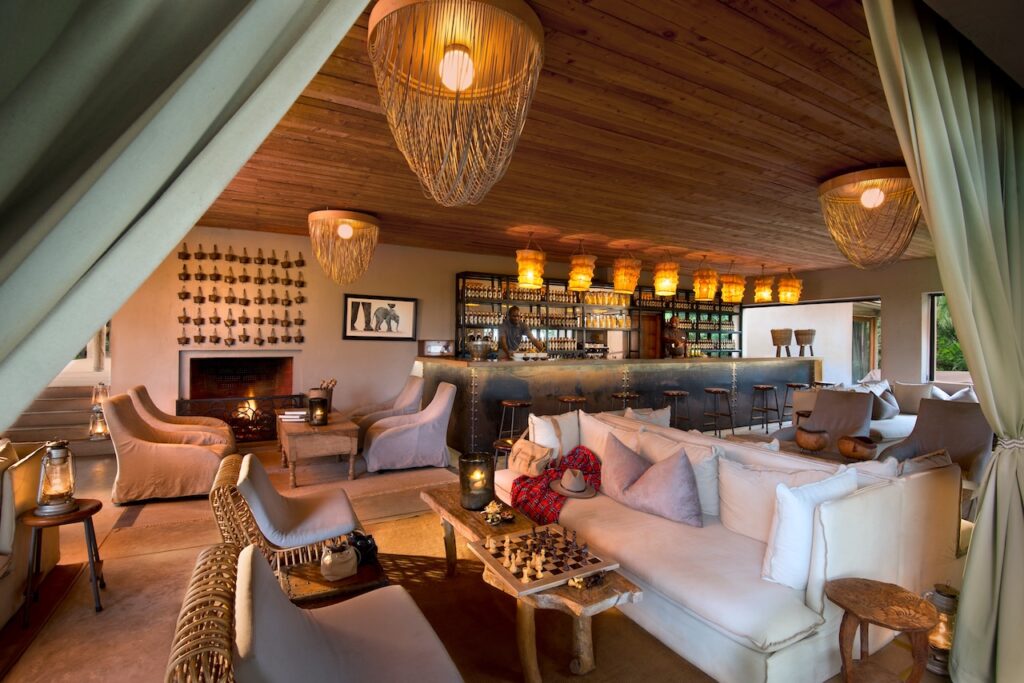
Set in the Mara Naboisho Conservancy, one of the most wildlife-rich and least-visited of the Mara’s community concessions, the camp comprises just five canvas suites pitched beneath a grove of riverine trees. Inside, the look is classic safari done right: oil lanterns, brass fittings, leather butterfly chairs, copper basins, vintage maps and writing desks stocked with proper notepaper.
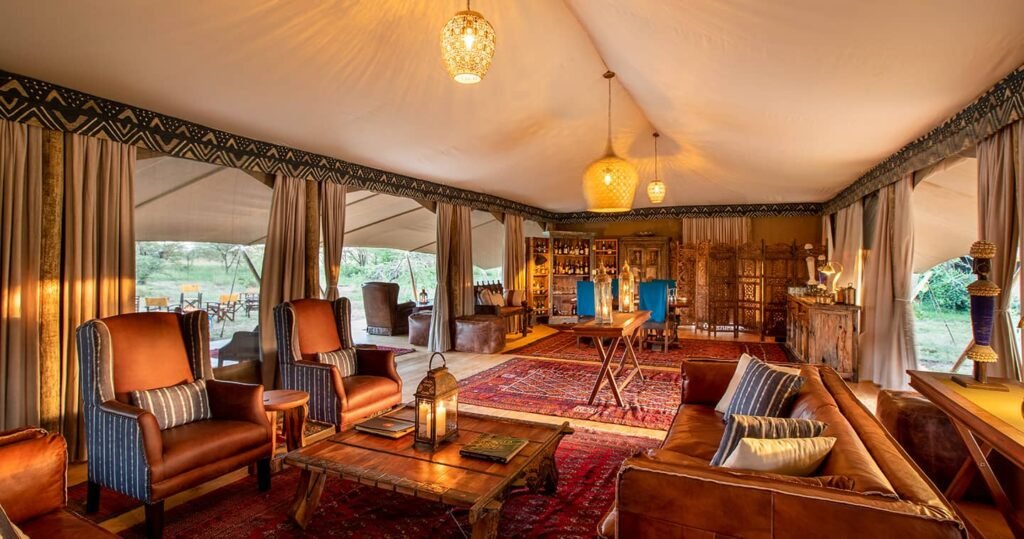
Guests share a long-table mess tent for meals — invariably starlit — and a small fireside library. Game-viewing in Naboisho is genuinely exceptional, with a high lion density, regular wild dog and one of the highest cheetah-to-square-kilometre ratios in Kenya.
Because the camp is light-footprint and easily struck, Asilia can also assemble bespoke private versions for families or private groups in remoter corners of the conservancy. Year-round, with cooler nights July to August.
Nkorombo Migration Camp
Alex Walker’s Serian
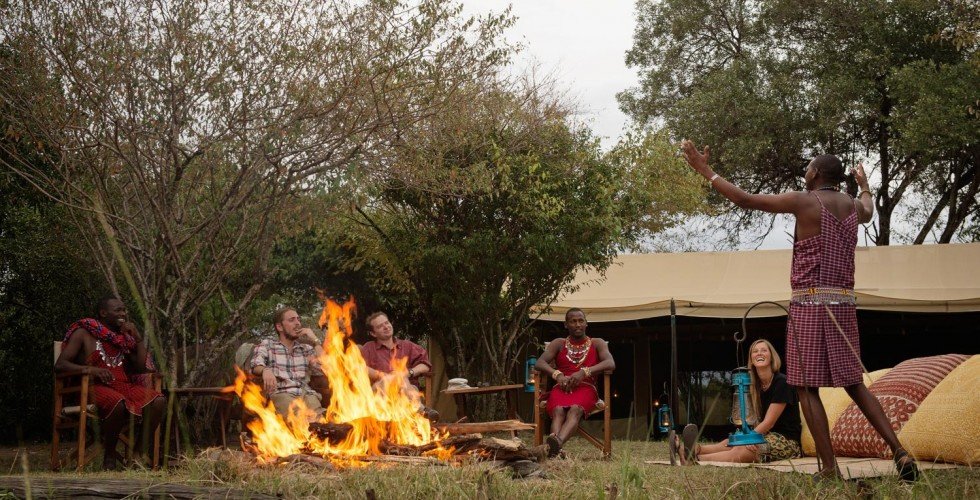
If a mobile safari in the truest sense is what you are after — canvas erected for a season, struck without trace, set up again where the herds are — Alex Walker’s seasonal Nkorombo camp is the gold standard.
Walker, a Kenya-born guide of legendary reputation who cut his teeth at Cottar’s, runs his Serian portfolio on the principle of small, exclusive, intensely private camps with their own vehicles and guides.
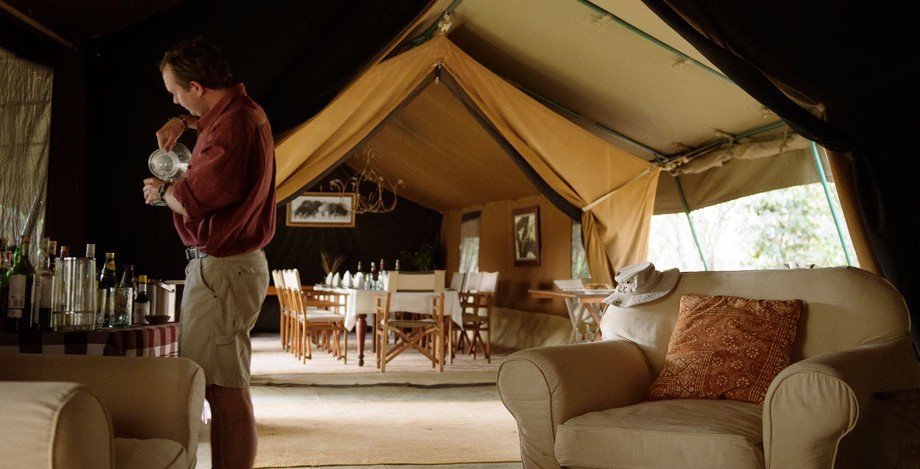
From mid-July to October, Nkorombo is pitched inside the Maasai Mara National Reserve itself — one of the few operators permitted to do so — placing guests within minutes of the great Mara River crossings.
Six classic canvas tents, no electric fences, no other guests for kilometres, and the kind of guide-led intimacy that makes everything else feel mass-market. Walker’s other camps (Serian “The Original” in Mara North, and Ngare Serian on the riverbank) are open year-round for clients combining migration mobility with a permanent base.
&Beyond Kichwa Temp Tented Camp
&Beyond
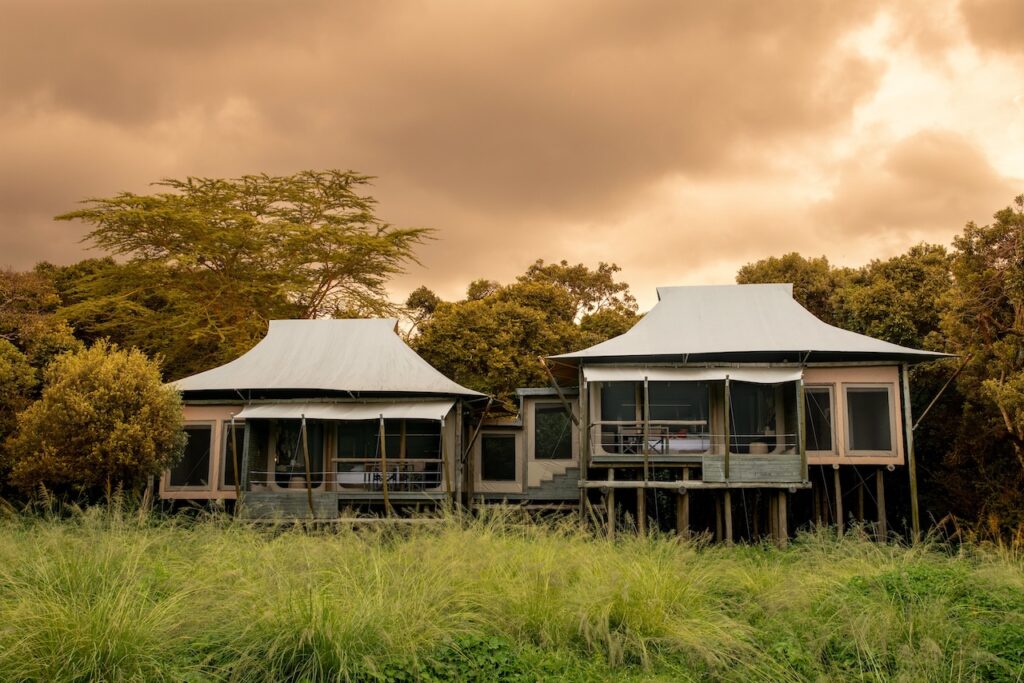
Positioned at the base of the dramatic Oloololo Escarpment and bordering the Maasai Mara National Reserve in Kenya, &Beyond Kichwa Tembo sits directly in the path of the annual Great Migration — one of the greatest wildlife spectacles on earth. The camp overlooks the Mara Triangle, widely regarded as the finest game-viewing area in the entire Masai Mara ecosystem, with the Saparingo River threading through the private concession below.
The camp’s 40 tents are divided across three categories: classic tents nestled in riverine forest, superior tents among shady acacia woodland, and superior view tents and family suites that gaze out across the open Mara plains toward the escarpment. All tents are generously proportioned, raised on stilts with wraparound screened decks, Maasai-inspired design details, and en-suite bathrooms. The setting shifts from intimate forest canopy to sweeping savanna depending on your category — both are extraordinary.
Twice-daily game drives into the Mara Triangle form the core of the excursion programme, with the private concession permitting off-road driving to follow predator activity without restriction. Guided bush walks offer an entirely different pace — slower, more sensory, attuned to the smaller dramas of the ecosystem.
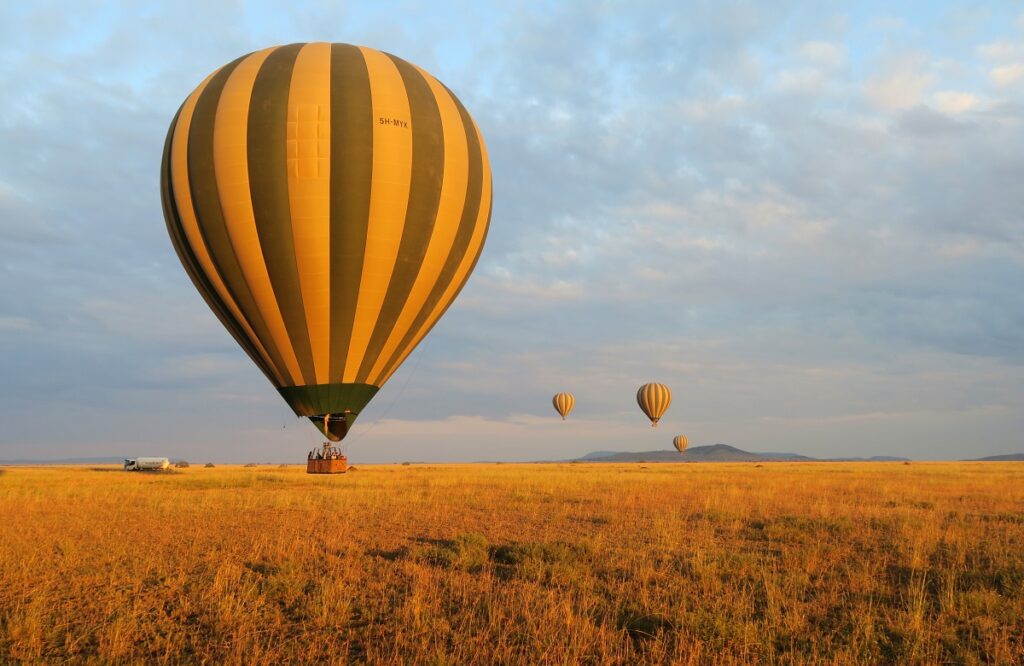
Hot-air balloon safaris at dawn, floating above the plains with a champagne breakfast landing, are among the most memorable experiences in African travel. Maasai cultural visits, a rim-flow pool overlooking the savanna, and open-air boma dining under the stars complete an exceptional camp.
Permanent Versus Mobile: Which to Choose
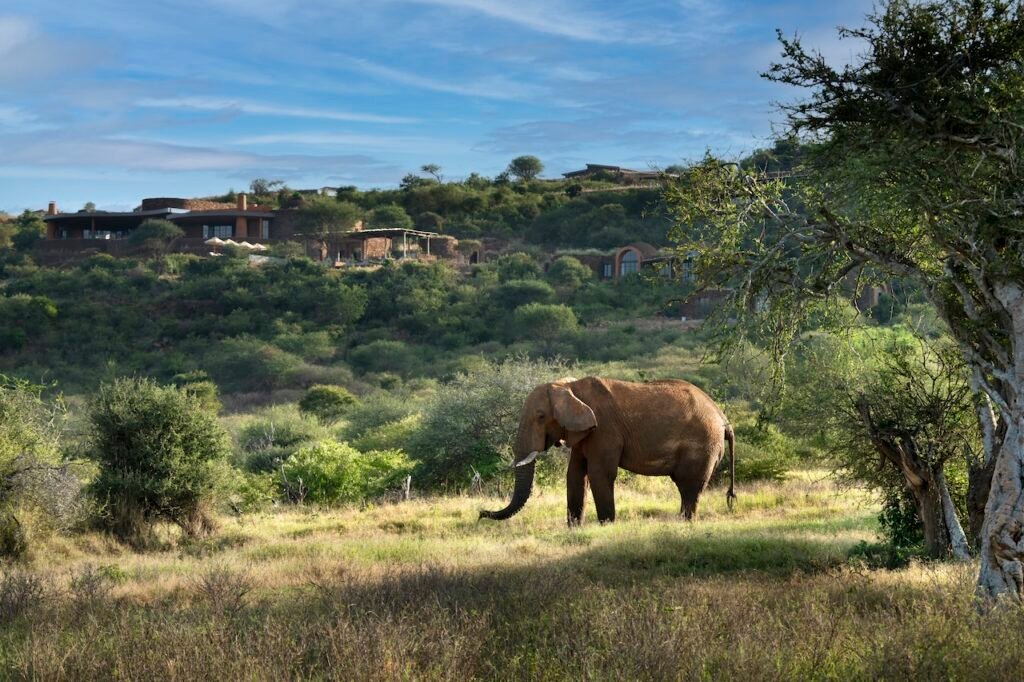
The choice between permanent and mobile is less an either/or than a question of layering. Permanent lodges such as Angama, Bateleur, Mara Plains and Mara Bushtops offer the architectural ambition, hot infinity pools, full spas and cellar dining that a long-haul traveller from Asia might reasonably expect at the top end of the market. They are the right base for travellers who want to combine safari with serious downtime in camp.
Mobile and semi-permanent camps strip the experience back to its essentials: canvas, oil lanterns, fewer staff and a closer relationship with the bush. They are the right answer for repeat safari-goers, photographers, and anyone for whom the destination is the wildlife rather than the wine list. Many of the best Mara itineraries combine one of each.
Masai Mara Safari: Your Questions Answered
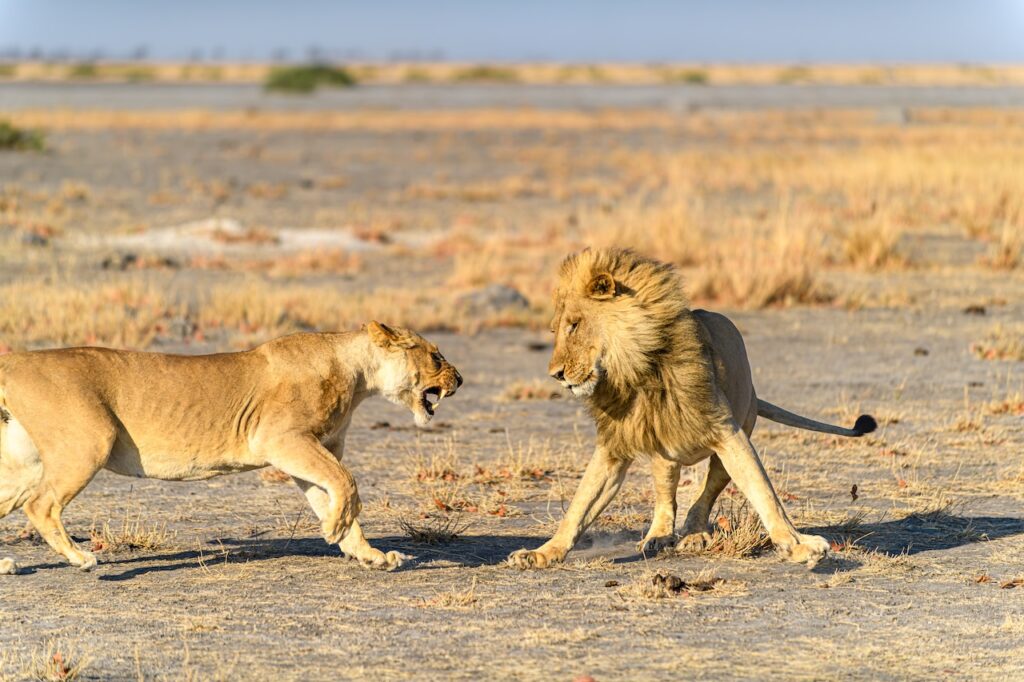
Before you go, the questions tend to be the same. Here are the ones we’re asked most often, with the answers that actually matter.
What is the Masai Mara famous for?
The Masai Mara is Kenya’s most celebrated safari destination and the northern stage of the Great Migration — the annual movement of around 1.5 million wildebeest and hundreds of thousands of zebra between Tanzania’s Serengeti and the Mara’s open grasslands.
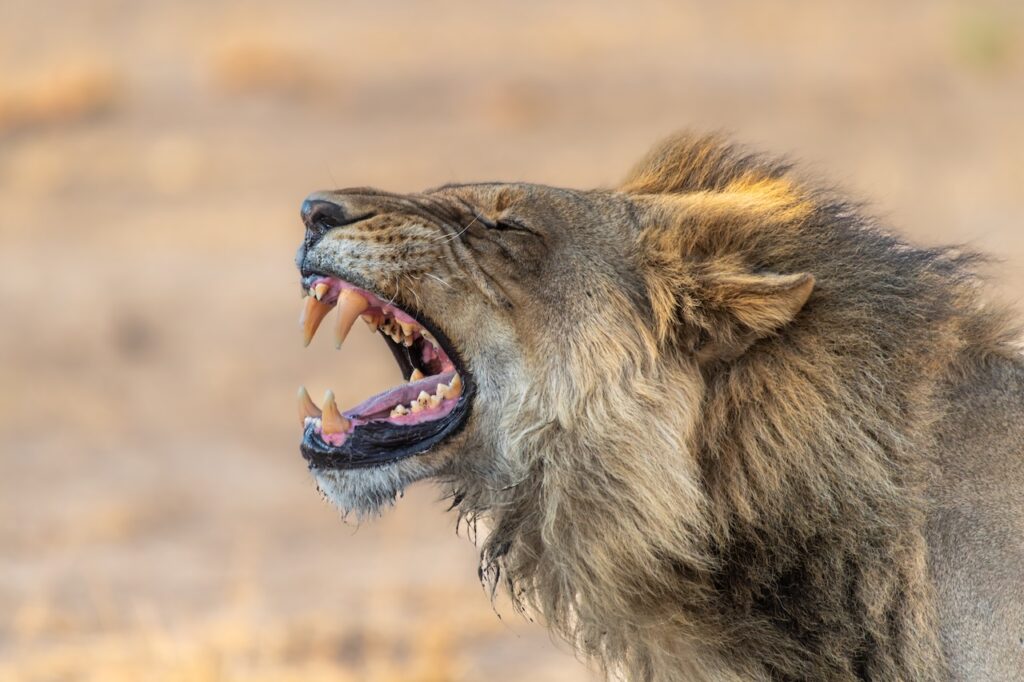
But the Mara is far more than a migration destination. It holds one of Africa’s densest lion populations, exceptional leopard sightings, large elephant herds, cheetahs, and a resident cast of wildlife that makes it rewarding in every month of the year. The landscape itself — vast, golden, and seemingly endless — is unlike anywhere else.
When is the best time to visit?
The Mara is a year-round destination, but the calendar divides meaningfully. July to October is peak season, when the migrating herds are present and the famous Mara River crossings reach their most dramatic intensity — August and September are the high point. The dry season outside the migration (January to February) offers excellent predator action on a quieter landscape.
The green season (November to June) thins the crowds considerably, brings lush scenery and exceptional birdwatching, and is when the Mara’s resident wildlife is at its most dispersed and active. March to May sees the heaviest rains and the lowest rates; June marks a sweet spot of drying conditions, strong wildlife, and a calmer atmosphere before peak season sets in.
What are the Mara River crossings, and are they guaranteed?
The Mara River crossings are the most dramatic single wildlife event in Africa — columns of wildebeest massing on the banks, testing the water, then throwing themselves across crocodile-filled channels in surging, chaotic waves. They happen when the migrating herds are in the northern Mara, roughly July to October, with August and early September historically the peak window.
They are not, however, predictable: the herds cross on their own schedule, driven by instinct and grass, and there are days of waiting before a crossing occurs. Positioning yourself near the river for several consecutive days, staying in a camp close to the main crossing points, significantly increases your chances. No operator can guarantee a crossing; camps that claim otherwise should be treated with caution.
What is the difference between the Masai Mara National Reserve and the private conservancies?
This is the question that most shapes where you stay. The National Reserve is the 1,510-square-kilometre protected core managed by Narok County. It holds the Mara River and all its crossing points — the migration spectacle happens here and nowhere else. Entry fees for non-residents are US$100 per adult per day in low season (January to June) and US$200 in high season (July to December).
The private conservancies are community-owned lands bordering the reserve, managed through agreements between Maasai landowners and safari operators. They have strict limits on visitor numbers — sometimes as few as two vehicles per sighting — and permit activities the reserve does not: night drives, off-road driving, and walking safaris.
Conservancy fees of roughly US$80 to US$150 per person per night are typically included in your camp rate, though guests who want to access the river crossings must drive into the reserve and pay the daily entry fee on top. For first-time visitors focused on the migration, the reserve is essential. For those prioritising privacy, exclusivity, and a more immersive experience, the conservancies are transformative.
Do I need a visa to enter Kenya?
Kenya replaced its visa system with an Electronic Travel Authorisation (eTA) in January 2024. All visitors — except citizens of East African Community member states and most African nationalities — must apply online at etakenya.go.ke before travel. The fee is $30, processing typically takes 24 to 72 hours, and you should apply at least three days before departure. The eTA is valid for 90 days from issue and permits a single entry stay.
Avoid third-party websites charging additional fees — the official platform is the only legitimate application route. Your passport must be valid for at least six months beyond your arrival date, with at least one blank page.
What vaccinations and health precautions do I need?
Yellow fever vaccination is required if you are arriving from a country with yellow fever risk; if travelling directly from the UK, US, or Europe, it is not mandatory but is sometimes recommended. Typhoid, hepatitis A, and tetanus are strongly advised; rabies is worth discussing with your travel clinic if you plan time in remote areas.
Malaria is present in the Masai Mara year-round, with higher transmission during and after the rains (March to May and October to December). The Plasmodium falciparum strain is the most serious form of the disease; consult a travel health specialist about appropriate prophylaxis well before departure. DEET-based repellent, long-sleeved clothing at dusk, and mosquito nets remain important regardless of medication. Medical evacuation from the Mara can cost upward of US$30,000 — comprehensive travel insurance with evacuation cover is not optional.
How long should I spend in the Masai Mara?
Three nights is a workable minimum; four to five nights is considerably better. The Mara rewards patience — the best encounters often happen on the third or fourth day, and those visiting in crossing season need time near the river to be in position when a crossing eventually occurs. Those combining the reserve with one or more private conservancies typically spend six to eight nights in the broader Mara ecosystem, moving between camps for a range of habitats and experiences.
Can I combine the Masai Mara with other destinations?
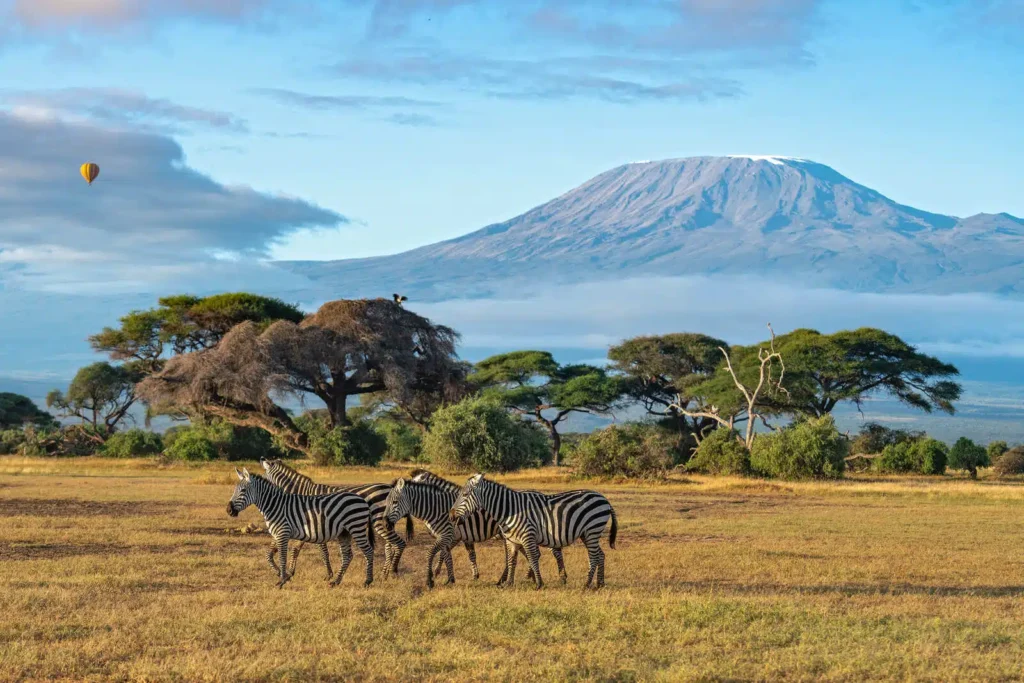
Kenya offers one of Africa’s most flexible safari circuits. Amboseli National Park, with its iconic elephant herds against the backdrop of Kilimanjaro, is a natural pairing; so is Samburu in the north, home to species found nowhere else in Kenya — reticulated giraffe, Grevy’s zebra, and the gerenuk. A few nights on the Kenyan coast — Diani Beach or the Lamu archipelago — provides a compelling contrast to the bush. The most popular cross-border combination is with Tanzania’s Serengeti, following the Migration across both ecosystems; a short charter flight connects the two.
How does the Masai Mara compare to the Serengeti?
They share the same migration, the same wildlife, and ecologically they are one landscape. The Mara is smaller and more concentrated, making it easier to navigate and logistically straightforward from Nairobi; the Serengeti is vastly larger, with greater diversity of terrain and more distinct seasonal zones.
The Mara’s private conservancies, with their walking safaris and night drives, offer experiences the Serengeti cannot match in the same way; the Serengeti holds the calving grounds and the Grumeti crossings, which the Mara does not. The two are complementary rather than competing — and many visitors, given the chance, choose both.
The single most important decision is where to base yourself. The National Reserve offers the densest concentration of resident wildlife and the front-row seats to the Great Migration’s river crossings, but vehicle numbers are not capped, and at the peak of the season a single river crossing can attract 100 minibuses.
The surrounding conservancies — Olare Motorogi, Mara North, Naboisho, Olderkesi and Olalashe — sacrifice some of that crossing-front access in return for exclusivity, off-road driving, walking safaris, night drives, and a vehicle-to-guest ratio sometimes as low as one to four.
The connoisseur’s solution is to combine: three or four nights in a conservancy camp such as Mara Plains or Mara Expedition Camp, then two or three at Bateleur or Angama for the migration peak. Cottar’s, sitting on the Reserve boundary, neatly straddles both worlds.
When to Book
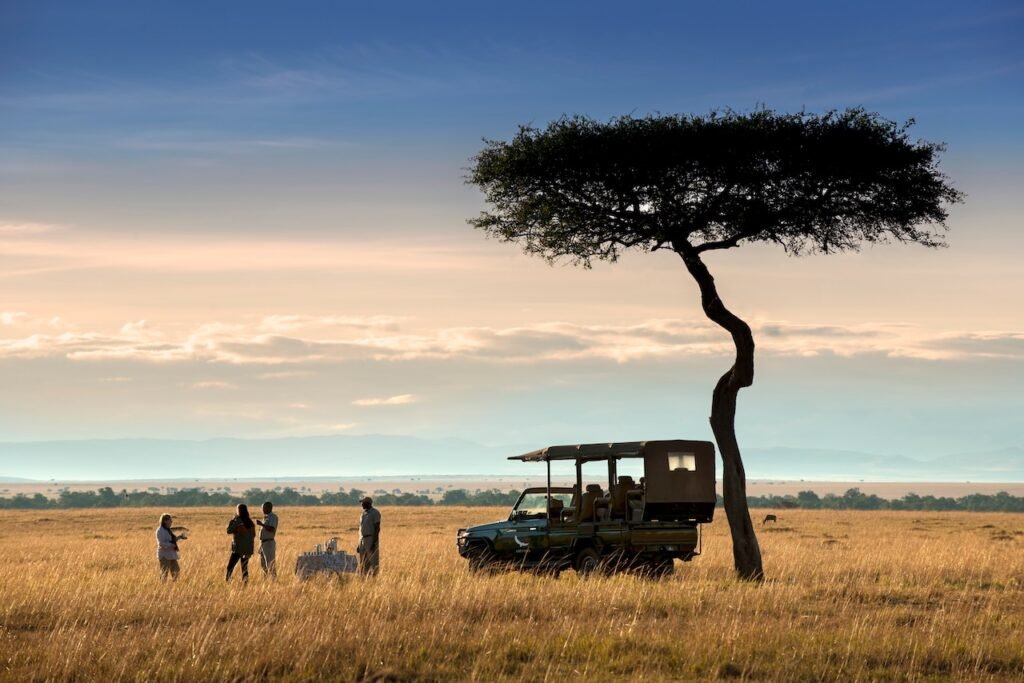
Twelve to eighteen months of lead time is now standard for the lodges on this list, particularly for the mobile camps, whose tent counts can be as low as four and whose seasons can be as short as ten weeks.
Getting There
Connections from Asia run via Doha, Dubai, Addis Ababa or Bangkok to Nairobi, with a 45-minute light-aircraft transfer onwards from Wilson Airport to one of the Mara’s many airstrips.
Whichever combination you settle on, the Masai Mara remains, for now, what it has always been: the most theatrical wildlife destination in East Africa, and the surest place to fall in love with a continent.
If you’re contemplating a luxury safari, be sure to check out guides to safari travel in Africa, the best safari photography tips, and the best luxury safari lodges and camps in the Okavango Delta, the Serengeti, and Rwanda. You can also read about what a luxury safari in Botswana is really like, and check out our guide to packing for your luxury safari.


