
Nick Walton returns to the Okavango Delta — Africa’s very own Eden — and discovers why this UNESCO World Heritage Site remains the continent’s most extraordinary wildlife destination.
With a scream of turbines and the rhythmic thud of rotor blades overhead, our helicopter climbs into the early morning thermals, leaving Maun behind as it races northeast. From the air, the landscape unfurls like a vast patchwork quilt of flaxen yellow and olive green.
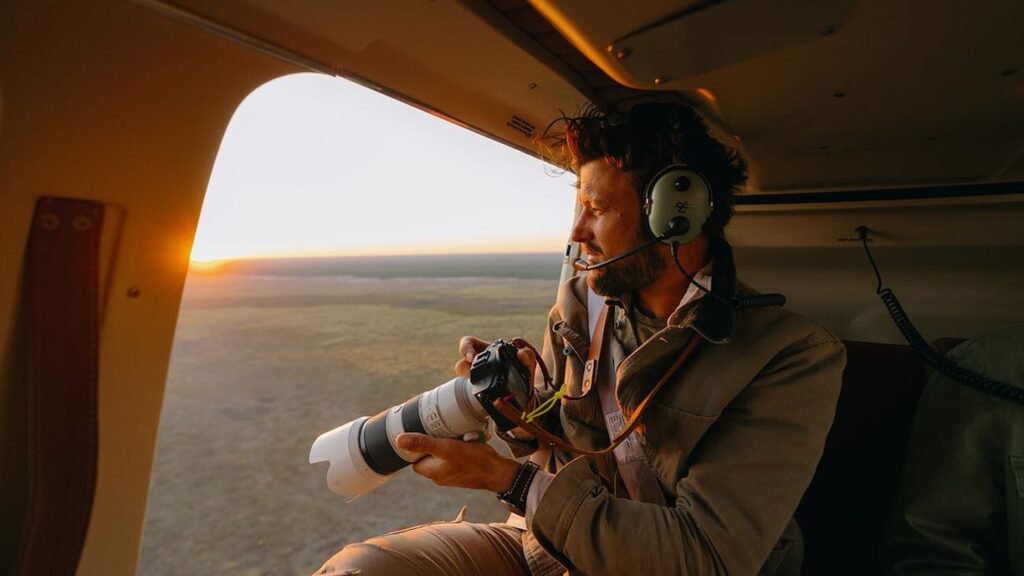
This is Botswana’s Okavango Delta, one of the world’s most remarkable ecosystems, ebbing and flowing with the annual rains in a delicate dance choreographed by nature and performed by a revolving cast of extraordinary wildlife.
From a few hundred feet up, our young New Zealander pilot Masaia points out elephants sheltering from the fierce midday sun beneath skeletal acacias, and the Rorschach-like patterns of ancient paths snaking towards ephemeral waterholes. Towering dust devils form, spiral and vanish in seconds on the shimmering horizon.
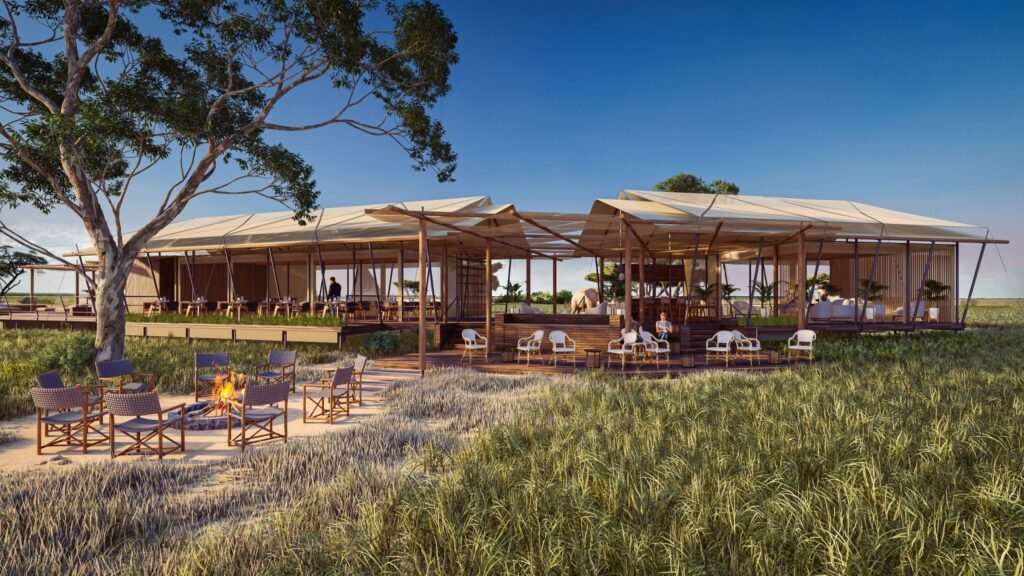
After 30 minutes in the air, Wilderness Mokete appears — a cluster of white tented suites swallowed by the vast grasslands — and moments later, we are waving farewell to Masaia as our guide Jonah eases us down sandy trails towards our new home for the next two nights.
Wilderness Mokete: Luxury on the Mababe Concession
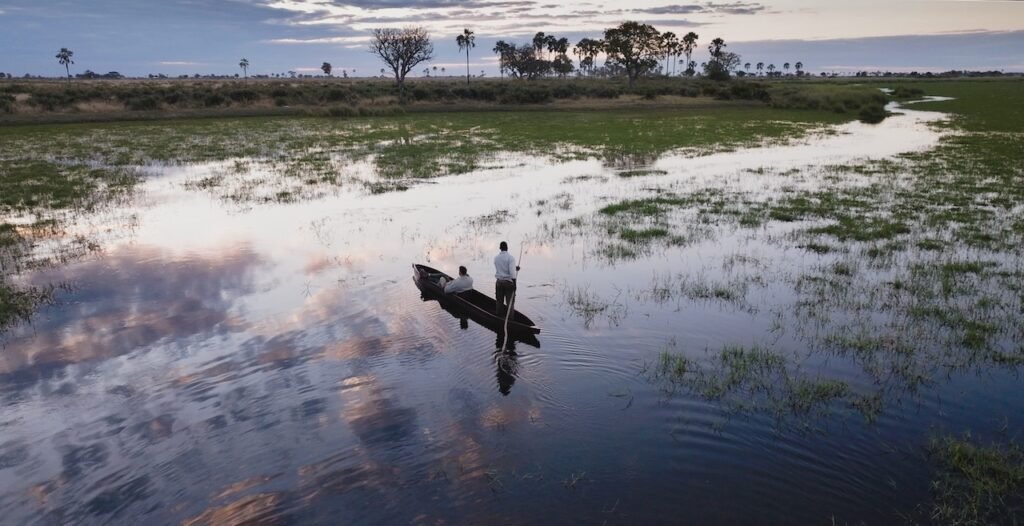
I have been fortunate enough to visit Africa many times, but in my mind, nowhere quite compares to the Delta, a verdant anomaly where the Okavango River defies convention, spilling not into the sea but across the thirsty sands of the Kalahari Desert. This UNESCO World Heritage Site, a 15,000-square-kilometre mosaic of lagoons, channels and palm-fringed islands, is home to elephants, lions, antelope, buffalo and more than 400 bird species.
Here, conventional game drives share the itinerary with gliding through papyrus-lined channels in mokoro canoes, tracking wildlife on foot and watching the herds from the elevated comfort of camps like Mokete.
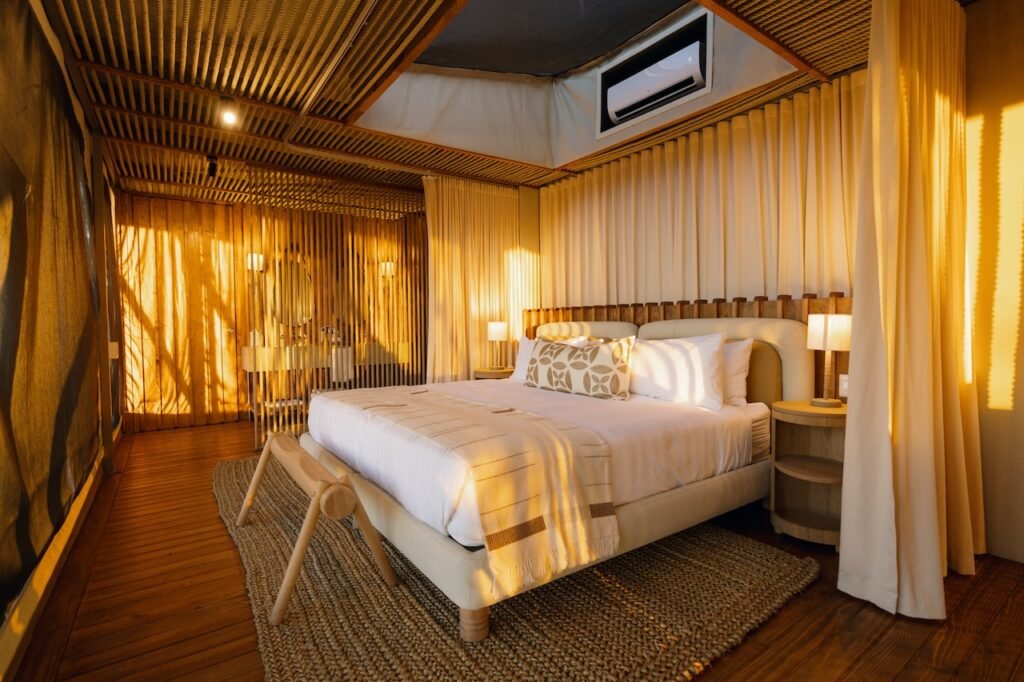
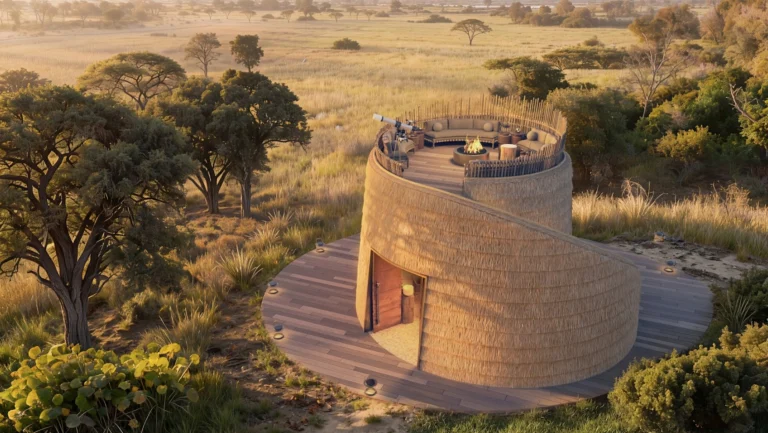
Situated on the eastern edge of the Delta within the sprawling 50,000-hectare Mababe private concession — celebrated for its significant herds of Cape buffalo and tsessebe antelope — Wilderness Mokete is the creation of reMORPHED Arch & Design and Michele Throssell Interiors. Nine modern, minimalist tented suites extend from either side of a main lodge building and central fire pit. The camp is luxurious without being ostentatious — fully off-grid, though you would never know it — and sits within the surrounding landscape as though it has always been there.
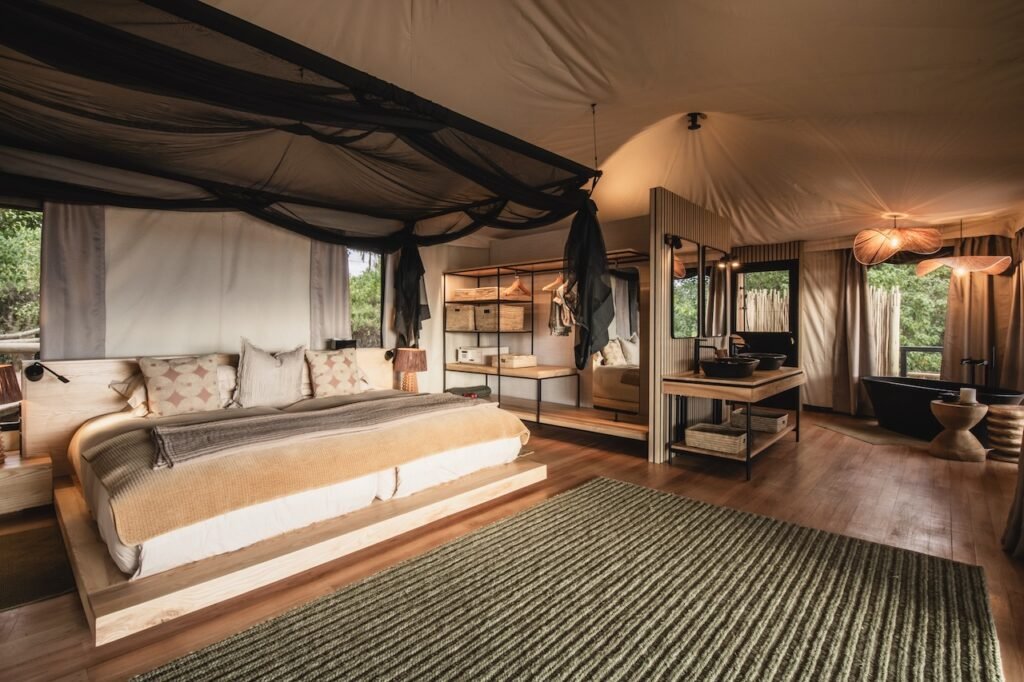
Our tented suite comes with a small plunge pool (a godsend in a region where temperatures regularly climb into the low 40s Celsius), a comfortable living room, a king-size bed and a timber-lined bathroom. A retractable roof, for those who wish to fall asleep beneath the stars of the southern hemisphere, completes the picture.
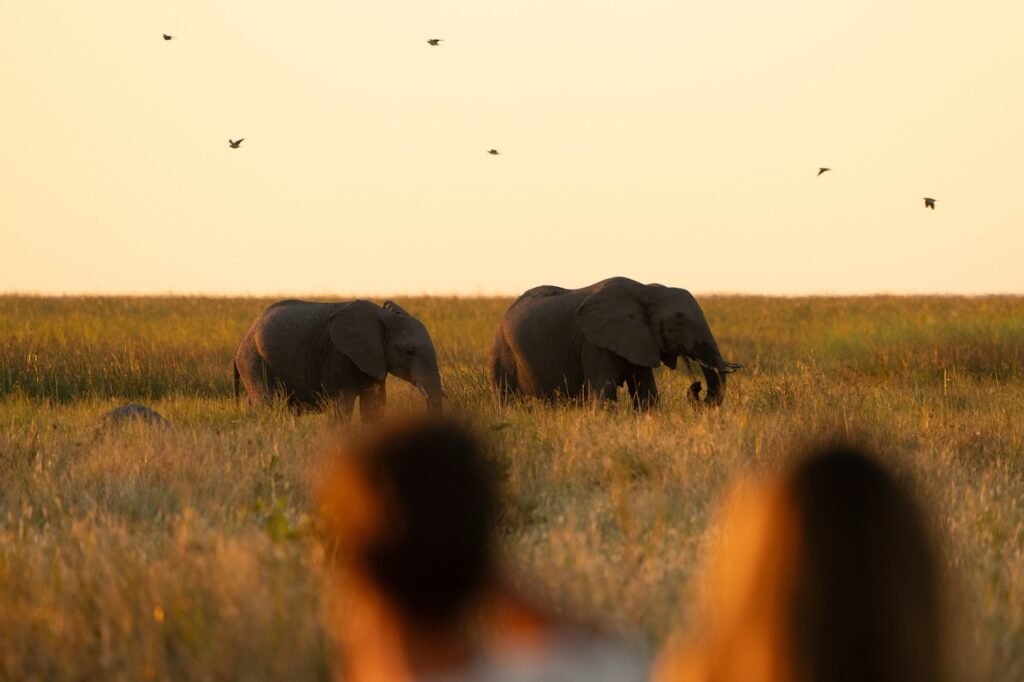
Mababe encompasses three distinct habitats — grassland, wetland and mopane woodland — and we are soon aboard a game vehicle and heading into the first. Distant clouds of dust resolve slowly into a long, meandering column of Cape buffalo, which are joined on their evening sojourn by three generations of an elephant family, their trunks swaying in the amber glow of dusk.
As the last light drains from the sky, we arrive at a broad savannah where the camp team has laid on a bush barbecue beneath a sky blazing with stars. The meal draws our fellow guests together around the fire — a South African couple and two American friends on a bucket-list adventure — and conversation flows as freely as the wine.
Dawn, Lions and African Wild Dogs
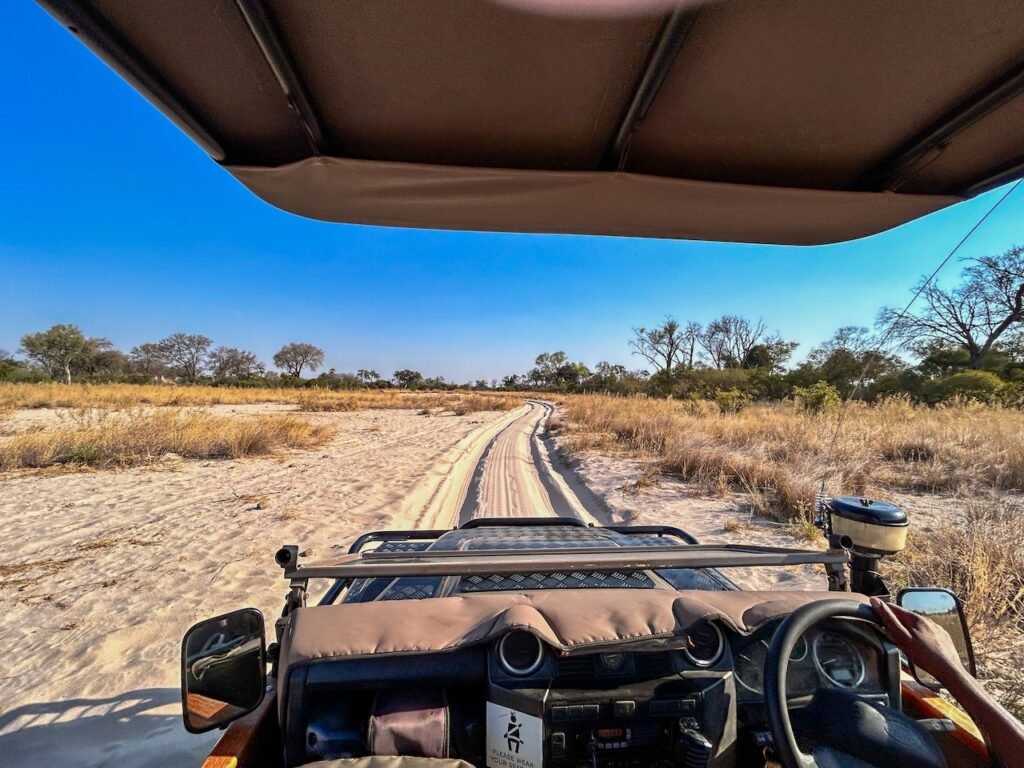
Before dawn the following morning, my wife Angela and I set out with Jonah, following ancient wildlife paths east through a leafless forest to a vast floodplain. The delayed rains have parched the land, yet life endures, and Jonah steers the Land Cruiser across the billiard-table-flat savannah towards a cluster of lappet-faced vultures circling like stacked aircraft.
Below, two male lions gnaw at a buffalo carcass, the scent of the kill drawing a trio of bold black-backed jackals. We watch, transfixed, as the lions alternate between dozing and feeding, one eye always on the wheedling jackals, which pace and lick their lips in anticipation. The scene is raw and unscripted — a perfect expression of the Delta’s untamed spirit.
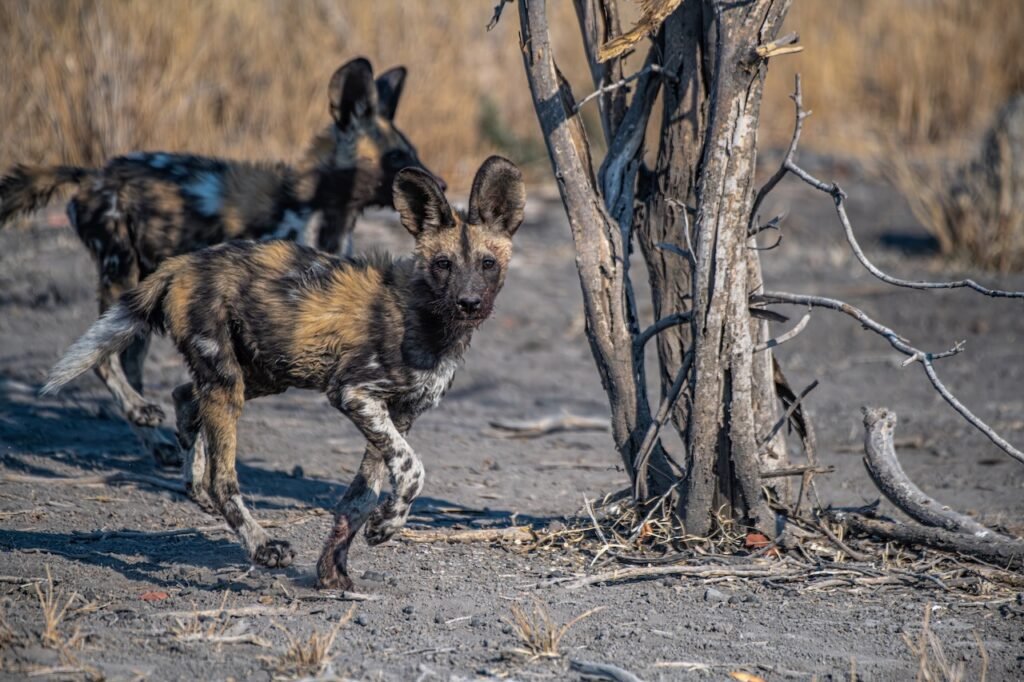
Then, without warning, Jonah spots movement some distance away and his radio crackles into life. A pack of critically endangered African wild dogs has also made a successful hunt. We race across the landscape, a trail of dust billowing behind us, slowing only when the first of the slender, mottled animals comes into view. A pack of more than ten — one Jonah has never encountered before, a hugely encouraging sign for a species on the brink of extinction — dismantles the remains of an impala with extraordinary efficiency. The elation of the hunt is written plainly across their blood-smeared, grinning faces.
Then, as suddenly as a shifting wind, every ear swivels, every face turns and, without a sound, the pack moves off at a trot, back to where three puppies had been left in safety, where an opportunistic hyena had encroached. Yelping and nipping, the dogs outmanoeuvre the intruder in moments; it flees, teeth bared and tail between its legs. The puppies emerge from hiding and are greeted with nuzzles and morsels in a jubilant celebration of survival, in the shade of a lone candle pod acacia. It is among the most thrilling wildlife sequences I have ever witnessed.
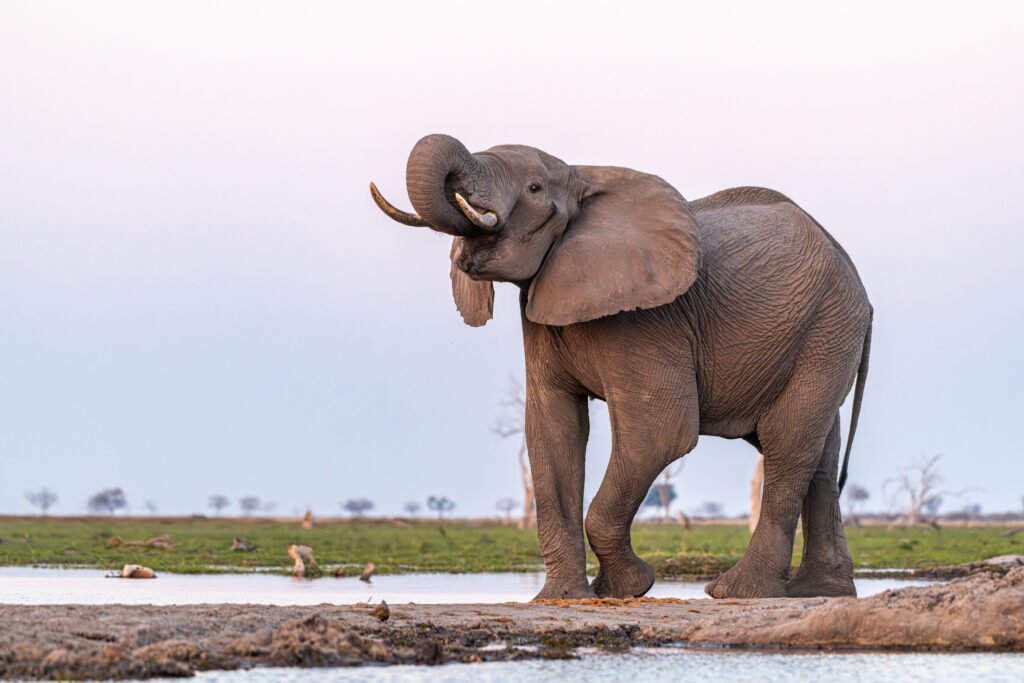
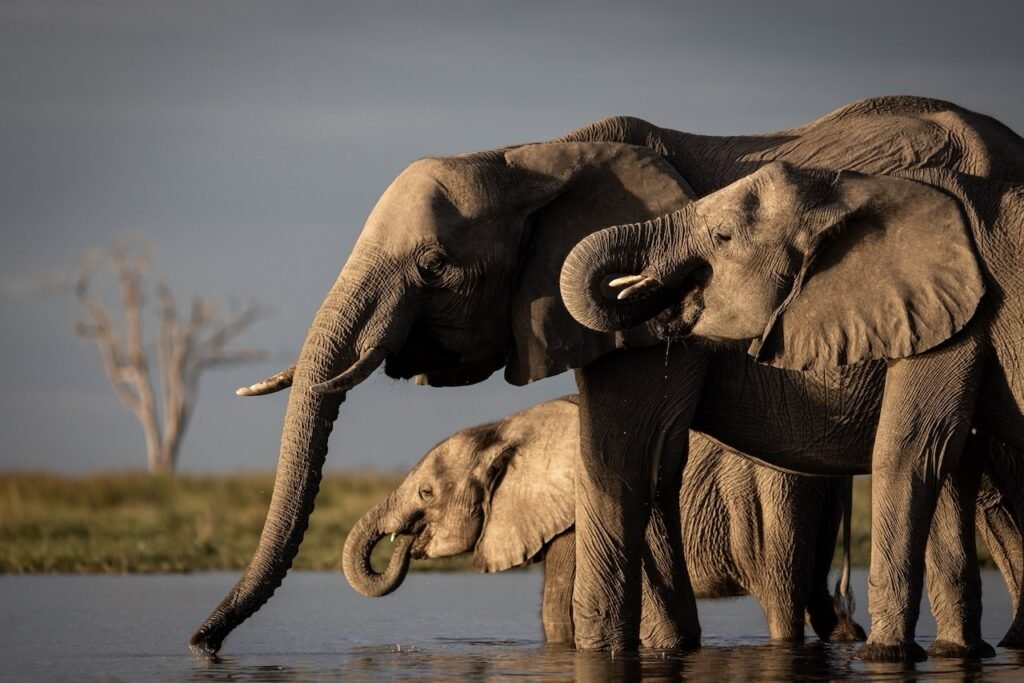
The afternoon brings coffee laced with Amarula on the banks of Kingdom’s Pool — a broad marsh where Egyptian geese skim the surface — before we find the concession’s only resident cheetah, a relaxed cat with little interest in our cameras, and watch elephants drinking from the pools through the camp’s newly built hide. From this concealed vantage point, every line and wrinkle of their weathered hides is visible, and we hold our breath as one adult raises its trunk to scent the air before bending to drink.
Wilderness Tubu Tree: Into the Heart of the Jao Concession
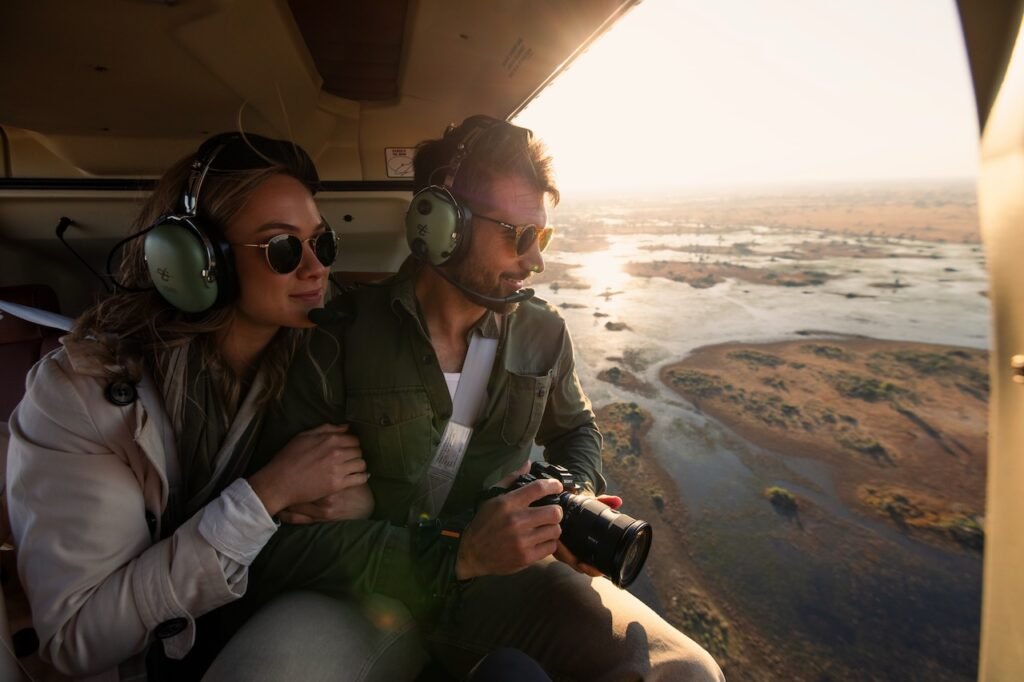
Another early start, another helicopter — this time heading west, across a landscape that grows progressively lusher and more vivid. The Delta looks different here: narrow creeks edged with bright green reeds give way to broader channels, then to sweeping lagoons that sustain much of the region’s wildlife. Soon we are on the ground and in the company of the ever-cheerful camp manager Kenny and veteran guide Delta, sipping welcome drinks on the shaded terrace of Wilderness Tubu Tree Camp.
Perched on Hunda Island within the 60,000-hectare Jao Concession, Wilderness Tubu Tree reopened in June 2024 and offers just eight tented suites — plus the three-suite Little Tubu camp for exclusive-use bookings — set on raised wooden platforms and connected by elevated walkways threading through gnarled jackalberry and marula trees. Designed by Cathy Kays, each suite features en-suite bathrooms, indoor and outdoor showers, saligna hardwood flooring and a private deck with sweeping floodplain views. A plunge pool and two hides — one of which converts to a star bed for sleep-outs — stand at the ready.
Like Mababe, Hunda Island‘s mosaic of mopane woodland, acacia forest and seasonal floodplain delivers exceptional game viewing year-round. During the rains, the Delta’s waters encircle the island entirely, cutting it off from the world beyond. Now, at the height of the dry season, we roll easily through dry riverbeds as we head out for an evening game drive.
Leopards, Elephants and the Magic of Hunda Island
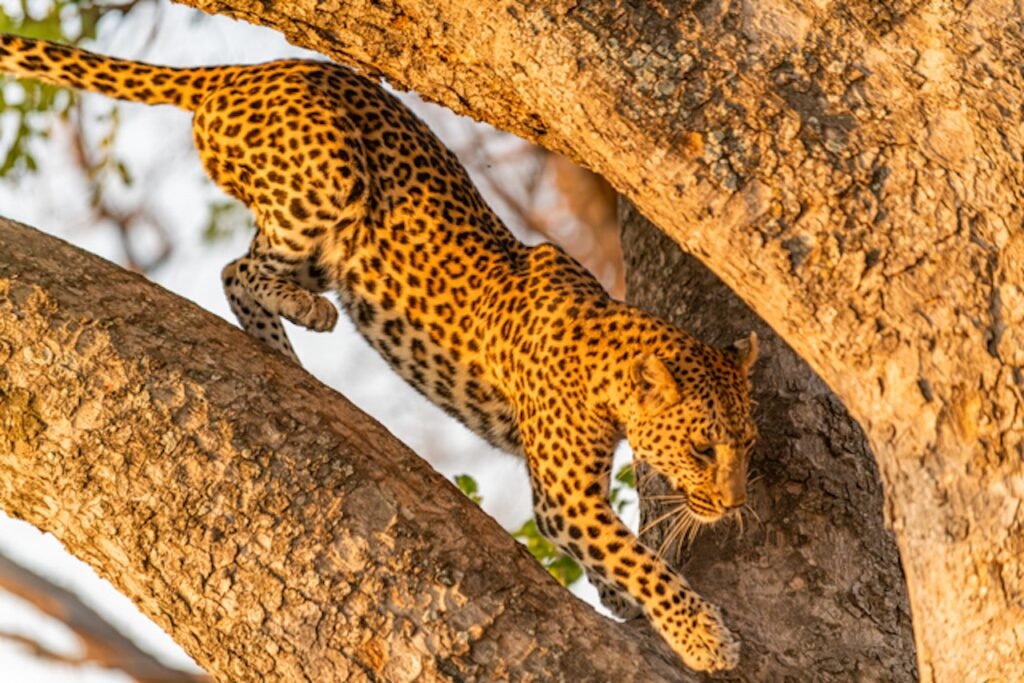
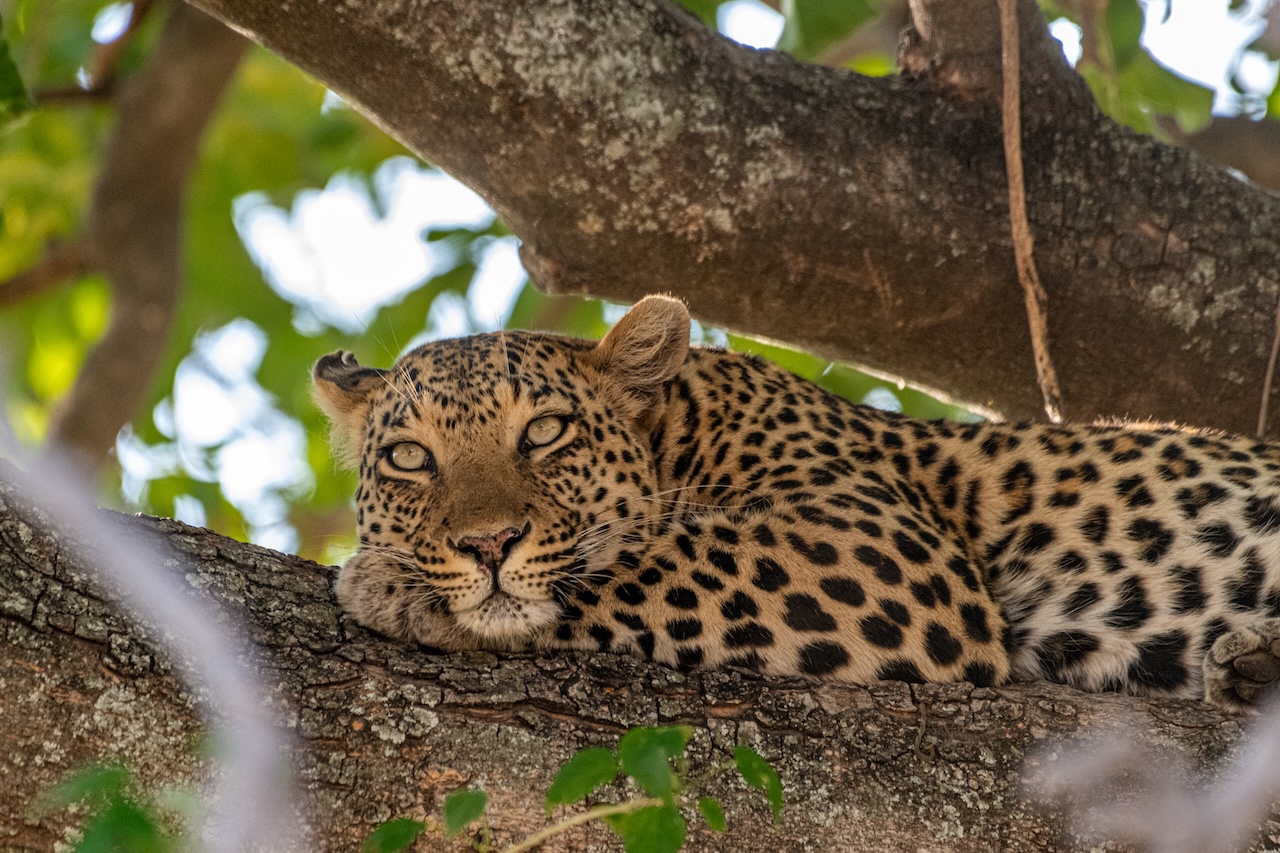
Where Mababe is defined by its great buffalo herds, Hunda Island belongs to the elephants, red lechwe, tsessebe and, above all, its spectacular leopards. We pass pale giraffes grazing beneath circling brown snake eagles before encountering a young male leopard draped languidly across the branch of a leadwood tree, the setting sun igniting his amber eyes. Later that night, lying in the bath in total darkness, I listen with bated breath as elephants crash, trumpet and grumble through the trees directly beneath our suite.
The camp’s position on the fringes of the Okavango means that wildlife and neighbouring communities are not always at ease with one another. Over coffee on the bank of a calm pool — watched by a lone hippo from the water — Delta recounts the recent shooting of two female lions that had strayed onto pastoral land, a sobering reminder of the pressures that persist beyond the concession boundary.
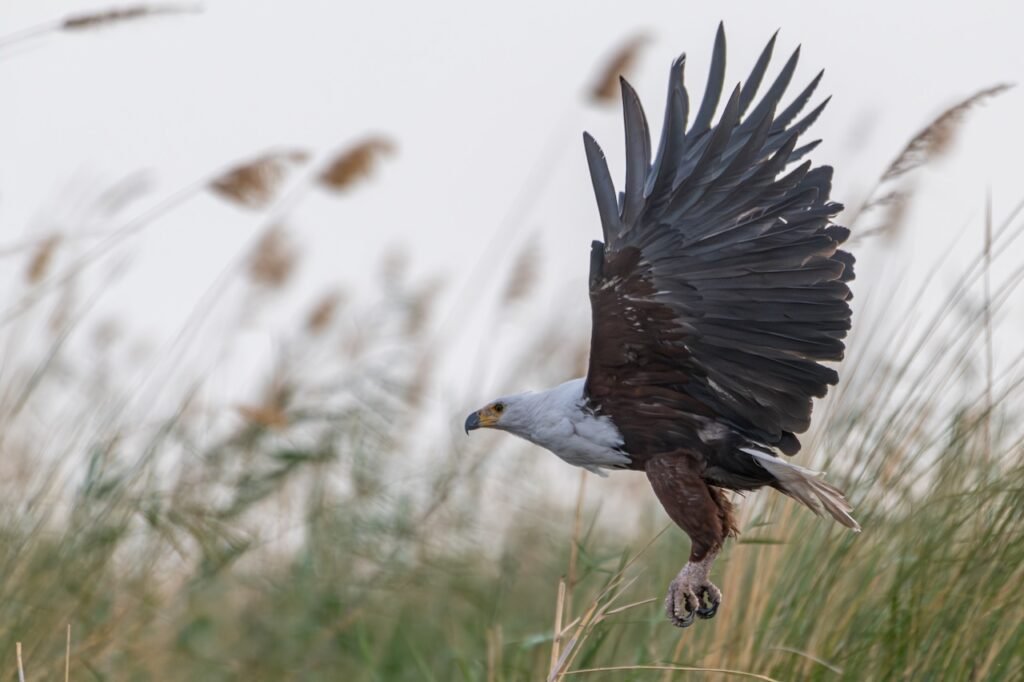
A walking safari with Delta later in the day brings its own revelations: an immature martial eagle — the largest eagle on the continent, a magnificent male kudu with intricately spiralling horns, and an Okavango wattled crane the colour of storm clouds. We watch a family of elephants pass at a respectful distance, until the youngest — a curious juvenile male — breaks away and makes directly for the sausage tree behind which we are hiding. He freezes, raises his trunk to test the air, holds the moment for an agonising beat, then trots back to his mother with a resounding trumpet.
On the return to camp, a troop of mongoose escorts us down the path, a steenbok calf barely minutes old staggers into view, and a pair of Verreaux’s eagle-owls — among the largest owl species on the continent, with wingspans approaching two metres — regard us calmly from a mopane tree. Delta spots a brown snake eagle circling overhead and poses the riddle: is it a brown eagle that eats snakes, or an eagle that prefers brown snakes?
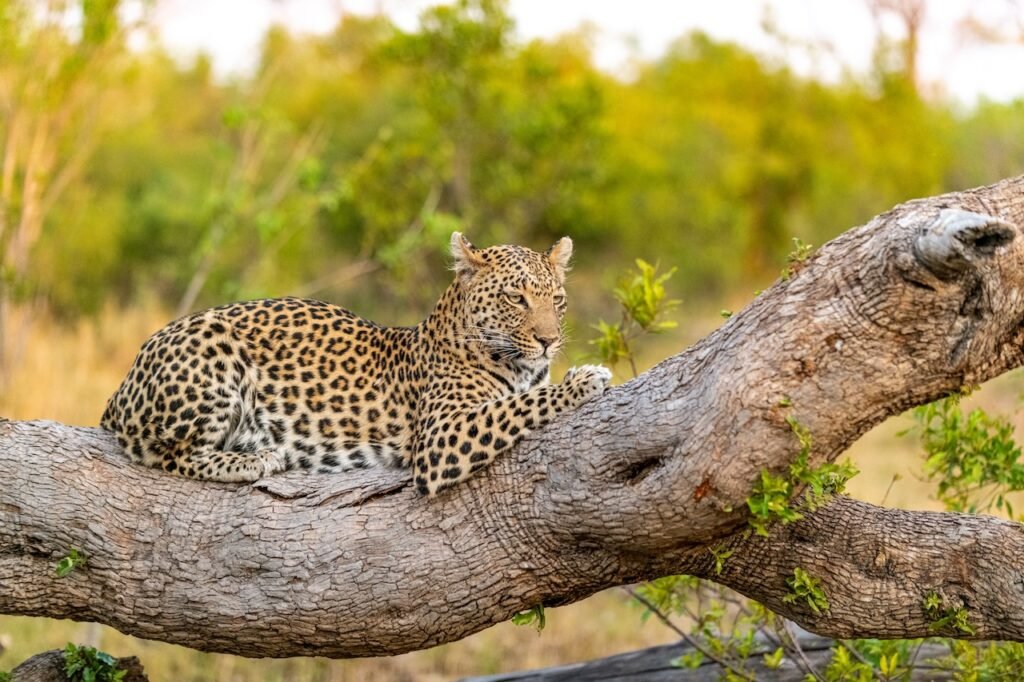
A second leopard encounter, this time with a female — the young male’s mother — provides a fitting finale. She rouses from an afternoon nap, climbs nimbly from her perch and allows us to follow at a respectful distance until she dissolves, ghost-like, into the tall, swaying grasses.
At a sunset bar beside a watering hole, a pair of male hippos watches from the water like somnolent bouncers, before Delta spots yet another leopard observing us from a lightning-scorched tree trunk. As we prepare to leave, she descends, drinks briefly from the pool and slips into the gathering darkness. Back at camp, the leopard encounters dominate conversation until the staff — their number augmented by women from the nearby village — strike up a chorus of traditional songs, taking turns to dance around the fire pit whilst the barking roars of lions echo in the darkness beyond.
DumaTau: Elephants, Rivers and Tiger Fishing in the Linyanti
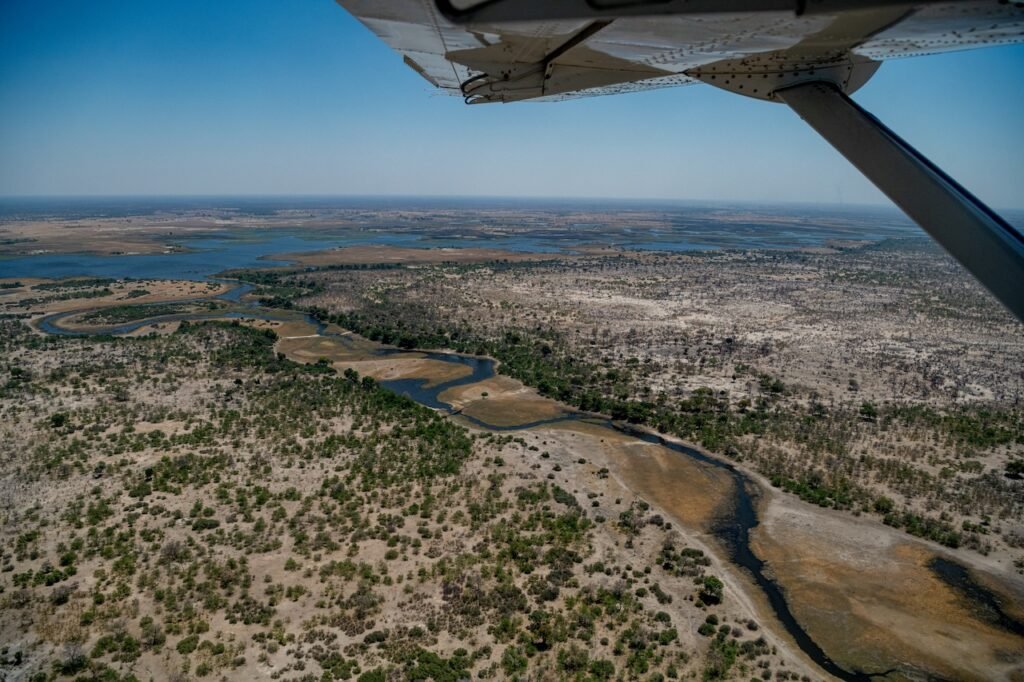
Our final stop in the Okavango is DumaTau, reached via a short fixed-wing flight. The camp sits on the bank of a wide river within the 125,000-hectare Linyanti Concession at the western edge of the Delta, and our guide Niq gestures from the main terrace towards the hazy distance where dust tornadoes seem suspended above the horizon. “And there,” he says, “is Namibia.”
Wilderness DumaTau is an elephant stronghold — home to the highest concentration of elephants in Africa, sustained by an abundance of their favoured Kalahari apple-leaf trees and the generous waters flowing in from the northwest. During the rainy season, vast floating islands of reeds form in the river, and daily processions of elephants — calves in tow — brave crocodile-patrolled waters to graze on the reed islands until dusk.
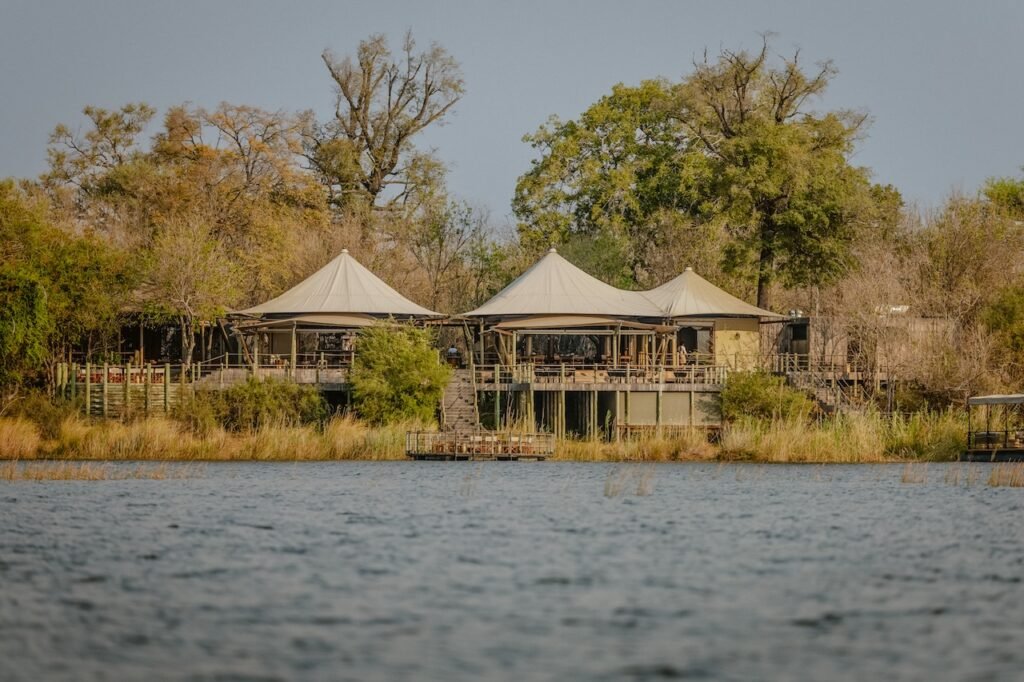
Our suite is one of eight and is exquisitely appointed, with a plunge pool and river-facing terrace, a generous bathroom and dressing room, and a club-like lounge furnished with leather sofas, a minibar and zoological sketches on canvas. We head straight for the camp’s fleet of boats, passing watchful hippos in a low-slung skiff. A Nile crocodile — the length of a surfboard and a known predator of young elephant calves making the river crossing — slips into the current with a reptilian grin, while elephants browsing in the reeds observe our passage towards a sunset spot where the day is toasted with gin and tonics.
The following morning, after a spectacular overnight thunderstorm illuminated the river in great flashes of lightning and the canvas of our suite roared in the wind and rain — so that I dreamt of a sailing ship caught in a gale — the animals are out in force, making the most of the broken heat. We skim through the waterways, finding broods of wary hippos, waterbuck and red lechwe on the banks, and later, during a game drive through the intricate network of pools and channels known as the Savuti system, a pride of twelve lions. We wait in patience until, emboldened by curiosity, a pair of new cubs comes tumbling from beneath skeletal apple-leaf trees and approaches our vehicle, until a low growl from their mother brings them to an abrupt halt.
Our final day in the Delta is spent doing something unavailable on most African safaris: tiger fishing. Departing camp on a spacious, shaded pontoon boat — brunch of finger sandwiches and salad served leisurely on the water — our guide Niq rigs the lines, and we begin trolling for a fish that draws anglers from across the globe. After an hour, I have nothing to show for my efforts. Angela, however, has wrestled a sizeable tigerfish aboard, its distinctive stripes gleaming beneath greying skies.
As rolling thunder advances across the landscape and raindrops the size of coins begin to fall, we turn for home, passing a line of elephants gathered in the reeds and preparing to cross to dry land. They seem in no hurry — flapping great ears and tilting their heads back to receive the life-giving rain — here, on the very edge of Africa’s own Eden.
If you’re contemplating a luxury African safari, check out our safari travel guide and our recommendations for the best camps in the Okavango Delta, Serengeti, Masai Mara, South Africa, and Rwanda, as well as our guide to safari photography.