

This article was updated on July 25 2026, with additional properties
From central London and Miami Beach to the deserts of Saudi Arabia and the white sand beaches of Baja, this year sees a host of indulgent new hotels and resorts opening across the world. Nick Walton rounds up some of his favourites.
The grand hotel is being reinvented. Today’s most discerning travellers are no longer seduced by marble lobbies and thread counts alone — they want meaning, connection, and experiences that couldn’t be replicated anywhere else on earth.
In response, a new wave of properties is emerging that trades uniformity for authenticity: architecture shaped by its landscape, dining rooted in the soil and sea surrounding it, and wellness drawn from ancestral traditions rather than a generic spa menu.
From remote Baja coastlines to storied European addresses, these new hotels and resorts for 2026 represent the sharpest edge of modern luxury travel — and they’re worth planning your year around.
Twinpalms Treehouses Phuket
Phuket, Thailand
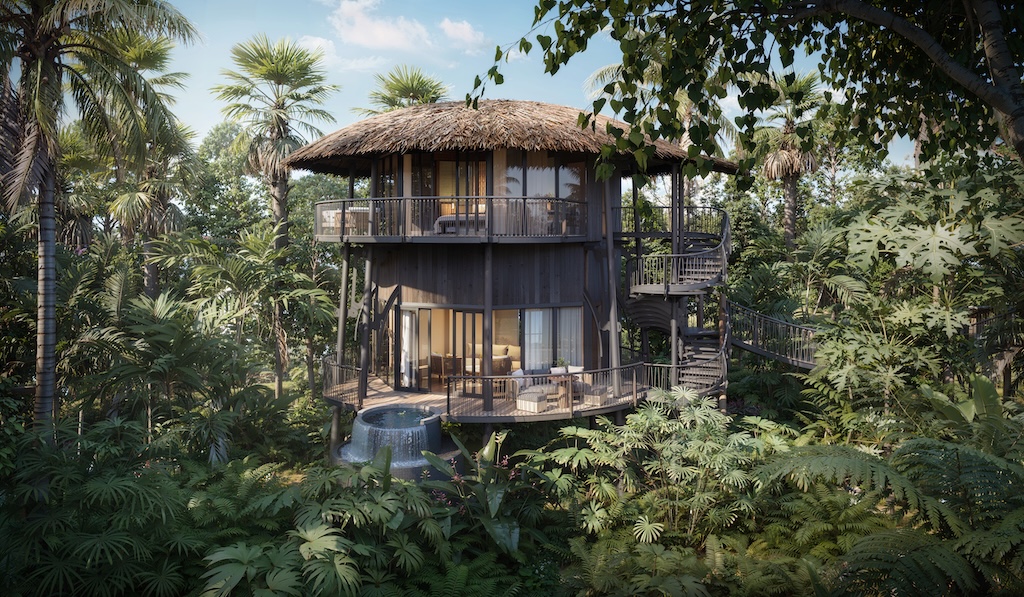
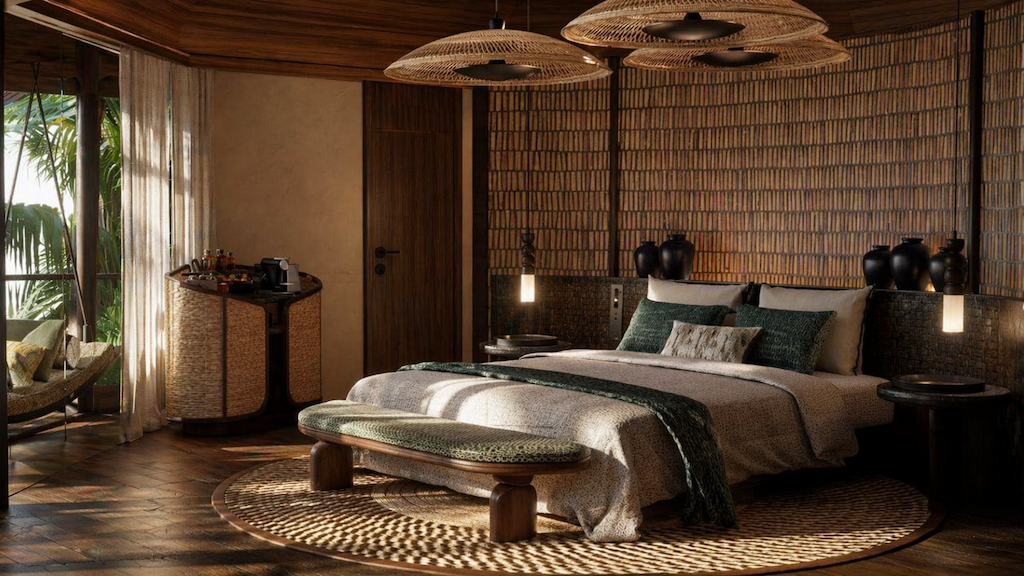
Twinpalms Hotels & Resorts is set to open Twinpalms Treehouses Phuket later this year, an adults-only sanctuary just 80 metres from the powdery sands of Bangtao Beach. Designed around curved, organic architecture and natural textures, the resort comprises just 30 rooms and villas, several of which are elevated 12 metres into the tree canopy for added seclusion – I’d suggest the indulgent Onsen Treehouse, with its private hot water plunge, or the expansive Two Bedroom Cocoon Treehouse, which features its own pool.
Wellness sits at the heart of the concept, anchored by an outdoor Recovery & Wellbeing Zone with contrast-therapy hot and cold pools, a herbal steam room and sauna, alongside a full-service spa and daily group sessions in yoga, meditation and contrast therapy. The property will feature an all-day dining restaurant serving health-conscious modern Thai and international cuisine, or guests can jump on the complimentary transfers to sister properties Twinpalms MontAzure, Twinpalms Surin Beach and Twinpalms Tented Camp, along with chic Catch and The Lazy Coconut, two of the island’s leading beach venues.
Six Senses AMAALA
Red Sea, Saudi Arabia
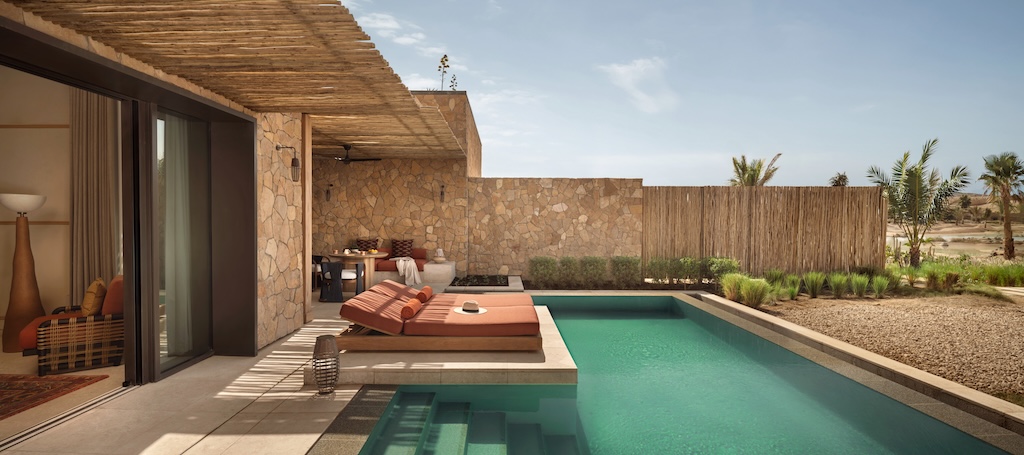
Opened in July, the new Six Senses AMAALA sits between gentle beaches and a mangrove-fringed lagoon, with a striking clifftop mesa rising at its heart, flanked by ancient desert peaks on one side and coral-rich coves on the other.
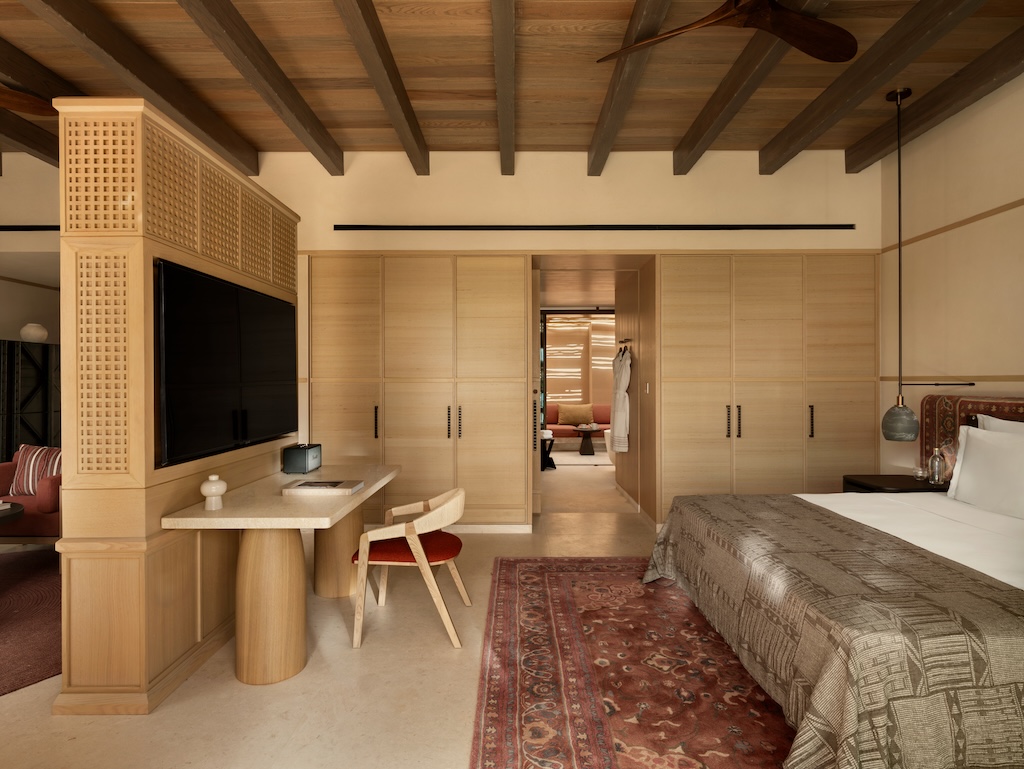
The 100 suites and villas, alongside 25 branded residences, draw on traditional Saudi coastal architecture and are woven into the natural terrain to create a village-like rhythm built for families and groups travelling together. Wellbeing threads through every stay, from sleep-optimised room design to the Six Senses Spa’s Longevity Center, Biohacking Recovery Lounge, Watsu pool and sound dome.
Dining follows the brand’s Eat With Six Senses philosophy across three venues, from clifftop Japanese-Latin fusion at Soraya to relaxed beachfront fare at Beach Shack, alongside a pioneering non-alcoholic beverage programme. Beyond the resort, guests can dive the Red Sea’s coral reefs, explore the mangrove lagoon by boardwalk, or set sail with the AMAALA Yacht Club, one of the destination’s more social additions.
The Langham, Custom House, Bangkok
Bang Rak, Bangkok, Thailand
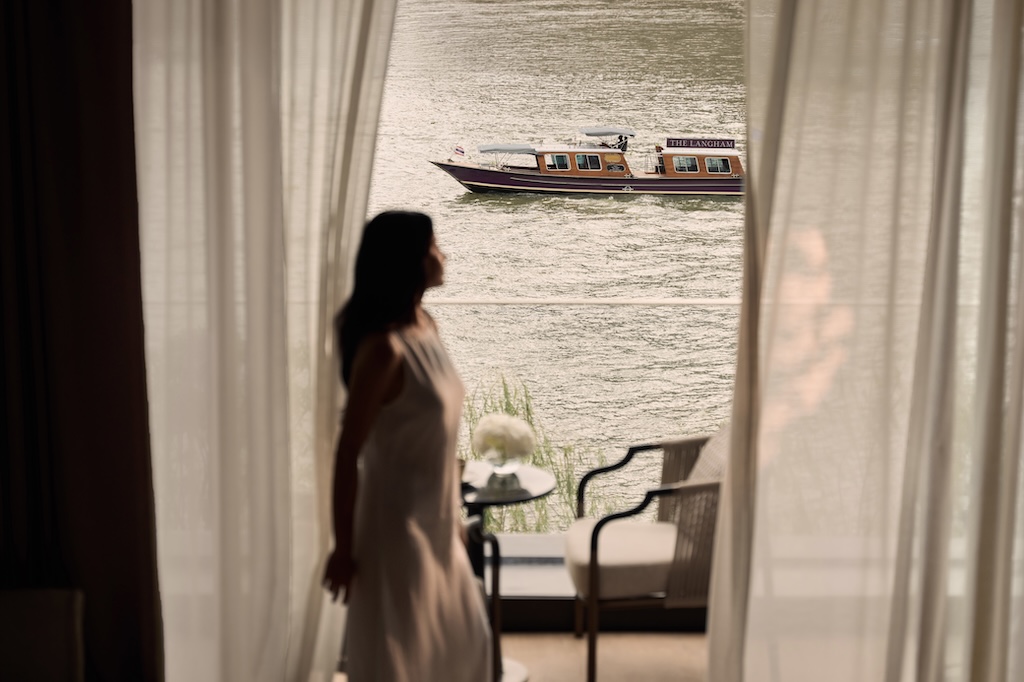
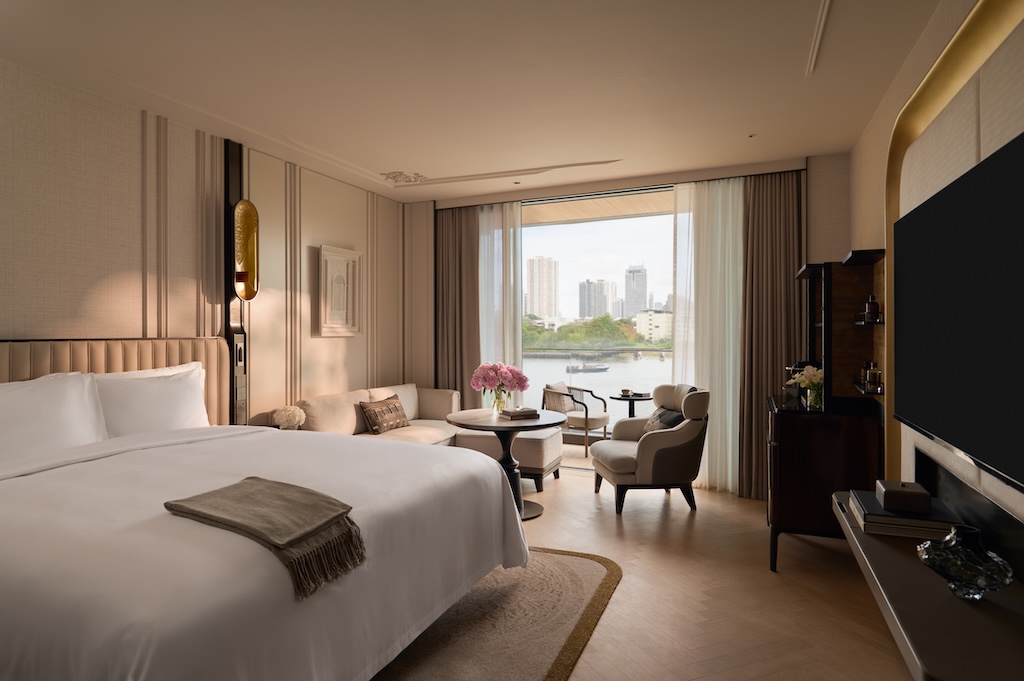
On the eastern bank of the Chao Phraya, where Bangkok’s 1888 Custom House has stood empty for decades, The Langham is preparing one of Southeast Asia’s most anticipated heritage reinventions. The neo-Palladian building, designed by architect Joachim Grassi and once the gateway through which the city’s riverborne trade passed, is being restored alongside an adjoining former post office and joined by a new curved accommodation wing, its faceted glass façade inspired by the movement of the river itself.
The 75 rooms and suites span four categories, some with private balconies overlooking the river, internal courtyards, or the Bang Rak skyline, but I’d suggest booking one of the Speciality Suites, which are set within the restored Custom House itself.
Dining is anchored by T’ang Court, the Bangkok outpost of The Langham, Hong Kong‘s celebrated Cantonese restaurant — the original holds three Michelin stars, though the new branch will need to earn its own — alongside a dedicated pastry outlet and a destination bar housed within the heritage building. Wellness comes via Chuan Spa, Langham’s signature concept drawing on Traditional Chinese Medicine, paired with a fitness centre in the new wing. Nick Downing, GM of The Langham Custom House Bangkok, reveals more details.
Kimpton Suntaya Bali Ubud
Ubud, Bali
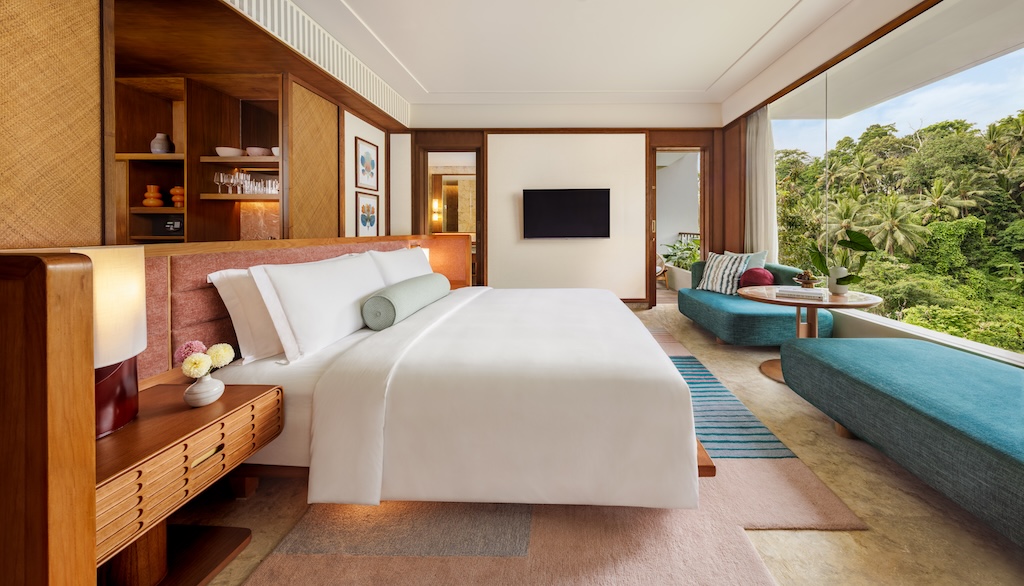
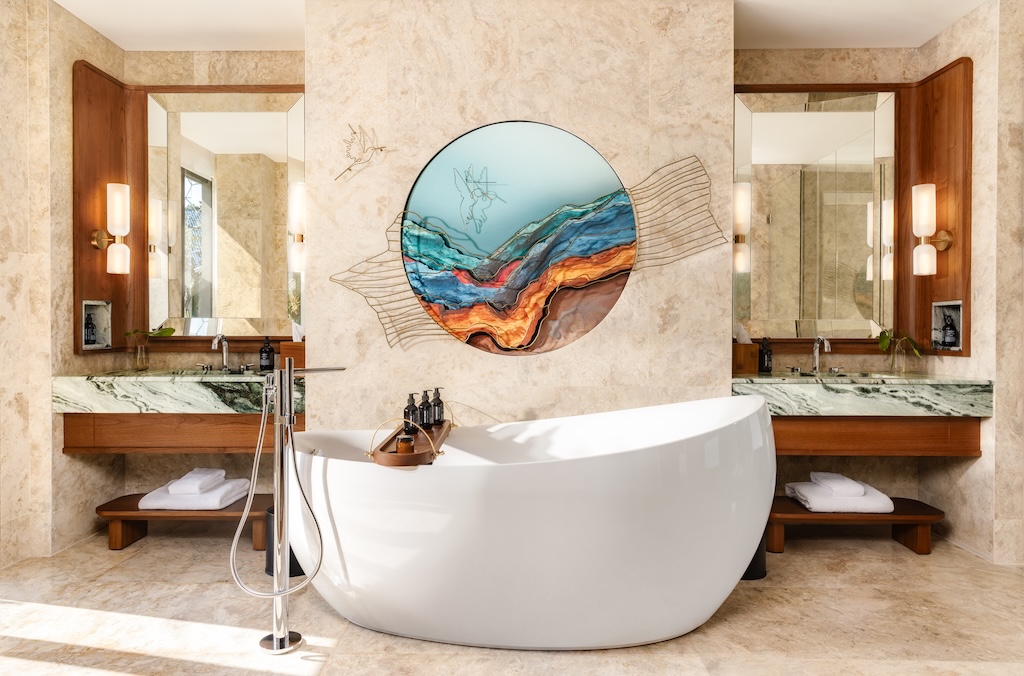
Kimpton Suntaya Bali Ubud is set to open later this year, steps from Ubud’s most iconic landmarks, including the Ubud Art Market and the historic Ubud Palace and Water Palace. Designed by architects Denton Corker Marshall as a contemporary interpretation of Balinese ceremonial processions, the property follows the natural contours of Ubud’s hillside and riverside landscape, with 101 accommodations including expansive pool suites and signature private pool villas.
The resort’s five distinctive dining destinations will include Imamura Ubud, an intimate omakase experience led by Michelin-recognised chef Hirofumi Imamura, who will also oversee Shaku by Imamura, a refined yet playful interpretation of Japanese izakaya dining. Guests will be able to work off all that culinary indulgence at the two-storey fitness studio and in the dedicated recovery facilities, or pamper themselves with a treatment at the Sakshi Spa, which draws from Balinese healing traditions to create rituals that restore both body and perspective.
Signature Kimpton perks will include the complimentary “Forgot It, We’ve Got It!” program, providing thoughtfully curated travel essentials; Kimpton Kickstart, offering daily coffee, tea, and pastries; and the brand’s celebrated Kimpton Social, an evening gathering designed to spark conversation and connection.
Mandarin Oriental Makati
Manila, Philippines
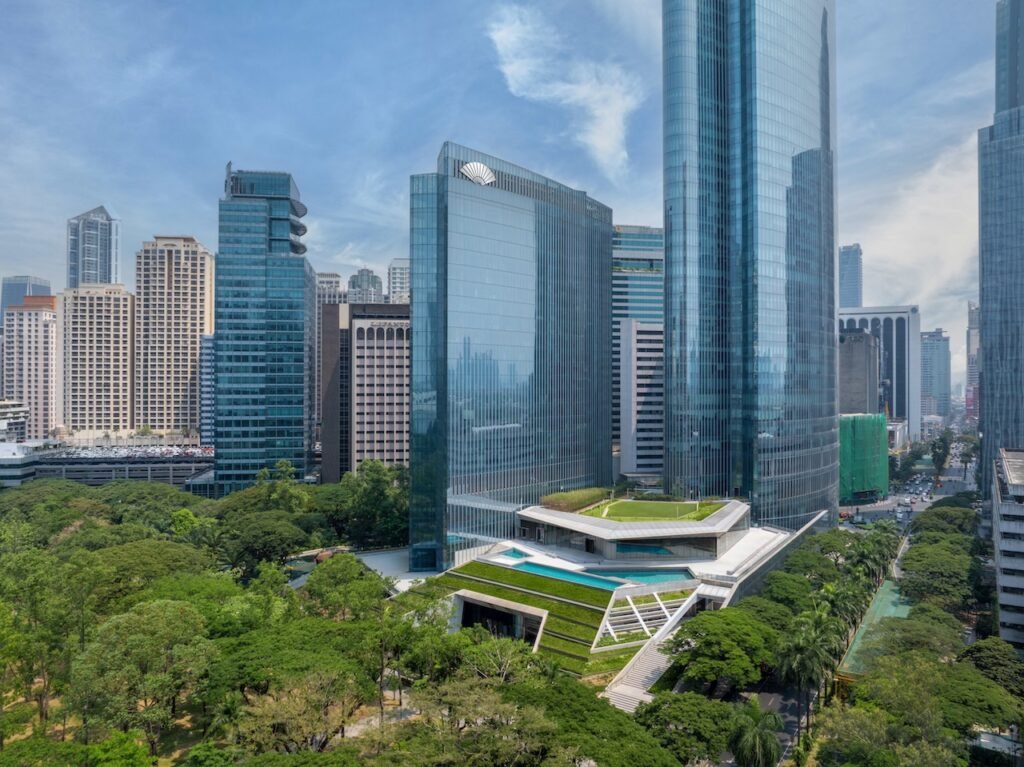
There are hotel openings, and then there are homecomings. Mandarin Oriental’s return to Manila — nearly a decade after the original property closed its doors in 2014 after 38 years as the capital’s most distinguished address — carries genuine emotional weight for a city that never quite found a replacement for what it lost.
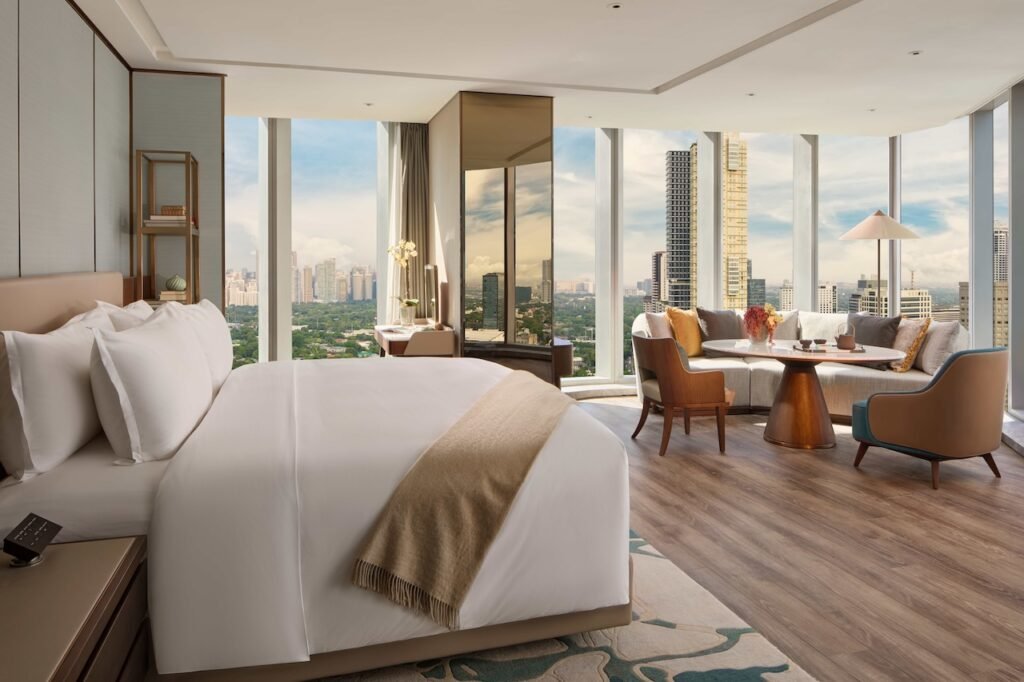
The new property rises 98.7 metres above Ayala Triangle Gardens in the heart of Makati, making it within immediate reach of Greenbelt’s luxury retail, the Salcedo and Legazpi weekend markets, and the district’s best restaurants and galleries. The 275 rooms and suites begin at a generous 50 square metres, with natural materials, warm timber tones and Filipino artisanal finishes presenting a design language rooted in the textures and light of the Philippine landscape.
Five dining concepts will span contemporary Cantonese, Filipino and international cuisine, while the 800-square-metre spa draws on indigenous Filipino healing traditions — Hilot therapeutic massage and the botanical rituals of Sukob ng Manggagamot, reimagined through the brand’s signature wellness approach. A 25-metre outdoor pool overlooks the gardens below.
The Lake Como EDITION Hotel
Cadenabbia, Italy
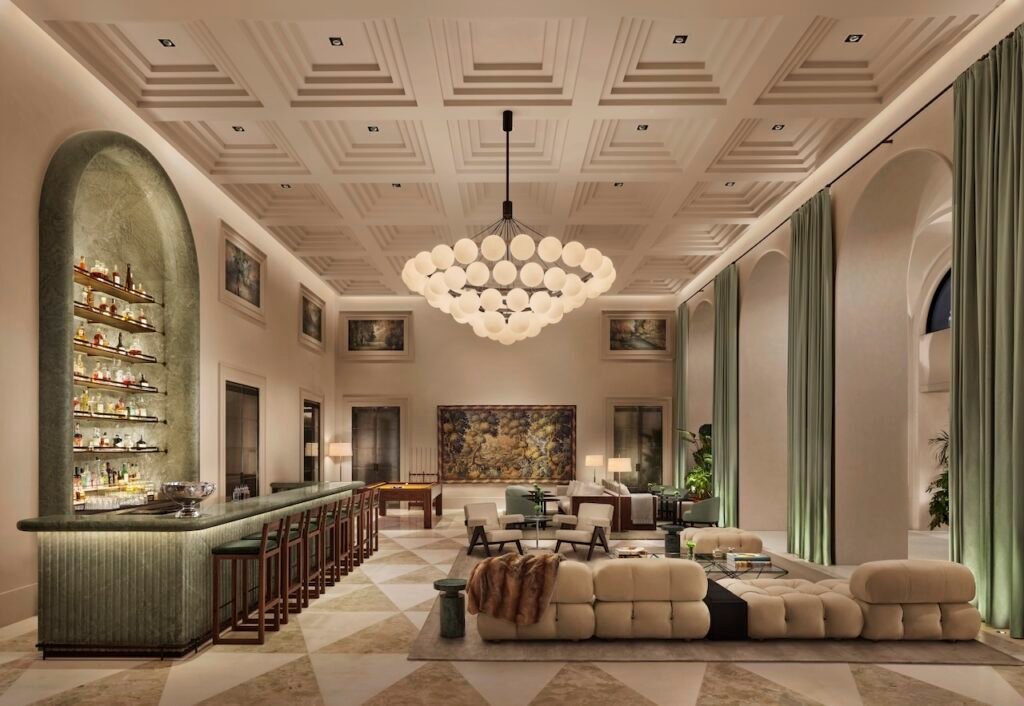
On the western shore of Lake Como, housed in a restored 19th-century palazzo originally known as The London, the new Lake Como EDITION delivers what may be Italy’s most talked-about opening of 2026.
Rather than recreating the region’s familiar villa aesthetic, design firms Neri&Hu and De.Tales have brought a sharper, contemporary profile to the property — marble-faced archways, terrazzo floors, rose-toned Dolomite plaster walls, and a sculptural staircase evoking Carlo Scarpa — while letting the lake do what it has always done best: steal the view.
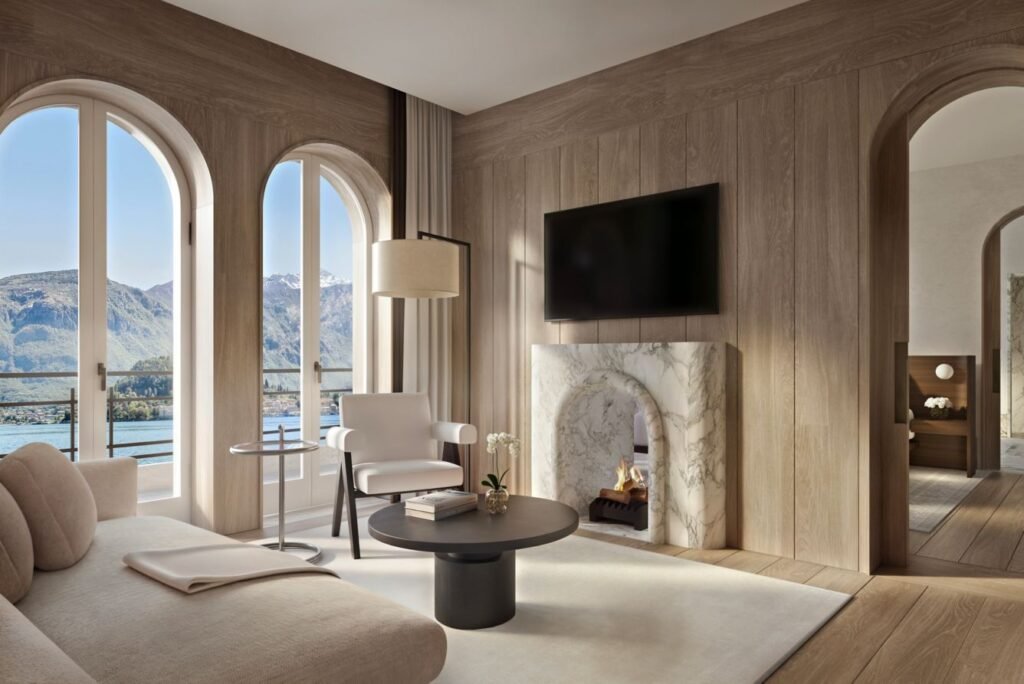
Of the 147 rooms, suites, and penthouses, book a Superior Lake View King for the restored French balconies and unbroken sightlines toward Bellagio. Three-Michelin-starred chef Mauro Colagreco oversees four dining venues, each a different lens on his nature-first, Italian-heritage philosophy. Wellness is anchored by The Longevity Spa, one of EDITION’s most ambitious facilities to date, offering biohacking therapies, thermal amenities, and Blue Zones-inspired rituals.
From US$800 per night
Delano Miami Beach
South Beach, Florida
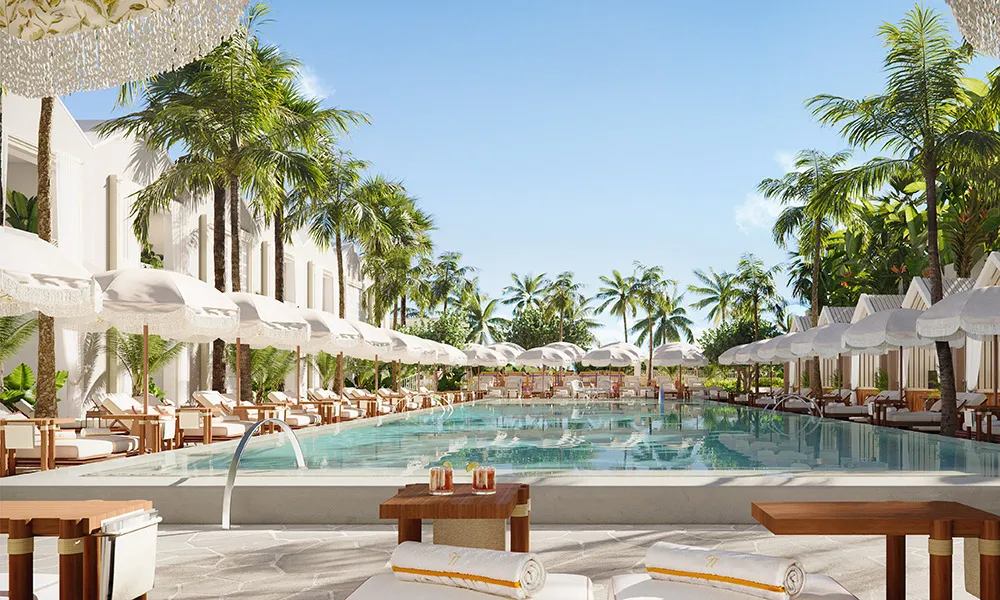
Since 1947, the Delano’s white Art Deco façade has stood as a celebration of Miami’s mid-century architectural heritage. After a six-year closure and a complete renovation by Elastic Architects in collaboration with Ennismore’s in-house design team, the hotel has reemerged with its identity unmistakable: a white-on-white sensibility, sun-dappled courtyards, and surrealist influences that have always been woven into its coastal character.
The 171 guestrooms and suites — including poolside Bungalow Suites and Penthouse Suites — are guided by a tonal palette and organic fluidity expressed through bespoke lighting and furnishings. Book a Poolside Bungalow Suite for direct access to one of South Beach’s most storied pool scenes.
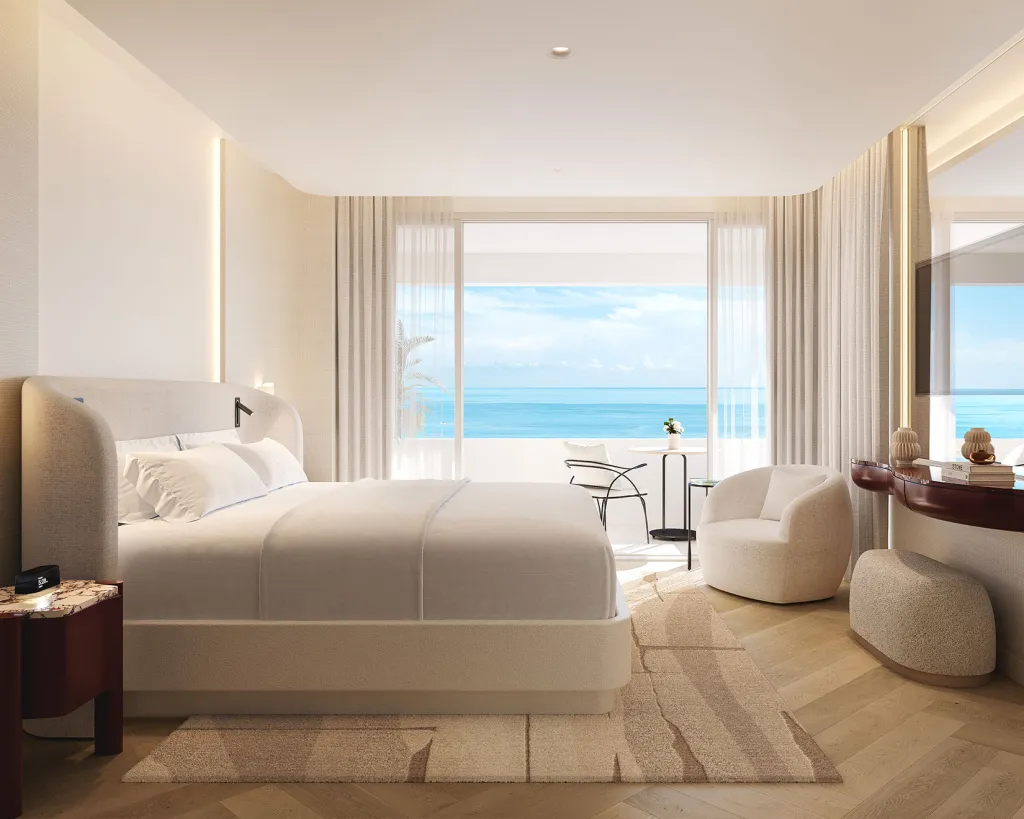
Dining spans Gigi Rigolatto — the beloved European restaurant making its first US appearance — and Mimi Kakushi, which brings its award-winning 1920s Osaka-inspired culinary experience from Dubai to Miami. Meanwhile, wellness is anchored by The Source by Delano, alongside a calendar of cultural programming that runs throughout the year.
From US$400 per night
Corinthia Rome Hotel
Piazza del Parlamento, Rome, Italy
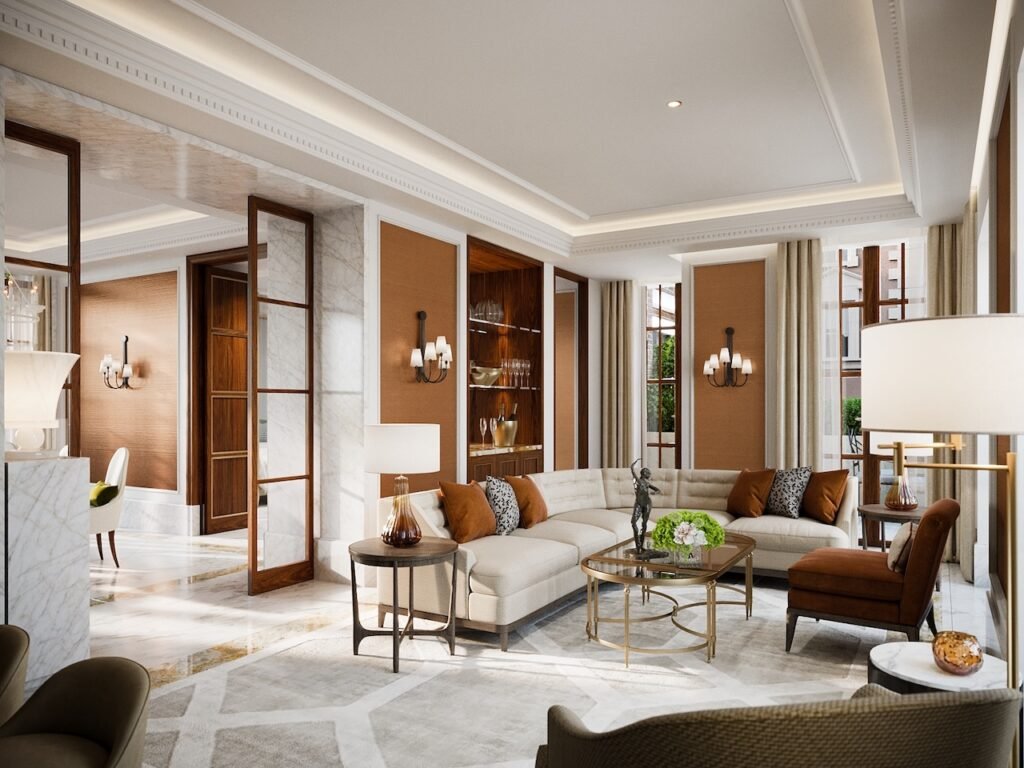
On Piazza del Parlamento, moments from the Pantheon, the Spanish Steps, and the artisan quarter of Campo Marzio, Corinthia’s long-awaited Italian debut occupies one of Rome’s most storied addresses. The former seat of the Bank of Italy — a grand neoclassical palazzo whose architectural integrity has been carefully preserved, from its monumental structure to its original 1920s frescoes — has been reimagined as an intimate 60-key hotel that feels more private residence than grand institution.
Rooms and suites, many with soaring high ceilings and private terraces, make for compelling retreats in one of Europe’s most visited cities. The Penthouse suites, with panoramic rooftop views across Rome’s skyline, are the rooms to secure.
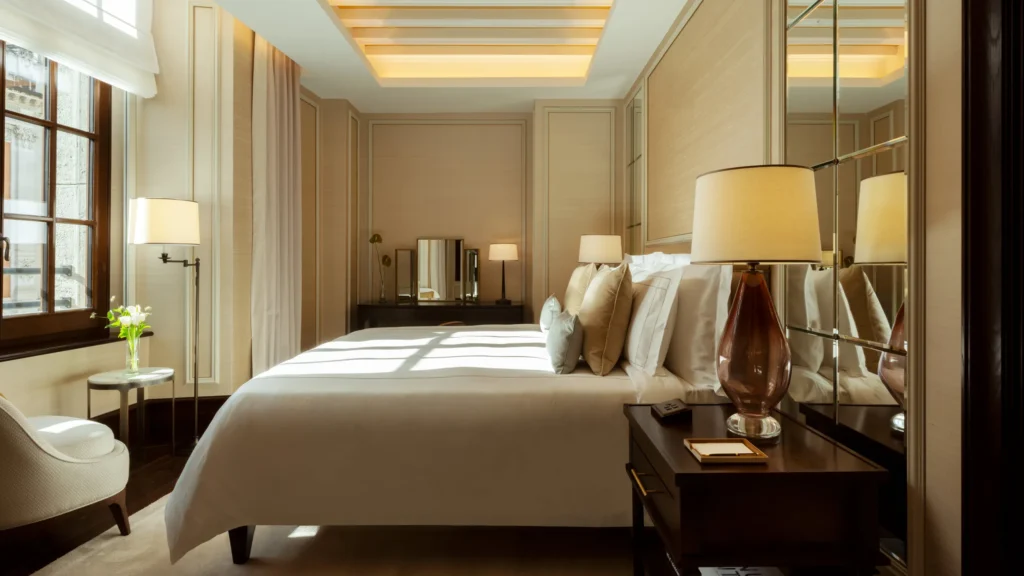
Three dining venues mark chef Carlo Cracco‘s first Roman address, bringing his acclaimed culinary vision to the Italian capital. Beneath the palazzo, a subterranean spa set within the building’s original vault draws on ancient Roman bathing rituals for a wellness experience unlike anything else in the city.
From US$1,200 per night
Kimpton Ashbel New York Hotel
Park Avenue, Midtown Manhattan
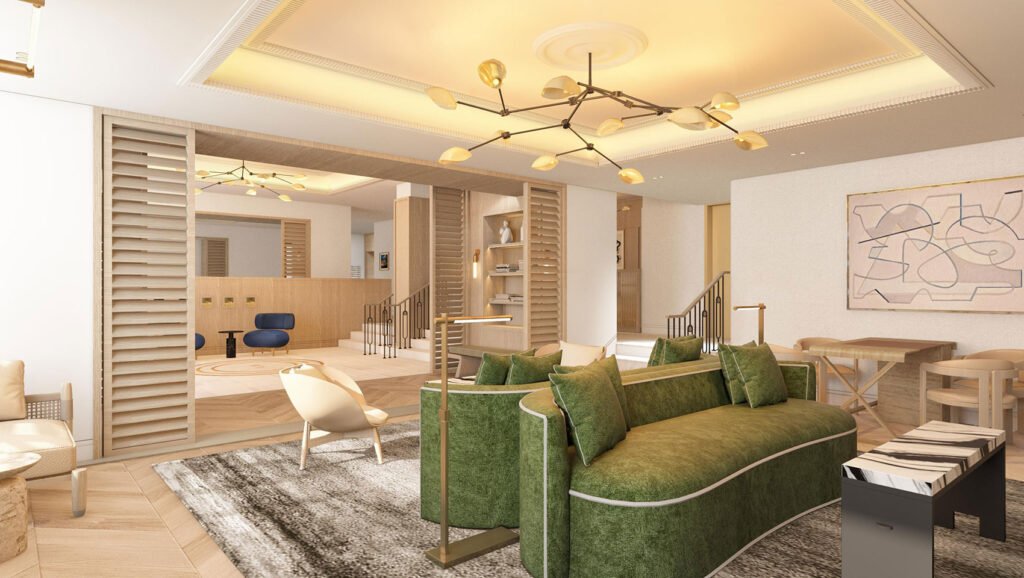
At 70 Park Avenue, just steps from Grand Central Terminal and Bryant Park, Kimpton has breathed new life into a 1928 Beaux-Arts landmark that once defined Midtown’s golden age of hospitality. Rather than a conventional lobby, the ground floor unfolds as a series of interconnected residential-style spaces — foyer, living room, and family room — framed by preserved architectural details and layered with warm woods, soft palettes, and curated gold accents punctuated by eclectic artwork.
Of the 205 guestrooms and suites, many offer views of Park Avenue and the Empire State Building; a Park Avenue Suite is the one to reserve for the full Manhattan-from-above experience.
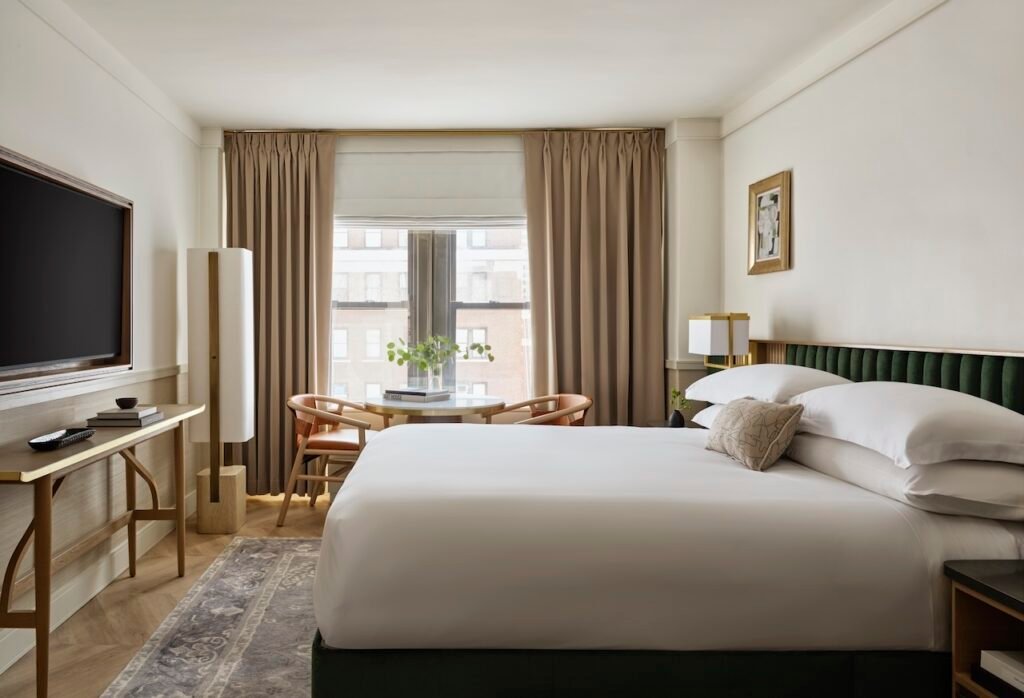
At the heart of the hotel sits Park & Bel, a neighbourhood café concept that doubles as a social hub and workspace, with coffee and artisanal baked goods by day and an evolved evening menu as the city shifts gear. Kimpton’s signature complimentary afternoon wine hour adds a convivial residential rhythm that larger Manhattan properties rarely manage.
While a dedicated spa is absent, a state-of-the-art fitness centre and the brand’s inherently wellness-minded ethos keep the wellbeing offering well above the Midtown average.
From US$246 per night
Falkensteiner Resort Lake Garda
Salò, Italy
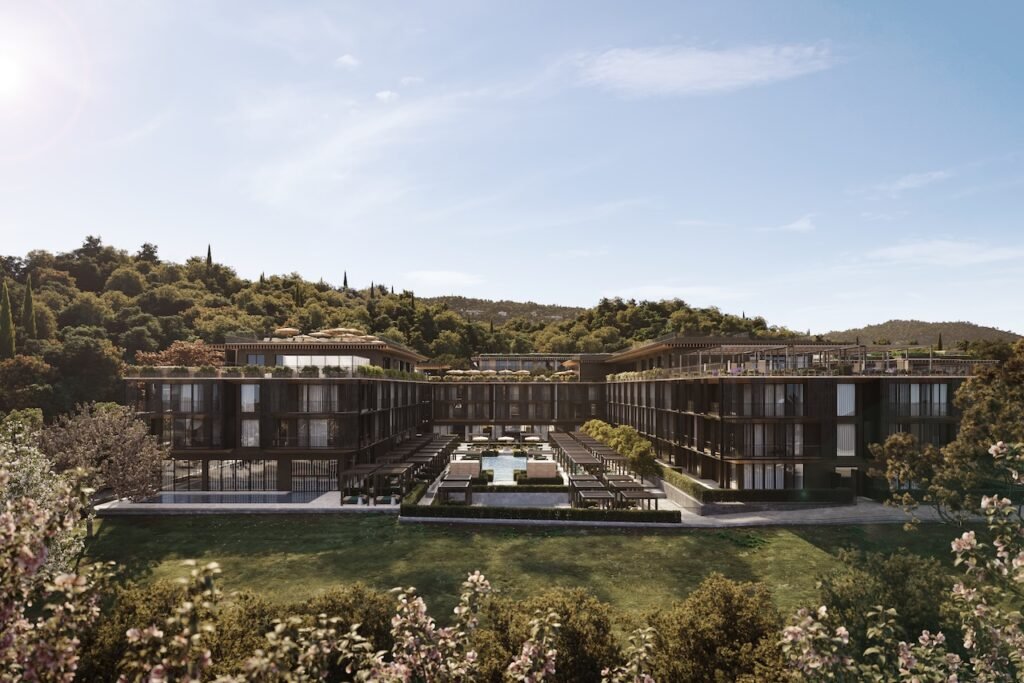
Slightly elevated above Italy’s largest lake, with sweeping views across the water and surrounding greenery, this design-led five-star resort from Falkensteiner marks one of the most considered new-builds on Lake Garda in years. Conceived by architect Matteo Thun and set within a landscaped botanical park of more than 400 native plants and flowers inspired by the historic Historia della Riviera di Salò, the resort positions architecture and cultivated nature as equals.
The 97 rooms and suites combine clean architectural lines with soft natural tones and pastel palettes, reinterpreting classical Italian design through a contemporary lens; Studio Suites from 37 square metres make an elegant entry point, though the lake-facing rooms are the ones worth the upgrade.
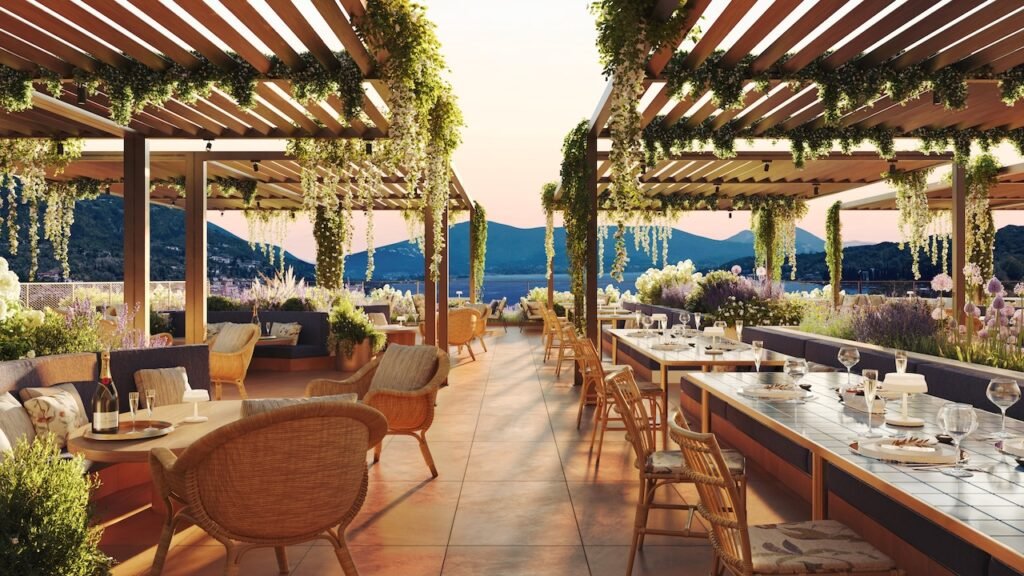
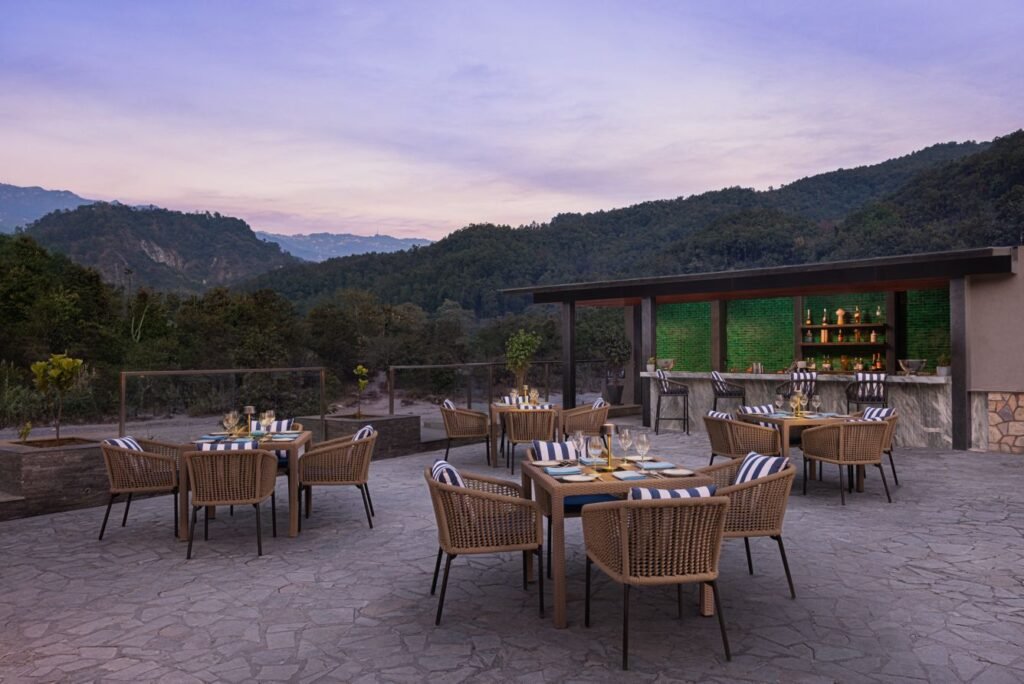
Dining spans three venues — Artigiani restaurant, the Pool Restaurant, and the Eolo Rooftop Bar (above) — with menus ranging from handmade pasta and traditional Italian dishes to plant-based options prepared with locally sourced produce.
Wellness is anchored by the 5,000-square-metre Acquapura Spa, which encompasses indoor and outdoor pools, an indoor botanical garden, and a garden bathing trail lined with olive trees alongside an adults-only rooftop spa with sauna, hammam, plunge pool, and panoramic rooftop pool.
From US$620 per night
Nammos Resort AMAALA
Triple Bay, Red Sea, Saudi Arabia
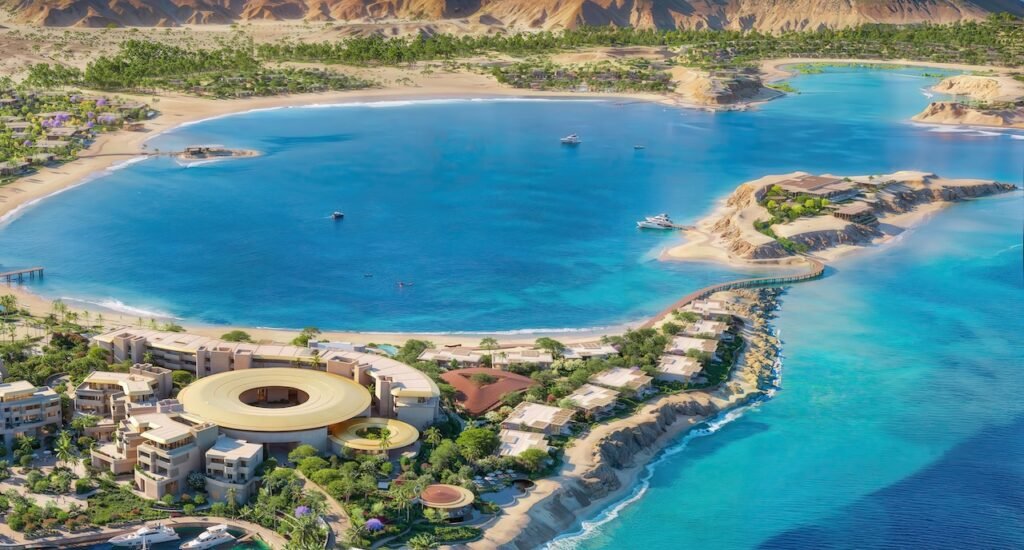
For over two decades, Nammos has defined the rhythm of elite travel from Mykonos to Cannes, creating destinations where atmosphere is as essential as design. Its first Middle East property transplants that sun-drenched social energy to one of the world’s most ambitious new destinations.
Set at AMAALA’s Triple Bay, framed by the Hijaz Mountains and the Red Sea, the resort was designed in collaboration with Foster + Partners, drawing architectural inspiration from traditional Hijazi forms expressed through terrazzo flooring, textured walls, and arched passageways, creating a vocabulary that bridges Greek and Saudi influences with quiet confidence.
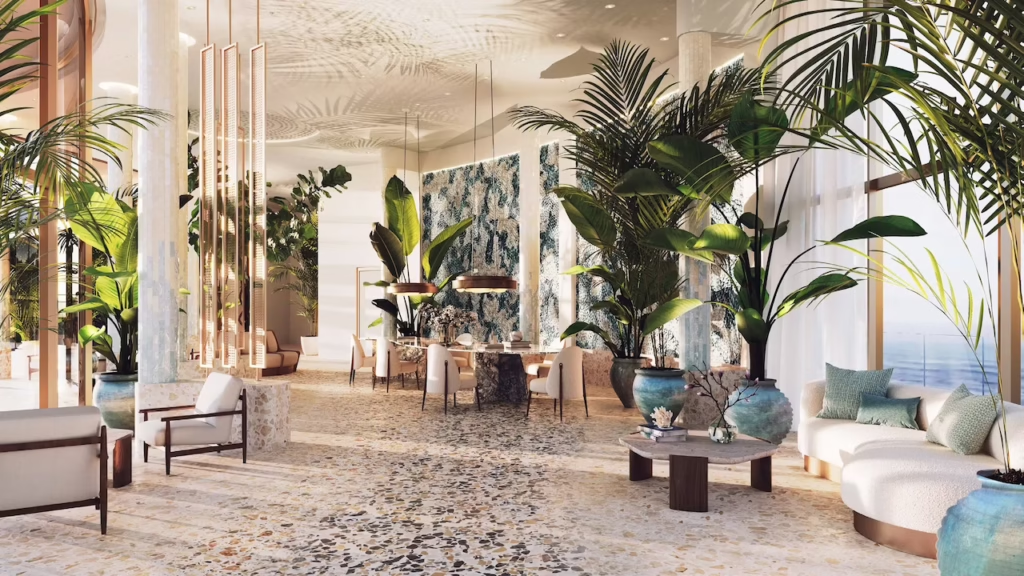
The 110 rooms and suites are complemented by pool bungalows, villas, and 20 private residences, with the showpiece Cliff Villa commanding what the brand describes as AMAALA’s most exclusive viewpoint. Every guest is assigned a dedicated Nammos Butler.
The signature Nammos Restaurant brings Mediterranean simplicity with global flair to the Red Sea shore, while a private island dining experience anchors the resort’s more theatrical moments. AMAALA itself operates on 100% renewable energy with a zero-carbon footprint, making the sustainability credentials as impressive as the setting.
From US$1,500 per night
Anantara Xiling Snow Mountain Chengdu Resort
Dayi County, Sichuan, China
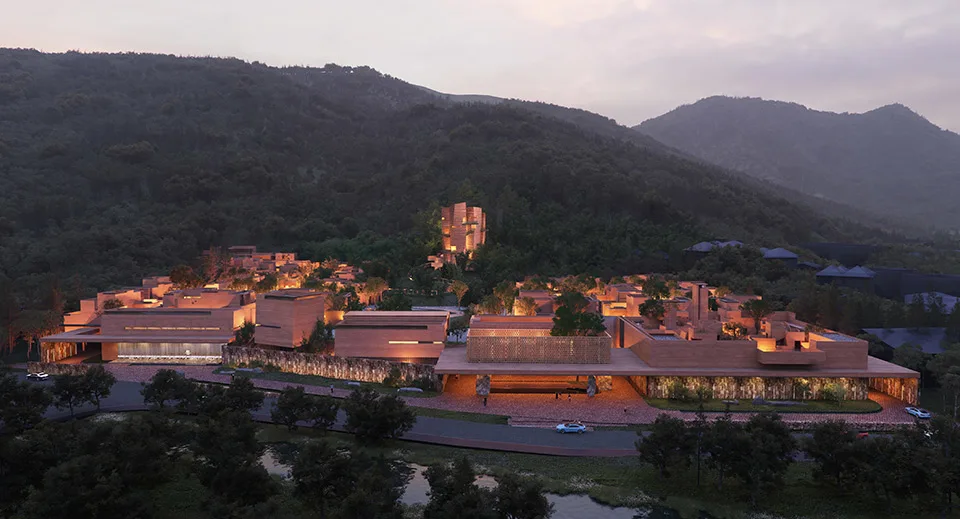
Nestled within Western Sichuan’s Golden Tourist Route and set within a National 5A Tourist Attraction-designated area, Anantara’s first Sichuan property arrives in one of the country’s most scenically dramatic settings, an hour’s drive from the bustling cultural capital of Chengdu.
Designed by global hospitality firm Cheng Chung Design, the interiors frame the resort’s spectacular mountain panorama, letting the scenic outdoors lead at every turn. The 111 rooms and suites range from 50 to 500 square metres, each with direct access to piped hot spring water — a detail that elevates even the most understated room into something restorative. Suites with unobstructed mountain views are the ones to reserve.
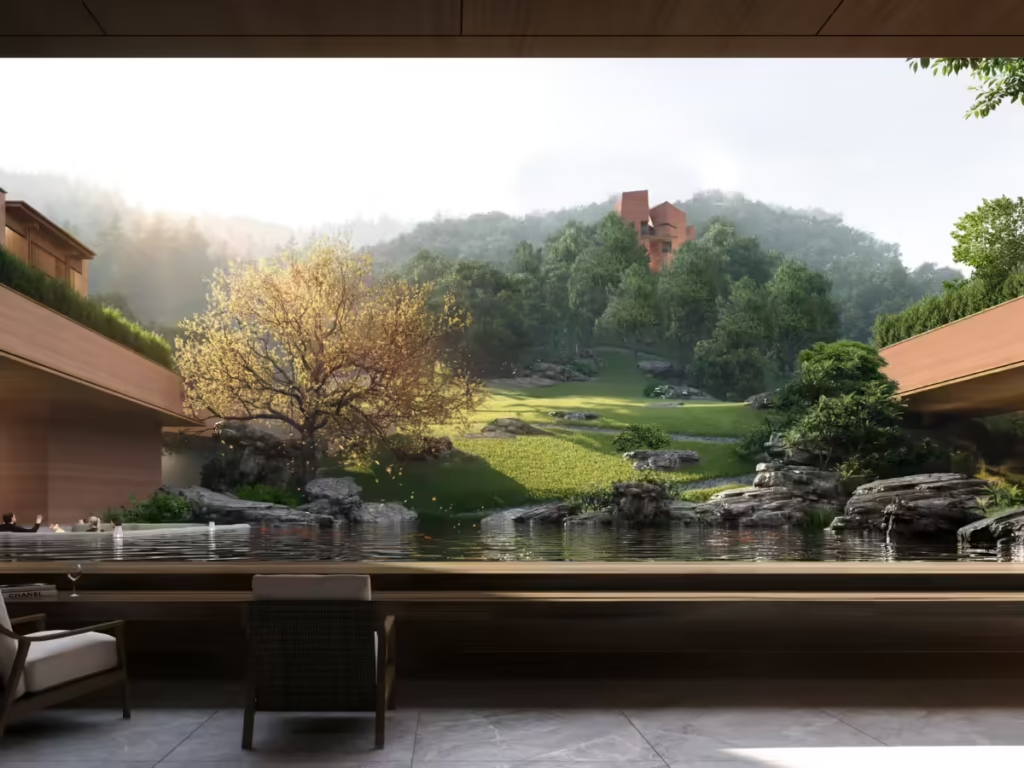
Dining spans a Chinese restaurant with eight private dining rooms, an all-day venue, and a speciality restaurant, while the wider setting delivers experiences few luxury resorts anywhere can match: world-class skiing at Xiling Snow Mountain, thermal soaking at the ancient Huashuiwan Hot Springs, and the Chengdu Research Base of Giant Panda Breeding just twenty minutes away.
The Anantara Spa and dedicated wellness centre complete a property that makes a genuinely compelling case for Sichuan as one of Asia’s next great luxury travel frontiers.
From US$200 per night
The Imperial Hotel Bloomsbury
Russell Square, London, United Kingdom
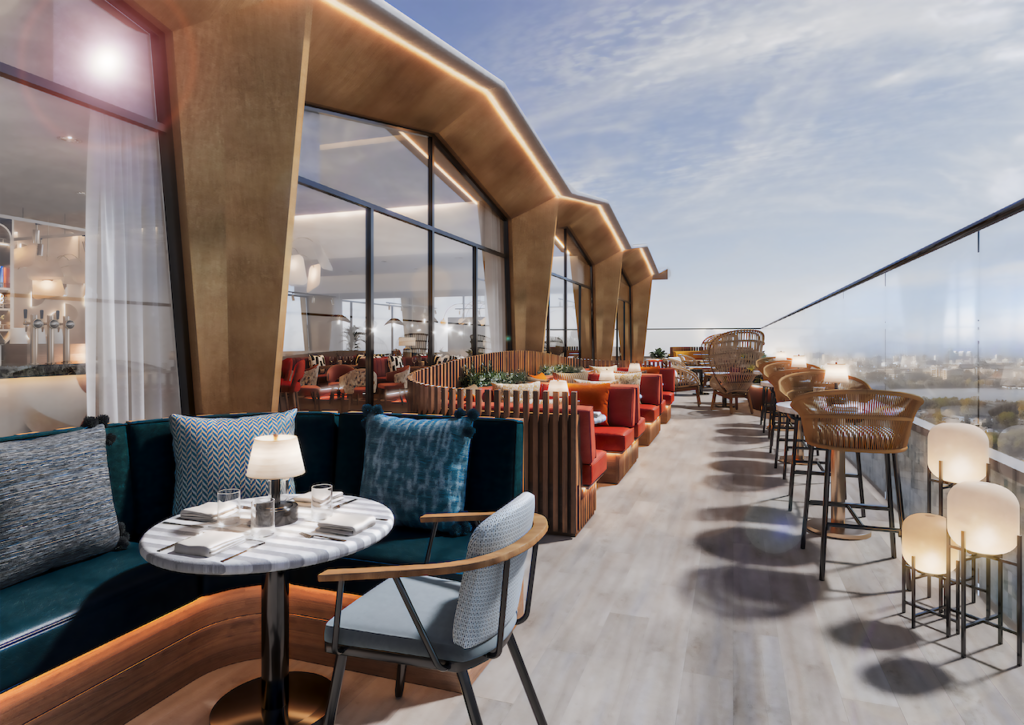
Overlooking Russell Square in the heart of Bloomsbury, The Imperial has undergone what is described as the most ambitious transformation in its 120-year history, emerging as the flagship property of the family-owned Imperial London Hotels group. The iconic Brutalist building — long a landmark of the neighbourhood — has been reimagined as a four-star deluxe lifestyle hotel, blending retro-chic with modern sophistication in a design that pays genuine homage to its mid-century architectural bones rather than erasing them.
The 357 rooms and suites are complemented by adaptable public spaces and a tenth-floor panoramic rooftop bar (below) and restaurant with breathtaking views across London; the rooftop is the clear standout, and a suite on the upper floors to match it is the combination to book. Interiors throughout are led by a mid-century modern aesthetic, with understated luxury and considered contemporary touches designed to elevate the experience of today’s traveller.
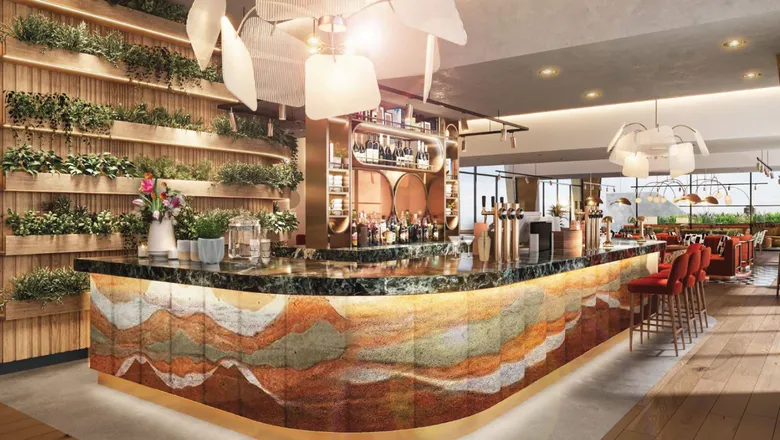
A dedicated spa has not been announced, though multiple dining spaces and a lounge give the public areas a genuine sense of neighbourhood destination and exactly the kind of hotel Bloomsbury, with the British Museum on its doorstep, has long deserved.
From US$290 per night
Ardour Lilianfels Blue Mountains Resort
Katoomba, New South Wales, Australia
Originally built in 1889 as the summer residence of eminent Chief Justice Sir Frederick Darley, Lilianfels became one of the Blue Mountains‘ most celebrated retreats in the early 1990s. Now, under the stewardship of Salter Brothers Hospitality, it takes its most significant step yet, joining the newly launched Ardour Hotels & Estates collection as a multi-million-dollar reinvention of one of Australia’s great heritage escapes.
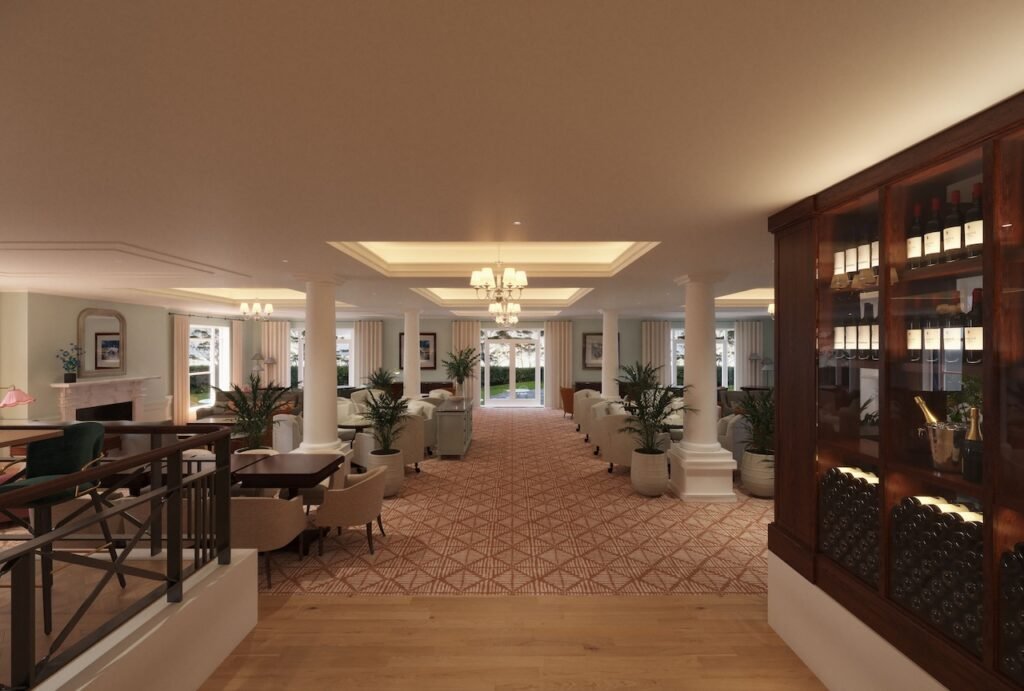
Design is led by acclaimed Sydney firm Luchetti Krelle, drawing inspiration from eccentric English garden estates while sensitively honouring the property’s Victorian bones: reception and lounge areas retain their signature charm and iconic fireplaces, while the reimagined bar extends to include a striking wine wall and intimate private dining room.
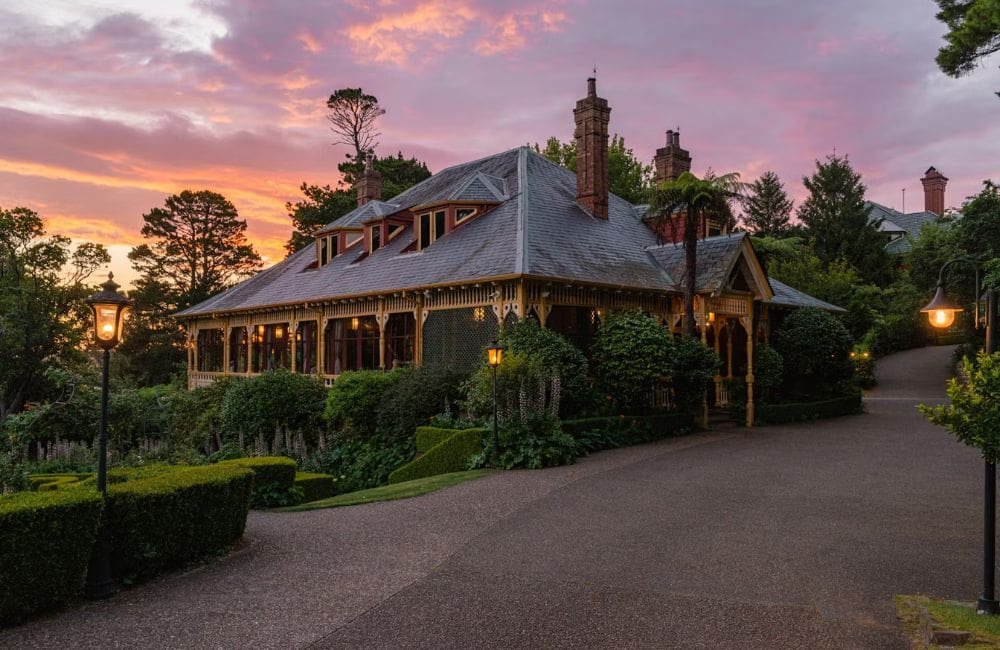
The 89 guest rooms and suites have been redesigned across three bold yet elegant palettes, blending heritage tones with contemporary colour, custom print textiles, and statement furniture. We would suggest opting for one of the suites with views over the Jamison Valley.
Elevated dining, refreshed event spaces, and enhanced wellness facilities complete a property that finally gives the Blue Mountains the luxury anchor it has long warranted, perched above one of the most breathtaking landscapes in the southern hemisphere.
From US$230 per night
Park Hyatt Phu Quoc Resort
Phu Quoc Island, Vietnam
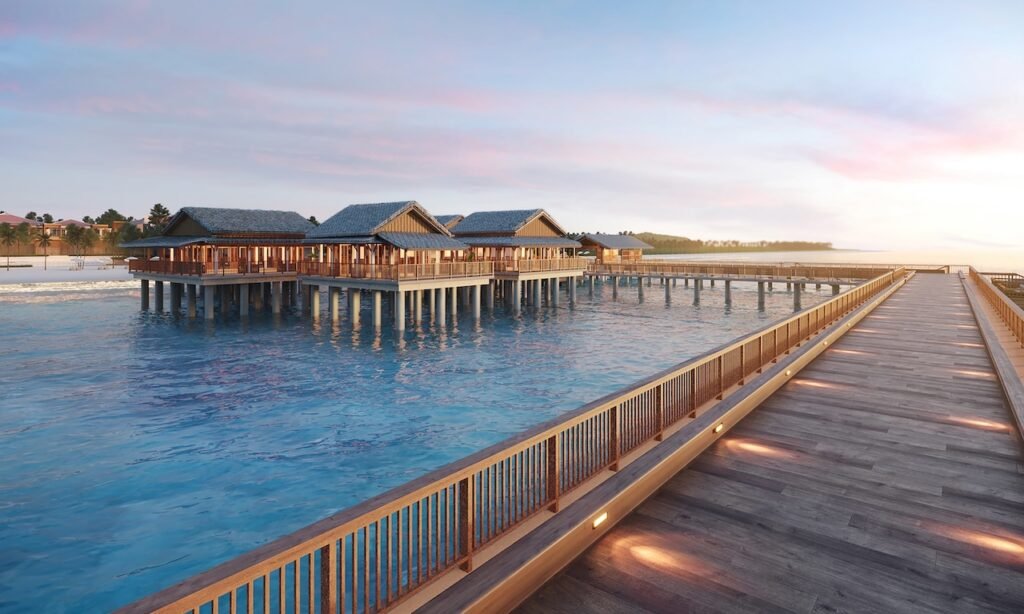
Brought to a destination recently voted the world’s second most beautiful island, Park Hyatt’s first Vietnamese resort is as much a statement about where luxury travel is heading as it is about where it has arrived. Set across 160 acres of quiet coastline at Phu Quoc’s southwestern tip, the resort is conceived as a modern interpretation of a traditional Vietnamese village, with low-rise villas and rooms built around rice paddies, lakes, and rolling hills, all leading down to a long stretch of white sand with sunset views across the Gulf of Thailand.
Guests arrive through a timber gate and cross lotus ponds to reach their villa, each with a private pool, courtyard, and shaded outdoor space with subtle Indochine interiors; the beachfront villas with direct sunset exposure are the ones to secure.
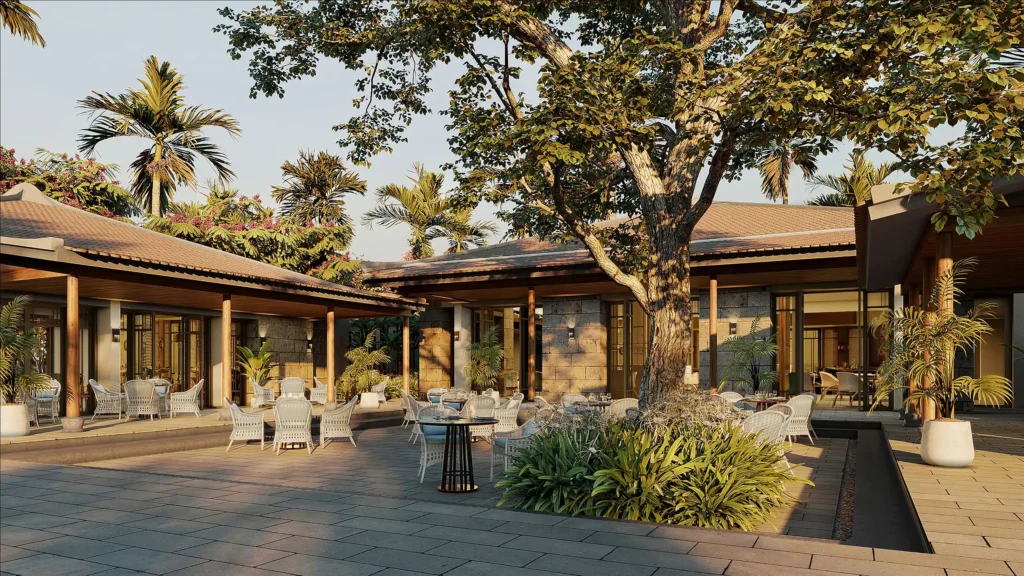
Dining spans two restaurants, a bar, and a poolside barbecue, all supplied in part by the resort’s on-site organic farm. Wellness is anchored by a lakeside spa alongside water-facing yoga pavilions, a gym with its own lap pool, and a Camp Hyatt kids’ village, making this one of the region’s most complete family resort offerings as well as a genuinely compelling retreat for those travelling without them.
From US$300 per night
The Barai Hua Hin Resort & Spa
Hua Hin, Thailand
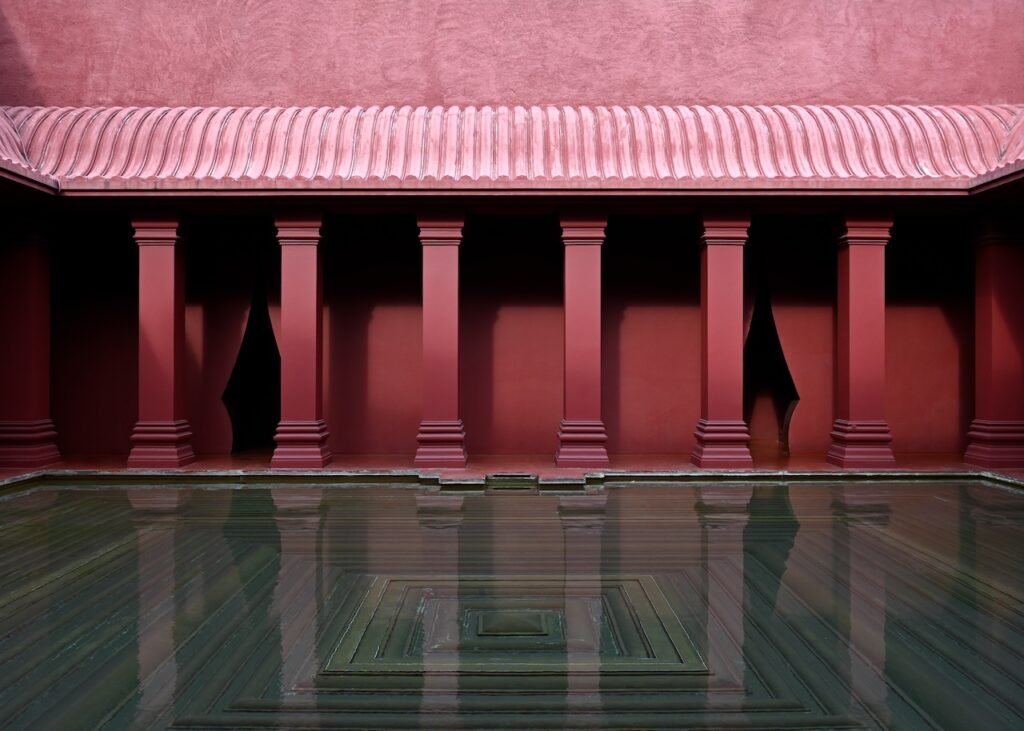
On the Gulf of Thailand’s most elegant coastline — long the retreat of choice for Asia’s discerning weekend traveller — The Barai Hua Hin joins The Unbound Collection by Hyatt, a brand built on the belief that every property has a singular story to tell. Here, that story is rooted in the ancient healing traditions of Thailand.
Designed by acclaimed Thai architect Lek Bunnag, the award-winning Barai spa (below) was conceived as a temple of sanctuary, its spaces and treatments shaped by the four elements of Thai healing philosophy: earth, water, wind, and fire. It is one of Southeast Asia’s most architecturally considered spa environments, and the primary reason to make the journey.
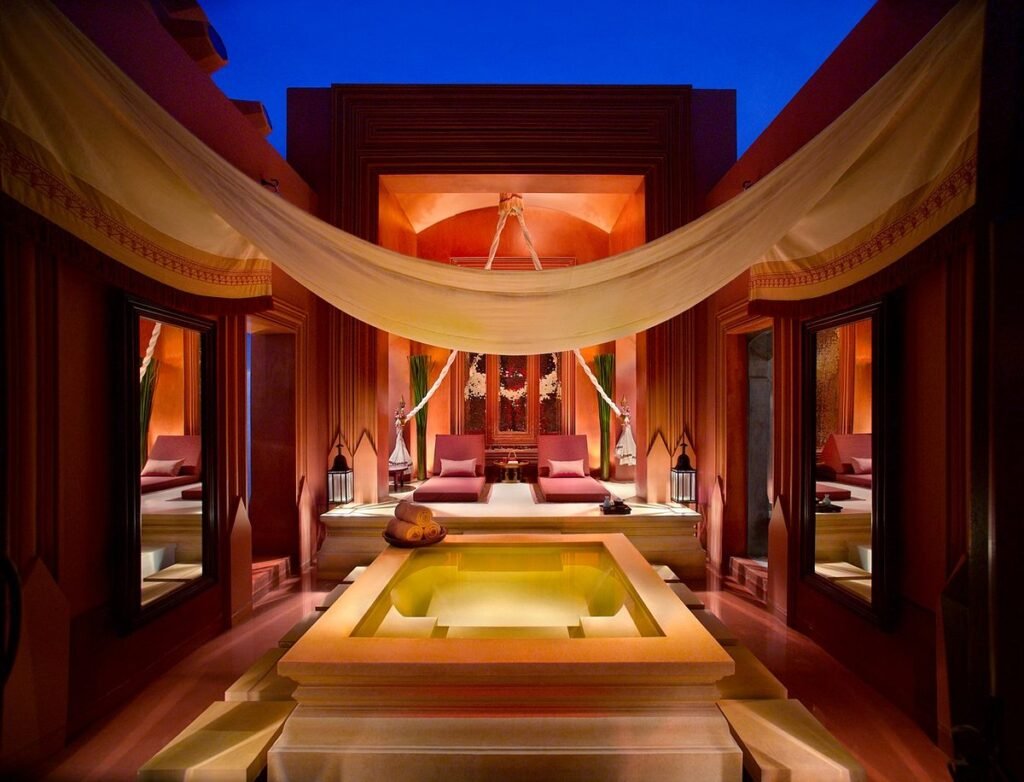
The resort offers 90 rooms and suites, a dedicated wellness centre, a central pool oasis, and lush gardens, set adjacent to the beachfront Hyatt Regency Hua Hin. A residential spa suite — one of eight available, each designed for extended immersive stays — is the standout accommodation for those committed to making wellness the full purpose of their visit.
Dining is anchored by two restaurants, McFarland House and The White House, both drawing on the coastal produce and culinary traditions that define this stretch of the Thai Gulf.
From US$560 per night
The Zetter Bloomsbury Hotel
Montague Street, London, United Kingdom
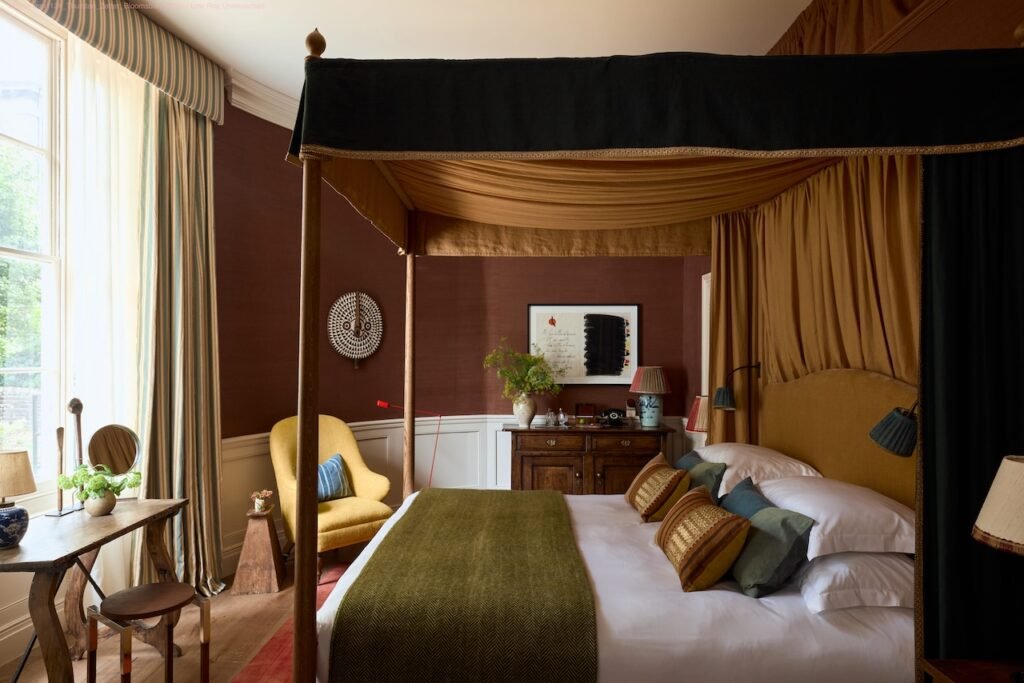
Set across six interconnecting Georgian buildings on Montague Street, directly opposite the British Museum, The Zetter’s third London property is perhaps its most naturally suited yet and is nestled within a neighbourhood long defined by writers, collectors, and radical thinkers. Interiors by award-winning designer James Thurstan Waterworth draw on Bloomsbury’s literary and artistic heritage, with antique finds, vintage lighting, and rich textiles creating an atmosphere that feels like staying with a well-travelled friend while balancing global sophistication with the warmth of a private home.
Rooms range from intimate Cosy Rooms to grand Terrace Suites with four-poster beds and sweeping garden views; the latter is the one to book for a genuine sense of residing rather than merely staying.
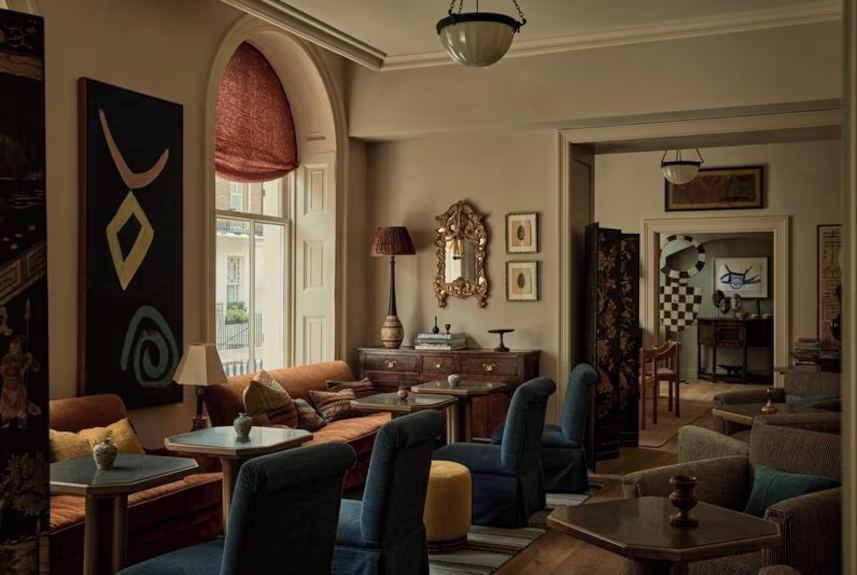
The ground floor unfolds across The Parlour — a relaxed cocktail and coffee space — and The Orangery, a light-filled dining room overlooking the garden, which extends outdoors in summer for seasonal BBQ residencies. A gym and rooftop yoga deck round out an experience offering that is deliberately intimate rather than exhaustive, as well as a hotel that, like Bloomsbury itself, rewards those who take the time to settle in.
From US$385 per night
The Inn at Sundance Mountain Resort
Provo Canyon, Utah, United States
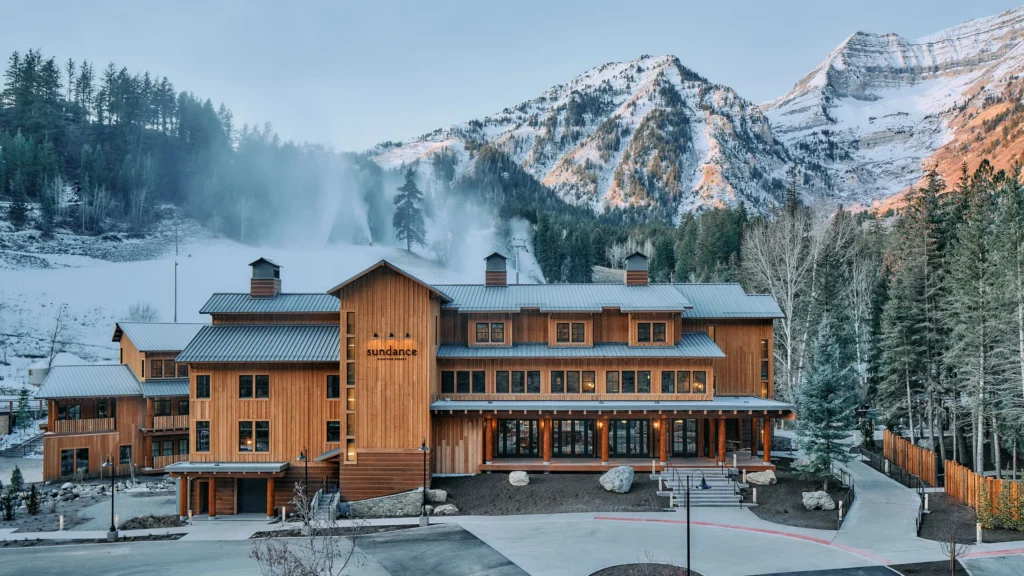
Founded by Robert Redford in 1969 and awarded One MICHELIN Key in both 2024 and 2025, Sundance Mountain Resort has always occupied a singular place in American hospitality, a four-season mountain destination where outdoor recreation, art, and nature exist in deliberate, principled balance.
The Inn is its most significant development in over five decades, and it arrives with all the restraint that philosophy demands. Designed by BSA Architects as two wings connected by a footbridge spanning the North Fork Provo River — with rooflines kept deliberately below the tree line to preserve mountain sightlines — the 63-room ski-in/ski-out hotel sits at the base of the Outlaw Express lift with Mount Timpanogos as its backdrop.
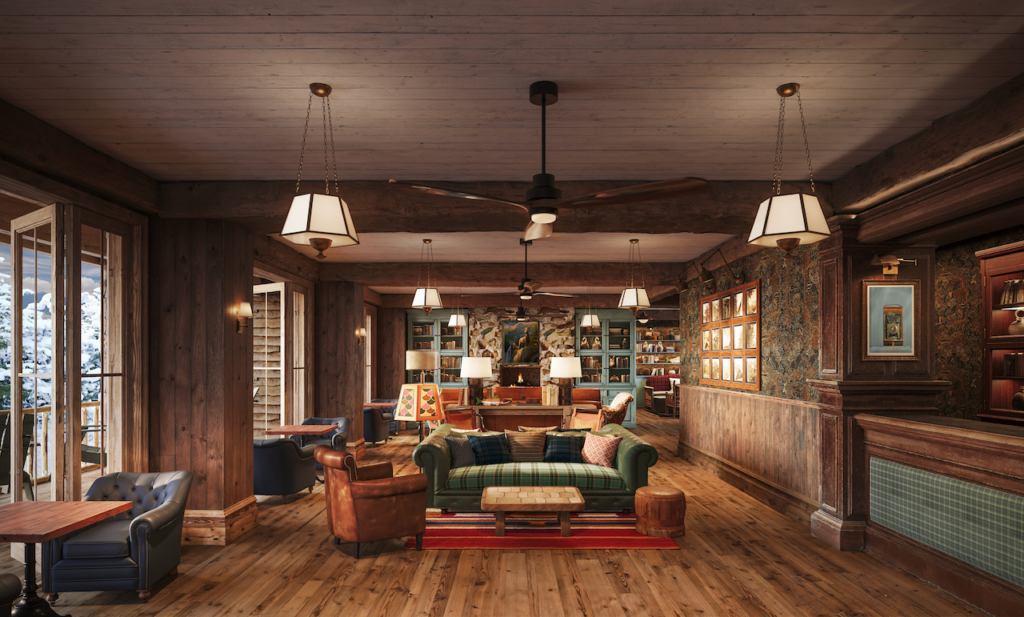
Inside, reclaimed timber floors, landscape art, film artefacts, and a roaring fire create a lobby that feels warmly established rather than newly built, delivering a space that invites guests to linger rather than pass through.
A Terrace Suite facing the river is the standout room. The Inn sits steps from the resort’s beloved dining and social spaces including the Foundry Grill, the Tree Room, and the Owl Bar, while an art gallery and wellness centre with daily yoga classes give it a cultural depth that sets it apart from Utah’s more conventional mountain properties.
From US$320 per night
Amanvari Resort
Costa Palmas, East Cape, Baja California Sur, Mexico
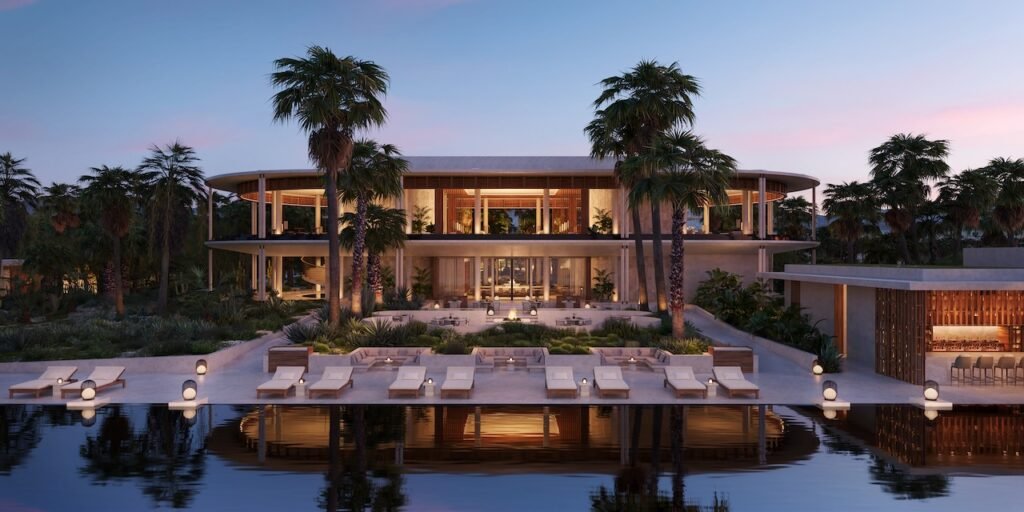
There is a stretch of Baja California where the Sonoran Desert simply dissolves into the electric-blue waters of the Sea of Cortez, a coastline so pristine that marine biologists once called it the aquarium of the world. This is the East Cape, and Aman’s first Baja resort arrives here with characteristic restraint.
Set within the exclusive Costa Palmas community at a rare convergence of ocean, desert, and estuary, the resort’s low structures — finished in hand-applied white concrete that shifts with the peninsula’s extraordinary light — frame views toward the Sierra de la Laguna mountains without competing with them.
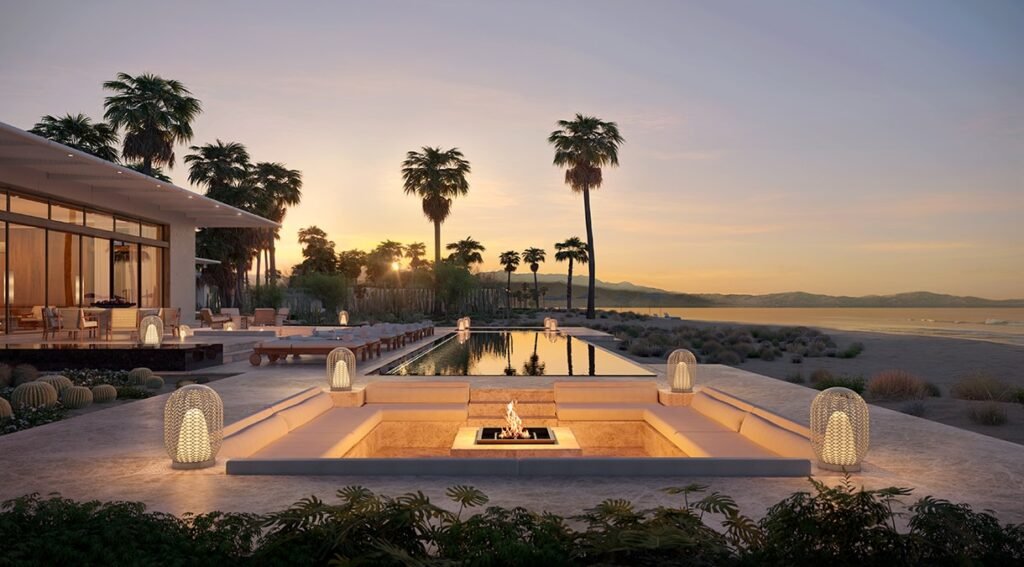
Each of the 18 casitas, at an impressive 82 square metres, comes with a heated private pool, expansive terrace, outdoor shower, and interiors of natural stone, timber, and plaster, with daily breakfast, guided wellness activities, and non-motorised water sports included as standard. Book a Beachfront Casita for direct access to the Sea of Cortez at its most luminous.
Dining moves between the global and the intensely local, from Arva, Sesui’s intimate 10-seat omakase counter to Luma, where open-fire cooking celebrates Baja’s coastal catch at the water’s edge. The Aman Spa grounds its programme in Mexico’s ancestral traditions, anchored by a contemporary temazcal and two Hydro Houses.
From US$4,500 per night
Nala Maldives by Jawakara Islands
Lhaviyani Atoll, Maldives
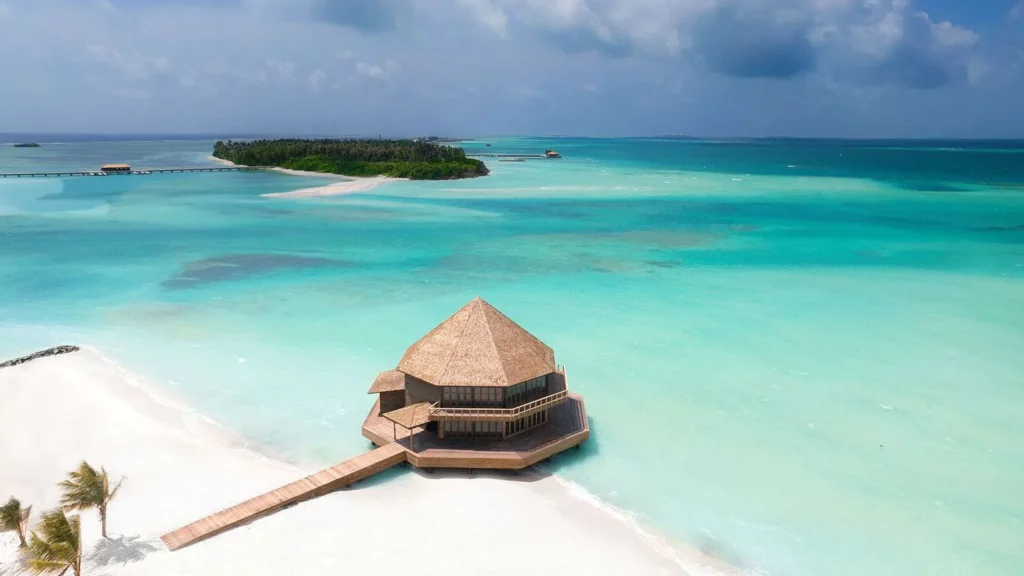
Inspired by the Dhivehi word for beauty, Nala Maldives has been conceived as a tranquil yet contemporary island escape that blends barefoot luxury with sustainability-driven operations, with the name offering a quiet promise of what awaits on this 10-hectare private island in Lhaviyani Atoll. A 35-minute seaplane flight from Velana International Airport, the resort is designed as an intimate adults-only sanctuary for romance, connection, and deliberate stillness.
What makes it genuinely distinctive, however, is its dual-island concept. Guests can travel between Nala and the neighbouring Jawakara Islands in just three minutes by speedboat, accessing a wider selection of dining venues, sports facilities, and island experiences before returning to Nala’s quieter pace, offering the best of both worlds without sacrificing the seclusion that makes the Maldives worth the journey.
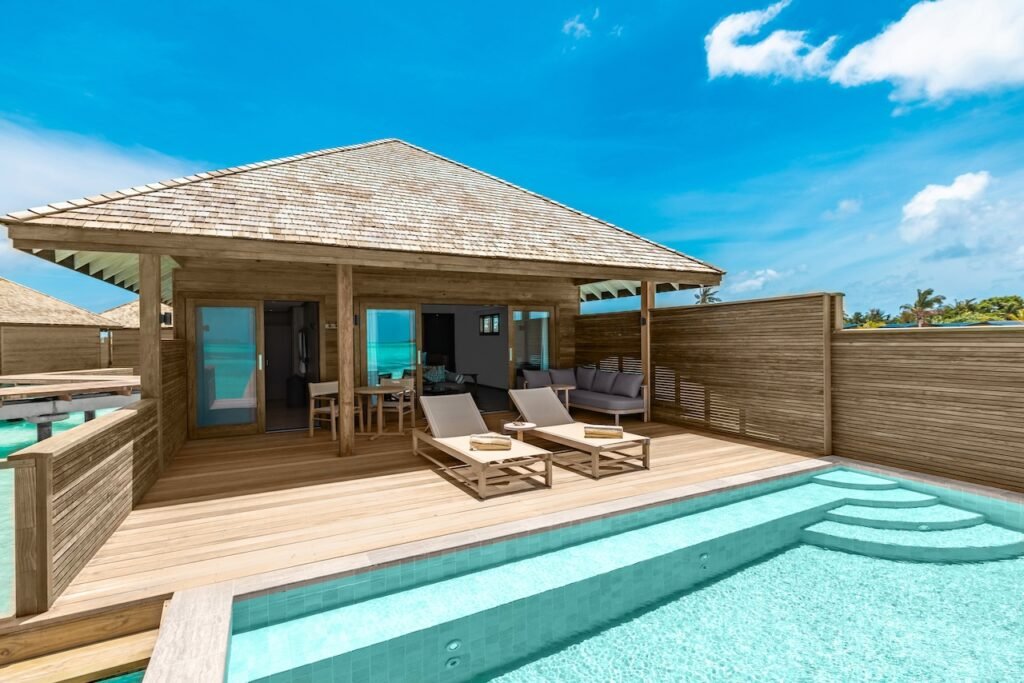
The 80 villas span three tiers — beach villas, pool villas, and overwater pool villas — each offering a private plunge pool and lagoon views. An overwater pool villa is the standout.
The spa draws on Ayurvedic traditions, blending massage, acupuncture, and herbal remedies within a setting designed to reflect the tranquil lagoon surrounding it, while the ProDivers PADI 5-Star dive centre opens up some of the Indian Ocean’s most biodiverse reefs.
From US$679 per night
The Red Sea EDITION Hotel
Shura Island, The Red Sea, Saudi Arabia
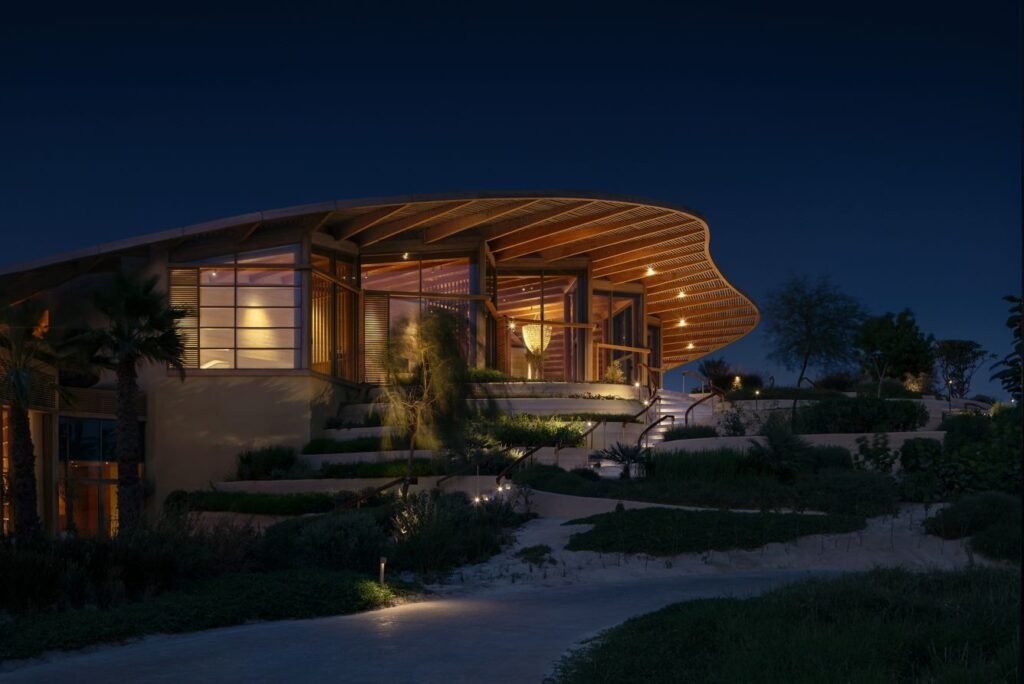
The first hotel to open on Shura Island as part of Saudi Arabia’s ambitious Red Sea project, The Red Sea EDITION has been designed by Rockwell Group and seamlessly blends the EDITION brand’s contemporary minimalist aesthetic with the raw beauty of the desert and the warmth of Saudi hospitality. It sits along a kilometre of private beachfront with sweeping views across turquoise waters and the lush fairways of Shura Links, Saudi Arabia’s first 18-hole island golf course, designed by world-renowned architect Brian Curley.
The 240 rooms and 53 suites are complemented by private beachfront access, multiple pools, a spa, gym, and a collection of restaurants and lounges overlooking the sea, with an overwater suite the natural standout.
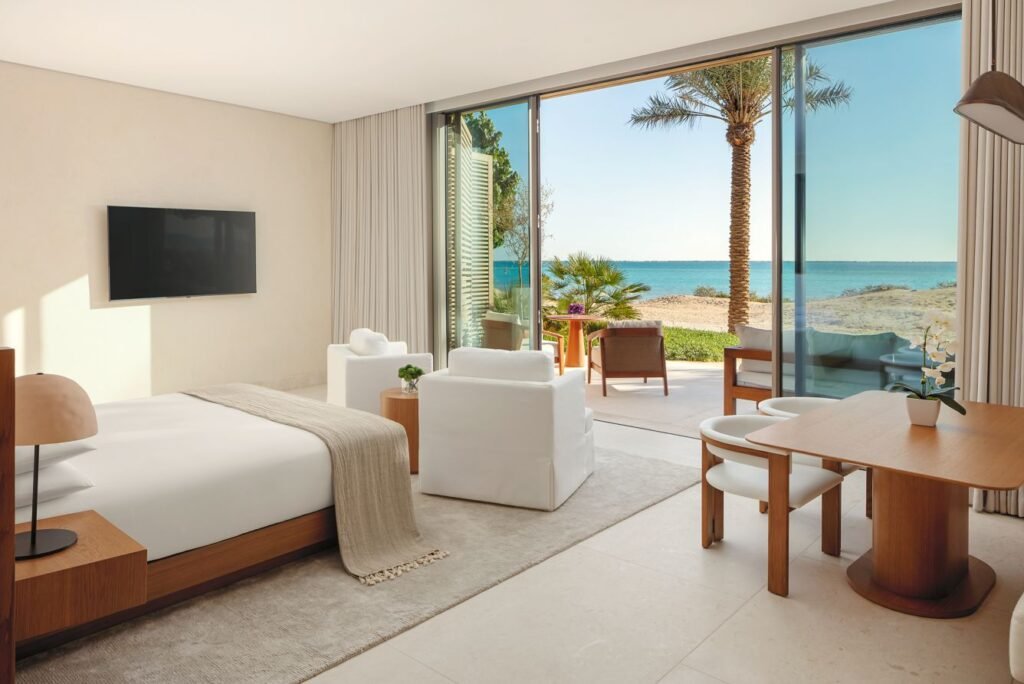
Beyond the resort, signature experiences are delivered by destination activity brands WAMA over water, Galaxea underwater, and Akun inland, an adventure infrastructure as considered as the hotel that anchors it. The resort operates within Red Sea Global’s planet-first approach, underpinned by the region’s largest landscape nursery and a commitment to environmental restoration that gives its luxury a rare conscience.
From US$700 per night
White Elephant Aspen Hotel
West End, Aspen, Colorado, United States
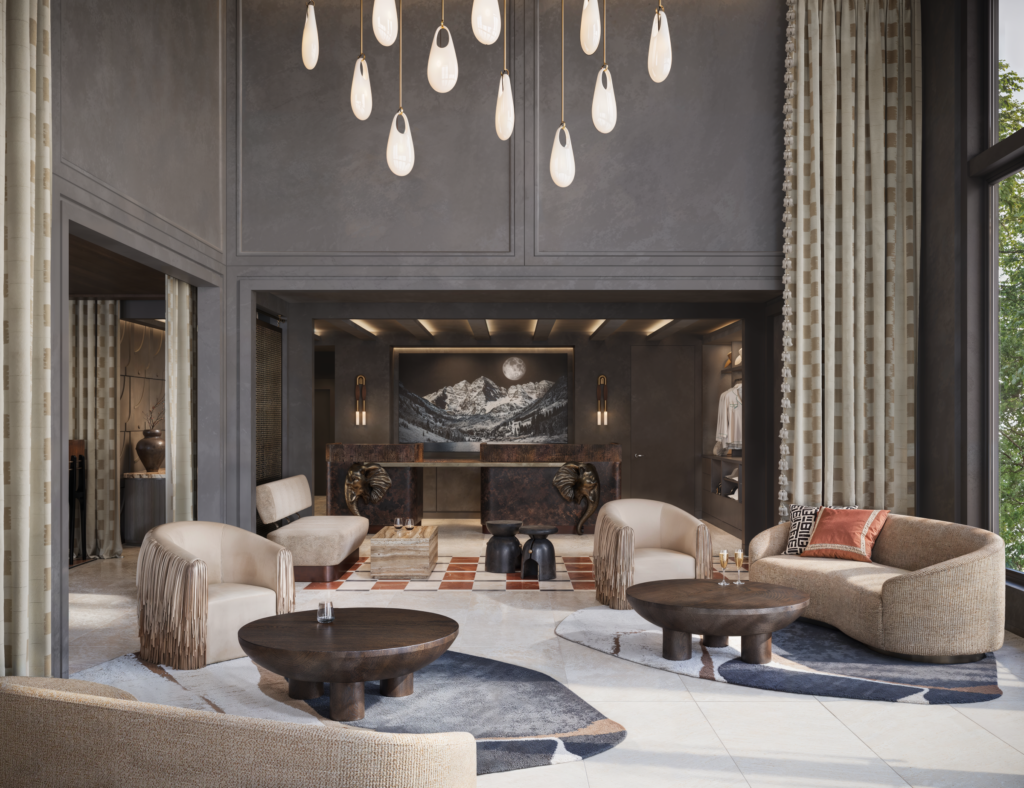
Known for iconic properties on Nantucket and in Palm Beach, White Elephant Resorts brings its inimitable mix of service, style, and deeply residential hospitality to the American West with its first mountain property — and the fit is instinctive. Located on the corner of Main Street and Garmisch Street in Aspen’s West End neighbourhood, steps from the Aspen Institute, Harris Hall, and the Benedict Music Tent, the 54-key hotel sits at the town’s cultural and intellectual epicentre rather than its ski-resort frenzy.
Boston-based architectural firm EMBARC was given carte blanche to inject modernity into Aspen’s prevailingly Victorian aesthetic, resulting in an Alpine-chic concept expressed through a rich palette of rust, warm whites, and deep charcoals, paired with smooth leather, wood, and stone, with playful brand signatures including a brass elephant trunk lobby desk and elephant knockers on guest room doors. The three-bedroom Penthouse Suite with mountain views is the standout.
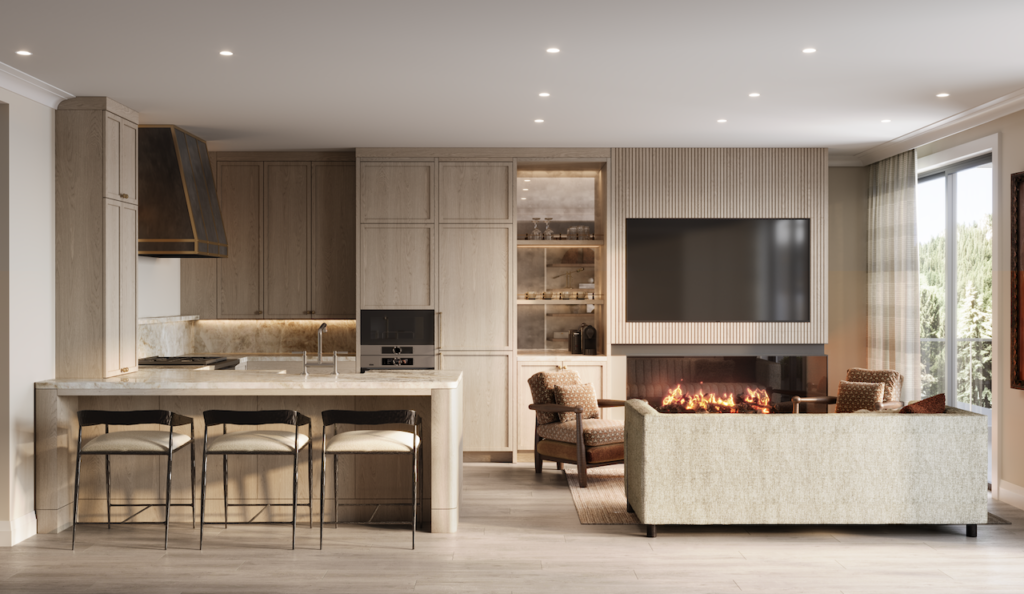
Restaurant LoLa 41° leads the dining offering with a seafood and sushi menu inspired by destinations along the 41st parallel, with nigiri, martinis, and truffle fries anchoring the après-ski programme.
A partnership with Anderson Ranch Arts Centre — a cornerstone of Colorado’s artistic community for over 60 years — gives the property a cultural dimension rare among mountain resorts, while complimentary BMW courtesy cars, bikes, and slope shuttles ensure the mountains are never far away.
From US$1,995 per night
DUKES London Hotel Reopening
St James’s, Mayfair, London, United Kingdom
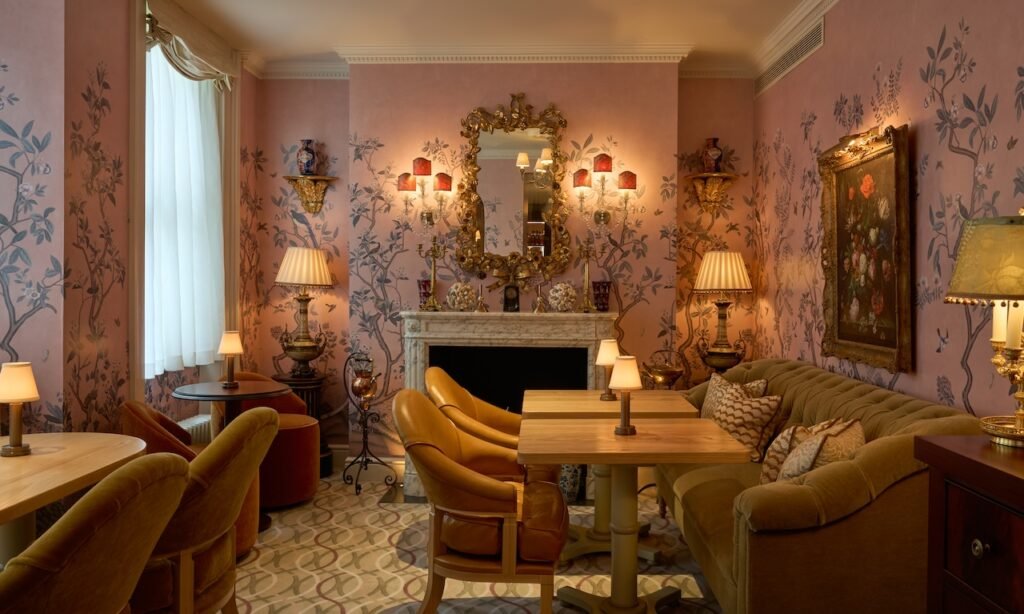
Tucked away on a peaceful cul-de-sac in St James’s, DUKES has been a discreet London treasure since 1908, one surrounded by royal residences and private members’ clubs, embodying polished British understatement, warm service, and a sense of unhurried elegance that has drawn writers, creatives, and discerning travellers for generations. After a full closure in January 2025, it returns this summer transformed.
The multi-million-pound redesign is led by Russell Sage Studio, in collaboration with a historian engaged specifically to uncover and weave the heritage of the hotel and its surrounding St James’s neighbourhood into its refreshed identity, a rare approach that promises depth alongside the renovation’s modern sophistication. The reopening unveils 88 reimagined rooms and suites alongside transformed public spaces that blend townhouse heritage with timeless British elegance. The Duke of Clarence Suite, with its views over Green Park, remains the room to reserve.
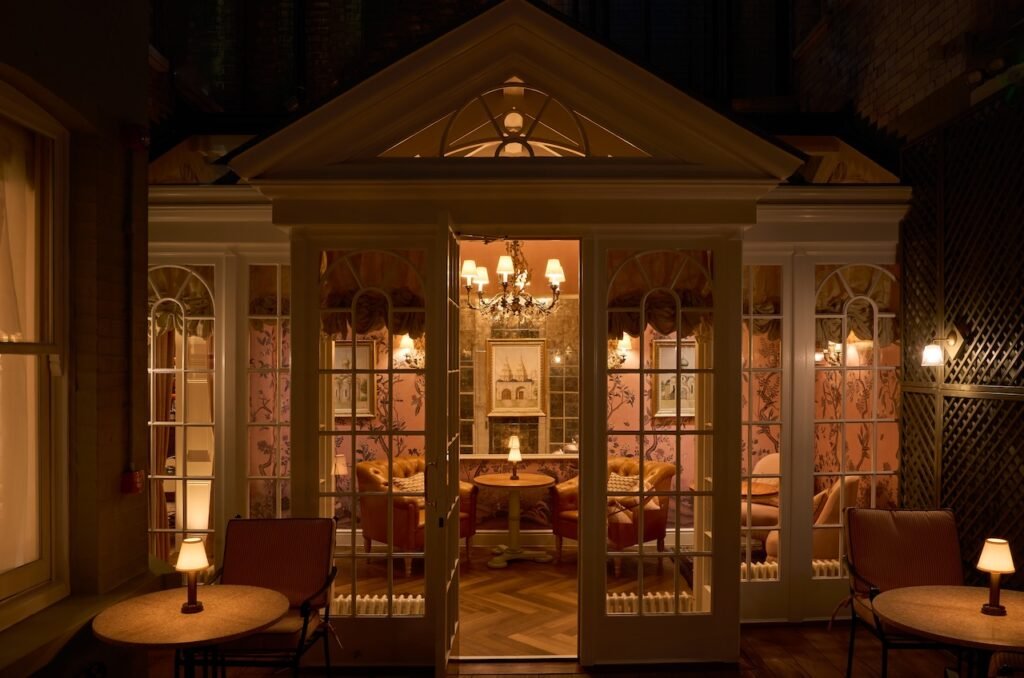
Already open ahead of the full relaunch, The Delany Drawing Room — a whisky lounge inspired by 18th-century botanical artist Mary Delany, layered with natural materials, botanical motifs, and subtle allusions to London’s hidden gardens — and The Cigar Merchant, a richly leather-lined room with a curated humidor at its heart, signal the register of the full reopening to come. The legendary DUKES Bar, famed for what many consider London’s finest dry martini, never closed throughout.
From US$400 per night
The Dali EDITION Hotel
Cangshan Mountain, Dali, Yunnan, China
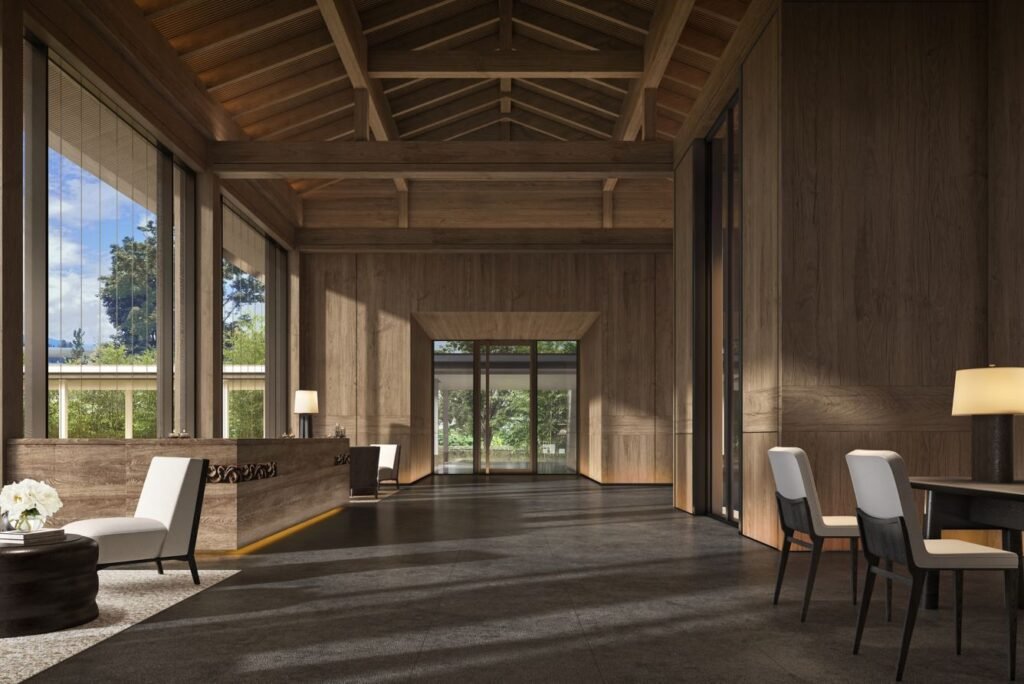
Backed by the nineteen peaks of Cangshan and facing the vast shimmer of Erhai Lake at an altitude of 2,100 metres, The Dali EDITION blends Eastern Zen philosophy, the traditions of the local Bai ethnic culture, and EDITION’s signature minimalist luxury into something that feels entirely unlike any other property in the brand’s portfolio.
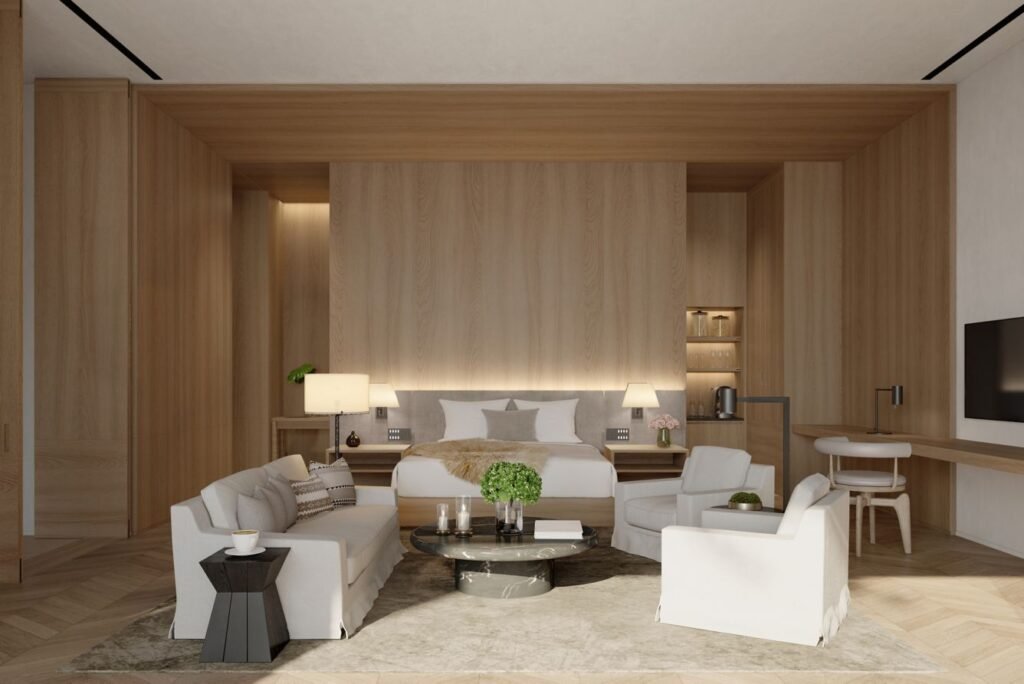
Designed by an international team spanning WATG, CCD, and SCDA, the hotel is built into the mountainside with clean, restrained architectural lines and wood, stone, and muted textures echoing nature so closely that the structure appears to have grown from the mountain itself. The 150 guest rooms, suites, and villas all carry locally rooted details, from a custom teapot recalling the ancient Tea-Horse Road to a plant-based bed throw reflecting the property’s sustainability commitments, with floor-to-ceiling windows framing either the mountain or the lake. We suggest booking the Erhai Lake View Suite for a chance to commune with nature.
Dining ranges from the lobby’s afternoon tea service, framed by lake views and twin fireplaces, to Kusho, a red-clay and dark-timber space serving charcoal-grilled Japanese yakitori with 240-degree panoramic views across Cangshan and Erhai.
The spa combines mineral salts, seasonal blossoms, and selected botanicals in treatments designed to restore energy and clarity, with a natural spring weaving through the grounds, shaping gardens and terraces that feel entirely of the land.
From US$450 per night
.Here Baa Atoll Maldives
Baa Atoll UNESCO Biosphere Reserve, Maldives
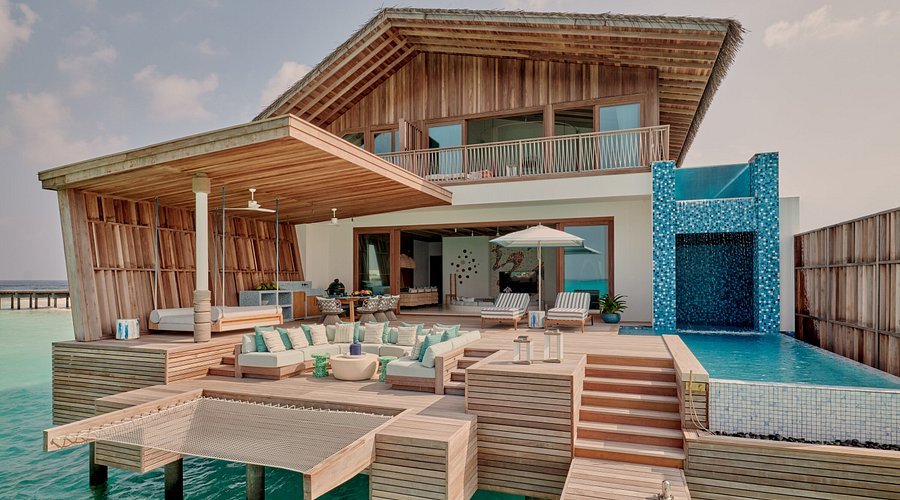
In a destination where scale has long been mistaken for luxury, .Here arrives as a deliberate correction. One of the smallest private island resorts in the world, with just nine residences spread across two natural islands — poetically named Somewhere and Nowhere — the concept places intimacy and personalisation at the very heart of the experience.
Located within the UNESCO Biosphere Reserve of Baa Atoll and reached via a 30-minute seaplane from Velana International Airport, it is designed by Kulör Group with interiors by award-winning British studio Muza Lab, blending sustainable architecture with natural materials and panoramic views that feel both refined and deeply connected to the Maldivian landscape.
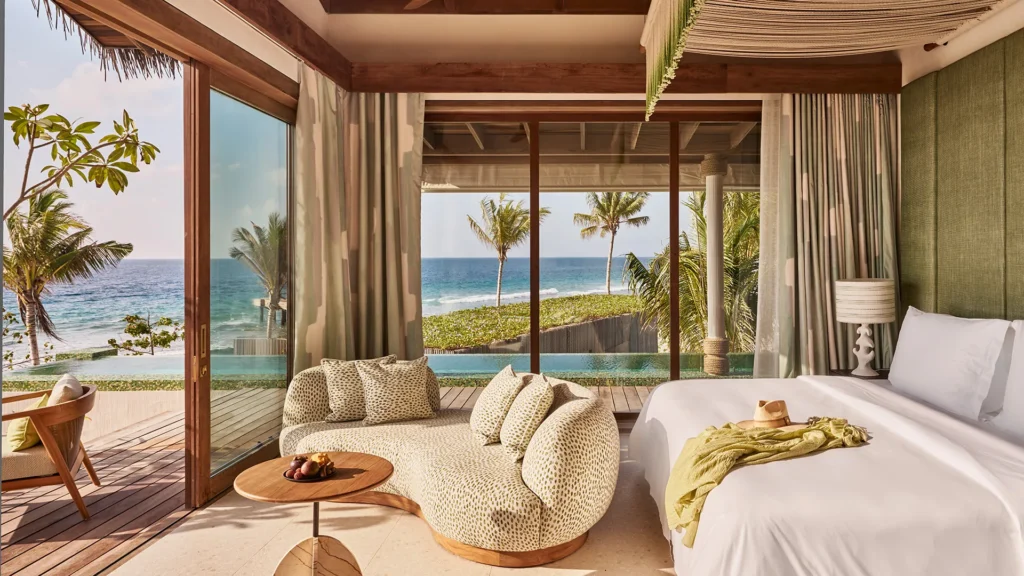
Somewhere Island, which opened in December, hosts the first phase of the concept; Nowhere Island, opening later this year, is available exclusively for private buy-out and features two exceptional residences including a five-bedroom Presidential Residence. A Presidential Residence buy-out of Nowhere Island represents one of the most singular hotel experiences currently available anywhere in the world.
The restaurant and bar Safar — meaning “journey” in Dhivehi — embodies the resort’s culinary philosophy: entirely bespoke, with resident chefs available around the clock, crafting fusion menus inspired by flavours from across the globe. Private in-residence tasting menus and dining under the stars draw on the natural bounty of the Baa Atoll Biosphere Reserve, with wellness facilities completing what is unquestionably one of the most considered ultra-luxury concepts to emerge from the Maldives in years.
From US$4,000 per night
Six Senses London Hotel
Bayswater, London, United Kingdom
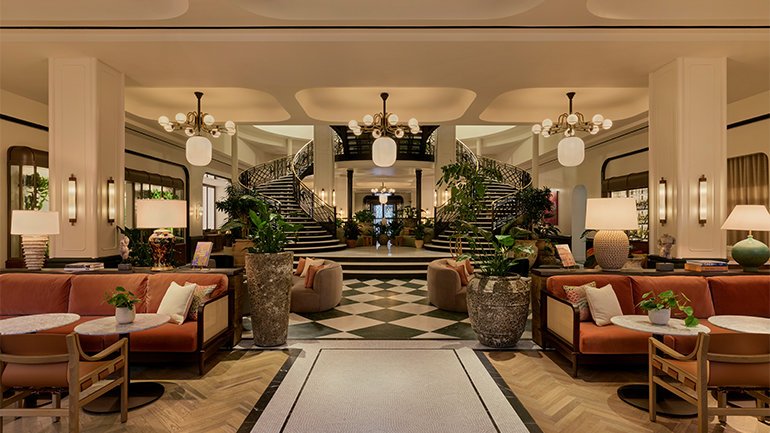
Within the walls of the iconic Whiteley building — an Art Deco landmark in the heart of Bayswater — spaces designed by AvroKO in collaboration with EPR Architects have been created to harmonise with the building’s heritage: environments intended to reinvigorate, surprise and shift perspectives, responding to light and movement while supporting biodiversity through green roofs and seasonal perennial planting. Six Senses’ first UK property, which opened in March, is worth the long wait.
The 109 bedrooms and suites — many with private terraces — are joined by 14 branded residences, with a terrace suite overlooking the building’s spectacular atrium the standout. Whiteley’s Kitchen, Bar and Café leads the dining offer with modern British cooking designed to become a neighbourhood constant.
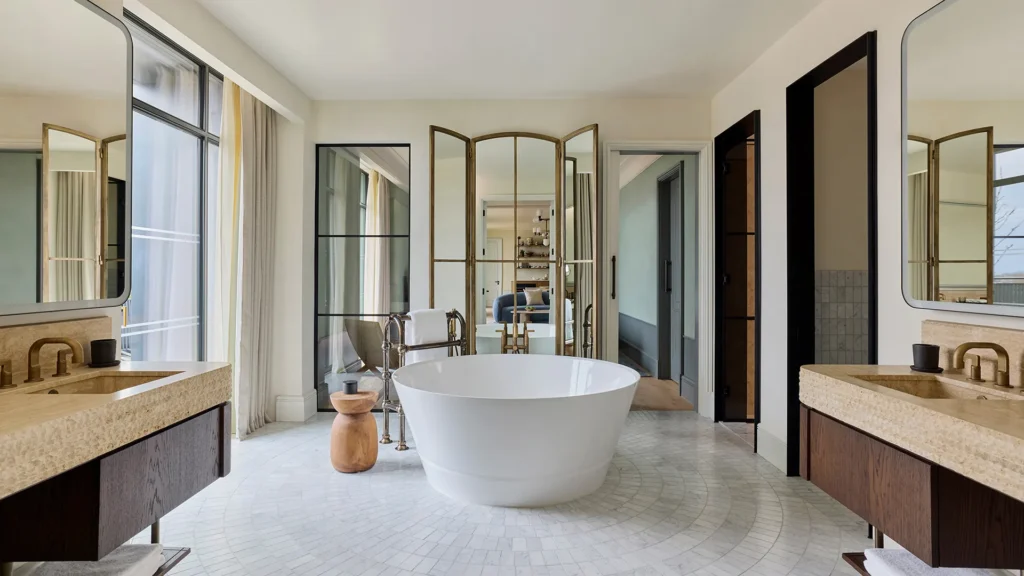
The 2,300-square-metre spa is the property’s defining feature, housing London’s first hotel magnesium pool, a 20-metre indoor swimming pool, cryotherapy, flotation and recovery spaces, a longevity clinic, an Alchemy Bar, and a Biohack Recovery Lounge dedicated to performance and longevity, all positioned within spaces evoking the atmospheric vaulted geometry of a classic London Underground station.
Six Senses Place, the brand’s first-ever private members’ club concept, sits at the heart of the property, merging wellness, community, and celebration through co-working spaces, a restaurant, and wellness and treatment rooms that make the hotel as much a destination for Londoners as it is for guests.
From US$1,150 per night
Equinox Resort AMAALA
Triple Bay, Red Sea, Saudi Arabia
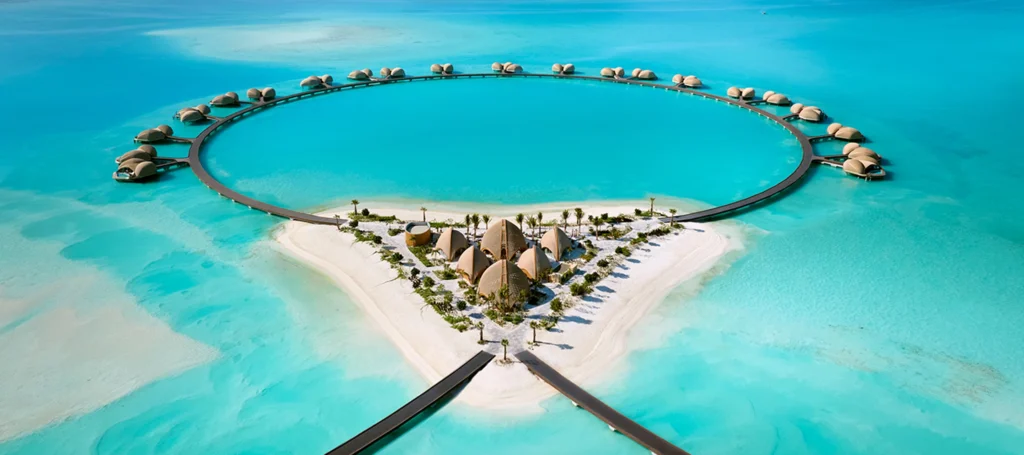
Designed by Foster + Partners with interiors by Rockwell Group, and positioned as a sculptural focal point at the centre of Triple Bay’s luxury marina — adjacent to the Yacht Club, the Corallium Marine Life Institute, and the Hijaz Mountains — Equinox Resort AMAALA is the brand’s first property outside North America, and its most ambitious expression yet of fitness as a total way of life.
The 128 sleep-optimised guest rooms, suites, and two penthouses have been conceived specifically through the lens of high performance, with every detail — from mattress technology to blackout protocols — engineered around recovery. Book a penthouse for the full panorama across the marina and Hijaz Cove.
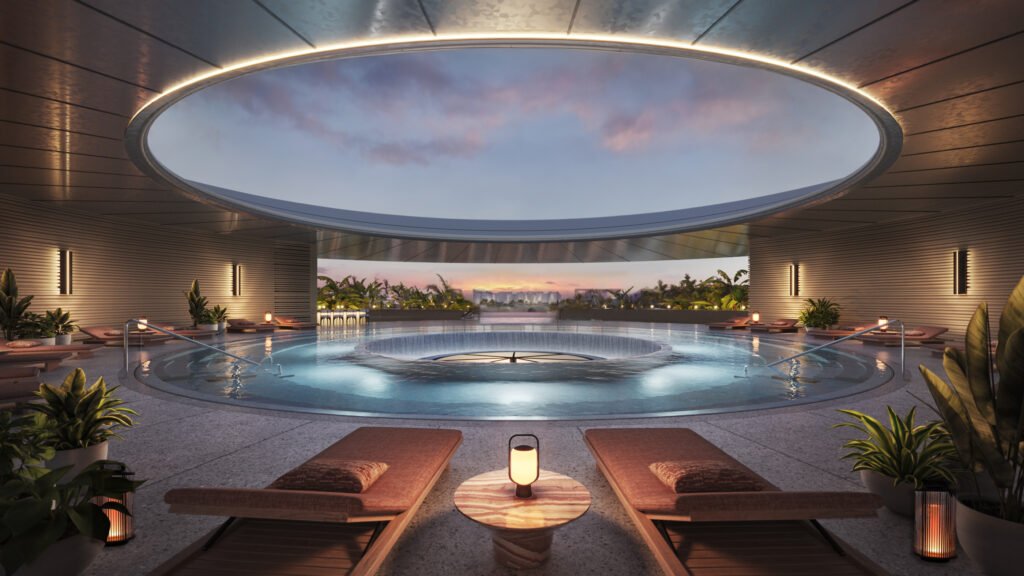
Beyond the signature 20,000-square-foot Equinox Fitness Club, amenities include a rooftop magnesium salt pool, a subterranean spa grotto, personalised IV therapies, hyperbaric chambers, and a longevity programming suite that positions the resort as much a medical destination as a hotel.
Five dining venues complete the offering, all calibrated to the brand’s nutrition-led philosophy. Sustainability is central to the design; the wider AMAALA development is powered entirely by renewable energy, operates with a zero-carbon footprint, and is committed to delivering a 30% net conservation benefit to local ecosystems by 2040, giving serious credentials to a property that could otherwise have rested on spectacle alone.
From US$1,115 per night
Fregate Island Private
Seychelles
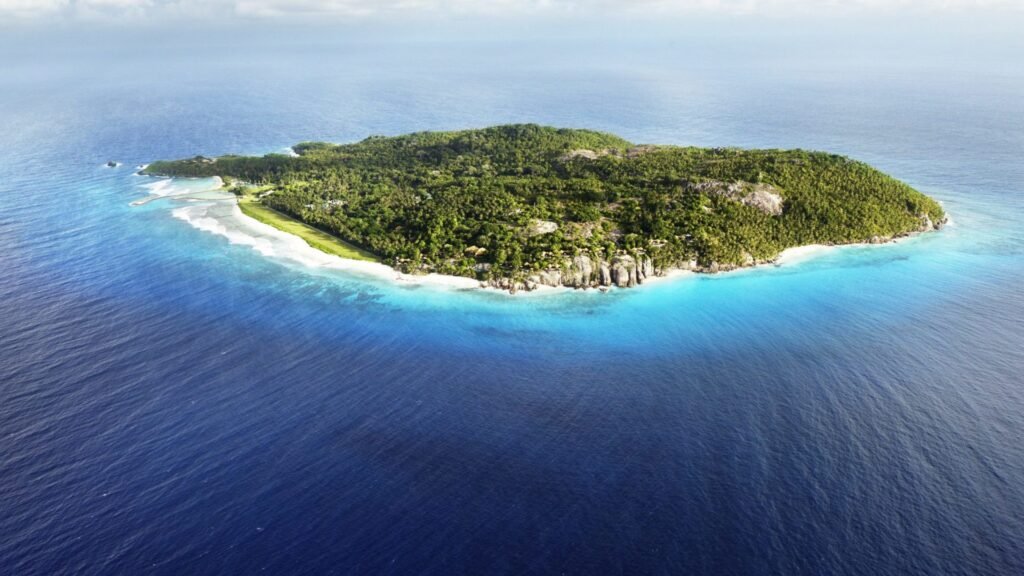
After five years of closure and a near-complete ground-up rebuild, Fregate Island returns to the world stage of ultra-luxury hospitality this autumn in one of the most closely watched reopenings on the international luxury travel circuit. The numbers alone define its rarefied register: 224 hectares of privately owned Indian Ocean island, accessible only by helicopter from Mahé in fifteen minutes or by boat in 90 minutes, with a new arrival experience beginning at the island’s lofty helipad before a safari-style transfer through lush nature delivers guests to their hideaway.
Just 14 private pool villas and three expansive estates have been completely rebuilt and reimagined, with the legendary Banyan Hill Estate relaunched as The Owner’s Estate, and the expanded Plantation House becoming the vibrant cultural heart of the island.
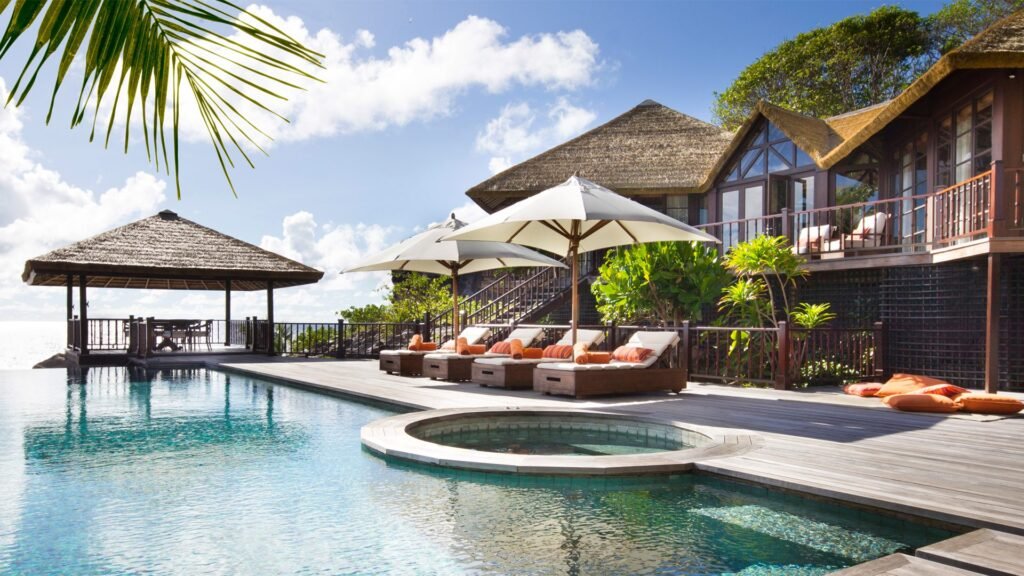
The Plantation House introduces a distillery, museum, art gallery, and what is claimed to be the Indian Ocean’s largest wine cellar, while 80% of produce comes from the island’s own farm. Select identity markers have been deliberately preserved through the rebuild — the historic chapel and former boat shed among them — as anchors of the island’s memory.
Conservation remains inseparable from the guest experience: the Fregate Island Foundation oversees a thriving Aldabra giant tortoise breeding programme, hawksbill sea turtle nest protection, and the celebrated recovery of the Seychelles magpie-robin, alongside coral restoration projects in collaboration with Coralive. Privacy, rewilded nature, and genuine ecological purpose — in that combination, there is nothing quite like it.
From US$4,300 per night
Singita Elela
Okavango Delta, Botswana
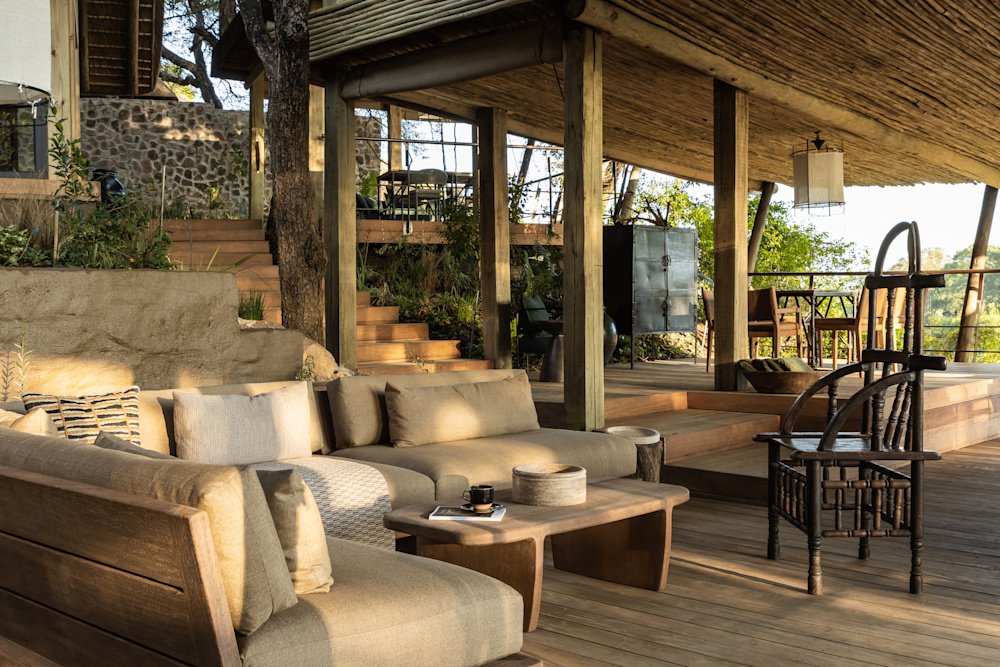
For years, Singita waited for the right opportunity to expand into Botswana’s Okavango Delta — one of Africa’s most extraordinary wilderness ecosystems — and in 2026, that moment arrives. Named Elela, a Setswana word meaning “to flow”, and set within the 175,000-hectare NG26 concession — also known as the Abu concession — the lodge marks Singita’s first presence in the Delta, offering guests private access to one of its most expansive and ecologically rich regions: a mosaic of floodplains, islands, waterways, and more than 400 bird species.
The eight family-friendly camps — five one-bedroom, two two-bedroom, and one four-bedroom — are circular in design and raised on stilts to allow for the uninterrupted passage of the Delta’s seasonal waters, each with its own dining area, lounge, pool, outdoor decks, private vehicle, guide, and dedicated host. The four-bedroom camp, with its private chef, dedicated fitness and wellness spaces, and two private vehicles, is the pinnacle of an already exceptionally exclusive proposition.
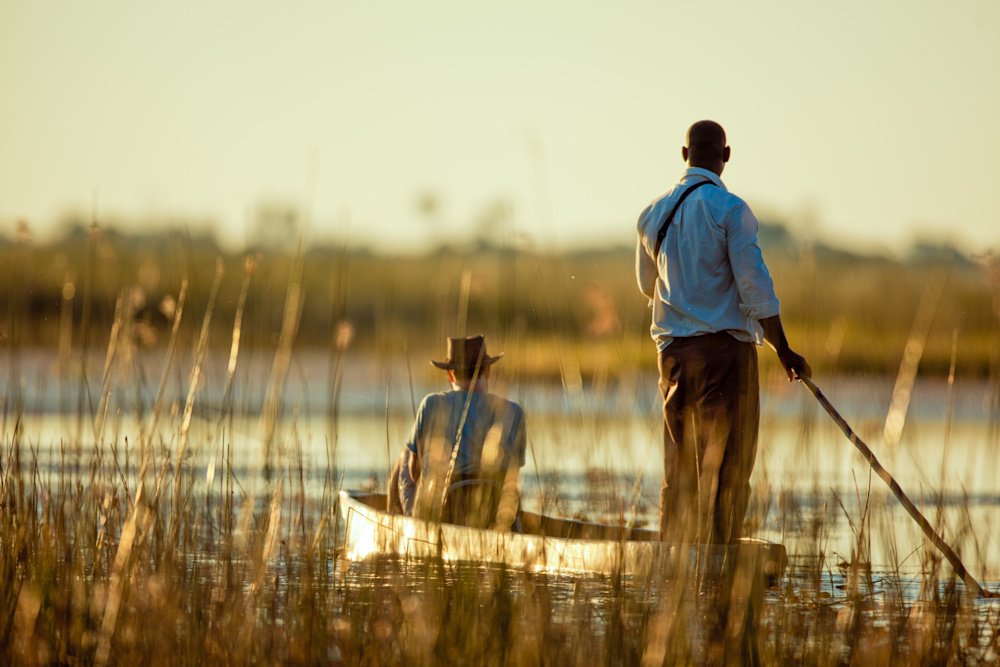
Wildlife encounters are anticipated to be close and unforced, with elephants, buffalo, lechwe, lion, and wild dog regularly shaping the scene, while Singita’s deeply embedded conservation ethos — built around a stated 100-year purpose to protect Africa’s wilderness — ensures the experience carries genuine weight far beyond the luxury.
From US$3,100 per night for two
1 Hotel Tokyo
Akasaka, Tokyo, Japan
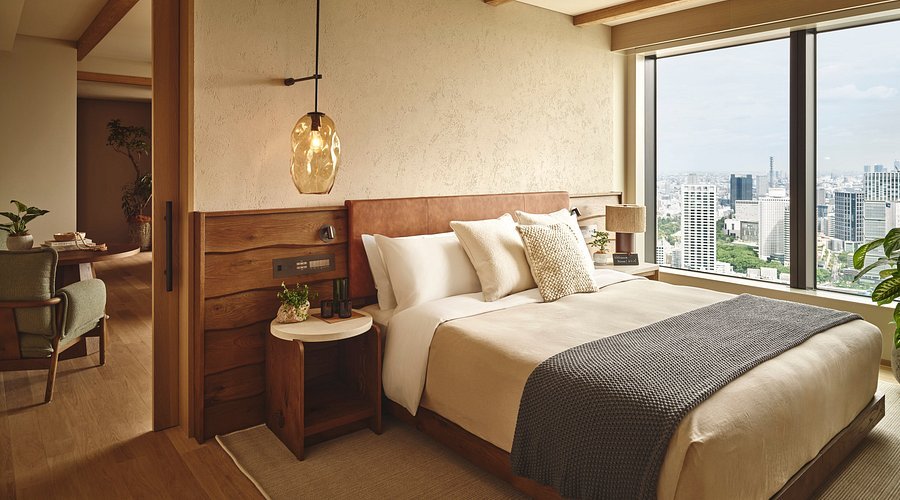
The result of a collaboration between 1 Hotels and the Mori Trust — one of Japan’s leading real estate developers — 1 Hotel Tokyo anchors Tokyo World Gate Akasaka, a next-generation mixed-use hub in one of the city’s most culturally layered districts, steps from the Imperial Palace and a short walk from Roppongi.
The brand’s Japan debut, which opened in March, is its most architecturally considered property yet. Spanning the 38th through 43rd floors of the Akasaka Trust Tower, the hotel pairs sweeping views of the Imperial Palace gardens, Tokyo Tower, and the city skyline with an immersive design language shaped by Japan’s reverence for materials and 1 Hotels’ signature biophilic philosophy.
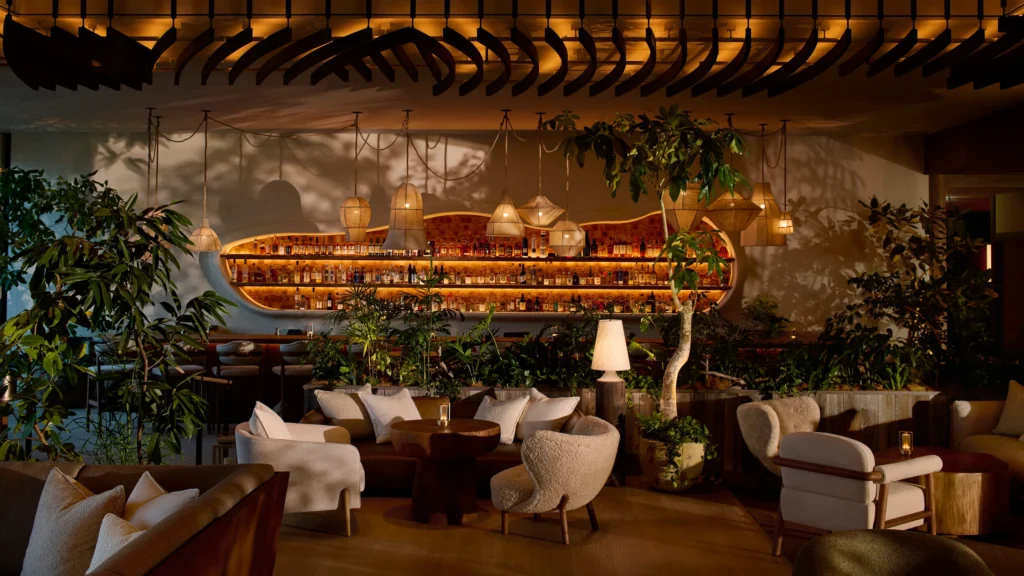
More than 1,500 plants, bonsai, and trees decorate the public areas and 211 rooms and suites — tended daily by a dedicated team of gardeners — while artworks made of preserved moss, doors crafted from the discarded wood of the building’s construction site, and materials such as bamboo and stone give the interiors a tactile authenticity. A penthouse suite framing the Imperial Palace is the standout.
NiNi, led by head chef Nikko Policarpio — whose experience spans Michelin-starred Tokyo kitchens and the Momofuku group — blends the relaxed elegance of the French Riviera with Japanese refinement and seasonality, while Spotted Stone bar pours more than 110 craft gins from across Japan. The spa, indoor pool, sauna, and steam room complete a property that manages the rare feat of feeling simultaneously high in the sky and deeply rooted in the earth.
From US$650 per night
Bvlgari Resort Ranfushi
Raa Atoll, Maldives
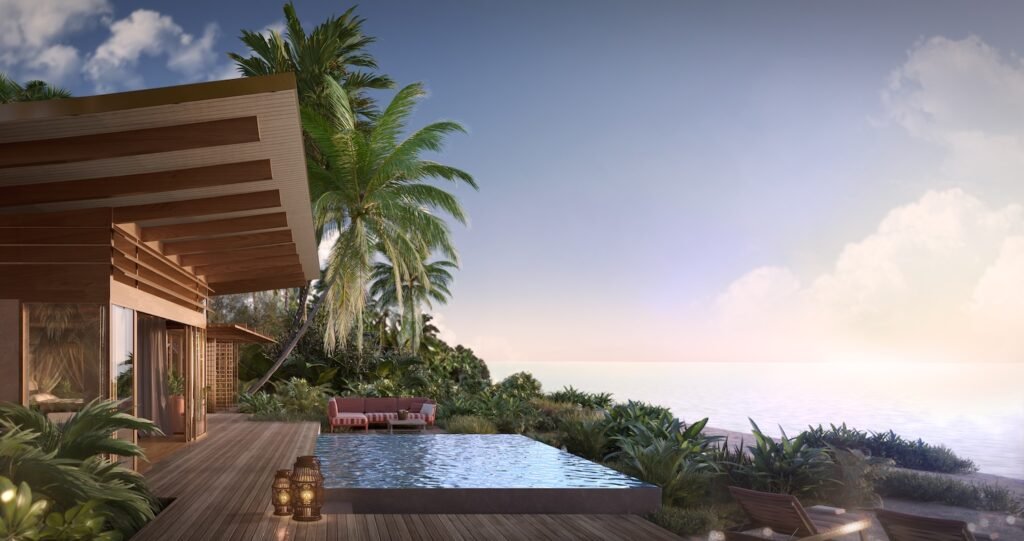
Ranfushi — meaning “Little Gold Island” in Maldivian — is a characteristically Bvlgari touch: the reference to gold is present, but worn lightly. The Roman jewellery house‘s first Indian Ocean property arrives this year on one of the Maldives’ most pristine atolls, 45 minutes by seaplane from Malé, spread across 20 hectares and framed by lush, landscaped gardens.
Design is led by ACPV ARCHITECTS Antonio Citterio Patricia Viel — responsible for all Bvlgari Hotels properties — bringing the brand’s uncompromising contemporary Italian aesthetic to the Indian Ocean for the first time. The 54 keys comprise 33 beach villas, each with a private pool, 20 overwater villas, and the crown jewel: the exclusive Bvlgari Villa, set on its own separate private island. That private island villa is, by any measure, one of the most extraordinary accommodation propositions in the Maldives.
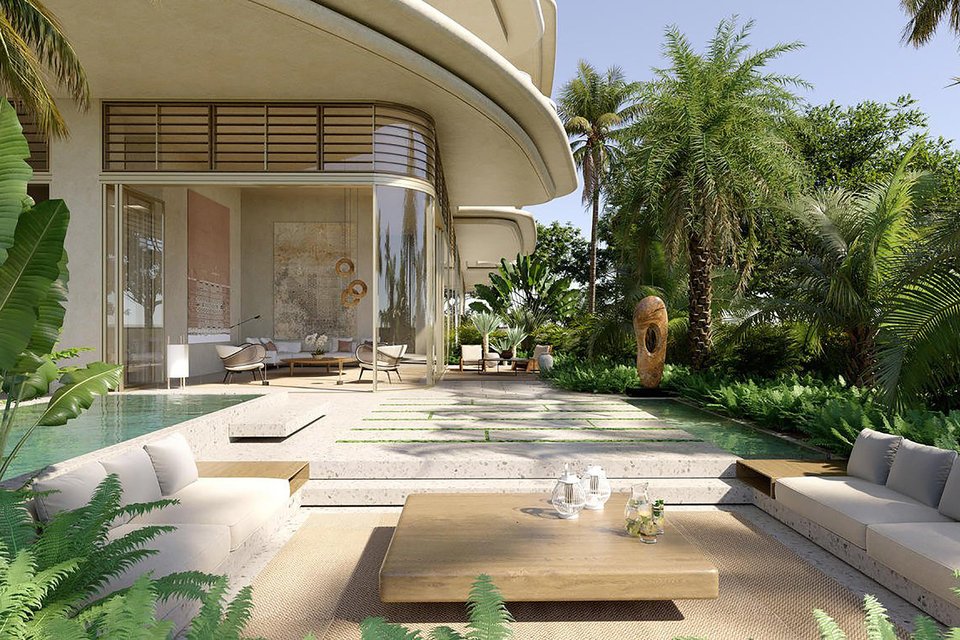
Four dining concepts set the culinary ambition: Il Ristorante — Niko Romito, curated by the three-Michelin-starred Italian chef; Bao Li Xuan, the Chinese fine-dining concept from Bvlgari Hotel Shanghai; Hōseki, the Japanese concept; and La Spiaggia for relaxed beachside tapas. The resort also adheres to the strictest sustainability standards throughout, including a new island created specifically to host a nesting bird population — an environmental commitment as carefully considered as the architecture itself.
From US$1,700 per night
Shilla Monogram Xi’an Hotel
Xi’an, Shaanxi, China
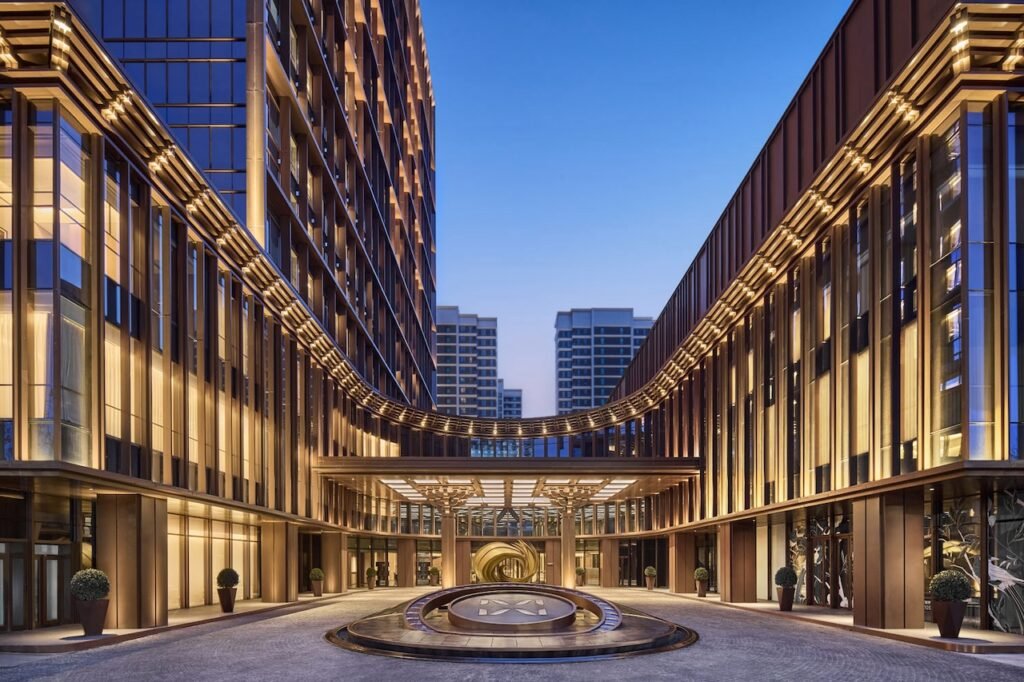
Home to the Terracotta Army and steeped in over 3,000 years of history as the eastern terminus of the ancient Silk Road, Xi’an is one of China’s most culturally significant cities, and an instinctive fit for a brand built on the proposition of heritage meeting modern sophistication. Opened in February, Shilla Monogram Xi’an marks the Korean luxury group’s first property in China and occupies a 22-storey tower within the Xi’an High-Tech Industrial Development Zone, positioning it equally for the city’s growing class of high-tech professionals and culturally motivated leisure travellers.
Design is guided by the concept of “Where Heritage Meets Modern Sophistication”, drawing on Xi’an’s identity as the land of terracotta, with warm, earthy tones and natural textures interpreted through a contemporary lens that honours the city without pastiche. Rooms are larger than at previous Shilla Monogram properties, with the 22nd-floor Monogram Lounge suite offering sweeping panoramic city views as the standout.
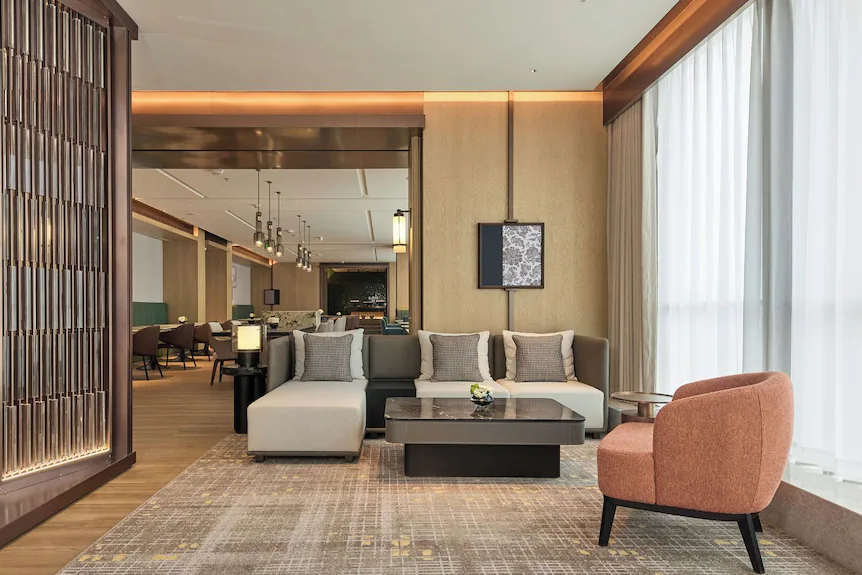
Dining carries the Michelin two-star and La Liste-recognised culinary heritage of The Shilla Seoul across three venues: Lahyang, Xi’an’s only hotel-based Korean restaurant specialising in premium grilled cuisine; Ziwei, a Cantonese-based restaurant incorporating regional Shaanxi flavours; and Dining M, an all-day venue with a strengthened Korean focus.
An indoor swimming pool, fully equipped fitness centre, and sauna round out the wellness offering.
From US$170 per night
Uga Ghiri
Sutherland Estate, Ella, Sri Lanka
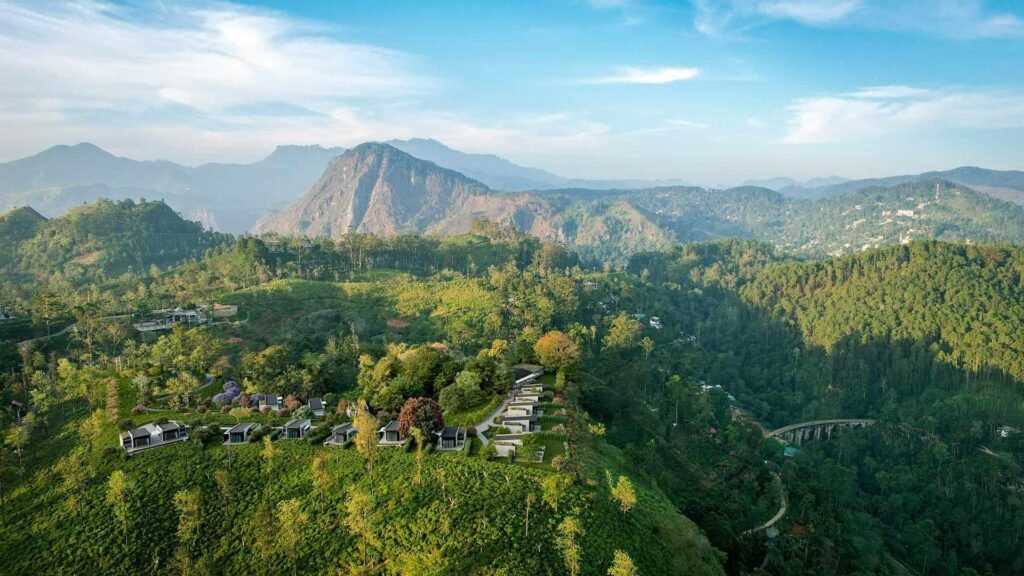
Named as one of the world’s most exciting hotel openings for 2026, Uga Ghiri arrives in Sri Lanka’s Hill Country with the quiet confidence of a brand that knows exactly what it is doing. Set on a 10-acre hillside estate on the historic Sutherland Tea Estate in Ella — one of the region’s most scenically dramatic highland towns — the retreat offers just 15 villas overlooking emerald tea plantations and the iconic Nine Arch Bridge, the 1919 brick-and-stone viaduct that has become one of Sri Lanka’s most recognisable landmarks.
Each villa spans 1,400 square feet with a private outdoor jacuzzi, making Uga Ghiri the first true luxury resort in Ella, a town long beloved by travellers but never previously served at this level. Any of the valley-facing villas offer an uninterrupted Nine Arch Bridge view at sunrise.
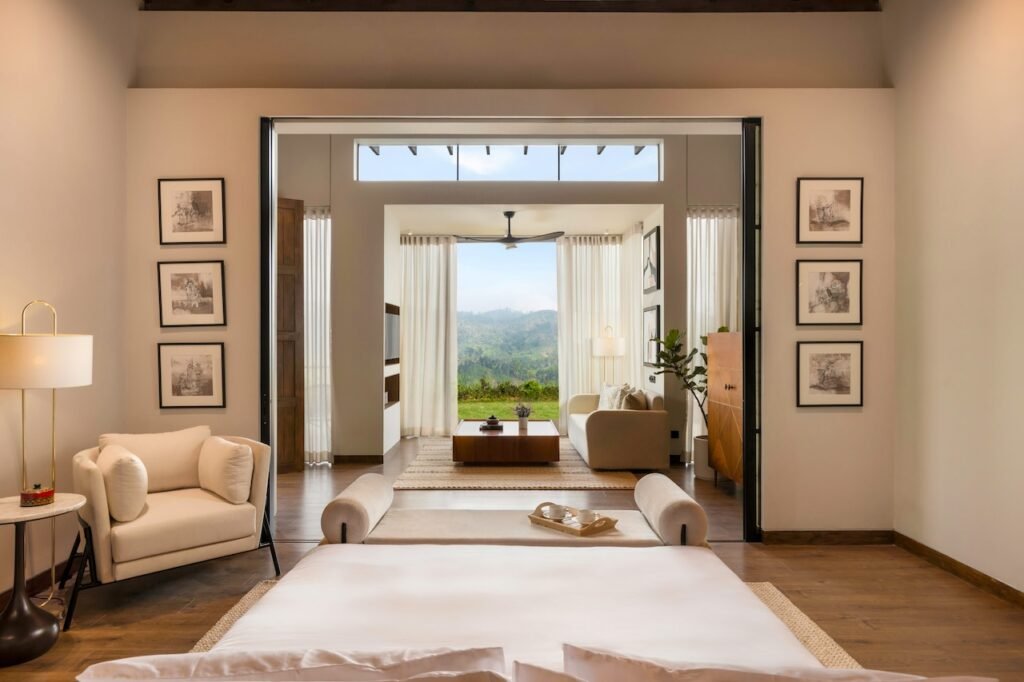
At the heart of the estate, a meticulously restored colonial-era manor serves as the indoor-outdoor restaurant, infinity pool, state-of-the-art spa, and social hub — complete with a library, drawing room, and fireplace for cooler highland evenings.
The restaurant showcases dishes inspired by regional Sri Lankan cuisine, and the all-inclusive format — from US$1,200 per villa per night — ensures the experience remains seamlessly curated from arrival to departure.
Mantis Hiddn in Addo
Eastern Cape, South Africa
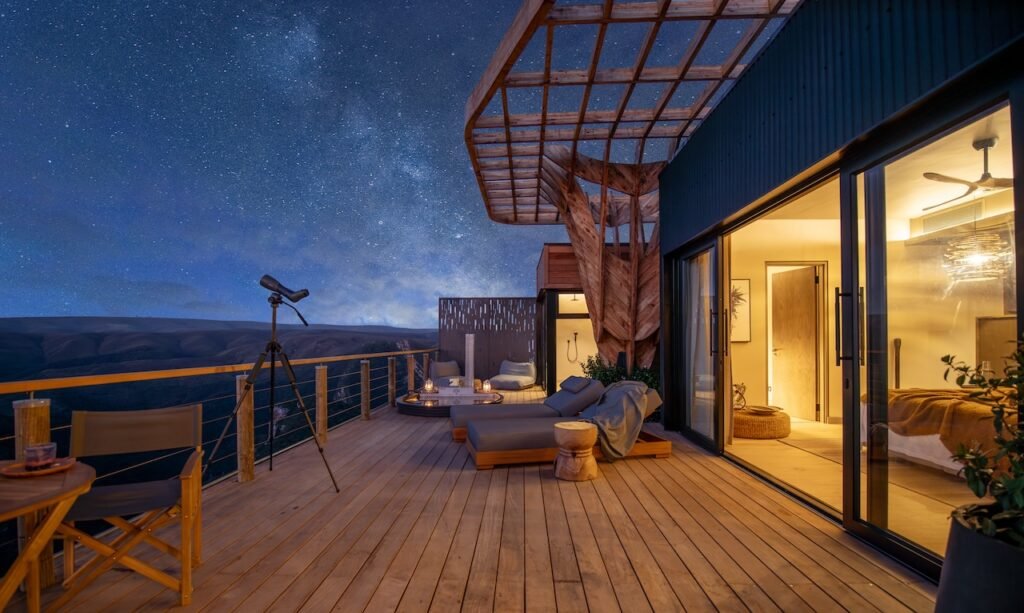
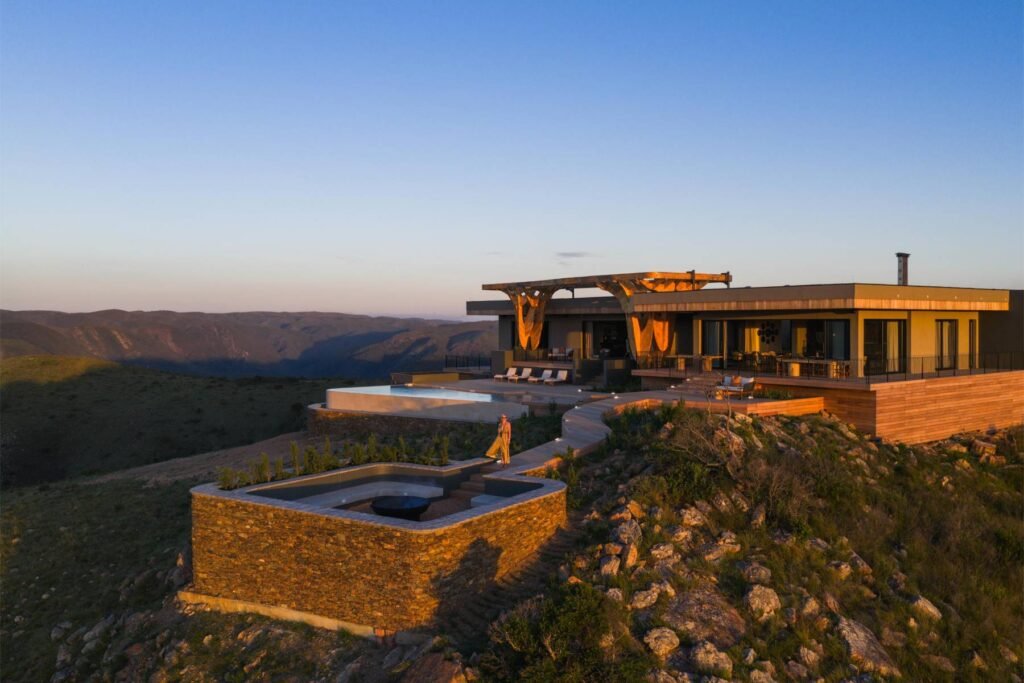
High in the mountains above South Africa’s Addo Elephant National Park, a new kind of retreat has taken shape, one where wellness, conservation and ultra-luxury flow together as naturally as the rivers that carve through the valley below. Set within an 800-hectare private reserve and operating entirely off-grid through solar power, water harvesting, and recycling systems, Hiddn represents a genuine rethinking of what a safari lodge can be — and in a malaria-free region, 72 kilometres from Gqeberha, it is more accessible than the remoteness of the experience might suggest.
The 12 mountain suites and two private villas are designed to blend seamlessly with the environment, featuring earth-toned interiors, fireplaces, handcrafted KolKol wood-fired tubs, and expansive decks overlooking the ridge and valleys below. A private villa with its own wood-fired tub and unbroken mountain views is the natural first choice.
Each journey is individually crafted, guided by a dedicated Experience Guide whose care begins weeks before arrival, continues throughout the stay, and extends well after departure through curated follow-ups and thoughtful gifts. With no fixed menus, meals are crafted around guest preferences, local ingredients and seasonal storytelling, whether through chef-led foraging, riverside picnics, or intimate villa dining complemented by a curated list of South African wines.
Daily life centres on guided wilderness experiences, botanical-inspired wellness, and access to Addo Elephant National Park.
From US$800 per night
The Newman Hotel
Fitzrovia, London, United Kingdom
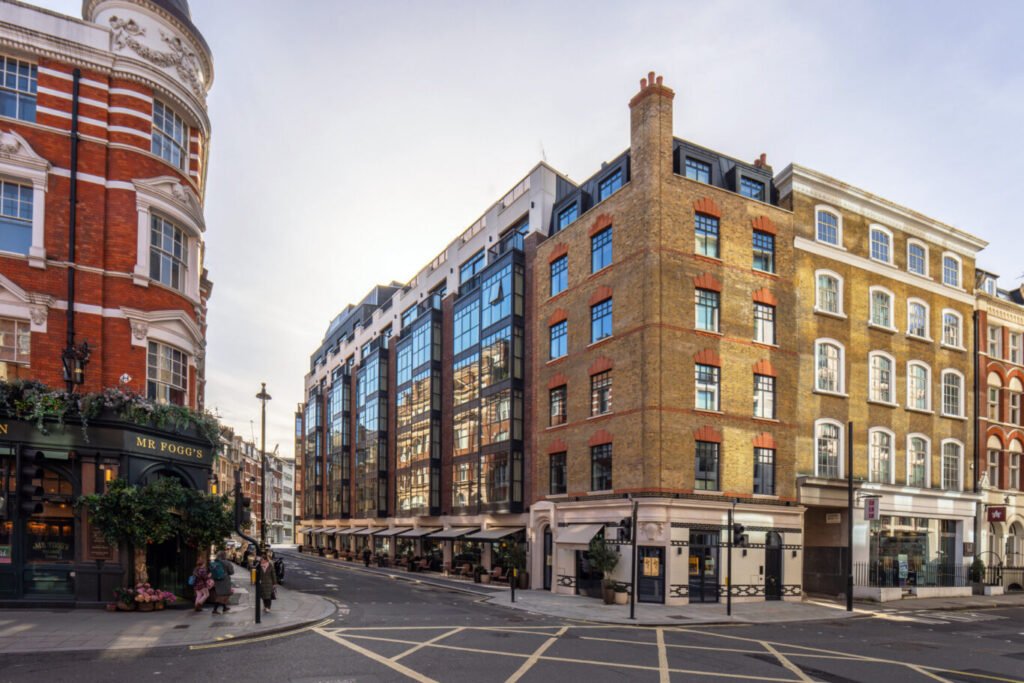
Fitzrovia takes its name from the Fitzroy Tavern, a 1930s haunt for writers and artists including George Orwell, Dylan Thomas, and Jacob Epstein — and those legendary figures, along with the neighbourhood’s contemporary community, have directly informed the design and concept of The Newman. The debut hotel from international hospitality company Kinsfolk & Co, designed by London-based studio Lind + Almond — also behind Hotel Sanders in Copenhagen — occupies the former site of bootmakers Penton & Sons on the residential-meets-creative pocket bordered by Soho, Marylebone, and Bloomsbury.
The 81 spacious rooms, suites, and apartments — some with private balconies — carry a contemporary Art Deco aesthetic throughout, culminating in a rooftop Penthouse Suite with its own terrace, sauna and ice plunge, which can be taken as an exclusive four-bedroom floor.
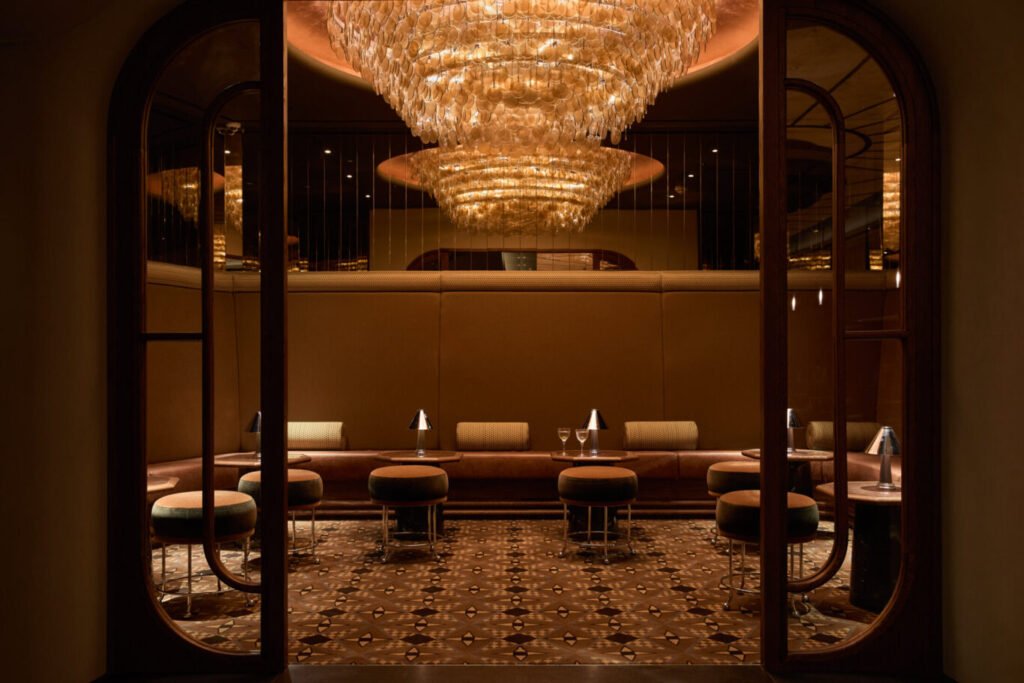
On the ground floor, Brasserie Angelica — named for Virginia Woolf’s niece — is led by head chef Christian Turner, formerly of the Wolseley Hospitality Group, drawing on Northern European cuisine, while the underground Gambit Bar has already become a neighbourhood fixture for cocktails and live music. A Nordic-inspired wellness centre and spa complete the offering.
From US$585 per night
Le Méridien Dehradun Resort & Spa
Doon Valley, Uttarakhand, India
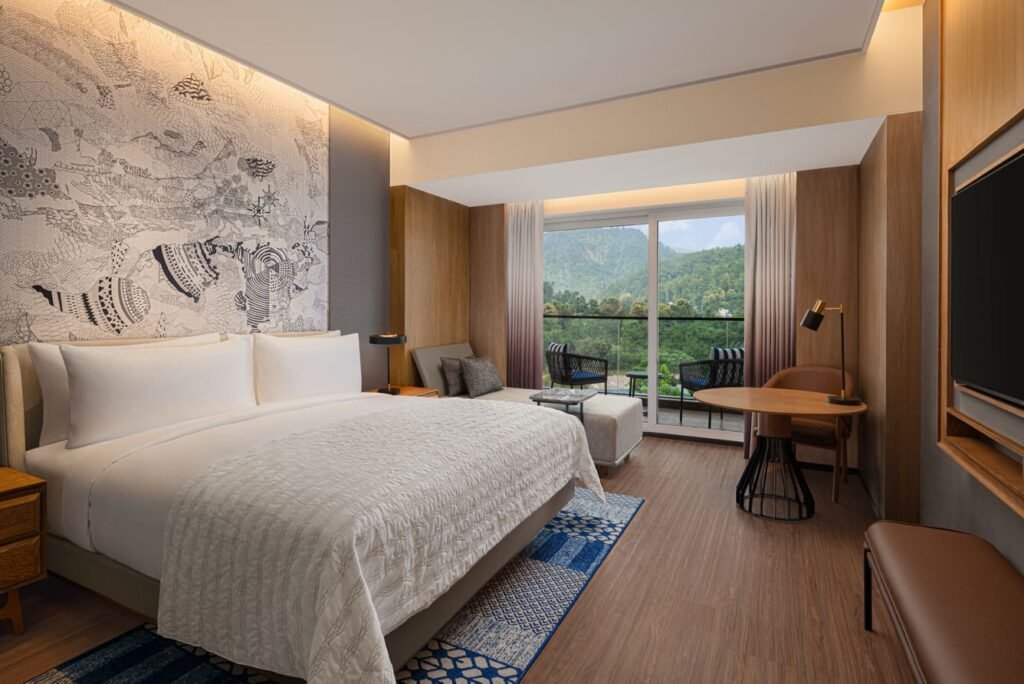
Set along the tranquil Nun River, framed by the foothills of the Himalayas, Le Méridien’s arrival in Dehradun marks the brand’s debut in one of North India’s most quietly compelling leisure destinations, a gateway city to Mussoorie, Rishikesh, and Haridwar that has long been beloved by those in the know, and is now firmly on the international radar. Just 45 minutes from Jolly Grant Airport and 15 minutes from Dehradun Railway Station, the resort is well positioned for both extended stays and onward journeys into North India‘s most celebrated hill and spiritual destinations.
The 103 rooms and suites each offer views of either the Nun River or the surrounding hills, designed with a nature-inspired palette and modern amenities, with a river-facing suite the natural choice for the full Himalayan foothills experience.
Dining is led by Riviera Café, the all-day restaurant serving international dishes alongside local Uttarakhand cuisine, while Longitude — a modern coffee bar and gourmet bakery by day — transforms into a lively bar by night.
The resort participates in Le Méridien’s signature Unlock Art programme, granting guests curated access to local institutions including the Forest Research Institute, where museums and botanical exhibits bring the region’s extraordinary natural heritage to life. A full spa and over 24,000 square feet of event space complete an offering that positions Dehradun as a destination rather than merely a gateway.
From US$150 per night
Capella Kyoto Hotel
Miyagawa-cho, Kyoto, Japan
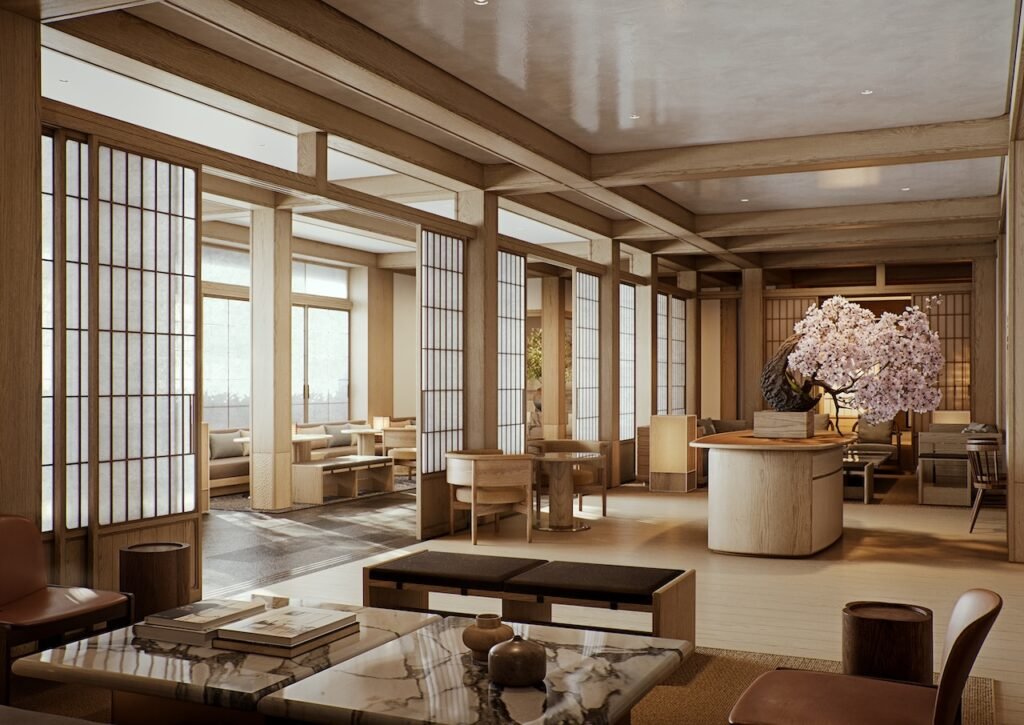
Capella has made its Japan debut in Miyagawa-cho — one of Kyoto’s five historic geisha districts, steps from the 800-year-old Kenninji Temple and the Kamo River — with its triumphant March opening timed to coincide with the city’s cherry blossom season.
While the timing was impeccable, the address is more so. Designed by Kengo Kuma & Associates and Singapore-based Brewin Design Office, the four-storey hotel was built on the former site of Shinmichi Elementary School, its entrance and interiors incorporating reclaimed timber and lighting fixtures from the old building, as part of a broader development that includes the restored Miyagawa-cho Kaburenjo Theatre, the private training ground for Kyoto’s geisha and maiko.
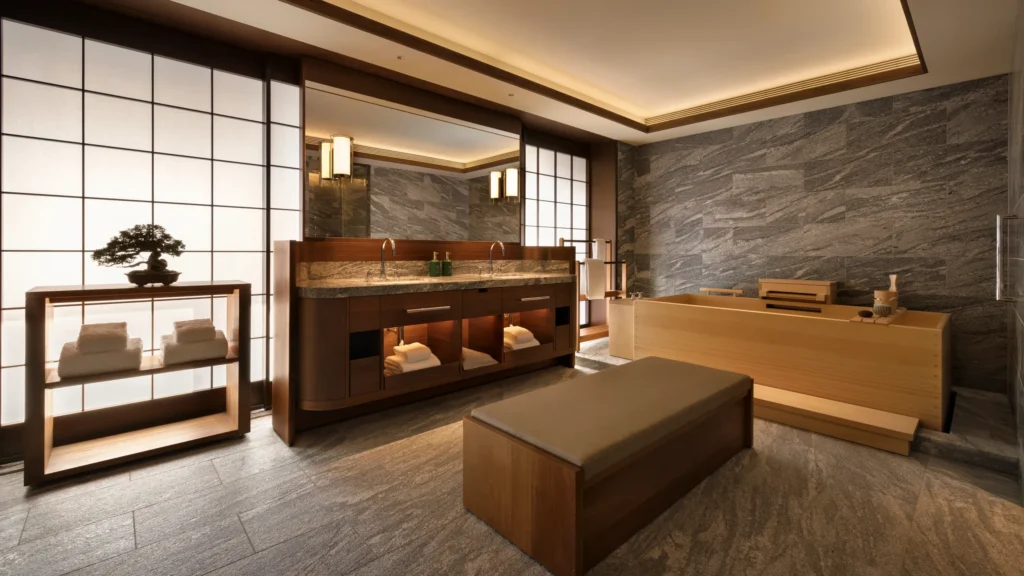
The 89 rooms range from Deluxe City Rooms to six Onsen Suites with private hot spring baths, two Gion Suites facing Kenninji Temple, and the 206-square-metre top-floor Capella Suite commanding the full sweep of the Higashiyama skyline. An Onsen Suite with its private garden bath is the room to secure.
Dining is led by SoNoMa by SingleThread — a partnership with the three-Michelin-starred SingleThread restaurant in Sonoma, California — alongside Yoi for late-night kappo cuisine and Lanterne, an all-day French brasserie.
The Capella Curates cultural programme offers experiences that remain genuinely rare in Kyoto: a private ochaya encounter with a maiko in a by-invitation-only teahouse, bespoke sandals made by hand at a 150-year-old atelier in old Gion, and a kintsugi workshop led by an urushi lacquerware master.
From US$899 per night
Palais Jamaï Fès
Fès el-Bali, Morocco
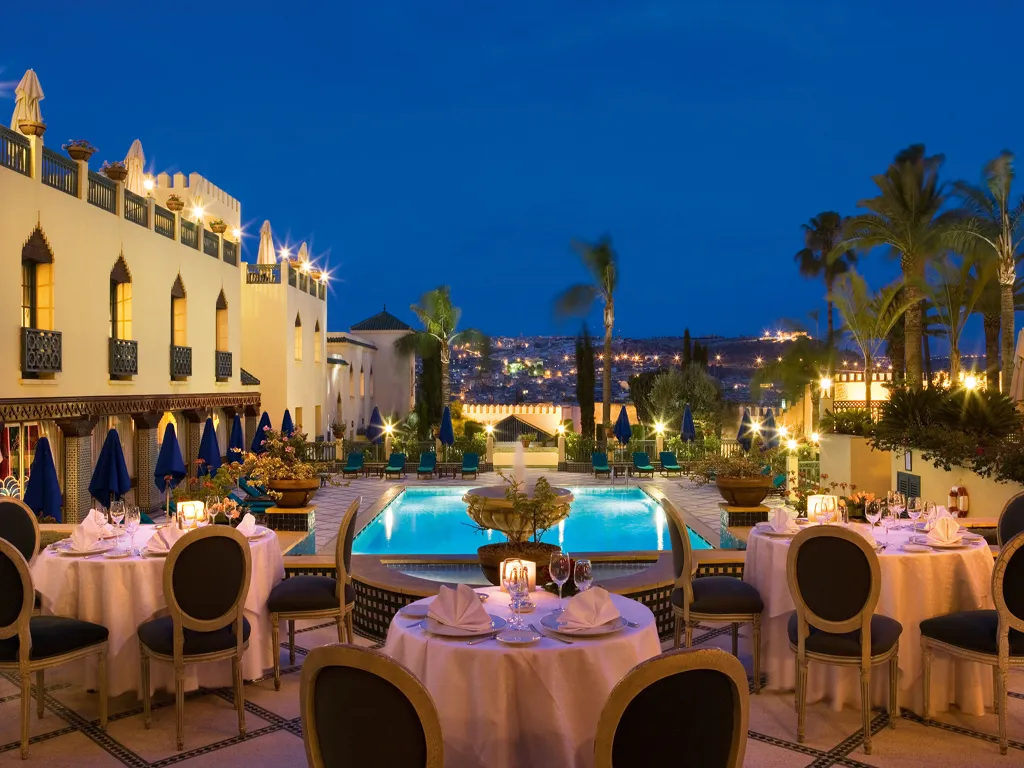
Originally built in 1879 as the residence of a Grand Vizir to the sultan during the Alaoui dynasty, the Palais Jamaï is often compared to La Mamounia in Marrakech and stands as one of the few surviving centenarian hotels in North Africa — a property that shaped the very notion of luxury hospitality in Morocco. Closed since 2014, its reopening this spring was one of the most anticipated returns in the country’s hotel scene.
The restored palace welcomes guests with its emblematic Andalusian architecture and opulent Moroccan craftsmanship across 63 rooms and 31 suites, including one Royal Suite, with any suite overlooking the labyrinthine rooftops of Fès el-Bali the natural choice.
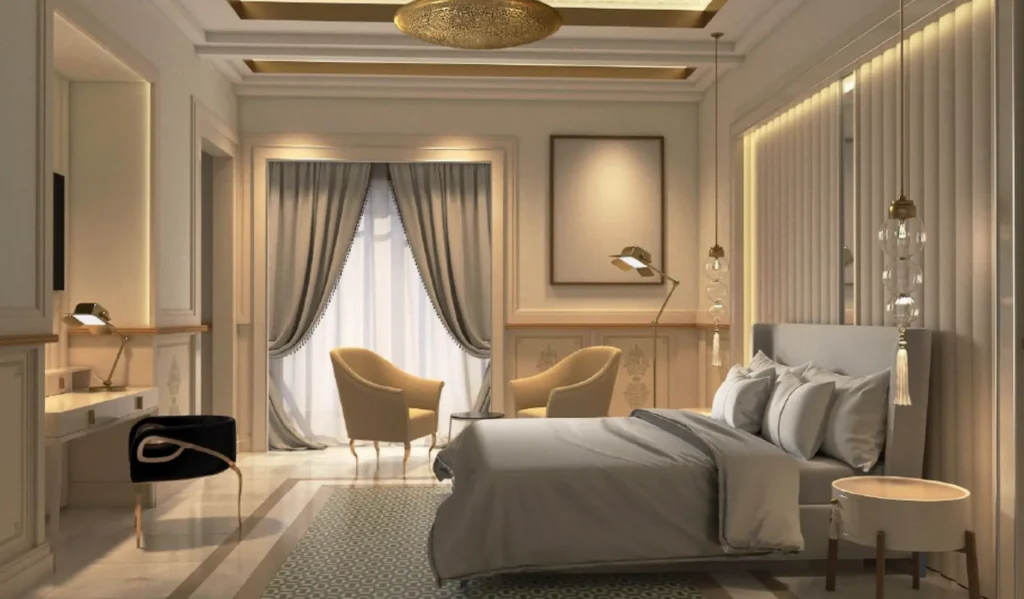
Culinary offerings are curated by Groupe Alain Ducasse across three restaurants and four bars, including a sky bar with breathtaking views over the Medina of Fès, one of the world’s great medieval cityscapes, unchanged for a thousand years.
Traditional hammams, two swimming pools, a padel court, a vegetable garden, a florist, and an art gallery complete an offering that firmly positions Fès as the destination for travellers who have exhausted Marrakech and are ready for something altogether more profound.
From US$450 per night
Hiliwatu Bali Ubud Resort
Ubud, Bali, Indonesia
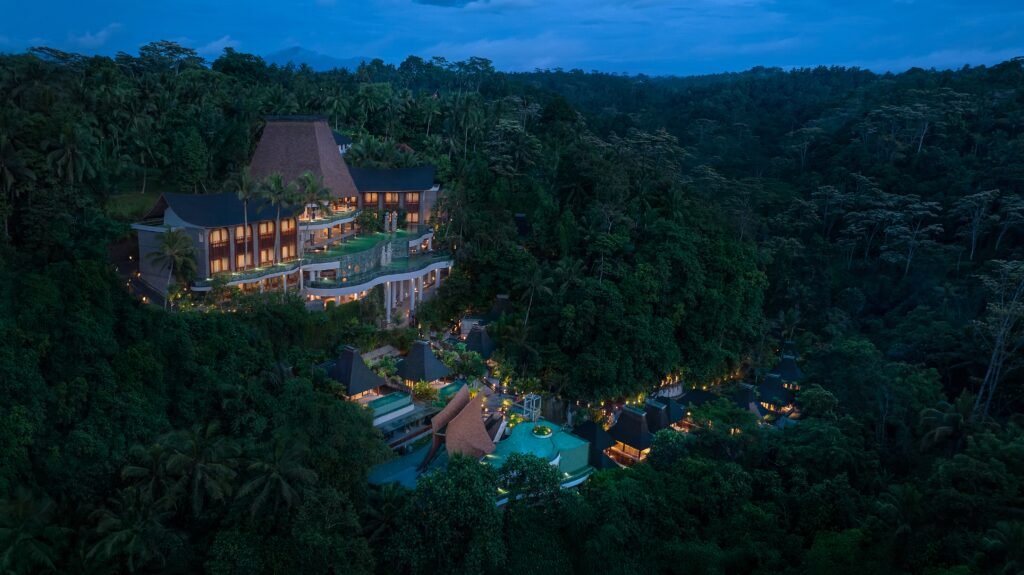
Named from the land itself — “Hili” meaning hill, “Watu” meaning stone — Hiliwatu is conceived as a living story of admiration and reverence for Bali’s timeless spirit, opened in January in the quiet hillside village of Bresela, nine kilometres north of Ubud‘s main drag. Spanning 26,000 square metres of lush landscape, the resort’s 38 intimate sanctuaries — 24 suite rooms, 12 one-bedroom villas, one three-bedroom villa, and one four-bedroom villa — blend effortlessly into the hillside, with the four-bedroom villa as the pinnacle for those seeking full private sanctuary.
The 24-metre-high lobby is a sculptural centrepiece featuring three cascading tiers of pools, while curated works by emerging Balinese artists infuse each space with local storytelling. Every detail — from locally sourced timber to authentic Balinese craftsmanship — carries the weight of place rather than imposition.
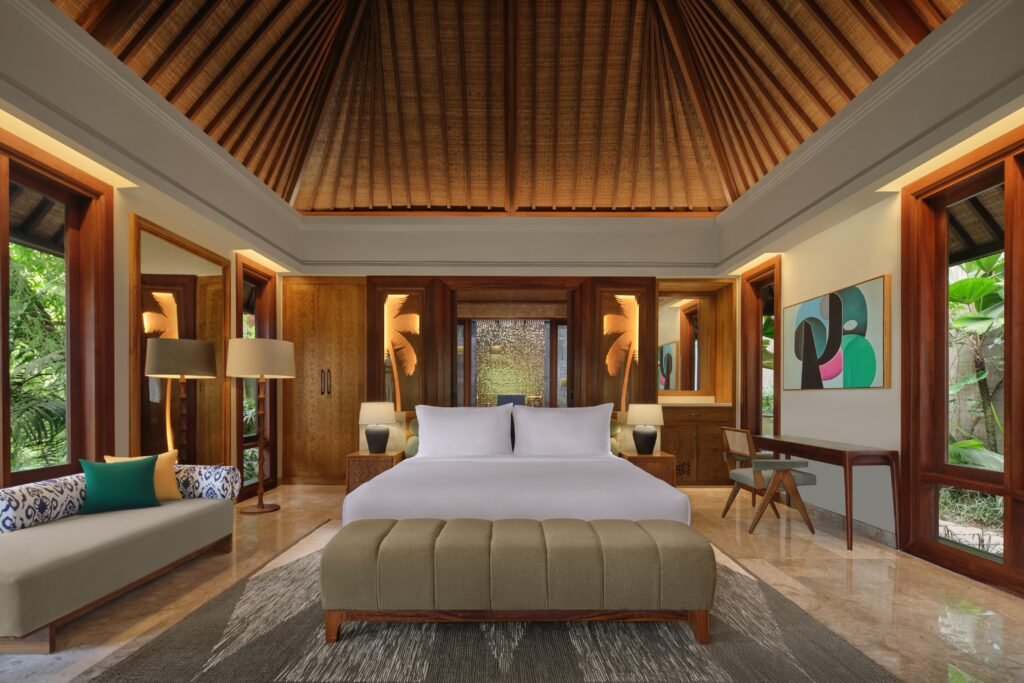
Inspired dining encompasses creative takes on Indonesian signatures and Mediterranean delicacies, while cocktails are served beneath the stars at the atmospheric poolside lounge. The Pavilion — an open-air chapel at the heart of the resort — shifts through the day from morning wellness retreat to dining hub at dusk, while the Samya Spa grounds its programme in authentic Balinese healing traditions.
Arrival by the resort’s heliport, with 360-degree views of Ubud’s rolling hills, sets the tone for a property that earns its sense of occasion at every turn.
From US$455 per night
Soori Penang
George Town, Penang, Malaysia
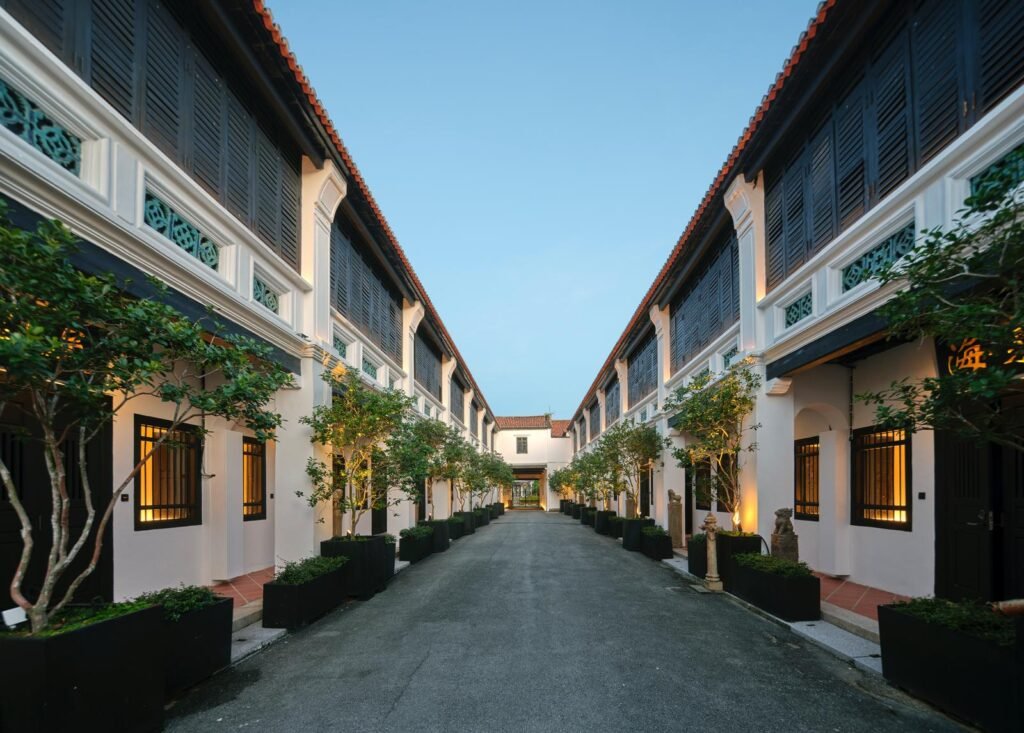
This January, Singapore-based architect-hotelier Soo K. Chan, founder of SCDA Architects, opened Soori Penang — a 15-suite boutique hotel composed of a cluster of restored historic shophouses in George Town, the UNESCO-listed historic capital of Penang Island. The project is something entirely beyond the usual hotel opening: Chan was born and raised within these very shophouses, once the family clan house of the Khoo family, and the restoration is both a personal homecoming and a bold architectural statement rooted in Penang’s layered heritage.
The 15 intricately restored shophouses have been transformed into expansive one- to three-bedroom suites, with original architectural features ranging from subtle motifs from the ornate Khoo Kongsi temple and carved stone reminiscent of guardian lions, to the gentle glimmer of onyx lanterns, while atmospheric light dances through air wells and latticed shutters. A three-bedroom suite with its own reflective pool and original air well is the natural pinnacle of the collection.
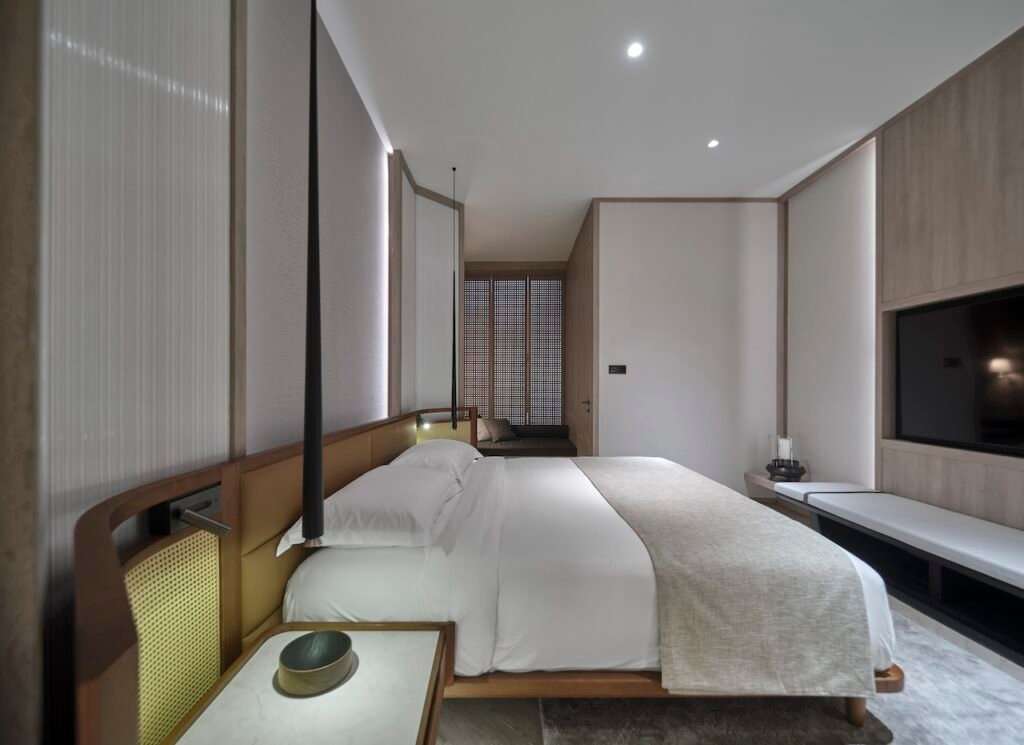
The landscaped courtyard offers multiple dining settings, from breakfast in the Khoo Kongsi courtyard to evening performances after the compound closes to the public. As only the second Malaysian member of Leading Hotels of the World after The Datai Langkawi, Soori Penang targets what Chan calls “temporary locals”, travellers seeking authentic cultural immersion beyond the typical tourist circuit.
From US$785 per night
Frasers House, a Luxury Collection Hotel
Bugis, Singapore
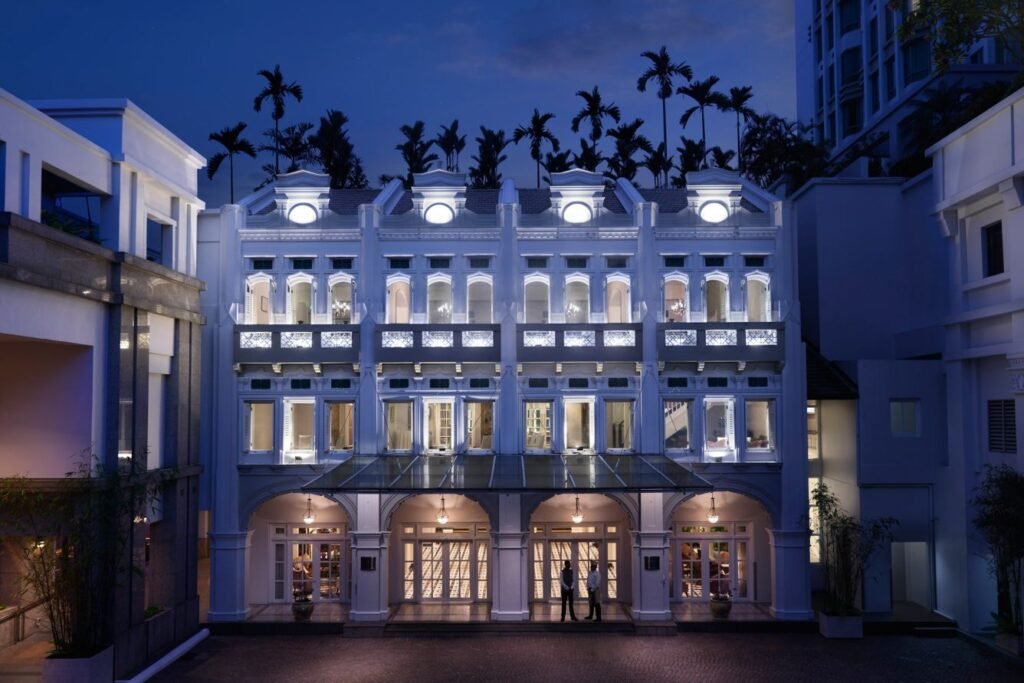
Singapore’s most-watched hotel transition of 2026 saw the InterContinental Singapore — a 30-year landmark in the Bugis district — reopened in January as Frasers House, under Marriott International’s prestigious Luxury Collection portfolio, marking the brand’s second Luxury Collection hotel in the city-state and its first in the vibrant city centre.
The building’s bones are deeply familiar to anyone who knows Singapore: its Peranakan-inspired design heritage remains intact, a visual thread connecting the hotel to the layered cultural history of Kampong Glam and Arab Street just steps away.
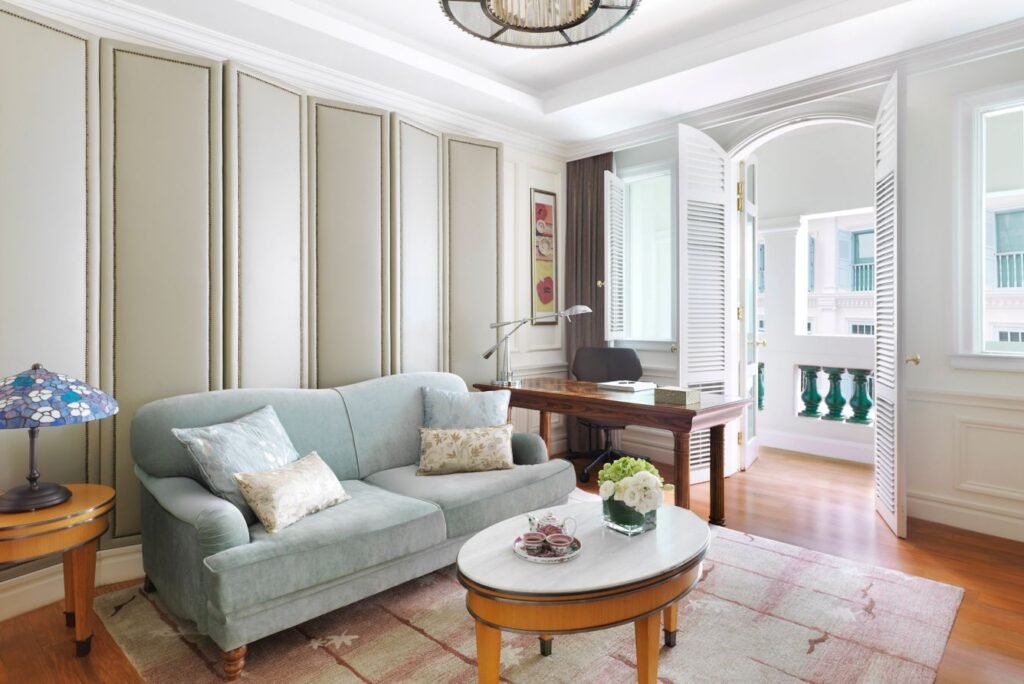
The 406 elegantly appointed rooms and suites begin from 38 square metres, thoughtfully designed to blend contemporary comfort with timeless sophistication, with Heritage Rooms and the Presidential Suite offering the fullest expression of the property’s restored character.
The Michelin-recommended Cantonese restaurant Man Fu Yuan and the Italian LUCE anchor the dining offering, while a phased transformation will see the hotel’s existing culinary concepts evolve into renewed dining destinations across all six venues.
From US$350 per night
Four Seasons Resort and Residences Red Sea
Shura Island, The Red Sea, Saudi Arabia
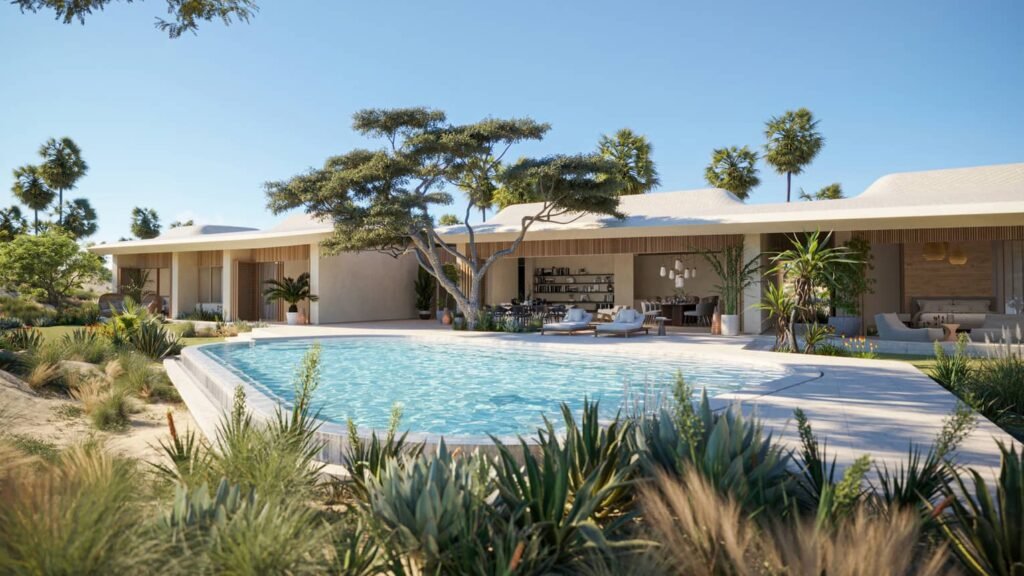
Located at the most secluded eastern point of Shura Island — at the tip of a 200-kilometre development spanning an archipelago of 90 untouched islands — the Four Seasons occupies 4.8 hectares of pristine low-density landscape, encircled by the sea on three sides and fronting a 1.3-kilometre beach with a spectacular sandbank stretching into the turquoise lagoon.
Opened in May, the resort seamlessly combines regenerative luxury, family experiences, wellness, and water sports across 149 rooms and suites and 31 branded residences, all designed to open fully to the outdoors with spectacular Red Sea views. Architecture by Foster + Partners draws inspiration from the fluid, organic forms of the coral reef, with sustainability and environmental sensitivity built into every material choice. An overwater suite or beachfront villa for the full Red Sea at sunrise experience would be our recommendation.
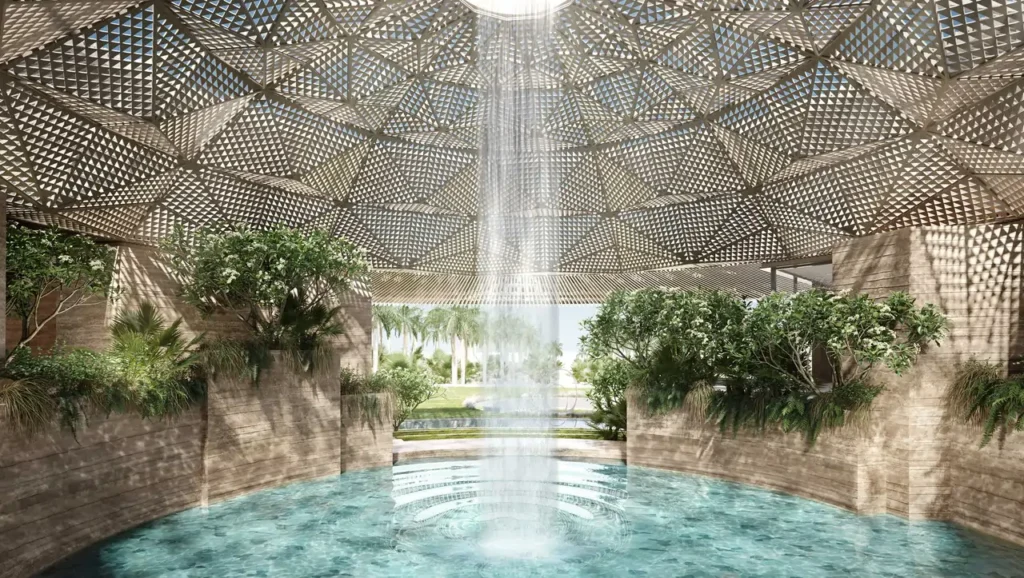
Three pools — family, adults-only, and a lap pool at The Spa — offer different rhythms of the day, while The Spa features a traditional hammam, hydrotherapy pool, and treatment rooms inspired by water, salt, coral, and plants.
From US$690 per night
Auko Eco-Wellness Lodges
Phong Nha, Vietnam
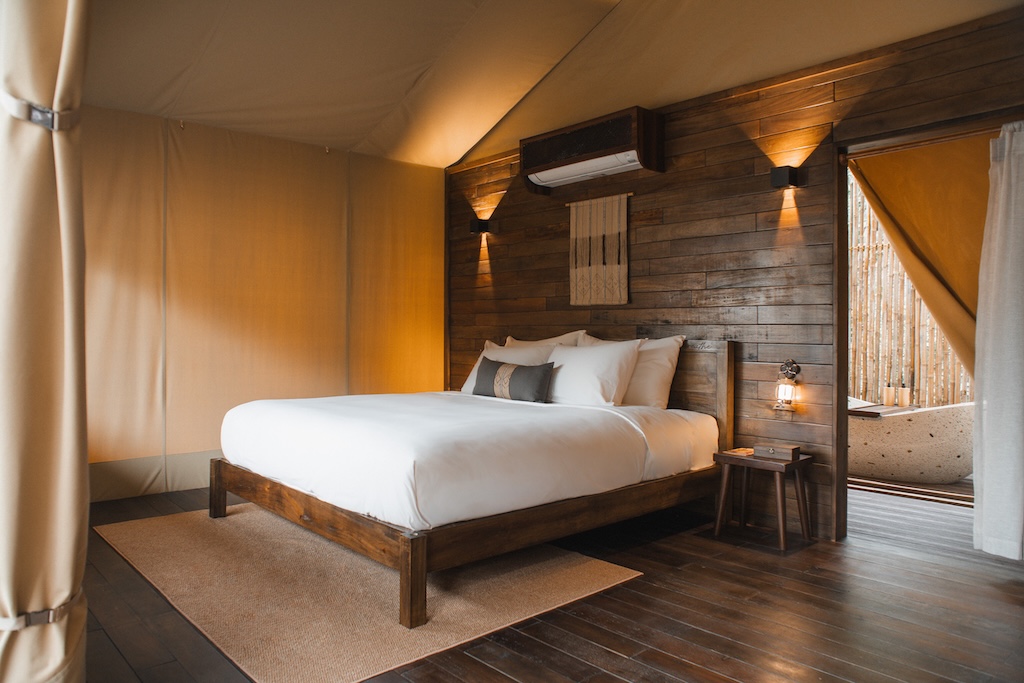
Set along the Son River and ringed by the limestone peaks of the Phong Nha-Ke Bang UNESCO World Heritage Site — home to the Son Doong cave network, the largest on Earth — Auko Eco-Wellness Lodges has opened as Vietnam’s first EDGE Advanced-certified eco-wellness retreat, and one of Southeast Asia’s most considered new expressions of regenerative hospitality.
Developed in line with the IFC’s Building Resilience Index for a region shaped by monsoon floods and 400-million-year-old limestone, the property’s 30 tented lodges rise above historic flood levels on elevated bamboo bridges, built from reclaimed timber and ventilated platforms and clustered beneath indigenous planting chosen for resilience as much as beauty.
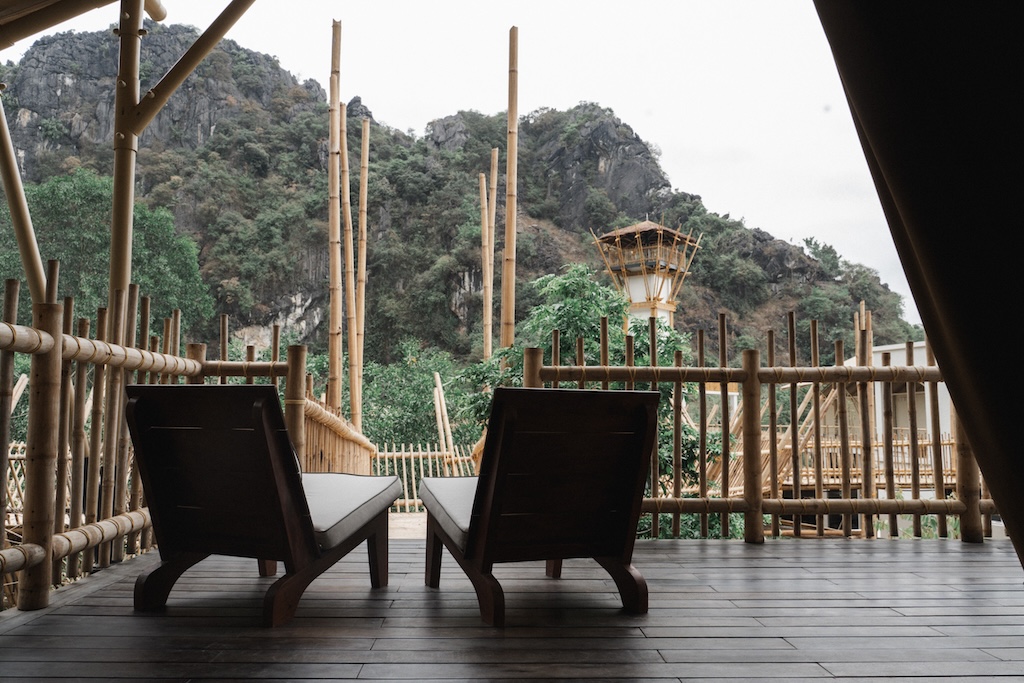
The all-inclusive stay unfolds across three signature pathways — the restorative Open Way, the introspective Still Way, and the adventure-driven Wild Way — with three daily meals at Origin Restaurant, a forest-to-table dining room built on wild-foraged herbs, fresh river fish and the produce of Central Vietnam. Wellness draws on the healing traditions of the region’s Cham people, with hydrotherapy journeys moving between Rhassoul clay immersion, forest rainfall showers and clifftop cold plunges, alongside sound healing, riverside meditation decks, and a calendar of full moon gatherings and seasonal ceremonies.
From US$300 per night, all-inclusive
If you’re a traveller who revels in the best luxury hotels, be sure to check out our Stay section for more inspiration.


