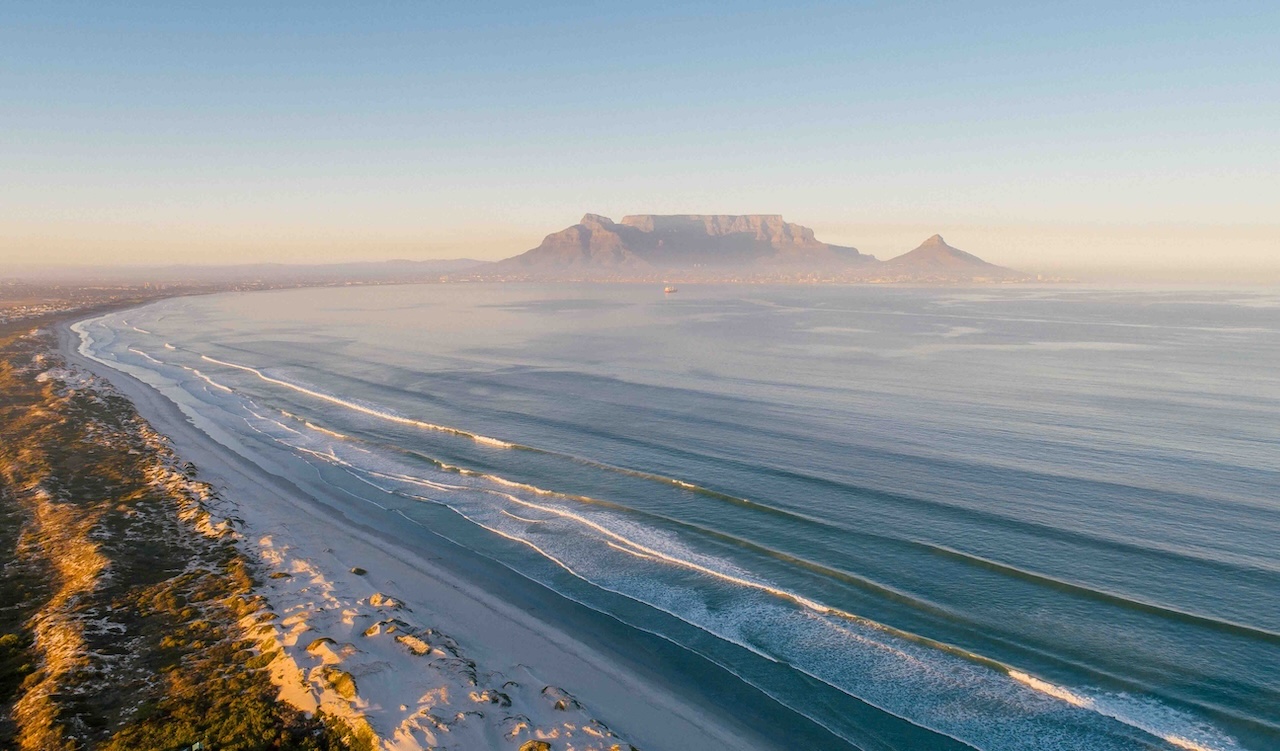

Few cities on earth can match Cape Town’s offer: two oceans, a mountain, the continent’s most exciting dining scene, and the winelands an hour from your hotel door.
Cape Town does not ease you in gently. Within hours of landing, you are standing beneath a flat-topped mountain that falls into two oceans, eating the best meal you have had in years at a price that makes you feel guilty for not coming sooner, and wondering why, exactly, you left it this long. It is one of those cities — rare, specific, irreducible — that rewards even the shortest visit with something that feels life-altering.
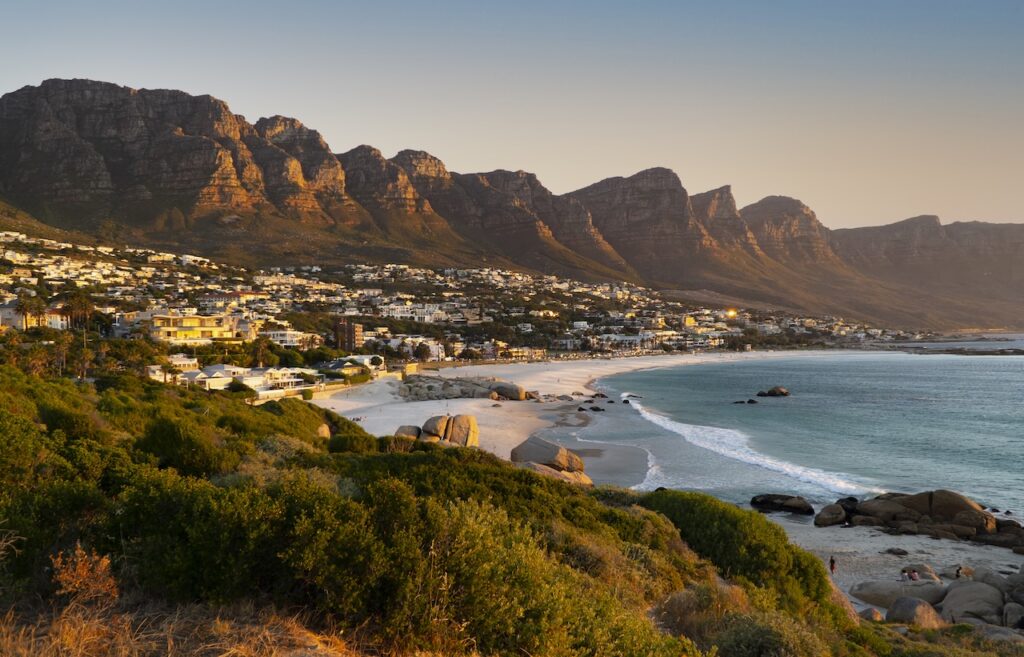
To be honest, 48 hours is not enough. It never is. But handled with intent, two days in Cape Town can take you from the Zeitz MOCAA to the winelands of Franschhoek, from a rooftop sundowner above the V&A Waterfront to a dinner that has made the TIME list of the world’s greatest places. This guide is built for the traveller who is short on time but long on appetite.
Day One: The Waterfront, the Bo-Kaap and a Landmark New Restaurant
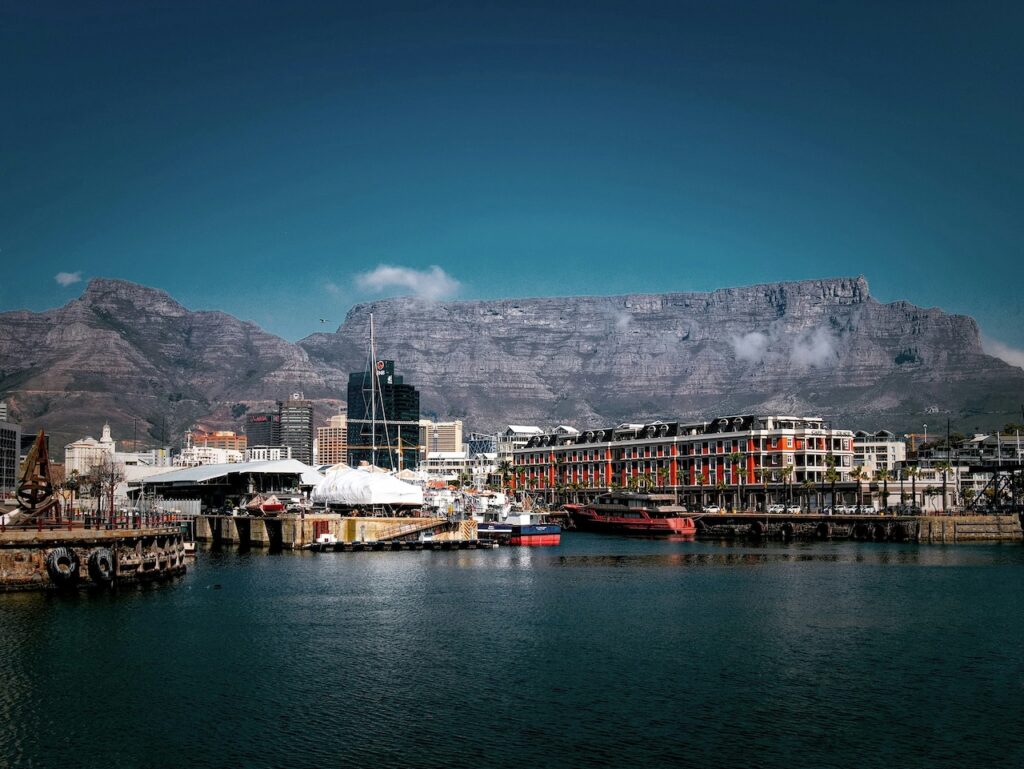
Start at the water. Cape Town reveals itself best from the harbour edge — with Table Mountain behind you, two oceans ahead, and one of the world’s most talked-about new restaurants waiting for dinner.
Morning: The V&A Waterfront and Zeitz MOCAA
Arrive, check in, and resist the temptation to spend the morning at the hotel — the city will reward an early start. Walk or take a short Uber to the V&A Waterfront and make directly for the Zeitz Museum of Contemporary Art Africa (unless you’re staying at The Silo, in which case just walk downstairs!), the converted grain silo that is now home to Africa’s largest collection of contemporary African art.
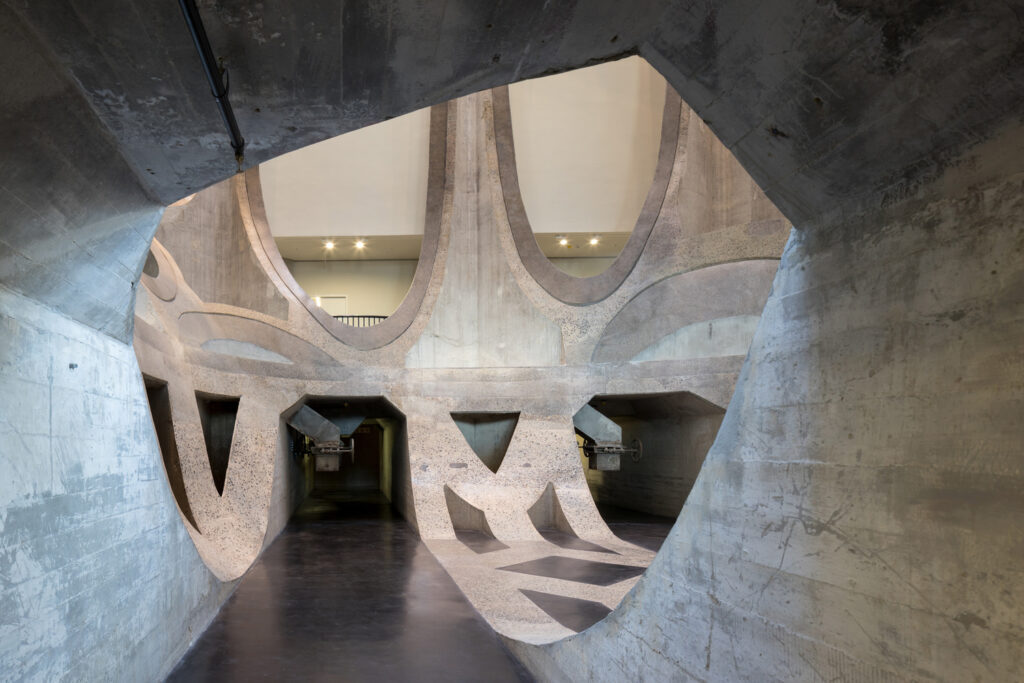
The building itself — its vast cylindrical concrete forms carved by Thomas Heatherwick into cathedral-like galleries — is as remarkable as anything inside it. Allow two hours, and pay particular attention to the permanent collection on floors four and five, where work by Zanele Muholi, Marlene Dumas and Wangechi Mutu repays close attention.
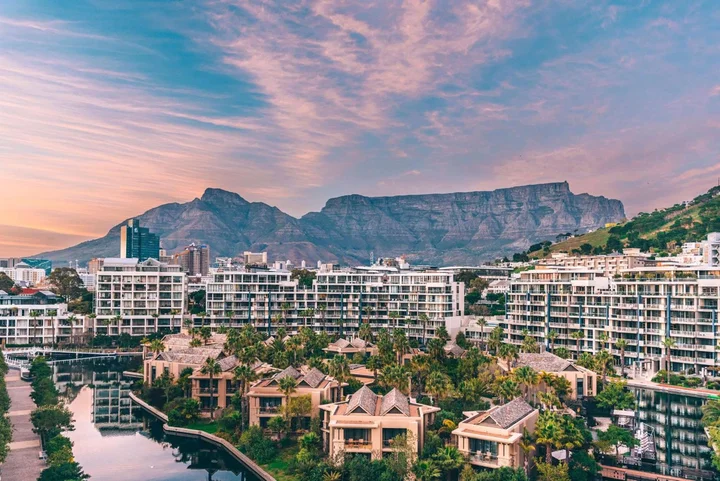
From the Zeitz, walk the Waterfront promenade towards the working harbour. The morning light on Table Mountain from the jetty is one of the great free spectacles in travel — take your time with it.
Lunch: Pier by La Colombe
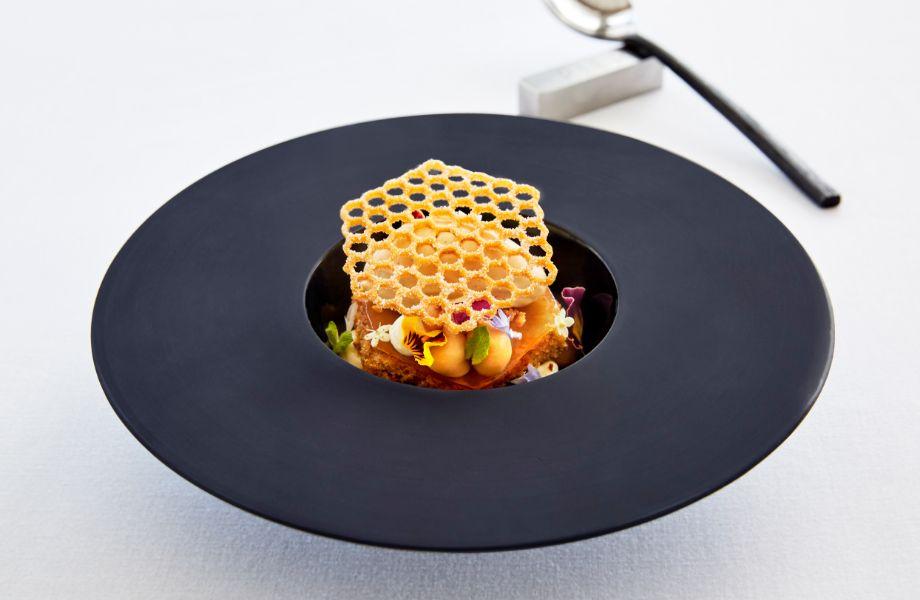
Book ahead for lunch at Pier, the V&A Waterfront restaurant from the La Colombe group that has quietly become the finest lunch destination in the harbour district. Chef John Norris-Rodgers’s nine- or eleven-course menu is focused, ingredient-forward and far less formal than its culinary ambition might suggest — expect Cape linefish prepared with precision, excellent bread, and a wine list anchored in Stellenbosch and Franschhoek producers.
The waterfront setting, with fishing boats visible from the dining room, gives it a sense of place that the city’s inland fine dining venues cannot quite match. Book at least two weeks in advance.
Afternoon: Bo-Kaap and the City Bowl
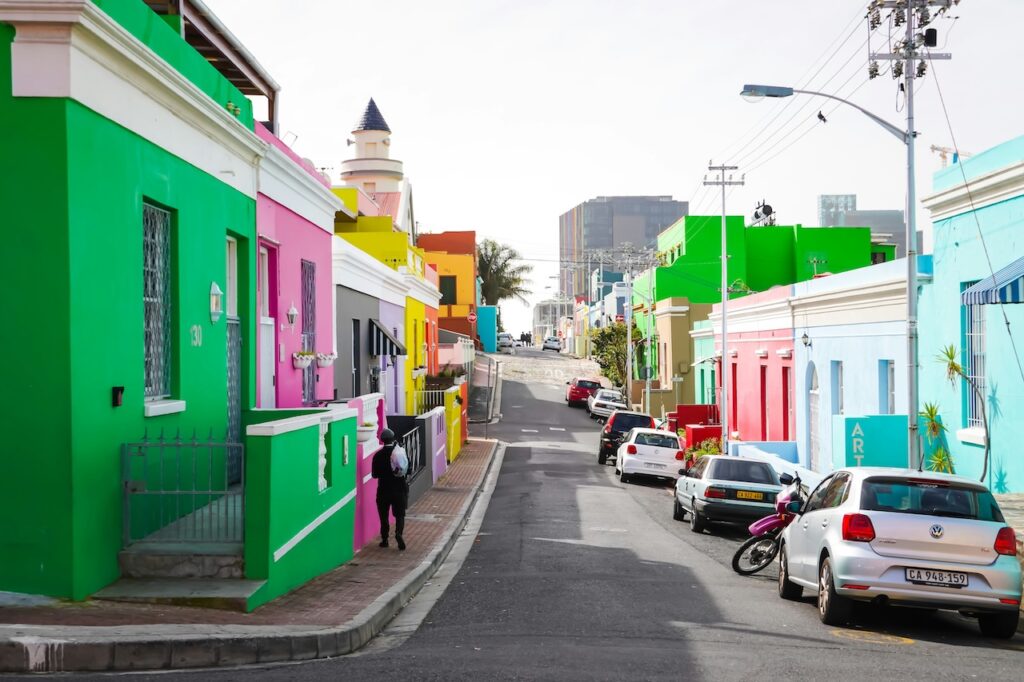
After lunch, take a short Uber up to the Bo-Kaap — the hillside neighbourhood of candy-coloured 18th-century houses and cobbled streets that is one of the most photographed corners of the city. Walk through it rather than driving: the streets of Wale, Rose and Chiappini are best understood on foot, and the neighbourhood’s Cape Malay heritage — the Auwal Mosque, the oldest in South Africa, is on Dorp Street — deserves respectful attention rather than a passing glance from a car window.
Descend to the City Bowl for coffee in De Waterkant, the quietly gentrified quarter below the Bo-Kaap that has the city’s most interesting run of independent cafes and boutiques. Willowbrook Coffee on Hudson Street and Origin Coffee on Buitenkant are both excellent; either makes a good late-afternoon base from which to walk south towards the hotel for the evening.
Dinner: Amura at Mount Nelson, A Belmond Hotel
Reserve well ahead — months, if possible — for dinner at Amura, the restaurant that has made more international noise in its first six months than almost any opening in the city’s history. Helmed by Michelin-recognised chef Angél León, the mind behind Aponiente in Cádiz, Amura is León’s first restaurant outside Spain and a marine dining experience built around the ingredients of the Cape’s two oceans, reimagined through the lens of Spanish technique.
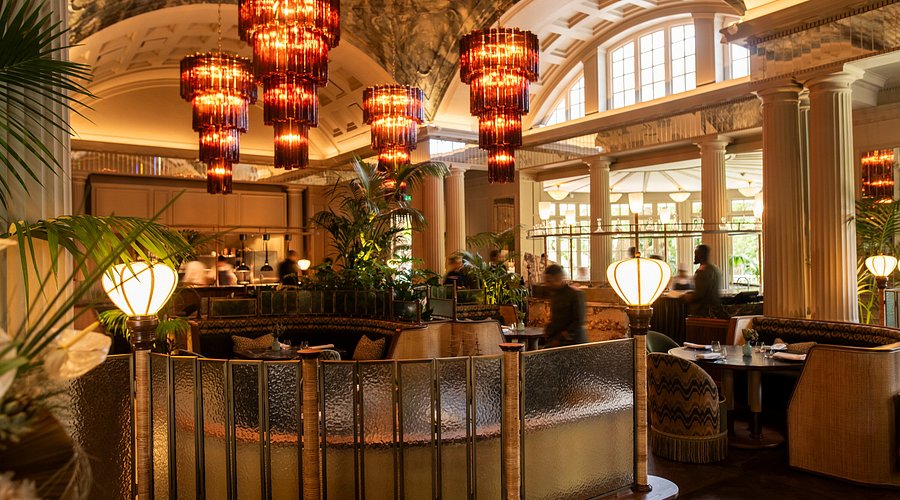
The interior, designed by Tristan du Plessis, is extraordinary: vaulted ceilings painted with kelp-forest imagery, warm timber and bronze, filtering light that suggests fathoms rather than chandeliers. The menu changes daily around what the fishmonger has brought in — expect yellowtail tartare with Cape citrus, risotto coloured emerald by plankton, fire-cooked kingklip with pil-pil and algae — alongside a drinks list that includes a kelp-infused martini and Bamboesbay Sauvignon Blanc aged on the sea floor. It’s easy to see why Amura is the most compelling argument yet that Cape Town has arrived as a destination on the world’s serious dining map.
Day Two: Franschhoek Winelands, Table Mountain and a Night to Remember
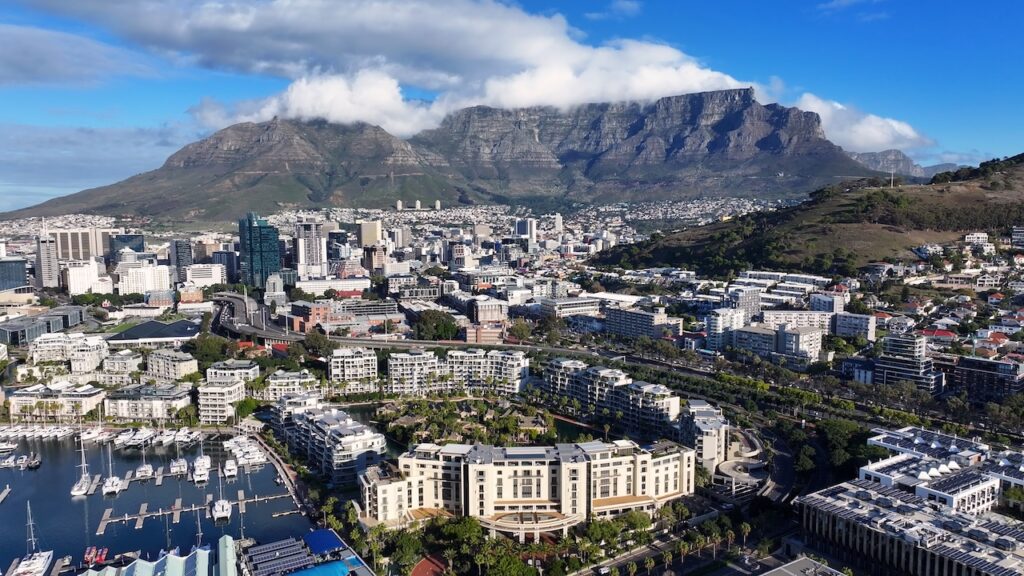
The second day belongs to the mountains — vineyards climbing into them in the morning, the city spread beneath them in the afternoon, and a dinner at the top of the world‘s best restaurant list to close it out.
Morning: The Winelands of Franschhoek
Rise early, collect a hire car or arrange a private transfer — approximately 45 minutes each way — and spend the morning in Franschhoek, the Huguenot village in a mountain-ringed valley that is the culinary and viticultural heart of the Cape Winelands. The drive through the Helshoogte Pass alone, with vineyards dropping away on both sides into the valley below, is worth getting out of bed for.
Begin at Boschendal, one of South Africa’s oldest farms (established 1685), for a cellar tour and a tasting under the oaks before the day-trippers arrive. Their Chardonnay-Pinot Noir blend and the 1685 Shiraz are the bottles to seek out.
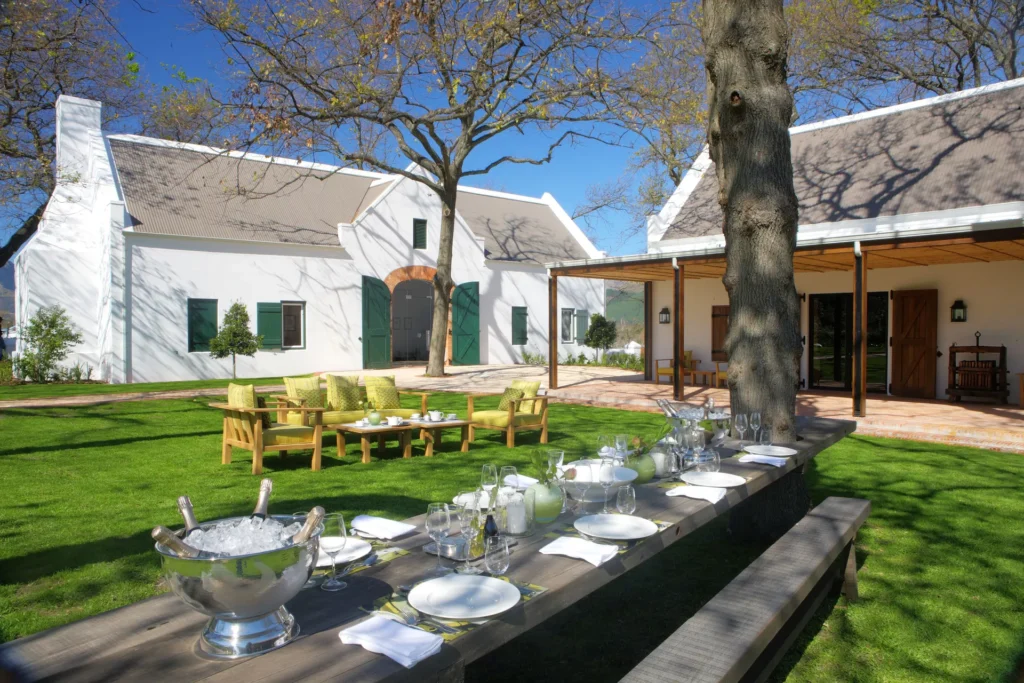
From Boschendal, drive the valley road into Franschhoek village itself: La Motte, with its Pierneef art collection, private cellar tours and farm restaurant (above), is the most complete single-estate experience; Haute Cabrière, set into the mountainside with an underground cellar and sweeping valley views, is the most dramatic setting for a late-morning tasting.
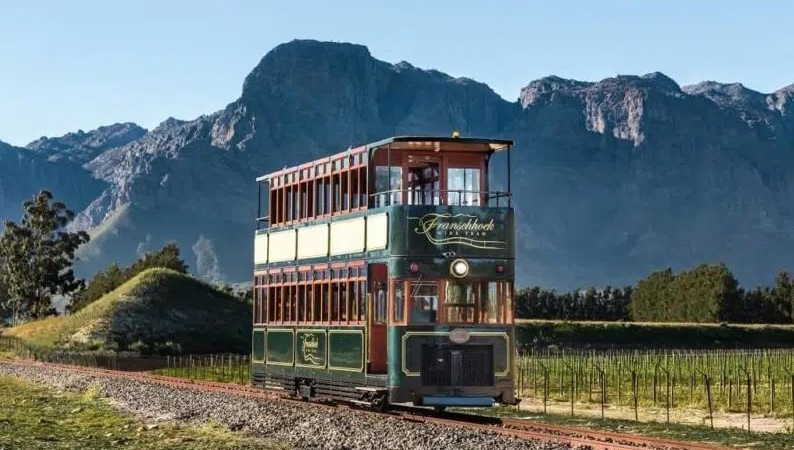
The Franschhoek Wine Tram — a hop-on, hop-off tram and bus system that circuits the valley’s estates — is a more relaxed way to cover multiple wineries without driving, though a private guide allows more flexibility and depth at each stop.
Lunch: The Tasting Room at Le Quartier Français
Return to Franschhoek village for lunch at Le Quartier Français. The Tasting Room, which has held a position among the finest tables in South Africa for two decades, offers a focused Cape-French menu that matches the valley’s produce with a cellar book that covers the best of the surrounding estates in depth.
A long, unhurried lunch here — the terrace, a glass of local Chenin in hand, the mountains visible above the garden wall — is one of the most quietly perfect experiences the Cape offers. Book a table for 1 pm to allow the winery to visit at their proper time and to be back in Cape Town before the Table Mountain cable car queues build.
Afternoon: Table Mountain
Return to Cape Town by 3.30 pm and take the aerial cableway to the summit of Table Mountain — buy timed tickets online in advance, as walk-up queues in peak season can be significant. The cable car rotates during the ascent, giving a full 360-degree view of the city, the peninsula and both oceans.
The summit plateau, at 1,086 metres, is a world unto itself: a fynbos ecosystem found nowhere else on earth, with Dassies (rock hyrax, rotund and improbably endearing) wandering the boardwalks between visitors.
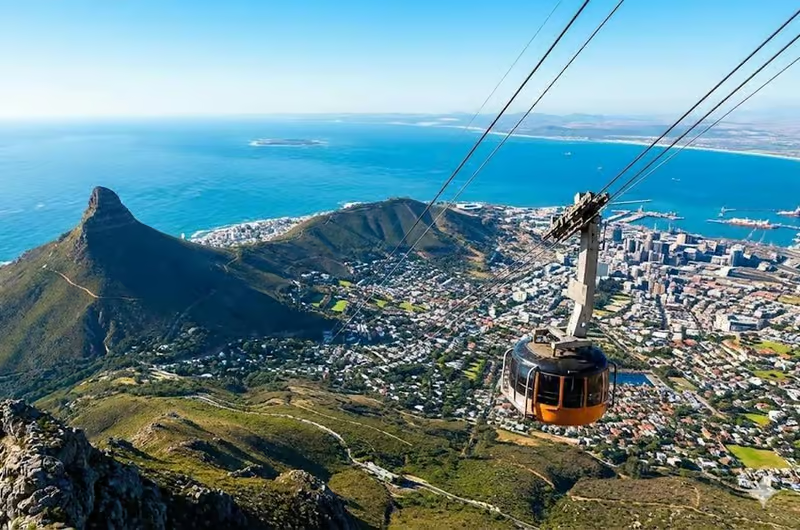
Allow 90 minutes on top but I’d suggest checking conditions before you go as the mountain makes its own weather, and the cable car does not operate in strong winds.
Evening: Sundowners and Dinner at Fyn
Descend in time for sundowners at the 14 Stories Rooftop Bar, which has one of the finest views of the city centre at golden hour. Then make your way to dinner at Fyn, currently the best restaurant in South Africa and number 37 on the World’s 50 Best Restaurants list. Chef Peter Tempelhoff’s kaiseki-style menu fuses Japanese technique with the finest Cape ingredients — abalone, fynbos, Kalahari truffles, local linefish — in five courses of exceptional precision and generosity.
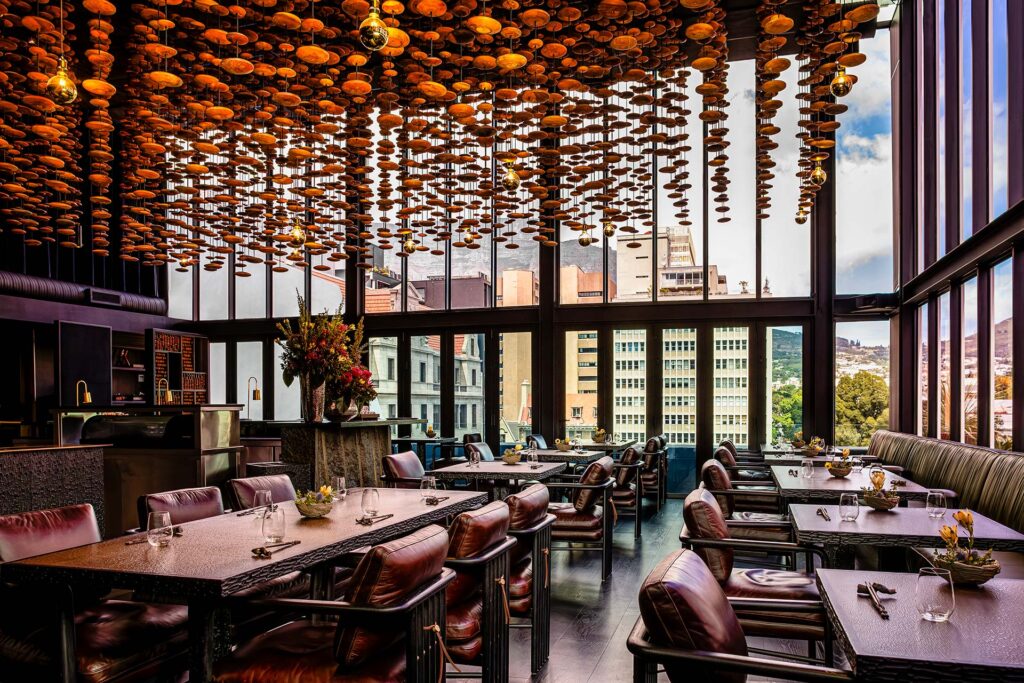
The restaurant occupies the fifth floor of a City Bowl building, with Lion’s Head and Table Mountain framed through floor-to-ceiling windows. Book months ahead; this is not a walk-in situation.
Where to Stay: Three Hotels for the Discerning Visitor
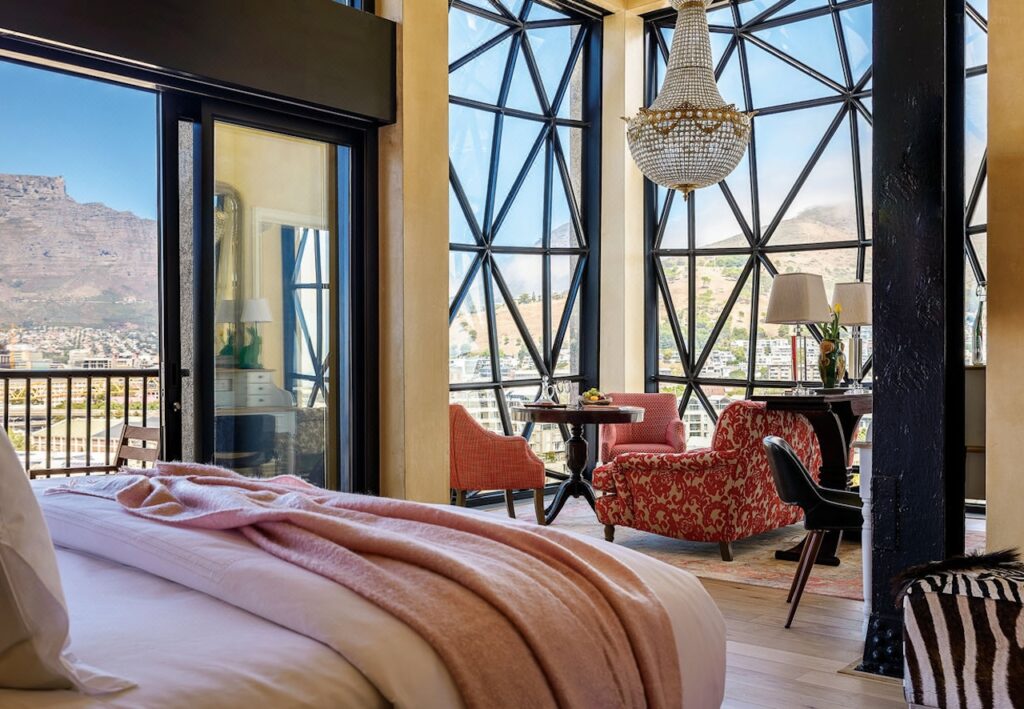
Cape Town’s finest hotels are as varied as the city itself, from a converted grain silo above Africa’s greatest art museum, to a pink-walled colonial icon with a landmark new restaurant, a clifftop mansion with views that stop conversation entirely, and a refreshed waterfront hotspot.
The Silo Hotel
The Silo is, quite simply, the most architecturally arresting hotel in Africa. Set in the converted upper floors of a 1924 grain silo above the Zeitz MOCAA, with Thomas Heatherwick’s pillow-glass windows bulging from its brutalist frame, it manages to be simultaneously monumental and intimate. Featuring just 28 individually designed rooms and suites, each filled with Liz Biden’s eclectic curation of contemporary African art, bold colour and textile, and views of Table Mountain or the harbour, makes it impossible to leave without a coffee in hand and twenty minutes to spare just looking.
Mount Nelson, A Belmond Hotel
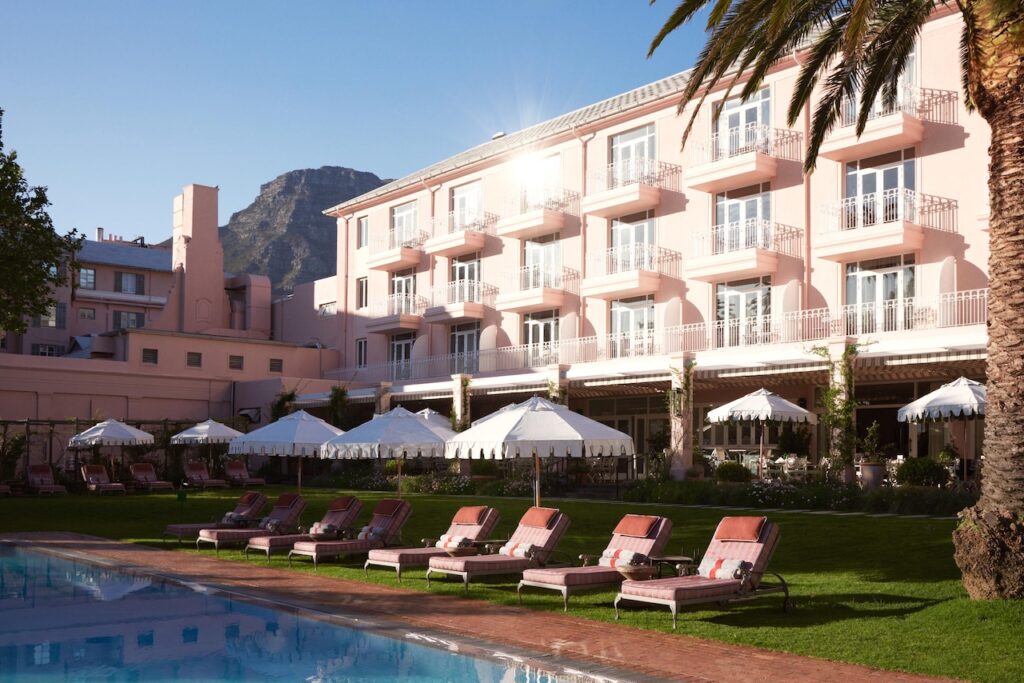
The “Pink Lady” has anchored Cape Town’s social life since 1899. Set in nine acres of garden at the foot of Table Mountain, a 15-minute walk from the City Bowl, it is the city’s most historically resonant address: Winston Churchill stayed at the Mount Nelson, as did Rudyard Kipling, and generations of Capetonians have marked milestones over afternoon tea on its famous Verandah. Rooms blend grand colonial proportions with contemporary comfort. The recent opening of Amura (see above) has added a new dimension to a hotel that had never really needed one.
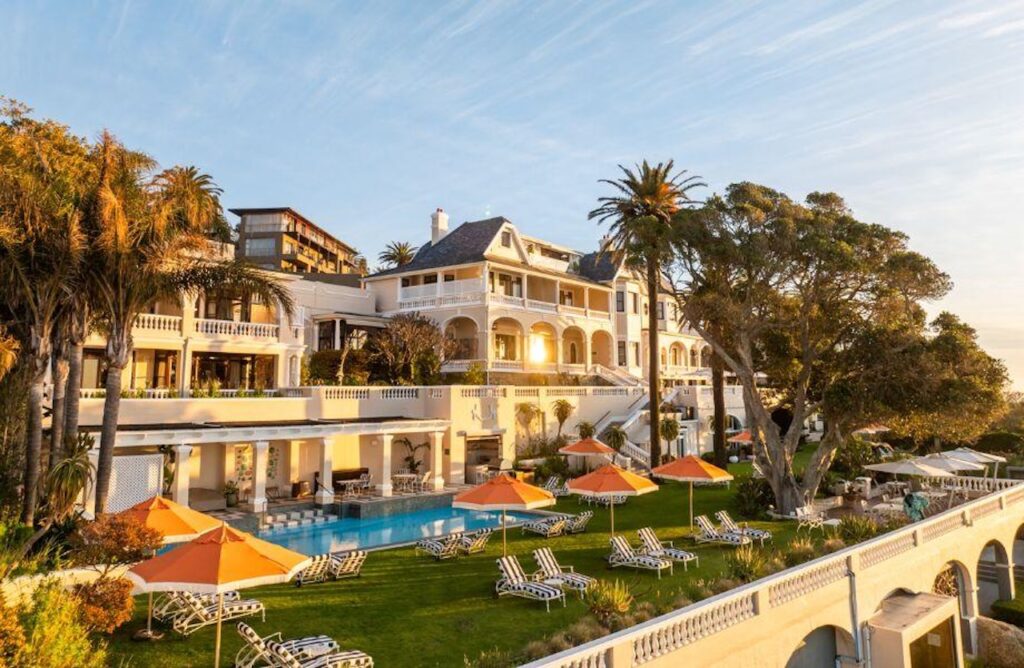
Ellerman House
For those who prefer the residential discretion of Bantry Bay to the theatrical buzz of the Waterfront, Ellerman House — a 1912 Edwardian mansion on the Atlantic Seaboard cliffs above Clifton beach — offers 13 suites, a private wine cellar with one of the finest South African collections in private hands, and views of the Atlantic that verge on the preposterous. It’s the most low-profile of the city’s ultra-luxury options: the kind of hotel that attracts guests who know exactly what they want and don’t need to be told. The collection of South African contemporary art throughout is also exceptional.
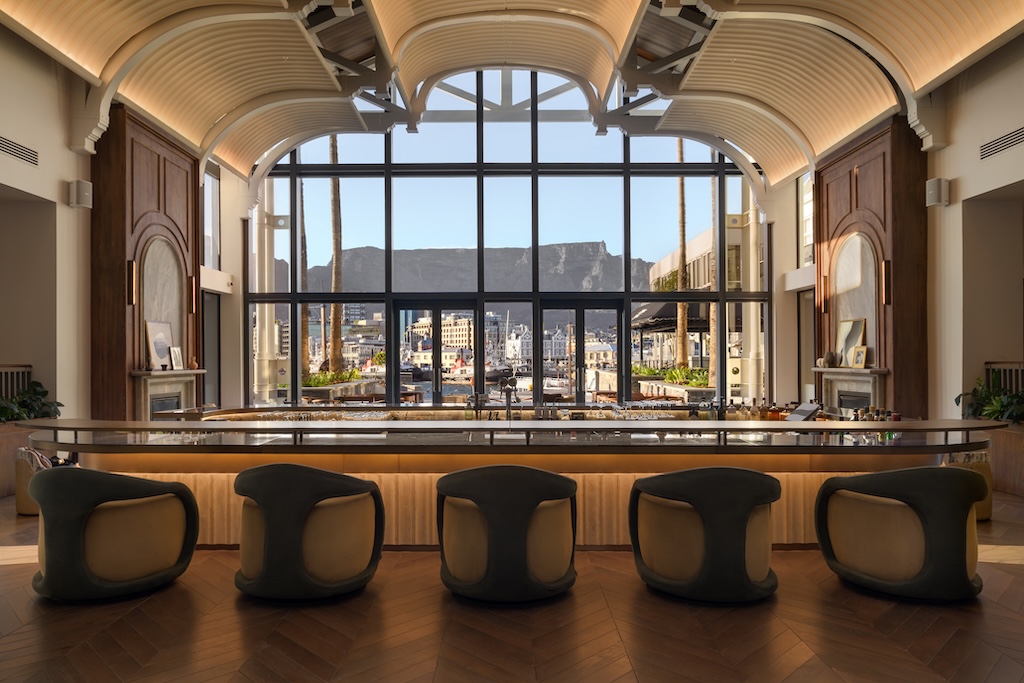
InterContinental Table Bay Cape Town
Another worthy contender is the iconic InterContinental, which has recently emerged from a transformative refresh at the hands of LW Design Group. Perched on the V&A Waterfront, this 306-room landmark hotel now boasts interiors that marry nostalgia with contemporary luxury, from hand-painted mural tiles to marble accents and original parquet flooring. Be sure to leave time for a visit to Flint & Fennel, the hotel’s signature restaurant, and the spectacular Botanist’s Table cocktail bar (above).
Your Cape Town Questions Answered
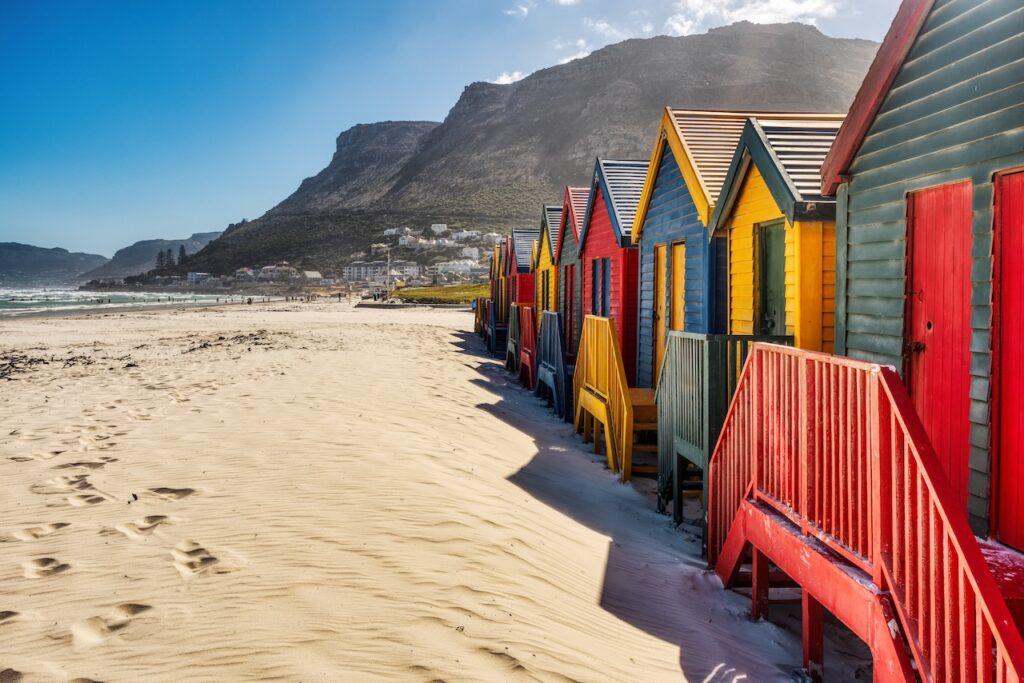
Everything you need to know before you land — from visas and safety to the best time to visit and whether Table Mountain really needs to be booked in advance.
Do I need a visa for Cape Town?
Citizens of the United Kingdom, United States, Canada, Australia, New Zealand and most EU nations do not require a visa for visits of up to 90 days. You will receive a visitor’s stamp on arrival at Cape Town International Airport. No advance application is required for visa-exempt nationals, but your passport must have at least two consecutive blank pages and be valid for at least 30 days beyond your intended departure date. Check the South African Department of Home Affairs for the current list of visa-exempt countries before travel, as conditions can change.
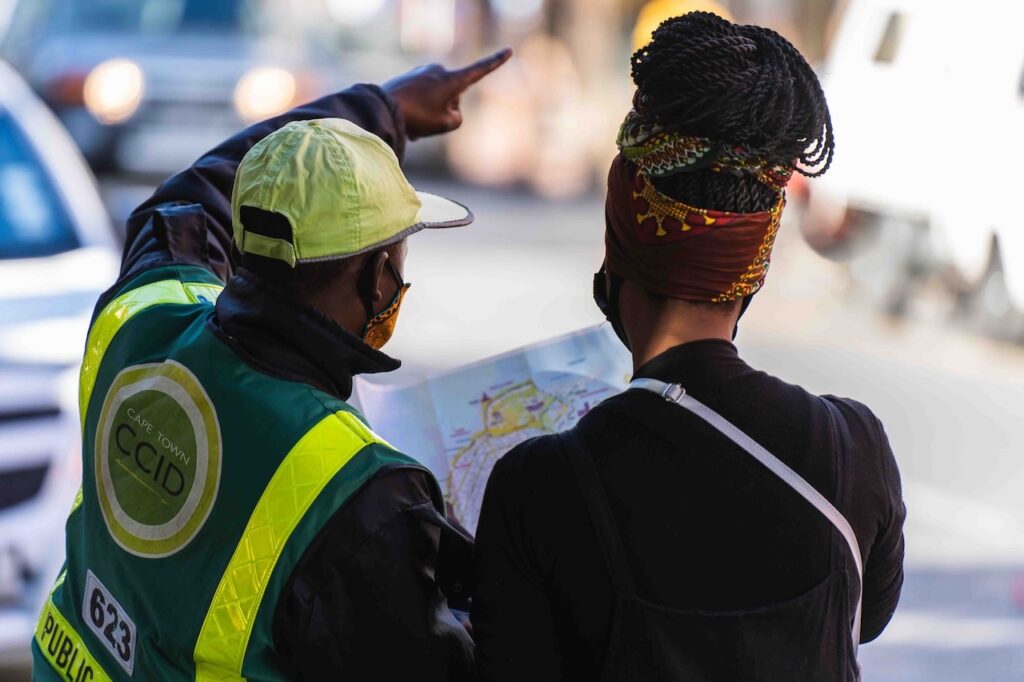
Is Cape Town safe for tourists?
The main tourist areas — the V&A Waterfront, Camps Bay, Clifton, Constantia, De Waterkant, Green Point, Sea Point, the City Bowl, and the Winelands — are well-policed and broadly safe during the day and evening, and millions of international visitors travel through them each year without incident. Standard urban common sense applies throughout: don’t display expensive jewellery or cameras unnecessarily, use Uber rather than hailing taxis from the street, and ask your hotel concierge about any neighbourhoods to avoid at night.
Cape Town has significant socioeconomic inequality, and crime in township areas and some parts of the city centre after dark is a genuine concern. The visitor experience in the areas covered by this guide is, however, very different from those statistics. Travel insurance is strongly recommended.
What currency does Cape Town use, and should I bring cash?
South Africa’s currency is the South African Rand (ZAR, or R). The exchange rate is favourable for UK, US and European visitors — fine dining that would cost US$190 per head in London typically runs to US$50-80 in Cape Town at comparable quality. Visa and Mastercard are widely accepted in hotels, restaurants and shops; contactless payment works at most modern terminals. American Express is accepted at larger establishments, but not universally.
Keep a small amount of Rand in cash (R100–500) for market purchases, tips and smaller vendors. ATMs are reliable and available throughout the Waterfront and City Bowl. Tipping is standard: 10–15% at restaurants (check whether a service charge has already been added), R20–50 per bag for hotel porters, and R100–200 per day for private drivers or guides.
What is the best time of year to visit Cape Town?
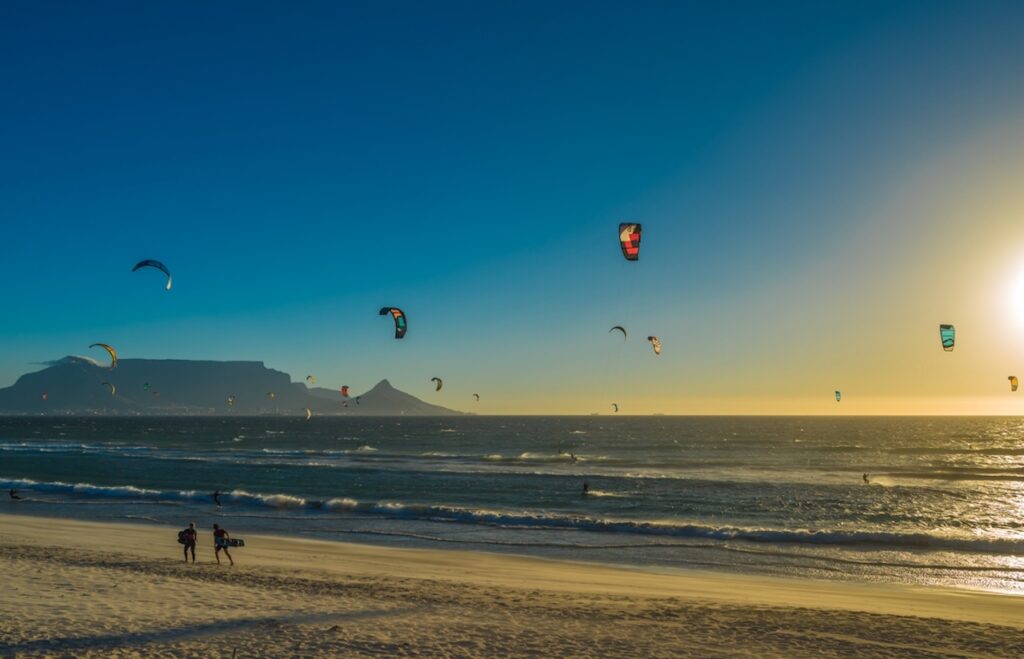
Cape Town’s seasons are the inverse of those in the Northern Hemisphere. November to February is peak summer: long days, warm temperatures (25–30°C/77–86°F), the beaches at their best, and the city at its most animated — but also most expensive and most crowded. March to May (autumn) brings quieter streets, harvest season in the winelands, excellent light and slightly cooler conditions.
June to August is winter: overcast and wet on some days, with temperatures dropping to 8–15°C (46–59°F), but also the season for whale watching (Southern Right Whales appear off Hermanus and the Cape Peninsula) and dramatically lower hotel rates. September and October (spring) offer some of the finest weather of the year, with wildflowers carpeting the surrounding landscape and the summer crowds yet to arrive.
For luxury travellers, the sweet spots are March to May and September to October: excellent conditions, manageable crowds and the full range of dining and experience options in operation.
How do I get from Cape Town Airport to the city?
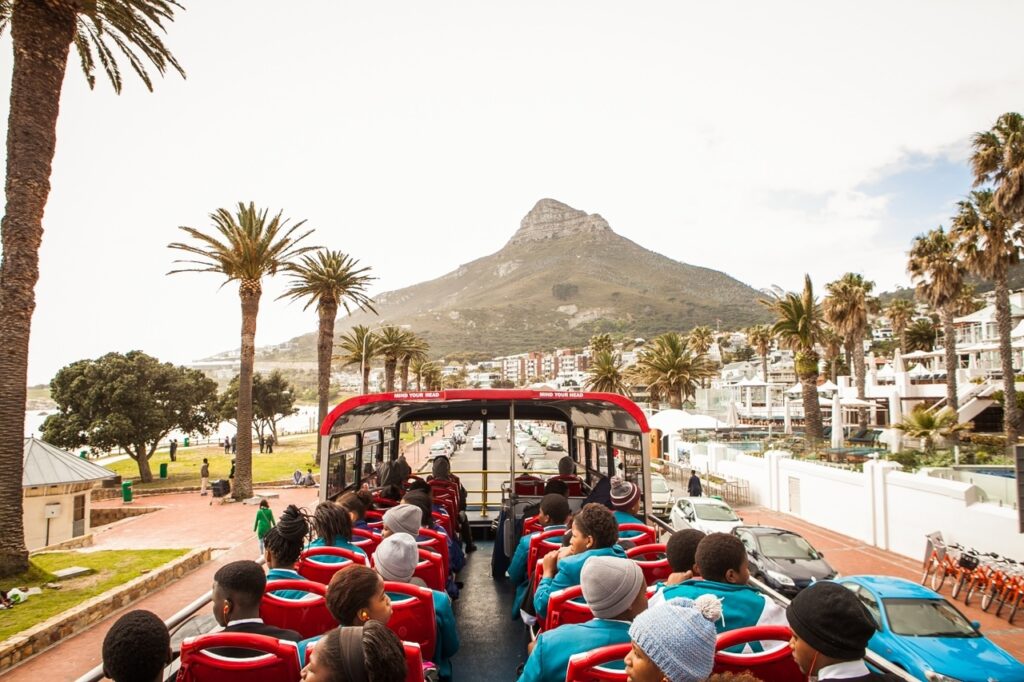
Cape Town International Airport (CPT) is approximately 20 kilometres from the city centre and the V&A Waterfront. The most reliable options for luxury travellers are a pre-arranged private transfer (your hotel will organise this; expect to pay R600–900/around US$30-50) or an Uber (typically R250–350/US$16-30, depending on traffic and time of day). Journey time is 25–40 minutes outside rush hour; allow 50–60 minutes during the morning and evening peaks.
The MyCiti bus service runs between the airport and the city centre for approximately R100, but involves luggage handling and a transfer at the Civic Centre stop that makes it impractical for most visitors arriving with bags. Metered taxis from the rank outside arrivals are available but should be agreed in advance rather than metered. Car hire is available from all major operators at the airport; driving in Cape Town is straightforward for those accustomed to left-hand traffic.
Do I need to book Table Mountain in advance?
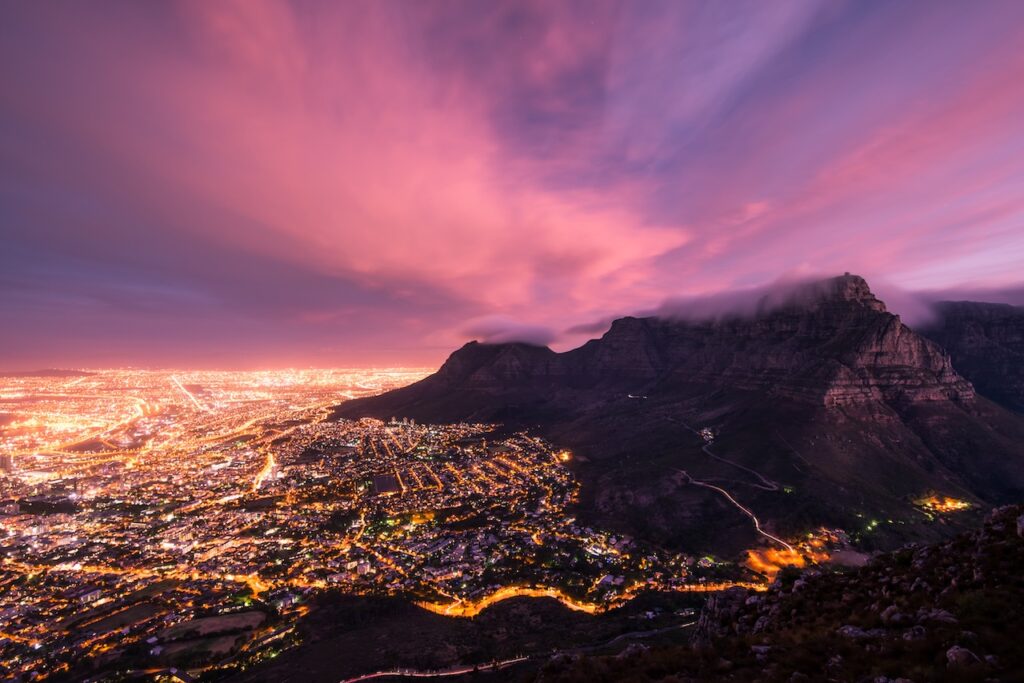
Yes, during peak season (October to April) and on any clear-weather weekend as timed tickets sell out well in advance. Book through the official Table Mountain Aerial Cableway website before you travel, selecting a timed entry slot that suits your itinerary. The cable car does not operate in high winds or cloud conditions — the mountain generates with little warning — and tickets are refunded or rescheduled if closure occurs. Check the website’s live conditions page on the morning of your visit. Arrive 10–15 minutes before your slot and build in flexibility around the experience: the cable car queues move, but summit time is worth extending if the weather holds.
Is the Cape Winelands worth a day trip from Cape Town?
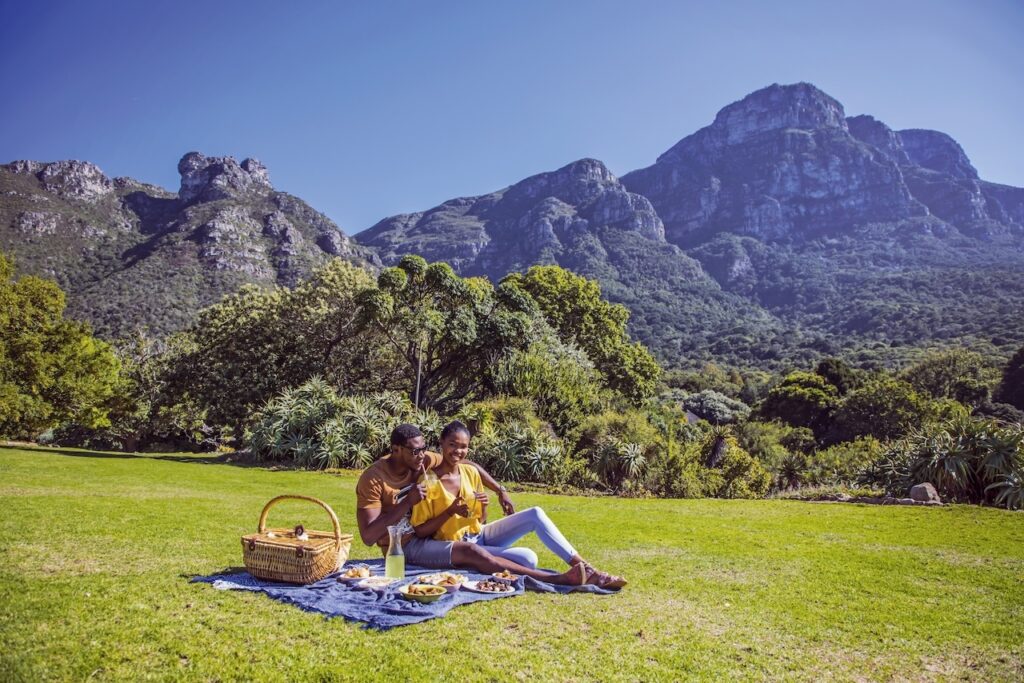
Without question, and for luxury travellers on a short visit, Franschhoek is the most rewarding single-valley option. It is 75 kilometres (45 minutes by car) from the city, compact enough to explore meaningfully in half a day, and offers a concentration of world-class estates, outstanding restaurants and extraordinary scenery that would justify two or three nights of its own. The drive through the Helshoogte Pass is one of the most beautiful in South Africa.
Stellenbosch, 45 kilometres from Cape Town, offers more estates across a larger area and a historic university town at its centre; it suits visitors with a full day and a car. Constantia, Cape Town’s oldest wine-producing valley, is 20 minutes from the Waterfront and can be incorporated into an afternoon without a dedicated road trip — La Colombe is here, on the Silvermist Estate — making it the most efficient winelands option for the genuinely time-pressed visitor.
What language do people speak in Cape Town?
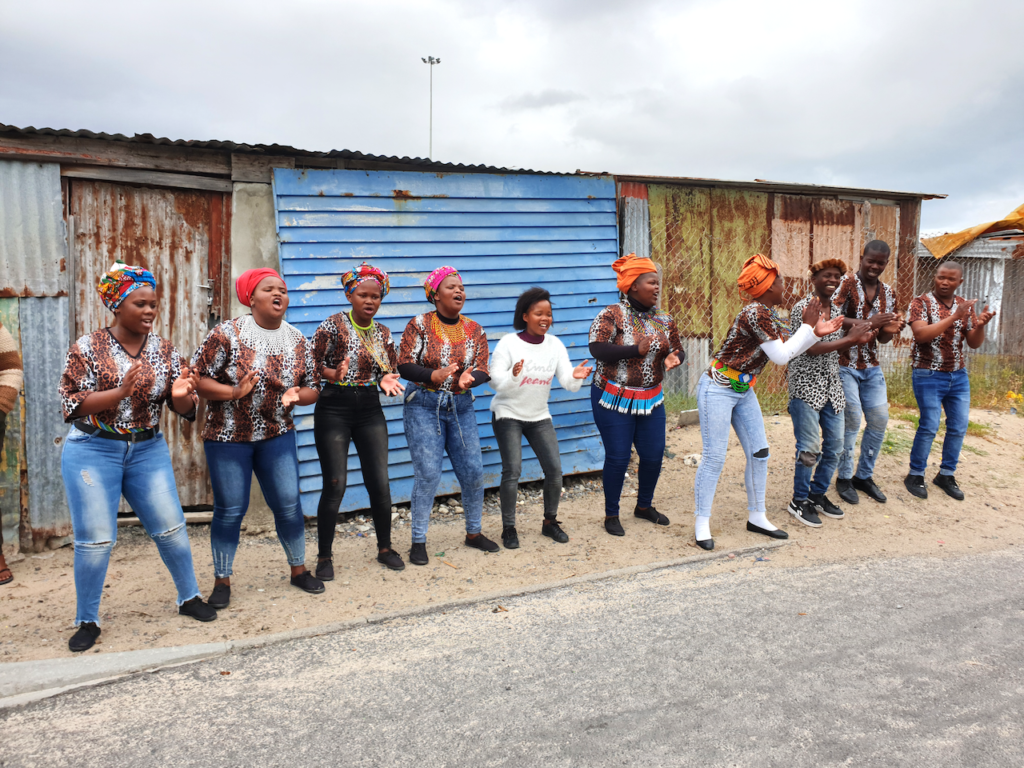
South Africa has 11 official languages, but English is the primary language of commerce, hospitality and signage throughout Cape Town and is spoken fluently by virtually everyone you will encounter in the areas covered by this guide. You will also hear Afrikaans — a West Germanic language descended from 17th-century Dutch, widely spoken by a significant proportion of the population — and isiXhosa, with its distinctive click consonants, spoken especially in the Cape Flats and townships. Learning a few words of greeting in either Afrikaans (Goeie dag — good day) or Xhosa (Molo — hello) is warmly received. You will have no difficulty communicating in English throughout Cape Town.
As the perfect add-on to a South African safari, Cape Town is a city that’s always reinventing itself and the opportunity to visit, to bask on its beaches, meet its people and delve into its arts scene, should not be missed.


