
Nick Walton explores eastern Indonesia with Heritage Expeditions, delving into a dynamic landscape that’s only just opening to tourism.
It’s funny how everything else seems so much louder when you’re holding your breath in the bush. The bird song seems to echo, the cicadas become deafening, and every step of a giant, ancient lizard a few metres away seems to resonate and reverberate.
So it is during our first encounter with one of Komodo’s legendary dragons. Our guide, armed with nothing but a slender bamboo cane and the best of intentions, keeps one eye on his camera-wielding wards and the other on the dragon, its ribbon-like tongue flickering as it tests the air and approaches our group.
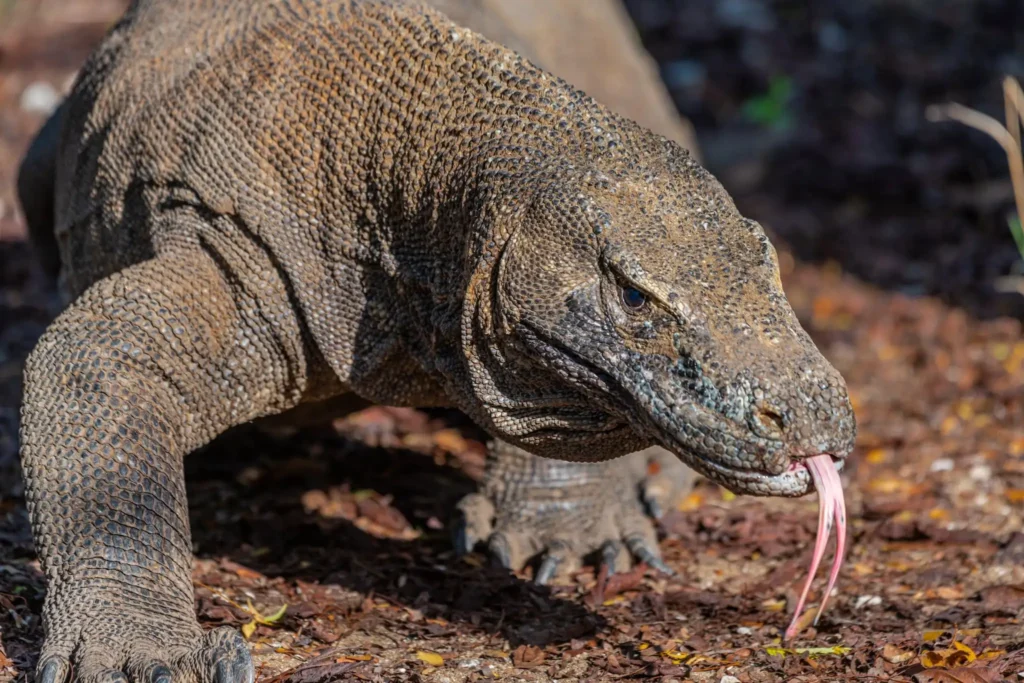
The Komodo Dragon is the largest species of lizard in the world, growing up to three metres in length and weighing up to 70kg. Apex predators, they stalk their prey before attacking with a venomous bite. They’re also one of the main drawcards to their namesake national park, here in eastern Indonesia.
The Inaugural Voyage of Heritage Adventurer
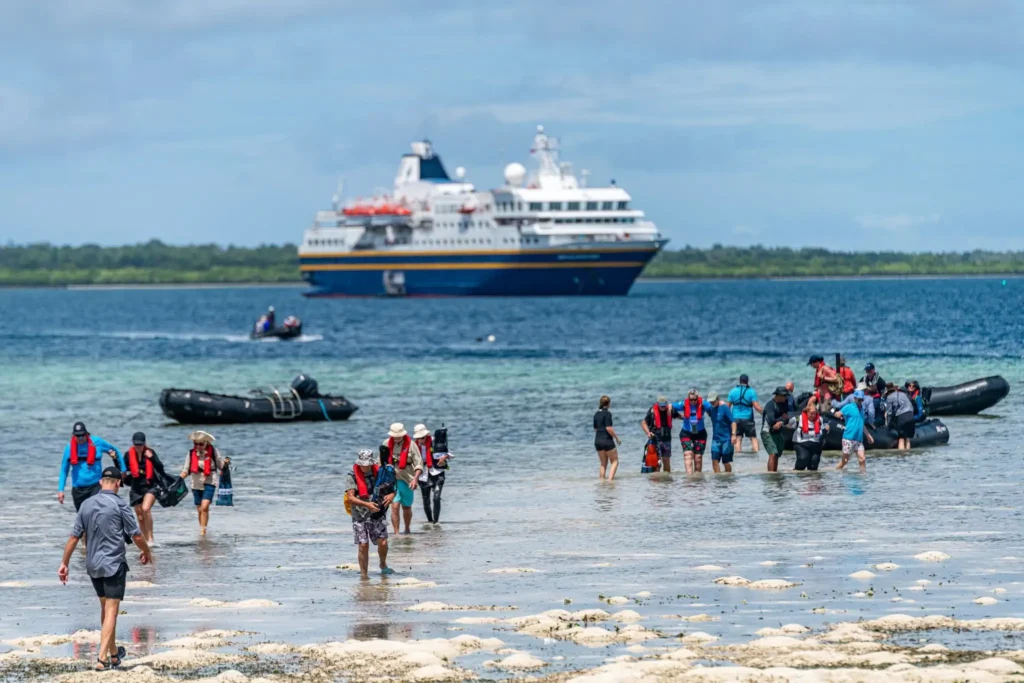
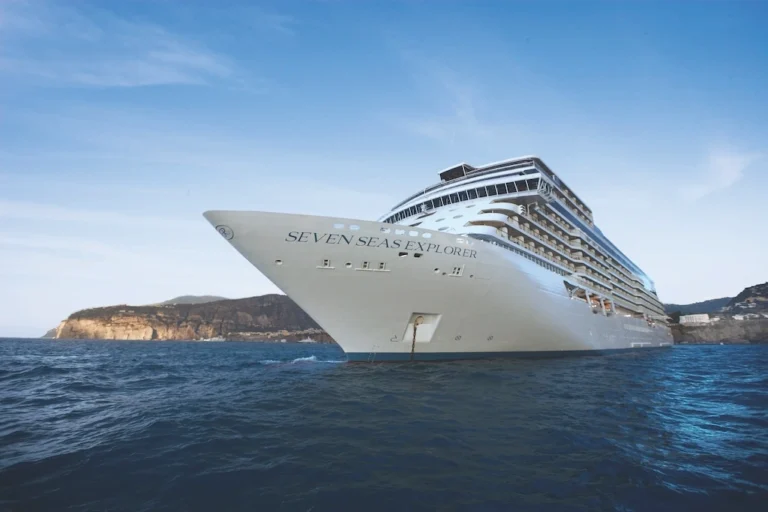
It’s the fourth day of my fascinating 15-day Heritage Expeditions cruise from Bali to Papua New Guinea, a journey that is not without significance. It’s the inaugural foray of the New Zealand-based expedition cruise company’s new vessel, the 140-passenger Heritage Adventurer, under the Heritage flag. The new vessel is over double the size of the company’s previous ships and arrives as the adventure cruise line tries to play catch-up after its previous Russian Arctic season was cancelled.
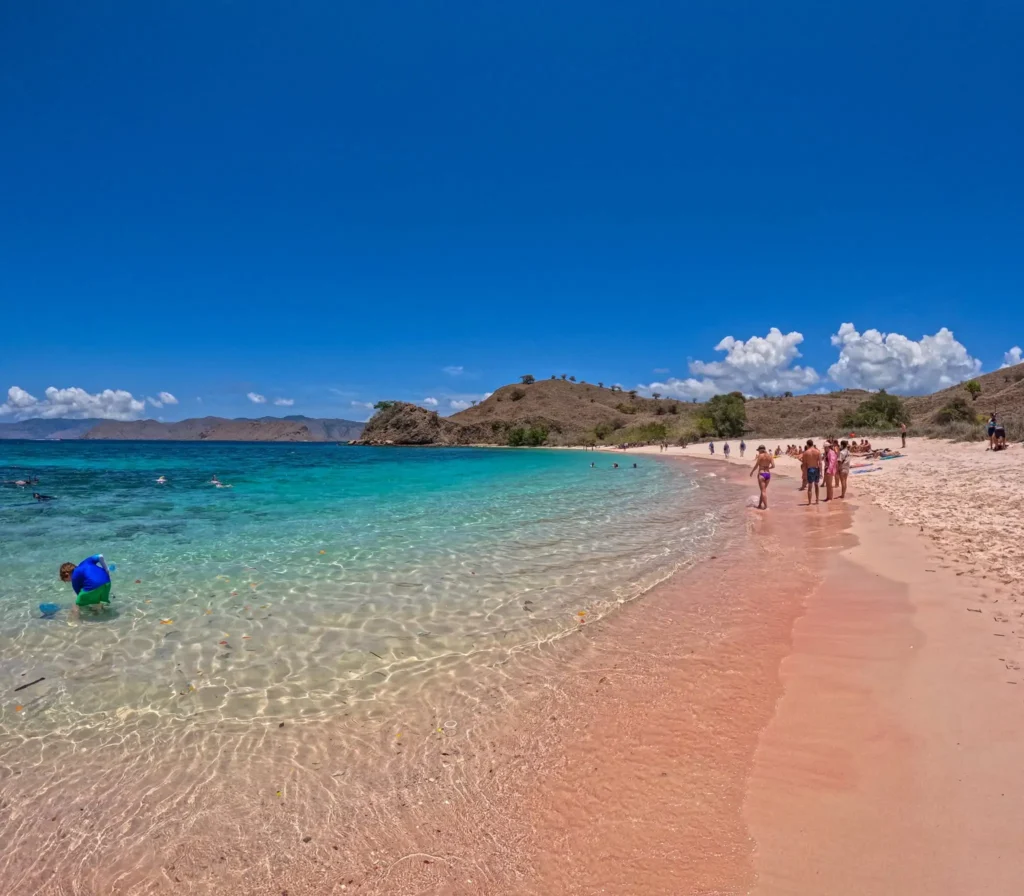
Eastern Indonesia is a fascinating and relatively untouched corner of the globe. With towering active volcanoes, countless coral-wreathed islands, a vibrant marine environment, and an incredibly diverse cultural tapestry, it’s slated to be one of the hottest destinations in the world in 2027, with many visitors combining excursions to Komodo — as famous for its diving and pink-sand beaches as it is for its insidious lizards – with time spent in Raja Ampat (more on that in a minute).
The inaugural journey isn’t without its challenges. A few days out from our departure, Heritage notified passengers that the Heritage Adventurer prop had been snagged on a ghost net as it journeyed south towards Indonesia. The subsequent time in a dry dock in Singapore meant the company’s expedition team needed to frantically find accommodation in Bali, flights east to Labuan Bajo and the means to continue the itinerary while the vessel played catch-up.
However, all those years of cruising experience paid off and after two stunning days in Komodo, including a pair of spectacular beachfront dinners set against glorious sunsets, we joined the ship and continued northeast, literally into the unknown.
Wakatobi: Indonesia’s Underwater Nirvana
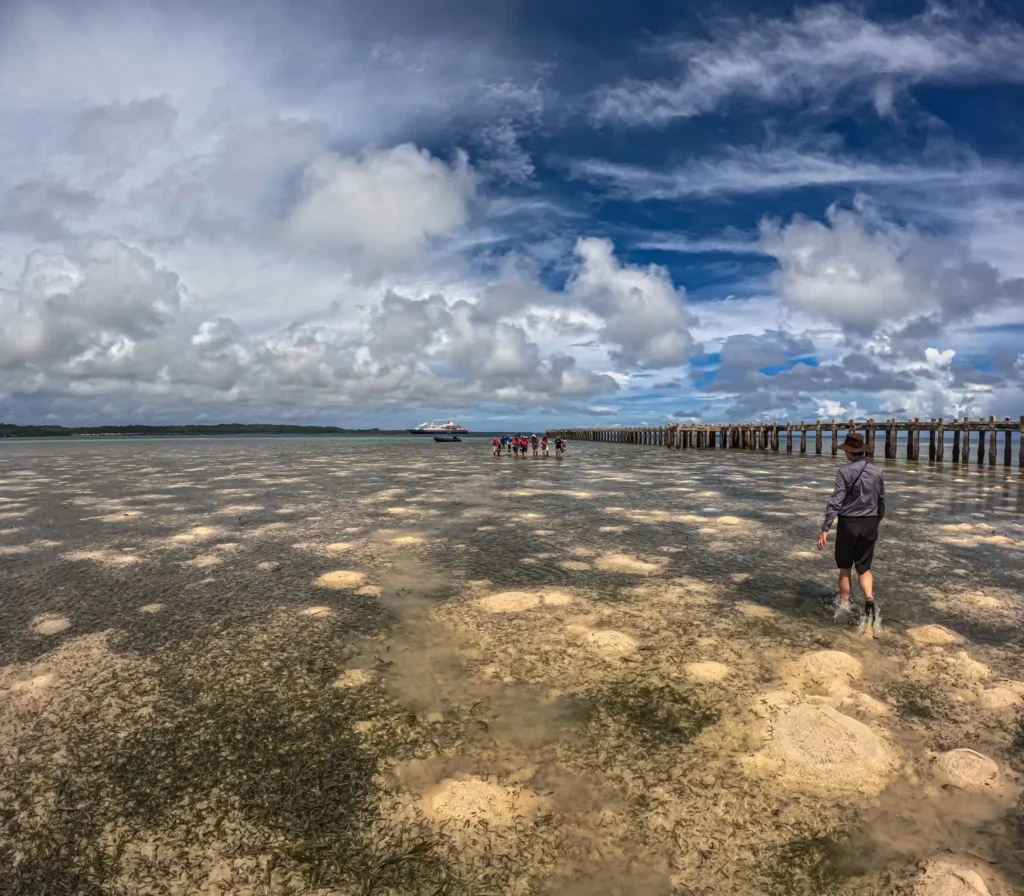
A few days later, we arrive in remote Wakatobi. Indonesia’s youngest regency (the name is a portmanteau of the four main Tukangbesi Islands: Wangi-wangi, Kaledupa, Tomia, and Binongko), Wakatobi, is another destination whispered by awe-stricken divers and intrepid adventurers, and one that, at the time of writing, was only accessible from the sea.
The third largest marine park in Indonesia’s expansive 17,000-island strong archipelago, Wakatobi is a UNESCO Biosphere Reserve located to the southeast of Sulawesi and one Jacques Cousteau described as an ‘underwater nirvana’ thanks to its 750 coral species (compared to 50 in the Caribbean) and 942 fish species.
Heritage Adventurer anchors off the tiny island of Hoga, where the avid birders among the group delve into the forest in search of Island Monarchs, Grey-streaked Flycatchers, Black-naped Fruit Doves and Olive-backed Sunbirds, while the rest of us don rash shirts and snorkels and wade through dancing seagrass to a mesmerising reef punctuated with chocolate chip star fish, giant clams, and even a shy banded sea krait.
Buru Island: A First Landing and a Darker History
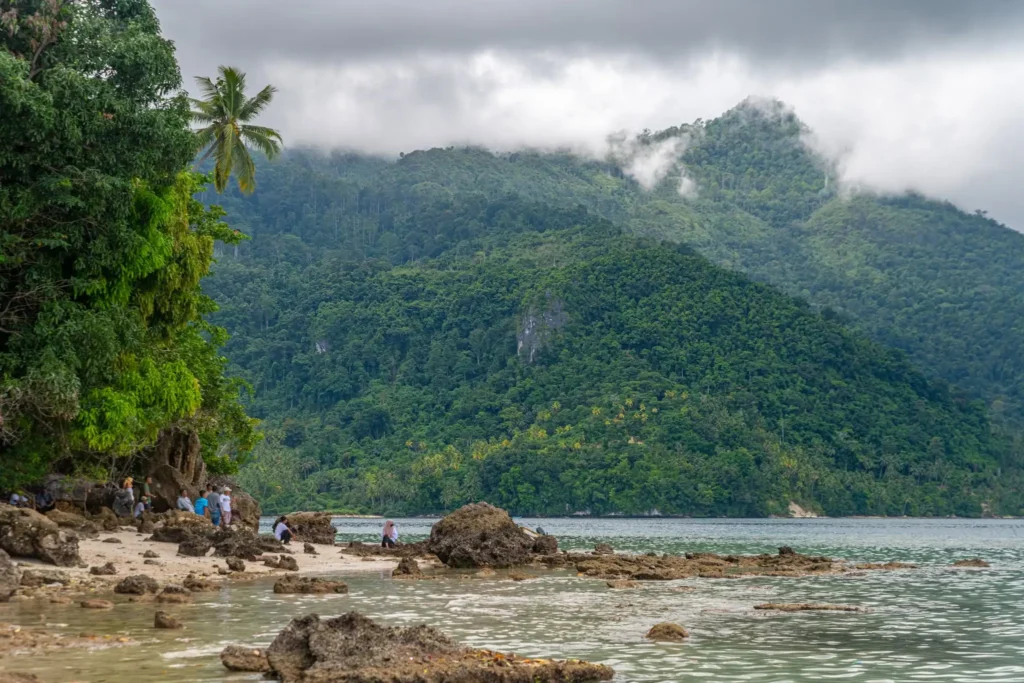
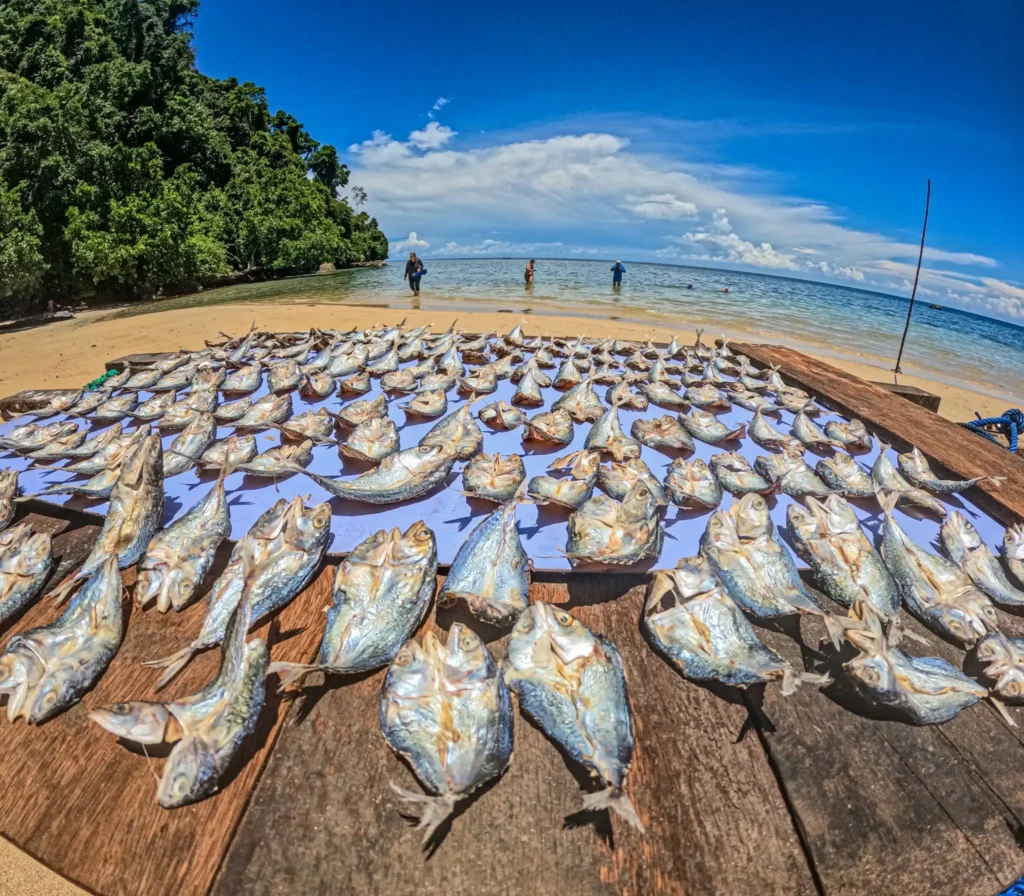
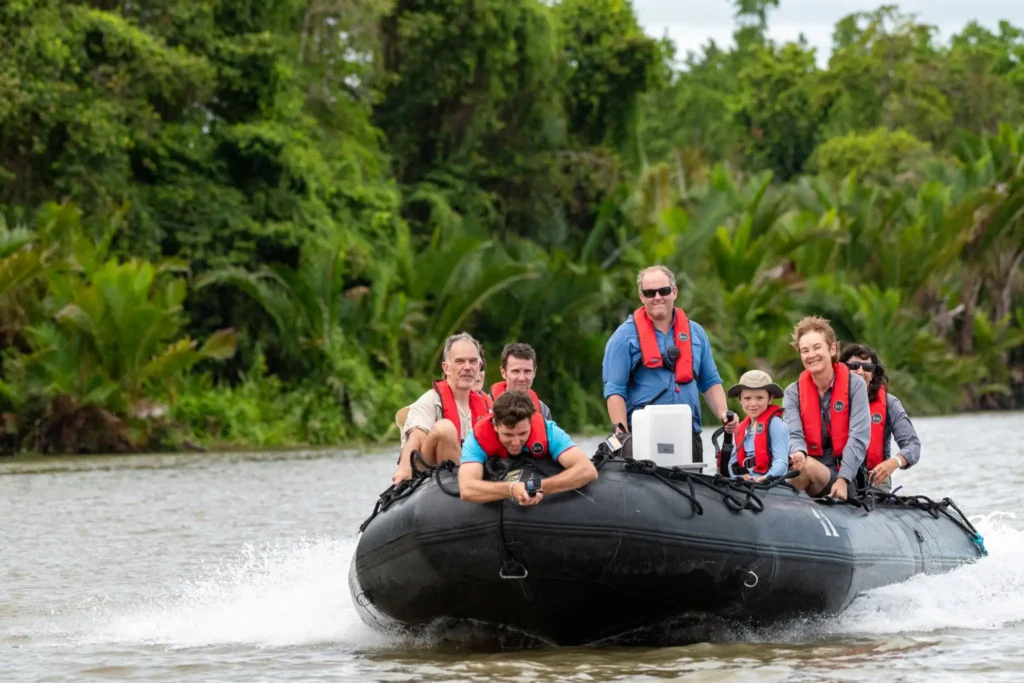
This is a part of Indonesia’s Coral Triangle that rarely sees foreigners, as is evidenced by the next day, as our zodiacs skim through turquoise water bound for Buru Island, where our arrival represents the first international expedition ship to ever visit. On the beach of Pulau Tomah, a tiny islet off Buru’s west coast, it’s standing room only as over 1,000 locals greet us with dancing and singing. Whole families have gathered and more arrive on slender fishing skiffs, their bows slicing through some of the clearest water I’ve ever seen.
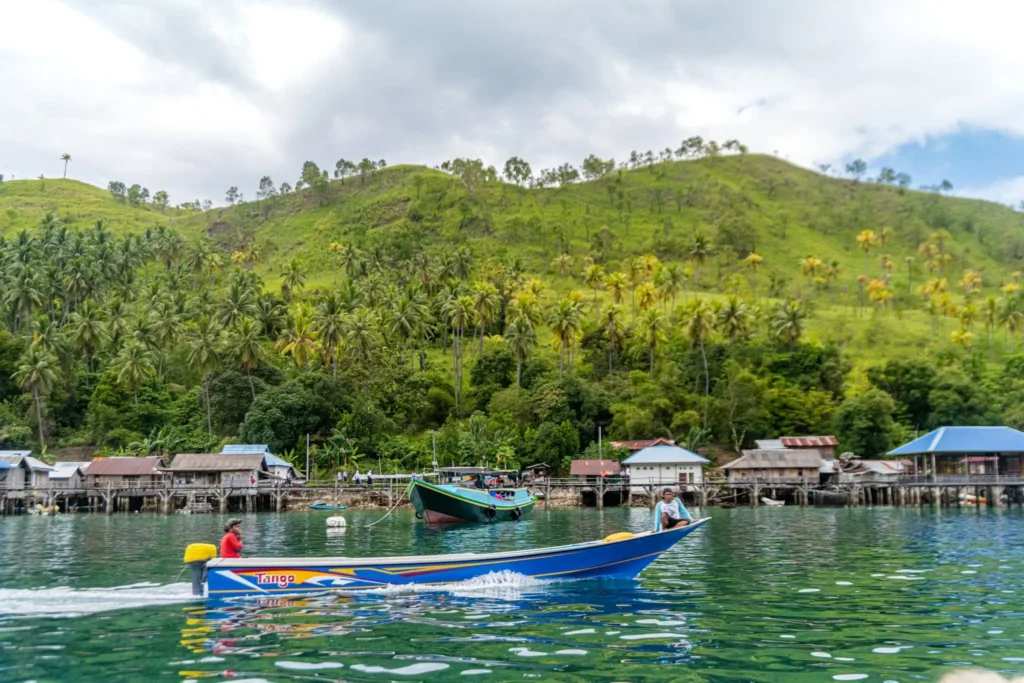
Buru is the third largest island in the remote Maluku chain and is home to indigenous Buru, as well as ethnic Lisela, Ambelau and Kayeli people who have migrated over generations to its steep jungle-clad peaks from points across the Banda Sea.
With mountains wreathed in mist and tumbling down to coral gardens, it’s a breathtakingly beautiful destination but not one without its darker chapters: Buru was once the site of a vast prison complex that held political prisoners, including writer Pramoedya Ananta Toer, who, refused writing materials, dictated his acclaimed novel series Buru Quartet to fellow prisoners who would write his words down and smuggle them out.
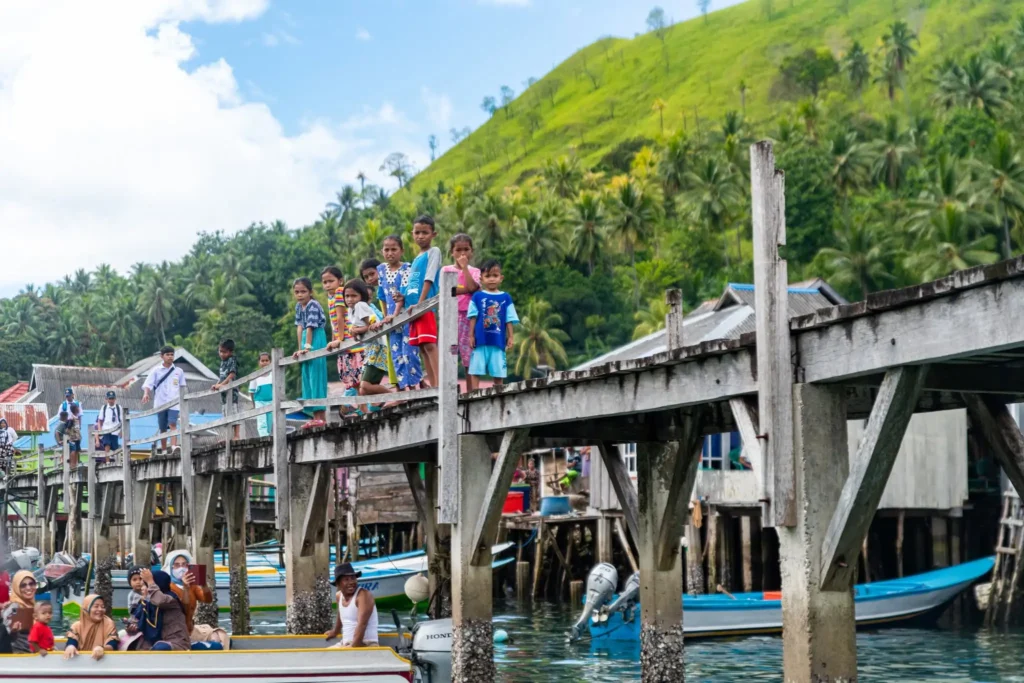
After the warm arrival on the beach, where Heritage guests pose for countless selfies with the locals and watch dances performed by local school children, the birders make for a logging path in search of Amboyna Cuckoo-doves, Red-cheeked parrots, and Black Sunbirds, while others take to the zodiacs and explore Buru’s coastline.
Much of the colourful village of Pasir Putih seems to be perched on stilts, and we watch girls skip along a network of creaking, weathered boardwalks to school, their immaculately white hijabs brilliant in the mid-morning sun. Nearby, fishermen mend nets and giggling children take turns diving into the sea, shoals of reef fish darting in every direction with each new plunge.
Crossing the Equator Towards Raja Ampat
Our journey is packed with truly unforgettable experiences both on and off the ship. When we cross the equator, as per timeless tradition, one of the expedition staff, standing in for King Neptune, emerges from the ship’s plunge pool and slaps a cold fish across the face of the uninitiated (they’re rewarded with a shot of rum). And as the sun wanes in the sky, more than 20 migrating sperm whales escort us east towards the scattering of islet jewels that is Raja Ampat, one of Indonesia’s most coveted destinations.
Raja Ampat and Wayag Island’s Limestone Karsts
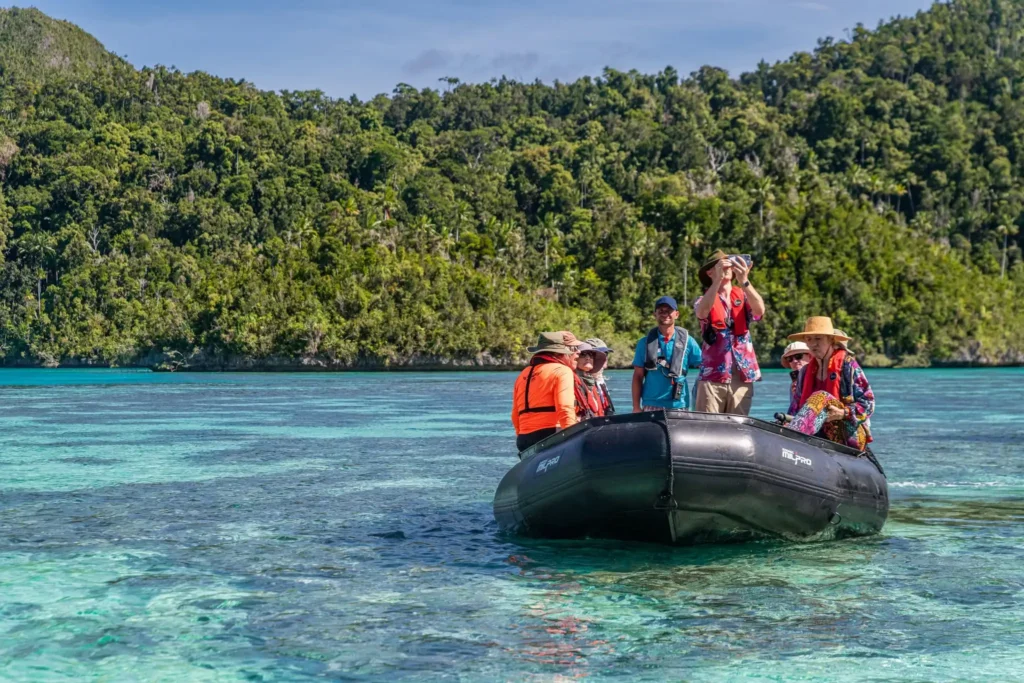
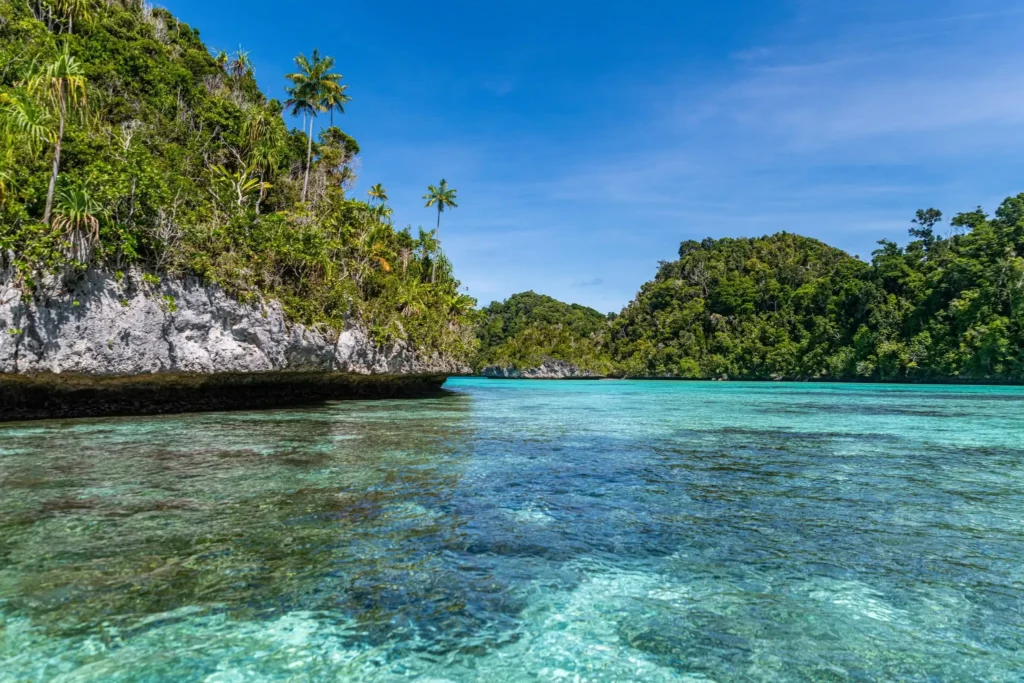
Raja Ampat has little in the way of infrastructure, so it can only be explored by ship, with many visitors opting for multi-day liveaboards that give access to the best diving spots, including breath-taking Wayag Island, where we cruise through an otherworldly landscape of conical limestone karst islands that jut abruptly from azure seas.
As the sun mellows in the sky, there’s time to climb one of the peaks for mesmerising 360-degree views or to soak in the bathtub warm seas and snorkel over expansive forests of stagshorn coral while Torresian Crows and Moluccan Starlings flitter overhead.
Birds of Paradise in the Arfak Mountains
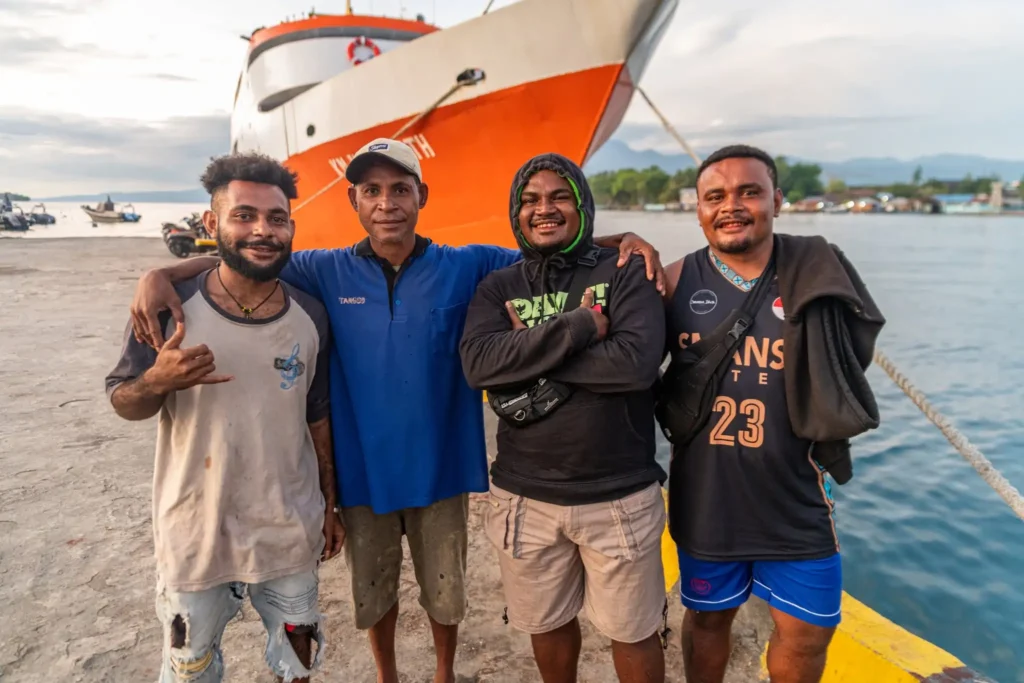
While the diehard birders rise well before dawn the next morning and delve into the dense forests of Waigeo Island in search of rare Red and Wilson’s Birds-of-Paradise, the rest of the ship’s complement tries its luck the next day in Manokwari, our first port on the island of Papua, where we venture by 4×4 high into the Arfak Mountains.
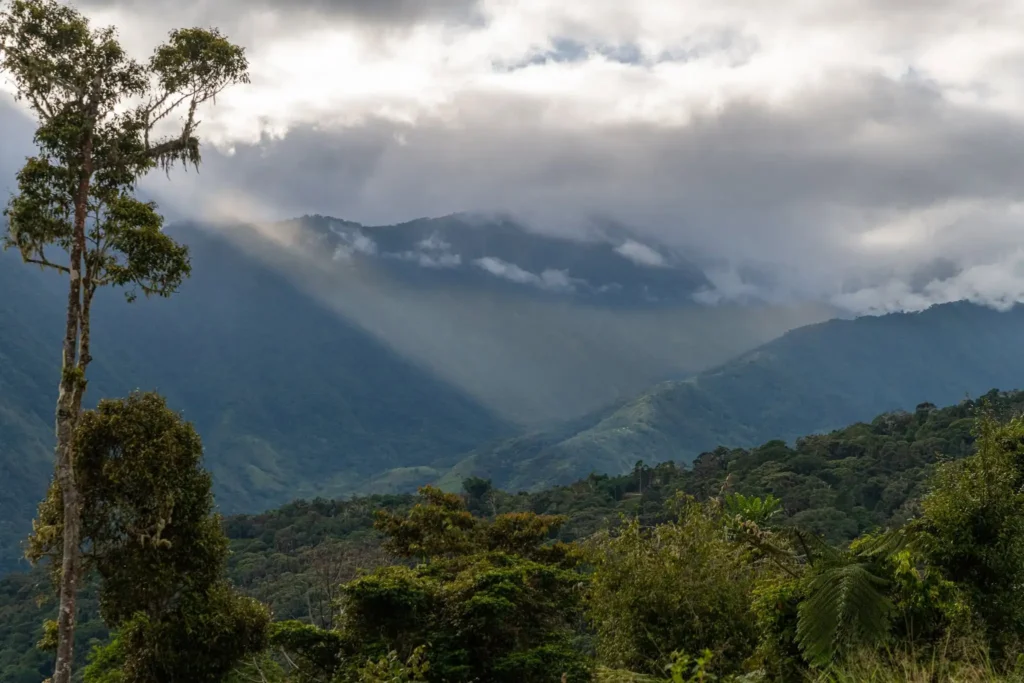
Up in the misty peaks, at a tiny hamlet that clings to the summit of one vertiginous ridge, I follow a local guide into the primordial rainforest in search of Magnificent, Superb, Western Parotia and Brown Sicklebill Birds-of-Paradise, Olive-crowned Flowerpeckers, and the famed Vogelkop Bowerbird, which builds intricate structures over a metre high to attract mates.
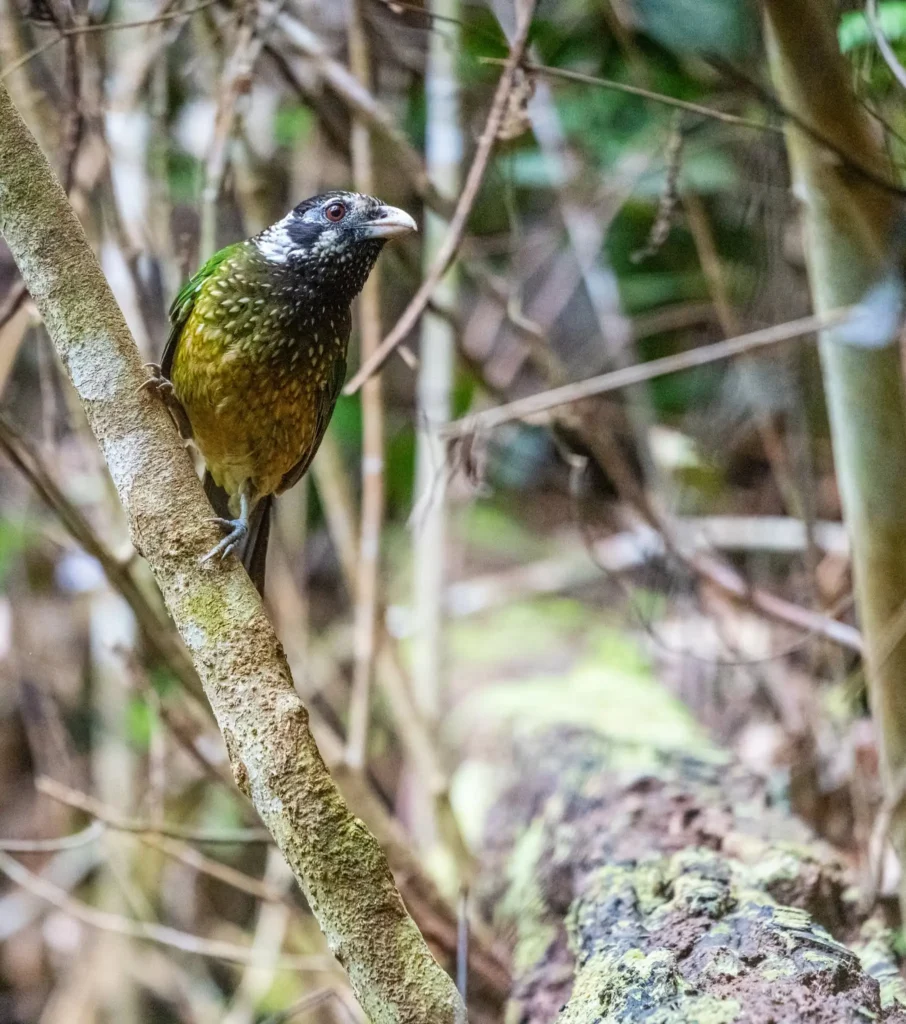
Just when I begin to doubt that I have the patience for true twitchery and as the walls of my tiny palm-frond hide start to close in, I’m rewarded with the arrival of an inquisitive Black-eared Catbird, morning light penetrating the thick jungle canopy catching the brilliant emerald of its breast as it pecks at our offering of Buah Merah, a large red seed pod used for traditional medicine in the mountains of Papua.
Swimming with Whale Sharks in Cenderawasih Bay
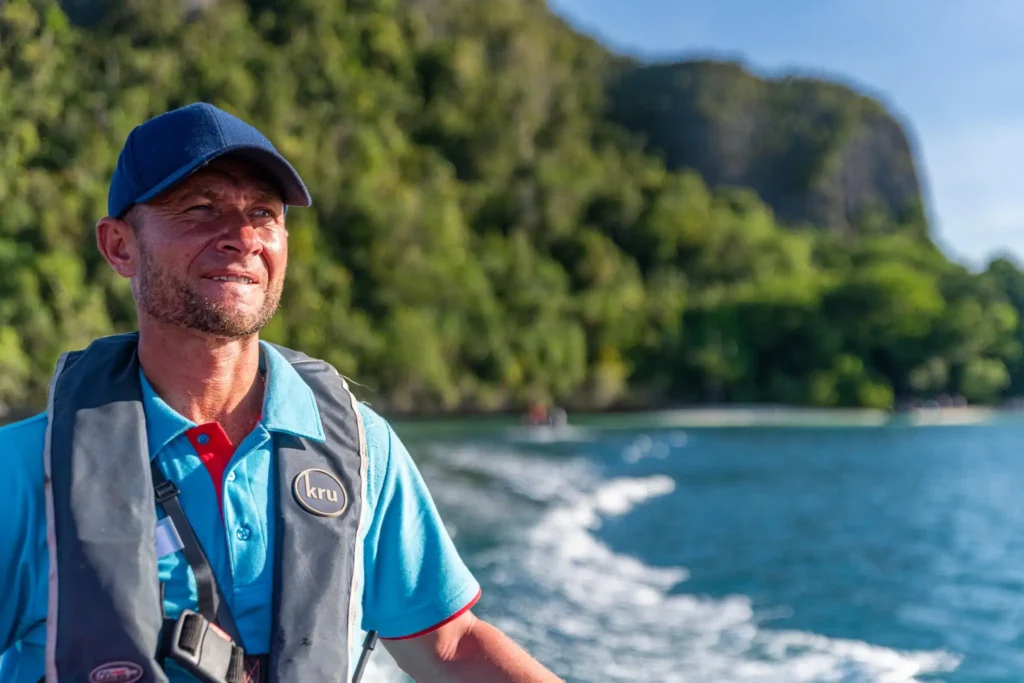
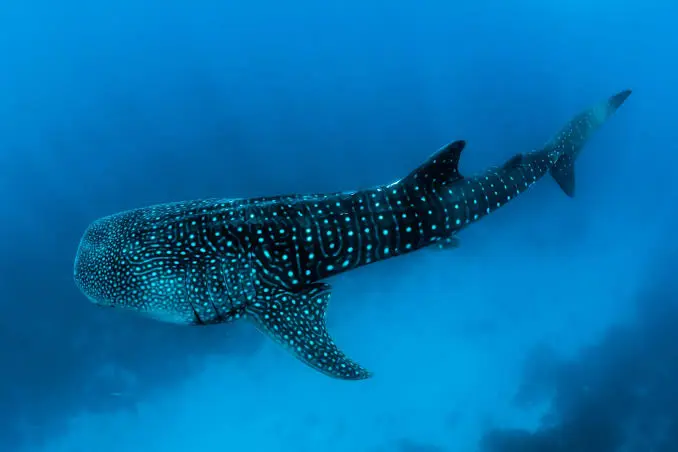
Wildlife is a massive drawcard to this part of Indonesia, both on land and in the vibrant seas. In serene Cenderawasih Bay, there’s the unforgettable opportunity to snorkel with whale sharks attracted to the lights and bait fish of a bagan, a traditional floating fishing platform.
Taking turns to slip into the seas surrounding the platform, we join a trio of whale sharks as they feed, vortexes forming in their mouths as they take huge gulps. It’s impossible not to be humbled by the size and grace of these gigantic yet peaceful fish, who are now increasingly protected by the fishermen who once threatened their numbers.
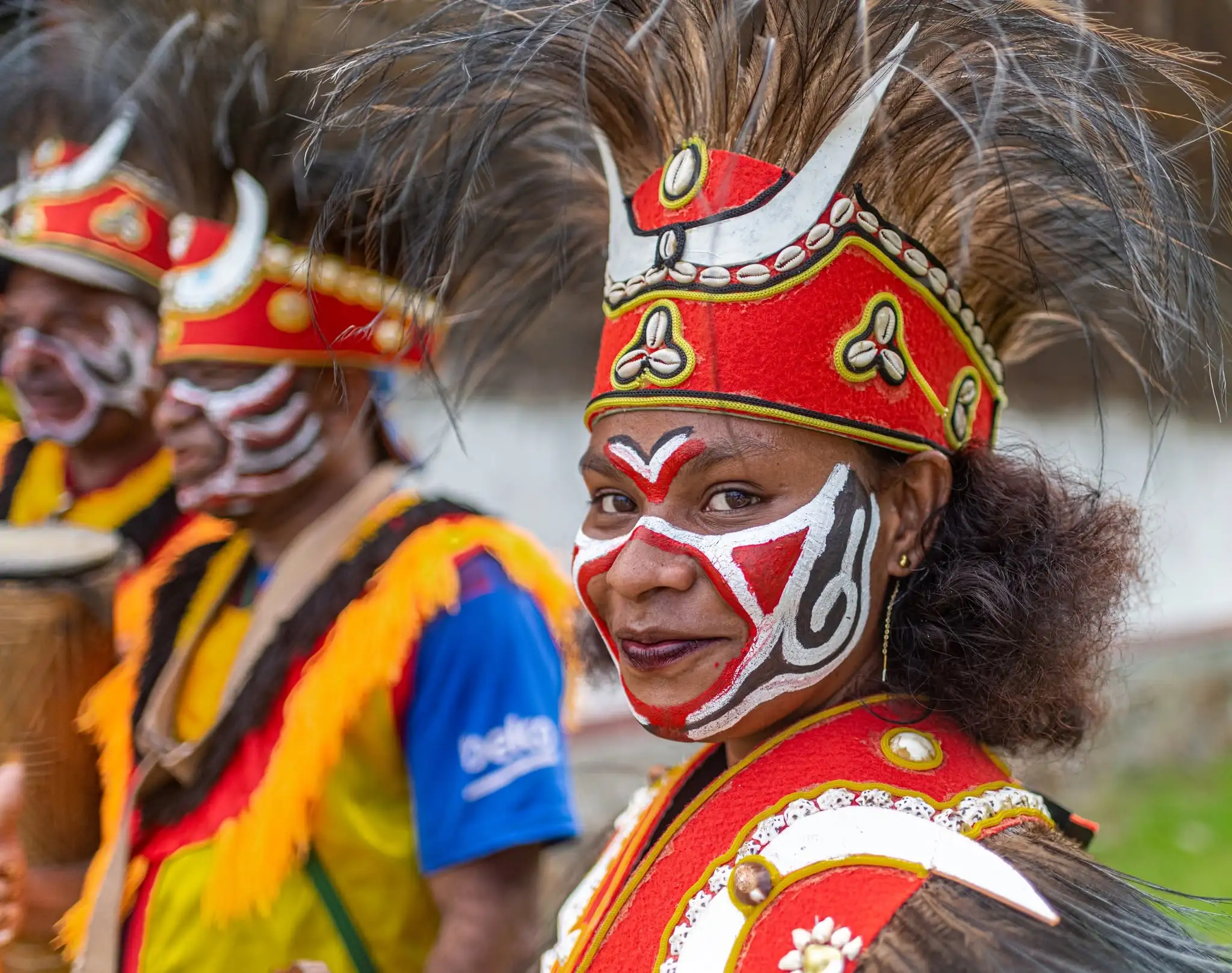
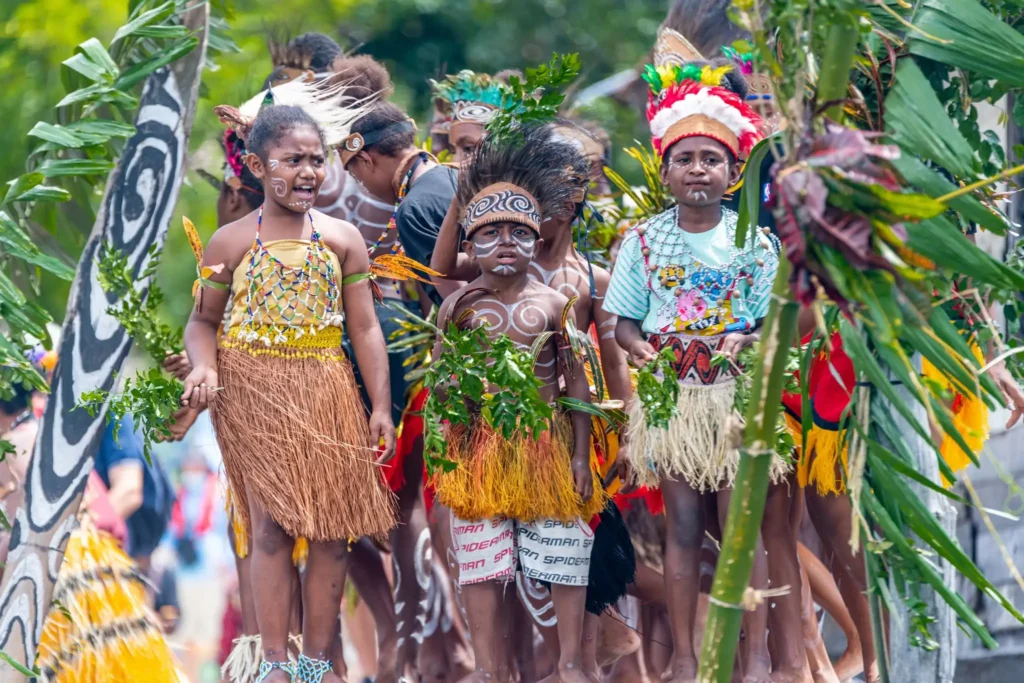
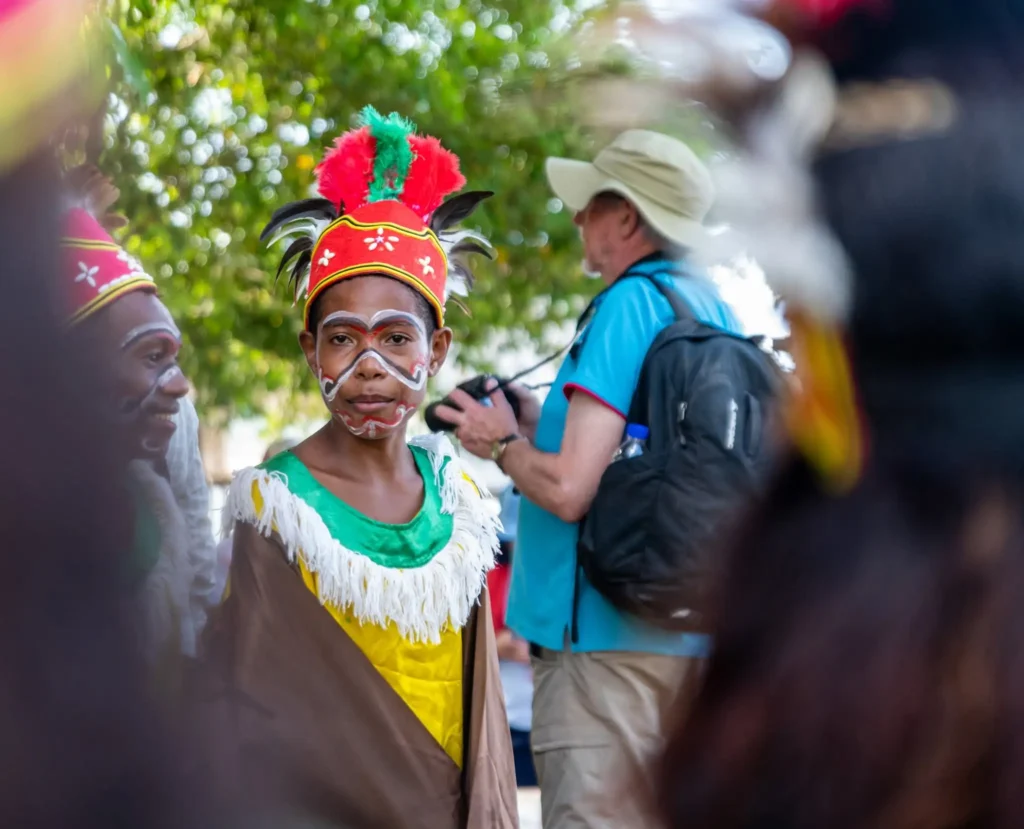
That evening, as the sun grows heavy in the sky, we’re warmly welcomed by the tiny community of Kwatisore, on the shores of Cenderawasih Bay, where school children, their faces streaked with red and yellow paint, perform traditional dances inspired by Papua’s rarest tropical birds. We’re among the first foreigners many have seen, and the visit hints at the positive influence tourism could have in this remote corner of the Pacific.
Biak’s Wartime History and Lake Sentani’s Island Villages
Our last stops in Indonesia entail a visit to Biak’s brooding Binsari Cave, a haunting chapter in the region’s WWII history where thousands of Japanese soldiers held out against American forces at the tail-end of the conflict before the extensive cave complex was bombed, leading to thousands of deaths.
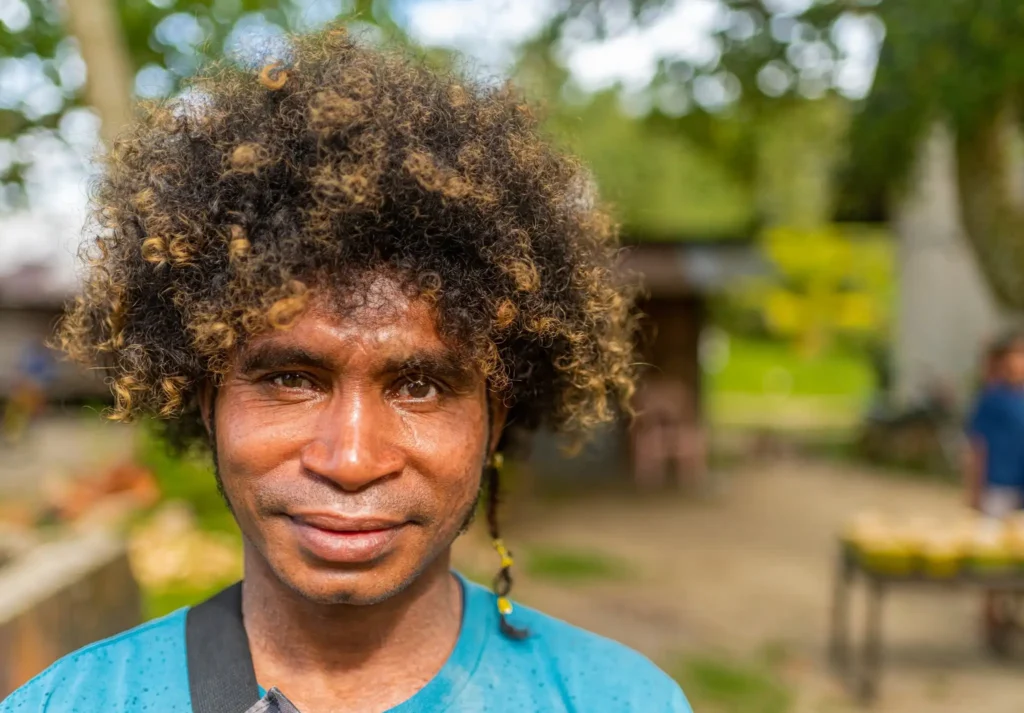
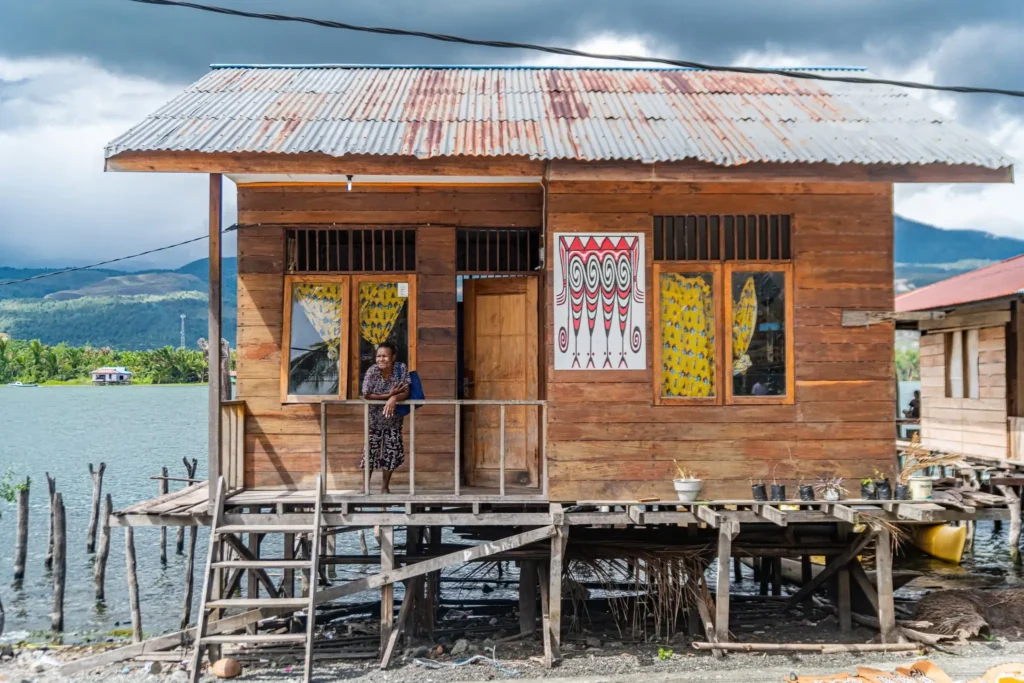
And in Papua province’s remote capital, Jayapura, we visit the communities of Lake Sentani; set against the undulating peaks of the Cyclops Mountains, the lake boasts 22 small islands, and on one, in the village of Assey, young men and women perform a series of mesmerising dances to a serenade of kunda drums.
It’s a magical moment and one I hope they will have cause to perform again as increasing numbers of travellers venture east in search of unique Indonesian encounters, giant lizards be damned!
Indonesia Expedition Cruise: Frequently Asked Questions
Planning your own voyage through eastern Indonesia? Here are answers to the questions travellers most often search for before booking a Komodo, Raja Ampat or Papua expedition cruise.
What is the best time of year for an Indonesia expedition cruise?
Most operators, including Heritage Expeditions, run eastern Indonesia itineraries between October and December, when seas are calmer and wildlife sightings — including migrating whales and nesting seabirds — are at their most reliable.
How long does an eastern Indonesia expedition cruise take?
A full transit from Bali to Papua New Guinea, taking in Komodo, Wakatobi, Raja Ampat and Cenderawasih Bay, typically runs around 15 days, though shorter regional itineraries covering just Komodo or Raja Ampat are also available.
Is it safe to see Komodo dragons in the wild?
Yes, provided you’re accompanied by an experienced park ranger. Guides carry a forked bamboo stick to keep a safe distance between visitors and dragons, and independent exploration of Komodo National Park is not permitted.
Do you need a visa to visit Indonesia for an expedition cruise?
Most nationalities can obtain a visa on arrival or an e-visa for short tourist stays in Indonesia, though requirements vary by passport and can change, so it’s worth checking Indonesia’s official immigration site before departure.
What wildlife can you see on a Raja Ampat and Papua expedition cruise?
Highlights include Komodo dragons, whale sharks in Cenderawasih Bay, migrating sperm whales, banded sea kraits, and an extraordinary range of birdlife, including several species of birds-of-paradise found in the Arfak Mountains and on Waigeo Island.
Why is Raja Ampat only accessible by expedition ship or liveaboard?
Raja Ampat’s scattered islands have very limited roads, accommodation and infrastructure, so the most practical way to reach its remote diving and snorkelling sites, including Wayag Island, is by expedition vessel or liveaboard.
Is Wakatobi worth visiting on an Indonesian cruise itinerary?
Absolutely — Wakatobi is one of the world’s richest marine parks, home to 750 coral species and 942 fish species, and remains one of the least-visited regions in Indonesia’s Coral Triangle, making it a genuine highlight for divers and snorkellers.
How much does a luxury Indonesia expedition cruise cost?
Cabin fares for a multi-day eastern Indonesia expedition cruise with an operator such as Heritage Expeditions start from around US$11,295 per person, with costs varying by cabin category, itinerary length and season.
What should I pack for an eastern Indonesia expedition cruise?
Lightweight, breathable clothing, reef-safe sunscreen, a rash shirt for snorkelling, sturdy walking shoes for jungle treks, binoculars for birdwatching, and a dry bag for zodiac landings are all essential for this itinerary.
If you’re contemplating an expedition cruise, check out our guides to Arctic expedition cruises, Antarctic expedition cruises, and the best expedition cruise destinations and cruise lines, as well as a few that have strong green credentials. Also, don’t forget to brush up on your polar photography and polar videography skills, and to pack the polar essentials with our in-depth guides.