
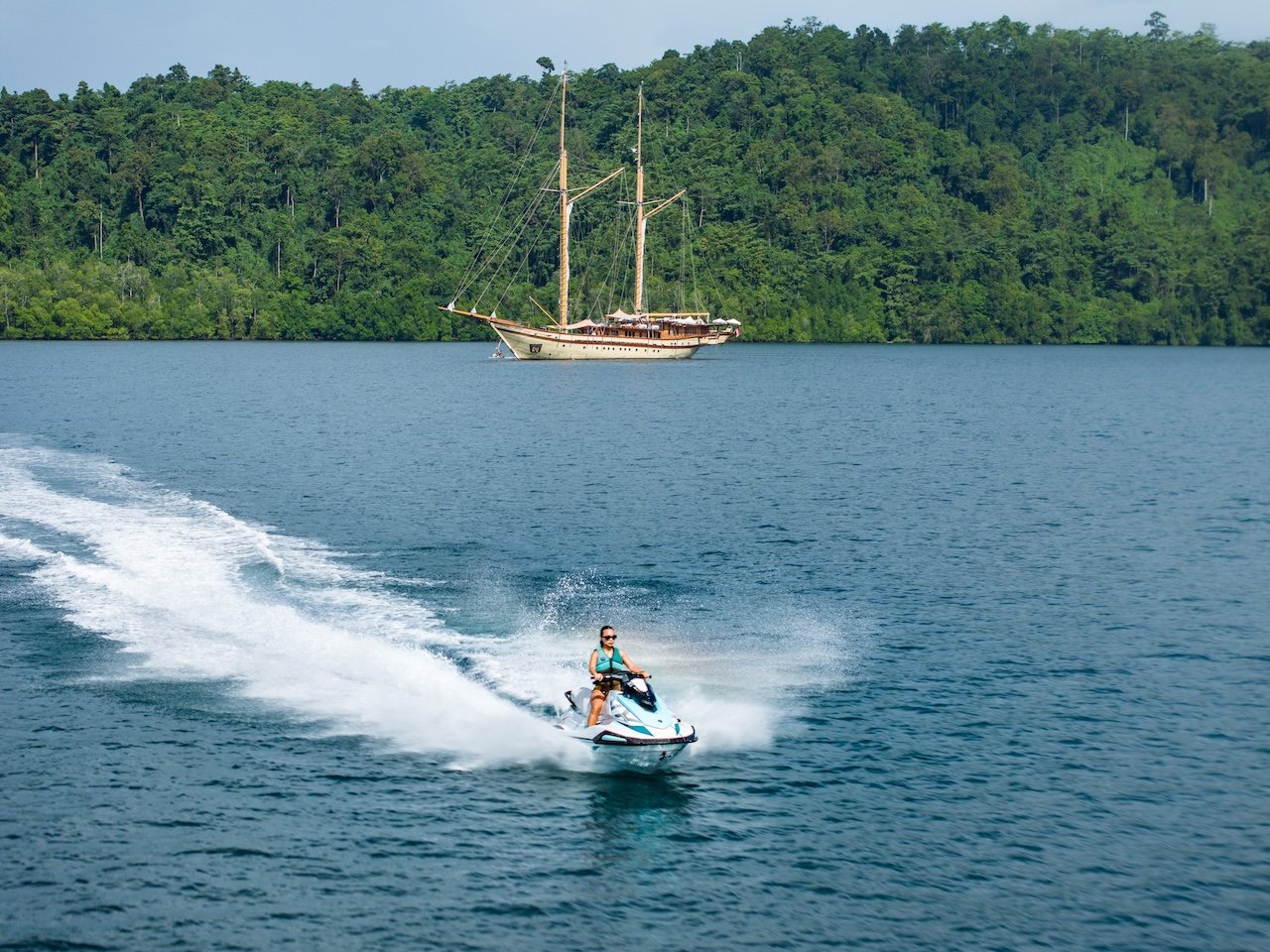

Nick Walton sails through the remote Eden of Raja Ampat aboard the spectacular sailing superyacht Lamima.
Silence is a pretty rare thing these days. Sure, we might have moments of tranquillity from time to time, moments of mental respite, but in the modern world it is increasingly hard to find. However, it is silence, in all its profound glory, that greets us as the engine of our tender dies and we drift into a lagoon wreathed by towering limestone karsts that plummet down to deep topaz water.
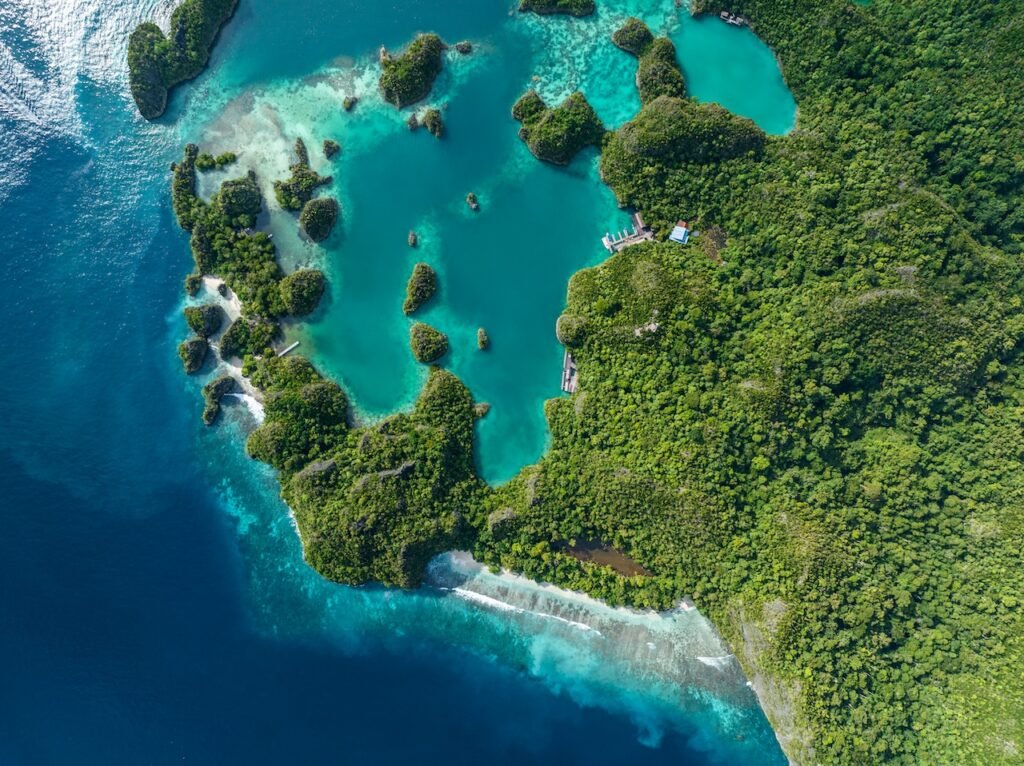
Silence is par for the course here in one of Indonesia’s most fragile maritime reserves. Perched at the eastern end of an archipelagic army of 17,000 islands that marches over 5,000 kilometres east to west, Raja Ampat is a welcome haven far from the bedlam of Asia’s frantic cityscapes.
It has also, despite its remoteness, become one of the country’s hottest destinations among eco-tourists and well-heeled adventure seekers. After touching down in Sorong, the sleepy capital of Indonesia’s Southwest Papua province (and a five-hour domestic flight from the distant capital, Jakarta), I follow a gaggle of excited foreign tourists, kitted out in new Gore-Tex and hauling shiny Rimowa luggage, who file out to meet guides from the armada of liveaboards and private charter yachts that visit this far-flung outpost between October and April.
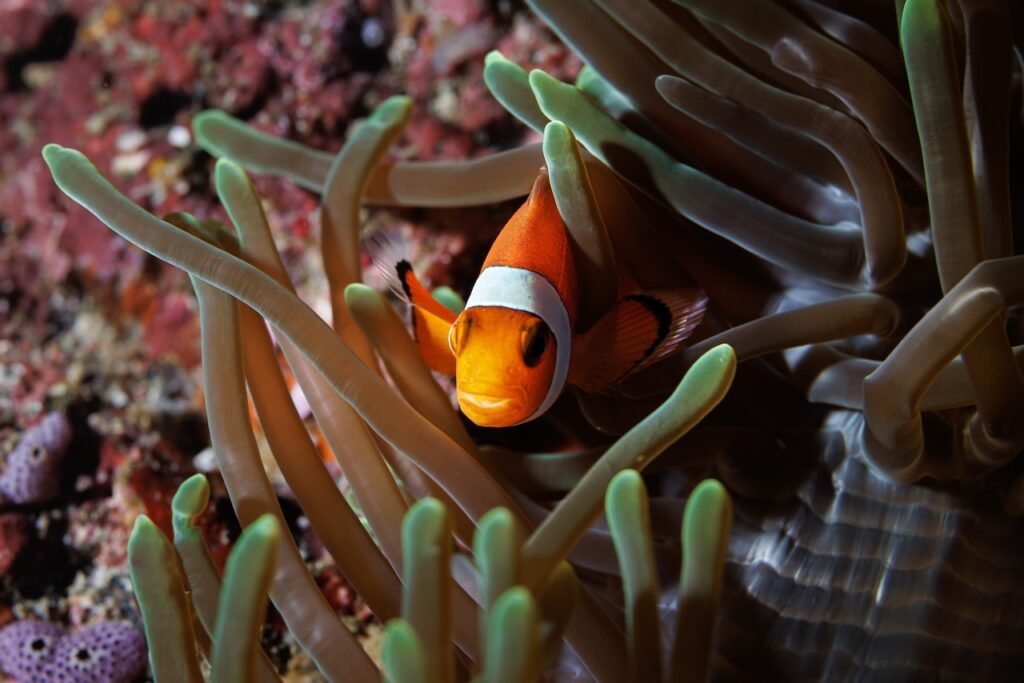
Raja Ampat (or the ‘Four Kings’), a 4.6 million hectare UNESCO-designated Biosphere Reserve in the heart of the Coral Triangle, comprises more than 1,500 islands, delivering the highest known concentration of marine life on the planet, from over 1,500 fish species and 75 per cent of the planet’s coral species to whales, manta rays, whale sharks and turtles, and countless remote communities where traditions stay unperturbed by the tides of time. And there’s no better way to explore this aquatic wonderland than by luxury sailing yacht.
Lamima: The World’s Largest Wooden Sailing Yacht
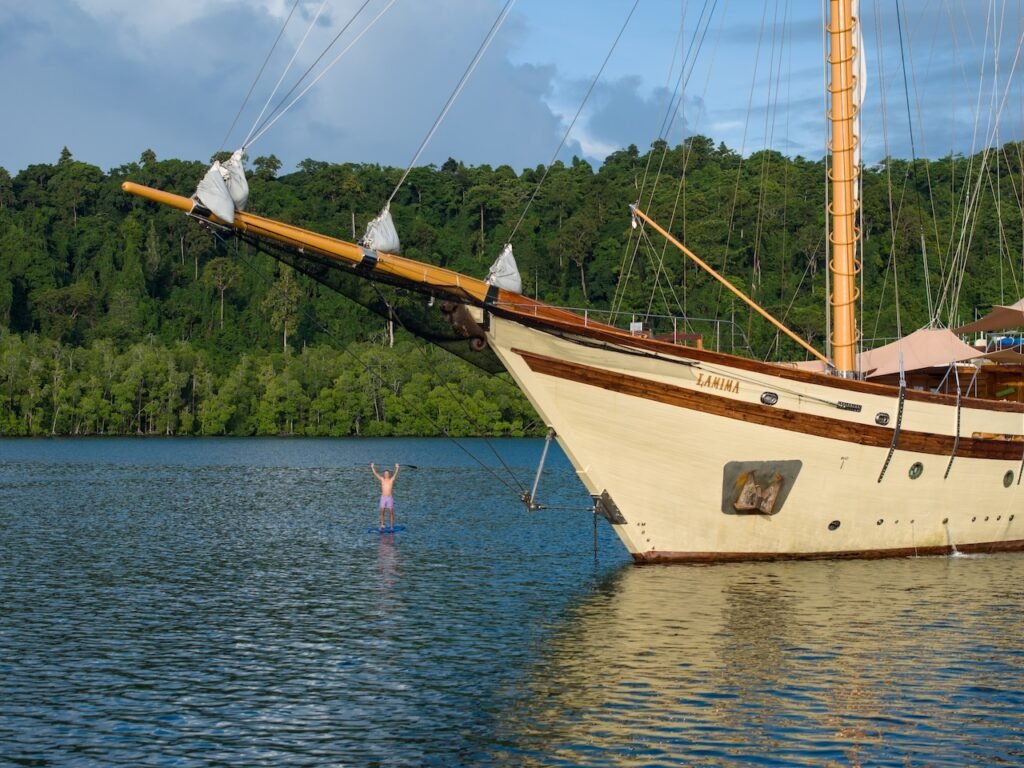
While there are a few simple guest houses and dedicated dive resorts perched on some of the larger islands, the best way — by far — to explore Raja Ampat is by luxury yacht, and if you’re looking to do it in style, there’s no vessel like the Lamima, which, at 65.2 metres, is the largest wooden sailing yacht in the world.
Launched in 2014, the Lamima has become synonymous with exclusive charters through Indonesia’s eastern frontiers, from the dragon-haunted shores of Komodo to the labyrinthine waterways of Wayag. Modelled on the phinisi, the two-masted ironwood sailing vessels built by South Sulawesi’s Bugis and Konjo communities, Lamima pays tribute to Indonesia’s rich maritime history.
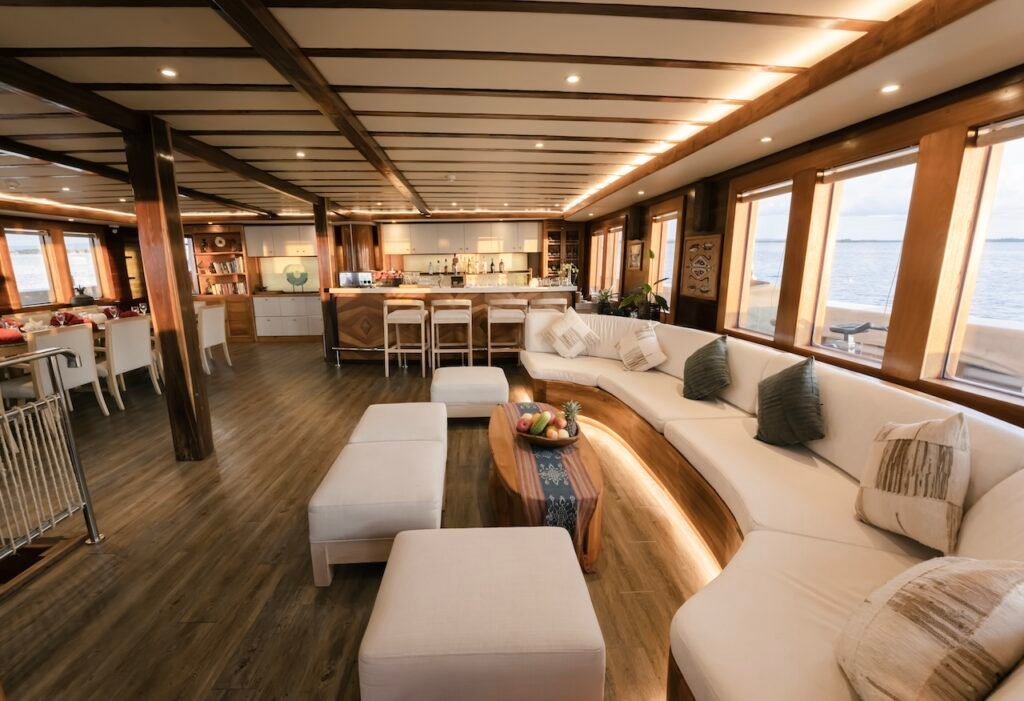
However, she’s also no stranger to modern creature comforts, with teak-lined superyacht-level accommodations for 14 guests, including a glorious master cabin on the main deck, high-speed Starlink connectivity, glorious alfresco dining, and an open-air massage suite hidden away at the stern. Below decks, a myriad of sea toys — from powerful jet skis and stand-up paddleboards to a full dive set-up, kayaks and tenders — await guests looking for thrills on and off the water.
Guests are also doted on by a crew of 20 that includes dedicated wellness therapists, dive guides, chefs and bartenders only too ready to whip up a round of Hemingway Daiquiris. Among the region’s many phinisi-styled charter yachts, Lamima is the uncontested queen.
Diving into Misool: Raja Ampat’s Southern Diving Mecca
After cruising through the night, we wake early off Pulau Balbulol, in southern Raja Ampat’s diving mecca of Misool. Up on deck, I join my fellow guests, which includes Jen Martin, head of expeditions for Lamima’s central booking agency, EYOS Expeditions, which specialises in the kind of bucket-list yacht charters that lead to book deals afterwards — think heliskiing in Greenland, wreck diving in the Solomons or deep-sea exploration by submersible, complete with dedicated photographers and videographers. I’d already travelled with EYOS to Antarctica and knew we were in the best of hands.
“Isn’t this just amazing?” she says as we sip fortifying Sumatran coffee as light begins to fill the sky, revealing a cluster of tiny islands that resemble lime-green wine gums perched on silky navy seas.
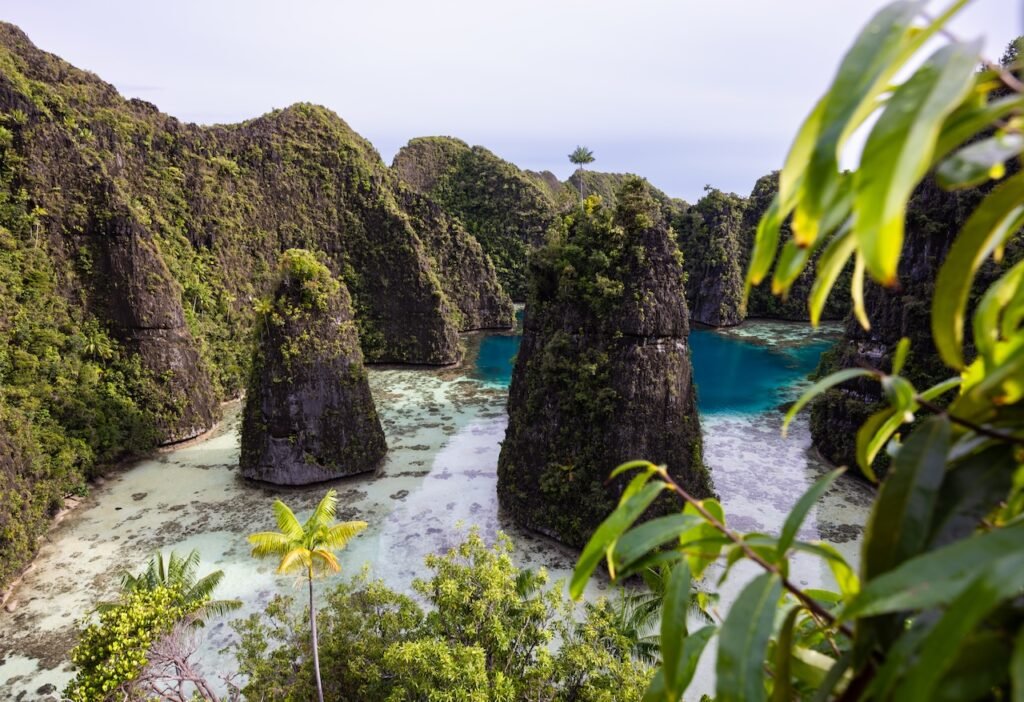
Within an hour, we’re perched in that otherworldly lagoon, a breathtaking place where time seems to stand as still as the protected waters, and where the silence competes only with the occasional call of sacred kingfishers.
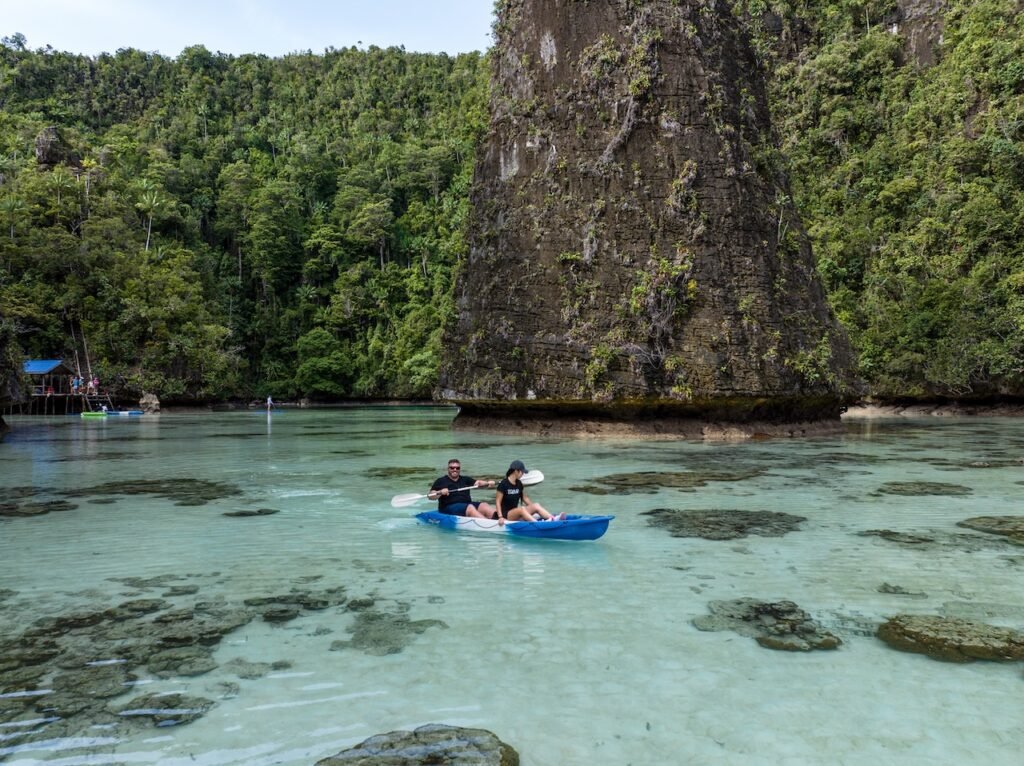
We take turns to step from the tender, some deftly onto stand-up paddleboards, others (me included) tumbling into kayaks that allow us to drift effortlessly across gardens of branch coral that seem to reach up through the water, welcoming us across the threshold into Bal Bulol, a smaller lagoon hidden behind fangs of jungle-clad limestone.
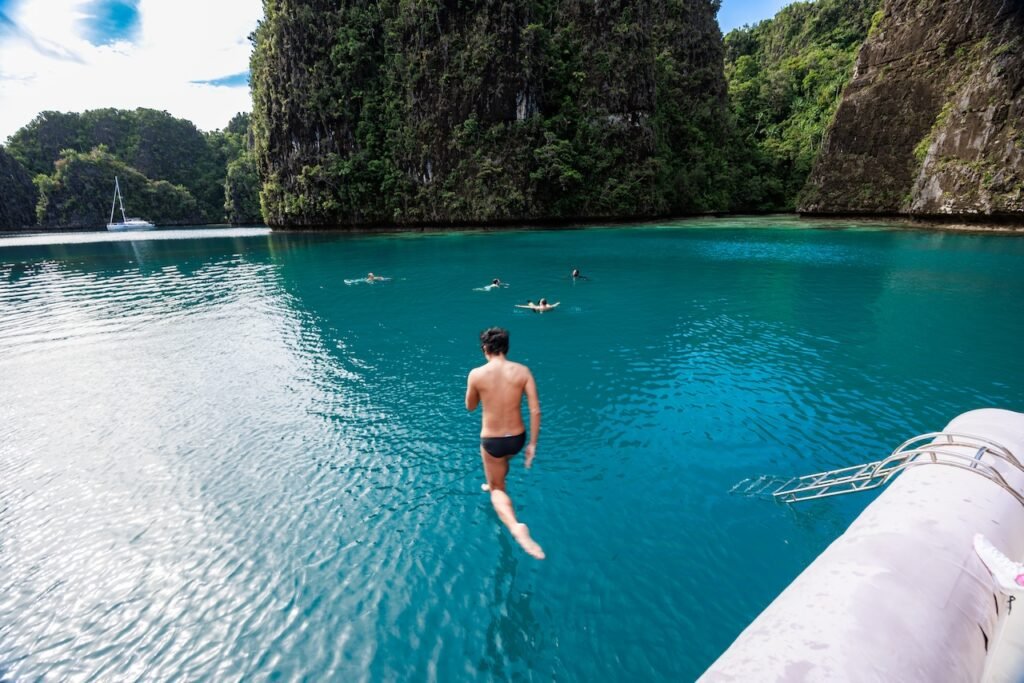
After climbing a near-vertical ladder to a vertiginous viewpoint for the chance to gaze down across the twin lagoons, and a well-earned dip in the bathtub-warm waters, we return to the Lamima for a breakfast of rambutan, mangosteen and lip-smacking salak (snake fruit), heady coffee from Papua’s Jayawijaya Highlands, and bubur ayam, Indonesian rice porridge laced with steamed chicken and fried shallots.
Exploring Raja Ampat: Caves, Jellyfish Lakes and Hidden Coves
Beyond Lamima’s elegant lines and luxurious amenities, she grants access to one of the world’s most remarkable marine environments. During our week-long journey, which lingers in the southern region of Misool, famed for its incredible soft corals and dramatic underwater caves, before returning to central Raja Ampat, best known for its strong currents and huge schools of fish, we explore both land and sea on a series of immersive excursions led by cruise director Ari, an ever-smiling native of Java.
While every Raja Ampat itinerary is at the whim of the weather, each welcomes new unforgettable adventures, from jet ski safaris through hidden coves to hikes through the Warkesi Forest Park in search of the elusive red bird of paradise.
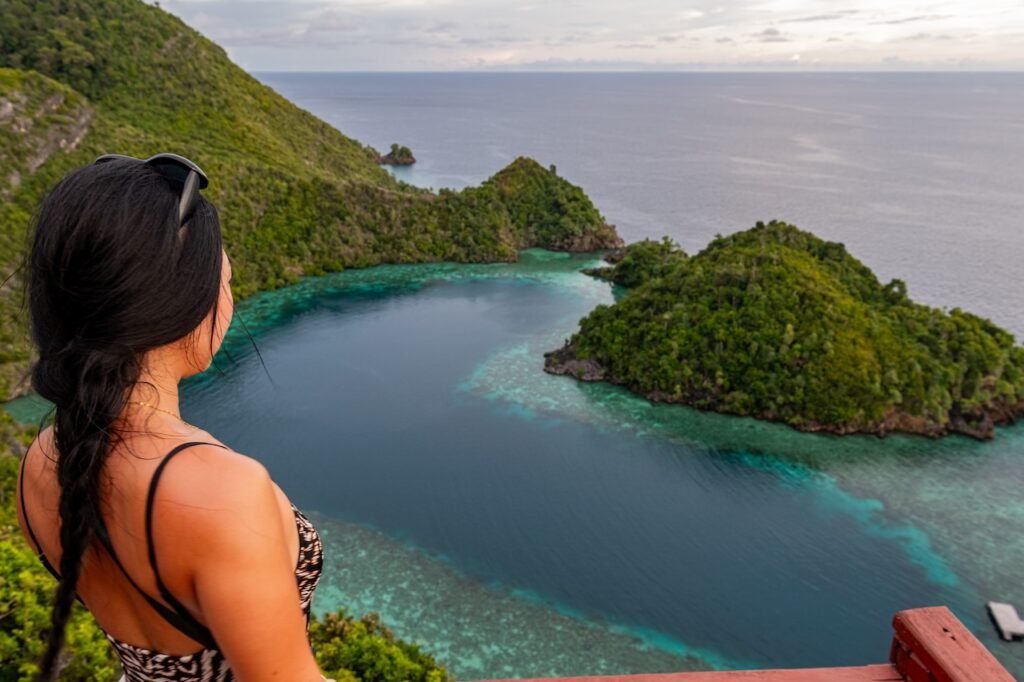
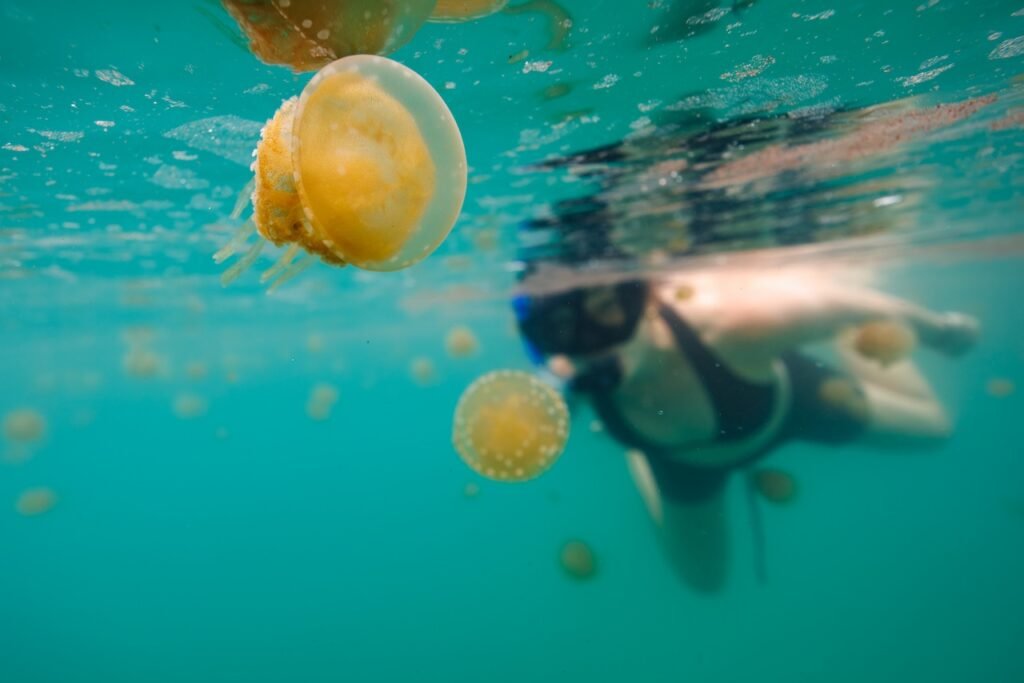
On the island of Karawapop, we work off the previous evening’s sunset Negronis with a hike up the 600 steps to the viewpoint above the island’s iconic, heart-shaped Love Lagoon, and brave an afternoon tempest in the waters of brackish Lenmakana Lake, a pint-sized pool filled with thousands of stranded, stingless golden jellyfish that samba gracefully among us as we snorkel.
Navigating past the sprawling Cendana Pearl Farm (which produces half a million pearls annually), we delve into Tomolol Cave (known locally as Goa Keramat), a cathedral-like sea cave, forming a chain of kayaks and SUP boards as we follow Lamima builder and manager Dominique Gerardin, a former superyacht captain, into the inky darkness.
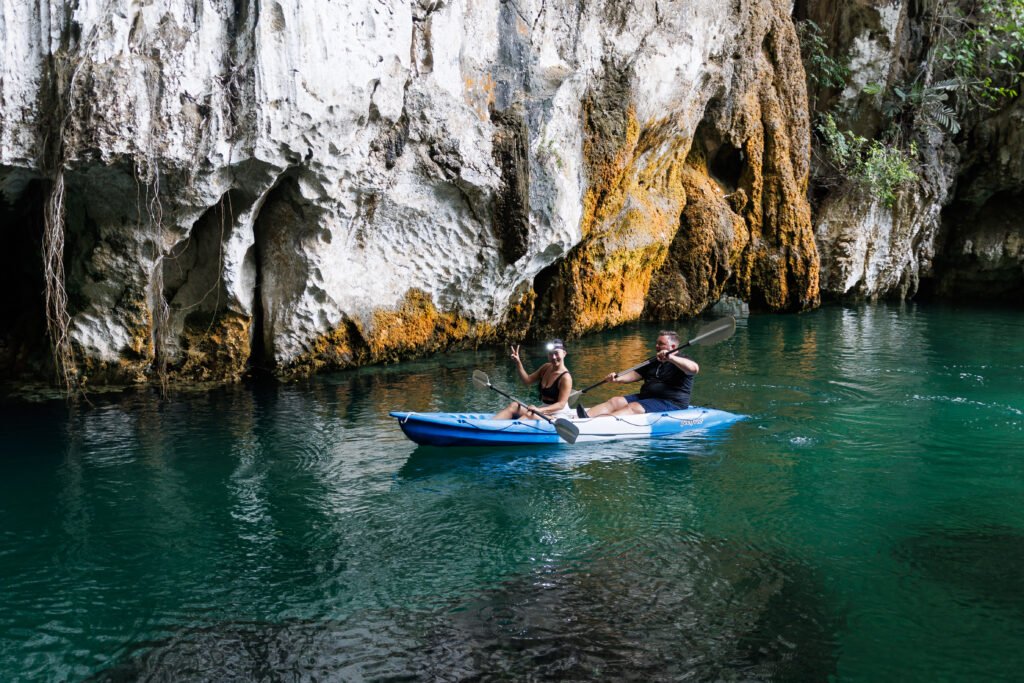
We silently skim the mirror-like waters, headlamps scouring the ancient rock above — from which stalactites reach down like gnarled fingers — in search of napping horseshoe bats. Turning off our headlamps, my wife Angela and I hold hands and let our kayak drift, and the feeling is like floating through the cosmos.
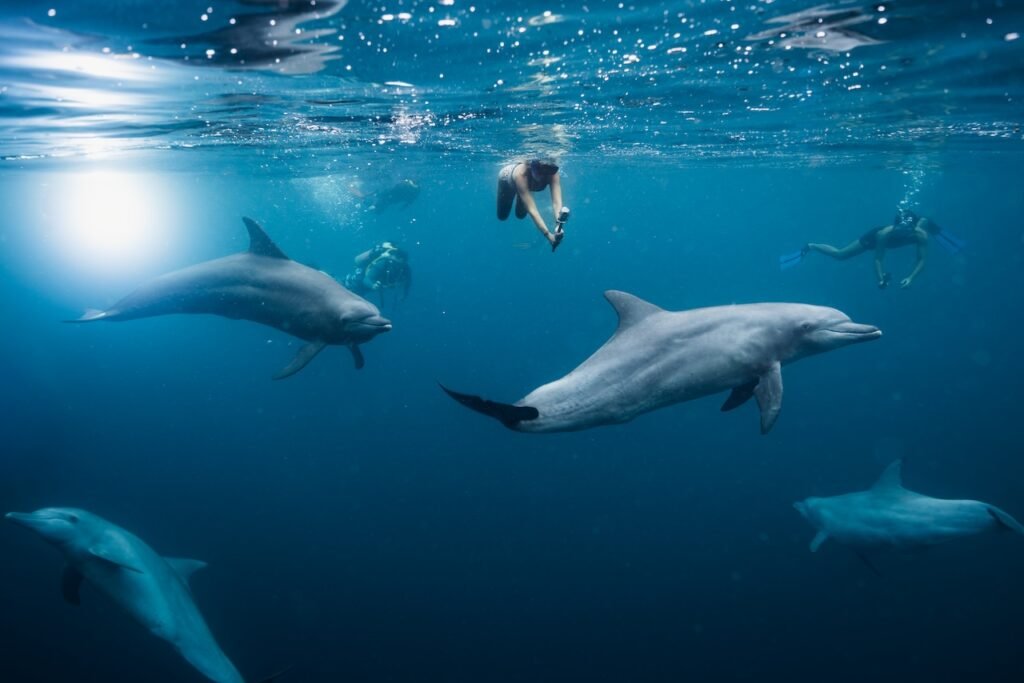
At the midway point of our trip, we rise with the dawn and slap on snorkelling equipment as we skim across the sea towards a fishing bagan, floating platforms used by Indonesian fishermen. Slipping into the water, we’re greeted by the excitable sing-song chirps of a 50-strong pod of Indo-Pacific dolphins, who zip and zag effortlessly between wallowing humans as they snap up silvery bait fish thrown down by the grinning fishermen. The experience is nothing short of spectacular.
Luxury Expedition Living: Dining and Creature Comforts Aboard Lamima
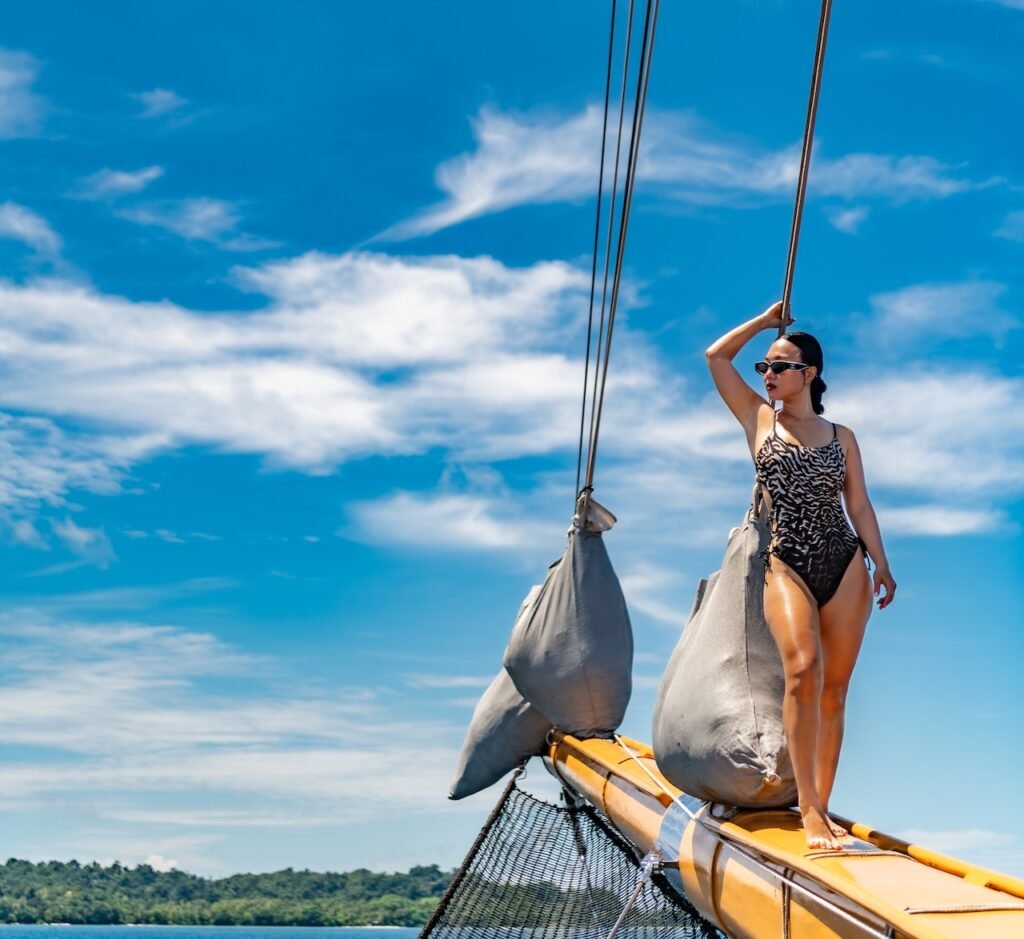
In keeping with its luxury expedition credentials, guests aboard the Lamima may be exploring remote, often rough-and-tumble terrain, but the finer things in life are never far from reach.
With each meal, served in the elegant saloon or alfresco under a canopy of stars, Chinese Indonesian head chef Yudha takes guests on a tour of the archipelago’s fascinating culinary heritage, with earthy curries made from fish sourced from local fishermen along the route; zesty salads of crisp beans, potato and eggs in a fiery peanut sauce; tempeh and tofu simmered in turmeric and coconut milk; and hands down the best croissants I’ve ever had. His chocolate chip cookies, which never last more than an hour outside the oven, become a de facto currency among guests looking to barter massage appointments or additional sunscreen rations.
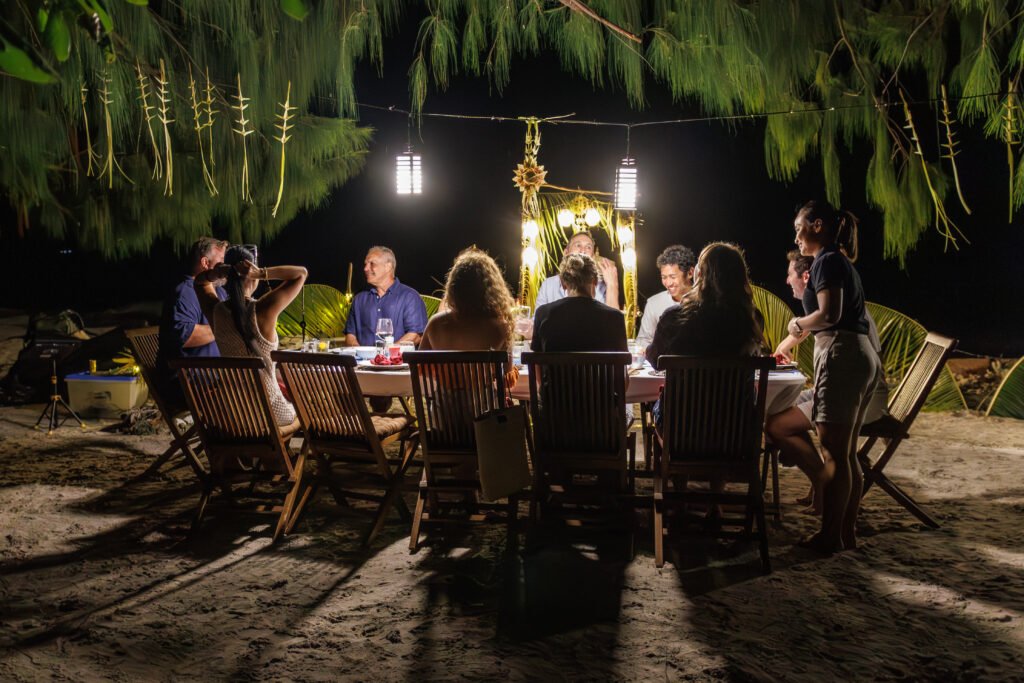
One night, we sip martinis at twilight before taking the yacht’s tender over to pint-sized Yefnabi Island, a speck of palm-encrusted sand, where the crew has set up a beach barbecue, complete with a gin and tonic station, a live band that favours ABBA covers, and fairy lights that dazzle gold off the indigo seas.
World-Class Diving: The ‘Amazon of the Seas’
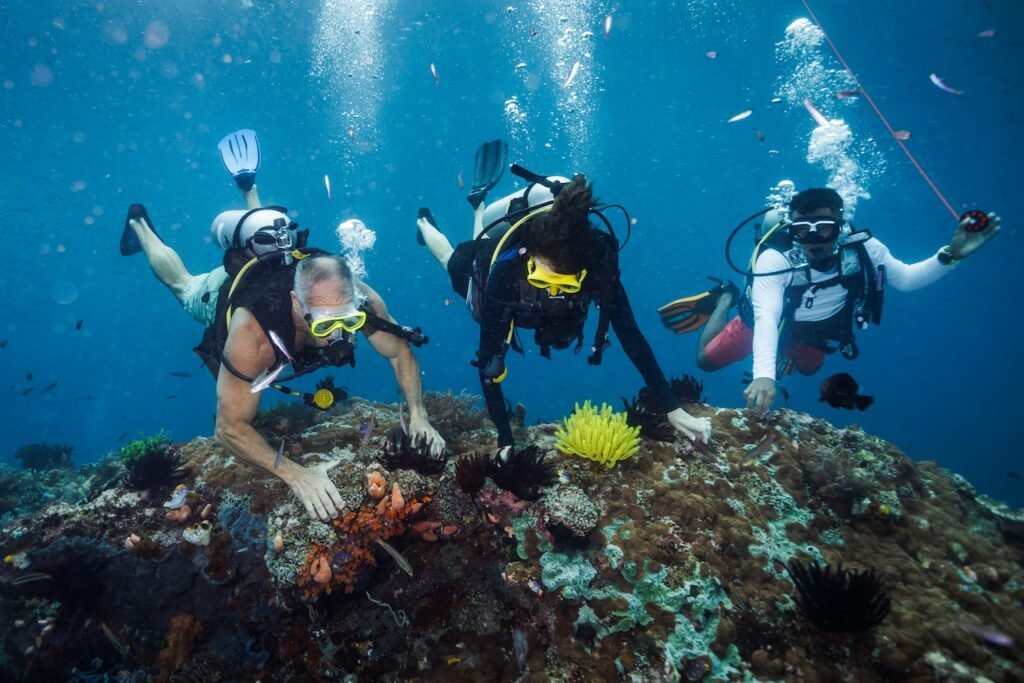
Beyond its hidden coves and towering peaks, Raja Ampat is most famous for its remarkable diving, earning it the moniker the ‘Amazon of the Seas’ for its spectacular biodiversity.
Led by ever-eager guides Ali and Martinez, divers explore new sites every day, from remote Boo Windows, with its twin “window” swim-throughs — a favourite with Napoleon wrasse, whitetip reef sharks and wobbegongs — and Four Kings, a quartet of submerged underwater pinnacles surrounded by a thick carpet of vibrant soft corals in every dramatic hue; to Manta Point, an acclaimed cleaning station that sometimes sees more than 20 giant oceanic mantas congregate.
The Human Story: Culture, Conservation and Community
With the required cruising from island to island, there’s always time to soak up the sunshine, indulge in Balinese massages, or even brave a post-hike dip in the teak ice bath. One evening, we’re invited to the broad upper deck to watch Indonesia’s many cultures come to life, with crew from Sulawesi, Sumatra, Java, Papua and Bali performing timeless dances in intricate traditional attire, and we begin to get a sense of the complex cultural tapestry that echoes across Indonesia’s countless islands.
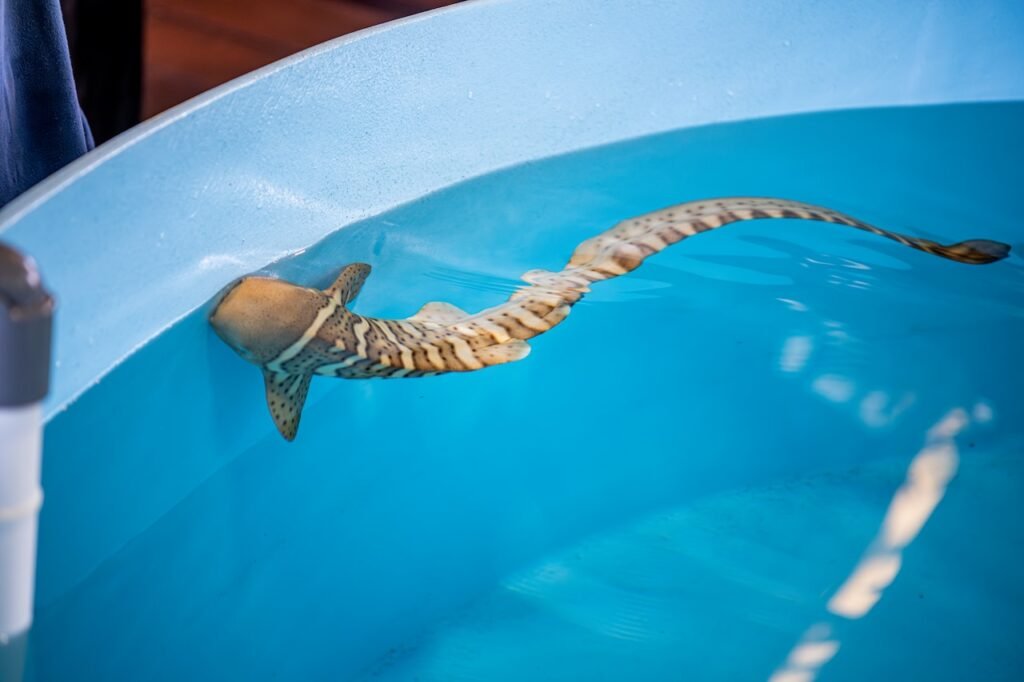
With the crew’s songs still lingering in our minds, the next morning we have a chance to see a more contemporary take on this remarkable region, visiting the young researchers of the StAR Project on the postcard-perfect island of Kri, where endangered zebra sharks are being hatched and rewilded. In the organisation’s research hub, we gaze down into Jacuzzi-sized holding tanks where new foot-long shark pups dart in circles, the light shimmering off their leopard-like spots.
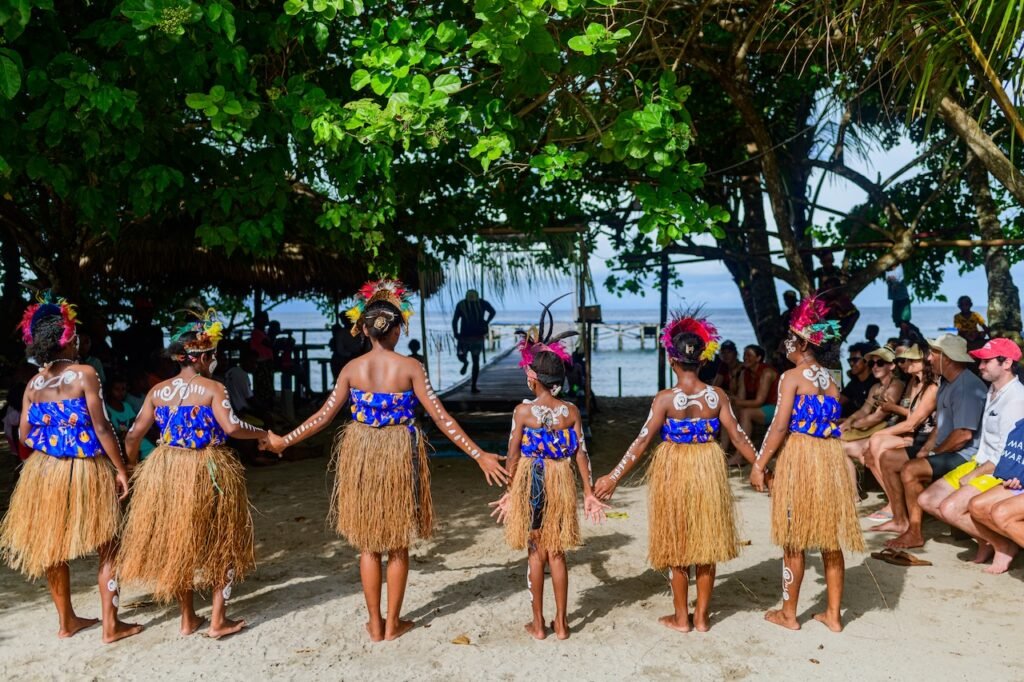
On our final foray, we encounter Raja Ampat’s next generation of conservationists, dive guides and advocates in the remote village of Aborek, home to only 300 inhabitants, where children from the one-room school perform a dance dedicated to the white-bellied sea eagles that live along Waigeo’s mountainous coastline. Dominique first visited this remote settlement 13 years ago (by dugout canoe) when the Lamima was still a pipedream, and on his first visit since, the community elders welcome him like a returning son.
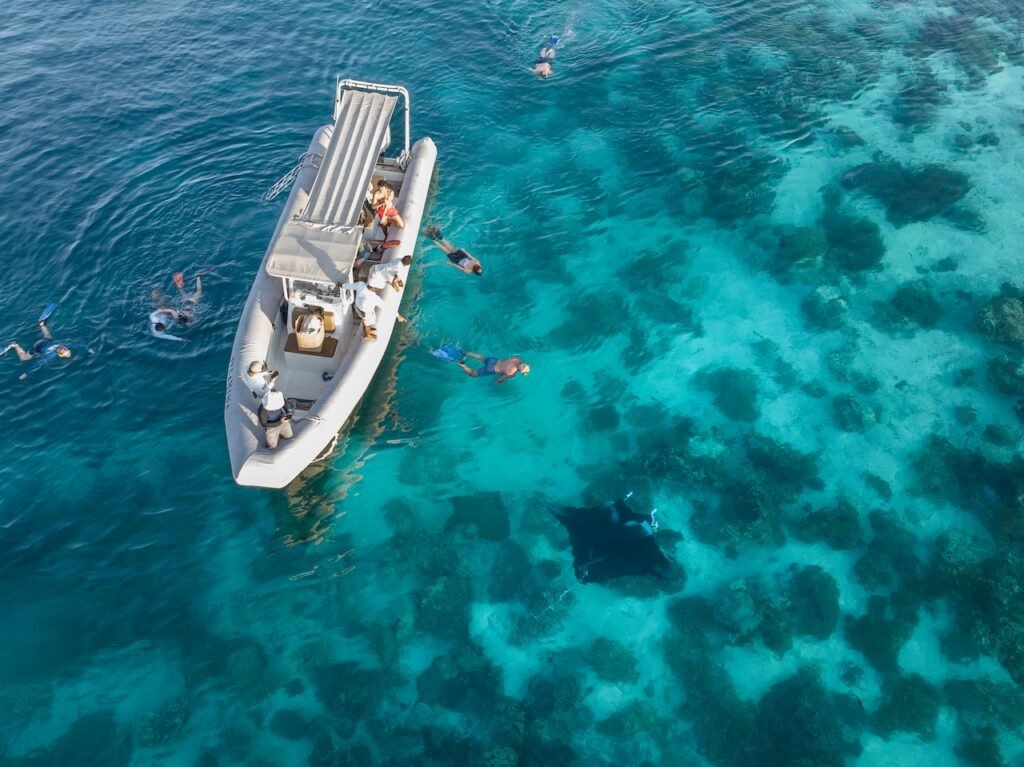
As the drumming ends and the children, their skin glistening with sweat in the late afternoon heat, break into post-performance giggles, the village chief announces the arrival of mantas, and, steps away, on the white sandy beach we can see the occasional flap of a fin on the water’s surface only a few metres out.
Within minutes, as the sun grows heavy in the western sky, we’re in the water, gliding beside and occasionally above a trio of majestic rays, regular visitors (often in the company of dugongs) to this remote island haven.
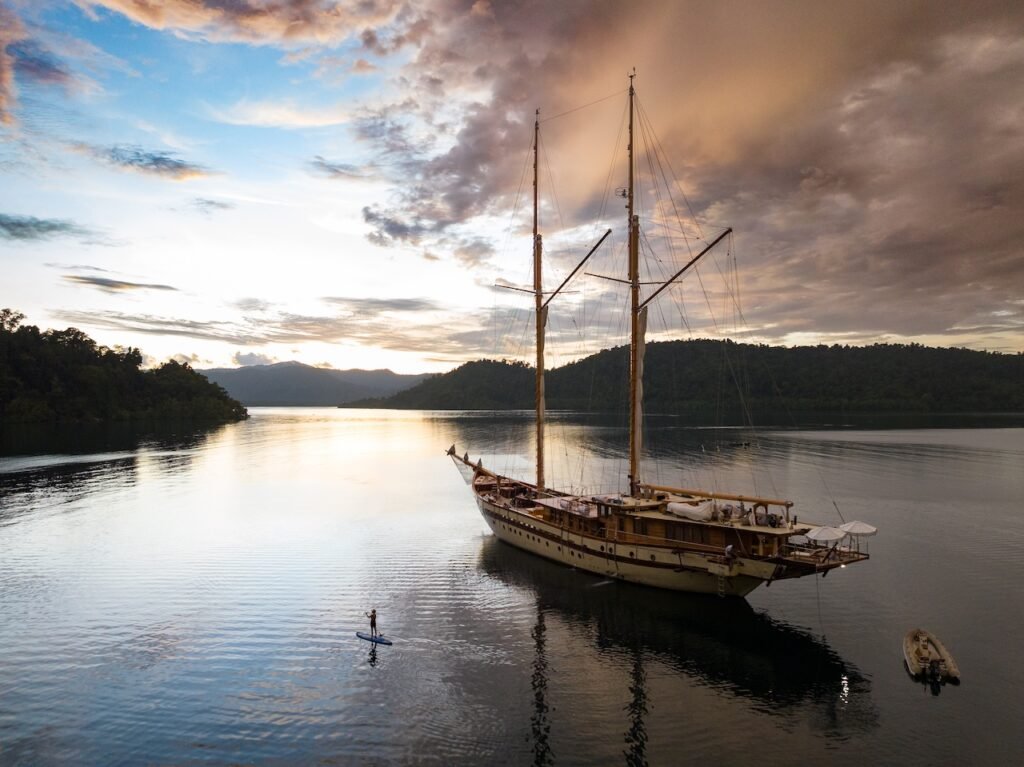
Back at the Lamima, as the last rays of sunlight fade from the violet sky and the anchor chain rattles gently from the depths once more, we toast to this close encounter, to another day’s adventure and to the unforgettable memories gleaned from a week immersed in Indonesia’s own Eden.
If you’re contemplating an expedition cruise, check out our guides to Arctic expedition cruises, Antarctic expedition cruises, and the best expedition cruise destinations and cruise lines, as well as a few that have strong green credentials. Also, don’t forget to brush up on your polar photography and polar videography skills, and to pack the polar essentials with our in-depth guides.


