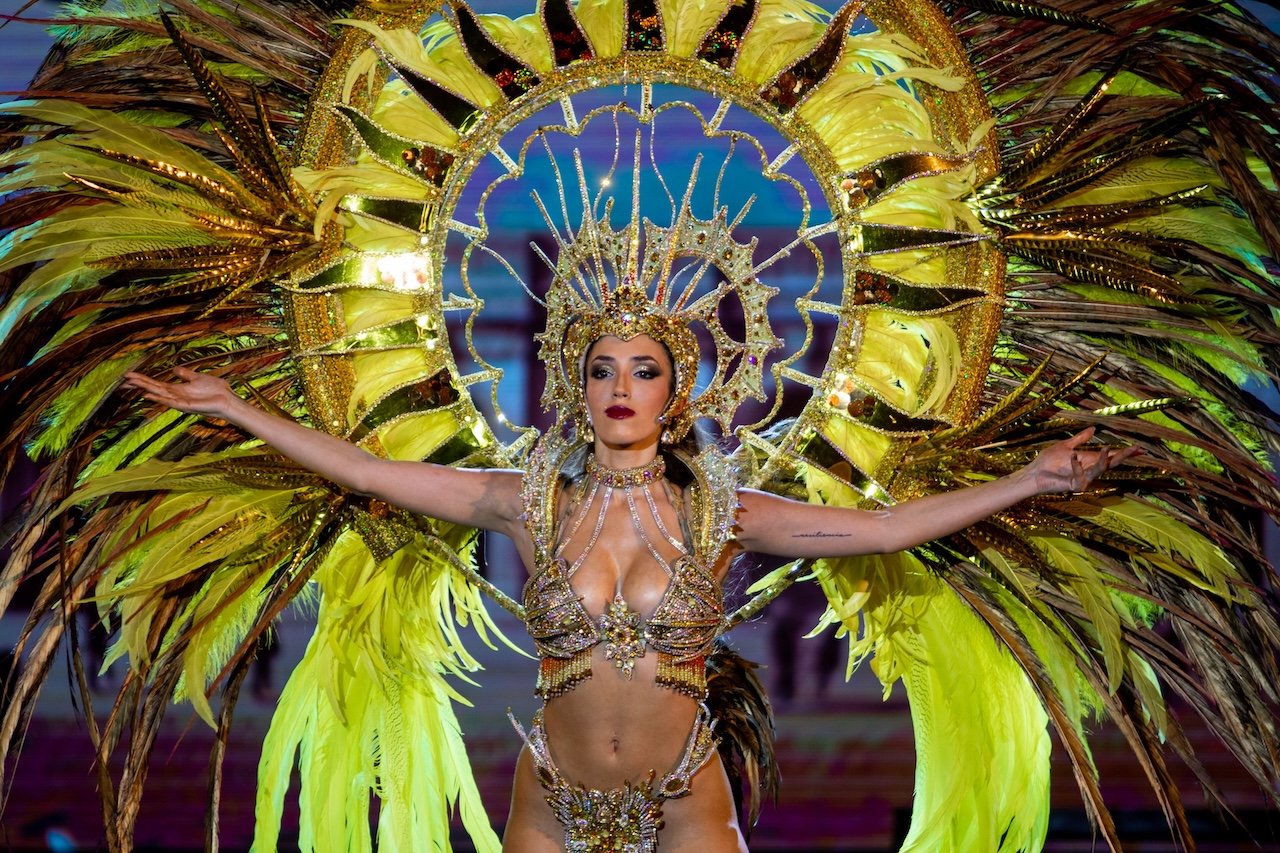

From the incandescent chaos of Rio’s Carnival to the solemn, candlelit processions of Semana Santa, the world’s greatest festivals offer something no museum, monument or guidebook can replicate: the living, breathing pulse of a culture at its most expressive. These are the celebrations worth travelling the world to witness.
There is a particular kind of travel that lodges itself in memory in a way that a beach holiday or a city break never quite manages. The kind where you find yourself in the middle of something vast and ancient and joyful — surrounded by tens of thousands of strangers who are, in that moment, not strangers at all. Festivals do this. The best of them open a door into the soul of a place, offering a window onto traditions, beliefs, and ways of being in the world that no amount of sightseeing can provide.
The question, of course, is which ones are genuinely worth the journey. The world is full of festivals. Many are wonderful. A handful are genuinely, irreplaceably extraordinary — the kind that seasoned travellers still talk about decades later, the kind that recalibrate your sense of what human celebration can look like. What follows is our considered guide to the festivals that belong on every serious traveller’s list.
Rio Carnival, Brazil — February/March
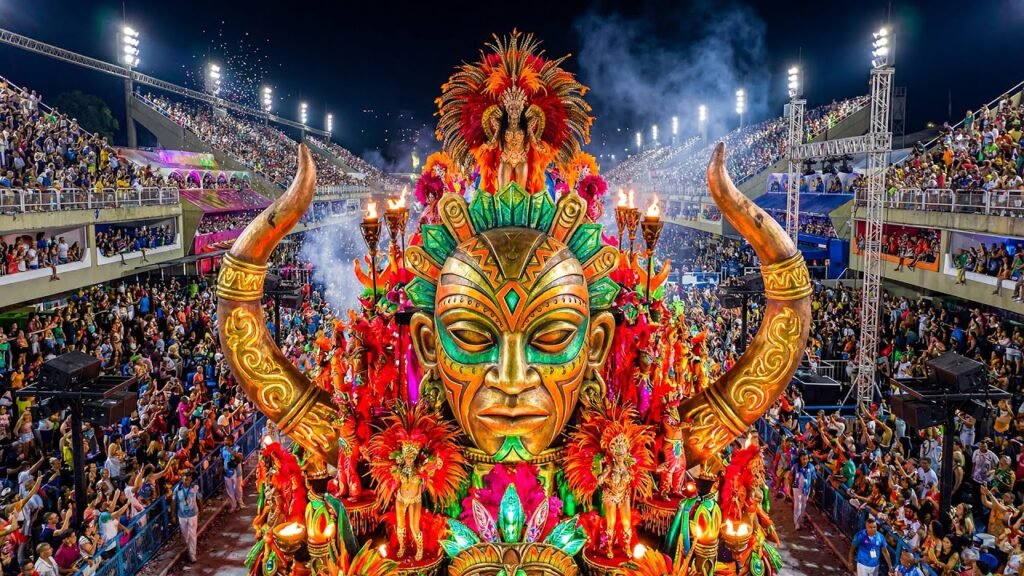
There is no festival on Earth quite like Rio de Janeiro’s Carnival. The numbers alone are staggering: more than two million people take to the streets each day during the four-day celebration, making it the largest carnival in the world by almost any measure. But the statistics tell only a fraction of the story.
The heart of Rio Carnival is the Sambadrome, the purpose-built parade avenue designed by Oscar Niemeyer, where the city’s samba schools — each representing a neighbourhood and spending the entire year in preparation — compete in elaborate, breathtaking processions of costume, dance and percussion that stretch through the night. The floats are engineering feats disguised as fantasias; the costumes are impossible confections of feather and sequin; the drumlines produce a sound that you feel as much as hear.
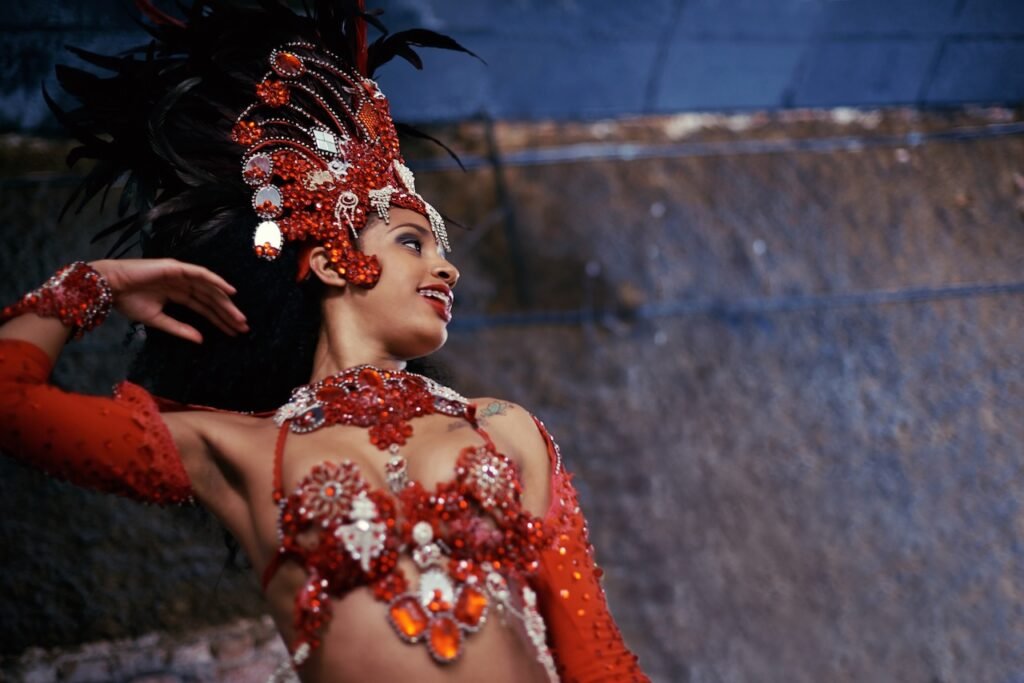
Beyond the Sambadrome, the city dissolves into a series of blocos — open-air street parties that range in scale from intimate neighbourhood gatherings to enormous, rolling processions through the city’s historic quarters. The Bola Preta bloco, one of the oldest, regularly draws upwards of a million participants.
Carnival season runs from the Friday before Ash Wednesday to the following Tuesday, though the city begins warming up weeks earlier. Book accommodation many months in advance; the best hotels sell out more than a year ahead.
Diwali, India — October/November
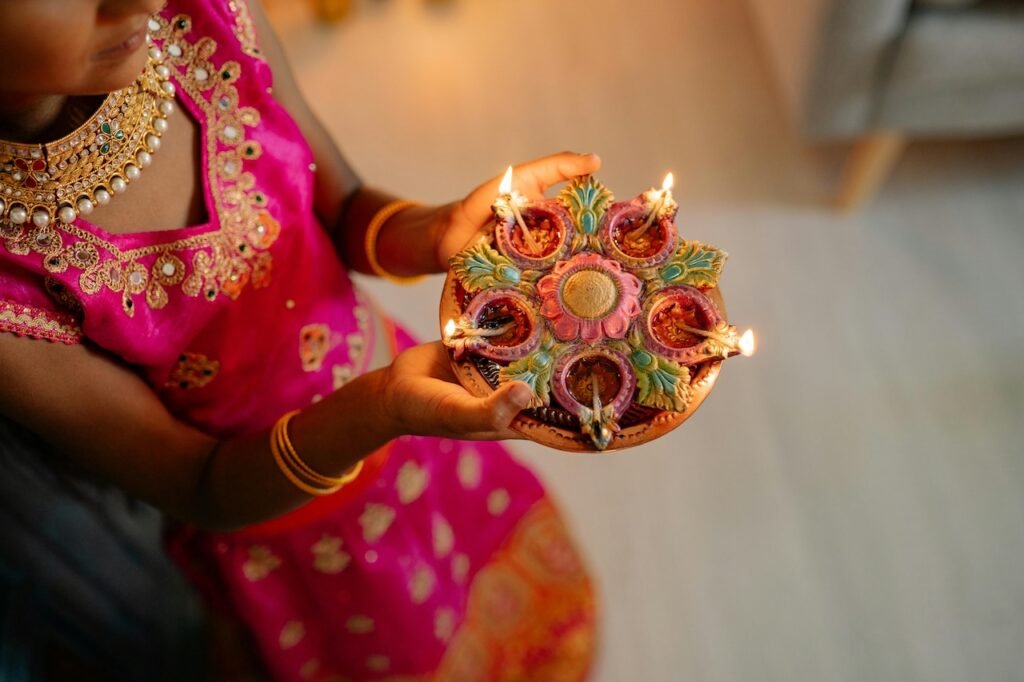
The Festival of Lights is celebrated across the Indian subcontinent and throughout the global Indian diaspora, but to experience Diwali in India itself — particularly in Varanasi, Jaipur or Udaipur — is to understand why it occupies such a central place in the Hindu calendar and in the imagination of travellers worldwide.
Marking the victory of light over darkness and knowledge over ignorance, Diwali transforms entire cities into luminous spectacles. Homes, temples, streets and riverbanks are lined with diyas — small clay oil lamps — while fireworks fracture the sky above in colours that seem to outdo themselves from one moment to the next. Families exchange sweets and gifts; temples are thronged with worshippers; markets overflow with marigolds, silver, and the smell of incense.
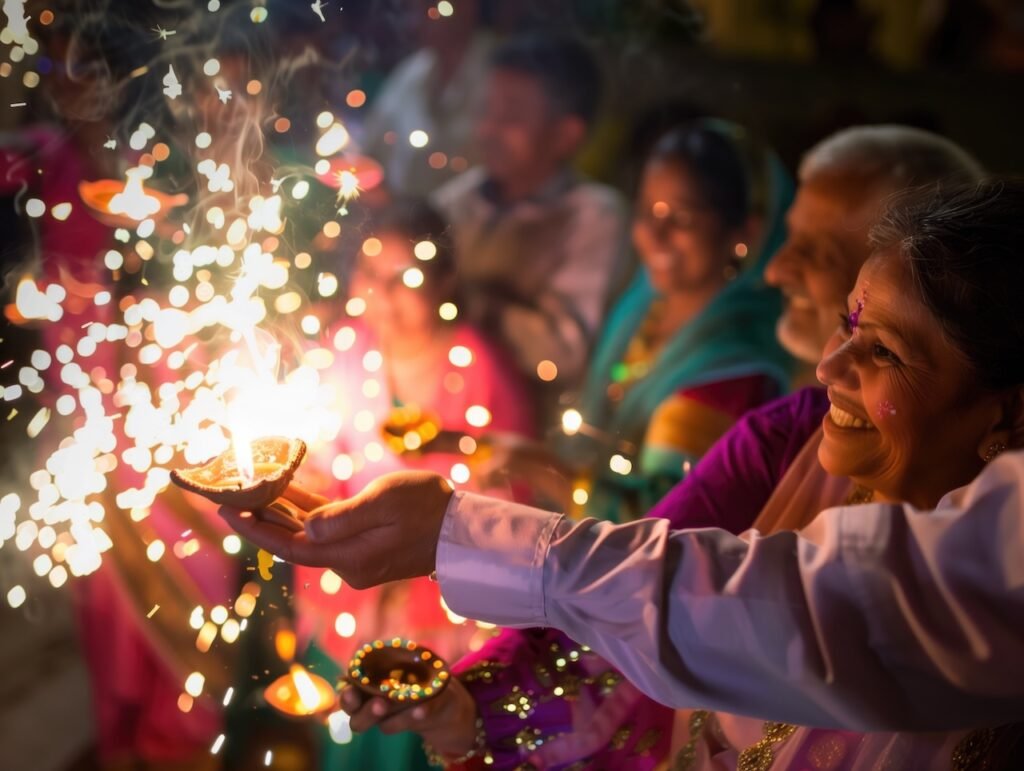
In Varanasi, the Diwali experience is especially powerful. The city’s famous ghats — the stone steps descending to the Ganges — are illuminated with thousands of floating lamps set upon the river, and the evening Ganga Aarti fire ceremony takes on an even greater significance than usual. Standing at the water’s edge as the lamps drift downstream, you are in the presence of something that feels genuinely sacred.
Diwali falls on the 15th day of the Hindu month of Kartik, placing it in late October or November depending on the year. The five-day celebration builds to its peak on the third night, when the main festivities reach their crescendo.
La Tomatina, Buñol, Spain — Last Wednesday of August
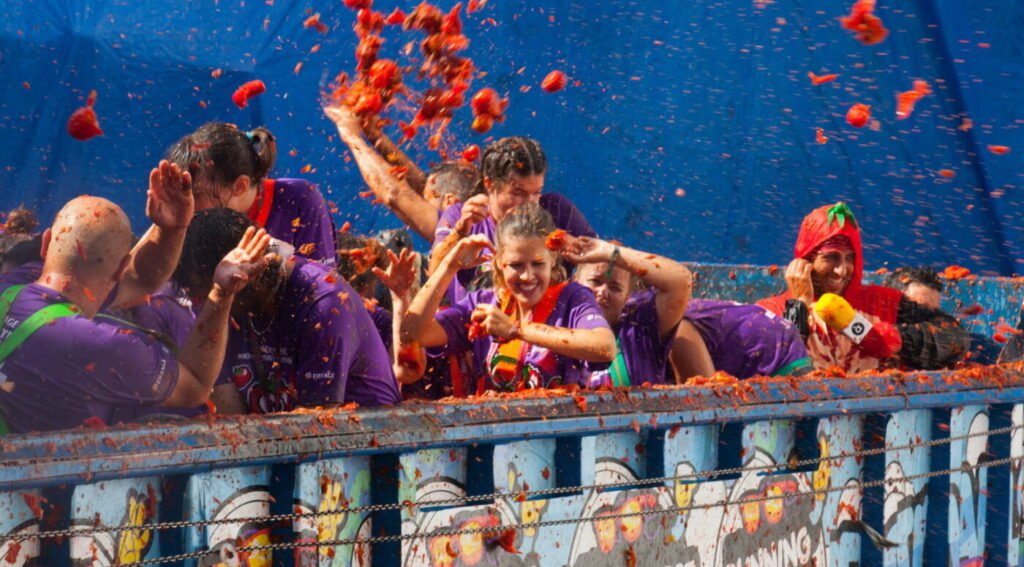
Not every great festival is ancient or solemn. La Tomatina — held annually in the small Valencian town of Buñol, around 40 kilometres west of Valencia — is precisely the kind of collective lunacy that makes life worth living. For one hour each year, on the last Wednesday of August, the streets of this otherwise unremarkable town become the arena for the world’s largest food fight, with approximately 150,000 kilograms of overripe tomatoes hurled between some 20,000 participants.
The origins of La Tomatina are disputed — various local legends place its beginnings in the mid-20th century — but its status as one of Spain’s most beloved and internationally recognised celebrations is beyond question.
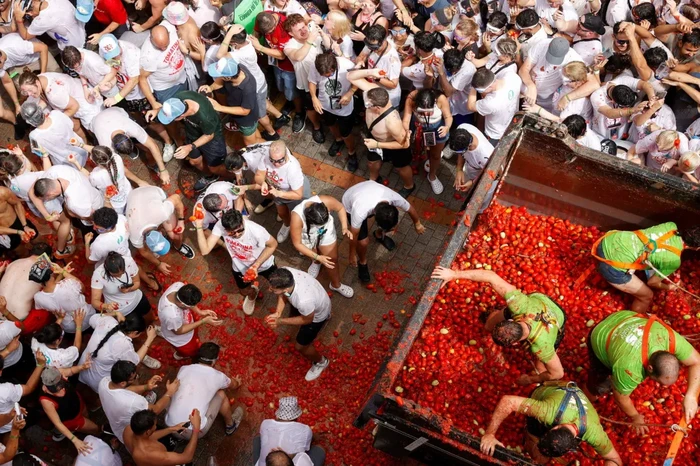
The fight begins when a brave soul climbs a greased pole to retrieve a ham at its peak; the tomatoes follow immediately, and for the next 60 minutes the streets run red.
Numbers are capped by tickets, which should be purchased well in advance. Wear clothes you are happy to never see again. Goggles are advisable. This is, unambiguously, enormous fun.
Holi, India — March
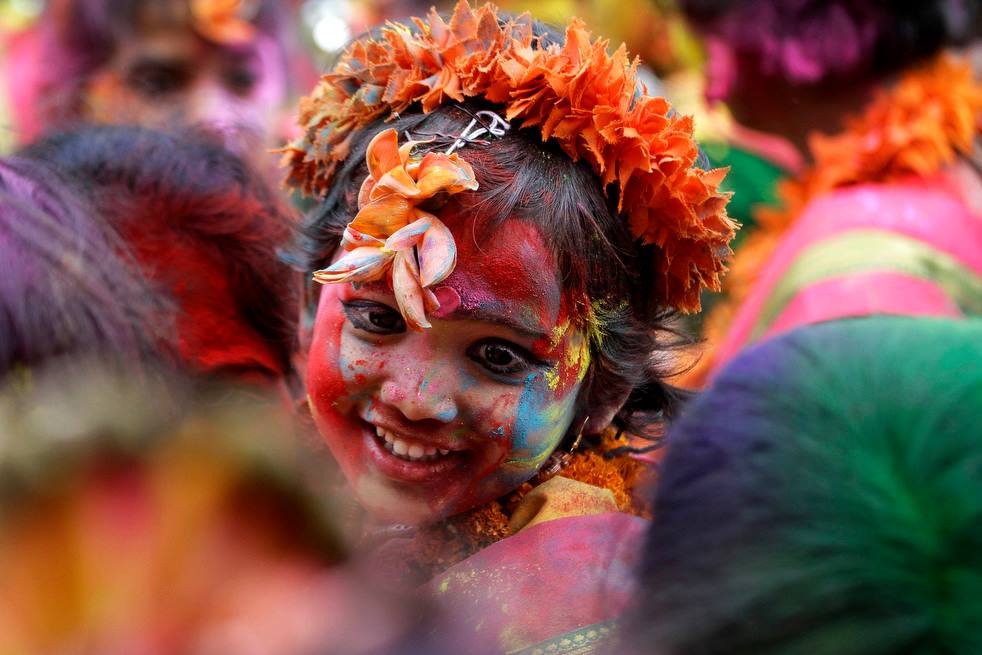
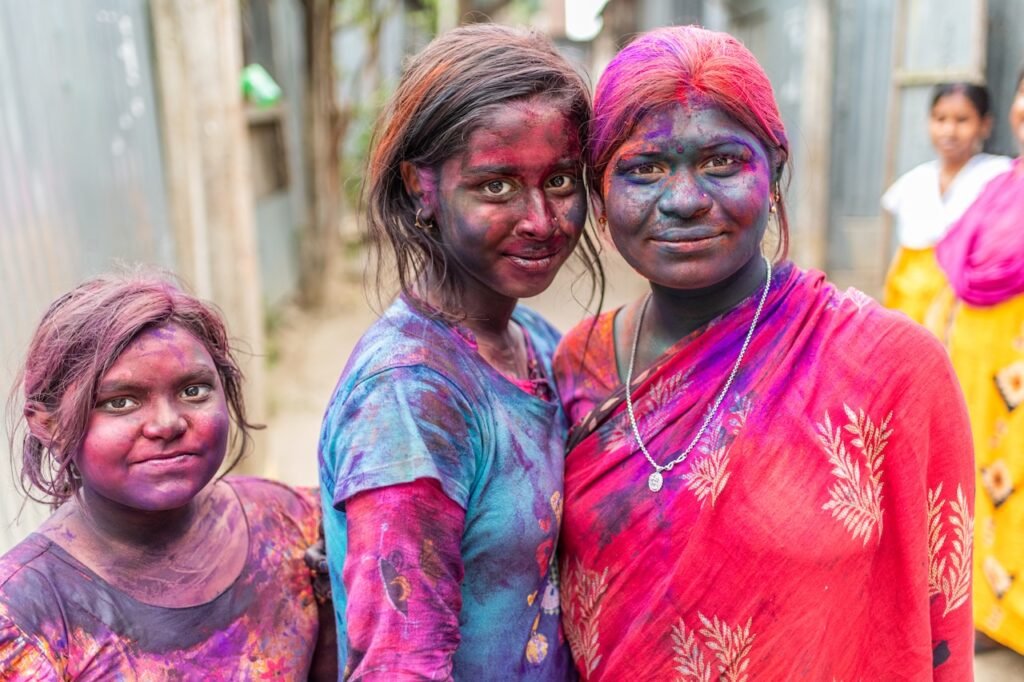
If Diwali is the festival of light, Holi is the festival of colour — and in both cases, the words are wholly inadequate for the reality. Celebrated on the full moon of the Hindu month of Phalguna, Holi marks the arrival of spring and the triumph of good over evil, but the experience on the ground is primarily one of exuberant, uninhibited joy.
The central tradition is the throwing of gulal — brightly coloured powders in fuchsia, saffron, cobalt and lime — across friends, strangers, and anyone else within range. In cities and towns across northern India, the streets fill with people of all ages, drenched in colour, dancing to dhol drums, sharing sweets and glasses of thandai. Hierarchies dissolve; formalities evaporate. For one day, India seems to operate entirely outside the conventions of ordinary life.
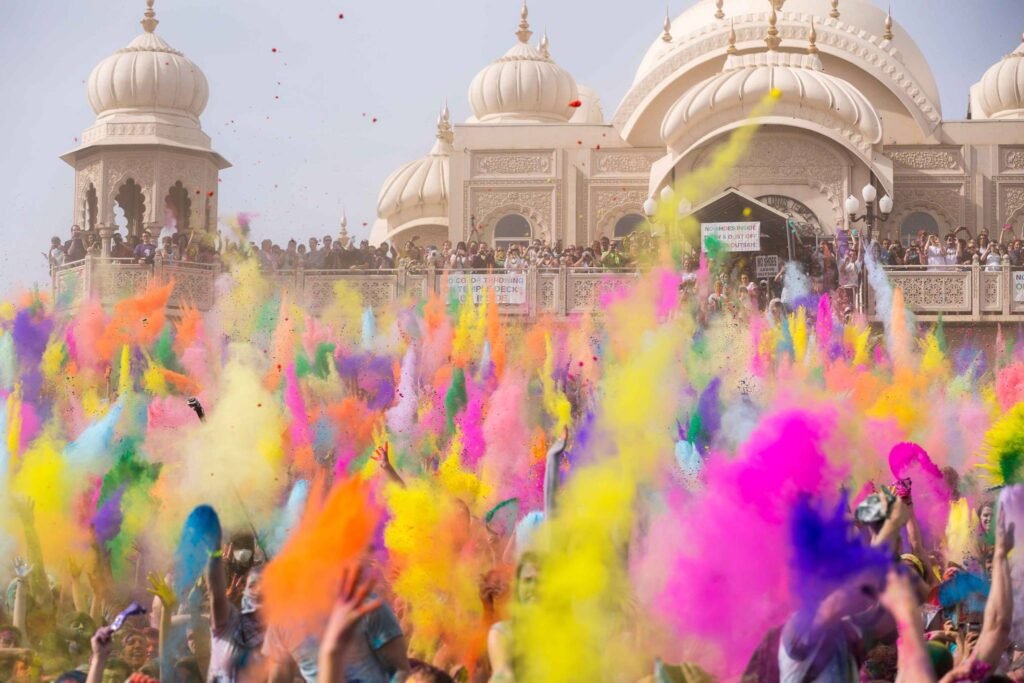
Mathura and Vrindavan — the towns associated with the god Krishna, for whom Holi holds particular significance — offer the most intense and traditional celebrations, drawing pilgrims and travellers from across the world. Jaipur’s Holi has also become legendary for the scale and organisation of its festivities. Wherever you choose to celebrate, arrive early, wear white (it absorbs colour beautifully), protect your camera equipment, and surrender to the spectacle entirely.
Carnaval de Oruro, Bolivia — February/March
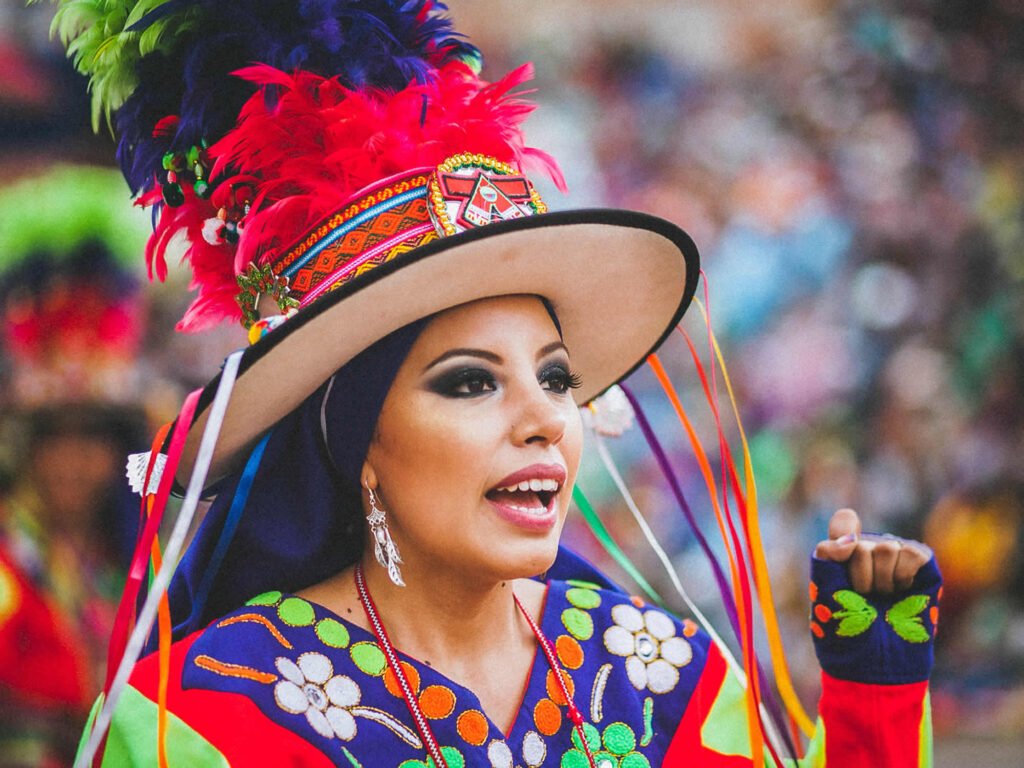
Less well known internationally than its Brazilian counterpart but arguably no less extraordinary, Carnaval de Oruroin the Bolivian Altiplano is one of the most spiritually significant and visually spectacular festivals in the Americas. Recognised by UNESCO as an Intangible Cultural Heritage of Humanity, it draws more than 400,000 visitors to this remote Andean city each year for a celebration that blends pre-Columbian indigenous traditions with Catholic ritual in a synthesis unique to the high plateau.
The centrepiece is the Diablada — the Dance of the Devils — in which elaborately costumed dancers in fearsome, jewel-encrusted masks representing Lucifer and his demons process through the streets for up to 20 hours in a single day, accompanied by brass bands and folkloric dance groups representing more than 50 distinct cultural traditions. The costumes — some of which take an entire year to construct and cost thousands of dollars — are objects of extraordinary artistry.
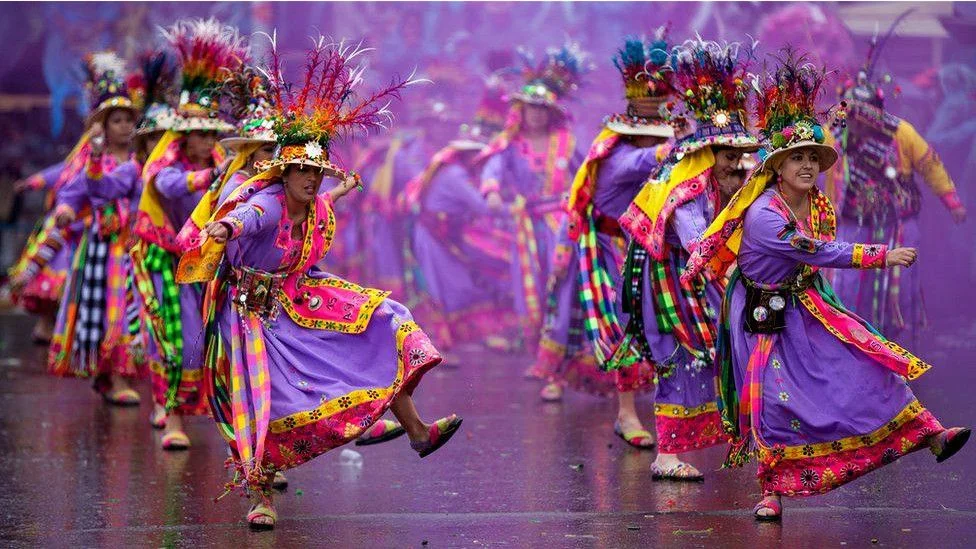
At its heart, the Carnaval de Oruro is an act of devotion to the Virgen del Socavón, the patron of miners, and the procession ends at her sanctuary on the hillside above the city. The combination of the sacred and the carnivalesque, set against the stark beauty of the Altiplano at 3,700 metres above sea level, makes for an experience of remarkable power.
Semana Santa, Seville, Spain — April
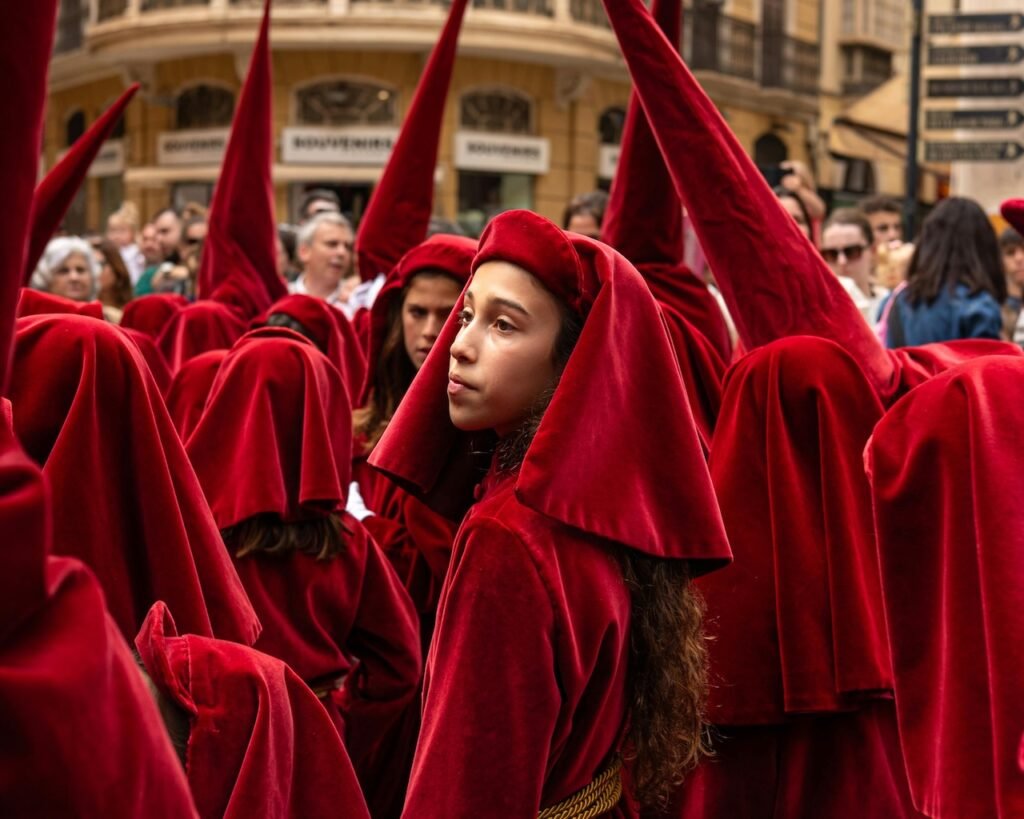
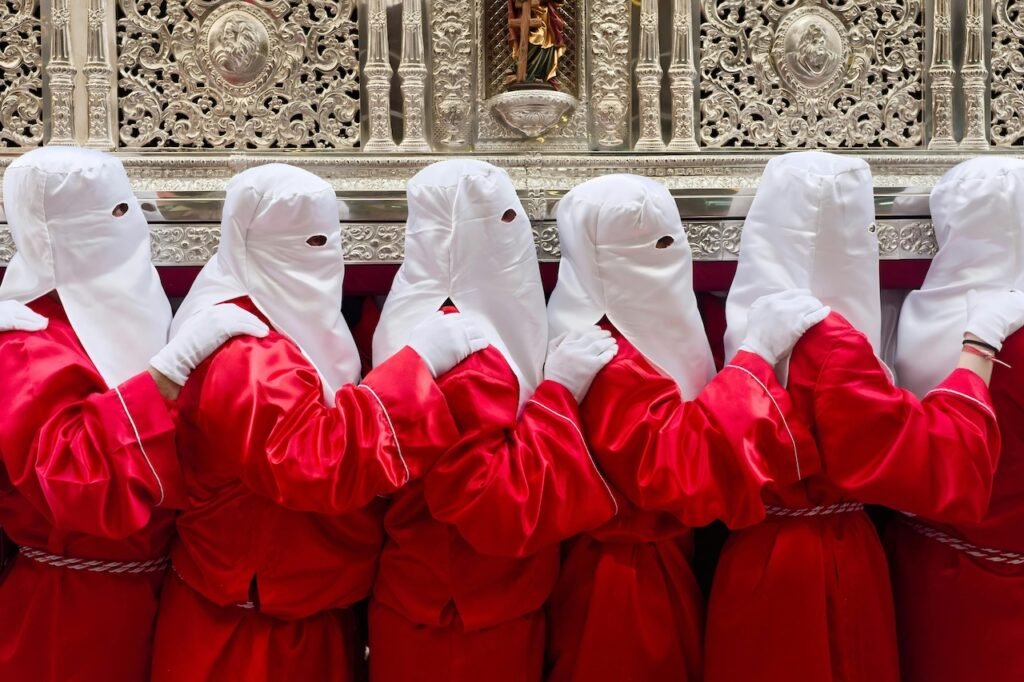
For those who prefer their festivals on the quieter and more contemplative end of the spectrum, Semana Santa — Holy Week — in Seville is among the most profoundly moving public events in the world. The iconic Spanish city has observed the tradition for more than five centuries, and the processions that wind through its streets each night of Holy Week retain a solemnity and emotional intensity that no amount of tourism has managed to diminish.
Each of Seville’s 57 brotherhoods processes from its home church through the city’s narrow streets to the Cathedral and back over the course of Holy Week, carrying ornate floats — pasos — bearing sculptures of the Virgin and scenes from the Passion. The most revered of these figures are objects of profound popular devotion, and the crowds that line the streets to watch them pass are not tourists in the main, but Sevillanos bearing witness to something central to their identity.
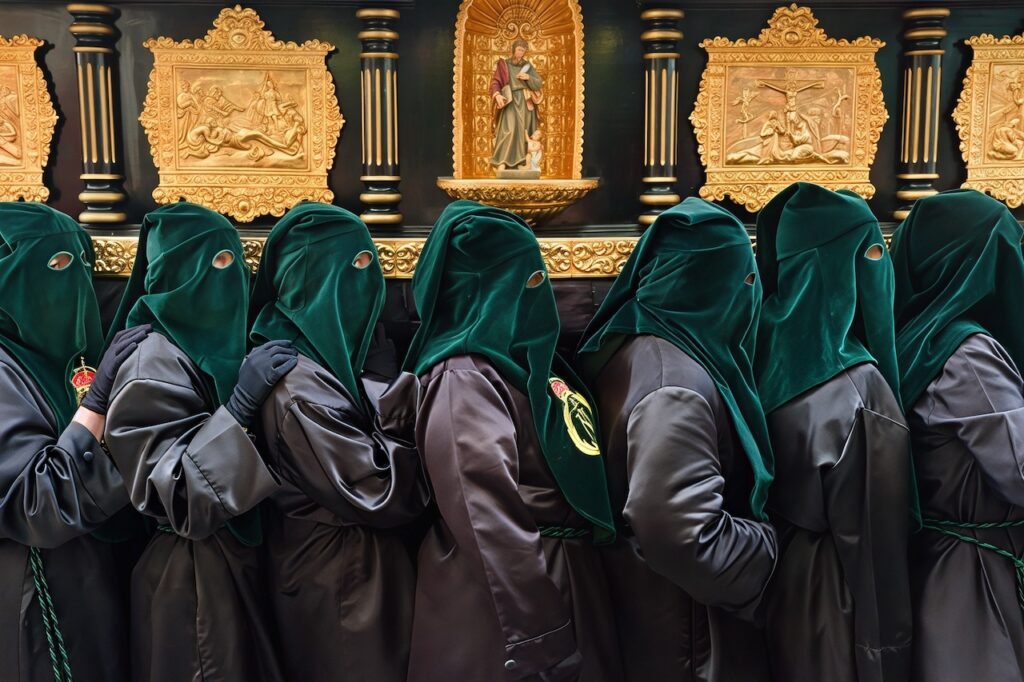
The Madrugá — the early hours of Good Friday morning — is the emotional peak of the week, when the most celebrated brotherhoods process through the streets between midnight and dawn. The sound of saetas — spontaneous, unaccompanied laments sung from balconies as the floats pass — is one of the most arresting sounds in all of European music. To hear one echoing through the candlelit streets at three in the morning is to understand Seville in a way that no visit to the Alcázar or the Giralda can offer.
Songkran Water Festival, Thailand — April
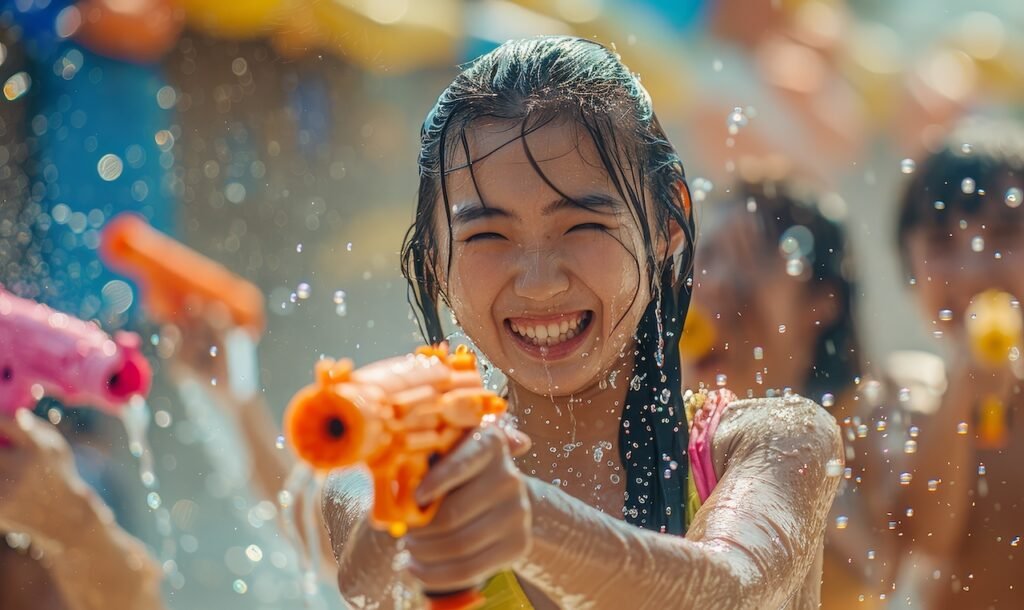
Songkran, the Thai New Year, is celebrated across Thailand over three days in April with a tradition that manages to be simultaneously ancient and irresistibly festive: the splashing of water, symbolising purification and the washing away of misfortune, over anyone and anything within range. In practice, this means that the streets of Chiang Mai, Bangkokand every town in between become an extended water fight of joyful, drenching proportions.
In Chiang Mai, widely regarded as home to Thailand’s most spectacular Songkran celebrations, the old city moat becomes a central gathering point from which water-armed participants launch offensives in every direction. Water guns, buckets, hoses and the contents of passing pickup trucks all come into play over three glorious days. The mood is one of pure, uncomplicated delight.
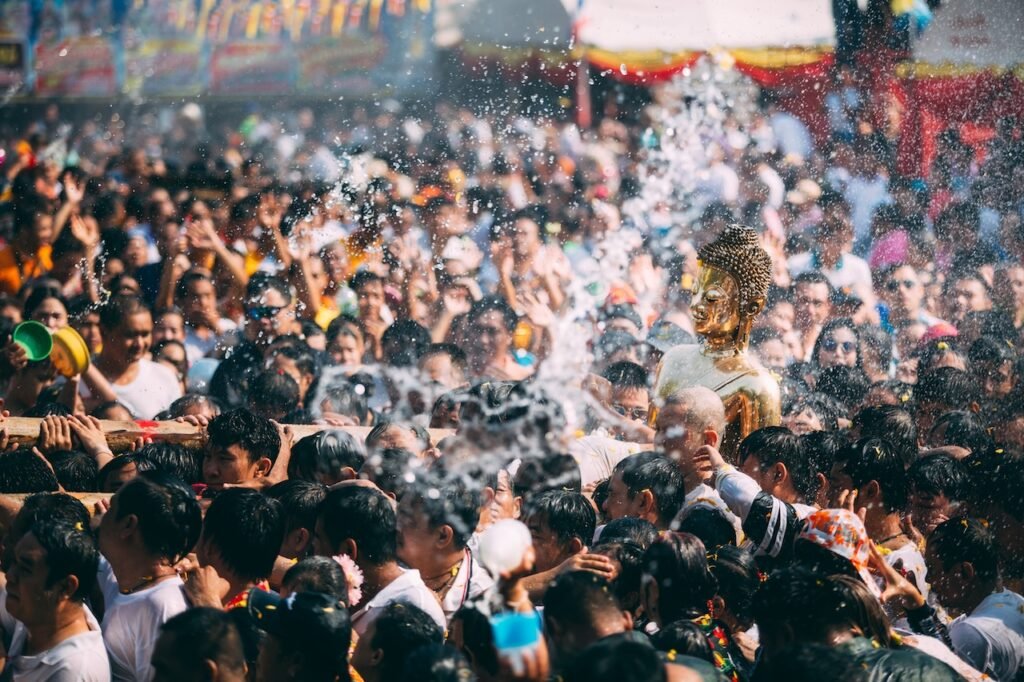
Beyond the water fights, Songkran carries a deeper cultural resonance: it is a time for visiting temples, making offerings, and paying respects to elders by pouring scented water over their hands. The contrast between the solemn morning ceremonies and the afternoon’s cheerful pandemonium captures something essential about Thai culture — the coexistence of the sacred and the playful that pervades so much of life in this country.
Edinburgh Fringe Festival, Scotland — August
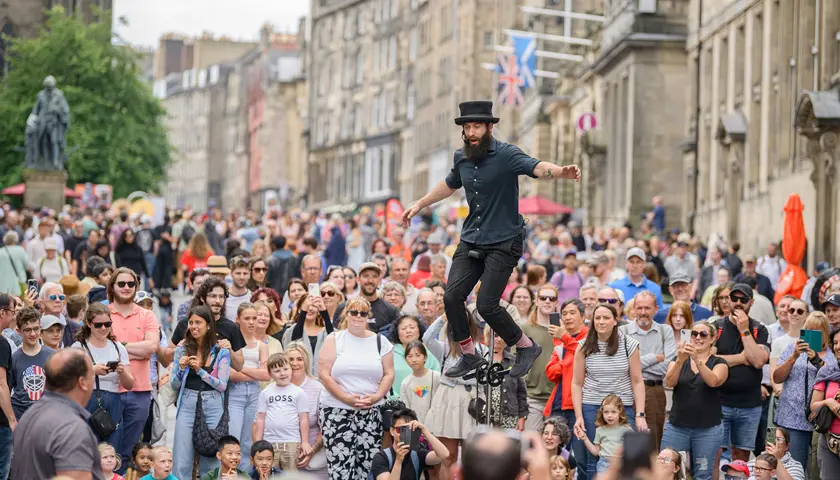
The Edinburgh Fringe Festival is the world’s largest arts festival, and for the entirety of August it transforms Scotland‘s capital into something entirely singular: a city in a state of permanent, joyful creative overload. More than 3,000 shows take place across more than 300 venues — from the grand Assembly Rooms to converted car parks, church halls and pub backrooms — covering theatre, comedy, dance, opera, circus, spoken word and forms that resist categorisation entirely.
What distinguishes the Fringe from other arts festivals is its founding principle: anyone can perform. There is no selection committee, no curatorial gatekeeping. The result is a programme of extraordinary breadth and unpredictability, in which an acclaimed international theatre production might share a street with a one-person show in a broom cupboard and a debut comedian working out material for the first time in front of a paying audience. Some of the most celebrated performers in the world — from Billy Connolly to Hannah Gadsby to the National Theatre of Scotland — have had their careers shaped by the Fringe. Be sure to check out our Edinburgh Fring Festival guide.
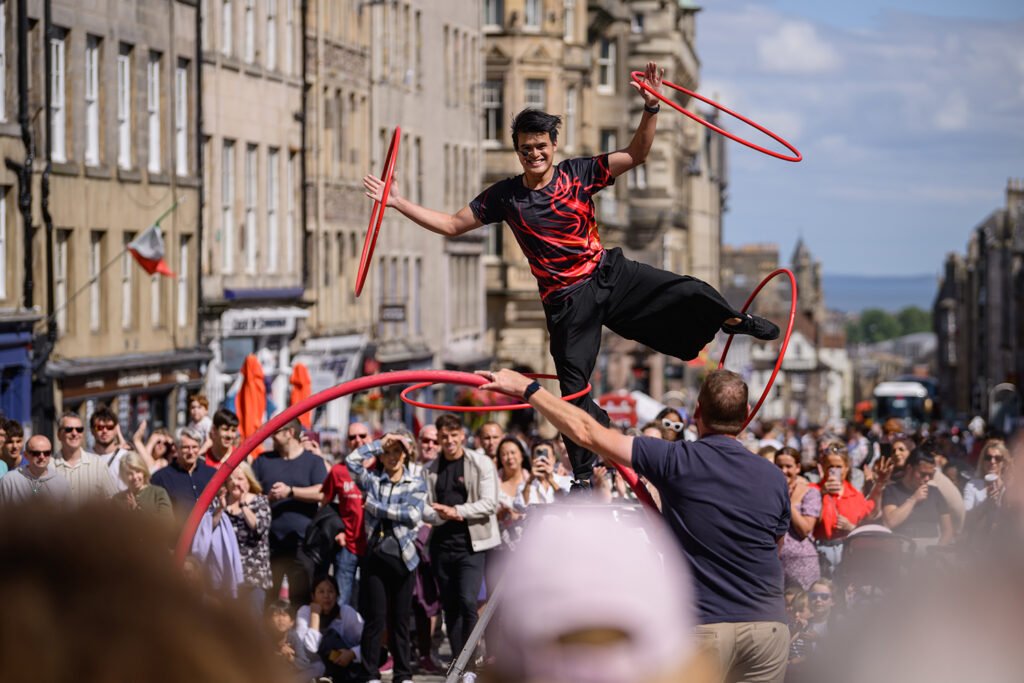
The city itself becomes part of the performance during August: the Royal Mile lined with performers, flyerers and street acts from morning to midnight; the Georgian streets of the New Town abuzz with late-night conversations about what was brilliant and what was bewildering. Edinburgh in August is one of the great pleasures of the European cultural calendar.
Burning Man, Nevada, USA — Late August/Early September
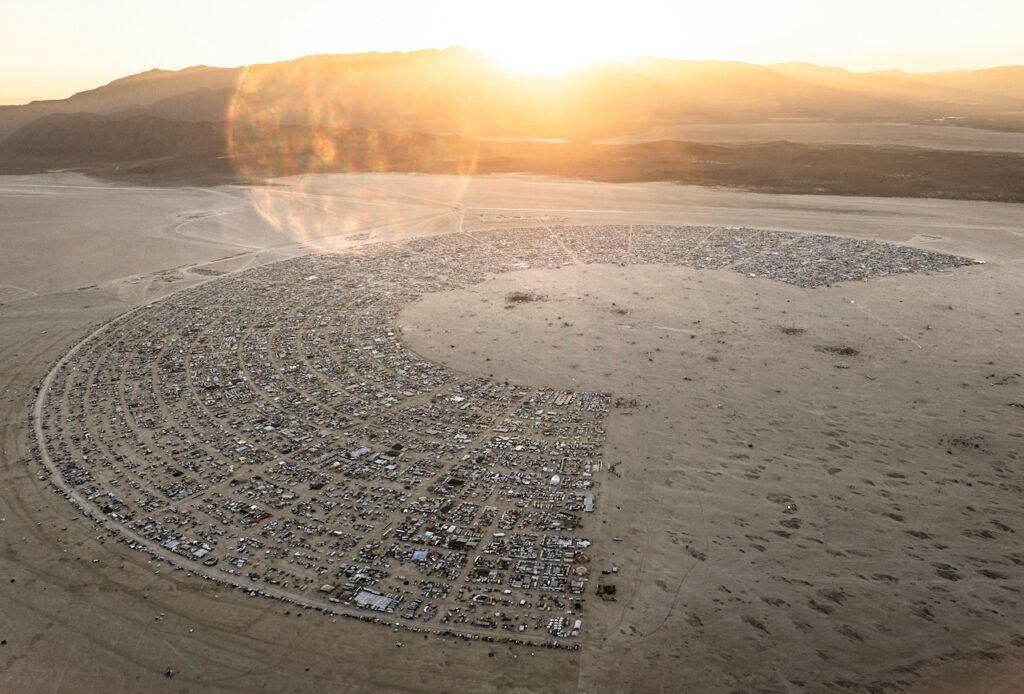
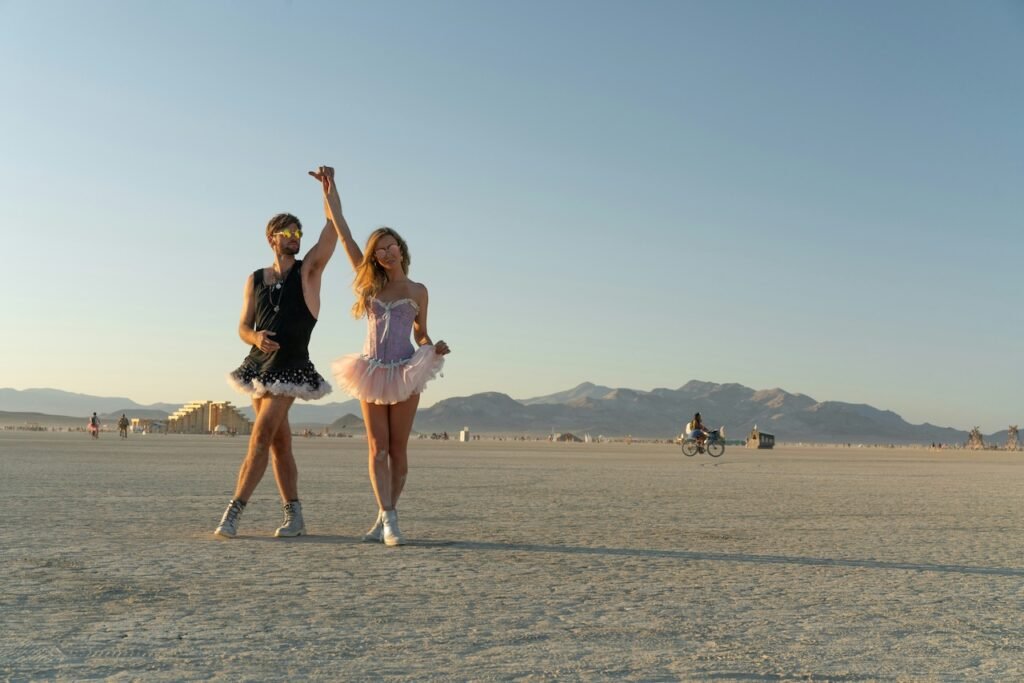
Burning Man resists description, which is perhaps the point. For one week each year, a temporary city of some 70,000 people — Black Rock City — rises from the Nevada desert, built entirely on the principles of radical self-expression, self-reliance, and communal effort, before disappearing without trace in the days following the event. No money changes hands within the city (beyond ice and coffee, the two exceptions); no advertising exists; no spectators are permitted, only participants.
The result is an environment unlike anything else in contemporary culture: a vast, mutually constructed world of extraordinary art installations, impromptu performances, themed camps offering everything from gourmet meals to elaborate nightlife, and a spirit of creative generosity that genuinely surprises first-time attendees. The eponymous burning of a large wooden effigy on the penultimate night — set against a sky full of stars with the desert stretching in every direction — is a spectacle of primal intensity.
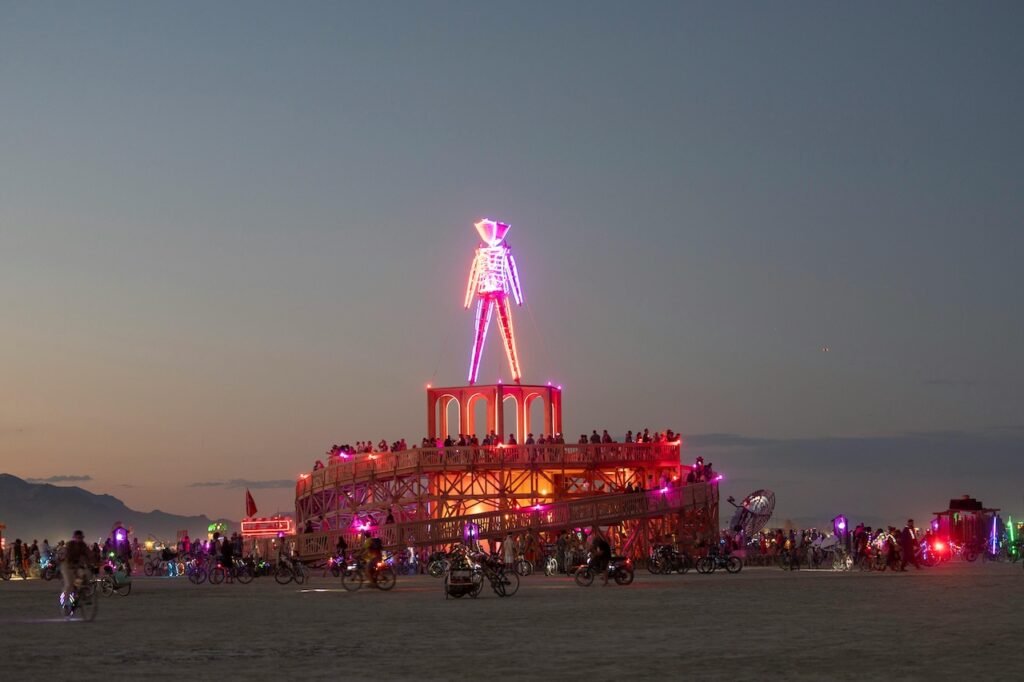
Burning Man is not for everyone. The heat, dust, logistical complexity and radical self-reliance it demands make genuine preparation essential. But for those who find their way there, it consistently ranks among the most profound and disorienting experiences of their lives.
Mount Hagen Sing Sing, Papua New Guinea — August
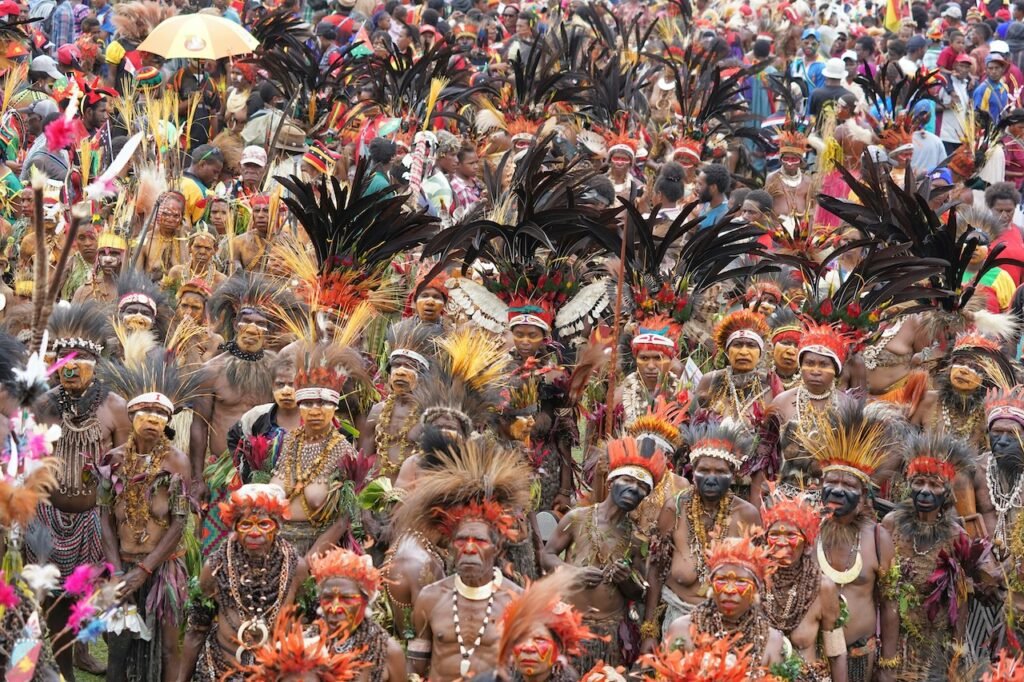
We return, in closing, to one of the most extraordinary festivals on the planet — one that relatively few Western travellers have witnessed, and one that those who have rarely fail to describe as the most remarkable thing they have ever seen. The Mount Hagen Sing Sing, held annually in the Western Highlands of Papua New Guinea, is the world’s largest gathering of tribal peoples: a celebration in which more than a hundred Highland clans assemble in traditional dress, body paint, and ceremonial headdress to sing, dance and affirm their cultural identities in a spectacle of incomparable colour and intensity.
The Sing Sing — the word refers both to song and to gathering — is not a performance staged for visitors. It is a living expression of cultures that, in many cases, had no contact with the outside world until the 1930s, and whose ceremonial traditions remain central to everyday life. The Huli Wigmen of the Tari Highlands, in their elaborate wigs fashioned from their own hair; the Asaro Mudmen in their ghost-white clay masks; the warrior clans of the Eastern Highlands in headdresses of birds-of-paradise feathers — each group processes and performs with a seriousness and pride that transforms the event into something far beyond spectacle.
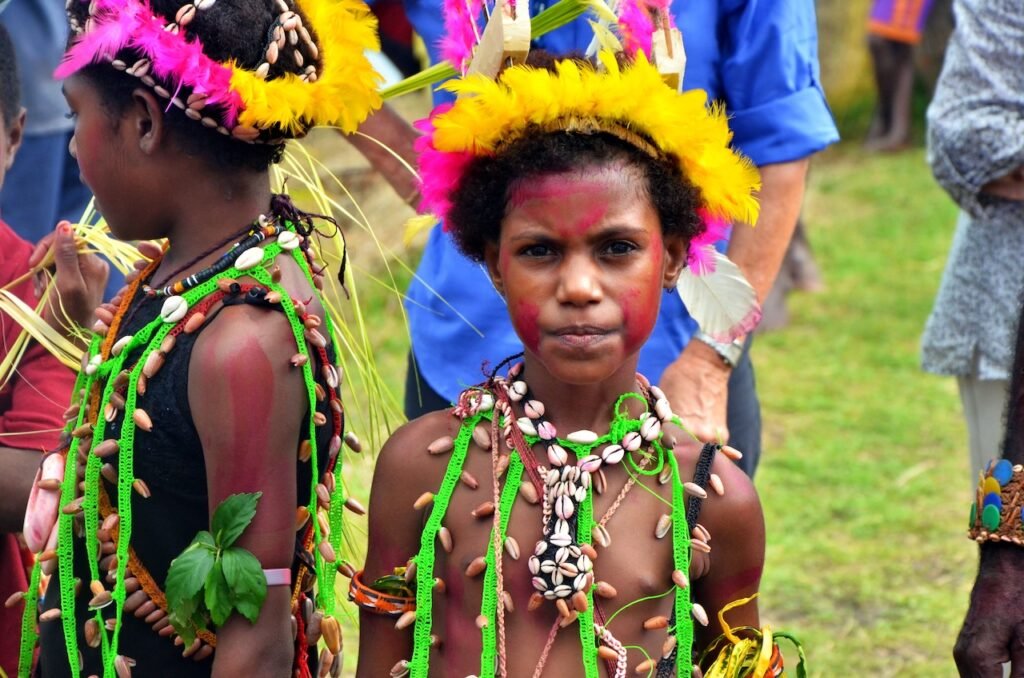
Access requires effort and careful planning — Papua New Guinea is not a destination for casual or unprepared travellers — but for those who make the journey, the Mount Hagen Sing Sing is consistently described as a once-in-a-lifetime experience in the most literal sense. “After travelling to more than 100 countries,” one seasoned expedition traveller noted recently, “Papua New Guinea remains the most extraordinary journey I have experienced.” The Sing Sing is a significant part of why.
Día de los Muertos, Mexico — 1–2 November
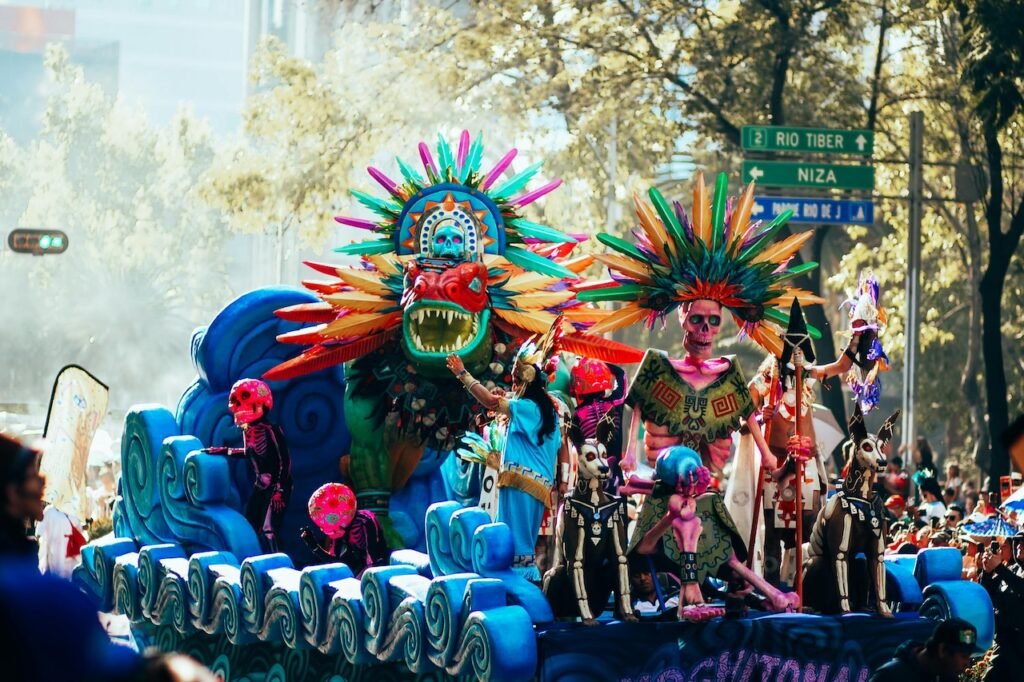
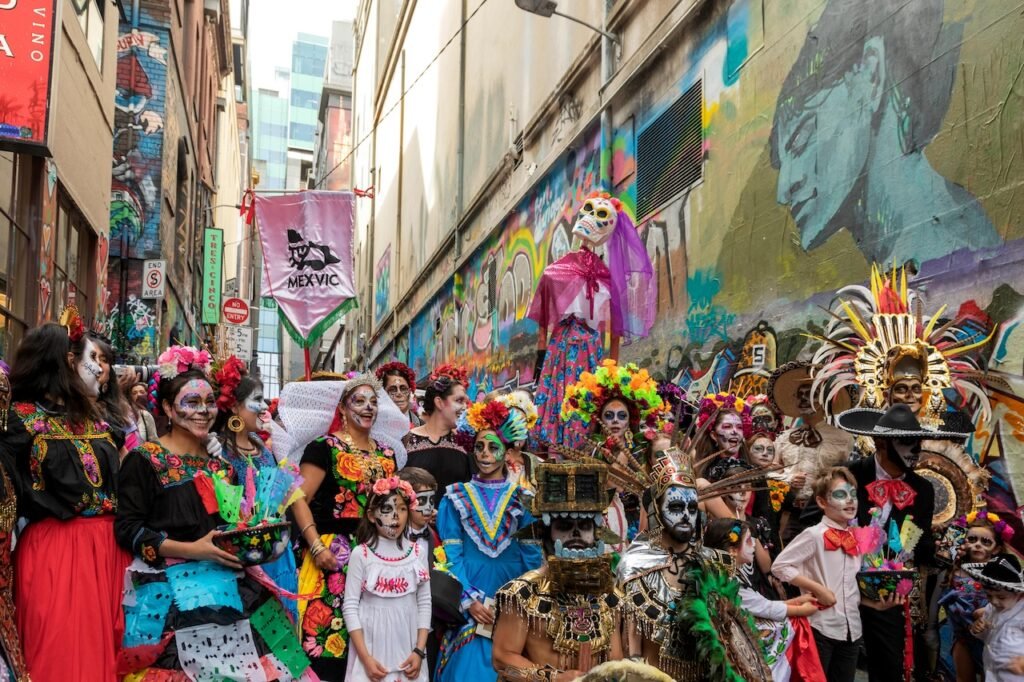
There is a persistent misconception, held largely by those who have never witnessed it, that Día de los Muertos — the Day of the Dead — is a morbid affair. In reality, it is one of the most life-affirming festivals on Earth: a celebration rooted in the belief that the dead return to be with the living for two days each year, and that the correct response to this reunion is not grief but joy, colour, food, music, and an abundance of marigolds.
Observed across Mexico on 1 and 2 November, the festival has pre-Columbian origins that stretch back thousands of years, blended over centuries with the Catholic observances of All Saints’ and All Souls’ Days. At its heart are the ofrendas — elaborate home altars laden with photographs of the deceased, their favourite foods and drinks, candles, marigold petals, and pan de muerto, the enriched bread baked specifically for the season. These are not shrines of mourning; they are places of welcome.
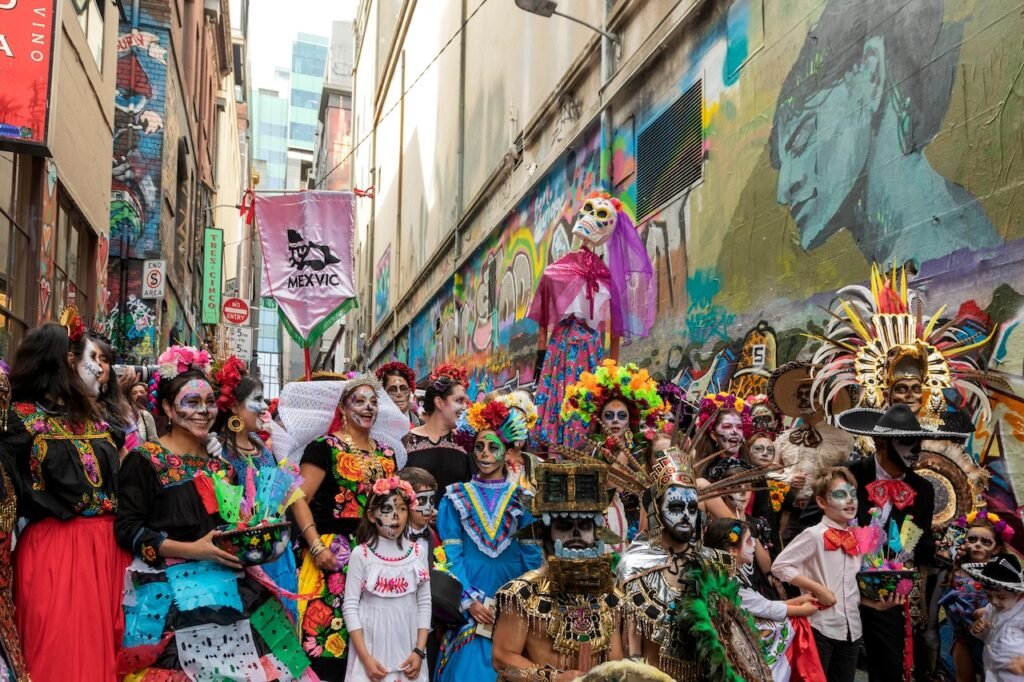
The festival is celebrated across Mexico, but certain locations offer experiences of particular depth and beauty. Oaxaca is widely considered one of the finest places in the country to witness it, with candlelit cemetery vigils, street processions, elaborate skull face-painting, and a palpable sense that the boundary between the living and the dead has genuinely thinned for 48 hours. The hillside cemetery of Miahuatlán and the graveyards of the Zapotec villages surrounding Oaxaca are especially atmospheric.
In Mexico City, the festival has grown dramatically in scale and spectacle in recent years, with enormous street parades through the historic centre drawing hundreds of thousands of participants.
The calavera imagery — sugar skulls, skeleton figures in elaborate dress, the iconic painted faces — has travelled far beyond Mexico’s borders in recent decades, but encountering it in its homeland, in context, is a reminder of how much is lost in translation. This is a festival about love, memory, and continuity: the radical, beautiful insistence that death is not an ending.
Harbin International Ice and Snow Festival, China — January–February
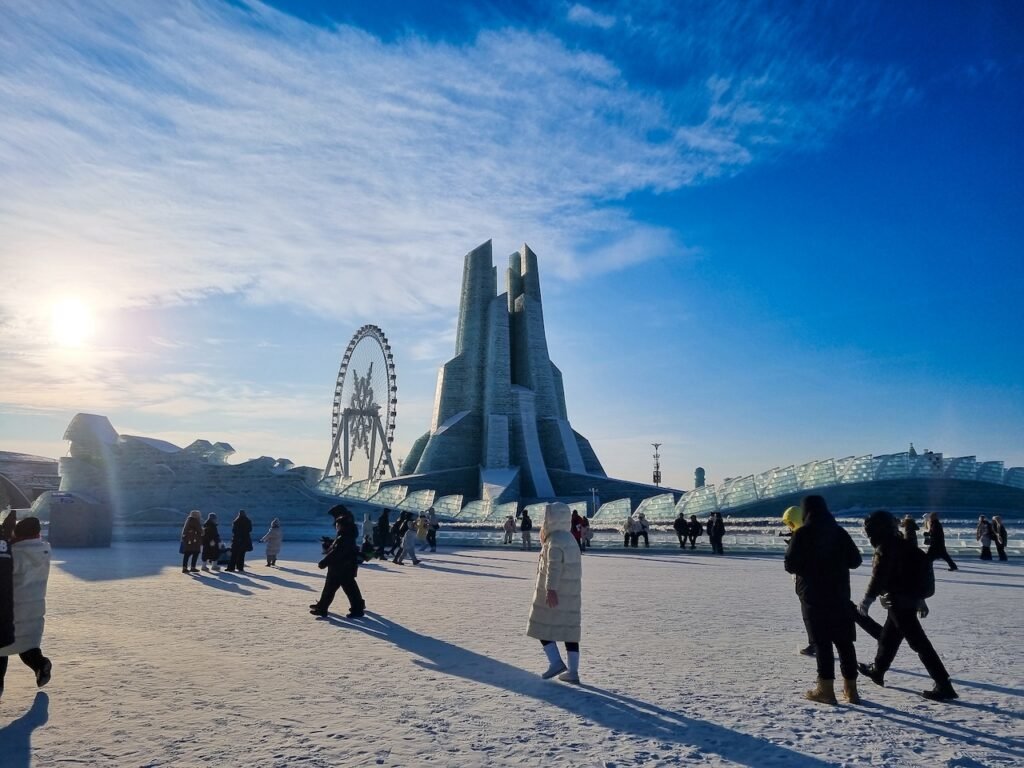
Every January, in the northeastern Chinese city of Harbin, a temporary city rises from the frozen Songhua River — a city made entirely of ice and illuminated from within by coloured lights that transform it, after dark, into something that looks less like anything built by human hands and more like a dream of a place that could not possibly exist. The Harbin International Ice and Snow Festival is the largest ice and snow festival in the world, and no photograph, however spectacular, adequately prepares you for the reality of standing inside it.
The festival’s centrepiece is Ice and Snow World, a sprawling complex of full-scale ice buildings — palaces, cathedrals, pagodas, bridges, entire street scenes — carved from blocks of ice cut from the river and assembled into structures that can reach 20 metres in height. At night, backlighting in every colour transforms the complex into a luminous spectacle of impossible beauty. The cold, which in Harbin in January typically sits between minus 15 and minus 30 degrees Celsius, is the essential ingredient: it is what makes the sculptures possible, and what gives a walk through the complex its particular, otherworldly quality.
Alongside Ice and Snow World, the festival’s Zhaolin Park section focuses on snow sculpture — a different and in some ways even more impressive art form, requiring the rapid carving of enormous figures from compacted snow before temperatures rise and the work begins to soften. International snow sculpture competitions draw teams from across the world, and the standard of work on display is extraordinary.
Harbin’s festival runs from late December through to mid-February, though the main construction and illumination typically peaks in January. The city’s Sophia Cathedral, a stunning Russian Orthodox church that speaks to Harbin’s early 20th-century history as a hub of Russian emigration, is worth visiting regardless of the season — but surrounded by ice sculptures in the depths of a Manchurian winter, it is unforgettable. Dress, needless to say, as warmly as you possibly can: this is one festival where the experience of extreme cold is not incidental but central.
Planning Your Festival Travel
A few practical notes for those inspired to make the journey. Accommodation at major festivals books out months — sometimes years — in advance, and prices in festival towns typically surge dramatically. For events such as Rio Carnival or the Edinburgh Fringe, securing a base as early as possible is not merely advisable but essential.
For more remote festivals — the Carnaval de Oruro, the Mount Hagen Sing Sing — travelling with a specialist operator who has established relationships on the ground will transform the experience. Access, context and safety in logistically complex destinations depend on expertise that cannot be replicated by independent planning alone.
And for every festival on this list, the same advice applies: arrive early, stay curious, and resist the temptation to experience it through a screen. These are events that demand your full presence. Give it to them.
All dates are subject to annual variation. Check individual festival websites for confirmed dates and ticketing information before booking travel.


