
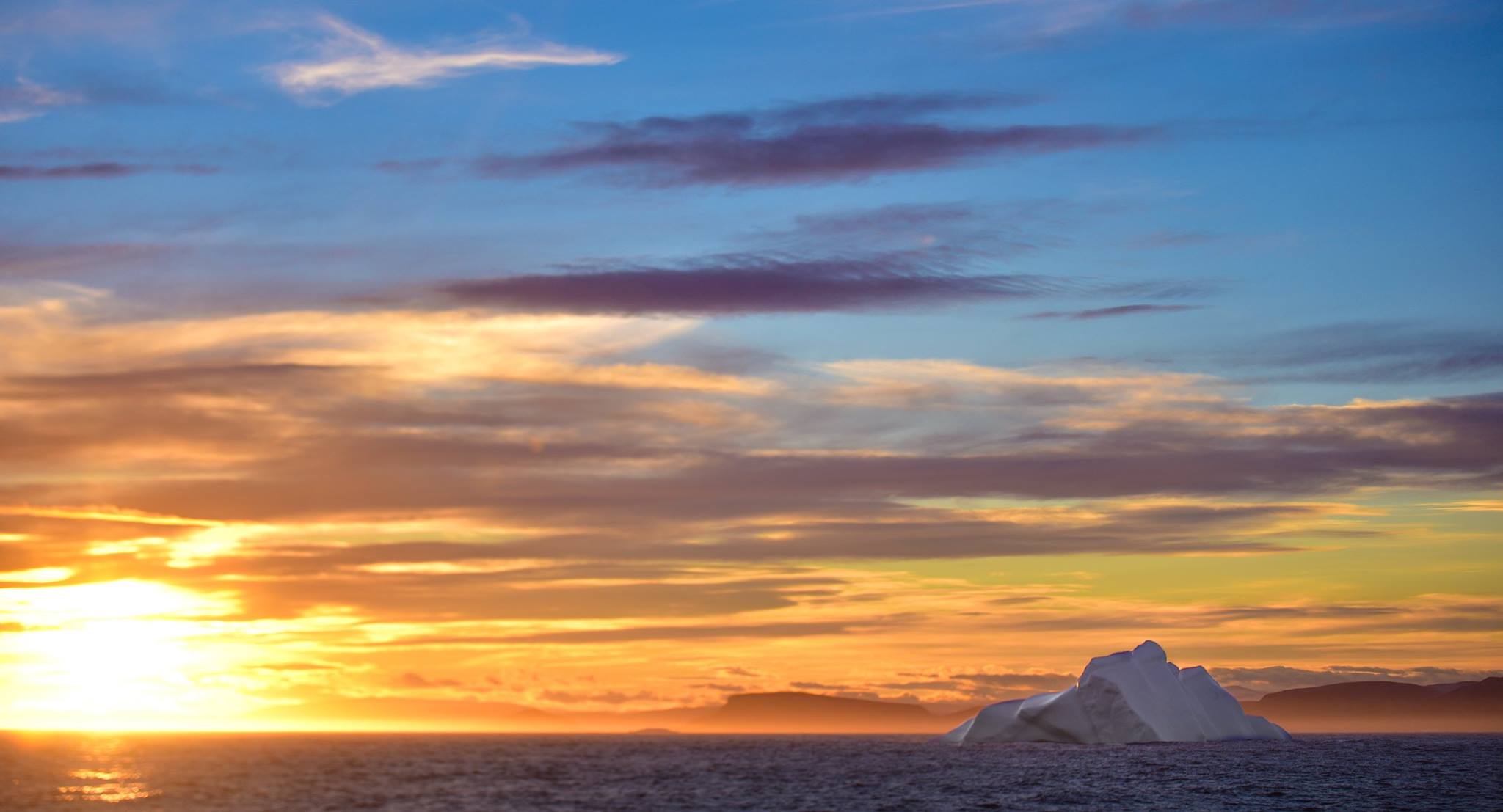

As melting Arctic sea ice opens a legendary route to intrepid travellers, a voyage through Canada’s Northwest Passage offers encounters with polar bears, Inuit culture, and the haunting legacy of history’s greatest polar explorers.
There is a particular travel paradox at play as I slosh through icy puddles, hopping between tufts of thick, honey-hued Arctic moss whilst the fingers of a polar breeze tug at my jacket. Our guides — hooded in Gore-Tex, shotguns cradled in their arms — patrol a makeshift perimeter, drifting in and out of focus through the mist. We share the same watchful purpose, though our motivations differ entirely: I am scanning the desolately beautiful landscape of ancient, weather-pounded stone in the hope of spotting a polar bear; they’re ensuring I do not become one’s breakfast.
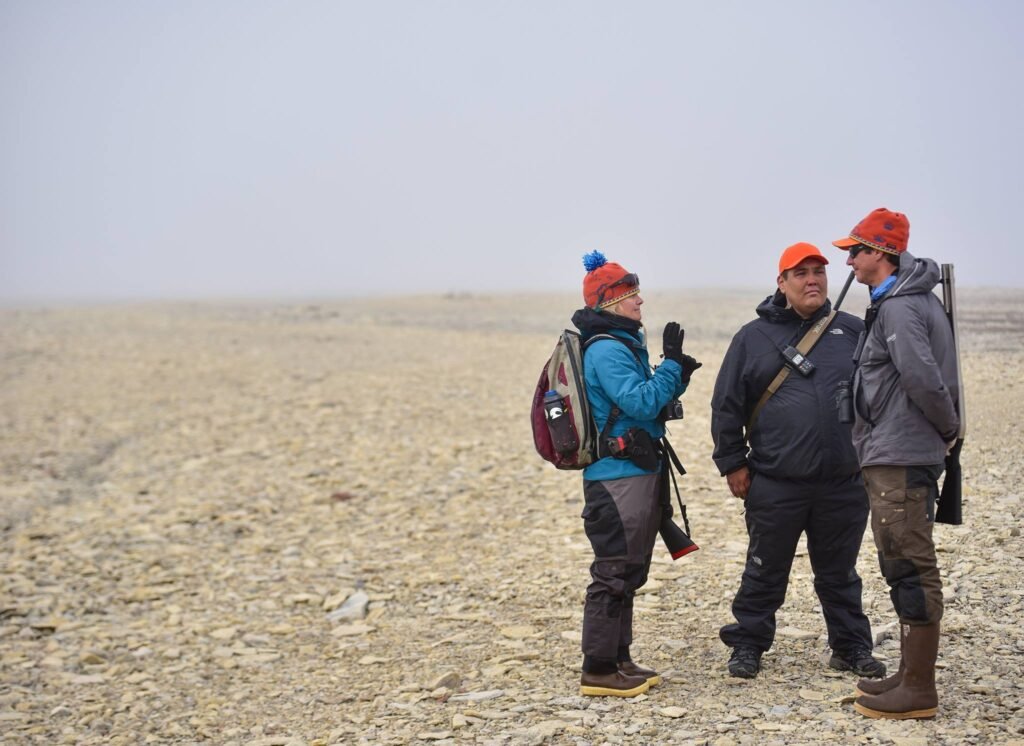
I am deep within the Canadian Arctic Archipelago, a vast sprawl of more than 36,000 islands crowning the North American continent. Our landing at Victory Point on King William Island is the first opportunity to step ashore and immerse ourselves in true Arctic wilderness — and our first significant waypoint as we traverse a portion of the Northwest Passage, the legendary 1,500-kilometre shortcut between Europe and Asia that has captivated explorers for centuries.
Climate change has opened a seasonal navigational window during which a handful of vessels may now pass through unscathed, heralding a new chapter for this storied route and offering the remote communities along its shores tentative new prospects for the future.
A Landscape Layered with History
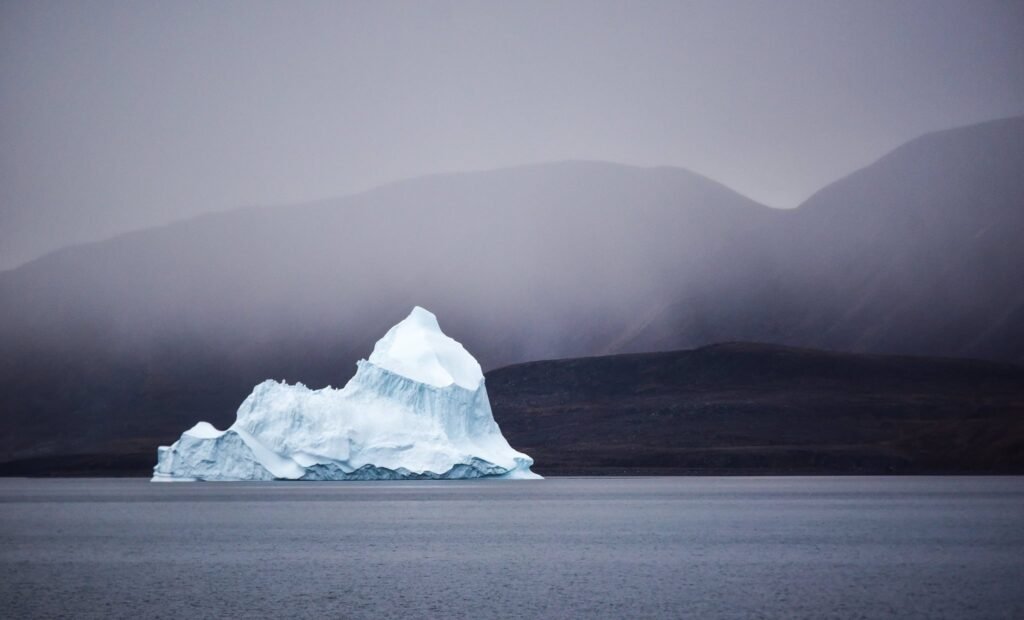
Ancient and modern history converge in the Canadian High Arctic. Explorers have sought the Northwest Passage since Italian navigator John Cabot first attempted the route in 1497, but it is the catastrophic 1845 expedition of Sir John Franklin that haunts these latitudes most profoundly. Franklin’s two ships and their 129-strong crew vanished in the early stages of their search for the Passage, and the more than 50 rescue expeditions dispatched in their wake — many of which ended in further tragedy — collectively helped chart this vast and unforgiving territory.
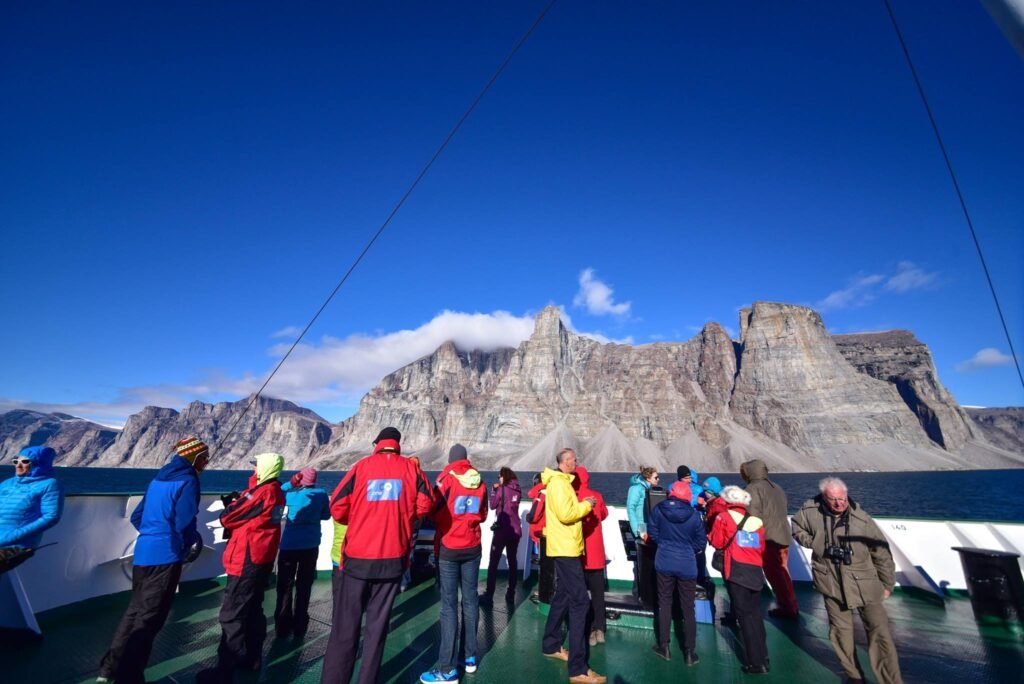
The discovery of Franklin’s vessels, HMS Erebus (found off the coast of King William Island in 2014) and HMS Terror (located the following year), once again focused the world’s attention on the Northwest Passage and the extraordinary secrets these ships may yet reveal. Our vessel, the Russian research ship Akademik Ioffe, played a vital role in search for the wrecks — a detail that lends the journey a quietly thrilling sense of continuity.
Expedition Cruising Brings the Passage to the World
Many expedition cruise lines are now offering Northwest Passage sailings, attracting avid birdwatchers hoping to spot red-throated divers, cackling geese and gyrfalcons; history enthusiasts tracing the routes of Franklin, Ross, and Norwegian polar pioneer Roald Amundsen (who finally completed the Passage in 1906); and seasoned adventure travellers for whom destinations such as Svalbard and the Antarctic Peninsula are already well-stamped in their passports.
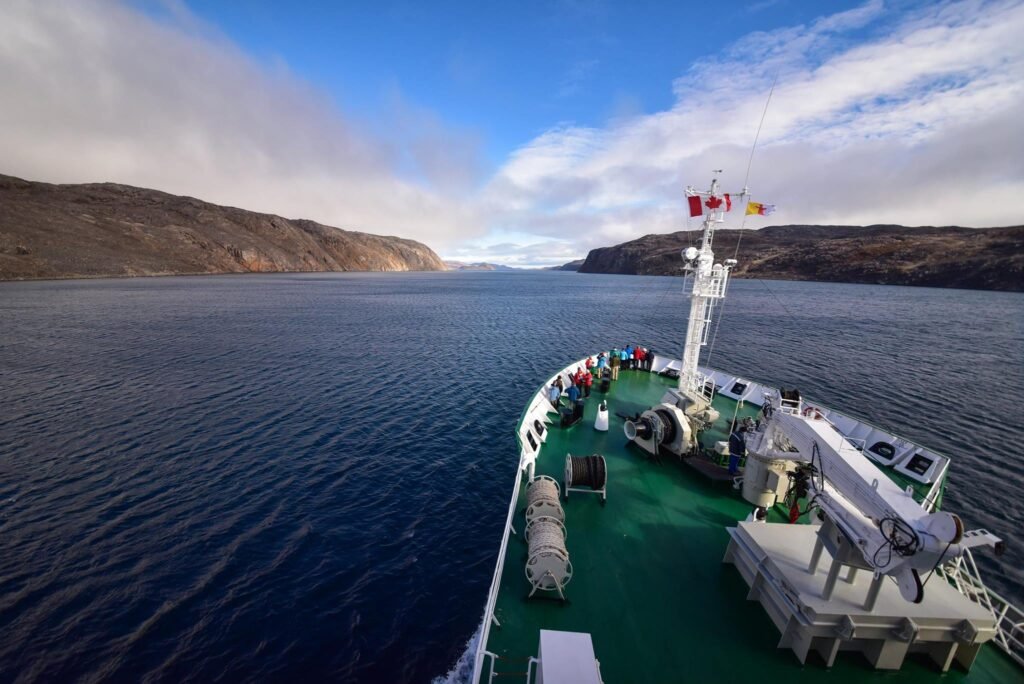
The fleet of modern ice-strengthened ships now prowling the Passage are now opening up these remote locales like never before. Their fleet of military-grade Zodiacs provides unrivalled access to desolate coastlines, glacier faces and straits choked with towering icebergs, while those strengthened hulls prove invaluable given that only ten per cent of the waterways of the Canadian Arctic Archipelago have been fully charted, making every passage a genuinely perilous undertaking. When the Clipper Adventurer ran aground in 2010, it took 40 hours to evacuate its 120 passengers and unpredictable sea ice continues to turn back even well-equipped vessels. The Northwest Passage, in short, remains as much a true expedition today as it was under sail.
Cambridge Bay: Gateway to the Arctic
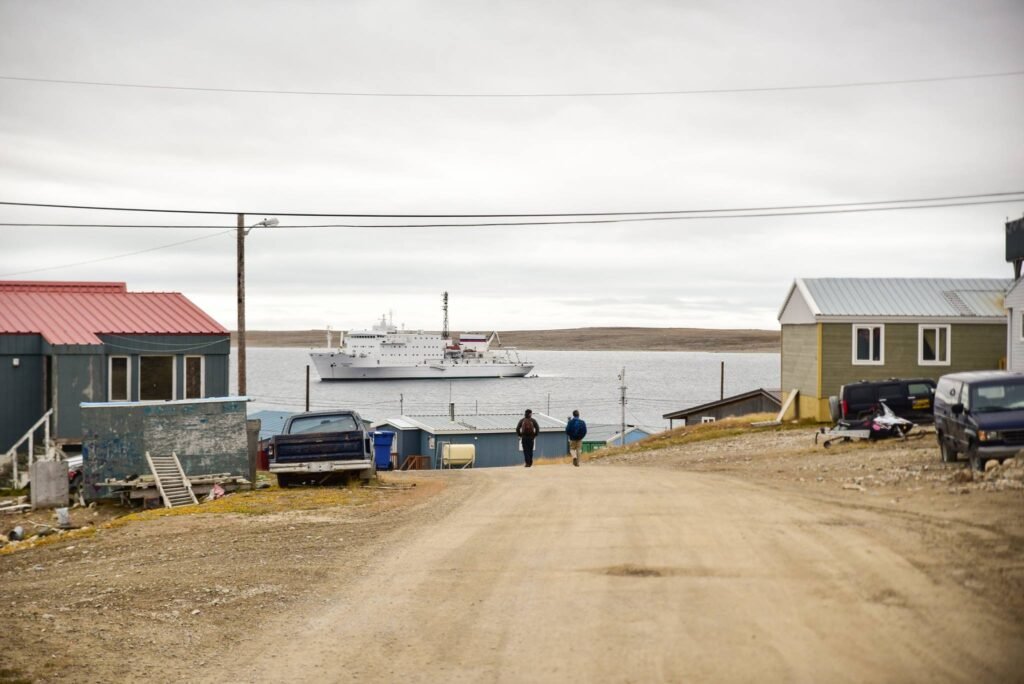
Our adventure begins a day before boarding, with a charter flight from Edmonton to the remote settlement of Cambridge Bay on Victoria Island — population just under 2,000. This weather-whipped town of friendly locals stands stark against the brutal but beautiful landscapes that surround it, and as teens on quad bikes zip by waving, I wonder what it must be like to live in such a remote corner of the world.
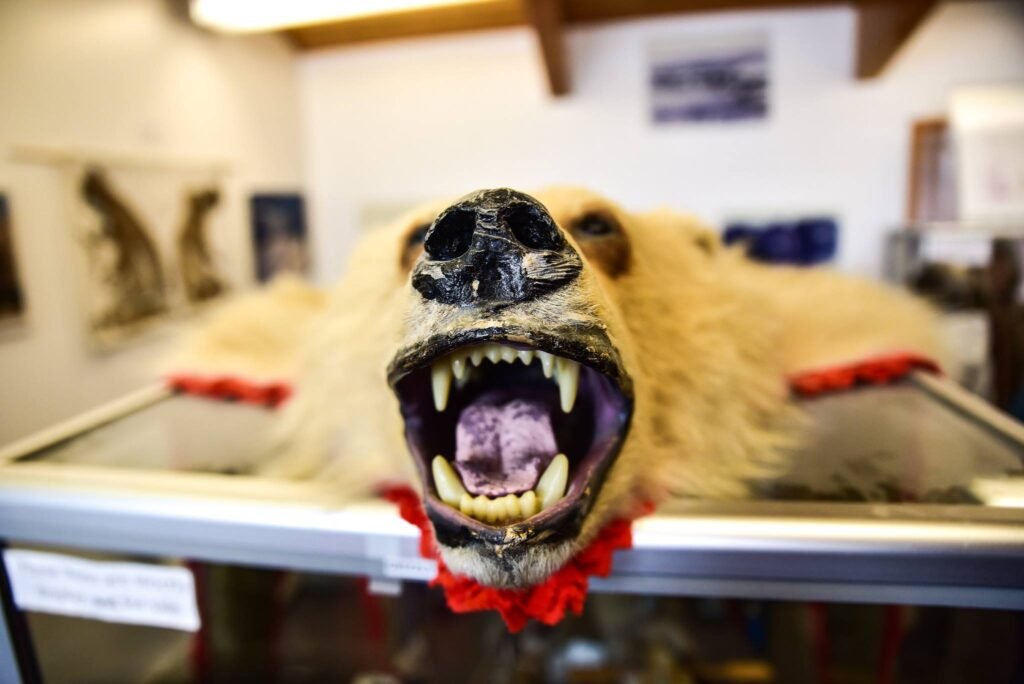
Elders from the hamlet are out in force to guide us through the town, its compact museum (above), and its community centre, which overlooks the inlet where The Maud — Amundsen’s vessel from his second Arctic expedition — was raised after nearly 90 years beneath the frozen water. It’s now housed in a dedicated museum in Norway. Nearby, we spy the low-slung buildings of the Canadian High Arctic Research Station, the opening of which brought much-needed employment and opportunity to this small but resilient community.
Polar Bears and Beluga Whales at Cunningham Inlet
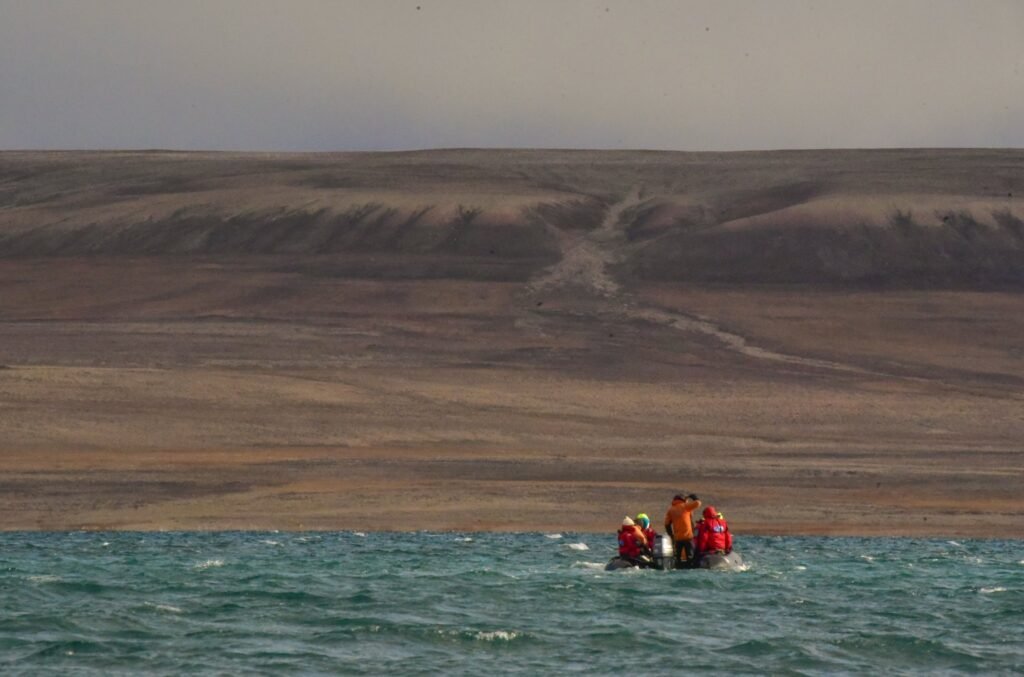
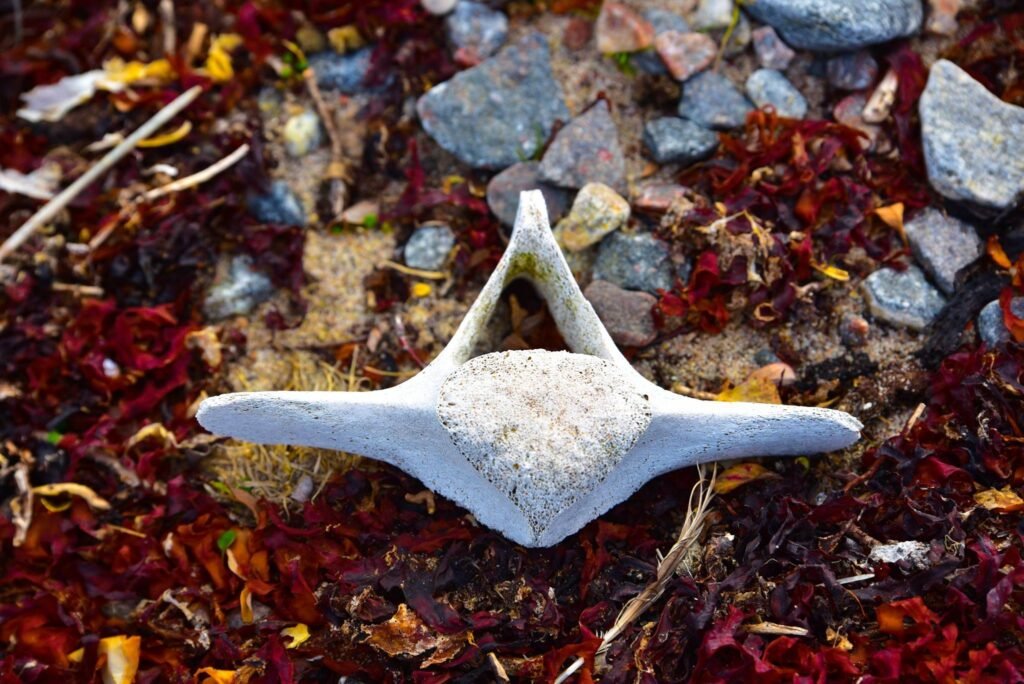
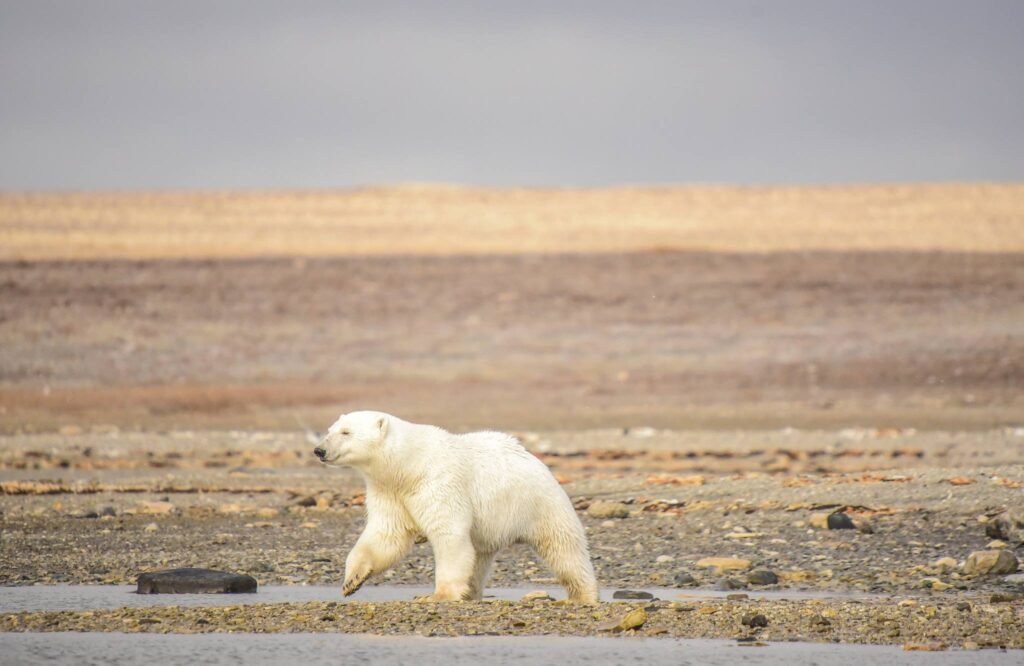
Though polar bears fail to materialise at Victory Point, they make a memorable entrance the following day as we board the Zodiacs and cruise into Cunningham Inlet. Several bears appear as white specks against a coastline streaked with the earthy tones of exposed minerals. Polar bears are drawn to Cunningham Inlet by pods of beluga whales, which congregate in the shallows to groom themselves on the shale — only to become vulnerable prey for these formidable predators.
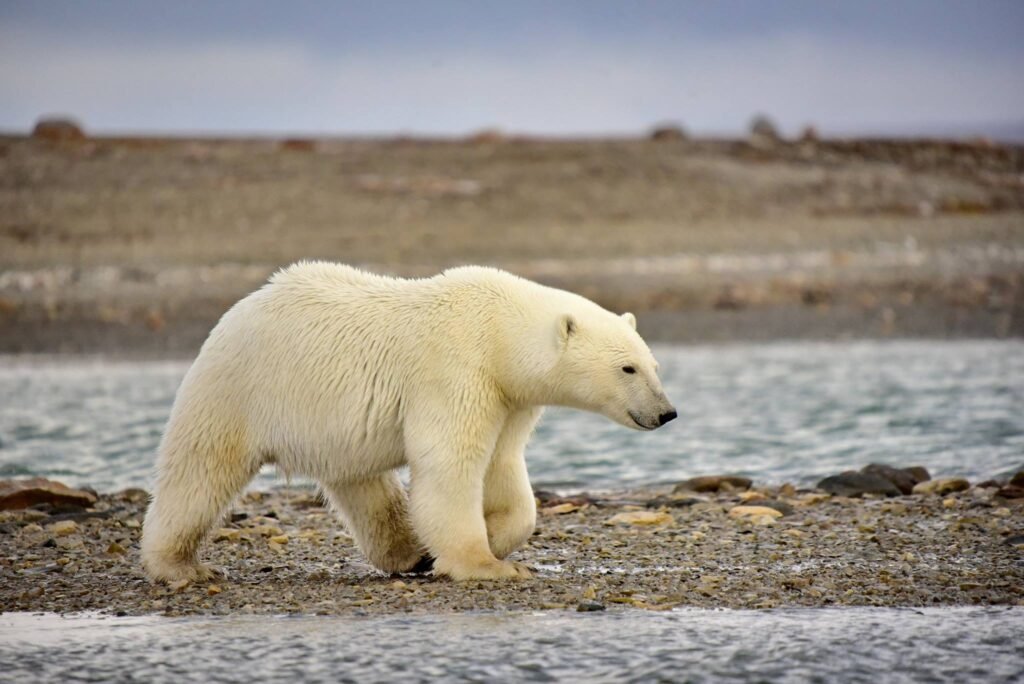
Most bears beat a hasty retreat at our approach, but one young male is entirely untroubled by our presence, continuing to graze on whale skeletons strewn across the beach as we draw closer. His gait is simultaneously lumbering and strangely elegant; the late-afternoon light shimmers off the wet stones beneath his enormous paws. As he lifts his nose to scent the air and holds a pose of near-perfect composure against the fading Arctic sky, the encounter becomes genuinely breathtaking.
Expert Guides and On-Board Insight
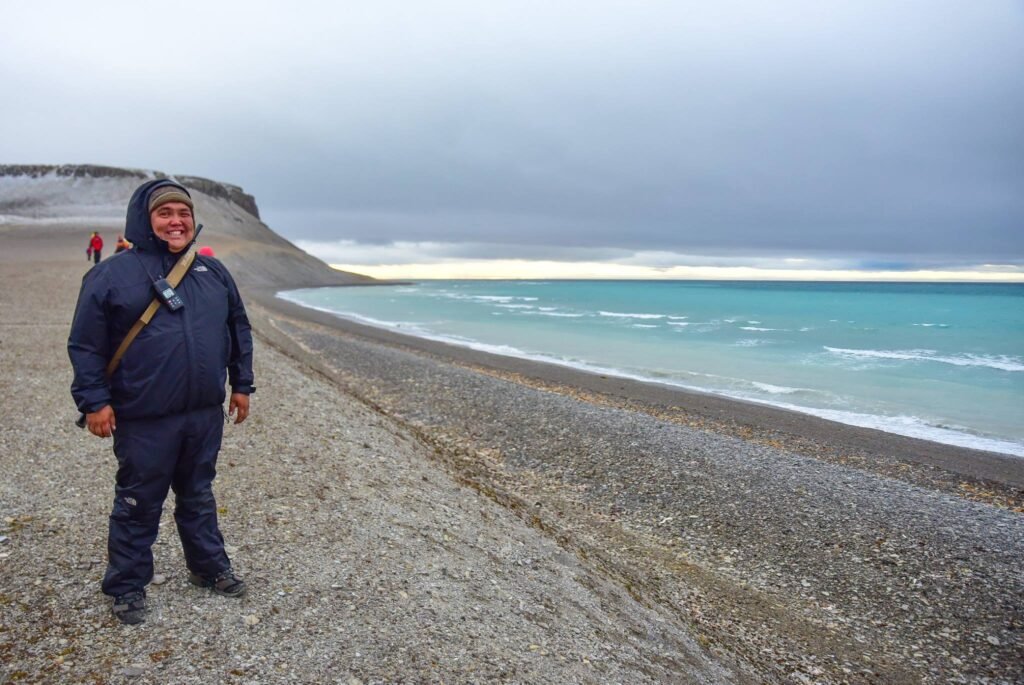
Moments such as this are given context and depth by One Ocean’s exceptional team of naturalists and expedition guides. The roster includes Atuat Shouldice, an Inuit guide and environmental inspector based in Rankin Inlet; David Begg, a New Zealand mountain guide; and Katie Murray, a Scottish historian with an openly declared passion for Sir John Franklin. The team delivers lectures and informal talks on the region’s history, ecology, and wildlife between the Zodiac excursions and shore landings that punctuate each day.
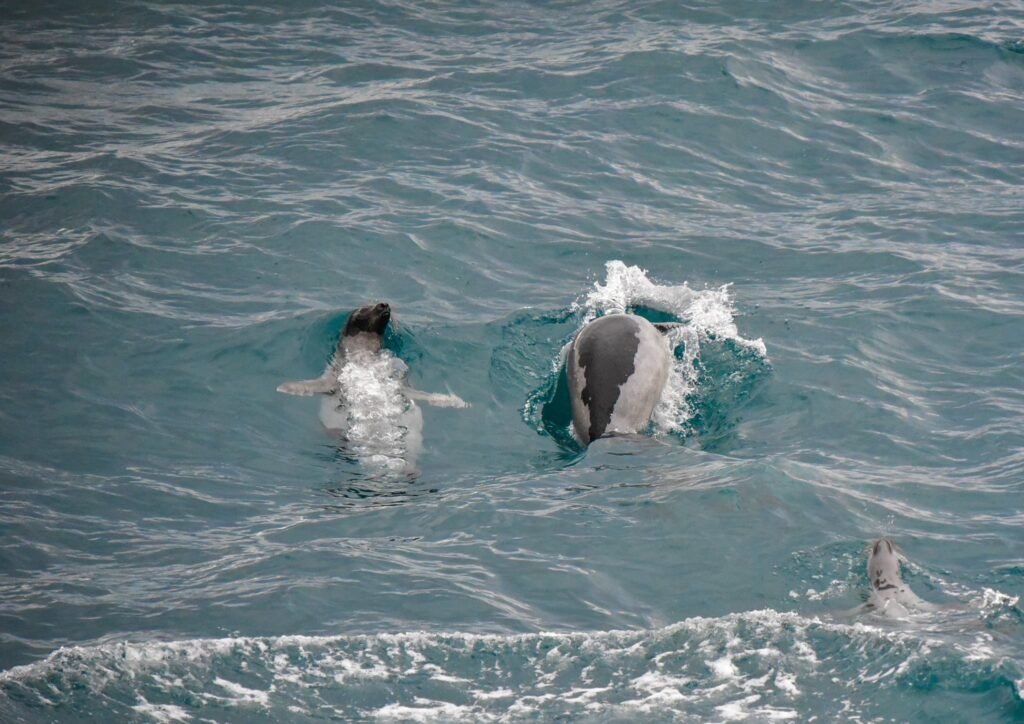
Their expertise proves invaluable — and so do their sharp eyes. Cruising through the calm, wafer-thin waters of the 25-kilometre Bellot Strait and past Zenith Point, the northernmost tip of mainland North America, expedition leader Boris Wise spots a pair of Arctic wolves on the shoreline. Crossing Parry Sound en route to Beechey Island, the ship slows to give way to a massive herd of sleek harp seals.
Beechey Island: A Pilgrimage for the Historically Minded
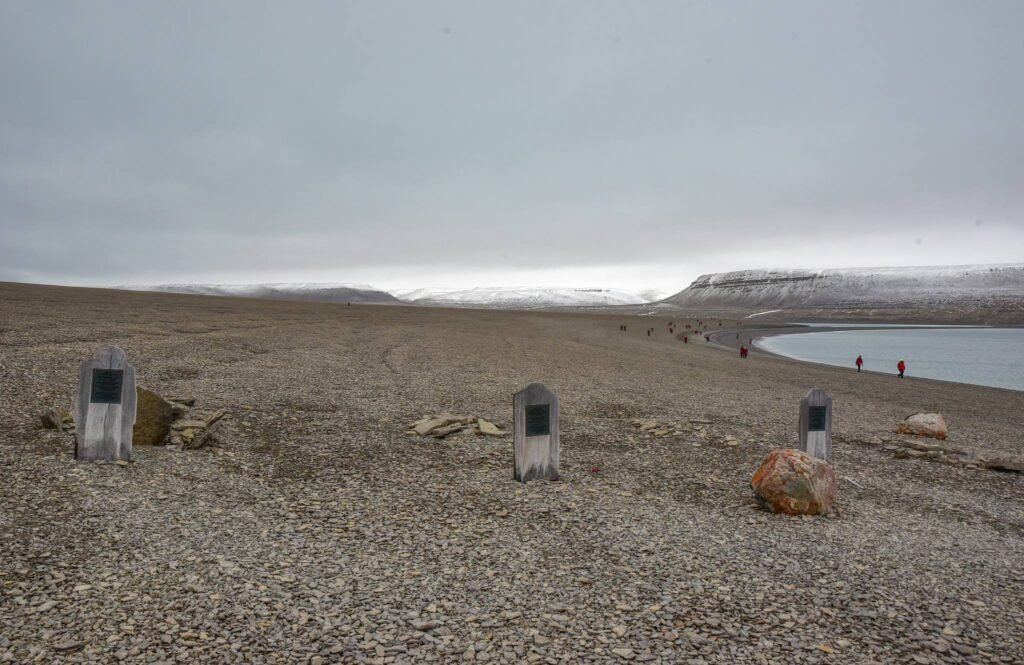
Windswept Beechey Island, perched at the tip of Devon Island — a landscape so austere that NASA has used it to simulate conditions on Mars — carries enormous historical weight. It was here that Franklin and his crew overwintered in 1845–46 before vanishing without trace. The remnants of their camp went undiscovered until 1851.
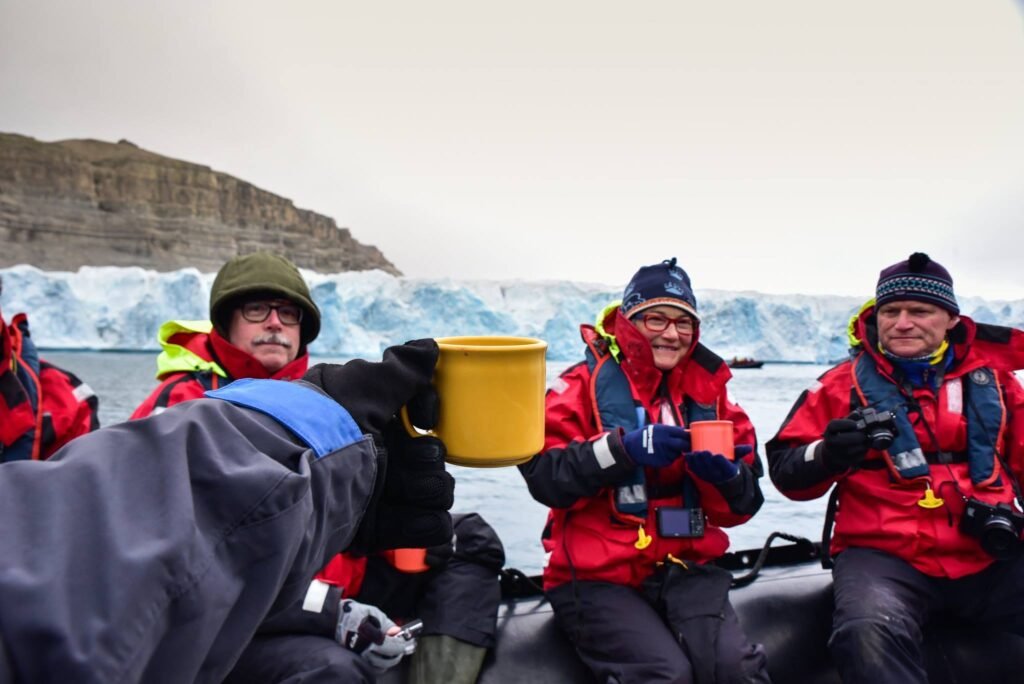
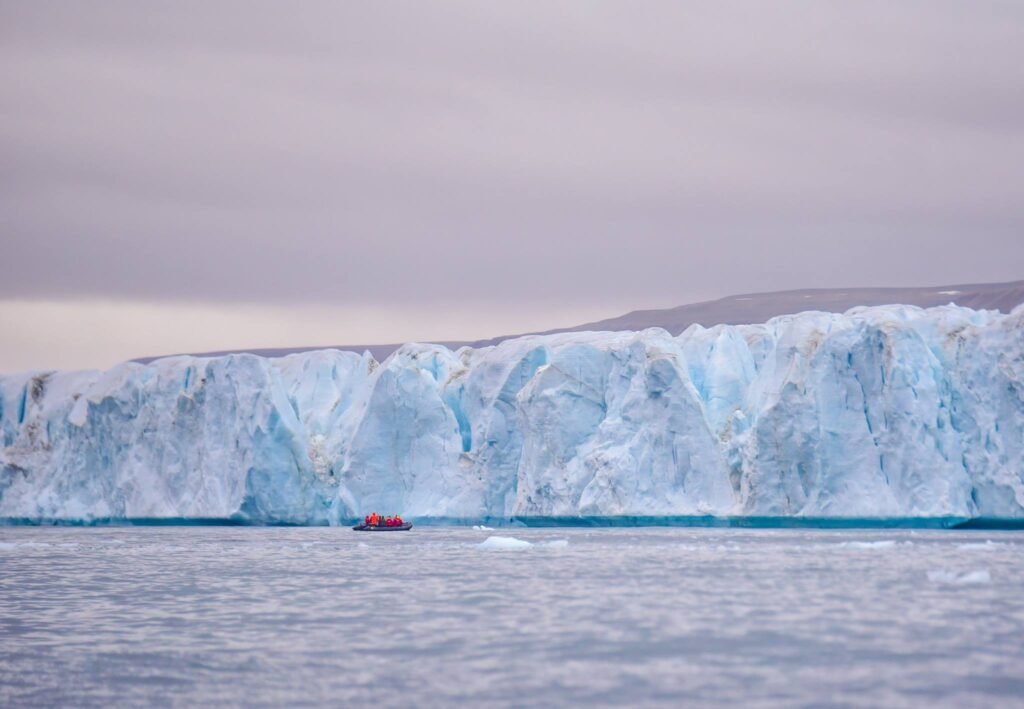
We gather at the three graves of crew members who did not survive that first winter, and Boris leads a quiet, moving toast to explorers past and present. The mood lifts that afternoon as we crane our necks at the towering glaciers of Croker Bay, their jagged faces pockmarked with ice caves that reveal a shimmering aquamarine interior.
Inuit Communities Along the Route
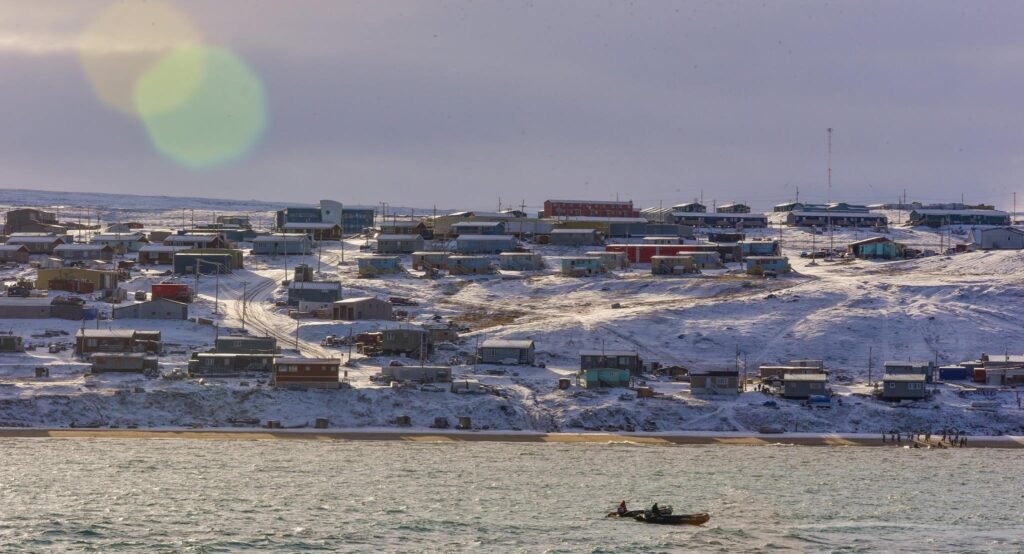
The Northwest Passage is not solely a landscape of tundra and mountain peaks. The itinerary includes visits to communities along the route, among them Pond Inlet, a predominantly Inuit hamlet at the northern tip of Baffin Island, and Pangnirtung, where local guides weave together history and folklore over steaming mugs of Arctic heather tea. These encounters are among the most quietly affecting of the entire journey.
Bowhead Whales and the Final Approach
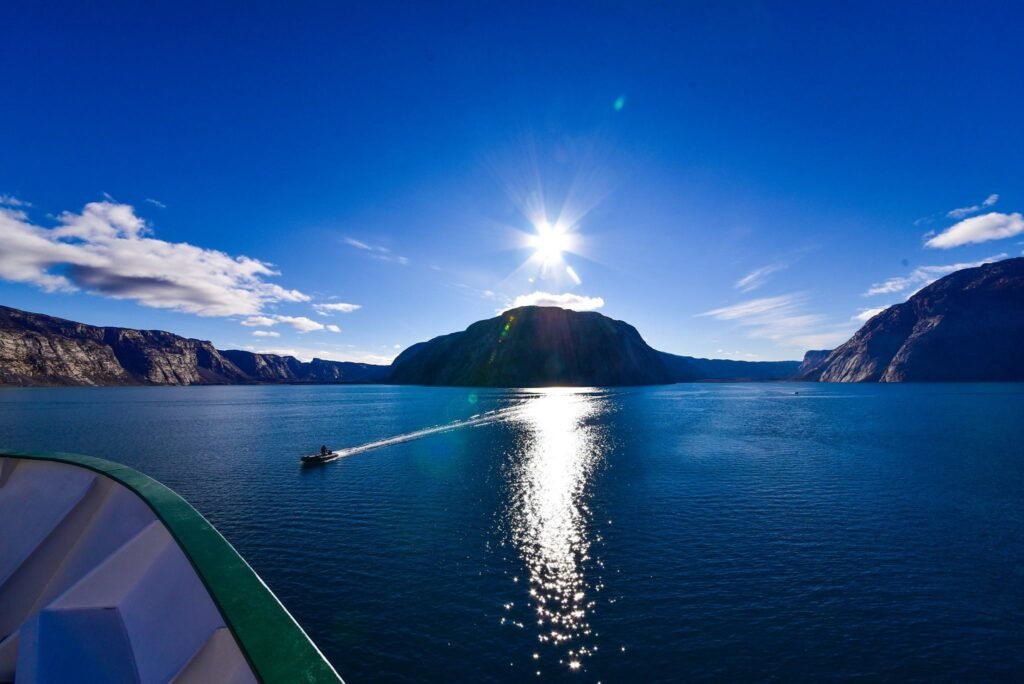
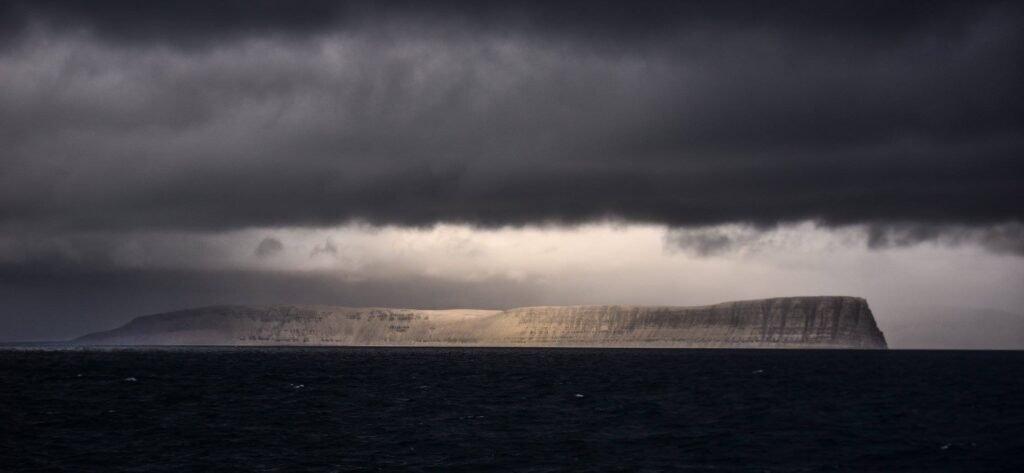
As the voyage draws to a close, we run from an Arctic squall that whips the icy seas off the east coast of Baffin Island into marching ranks of whitecaps. A pod of rare bowhead whales appears indifferent to the conditions, lolling contentedly through Isabella Bay, a protected marine sanctuary. The weather relents in time for a visit to the aptly named Sunshine Fjord — one of a series of deep, drowned valleys carved into Baffin’s rugged coastline — where sheer rock faces plunge to mirror-still waters kissed by an unexpectedly intense late-summer sun.
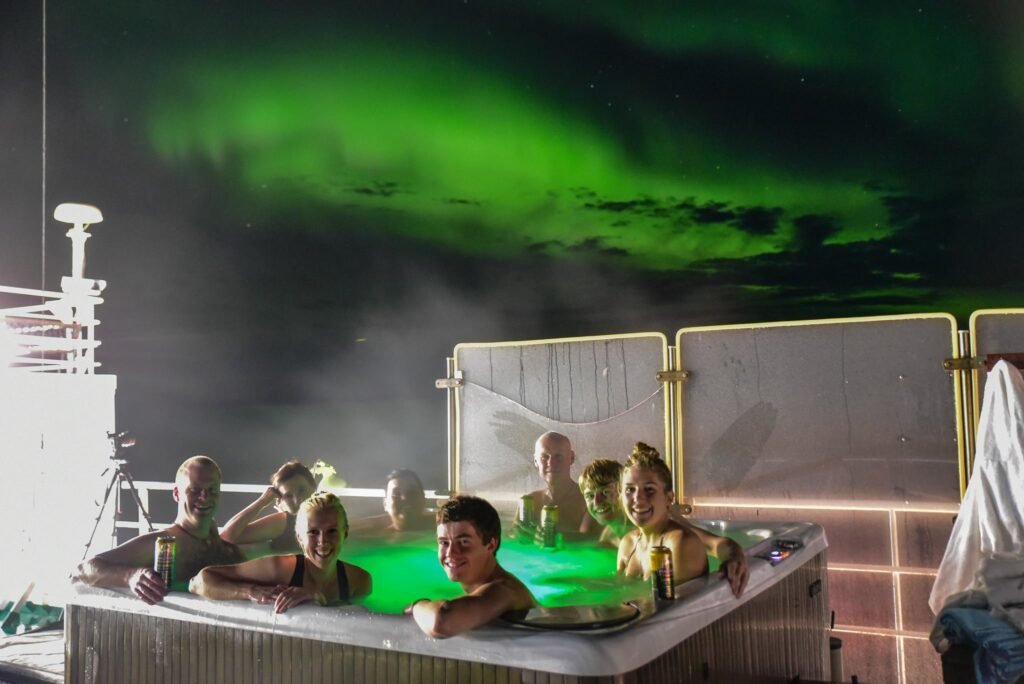
We mark the end of the voyage as only the Arctic allows: watching the Northern Lights from the ship’s outdoor jacuzzi, the sky ablaze with colour above the frozen dark. It is a mesmerising conclusion to a journey that speaks eloquently of the past whilst offering a tantalising glimpse of the future of this formidable, awe-inspiring, and utterly unmissable corner of the world.
Northwest Passage Expedition: Your Questions Answered
Planning an Arctic expedition cruise through the Northwest Passage? Here are answers to the questions travellers ask most.
What is the Northwest Passage and where is it?
The Northwest Passage is a sea route stretching approximately 1,500 kilometres through the Canadian Arctic Archipelago, connecting the Atlantic and Pacific Oceans via the Arctic Ocean. It passes through more than 36,000 islands across Canada’s far north, traversing straits, sounds and channels including Bellot Strait, Parry Sound and Victoria Strait.
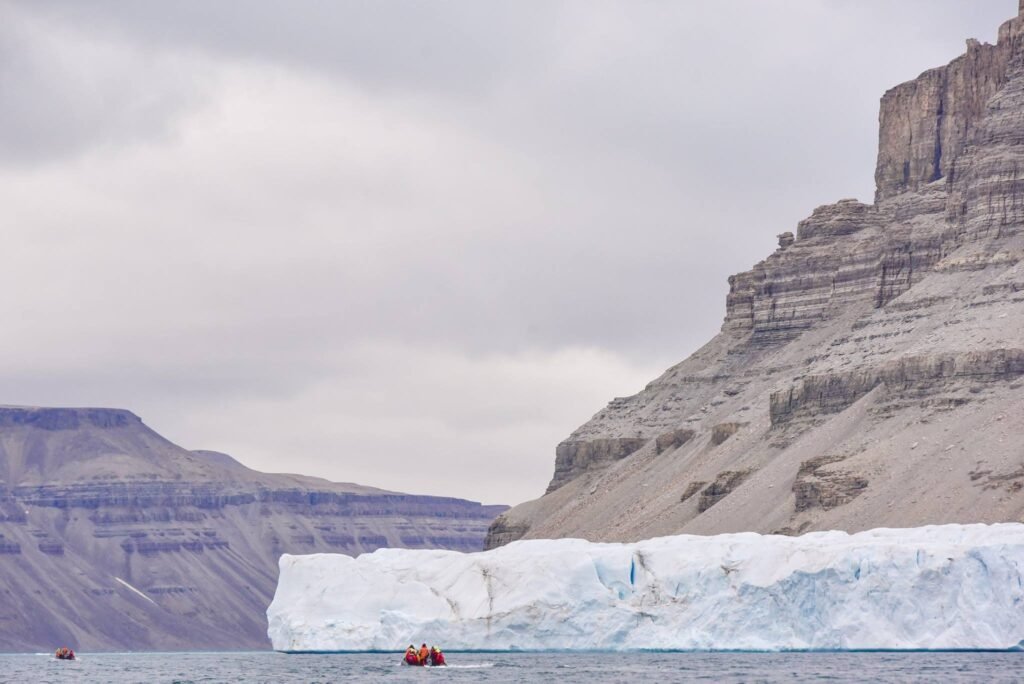
Long considered one of the world’s most treacherous and elusive maritime routes, it has only become navigable for a narrow seasonal window in recent decades, as retreating sea ice has opened new possibilities for expedition vessels.
When is the best time to sail the Northwest Passage?
The Northwest Passage is navigable for a brief window between late July and September, when Arctic sea ice retreats sufficiently to allow passage. August is generally considered the optimal month, offering the greatest chance of open water, the best wildlife-viewing conditions and the possibility of witnessing the midnight sun. Outside of this window, the route is frozen and impassable. Given the unpredictability of Arctic sea ice, even summer sailings are not guaranteed, which is part of what makes the Northwest Passage one of the world’s last truly great adventure voyages.
How long does a Northwest Passage cruise take?
Most Northwest Passage expedition cruises last between 14 and 24 days, depending on the itinerary and whether passengers embark on a full transit or a partial crossing. Voyages typically begin or end in Cambridge Bay, Nunavut, or Kangerlussuaq in Greenland, with charter flights connecting travellers to and from major hubs such as Edmonton or Ottawa.
A full transit, sailing from the Beaufort Sea to Baffin Bay, offers the most comprehensive experience and the greatest variety of landscapes, wildlife and historic sites.
Is it possible to see polar bears on a Northwest Passage expedition?
Yes — polar bear sightings are one of the great highlights of any Northwest Passage voyage. The bears are most commonly encountered along coastlines and inlets where food sources are plentiful, such as Cunningham Inlet on Somerset Island, where they gather in summer to hunt beluga whales. Sightings are never guaranteed in the wild, but experienced expedition guides know where to look, and zodiac excursions bring travellers close to the shore in safety.
Other wildlife regularly encountered along the route includes Arctic wolves, harp seals, bowhead whales, beluga whales and a remarkable array of Arctic seabirds.
What happened to Sir John Franklin’s expedition?
Sir John Franklin led a British Royal Navy expedition of 129 men and two ships — HMS Erebus and HMS Terror — into the Arctic in 1845 in search of the Northwest Passage. The expedition became icebound in Victoria Strait, near King William Island, and all hands were eventually lost.
The precise fate of the crew (to whom we’re toasting to above) remains one of history’s great mysteries, though evidence suggests the men abandoned the icebound ships and attempted to trek south, perishing from a combination of starvation, cold, lead poisoning and illness.
HMS Erebus was discovered in 2014 and HMS Terror in 2016; ongoing archaeological work continues to shed new light on what befell Franklin’s men. There’s a great television series called Terror starring Jared Harris, Tobias Menzies, Ciarán Hinds and Nive Nielsen that (fictionally) conveys many of these leading theories.
What should I pack for a Northwest Passage cruise?
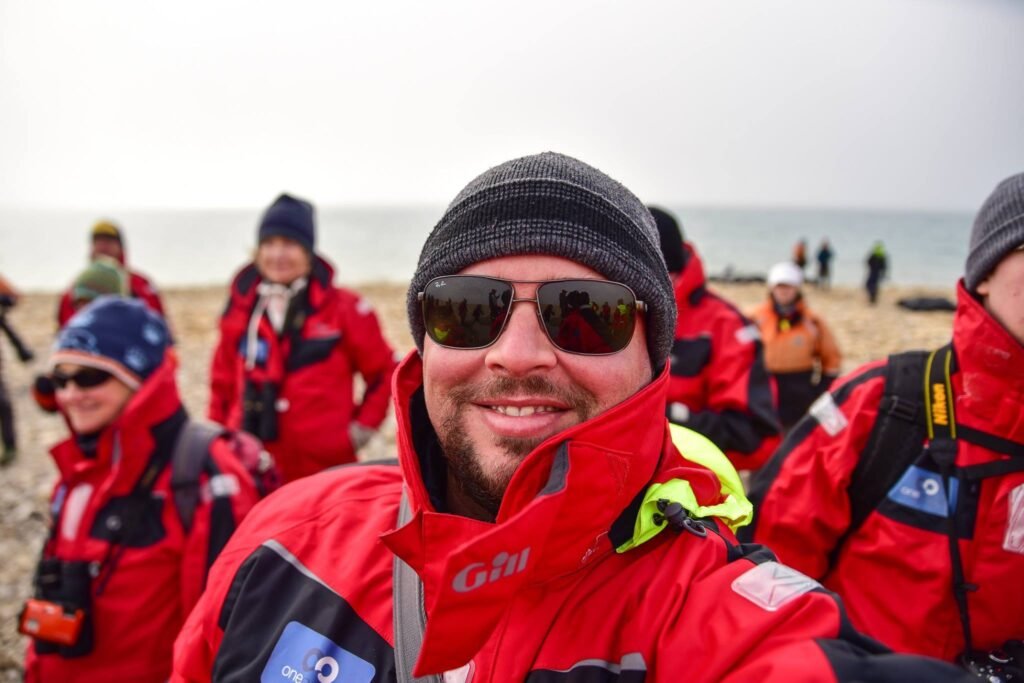
Layering is essential for Arctic expedition travel, where temperatures in August typically range from 0°C to 10°C but can drop significantly with wind chill. Key items include a waterproof and windproof outer shell, thermal base layers, insulated mid-layers, waterproof trousers, sturdy waterproof boots suitable for wet zodiac landings, warm gloves, a hat and sunglasses.
Most expedition operators provide passengers with rubber boots and, in some cases, parkas for shore landings. A good pair of binoculars is invaluable for wildlife spotting, and a camera with a telephoto lens will prove its worth many times over. Check out our guide to packing for polar cruises.
How physically demanding is a Northwest Passage expedition?
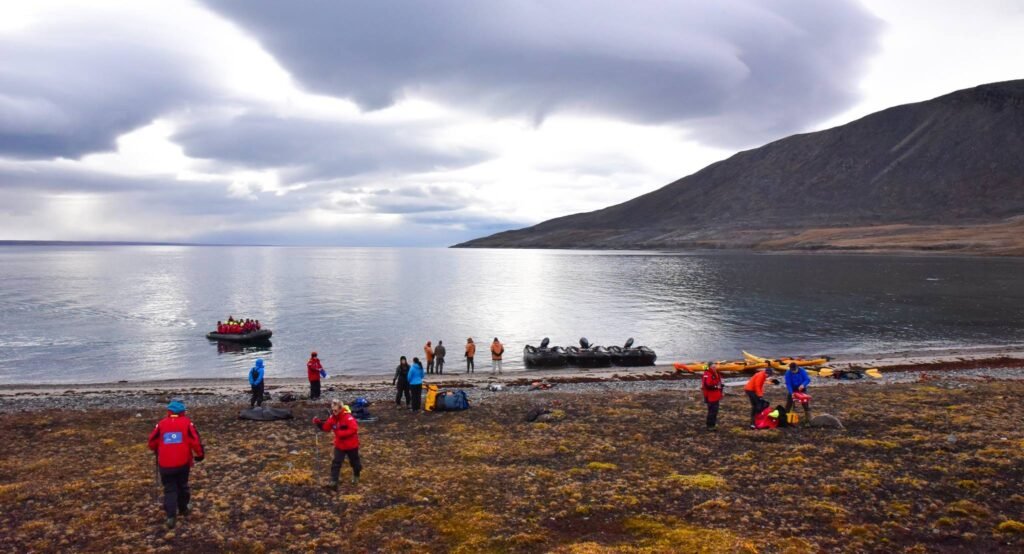
A Northwest Passage cruise is accessible to most reasonably fit travellers, though a moderate level of physical fitness is recommended. Shore landings via zodiac require passengers to step in and out of inflatable boats — sometimes in shallow water — and walks ashore can involve uneven, boggy or rocky terrain.
Some optional excursions, such as glacier hikes, are more strenuous. The ships themselves are comfortable and well-equipped, and there is no obligation to participate in every activity. Travellers with mobility concerns should consult their operator in advance to discuss accommodation and excursion options.
What is the environmental impact of Northwest Passage cruises?
Responsible expedition operators adhere to strict environmental protocols in the Arctic, including limits on passenger numbers ashore at any one time, mandatory biosecurity measures to prevent the introduction of invasive species, and adherence to guidelines set by the Association of Arctic Expedition Cruise Operators (AECO).
Choosing a reputable operator that prioritises sustainability, supports local Inuit communities and employs trained naturalists and guides is the most important step a traveller can take. Many operators also contribute directly to Arctic research and conservation — the Akademik Ioffe, for instance, played a key role in the expedition that located HMS Erebus in 2014.
If you’re contemplating an expedition cruise, check out our guides to Arctic expedition cruises, Antarctic expedition cruises, and the best expedition cruise destinations and cruise lines, as well as a few that have strong green creddentials. Also, don’t forget to brush up on your polar photography and polar videography skills, and to pack the polar essentials with our in-depth guides.


