
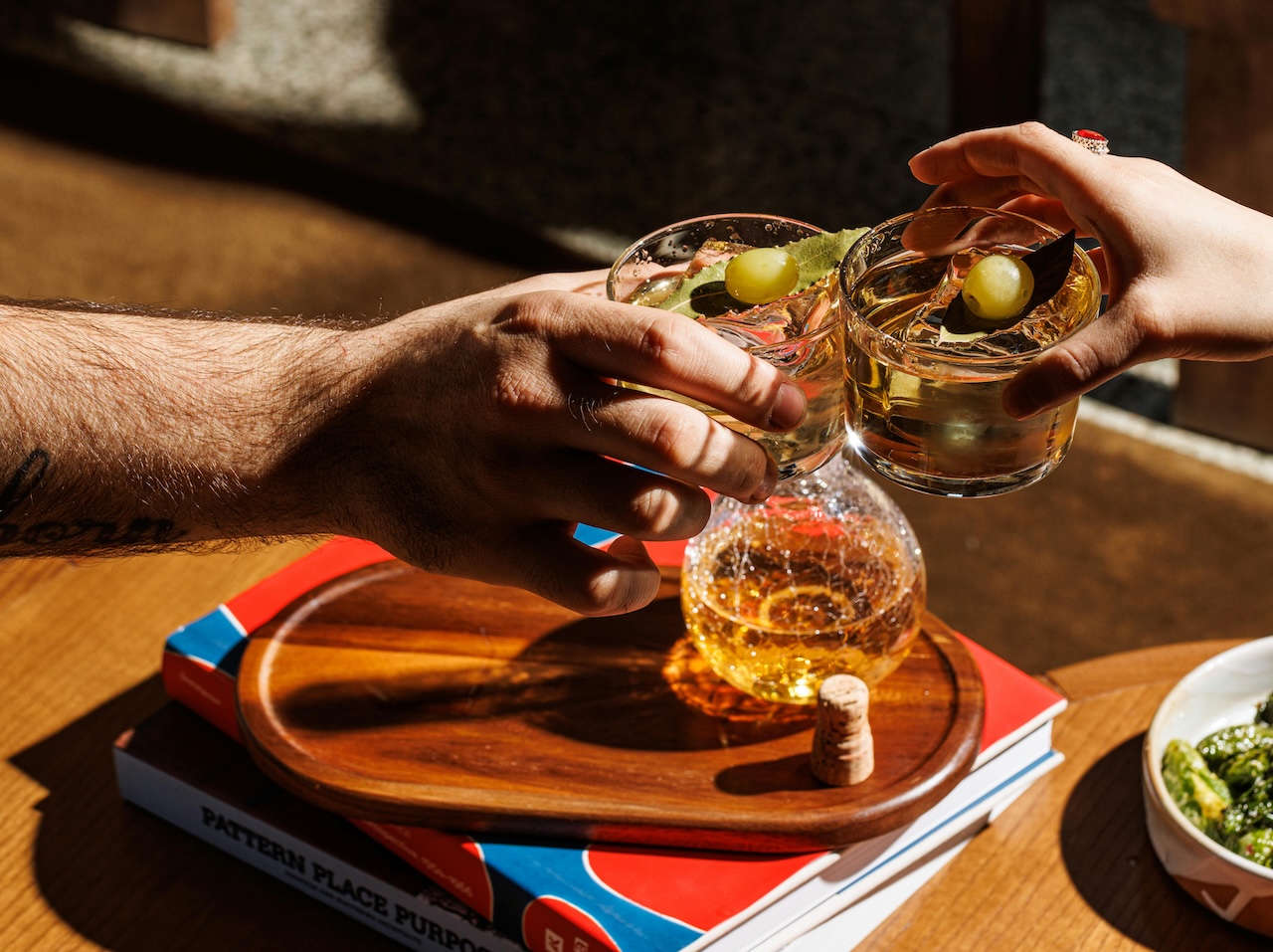

Vermouth is as much a part of the Spanish capital’s identity as its architecture and its laid-back persona. Here’s what you need to know and where to go to sip vermouth like a local.
There is a ritual in Madrid that no guide to the city should leave unchronicled. On weekend mornings, as the clock nudges towards noon, something shifts in the old neighbourhoods. The shuttered bars and bodegas begin to fill. Zinc counters disappear beneath plates of anchovies, olives and conservas. Enormous barrels of dark, aromatic wine take centre stage. And all across La Latina, Malasaña, Chueca and the Barrio de las Letras, the same order rings out at counters across the city: “Un vermut, por favor.”
La hora del vermut — the vermouth hour — is not merely a drinking tradition. It’s a social institution, a weekly ceremony of conversation, food and unhurried pleasure that sits at the very heart of what it means to be Madrileño. To participate in it, even once, as I found out on my first visit to the Spanish capital, is to understand something essential about this city that no museum or monument can quite convey.
What Is Vermouth?
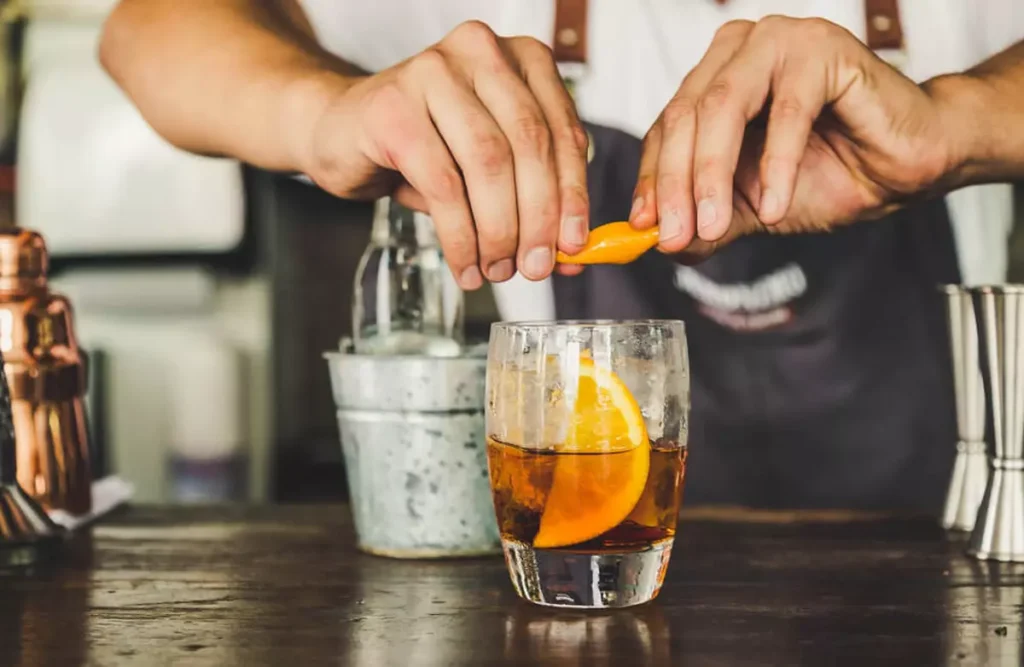
Vermouth — vermut or vermú in Spanish — is a fortified, aromatised wine infused with a blend of botanicals, herbs, spices, roots and bitters, typically sweetened and served over ice. The name derives from the German Wermut, meaning wormwood, a bitter herb that was among the drink’s original key botanicals.
Vermouth’s origins are ancient — wine infused with herbs and used medicinally dates back to Ancient Greece and Rome — but the modern style of vermouth emerged in 18th-century Turin, where it was first produced commercially and drunk as an aperitif before meals.
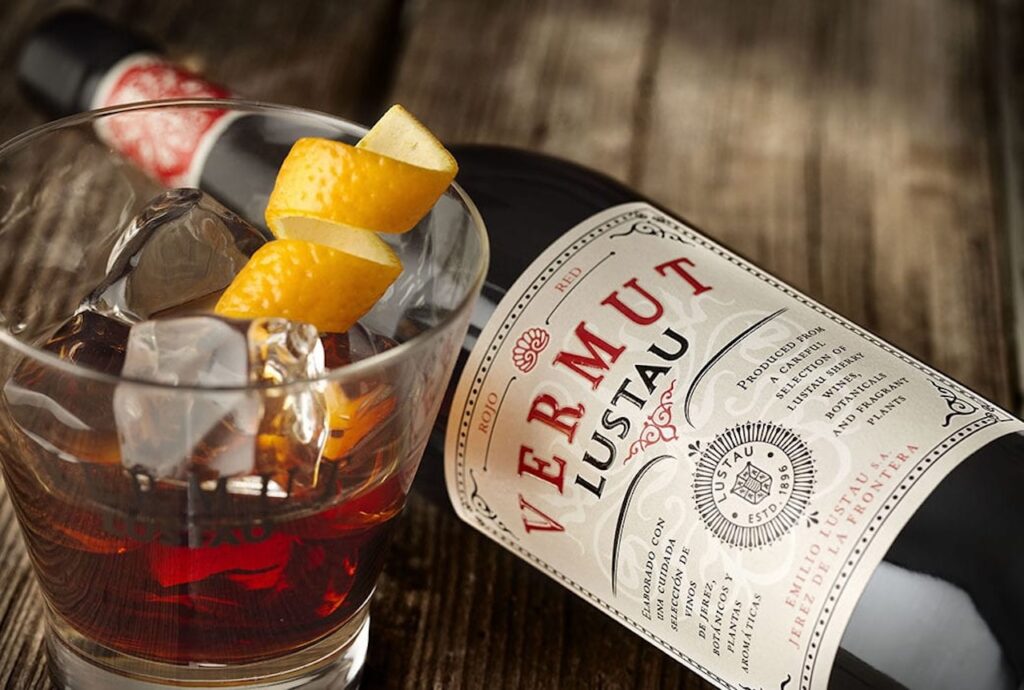
Spanish vermouth differs subtly from its Italian counterparts. The predominant style is vermut rojo (red vermouth) — richer, deeper and more intensely botanical than the lighter Italian rosso, typically darker in colour and with a pronounced bitterness balanced by caramel sweetness. Vermut blanco (white vermouth) is drier and more delicate, often enjoyed on its own or used in cooking, while vermut rosado (rosé) has become increasingly popular in recent years.
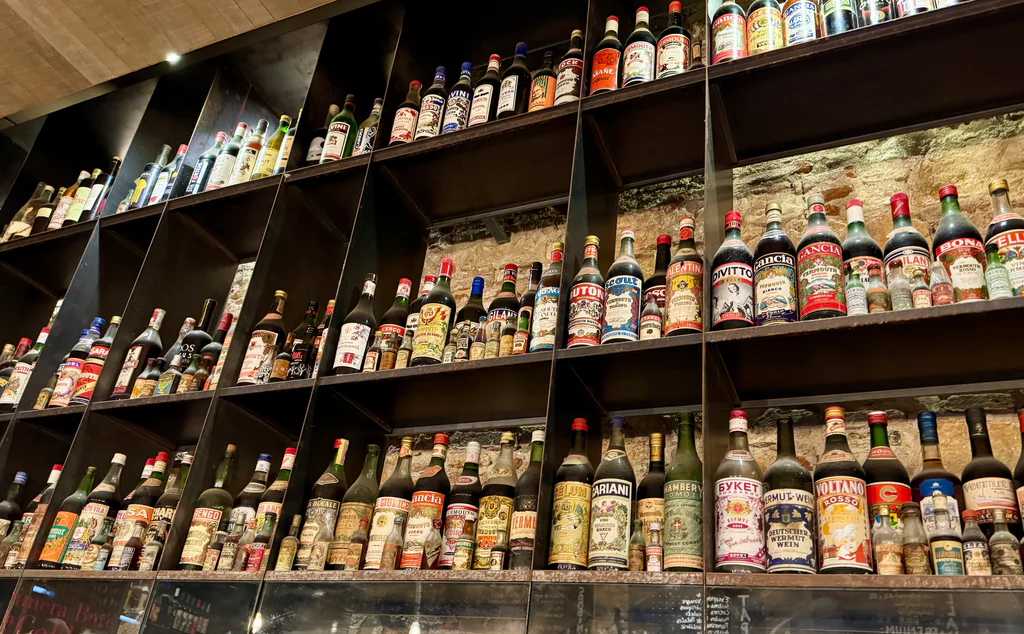
The majority of Spain’s vermouth has historically been produced in Reus in the Tarragona region of Catalonia, where producers such as Yzaguirre (1884) and Miró have been making the drink for well over a century. Many of Madrid’s best bars, however, serve their own vermut de grifo — house vermouth on tap — sourced directly from regional producers and often adjusted or blended to the bar’s own recipe.
The History of Vermouth in Madrid
Vermouth arrived in Spain in the second half of the 19th century, brought by Italian and French merchants and quickly adopted into the fabric of Spanish social life. By the early 20th century, the weekend aperitivo — a glass of vermouth with a small plate of something savoury before Sunday lunch — had become a deeply embedded middle-class ritual in cities across the country. Madrid embraced it with particular enthusiasm, and by the 1920s and 30s, the vermutería and bodega were as central to the city’s social geography as the café or the taberna.
The ritual fell into sharp decline after the death of Franco in 1975. The Movida Madrileña — the explosion of creative and cultural energy that swept the city in the late 1970s and 80s — brought with it a new generation of drinkers who associated vermouth with the austerity and conservatism of the Franco era. Beer, wine and imported spirits became the drinks of modernity and freedom. For several decades, the old bodegas that had never stopped serving vermut de grifofelt like relics — beloved by the elderly, overlooked by the young.
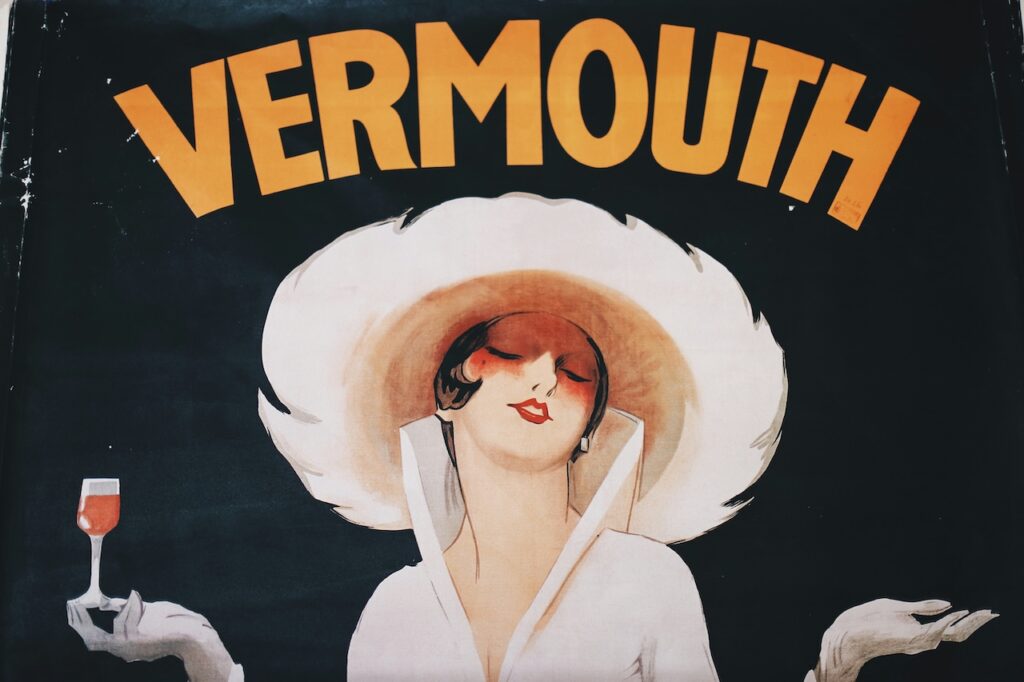
The revival began quietly in the 2000s and gathered speed after the financial crisis of 2008. As younger Madrileños turned back towards local, artisanal and traditionally rooted pleasures — partly out of economic necessity, partly out of a genuine reappraisal of heritage — vermouth came with them. New specialist vermuterías opened. Old bodegas were rediscovered and celebrated. The vermuteke — a vermouth-focused social event — became a fixture of the neighbourhood calendar.
By the 2020s, vermouth’s rehabilitation was complete: it’s now drunk with equal enthusiasm by twenty-somethings and octogenarians, and the hora del vermut is once again one of the defining social rituals of the Madrileño weekend.
How to Drink Vermouth Like a Local
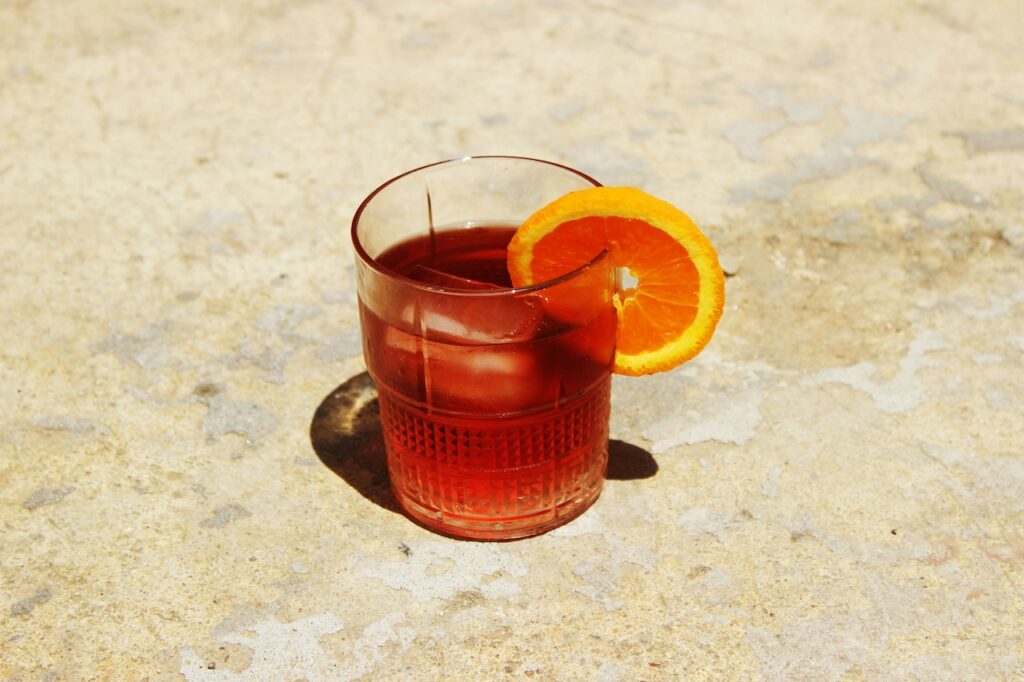
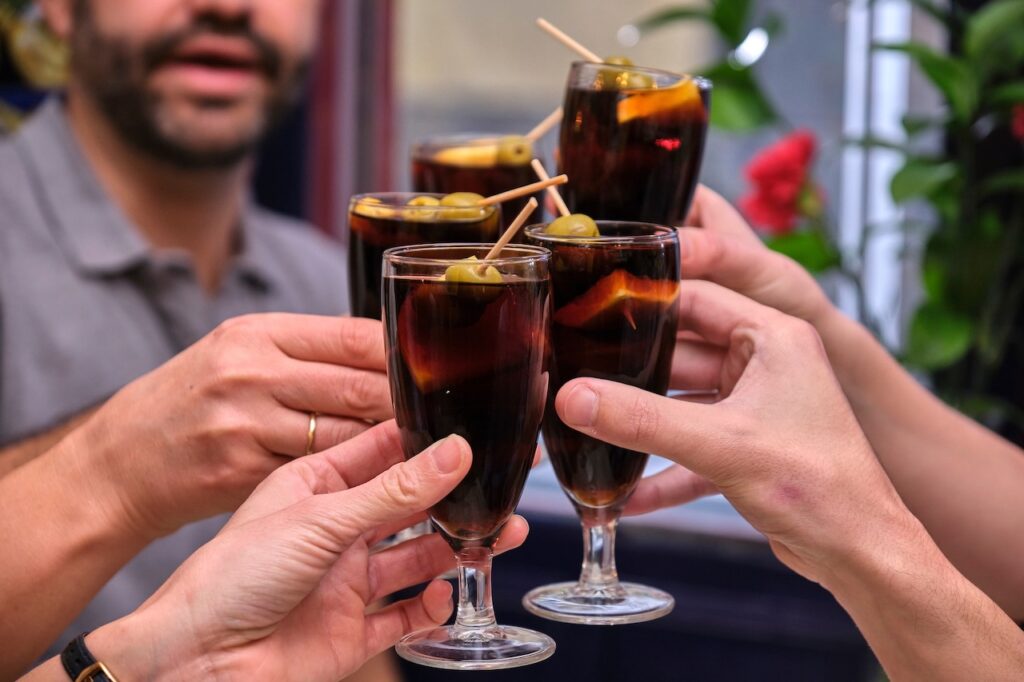
The conventions of la hora del vermut are worth understanding before you take your first glass. Vermouth in Madrid is served over ice in a short glass — never in a coupe or a cocktail glass — with a small slice of orange and typically a green olive or two on a cocktail stick.
The ice is important: it dilutes the sweetness slightly and keeps the drink refreshing. A splash of soda water is common at some bars, though purists consider it optional. At the most traditional establishments, the vermouth comes from the tap (de grifo), poured directly from a barrel or cask behind the bar into your glass with a practised, unhurried pour.
The timing of la hora del vermut is specific: it falls between roughly 12 pm and 2 pm on Saturdays and Sundays, and on public holidays. It’s not an evening activity. The meal that follows — typically a long, leisurely Sunday lunch at home or in a restaurant — is an equally non-negotiable part of the ritual.
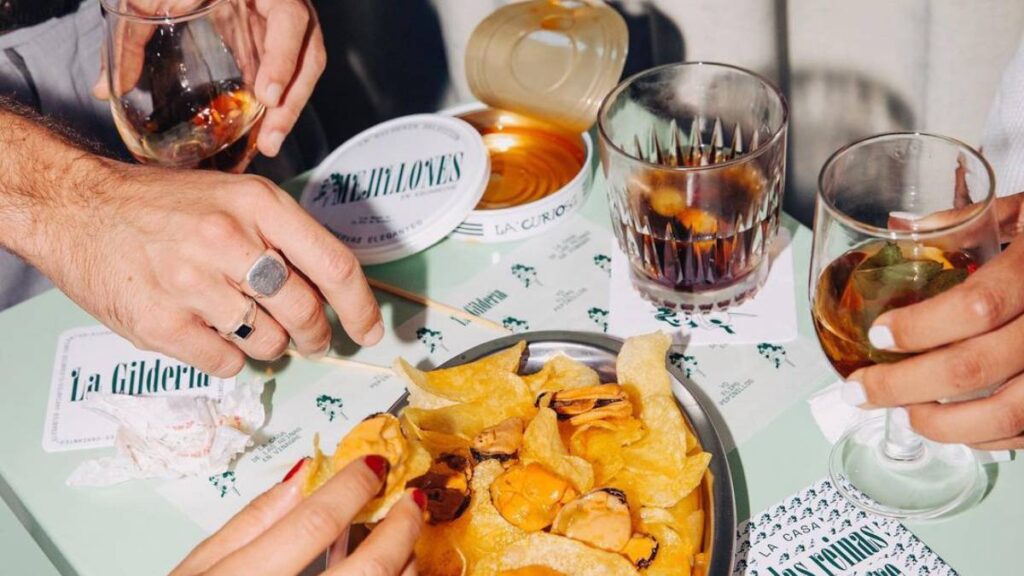
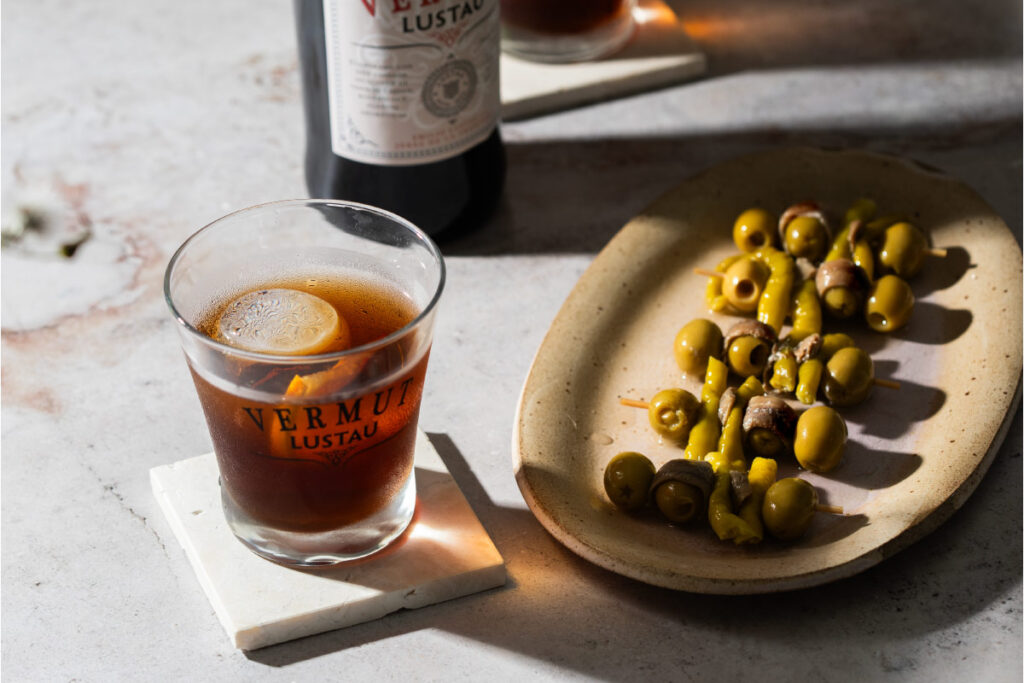
You should eat as well as drink: the standard accompaniments are conservas (tinned seafood: mussels in brine, anchovies in oil, cockles, clams), olives, encurtidos (pickled vegetables), and the bar’s signature tapas. Two or at most three glasses is the appropriate register. The point is not to get drunk; the point is to arrive at the lunch table in a state of pleasurable, slightly aromatic readiness.
The best areas for vermut in Madrid are La Latina (particularly Cava Baja and Cava Alta), Malasaña (San Andrés, Fuencarral and the surrounding streets), Chueca (around Plaza de Chueca), and the Barrio de las Letras (Huertas and its side streets). Each neighbourhood has its own character, and a morning’s gentle hop between two or three bars in the same area is the most pleasurably immersive way to experience the tradition.
The 5 Best Vermouth Bars in Madrid
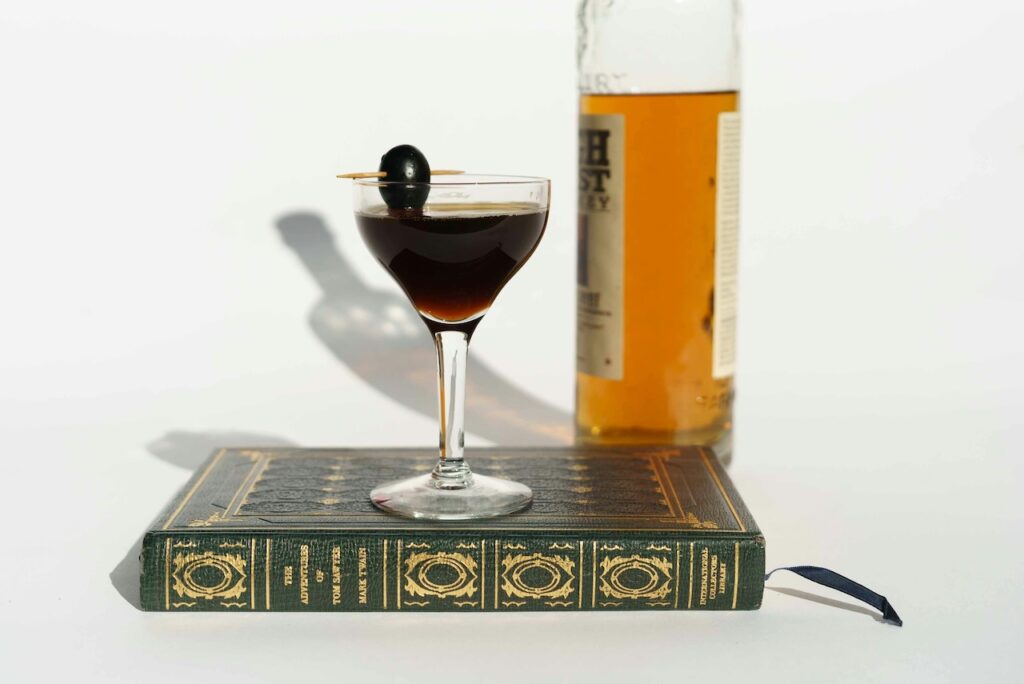
Now that you know everything you need to know about vermouth and its role in Spain’s culinary culture, and you know how to enjoy vermouth like a local, here are the top Madrid bars in which you can enjoy this timeless libation. Some are sophisticated hotspots, but most are weathered and much-loved haunts where tradition always comes before style. Enjoy!
1. Bodega de la Ardosa
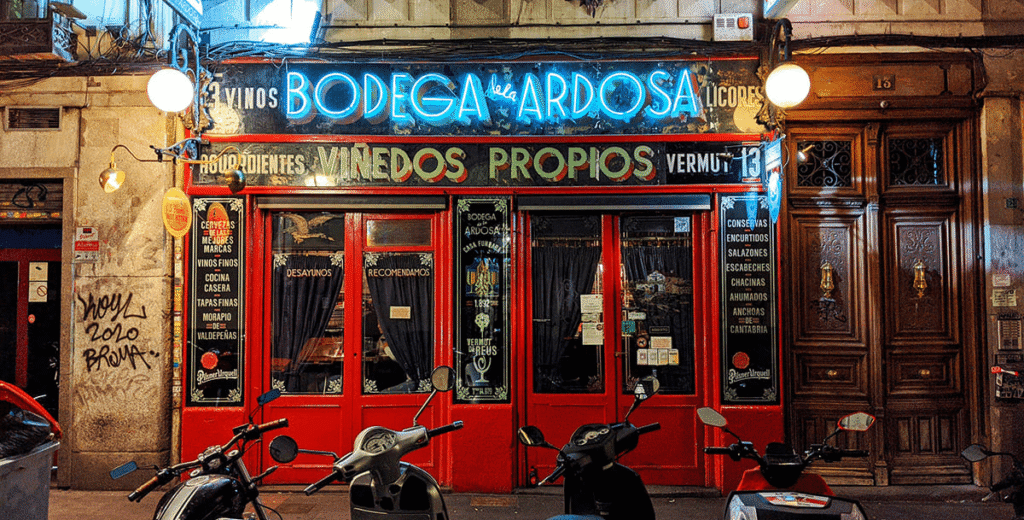
There are few better introductions to Madrid’s vermouth culture than the Bodega de la Ardosa in Chamberí, which has been serving vermut de grifo since it opened in 1892. The bar’s interior is an almost perfectly preserved example of the late-Victorian Madrid bodega: original engraved-glass signage, hand-painted tiles, oak barrels behind the counter, ceilings hung with jamón legs, shelves lined with dusty bottles and the particular amber light of a room that has barely changed in over 130 years. The vermouth here is an anise-forward, rich and aromatic house recipe — intense and deeply satisfying in a way that bottled alternatives rarely match.
The Ardosa’s vermouth comes paired with a short, excellent menu that makes it one of the best places in the city to combine aperitif drinking with genuinely good food. The tortilla española is revered across Madrid, the salmorejo (chilled Andalusian tomato soup with egg and jamón) is among the city’s finest, and the pairing of vermouth with a plate of Cantabrian anchovies and a few conservas is a complete, self-sufficient afternoon in itself.
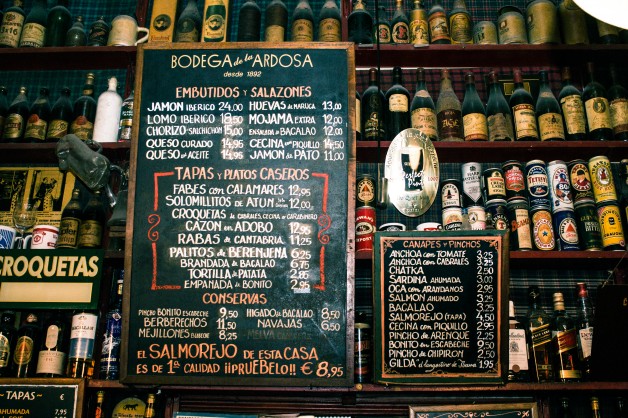
The clientele crosses every generation and social type — elderly regulars who have been coming since childhood, tattooed young Madrileños and knowledgeable visitors who have done their research, which is perhaps the Ardosa’s highest recommendation.
Address: Calle de Colón, 13, 28004 Madrid (Metro: Alonso Martínez, lines 4, 5 and 10).
Opening hours: Monday–Thursday noon–2 am; Friday–Saturday noon–2.30 am; Sunday noon–2 am.
Order: Vermut de grifo (house vermouth on tap) with Cantabrian anchovies, salmorejo or tortilla española.
2. Taberna Ángel Sierra
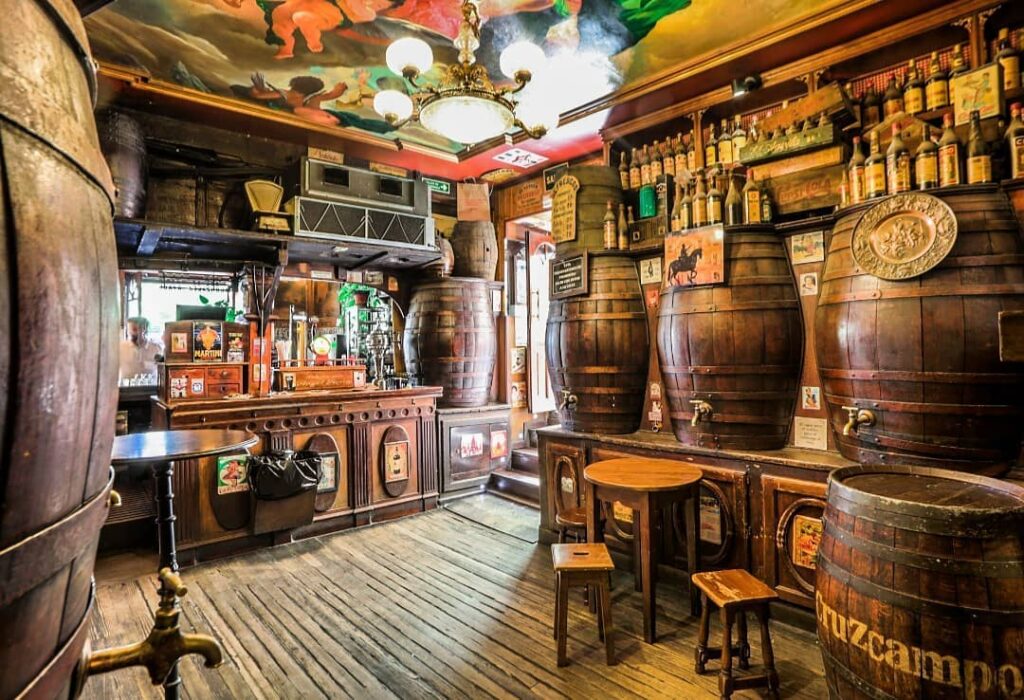
In the heart of Plaza de Chueca — one of Madrid’s most vivid and characterful squares — the Taberna Ángel Sierra has occupied its corner site since 1908, its name unchanged since 1917. The Madrid tourist board rates its vermouth as the best in the city, and a visit makes the case convincingly: the house vermut flows from barrels stored in eight enormous ancient oak vats that line the walls, and arrives in your glass — ice, orange, olive — with a depth and complexity that speaks of decades of careful sourcing and blending.
The bar divides into two distinct areas, each with its own atmosphere. The main room, entered directly from the plaza, is a stand-up counter experience — carved wood and tin bar, ornate antique taps, frescoed ceilings, beautiful painted tiles — where you order and drink surrounded by a rotating cast of Chueca neighbours and curious visitors.
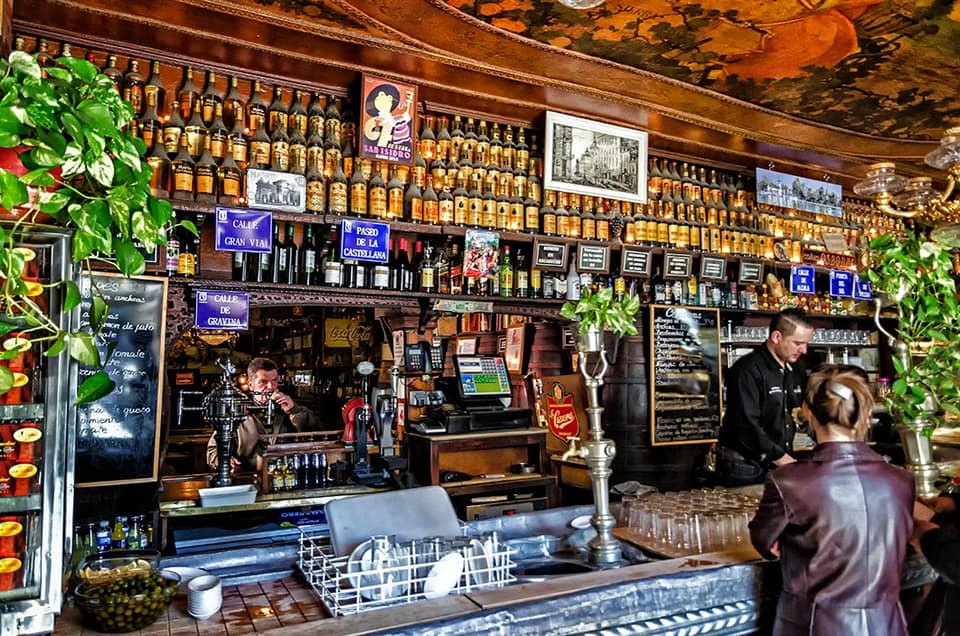
The back room, accessed from the side street, is quieter, with low tables and long wooden benches where groups settle in for longer sessions. The menu is traditional Madrid aperitif fare: tinned preserves, canapés, empanadillas and rolls. The Taberna appeared in Pedro Almodóvar’s 1995 film La Flor de mi Secreto, a cameo that captured perfectly the essence of a place that seems to exist in its own, gloriously preserved temporal pocket.
Address: Calle de Gravina, 11, 28004 Madrid (Metro: Chueca, line 5).
Opening hours: Daily, check ahead for seasonal variations.
Order: Vermut de grifo, tinned anchovies, house conservas. Ask for the vermouth served without soda to appreciate the full depth of the house recipe.
3. Casa Alberto
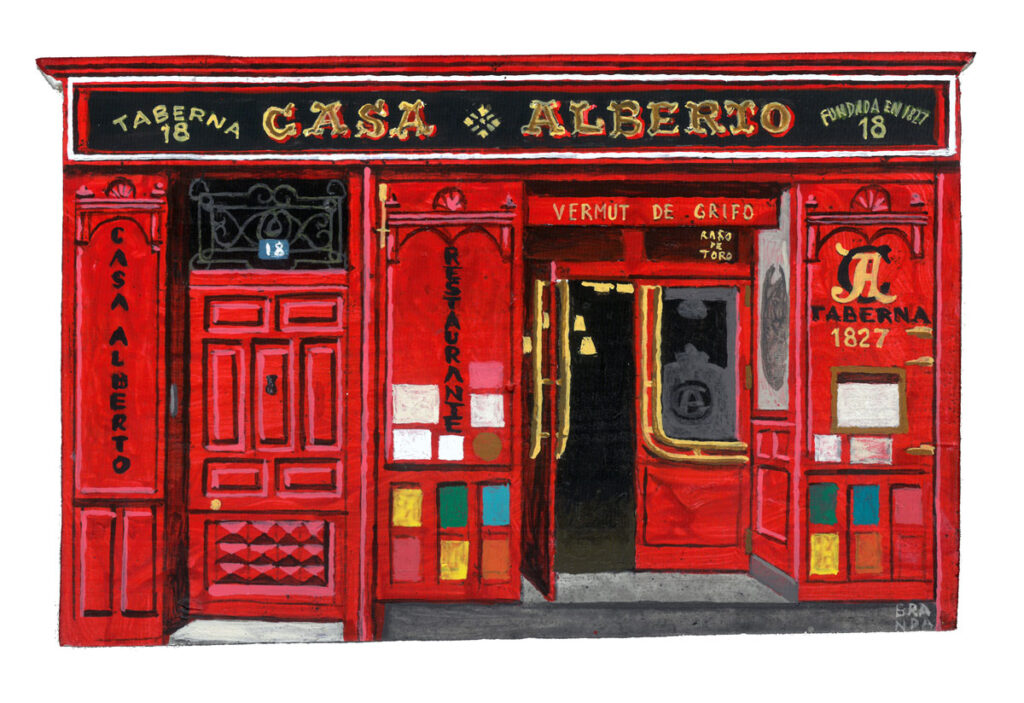
On Calle de las Huertas in the Barrio de las Letras — the literary quarter that takes its name from the Golden Age writers who lived and worked in these streets — Casa Alberto has been open since 1827, making it one of the oldest functioning bars in Madrid. The building itself is older still: it was on this site that Miguel de Cervantes lived and wrote the second volume of Don Quixote, a fact commemorated by a plaque on the entrance floor and by framed exhibits of Cervantes memorabilia displayed on the tavern’s upper floor.
In 2026, the restaurant was awarded a Repsol Sun, the Spanish equivalent of a Michelin Bib Gourmand, recognition that its kitchen, far from coasting on its literary heritage, remains genuinely excellent.
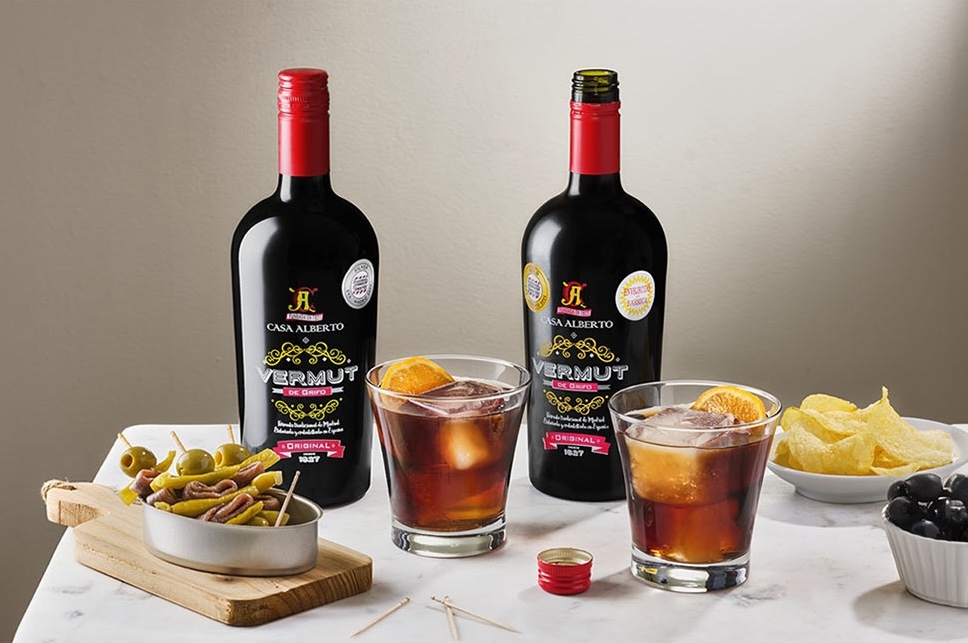
The vermouth here is made in the tavern itself and served from a tap — vermut de la casa in the truest sense — with the characteristic Madrileño presentation of ice, orange and olive. The bar and restaurant operate across two levels: the ground-floor counter is the place to stand with a glass of vermouth and a plate of callos a la madrileña (the tripe stew that is a Madrileño article of faith) or boquerones en vinagre (anchovies in vinegar); the dining room upstairs serves a full menu of classical Spanish cooking. Few places in the city compress so much history, quality and authentic atmosphere into a single address.
Address: Calle de las Huertas, 18, 28012 Madrid (Metro: Antón Martín, line 1).
Opening hours: Tuesday–Sunday noon–midnight. Closed Mondays.
Order: Embrace your inner local with the house vermut de grifo, callos a la madrileña, boquerones en vinagre, huevos de Cervantes (the house egg dish, a nod to the literary history).
4. Bodegas Ricla
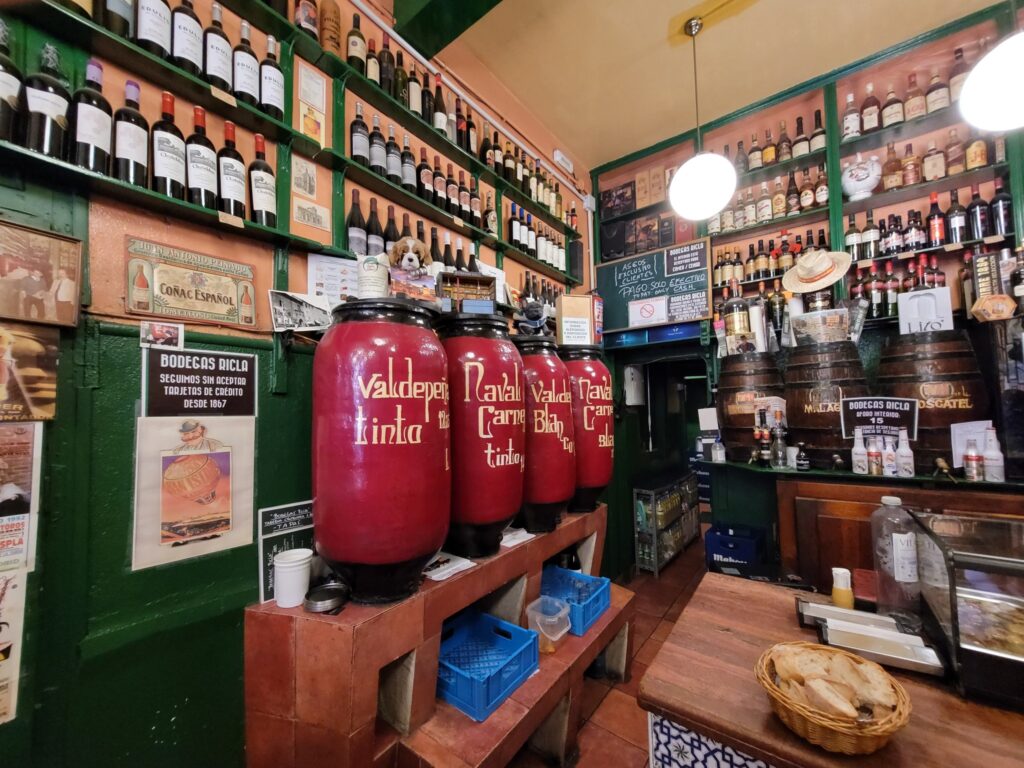
Hidden in a tiny standing-room-only bar on the steep, cobblestoned Calle Cuchilleros — a lane that runs directly under the arches of Plaza Mayor and is among the most atmospheric streets in old Madrid — Bodegas Ricla holds a distinction that vermouth devotees travel specifically to verify: it operates what is claimed to be the oldest vermouth tap in Madrid.
The bodega was founded in 1867 and named after the Aragonese village from which its founders came, and the family that now runs it (the Lage family; Ana María, the mother, is described by regulars as the soul of the place) maintains the same philosophy of complete, uncompromising authenticity that has kept it unchanged for over 150 years.
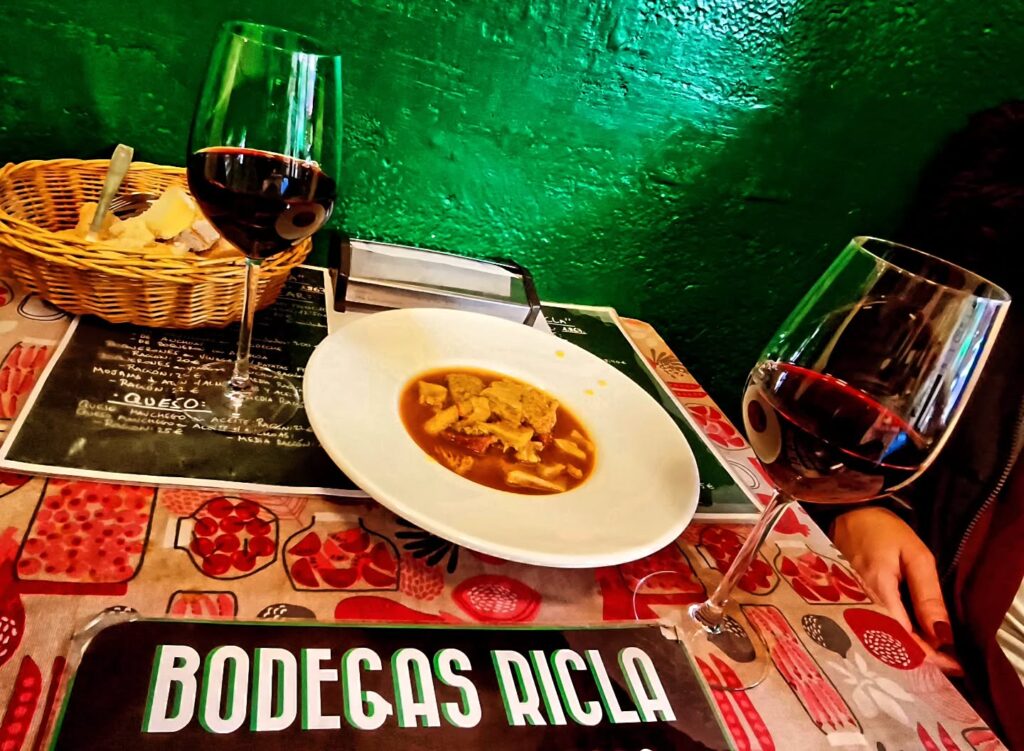
The space is tiny — a handful of people standing at the decorated tin bar with its iron pillar, surrounded by beautiful hand-painted tiles and the smell of the enormous wine tinajas stored in the cave below — and there is no seating.
The menu is equally focused: conservas (mussels, anchovies, cockles), cecina de León (cured beef), bacalao canapés and, on days when Ana María has spent five hours making them, callos a la madrileña of exceptional quality. The vermouth is Yzaguirre from Tarragona, poured from a tap and served at the ideal temperature. This is Madrid vermouth at its most irreducible: nothing decorative, nothing performative, just a very good drink in a very old room.
Address: Calle de los Cuchilleros, 6, 28005 Madrid (Metro: Sol, lines 1, 2 and 3; or La Latina, line 5).
Opening hours: Monday, Wednesday–Thursday 1 pm–4 pm and 7 pm–midnight; Friday–Saturday 1 pm–4 pm and 7.30 pm–1 am; Sunday 1 pm–4 pm. Closed Tuesdays.
Order: You can’t go wrong with the Vermut de grifo Yzaguirre, bacalao canapé, Cantabrian anchovies or callos (when available).
5. Casa Camacho
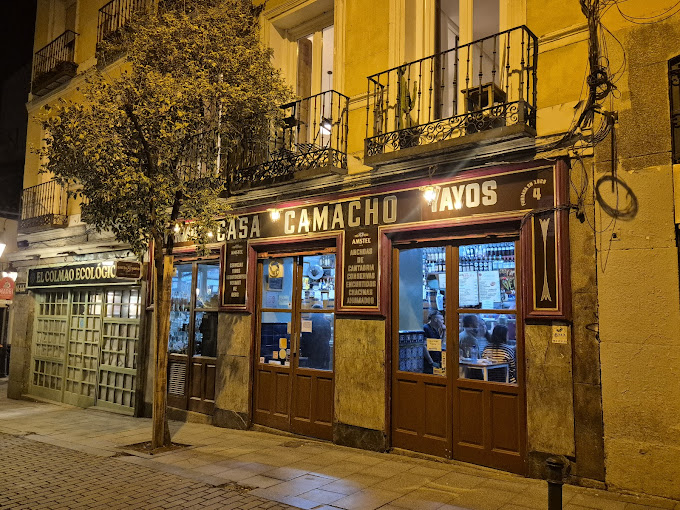
On the corner of Calle San Andrés in the heart of Malasaña, Casa Camacho is the sort of bar that inspires devoted, lifelong loyalty. Three brothers from Zamora — unpretentious, efficient and entirely uninterested in fashion — have been serving vermouth and their own creation, the Yayo, from behind a zinc bar lined with enormous barrels of house vermouth since the 1920s. The bar is always full, the conversation always loud, the drinks always cheap. There is nothing here that has been added for effect; every element of the place is exactly as it has always been.
The Yayo is Casa Camacho’s singular contribution to Madrid drinking culture and its greatest reason to visit: a cocktail of sweet tap vermouth, gin and gaseosa (Spanish sweetened soda water), served in a tall glass over ice and completely unlike any other drink in the city. Legend holds that Ava Gardner, a regular in the neighbourhood during her Madrid years, was among those who made the drink famous — though the current owner notes with cheerful scepticism that he has never been able to verify the story.
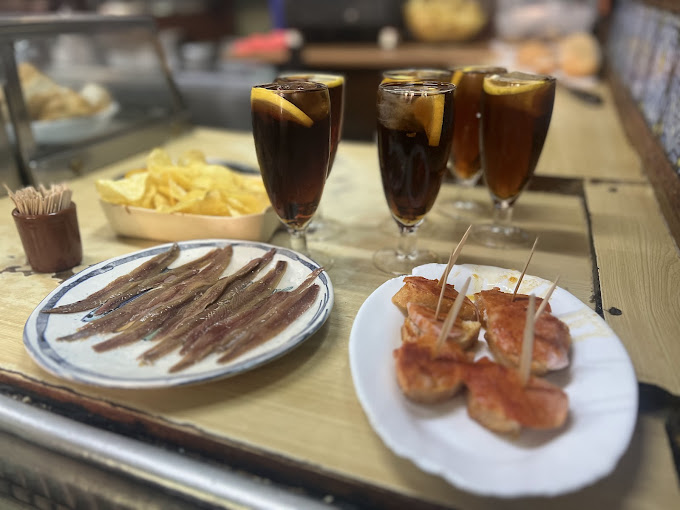
True or not, the Yayo has become synonymous with Casa Camacho and with Malasaña, and its combination of subtle sweetness, botanical complexity and fizzing refreshment is quietly addictive. The tapas are simple, pickled and perfect: bonito in brine, gherkins, Almagro aubergines, olives. Come on a Sunday morning, and you will find the bar so packed that conversation flows between strangers as naturally as vermouth from the tap.
Address: Calle de San Andrés, 4, 28004 Madrid (Metro: Tribunal, lines 1 and 10).
Opening hours: Daily noon–midnight (hours can vary; the bar is reliably open for the Sunday vermut hour).
Order: I would opt for the Yayo (vermouth, gin and gaseosa), vermut de grifo, pickled bonito, and Almagro aubergines.
The Language of Vermouth: A Short Glossary
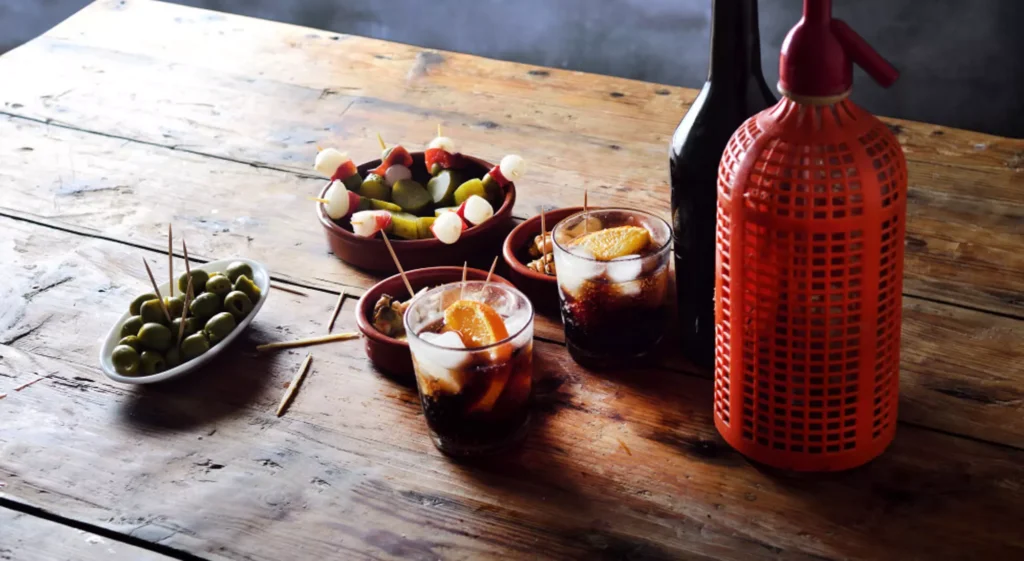
Knowing the lingo is a great way to appreciate vermouth and the traditions behind sipping this classic aperitif like a local. Here are some terms you’re likely to encounter.
Vermut de grifo — tap vermouth, drawn directly from a barrel or cask. The gold standard at any serious bodega, and always preferable to a bottled alternative when available.
La hora del vermut — the vermouth hour; the midday aperitif session, traditionally Saturday and Sunday noon–2 pm.
Vermutería — a bar specialising in vermouth, typically offering a wide selection of brands alongside the classic aperitif tapas.
Conservas — tinned seafood, typically mussels (mejillones), anchovies (anchoas), cockles (berberechos) or clams (almejas), served straight from the tin as the canonical accompaniment to vermouth.
Encurtidos — pickled vegetables: olives, gherkins (pepinillos), Almagro aubergines, pickled onions. Equally essential alongside a glass of vermut.
El Yayo — the house cocktail of Casa Camacho: sweet vermouth, gin and gaseosa. A Madrid original.
Vermuteke — a vermouth-focused social event or gathering, common in Madrid’s neighbourhood bars on weekends and festivals.
De la casa — house recipe; when applied to vermouth, indicates that the bar prepares or blends its own recipe rather than serving a commercial brand.
Getting There
The Spanish capital is served by a range of airlines from across Asia-Pacific, including Cathay Pacific, which recently increased its direct flights between Hong Kong and Madrid, where it links up with Iberia’s network across Europe and South America.
If you’re bound for the Spanish capital, be sure to check out our luxury 48-hour guide to Madrid, as well as our curated guide to the best luxury hotels in Madrid, and our guide to our favourite neighbourhoods in the city, including the famous Golden Triangle of Art. Madrid’s foodscape is fascinating, so don’t miss the best markets and leave time to dive into the city’s tapas culture. If you’re looking to explore further afield, check out our guides to day trips from Madrid and Sapin’s best travel destinations.


