
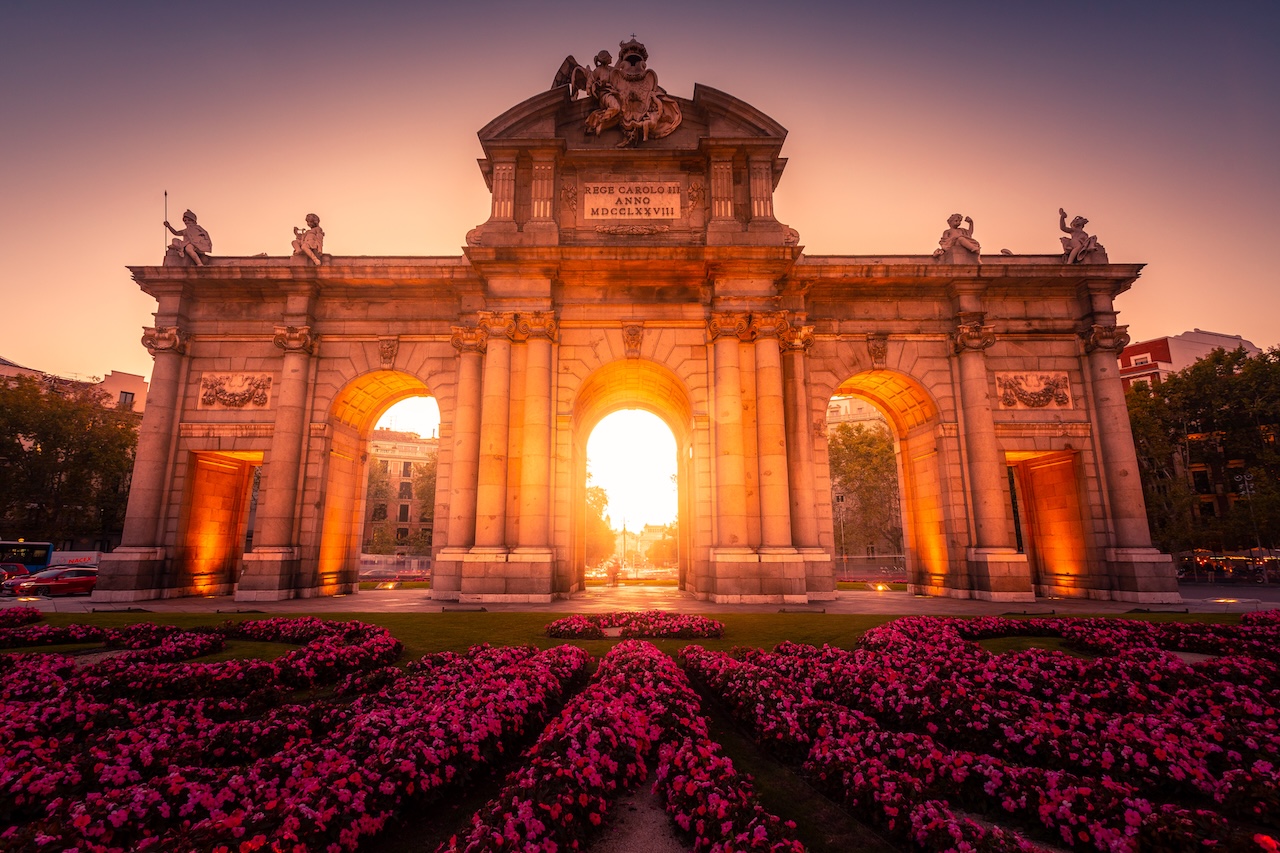

The Madrid avenue of Paseo del Prado is a destination like no other, and within the city’s Golden Triangle of Art, you’ll find more beauty and inspiration than you can shake a churro at.
There is a stretch of boulevard in central Madrid, barely two kilometres long, that contains a concentration of great art unmatched anywhere else on earth. Along the Paseo del Prado — a grand, tree-lined avenue declared a UNESCO World Heritage Site in 2021 as part of the Paisaje de la Luz (Landscape of Light) — stand three of the most important art museums in the world: the Museo Nacional del Prado, the Museo Nacional Centro de Arte Reina Sofía and the Museo Nacional Thyssen-Bornemisza.
Together, they are known as Madrid’s Golden Triangle of Art, and together they offer a complete survey of Western painting from the medieval period to the present day. No other city places art of this quality, this range and this density within such easy walking distance.
The three museums are genuinely complementary. The Prado holds the great Spanish masters — Velázquez, Goya, El Greco — alongside the royal Habsburg collection of Italian, Flemish and Northern European painting, covering roughly the 12th to the early 19th century. The Thyssen bridges the gap, filling in the movements and centuries underrepresented at the Prado, from the early Flemish primitives through Impressionism, German Expressionism and early 20th-century abstraction. The Reina Sofía picks up the thread from there, charting the course of modern and contemporary Spanish art through Picasso, Dalí, Miró and beyond.
Three museums, three distinct characters, one coherent and extraordinary journey through art history. To see all three is one of the great cultural experiences Europe has to offer.
The Paseo del Prado: Madrid’s Art Walk
Before stepping inside any of the three museums, it is worth understanding the boulevard that connects them. The Paseo del Prado was laid out in its current form in the late 18th century under King Carlos III, who envisioned it as a grand promenade of Enlightenment culture, lined with scientific institutions, fountains and tree-shaded walks.
The building that would become the Prado was commissioned by Carlos III in 1785 as a Natural History Cabinet; the Buen Retiro Palace, whose grounds became the Retiro Park, was the principal royal residence of 17th-century Madrid. The whole area — Paseo del Prado, Retiro Park, Botanical Garden and the art museums — was inscribed on the UNESCO World Heritage List in 2021, recognised as a cultural landscape of exceptional universal value.
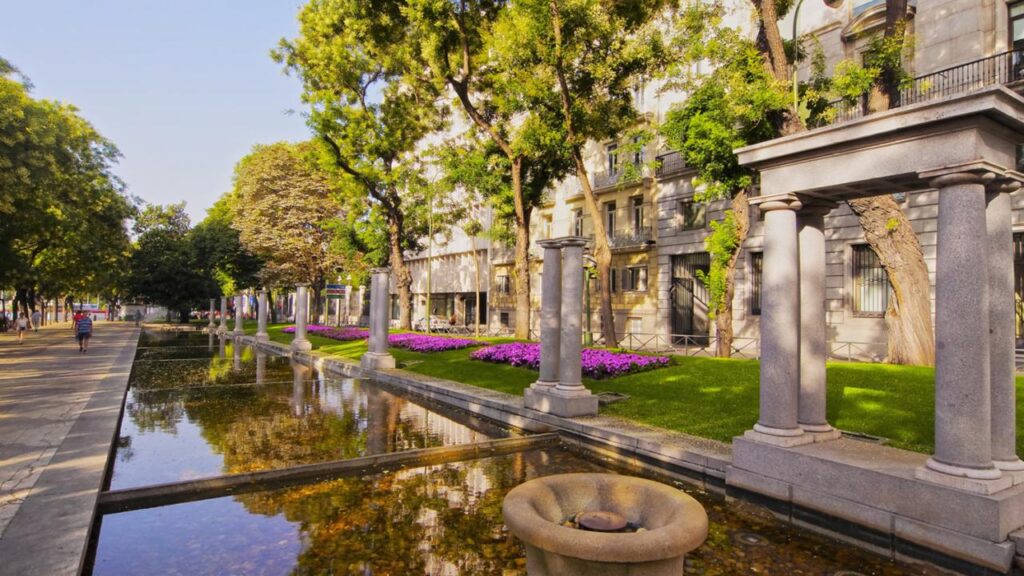
Walking the Paseo del Prado today, you pass the Neptune Fountain (closest to the Thyssen), the great Cibeles Fountain to the north, and the Botanical Garden beside the Prado. The walk (one of my favourites in the city) between the Reina Sofía (at the southern end, beside Atocha station) and the Thyssen (at the northern end, beside the Ritz and the Cibeles) takes around 15–20 minutes on foot; the Prado sits roughly in the middle. On a fine day, the boulevard itself — shaded by mature plane trees, its central promenade dotted with fountains and statues — is a pleasure to walk.
1. Museo Nacional del Prado
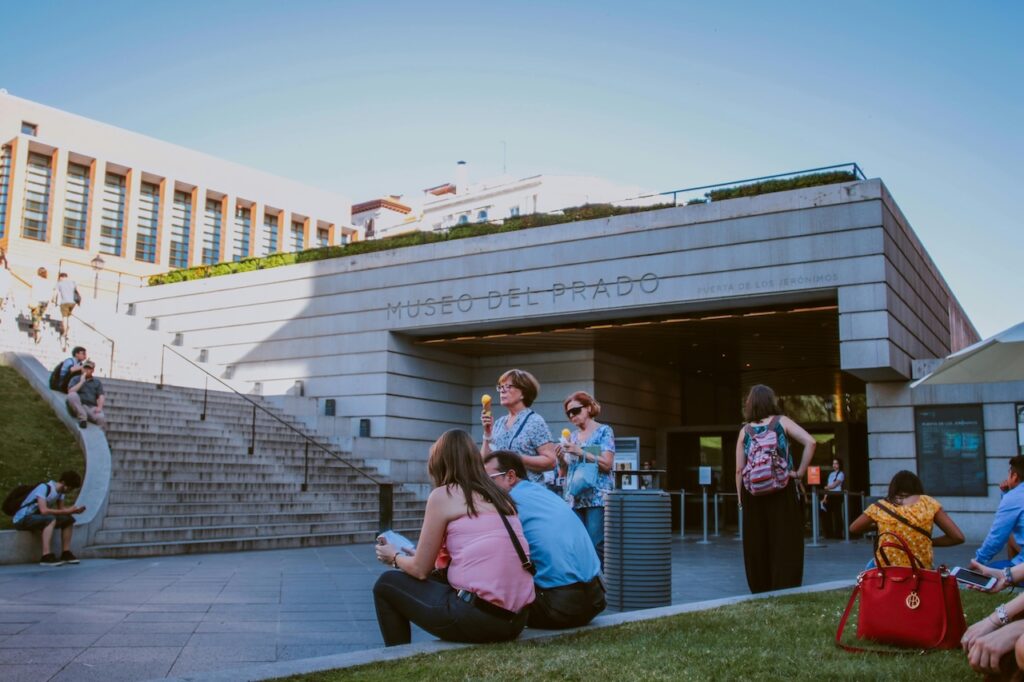
Stepping into Madrid’s Museo Nacional del Prado feels like entering a grand private collection of Western civilisation’s finest moments. From Velázquez’s commanding Las Meninas to Goya’s haunting Black Paintings and Titian’s sensuous masterpieces, the Prado delivers an overwhelming masterclass in artistic brilliance housed within a magnificent 18th-century palace. A deeply enriching experience every discerning man should make time for.
The Collection
The Prado is Spain’s national gallery and one of the three or four greatest art museums in the world — its only genuine peers are the Louvre, the Uffizi and the Hermitage. Its collection of over 8,000 works (with some 1,300 on permanent display across nearly 120 galleries) is the product of almost three centuries of systematic acquisition by the Spanish Habsburg and Bourbon monarchies, whose political and cultural reach across Europe gave them unparalleled access to the greatest painters of the Renaissance and Baroque eras.
When the museum opened in 1819, it already contained one of the most extraordinary collections of paintings ever assembled.
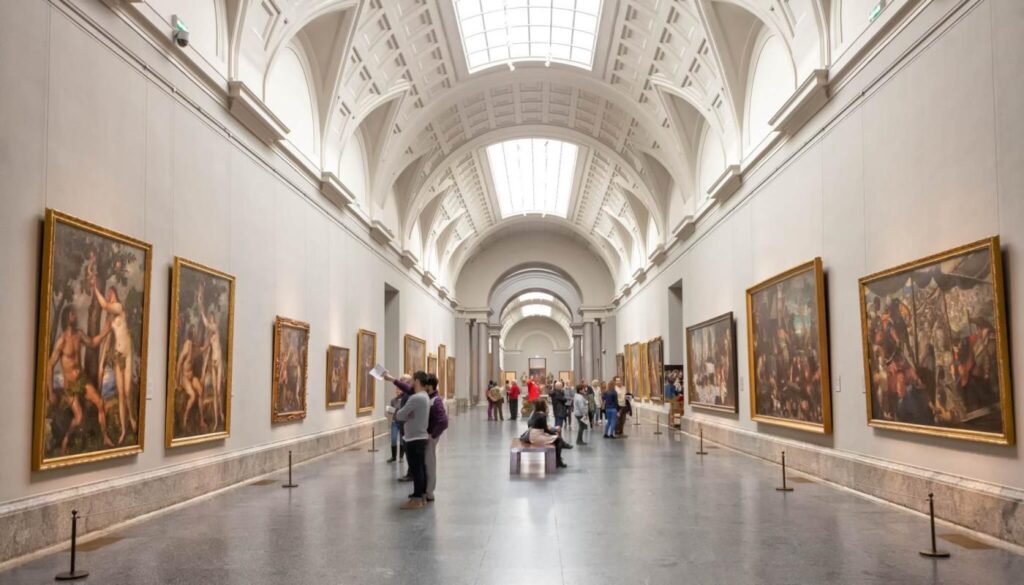
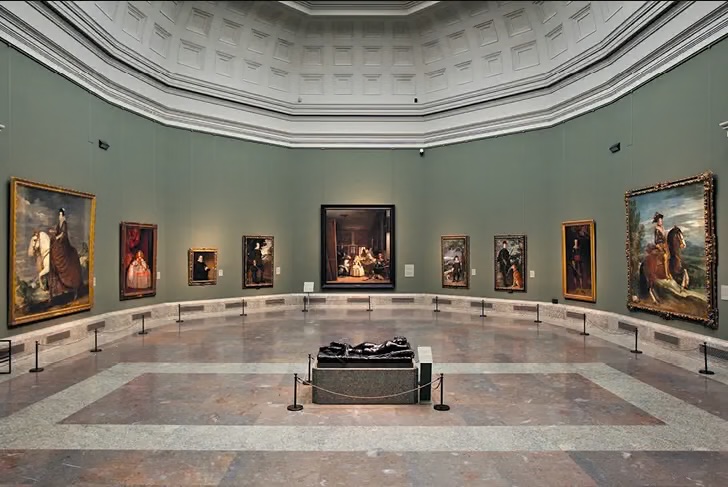
The Prado’s strongest suits are deep and specific. Velázquez is represented here in a depth available nowhere else: the court painter of Philip IV left the most complete account of his career to the royal collection, and room after room contains canvases of devastating quality. Las Meninas (c.1656) — his enigmatic, spatially radical masterpiece, which explores the act of painting and the nature of representation with a sophistication not fully understood until centuries later — occupies its own room at the heart of the museum and is genuinely among the most important paintings ever made. The Spinners, Las Lanzas (The Surrender of Breda) and his incomparable series of royal and court portraits are equally essential.
Goya, the other pillar of the Spanish collection, is also present across his entire extraordinary career: from the brilliant, warm tapestry cartoons of his early years through the devastating war paintings (The Second of May 1808, The Third of May 1808) to the haunting, prophetic Black Paintings created on the walls of his house outside Madrid in the last years of his life — works of hallucinatory psychological darkness that make him feel more contemporary than almost any painter of his era.
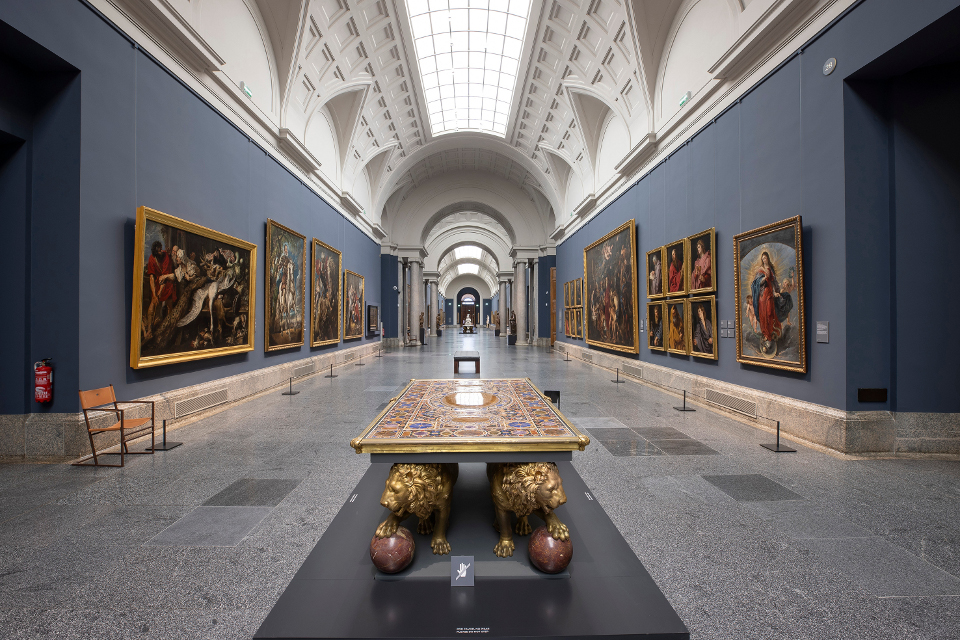
El Greco, born in Crete and trained in Venice before settling in Toledo, occupies an equally distinguished position: his spiritually charged, vertically elongated figures and blazing colour were unique in his time and remain extraordinary.
The Prado also holds the finest collection of Hieronymus Bosch outside the Netherlands — the great Garden of Earthly Delights triptych, with its densely packed allegory of sin and salvation painted with microscopic inventiveness, is one of the most astonishing works in the building. Beyond the Spanish masters, the royal collection was built on an exceptional foundation of Italian and Flemish painting: Titian‘s portraits and mythological scenes commissioned by Philip II, Rubens‘s enormous mythological cycles, Raphael, Fra Angelico and Caravaggio are all represented at the highest level.
Practical Information
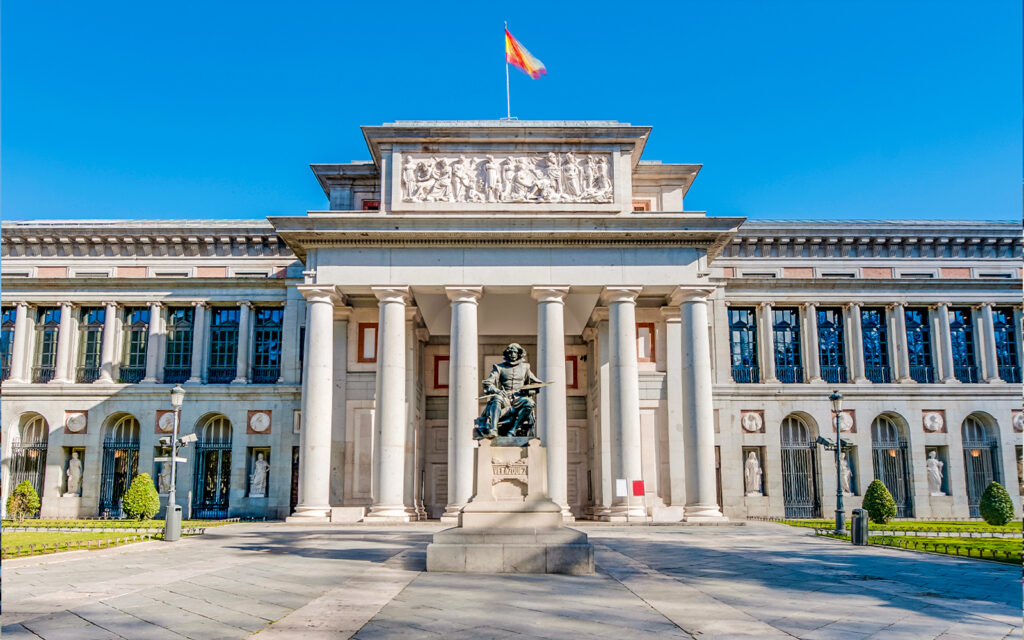
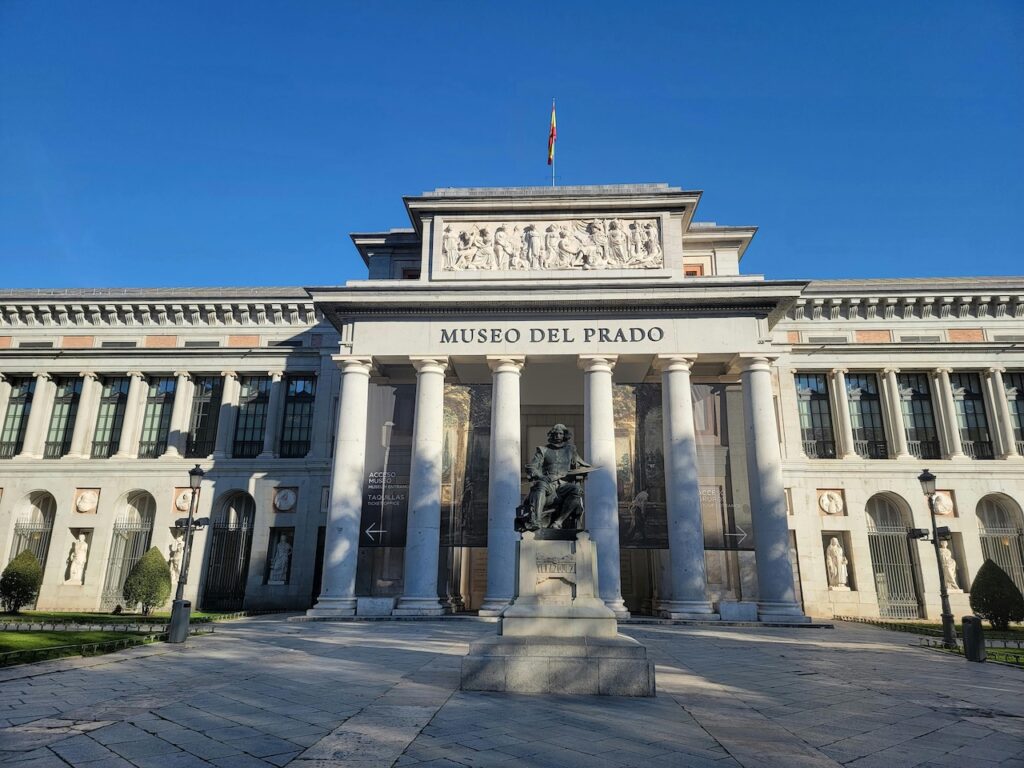
The Prado building itself — a magnificent neoclassical structure designed by Juan de Villanueva and completed in 1785 — is entered via the Puerta de Velázquez on the Paseo del Prado (for online ticket holders) or the Puerta de Goya (for the café and shop).
The museum has over 120 galleries, and even a focused visit covering the essential masterpieces should allow three to four hours; dedicated visitors will easily spend a full day. The museum publishes three recommended itineraries — of one, two and three hours — available as free brochures at the entrance desk, which are a useful framework for first-time visitors.
I’d suggest arriving early (doors open at 10 am) or in the mid-afternoon to have your best chance of avoiding peak crowds around the most popular works.
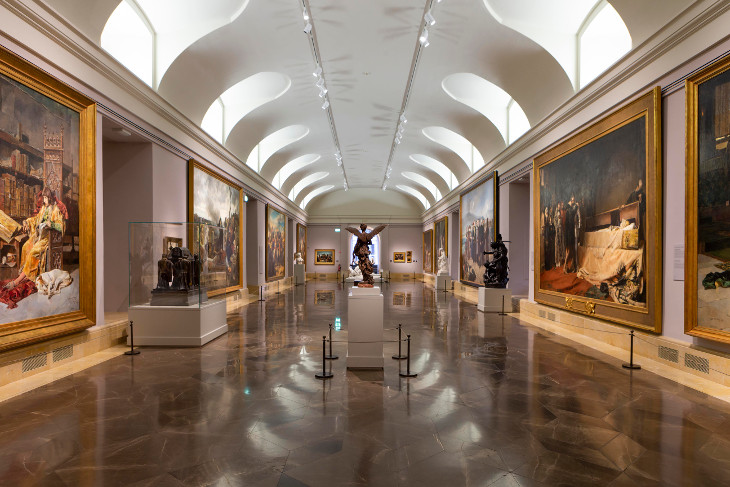
Address: Calle Ruiz de Alarcón, 23, 28014 Madrid (Metro: Banco de España, line 2; or Atocha, line 1).
Opening hours: Monday–Saturday 10 am–8 pm; Sunday and public holidays 10 am–7 pm. Last entry 30 minutes before closing.
Admission: US$17.40 adults; US$8.70 reduced (students, seniors, youth 18–25); free for under-18s. Free admission Monday–Saturday 6–8 pm and Sunday 5–7 pm (limited capacity; arrive 45–60 minutes early). Also free on 12 October, 19 November, 18 May and European Heritage Days.
Don’t miss: Las Meninas by Velázquez; The Garden of Earthly Delights by Bosch; The Third of May 1808 and the Black Paintings by Goya; El Greco’s The Adoration of the Shepherds; Titian’s Charles V at Mühlberg.
2. Museo Nacional Centro de Arte Reina Sofía
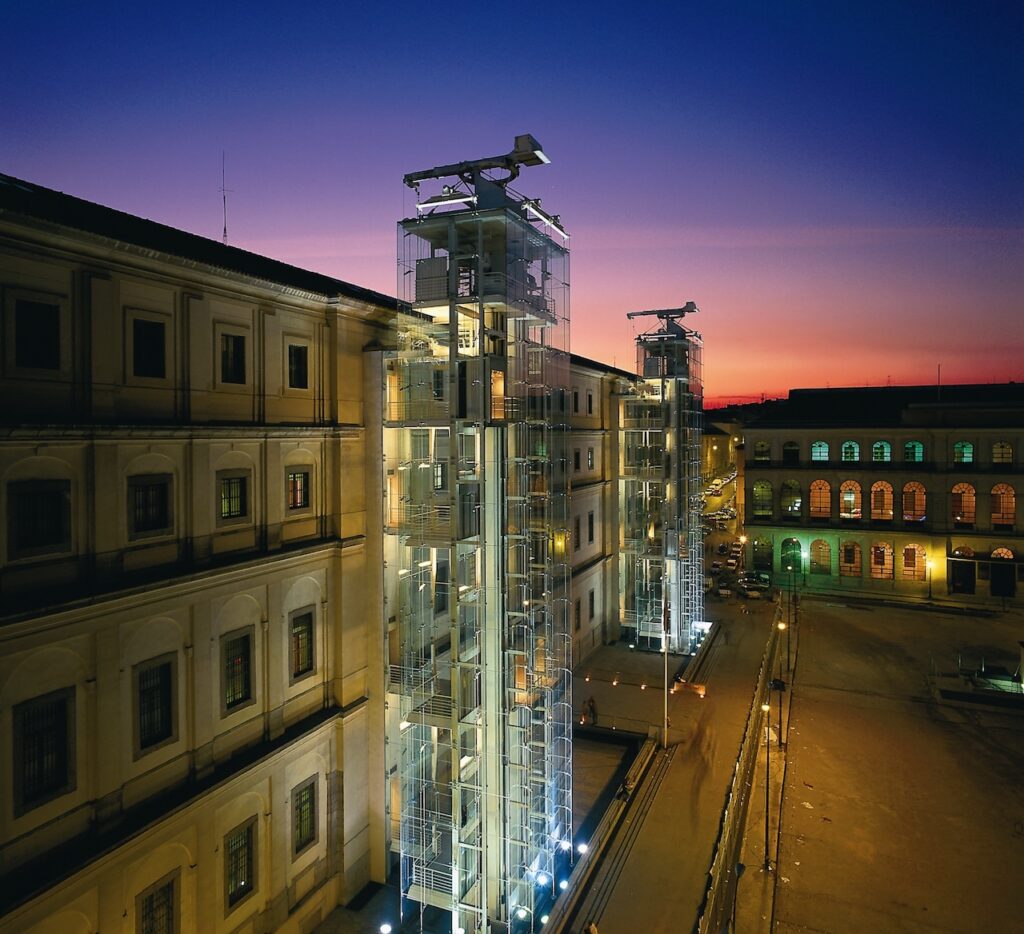
Housed in a striking former hospital with a sleek contemporary extension, the Museo Nacional Centro de Arte Reina Sofía stands as Madrid’s bold temple to modern and contemporary art.
The Collection
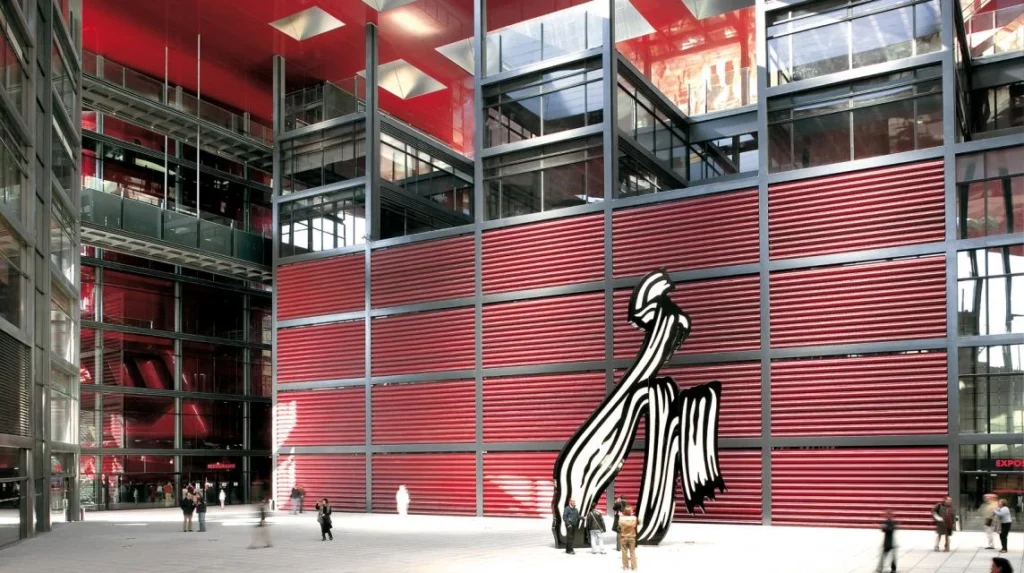
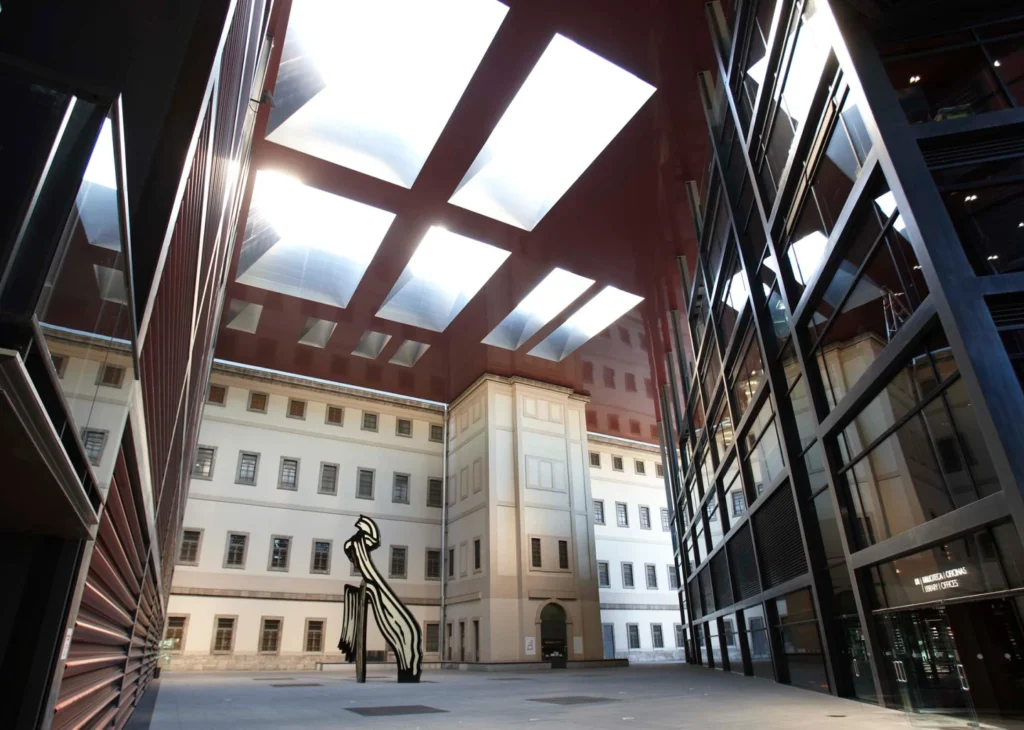
Where the Prado is a museum of kings and courts, the Reina Sofía is a museum of revolutions — artistic, political and social. Opened in its current form in 1992 in a beautifully repurposed 18th-century hospital (the former Hospital General de San Carlos, whose historic façade was extended in 2005 by Jean Nouvel’s striking red-canopied addition), it is Spain’s national museum of 20th-century and contemporary art.
The museum’s permanent collection spans Spanish modernism, the avant-garde movements of the early 20th century, the art of the Civil War era, post-war abstraction and contemporary international practice, with particular depth in Spanish artists and movements.
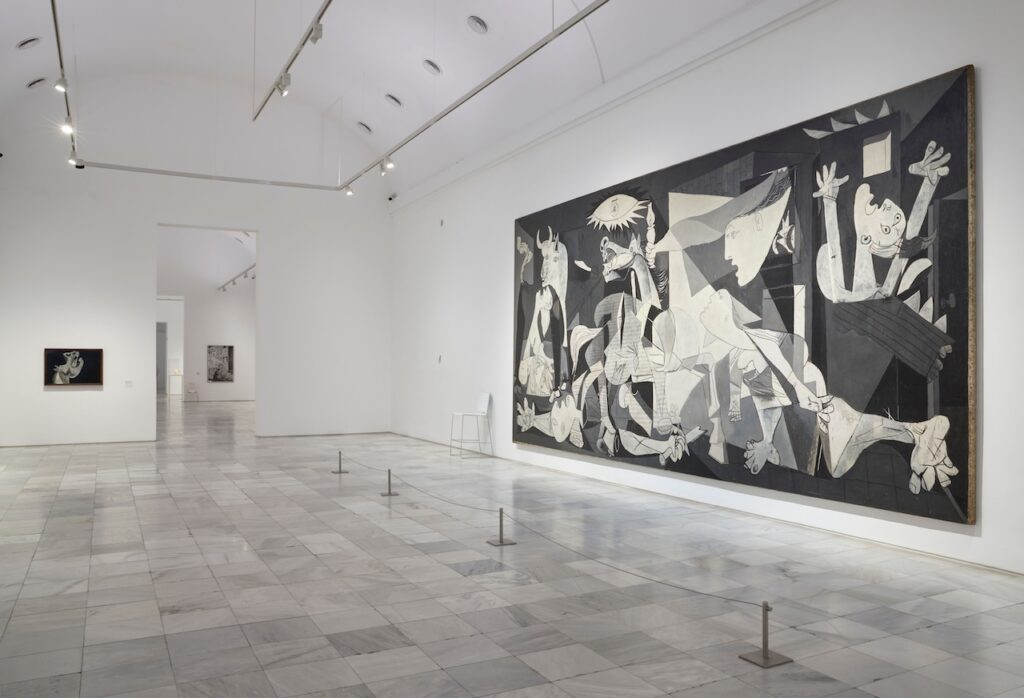
The centrepiece of the collection, and one of the most significant works of art created in the 20th century, is Picasso’s Guernica (1937). The painting — a vast, monochromatic depiction of the bombing of the Basque town of Guernica by Nazi and Fascist air forces during the Spanish Civil War, completed in just five weeks at Picasso’s studio in Paris — hangs in a specially dedicated room in the Sabatini Building and is surrounded by preparatory drawings and studies that reveal the evolution of its devastating imagery.
The moving piece is both a documentary record of a specific atrocity and a universal statement about the horror and inhumanity of war, and standing before its nearly eight metres of fractured, screaming forms remains one of the most powerful experiences in any museum anywhere. Photography is restricted in the Guernica room; the silence of the space, in contrast to the painting’s violence, is part of its impact.
Beyond Guernica, the Reina Sofía’s collection is remarkable for its depth in Spanish modernism. Salvador Dalí is represented by major works, including The Great Masturbator (1929), whose hallucinatory imagery encapsulates Surrealism at its most disquieting. Meanwhile, Joan Miró‘s playful, symbolic abstractions — Woman, Bird, Star and the large-scale Snail, Woman, Flower, Star among them — fill several rooms with vivid colour.
In addition, Juan Gris, the Cubist master who is often overshadowed by Picasso and Braque, has a significant presence here; his precise, architecturally composed canvases are among the most satisfying works in the building. The collection also includes major works by Ángeles Santos, Maruja Mallo and other artists of the Spanish avant-garde, as well as international figures including Francis Bacon, Louise Bourgeois and Richard Serra, whose monumental sculptures inhabit the museum’s interior courtyards.
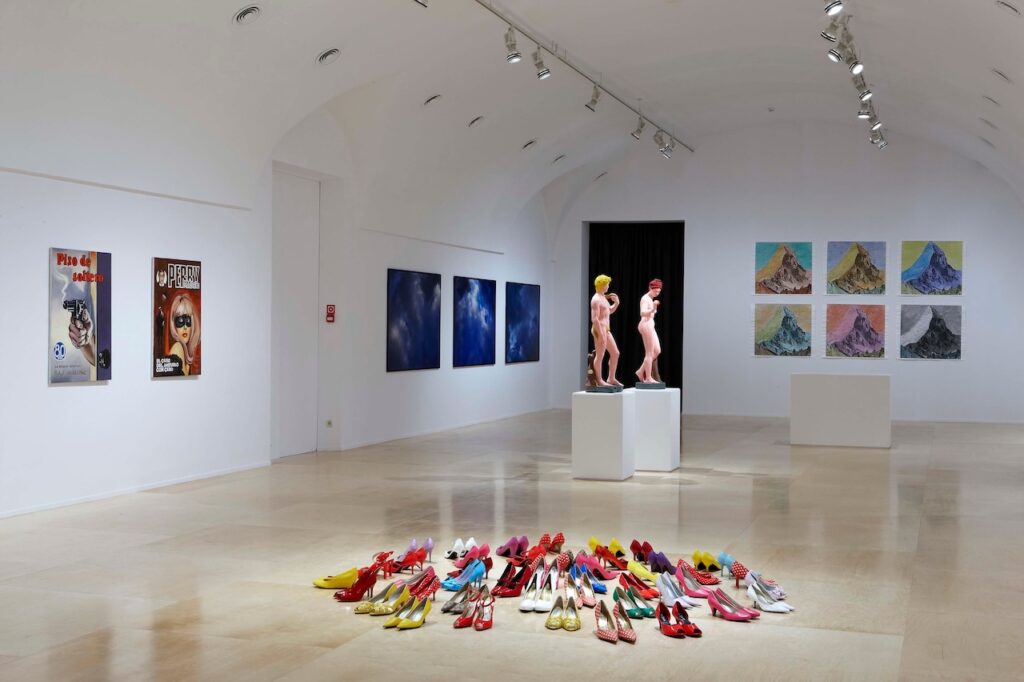
The Nouvel extension — a contemporary building adjoining the historic Sabatini wing, connected by glass bridges and open galleries — houses temporary exhibitions and later 20th-century works. Its open-air terraces, bookshop and café are worth exploring even if you focus the bulk of your time on the permanent collection.
Practical Information
The recommended route begins on the second floor of the Sabatini Building (accessible by the museum’s external glass elevators, which are themselves worth experiencing for the view over the surrounding neighbourhood). The Guernica room is on this floor; start here before the crowds build, then work upward through the Dalí and Miró rooms. Allow at least two to three hours for a solid visit; dedicated visitors or those attending a temporary exhibition should allocate half a day. The museum is closed on Tuesdays.
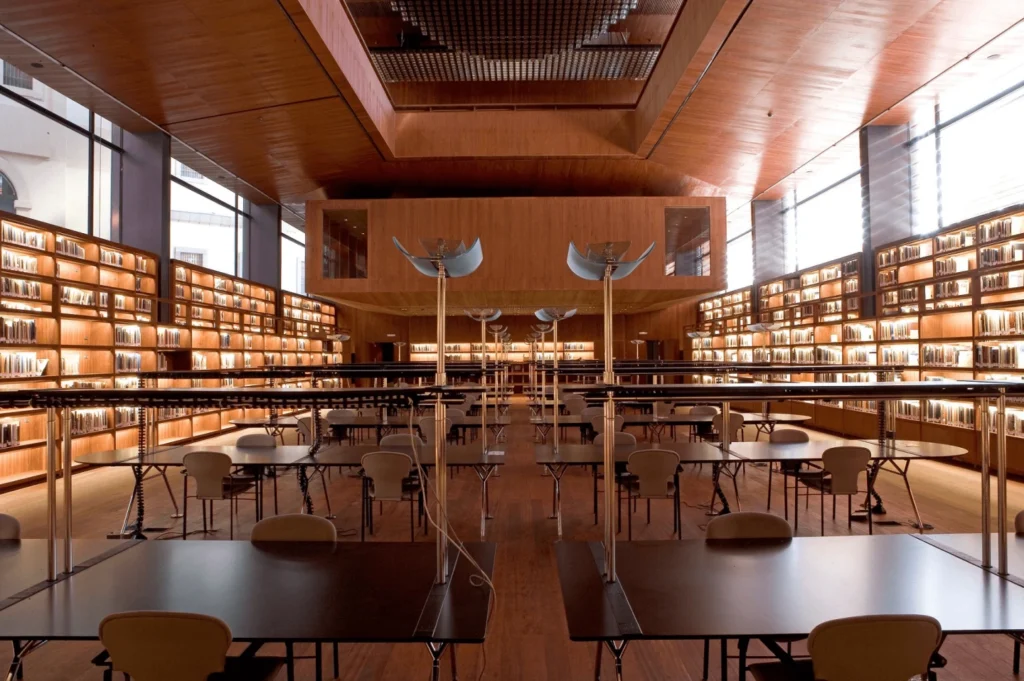
Address: Calle de Santa Isabel, 52, 28012 Madrid (Metro: Atocha, line 1; or Estación del Arte, line 1).
Opening hours: Monday and Wednesday–Saturday 10 am–9 pm; Sunday 10 am–2.30 pm. Closed Tuesdays.
Admission: US$13.90 adults; US$7 reduced; free for under-18s. Free admission Monday and Wednesday–Saturday 7–9 pm; Sunday all day.
Don’t miss: My favourite pieces are Guernica by Picasso, and the preparatory studies displayed alongside it; The Great Masturbator by Dalí; Miró’s large-scale works; the Juan Gris rooms; the contemporary sculpture in the Nouvel building’s courtyards.
3. Museo Nacional Thyssen-Bornemisza
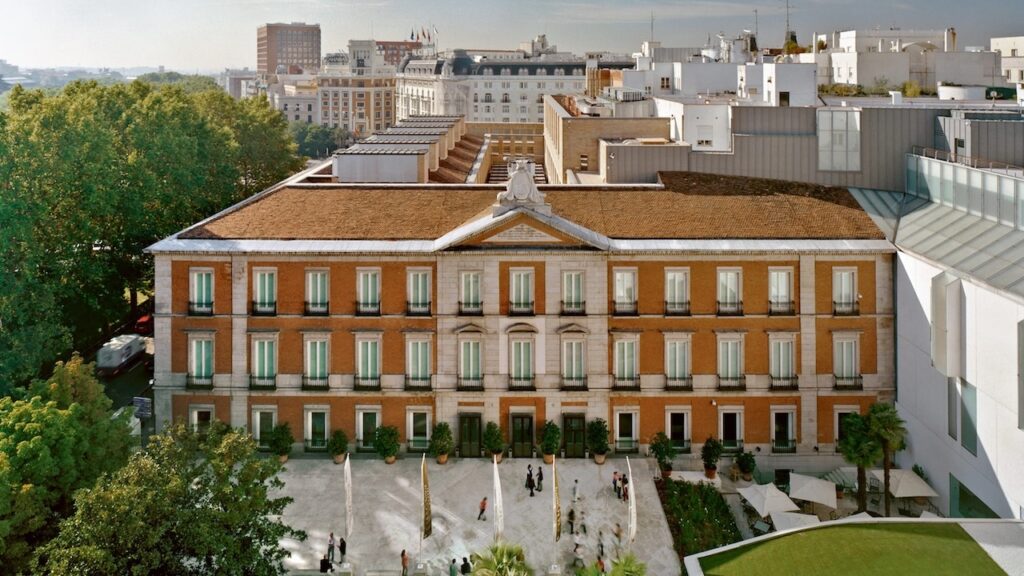
Nestled in a graceful neoclassical palace along Madrid’s famed Golden Triangle, the Museo Nacional Thyssen-Bornemisza offers one of Europe’s most remarkable private art collections.
The Collection
If the Prado covers five centuries of Spanish and Habsburg court art and the Reina Sofía the 20th century, the Thyssen fills in almost everything else: a comprehensive survey of Western painting from the late 13th century to the present day, with particular strength in precisely the areas where the Prado is weakest — early Italian and Flemish painting, Dutch Golden Age, 18th-century landscape, Impressionism and Post-Impressionism, German Expressionism, American painting of the 20th century, and the full arc of international modernism. Together with the Prado and the Reina Sofía, it creates a picture of Western art history that is effectively complete.
The collection was assembled over two generations by the Thyssen-Bornemisza family. Baron Heinrich Thyssen-Bornemisza began buying in the 1920s, acquiring from American collectors during the Great Depression at a time when European masterworks were flowing across the Atlantic. His son, Baron Hans Heinrich, expanded the collection dramatically, guided by a determination to fill the gaps in major museum collections and to build holdings in movements — American Expressionism, early Flemish painting, German Expressionism — that were largely absent from public collections in Europe.
In 1993, the Spanish government purchased the core collection of around 700 works; in 2004, a further 180 works from the collection of the Baron’s widow, Baroness Carmen Thyssen-Bornemisza, were added on permanent loan, bringing the total displayed to an impressive almost 1,000 paintings.
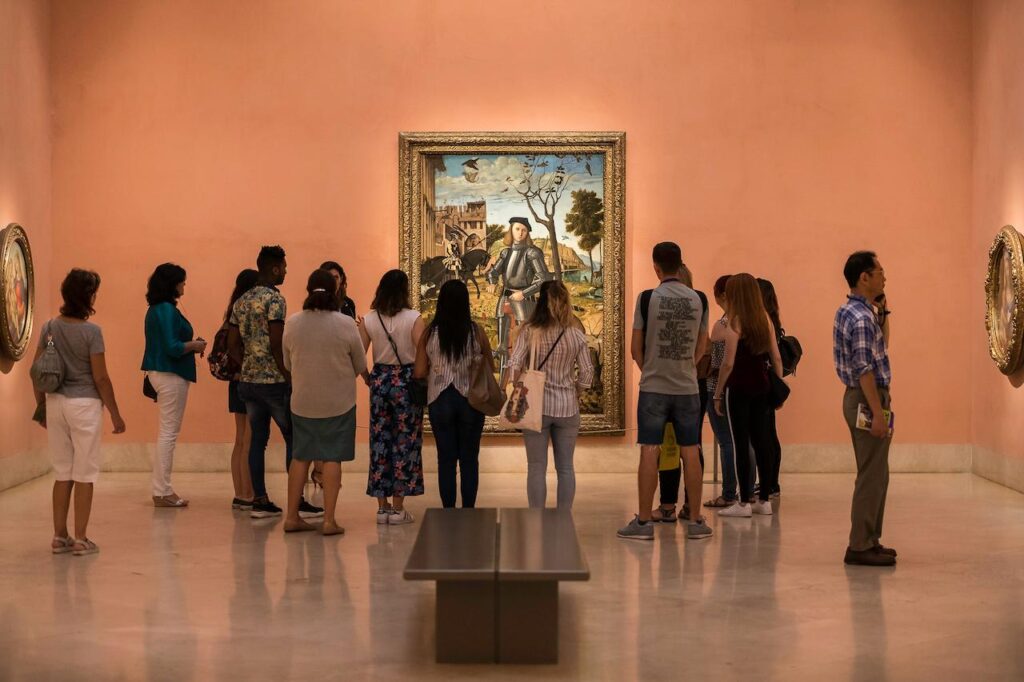
The collection is arranged chronologically across three floors of the Villahermosa Palace, a neoclassical 18th-century building restored by architect Rafael Moneo. The second floor spans the 13th to early 18th centuries: here you find a Jan van Eyck Annunciation Diptych of extraordinary technical refinement; Vittore Carpaccio‘s enigmatic Young Knight in a Landscape; Albrecht Dürer‘s precise portraits; Caravaggio‘s thrillingly dramatic Saint Catherine of Alexandria; Rembrandt‘s self-portrait canvases; and the Italian vedutists — Canaletto, Francesco Guardi — whose luminous views of Venice and other cities represent a style largely absent from the Prado.
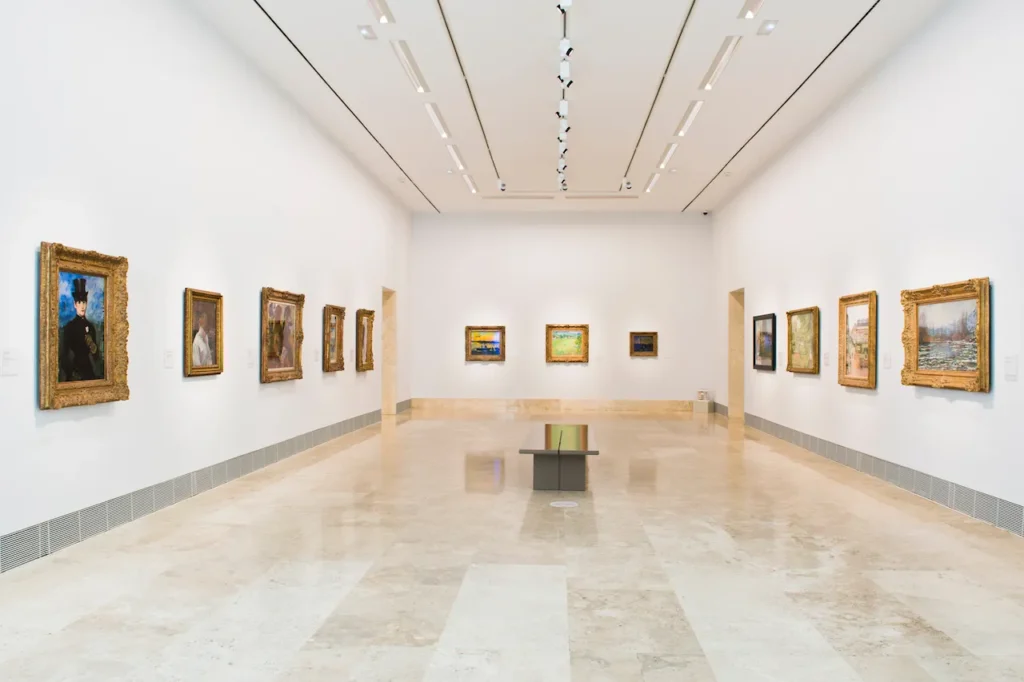
The first floor moves through the 19th and early 20th centuries: Monet‘s shimmering Charing Cross Bridge, Van Gogh‘s swirling Les Vessenots in Auvers, Gauguin, Degas, Renoir and Cézanne represent Impressionism and Post-Impressionism at full strength. Ernst Ludwig Kirchner and the German Expressionists occupy rooms that feel electric with nervous energy; Georgia O’Keeffe and Edward Hopper‘s Hotel Room — that quintessential image of American urban solitude — represent the 20th-century American tradition.
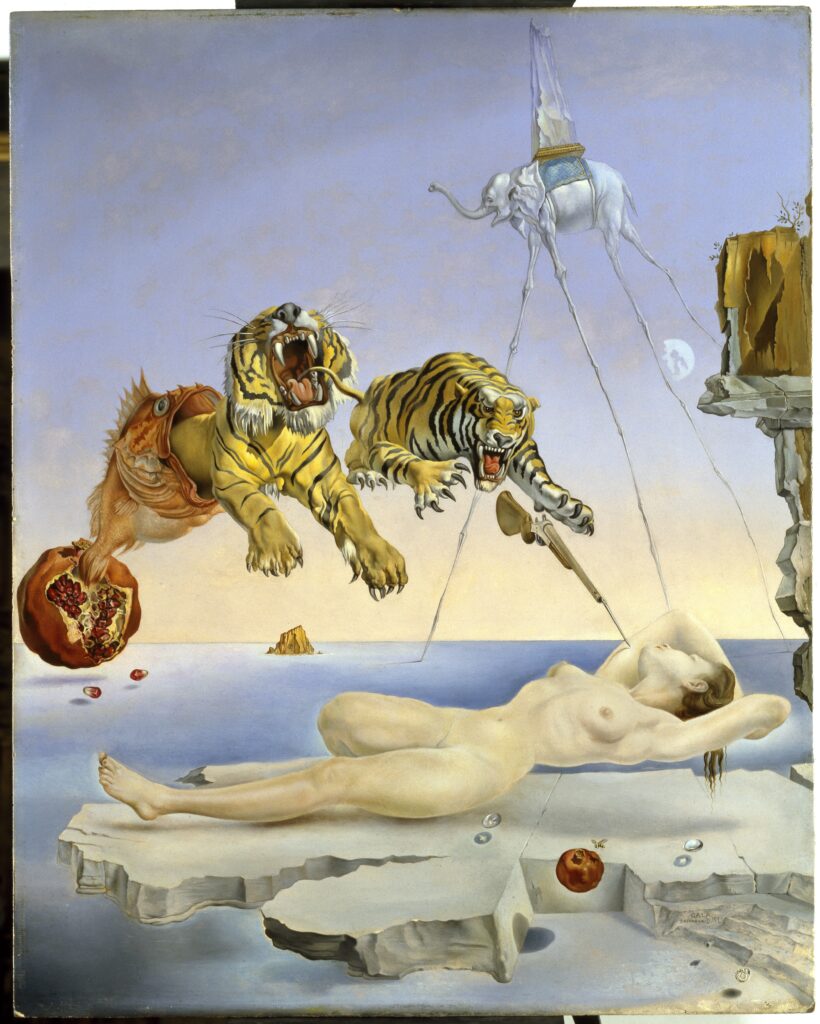
The ground floor’s Carmen Thyssen Collection adds further Impressionist and Post-Impressionist works, including a significant group of Impressionist landscapes. It’s also home to my favourite piece, Salvador Dalí’s Dream Caused by the Flight of a Bee around a Pomegranate a Second before Waking (1944).
Practical Information
The Thyssen is the most immediately accessible of the three museums for visitors without a deep art-historical background — its chronological layout is logical and clear, and the collection has a pleasurable variety that makes it easy to move at a comfortable pace. Allow two to three hours for a thorough visit to the permanent collection; add another hour for temporary exhibitions on the ground floor. Mondays (noon–4 pm) offer free entry thanks to sponsorship by Mastercard.
Address: Paseo del Prado, 8, 28014 Madrid (Metro: Banco de España, line 2).
Opening hours: Tuesday–Sunday 10 am–7 pm (permanent collection); Monday noon–4 pm (free). Temporary exhibitions have extended hours Tuesday–Sunday, 10 am–9 pm.
Admission: US$15 adults; US$10.40 reduced (seniors, students); free for under-18s. Free on Mondays, noon–4 pm.
Don’t miss: Caravaggio’s Saint Catherine of Alexandria; Van Eyck’s Annunciation Diptych; Carpaccio’s Young Knight in a Landscape; Hopper’s Hotel Room; Van Gogh’s Les Vessenots in Auvers; the Impressionist rooms on the first floor.
The Paseo del Arte Pass: The Smart Way to Visit All Three
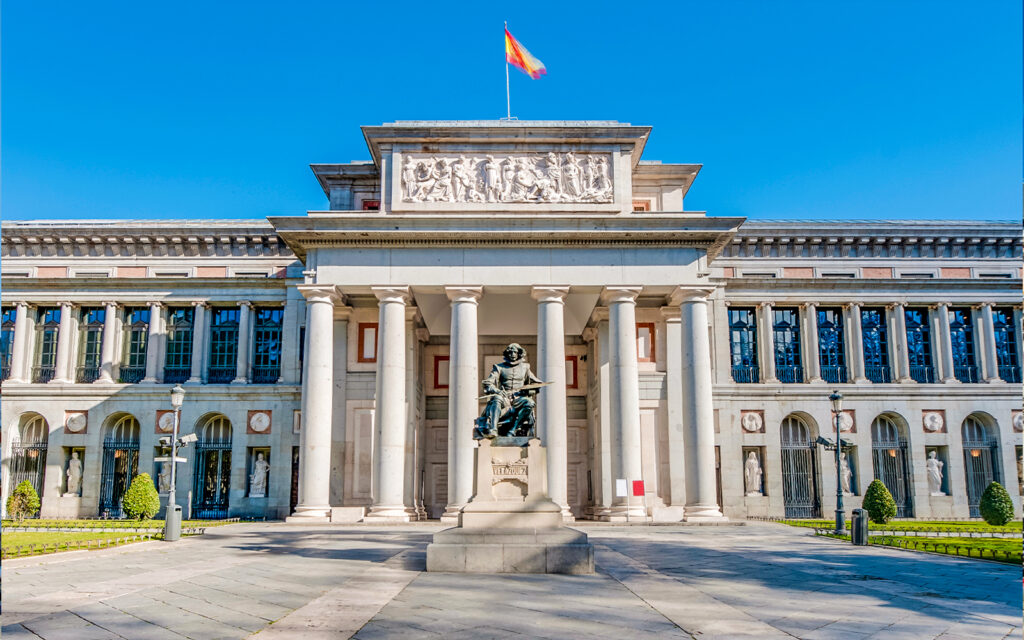
The Paseo del Arte Card is a combined ticket valid for one visit to the permanent collection of each of the three museums, purchasable online or at any of the three museum ticket desks. The pass costs US$38 per person and is valid for one year from the date of purchase, meaning you can visit at your own pace across multiple days rather than attempting all three in a single exhausting session.
The pass also offers handy skip-the-line access at the Thyssen and reduced queuing time at the other two, and represents a saving of around 20% compared to buying three individual tickets separately.
For most visitors, the ideal approach is to spread the three museums across two or three days: the Prado warrants a half-day at minimum, ideally a full day for dedicated visitors; the Reina Sofía and Thyssen each merit two to three hours. Attempting all three in one day is physically possible but culturally counterproductive — the quality of attention the works deserve cannot be maintained across eight or nine hours of gallery-going without significant fatigue.
The pass is purchased online, at any of the three museum ticket desks, or through the major ticket platforms. It cannot be used for temporary exhibitions at the Reina Sofía and Prado, which require separate ticketing.
Planning Your Visit: Practical Tips
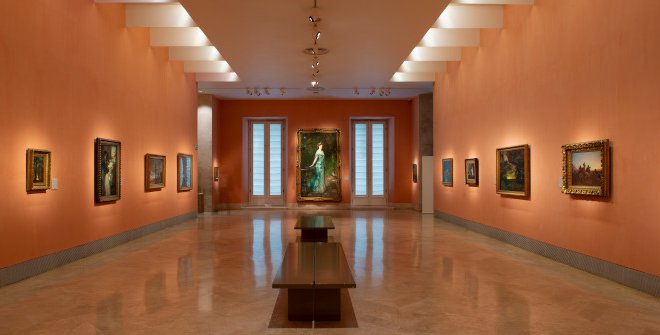
While we think of museums and art galleries as hushed places of contemplation, Madrid’s Golden Triangle and its cultural institutions are hugely popular, so it’s good to go prepared.
Book Tickets in Advance
All three museums attract enormous demand, particularly at weekends and during Spanish school holidays. Online timed-entry tickets for the Prado sell out several days in advance during peak season; Reina Sofía morning slots can fill two to five days ahead. Buying online, even a day before, saves significant time at the door and is often the only way to guarantee entry at a preferred time.
Consider the Day of the Week Carefully
The Reina Sofía is closed on Tuesdays. The Thyssen is free on Monday lunchtimes but has reduced hours. All three museums offer free evening admission on most weekdays (see individual listings), but free sessions attract large crowds; arrive at least 45 minutes before the free period begins.
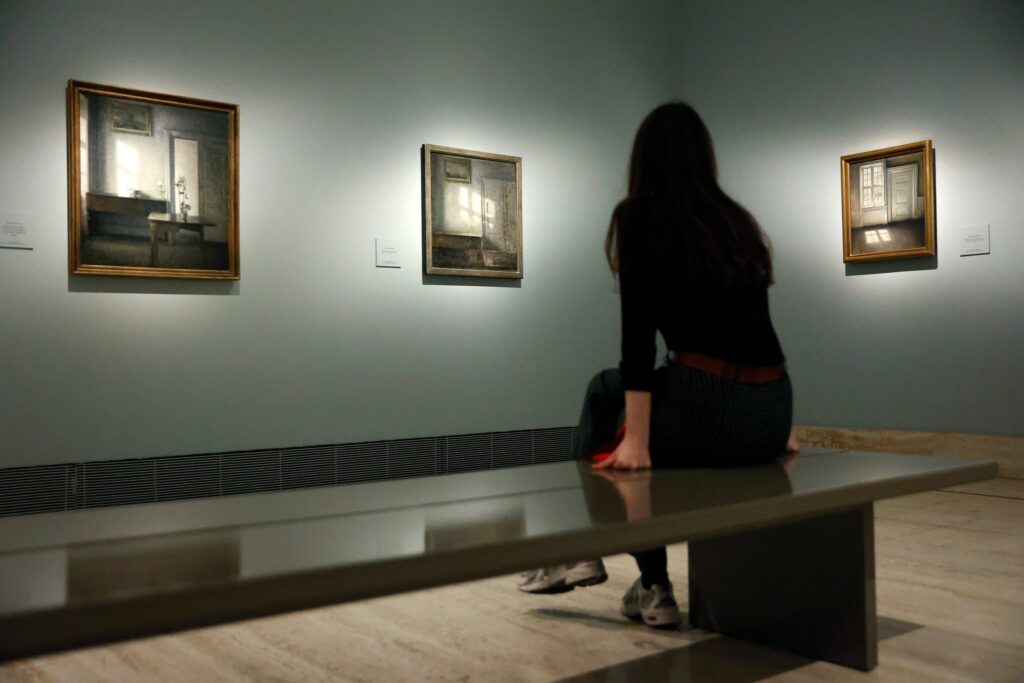
Decide on Your Priorities
For first-time visitors who want to see the essential works without museum fatigue, we suggest the following minimum itineraries: at the Prado, focus on the Velázquez rooms (including Las Meninas), the Bosch Garden of Earthly Delights and the Goya galleries; at the Reina Sofía, spend time with Guernica and the surrounding Picasso material, then the Dalí and Miró rooms; at the Thyssen, begin on the second floor with the early Flemish and Italian rooms and work chronologically downward to the Impressionists.
Allow Recovery Time Between Museums
The Retiro Park, a short walk east of the Prado, is an ideal place to decompress between visits — a vast, beautifully maintained park whose boating lake, rose garden, and Crystal Palace provide an hour of restful contrast to gallery-going. The outdoor terraces of the cafés along the Paseo del Prado (there are also some great rooftop bars with views to die for) are equally pleasant for a coffee or a glass of Spanish vermouth between museums.
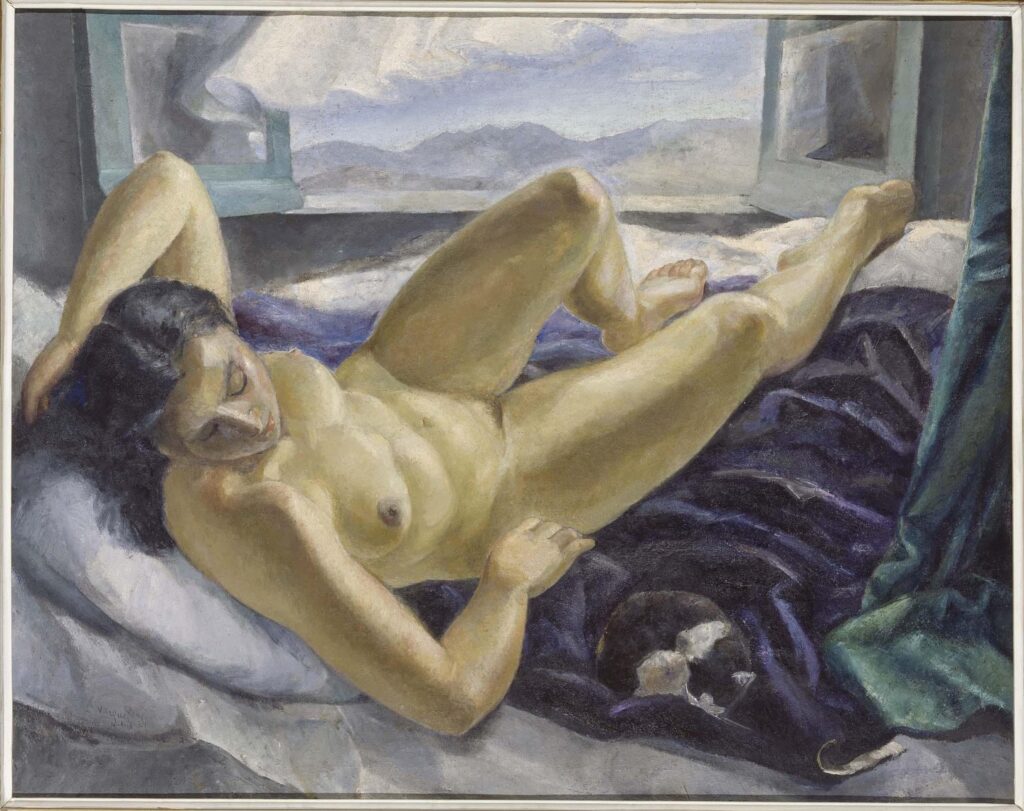
Audio Guides & Guided Tours
All three museums offer audio guides in multiple languages (typically US$5.80-7 to rent), and all run English-language guided tours that are particularly valuable for the Prado and Reina Sofía, where historical and political context significantly deepens the experience. Private tours combining two or all three museums are also available through local operators and are especially worthwhile for visitors with a genuine interest in art history.
Frequently Asked Questions
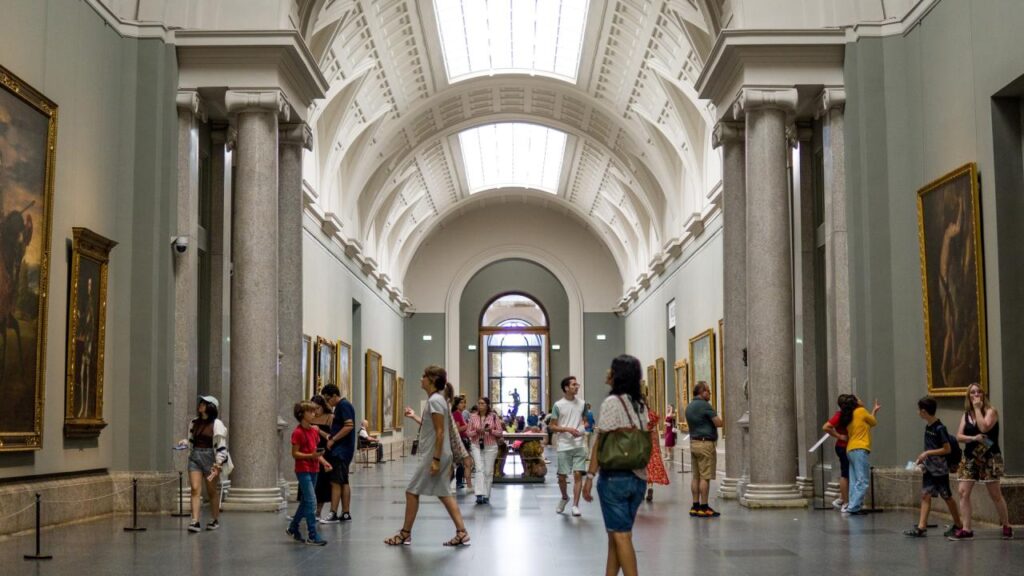
Which of the three museums should I prioritise if I only have time for one?
The Prado. It is not only one of the world’s great art museums but also the museum most deeply connected to Madrid’s own history — its collection is the product of the Spanish royal and national identity over five centuries. Las Meninas, the Garden of Earthly Delights and the Goya Black Paintings alone justify a full visit.
How long should I spend in each museum?
It really depends on what you’re into. The Prado warrants a minimum of three hours and ideally a full day. The Reina Sofía requires two to three hours for a solid visit covering the essential works; dedicated visitors or those attending a temporary exhibition should allow half a day. The Thyssen is the most manageable in a single session, comfortably covered in two to three hours.
Can I visit all three in one day?
Technically, yes; practically inadvisable. Museum fatigue sets in quickly when the quality and quantity of works demand sustained attention. A far better approach is to use the Paseo del Arte Card across two or three days, spending proper time in each. If you must do two in one day, the Thyssen and Reina Sofía pair reasonably well as afternoon and evening visits. This gives you time to get your museum fix before exploring Madrid’s best day trip destinations.
Is the Paseo del Arte Card worth buying?
Yes, for anyone planning to visit more than one museum. The pass costs US$38 and provides one visit to each museum within a year of purchase, saving around 20% compared to individual tickets, providing skip-the-line access at the Thyssen, and offering the flexibility to spread visits across multiple days.
Are the museums accessible to visitors with mobility difficulties?
All three museums are fully accessible by wheelchair, with lifts connecting all floors, accessible entrances and facilities. The Prado and Thyssen both have level or ramped access from the street; the Reina Sofía’s historic building has glass elevators on the exterior that provide access between floors. Contact each museum in advance if you have specific requirements.
Can I take photographs inside the museums?
Photography for personal use (without flash, tripods or professional equipment) is permitted throughout the permanent collections of the Thyssen and generally throughout the Prado and Reina Sofía, with the exception of the Guernica room at the Reina Sofía, where photography is restricted. Always check signage in individual galleries, as restrictions can apply to specific works under temporary loan agreements.
What is the best time of year to visit?
Spring (April–May) and autumn (September–October) offer the best combination of pleasant weather and manageable crowds. July and August see the highest visitor numbers overall, particularly from international tourists; late afternoons and the free evening sessions are the best strategy in summer. January and February are quieter months and a good choice for visitors who prioritise unhurried access to the works.
Are there restaurants and cafés at the museums?
The Prado has a café-restaurant in the Jerónimos building extension. The Reina Sofía has a café in the Nouvel building extension. The Thyssen has a café-restaurant on site and a garden terrace open in warmer months. For a more substantial meal, the streets and squares surrounding the Paseo del Prado — particularly the Barrio de las Letras to the west — offer excellent options at every price point.
Getting There
Madrid is served by a range of airlines from across Asia-Pacific, including Cathay Pacific, which recently increased its direct flights between Hong Kong and Madrid, where it links up with Iberia’s network across Europe and South America.
If you’re an art lover headed to the Spanish capital, don’t forget to check out our curated lists of the best luxury hotels in Madrid, as well as the best markets for after you’ve taken your cultural fill. You can also sate other appetites with these best tapas bars, home to the city’s timeless vermouth tradition, catch a sunset at one of Madrid’s best rooftop bars, or embark to UNESCO sites further afield with the best day trips from Madrid.


