
Madrid is a world-class destination, but don’t be shy to leave the tourist trails and explore the fascinating and multi-cultural barrios of Malasaña, Chueca, La Latina, Lavapiés, each of which has a little something different to offer.
From someone who loves to explore on foot, Madrid is a city best understood not from the top of a tour bus or the queue outside a museum, but from a bar stool, a terrace chair, or the corner of a sun-warmed square in a neighbourhood that feels like it belongs to the people who live in it. The city’s barrios are distinct worlds — each with its own history, its own social character, its own sounds and smells and unhurried rhythms — and navigating between them is one of the great pleasures of any stay in the Spanish capital.
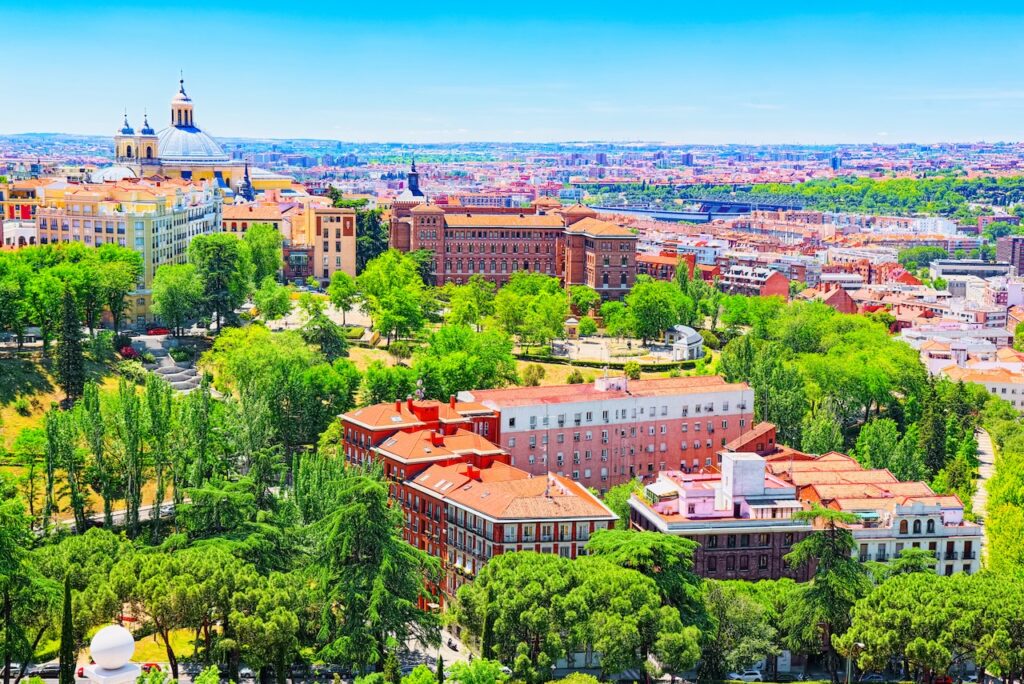
For me, four neighbourhoods in particular define what contemporary Madrid is: Malasaña, Chueca, La Latina and Lavapiés. They sit within walking distance of each other in the compact central districts west and south of the Gran Vía, yet each feels radically different from its neighbour.
Together they offer a complete picture of the city’s social and cultural life — from medieval cobblestones and century-old tabernas to LGBTQ+ pride squares and galleries humming with activist art.
This guide covers what each neighbourhood is, what makes it worth your time, and — crucially — how to choose between them, or how to combine all four in a single memorable day.
Malasaña: The Cradle of the Movida
Malasaña pulses with Madrid’s coolest, most creative energy. This effortlessly cool neighbourhood blends historic charm with vibrant street art, independent boutiques, craft beer bars, and late-night tapas spots. This eclectic little corner is a must for the traveller seeking authentic local flavours and effortless style.
Character and History
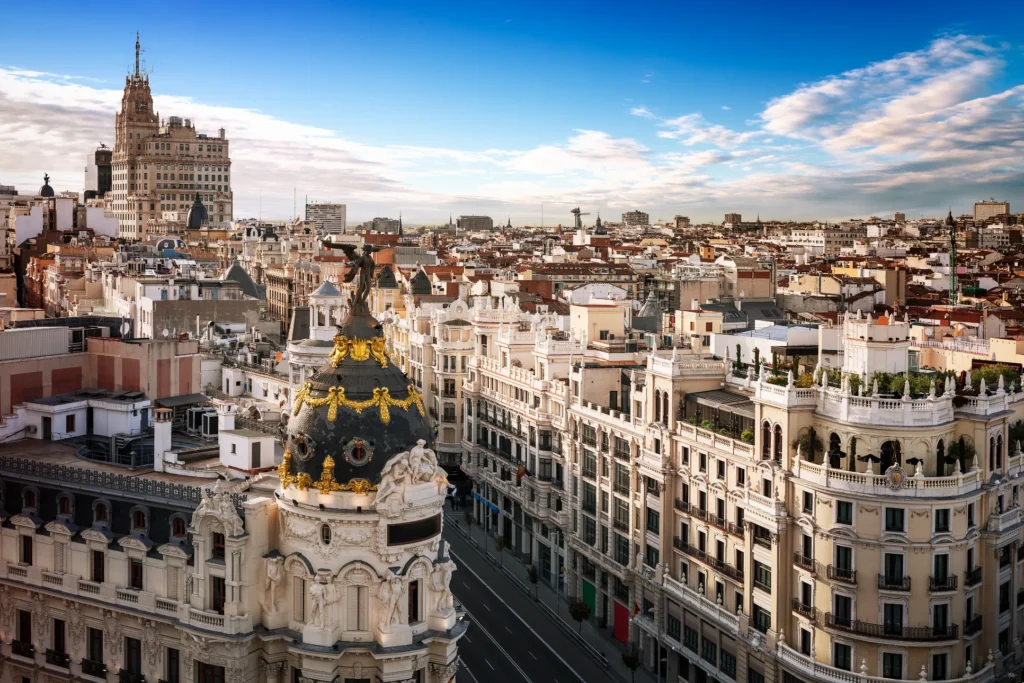
Of Madrid’s four great barrios, Malasaña is the most thoroughly associated with a single, defining cultural moment. In the years following the death of Franco in 1975, as Spain convulsed with the energy of newly recovered freedoms, this formerly working-class neighbourhood north of the Gran Vía became the epicentre of the Movida Madrileña.
This underground explosion of rock music, counter-culture, fashion and artistic provocation rewrote the rules of Spanish society and produced, among other things, the early films of Pedro Almodóvar and the music of bands like Alaska y los Pegamoides. The bars and clubs of Malasaña were where that generation gathered; some of them — La Vía Láctea, La Manuela, TupperWare — are still open today, their walls lined with photographs and memorabilia from an era that Madrid has never entirely let go.
The neighbourhood takes its name from Manuela Malasaña, an 18-year-old seamstress who was shot by Napoleonic soldiers on 2 May 1808 during the popular uprising against French occupation — the event immortalised by Goya in his painting The Third of May 1808 at the Prado.
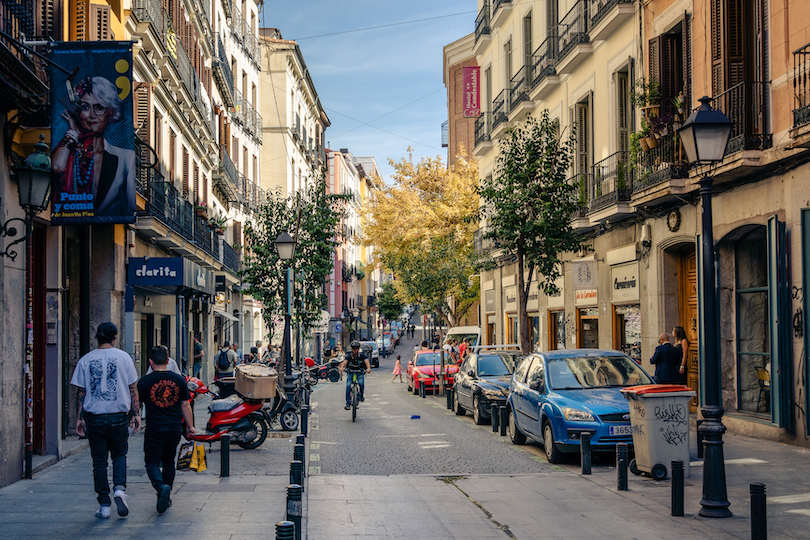
The neighbourhood was originally known as the Barrio de las Maravillas (Neighbourhood of Wonders), and something of that name still fits: wander its streets today and you find a place of persistent creative energy, where independent boutiques and vintage shops spill onto the pavements, coffee-shop windows glow with hand-lettered menus, and the terraces around Plaza del Dos de Mayo — the neighbourhood’s beating heart — are full from mid-morning until well after midnight.
What to See and Do
Plaza del Dos de Mayo is the social and symbolic centre of Malasaña, a square named for the 1808 uprising that retains the arch of the old Monteleón artillery barracks where the revolt was planned. By day, it fills with families, students and residents; by evening, it becomes one of the most convivial outdoor spaces in the city, its terraces packed and the surrounding streets alive with movement. Arrive early on a Sunday for the unofficial vermut session before heading to El Rastro in La Latina.
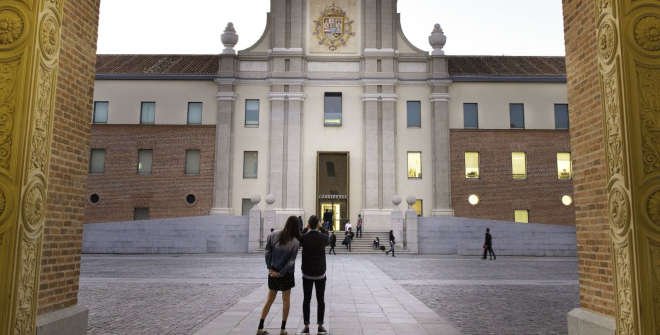
The neighbourhood rewards aimless wandering more than most. Calle del Pez has become a focal point for creative bars and restaurants. Calle de San Andrés is lined with independent boutiques, second-hand clothing shops and the kind of low-key cafés that invite you to stay for hours. Calle Espíritu Santo runs northward through the neighbourhood’s most concentrated zone of vintage shops and independent music venues. The Conde Duque Cultural Centre (above) — a magnificent 18th-century barracks complex that has been converted into one of Madrid’s most ambitious cultural spaces — hosts free exhibitions, theatre, concerts and outdoor events throughout the year, and is easily missed by visitors who don’t know it exists.
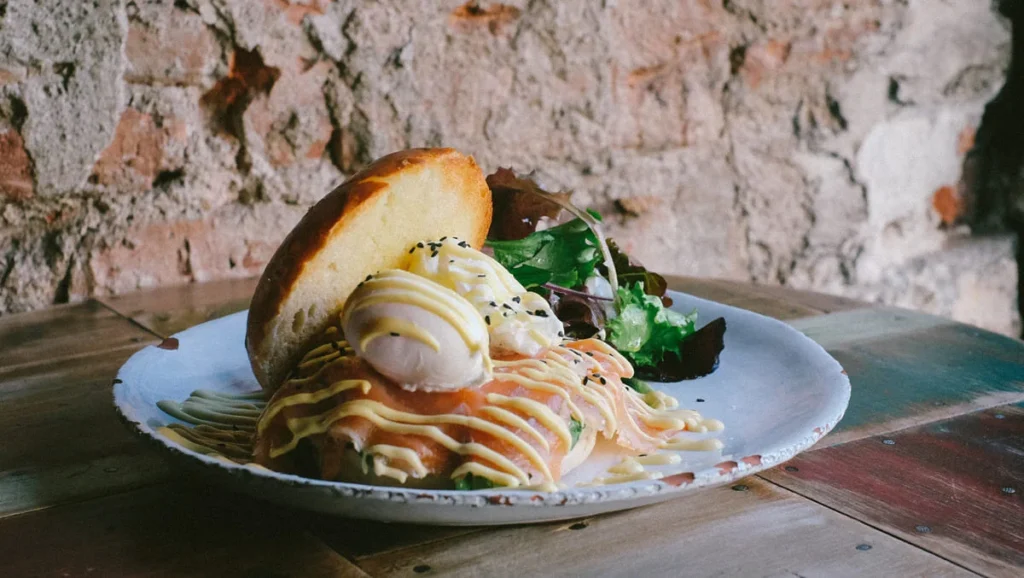
Malasaña is also one of the city’s great destinations for speciality coffee and brunch: La Bicicleta (I love this spot for its brunch menu) and a wave of Japanese-influenced coffee shops have established the neighbourhood as the first address for Madrid’s increasingly sophisticated café culture.
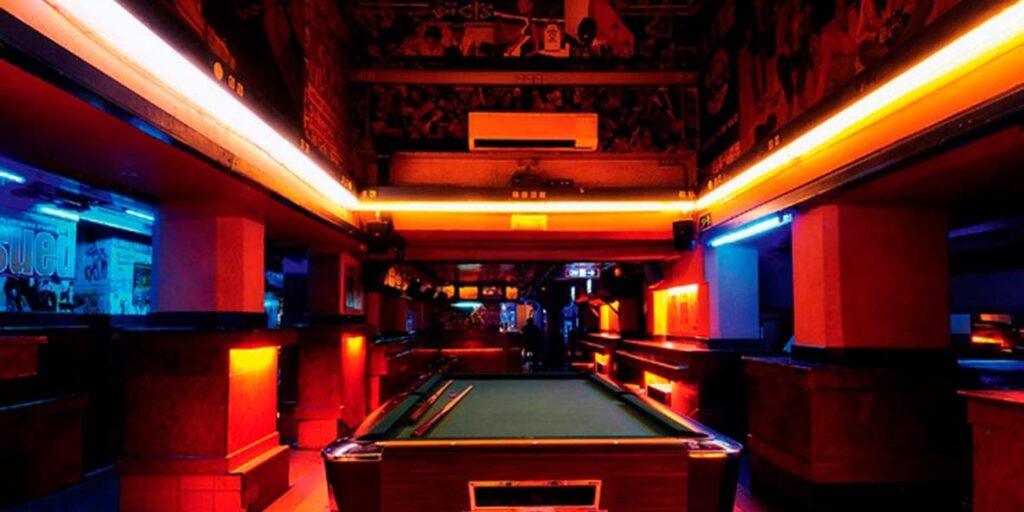
For nightlife, the neighbourhood’s independent music bars — La Vía Láctea (below), with its space-themed décor and rotating playlist of rock and new wave, and TupperWare, with its 1980s-kitsch murals and loyal local following — remain essential addresses. Both were central to the Movida and continue to define the area’s nocturnal character.
Eat and Drink
Malasaña has one of the most diverse food and drink scenes in the city, spanning century-old bodegas (Bodega de la Ardosa at Calle Colón for the finest tortilla in Madrid; Casa Camacho on Calle San Andrés for vermouth and the legendary Yayo cocktail) and a new wave of creative restaurants and natural wine bars along Calle del Pez and its side streets. The neighbourhood’s menú del día culture is alive and well — Casa Fidel on Plaza del Dos de Mayo offers a traditional midday menu of excellent quality for under USD17.
The Verdict
Malasaña is for those who want bohemian energy with genuine historical depth — the neighbourhood that produced the Movida and still carries its spirit. It is younger and more counterculturally rooted than Chueca, scruffier and less polished than Salamanca, and more overtly creative and international than La Latina.
Best for: Independent travellers, music lovers, vintage shoppers, speciality coffee enthusiasts, and night owls who prefer indie bars to nightclubs.
Metro: Tribunal (lines 1 and 10); Noviciado (line 2); San Bernardo (lines 2 and 4).
Chueca: The Heart of Madrid’s LGBTQ+ Community
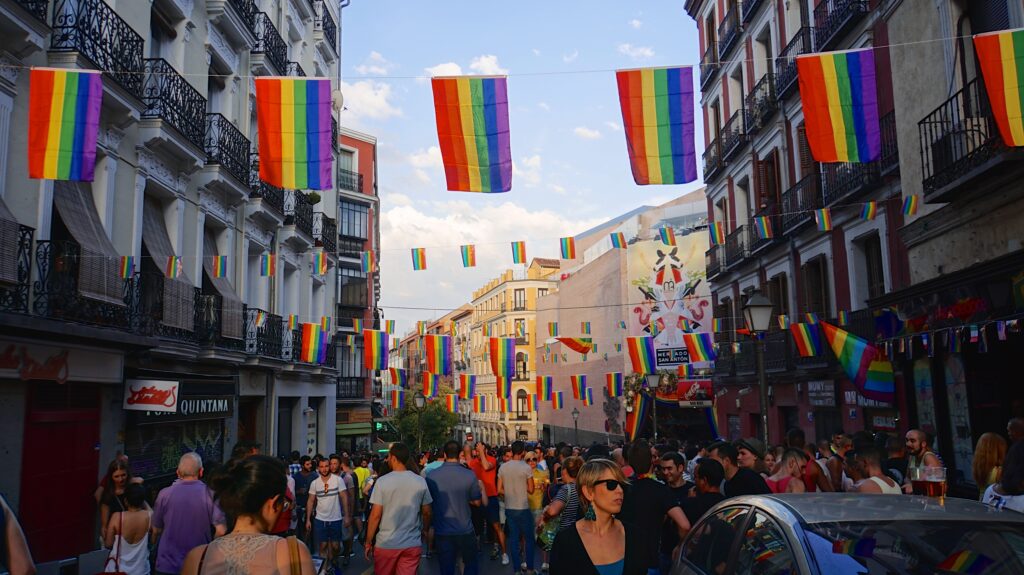
Chueca buzzes with Madrid’s most stylish and cosmopolitan energy. This vibrant neighbourhood blends sleek design shops, excellent restaurants, lively terraces, and sophisticated bars. A dynamic, fashionable enclave perfect for the modern man seeking great food, people-watching, and effortless nightlife.
Character and History
Chueca is one of the great examples of a neighbourhood transforming itself through community. Through most of the 20th century, the streets around the square now known as Plaza de Chueca were neglected, associated with poverty, petty crime and the drug trade that scarred many European city centres in the 1980s.
What changed the neighbourhood — and in many ways changed the character of Madrid itself — was the arrival of the LGBTQ+ community. As Spain emerged from the Franco era, homosexuality was decriminalised (1979), civil partnerships were introduced (2005) and same-sex marriage was legalised (2005), making Spain one of the first countries in the world to do so, Chueca became the visible, physical expression of that liberation. Bars opened, community organisations established themselves, the rainbow pavements around the metro station appeared, and the neighbourhood became the symbolic heart of Spain’s LGBTQ+ culture.
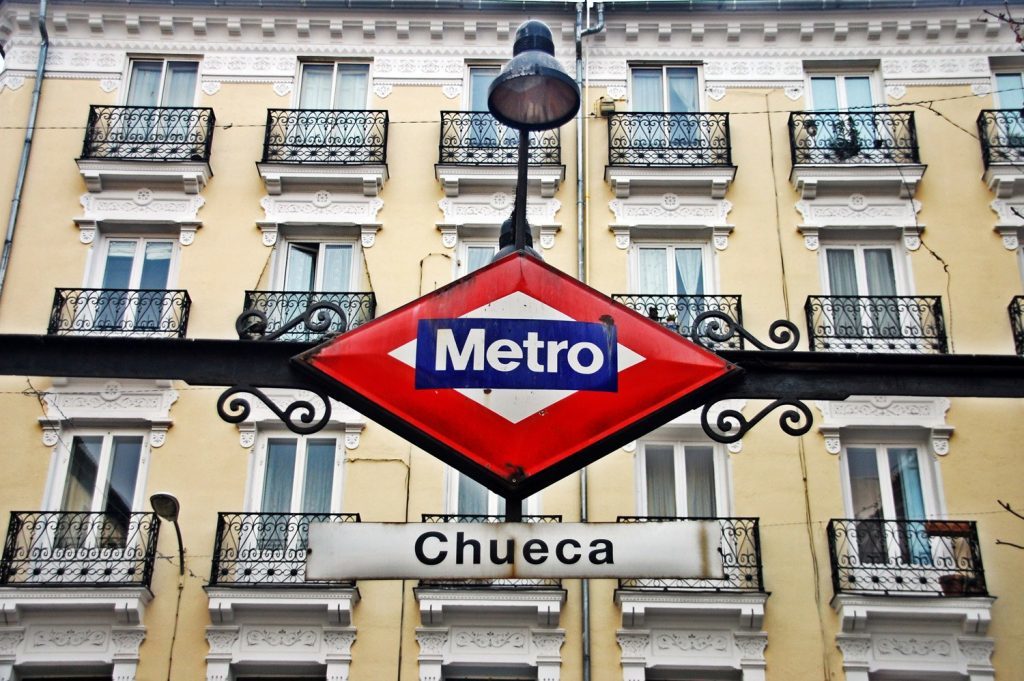
Today, Chueca is one of the most confident, established, and genuinely welcoming LGBTQ+ neighbourhoods in Europe — not a tourist performance, but a living community that has been shaping the city for thirty years. Named after Federico Chueca, the Spanish composer, the neighbourhood radiates an energy that is simultaneously inclusive and deeply local: its terraces fill with residents as much as visitors, its restaurants attract food lovers from across the city regardless of identity, and its sense of ease — people simply being who they are in public, without performance or self-consciousness — is one of the most refreshing things about it.
What to See and Do
The neighbourhood’s social life orbits Plaza de Chueca, a small, animated square surrounded by café terraces that are full from morning to late at night and serve as the neighbourhood’s living room. From the square, Calle Pelayo runs north, lined with bars and LGBTQ+-welcoming restaurants. Calle Fuencarral is the main fashion and shopping artery, extending south towards the Gran Vía: a pedestrianised street of independent boutiques, chain stores, shoe shops and cafés that makes it one of the best streets in central Madrid for a wandering afternoon.
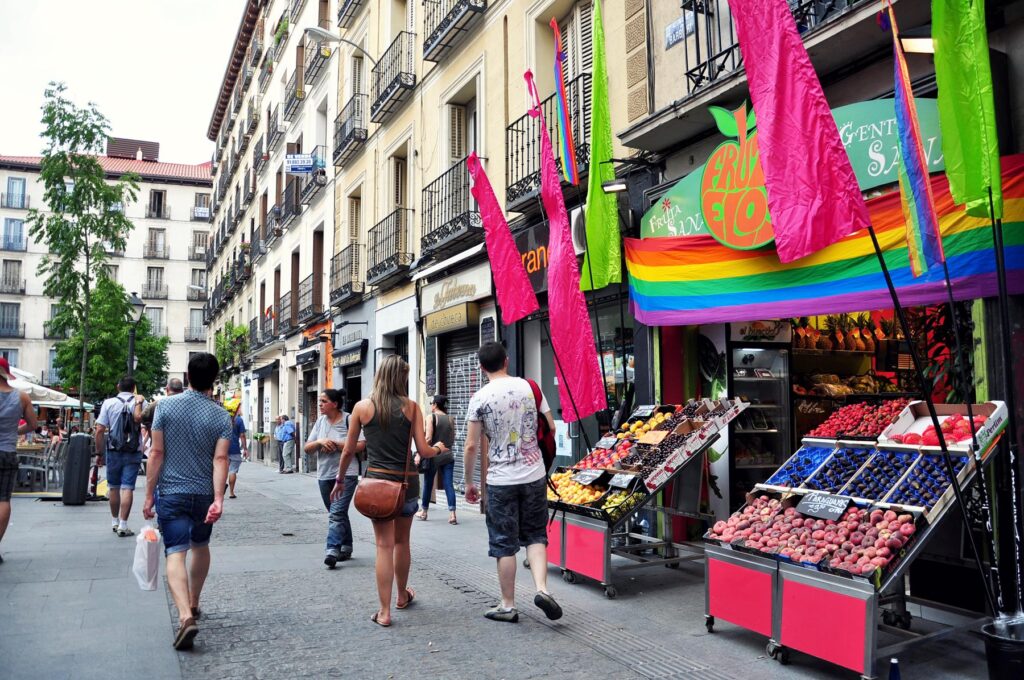
Chueca’s shopping scene rewards exploration beyond Fuencarral. Calle Hortaleza and its side streets are home to independent clothing stores, design shops and the kind of selective, personality-driven retail that has largely been driven out of city centres elsewhere in Europe. Berkana, on Calle del Hortaleza, is one of Spain’s oldest LGBTQ+ bookshops and a neighbourhood institution. Mercado de San Antón (see our separate markets guide) sits just off Calle Augusto Figueroa, its three floors of fresh produce, food stalls and rooftop terrace providing a full social afternoon in themselves.
The neighbourhood hosts Madrid Pride (MADO) each July — one of the largest Pride events in the world, drawing well over a million people to the streets around Plaza de Pedro Zerolo and transforming the whole city centre. The event begins and ends in Chueca, which becomes a week-long celebration rather than a single day.
Eat and Drink
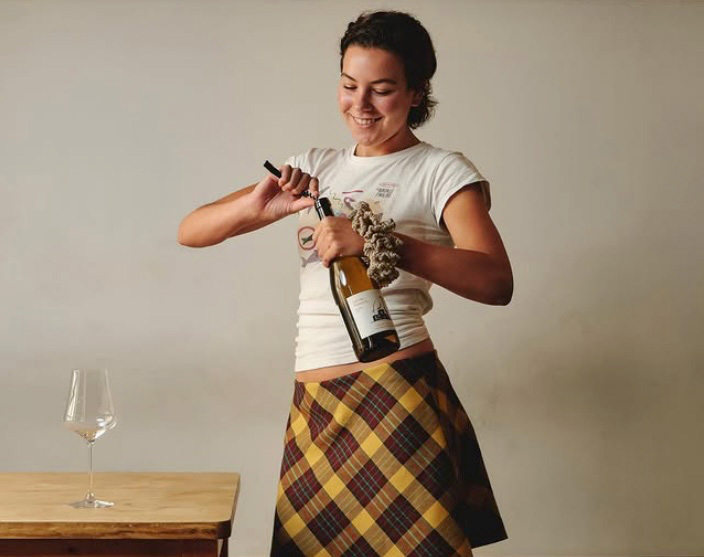
Chueca has evolved into one of Madrid’s strongest dining neighbourhoods, with a range of restaurants that goes well beyond LGBTQ+-specific venues. The natural wine bar La Alquimia Vinos Naturales (above) has become a reference point for Madrid’s growing natural wine community. Taberna Ángel Sierra on Plaza de Chueca (see our vermouth guide) is the definitive historic bar for a Sunday vermut — its house vermouth is considered the finest in the city. For brunch, La Desayunería on Calle Barbieri is a neighbourhood staple. At the more formal end, a cluster of chef-driven restaurants in the streets around Calle Barquillo and Calle Colón attracts serious food lovers from across the city.
The Verdict
Chueca is for travellers who want a neighbourhood with genuine community identity, inclusive energy and excellent food and shopping in a well-connected central location. It is more polished and less scruffy than Malasaña, more socially specific and less tourist-facing than La Latina, and far more diverse and lively than the upscale quietness of Salamanca.
Best for: LGBTQ+ travellers (and those who want the most inclusive neighbourhood in the city); shoppers; food lovers; first-time visitors who want to feel the full range of contemporary Madrid social life.
Metro: Chueca (line 5); Gran Vía (lines 1 and 5).
La Latina: Old Madrid, Timeless Tapas
Chueca buzzes with Madrid’s most stylish and cosmopolitan energy. This vibrant neighbourhood blends sleek design shops, excellent restaurants, lively terraces, and sophisticated bars. A dynamic, fashionable enclave perfect for the modern man seeking great food, people-watching, and effortless nightlife.
Character and History
La Latina is where Madrid’s deep past is most immediately legible. The neighbourhood occupies the oldest continuously inhabited part of the city — built on the site of the medieval medina of the Muslim settlement of Al-Majrit, which preceded the modern Madrid by several centuries. Some of its streets follow the course of ancient drainage channels (cavas); others trace the path of walls that no longer exist.
The neighbourhood’s name derives from Beatriz Galindo, a Renaissance noblewoman and teacher of Queen Isabella I, who was known as La Latina (the Latin Scholar), and whose grave is in the free Museo de San Isidro, tucked into the neighbourhood’s narrow lanes.
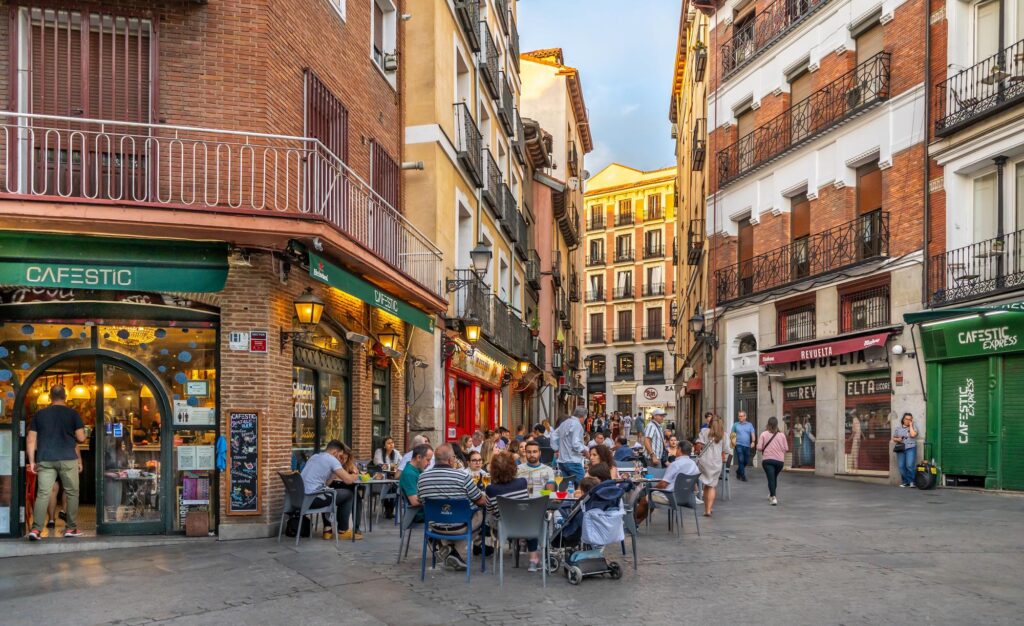
Standing in the Plaza de la Paja — the neighbourhood’s most beautiful square, once the market where residents paid their church tax in straw (paja) to feed the bishop’s horses — it is easy to believe you are in a city that was built before the concept of urban planning existed. The buildings are irregular; the streets wind in patterns that make no cartographic sense; the hidden garden of the Jardín del Príncipe de Anglona, tucked below the square, offers views over rooftops that look essentially unchanged from the 18th century. La Latina is the neighbourhood that looks most like the Madrid of imagination.
Today, this medieval street plan sits beneath one of the most celebrated tapas scenes in the city. Cava Baja and its parallel street Cava Alta — running along the route of the old Christian city wall, whose excavated sections are sometimes visible beneath glass floors in the older establishments — are among the most famous tapas streets in Spain, lined with posadas and taverns that have been feeding and watering Madrileños for generations.
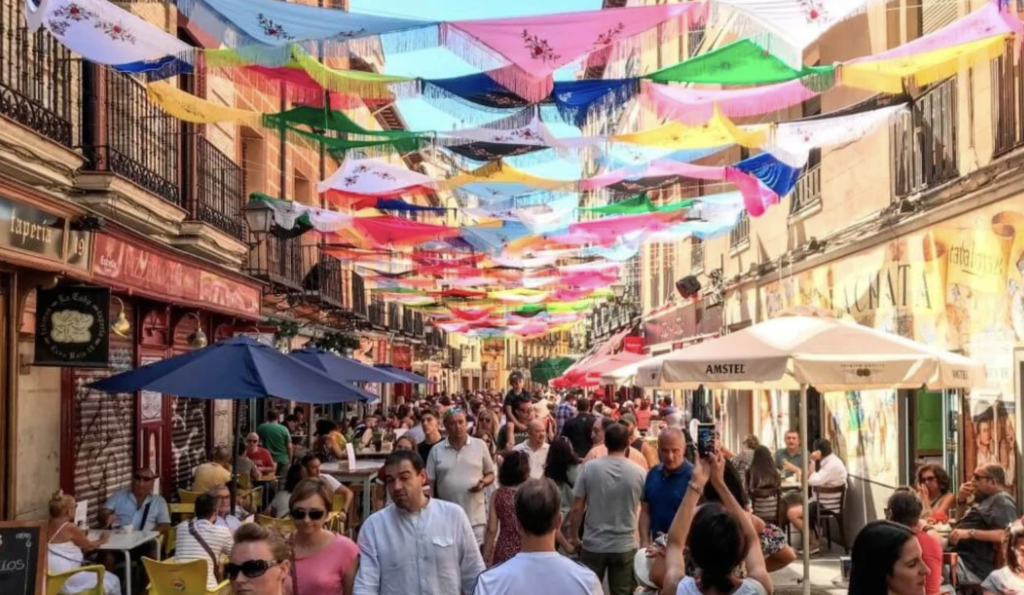
The neighbourhood comes most dramatically alive on Sunday mornings, when El Rastro flea market (see our markets guide) fills the surrounding streets with thousands of stalls and the crowds that follow them, before spilling into the bars and restaurants for the traditional post-market vermouth session.
What to See and Do
The Basílica de San Francisco el Grande, at the southern edge of La Latina, is one of Madrid’s most under-visited major monuments: a late 18th-century church with one of the largest domes in the Christian world, its interior hung with paintings by Goya and Zurbarán. It’s genuinely breathtaking and rarely crowded. San Pedro el Real church, in the heart of the neighbourhood, has a 14th-century Mudéjar redbrick tower that speaks of the Arabic roots of old Madrid. The Jardín del Príncipe de Anglona, accessible through an unassuming gate off Plaza de la Paja, is one of Madrid’s best-kept secrets — a small, walled garden of overgrown charm with rooftop views of the old city.
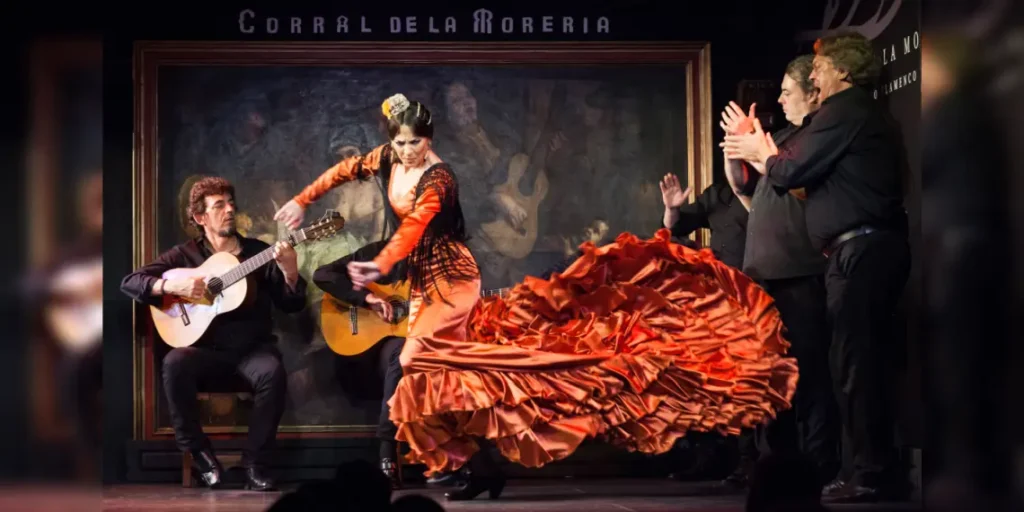
The Corral de la Morería (above), in the La Morería district at the western edge of La Latina, is one of the world’s most celebrated flamenco venues, with its own Michelin-starred restaurant. An evening here — dinner, a glass of wine and a full flamenco performance in an intimate tablao setting — is one of the definitive Madrid experiences.
Eat and Drink
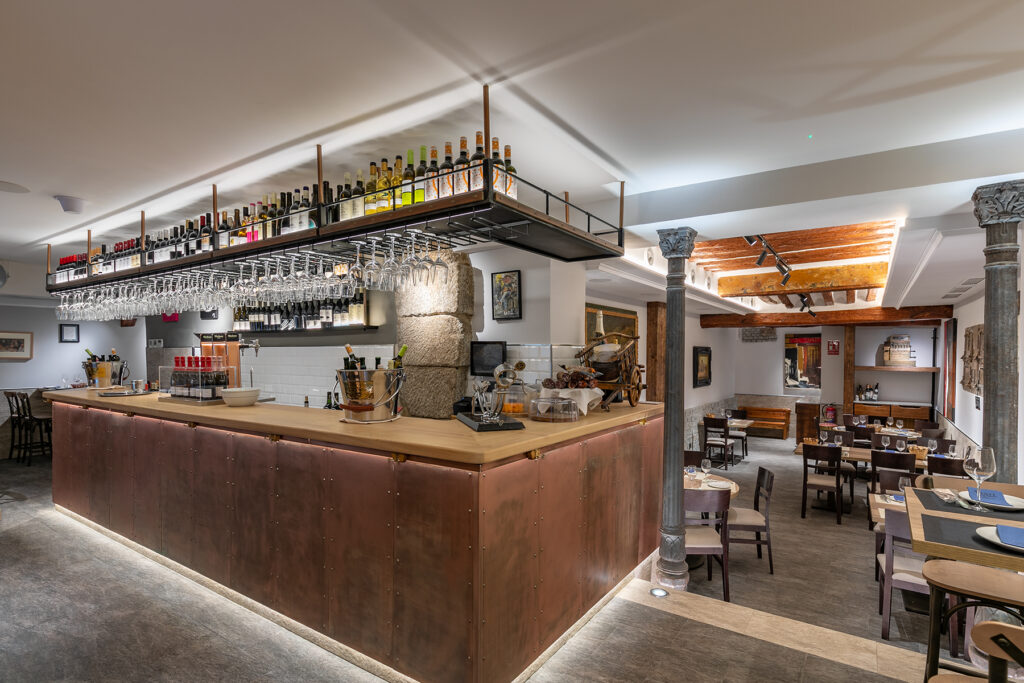
La Latina’s food and drink scene is anchored by the tapas culture of Cava Baja and Cava Alta, but the neighbourhood extends well beyond those famous streets. Taberna Los Huevos de Lucio (below) is a Madrid institution famous for its huevos rotos (broken eggs with ham and potatoes). Juana la Loca on Plaza de la Puerta de Moros is celebrated for its tortilla de patatas con cebolla caramelizada, arguably the finest tortilla in the neighbourhood. Bodegas Ricla on Calle Cuchilleros (see our vermouth guide), with the oldest vermouth tap in Madrid, is the essential aperitif stop before Sunday lunch.
On Sunday mornings, the post-El Rastro tradition of gathering in La Latina’s bars for vermouth and tapas is one of the most enjoyable social rituals the city has to offer — find a table outside on Plaza de la Cebada or Plaza de la Paja and let the morning unfold at its own pace.
The Verdict
La Latina is for travellers who want to encounter the oldest, most architecturally and historically layered part of Madrid, combined with the city’s most iconic tapas culture. It is less bohemian than Malasaña, less socially specific than Chueca, less edgy than Lavapiés, and more purely, classically madrileño than all three.
Best for: History lovers; tapas enthusiasts; first-time visitors who want the most quintessentially Spanish experience; anyone visiting on a Sunday (for El Rastro and the post-market social).
Metro: La Latina (line 5); Tirso de Molina (line 1); Puerta de Toledo (line 5).
Lavapiés: Madrid’s Most Multicultural Barrio
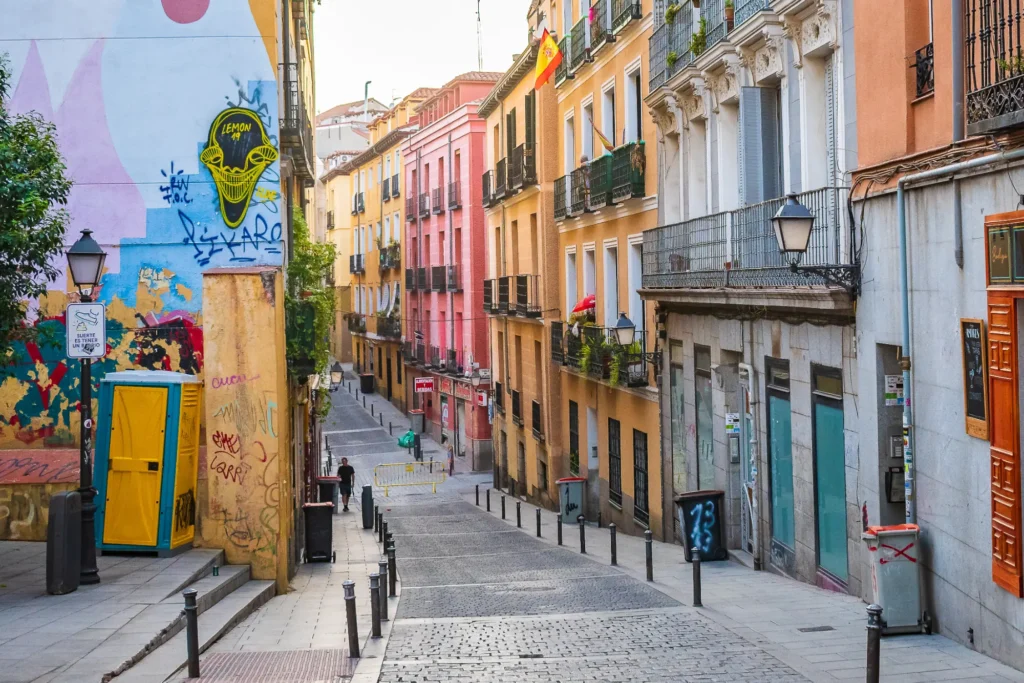
Lavapiés offers Madrid’s most vibrant multicultural soul. This bohemian neighbourhood blends colourful street art, diverse international cuisine, traditional taverns, and a raw creative energy. Ideal for the modern man seeking authenticity, character, and an effortlessly cool local experience.
Character and History
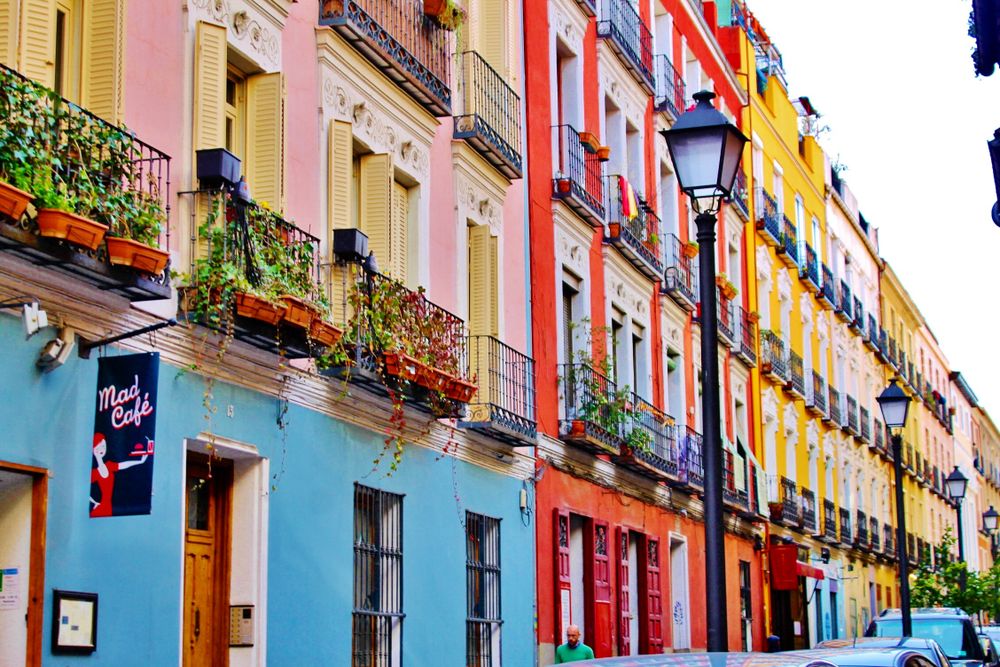
Lavapiés is the neighbourhood that most clearly shows what Madrid is becoming. Bordered by La Latina to the west and the Reina Sofía museum to the east, it occupies a hilly, densely built-up quarter south of the city centre where the streets are steep, the buildings are worn, and the social texture is unlike anywhere else in Spain. Over a third of its 45,000 residents are foreign-born, drawn from over 100 nationalities — and the result is a neighbourhood that sounds, smells and moves in a way that is simultaneously deeply Spanish and irreducibly global.
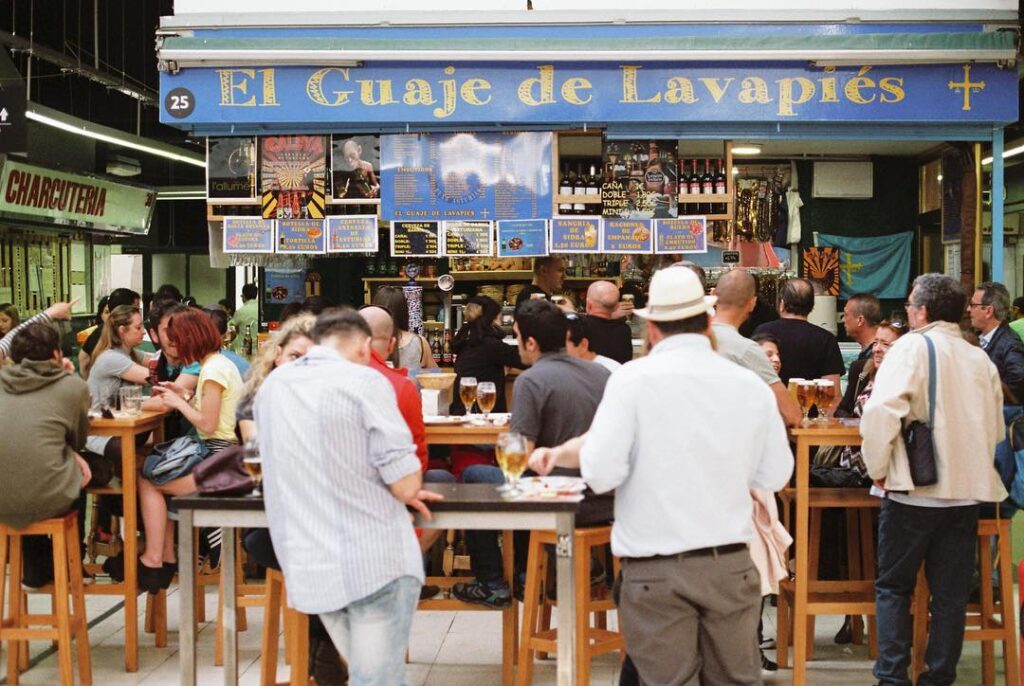
The name Lavapiés (literally “wash feet”) is said to derive from a public fountain where Jewish and Muslim residents washed before prayer, a detail, whether historically accurate or legendary, that captures something true about the neighbourhood’s identity as a place where communities have long coexisted.
Through the 18th and 19th centuries, Lavapiés was a working-class barrio of washerwomen, cigar sellers and tradespeople, its character captured in the sainetes (comic operas) of playwright Ramón de la Cruz. Through the late 20th century, it absorbed successive waves of migrants: Moroccan, Bangladeshi, Chinese, Indian, sub-Saharan African, and South American.
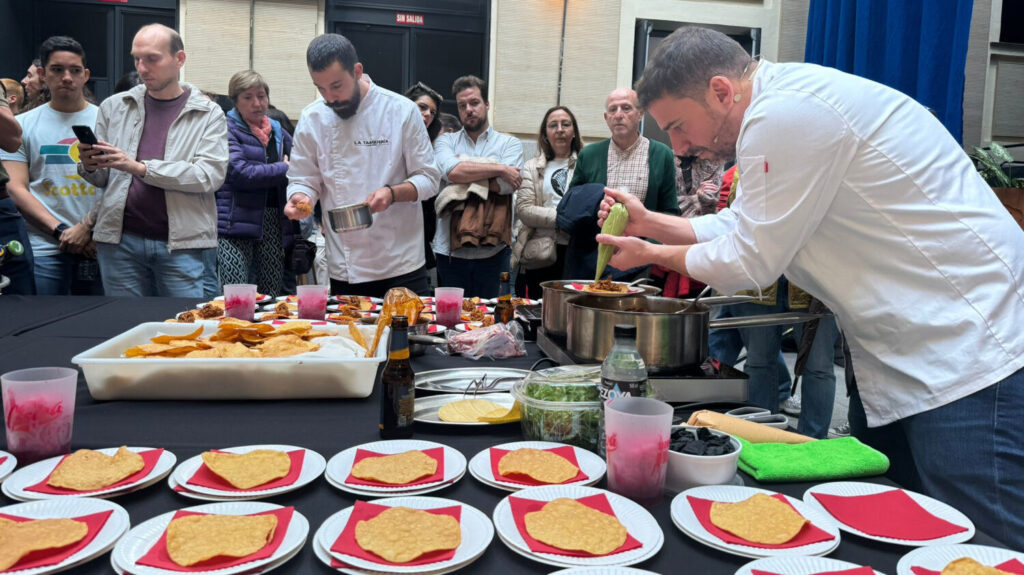
The result today, is a neighbourhood where a century-old taberna sits next to a Pakistani spice shop, where political murals cover entire façades, and where the annual Tapapiés festival in October sees every bar and restaurant in the neighbourhood simultaneously offering tapas at around US$1.20, each inspired by a different country’s cuisine — a genuinely unique event that turns the entire barrio into a week-long street party celebrating its own diversity.
What to See and Do
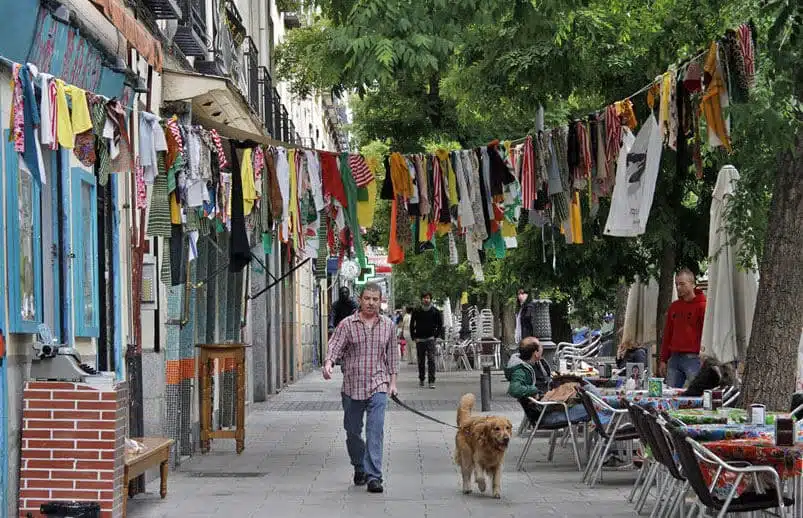
Lavapiés is a neighbourhood for walking without a fixed itinerary. Its steep streets and irregular layout resist the kind of efficient sightseeing that works elsewhere in Madrid. Instead, the pleasure here is in the accumulation of small moments: a mural that stops you mid-stride, a fragrant cloud from an Indian restaurant’s kitchen, a bar that has been serving the same regulars since 1970, sitting next to a natural wine shop that opened last year.
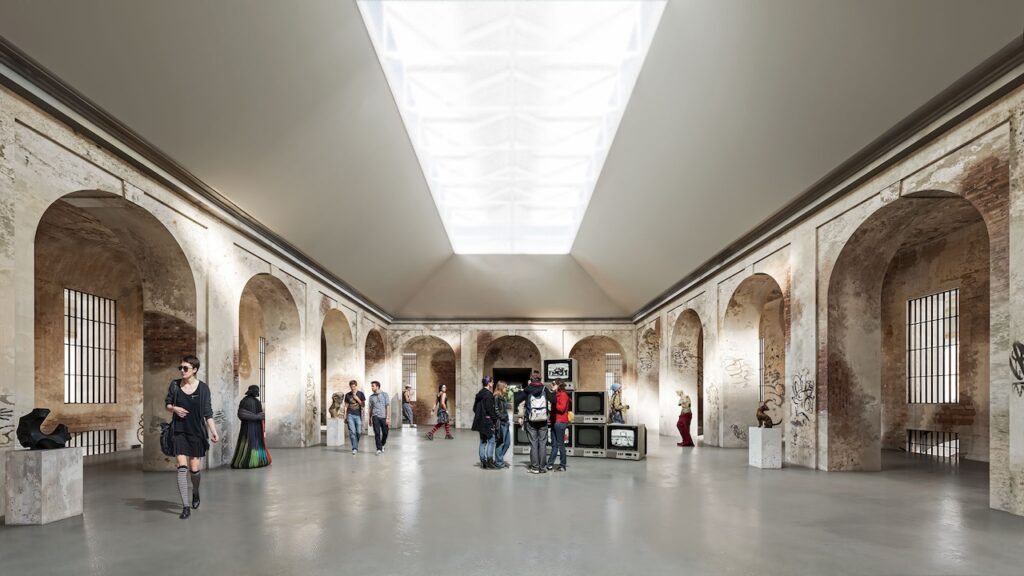
La Tabacalera is one of the most important cultural venues in the city: a massive 18th-century former tobacco factory that has been occupied by a neighbourhood assembly and transformed into a self-managed arts space of enormous ambition, hosting exhibitions, concerts, film screenings, dance classes and community events across its cavernous interiors. Entry is typically free or minimal.
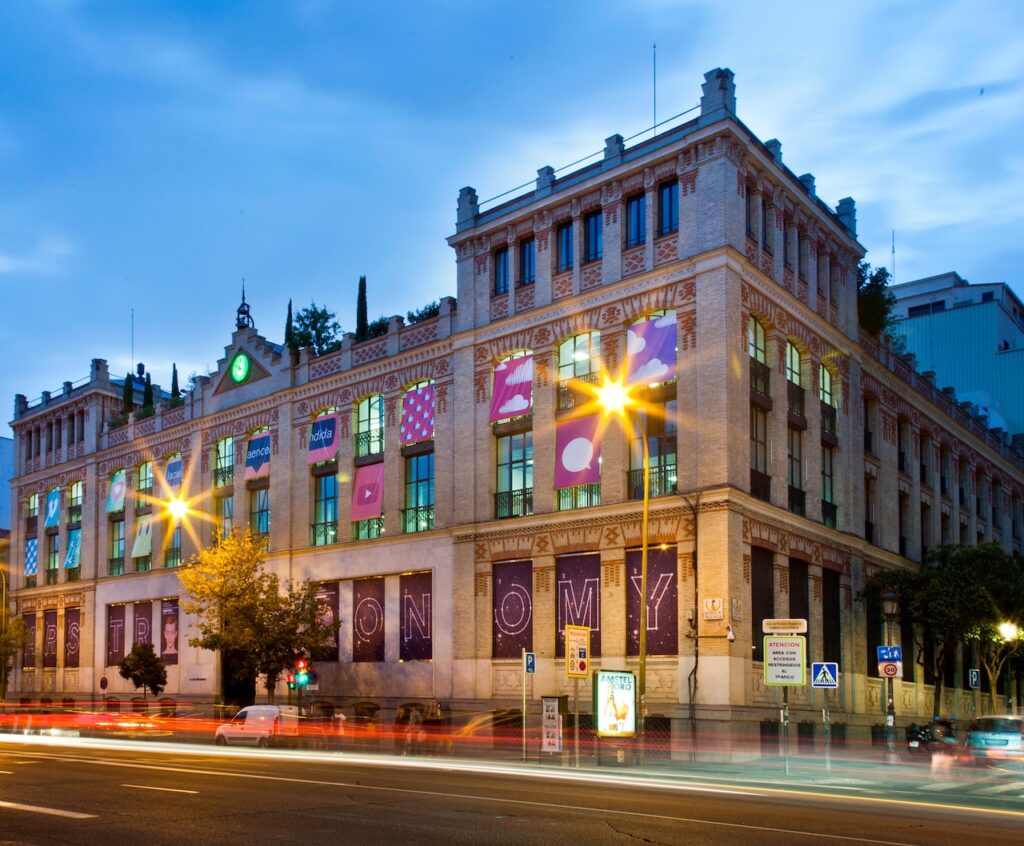
La Casa Encendida (below) — half contemporary art gallery, half activist hub — runs rotating exhibitions, indie film screenings and, in summer, rooftop DJ sets in a programme that is consistently more interesting than institutions many times its budget. Meanwhile, the Filmoteca Española (National Film Archive), housed in a beautiful historic building on Calle Magdalena, shows classic and contemporary films daily for a few euros, drawing a crowd of knowledgeable cinephiles.
The neighbourhood’s street art is exceptional and worth a dedicated walk: enormous political murals, stencil poetry, layered graffiti and commissioned large-scale works cover walls throughout the barrio, concentrated particularly around Calle Embajadores and the streets south of Plaza de Lavapiés. Guided street art tours are available through local operators and typically cost around US$17.
Mercado de Antón Martín (see our markets guide), on the northern border of the neighbourhood, is the ideal introduction to Lavapiés’s multicultural food culture. Its stalls span traditional Spanish produce and contemporary international food, and its bar serves one of the most reliably excellent tortillas in Madrid.
Eat and Drink
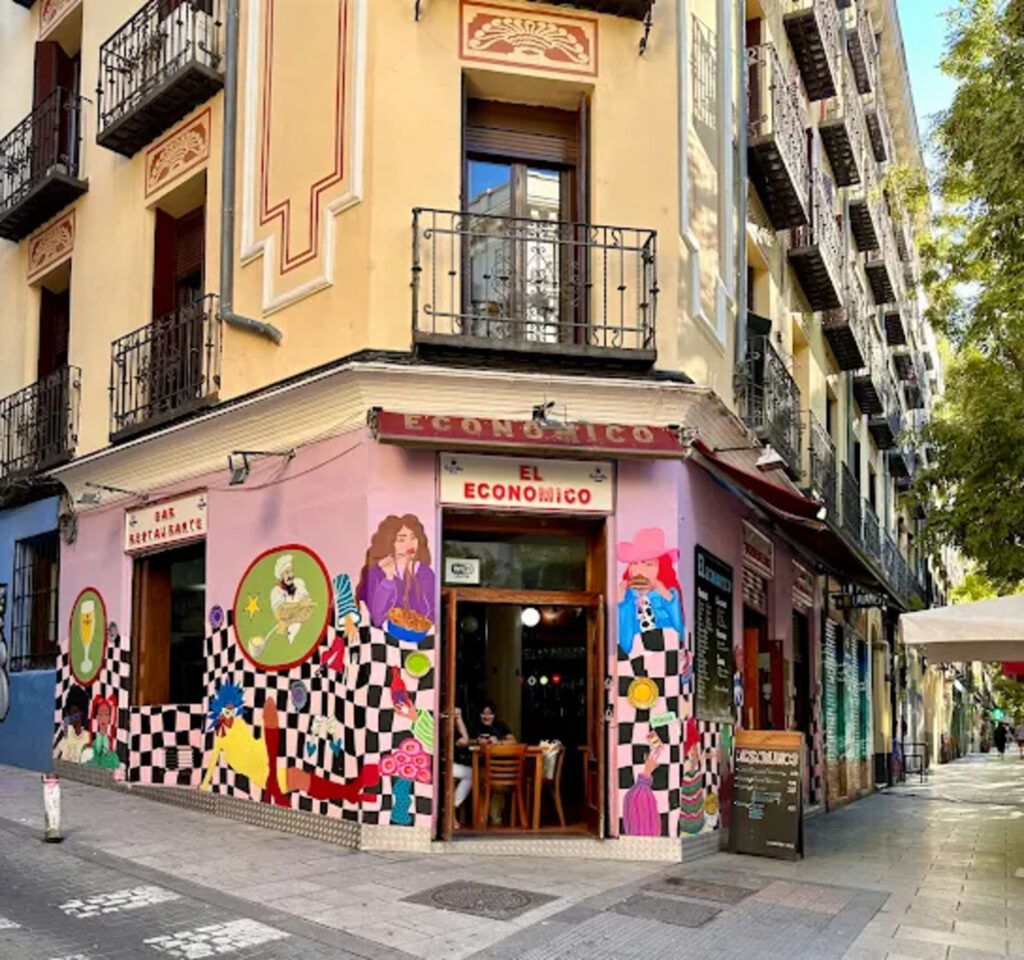
The food scene in Lavapiés is the most internationally diverse in the city, with Indian, Bangladeshi, Moroccan, Chinese, Korean, Lebanese, sub-Saharan African and Latin American restaurants all represented at genuine quality.
The neighbourhood is also where several of Madrid’s most interesting natural wine bars and chef-driven small restaurants have opened in recent years, drawn by affordable rents and an adventurous local clientele. For tapas in a traditional setting, Calle Argumosa — the neighbourhood’s terrace-lined main street — is the place to start; El Económico is the neighbourhood’s essential historic bar, plain, cheap and perfectly itself.
At Tapapiés (October), every participating bar offers a globally inspired tapa and a drink for US$3.50 — one of the best-value cultural experiences in Madrid.
The Verdict
Lavapiés is for travellers who want to experience the most genuinely diverse, culturally complex and unpolished side of Madrid. In this neighbourhood, the city’s present and future are most visibly being made. It’s the least conventionally pretty of the four neighbourhoods and the most intellectually and culturally challenging. It rewards curiosity and genuine openness above all other qualities.
Best for: Culture seekers; art lovers; budget-conscious travellers; those who want global food beyond Spanish cuisine; anyone who wants to experience Madrid as a living, evolving city rather than a heritage destination.
Metro: Lavapiés (line 3); Embajadores (lines 3 and 5); Antón Martín (line 1).
Comparing the Four: Which Neighbourhood is Right for You?
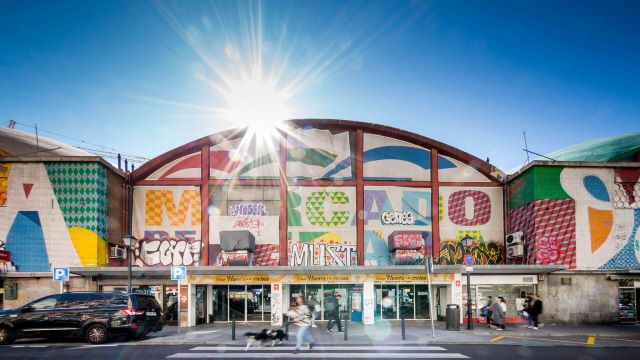
Each of the four neighbourhoods has a distinct identity, and the choice between them is fundamentally a question of what kind of Madrid experience you are looking for.
Choose Malasaña if you want bohemian energy, independent shopping, the spirit of the Movida and the city’s best speciality coffee and vintage scene. It is the most overtly creative and internationally flavoured of the four, with the most active nightlife in independent bars and music venues.
Choose Chueca if you want an inclusive, community-rooted neighbourhood with excellent food, strong shopping and the most welcoming social environment in the city. It’s the most LGBTQ+-specific address but the least exclusive in practice — one of the most genuinely mixed and open neighbourhoods in Europe.
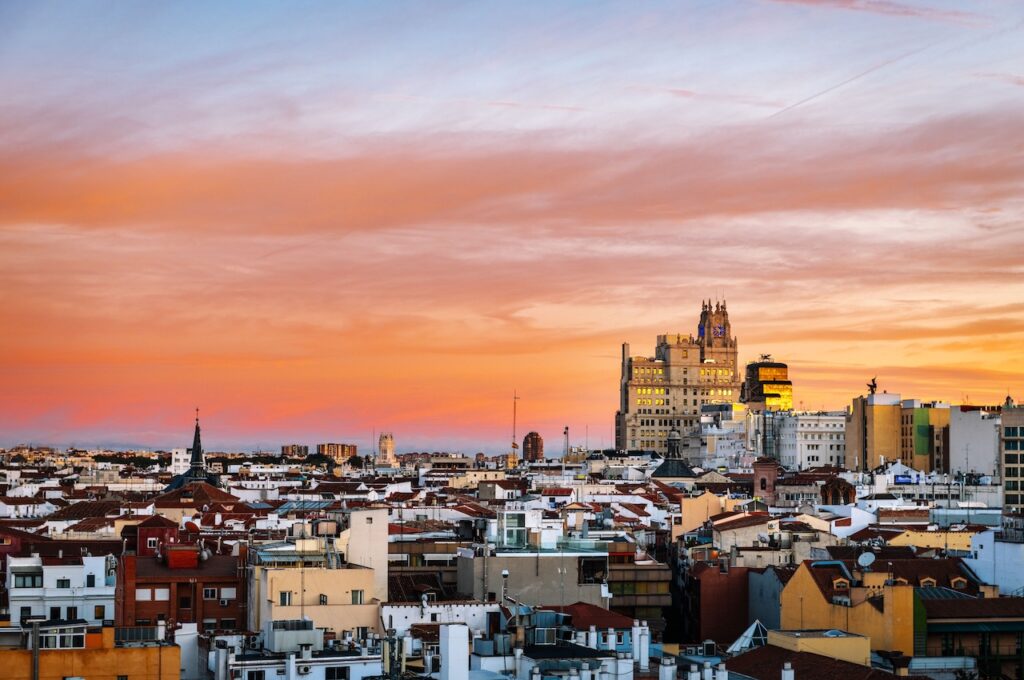
Choose La Latina if you want the deepest engagement with old Madrid — medieval streets, historic churches, the city’s finest tapas culture, and the irreplaceable Sunday morning ritual of El Rastro, followed by vermouth and anchovies in Cava Baja.
Choose Lavapiés if you want to encounter the most diverse, artistically alive and culturally complex Madrid — the neighbourhood that is least about heritage and most about the present.
The good news is that all four can be walked in a single long day. The recommended sequence is to start in La Latina on a Sunday morning (El Rastro, then tapas in Cava Baja), walk north through Lavapiés in the early afternoon (street art, Mercado de Antón Martín), continue into Malasaña for late afternoon coffee and shopping, then move east into Chueca for evening drinks at Taberna Ángel Sierra before dinner in the surrounding streets. By that point, you will have seen more of the real Madrid than most visitors manage in a week.
Quick Reference: The Four Neighbourhoods at a Glance
Malasaña — The Bohemian Best for: Vintage shopping, speciality coffee, music bars, creative energy Character: Independent, artistic, slightly scruffy, authentically local Signature spot: Plaza del Dos de Mayo Signature drink: Vermouth at Bodega de la Ardosa; Yayo at Casa Camacho
Chueca — The Inclusive Best for: LGBTQ+ travellers, shopping, excellent restaurants, community atmosphere Character: Open, confident, stylish, welcoming Signature spot: Plaza de Chueca Signature drink: House vermouth at Taberna Ángel Sierra
La Latina — The Ancient Best for: History, tapas, Sunday El Rastro, flamenco, classic Madrid atmosphere Character: Medieval, traditional, festive, deeply madrileño Signature spot: Cava Baja / Plaza de la Paja Signature dish: Huevos rotos at Los Huevos de Lucio; tortilla at Juana la Loca
Lavapiés — The Multicultural Best for: Global food, street art, alternative culture, arts venues Character: Diverse, gritty, politically aware, creatively alive Signature spot: Plaza de Lavapiés / La Tabacalera Signature experience: Tapapiés in October; a film at the Filmoteca Española
Getting There
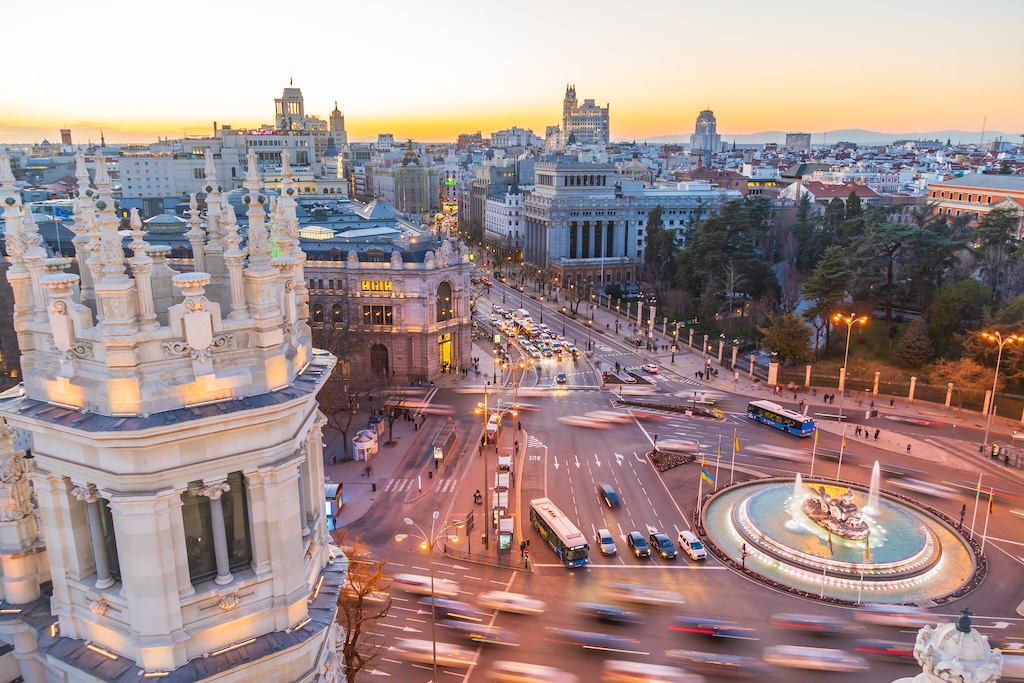
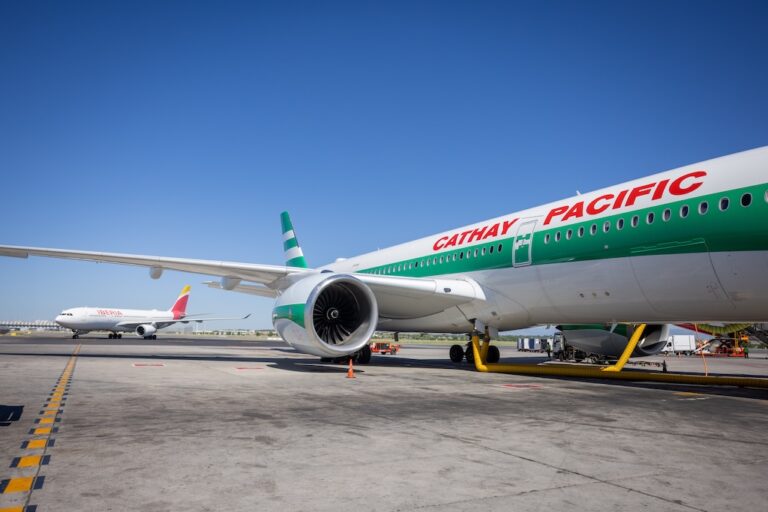
The Spanish capital has never been easier to reach, with Cathay Pacific recently increasing its direct flights between Hong Kong and Madrid, where it links up with Iberia’s network across Europe and South America.
If you’re headed to the Spanish capital, don’t forget to check out our curated guide to the best luxury hotels in Madrid and to the Golden Triangle of Art as well as Madrid’s best markets. We also delve into the city’s vermouth culture and Madrid’s best tapas joints. And once you’ve spent enough time exploring the city’s best neighbourhoods, rooftop bars and world-class museums, be sure to venture out on these exciting Madrid day trips.