
Patagonia’s granite towers, glaciers and windswept steppe have inspired a remarkable generation of retreats. Here are five of the finest, in Chile and Argentina.
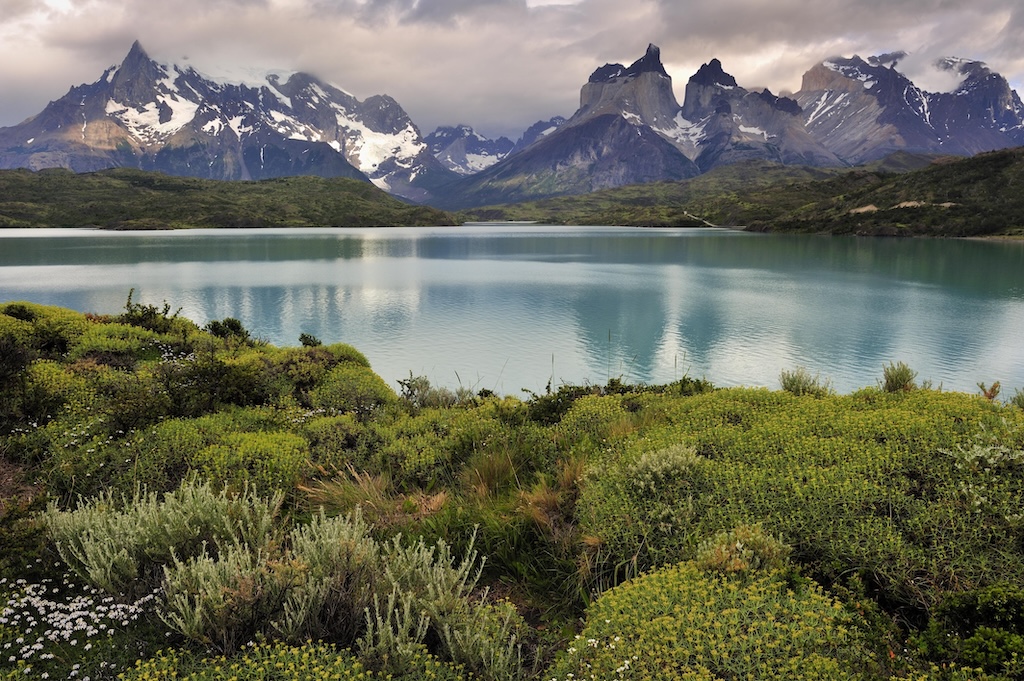
Patagonia occupies the southern reaches of both Chile and Argentina, a roughly one-million-square-kilometre expanse where the Andes finally run out of continent, splintering into granite spires, wind-scoured steppe, sub-polar forest and ice fields that calve directly into turquoise lakes.
It’s a region defined by extremes: the Patagonian wind, which can gust past 190 kilometres an hour, even in summer; the light, which shifts by the hour beneath famously unstable skies; and the scale, which makes a single mountain massif, Torres del Paine’s Paine Massif among them, feel like its own small country.
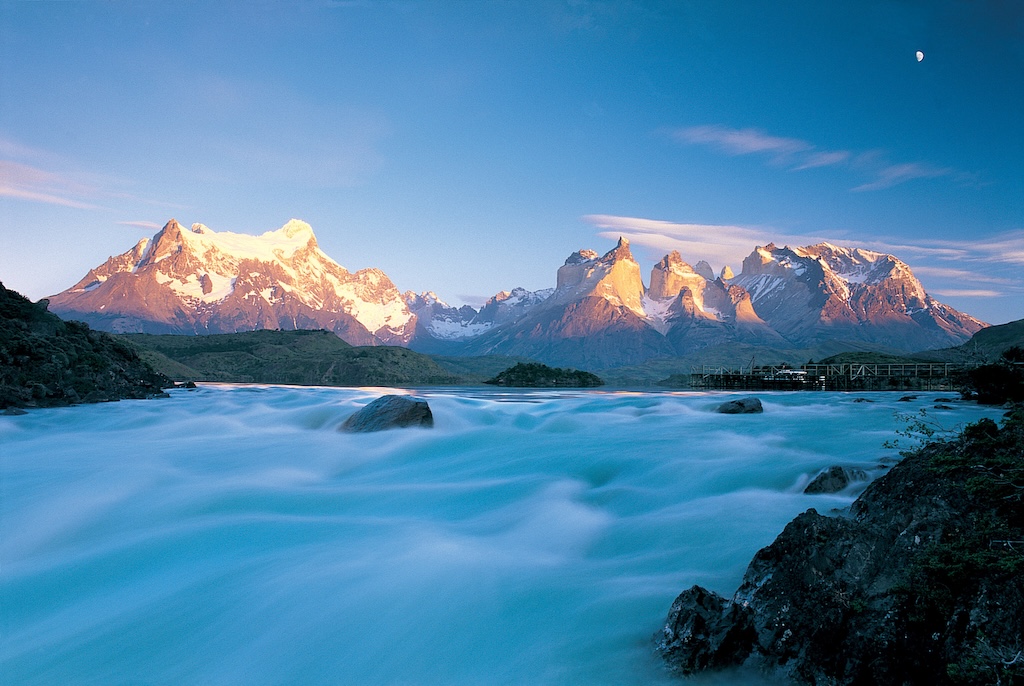
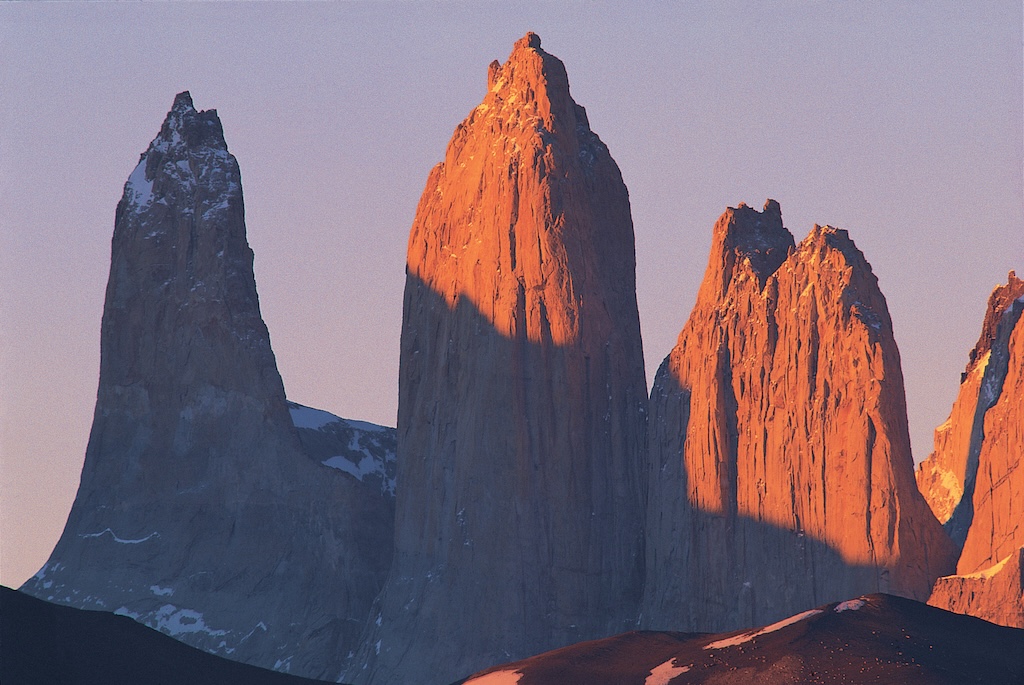
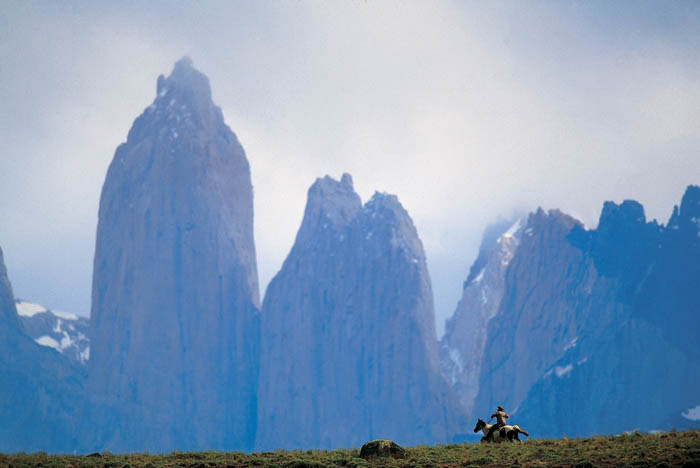
That combination, vast, wild, and still relatively lightly visited compared with Europe’s great ranges, is exactly what draws travellers south. Torres del Paine National Park, on the Chilean side, holds the region’s most photographed landmarks, including the three granite Towers, the horn-shaped peaks known as Los Cuernos, and the Grey Glacier, all linked by the multi-day W and O treks.
Meanwhile, Argentine Patagonia, reached via the town of El Calafate, centres on the Perito Moreno Glacier, one of the few glaciers on the planet still advancing, and the jagged spires around El Chaltén.
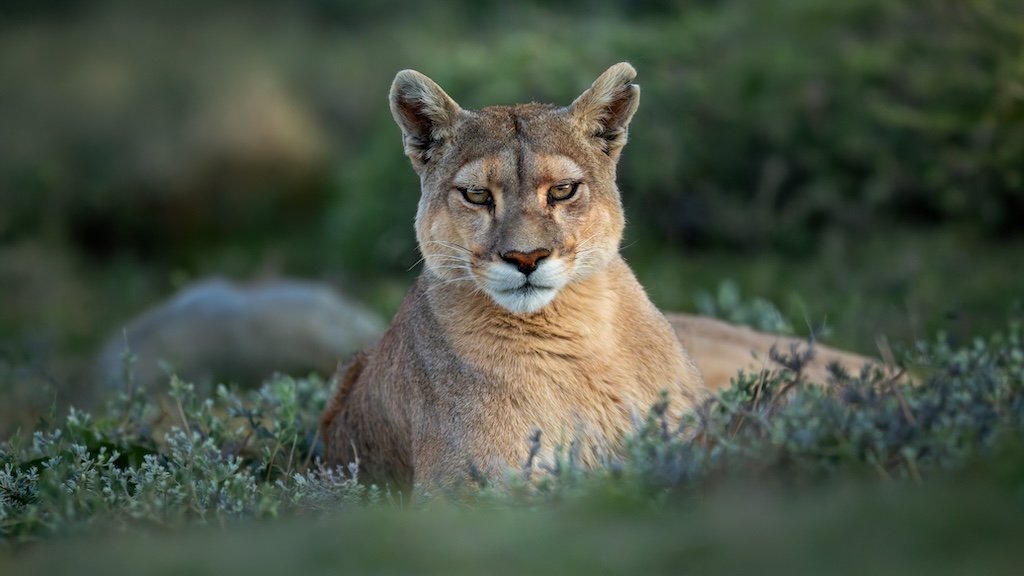
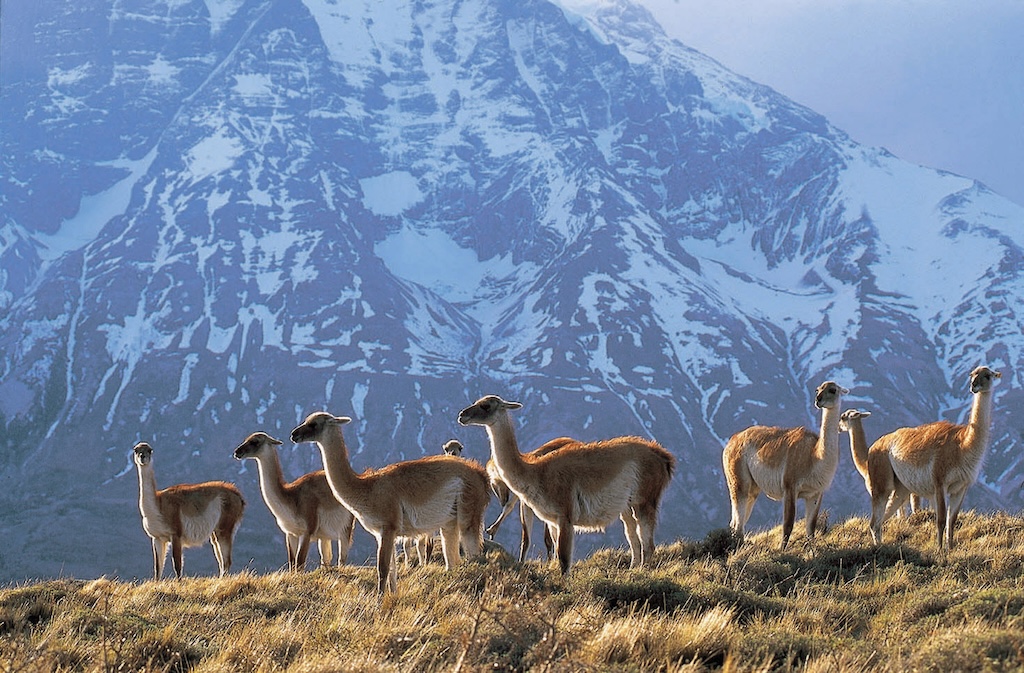
The wildlife is as much a draw as the landscape. Torres del Paine alone is home to some 25 mammal species, roughly 118 species of bird and one of the highest documented densities of wild pumas anywhere on earth, a population sustained by the park’s estimated 3,000 guanacos, the wild camelid that anchors the entire food chain.
Overhead, Andean condors, the largest flying bird on the planet with a wingspan of up to 3.2 metres, ride the same thermals that make the region’s weather so notoriously changeable.
What has changed in the past two decades is the calibre of where you can stay while experiencing all this. A small cluster of architecturally serious lodges, several of them among the most celebrated hotel designs in South America, now sit inside or beside these landscapes, each with its own philosophy for putting guests in front of the view. Some occupy the national parks themselves while others sit at the gateway towns of Puerto Natales and El Calafate, a short drive or flight from the action.
Here are five of the best, three inside Torres del Paine, one at its Chilean gateway, and one across the border in Argentina.
Las Torres Patagonia
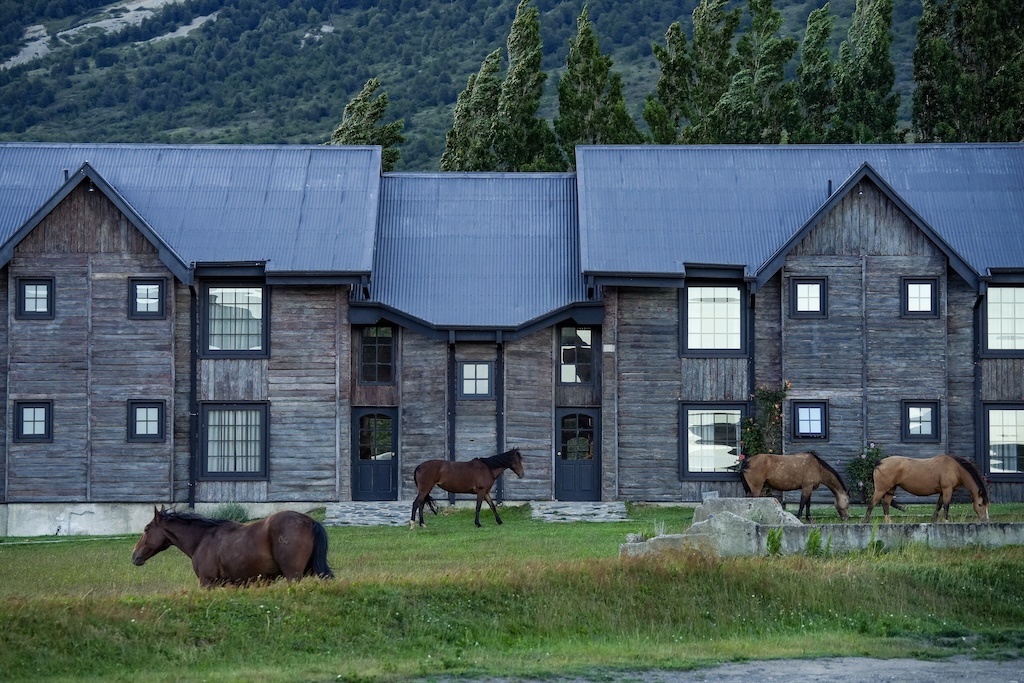
Location: Inside Torres del Paine National Park, Chile, at the base of the Ascencio Valley, the trailhead for the hike to the Towers themselves.
Hotel Las Torres has the longest history of any lodge in the park, having grown out of a working sheep estancia, and it wears that heritage openly. The 74 rooms are spacious and unfussy, with large windows framing the valley and the Paine Massif, and the hotel’s own biointensive garden, which produces nine types of fruit, more than 25 vegetables and a growing range of culinary herbs, supplies the kitchen directly.
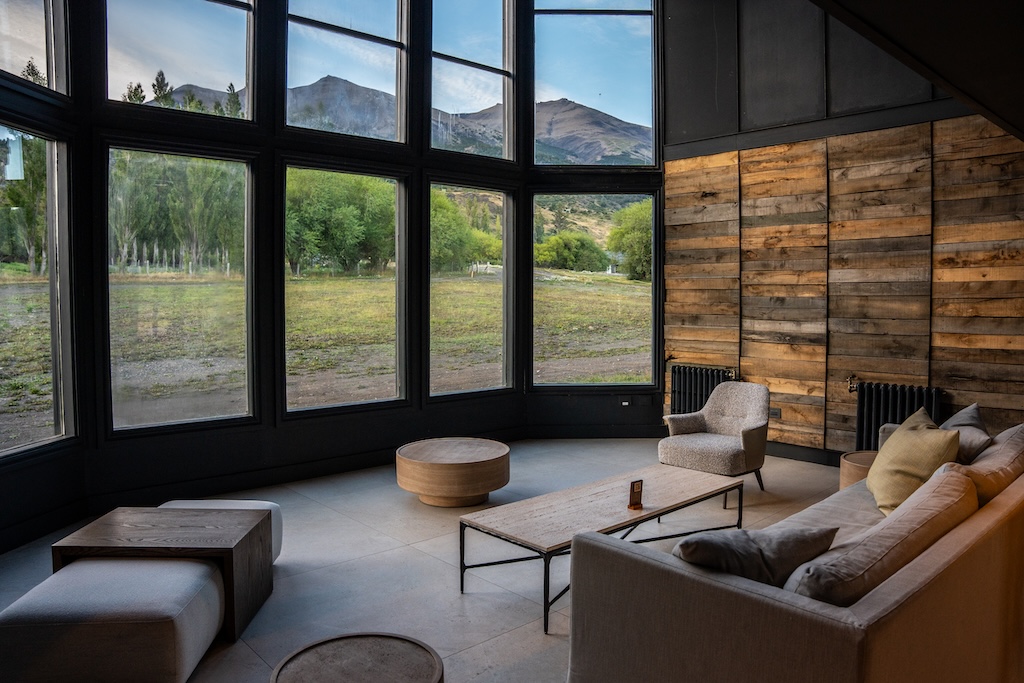
Dining centres on the Coirón Restaurant, blending modern technique with traditional Chilean Patagonian dishes, and the Pionero Bar, which specialises in regional pisco-based drinks (try the Calafate Sour). A striking new addition, the 2,000-square-metre Galpón restaurant, opening later this year, reimagines the traditional Patagonian barn as a dining space built around a prominent wine cellar.
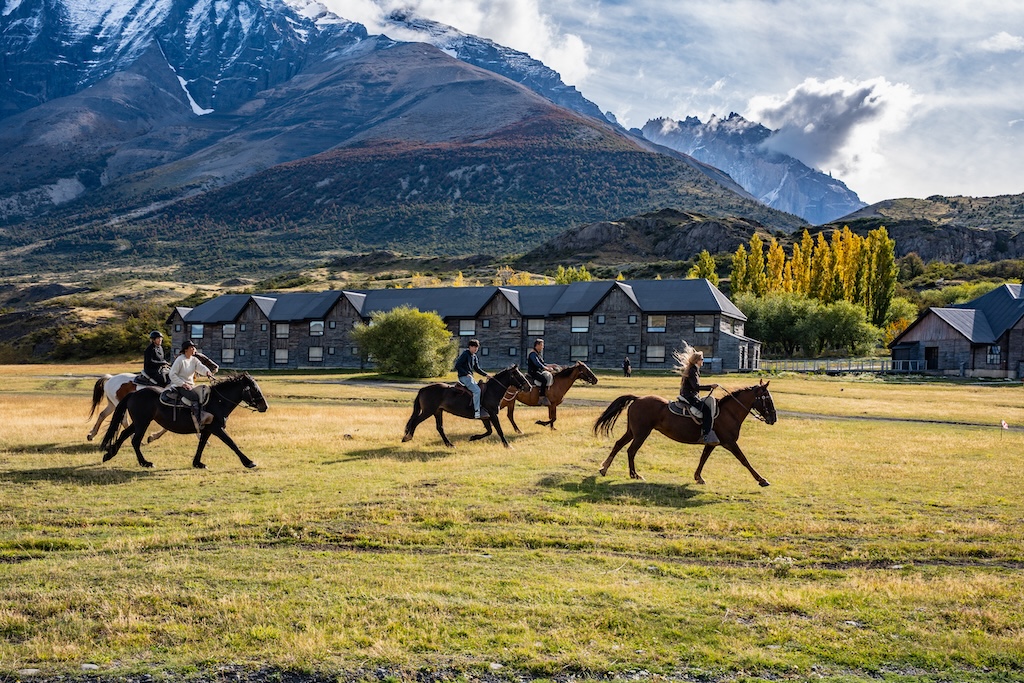
Where Las Torres distinguishes itself, though, is in sheer operational depth: more than 20 excursions run daily, supported by 150 horses, a fleet of vehicles and an experienced guiding team, ranging from gentle valley walks to full-day treks towards the Towers viewpoint. Its Baqueano programme, which lets guests ride and work alongside Chilean cowboys, is among the most authentic equestrian experiences in the park, while the Pume Excursion tracks the park’s most elusive residents.
While the retreat also features a spa and indoor pool, Las Torres is, first and foremost, a hotel built for people who intend to spend their days outside.
Explora Patagonia
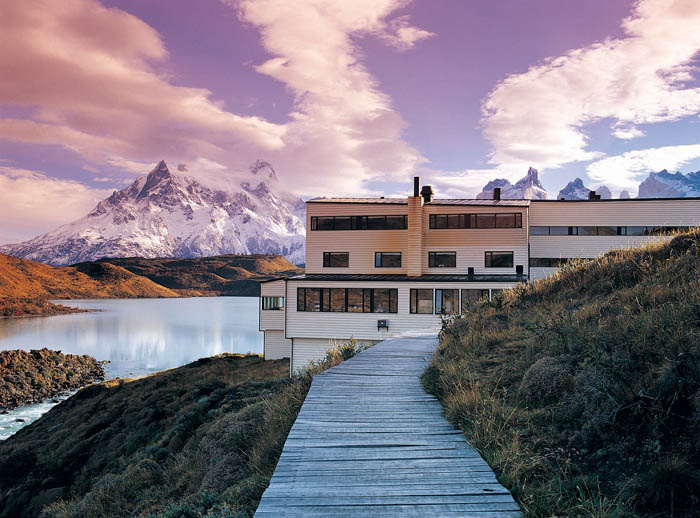
Location: On the shore of Lake Pehoé, beside the Salto Chico waterfall, inside Torres del Paine National Park.
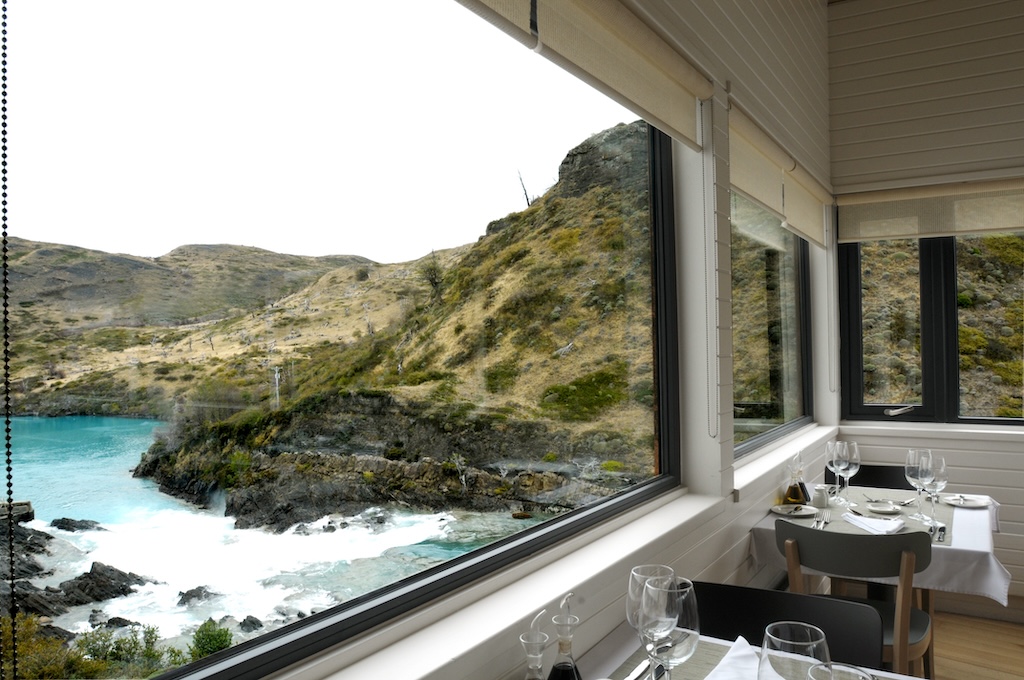
Explora Patagonia Torres del Paine among the first lodges to treat Patagonia’s architecture as seriously as its landscape, and, designed by Chilean architect Germán del Sola, remains a benchmark thanks to its long horizontal lines, stark geometric forms and floor-to-ceiling glass that delivers spectacular views to the Salto Chico waterfall.
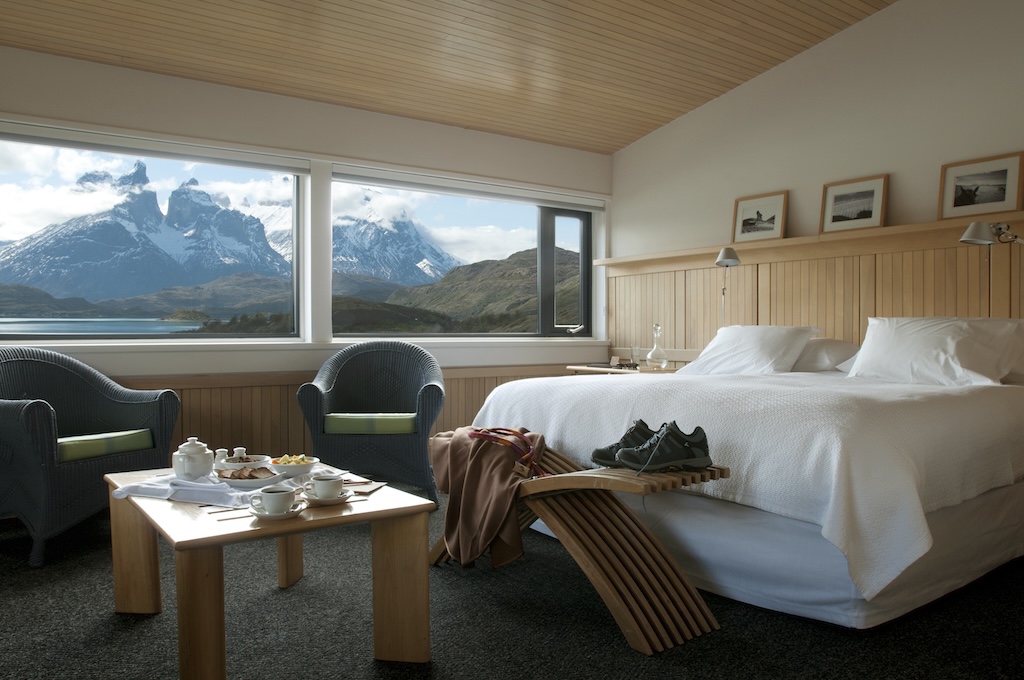
The lodge’s 49 rooms, split across Salto Chico Rooms overlooking the waterfall, Cordillera Paine Rooms facing the massif, and larger Exploradores Suites, are pointedly free of televisions, wifi and minibars, a design decision meant to push guests outdoors rather than keep them in. That’s the point of an Explora stay: it’s all about expeditions, not amenities.
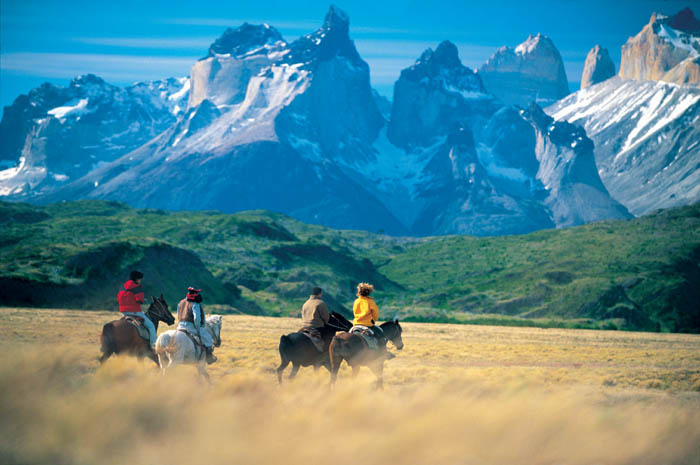
Each evening, guides sit down with guests to build the following day’s programme around the weather forecast and each individual’s fitness and ability, mixing lenga-forest walks, viewpoint hikes, horseback rides across the park’s open pampas and vehicle-based exploration, covering ground that would take independent visitors days to plan.
Communal spaces, an indoor pool, hot tub and sauna among them, look directly onto the Salto Chico waterfall and Lake Pehoé, giving the property’s minimalist public rooms the same uninterrupted views as its bedrooms.
Rates are fully inclusive of excursions, guiding and most beverages, reinforcing the sense that a stay here is closer to a guided expedition than a conventional hotel booking.
Tierra Patagonia

Location: At the eastern entrance to Torres del Paine National Park, on the shore of Lake Sarmiento.
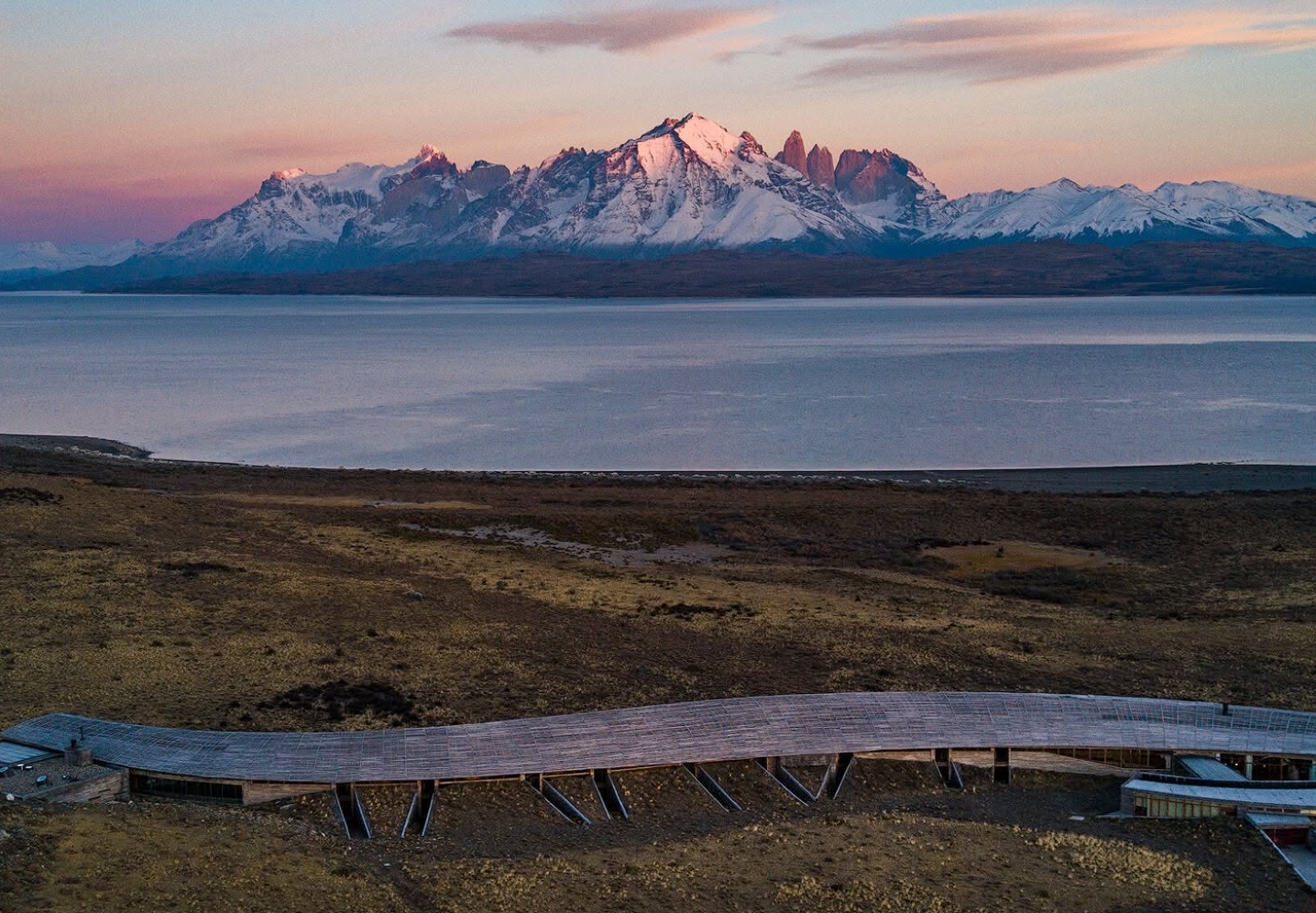
Few hotels anywhere make as immediate an architectural impression as Tierra Patagonia, which is operated by Beckons. Designed by Cazú Zegers, its long, low form, clad entirely in silvery, washed lenga wood, was conceived to resemble a fossilised prehistoric creature, anchored into the shoreline by sloped stone bases and built specifically to withstand the region’s wind while barely interrupting the view.
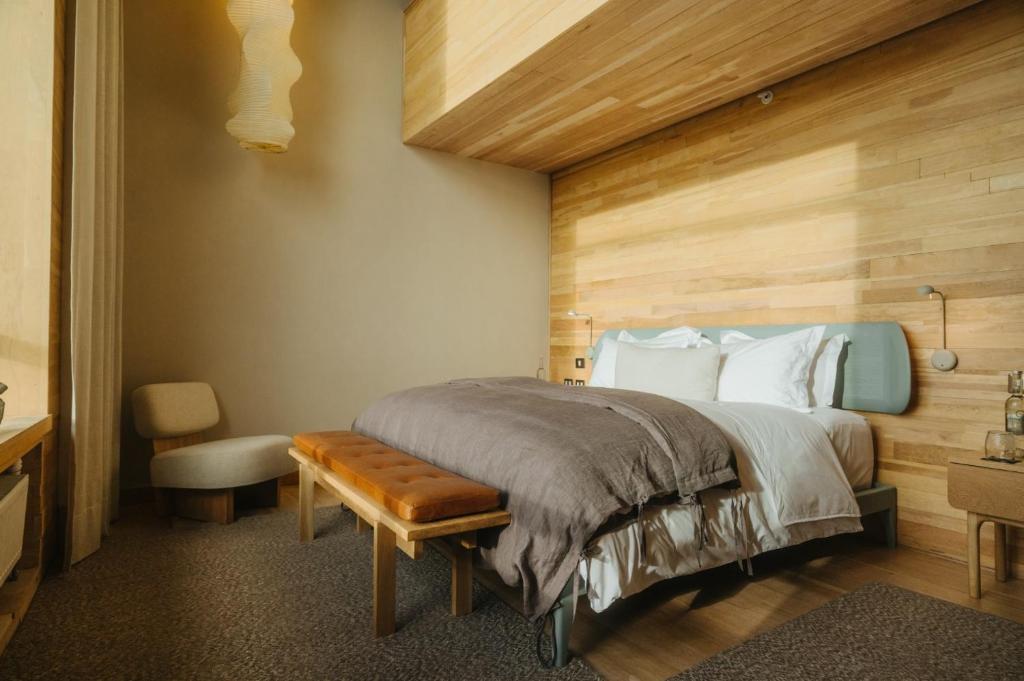
Inside, the 40 rooms carry the same restrained, all-natural material palette. The hotel’s Uma Spa is a highlight in its own right: a glass-walled indoor pool with hydro-massage jets looks directly onto the Paine Massif, alongside an outdoor jacuzzi, sauna and steam bath. The treatment menu includes indulgent facials, massages, body wraps, scrubs and alternative therapies designed to open up your ‘prana’, or ‘life force’.
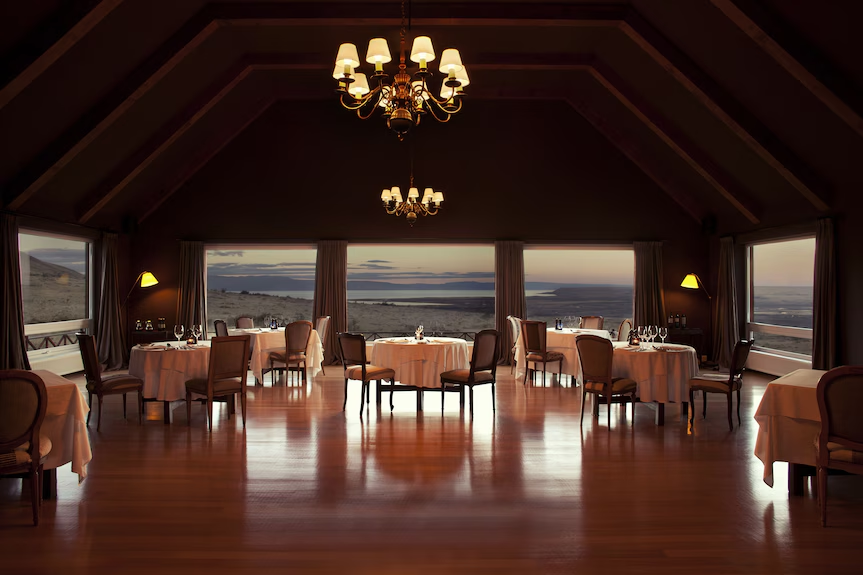
The hotel’s restaurant leans on the best of local produce sourced from nearby estancias, including Patagonian lamb and king crab, paired with a strong list of Chilean wines. The dining room’s floor-to-ceiling windows ensure the Paine Massif is rarely out of view.
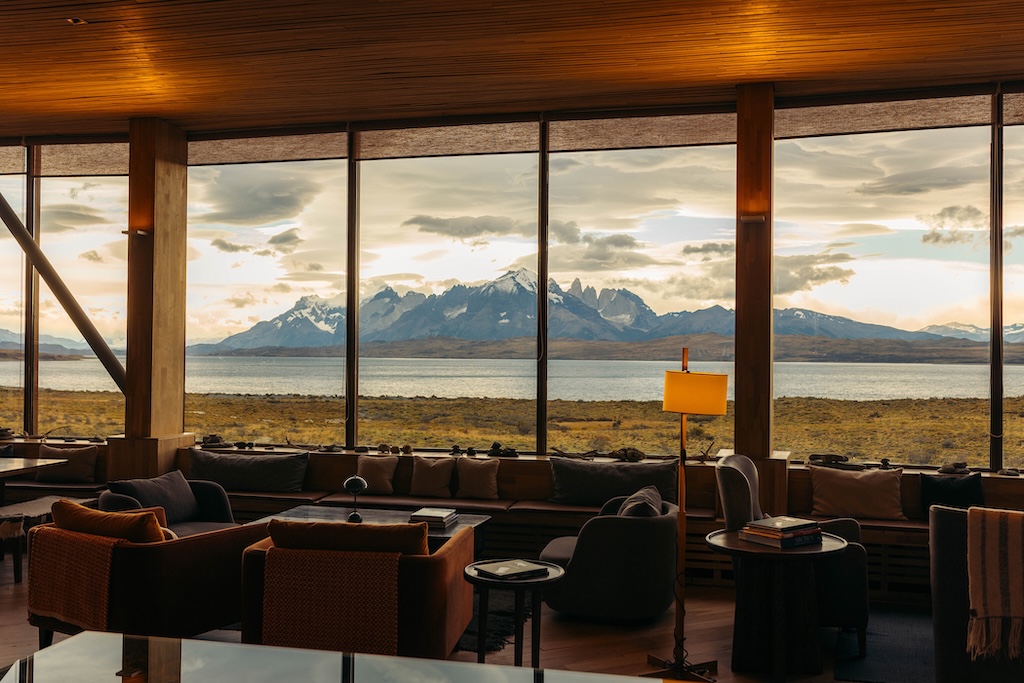
As at its neighbours, the real programme happens outside the building, with half-day treks, full-day park hikes, horseback rides and 4WD excursions tailored daily to each guest and led by bilingual guides who reset the plan each morning depending on conditions.
Tierra’s design and spa give it an edge for travellers who want the architecture itself to be part of the experience.
The Singular Patagonia
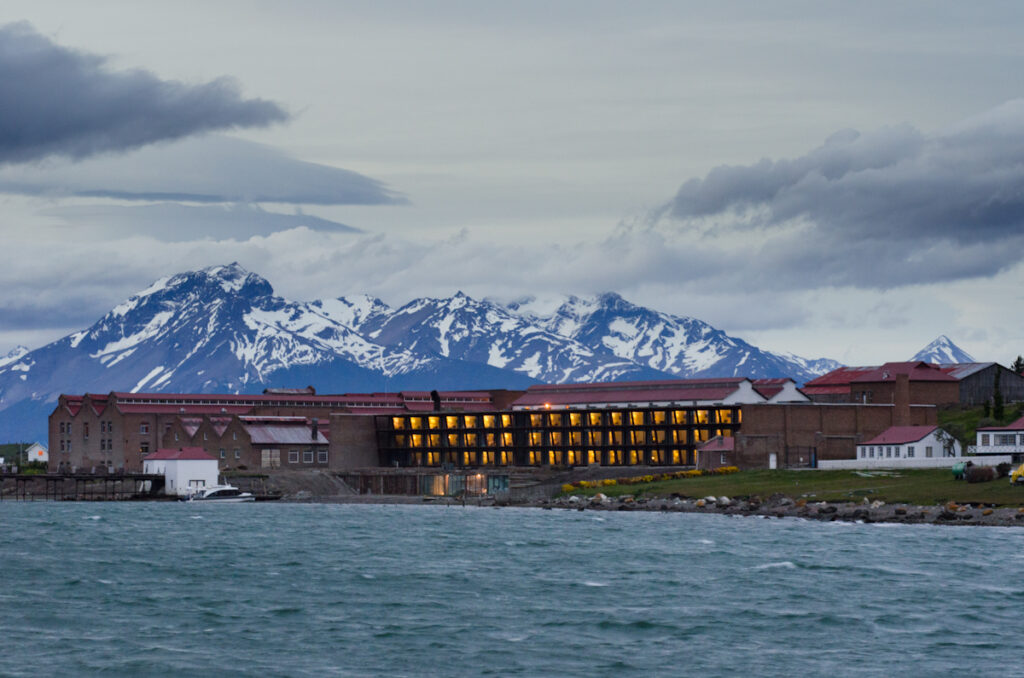
Location: Puerto Bories, a few kilometres outside Puerto Natales, the principal gateway town to Torres del Paine, Chile.
The Singular takes an entirely different approach to Patagonian luxury. Rather than building new against the landscape, the company restored one of the region’s most significant industrial monuments, a building that began life in 1915 as the Puerto Bories cold-storage plant before closing and eventually being declared a Chilean National Monument in 1996.
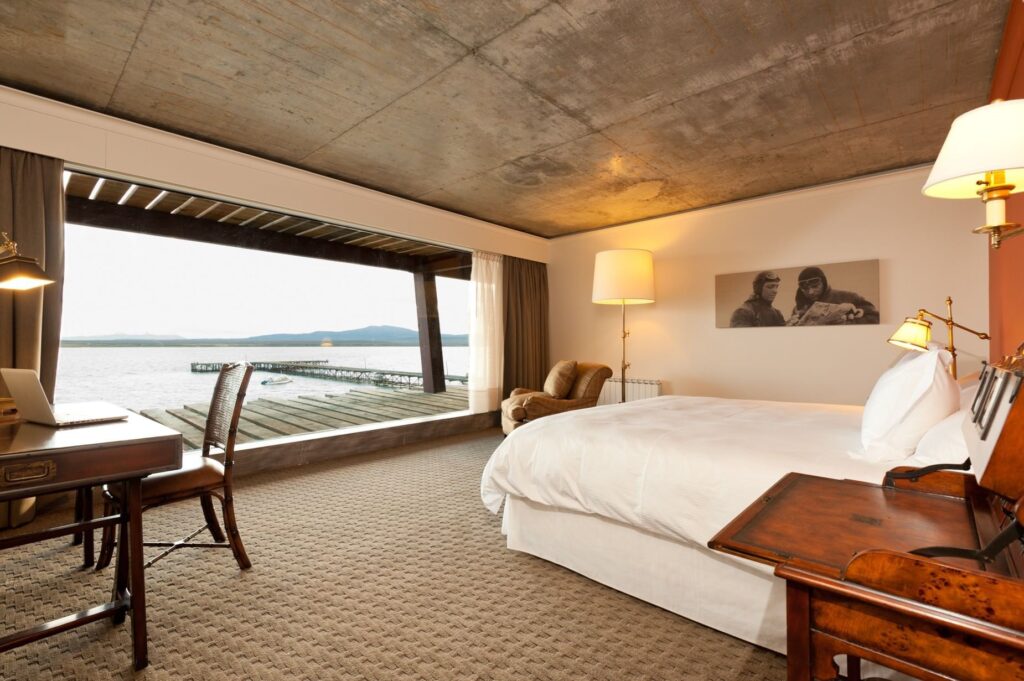
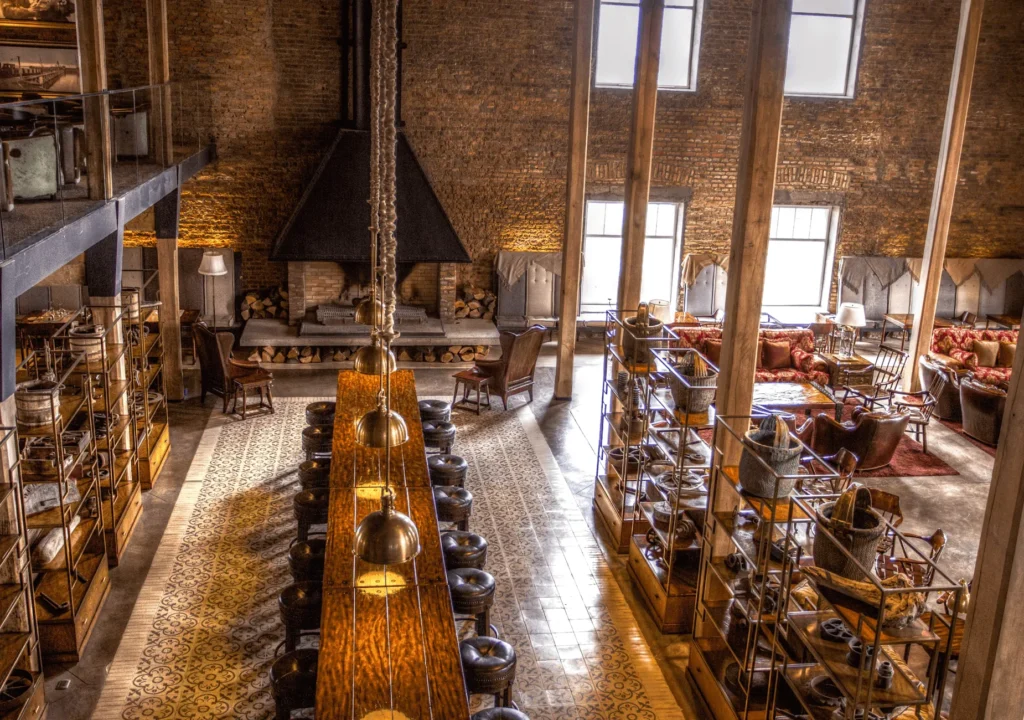
The hotel’s 57 rooms and suites occupy a sensitively converted wing, while the original machinery halls, including a boiler room fitted with the same type of British-built boilers that powered the Titanic, remain on show as an unusual museum-hotel hybrid, alongside a restored 1913 rail car once used to shuttle goods to town.
Dining plays to that same sense of place with the flagship Singular restaurant serving Magellan Patagonian ingredients in the shadow of the old factory machinery, while the more casual El Asador focuses on regional grilled meats. After a long day’s hike, head for the 280-square-metre spa, with its heated indoor-outdoor pool, sauna and treatment rooms looking out to the Señoret Channel fjord. A range of contemporary treatments use organic Patagonian plant extracts.
This lodge is the most convenient base of the five for travellers arriving via Puerto Natales who want a night or two of history and comfort either side of time spent inside the park itself. It’s also one of the few hotels anywhere where the building is as much the attraction as the landscape around it.
Eolo, Patagonia’s Spirit
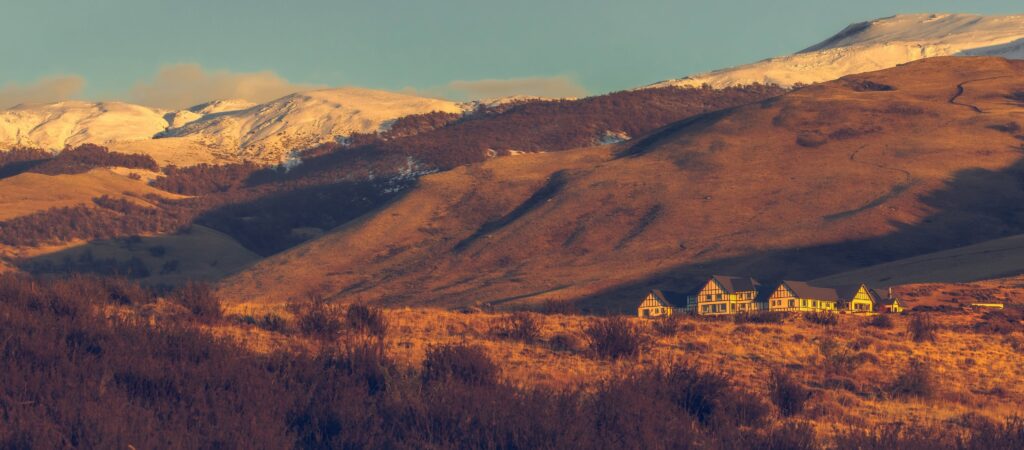
Location: 30 kilometres outside El Calafate, on a 3,000-hectare private estate on the eastern face of Mount Frías, Argentine Patagonia.
The one property here on the Argentine side, Eolo swaps Torres del Paine‘s granite towers for the open steppe and lake country around El Calafate, 30 minutes from the Perito Moreno Glacier. A member of Relais & Châteaux, this sublime property was built in the spirit of a grand Patagonian estancia rather than as a design statement, with its 17 rooms, dressed in soft pastel tones, each boasting picture windows facing Lago Argentino.
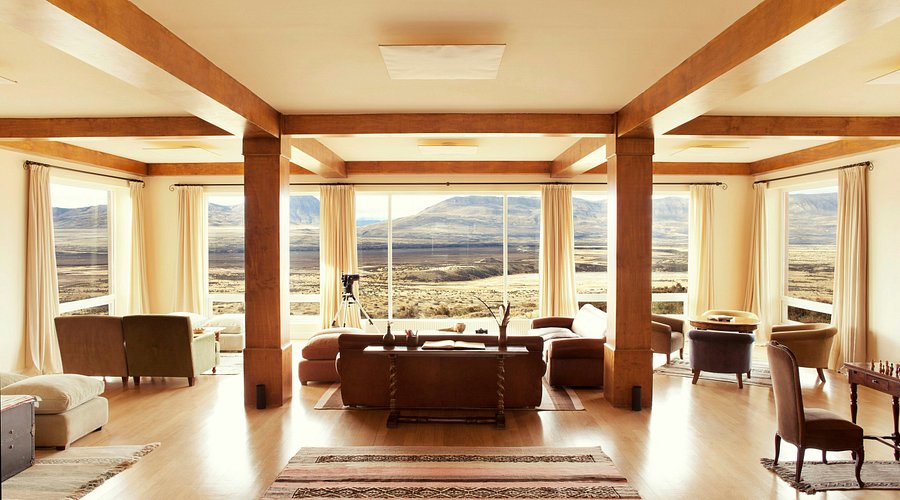
Communal spaces include several sitting rooms, an English-style bar with an open fire, and a small library stocked with Patagonian exploration history, all of which look out over the Anita Valley, while a sheltered courtyard offers rare relief from the wind.
Activities lean into the Argentine side’s particular strengths, including horseback riding on Mount Frías, mountain biking, birdwatching, trekking through the Anita Valley, and excursions to both the Perito Moreno and Upsala glaciers, the latter reached by boat across Lago Argentino past floating icebergs calved from the glacier face.
Full-day excursions to see Perito Moreno’s advancing ice wall, one of the few glaciers on the planet still growing rather than retreating, are the estate’s signature outing, and are typically paired with a lakeside picnic or asado on the return leg.
Back at the lodge, an indoor spa with sauna and massage rooms, plus an outdoor jacuzzi sheltered from the wind, provide recovery for aching muscles, while the restaurant’s tasting menu, built around regional produce including lamb and trout, is paired with a focused list of Argentine Malbec.
For travellers prioritising the Perito Moreno Glacier and the wide-open Argentine steppe over Chile’s granite towers, Eolo is the pick of the five.
Patagonia Travel FAQ
Planning a trip to the end of the world raises real logistical questions. Here’s what to know about timing, visas, currency, getting there and packing before you go.
How many days do I need in Patagonia?
For Torres del Paine alone, allow four days to cover the highlights or hike the W Trek, and seven to nine days for the full O Circuit. Most of the lodges above also run excellent multi-day, non-trekking itineraries for those who’d rather stay based in one place. If you’re combining Chilean and Argentine Patagonia, including El Calafate and the Perito Moreno Glacier, budget at least ten days in total once travel between the two is factored in.
When is the best time to visit?
The Patagonian season runs October to April, with December to February the warmest, longest and busiest window. Refugios and lodges in this period are often booked 6-12 months out. March and April offer a strong shoulder-season alternative, with thinner crowds, softer light and autumn colour in the region’s lenga forests.
Do I need a visa, and what currency should I carry?
Most travellers from the US, EU, UK, Australia and Canada as well as Indonesia, Japan, South Korea, Singapore and Hong Kong can enter both Chile and Argentina visa-free for stays of up to 90 days. While Chile uses the Chilean peso (CLP) and Argentina uses the Argentine peso (ARS), US dollars are widely accepted for tips and at some tourist-facing businesses. While credit cards are accepted in most hotels and larger towns, it’s worth carrying local cash for smaller purchases.
How do I actually get there?
Chilean Patagonia is reached via Punta Arenas or, increasingly, by direct flights into Puerto Natales, both connected to Santiago. From either gateway, it’s a two-to-six-hour road transfer into Torres del Paine. Argentine Patagonia is reached via El Calafate airport via Buenos Aires, with the Perito Moreno Glacier around an hour’s drive away. Travellers combining both sides typically cross overland between Puerto Natales and El Calafate, a journey of four to five hours.
What should I pack?
Layering is everything: a lightweight base layer, a fleece or insulating mid-layer, and a genuinely waterproof, windproof outer shell, since Patagonian weather can deliver sun, rain and wind within a single afternoon regardless of season. Add sturdy, broken-in hiking boots, a warm hat and gloves, even in summer, and a daypack with a rain cover. Most of the lodges above supply trekking poles and technical gear on request.
Can I visit both Chilean and Argentine Patagonia in one trip?
Yes, and many travellers do, typically combining Torres del Paine with El Calafate and the Perito Moreno Glacier via the overland crossing between Puerto Natales and El Calafate. Build in a full travel day for the border crossing itself, and check seasonal bus and rental car schedules in advance, as services thin out considerably outside the October-to-April season.
Will I actually see a puma or a condor?
There are no guarantees with wild animals, but the odds are better here than almost anywhere else on the continent. Torres del Paine has one of the highest documented densities of wild pumas in the world, sustained by a healthy population of around 3,000 guanaco, and specialist puma-tracking excursions, run with professional trackers and radio collars data, have become one of the park’s signature experiences. Andean condors, with wingspans up to 3.2 metres, are a near-daily sighting for anyone spending time on foot in the park.


