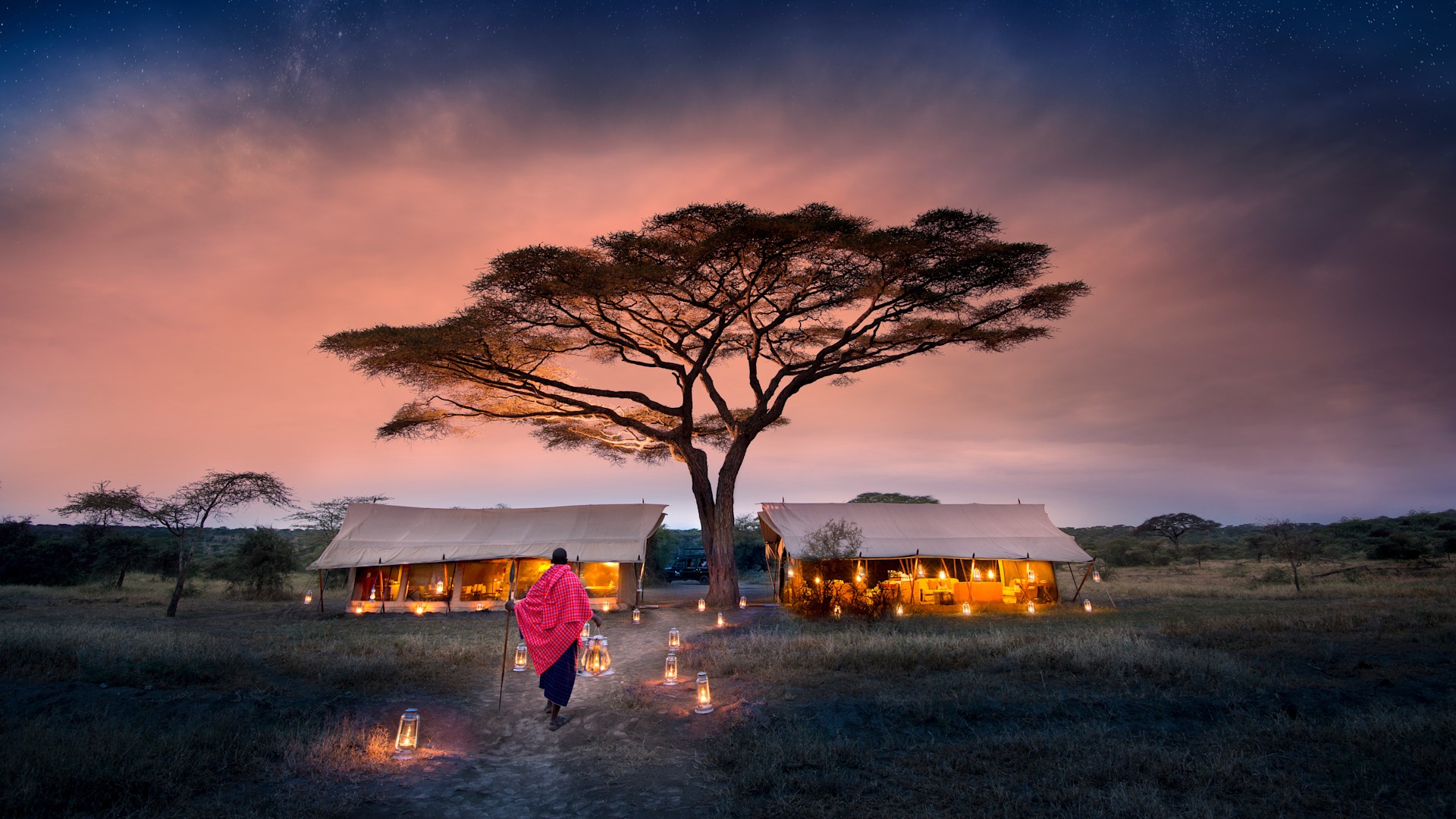

One of the world’s most coveted wildlife destinations, the best luxury safari lodges and camps of the Serengeti open up a world of unforgettable experiences.
The Serengeti is, by almost any measure, the most consequential wildlife landscape on Earth. Across 14,750 square kilometres of southern shortgrass plain, central acacia savannah, western miombo and northern kopje country, more than 1.5 million wildebeest, a quarter of a million zebra, half a million Thomson’s gazelle and the densest population of large predators on the planet enact a year-long ballet that has been running, more or less unchanged, for two million years.
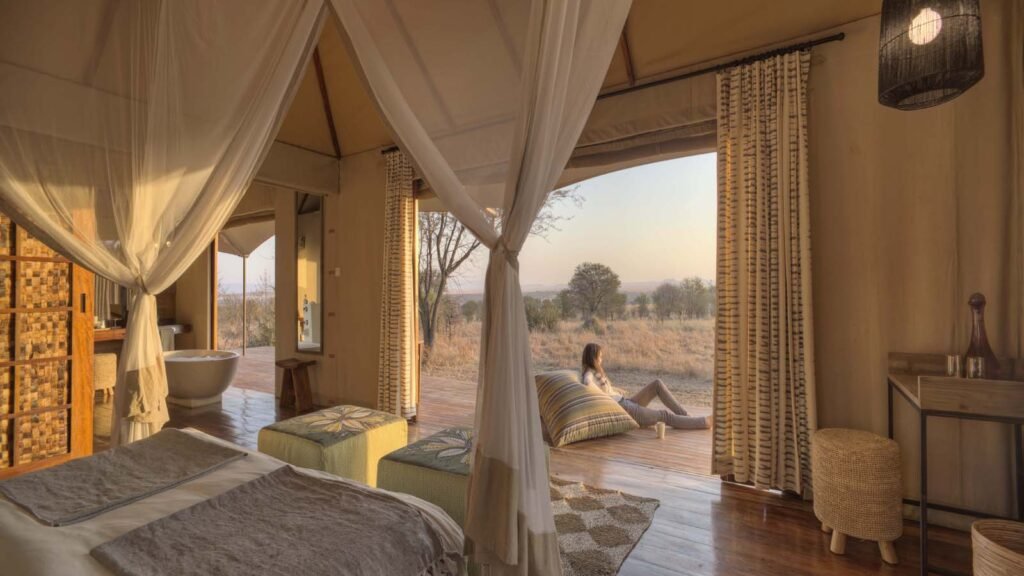
The Great Migration loops anticlockwise through the ecosystem each calendar year — calving on the southern Ndutu plains from January to March, fattening on the western corridor in June, plunging into the Mara River in the north between July and October, and returning south through Loliondo and central Seronera as the short rains break in November.
This vast, perpetually moving stage has shaped the Serengeti’s luxury accommodation in two distinct ways. A handful of permanent lodges have been built in regions where the resident game is so reliable that the migration is a bonus rather than a necessity.
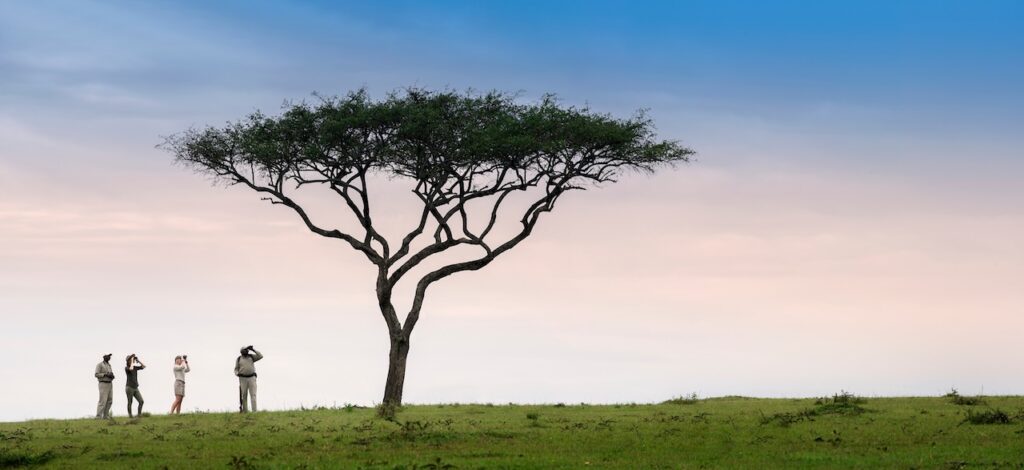
Alongside them sits the world’s most sophisticated tradition of mobile safari camping, in which entire luxury camps are struck and re-pitched up to six times a year to follow the herds.
The properties below — permanent and mobile or semi-permanent — represent the very best of both schools and span the full geographic sweep of the park.
The Permanent Classics
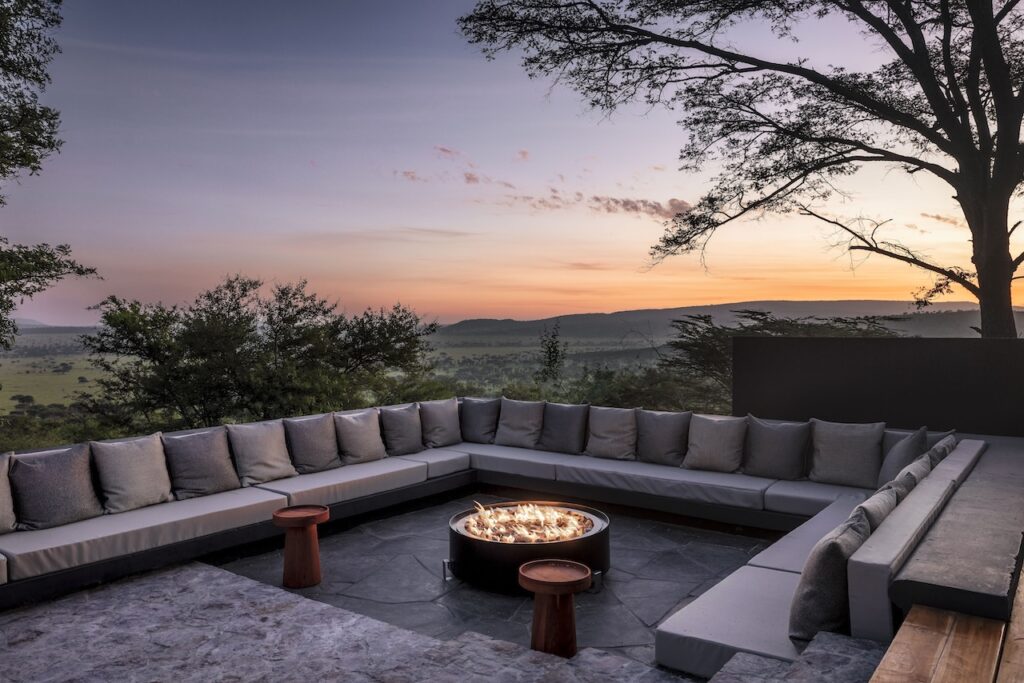
The Serengeti’s permanent camps earn their place through sheer scale — this is one of Africa’s largest ecosystems, and knowing it deeply takes years. Camps like Four Seasons Safari Lodge and Singita Grumeti have that time invested, with guides who read the landscape like a language. Positioned strategically across the ecosystem’s distinct zones — the kopje-studded central plains, the river systems of the north — they offer reliable access regardless of where the Migration sits.
Beyond game, the permanence shows in the details: wine cellars, infinity pools facing open plains, and exceptional food. The Serengeti rewards long acquaintance, and permanent camps are built for exactly that.
Wild Wakati Camp
Enduata Camps
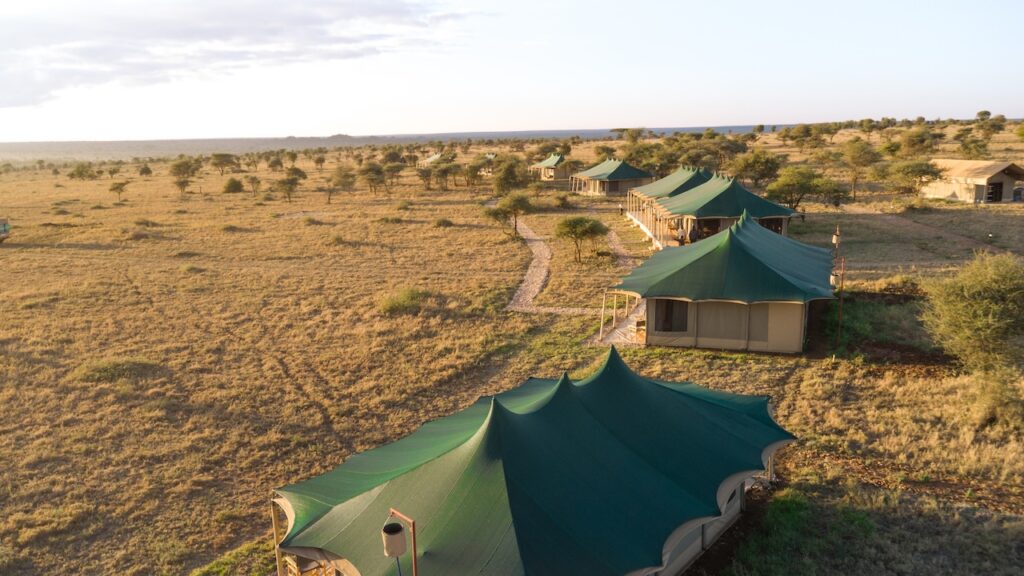
There is a new name worth knowing in the Serengeti, and it is Wild Wakati. Enduata Camps‘ permanent dry-season base sits within the golden plains of the central Serengeti, and it arrives with a proposition that feels both timely and considered: genuine low-impact luxury in one of the most extraordinary wildlife landscapes on earth, without the compromise that phrase so often implies.
The camp is built on solar power, with locally crafted tents and a design ethos rooted in the landscape rather than imposed upon it. The surrounding plains, at their most iconic as the dry season takes hold in June, deliver: sparse vegetation and clear skies that make for extraordinary game viewing, as elephants, giraffes and antelope move openly across the open savannah and predators grow bolder around the shrinking rivers and waterholes.
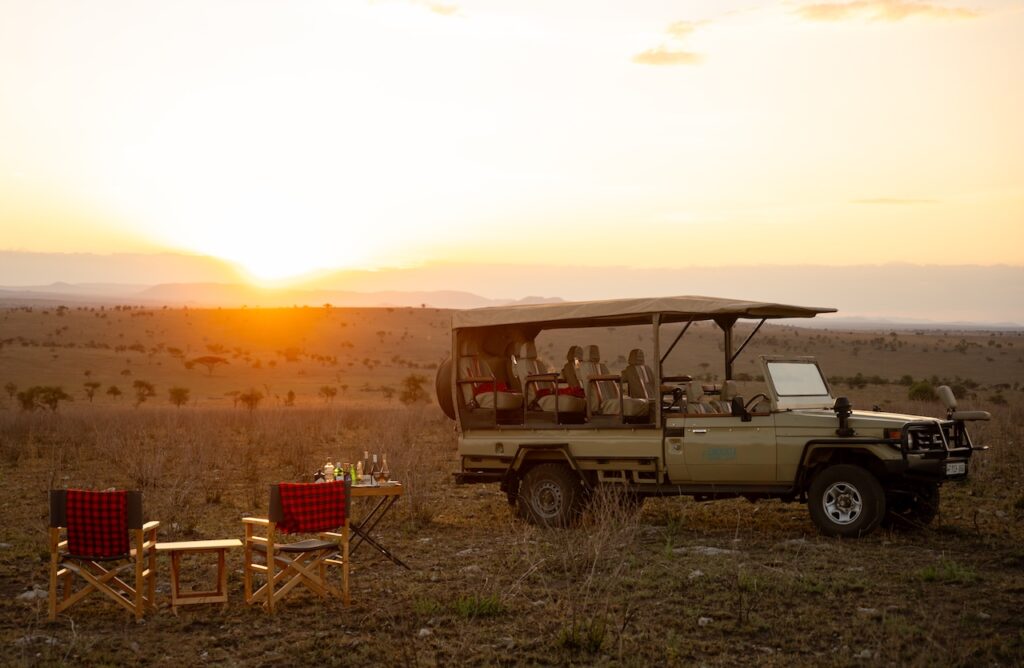
Wild Wakati also times perfectly with the Great Migration, which continues through this corridor in the dry months, and the camp’s position puts guests directly in its path. Cooler mornings and evenings make for ideal game-drive conditions, and the golden dry-season light is among the best on the continent for photography. The sustainability credentials are matched by genuine community intent: Enduata Camps supports local conservation projects and engages with neighbouring communities in ways that mean a stay here has meaningful reach beyond the wire.
Singita Sasakwa Lodge, Grumeti Reserves
Singita
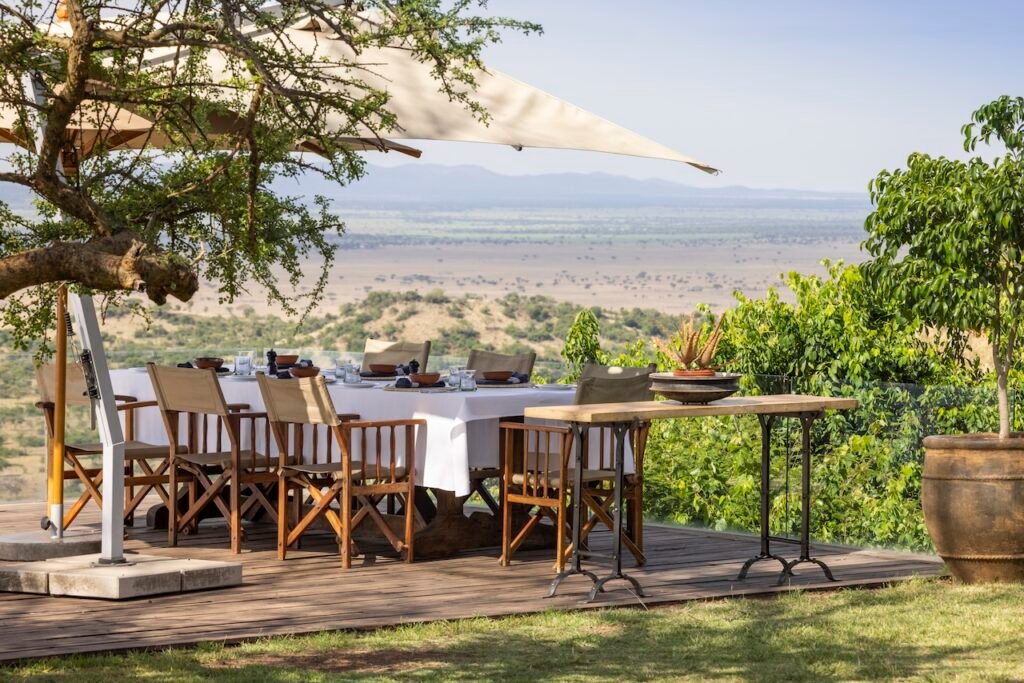
There is luxury, and then there is Sasakwa, one of my personal favourite Serengeti camps. Singita’s flagship Tanzanian property sits atop a hill in the 350,000-acre Grumeti private concession on the Serengeti’s western boundary, and its nine free-standing Edwardian-style cottages remain, more than a decade after they opened, the most opulent safari accommodation on the African continent.
Each cottage is effectively a small country house — antique-furnished drawing room, four-poster bedroom, claw-foot bath, fireplace, butler’s pantry and private heated infinity pool — set within manicured English gardens that overlook a panorama of plain, river and distant escarpment.
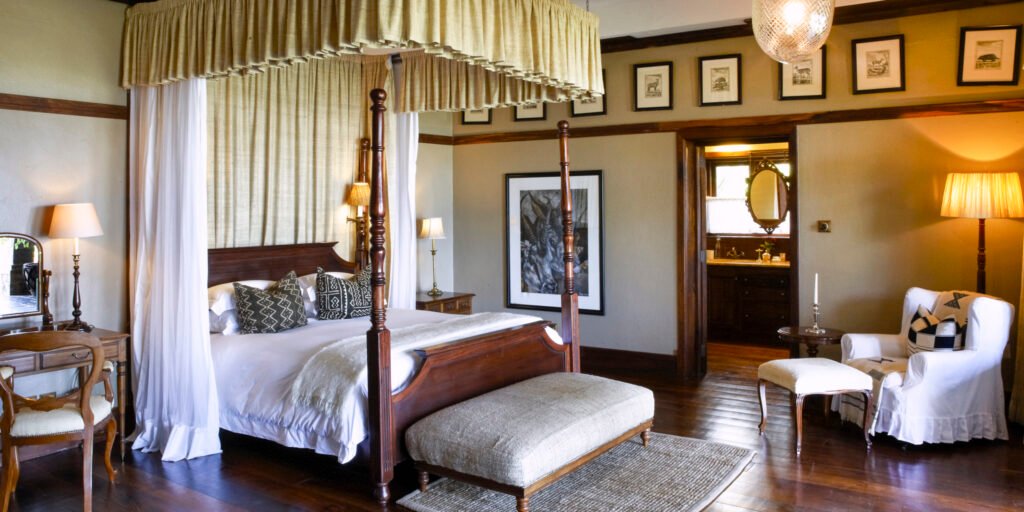
The Grumeti concession itself, gifted with the right of exclusive use to Singita’s tiny handful of guests, is one of the most ferociously protected anti-poaching landscapes in Africa. Black rhino, lion, leopard, cheetah and a calendar of horse-riding, archery, mountain-biking and tennis come included.
The migration passes through between June and August. Sister-properties Faru Faru and Sabora elsewhere in the concession offer different stylistic registers at the same standard.
&Beyond Klein’s Camp
&Beyond
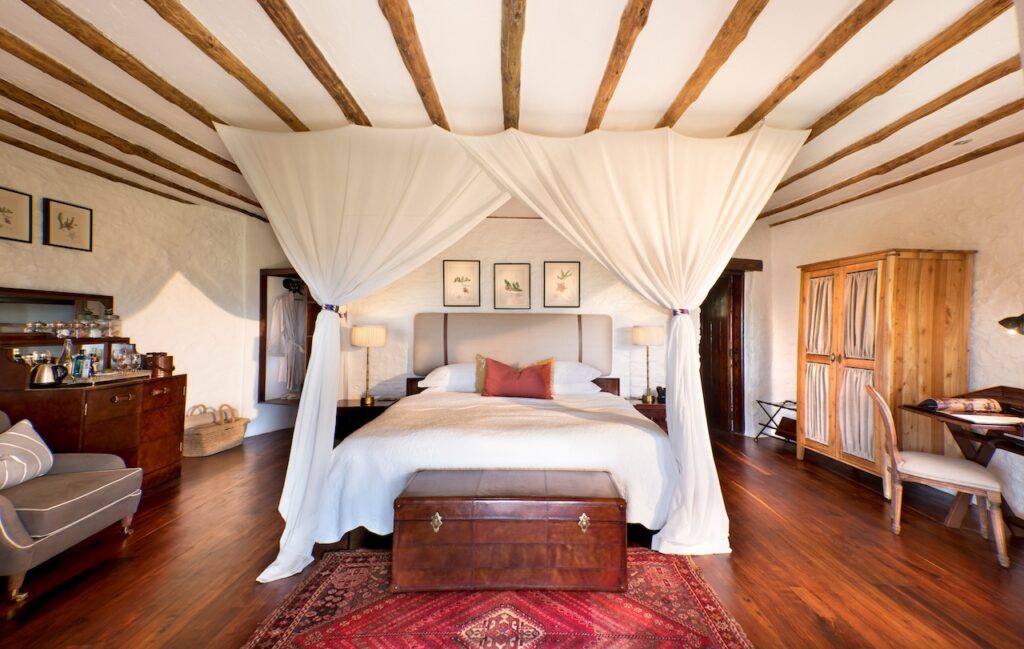
Few camps in the Serengeti can claim the position that Klein’s has occupied for decades. Perched atop the Kuka Hills in the only private concession bordering both the Serengeti and the Masai Mara, the camp sits within an exclusive 10,000-hectare wildlife reserve leased from Maasai landlords — a location that gives it something most competitors simply cannot replicate: the migration passes through twice. As wildebeest move between north and south, guests have the opportunity to witness the spectacle on both legs of the journey.
Just ten cottages (I love them, they’re so cozy) occupy the hillside, with off-road game drives, night drives and bush walks all included — the private concession meaning Land Rovers are free to go wherever the animals lead. Each stone-walled, thatched cottage features en-suite bathroom, indoor seating area and a private veranda with sweeping views across the bushveld.
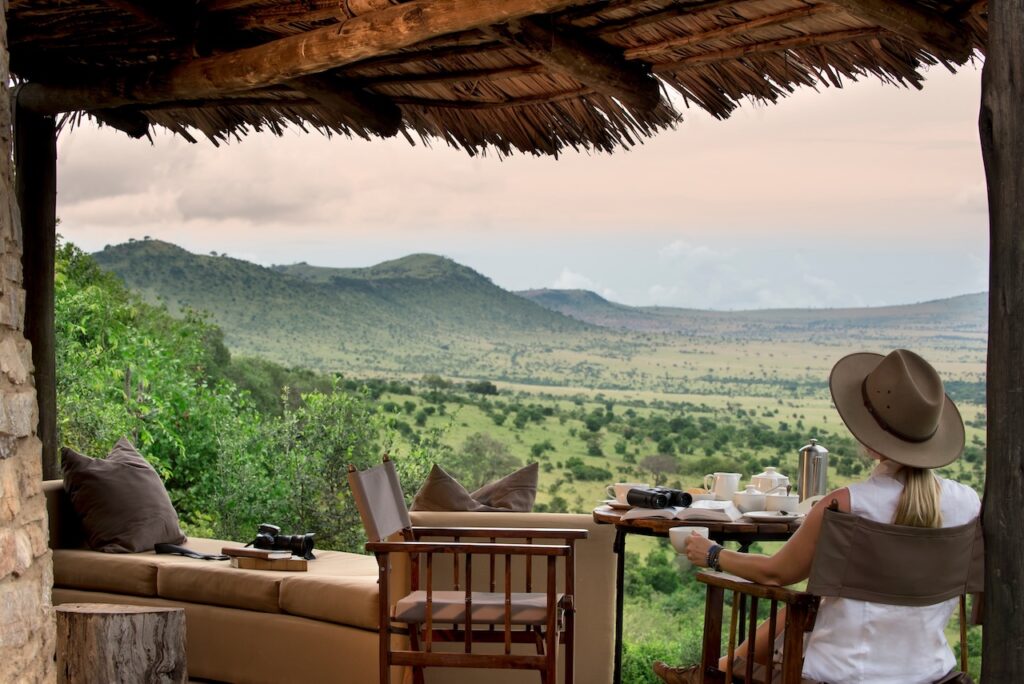
Dining draws on the camp’s own organic kitchen garden — the Shamba — with meals served in the main area, a forest clearing, or as alfresco bush breakfasts at locations across the concession.
&Beyond’s conservation and community credentials underpin everything here, and Klein’s retains the intimate, explorer-era atmosphere that has made it one of East Africa’s most enduring addresses. For the northern Serengeti, it remains the benchmark.
Four Seasons Safari Lodge
Four Seasons Hotels & Resorts
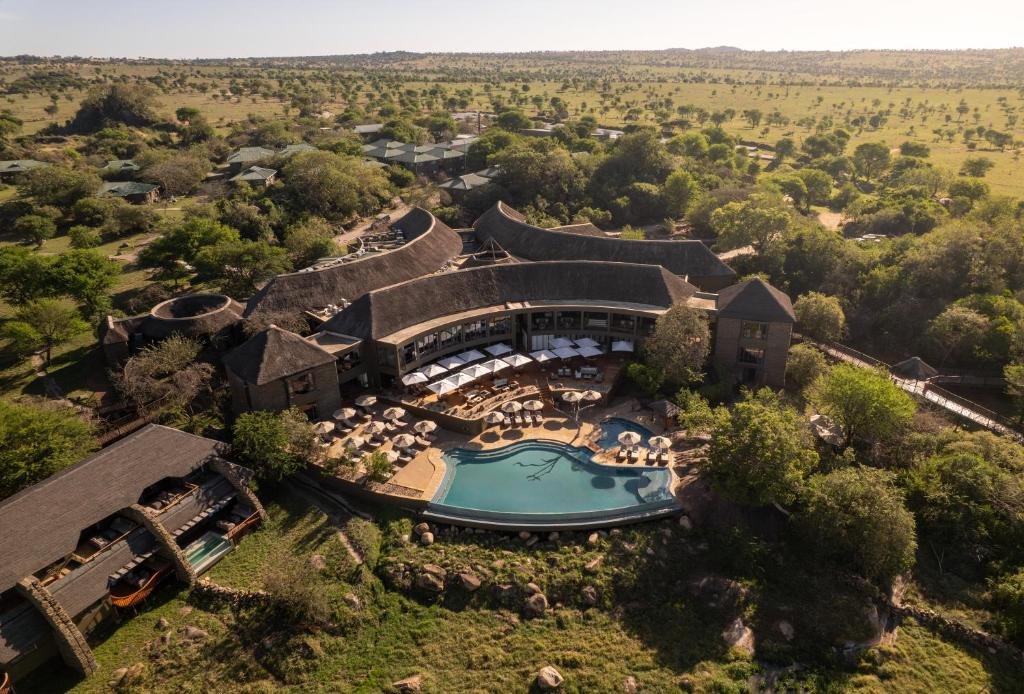
The Four Seasons brought its hospitality formula to the central Serengeti in 2012 and, against considerable initial scepticism, has produced one of the most successful family-friendly luxury safari experiences in East Africa.
Set within the Seronera Valley — the geographic heart of the park, home to its highest year-round resident game density — the lodge’s 77 rooms, suites and villas overlook a permanent waterhole frequented by elephant, buffalo and the occasional curious leopard.
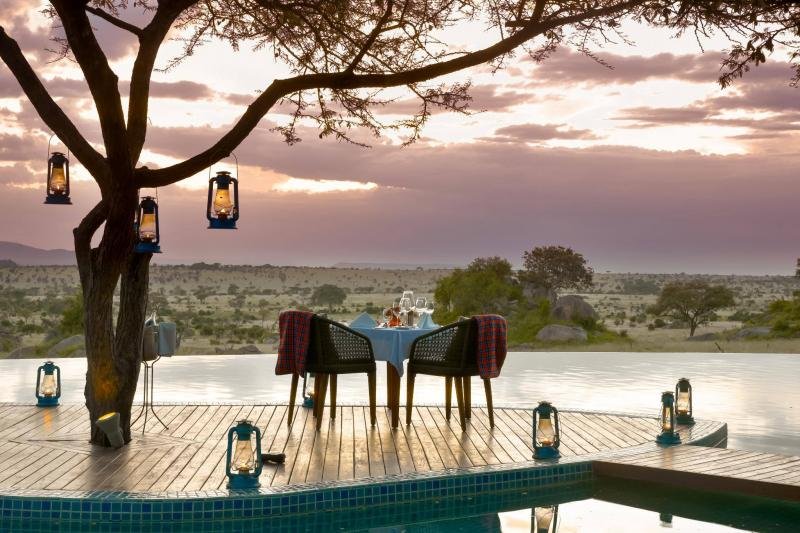
Highlights include a discovery centre with a resident wildlife biologist, a serious children’s programme, a 900-square-metre infinity pool and a spa using indigenous African botanicals. While the room count and brand polish put off some safari purists, no other property delivers the same combination of central-Serengeti location, multi-generational facilities and dependable five-star hotel service.
This year-round camp is best for first-time safari-goers, families with children, and travellers combining game viewing with poolside downtime.
Sayari Camp
Asilia Africa
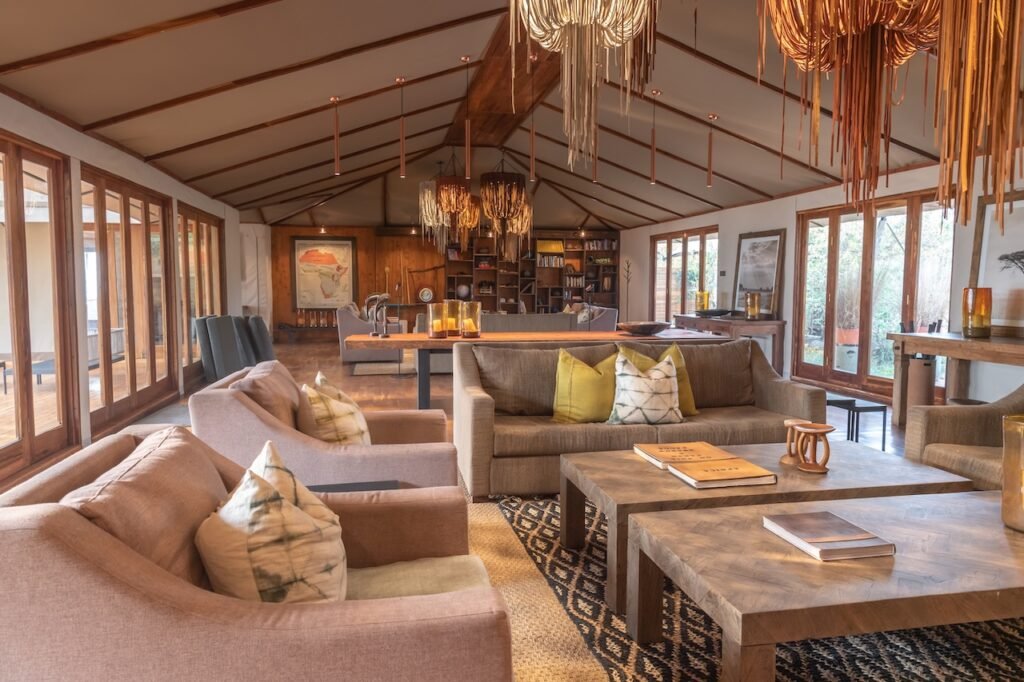
In the far northern reaches of the park, on a quiet stretch of plain just south of the Mara River and the Kenyan border, Sayari Camp, another firm favourite of mine, has spent the past decade quietly establishing itself as the connoisseur’s choice for the migration.
The 15-tent property — fully refurbished by Asilia in 2022 — combines a relaxed, slightly bohemian aesthetic of canvas, teak and copper with the operational rigour for which Asilia is justifiably famous: every tent has a private deck, plunge pool and sala, and the central guest area opens onto an infinity pool that looks straight out over the Lamai plains.
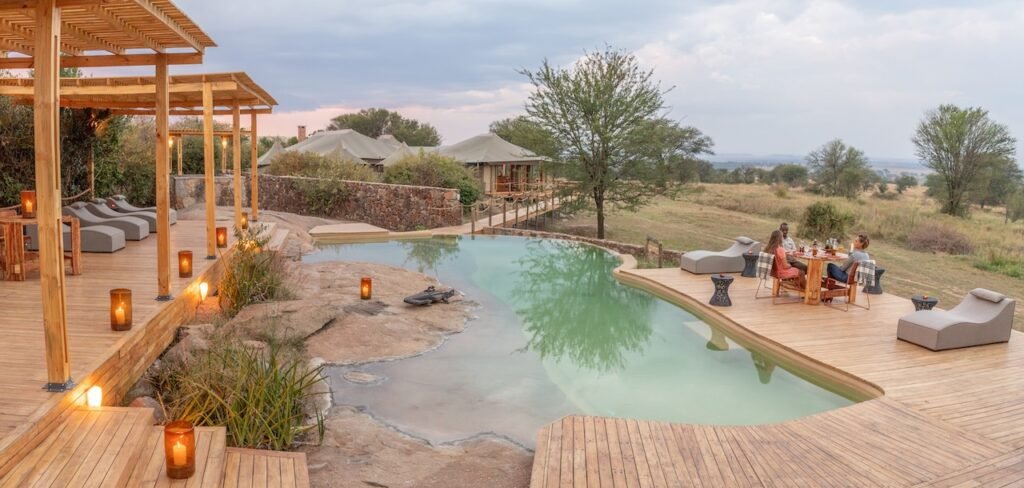
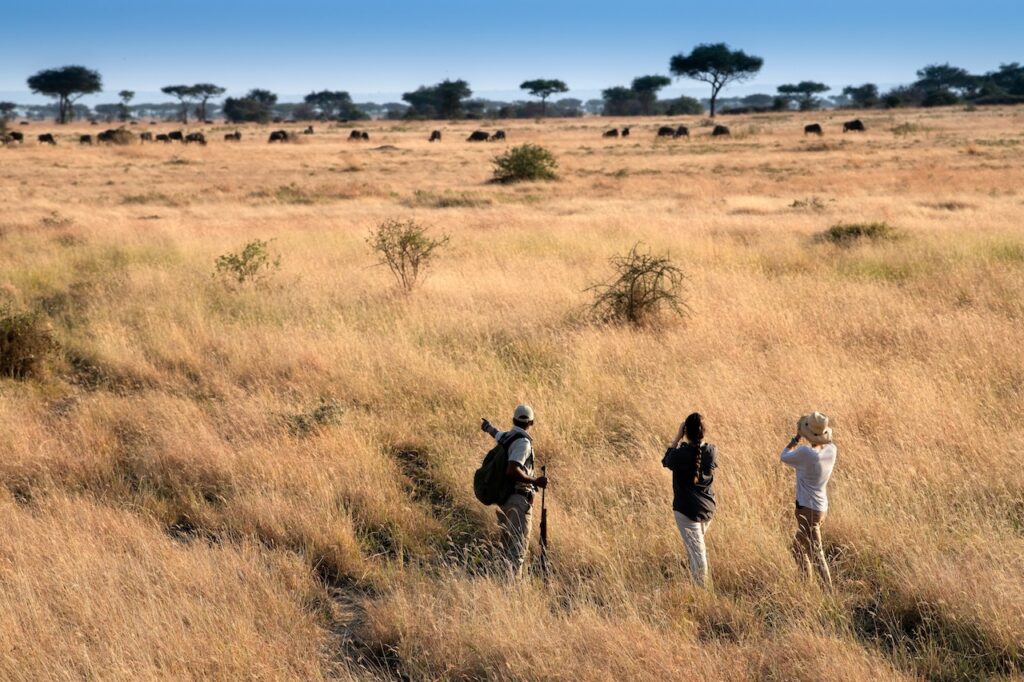
The northern Serengeti’s resident lion prides, leopard density and migratory crossings make the area arguably the strongest year-round game viewing in the park. Sayari is also one of the few properties in the Serengeti to operate a proper walking safari programme.
Visit Sayari from July to October for the river crossings. However, January to March is equally rewarding for resident game.
Serengeti Explorer
Explorer by Elewana
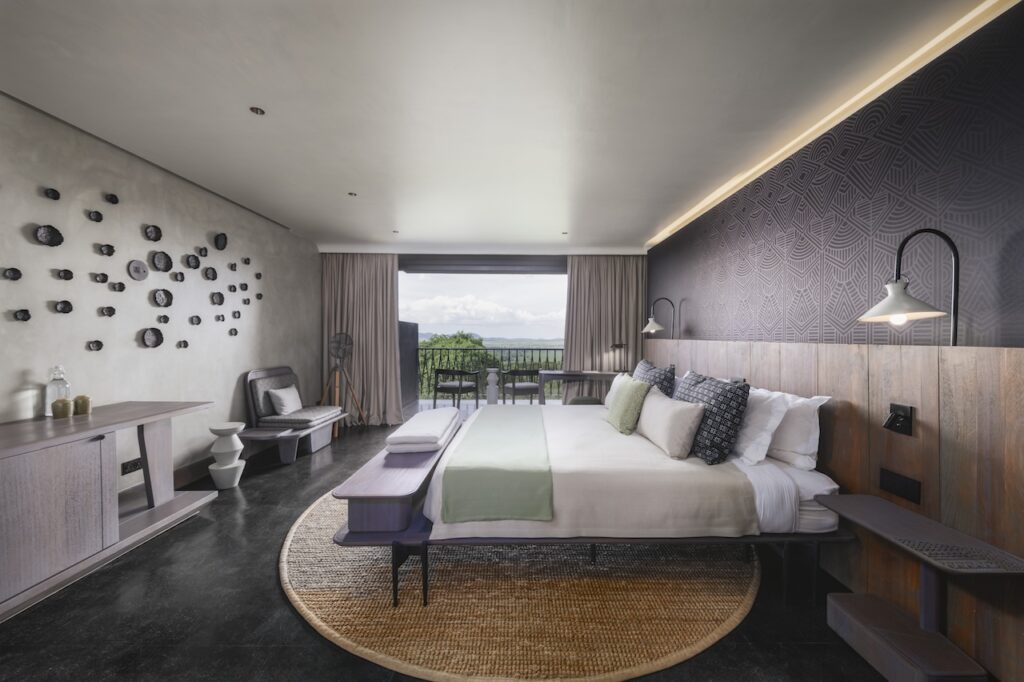
There is a gap in the Serengeti market that Elewana has long understood better than most, and Serengeti Explorer is its answer. The first lodge in a new upscale-but-attainable collection from one of East Africa’s most respected operators, Serengeti Explorer sits high on the Nyaboro Hills in the western corridor of the Serengeti National Park, with panoramic views across the plains and a central position that makes it a natural base for following the Great Migration.
The headline feature is the Serengeti’s first on-site wildlife hide — reached via an underground tunnel from the lodge and overlooking a watering hole — which means extraordinary, close-proximity game encounters without leaving the property.
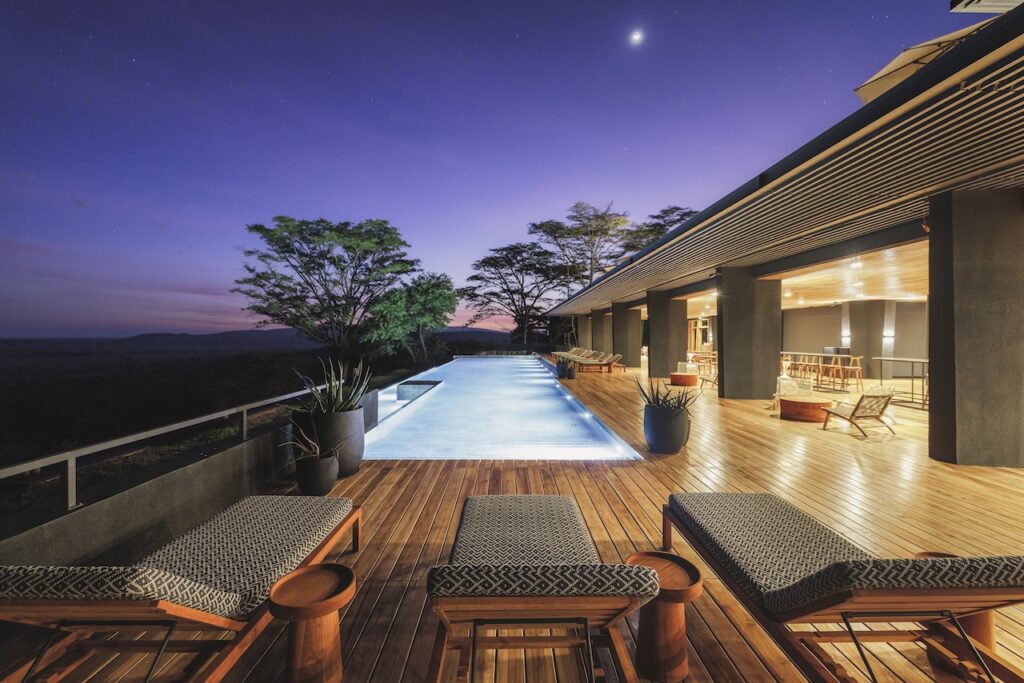
Seventy-four rooms (including six suites) all carry private balconies with those famed views, and the facilities punch above the price point: an infinity pool, the Riva Wellness Centre, four distinct dining venues including a wine-cellar chef’s table, an outdoor cinema, star-gazing deck, walking safaris and a children’s bushcraft centre.
For travellers who want a genuine Elewana experience — exemplary service, serious wildlife access, deep conservation commitment — without the ultra-luxury price tag, Explorer fills that space with considerable confidence.
The Mobile & Semi-permanent Camps
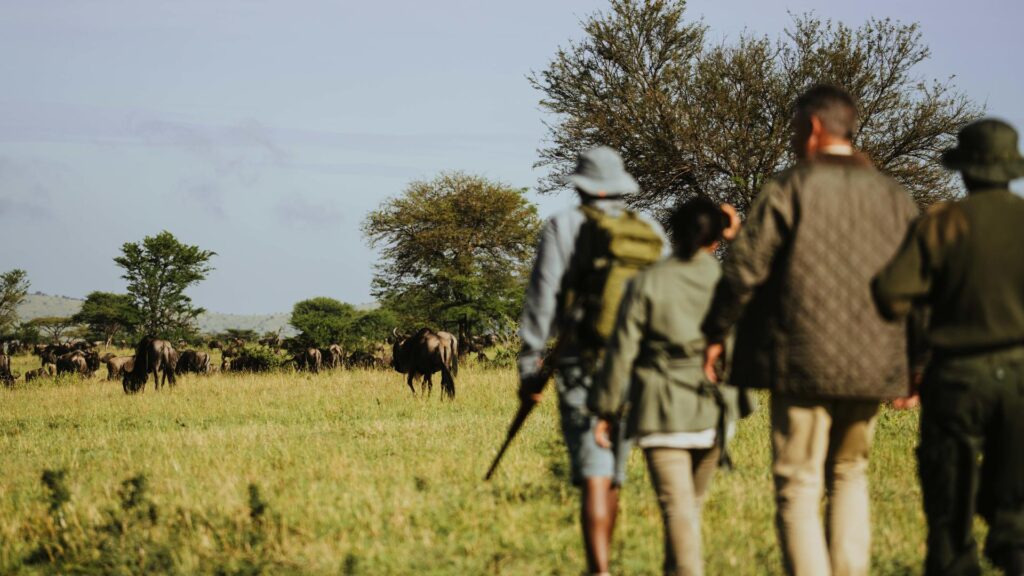
Where the Serengeti’s permanent camps offer mastery, its mobile camps offer pursuit. The ecosystem’s sheer size — nearly 15,000 square kilometres — means the Migration can be genuinely elusive, and mobile camps exist to close that gap. The leading operators reposition seasonally, placing guests alongside calving season on the southern plains in January, then tracking herds north toward the Mara River by summer.
The experience is deliberately elemental: smaller, quieter, closer to the ground. No pool, no wine cellar — but a front-row seat to one of nature’s greatest spectacles, in a location that no fixed address could ever guarantee.
Wilderness Usawa Serengeti
Wilderness
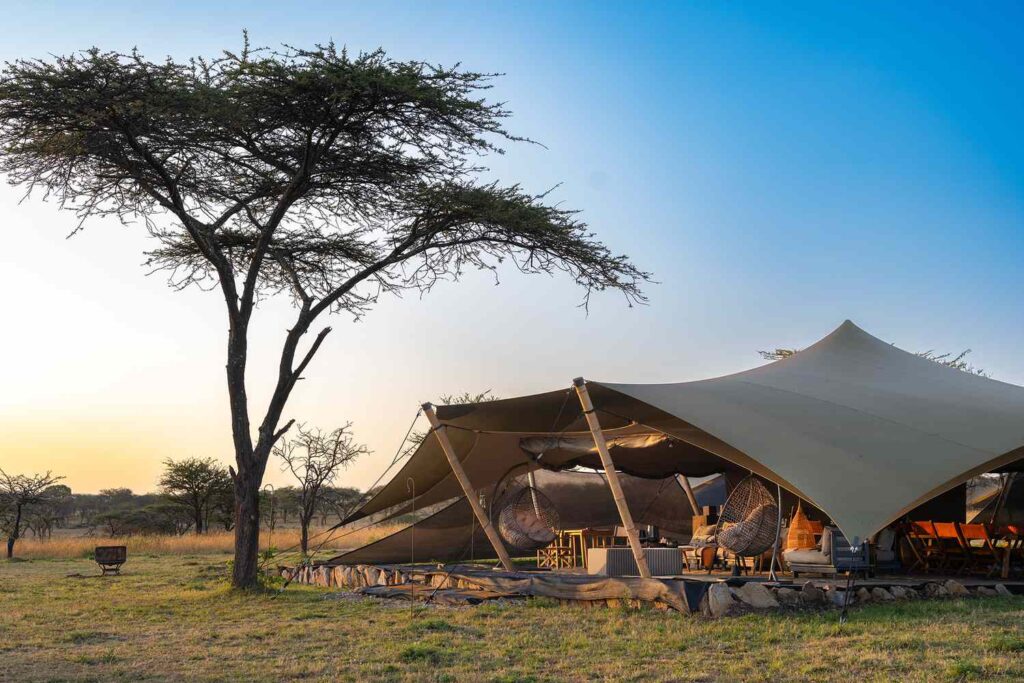
There are camps that follow the migration, and then there is Wilderness Usawa — a camp that moves with it. Wilderness Tanzania‘s first luxury mobile operation deploys two intimate camps across the Serengeti’s designated walking zones, repositioning throughout the year to track the wildebeest herds across the national park’s length and breadth.
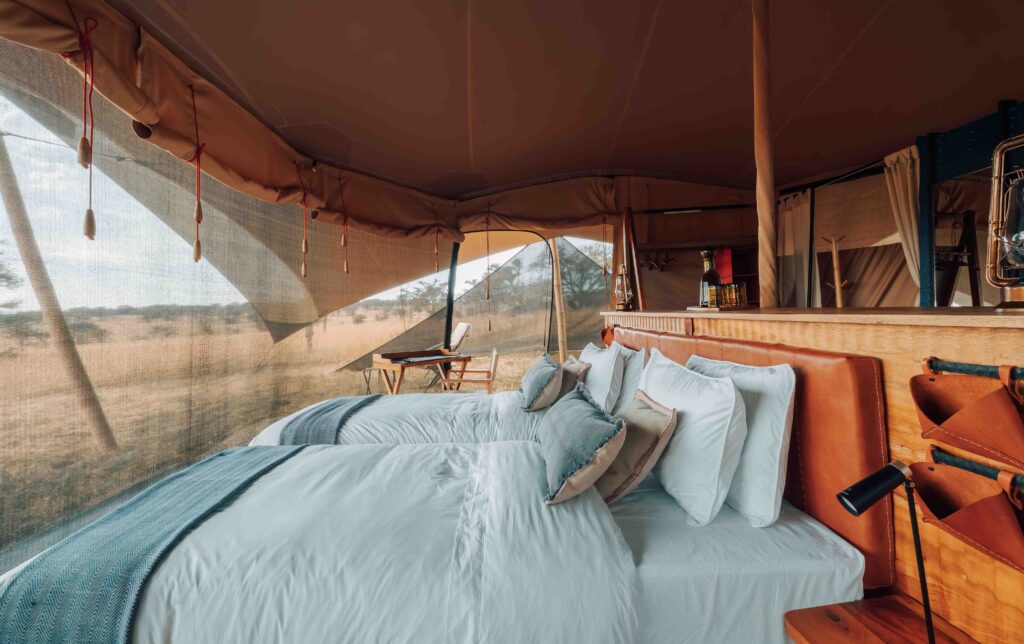
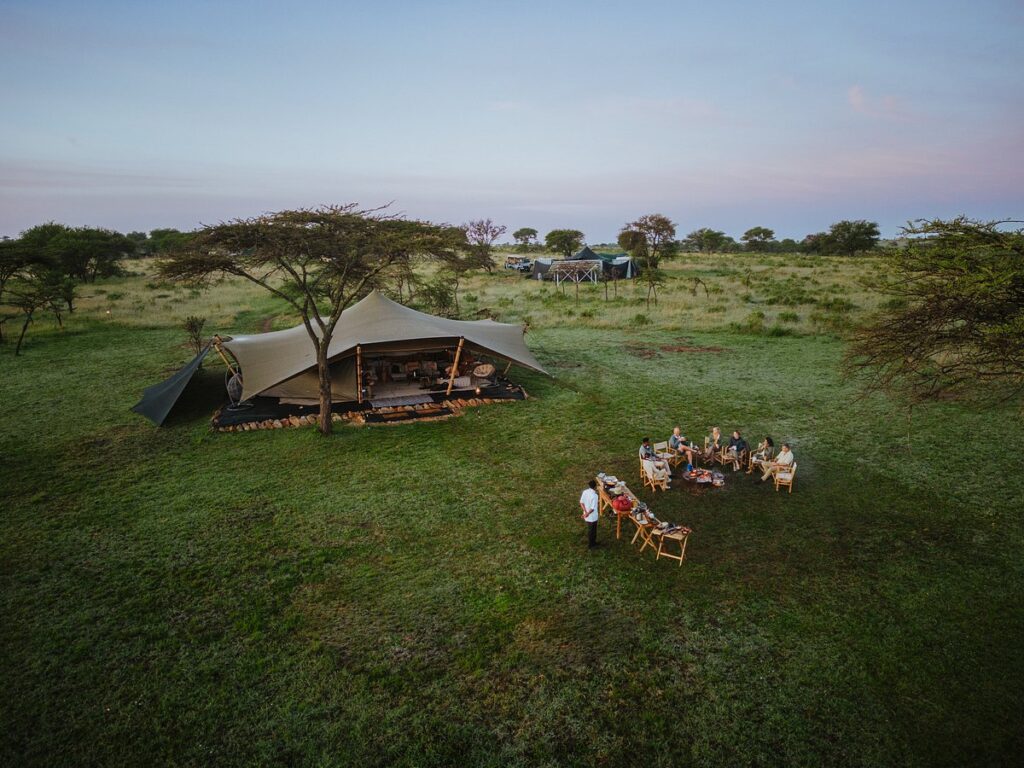
The intimacy is deliberate: just twelve guests in six en-suite tents, each designed with a 280-degree view across the surrounding plains. The collaboration between Luxury Frontiers and Charlotte Berney Design has produced something that feels considered rather than improvised — furniture that doubles as packing infrastructure, hand-dyed rugs and handwoven blankets sourced directly from Arusha artisans, stretch tents manufactured locally and engineered for both mobility and shade. When camp moves, it leaves nothing behind.
Walking safaris departing directly from camp — made possible by the carefully chosen locations within the Serengeti’s walking zones — are the standout differentiator here, alongside game drives, birding and stargazing. The conservation credentials are equally serious: formal community education programmes actively reduce local dependence on poaching and snaring.
For those who want to experience the Great Migration as it was always meant to be witnessed — on foot, at close range, with no fixed address — Usawa makes a compelling case.
Singita Mara River Tented Camp
Singita
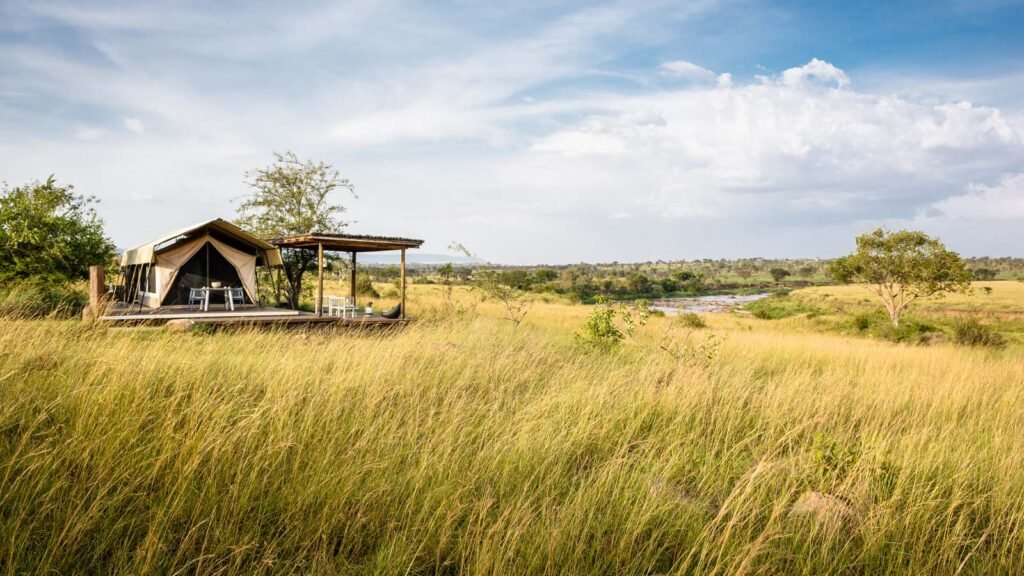
Where Sasakwa is Edwardian indulgence, Singita’s Mara River Tented Camp is a study in contemporary minimalism — and possibly the smartest-positioned luxury camp in the entire Serengeti for the migration river crossings.
Set in a private grove of riverine forest in the remote Lamai Triangle, the slim, light-footprint property comprises just six elevated canvas suites finished in recycled steel, salvaged timber and Maasai-textile accents, with floor-to-ceiling glass framing the Mara River below.
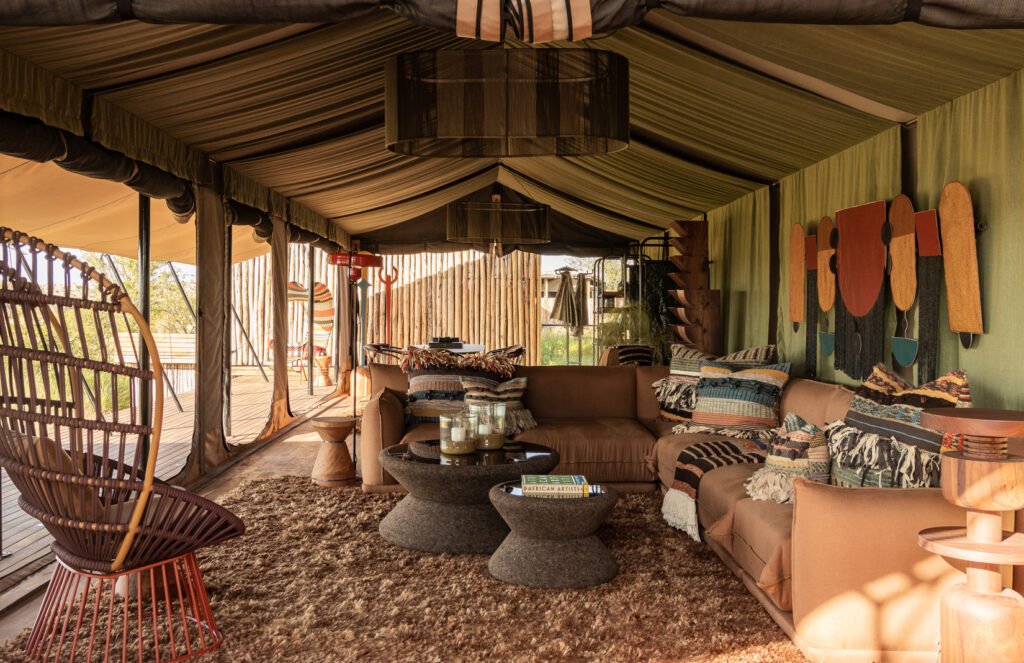
Solar-powered, water-recycling and built to be wholly removable, the camp delivers serious sustainability credentials alongside genuinely first-rate dining and a guiding team trained at Singita’s School of Cooking and Conservation.
The position of this year-round camp, on the Tanzanian side of the river, means crossings happen literally below the dining deck between July and October — and you watch them in solitude, while the Kenyan side is rammed with vehicles.
Namiri Plains
Asilia Africa
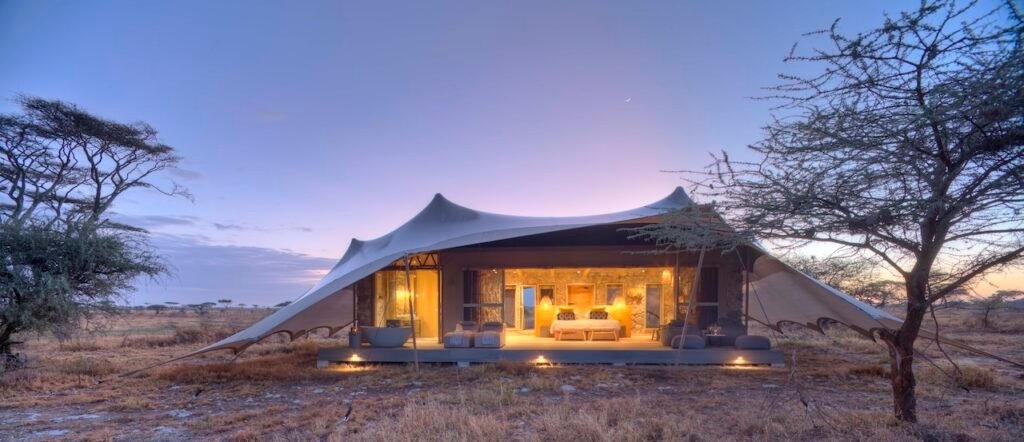
For two decades, the eastern Serengeti’s Namiri Plains were closed to all tourism while a cheetah research and recovery programme played out — and when Asilia finally opened the area to a single small camp in 2014, the result was the highest cheetah density in Africa.
Namiri Plains, rebuilt and expanded in 2019 and one of my most treasured Serengeti memories, comprises just ten elevated tented suites and a two-bedroom family suite, all finished in earthy linens, copper basins and exposed brass, with private decks that look out over the open plain.
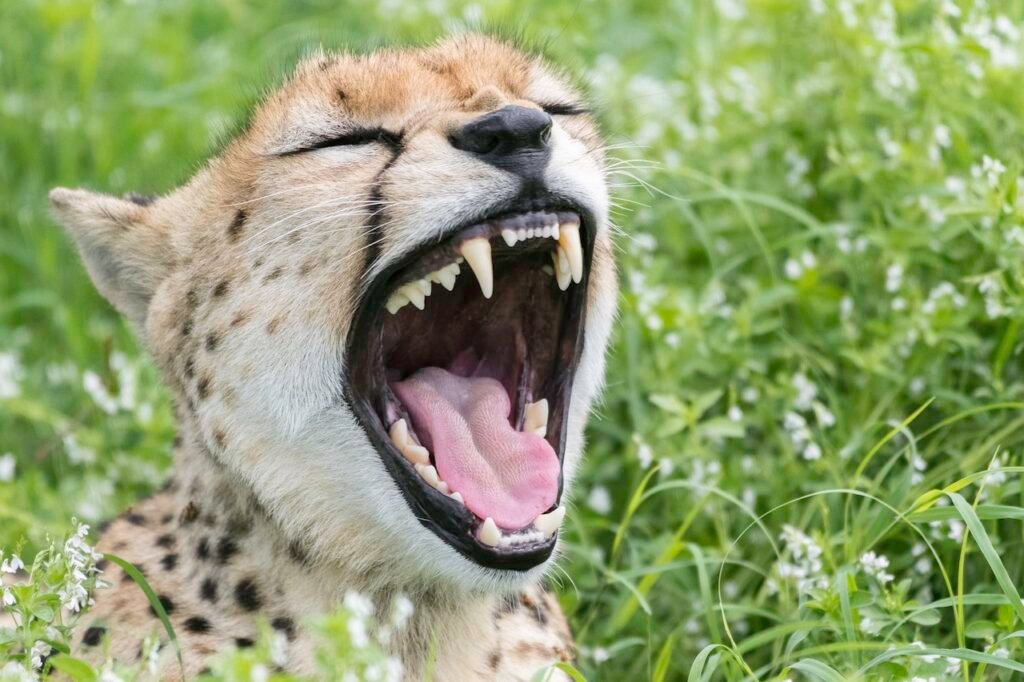
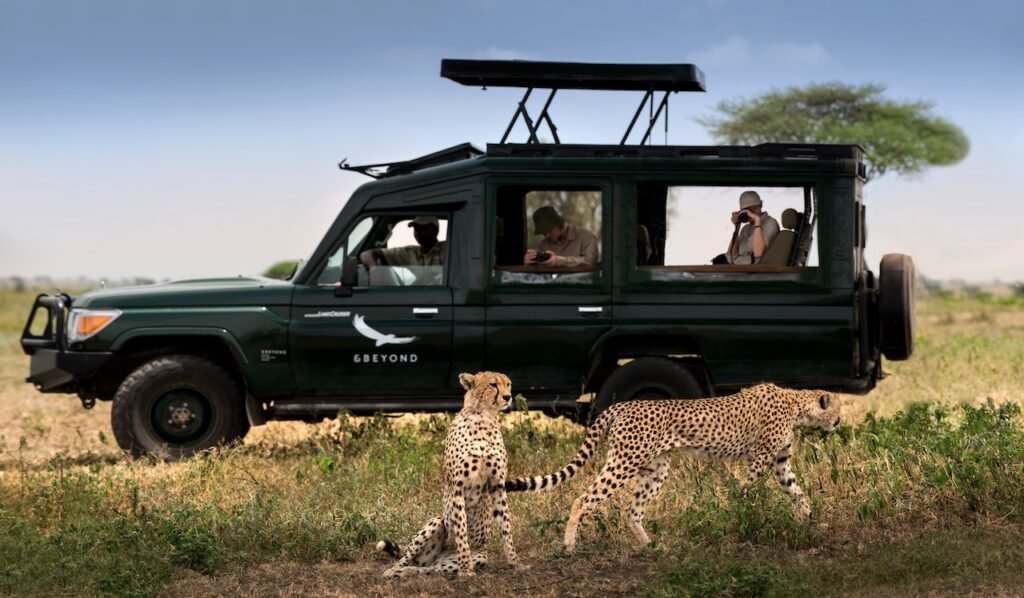
Big cats are the headline — cheetah on the daily fixture list, lion prides resident, and leopard along the kopjes — but the area also offers walking safaris, hot-air balloon flights and superb golden-grass photography year-round.
The remoteness of this camp is the point: vehicles are few, the landscape is vast, and the predator-watching is unhurried. It’s best from December to March, and June to October.
Nomad Tanzania’s Serengeti Safari Camp
Nomad Safaris
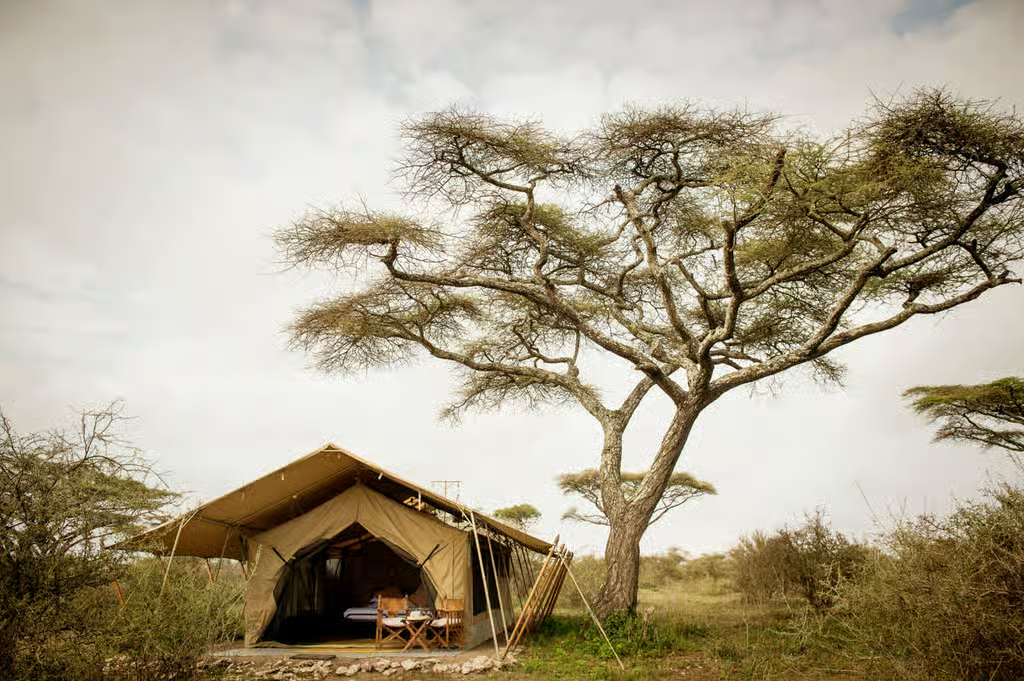
The grandfather of all African mobile safaris, Nomad Tanzania’s Serengeti Safari Camp has been pursuing the migration around the ecosystem for more than three decades, and remains the gold standard.
The camp is struck and re-pitched up to six times a year — Ndutu in January for the calving, the Moru kopjes in April, Kogatende and Lamai in the north for the river crossings, and back south as the rains break — so that wherever the herds are, Serengeti Safari Camp is there.
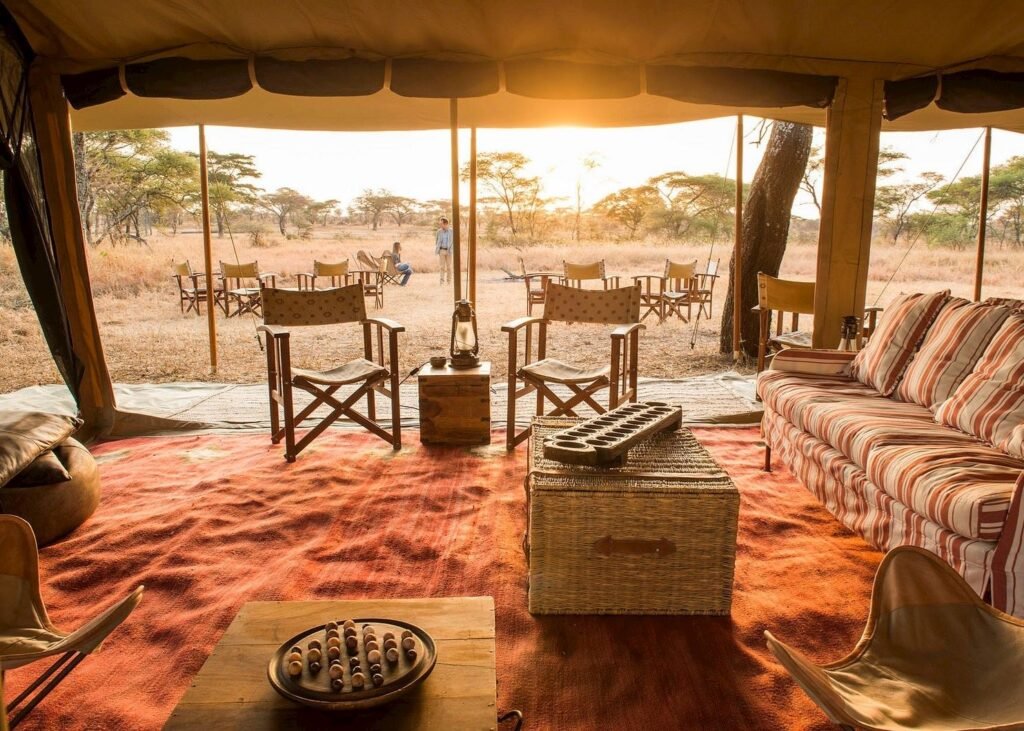
Six classic green-canvas tents, brass-bound trunks, oil lanterns and a long-table mess pavilion: the look is faithful 1930s explorer, the service is contemporary and exceptional. Hot bucket showers, proper beds, a dedicated team that has often been with Nomad for 20-plus years, and the kind of quiet, low-impact, leave-no-trace ethic that has made Nomad the most respected operator in the country.
While this camp is available to book year-round, be sure to book the location to suit the migration calendar.
Olakira Migration Camp
Asilia Africa
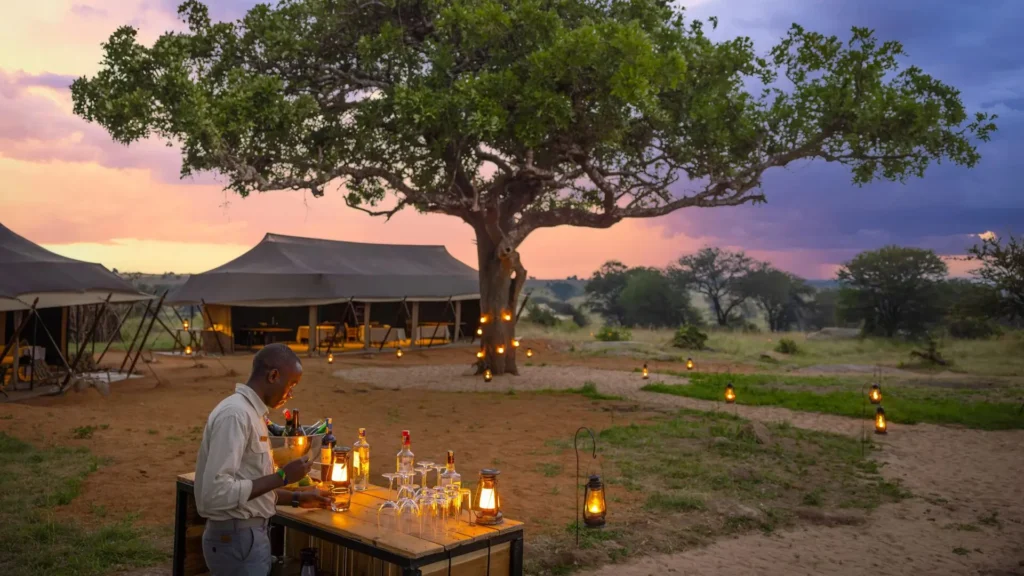
One of my favourite mobile camps, Asilia’s Olakira occupies the smart middle ground between true mobile and permanent — a genuinely seasonal camp that relocates twice a year between two strategic locations to track the herds.
From December to March, Olakira pitches in the southern Ndutu plains for the calving, when up to half a million wildebeest are born within a six-week window and predator activity is at its annual peak. From June to October, the entire camp is dismantled and re-pitched on the banks of the Mara River for the crossings.
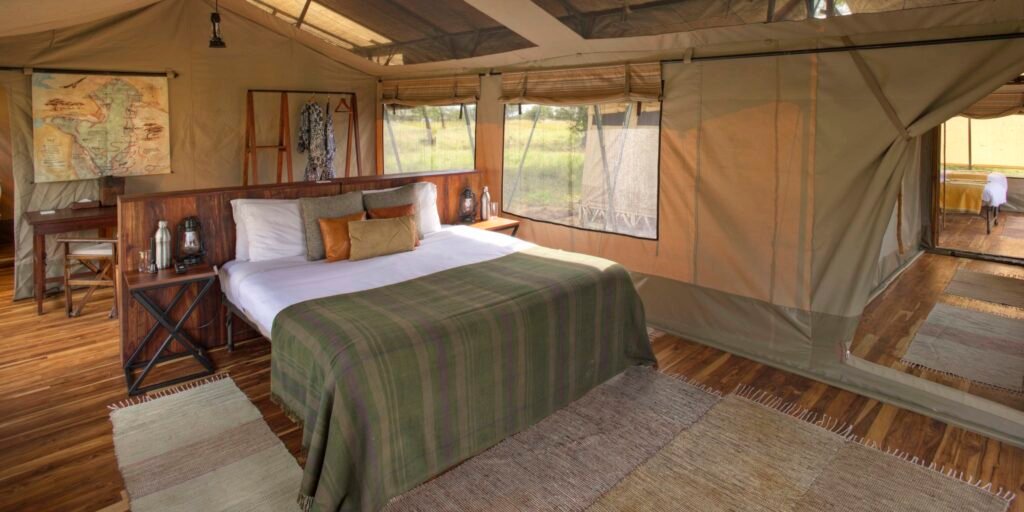
Nine tents, each with a separate star-gazing room with a roll-back canvas roof, deliver one of the most romantic sleeping experiences in the bush. The aesthetic is contemporary safari rather than 1930s vintage — pale canvas, copper, leather — and the inclusive rate covers all activities, including hot-air balloon flights at additional cost.
Olakira is a particularly strong choice for honeymooners and travellers with a keen interest in wildlife photography.
Serengeti Under Canvas
&Beyond
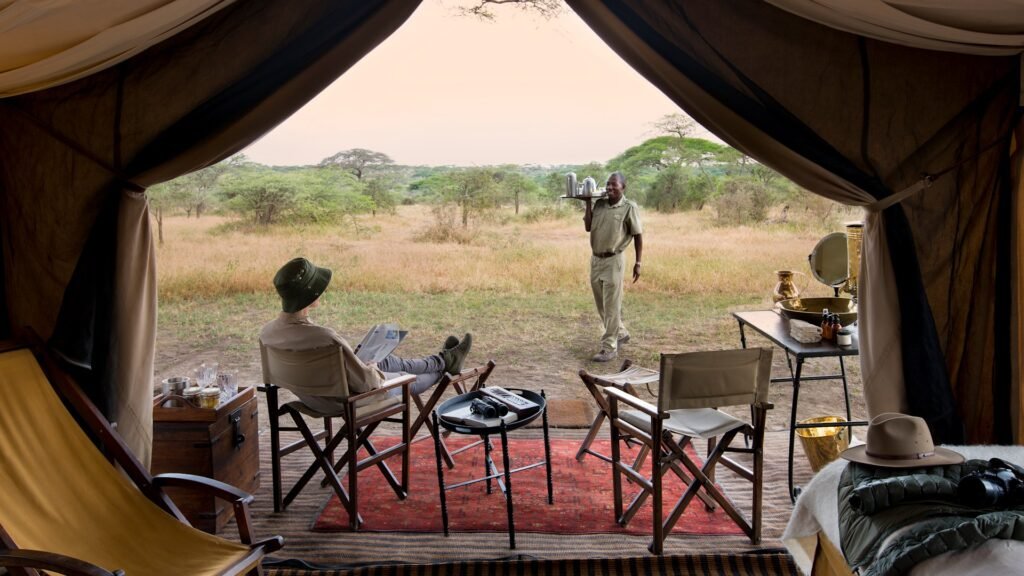
&Beyond’s contribution to the mobile category is among the most polished operations in the park. Serengeti Under Canvas runs two parallel mobile camps that move five times a year — chasing the calving in the south, the western corridor in May and June, and the river crossings in the north from July to October.
Each camp comprises just nine en-suite tents finished to the &Beyond standard: proper beds, hot bucket showers, oil lamps, polished tribal artefacts, candlelit dinners under a private boma.
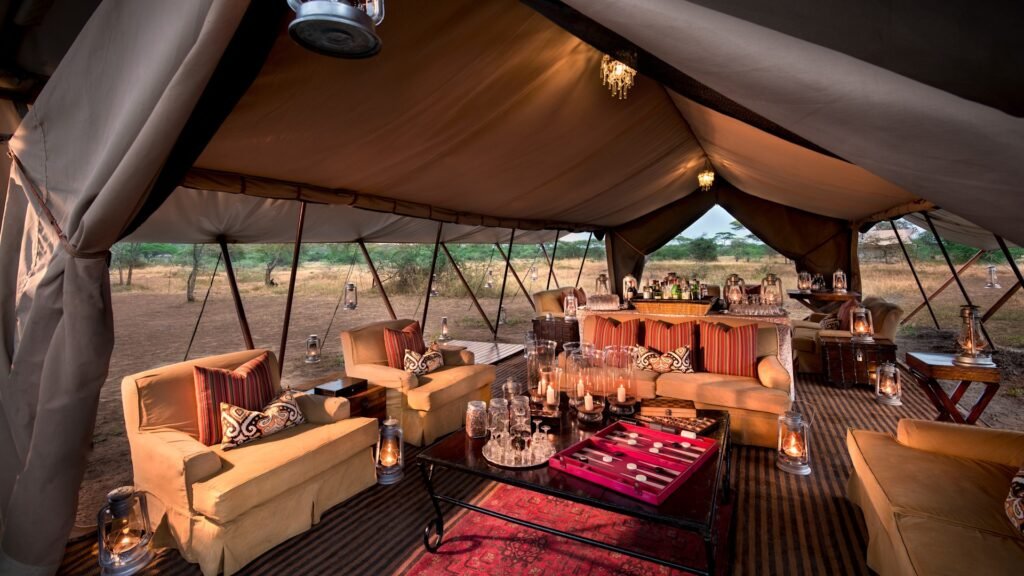
The pleasure of the format is the genuine sense of expedition — every camp site is chosen for the wildlife, the views and the proximity to the day’s likely action — coupled with the operational reliability of one of Africa’s most experienced safari operators.
Serengeti Under Canvas is excellent for travellers who want the romance of mobile camping without sacrificing &Beyond’s signature polish. It’s also available year-round at one of the two camp locations.
Some Honourable Mentions
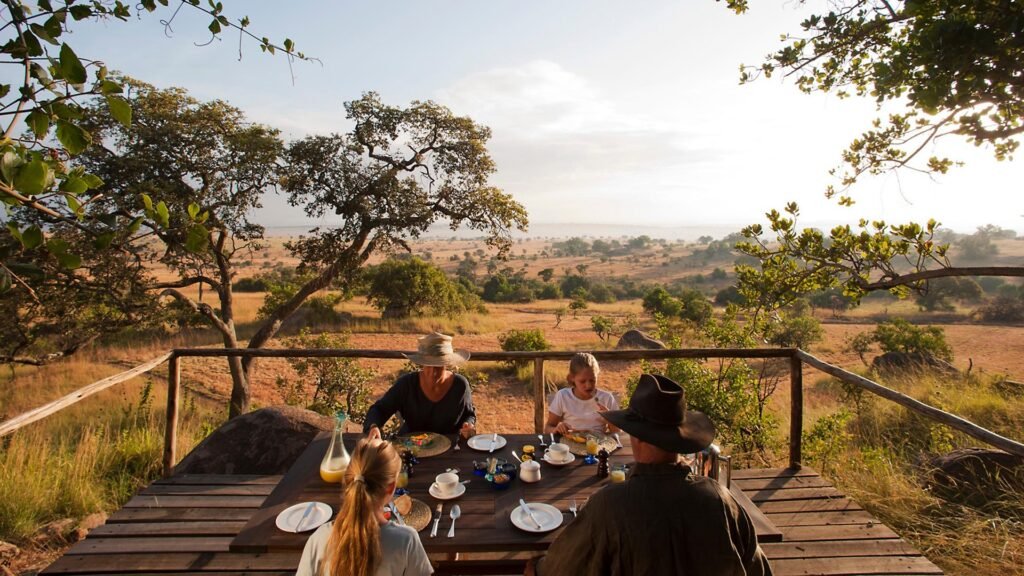
A handful of additional names deserve mention for travellers building longer itineraries. Singita Faru Faru and Sabora — sister-properties to Sasakwa within the Grumeti concession — offer different stylistic registers for travellers who want the Singita experience without the Edwardian formality.
Mwiba Lodge in the southern Maswa Game Reserve is a strong calving-season alternative to the more crowded Ndutu camps. Lamai Serengeti by Nomad Tanzania (above), in the same northern triangle as Singita’s Mara River Camp, delivers the migration crossings at a slightly more accessible price point.
Whichever combination you settle on, the Serengeti remains the single most reliable wildlife destination on Earth — and the most rewarding to visit slowly, in the right places, at the right time of year.
Permanent Versus Mobile in the Serengeti
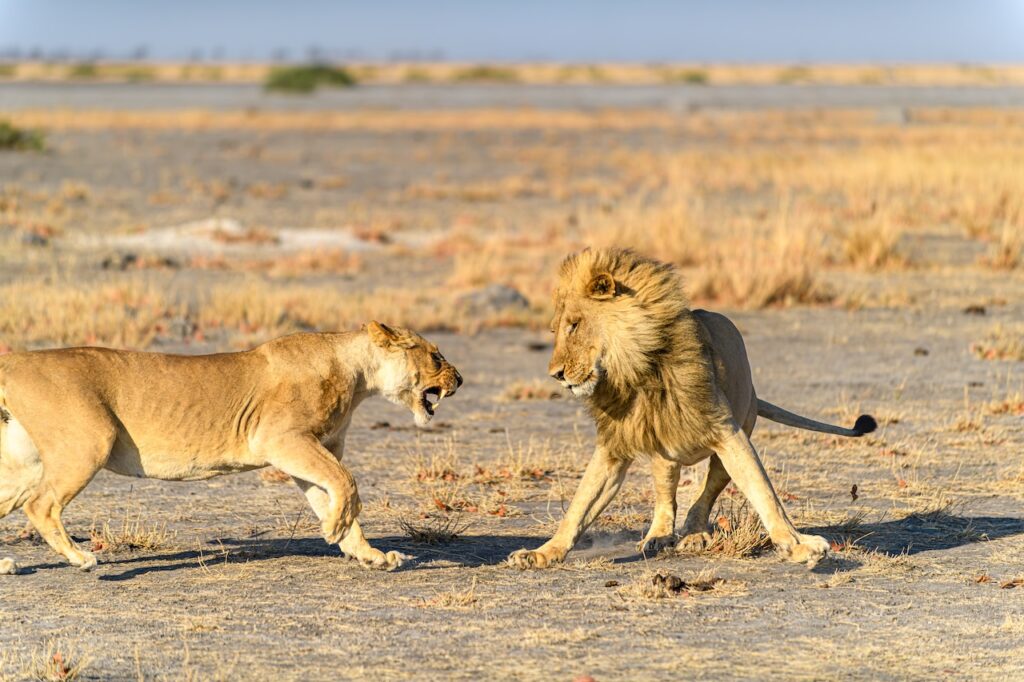
The Serengeti makes the permanent-versus-mobile decision more consequential than perhaps any other safari destination. The migration covers more than 800 kilometres in its annual circuit, and a permanent lodge — however magnificent — is necessarily fixed in one part of the ecosystem.
Travellers who prioritise the herds above all else should weight the itinerary heavily towards mobile camps such as Nomad’s Serengeti Safari Camp, Olakira or &Beyond Under Canvas, all of which physically follow the wildlife.
Travellers who place equal value on a serious base — full spa, infinity pool, cellar dining, generous private space — should look to Sasakwa, Sayari or the Four Seasons. The smartest itineraries, as ever, combine: three or four nights in a permanent flagship, three or four in the mobile camp closest to the herds at that moment.
Serengeti Safari: Your Questions Answered
Before you go, here are some of the most asked questions about a luxury Serengeti safari, with the answers that actually matter.
What is the Serengeti famous for?
The Serengeti is the benchmark against which most other safaris are measured. At nearly 15,000 square kilometres, it is one of the largest and oldest ecosystems on earth, supporting exceptional year-round populations of lions, leopards, cheetahs, elephants, buffalo, and giraffe. But it is the Great Migration — the largest movement of land mammals on the planet, involving around 1.5 million wildebeest and hundreds of thousands of zebra circling continuously across the Serengeti and into Kenya’s Masai Mara — that defines it. The Serengeti is the only place on earth where this cycle plays out at scale, and no amount of description quite prepares you for it.
What is the Great Migration, and when does it happen?
The Migration is not a single event but a year-round circuit driven by rainfall and the search for fresh pasture. Understanding where the herds are in that cycle is the key to planning. From January to March, the herds are in the south, on the Ndutu plains, where the calving season unfolds — up to 8,000 wildebeest born each day, and predators gathered in extraordinary concentration.
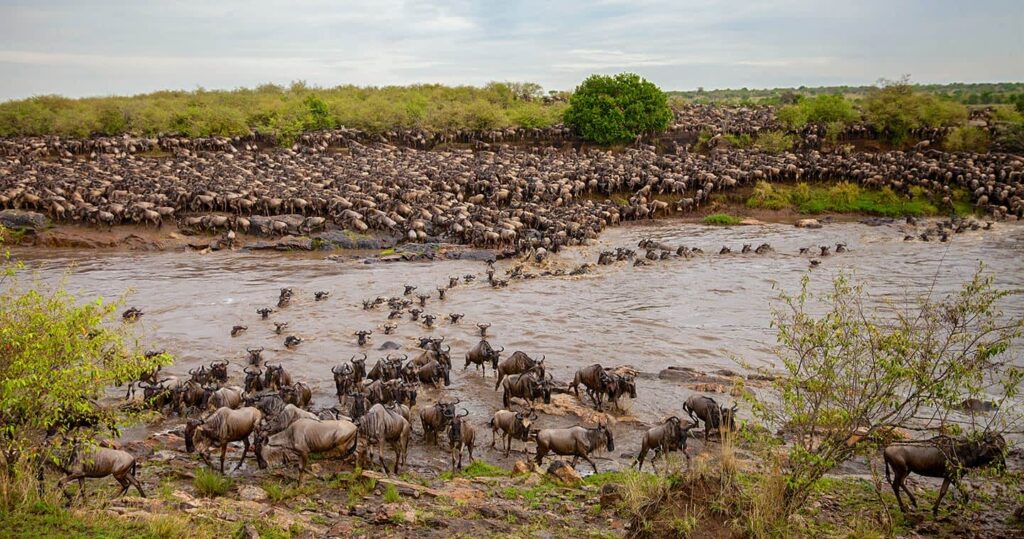
By May and June, the herds begin pushing northwest toward the Grumeti River, where the first major crossings take place through smaller but far less crowded conditions. July to October is the famous Mara River crossing season in the north: vast columns of wildebeest hurling themselves into crocodile-filled water in one of nature’s most visceral spectacles. By November, the herds begin the journey south again. The Migration is never guaranteed — animals follow rainfall, not calendars — but being in the right area at the right time dramatically increases your chances.
Which part of the Serengeti should I visit?
Where you stay should follow the season. The Southern Serengeti and Ndutu plains are the place for calving season (January to March) — the best predator action in Africa, and an intimacy to the landscape that contrasts with the open plains of the north.
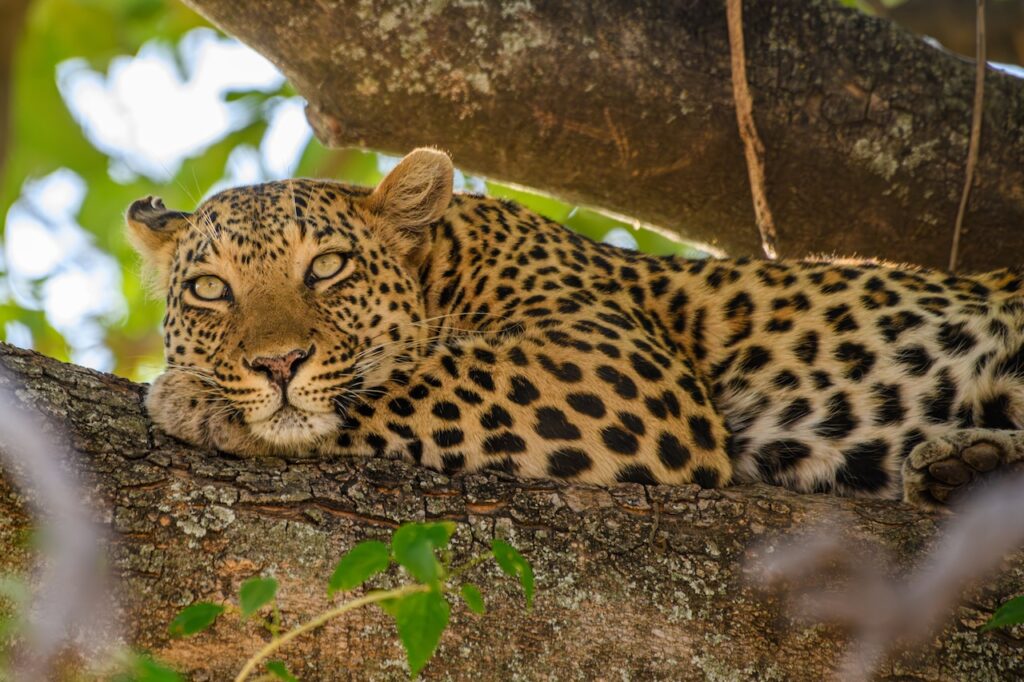
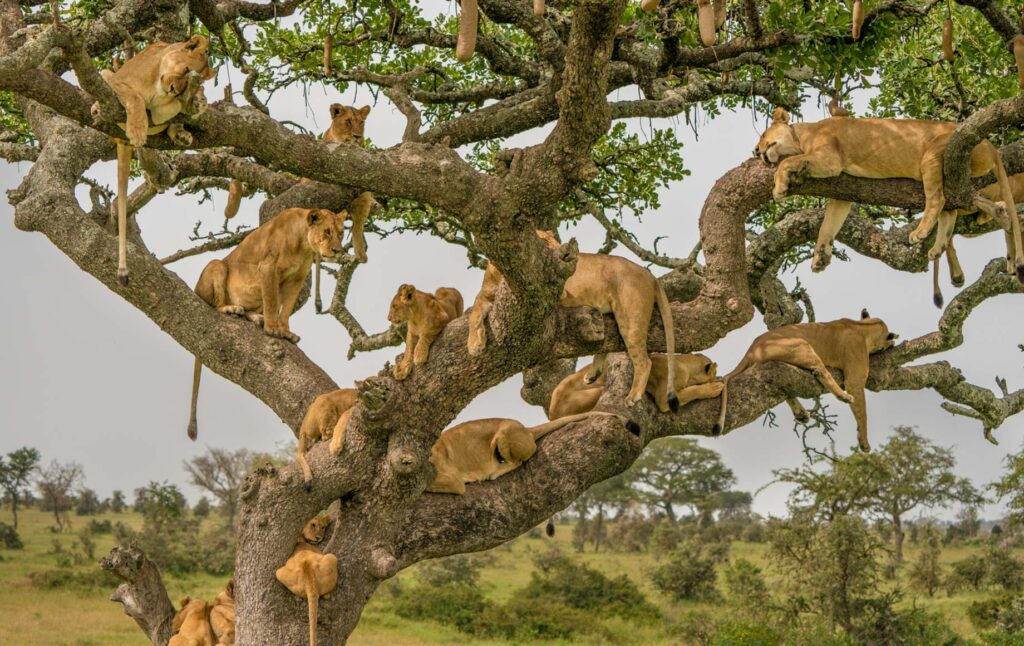
The Central Serengeti, around Seronera, delivers reliable game year-round: resident lion prides, leopards in the riverine trees, and a strong all-round ecosystem regardless of where the migration is.
The Western Corridor is the hidden gem — smaller Grumeti River crossings between May and July, very few vehicles, and a sense of space most visitors never experience. The Northern Serengeti, bordering the Masai Mara, is where the famous Mara crossings happen from July to October; extraordinary when the herds are crossing, much quieter at other times of year.
When is the best time to visit?
There is no bad time — the Serengeti is exceptional year-round — but the right time depends on what you want to see. For the Mara River crossings, July to September is the prime window, with August delivering the most dramatic concentration. For calving and predator action, January to March is outstanding. May and June offer a compelling shoulder-season argument: wildlife conditions close to peak, significantly lower lodge rates, and far fewer vehicles in the park. The long rains (April to May) thin crowds to almost nothing; short rains (November) are brief and rarely disruptive.
Do I need a visa to visit Tanzania?
Most nationalities require a visa to enter Tanzania, which can be obtained in advance via Tanzania’s online visa portal or on arrival at major ports of entry, including Kilimanjaro and Julius Nyerere international airports. A single-entry tourist visa costs US$50 for most nationalities; US citizens pay US$100. Citizens of several African countries are exempt — check your country’s specific requirements before travel. Your passport must be valid for at least six months beyond your intended departure date, with at least one blank page for entry stamps.
What does it cost to enter the Serengeti?
Park entry fees are charged per person per 24-hour period and paid electronically — cash is not accepted inside Tanzania’s national parks. In 2026, the standard entry fee for foreign non-residents is US$70 per adult per day and US$10 per child. An overnight concession fee of US$71 per adult per night applies on top of entry. These fees are typically included within a lodge or tented camp rate, but it is worth confirming this with your operator at the time of booking.
What vaccinations and health precautions do I need?
A yellow fever vaccination certificate is required if you are arriving from a yellow fever-endemic country. The CDC recommends hepatitis A, typhoid, and a consideration of rabies vaccination for those spending extended time in remote areas. Malaria is present throughout the Serengeti and surrounding region; the strain is chloroquine-resistant, so consult a travel health specialist about appropriate prophylaxis before departure. Standard precautions — long sleeves at dusk, a good DEET repellent, and mosquito nets — remain important regardless of medication. Book your travel clinic appointment at least six to eight weeks before departure.
How long should I spend in the Serengeti?
A minimum of three nights is needed to feel properly settled; four to five nights is the sweet spot for most visitors, covering multiple areas and allowing the rhythm of early mornings and evening drives to develop. Those following the Migration across zones — say, from the central plains to the northern Mara corridor — often spend seven to ten days in the ecosystem. Rushing the Serengeti is the most common mistake first-time visitors report.
Can I combine the Serengeti with other destinations?
The classic Tanzania circuit pairs the Serengeti with Ngorongoro Crater, just a few hours’ drive away — a sunken caldera sheltering the densest concentration of wildlife in Africa, and an entirely different experience to the open plains. Lake Manyara and Tarangire are frequently added for birdwatching and large elephant herds.
For those wanting to extend beyond the bush, Zanzibar lies a short flight from Arusha and offers a compelling full stop to a safari: Stone Town, spice plantations, and Indian Ocean beaches. The standard itinerary of seven to twelve days combining Serengeti, Ngorongoro, and Zanzibar is one of Africa’s great travel sequences.
How does the Serengeti compare to Kenya’s Masai Mara?
The two ecosystems share the same Migration and the same cast of wildlife — they are ecologically one landscape bisected by a national border. The Mara is smaller, easier to cover, and logistically simpler to reach from Nairobi.
The Serengeti is vastly larger, more varied in terrain, and offers a greater range of safari zones and experiences. Tanzania’s conservation fee structure limits vehicle numbers in sensitive areas, making the Serengeti feel wilder and less trafficked across most of the year. The Serengeti also holds the calving grounds and the Grumeti crossings, which the Mara does not. Many visitors explore both on a single trip, crossing the border by air.
How to get to the Serengeti?
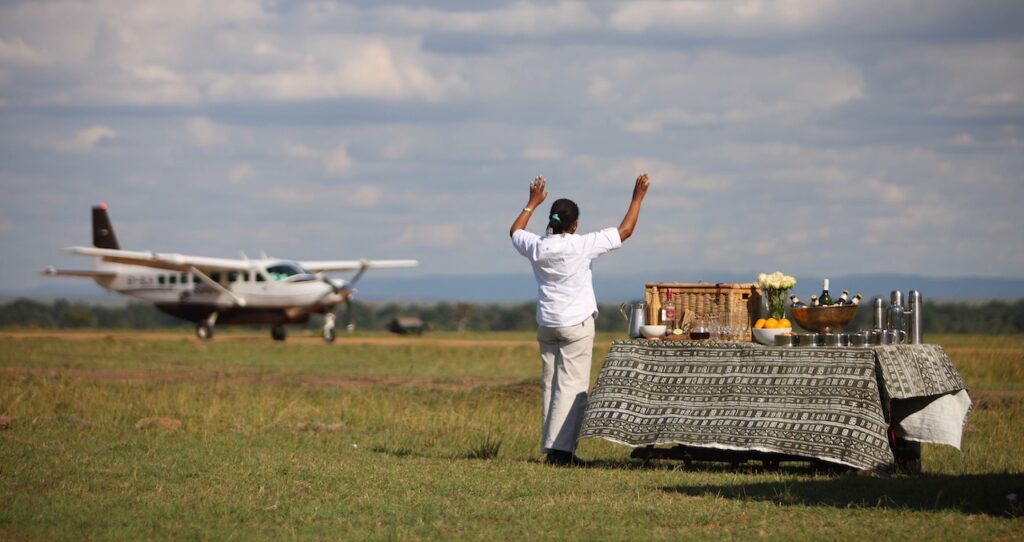
Connections from Asia run via Doha, Dubai or Addis Ababa to either Kilimanjaro International Airport (JRO) or Arusha Airport, with a connecting light-aircraft flight to one of the Serengeti’s many airstrips. Flights, usually in Grand Caravan aircraft, are short but can be bumpy due to thermals so pack the Dramamine if you’re prone to air sickness.
When to Book
Twelve to eighteen months of lead time is now the norm for the lodges and camps on this list, particularly the mobile camps, whose tent counts are often as low as six and whose locations book out by season more than a year in advance.
If you’re contemplating a luxury safari, be sure to check out guides to safari travel in Africa, the best safari photography tips, and the best luxury safari lodges and camps in the Okavango Delta, the Masai Mara, and Rwanda, read about what a luxury safari in Botswana is really like, and check out our guide to packing for your luxury safari.


