
Where Jacques Cousteau’s “Aquarium of the World” meets the burnt-ochre landscapes of the Baja California peninsula — the finest luxury Sea of Cortez cruise lines of 2026 offer intimate expedition vessels, extraordinary marine wildlife encounters, and some of the most pristine and biodiverse waters on the planet.
Introduction
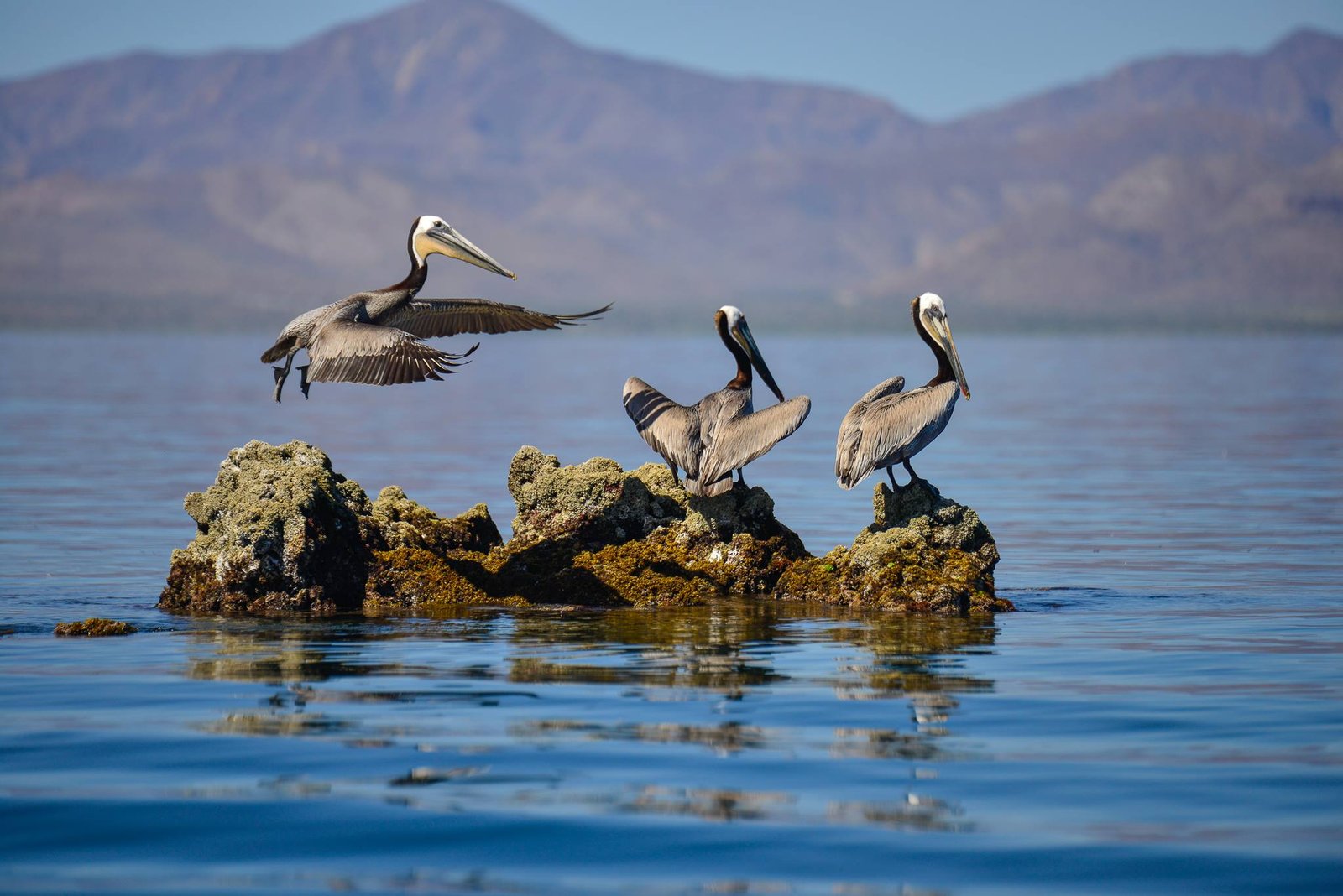
Jacques Cousteau called it the world’s aquarium, and I can tell you, the Sea of Cortez — the narrow, 1,100-kilometre body of water separating the Baja California peninsula from mainland Mexico — has lost none of the marine magnificence that inspired that description. A UNESCO World Heritage Site since 2005, the Gulf of California harbours more species of marine mammals than any comparable body of water on earth: blue whales, fin whales, sperm whales, humpbacks, orcas, whale sharks, giant manta rays, and vast colonies of California sea lions share these extraordinary waters with over 900 species of fish and one of the world’s great seabird populations.
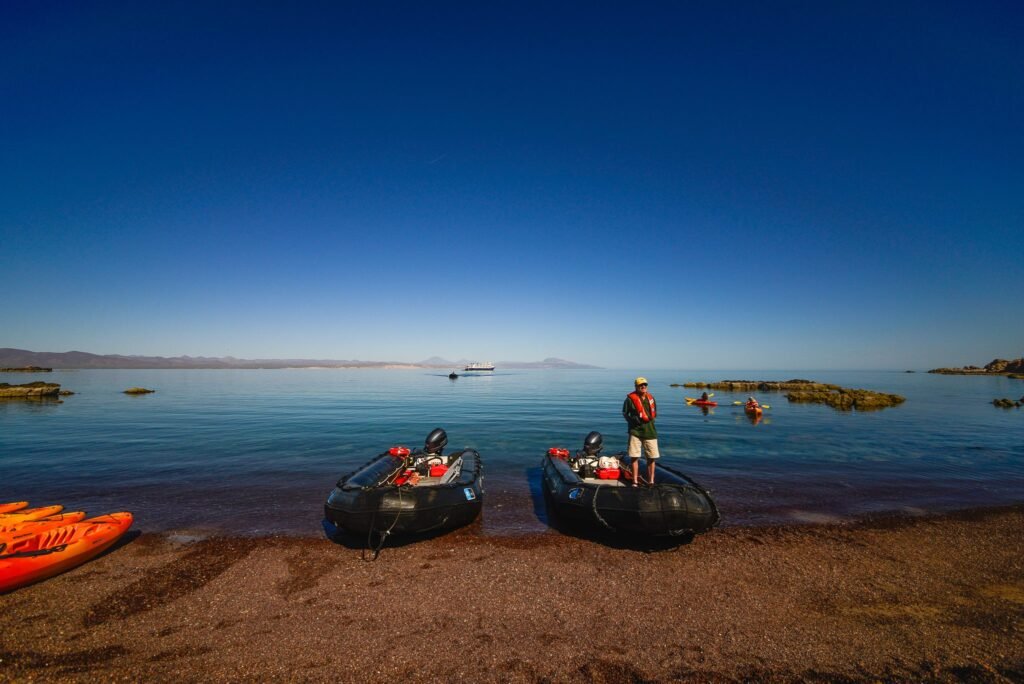
Today, luxury Sea of Cortez cruising has matured into a genuinely compelling category: intimate expedition ships with beautifully appointed cabins, expert naturalist programmes, and an onboard culinary culture that celebrates the extraordinary seafood and desert cuisine of Baja California.
These are the cruise lines that navigate the Aquarium of the World with the greatest distinction.
1. National Geographic-Lindblad Expeditions — National Geographic Sea Bird and National Geographic Venture
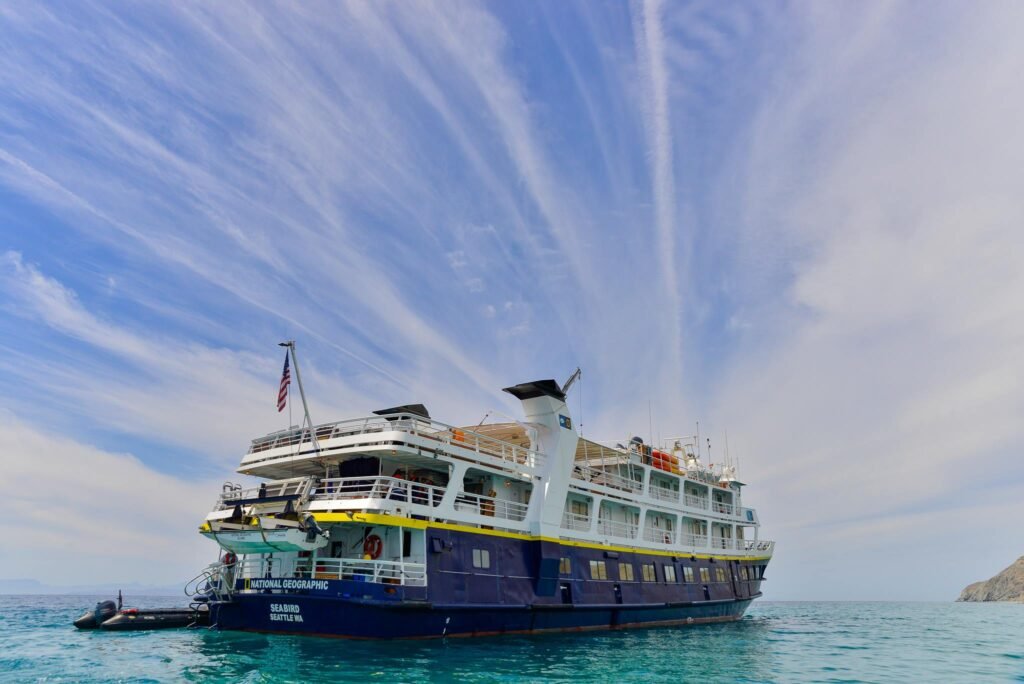
National Geographic-Lindblad Expeditions‘ Sea of Cortez expeditions explore the Gulf of California’s biodiverse waters aboard small ships, with whale encounters, sea lion snorkeling, Zodiac excursions, and expert naturalist guides.
The Ships
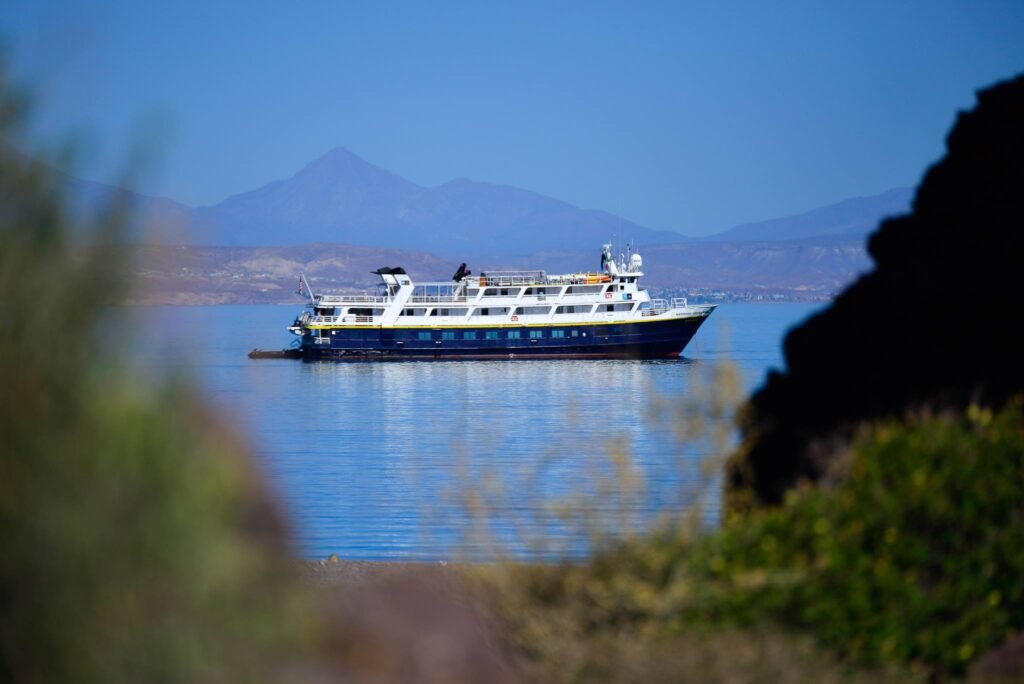
Lindblad Expeditions has operated in the Sea of Cortez longer than any other luxury cruise line — its National Geographic Sea Bird (above) and National Geographic Venture have been navigating these waters for decades, and the accumulated expertise of the Lindblad naturalist team in the Gulf of California is unmatched in the expedition cruising world. The Sea Bird, the most active vessel, carries just 62 passengers, making it among the most intimate ships in operation anywhere and allowing access to anchorages and wildlife sites that larger ships cannot reach (read about my adventures aboard the Sea Bird in the Sea of Cortez)
Accommodation
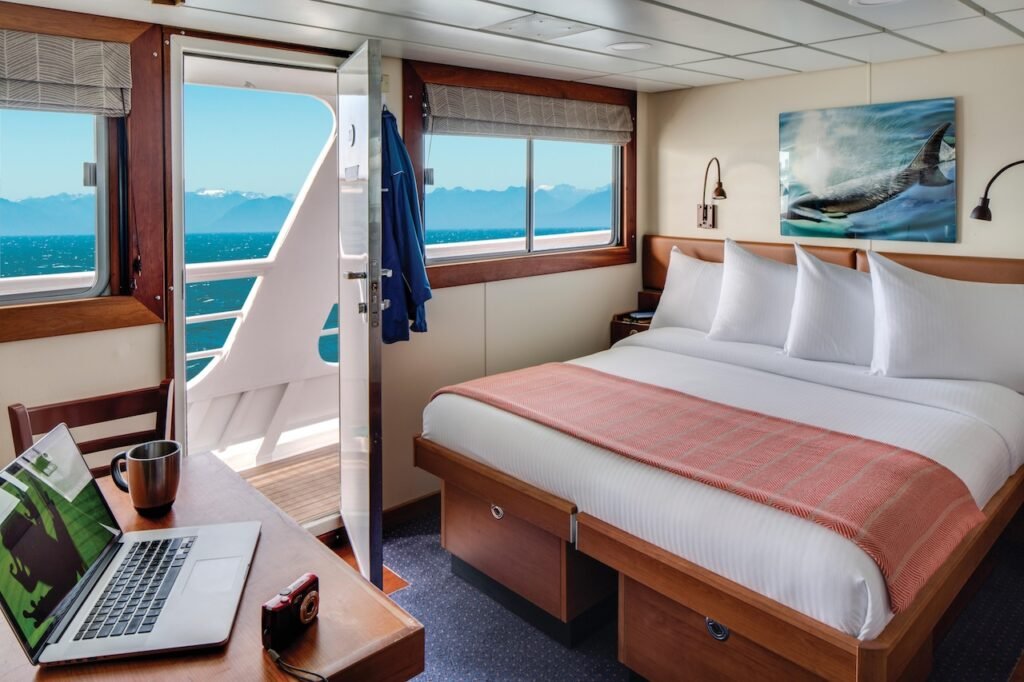
Sea Bird‘s 31 cabins per vessel range from Category 1 cabins (12 square metres) to Category 6 Suites (25 square metres), all outward-facing with large windows or portholes. The ships’ compact scale and expedition focus mean that cabins, while not hotel-suite in proportion, are thoughtfully designed — premium mattresses, high-quality bedding, and well-planned storage make them considerably more comfortable than the size suggests. The suites feature separate sitting areas and priority access to the ship’s Zodiac and kayak programme.
Dining
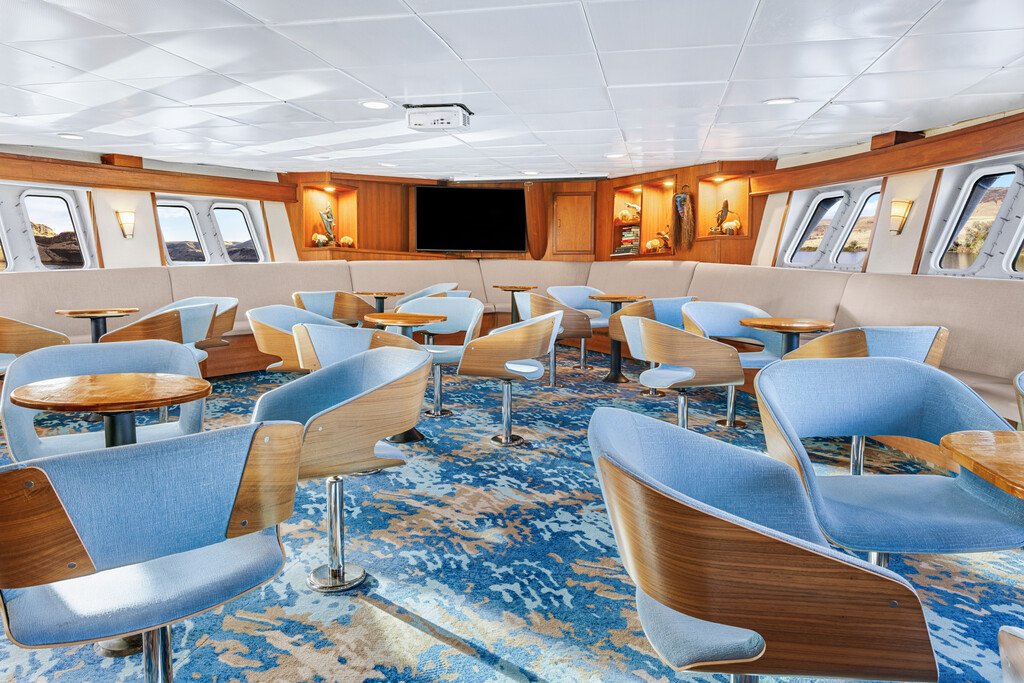
The culinary programme aboard both vessels celebrates the extraordinary seafood and agricultural richness of Baja California — a food region whose reputation has grown dramatically in the past decade, anchored by the celebrated chef community of Valle de Guadalupe and the extraordinary taco culture of Ensenada and La Paz. Fresh-caught yellowfin tuna, Pacific yellowtail, and Gulf shrimp feature heavily on menus that change daily to reflect what the ship’s fishing connections have sourced locally. The informal dining room serves communal meals that encourage the kind of conversation between guests and naturalists that defines the Lindblad experience.
Activities
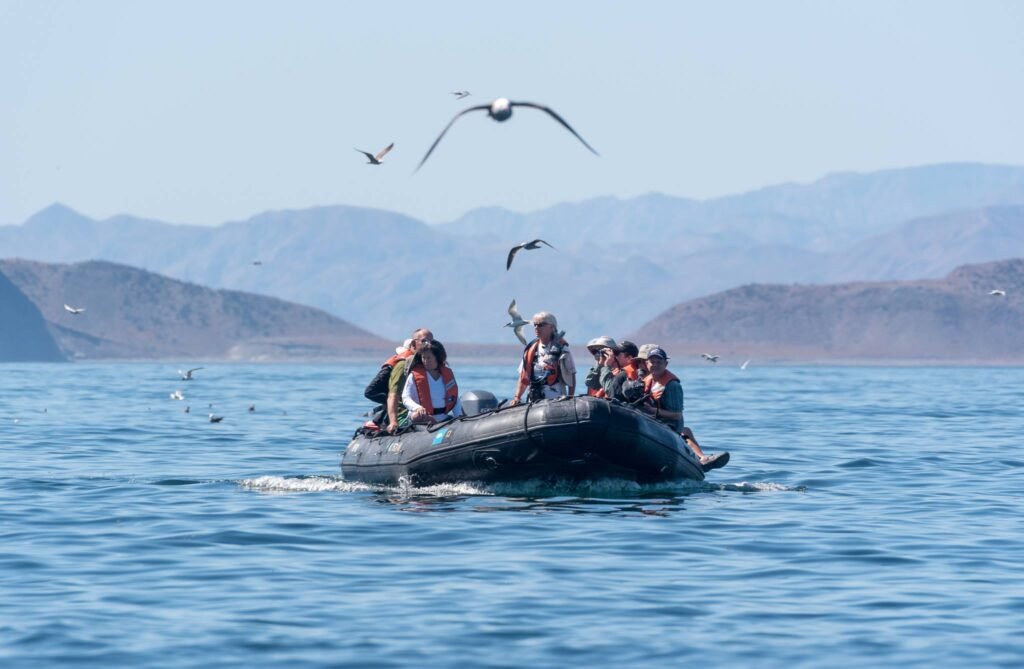
Lindblad’s wellness philosophy on the Sea of Cortez is built around immersive engagement with one of the world’s great marine environments: the physical exhilaration of snorkelling with whale sharks, kayaking through sea lion colonies, and hiking across Baja’s surreal desert landscape is itself a profoundly restorative experience. National Geographic Certified Photo Instructors help guests capture these moments, adding an additional layer of creative engagement to the voyage. A small fitness area and basic massage service are available aboard both vessels.
Itineraries
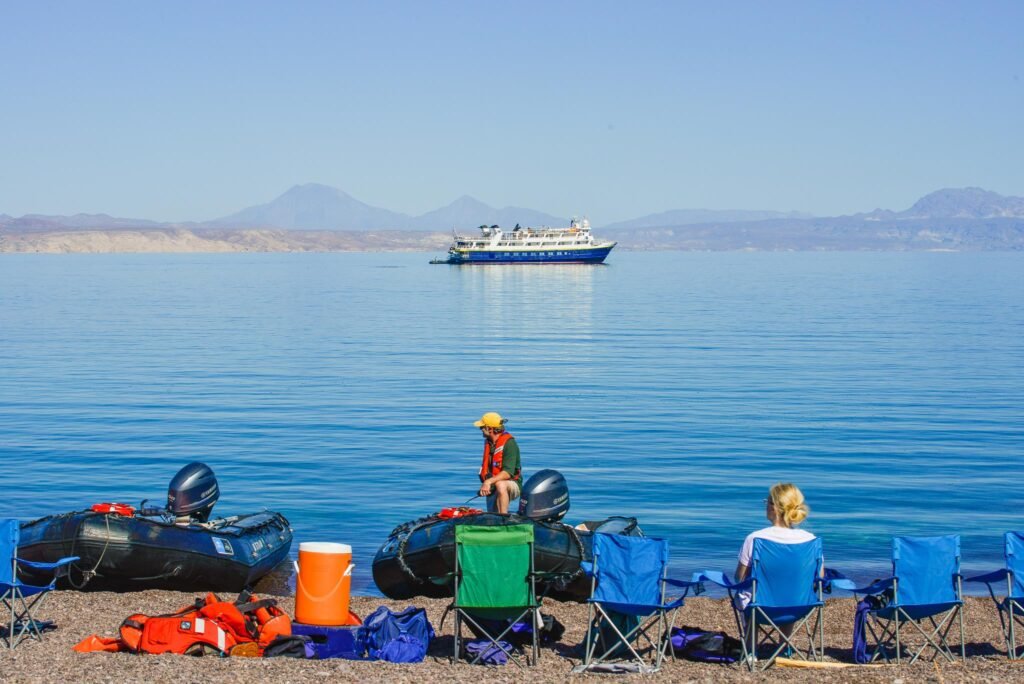
Lindblad’s Sea of Cortez programme runs from January through April — the season that coincides with the greatest concentration of whale and dolphin activity in the Gulf. Eight-night itineraries sail between La Paz and Loreto (or reverse), with Zodiac excursions into remote bays and sea lion colonies (always my favourite encounters) at every anchorage. The signature experiences are extraordinary: swimming with whale sharks off Bahía de los Ángeles, watching blue whales surface in the deep channels of the midriff islands, hiking to cave paintings left by the ancient Cochimí people in the Baja Sierra, and landing on Isla Espíritu Santo’s perfect beaches without another soul in sight.
2. UnCruise Adventures — Safari Voyager & Safari Quest
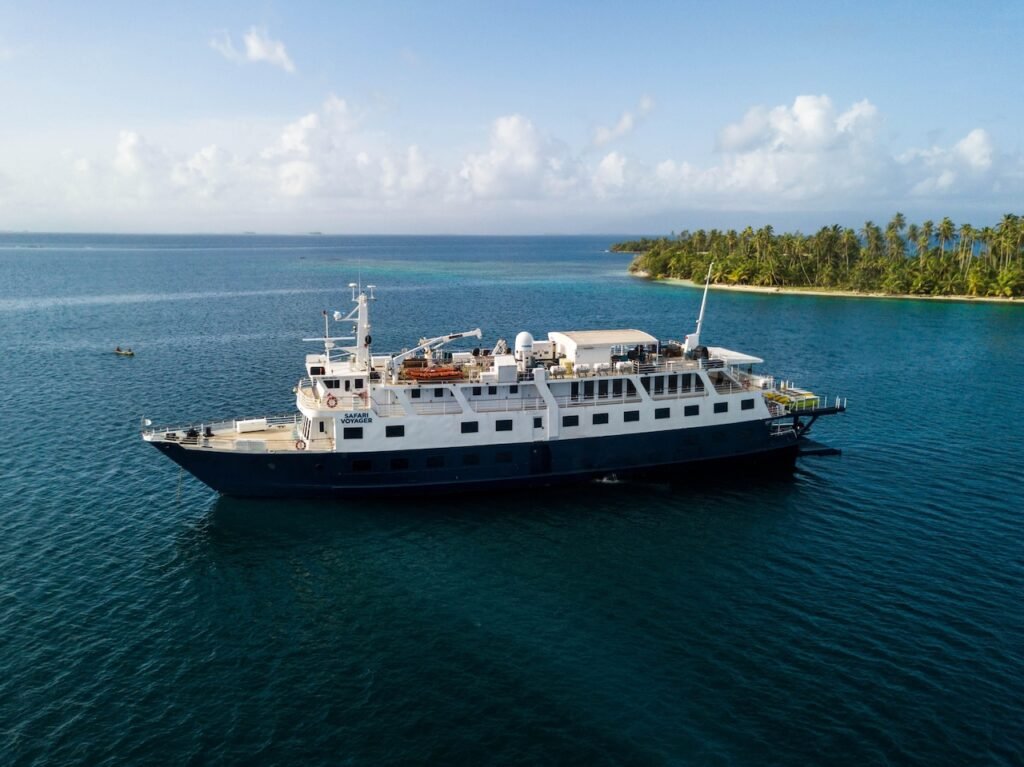
UnCruise Adventures offers intimate small-ship expeditions in Baja’s Sea of Cortez, with kayaking, snorkeling with sea lions, whale watching, and flexible itineraries guided by nature and wildlife.
The Ships
UnCruise Adventures is the Sea of Cortez’s most dedicated luxury expedition operator, running its small-ship fleet through the Gulf from December through April with a programme that combines marine wildlife immersion with a genuine celebration of Baja California’s desert culture. The Safari Voyager (36 passengers) and Safari Quest (22 passengers) are the primary Cortez vessels — both purpose-built for expedition cruising in sheltered waters, with Zodiac platforms, kayak launches, and snorkelling decks integral to the ship’s operational design.
Accommodation
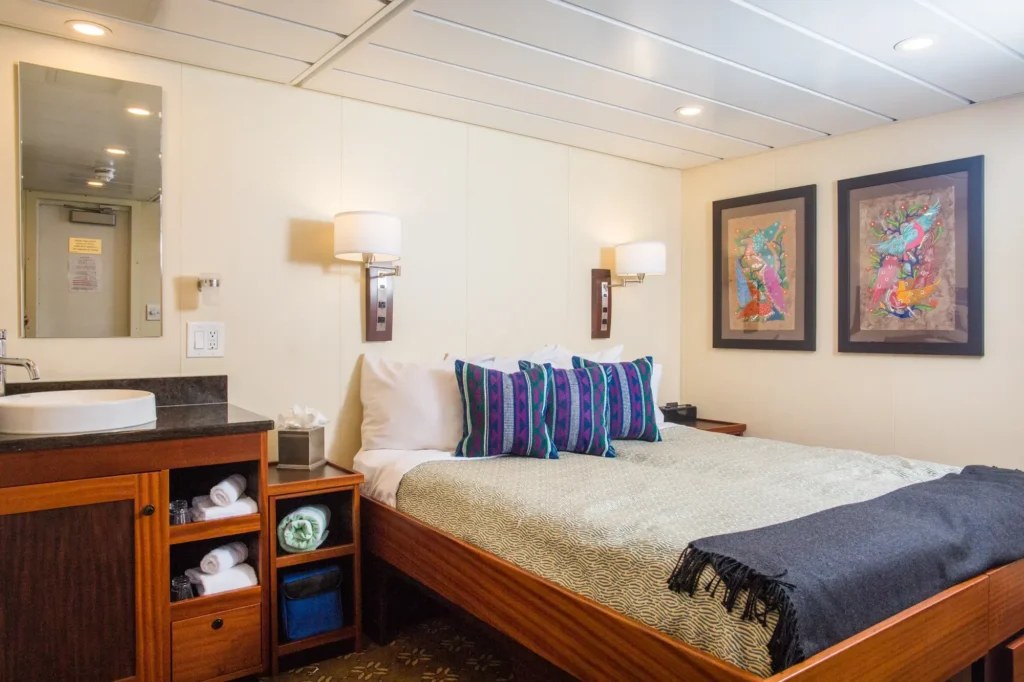
Cabins on the Safari Voyager range from 12 to 22 square metres, with the Owner’s Suite occupying the upper deck with a private sitting area and panoramic ocean views. The Safari Quest’s more intimate scale — just 11 cabins — produces an experience closer to a private yacht charter than a conventional cruise, with itineraries that can be adjusted day by day to follow wildlife sightings and weather patterns. Both vessels feature high-quality bedding, locally sourced bathroom amenities, and a design aesthetic that references the desert landscapes visible from every porthole.
Dining
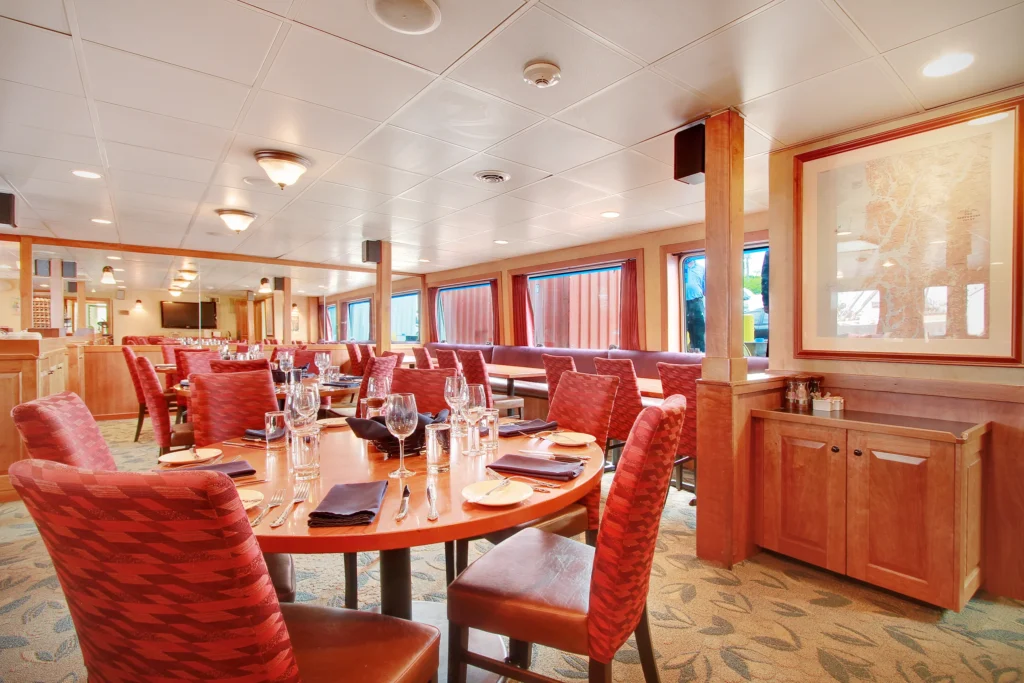
UnCruise’s culinary programme is one of the most regionally specific in the Sea of Cortez expedition market. The ship’s chef sources ingredients at every port stop — fresh tortillas from a La Paz tortillería, locally caught fish from artisanal fishermen in remote Gulf villages, Baja California olive oil and wine from the Valle de Guadalupe, and the extraordinary variety of Baja street food preparations that have made the peninsula one of Mexico’s most exciting culinary destinations. Evening tastings of Baja craft beer, artisanal mezcal, and Valle de Guadalupe wines are a convivial daily ritual.
Activities
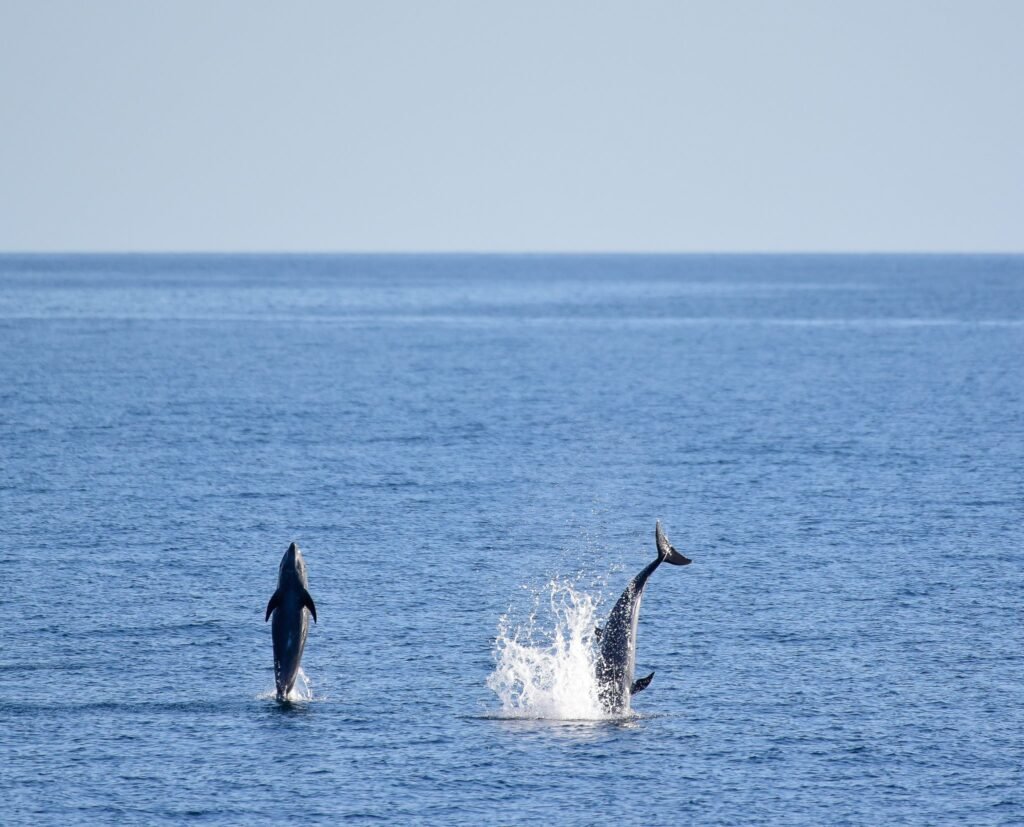
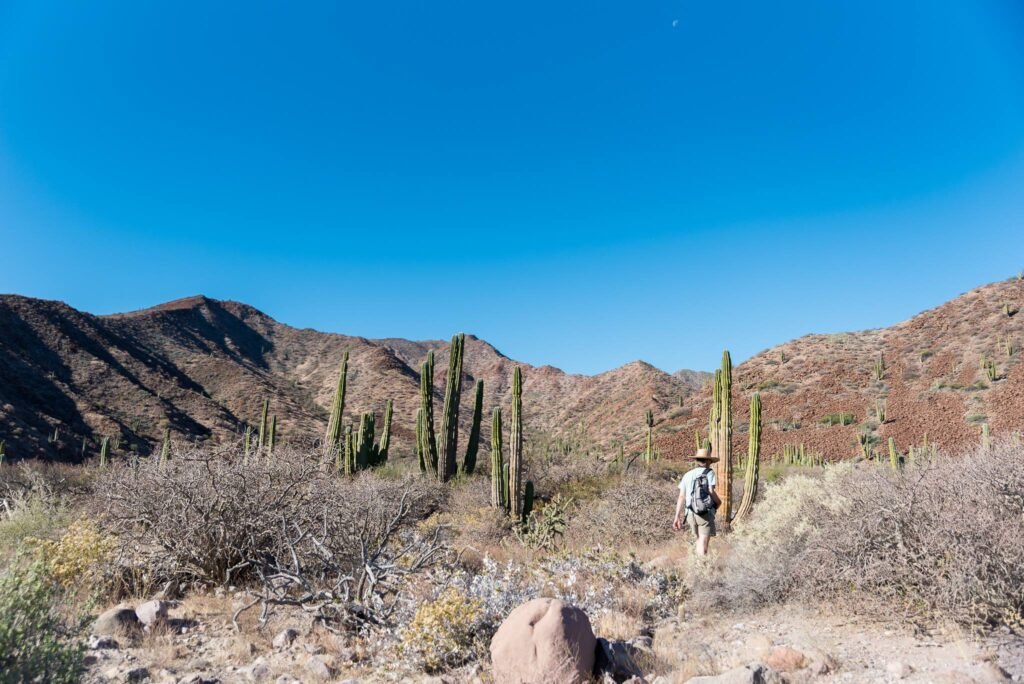
UnCruise’s active expedition philosophy means that every day includes meaningful physical engagement with the environment: kayaking through mangrove channels, snorkelling over coral reefs, hiking the Baja desert, and swimming with sea lions are the daily activities that constitute the programme’s wellness backbone. A small spa service offers massage treatments aboard the Voyager, and the physical demands of an active expedition day are followed by evenings of exceptional rest in the profound silence of remote Gulf anchorages.
Itineraries
UnCruise’s Baja programme runs seven- and eight-night itineraries between La Paz, Loreto, and the midriff islands. The line’s particular distinction is its access to the most remote and protected areas of the Gulf — the Reserva de la Biosfera El Vizcaíno, the San Ignacio Lagoon grey whale nursery (where female grey whales bring their calves to the surface alongside approaching skiffs), and the uninhabited volcanic islands of the Midriff group that most operators never reach. The San Ignacio Lagoon experience — in which grey whale mothers actively push their calves toward the boats, seemingly seeking human contact — is one of the most extraordinary wildlife encounters on earth.
3. Aqua-Firma — Private Sea of Cortez Expeditions, Baja California
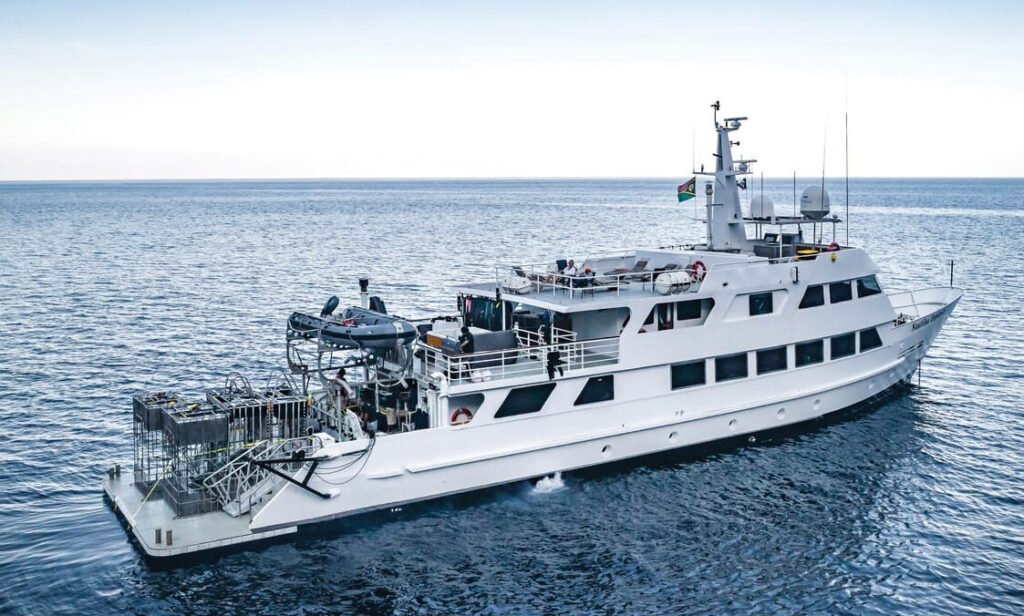
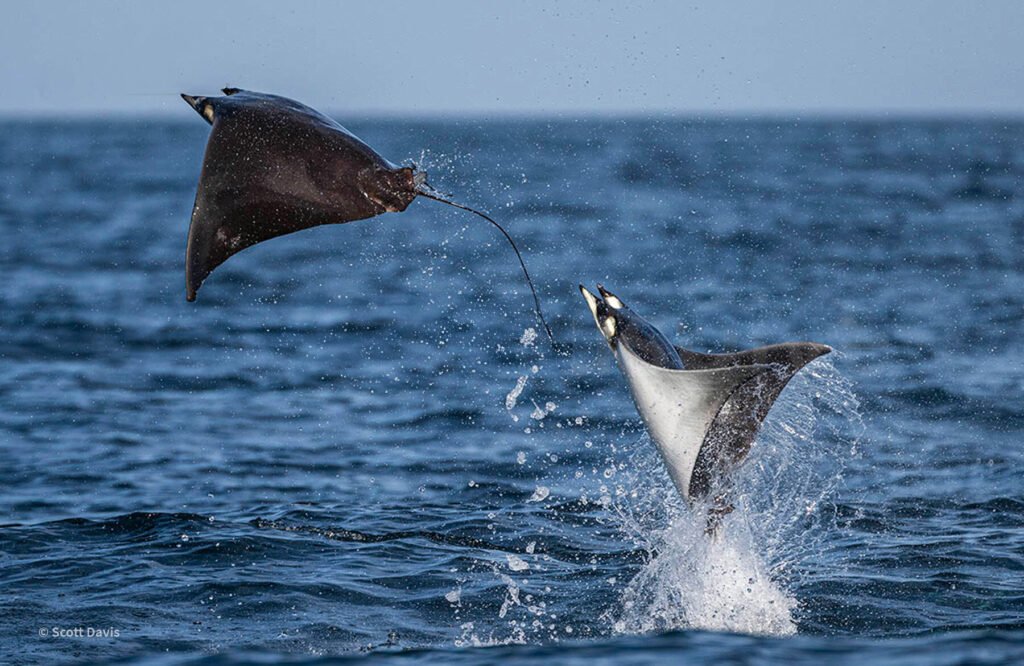
Aqua-Firma offers expert-led, yacht-based Sea of Cortez expeditions focused on marine wildlife — snorkeling with massive Mobula Ray aggregations, orcas, whale sharks, and blue whales, guided by marine scientists.
The Ships
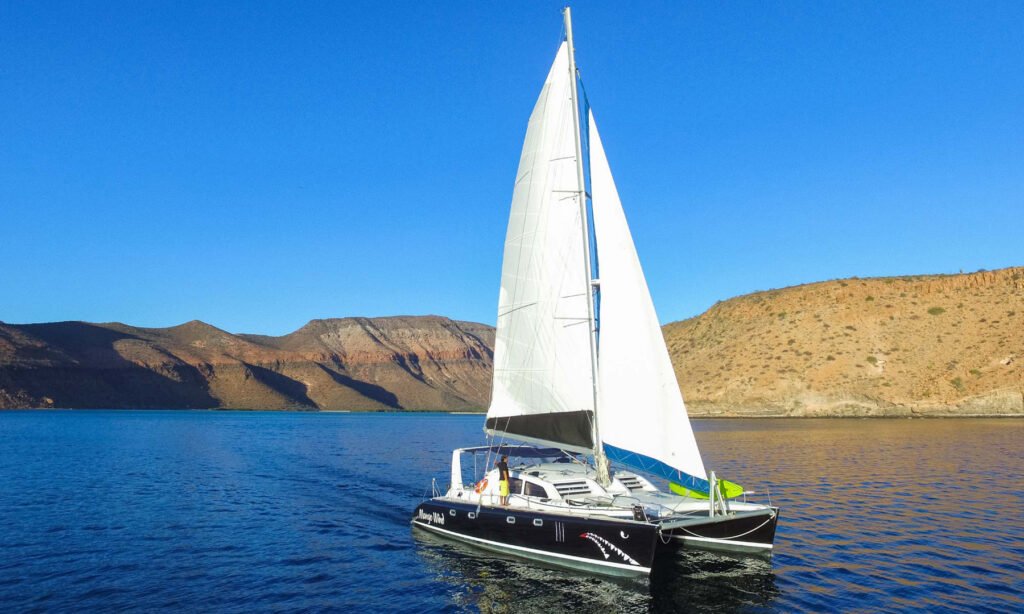
For something a little different, Aqua-Firma operates curated private expedition charters in the Sea of Cortez aboard a selection of boutique vessels — typically carrying between eight and 24 passengers — that include the sturdy 25-person dive live aboard Nautilus Explorer (above) and the chic Mango Wind catamaran. These vessels combine genuine expedition access with a higher degree of personalisation than any other operator in the Gulf. The charter model allows itineraries to be designed around specific wildlife targets, guest interests, and weather patterns in real time, producing a Sea of Cortez experience of extraordinary flexibility and depth.
Accommodation
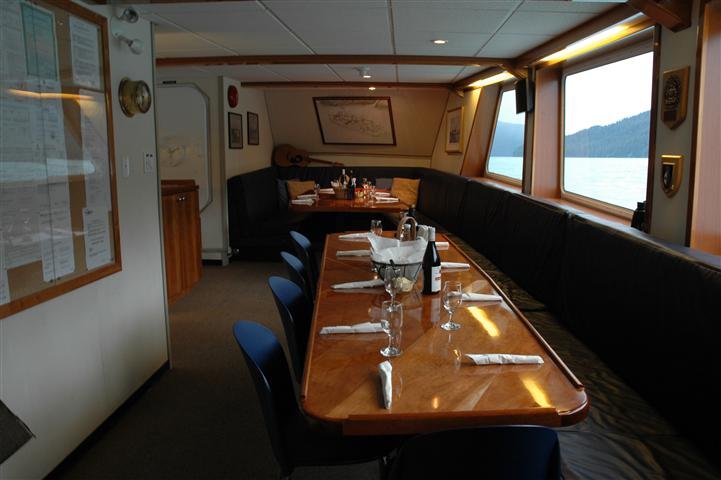
Charter vessels vary in specification, but Aqua-Firma consistently selects ships with the most generous cabin proportions available in the compact Sea of Cortez expedition market. The Nautilus Explorer, for example, features 13 spacious cabins, some twin or triple-share. Most feature queen beds, en-suite bathrooms with locally sourced botanical amenities, and large portholes or windows directly above the waterline. Mango Wind offers a much more intimate yacht experience, with just three cabins. The social spaces aboard the Nautilus Explorer — sun decks, covered dining areas, and Zodiac launch platforms — are invariably well designed for the dual demands of wildlife observation and relaxed communal living.
Dining
Private charter dining aboard Aqua-Firma’s Cortez vessels is among the most personalised culinary experiences in expedition travel. The chef liaises directly with each charter group before departure to understand dietary preferences and culinary interests, and builds menus entirely around what is freshest and most locally specific at each anchorage — freshly caught dorado (mahi-mahi) prepared ceviche-style in lime and Baja chilli, octopus tacos grilled on the stern deck, and the extraordinary Baja lobster from the Pacific side of the peninsula during season.
Activities
The intimate scale of Aqua-Firma’s charter programme — never more than 24 passengers, often considerably fewer — produces a quality of relaxation and personal attention that larger expedition operators cannot replicate. Private yoga and Pilates sessions can be arranged on the sun deck, guided meditation above remote anchorages, and massage treatments in the ship’s treatment room. The profound disconnection of a remote Sea of Cortez expedition — no telephone signal, no road noise, no other ships — is itself a wellness experience of rare power.
Itineraries
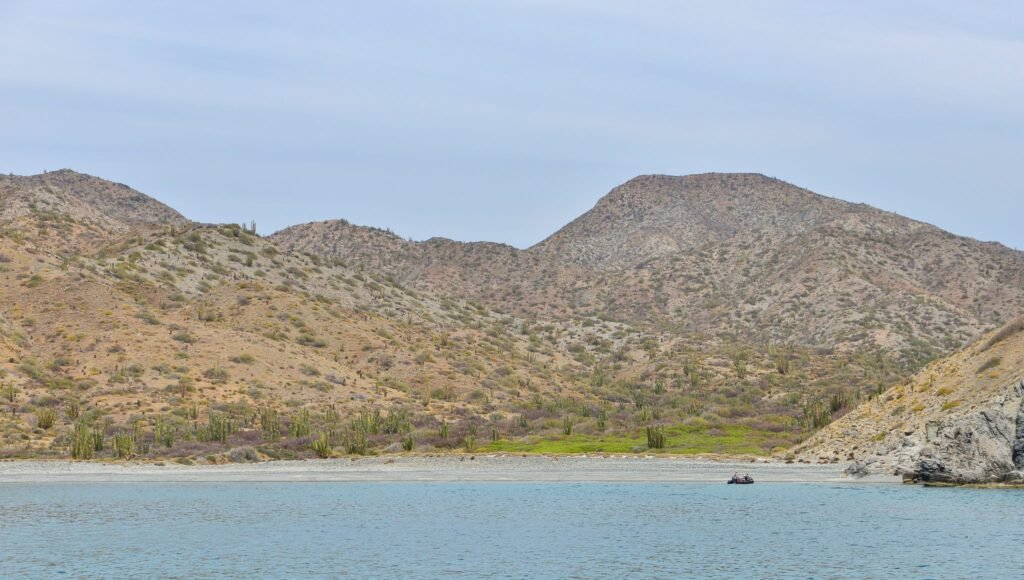
Aqua-Firma designs bespoke eight- to fourteen-night itineraries calibrated to the season’s wildlife calendar: January and February for blue whale encounters in the deep Loreto channels; February and March for grey whale nursery visits at San Ignacio Lagoon; March and April for whale shark aggregations in La Paz Bay and the extraordinary mobula ray tornado gatherings in the midriff islands. Hiking excursions into Baja’s Sierra de la Giganta — one of Mexico’s most dramatic desert mountain ranges, virtually unknown to outside visitors — and visits to remote cave painting sites with a Baja archaeologist are among the most distinctive cultural inclusions available in the Gulf.
4. Ponant — Le Bellot
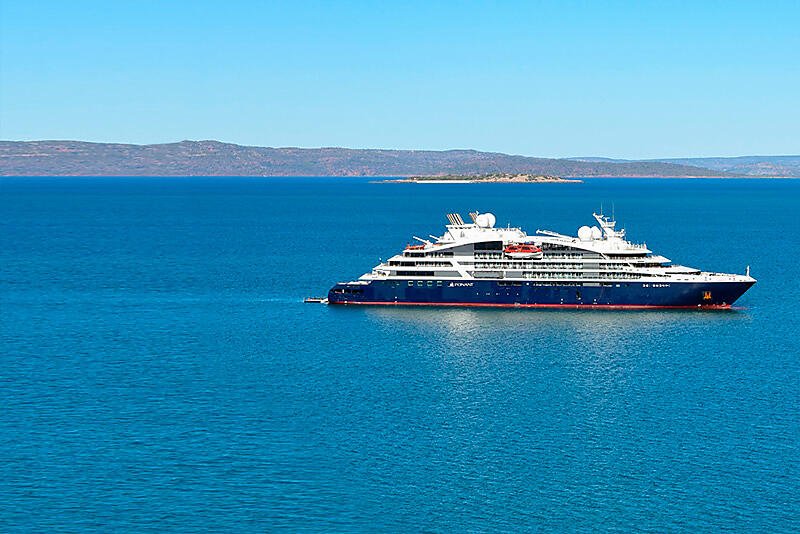
Ponant offers luxury small-ship Sea of Cortez voyages aboard intimate vessels like Le Bellot, combining French elegance, Zodiac excursions, wildlife encounters, and immersive Baja cultural experiences.
The Ships
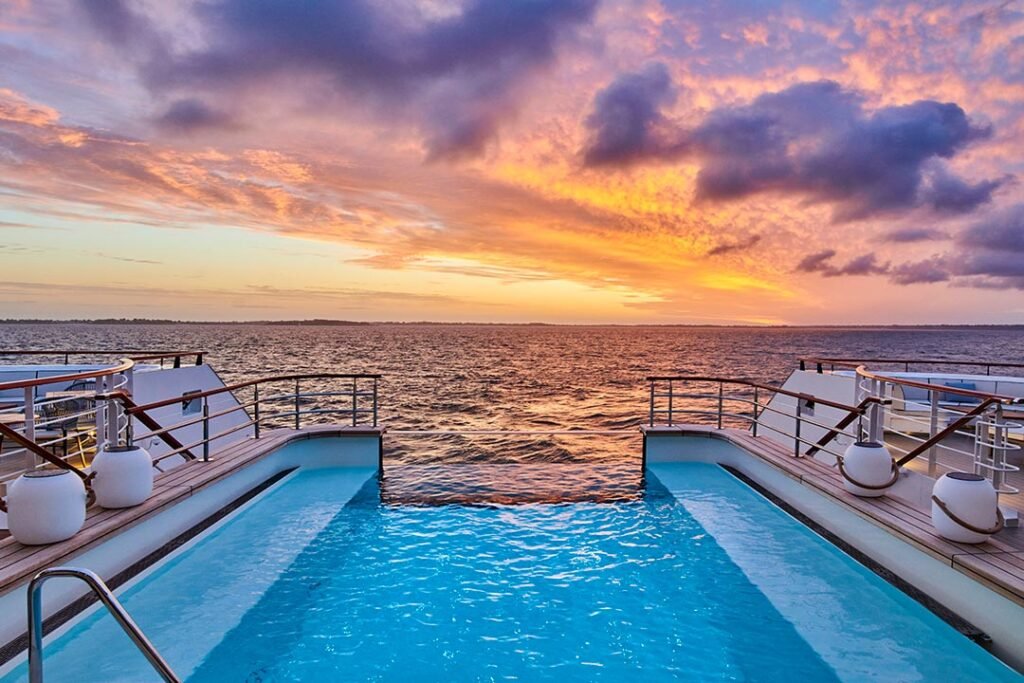
Launched in 2020 and named after French Arctic explorer Joseph René Bellot, Le Bellot is one of six ships in Ponant’s Explorer class. Ice-strengthened and built for genuine expedition, she carries just 184 guests with a crew of 110, keeping the atmosphere intimate and attentive. A FarSounder 1000 long-range 3D sonar navigates safely through icy waters, while a three-level marina platform deploys kayaks, snorkelling equipment, and ten Zodiacs for daily excursions. On board, the Blue Eye underwater lounge, spa, pool, and sun deck round out the facilities.
Accommodation
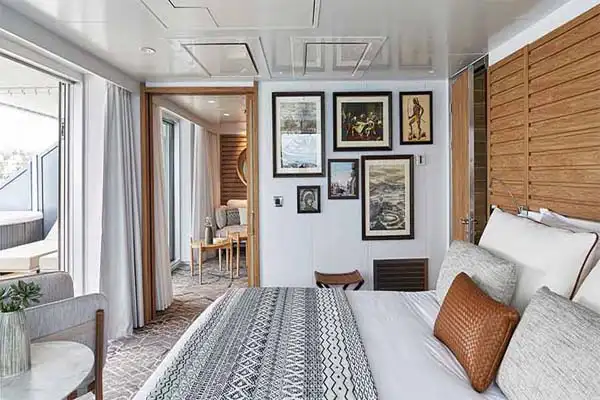
Le Bellot carries 184 passengers across 92 rooms and suites across nine accommodation categories, all with private balconies or terraces. Entry-level Balcony Staterooms offer 19-square-metres with a four-square-metre balcony — compact but elegantly appointed with king-size beds, en-suite bathrooms, smart TV, and Wi-Fi. Deluxe Suites step up to 26-square-metres withsix-square-metre balconies, while Prestige Suites reach 38-square-metres across two rooms with two bathrooms and two dressing rooms.
Grand Deluxe Suites are the most expansive at 44-square-metres, with sweeping 30-square-metre terraces. The single Owner’s Suite matches that footprint and adds a private hot tub on the balcony. Suite guests receive butler service throughout. Two wheelchair-accessible cabins sit on Deck 4. Throughout every category, the aesthetic is understated French luxury — pale woods, clean lines, and floor-to-ceiling light.
Dining
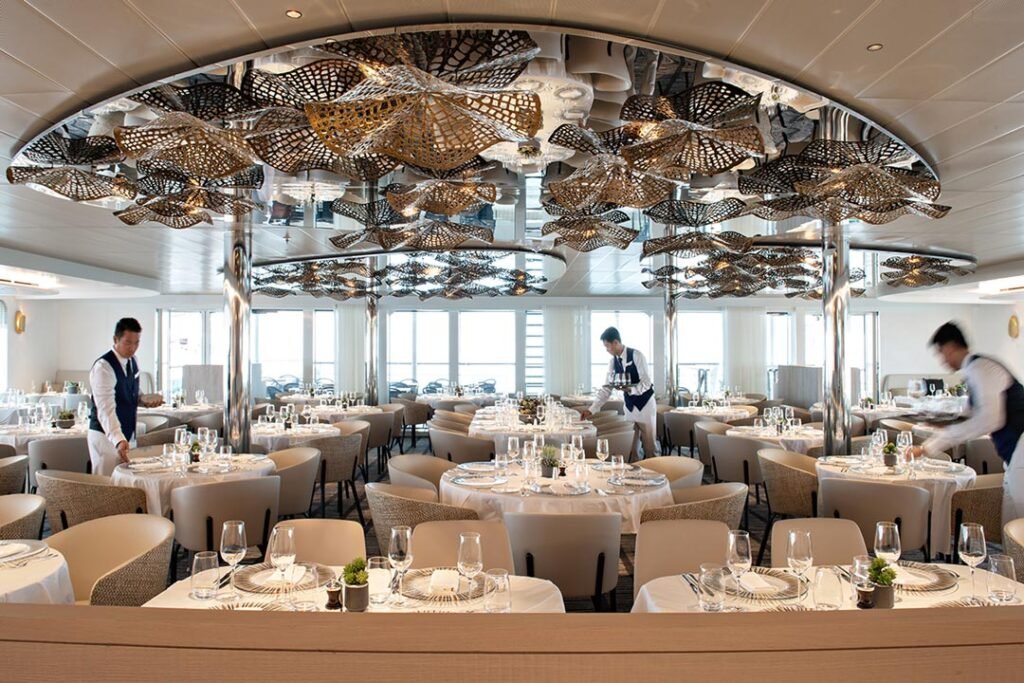
Dining aboard Le Bellot reflects Ponant’s distinctly French identity — unhurried, refined, and centred on quality rather than abundance. The principal venue is Le Nautilus, a panoramic gastronomic restaurant on Deck 4 where floor-to-ceiling windows frame the passing seascape and the menu blends classical French technique with international influences — think Lobster Thermidor alongside dishes shaped by the region being sailed. Wine is included at lunch and dinner, as are all alcoholic and non-alcoholic beverages throughout the cruise.
For something more relaxed, Le Nemo on Deck 3 operates as a poolside grill with a generous buffet running from breakfast through to dinner. The main lounge transitions from daytime coffee bar to evening social hub, with canapés and cocktails as the sun goes down. Room service rounds out the offering for those who prefer breakfast on the balcony.
Activities
Wellness aboard Le Bellot is handled with the same understated confidence that defines the rest of the ship. The SOTHYS Spa anchors the offering — a dedicated space housing two treatment rooms, a hammam, relaxation room, and herbal tea bar, with a full menu of massages and body treatments developed in partnership with SOTHYS, alongside hair and beauty services by Kérastase and L’Oréal Paris. The sauna is complimentary for all guests.
The fitness centre on Deck 7 is well equipped for an expedition ship of this size, with treadmills, ellipticals, stationary bikes, and a Kinesis functional training wall. Hosted classes — yoga, fitness, and dance — run throughout voyages, and the outdoor pool features a counter-current swimming system for those who prefer laps to lounging. It’s a thoughtfully proportioned wellness programme: serious enough for the dedicated, low-key enough for those who simply want to decompress between excursions.
Itineraries
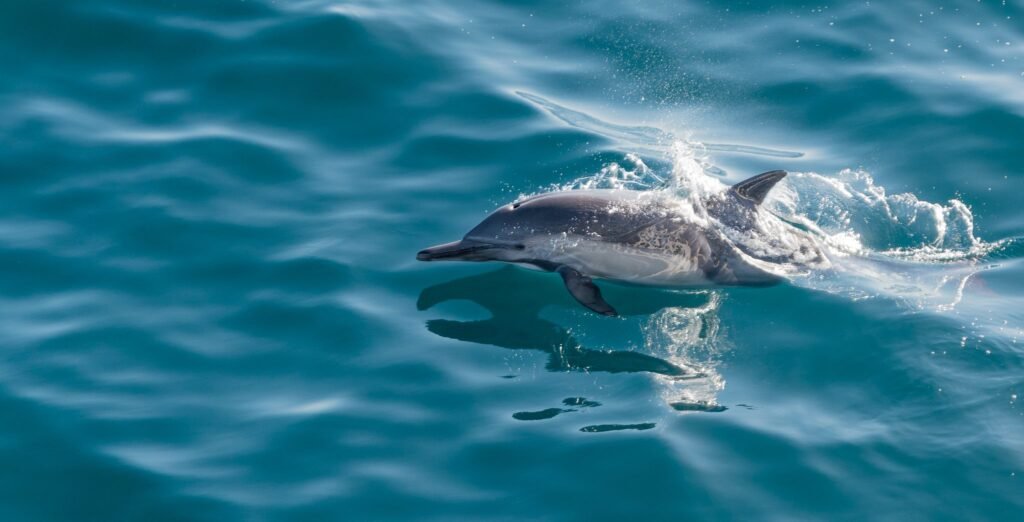
Ponant’s headline 2027 Sea of Cortez voyage is a ten-night sailing departing round-trip from Cabo San Lucas (10 February 2027), titled Baja and the Sea of Cortez: In Search of the Great Whales, operated in partnership with Smithsonian Journeys. The timing is deliberate — February and March are peak season for grey whales in Magdalena Bay, where females arrive to give birth and nurse their calves in the protected lagoons. The itinerary then moves into the southern Sea of Cortez, kept deliberately flexible to maximise wildlife encounters: blue and humpback whales, orca, vast pods of bottlenose dolphins, sea lions, pelicans, and the spectacle of mobula rays breaching en masse.
Expert lecturers aboard include marine biologist Heidi Dewar and conservation biologist Monica Franco. Shore landings access undeveloped coastlines via Zodiac, while port calls to towns such as Loreto offer cultural depth alongside the wildlife focus. All Smithsonian Journeys sailings include a curated excursion or activity at every port of call plus airport transfers.
Your Questions Answered: Expedition Cruising in the Sea of Cortez
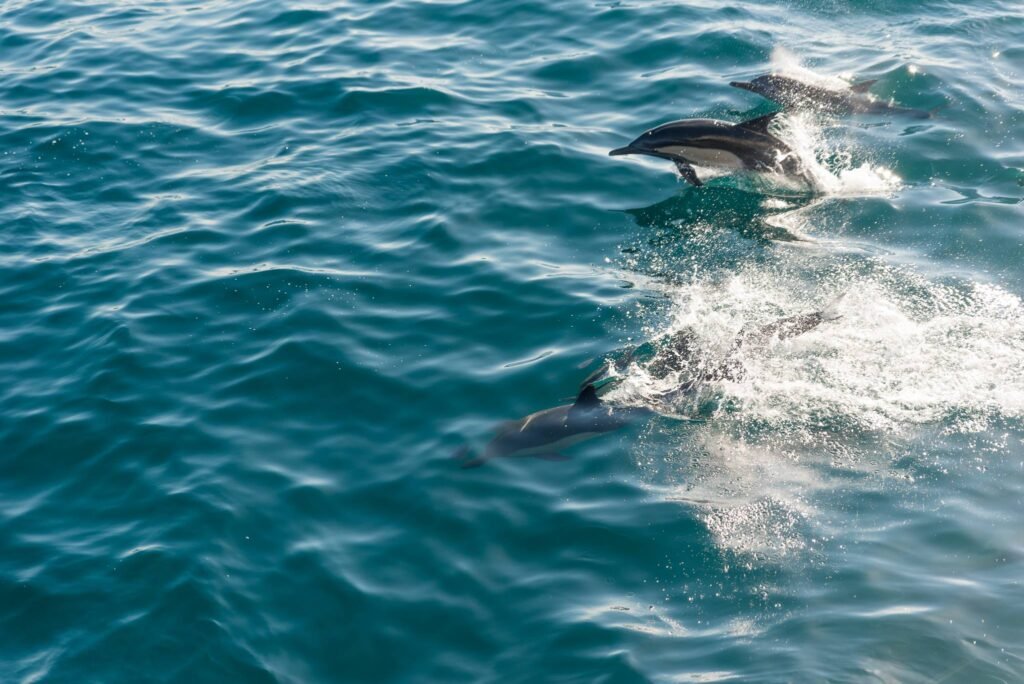
Jacques Cousteau called it “the world’s aquarium” for good reason. The Sea of Cortez is one of Earth’s most biodiverse marine environments — and a world-class expedition cruise destination.
What makes the Sea of Cortez different from other expedition cruise destinations?
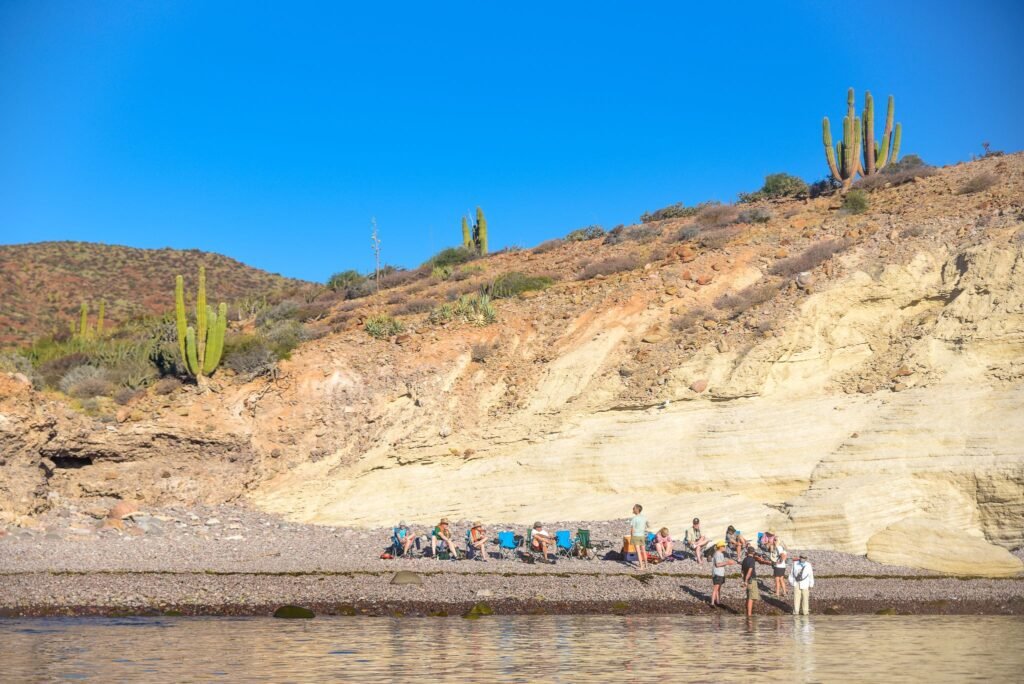
Jacques Cousteau called it “the world’s aquarium,” and the title still holds. The Sea of Cortez — officially the Gulf of California — is a UNESCO World Heritage Site that contains an extraordinary concentration of marine life, including around 39% of the world’s marine mammal species. Unlike the Caribbean, which trades in beach clubs and port towns, the Sea of Cortez is raw, wild, and largely untouched. Think volcanic islands, desert coastlines, and waters teeming with blue whales, whale sharks, mobula rays, sea lions, and dolphin superpods. It’s closer in spirit to the Galápagos than anything else in the Americas — and far less crowded.
When is the best time to go?
The classic expedition season runs from November through April, when wildlife activity peaks. December to March is prime for blue whale and gray whale sightings, with gray whales gathering in the warm lagoons of Baja California to calve and nurse their young. Whale sharks tend to concentrate in the Bay of La Paz from October onward. Spring departures (March–April) offer the best of multiple worlds — whale encounters, mobula ray aggregations, and warmer water for snorkeling. Summer is hot and humid and sees fewer operators running trips.
What wildlife can I expect to see?
The list is genuinely staggering. Blue whales — the largest animals on Earth — are regularly sighted from January through March. Gray whales, humpbacks, sperm whales, fin whales, and orcas all make appearances throughout the season. Whale sharks can reach 40 feet in length and are remarkably calm around snorkelers. Massive aggregations of Mobula rays — sometimes numbering in the tens of thousands — leap acrobatically from the surface between April and July. Sea lions at Los Islotes are notoriously curious and will swim circles around you. Add hammerhead sharks, manta rays, sea turtles, blue-footed boobies, and hundreds of fish species, and you begin to understand why this region draws naturalists from around the world.
How big are the ships, and does size matter?
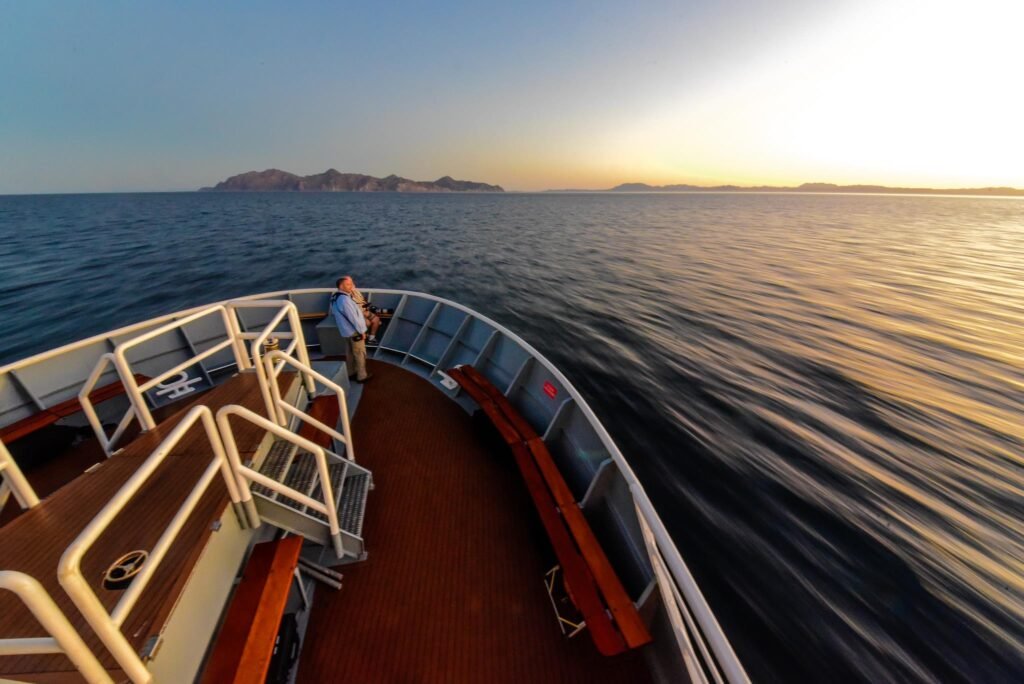
On an expedition cruise, smaller is better. The top operators in the Sea of Cortez run intimate vessels carrying anywhere from 20 to 184 guests. Smaller ships — like those used by UnCruise Adventures or Natural Habitat Adventures — can access remote anchorages that larger vessels cannot, and the ratio of guides to guests is far higher. Lindblad’s National Geographic vessels carry around 100 guests and strike a balance between comfort and access. Ponant’s Explorer-class ships, which carry up to 184 passengers, bring a higher level of luxury while still operating in expedition style with Zodiac landings and expert naturalists aboard.
Do I need prior expedition experience?
Not at all. The leading operators design their itineraries for curious, nature-minded travellers rather than hardcore adventurers. Activities like kayaking, snorkeling, and Zodiac excursions are typically included, with multiple options offered at each landing site to suit different fitness levels. That said, a spirit of flexibility helps — itineraries are often adjusted in real time to follow wildlife, and conditions can occasionally be choppy.
How do I choose between cruise lines?
It comes down to what you value most. If scientific depth and photography are priorities, Nat Geo Lindblad leads the field. For intimacy and active adventure, UnCruise Adventures delivers. For French-inflected luxury without sacrificing expedition credentials, Ponant is the standout choice. For marine science-led encounters with specific species like orcas and mobula rays, Aqua-Firma is hard to beat.
Budget and travel style will narrow the field quickly — but any of the top operators will give you an experience that lingers long after you’ve disembarked. To learn more, take a look at our guide to the best luxury expedition cruise lines and what they offer.
If you’re contemplating an expedition cruise, check out our guides to the best expedition cruise lines, the most sustainable expedition cruises, the best options for Arctic, Antarctic and Falklands cruises, the best Galapagos, Amazon River and Kimberley cruise lines, the best expedition cruise destinations for 2027, and our adventures on the Mekong, in the Canadian Arctic, the Galapagos Islands, and Greenland.


