
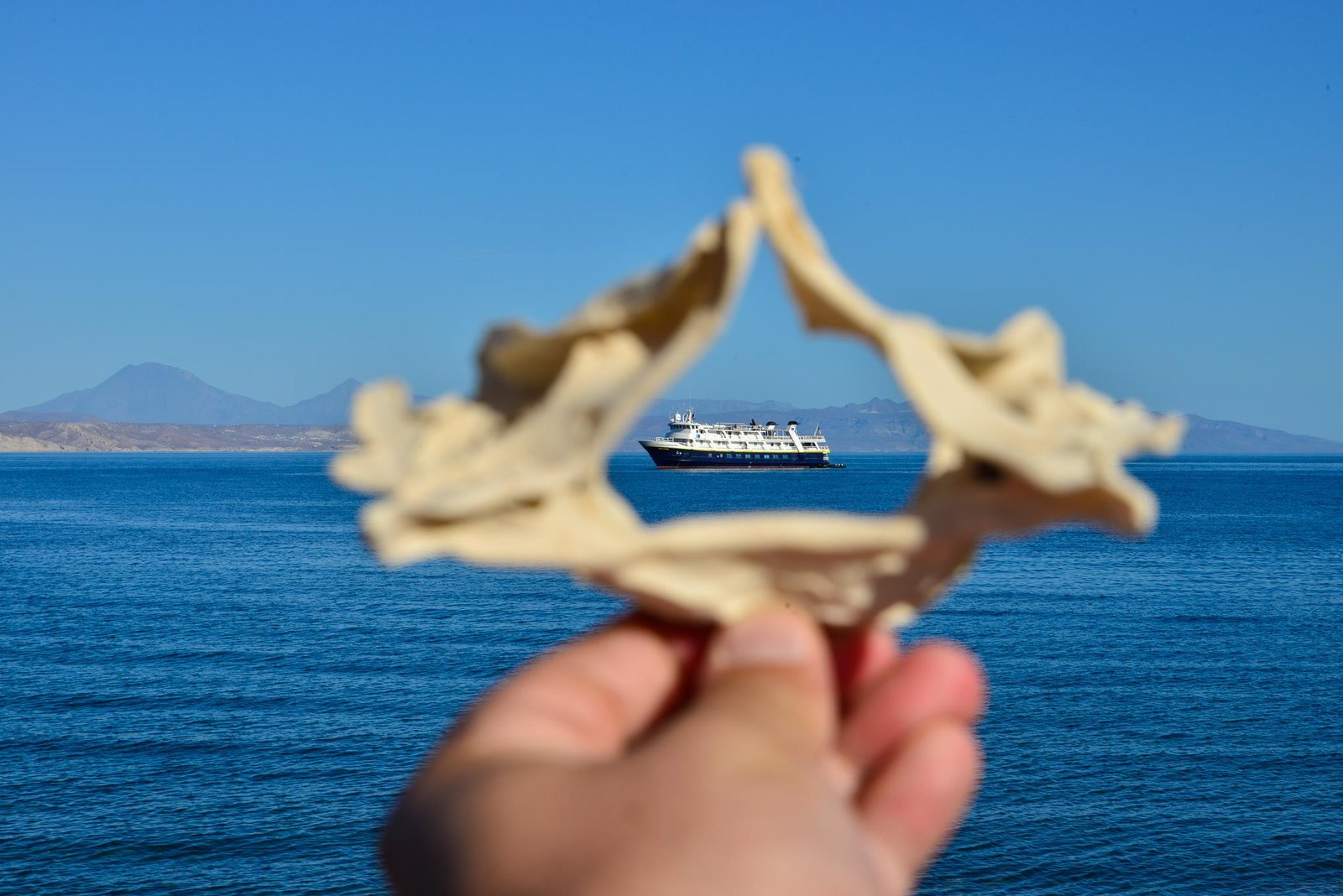

Jacques Cousteau called it “the aquarium of the world.” Nick Walton sets sail with Lindblad Expeditions-National Geographic on a voyage through Mexico’s Sea of Cortez — and discovers why this extraordinary stretch of water deserves to be on every expedition traveller’s list.
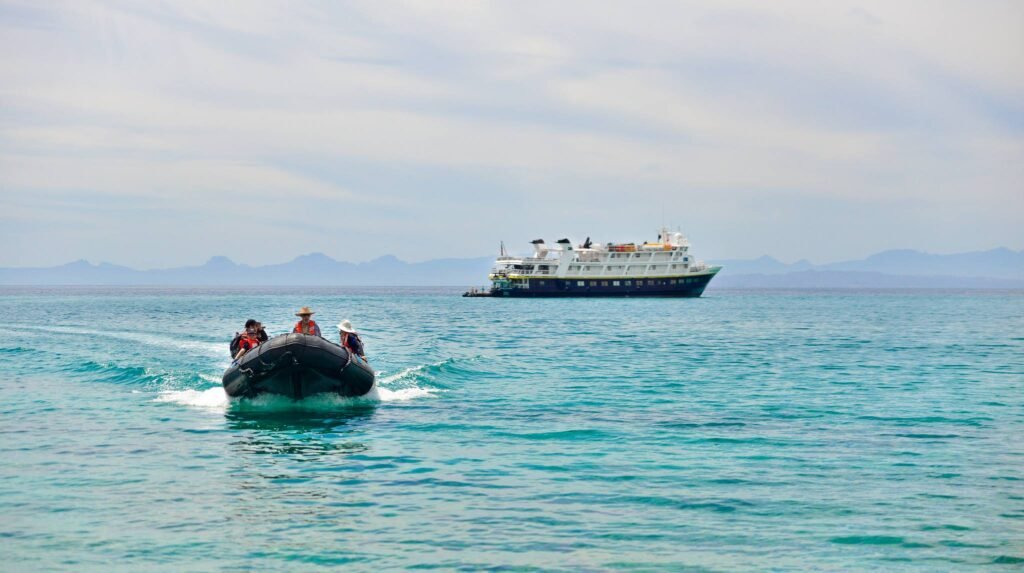
It’s often when you least expect it that the most extraordinary travel experiences occur. We’re skimming across mirror-like waters under a blazing midday sun, the air laced with salt and the warm rubber of the Zodiac, and most of my fellow guests are thinking more about lunch than wildlife.
Suddenly, a grey whale calf decides to put on an impromptu performance. It leaves its mother’s side for a moment and launches itself out of the water like an SUV-sized rocket, golden sunshine shimmering off its flanks before it collapses back into the sea.
We half-expect to hear a child-like giggle over the drone of camera mechanisms and the chug of the outboard as the water stills once again. It is the latest in a series of magnificent, up-close encounters with the residents of Mexico’s most extraordinary hidden gem.
Why the Sea of Cortez Deserves its Place Among the World’s Great Wild Places
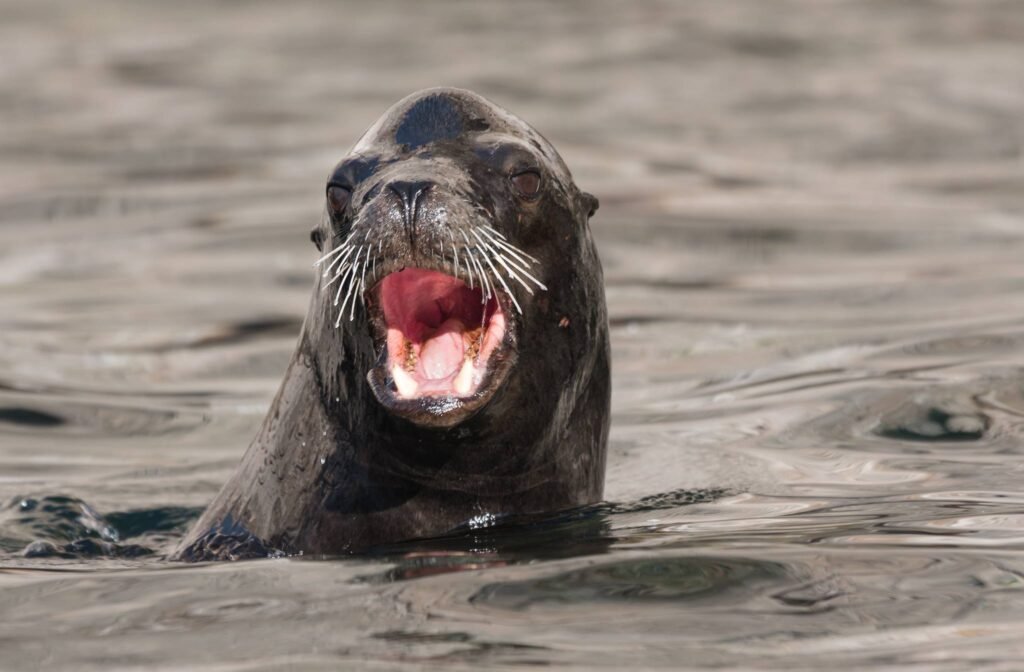
The Sea of Cortez — the narrow finger of water that separates the Mexican mainland from the Baja California Peninsula — is the kind of place where one should expect the unexpected. Fed by great rivers including the Colorado, the Sinaloa, the Sonora and the Yaqui, it is one of the most biologically diverse bodies of water on the planet: home to more than 900 species of fish, fevers of graceful manta and devil rays, colonies of grinning sea lions, and more than 30 species of whale and dolphin — the greatest cetacean diversity in the world.
Its dizzying array of marine life and fragile, interconnected ecosystems have enchanted navigators, explorers and naturalists for centuries.
Despite its proximity to major cities such as Los Angeles, most visitors to Baja California rarely venture beyond the resorts of Cabo San Lucas in the far south, or make day trips north in search of grey whales. But to truly experience what Cousteau dubbed “the aquarium of the world”, you need to leave the Peninsula in your wake entirely.
That is exactly what I’ve done, setting sail aboard the National Geographic Sea Bird, a converted expedition vessel operated through the celebrated partnership between Lindblad Expeditions — one of the world’s oldest and most respected expedition companies, which has been navigating these waters since 1977 — and the famed natural sciences institution.
Aboard the National Geographic Sea Bird
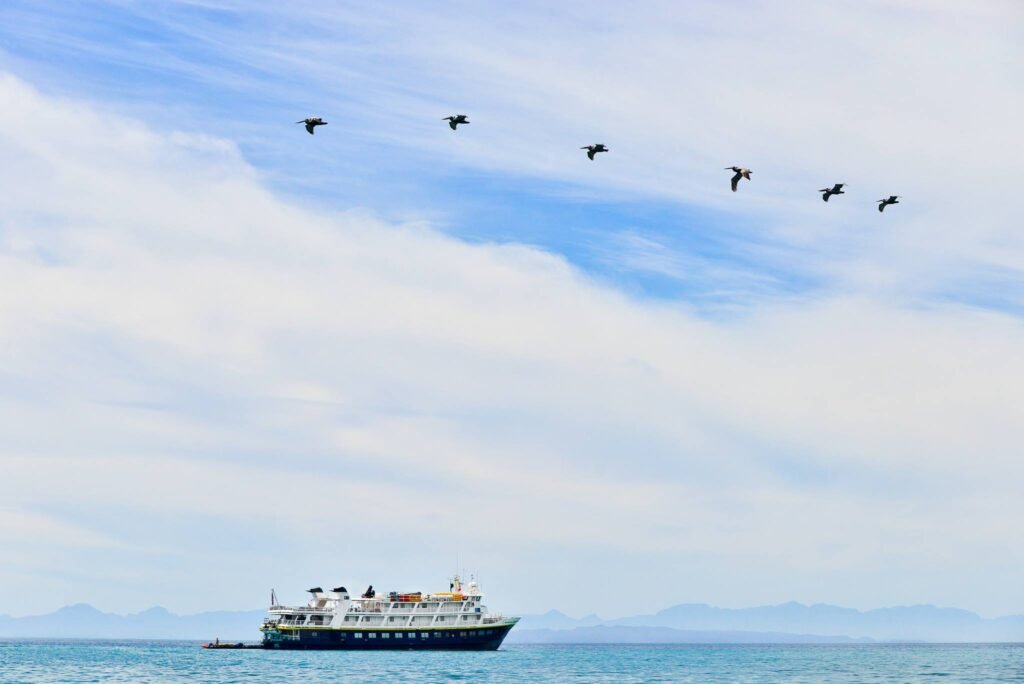
With a shallow draft, a flotilla of kayaks, a complement of specialist guides and naturalists, and room for just 62 guests in 31 outside cabins, the Sea Bird is the ideal vessel for exploring this remarkable destination. It is an intimacy that larger ships simply cannot replicate — the difference between observing wildlife from a distance and genuinely being among it.
As the sun hangs low in the sky, we depart from the town of La Paz, the sound of merengue drifting across the water from the bars lining the beach. I join my fellow guests at the ship’s bow to watch the sun slip behind the mountain range, the darkness that follows quickly replaced by a sky blazing with stars. The Sea of Cortez has begun to work its magic.
Whales, Dolphins and Blue Giants: Wildlife Encounters at Sea
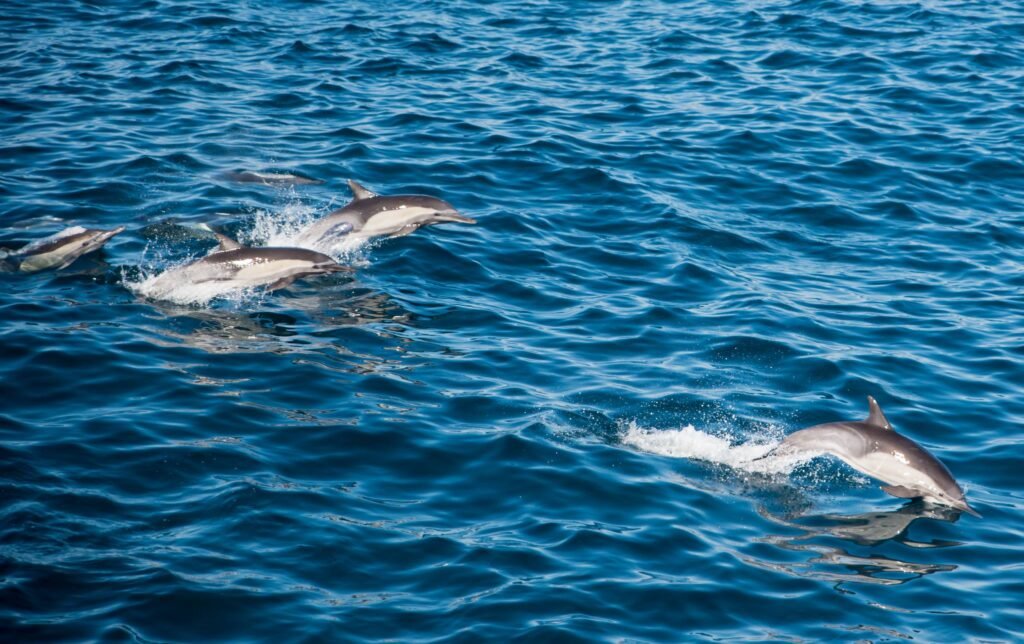
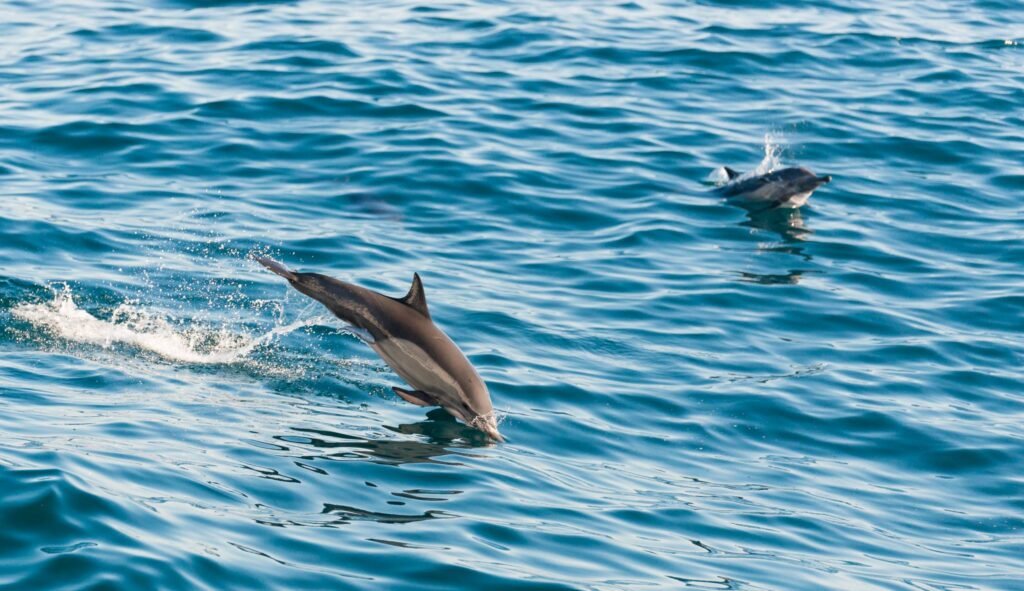
The action begins at dawn the following morning, when expedition leader Larry Prussin rouses us from sleep in time to watch a 700-strong pod of common dolphins surround the ship. They ride the bow wave, leaping and surfing the wake with an ease and joy that makes the cameras feel almost inadequate.
As the pod moves away, a pair of blue whales surfaces nearby — animals so immense that the tiny dorsal fins that first give them away bear no relationship to the scale of what lies beneath. Blue whales can reach 30 metres in length and weigh as much as a commercial jetliner; they leave their feeding grounds in the eastern Pacific each year to explore these nutrient-rich waters for a few extraordinary weeks. We trail slowly after them, the spray from their spouts hanging in the morning sunshine like gold dust.
Over the following days, the encounters accumulate in ways that defy expectation. Grey whale calves performing aerial acrobatics, their mothers watching placidly from nearby. A pair of long-finned pilot whales surfacing briefly before diving into the deep. Humpback whales meandering past the ship. And always, in the distance or right alongside us, the dolphins: playful, inquisitive, impossible not to anthropomorphise.
Exploring Baja’s Desert Islands: Cacti, Sea Birds and Ancient History
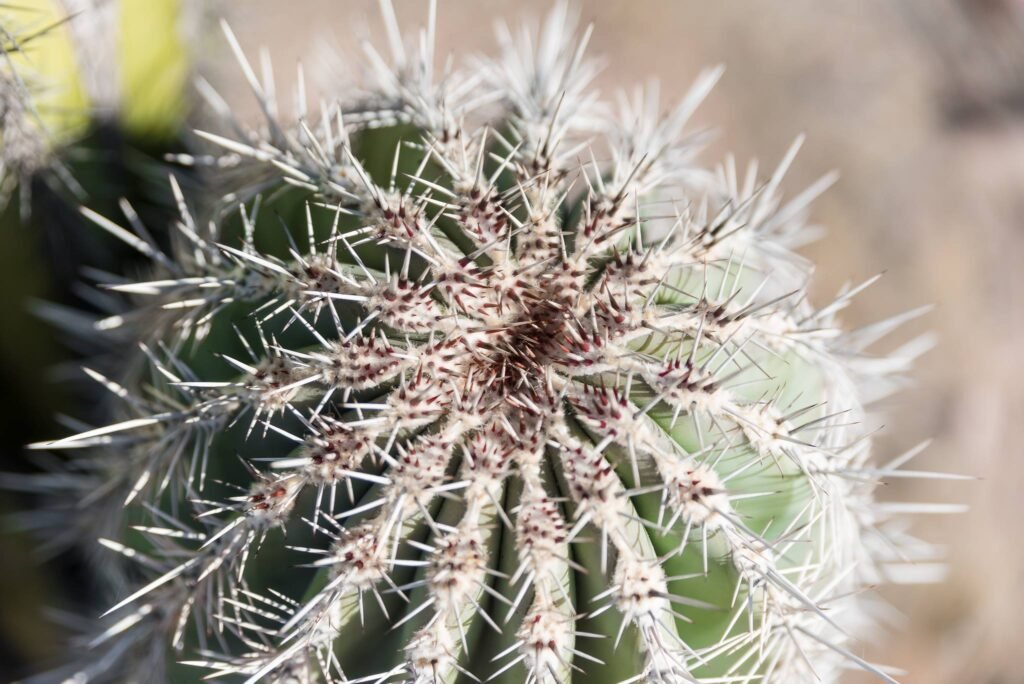
Education is as integral to a Lindblad Expeditions-National Geographic voyage as the wildlife. Each day brings insightful talks and lectures in the ship’s bar, and each day we climb into the Sea Bird’s Zodiacs to explore coastlines of desolate, dramatic beauty. The biodiversity here is not only marine: Baja California is home to 110 species of cacti, 70 per cent of which are found nowhere else on Earth.
On Isla Santa Catalina, naturalist David Stephens leads us on a hike up a dry arroyo through a landscape of extraordinary stillness, pointing out spiny-tail iguanas, pinto chuckwallas, rattleless rattlesnakes and ancient agave fermentation pits that speak to centuries of human presence in this apparently inhospitable terrain.

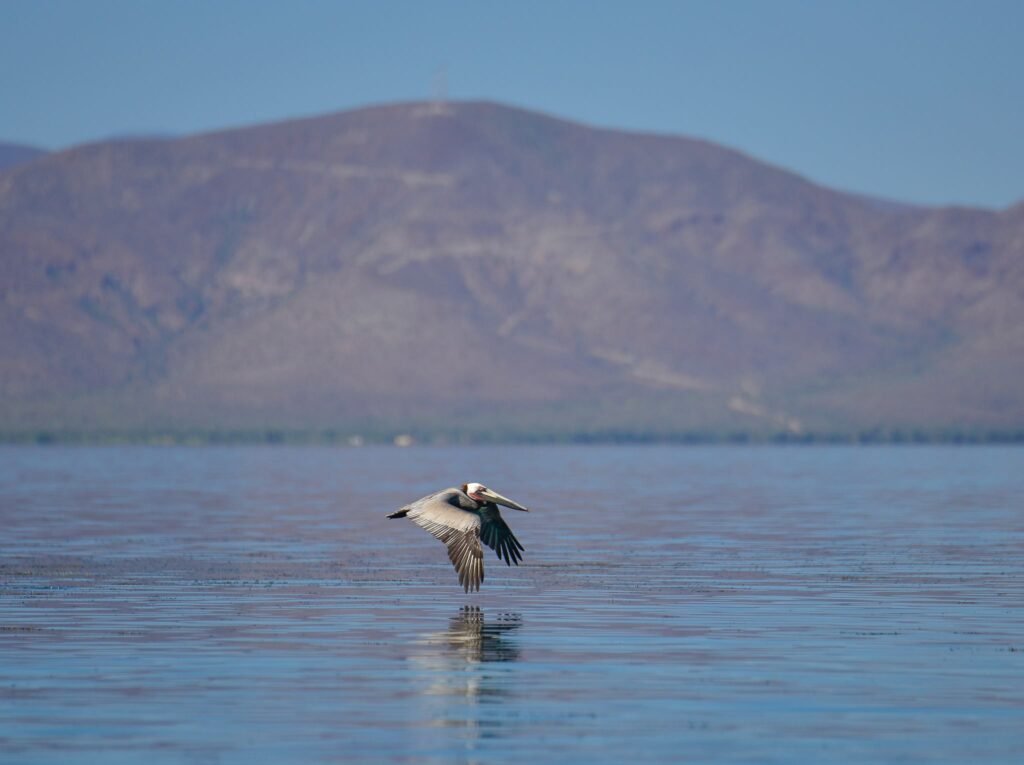
During one of the regular photography walks, I join National Geographic-certified photo instructor Linda Burback to explore the former mining town of Santa Rosalia — tracing graceful pelicans as they skim the harbour and perch among the ruins of the warehouses that once stored ore from a French-owned copper mine.
A lazy afternoon along the breathtaking coastline of Isla San José ends with a beach barbecue and an education in the art of the s’more, courtesy of my new American shipmates.

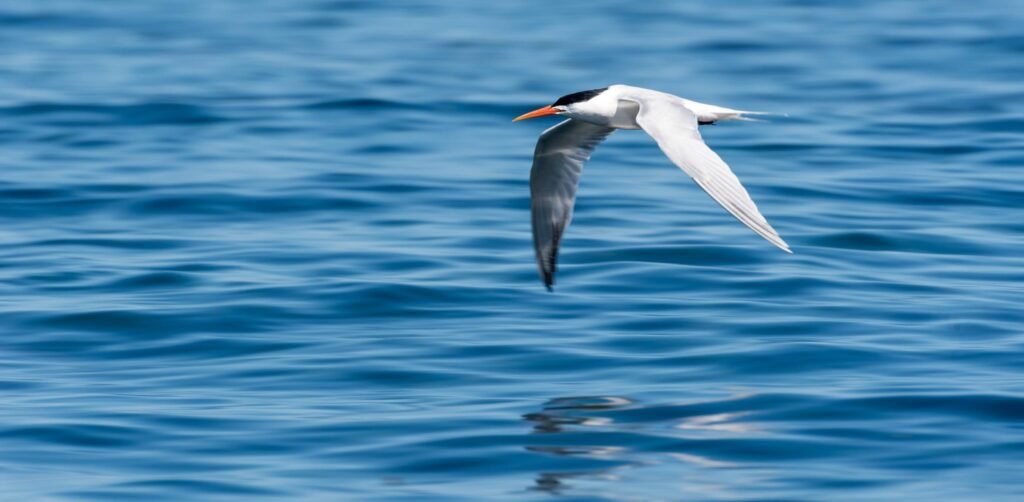
A few days later, cruising the protected coastline of tiny San Pedro Mártir Island, the air is alive with marine birds: blue-footed boobies, yellow-footed gulls, eared grebes, magnificent frigatebirds and brown pelicans, all nesting on this small pumice islet. San Pedro Mártir is home to 95 per cent of the world’s population of elegant terns and Hermann’s gulls — a statistic that makes standing among the swirling, gossiping colony feel like a genuine privilege. High on a rocky crest, a mating pair of osprey keep watchful eyes on our progress.
Snorkelling with Sea Lions: The Espíritu Santo Biosphere Reserve
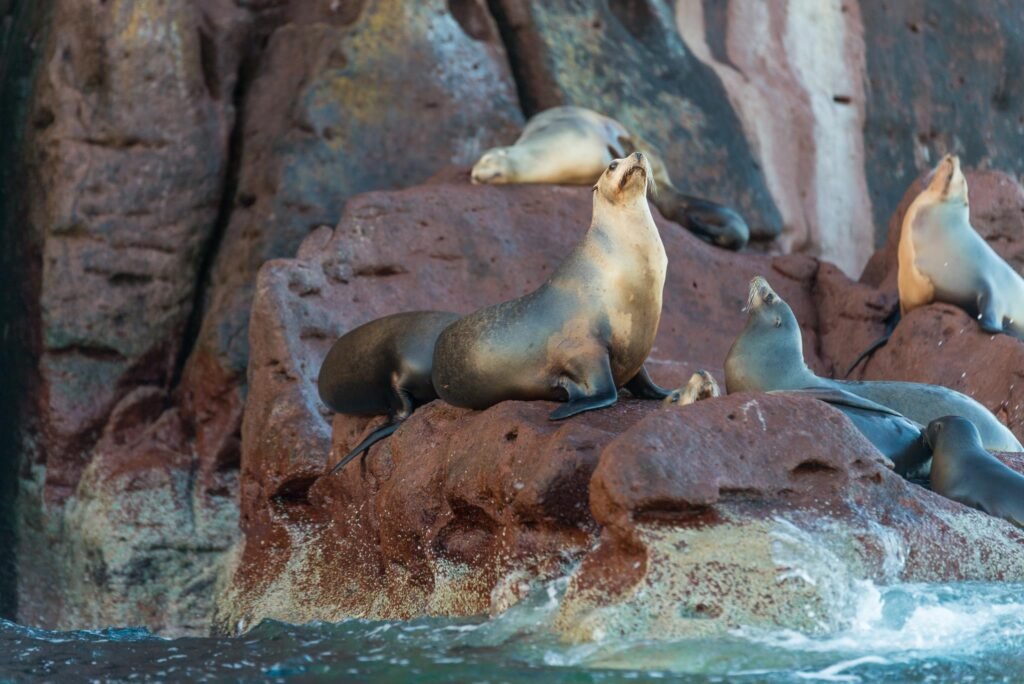
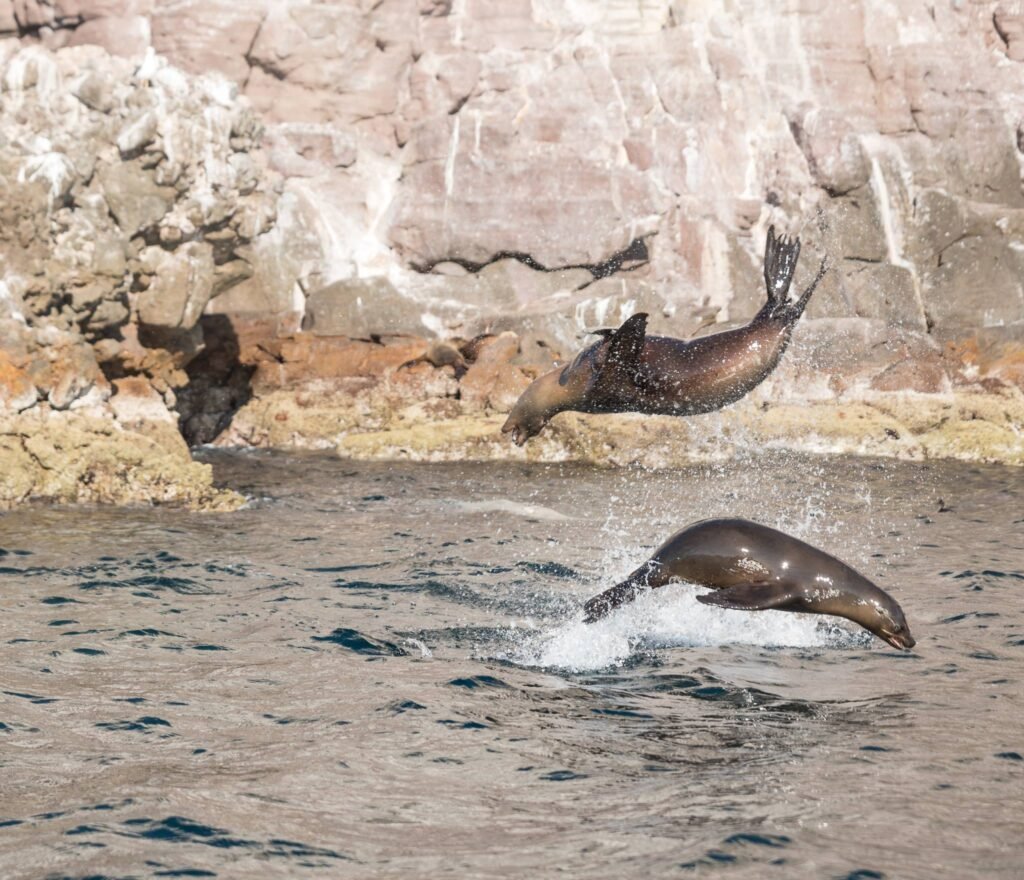
There are moments on any great expedition that announce themselves as the ones you will recall most clearly. Snorkelling with the sea lions of the Espíritu Santo Biosphere Reserve is one of those moments. The animals are inquisitive and entirely at ease with our presence, tumbling and swooping through the water inches from us — puppy-like in their playfulness, trailing streams of bubbles through the crystalline sea.
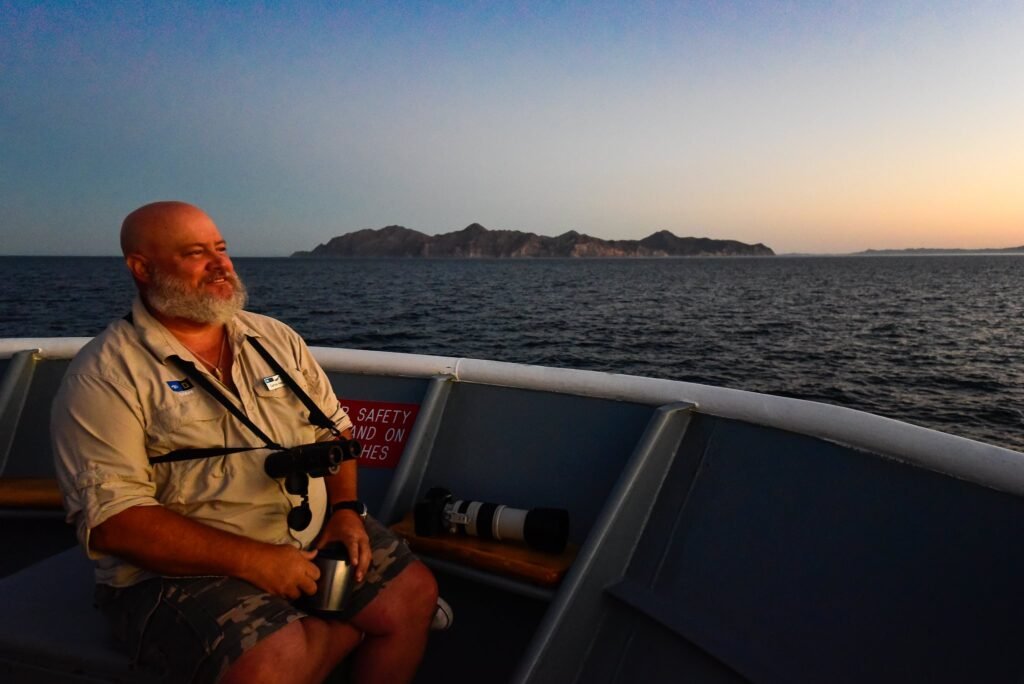
At Bahía Bonanza, an elegantly curving bay of white sand and turquoise water, I join a snorkelling group guided by Mexican biochemist Carlos Navarro (below), who has spent much of his life studying the Sea of Cortez and whose intimate knowledge of its waters transforms a swim into something closer to a seminar.
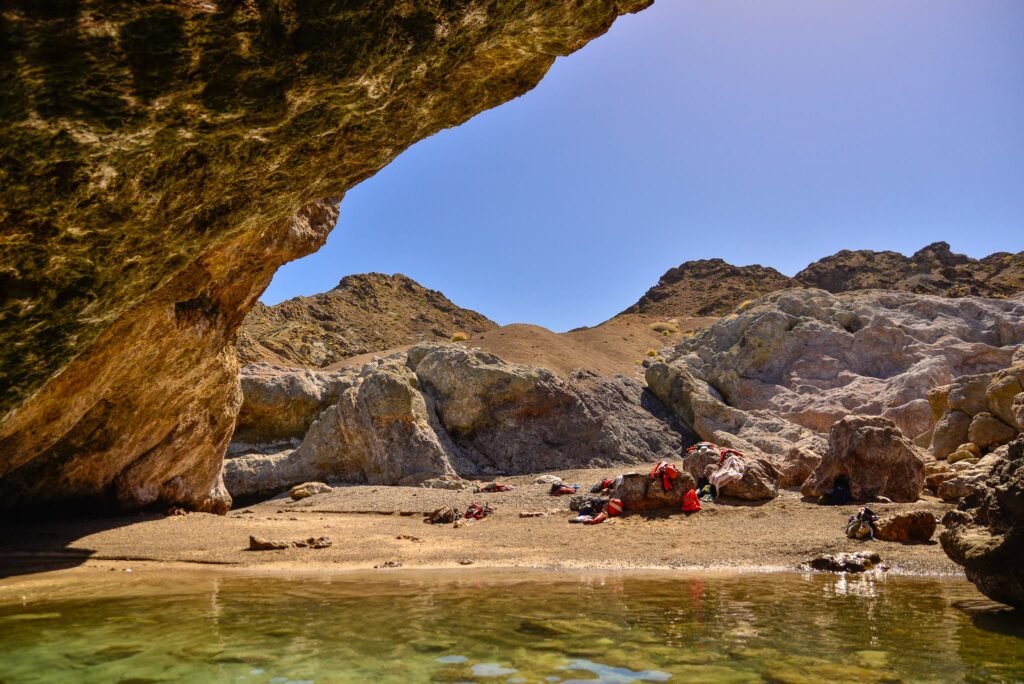
At Isla San Marcos, some guests explore a hidden grotto while others trace a dried riverbed inland or scan the coastline from Zodiacs for herons, egrets and the vivid orange and black of sally lightfoot crabs.
We finish the expedition as it began — in the Zodiacs, capturing the ship through a natural arch of rock rising from the ocean as the dawn breaks behind us.
Conservation in the Sea of Cortez: A Fragile Wonderland Under Pressure
The Sea of Cortez is a place of extraordinary biological richness, but it is also one under considerable pressure. Tourism, commercial fishing and increasing industrialisation have placed enormous strain on the Gulf of California and its marine life. Some of the sea’s most iconic species have been brought to the brink of extinction: hammerhead sharks, the endemic totoaba fish (prized in traditional Chinese medicine), and the vaquita — the world’s most critically endangered marine mammal, decimated by illegal gill nets — all tell a story of what can be lost when human interests override ecological ones.
But change is coming. The communities of Baja are increasingly recognising the economic and cultural value of sustainable tourism and responsible fishing. Legislation continues to expand protected zones across the Gulf, and operators such as Lindblad Expeditions-National Geographic play a meaningful role in both raising awareness of the challenges the Sea of Cortez faces and directly funding conservation initiatives designed to protect it for future generations.
Overfishing has reduced shark populations significantly — but it has, in turn, allowed the numbers of whales, dolphins and sea lions to recover. It is a reminder that this ecosystem, though fragile, has a remarkable capacity for resilience when given the chance.
Planning an Expedition to the Sea of Cortez
Lindblad Expeditions-National Geographic operates voyages in the Sea of Cortez from late autumn through to spring, when whale activity is at its peak and the desert landscapes of the Baja Peninsula are at their most dramatic. The National Geographic Sea Bird departs from La Paz, the elegant capital of Baja California Sur, which is well served by flights from Los Angeles, Phoenix and Mexico City.
Expedition itineraries typically run between eight and 15 days, combining wildlife observation, guided hikes, snorkelling, kayaking, paddleboarding and photography instruction. All levels of fitness and experience are welcome — the programme is designed to be as immersive or as relaxed as each guest chooses.
For travellers seeking a genuine encounter with one of the world’s last great wild places — and one that combines extraordinary wildlife, stunning desert landscapes, and a rigorous commitment to conservation — the Sea of Cortez expedition ranks among the most rewarding journeys on the planet.
If you’re contemplating an expedition cruise, check out our guides to the best expedition cruise lines, the most sustainable expedition cruises, the best options for Arctic, Antarctic and Falklands cruises, the best Galapagos, Amazon River and Kimberley cruise lines, the best expedition cruise destinations for 2027, and our adventures on the Mekong, in the Canadian Arctic, the Galapagos Islands, and Greenland.


