
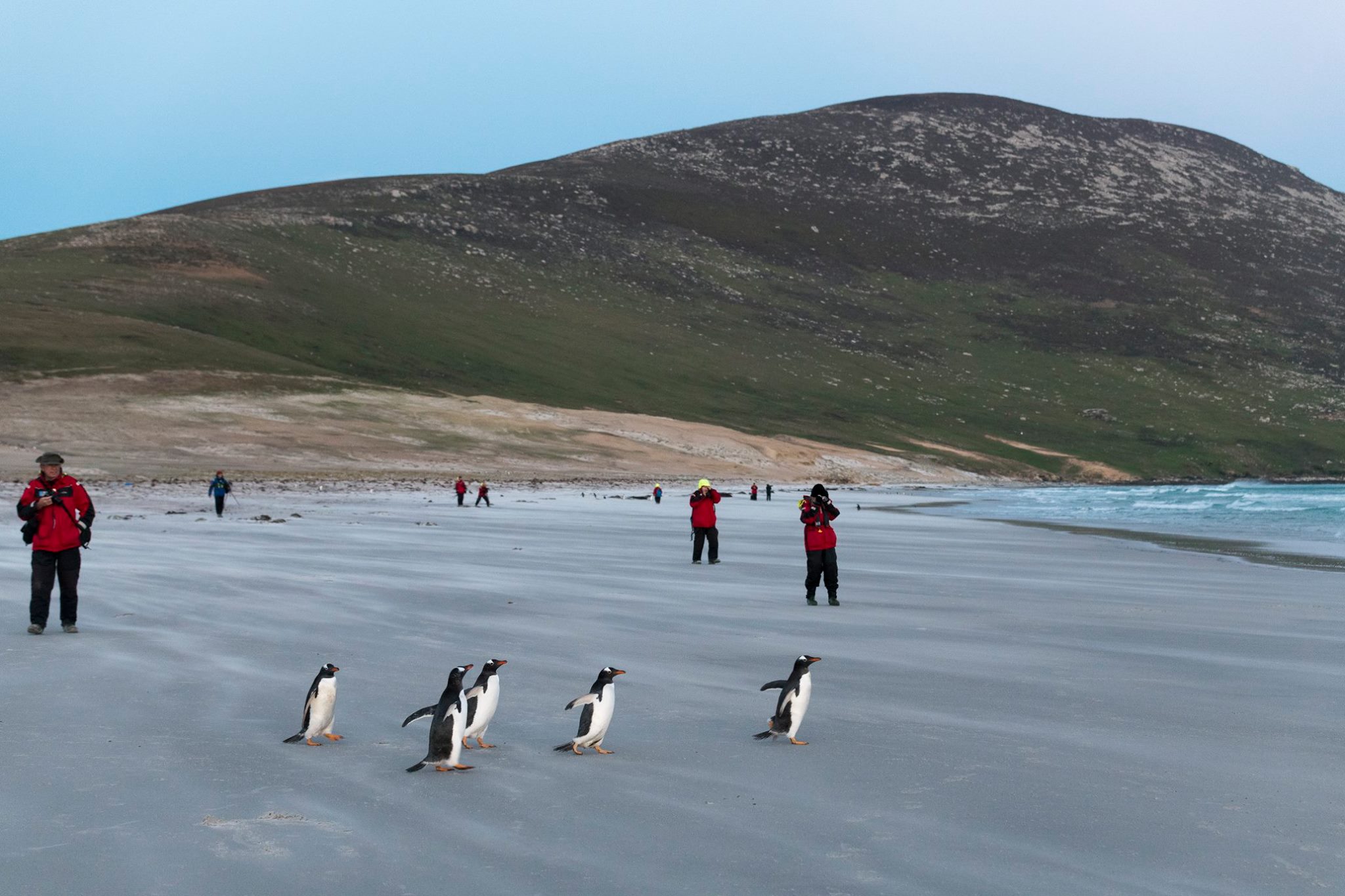

Often overlooked, the remote Falkland Islands are a fantastic add-on destination to any Antarctica or South Georgia itinerary. Here’s what you need to know before you go.
The Falkland Islands are one of the most rewarding wildlife destinations in the Southern Ocean — and one of the most underrated. While many travellers focus solely on the Antarctic Peninsula or South Georgia, those who include the Falklands on their itinerary often say the wildlife here ranks among the highlights of their entire expedition cruise.
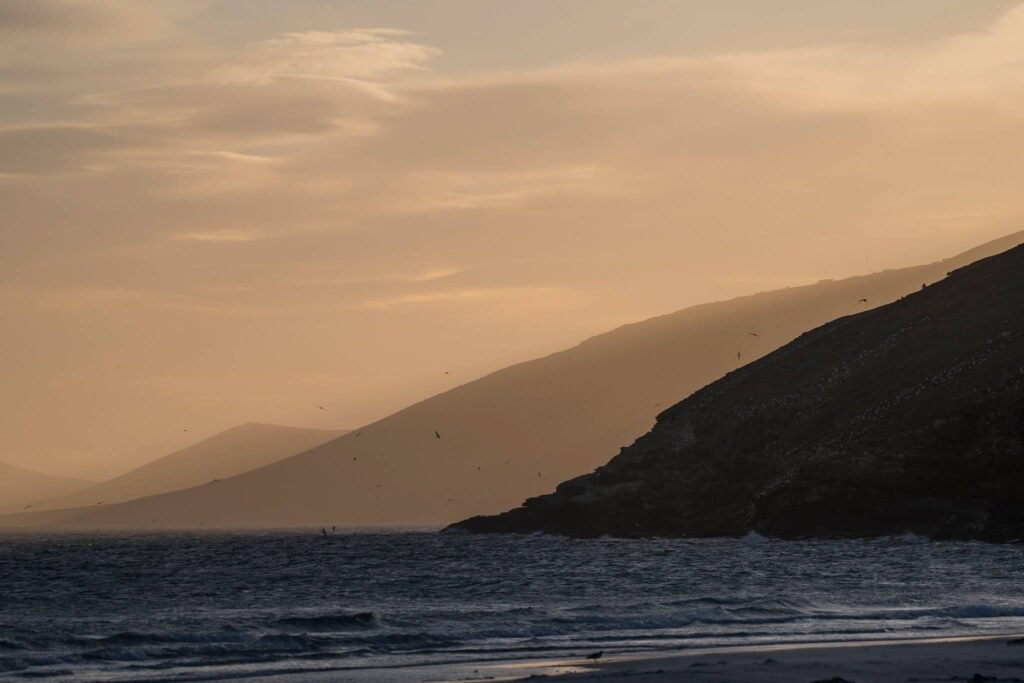
Located about 480 kilometres east of Patagonia, the Falklands offer a unique combination of accessible, approachable wildlife and dramatic sub-Antarctic landscapes. Unlike the crowded penguin colonies in some parts of Antarctica, the Falklands feel wonderfully spacious, with vast open beaches, rolling hills, and dramatic coastlines where you can often have entire colonies almost to yourself.
Why the Falklands Are Special for Wildlife
The Falkland Islands support some of the largest concentrations of seabirds and marine mammals in the Southern Hemisphere. Because the islands have no native land predators (apart from the occasional introduced cats or rats on a few islands), many species show little fear of humans. This makes for incredibly close and relaxed encounters.
Key highlights include:
Penguins
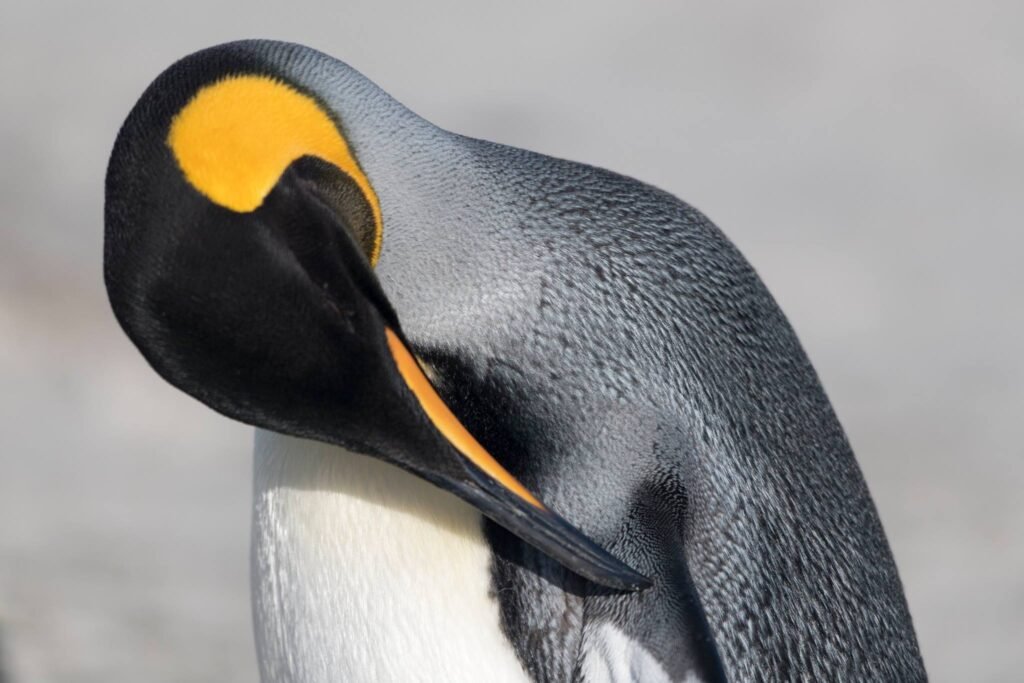
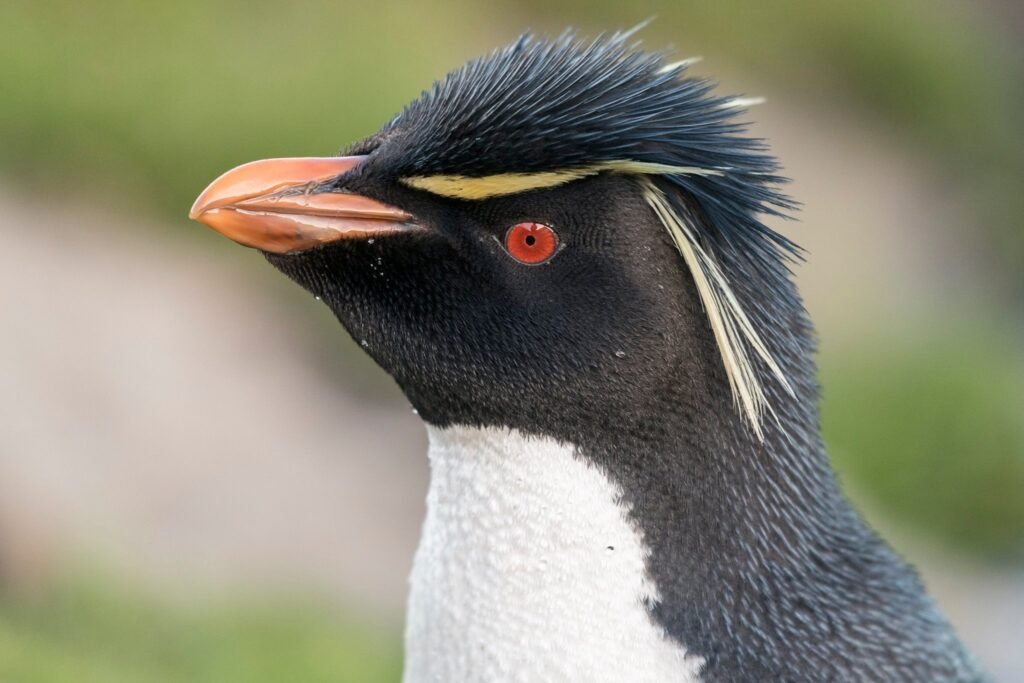
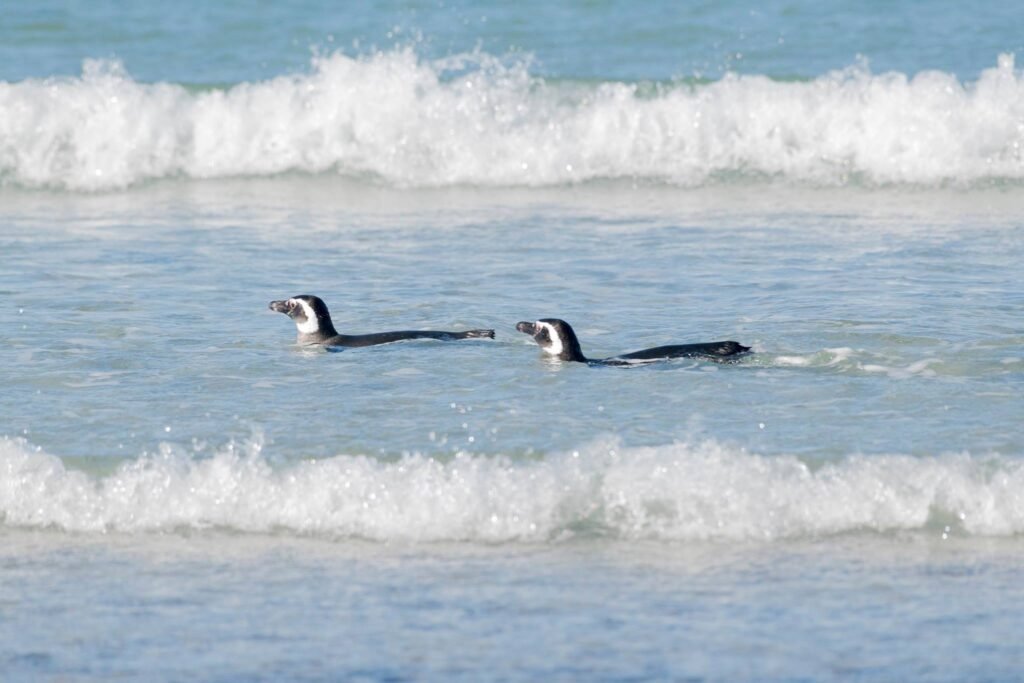
The Falklands are home to five species of penguin. The most iconic is the King penguin, with its striking orange-gold markings. While not as numerous as on South Georgia, colonies at Volunteer Point and Saunders Island offer excellent viewing. You’ll also find huge numbers of Gentoo penguins (the Falklands are one of their strongholds), Magellanic penguins that nest in burrows, and smaller numbers of Rockhopper and macaroni penguins.
Albatross and Seabirds
The Falklands are an albatross paradise. Black-browed albatross colonies are particularly impressive, especially at West Point Island and Saunders Island, where you can sit quietly among thousands of these magnificent birds as they soar overhead or tend to their chicks. You’ll also see rockhopper penguins sharing nesting sites with albatross, creating wonderful photographic opportunities.
Seals and Sea Lions
Southern sea lions and fur seals are common, often hauling out on beaches in large numbers. Elephant seals are also present, particularly during the breeding season. Watching the dramatic battles between large male elephant seals is a memorable experience.
Other Wildlife
Upland geese, ruddy-headed geese, and the endemic Falkland flightless steamer duck are common. Striated caracaras (Johnny Rook) — one of the world’s rarest birds of prey — are surprisingly bold and frequently seen around settlements and penguin colonies. Dolphins and occasional whales can be spotted from the shore or during Zodiac cruises.
Best Falkland Islands Wildlife Itineraries in 2026
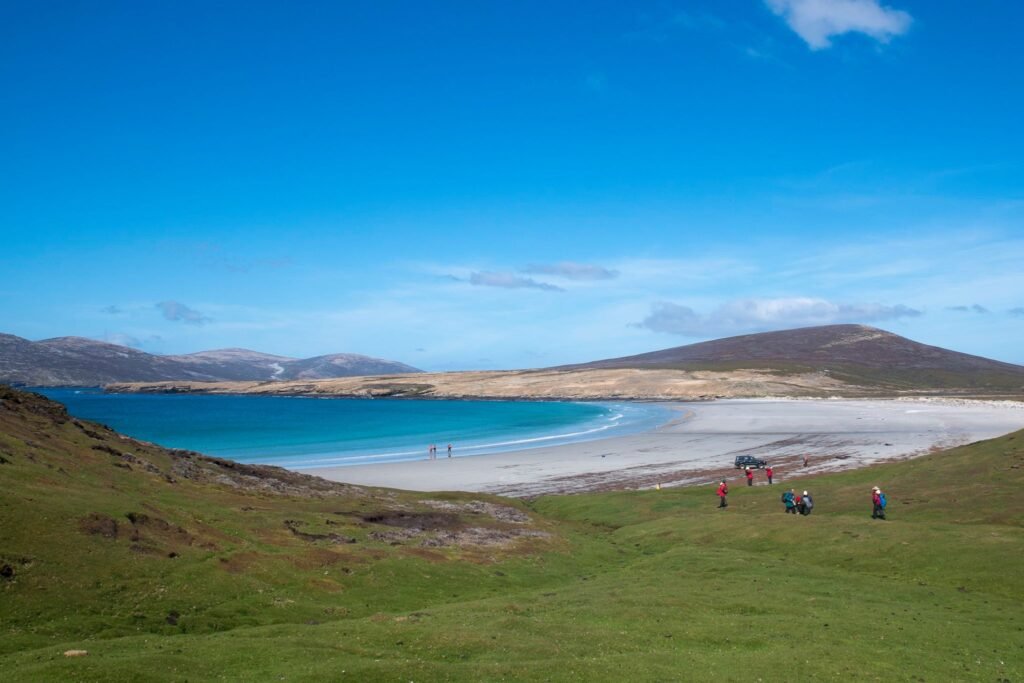
Most luxury expedition cruises visit the Falklands as part of a longer Antarctica or South Georgia itinerary. The two most common stops are:
– Volunteer Point — Home to one of the largest king penguin colonies easily accessible to visitors, plus gentoos and Magellanics.
– Saunders Island — Often considered the wildlife highlight of the Falklands, with black-browed albatross, rockhopper penguins, king penguins, and excellent hiking opportunities.
– West Point Island — Famous for its large black-browed albatross colony and dramatic cliffside views.
– Carcass Island — A beautiful, rat-free island with abundant birdlife and a charming settlement.
Some longer itineraries also include New Island or Sea Lion Island, both exceptional for wildlife.
When to Visit for the Best Wildlife Experience
The optimal time for Falklands wildlife is November to March, during the Southern Hemisphere summer.
– November–December: Breeding season begins. Penguins are courting and building nests. Albatross are arriving back at colonies.
– January–February: Peak activity. Penguin chicks hatch, seal pups are born, and albatross chicks are growing. This is often the most rewarding period for photography and observation.
– March: Chicks are larger and more active. The landscape is greener, and there are fewer visitors.
Many expedition cruises visit the Falklands on the way to or from South Georgia and Antarctica, making it a natural part of a classic “Falklands–South Georgia–Antarctica” itinerary.
Photography and Observation Tips
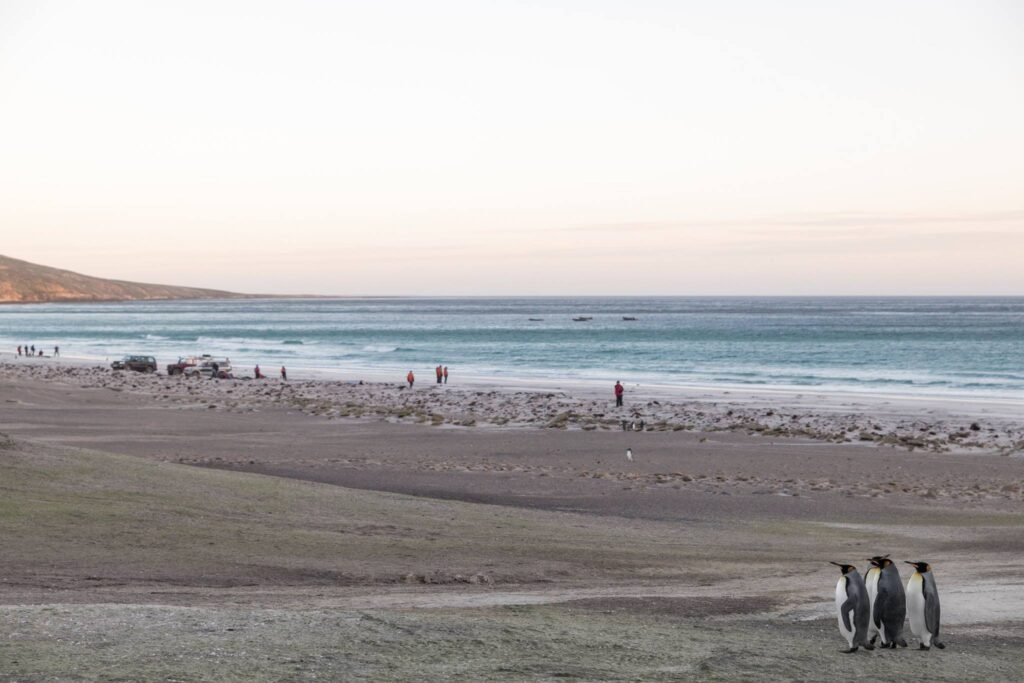
The Falklands are incredibly photographer-friendly. The light is often soft and beautiful, especially in the early morning and late afternoon. Because the animals are so approachable, you can often get excellent portraits without long telephoto lenses.
Useful tips:
– Get down low for more intimate shots with penguins and albatross.
– Use a versatile zoom (100-400mm range works very well).
– Be patient — the best shots often come when you sit quietly and let the animals come to you.
– Protect your gear from salt spray and strong winds, especially during Zodiac transfers.
Check out our comprehensive polar photography guide and polar videography guide for more insights.
Practical Considerations for Falklands Wildlife Visits
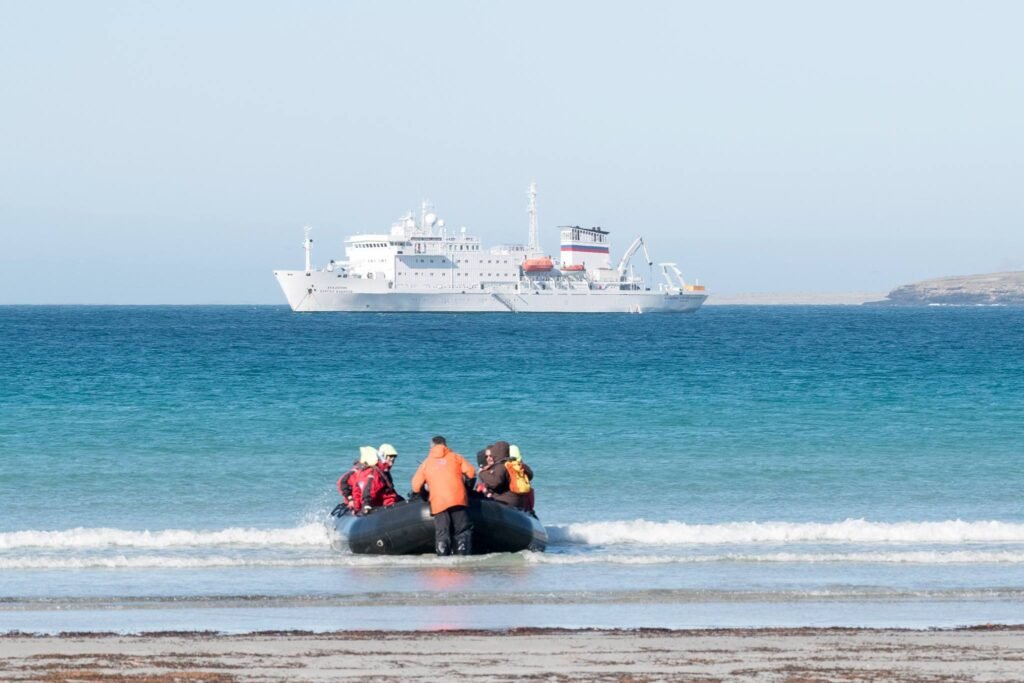
Weather in the Falklands can change quickly — sunny one moment, windy and rainy the next. Good waterproof clothing and sturdy boots are essential. Most landings are “wet” (you step into shallow water from the Zodiac), so be prepared.
Because the islands are a British Overseas Territory, English is spoken everywhere, and the local communities are warm and welcoming. Many farms offer excellent home-cooked meals and the chance to learn about Falklands life.
Is Including the Falklands Worth It?
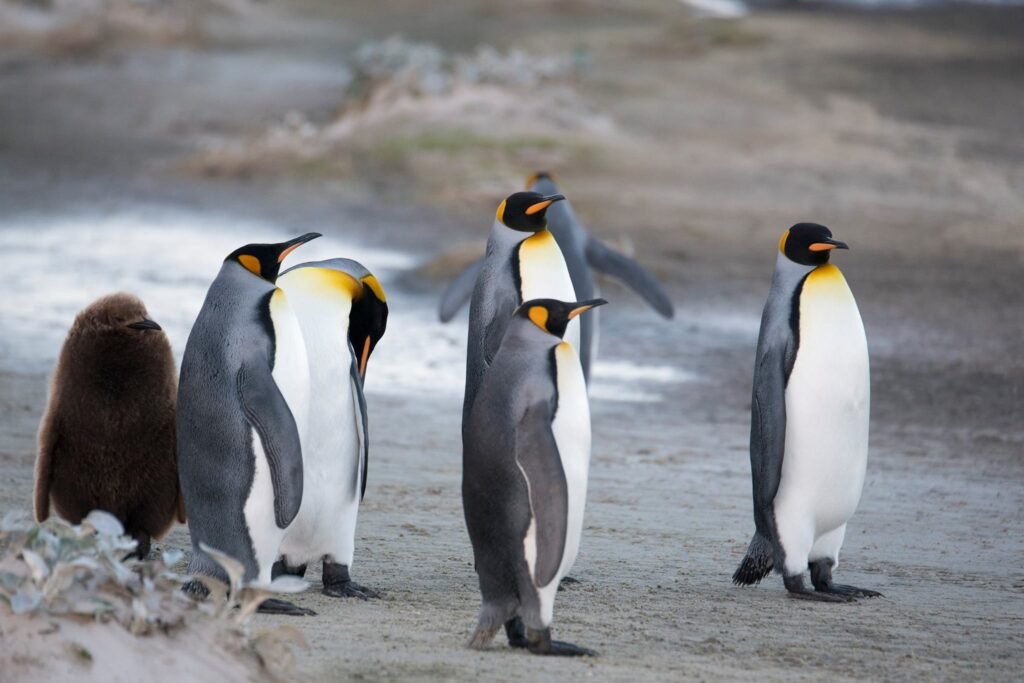
For most travellers on an Antarctica or South Georgia cruise, the answer is a clear yes. The Falklands add tremendous variety and some of the best wildlife viewing of the entire voyage. The combination of king penguins, albatross colonies, and the friendly, accessible nature of the islands creates a wonderful contrast to the raw wilderness of Antarctica and the dramatic mountains of South Georgia.
If your main goal is simply to “see Antarctica,” you can skip the Falklands to shorten the trip. But if you want the richest possible wildlife experience and a more complete Southern Ocean journey, including the Falklands is one of the smartest upgrades you can make.
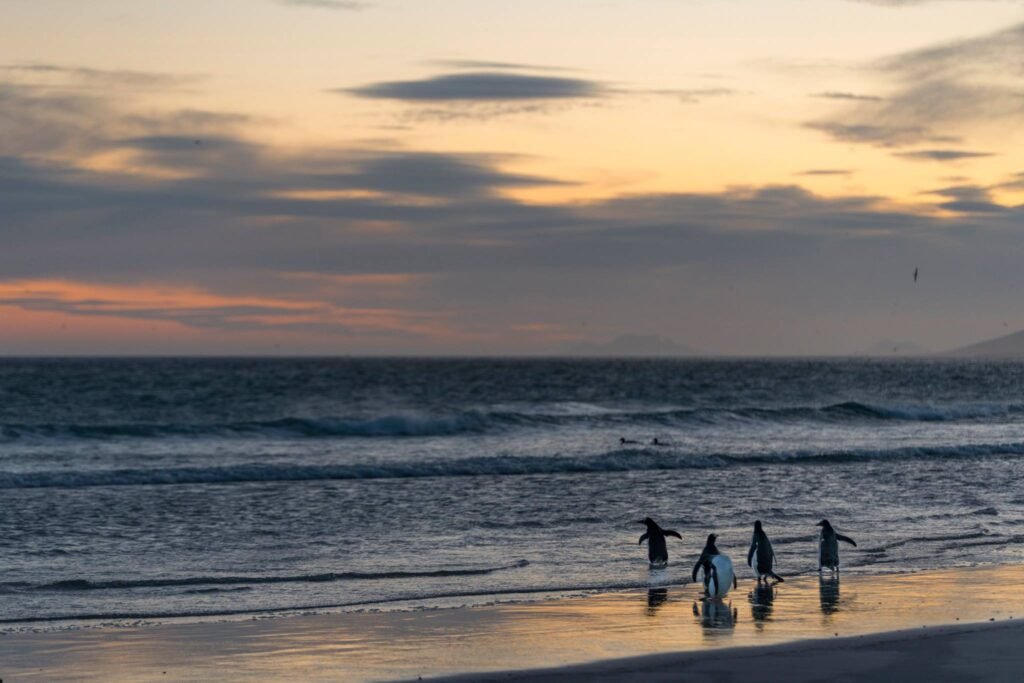
The Falkland Islands offer something increasingly rare in today’s world: vast colonies of wild animals living naturally, with almost no fear of humans, in a landscape of remarkable beauty. For many visitors, the memories of standing among thousands of king penguins at Volunteer Point or watching black-browed albatross soar above the cliffs at Saunders Island become some of the most treasured moments of their entire expedition cruise.
The wildlife of the Falklands is waiting — approachable, abundant, and utterly captivating. For the right traveller, adding the Falklands to an Antarctica or South Georgia itinerary isn’t just an optional extra.
It’s often the highlight.
If you’re contemplating a polar cruise, check out our guides to Arctic expedition cruises, Antarctic expedition cruises, and the best expedition cruise destinations and cruise lines, as well as a few that have strong green creddentials. Also, don’t forget to brush up on your polar photography and polar videography skills, and to pack the polar essentials with our in-depth guides.


