
Perched on the terrace of a medieval Tuscan castle, UMMI brings a Lebanese culinary experience rooted in a centuries-old story of exile, diplomacy, and discovery, to Tuscany
Some restaurants open with a menu. UMMI opens with a history lesson — and it is all the richer for it.
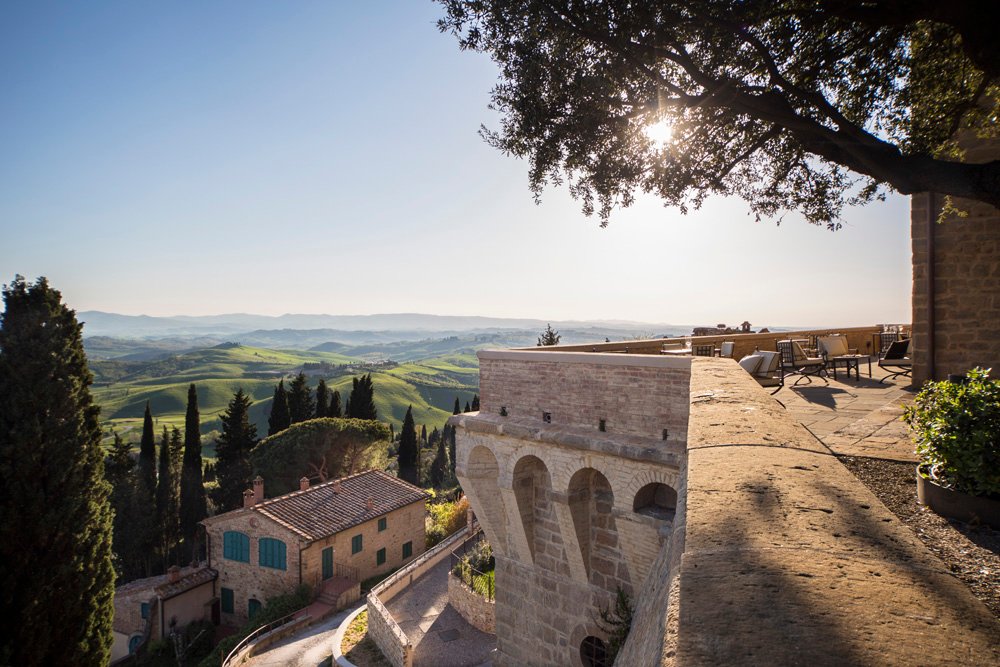
This summer, the Castle of Castelfalfi, the magnificent medieval borgo rising from the Tuscan hills between Pisa and Florence, unveils its most ambitious dining venture yet. UMMI is a dedicated Lebanese restaurant conceived by internationally acclaimed xhef Hussein Hadid, set on the castle’s terrace with views that have barely changed in four hundred years. It is a project equal parts gastronomy and cultural meditation, and it may well be the most thought-provoking table in Tuscany right now.
A History Written in Spice and Stone
The name UMMI — Arabic for “my mother” — carries within it both tenderness and longing. Yet the restaurant’s founding myth reaches further back, to a remarkable episode in Levantine-Italian history that most visitors will know nothing about.
In 1613, Fakhr al-Din II, the powerful Lebanese Emir of the Maan dynasty — known to his Tuscan hosts as Faccardino — arrived in Italy in political exile. For five years he travelled the Tuscan countryside under the protection of Grand Duke Cosimo II de’ Medici, moving through the very hills that now shelter Castelfalfi. His presence left a subtle but lasting mark on the cultural fabric of the region: a dialogue between East and West, long before such exchanges had a language to describe them.
UMMI is that dialogue, finally given a table.
Chef Hussein Hadid’s Vision
At the heart of the project is Chef Hussein Hadid, whose reputation spans continents and whose cuisine is defined by its elegance and fidelity to Levantine tradition. For Hadid, the food of the Levant is inseparable from memory and ritual — the slow accumulation of flavour, the generosity of sharing, the weight of a dish passed down through generations.
“I have always been fascinated by places where different cultures naturally come together,” he says. “With UMMI, I wanted to express my cuisine through memory, the ritual of sharing, and ingredients that, here among the Tuscan hills, find a new harmony.”
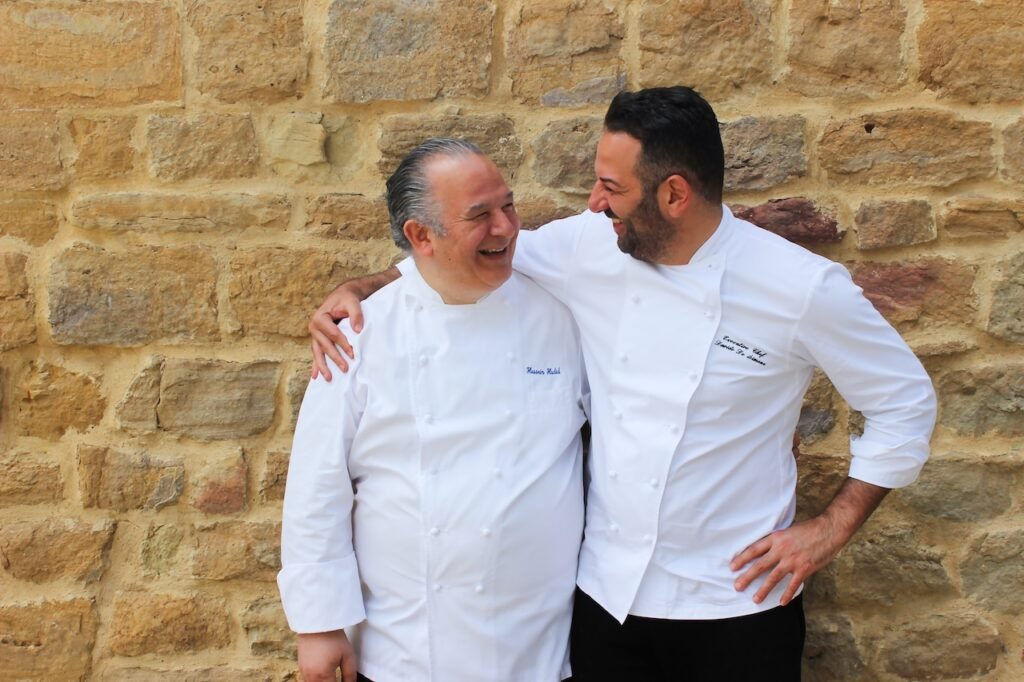
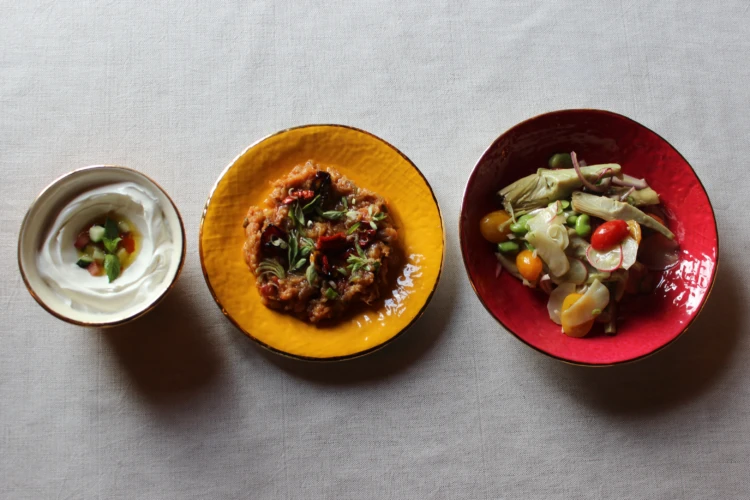
That harmony is realised at Castelfalfi under the careful stewardship of executive chef Davide De Simone, whose brigade brings the menu to life with an understanding of local produce and landscape. The result is a conversation between two culinary identities rather than a compromise between them: Lebanese za’atar and Tuscan olive oil; the charred sweetness of Levantine aubergine meeting the mineral depth of Chianina. Distinct voices, speaking the same language.
The Setting
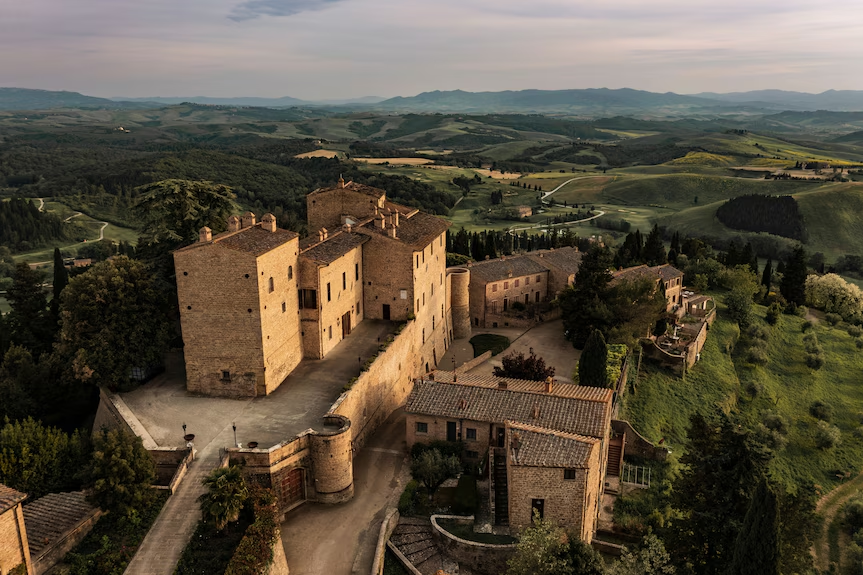
Few restaurant terraces in Italy carry the weight of this one. The Castle of Castelfalfi is one of Tuscany’s great aristocratic estates, a borgo of stone towers and cypress-lined roads, its medieval bones intact beneath the careful restoration of recent decades. The UMMI terrace looks out across this landscape with an unhurried grandeur: golden light, vine-covered slopes, the silence of hills that have sheltered travellers — from Medici nobles to exiled emirs — for centuries.
The restaurant is open to both hotel guests and outside visitors, making it one of the most accessible fine-dining experiences on the Castelfalfi estate.
“Castelfalfi has always been a place shaped by encounters — between people, histories, and cultures,” says General Manager Roberto Protezione. “UMMI reflects this spirit perfectly.”
The Verdict
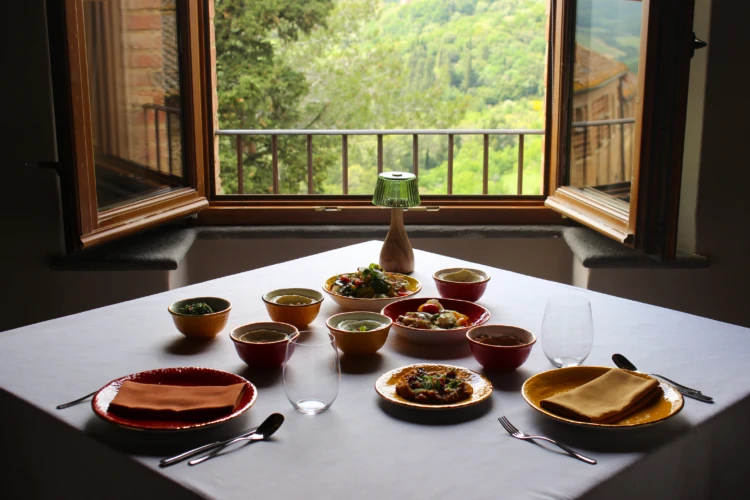
UMMI is not merely a new restaurant. It is an argument — persuasive, beautiful, and delicious — that the most compelling dining experiences are those grounded in something larger than a menu. Book it.


