
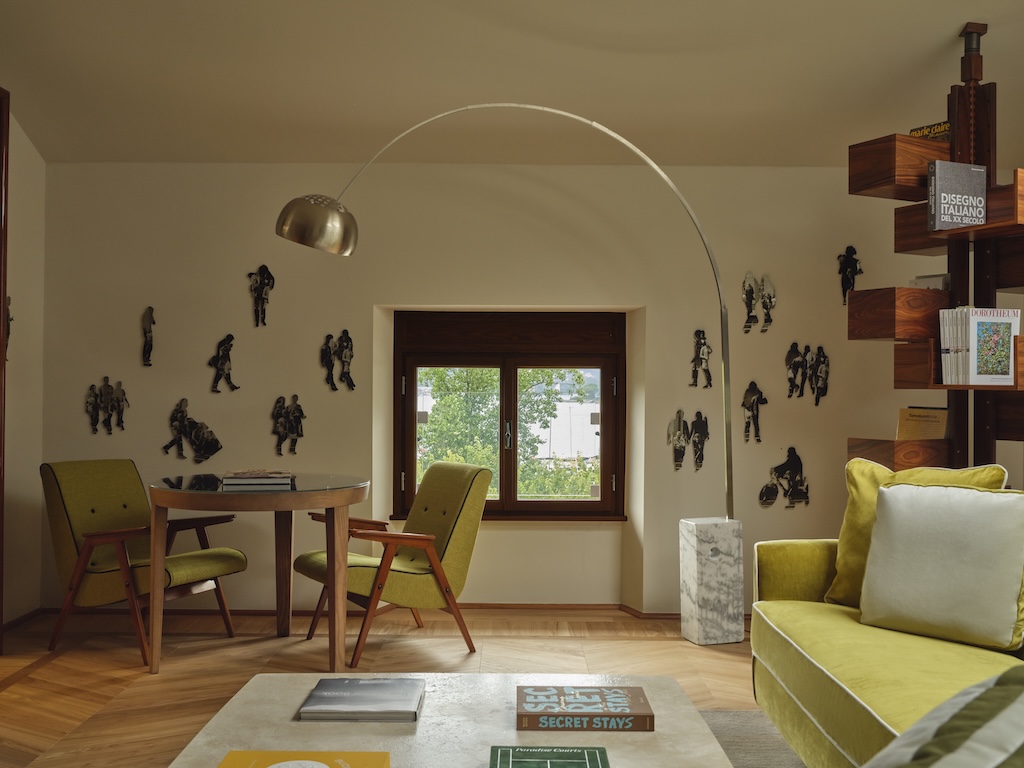

CASABIANCA’s private art villa on Lake Como has unveiled three artist-designed suites, letting guests finally sleep amongst its four-decade contemporary collection and mid-century Italian design.
Lake Como has no shortage of grand villas, but CASABIANCA has long set itself apart. Since it first opened its doors, Paolo and Antonella De Santis have described the 1931 villa not as a destination in its own right, but as “a new beginning”, a living salon of art in constant evolution. Now that idea takes on a new form, with the opening of three suites on the villa’s top floor that allow guests, for the first time, to actually sleep amongst the collection.
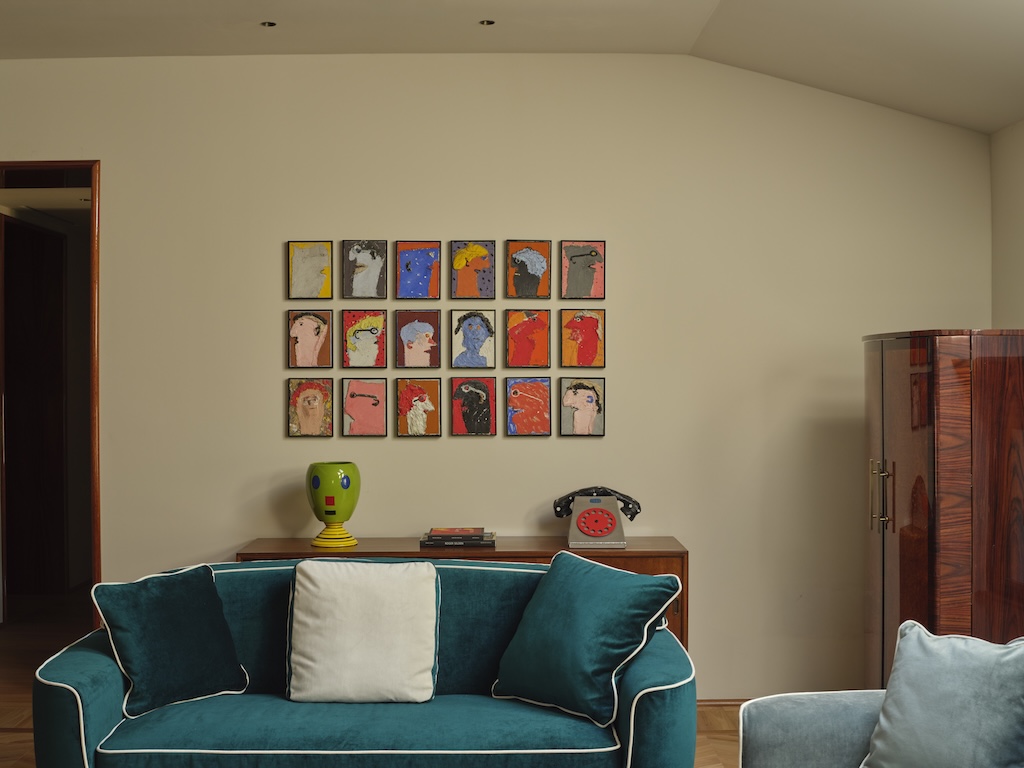
CASABIANCA was born from the De Santis family’s desire to share a contemporary art collection built over more than forty years of passion and research. In restoring a historic Como residence and opening it to the public, they created a rare hybrid: part private home, part museum, part hospitality address.
The new suites mark the next chapter in that story, offering guests an entirely different way to experience the villa, not as visitors passing through, but as temporary residents of it.
Where Art, Architecture and Design Meet
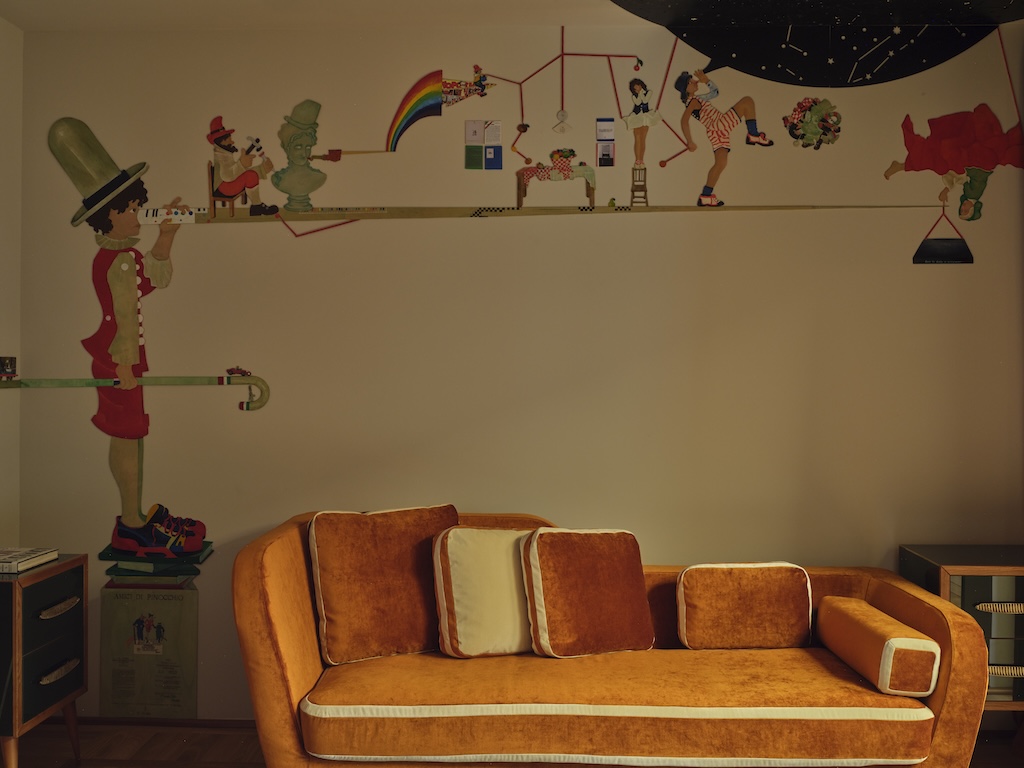
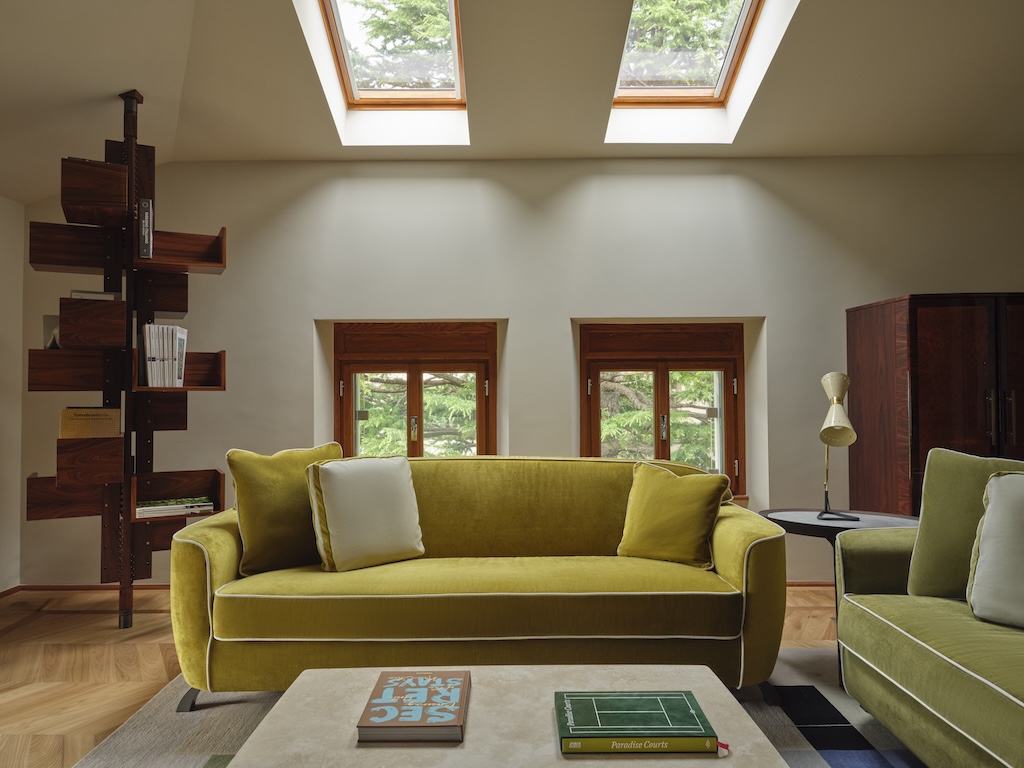
Each of the three suites functions as an artist residence, conceived to surround guests with contemporary works, bespoke furnishings and some of the finest examples of twentieth-century Italian design. The interiors take their cue from the rigour and elegance of 1950s and 1960s Italian design, in dialogue with the villa’s original 1931 architecture by Como-born architect Piero Ponci.
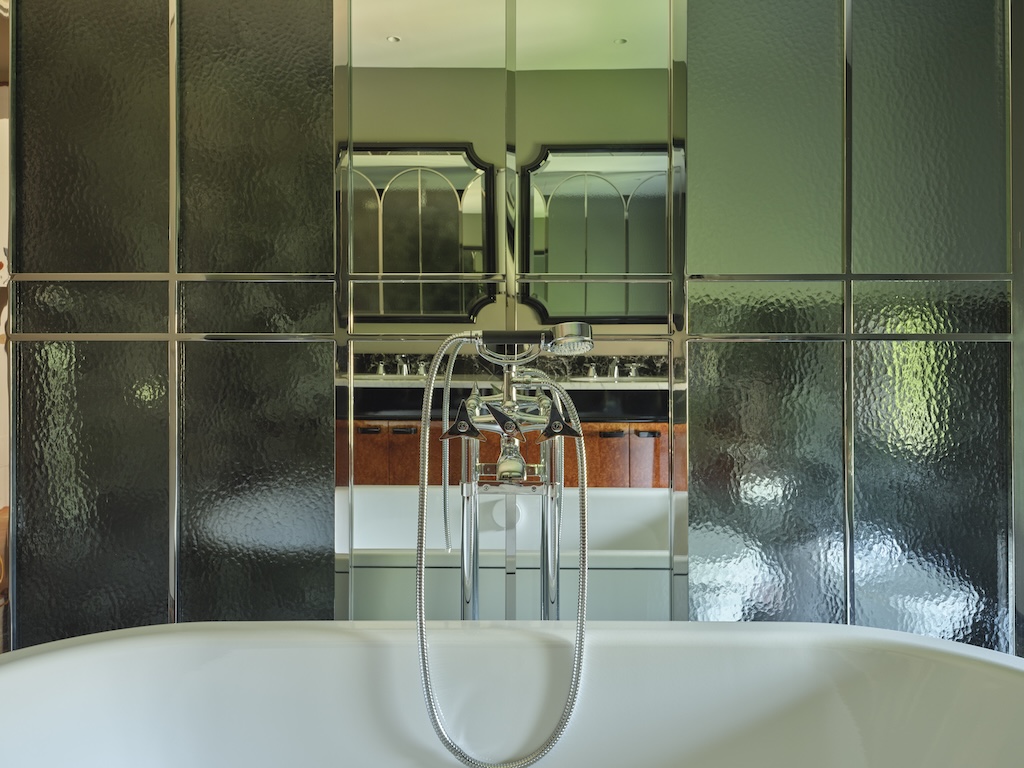
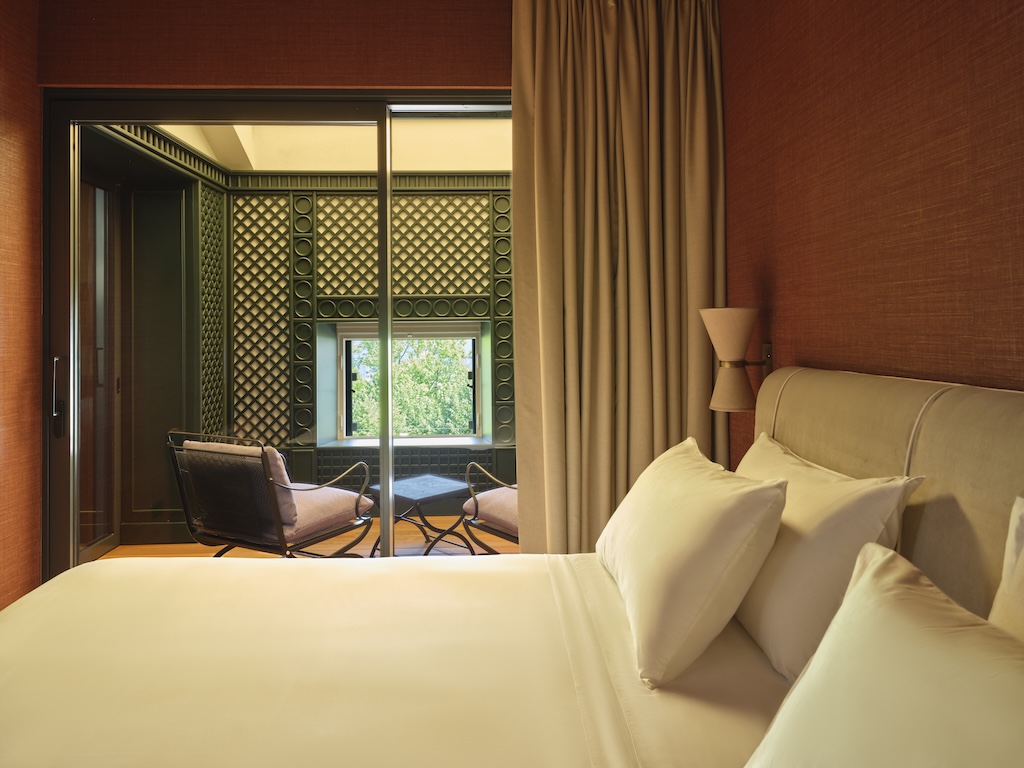
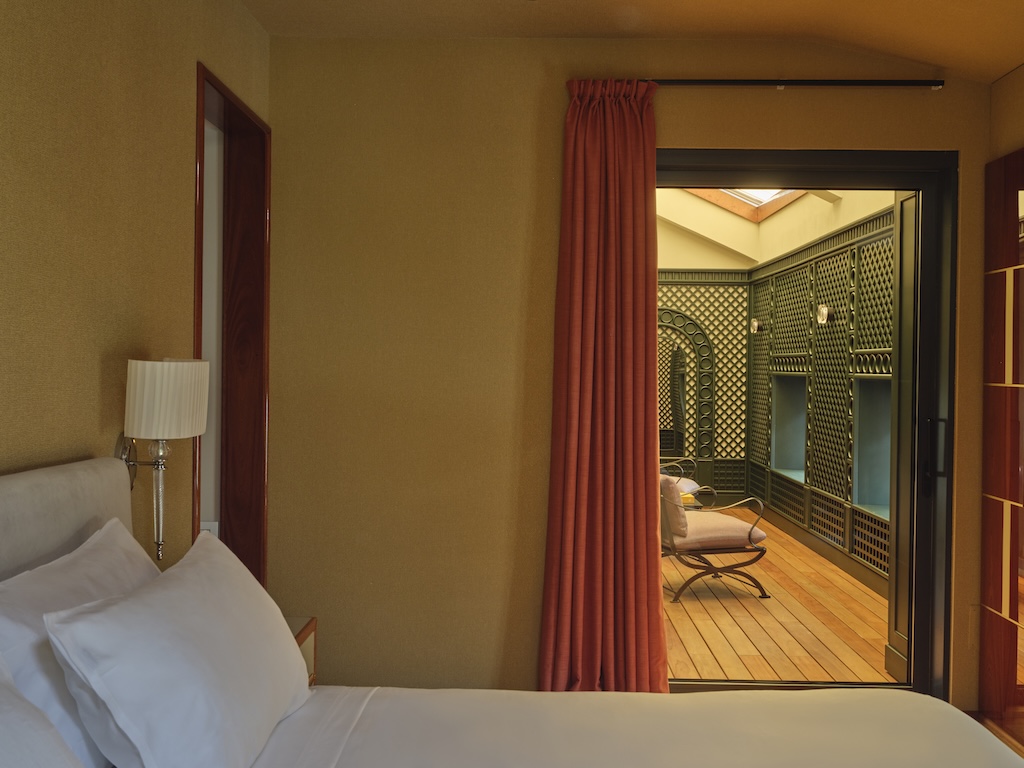
Every detail was chosen by the De Santis family alongside architect Corrado Tagliabue to knit art, architecture and daily life together seamlessly. Door handles, window fittings and taps carry the signature of Gio Ponti, while elm floors framed in dark walnut — restored by Como firm Castiglioni — echo the decorative language of the villa’s historic lower rooms. Rubelli wallpapers sweep unbroken across walls and ceilings in the bedrooms, and bathrooms are dressed in Verde Alpi and Lepanto marble set against cathedral glass, evoking the elegance of the 1930s.
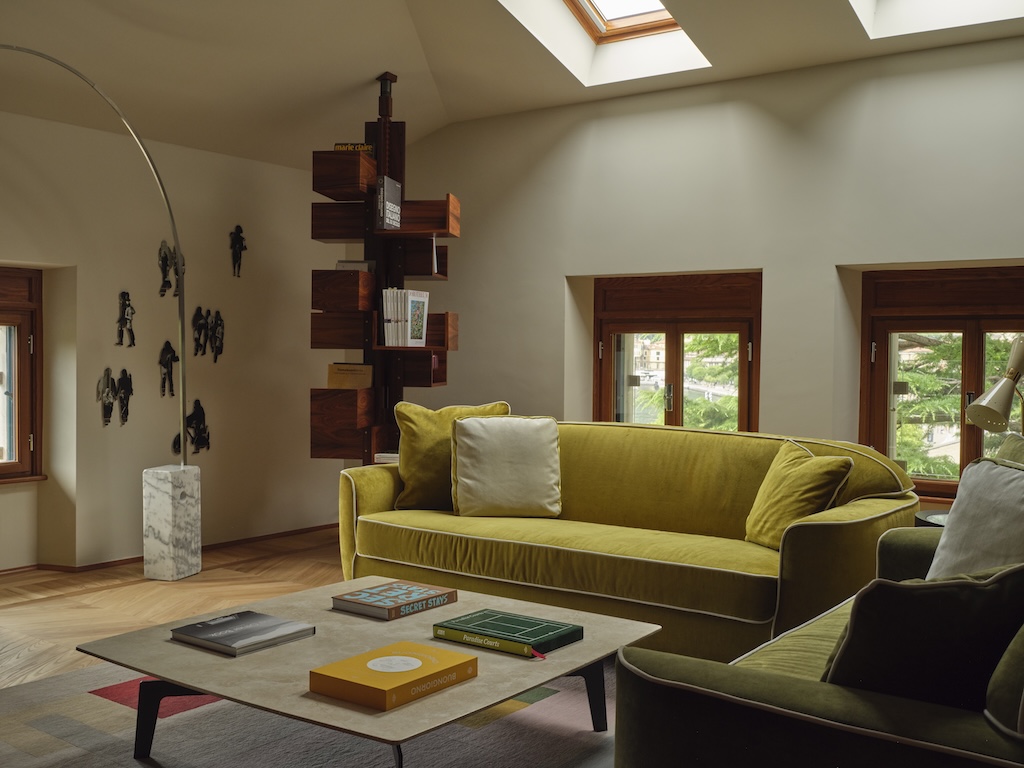
Three pocket terraces, tucked within the roofline to preserve the historic facade, flood the suites with natural light: two look towards the lake, while the largest overlooks the garden’s centuries-old cedar, furnished with the celebrated Azucena chairs by Luigi Caccia Dominioni. Vintage pieces sourced by the De Santis family at art markets and antique fairs sit alongside restored bookcases, Caccia Dominioni chandeliers and fabrics from historic silk house Ratti.
Three Suites, Three Artists
Guests reach the suites through an entrance hall inspired by architect Piero Portaluppi, where a site-specific work by American artist Roger Selden meets a Mirror Steel piece by Caccia Dominioni and a pair of 1961 “Farfalle” wall lights by Max Ingrand for FontanaArte. Original 1930s cement tiles, salvaged during restoration, sit alongside mahogany and burr-wood joinery with brass detailing.
Each of the three suites is named after the artist commissioned to interpret it. Suite Uberto, the largest, with two bedrooms, is dedicated to Milanese artist Simona Uberto, whose aluminium figure installation Appartenenze and polychrome sphere work Bolle di Sapone reflect on memory and connection.
Suite Selden, on the other hand, showcases eighteen mixed-media works from the 1990s by American artist Roger Selden, suspended between Pop Art energy and Milanese restraint. Suite Spoldi centres on Aldo Spoldi’s recurring Pinocchio motif, staging a knowing dialogue with masters elsewhere in the CASABIANCA collection.
A Home, Not a Museum
Despite the calibre of the art on display, CASABIANCA is keen to preserve the feeling of a private home rather than an institution. Days begin with breakfast served in-room by Cova, continue with exploration of Como — its lakefront, historic walls and Rationalist landmarks — and wind down back at the villa over a light lunch or Cova afternoon tea. Guests seeking a deeper connection to the collection can arrange private after-hours visits, when the public rooms close and the villa reverts to quiet domesticity.
It’s this slower, more intimate register that distinguishes CASABIANCA from a conventional gallery stay. As the De Santis family put it, the real privilege is not simply sleeping amongst extraordinary works, but having the time to live alongside them — to notice details gradually, at one’s own pace, rather than on a curator’s schedule.
For a destination that has always resisted being just another stop on the Lake Como circuit, the new suites feel less like an expansion than a natural continuation: proof that CASABIANCA’s real ambition was never to be visited, but to be inhabited.


