
With more legroom, better dining and a calmer cabin, the best premium economy airlines now rival yesterday’s business class, and all seven of our picks fly to Asia.
There was a time when premium economy was little more than economy with a slightly larger seat and a glass of sparkling wine (if you were lucky). That era is over. The best premium economy airlines now offer electrically powered seats, 4K screens, privacy dividers and menus that would not embarrass a business-class cabin, all for a fraction of the cost of a lie-flat bed.
For travellers in Asia, this rapid evolution has been welcomed. Many of our long-haul flights, whether to London, the US West Coast or continental Europe, run 12 to 16 hours, and many of them are overnight – and we all know how a poor night’s sleep can affect the rest of your trip. On those journeys, the gap between a 31-inch economy seat and a 42-inch premium economy seat is the difference between arriving wrecked and arriving ready for dinner.

In September 2026, Skytrax published its annual World Airline Awards, based on passenger surveys. Its top seven for premium economy were EVA Air, Emirates, Singapore Airlines, Cathay Pacific, Virgin Atlantic, Japan Airlines and Delta Air Lines. Every one of them flies to Asia, and between them they cover almost every long-haul route you’re likely to take.
Here’s what each airline’s premium economy actually offers, where you’ll find the best seats, and when the upgrade is worth paying for.
What Makes a Great Premium Economy Cabin?
Before the rankings, it helps to know what you’re paying for. The first thing is seat pitch, the distance between rows. Economy usually offers 31 to 33 inches; good premium economy offers 38, and the very best now reach 42. Width and layout matter almost as much, because wider seats and fewer seats per row mean fewer middle seats, and a 2-3-2 cabin feels noticeably calmer than one arranged 3-4-3.
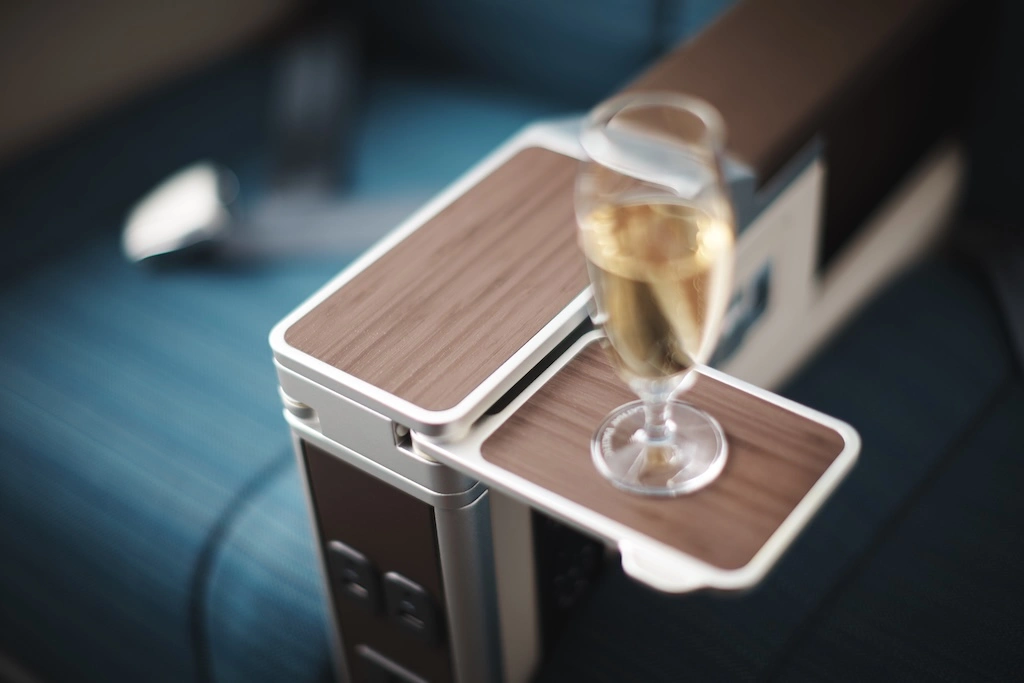
Then there’s how the seat moves. Look for leg rests and footrests, and ideally a cradle recline that tilts the seat within its own shell rather than into the lap of the passenger behind. The best cabins also extend the experience to the ground, with priority check-in and boarding, a more generous baggage allowance and, on a few airlines, lounge access. Finally there’s the table: upgraded menus, proper crockery and a glass of Champagne or sparkling wine.
Is Premium Economy Worth it?
That depends largely on two things: the length of the flight and the quality of the airline’s economy cabin. Several airlines on this list, notably Singapore Airlines, Cathay Pacific and EVA Air, already offer some of the best economy seats in the world. Singapore Airlines took Skytrax’s World’s Best Economy Class title for 2026, with Cathay second and EVA fourth.
On a four-hour regional hop, the upgrade rarely justifies the fare. On an overnight flight of eight hours or more, it usually does.
1. EVA Air: The Premium Economy Pioneer
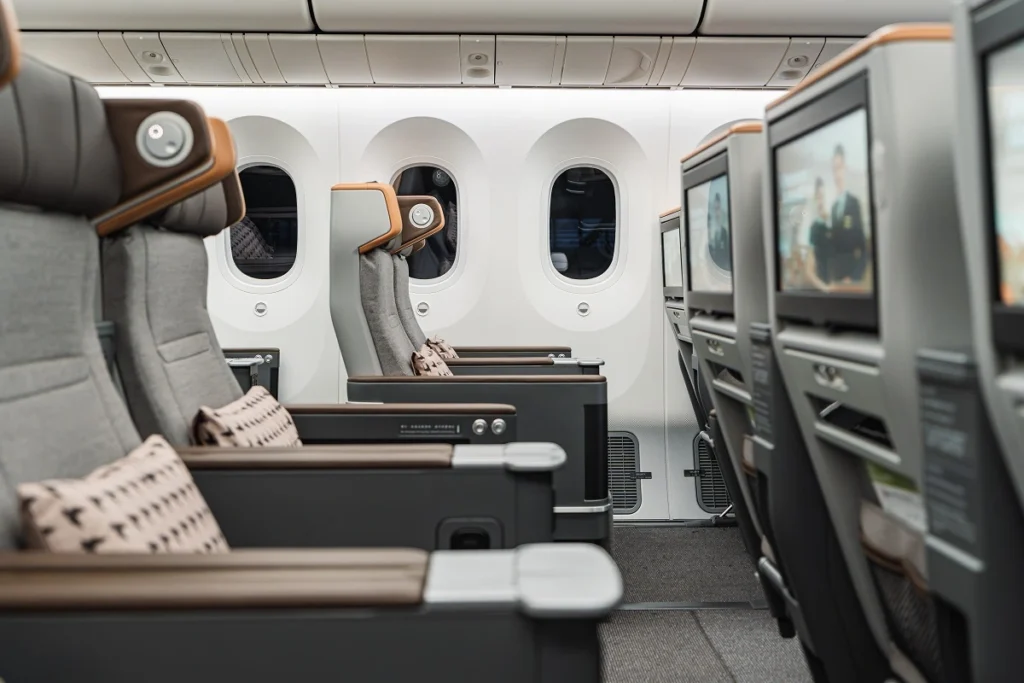
EVA Air has a strong claim to owning the category. The Taiwanese carrier introduced the world’s first premium economy cabin in 1992, and in 2026 it topped Skytrax’s premium economy rankings once again, also winning World’s Best Premium Economy Class Amenities.
The Seat
On EVA’s Boeing 777-300ERs, premium economy offers 38 inches of pitch, against 31 to 33 inches in economy. The real prize, however, is the airline’s fourth-generation seat on its newer Boeing 787-9s, launched in 2025. Here you’ll find 42 inches of pitch, among the most generous in the industry, in an intimate cabin of just 28 seats arranged 2-3-2. The cradle-style recline preserves the space of the passenger behind you, and thoughtful touches such as a 15.6-inch screen, a device holder and a water bottle holder make the long hours pass easily.

Beyond the Seat
On long-haul flights from Taipei to North America and Europe, premium economy guests receive amenity kits created with the British outdoor brand Hunter. EVA is also known for warm, attentive service and strong catering, and was ranked first in Asia for premium economy onboard catering.
Flying EVA Air From Asia
EVA’s hub is Taipei, which is served by frequent flights from both Hong Kong and Singapore as well as Bangkok, Ho Chi Minh City, Kuala Lumpur and Delhi. The 787-9 premium economy cabin made its debut on the Taipei–Jakarta route and now flies to cities including Munich, Milan, Vienna and San Francisco.
Worth the Upgrade?
Yes, especially on the 787-9 and particularly for taller travellers. EVA’s economy cabin is already generous, though, so on shorter sectors you may find it perfectly sufficient.
2. Emirates: The New Benchmark for Privacy
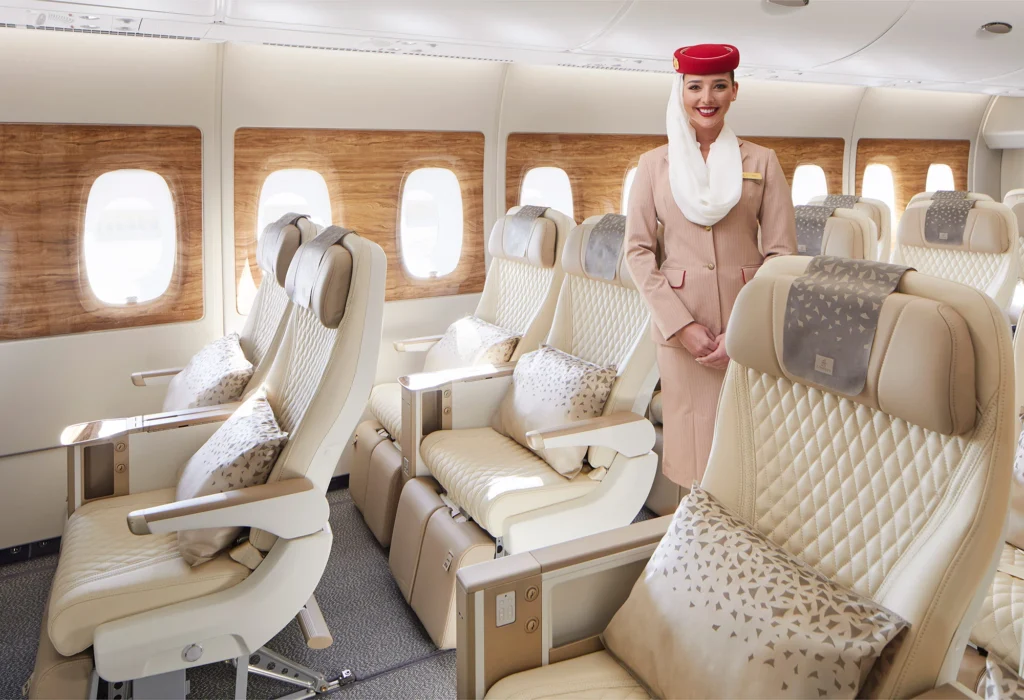
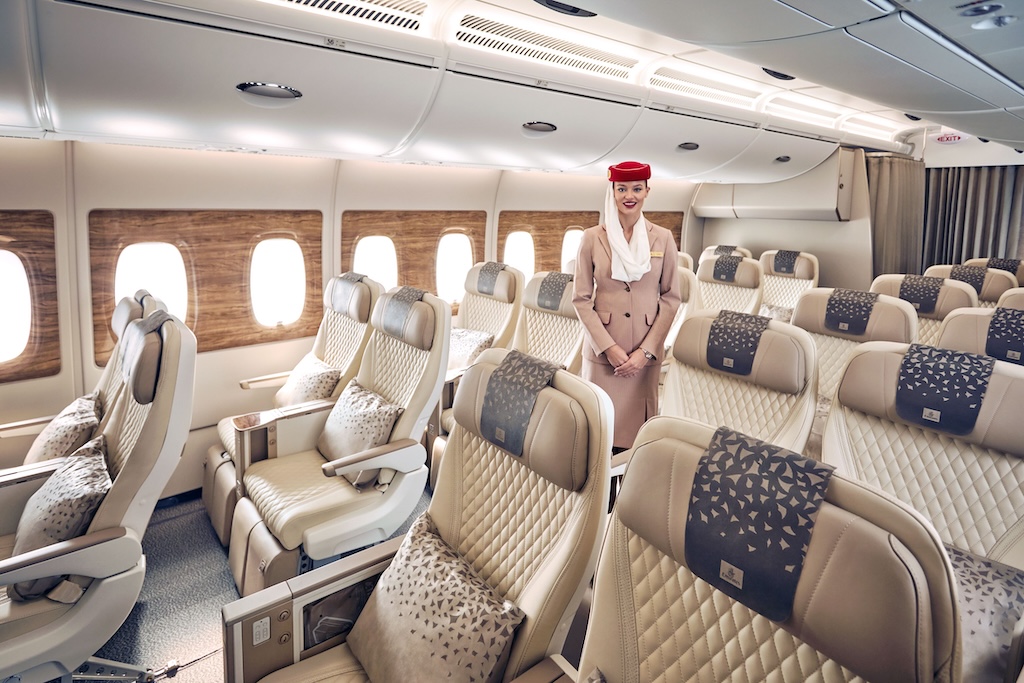
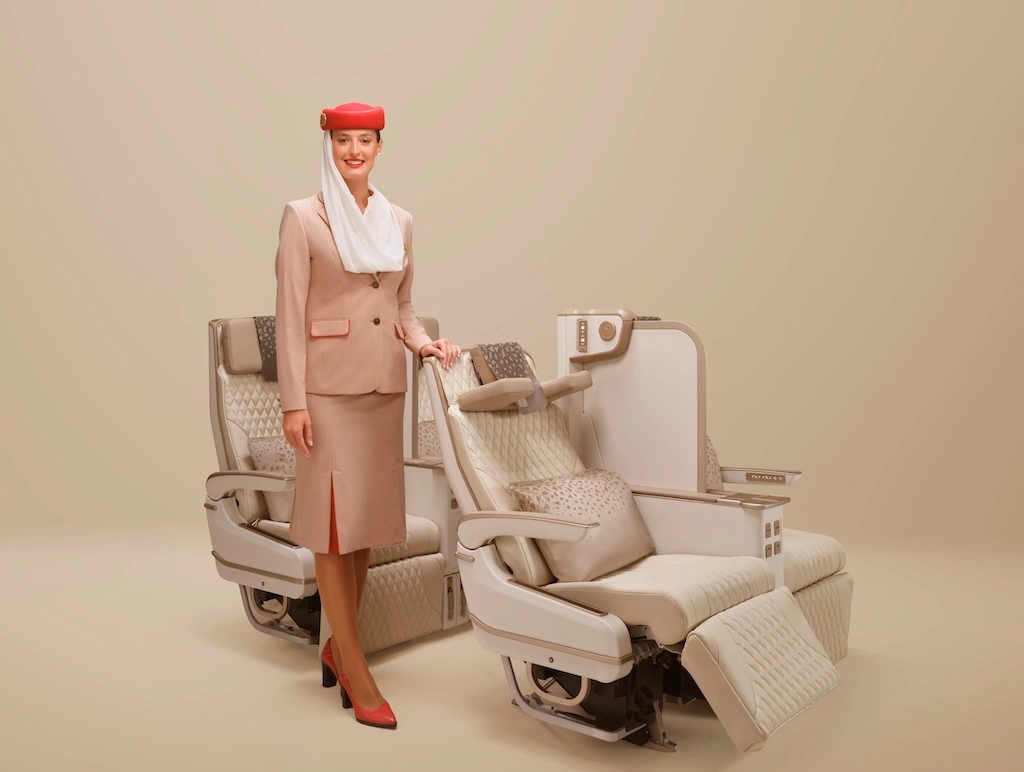
Emirates ranked second overall for premium economy in 2026, but it won the two awards that arguably matter most: World’s Best Premium Economy Class Seat and World’s Best Premium Economy Catering.
The Seat
Emirates launched premium economy in 2022 on its A380s. The existing seat is a clear step up from economy, with cream leather upholstery, calf and footrests, larger screens and an upgraded dining service.
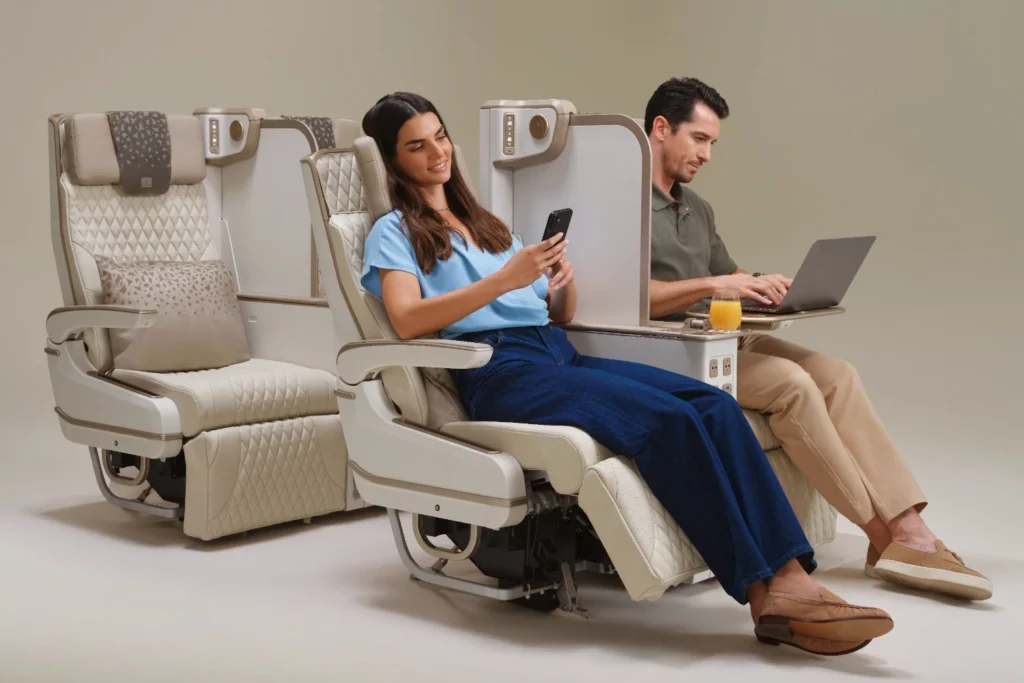
In September 2026, the airline unveiled an all-new seat for its newly delivered Airbus A350s, and it’s a genuine leap forward. The seat is fully electric, with dedicated lounge and meal modes, and between every pair of seats sits a full-height adjustable privacy divider, which Emirates describes as an industry first. Each seat is 20 inches wide with up to 39 inches of pitch, a cradle recline, a 13.3-inch 4K HDR touchscreen and wireless charging, and the cabin holds just 28 seats in a 2-3-2 layout.
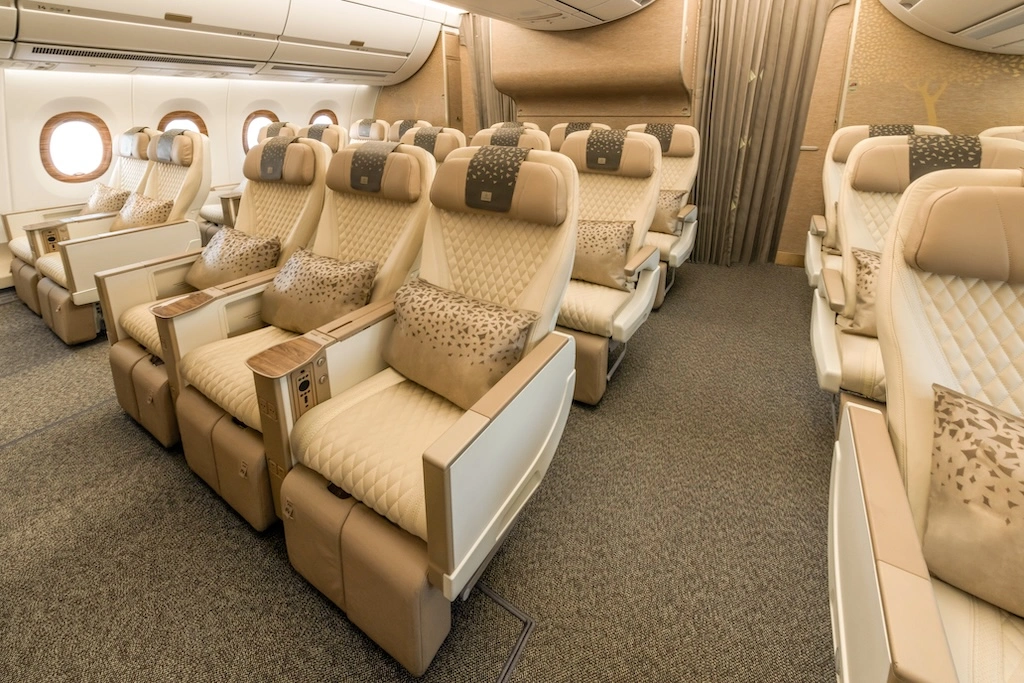
Japan Airlines got to electric recline in premium economy first, as you’ll read below, but no one else offers that full-height divider. For solo travellers, it brings premium economy closer to business-class privacy than ever before.
Flying Emirates From Asia
Emirates flies to Dubai from cities right across Asia, and the A350 already serves routes including Kuala Lumpur, Colombo, Taipei, Ho Chi Minh City and Kolkata. The new seat is being installed only on newly delivered aircraft, however, so an A350 booking alone does not guarantee it. Check the seat map, or confirm with Emirates, before you book.
Worth the Upgrade?
On the new A350 seat, absolutely. On older aircraft, the extra space and better food are welcome, but the value depends on the fare difference, as Emirates’ economy cabin is already strong.
3. Singapore Airlines: Polished from Changi Onwards
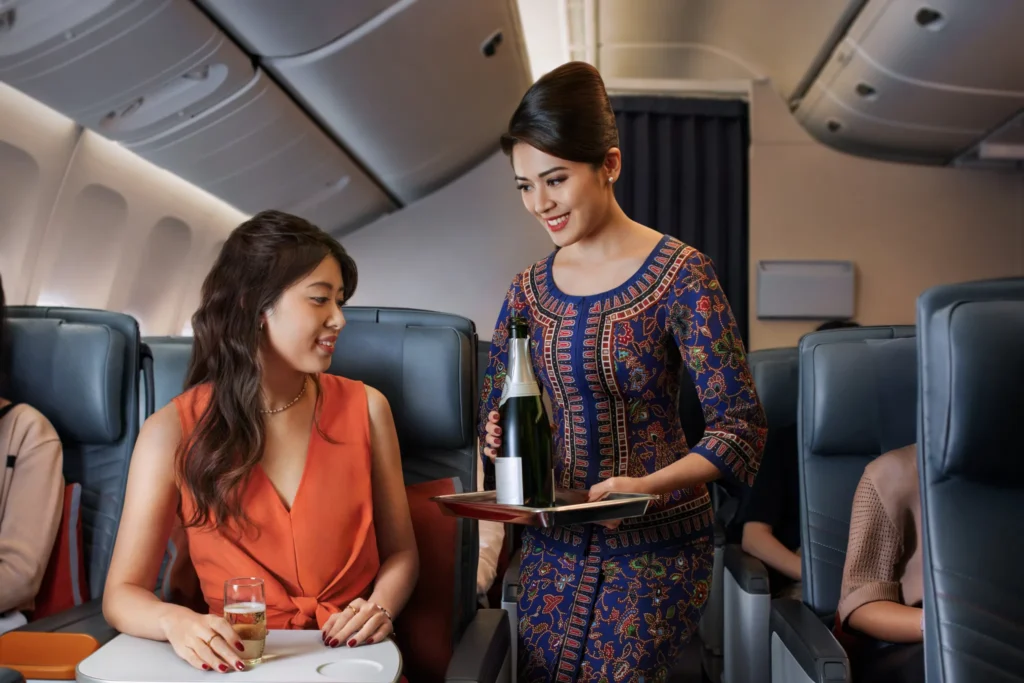
Singapore Airlines ranked third for premium economy in 2026, while also being named the World’s Best Airline and winning World’s Best Economy Class. That makes upgrading a closer call than on other airlines.
The Seat
Premium economy offers roughly 38 inches of pitch, compared with around 32 inches in economy, along with wider seats, eight inches of recline and built-in calf and footrests. On the A380, the 2-4-2 layout also means fewer middle seats than economy’s 3-4-3.
Beyond the Seat
This is where Singapore Airlines shines. Premium economy passengers can pre-order chef-designed dishes through the airline’s Book the Cook service, Champagne is poured on board, and priority check-in and boarding smooth the experience on the ground.
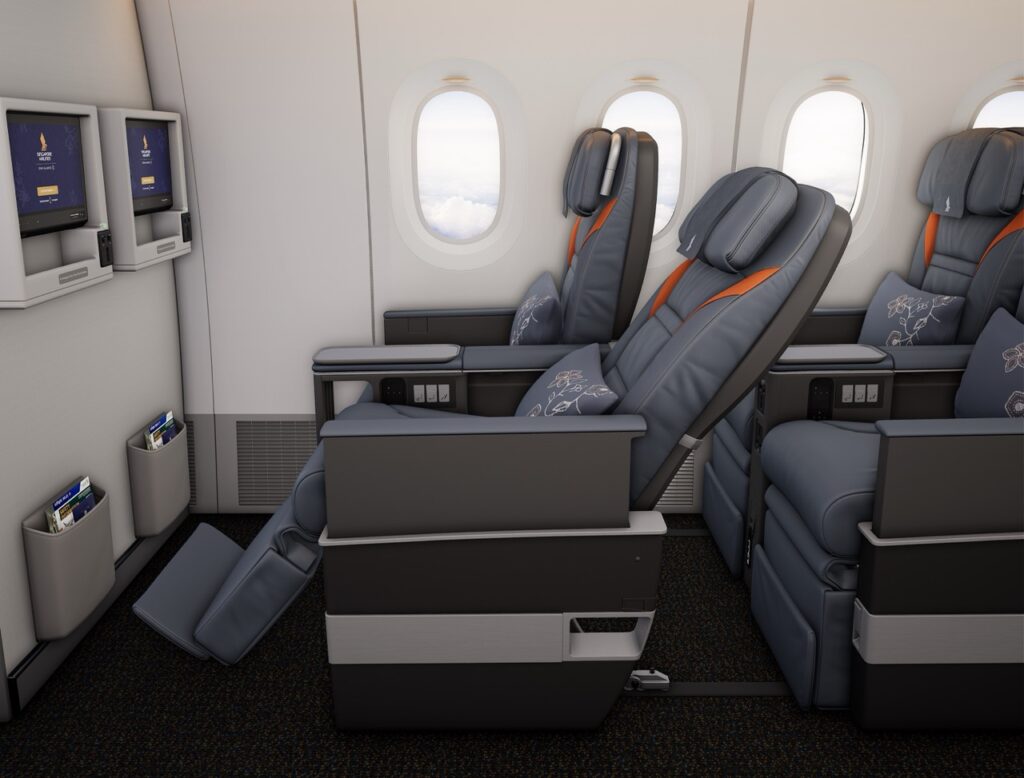
Flying Singapore Airlines from Asia
For Singapore-based readers, this is the obvious home carrier, with nonstop premium economy service to London, continental Europe, Australia and the United States. Hong Kong travellers can connect easily via Changi.
Worth the Upgrade?
On overnight flights and anything over eight hours, yes, because the extra legroom, recline and leg support make a real difference. On shorter regional flights, Singapore’s award-winning economy cabin is more than comfortable. It would be wise to look out for Singapore Airlines’ newest premium economy seat (above), which launches in the second half of 2027 when the airlie receives its first 777-9 aircraft.
4. Cathay Pacific: Best for Hong Kong Departures
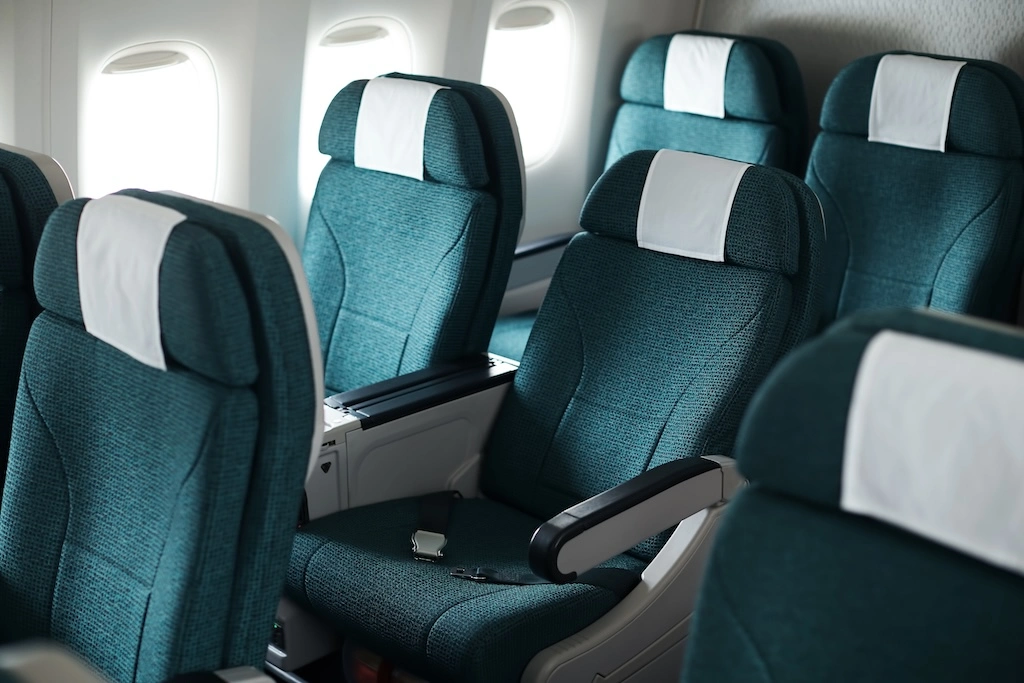
Cathay Pacific ranked fourth for premium economy overall, while its seat came second, only to Emirates’. With the airline marking its 80th anniversary in 2026, its cabins have rarely looked better.
The Seat
On the Airbus A350, premium economy offers 40 inches of pitch, nine inches of recline and full-length leg rests.
The bigger story is the all-new premium economy on Cathay’s retrofitted Boeing 777-300ERs, installed alongside its Aria Suite business class. The cabin is Cathay’s largest yet, with 48 seats across six rows in a 2-4-2 layout, but it doesn’t feel crowded. Winged headrests create a genuine sense of privacy, 15.6-inch 4K screens with Bluetooth audio make films more immersive, and storage has been improved throughout.
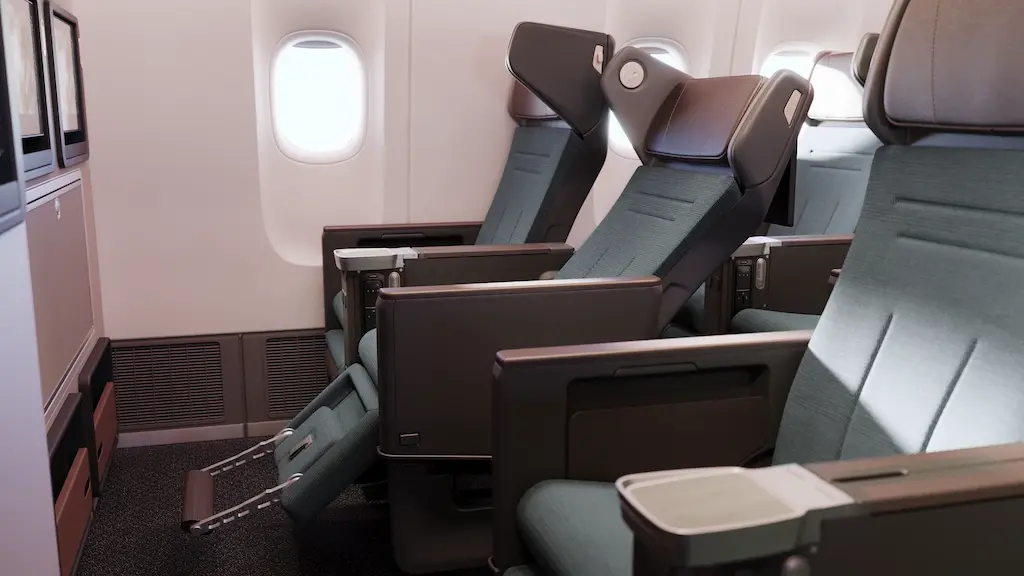
Beyond the Seat
Expect priority boarding, an extra baggage allowance and upgraded meals. Cathay’s crew were named the World’s Best Cabin Crew by Skytrax in 2026, and that warmth extends to every cabin.
Flying Cathay Pacific from Asia
Hong Kong is home, with excellent connections from Singapore, Bangkok, Manila and beyond. The retrofitted 777s fly routes including London as well as Los Angeles, San Francisco, Vancouver, Sydney and Melbourne. Cathay is retrofitting its fleet through 2027, so the aircraft type alone doesn’t guarantee the new cabin; the giveaway is six rows of premium economy on the seat map.
Worth the Upgrade?
The upgrade is most persuasive on long overnight flights, when the deep recline and leg rests come into their own. The new 777 seat, with its winged headrests, is one of the best premium economy products flying today.
5. Virgin Atlantic: Best for Dining and Service
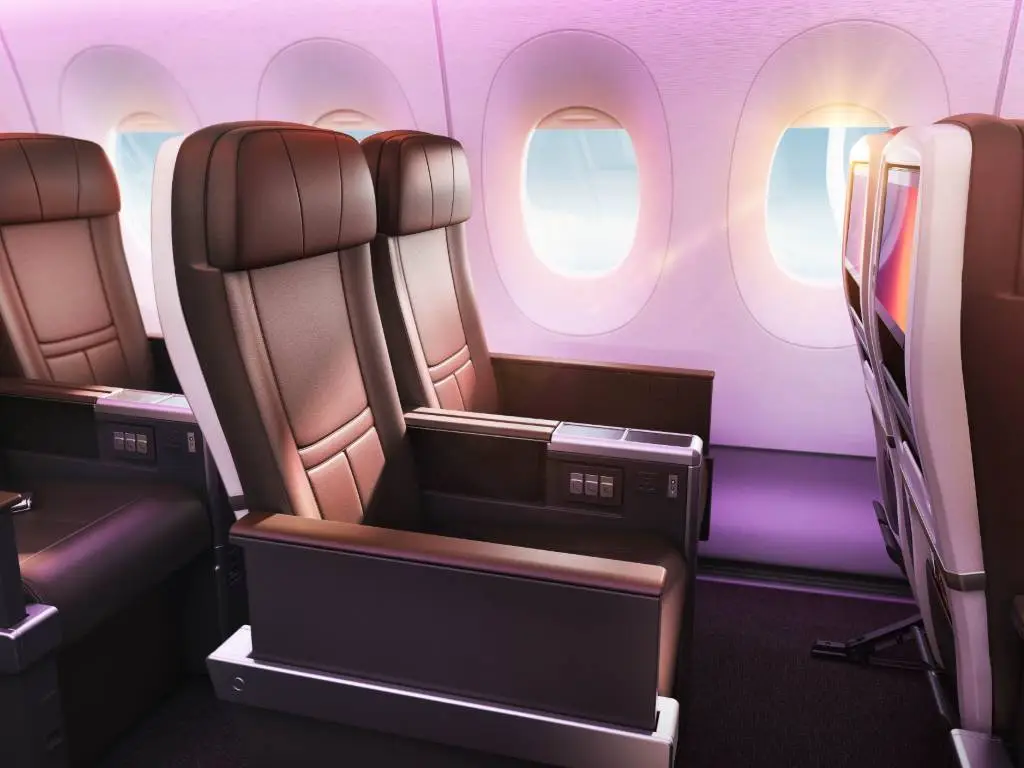
Virgin Atlantic rounded out Skytrax’s top five. Its premium economy cabin, simply called Premium, combines extra space with one of the most generous service experiences in the category.
The Seat
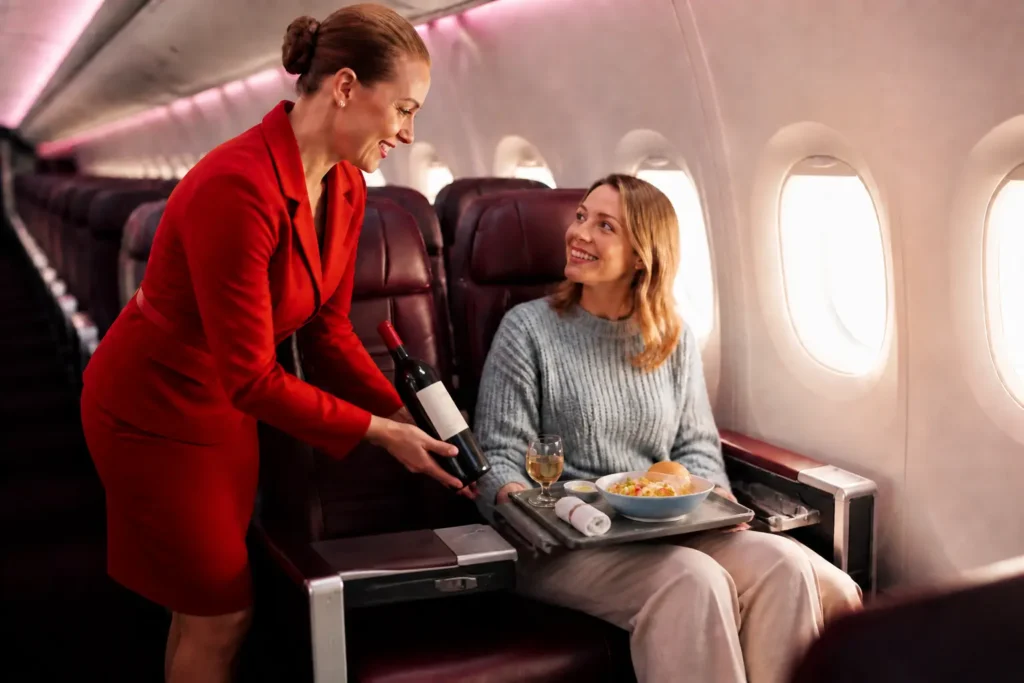
Premium offers up to 38 inches of pitch, compared with around 31 inches in economy, plus more recline and leg support. How much space you get depends on the aircraft. The Boeing 787-9 is the roomiest, with seats up to 21 inches wide and eight inches of recline. On the newer Airbus A350-1000 and A330neo, seats are narrower at 18.5 inches, although the A330neo adds wireless charging and Bluetooth-enabled screens.
Beyond the Seat
Virgin’s Premium cabin really stands out at mealtimes. Sparkling wine is served on boarding, there’s a choice of three main courses served on china with proper cutlery, and some flights add afternoon tea. On the ground, you’ll enjoy dedicated check-in and bag drop, priority boarding and baggage delivery, and an allowance of two 23 kg checked bags.
Flying Virgin Atlantic from Asia
Virgin’s Asian network is focused on India. The airline flies double-daily from London Heathrow to both Delhi and Mumbai, and from June 2026 increased its Bengaluru service to 13 flights a week on a Boeing 787-9 carrying 35 Premium seats. A partnership with IndiGo links those gateways to dozens of Indian cities. That makes Virgin an excellent option for India trips, or for onward travel from London to the United States through its joint venture with Delta and Air France-KLM.
Worth the Upgrade?
Yes on the 787-9, where the wider seat and polished service justify the fare. If legroom is your only concern, Virgin’s Economy Delight seats offer up to 34 inches of pitch for considerably less.
6. Japan Airlines: The Most Private Premium Economy

Japan Airlines came sixth in Skytrax’s 2026 premium economy rankings, but on its newest aircraft it has a strong case for the top spot.
The Seat
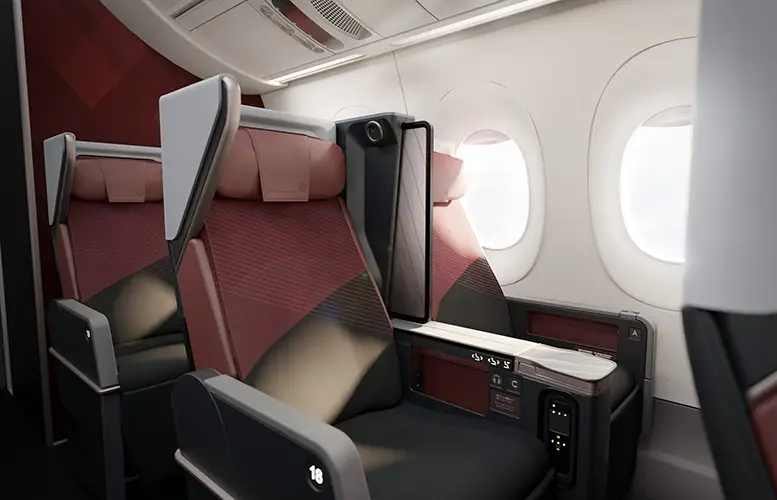
JAL’s premium economy seat on the Airbus A350-1000, introduced in 2024, was the world’s first premium economy seat with electrically operated recline. It sits within a fixed-back shell that slides forward when you recline, so you never lean into the passenger behind, and generous privacy wings and a motorised leg rest complete the effect. Expect around 42 inches of pitch, a width of 19 inches and a 16-inch screen, in a cabin of just 24 seats arranged 2-4-2.
JAL’s other long-haul aircraft, including the Boeing 777-300ER and 787-9, also offer roughly 42 inches of pitch, making it one of the most consistently spacious premium economy airlines in the sky.
Beyond the Seat
JAL’s quiet, precise Japanese service runs through every cabin, and its menus give real weight to Japanese cuisine. Premium economy fares also include priority services and, on many departures, lounge access, though it’s worth checking the conditions of your fare.
Flying Japan Airlines from Asia
JAL’s long-haul network radiates from Tokyo’s Haneda and Narita airports, with easy connections from Hong Kong, Singapore, Bangkok, Taipei and beyond. The A350-1000 flies the airline’s flagship routes, including London and New York.
Worth the Upgrade?
On the A350-1000, unquestionably. JAL’s economy cabin is already roomy, with 33 to 34 inches of pitch on the same aircraft, but the premium economy shell and electric recline are in a different league altogether.
7. Delta Air Lines: The Strongest US Option
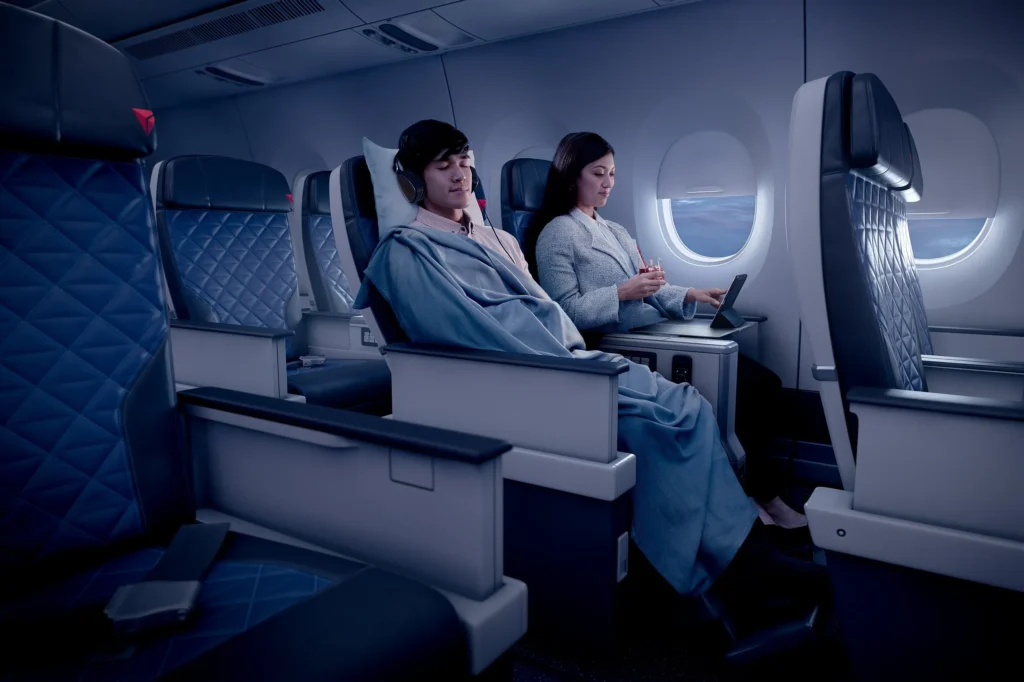
Delta was the only North American airline to make Skytrax’s premium economy top ten in 2026, placing seventh. Its Premium Select cabin is a strong choice for travellers heading to the United States.
The Seat
Premium Select offers 38 inches of pitch on every widebody aircraft, a width of 18.5 to 19.5 inches depending on the aircraft, and up to seven inches of recline, with adjustable leg rests and footrests. The seats are narrower than some rivals’, and on the A350-900 the 2-4-2 layout puts two middle seats in each row, so it pays to choose a window or aisle.
Beyond the Seat
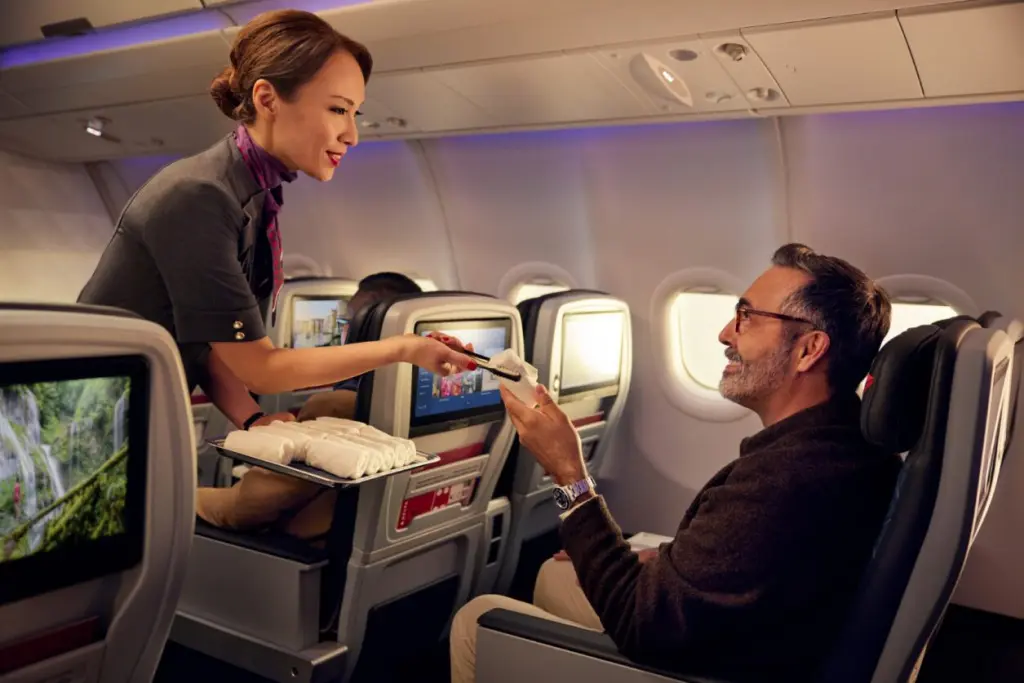
Westin Heavenly bedding, noise-cancelling headphones, upgraded meals and SkyPriority check-in, boarding and baggage handling all come as standard.
Flying Delta from Asia
Delta’s Asian network has grown quickly. Since June 2026 it has flown daily between Hong Kong and Los Angeles on the A350-900, its first Hong Kong route since 2018. It also links Seattle with Taipei and serves Seoul, Tokyo Haneda and Shanghai, while a new Manila–Los Angeles route launches on 28 March 2027, initially three times a week before going daily in June. Joint-venture partner Korean Air adds a wide range of connections through Seoul. Delta’s new Airbus A350-1000, expected from 2027 with a larger Premium Select cabin, is set to focus on Asian routes.
Worth the Upgrade?
For a transpacific flight of 12 hours or more, yes. Delta’s economy is solid but not in the same league as the Asian carriers on this list, so the step up to Premium Select feels significant.
8. China Airlines: Taipei’s Other Quiet Contender
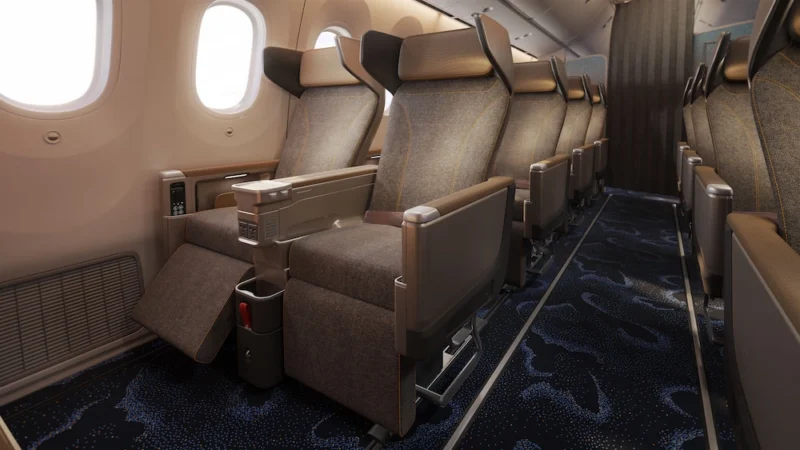
China Airlines didn’t feature in Skytrax’s 2026 premium economy rankings, and the Taiwanese flag carrier holds a four-star rating rather than the five stars of its Taoyuan neighbour, EVA Air. But this is our wildcard for good reason. It offers one of the largest and most comfortable premium economy cabins flying out of Asia, it upgraded the service substantially in 2026, and an all-new seat is arriving with its first Boeing 787s.
The Seat
On the Boeing 777-300ER, China Airlines devotes an unusually large share of the aircraft to premium economy: 62 seats across eight rows in a 2-4-2 layout. Each is a fixed-shell seat that slides forward rather than reclining backwards, so the passenger in front never lands in your lap, with around 38 to 39 inches of pitch, a width of 19 inches and a leg rest. The Airbus A350-900 carries a smaller, more intimate cabin of 31 seats, and many regulars prefer it.
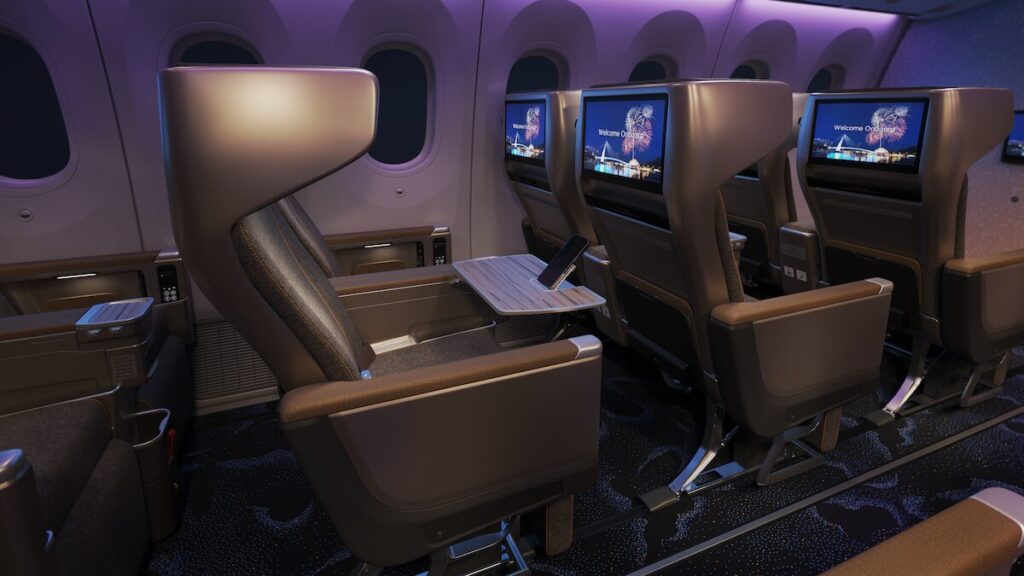
The bigger news is the cabin unveiled in June 2026 for the airline’s incoming fleet of 24 Dreamliners, made up of 18 Boeing 787-9s and six 787-10s. Inspired by a theme the airline calls ‘Starlit Mountain City’, it has just 28 seats in a 2-3-2 layout, with a 42-inch pitch and 19.5-inch width. The seats also feature leather footrests, six-way adjustable headrests, rose-gold reading lamps and seat covers that shift colour under the cabin lighting. Each seat has a 15.6-inch 4K screen with Bluetooth, so you can pair your own headphones.
Beyond the Seat
This is where China Airlines has made the most progress. Since February 2026, premium economy has gained new tableware, sparkling wine and caffeine-free herbal teas matching those served in business class, and main courses that can be pre-ordered online. Long-haul flights add slippers, two-tone quilts and noise-reducing headphones, along with a new amenity kit created with Marc Jacobs and the Danish lifestyle brand FRAMA. Free Wi-Fi with unlimited browsing and messaging is available on the 777 and A350, and on the ground you get priority check-in and boarding.
The baggage allowance is particularly generous: two checked bags of up to 28 kg each, compared with the 23 kg most rivals allow.
Flying China Airlines from Asia
Like EVA Air, China Airlines is based in Taipei, with frequent connections from Hong Kong, Singapore, Bangkok, Manila and across the region. Its long-haul network takes in Los Angeles and other North American gateways, European cities including London, Frankfurt, Amsterdam, Vienna and Rome, and Australia. As a SkyTeam member, it’s also a natural choice for anyone collecting miles with Delta, Korean Air or Air France-KLM.
Worth the Upgrade?
Yes, especially on the 777-300ER. China Airlines’ 777 economy cabin is arranged ten abreast, with seats around 17 inches wide, so the step up to premium economy feels bigger than on most airlines here.
How to Choose the Right Premium Economy for Your Trip
The simplest approach is to choose by route first, then by aircraft. If you’re flying from Hong Kong to London or North America, Cathay Pacific’s retrofitted 777 or A350 is hard to beat, offering nonstop flights, new seats and an outstanding crew. From Singapore to Europe, the United States or Australia, Singapore Airlines combines nonstop convenience with Book the Cook and its famously polished service.
If you’re happy to connect, the choice widens. Emirates, ideally on its new A350, is the pick for Europe via the Gulf, with its privacy divider and top-rated dining. EVA Air’s 787-9 makes Taipei an appealing stopover on the way to North America or Europe, while Japan Airlines’ A350-1000 offers the most private shell seat in the sky via Tokyo to London or New York.
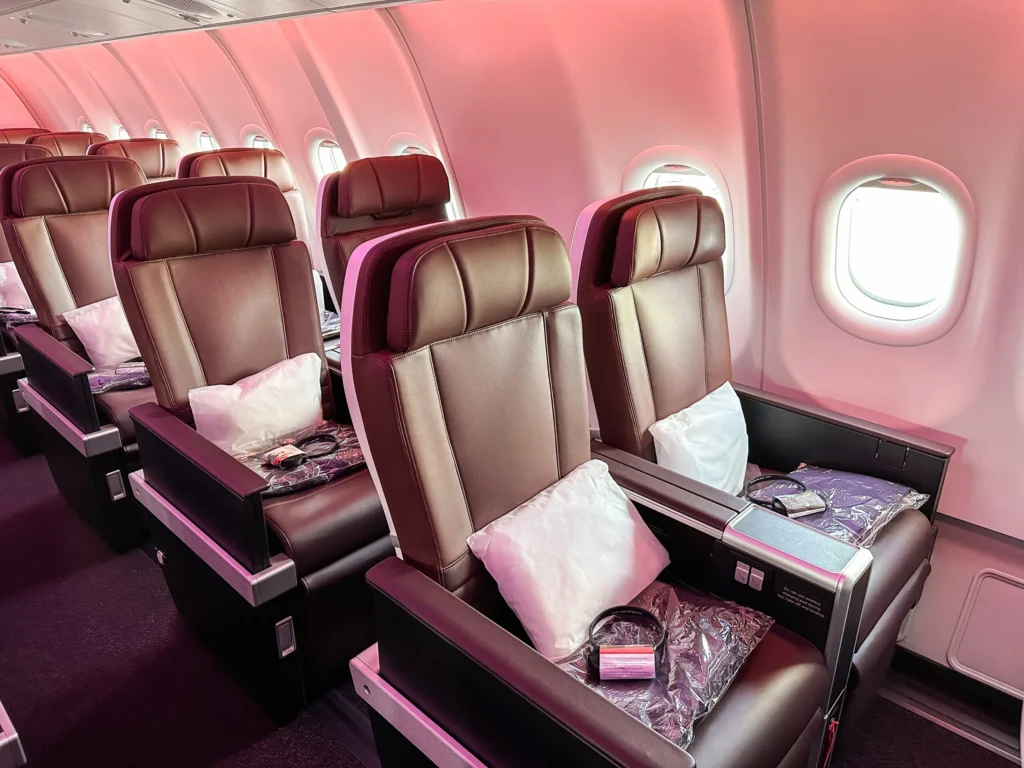
For India–London journeys, Virgin Atlantic’s 787-9 pairs wide seats with outstanding dining, and for flights from Hong Kong, Taipei, Seoul or Tokyo to the United States, Delta offers nonstops to its hubs and easy domestic connections onward.
Booking Tips: How to Get the Best Premium Economy for Less
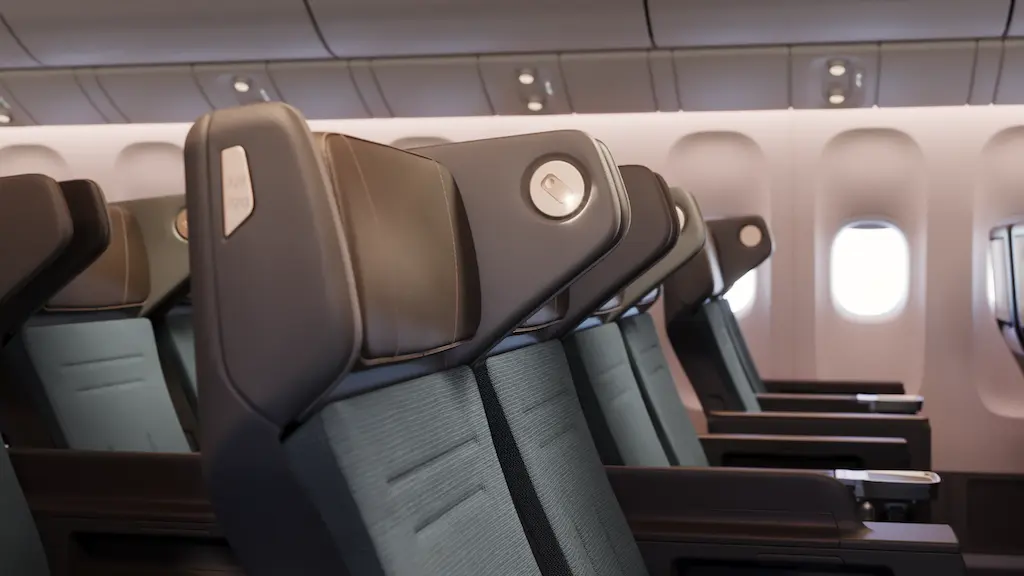
Start by checking the aircraft, not just the airline. The difference between an older and a newer premium economy seat on the same carrier can be dramatic, so use the seat map and look for clues in the configuration, such as 28 seats arranged 2-3-2 on EVA’s 787-9, or six rows of premium economy on Cathay’s retrofitted 777.
It also pays to watch for upgrade offers after you book. Airlines often offer paid or bid upgrades closer to departure that cost far less than the original difference in fares. Frequent flyers should consider miles, too, since award seats in premium economy are often easier to find than business class and can offer excellent value per mile.
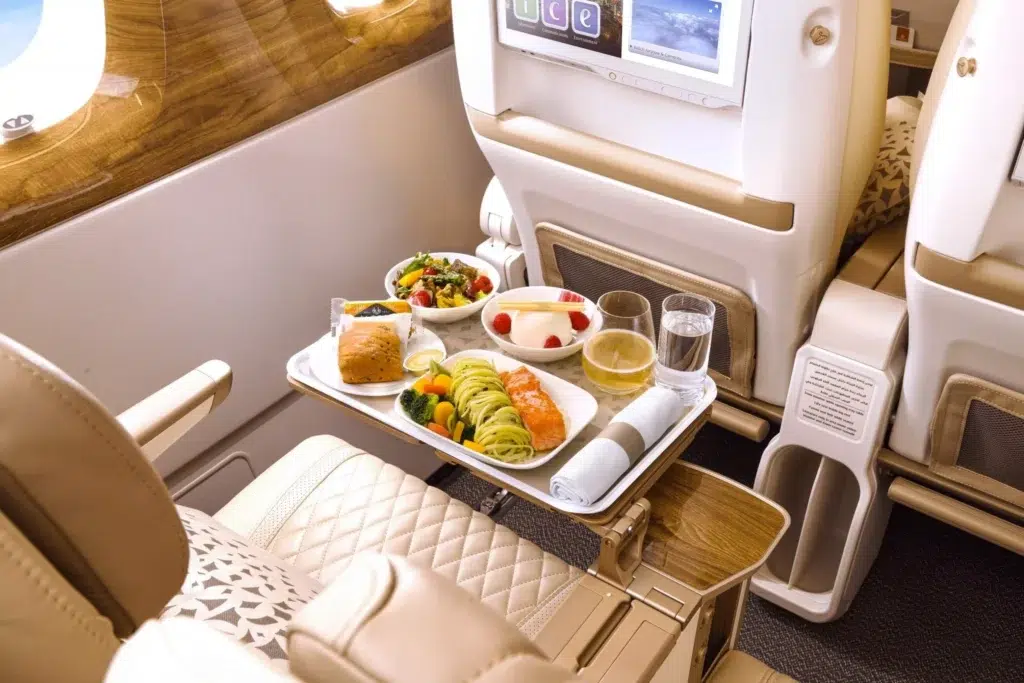
If your budget stretches to only one upgrade on a return trip, use it on the overnight sector. Once on board, avoid the centre seats in 2-4-2 cabins, which are the least comfortable for couples and solo travellers alike. And always read the fare rules, because baggage allowances, lounge access and change fees vary widely between airlines and fare types.
For families, premium economy is often the sweet spot, with more space for parents, a calmer cabin and a far lower bill than business class for four. EVA Air, which was named Skytrax’s World’s Most Family Friendly Airline for 2026, is a particularly good choice.
Best Premium Economy Airlines: Your Questions Answered
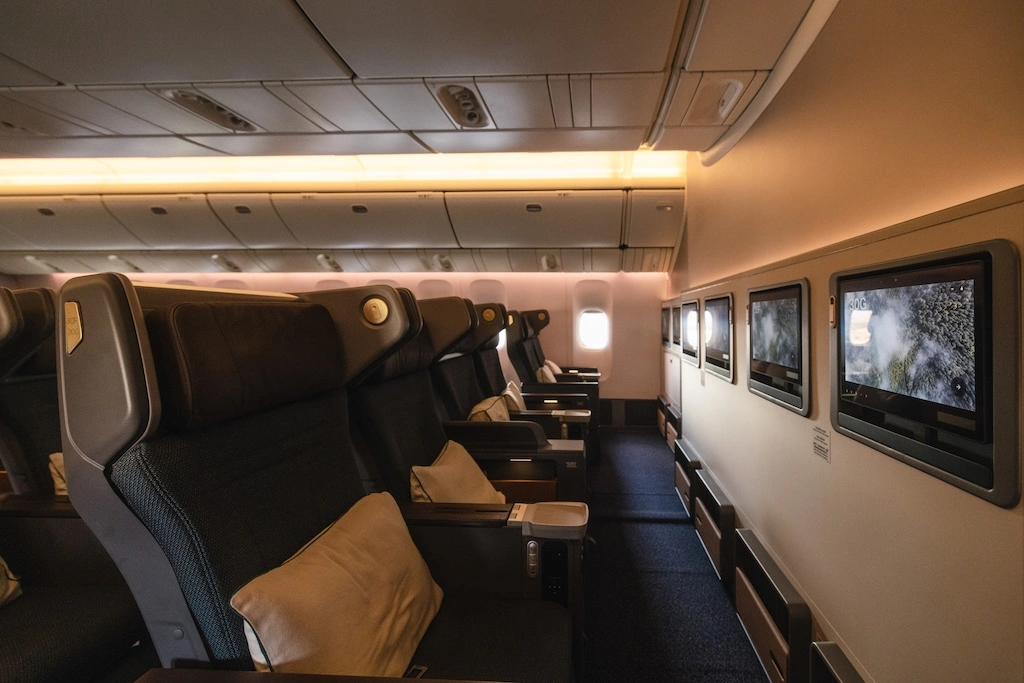
Planning your next long-haul flight from Asia? These answers cover the most-searched questions about the best premium economy airlines.
Which airline has the best premium economy in the world?
Based on Skytrax’s 2026 World Airline Awards, EVA Air has the world’s best premium economy, followed by Emirates, Singapore Airlines, Cathay Pacific and Virgin Atlantic. Emirates won the separate award for the best premium economy seat.
Is premium economy worth it on long-haul flights from Asia?
On flights of eight hours or more, especially overnight, premium economy is usually worth it for the extra legroom, recline and leg support. On shorter regional flights, the strong economy cabins of airlines such as Singapore Airlines and Cathay Pacific are often enough.

Which premium economy has the most legroom?
EVA Air’s Boeing 787-9 and Japan Airlines’ long-haul fleet both offer around 42 inches of seat pitch, among the most generous in the industry. Cathay Pacific’s A350 offers 40 inches.
What is the best premium economy from Hong Kong?
Cathay Pacific is the natural choice, especially on its retrofitted Boeing 777-300ERs to London, Los Angeles and Vancouver. Delta’s daily Hong Kong–Los Angeles A350 flight is a strong alternative to the United States.
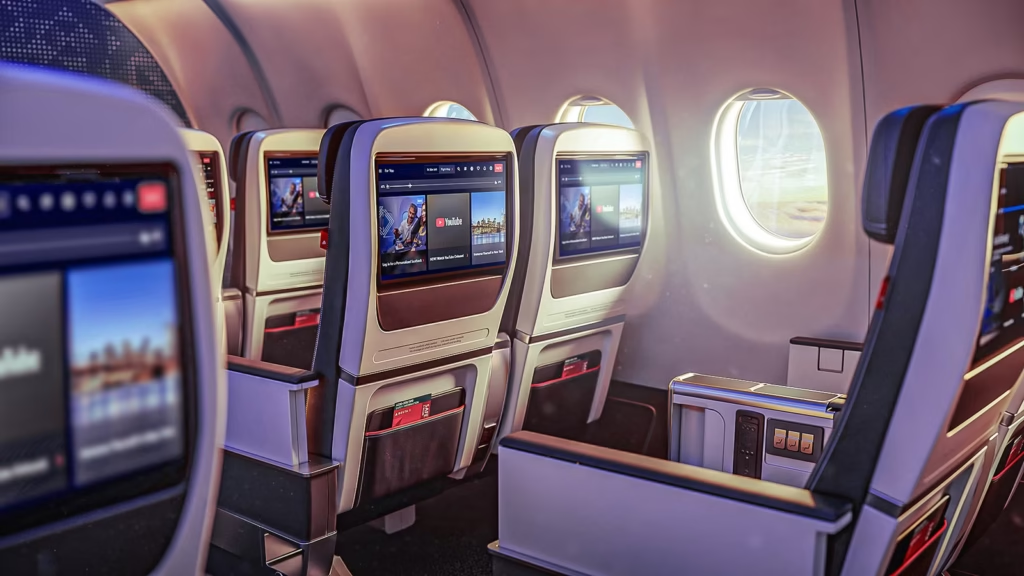
What is the best premium economy from Singapore?
Singapore Airlines offers nonstop premium economy to Europe, the United States and Australia, with Book the Cook meal pre-ordering. Emirates via Dubai and EVA Air via Taipei are good alternatives.
Does premium economy include lounge access?
Usually not, though there are exceptions. Japan Airlines includes lounge access on many premium economy fares, and elite frequent flyer status often unlocks lounges. Always check your fare conditions.