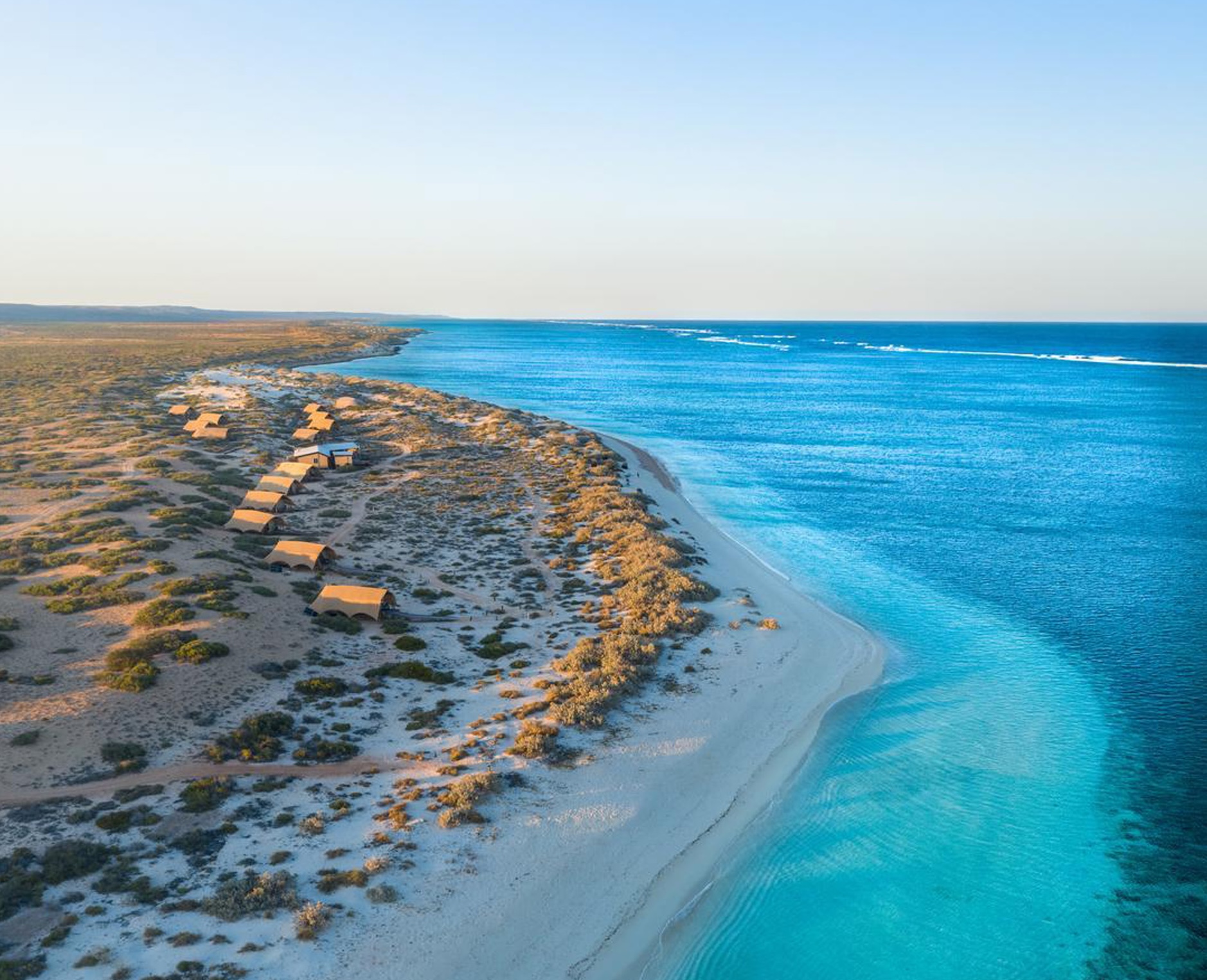

Remote Western Australia coastal camp Sal Salis Ningaloo Reef will reopen in March with exciting new-look tents and public spaces.
Among Australia’s luxurious lodges, outback stations and wilderness camps, there’s one property that always captures the imagination. Perched on a stretch of Western Australia’s Cape Range National Park, where the dunes run almost straight into the reef, Sal Salis Ningaloo Reef remains one of the country’s most remote houses of slumber next year, the experience of staying there is going to get considerably better.
A Bold New Chapter
Journey Beyond, which also operates Australia’s best luxury train journeys, has announced a major refurbishment of its eco-luxury tented camp on the edge of the Ningaloo coast, with the property closing for works and reopening in late March 2027.
The company is putting more than AU$5 million (US$3.5 million) into the redesign, a serious sum for a camp built on the promise of barefoot simplicity, and a sign of how much weight Sal Salis carries in a portfolio that also includes Journey Beyond’s rail journeys and other signature Australian stays.
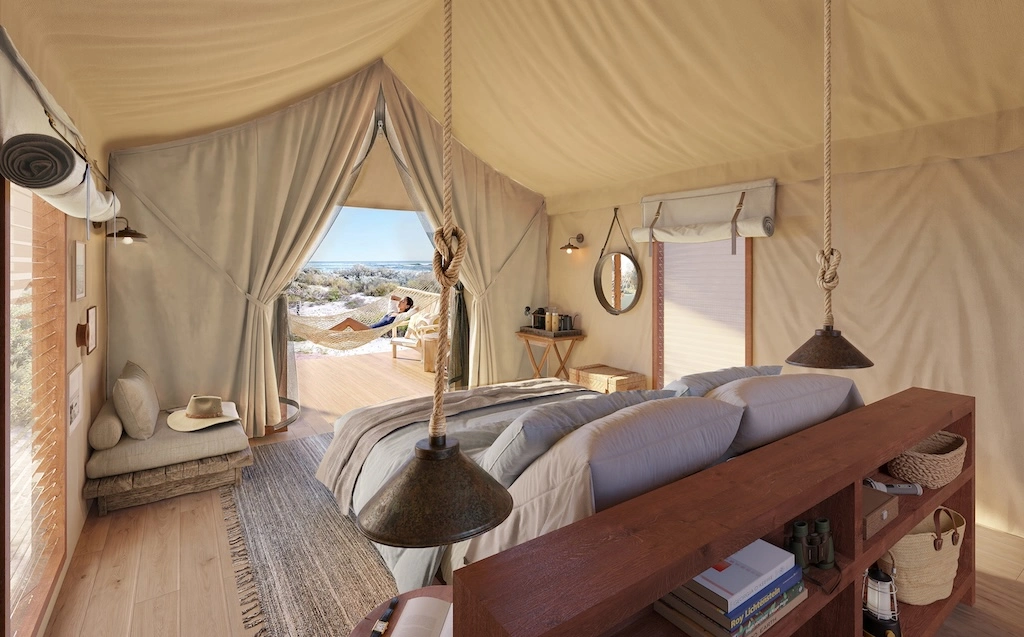
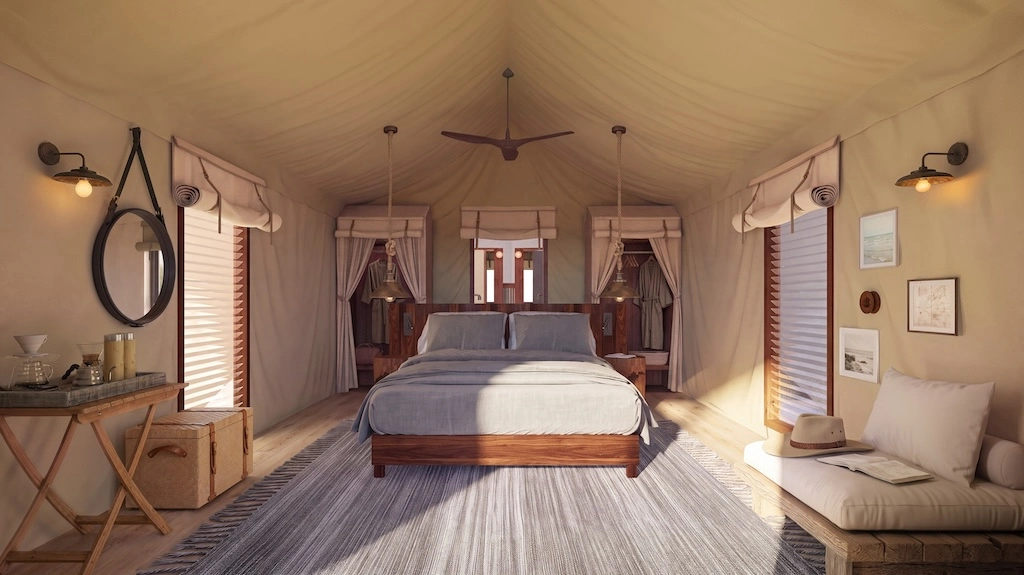
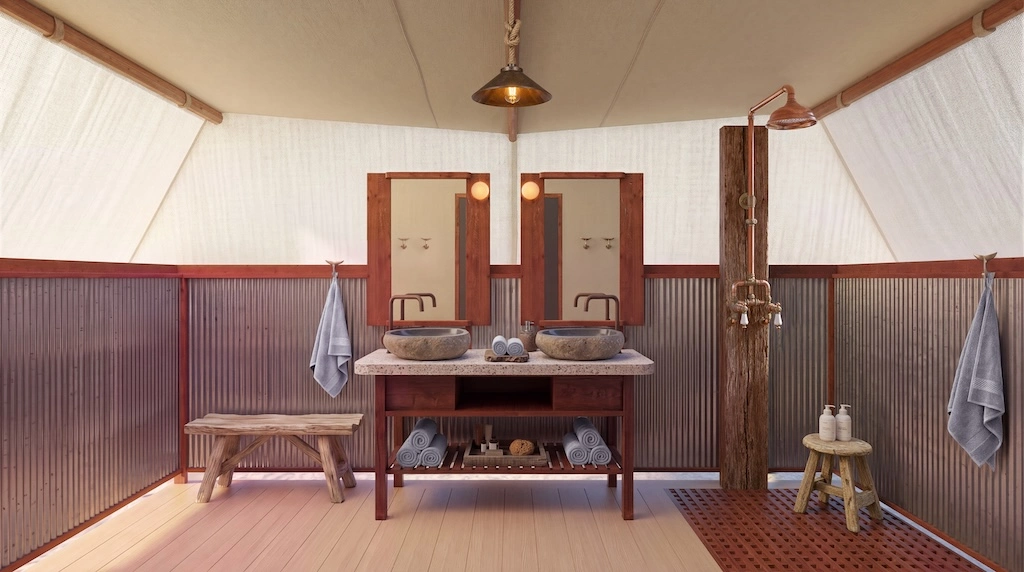
The 16 Wilderness Tents are being rebuilt with louvered windows and private en-suite bathrooms, dressed in a marine-inspired palette that borrows its blues and turquoise directly from the reef outside. New furniture, statement lighting and custom textiles round out interiors at a camp that was, by most accounts, already loved more for its unfussy comfort than its finishes. A refreshed reception will greet arrivals, and the central sundeck and lounge, the camp’s long-standing social hub, is getting a full upgrade, alongside a new communal dining area with banquette seating and an all-inclusive open bar.
“The evolution of Sal Salis reflects our commitment to continually elevating the guest experience,” says Chris Tallent, CEO of Journey Beyond, adding that the redesign is sensitive to the environment and designed to sit harmoniously within its surroundings while keeping the barefoot luxury that makes Sal Salis so unique.
Built to Weather, Not Resist
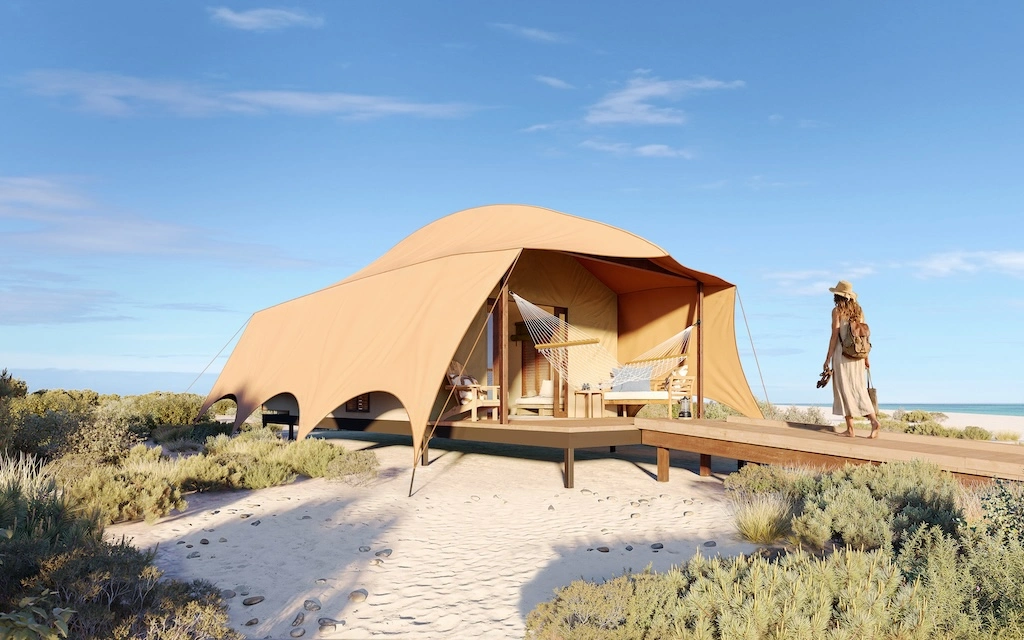
The redesign comes from Woods Bagot, the global design firm behind Journey Beyond’s recent Aurora and Australis rail suites, and the brief this time was to let the landscape do the talking. Woods Bagot director Rosina Di Maria says the palette was drawn directly from what surrounds the camp: coastline, land and sky.
Materiality plays a central role, with, as she puts it, “colour and pattern reflecting the terrain’s tactility and hues borrowed from the maritime environment”. This includes teak and reclaimed jarrah, raw edges that nod to erosion, woven rope and knot detailing, and metalwork left to develop a patina rather than resist one, chosen to silver naturally over time.
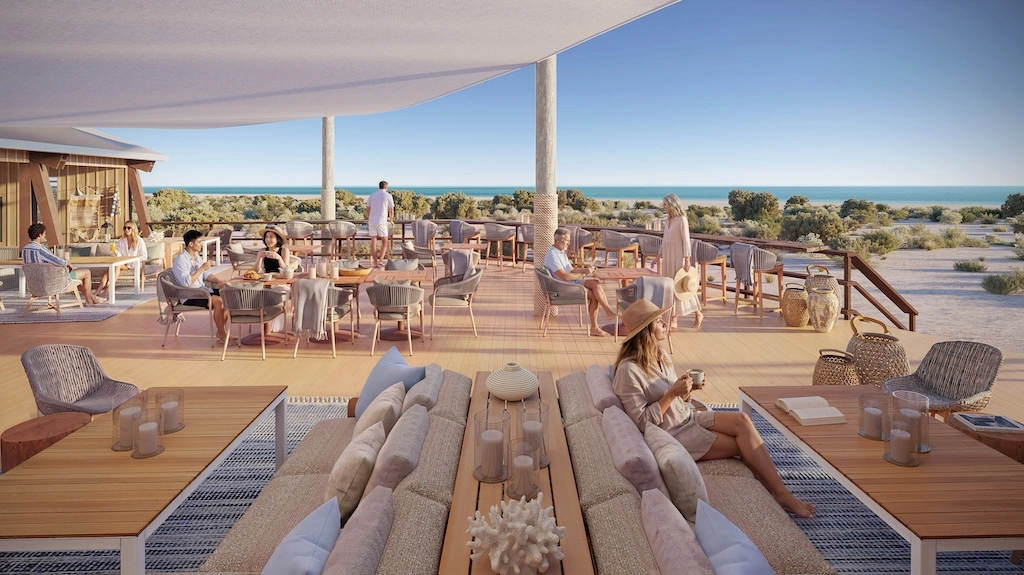
None of it changes what actually brings people to Sal Salis: direct beach access to the UNESCO World Heritage-listed Ningaloo Reef, one of the largest fringing reefs on Earth, right off camp. Guided sunrise walks through the national park’s gorges, snorkelling among a reef system home to more than 500 fish species and 250 types of coral, and kayak or paddleboard outings remain part of the daily rhythm, with optional whale shark and humpback whale swims on offer, one of only a handful of places in the world where either is possible.
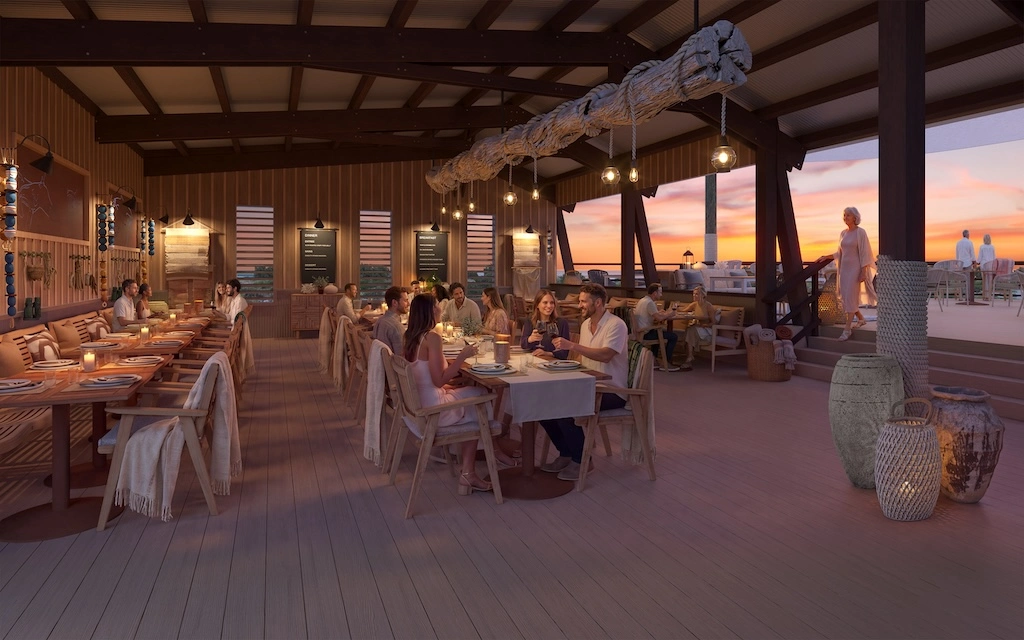
In addition, meals lean on seasonal Western Australian produce and bush and ocean flavours, paired with included local wines and regional beers.
For a corner of Western Australia most travellers still reach by flying into Exmouth and driving from there, the closure just means one more reason to start planning early.