

Istanbul has traded across continents for two millennia. Here’s where to shop like a local, how to barter properly, and what each of its great markets does best.
Istanbul has been a marketplace for longer than most cities have existed. As Byzantine Constantinople, it sat at the western terminus of the Silk Road, the point where spices, silk and gemstones travelling overland from Asia were loaded onto ships bound for Venice, Genoa and beyond.
After 1453, the conquering Ottomans built the Grand Bazaar directly into that inheritance, and within a century, Istanbul had become the commercial hinge of the Mediterranean.
That history isn’t a museum piece. It’s still the operating logic of the city’s markets today, where haggling, relationship-building, and the theatre of a good sale are simply how business gets done, exactly as they were five centuries ago.
How to Get a Deal

Bartering is not optional in Istanbul’s bazaars, and getting it right is part of the fun. The asking price is a starting point, not a fact, and a reasonable opening counteroffer sits at roughly half of what’s first quoted, with the final price usually landing somewhere between a third and two-thirds of that original figure.
As an avid haggler, I’d suggest keeping the tone light and unhurried, since haggling here is a social exchange, not a confrontation, and a seller who enjoys the back-and-forth will often move further than one who feels pressured. It’s best to do your homework on rough price ranges before you start, so you know a genuine bargain from an inflated one, and be prepared to simply thank a vendor and walk towards the door if the price doesn’t move; it’s a remarkably effective tactic, and often draws a better offer before you’ve left the stall.
Cash, ideally Turkish lira, tends to unlock a better price than a card, and buying two or three items from one seller is a legitimate way to ask for a further discount.
Behaviour & Scams

When it comes to etiquette and dress, Istanbul’s markets are relaxed, secular commercial spaces, and there’s no formal dress code for the Grand Bazaar, Spice Bazaar or any of the markets below, though modest, comfortable clothing and sturdy shoes make sense given the crowds, uneven flooring and, in the case of Kadıköy, often muddy produce aisles.
A friendly greeting, a little patience, and a willingness to accept a glass of tea while you look (with no obligation to buy) go a long way with vendors who deal with rushed tourists all day.

Do be wary of anyone unusually eager to befriend you near the bazaar entrances: the classic move is a warm invitation to a “family” carpet or leather shop for tea, followed by 45 minutes of gentle pressure and an opening price designed purely to be talked down from. A shoe-shiner who “accidentally” drops a brush in front of you and offers a free polish is angling for the same outcome.
Politely decline unsolicited offers of guidance, verify any carpet’s authenticity and price against a second or third shop before committing, and treat certificates of authenticity handed over by an eager vendor with a healthy dose of scepticism.
The Grand Bazaar

Location: Straddling the Beyazıt and Nuruosmaniye neighbourhoods of the historic peninsula, a short walk from the Beyazıt-Kapalıçarşı tram stop on the T1 line.
Established in 1455 under Mehmed the Conqueror and expanded steadily over the following century and a half, the Grand Bazaar is the original department store, a fully enclosed, 30,700-square-metre labyrinth of 61 covered streets and more than 4,000 shops, drawing crowds that regularly run into the hundreds of thousands on a busy day.
The bazaar specialises, essentially, in everything the Ottoman Empire once traded, from gold and silver jewellery concentrated along Kalpakçılar Caddesi, and Kütahya ceramics, to hammered copper and brass, hand-knotted carpets and kilims, leather goods, and glass Turkish lamps in every colour imaginable.

The scale can be disorienting on a first visit, so navigate by landmark rather than street name; enter through the grand Nuruosmaniye Gate for the most atmospheric approach, use the domed Old Bazaar (İç Bedesten) at the market’s historic core, home to the oldest jewellers and antique dealers, as your central reference point, and don’t be afraid to simply get lost as every lane eventually rejoins a main artery.
Don’t leave without a piece of hand-painted İznik-style ceramic, a pair of gold earrings priced and weighed by the gram (ask for the daily gold rate to check you’re being quoted fairly), or an authentic hand-knotted rug bought only after comparing at least two or three dealers. Visit on a weekday morning, ideally before 11 am, for the calmest browsing and the most attentive vendors but note that the bazaar is closed on Sundays.
The Egyptian (Spice) Bazaar
Location: Eminönü, immediately beside the New Mosque (Yeni Cami) and a two-minute walk from the Galata Bridge.
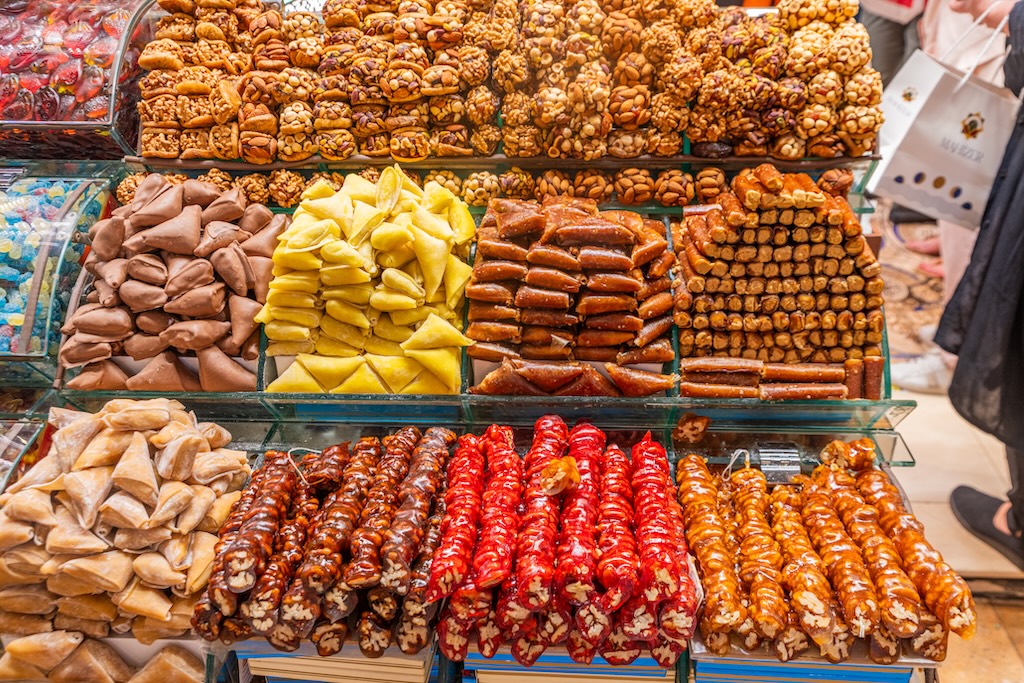
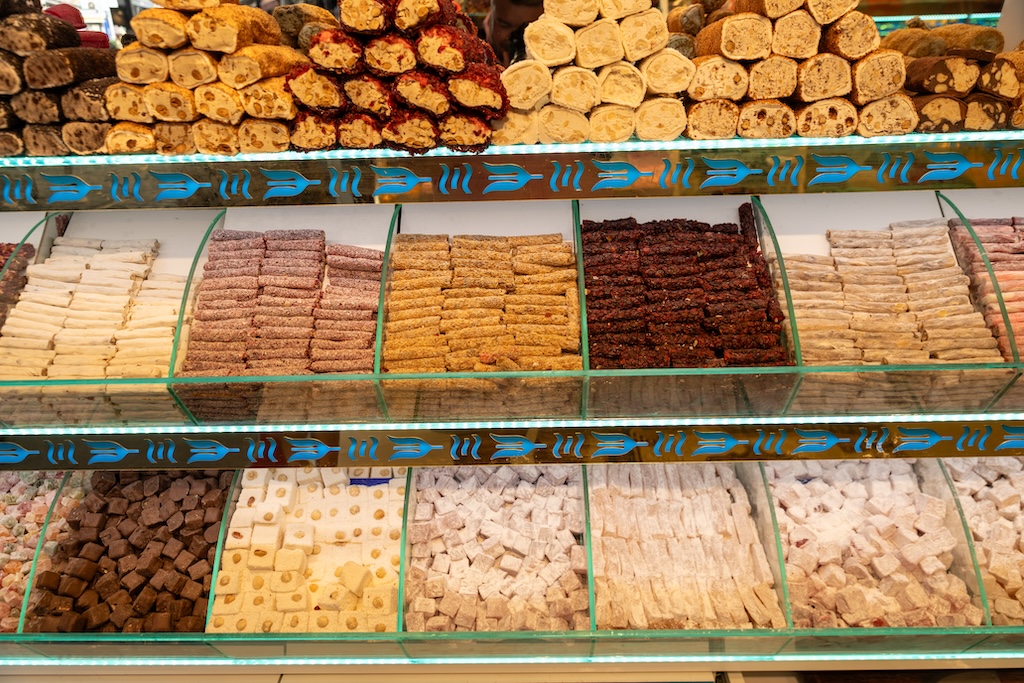
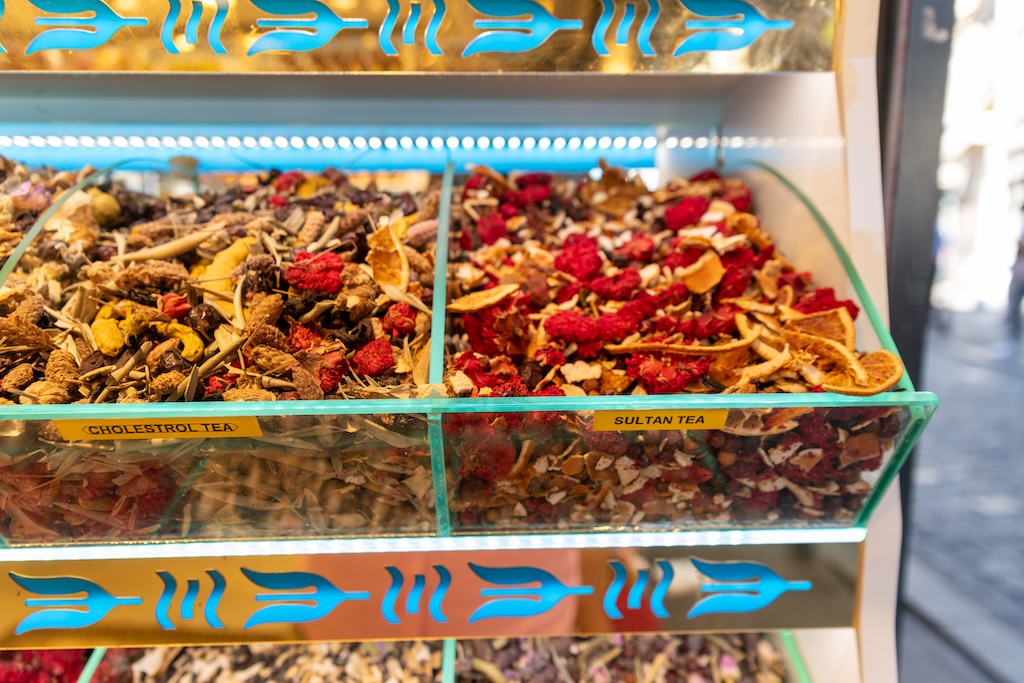
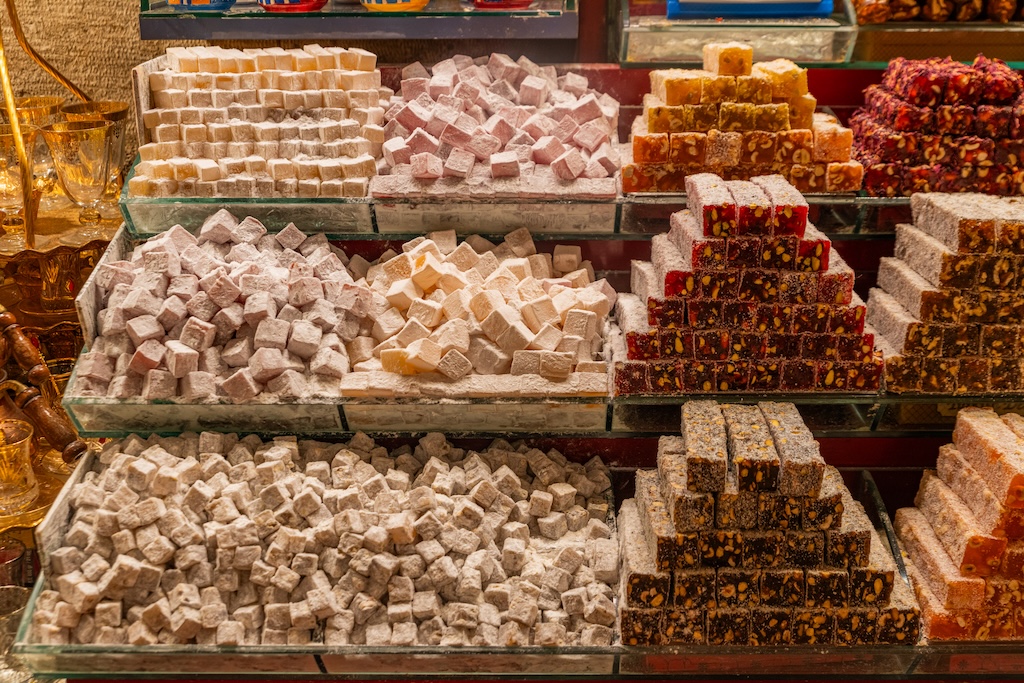
Built in 1660 as part of the New Mosque complex and originally funded by duties on goods arriving from Egypt, the Spice Bazaar is smaller and far more tightly focused than the Grand Bazaar, with around 85 shops given over almost entirely to spices, dried fruit and nuts, tea, cheese and cured meats, and the multicoloured towers of lokum, or Turkish delight, the market is famous for.
It’s compact enough to cover properly in an hour, which makes it the easiest of Istanbul’s markets to navigate. Walk the length of the main covered hall first to get your bearings and see the full range on offer, then double back for the vendors whose stalls caught your eye, since prices and freshness can vary meaningfully between one spice stall and its near-identical neighbour.

Shops closest to the main entrances tend to price for tour groups but a few extra minutes spent finding a stall further inside, or one of the long-established shops on the surrounding streets, usually pays off.
Don’t leave without authentic Turkish saffron, sumac, a block of good-quality pistachio lokum, a tin of apple or pomegranate tea, and dried apricots or figs, which travel well and make easy gifts.
The bazaar is open daily from 8 am to 7 pm but arrive at opening on a weekday to beat both the tour buses and the afternoon crowds funnelling in from the Grand Bazaar.
Çukurcuma and Horhor: Istanbul’s Antiques Quarter

Location: Çukurcuma, a pocket of Beyoğlu just south of İstiklal Avenue near Cihangir; Horhor Bit Pazarı, a seven-storey antiques han on Horhor Caddesi in Fatih, a short walk from Aksaray metro station.
Istanbul’s antiques trade is split, usefully, between two very different experiences. Horhor is the wholesale end, and is centred on a dense, seven-floor building housing roughly 200 dealers stacked with restored Ottoman furniture, chandeliers, mirrors and architectural salvage. I find it’s better suited to buyers after a serious statement piece rather than casual souvenir hunters.
Çukurcuma, by contrast, is a whole neighbourhood of small, curated shops spread across a few cobbled streets, specialising in mid-century furniture, vintage textiles, old maps and prints, and smaller decorative pieces, and it rewards unhurried wandering rather than a fixed itinerary. To navigate it, start on İstiklal Avenue near Galatasaray Square and walk southeast down Turnacıbaşı Caddesi, following it round past the Galatasaray Hamam until it meets Faik Paşa Caddesi. A dozen or more antique shops sit within a hundred metres of that junction alone.

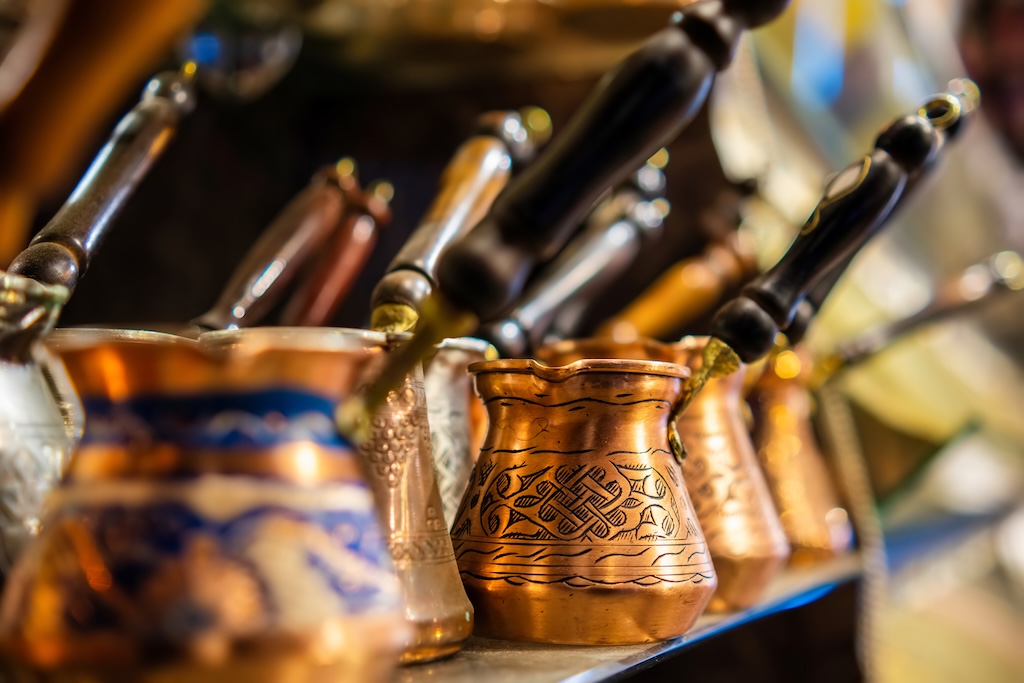
Don’t leave without a piece of vintage Anatolian kilim, an old brass coffee grinder, or a hand-painted ceramic hamam bowl. For anything genuinely old, ask the dealer directly about export paperwork, since Turkey restricts the export of significant cultural artefacts and legitimate antique dealers will know exactly what documentation, if any, your purchase requires.
Horhor is best tackled in the morning, when the han is quietest, and dealers have time to talk through larger pieces, while Çukurcuma’s shops tend to open later and are at their best in the unhurried hours of a weekday afternoon.
Arasta Bazaar

Location: Immediately behind the Blue Mosque in Sultanahmet, a short walk from the Sultanahmet tram stop on the T1 line.
Built in the early 17th century as part of Sultan Ahmed I’s mosque complex, with shop rents originally set aside to fund the Blue Mosque’s upkeep, Arasta Bazaar is the Grand Bazaar in miniature and considerably calmer for it. Around 70 shops, along a single attractive lane, specialise in handwoven carpets and kilims, İznik-style tiles and ceramics, textiles and jewellery, with none of the sensory overload of its larger cousin.
This is the easiest market in this guide to navigate properly, since there’s really only one street to walk, which makes it ideal for travellers short on time or overwhelmed by the scale of the Grand Bazaar. Budget 20 to 30 minutes to browse it properly, and combine the visit with the Great Palace Mosaic Museum, tucked beneath the bazaar itself.
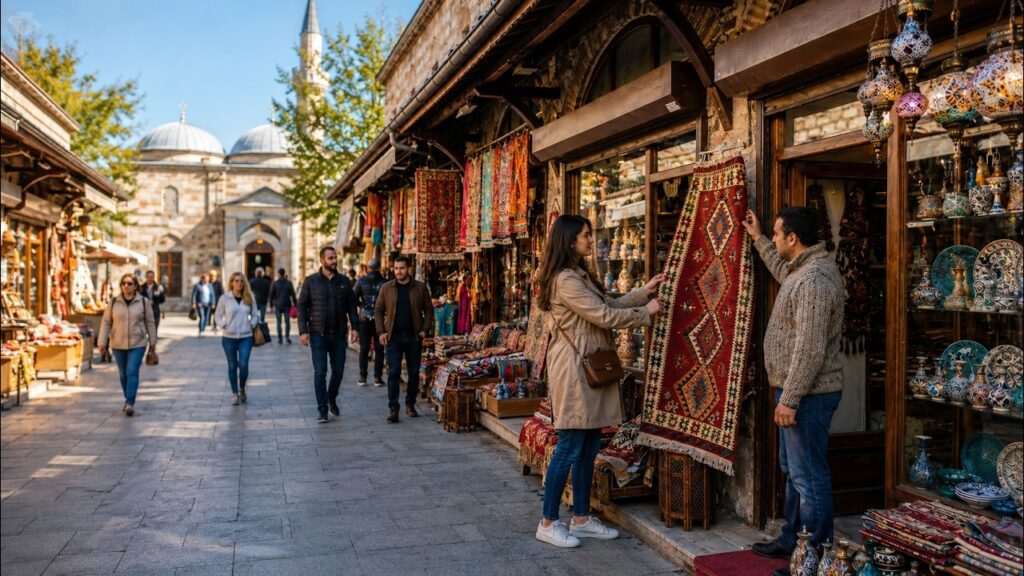
Don’t leave without a hand-painted ceramic plate or bowl, a small silk-and-wool kilim with a certificate of authenticity, or a piece of nazar boncuğu, the blue evil-eye jewellery seen across Turkey.
Shops generally open between 9 am and 10 am, but arriving right at opening, before the Blue Mosque’s tour groups spill over, gives you the calmest possible browse.
Kadıköy Tuesday Market (Salı Pazarı)

Location: Göztepe, on Istanbul’s Asian side, reached via the M4 metro line from Kadıköy (four stops; follow exit sign 2, marked Salı Pazarı).
For a great local alternative to the tourist-facing bazaars of the old city, cross the Bosphorus to Kadıköy‘s Tuesday Market, one of the largest and liveliest street markets in Istanbul and a world away, in tone, from anything on the European side.
It runs on Tuesdays and again on Fridays, with produce, textiles and household goods dominating on Tuesdays and a stronger secondhand and antiques presence taking over on Fridays.
Navigating this market is straightforward once you’re inside; the entrance sections closest to the metro sell new textiles, shoes and household basics, while a sewing supplies section with fabric and trims sits to one side, and the market opens out further in towards fresh produce, cheese, olives and the flea-market stalls at its heart.
Don’t leave without a wedge of good Turkish cheese, a bag of olives, or a length of patterned fabric, all priced for locals rather than tourists, and note that while bargaining is entirely normal on clothing and homeware, it’s generally not done on fresh food.
Go in the morning for the best produce and the fullest energy of the market, although you’ll find that prices on unsold stock soften noticeably in the last hour before the market packs up around 6 pm, so you might want to pop back in at the end of the day.
Istanbul Shopping FAQ

Before you start filling bags at the bazaar, here’s what to know about paying, bargaining, VAT refunds and getting purchases like carpets safely home.
Is bartering expected at every market in Istanbul?
Bargaining is standard practice at the Grand Bazaar, Arasta Bazaar, the antiques shops of Çukurcuma and Horhor, and on clothing and homeware at Kadıköy’s Tuesday Market. It’s generally not applied to fresh food, and prices at the Spice Bazaar’s more established stalls tend to be fairly fixed, particularly for smaller items like tea or lokum.
How much should I expect to save by haggling?
There’s no fixed rule, but a final price of somewhere between a third and two-thirds of the first amount quoted is a reasonable outcome in most bazaar settings. The gap tends to be widest on carpets, leather and souvenirs aimed squarely at tourists, and narrowest on jewellery, where gold is priced closer to the daily market rate. And remember, sellers are well-versed and won’t sell at a price that hurts their wallet, so be brave!

Can I pay by card, or do I need cash?
Most shops in the Grand Bazaar, Arasta Bazaar and the antiques quarters accept cards, but cash, ideally Turkish lira, often secures a better price and is essential at open-air markets like Kadıköy’s, where many stalls are cash-only. It’s worth carrying a reasonable amount of lira for day-to-day bazaar shopping regardless.
Can I claim a VAT refund on my purchases?
Foreign visitors can claim a VAT refund on eligible purchases, including carpets, leather goods and textiles, from participating stores when the total spend clears the minimum threshold, currently a modest sum in Turkish lira. Keep items unused and in their original packaging, retain your tax-free form and receipts, and have both on hand for inspection when you get your customs stamp before departure, since without it the refund is void.
Are there restrictions on exporting antiques?
Turkey does restrict the export of culturally significant antiques and archaeological items, so anything genuinely old bought at Horhor or Çukurcuma should come with a clear answer from the dealer about whether an export document is required. Reputable antique dealers handle this routinely so if a seller can’t or won’t explain the paperwork for an item marketed as a genuine antique, treat that as a red flag.
Can I ship a carpet or large purchase home?
Yes. Established carpet and antiques dealers in the Grand Bazaar, Arasta Bazaar and Çukurcuma regularly arrange international shipping and can provide documentation, insurance and a tracking number for large or fragile items. Get shipping costs and delivery timeframes in writing before you pay, and favour dealers with a permanent shop and a long-standing reputation over anyone you’ve been steered towards by a stranger on the street.
If you’re planning a trip to Istanbul, be sure to check out our guide to the city’s best luxury hotels, Istanbul’s most fascinating neighbourhoods, our review of the palatial Kempinski, and our 48 hour itinerary.