

These six rural hideaways reveal what happens when architecture yields to landscape, craft, and centuries of local tradition.
Across the world, a new wave of rural hotels is defined less by what’s been added than by what’s been kept. Monasteries, ryokans, vineyard estates, and mountain lodges have been reworked with restraint rather than reinvention, staying close to the rivers, vines, stone, and altitude that shaped them long before hospitality did.
The result is a quieter kind of travel, with architecture that frames the landscape instead of competing with it, and personas inspired around bathing culture, seasonal rhythms, and long pauses between destinations. Here are a few of our favourites.
SOIL Nagatoyumoto
Nagatoyumoto, Japan
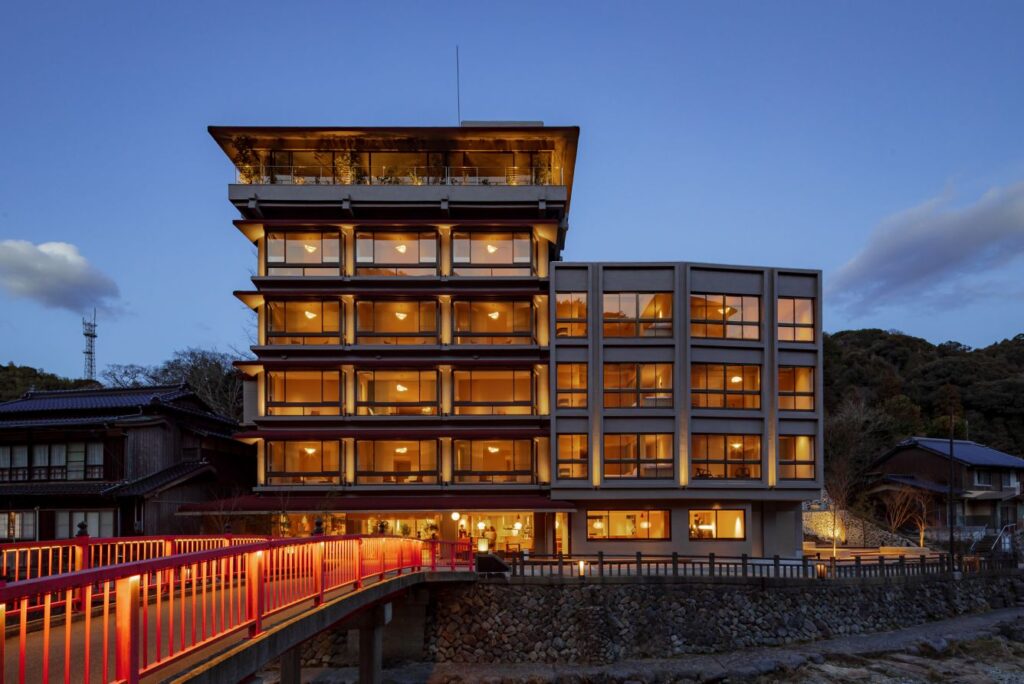
In Nagato Yumoto Onsen, a hot spring village on Japan’s Yamaguchi Prefecture coast, SOIL Nagatoyumoto occupies the site of Rokkakudo, a ryokan founded around 1900. The 2025 renovation kept the building’s original bones while stripping interiors back to local timber, stone, washi-paper lighting, and handmade Fukagawa-Hagi ceramics from the region’s centuries-old kilns.
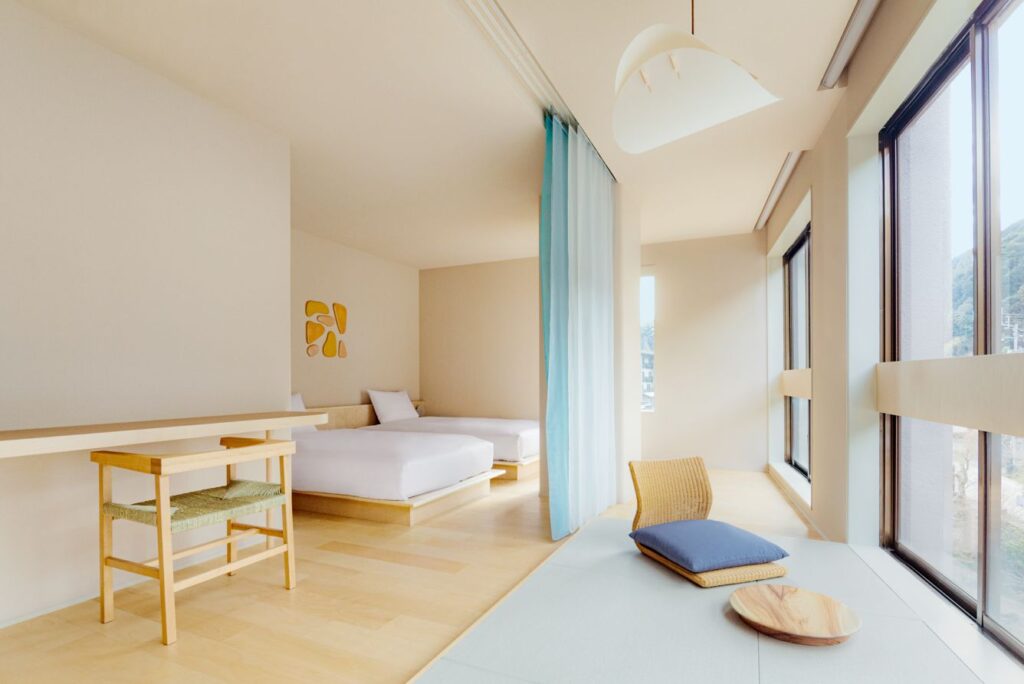
The tiny, unassuming hotel’s 24 rooms use large windows to draw in the Otozure River, which cuts through the hot spring town and shifts with the seasons — cherry blossoms in spring, clear water in summer, foliage in autumn, steam over snow in winter.
Guests get unrestricted access to Onto, a 600-year-old public bath fed by unfiltered spring water, alongside the hotel’s own river-view sauna and Taru, a wood-fired restaurant sourcing from local farmers and Sea of Japan fishing boats.
SOIL was built to send guests out into Nagatoyumoto rather than keep them inside, so leave time for pottery classes, stand-up paddleboarding, and cycling excursions that are treated as part of the stay, not as add-ons to it.
Vigilius Mountain Resort
South Tyrol, Italy
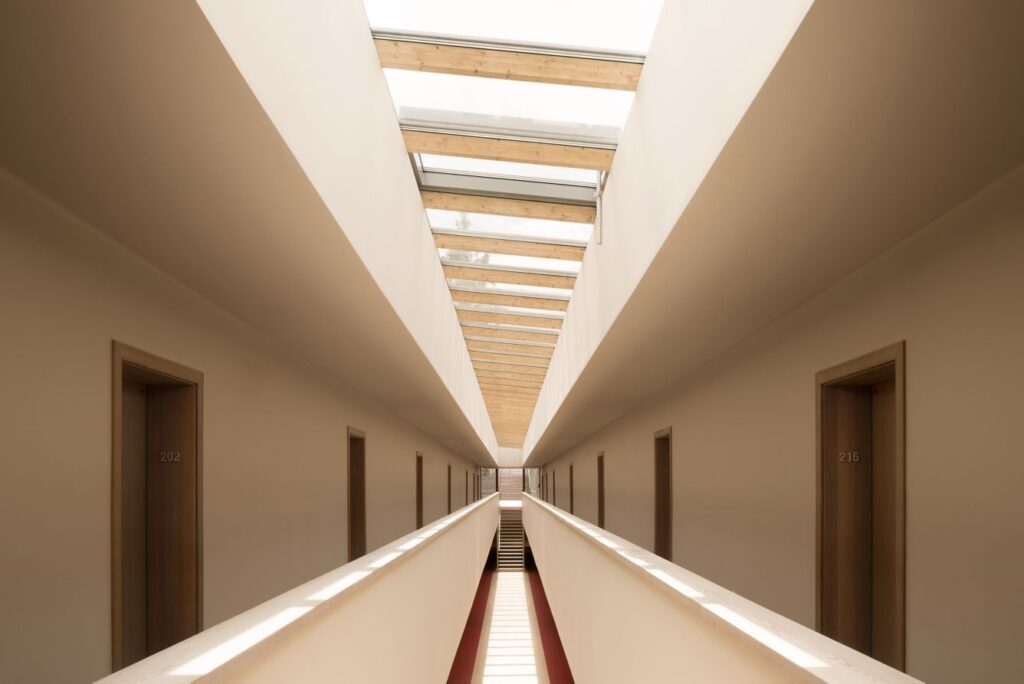
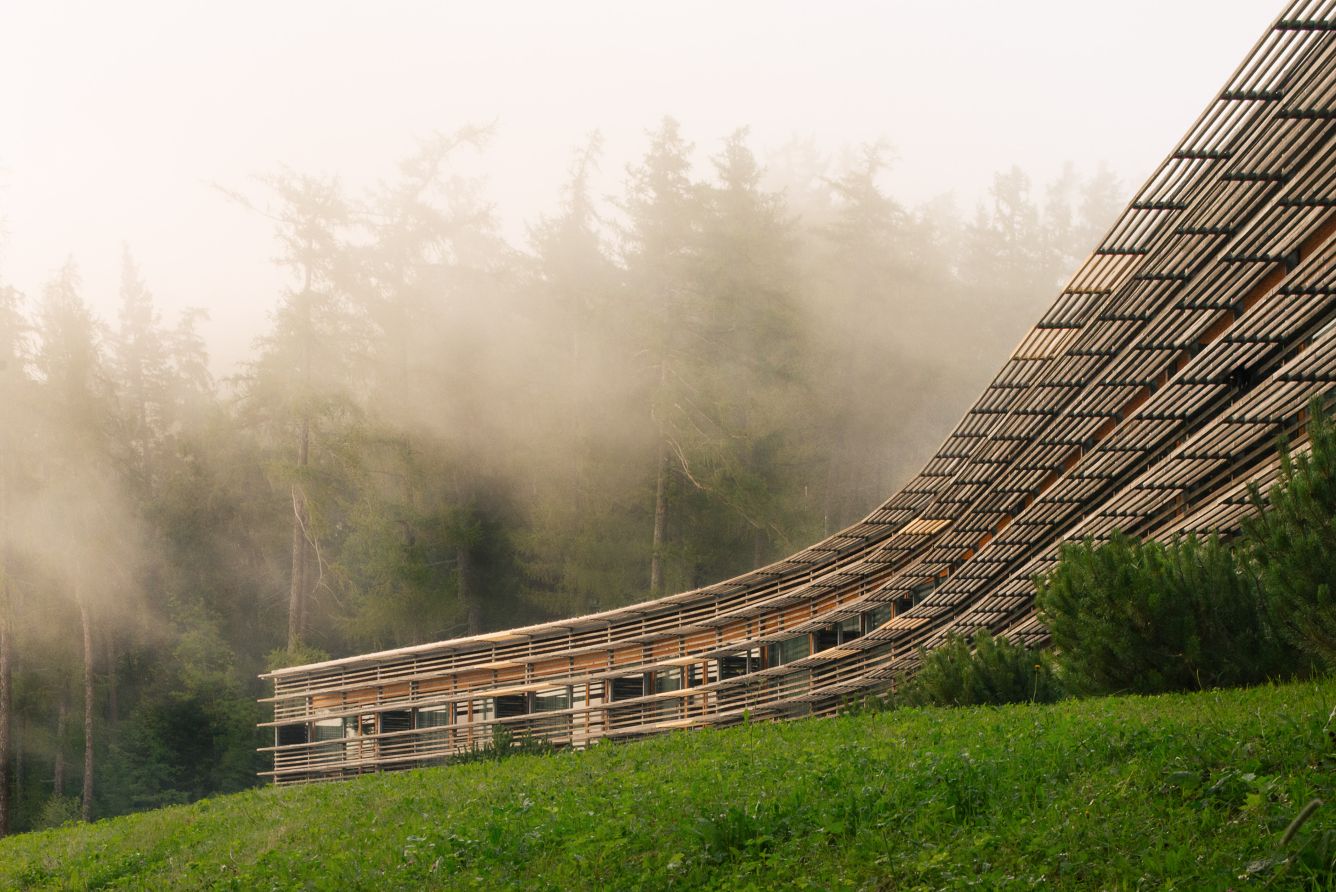
On the Vigiljoch above the town of Lana, near Merano, Vigilius Mountain Resort sits 1,500 meters up and is reachable only on foot or by Europe’s second-oldest cable car. Acclaimed architect Matteo Thun designed the resort with owner Ulrich Ladurner around a single “eco, not ego” principle, using untreated larch, glass, natural stone, and clay-heated walls to keep the building close to its forest setting.
Rooms are deliberately bare of artwork, so the Dolomites and surrounding woodland do the work instead, viewed through floor-to-ceiling glazing and private terraces.
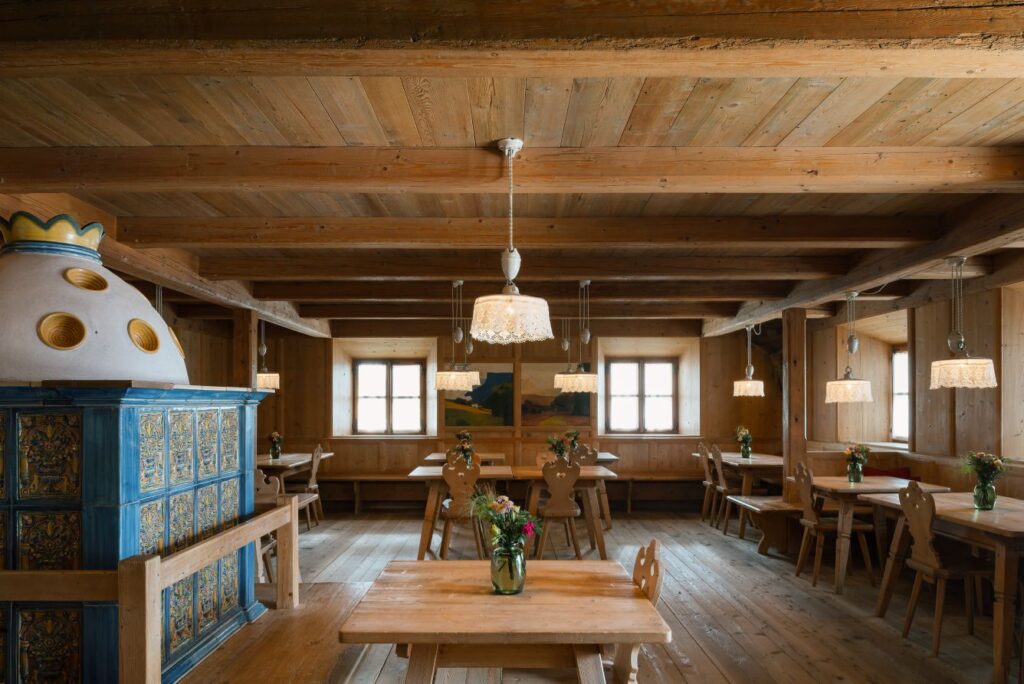
The spa, restaurants, and communal areas repeat the same material palette throughout, so the whole property reads as one continuous structure grown out of the mountainside rather than built on top of it.
Torre de Palma
Alentejo, Portugal
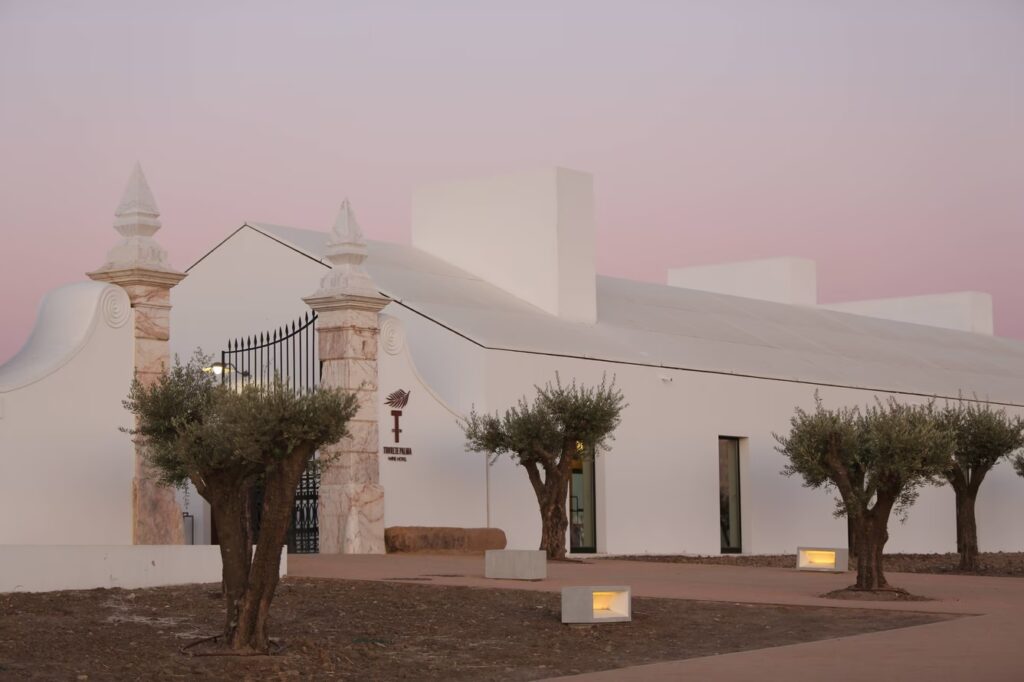
In Monforte, in Portugal’s upper Alentejo, Torre de Palma takes its name from a tower dating to 1338, around which whitewashed walls, vaulted rooms, and newer additions now sit inside a working agricultural estate.
Wine production, gardens, and stables shape how the 19-room property is laid out, with courtyards breaking up the buildings and letting light and shade move through the day. Thick stone walls keep interiors cool despite the Alentejo heat, and are finished in rustic-chic stone, timber, and terracotta.
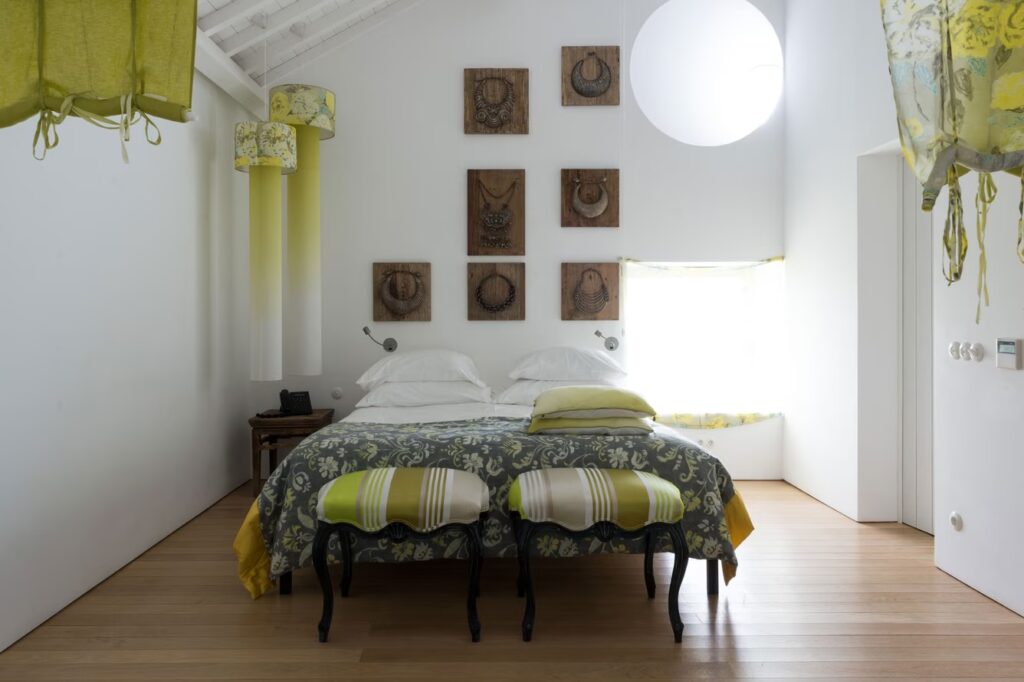
The estate’s own winery, launched in 2016 under winemaker Luís Duarte, produces a red and a white in small batches, and its grapes and botanicals also turn up in spa treatments. Riding Lusitano horses, picnicking among the vines, and swimming indoors or out are part of daily life here, while the vineyard is never more than a few steps from any room.
Hotel Irada
Maharashtra, India
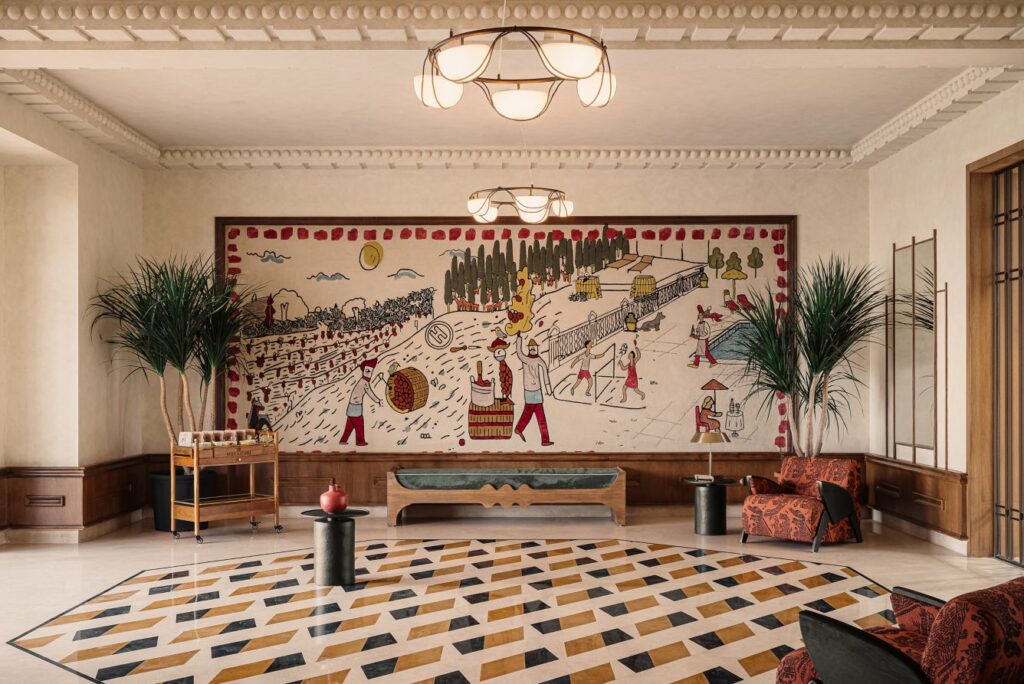
Roughly two hours from Pune in the emerging wine country near Baramati, Hotel Irada sits on a 27-hectare working vineyard bordered by verdant forests.
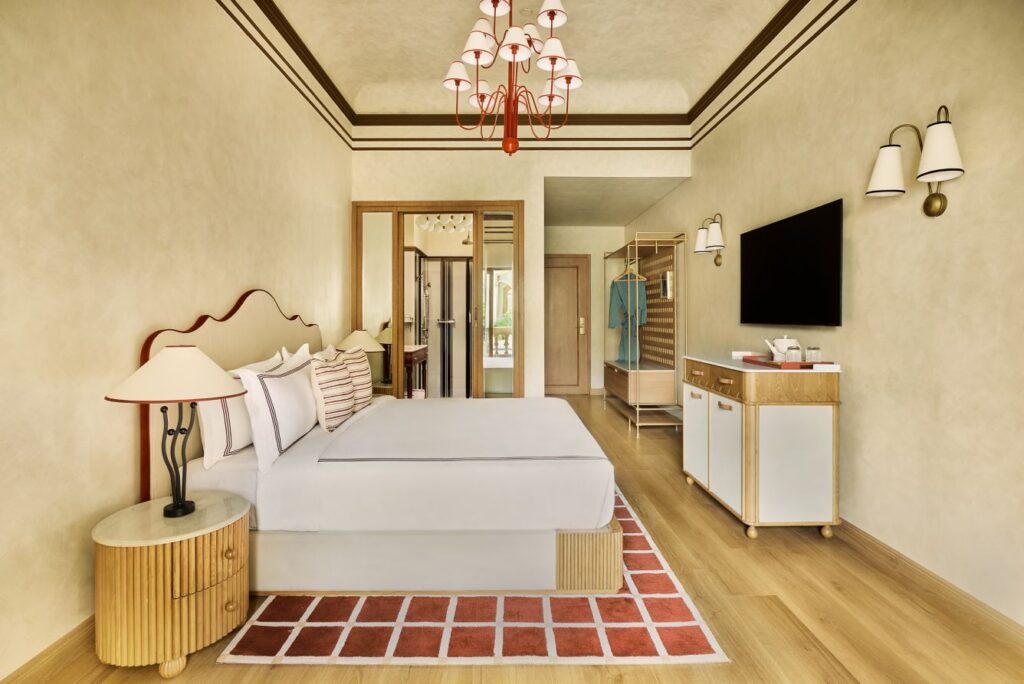
The neoclassical manor houses 48 rooms and suites, some opening directly onto pool terraces overlooking the vines, and pairs its grand scale with more restrained, midcentury-leaning interiors dressed in burgundy tones, patterned rugs, and art sourced from French flea markets alongside locally worked wood, stone, and brass.
Paths run straight from the buildings into the vineyard rows, while quieter courtyards offer breaks between them. Guided vineyard walks with the resident sommelier, vintage tastings, and spa treatments drawn from the estate’s own produce anchor the experience, with restaurants Rosso and Lola carrying the same sense of place through to the table.
The ArcadiaPlace, Lugu Lake
Lugu Lake, China
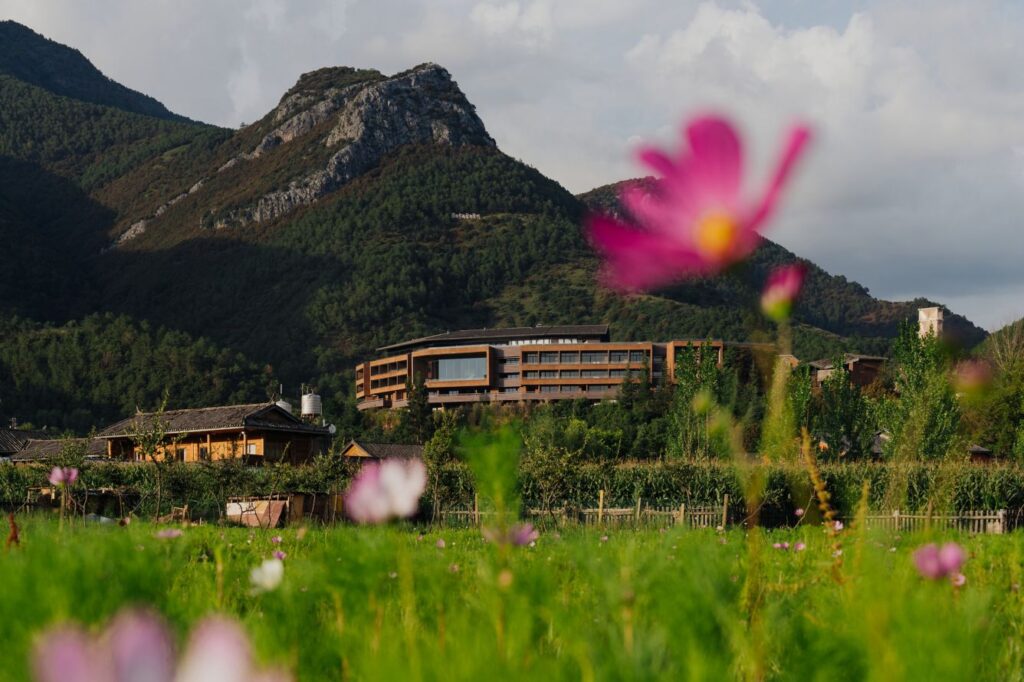
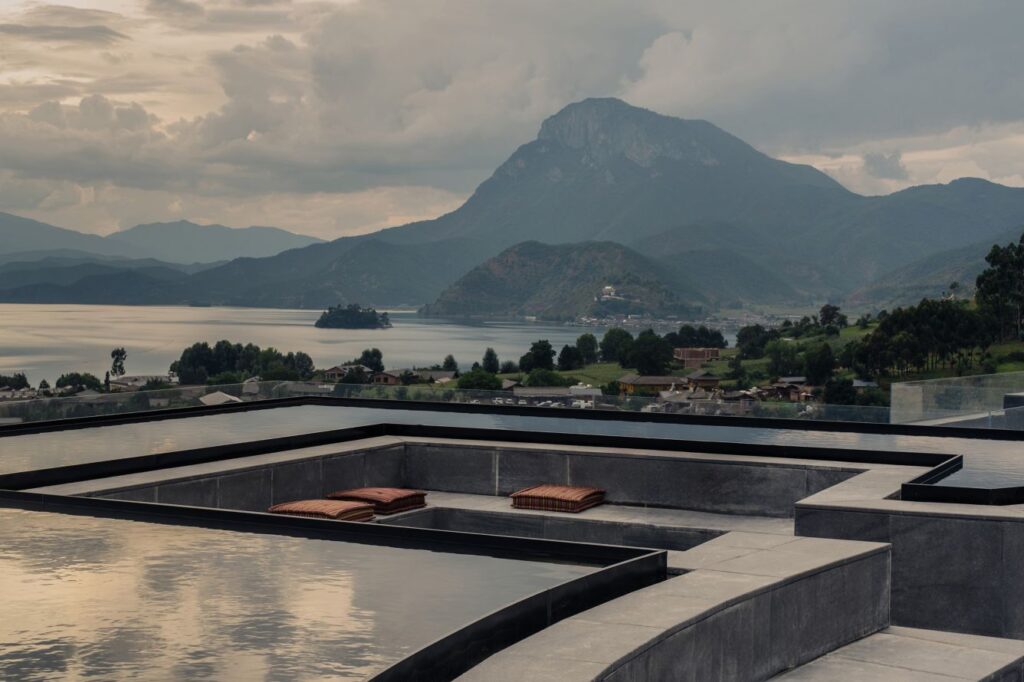
Lugu Lake sits at 2,685 meters on the Yunnan–Sichuan border, home to the Mosuo, one of the world’s last matrilineal societies. Here, The ArcadiaPlace was built from three existing lakeside villas by Imago Architecture Design Consultancy under architect Yang Lu, using traditional rammed earth reinforced with local stone and joined with mortise-and-tenon timberwork rather than nails.
The hotel’s cascading form means every one of the 46 rooms and 14 suites opens onto a balcony facing Gemu Goddess Mountain, Houlong God of Men Mountain, or the lake itself.
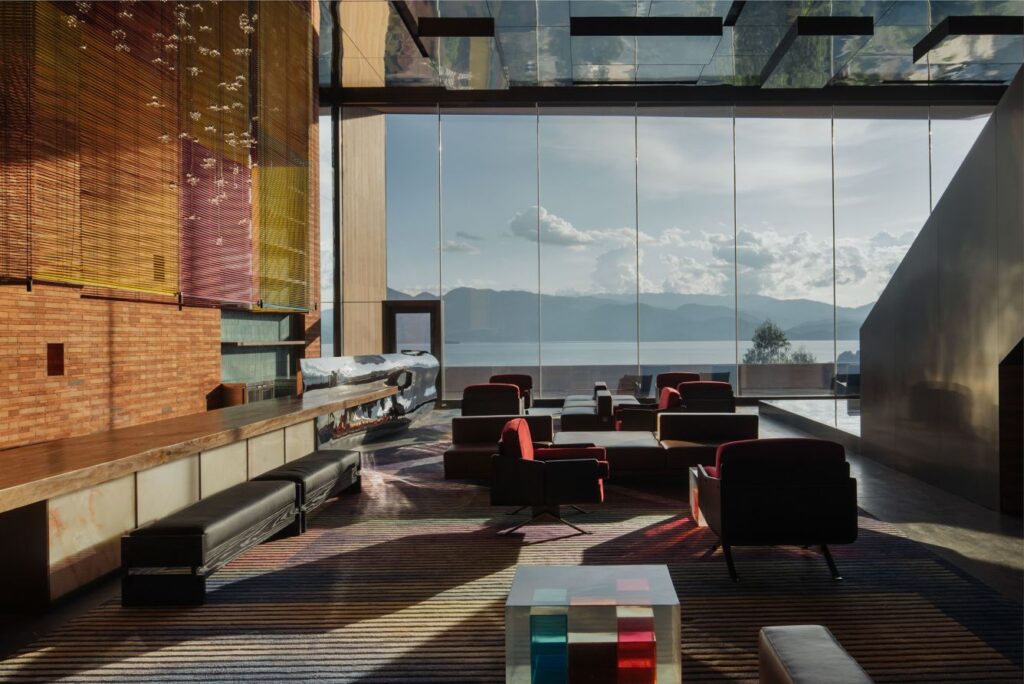
Inside, dark timber, colored glass screens, and reclaimed wood reference Mosuo textiles and domestic life, while a standalone building holds the Museum of Women’s Art, China’s first museum dedicated to women artists.
An infinity pool and floor-to-ceiling glazing throughout keep the boundary between the architecture and the lake deliberately thin.
Vocabolo Moscatelli
Umbertide, Italy
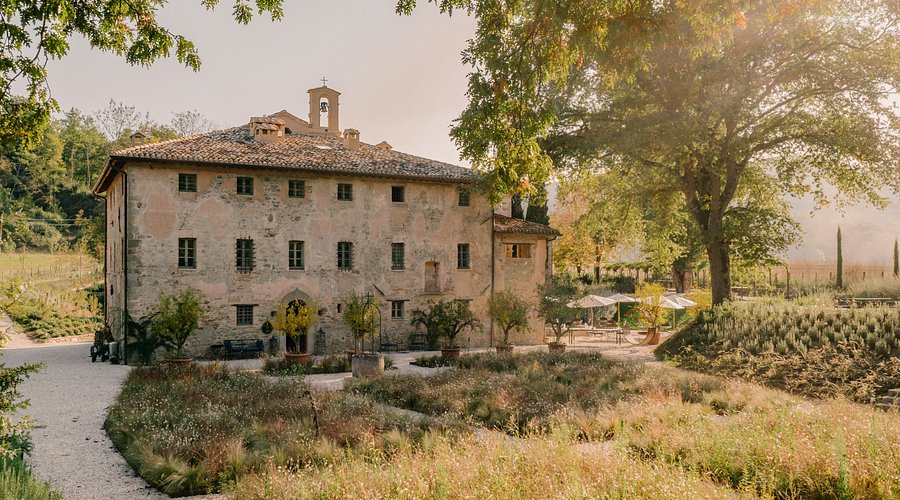
Near the hamlet of Calzolaro, close to Umbertide in Umbria, Vocabolo Moscatelli occupies a 12th-century Olivetan monastery about 40 minutes from Perugia airport and within an hour of Assisi and Arezzo.
The 12-room property keeps its original clustered, village-like layout, complete with shaded passages, a central courtyard, and thick stone walls, while introducing midcentury-inflected furniture, handmade tiles, and tonal palettes that shift with the light. The result earned the hotel a Michelin Key in 2024.
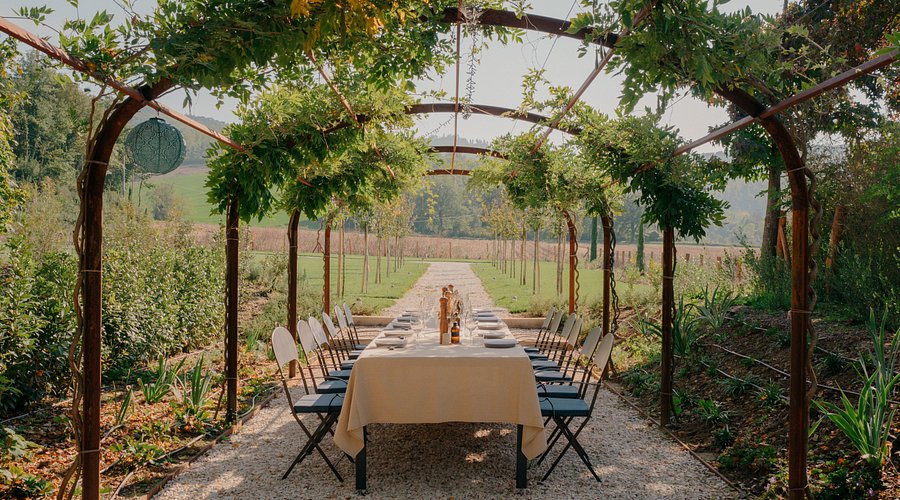
Outside, a travertine pool opens onto gardens, olive groves, and a small oak forest, keeping the sense that the building and the land were never really separated.
The restaurant and Bar Matite lean on Umbrian produce and slow, seasonal cooking, extending the same unhurried logic from the rooms to the table.


