
Nick Walton braves the tumultuous seas and wicked winds of the South Atlantic to discover South Georgia Island, one of the world’s most remarkable wildlife destinations
Even the best laid plans sometimes go amiss. It’s the mantra of every well-travelled adventurer, and early into my round-trip journey south from the Falkland Islands to remote South Georgia it’s apparent that something has gone wrong.
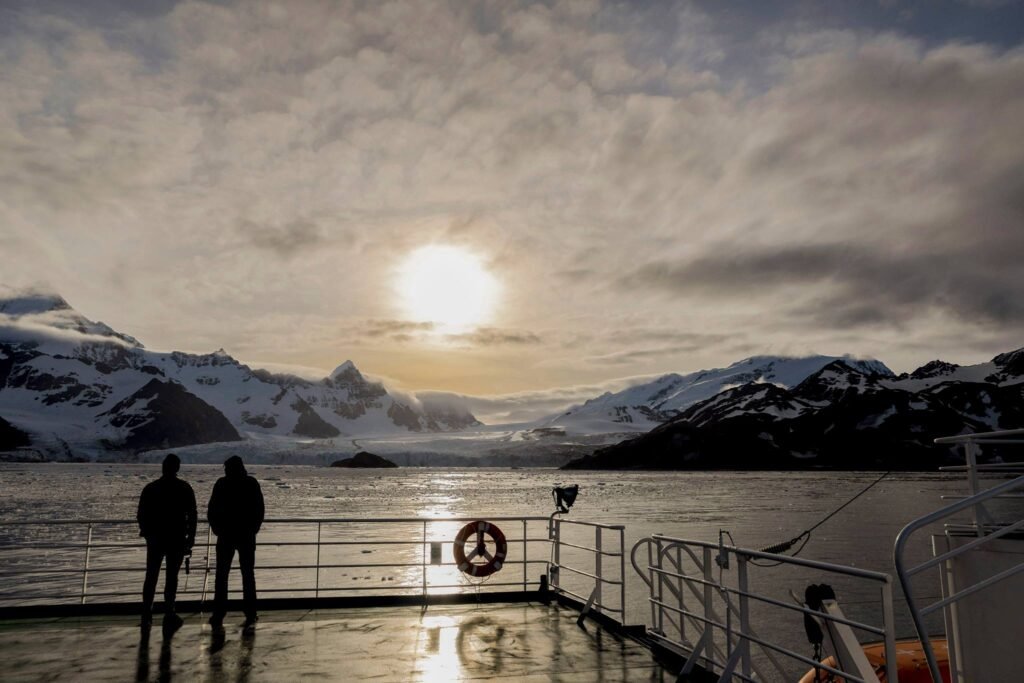
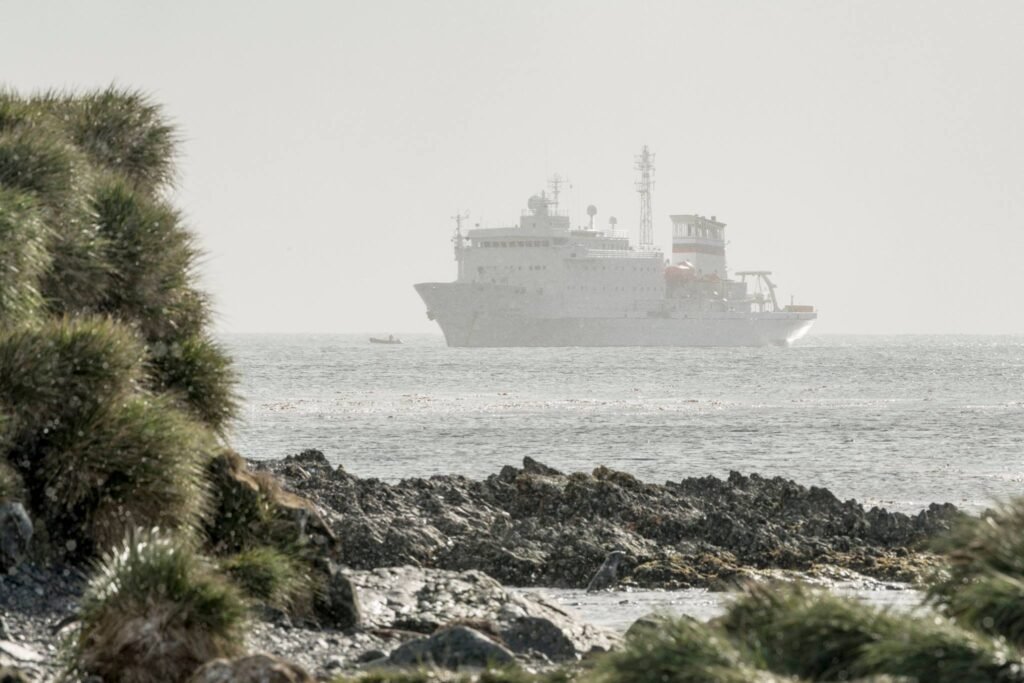
Rumours have a habit of spreading through ships like wildfire, so by the time my fellow guests and I assemble in the bar lounge of the sturdy 90-passenger Akademik Sergey Vavilov expedition ship, most passengers have a sense that our 15-day voyage deep into the South Atlantic has gotten off to a rocky start. Seasoned expedition leader Boris Wise confirms the details; one of the ship’s two propellers isn’t behaving as it should, an issue that was (apparently) only discovered after we departed Stanley.
He confirms, in his charming, calming Canadian way, that this will reduce our speed by 30 per cent and throw our plans to circumnavigate one of the most remote islands on the planet into disarray.
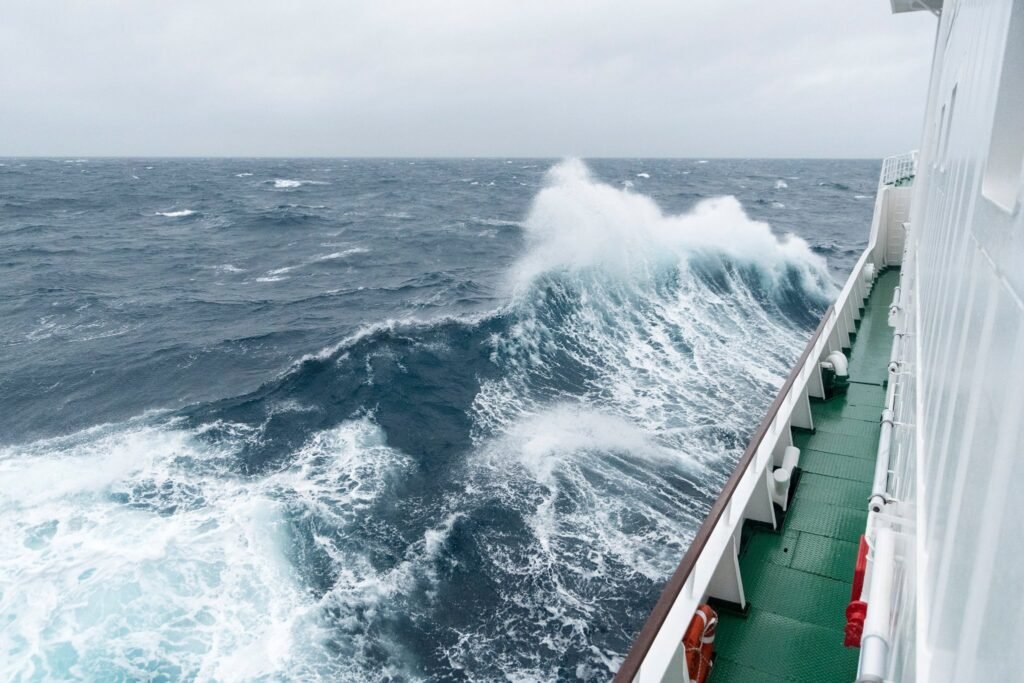
I’m not particularly fussed. While the idea of additional days spent battling it out with some of the world’s most precocious seas doesn’t exactly appeal, this is the nature of expedition cruising, and few itineraries that I’ve taken, including previous cruises in Antarctica, Greenland and the Canadian Arctic, have gone exactly as planned — it’s all just part of the adventure.
However, it’s indicative of how unique South Georgia is as a destination, and how sought-after it is among a strapping breed of silver-haired would-be adventurer, that some passengers quickly become irate, led in their huffing and puffing by two British lawyers, who my friend and travelling companion Will and I promptly nickname the ‘Walrus’ and the ‘Badger’.
The Walrus is affronted by the mechanical fault, and bellows conspiracy theories, trying to rally support from a company of somnolent Swedes, while the Badger stumbles over concerns that for the second time he will miss important landings, after a previous cruise was affected by severe weather. Boris takes the heated discussion in his stride and promises us his best efforts as we steam south into the night.
What Makes South Georgia Island So Special?
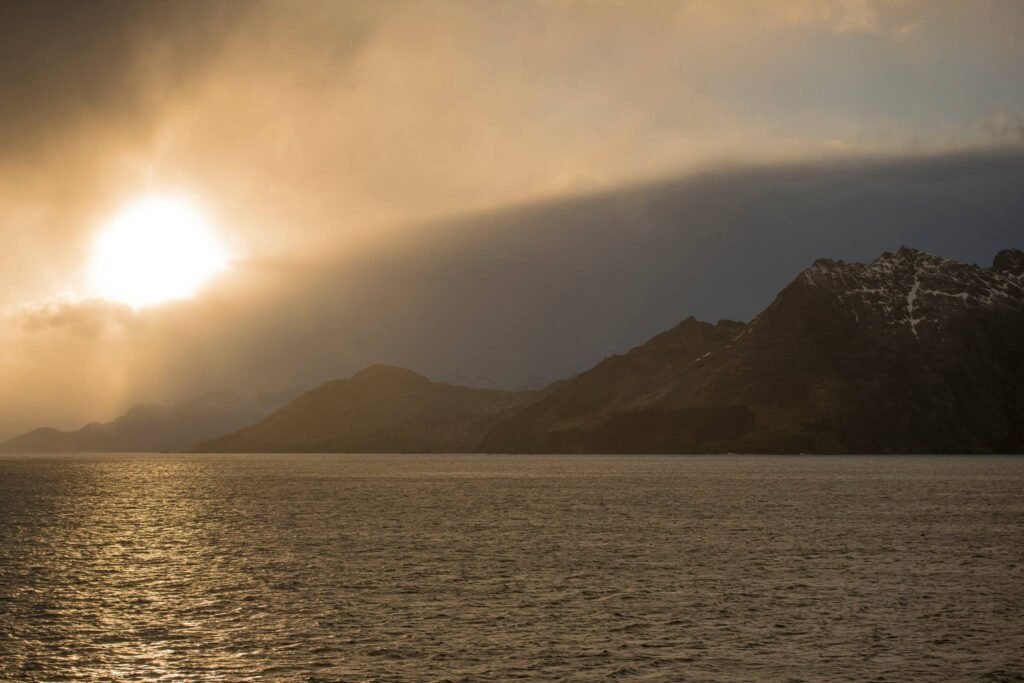
South Georgia is for people who no longer get kicks from Antarctica, and when the likes of Svalbard don’t thrill them at all. Windswept, wild, and at the mercy of the elements, it’s adventure cruising at its very best.
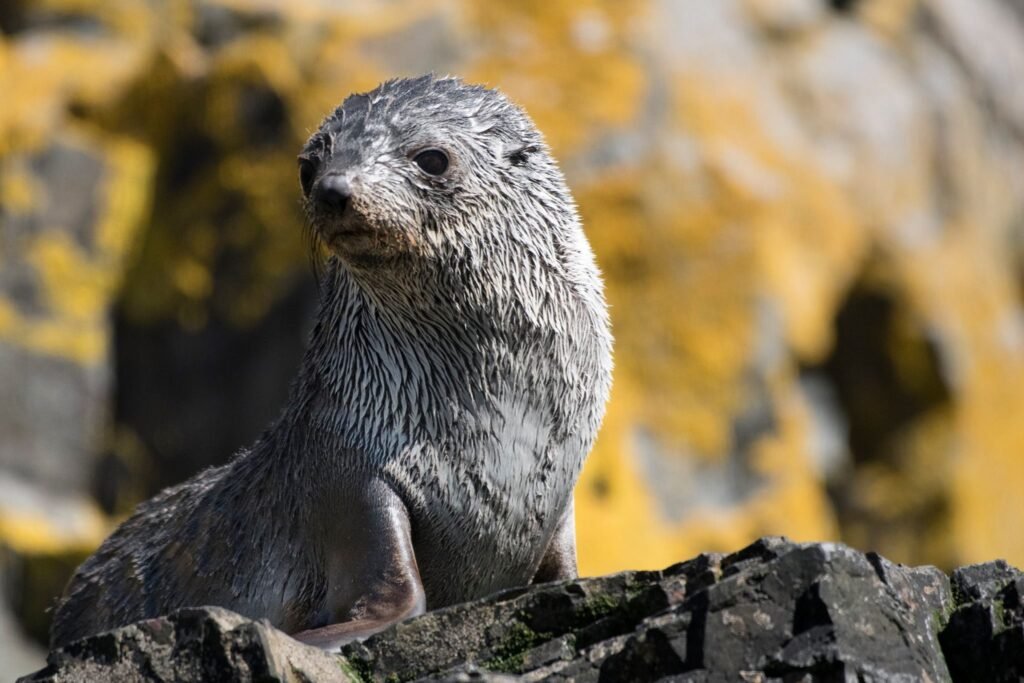
Inhospitable, remote, and subsequently rarely visited (at least compared to Antarctica, 1,000km to the south), South Georgia is a crucial lifeboat for the many ocean species that require land on which to breed and rear their young. Over two million king penguins call the island their summer home and are joined by hundreds of thousands of elephant and fur seals, and countless sea birds. Think of it as a frozen Galápagos on steroids.
Dissent continues as we putter along through towering swells over the next few days, but it does little to dull my enthusiasm as we select wet weather gear, learn how to board the ship’s zodiacs, and attend lectures by resident photographers and naturalists on South Georgia’s unique ecosystems.

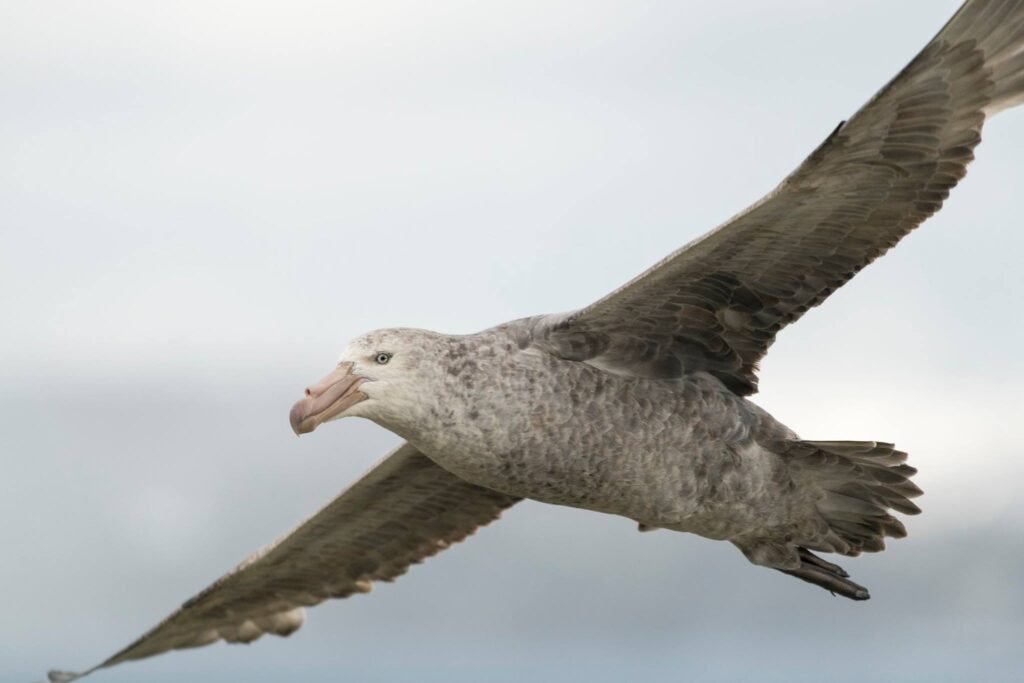
The journey has been billed as a ‘photographic symposium’, which makes sense in a destination coveted by wildlife shooters, including both the Walrus and the Badger, who prowl the decks with ice-flecked whiskers and long lenses, hoping to snap pictures of the dexterous storm and snow petrels and elusive wandering albatrosses that escort the ship south. The controversial seal skin suit the Walrus sports has tongues wagging across the ship.
Arriving at King Haakon Bay: Shackleton’s South Georgia
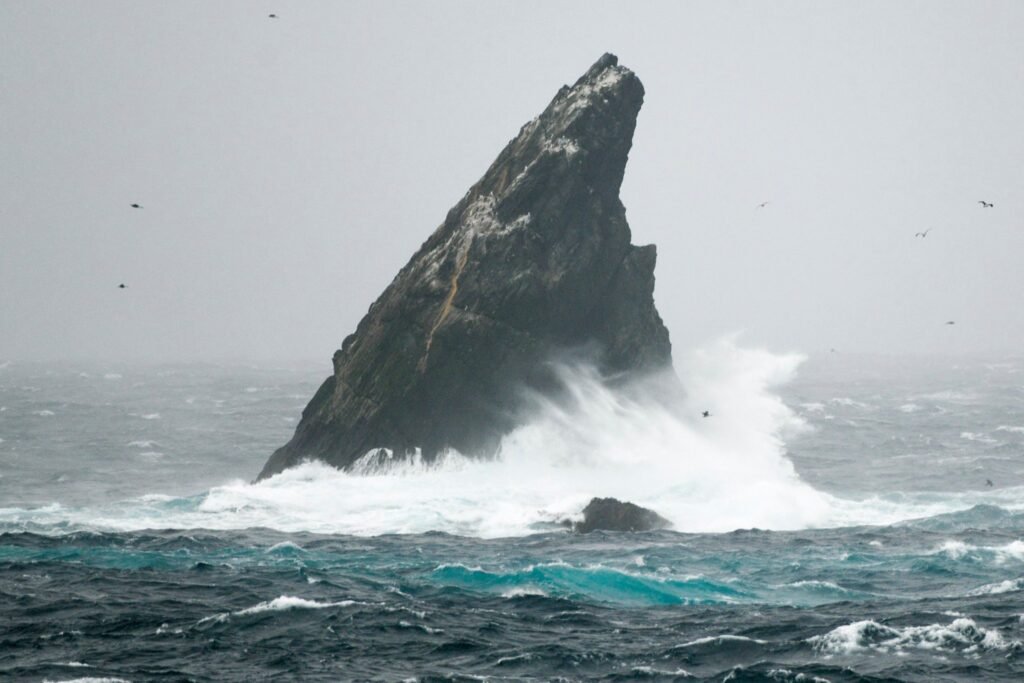
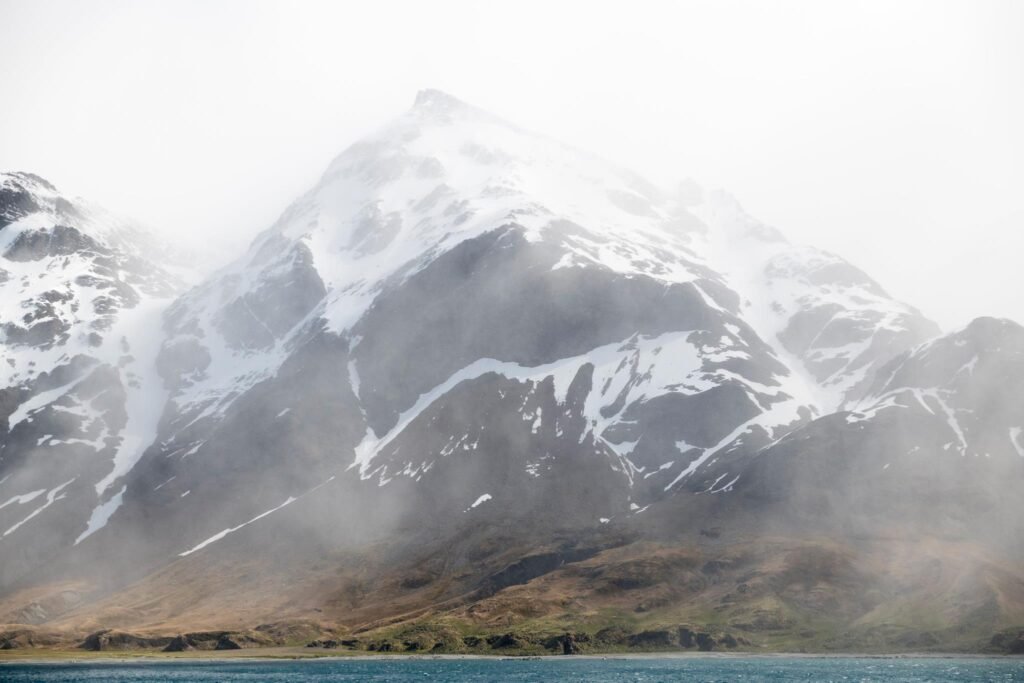
Moods are lifted with the first sight of land — the Shag Rocks — jagged shards of ancient mountaintop upon which great waves heave themselves with a roar that can be heard kilometres away. By morning, we’ve arrived in the relative shelter of King Haakon Bay, a deep-set cove wreathed by glaciers on South Georgia’s northwest flank made famous by Sir Ernest Shackleton, who landed here in 1916 after escaping the ice during his ill-fated Imperial Trans-Antarctic Expedition.
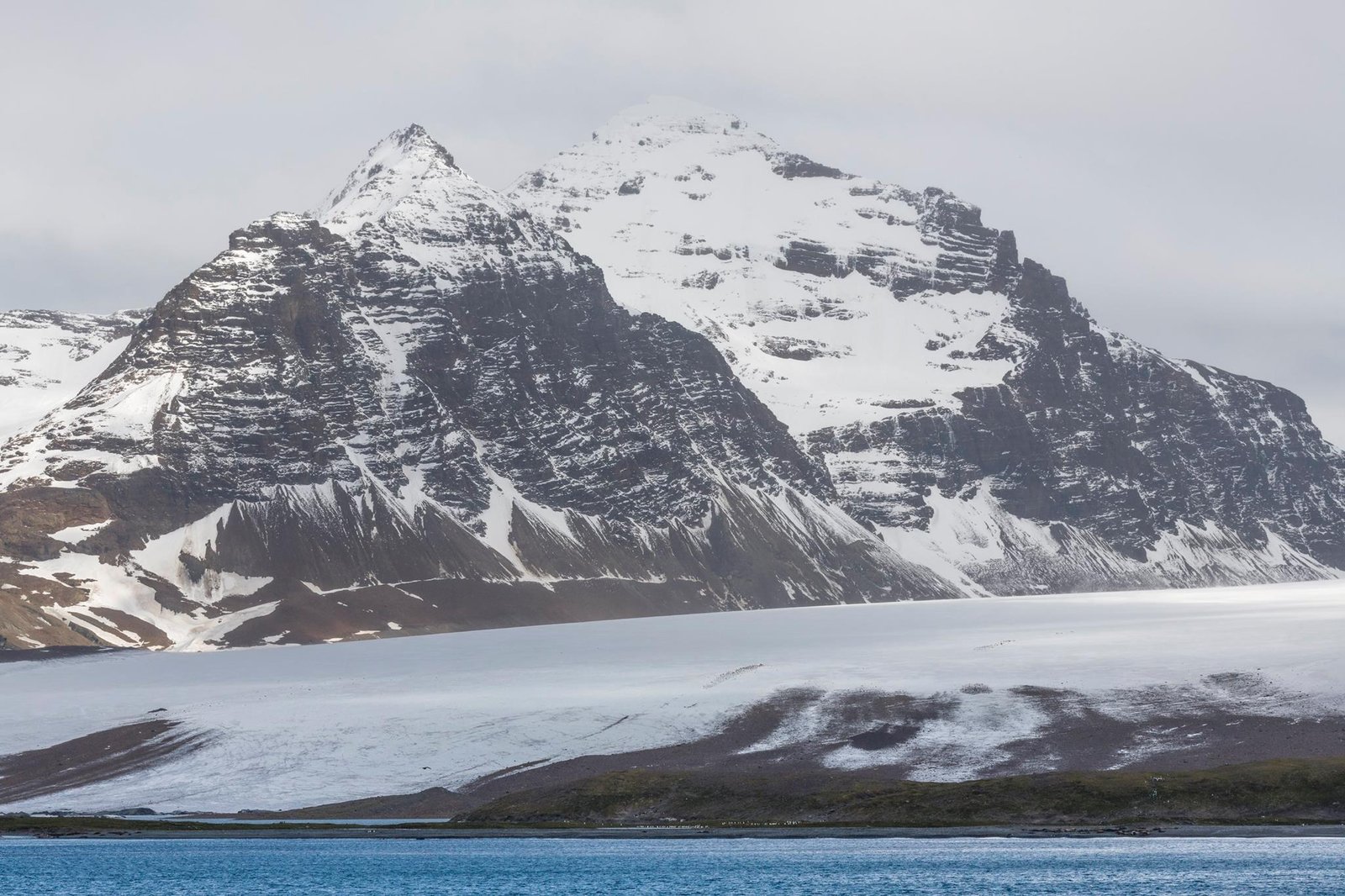
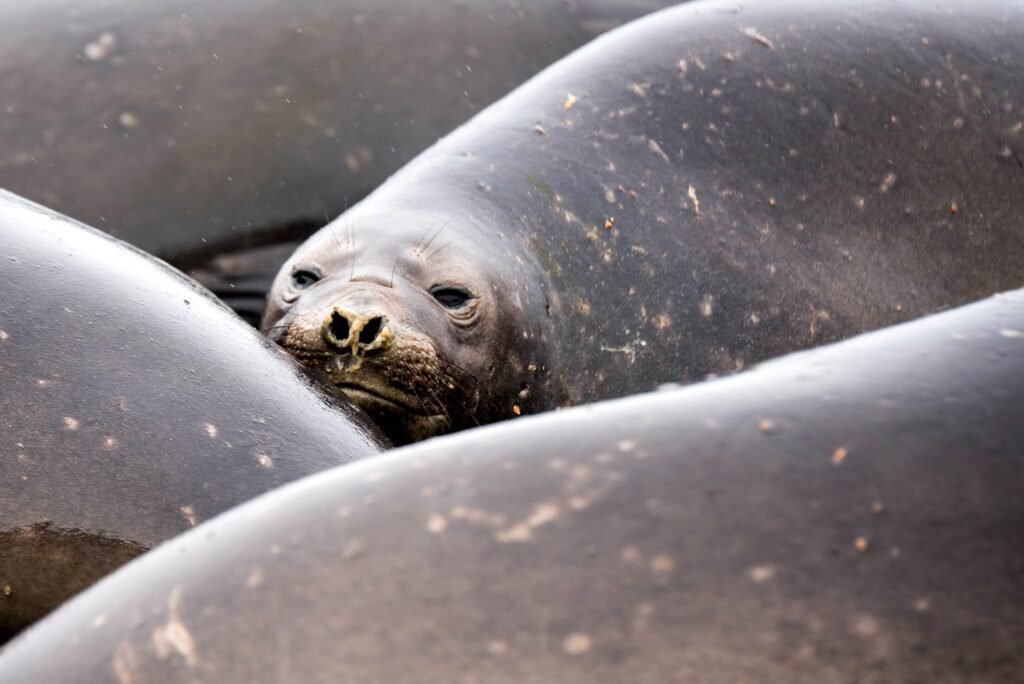
It’s a breathtaking first glimpse of South Georgia, with towering peaks playing hide-and-seek among silver clouds, and grey petrels swooping low over a frozen beach populated by snorting, grumbling Southern elephant seals.
South Georgia’s Wildlife: Elephant Seals, King Penguins and More
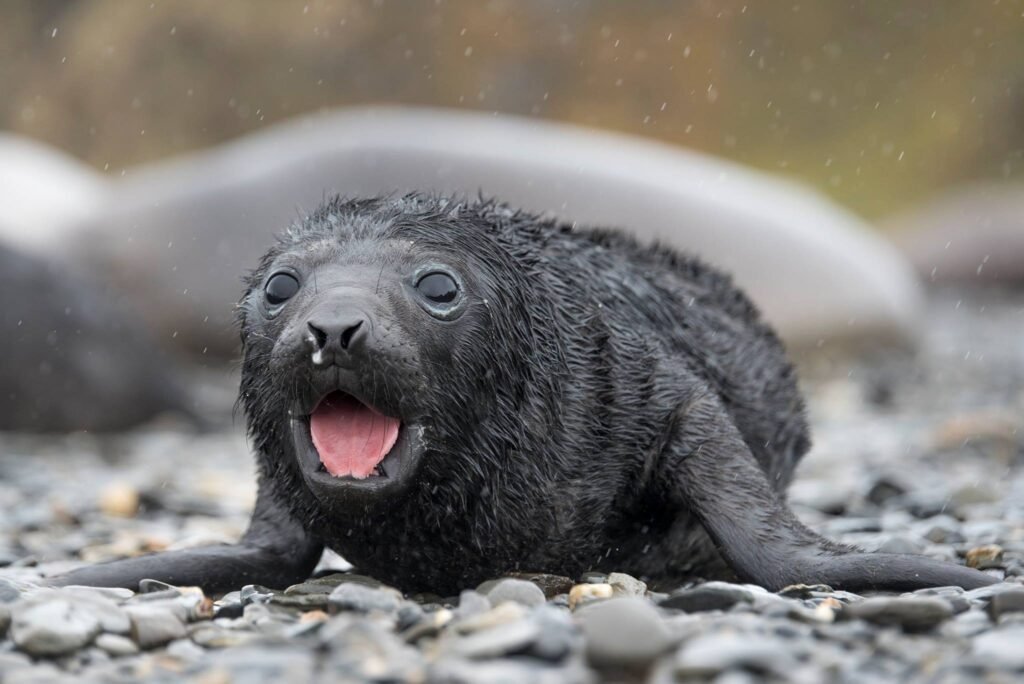
Of all the remarkable wildlife that seduces travellers so far south, these huge seals are a massive drawcard. Mothers nurse their new arrivals, jet black, baying woolly little pups with huge glassy eyes, while their fathers jealously guard their harems from potential Lotharios.
Life as a male elephant seal isn’t easy; male bulls — or “beachmasters” — can weigh in at four tons and each patrols a spot on the beach smaller than a studio apartment. During summer, when the beach is packed with elephant seals, young males must run a gauntlet of territorial males. Fights often erupt with a symphony of deep roars that ricochet off the cliffs, accompanied by great plumes of steam as males slam into each other like staggering drunks and cling to flesh with their few sharp teeth.
Things in the engine room haven’t improved, and that night Boris makes the bold decision to flip the itinerary on its head so that we travel counterclockwise around South Georgia, avoiding the strong winds coming in from the east and using our time wisely. The Walrus, the Badger and a small posse they’ve assembled demand compensation and grumble into their hot chocolates.
Gold Harbour: King Penguins on South Georgia’s Southeastern Tip
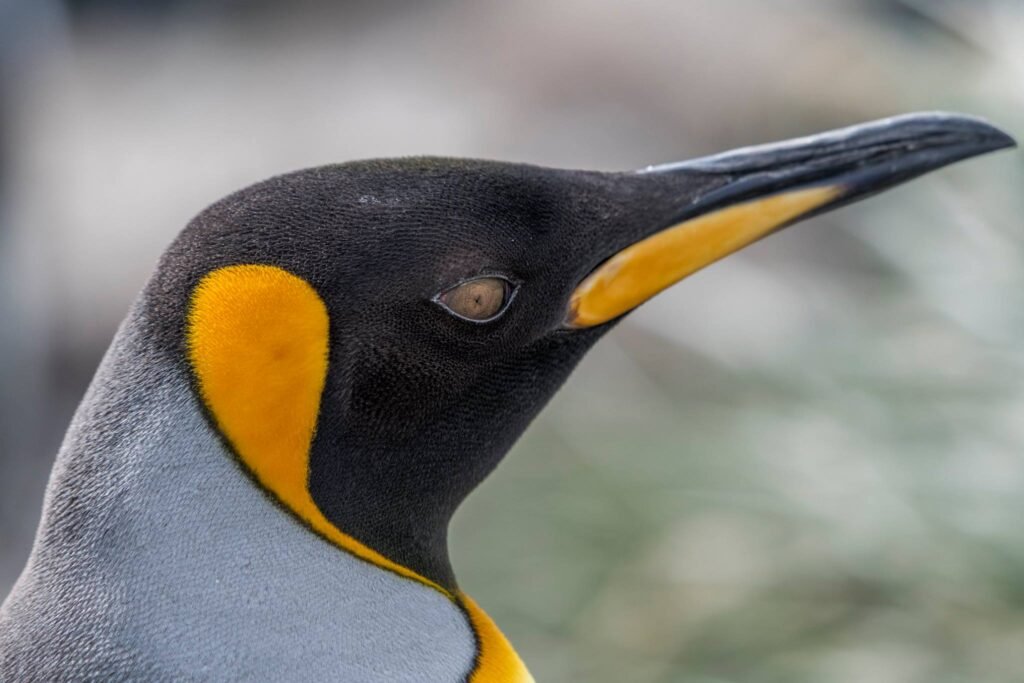
Boris’ moves pay off, and after enjoying a calm night cruising in the lee of the island, we arrive at Gold Harbour (named for the ‘fool’s gold’ or iron pyrites found here), on South Georgia’s southeastern tip. The sun struggles to penetrate thick cloud cover and cast light on a landscape of high cliffs tumbling down to hills of Arctic heather and a wide, open beach.
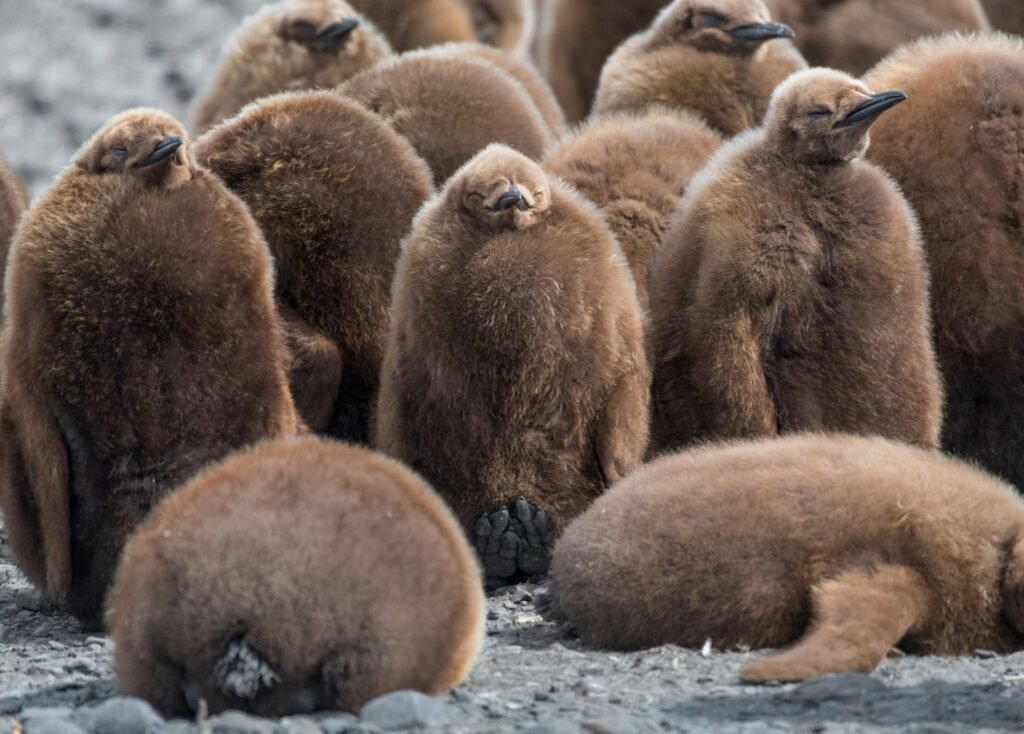
We hear (and smell) the king penguins well before we can distinguish individual animals. The colony stretches far down the beach, literally tens of thousands of birds, those still in their winter down resembling furry rugby balls. They huddle together, a cacophony of chirps and whistles as they gossip en masse.
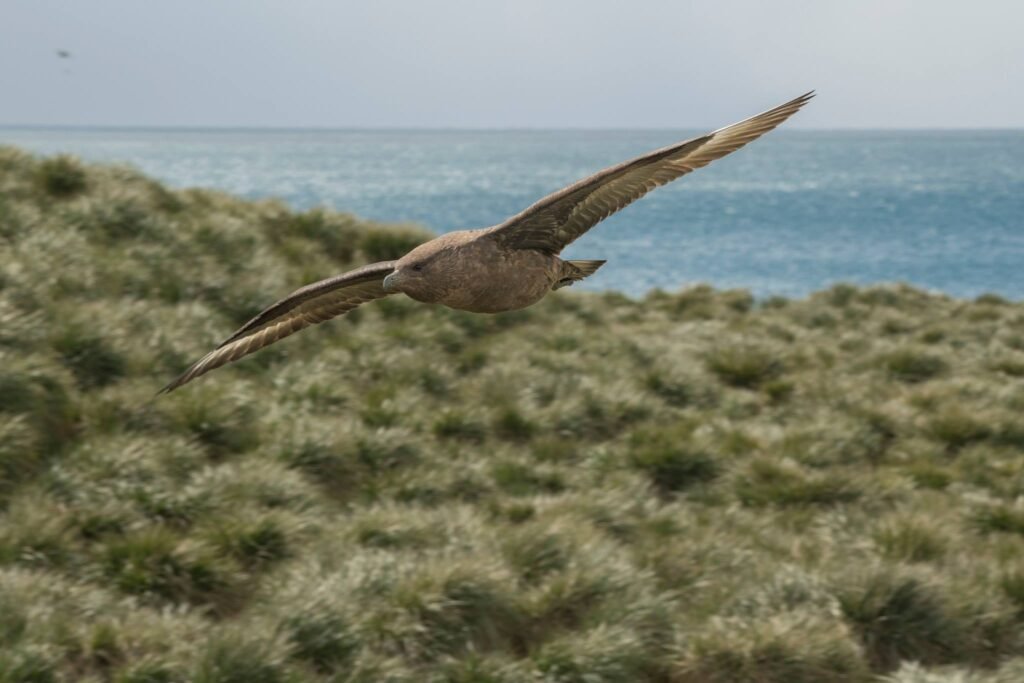
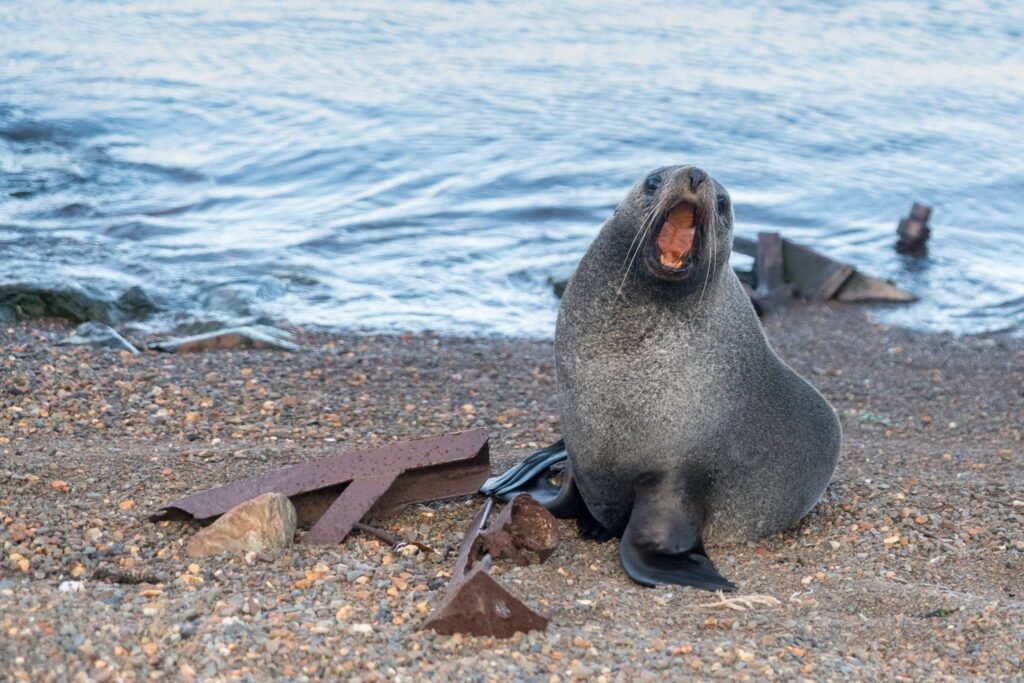
They’re not alone. More elephant seals wallow in the surf line or roar and joust on the beach; a sleek leopard seal patrols offshore; shy but feisty fur seals hide in the emerald tussock of the dunes; opportunistic brown skuas glide just above the penguin colony, looking for weak chicks; and stealth bomber-like white-chinned petrels soar effortlessly on the sea breeze that whips across this enthralling landscape.
With guidance from the ship’s naturalists, we gently approach the penguin chicks, who are patiently waiting for their parents to return after months feeding in the Atlantic. The adorable little furballs are more inquisitive than cautious, and I’m soon surrounded by cooing, singing penguins hoping I might have a spare mackerel in my backpack.
That afternoon, when the sun finally bullies its way through the canopy, we celebrate the beauty of our destination at Royal Bay, sailing along the base of the spectacular Ross Glacier, a towering wall of vivid blue ice that climbs the ancient valley into peaks topped with brilliant snow caps.
St Andrews Bay: Wildlife Photography in South Georgia
St Andrews is a coveted destination for South Georgia-bound travellers and our landing here, on a wide, flat beach backed by low hills, almost brings a smile to the Badger’s face. Here, among the 150,000 king penguins of an almost year-round colony, we’re guided through the specialist techniques of wildlife photography by Gerhard “Guts” Swanepoel, a South African naturalist with his own photographic safari business in Botswana.
While many of the ship’s “resident photographers” disappear at each landing to fill their own Getty’s portfolios, leaving passengers fumbling with new cameras in their wake, Guts sticks with the group, giving suggestions on alternative compositions, shutter speeds and ISO with infinite patience and humour.
He’s a saving grace for many guests who had signed up for the trip with hearts set on returning home with their own images of this majestic landscape.
Grytviken: Whaling History and Shackleton’s Grave
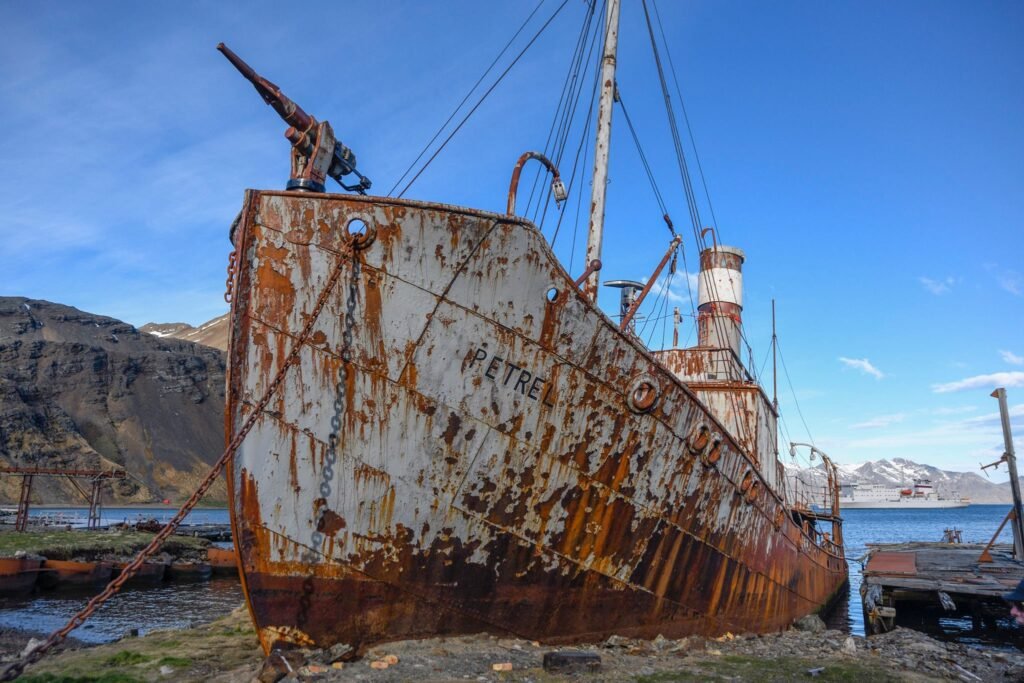
That afternoon, there’s time to delve into man’s often destructive role on South Georgia. While the island is now fiercely protected, it wasn’t long after South Georgia’s discovery that sealers and whalers arrived from Europe, killing a total of 175,250 whales at stations like Grytviken, the rusted remains of which lie at the end of a deep inlet.
Here, we pause for a moment to toast the bravery and resolution of “The Boss”, Sir Ernest Shackleton, at his final resting place overlooking the bay, before joining scientists from the nearby British Antarctic Survey base, the only people to live on South Georgia, to explore the hulking hulls of whaling ships and the beautifully-preserved egg yolk-yellow Whalers’ Church.
Prion Island: Albatross Sanctuary in the Bay of Isles
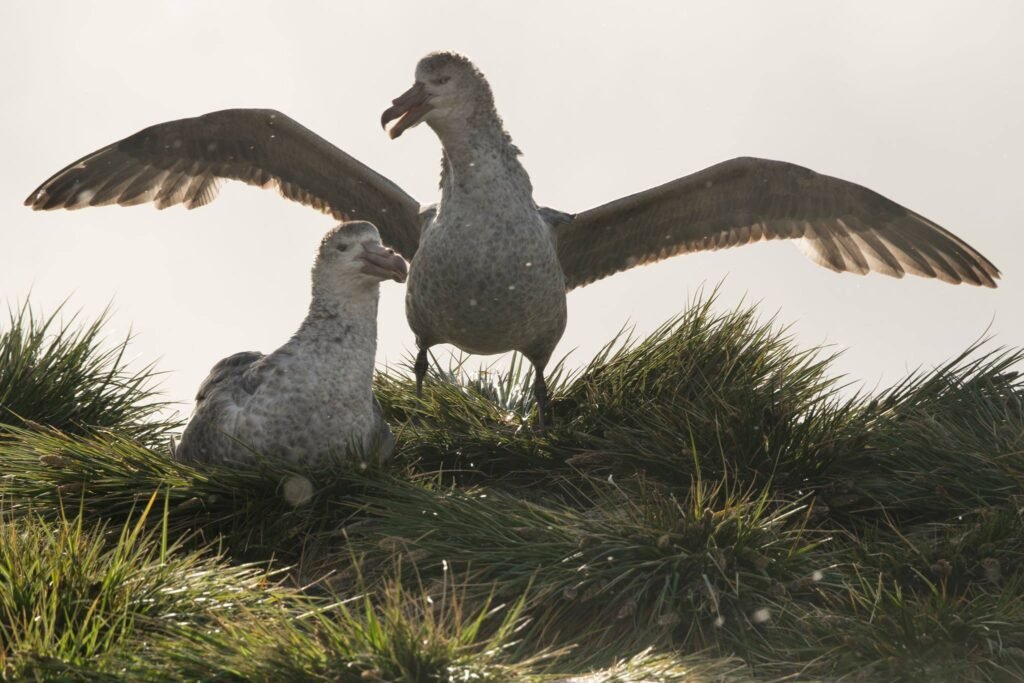
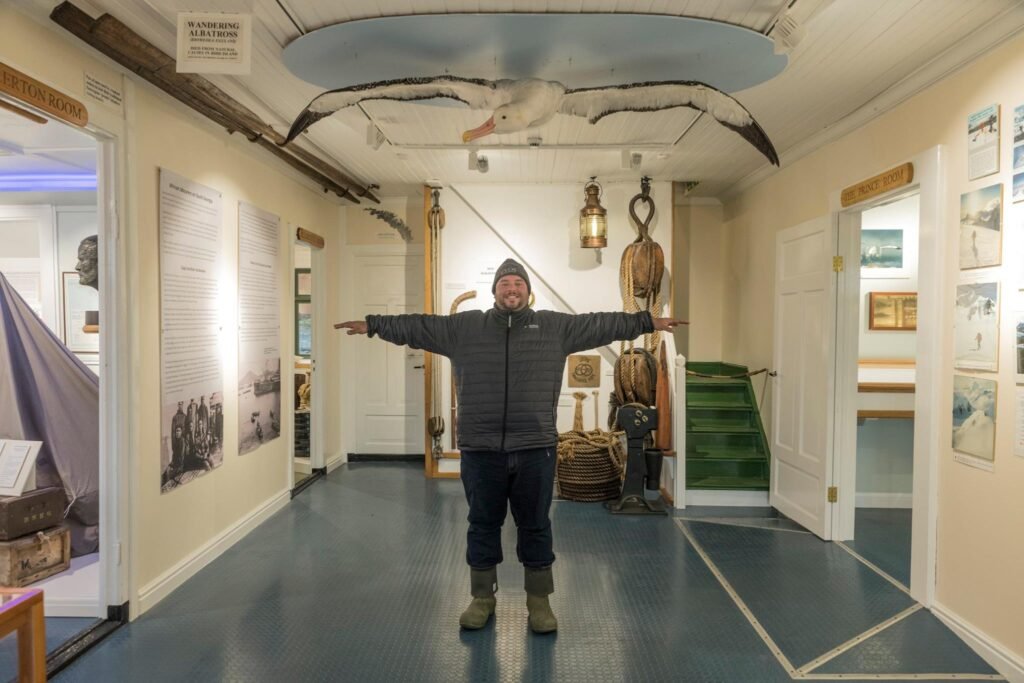
The ship’s many avid birders have their moment one chilly morning at Prion Island, a lonely, weather-whipped rock in the Bay of Isles that’s a rat-free sanctuary for albatrosses. Special permission is required to visit this vital reserve, and we’re rewarded with spectacular displays of aerial acrobatics as black-browed, grey-headed and light-mantled albatrosses join giant, storm and cape petrels to soar over the undulating landscape at breathtaking speed.
A ‘waddle’ of Gentoo penguins watches, seemingly amused, as the Walrus lies on the beach in his seal suit to get a photo. Many of us are half expecting an opportunistic orca to mistake him for an easy breakfast.
Salisbury Plain: The Grand Finale of Any South Georgia Expedition
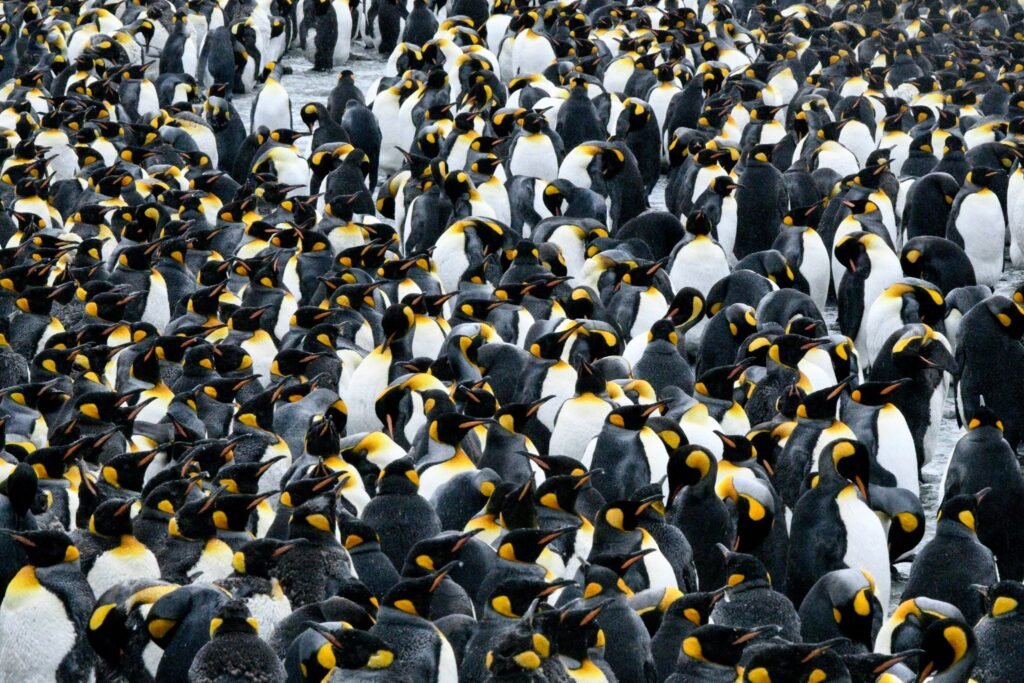
Despite the mechanical issues (and the grumblings they cause), we’ve managed to land at all of South Georgia’s top destinations, a miracle in itself, but Boris has left possibly the best for last, and we arrive at Salisbury Plain in the afternoon, amber light bathing this vast penguin rookery in gold. It’s a spectacular last glimpse of the island, a vast plain populated by 60,000 king penguin chicks, snow-covered Pyramid Peak towering over the bay behind, and I rest my camera gear beside a trio of inquisitive rug rats to soak up this unforgettable sight before the four-day crossing back to civilisation.
“Chances are, if the prop hadn’t malfunctioned, the high winds and foul weather of earlier in the week would have made landing at many of the east coast sites impossible.”
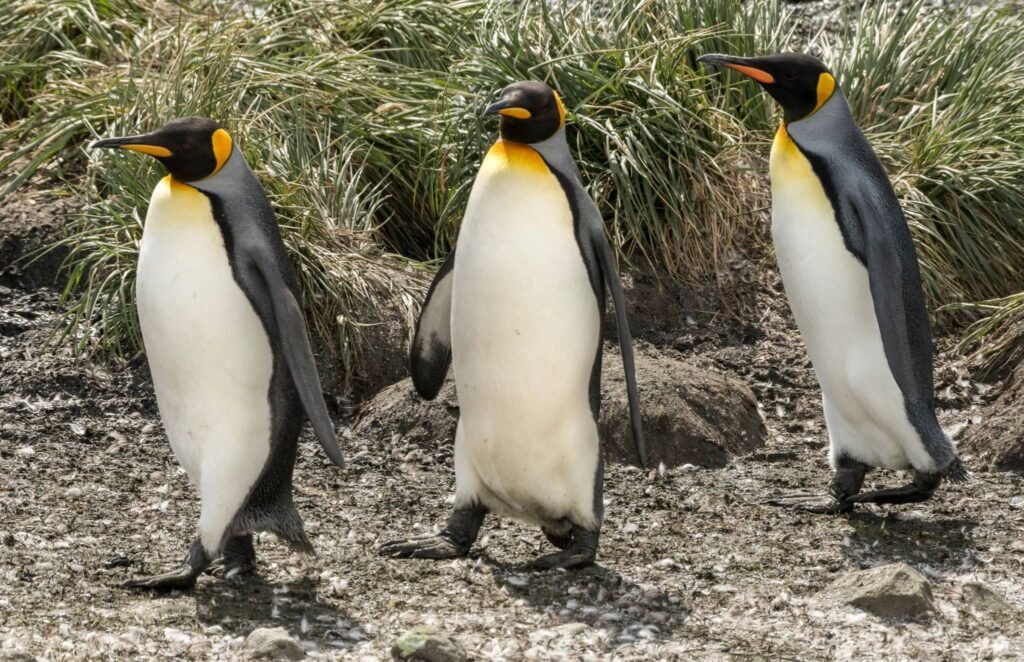
Chances are, if the prop hadn’t malfunctioned, the high winds and foul weather of earlier in the week would have made landing at many of the east coast sites impossible, so I raise my thermos and give a toast to Mother Nature, to our expert crew, and to the blissful unpredictability of travel in the world’s farthest flung corners.
Plan Your South Georgia Island Expedition
South Georgia is about as remote as it gets. Here’s what you need to know before you book your cruise.
Getting There
Expedition cruises to South Georgia typically depart from Ushuaia, Argentina, or Stanley in the Falkland Islands. Voyages range from 15 to 21 days.
Best Time to Visit
October to March (the Southern Hemisphere summer). Peak wildlife activity — including king penguin chick-rearing and elephant seal pup season — occurs November through February.
What to Pack
Waterproof expedition gear, rubber boots (often supplied by the cruise operator), layering base and mid-layers, and a camera with a telephoto lens of at least 300mm. Check out our comprehensive polar cruise packing guide.
Key Wildlife to Look Out For
King penguins, Southern elephant seals, Antarctic fur seals, wandering albatrosses, leopard seals, gentoo penguins, and numerous seabird species.
Key Destinations on the Island
Salisbury Plain • St Andrews Bay • Gold Harbour • King Haakon Bay • Grytviken • Prion Island • Royal Bay
If you’re contemplating a polar cruise, check out our guides to Arctic expedition cruises, Antarctic expedition cruises, and the best expedition cruise destinations and cruise lines, as well as a few that have strong green credentials. Also, don’t forget to brush up on your polar photography and polar videography skills, and to pack the polar essentials with our in-depth guides.