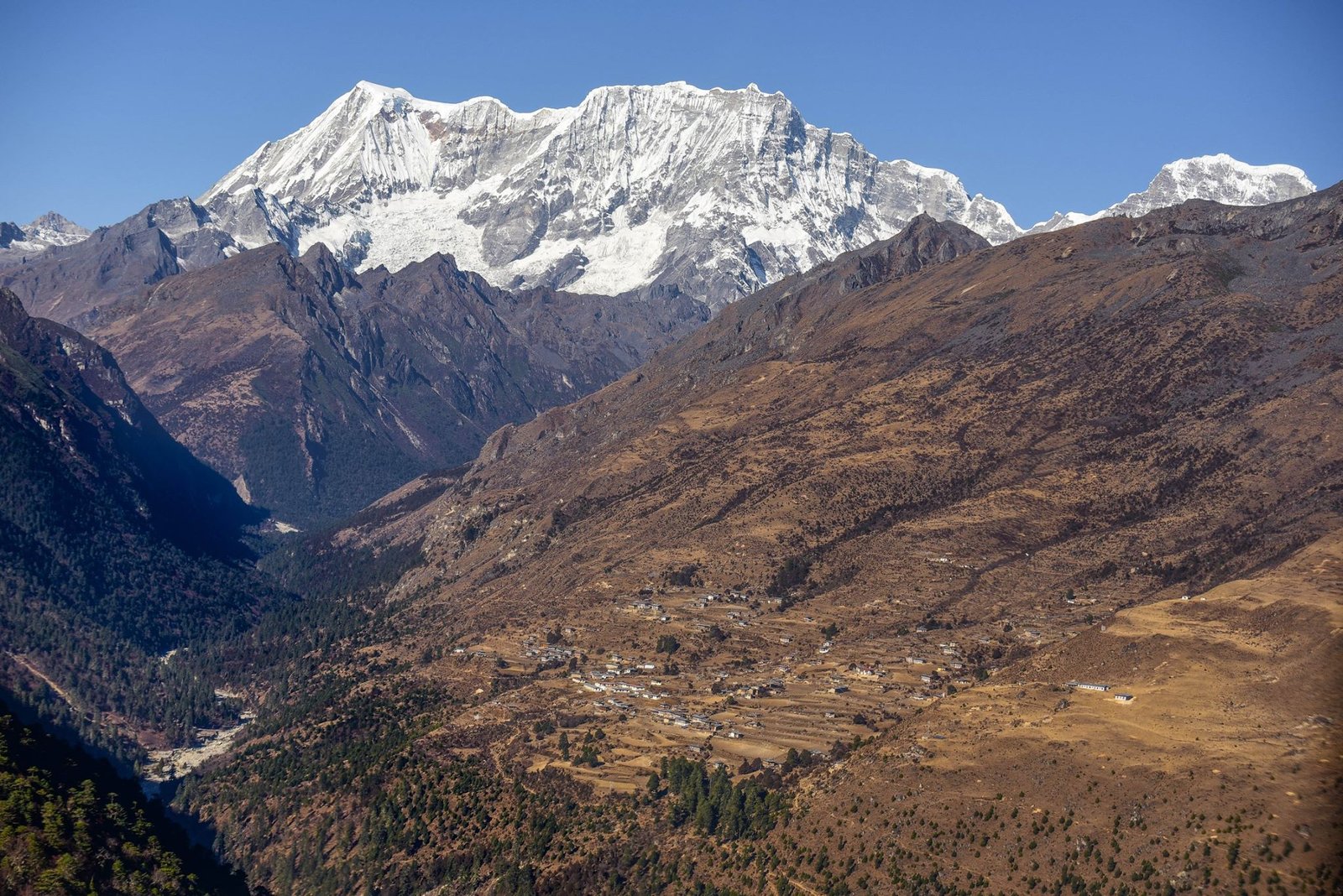

From the nail-biting approach into Paro Airport to a helicopter flight over the Himalayas and the climb to Tiger’s Nest Monastery, Nick Walton shares an extraordinary first journey through Bhutan — the kingdom that measures its progress not in wealth, but in happiness.
Emerging from the pint-sized terminal at Paro — Bhutan’s sole international airport — new arrivals are greeted by dazzling sunshine, crisp mountain air, and, most invitingly, a wave of genuine smiles. The warm welcome from assembled guides, many dressed in pristine national costume, brings colour back to the faces of travellers who have just experienced one of the most nail-biting landings on the planet.
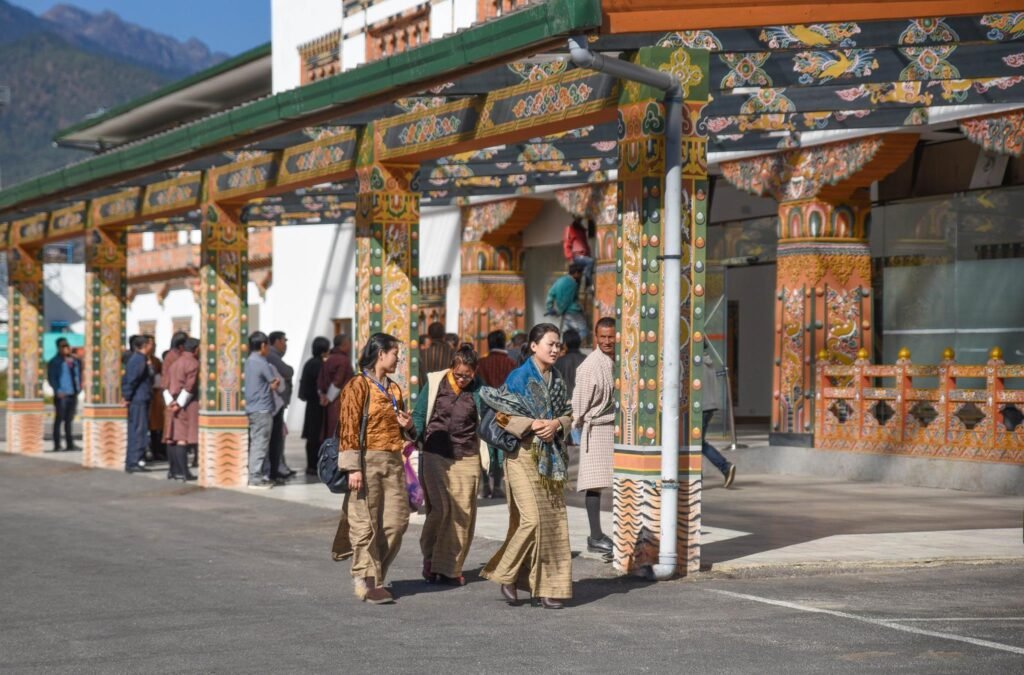
Only 12 pilots in the world are certified to fly into Bhutan, with aircraft required to cruise the full length of the valley — brightly-painted houses whipping past on either side — before breaking hard upon touchdown. It is, in every sense, an arrival unlike any other.
It is my first visit to Bhutan, though the remote Himalayan kingdom has occupied a permanent spot on my bucket list for a decade. I have always been intrigued, as so many travellers are, by a destination that has remained so deliberately fortified against the onslaught of modernity: one that has retained an ancient and deeply beloved monarchy, and which measures its progress not in GDP or market indices, but in happiness — literally.
What Is Bhutan’s Gross National Happiness?
Bhutan’s Gross National Happiness index — a measurement of the collective contentment of the kingdom’s 740,000 citizens — is a remarkably progressive concept for a country named for a thunder dragon. Coined in 1972 by Bhutan’s fourth king, Jigme Singye Wangchuck, the idea has since evolved into a socioeconomic development model recognised by the United Nations.
There is no doubt that Bhutan is a land of happiness and peace, and one welcoming an ever-increasing number of discerning travellers who cling to their armrests on approach to Paro in pursuit of their own slice of Himalayan harmony.
Paro: Arrival in the Land of the Thunder Dragon
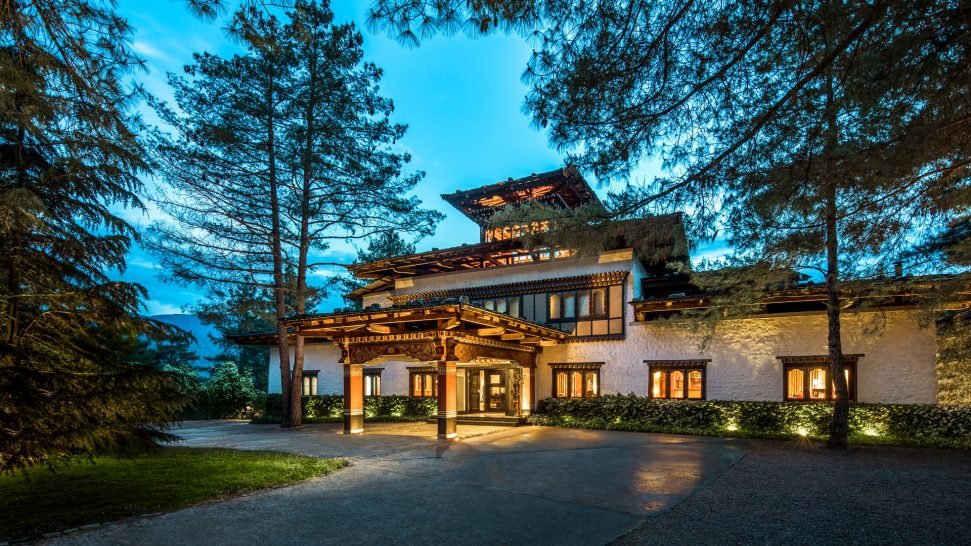
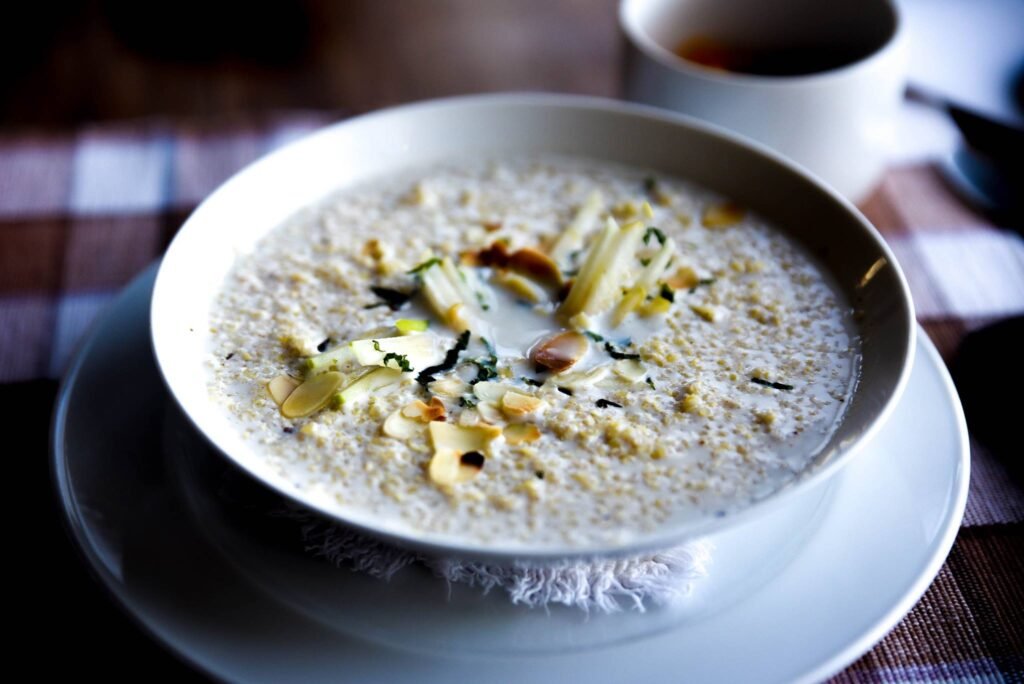
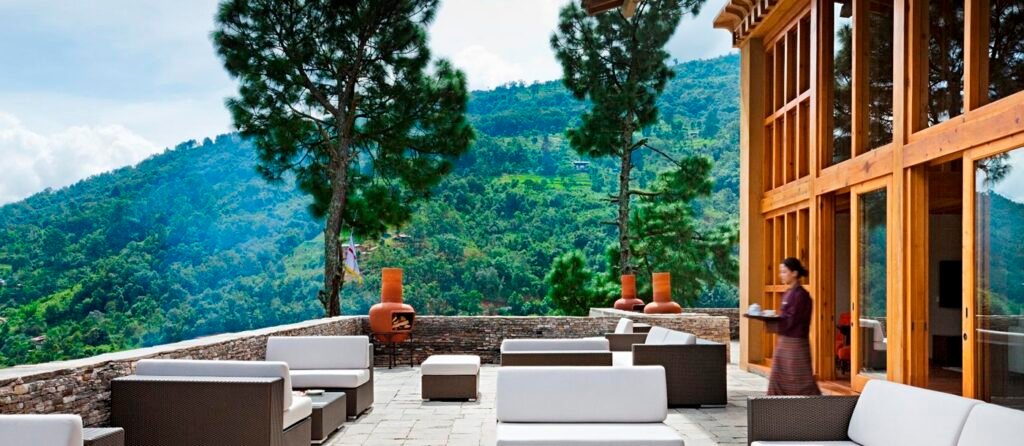
I check in at COMO Uma Paro, an intimate 29-room retreat that, like virtually everything in this vertiginous kingdom, is perched on the side of a steep hill. It is very easy to be happy here. Roaring fires, supremely comfortable beds, and shy but attentive staff dressed in elegant silken kira dresses create an atmosphere of effortless warmth. The COMO Shambhala Retreat offers Bhutanese-inspired massages and an indoor pool, while Bukhari — the signature restaurant — serves hand-ground buckwheat noodles, yak dumplings, and COMO’s celebrated juice blends, making healthy eating feel not like a discipline but a pleasure.
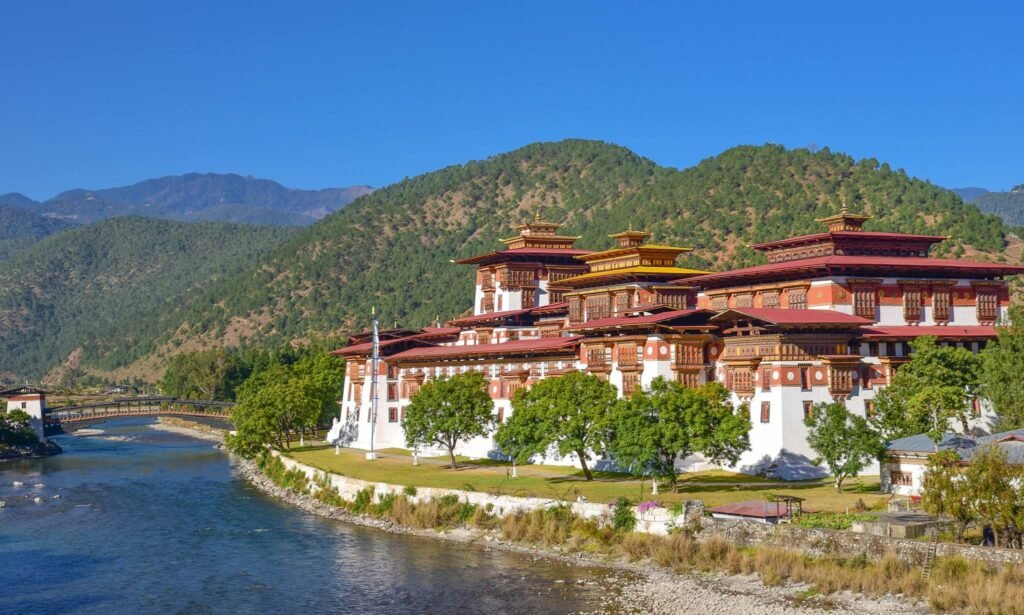
As the sun sets, there is just enough time to watch the light drain from the towering whitewashed walls of the nearby Rinpung Dzong, the 300-year-old Bhutanese fortress that presides over the town of Paro. Wisps of wood smoke curl from homes and dance on the cooling breeze as the first stars slip into view above. It is the kind of evening that reminds you why you came.
The Road to Thimphu: Bhutan’s Serene Capital
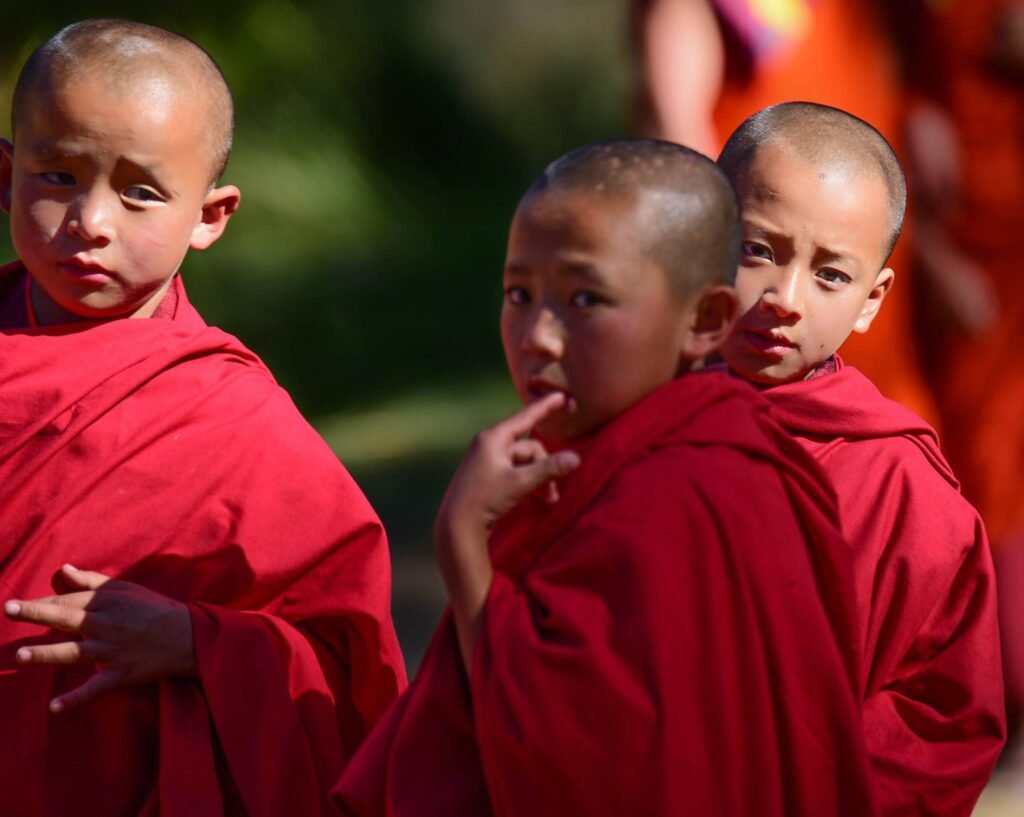
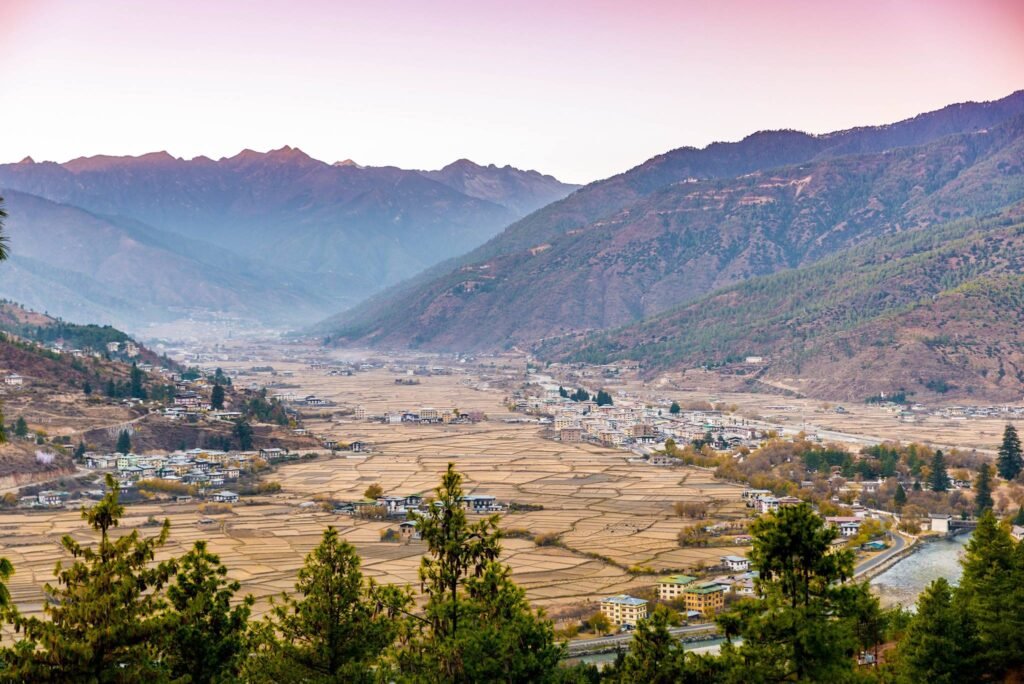
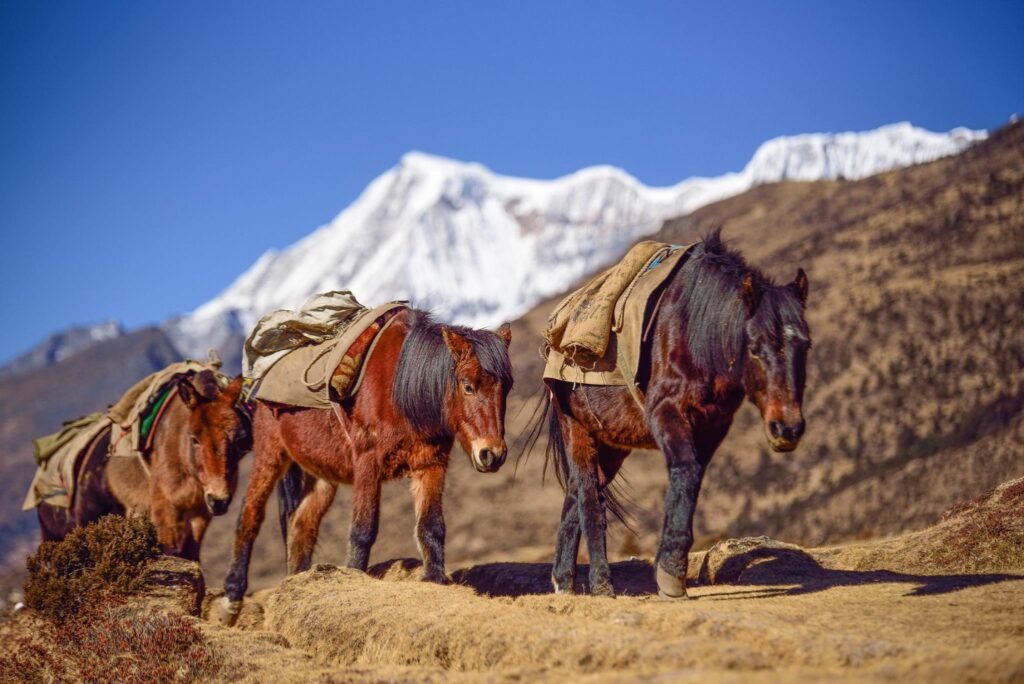
The following morning, I am on the road to Bhutan’s capital, Thimphu, and then onwards to Punakha, crossing the 10,000-foot Dochula Pass. The Paro Valley is alive with first light. Ponies with shimmering chestnut coats wander the narrow lane down the mountain; novice monks pull their crimson robes tighter against the last of the night’s chill as they cross the pale aqua Paro River. The winding road to the capital clings to rocky cliffs above the confluence of the Paro and Thimphu Rivers, its edges festooned with prayer flags that jitter and dance above the rushing water.
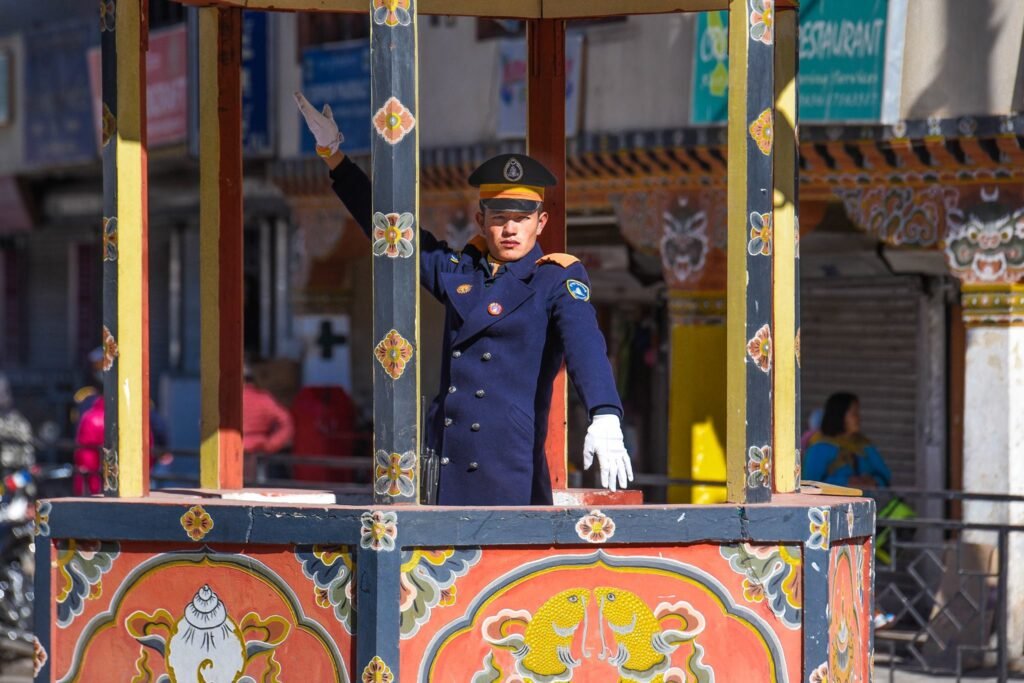
Thimphu is a serenely modest capital. Nestled on the west bank of the Thimphu Chuu, the world’s third-highest capital is laid out along a north-south axis, with an ornate clock tower at its centre. Nearby, a police officer in an immaculate uniform and white gloves directs traffic from a tiny hut decorated in bold reds and yellows. Bhutan installed its first traffic light at this same intersection, only to quietly remove it that very evening after it caused more accidents than it prevented. Some things, it seems, are better left as they are.
Archery: Bhutan’s National Sport
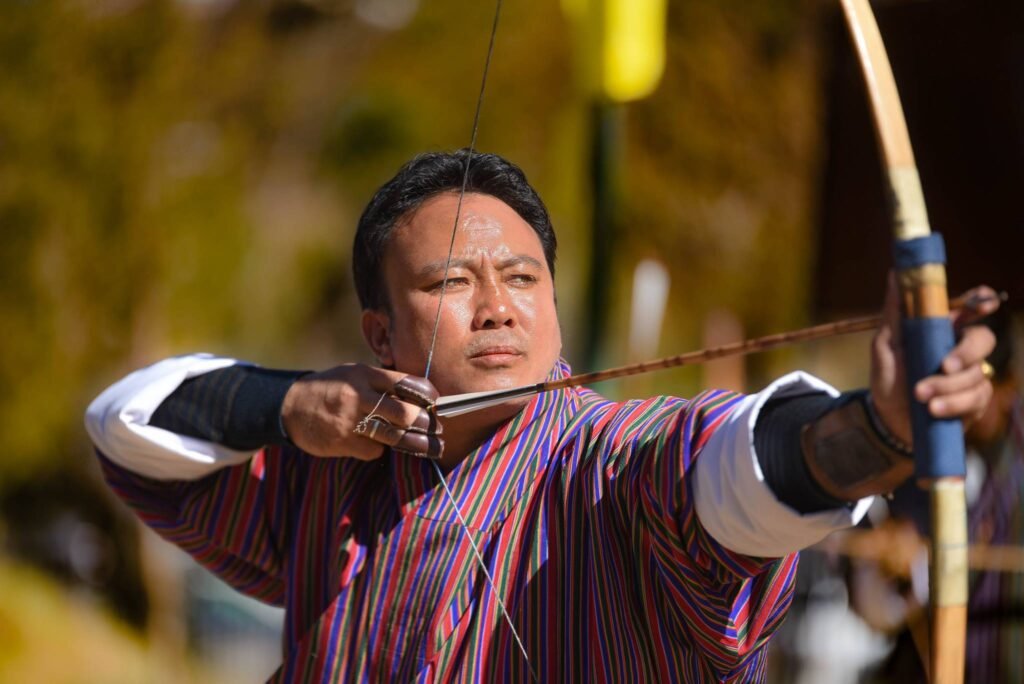
The quiet of the capital is broken only by the cries from the Dzongkha field, where the national sport of archery draws the biggest crowd in town every weekend. It is a tournament of distinctive pageantry: opposing teams, strictly attired in national dress, crowd around the tiny bullseye while archers sight their shot from 150 metres down the field.
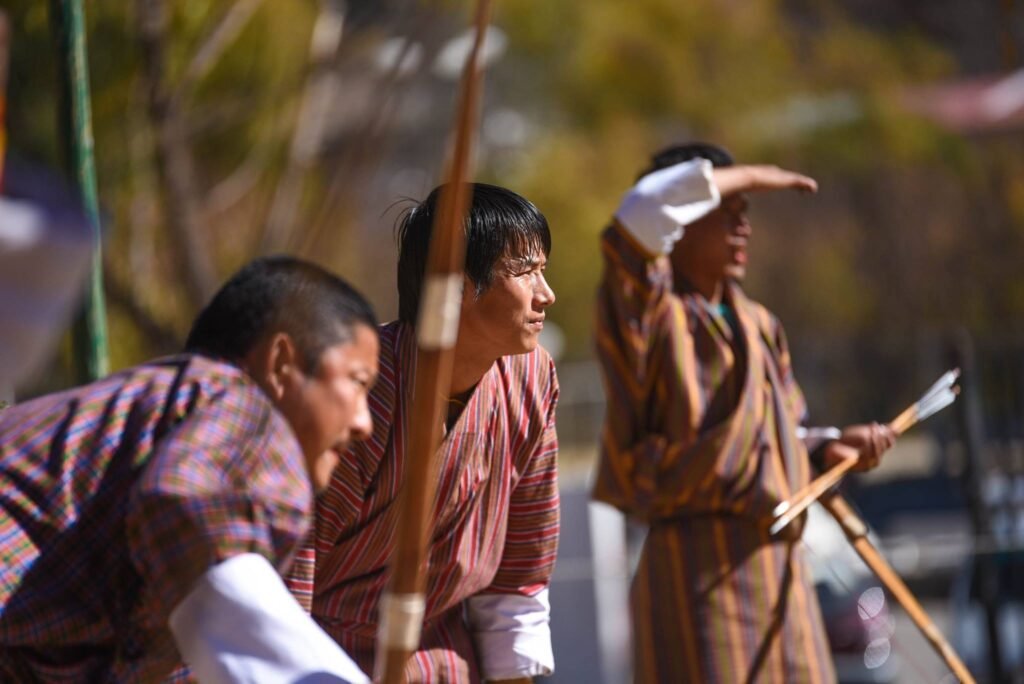
The tradition of kha shed — a spirited combination of jostling, chanting and heckling designed to distract the archer — gives proceedings a theatrical edge entirely their own. A missed shot is met with polite taunts; a successful strike earns a respectful traditional dance that blesses the target and honours the archer’s skill. There is laughter, singing and dancing at both ends of the field, friendships forged, and rivalries stoked over more than a few drops of local ara rice wine.
Crossing the Dochula Pass: A Memorial in the Mountains
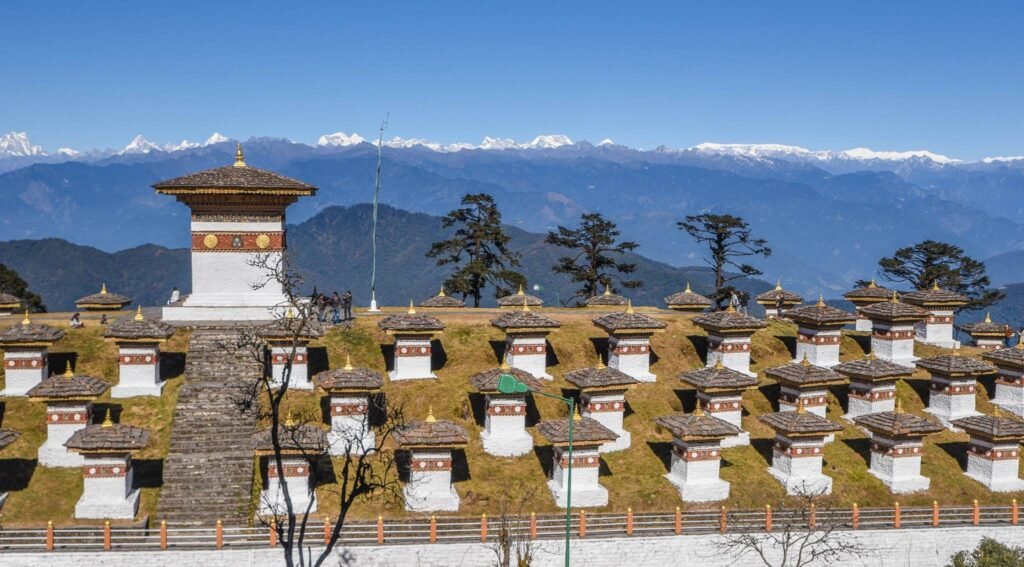
Atop the Dochula Pass, I visit the solemn Druk Wangyal Chortens — a memorial of 108 stupas dedicated to those who fell during Bhutan’s brief campaign against Assamese rebels, one of the kingdom’s few modern armed conflicts. With the mighty Himalayas stretching behind them, the pointed summit of Gangkar Puensum — Bhutan’s highest peak — rising in the distance, the memorial speaks eloquently to the importance the Bhutanese place on life, peace and the pursuit of happiness.
Punakha Valley: Rice Paddies, River Fortresses and Starlit Cocktails
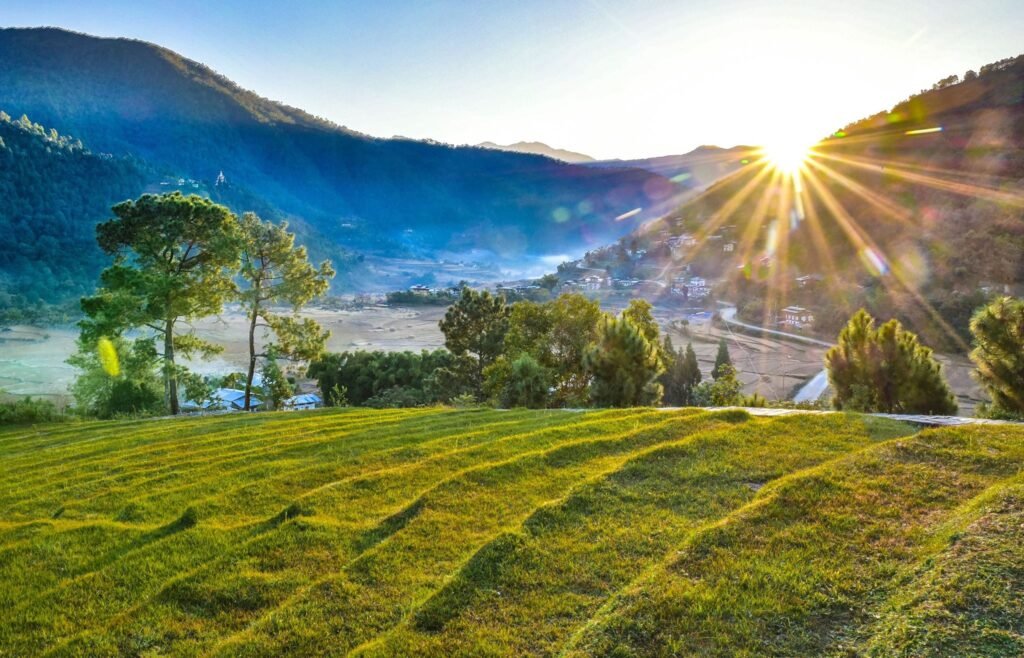
We descend through dense forest into the lush Punakha Valley, winding through tiny hamlets and past farms where water buffalo plough the fields in preparation for spring. COMO Uma Punakha, another of a clutch of sublime mountain retreats that have opened in Bhutan, announces itself as the light begins to drain from the sky.
My room — one of just 11, including two sumptuous villas — looks north down the valley towards towering peaks, the meandering Mo Chhu River winding through emerald rice paddies below. A king-sized bed, sheesham-wood furniture, and a deep soaking tub make the frosty Punakha nights feel genuinely indulgent. I wrap up warm and join fellow guests on the terrace for cocktails served beneath a canopy of stars, followed by a Bhutanese feast in the restaurant. The experience is nothing short of magical.
Punakha Dzong: The Palace of Great Happiness
The following morning, my guide and I step back into the 17th century as we explore Pungthang Dechen Photrang Dzong — the valley’s ancient fortress, dating from 1637 and better known as the Palace of Great Happiness. It houses sacred Buddhist relics, but the monks who call it home still welcome visitors, leaving us to wander its vast inner courtyards in unhurried exploration.
It is a particularly special day to be in Punakha. The present Je Khenpo — Bhutan’s religious leader — is visiting, and the fields at the confluence of the Pho Chhu (father) and Mo Chhu (mother) rivers are alive with colour: monks in terracotta and tangerine kasayas; mountain elders in black ghos with white shawls and matching whiskers; novices with brilliantly red robes and freshly shaved heads; elderly women wrapped in silk scarves of every conceivable colour.
Saucer-eyed children ride the backs of parents and grandparents as monks recite scripture in a lilting, melodic tempo. Our small group are the only foreigners among thousands of worshippers — and we are made to feel entirely welcome.
Bhutan by Helicopter: The Ultimate Himalayan Perspective
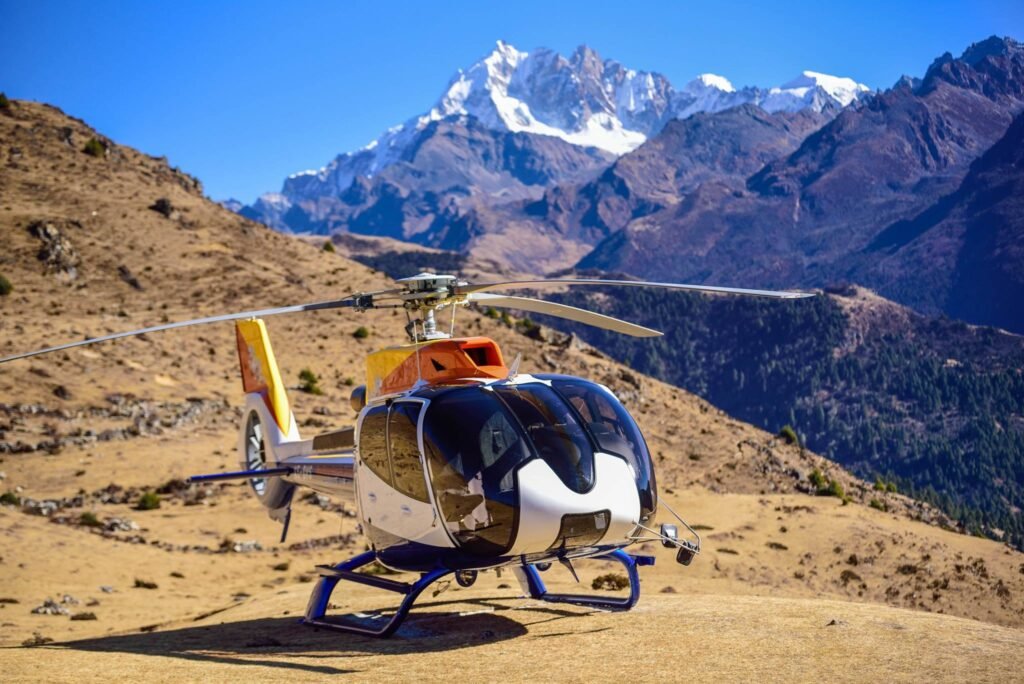
The following morning, we rattle down the dusty road from COMO Uma Punakha to a field by the river where a helicopter waits. In a pioneering partnership with the Royal Bhutan Helicopter Service — the kingdom’s fledgling air ambulance fleet — guests staying at COMO’s Bhutan properties can now be among the first to access some of the kingdom’s most remote corners.
The six-night Scenic Heli-Adventure includes two flights: from Paro to Punakha via the rarely-visited Laya Valley, and from Punakha to Paro via the turquoise lakes of the Labatama Valley. I’ve managed to hitch a ride in the reverse direction, visiting Laya en route back to Paro Airport.
With a roar from the turbines that reverberates off the mountainsides, British captain Nik Suddards pilots the Airbus helicopter up the Punakha Valley, offering a bird’s-eye view of the Nalanda Monastery and the sacred peaks of Jigme Dorji National Park — home to snow leopards, clouded leopards, Himalayan black bears, red pandas and ancient glaciers. After 40 extraordinary minutes in the air, we circle the tiny village of Laya: at 13,500 feet above sea level, the kingdom’s highest settlement.
Laya: Bhutan’s Hidden Paradise
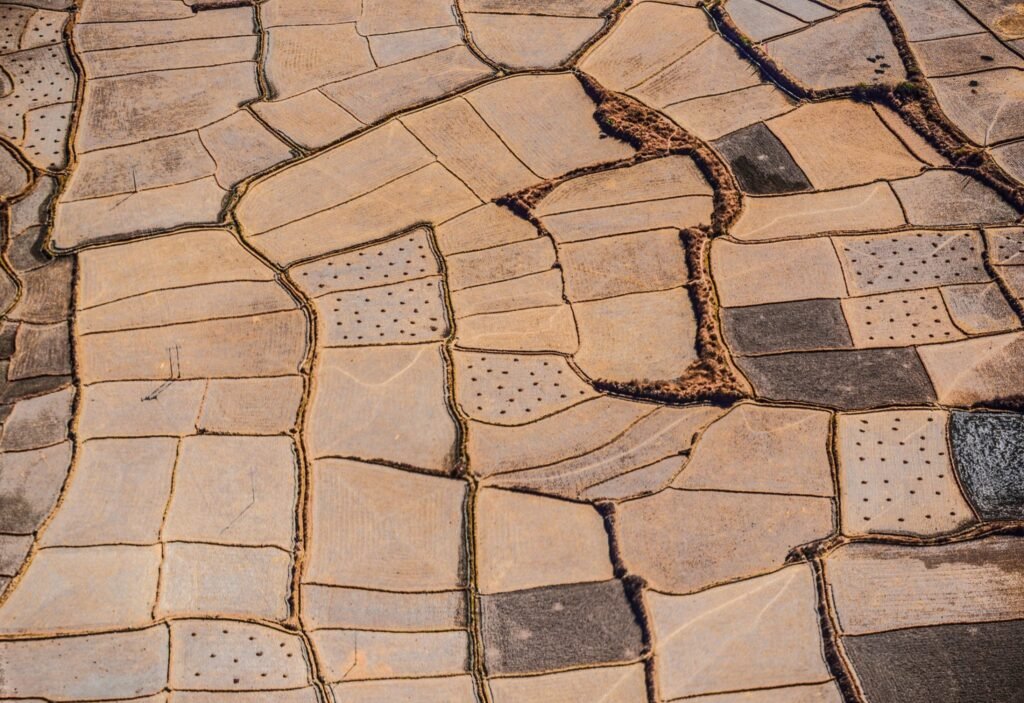
Located in one of the most remote and least developed parts of the country, Laya is home to the semi-nomadic Layap people — a relatively prosperous community whose livelihoods are sustained in part by the harvest of cordyceps, a rare fungus valued in Chinese and Tibetan traditional medicine. Their Bey-yul, or hidden paradise, is protected from mischievous spirits by an ancient gate at the village entrance.
Foreigners are extremely rare here; helicopters are rarer still. After landing above the village, we are greeted by curious locals, among them two young sisters for whom I am the first foreigner they have ever encountered. It puts smiles on all of our faces — and produces the kind of moment that no itinerary can plan for.
Tiger’s Nest Monastery: Bhutan’s Most Iconic Sight
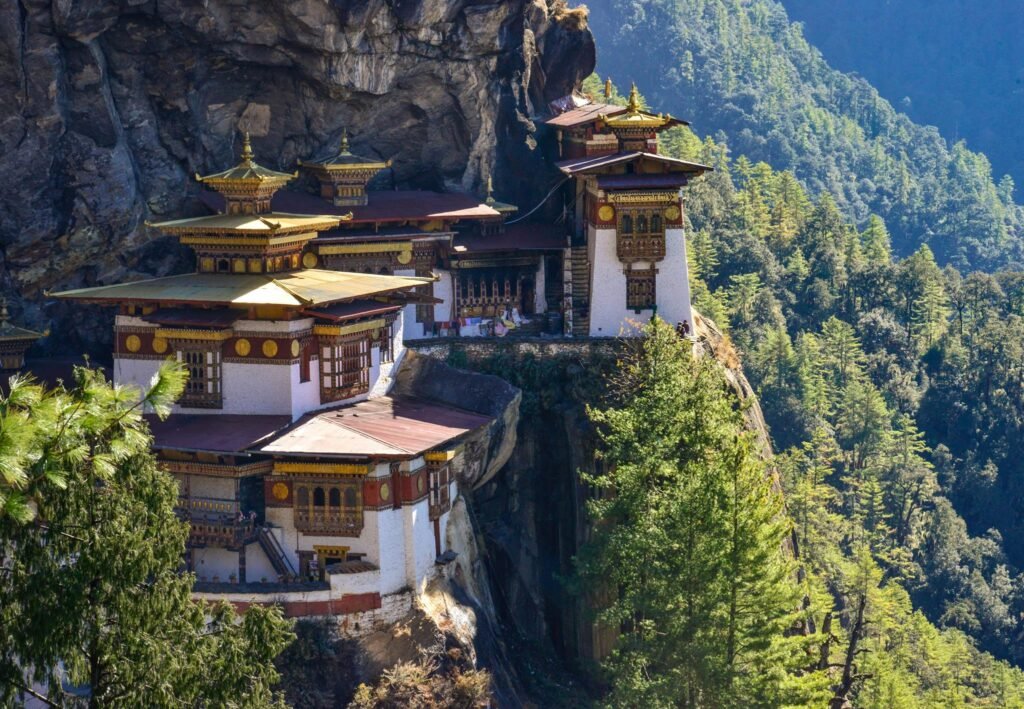
Our final day is devoted to climbing to Paro Taktsang — Tiger’s Nest —, and it’s a fitting culmination. This prominent Himalayan Buddhist site, perched dramatically on a clifftop 900 metres above the Paro Valley floor, was built in 1692 around a cave where the Buddhist master Guru Rinpoche is said to have meditated for three years, three months, three weeks, three days and three hours.
The hike up the opposite cliff, followed by 700 steps down into the canyon and back up to the monastery itself — which must be repeated on the return — is genuinely challenging. But that, of course, is the point.
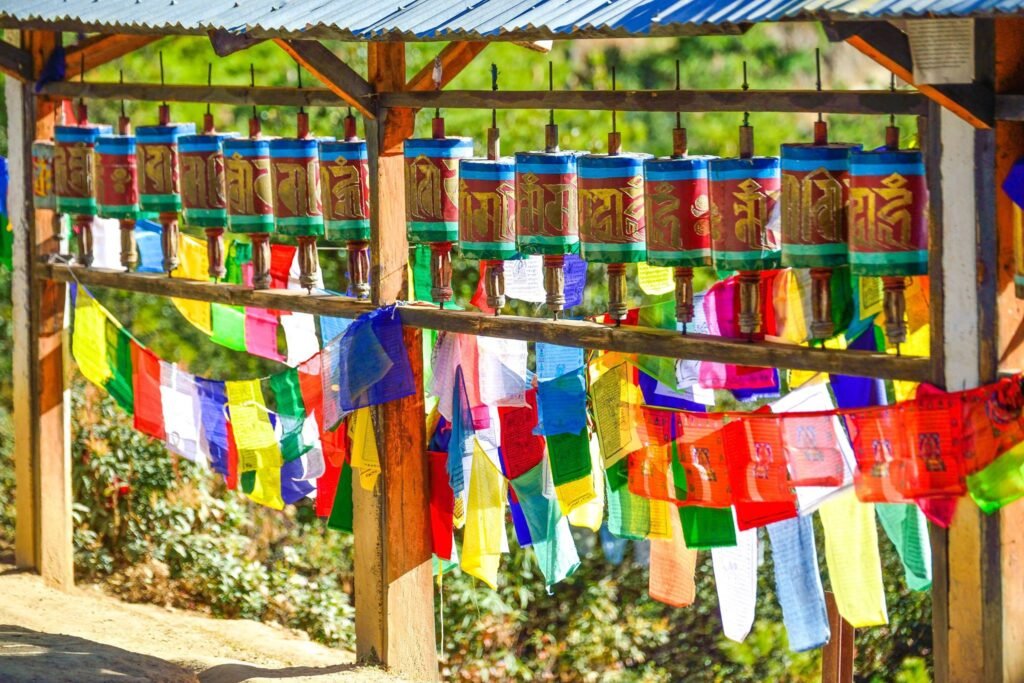
When you finally arrive at the shrine and drink in the soaring views across Bhutan’s mountainous interior, you are rewarded with something no helicopter flight or luxury lodge can quite provide: the particular satisfaction of having earned your happiness.
Frequently Asked Questions About Travelling to Bhutan
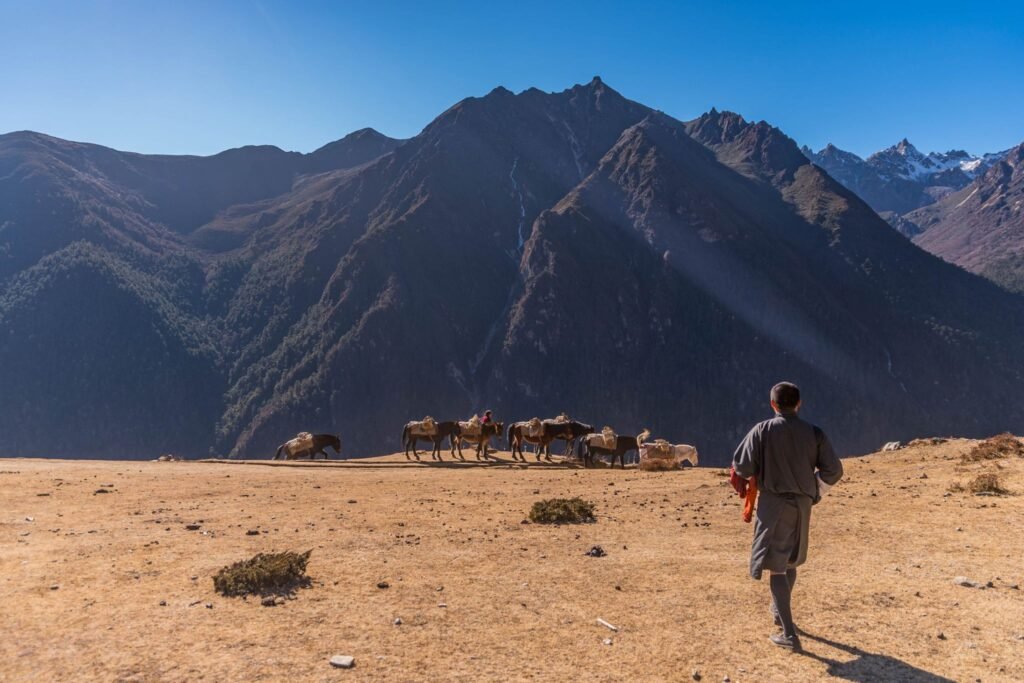
Bhutan is a popular bucket list destination for many travellers, and getting there is part of the appeal. Here’s what you’ll need to prepare before you head for the Himalayas.
Do I need a visa to visit Bhutan?
Yes. All international visitors to Bhutan (with the exception of citizens of India, Bangladesh and the Maldives) require a visa, which must be applied for in advance through a licensed Bhutanese tour operator or the Tourism Council of Bhutan. Visas are not available on arrival.
What is the Bhutan Sustainable Development Fee?
Bhutan operates a Sustainable Development Fee (SDF) for international tourists — currently US$100 per person per night — which contributes to the kingdom’s environmental and cultural conservation programmes. This fee is in addition to the cost of your tour package and must be paid in advance. Regional visitors from India, Bangladesh and the Maldives pay a lower rate.
When is the best time to visit Bhutan?
The two most popular seasons are spring (March to May), when rhododendrons bloom across the hillsides, and the weather is clear and mild, and autumn (September to November), which offers the best visibility for mountain views and coincides with several major festivals. Winter (December to February) is cold but uncrowded, with stunning snow-capped scenery. The monsoon season (June to August) brings heavy rain but lush landscapes and far fewer visitors.
How do you get to Bhutan?
Bhutan is served by its national carrier, Druk Air, and by Bhutan Airlines, with international connections through Hong Kong, Delhi, Kathmandu, Bangkok, Singapore, Kolkata and Mumbai. Paro Airport is one of the most challenging approaches in the world: only a small number of certified pilots are qualified to land there. The experience is entirely safe — but memorable.
Is Bhutan an expensive destination?
Bhutan is a premium destination by design. The Sustainable Development Fee, combined with the requirement to book through a licensed operator, means that independent budget travel is not possible. Most visitors travel as part of a pre-arranged package that covers accommodation, transport, a guide and the SDF. Luxury lodge options, particularly those operated by COMO, Aman, Six Senses and andBeyond, represent the highest tier of the market.
Is Bhutan suitable for solo travellers?
Yes — Bhutan is an excellent destination for solo travellers. All visitors travel with a licensed guide, who provides a built-in companion and cultural interpreter throughout the journey. Solo travellers typically pay a small supplement on group tour packages.
What should I pack for Bhutan?
Layers are essential, as temperatures vary significantly between valleys and passes and between day and night. Modest clothing is required when visiting monasteries and dzongs (no shorts or sleeveless tops). Good walking shoes or hiking boots are important, particularly if you plan to hike to Tiger’s Nest. Sunscreen and lip balm are useful at altitude.
Can I visit Tiger’s Nest Monastery?
Yes — the hike to Paro Taktsang (Tiger’s Nest) is one of the highlights of any visit to Bhutan and is accessible to most reasonably fit visitors. The return hike takes approximately four to five hours. Horses are available for part of the ascent for those who prefer a gentler approach.
Don’t forget to check out our guide to the best luxury Bhutan lodges.


