
Kilchoan Estate by Dunton arrives on a remote Knoydart peninsula in June 2026, bringing five restored stone cottages, communal Highland dinners, and 5,00 hectares of wilderness to one of the last truly inaccessible corners of Britain.
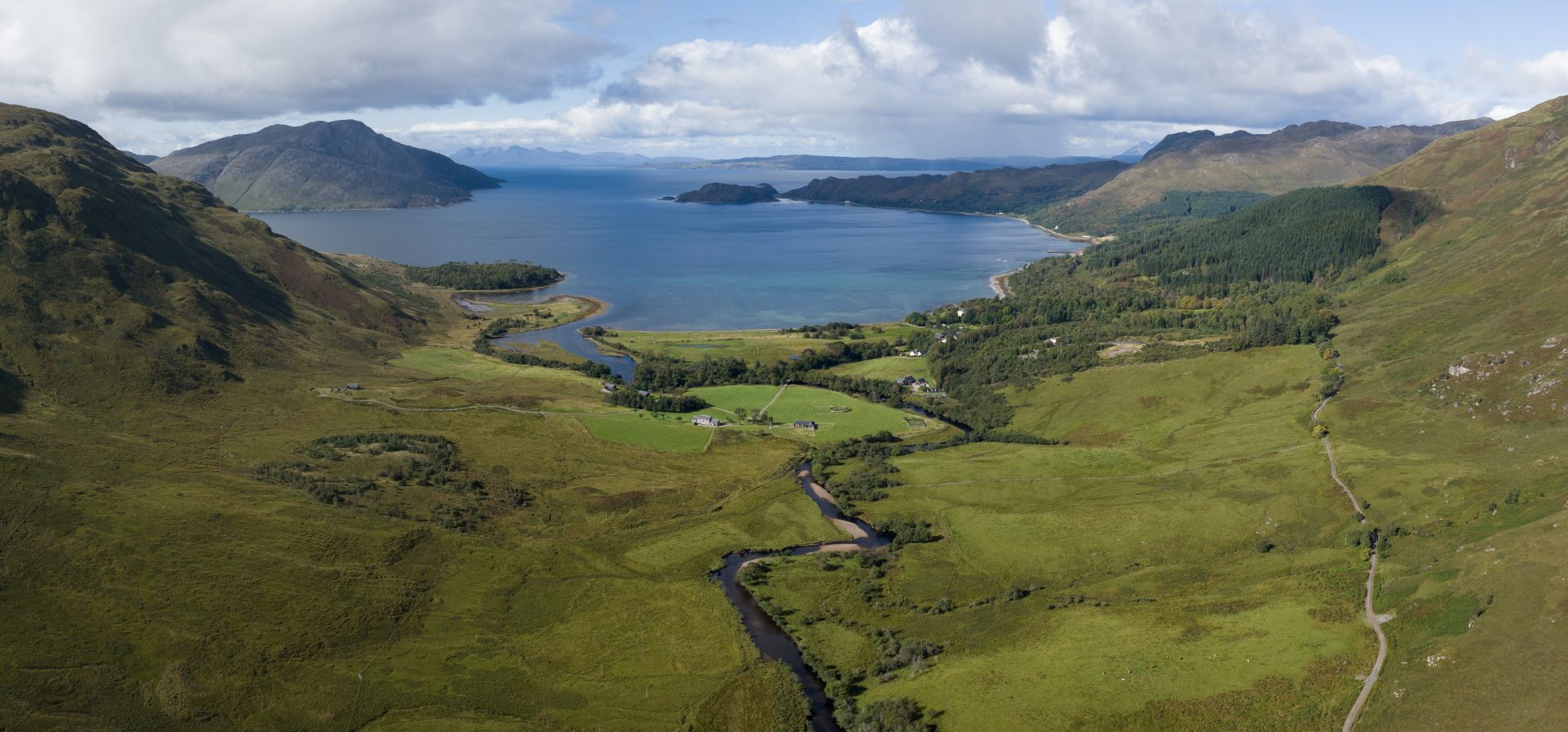
There are places in Scotland that the modern world has simply failed to reach. Knoydart is one of them. Wedged between Loch Nevis and Loch Hourn on the northwest Highland coast — two sea lochs whose Gaelic names translate, with poetic symmetry, to “Loch of Heaven” and “Loch of Hell” — this peninsula has no road connecting it to the rest of Britain. You arrive by boat or on foot, and that fact alone filters the kind of traveller who comes.
It is here, across a private sweep of 5,000 hectares, that Kilchoan Estate by Dunton will open in June 2026 — the Colorado-based hospitality group’s first European property, and arguably its most ambitious one yet.
Dunton built its reputation on a single compelling idea: find a place of extraordinary wildness and historical resonance, restore it with obsessive care, and let guests inhabit it as if it were their own. That philosophy was first realised at Dunton Hot Springs, a painstakingly revived ghost town in the Colorado Rockies. Kilchoan applies the same thinking to a landscape that is, if anything, even more charged with history.
The Estate and Its Weight of History
The estate’s recorded ownership stretches back to the 12th century, its story inseparable from the clan rivalries, agricultural rhythms, and traumatic displacements of the West Highlands. The Highland Clearances — that 18th and 19th-century wave of forced evictions that emptied much of this region of its people — left their mark on Knoydart more than almost anywhere. The land does not let you forget.
In recent years, Kilchoan was acquired by Katrin and Christoph Henkel, who set about a sensitive restoration guided by the same conviction that shaped Dunton Hot Springs: that heritage is worth preserving, not merely referencing. London-based studio Waldo Works — which also oversaw the multi-year renovation at Dunton’s Colorado property — was brought in to oversee the work.
Five Cottages, Each a World of Its Own
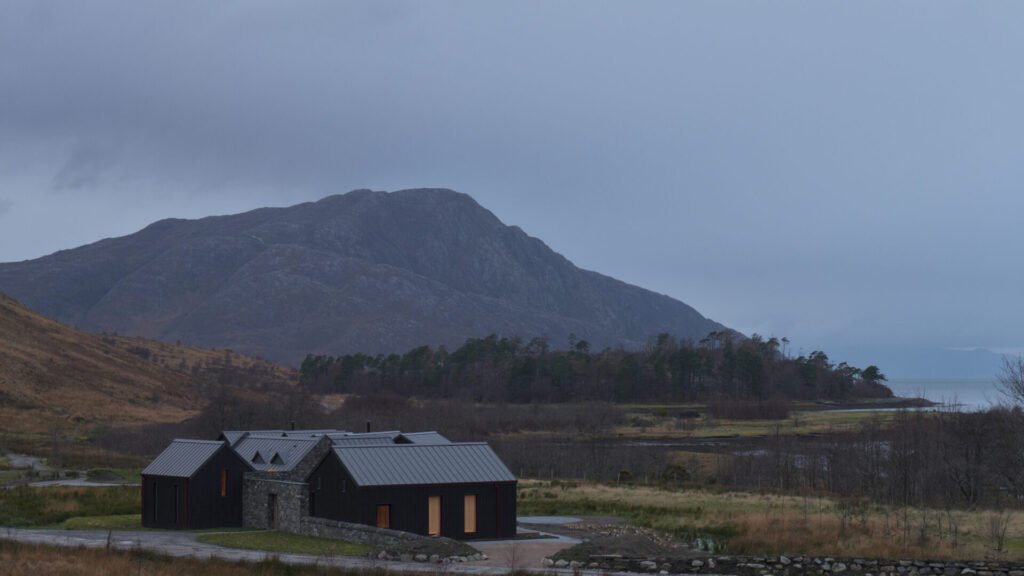
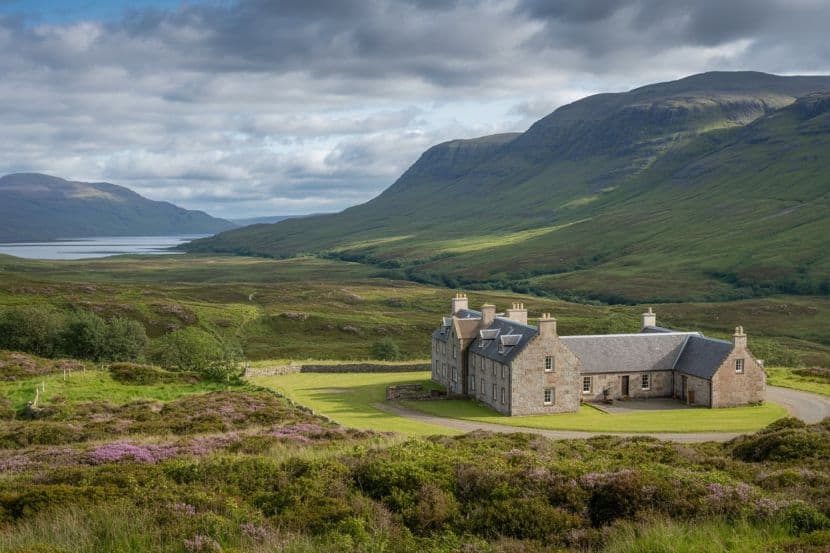
The estate opens with five fully restored private cottages, ranging from two to five bedrooms, with two additional buildings due in early 2027. Built from stone, pine, and slate drawn from the surrounding landscape, they sit within the terrain rather than against it — low profiles, honest materials, the architectural vocabulary of a working Highland estate rather than a luxury simulation of one.
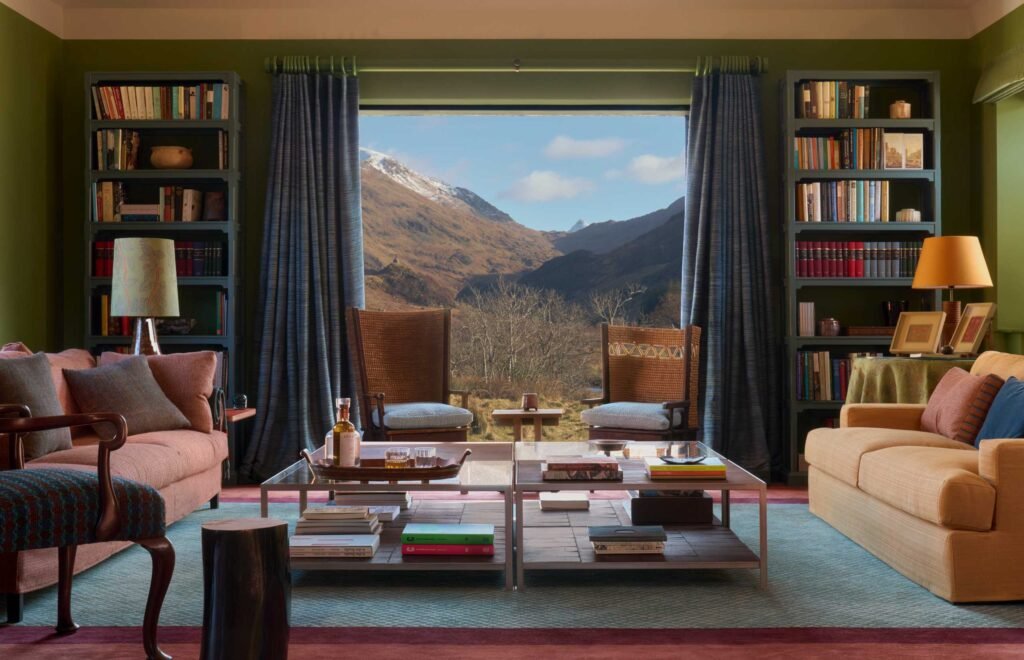
Interiors are the work of Katrin Henkel’s personal curation: sea-inspired hues in Rum Cottage take their name and palette from the island visible across the water; textiles come from distinguished British and Irish makers — Bute, Mourne Textiles, the Isle Mill — whose traditions are as rooted in this Atlantic edge as the buildings themselves. Bespoke Scottish furniture by Angus Ross and lighting by Adam Ross are paired with European pieces selected for character and craft. Sheepskins, woven layers, and carefully chosen art give each cottage a warmth that a design brief alone cannot manufacture.
Wilderness, Enacted
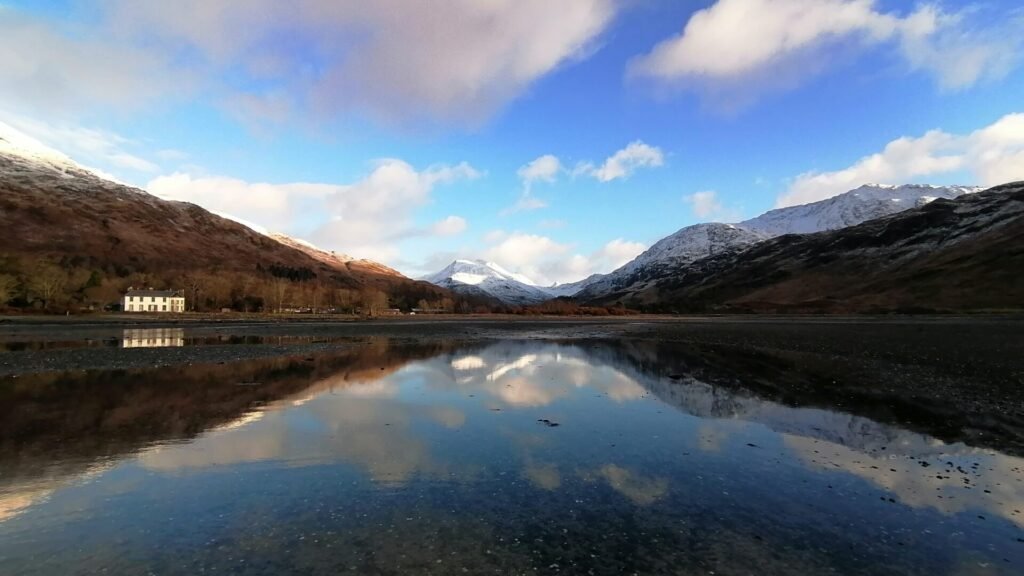
The land surrounding Kilchoan is the estate’s true centrepiece. Guests can strike out on self-guided or expert-led hikes across mountain terrain, swim in lochs whose temperatures will instil a Nordic-grade alertness, kayak the sea between the two lochs, and fish rivers and coastline for wild Atlantic salmon and sea trout. Coastal boat excursions push further along the peninsula’s edge; wildlife encounters — red deer moving through the upper glens, golden eagles riding thermals above the ridgeline, marine life in the sheltered waters below — are a matter of patience and presence rather than organised spectacle.
Evenings, the estate’s isolation becomes an asset of a different kind: Knoydart sits beneath some of the darkest skies in Britain, and on clear nights the Milky Way makes its argument for staying another week.
The Long House and the Table
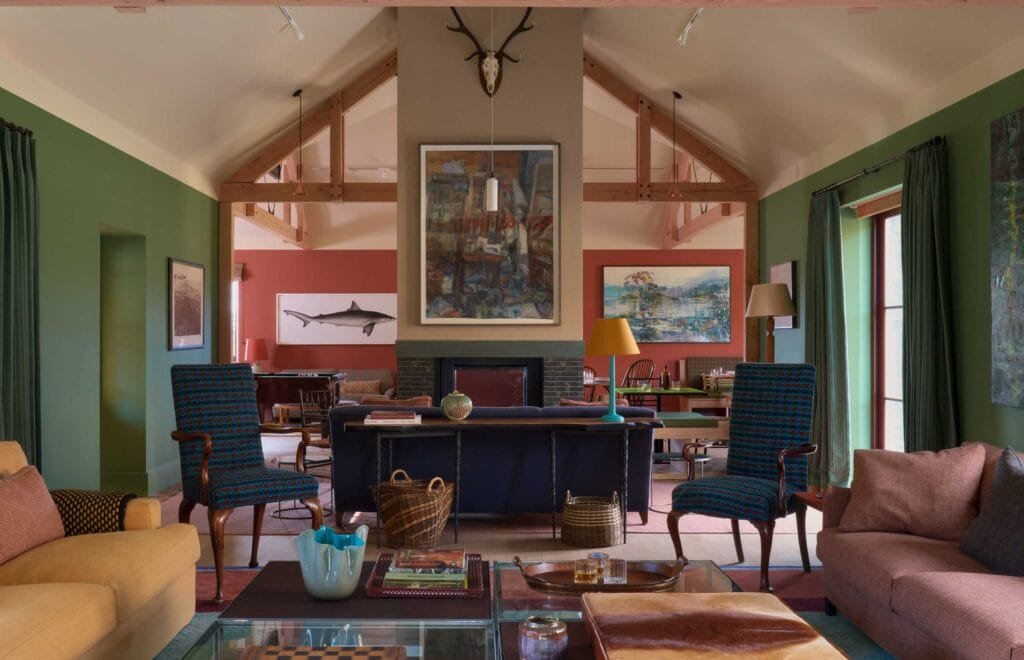
Central to the Dunton experience, here as in Colorado, is the idea of the communal meal. The Long House serves as the estate’s main lodge, where dinners are taken slowly and in shared company — guests invited to sit together, trade the day’s discoveries, and eat food that reflects the provenance of the landscape around them. Breakfasts arrive at each cottage; lunch is packed for wherever the day’s expedition leads. The kitchen draws on seasonal, locally sourced ingredients: venison from the hills, fish from the sea, produce from the region’s small-scale growers.
A new spa, sauna, and yoga studio provide a counterweight to the physical demands of the landscape — rest and recovery framed as acts of intention rather than indulgence.
A Commitment to the Land
The estate is fossil fuel-free, upgraded with energy-efficient systems that sit unobtrusively within the historic fabric of the buildings. Collaborations with local partners and the Knoydart Foundation — the community land trust that has stewarded much of the peninsula since 1999 — place conservation, local employment, and cultural continuity at the centre of the operation. At Kilchoan, responsible travel is not a marketing claim. It is, given the nature of the place, the only approach that makes sense.


