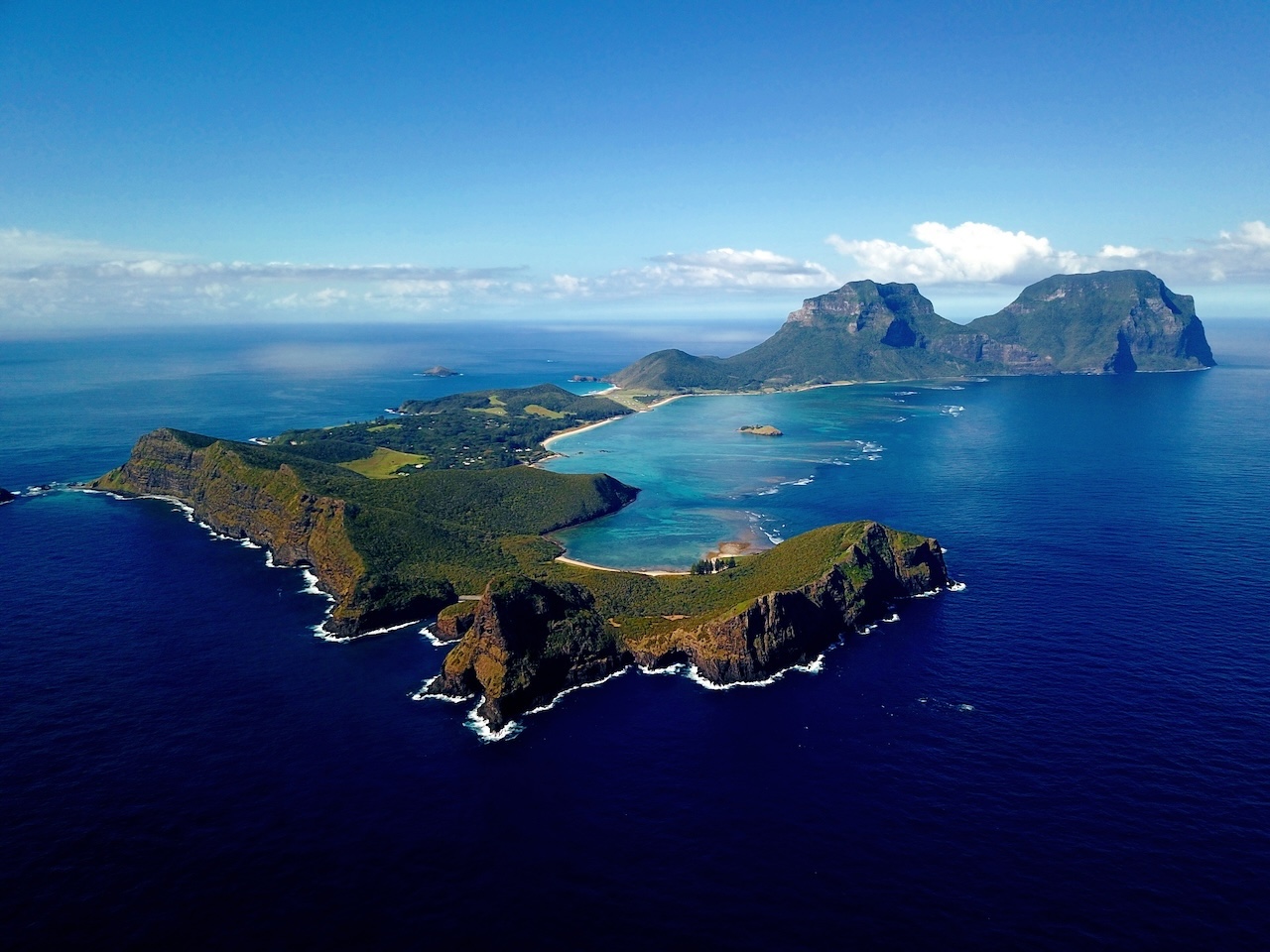

Seven hundred kilometres off Australia’s east coast, a World Heritage island of extraordinary quietness receives 400 visitors at a time — and no more.
Silence, for the city dweller, can be a genuinely disorienting thing. We become so habituated to noise — the layered, overlapping bedlam of urban life — that its absence registers as something strange, almost suspect.
Lord Howe Island cures this quickly. There is no traffic to speak of. The speed limit is 25 kilometres an hour, and it is largely academic. People wave from bicycles. The air smells of nothing in particular, which is to say it smells of the sea and of forest and of whatever flowers happen to be blooming nearby.
Few people outside Australia could place the island on a map. Fewer still have been here. That is, in its way, the whole point.
An Island Introduced
Europeans first encountered Lord Howe in February 1788, when the crew of HMS Supply — commanded by Lieutenant Henry Lidgbird Ball — came upon it in the course of the First Fleet’s voyage. Ball gave his name to the island’s most dramatic feature, Ball’s Pyramid, a sheer volcanic spire that erupts from the Tasman Sea off the southern coast, implausible in its verticality, impossible to ignore from any elevated point on the island.
The island itself was named in honour of Richard Howe, First Lord of the Admiralty. The Royal Navy’s connection to Lord Howe persisted into far more recent times: in 2002, the destroyer HMS Nottingham struck the island’s Wolf Reef and came close to sinking, a reminder that even very modern vessels are not immune to the hazards of a coastline this remote.
Today the Lord Howe Group — a cluster of volcanic outcrops formed some seven million years ago — is a World Heritage Site of genuine ecological significance. The island supports 241 species of native plants, 105 of which are endemic.
Among its 168 recorded bird species are the rare flightless woodhen and the providence petrel, which rides the thermals off the clifftops or loiters on the wave-washed rocks below, waiting for the tide to deliver something worth eating.
Arriving Slowly
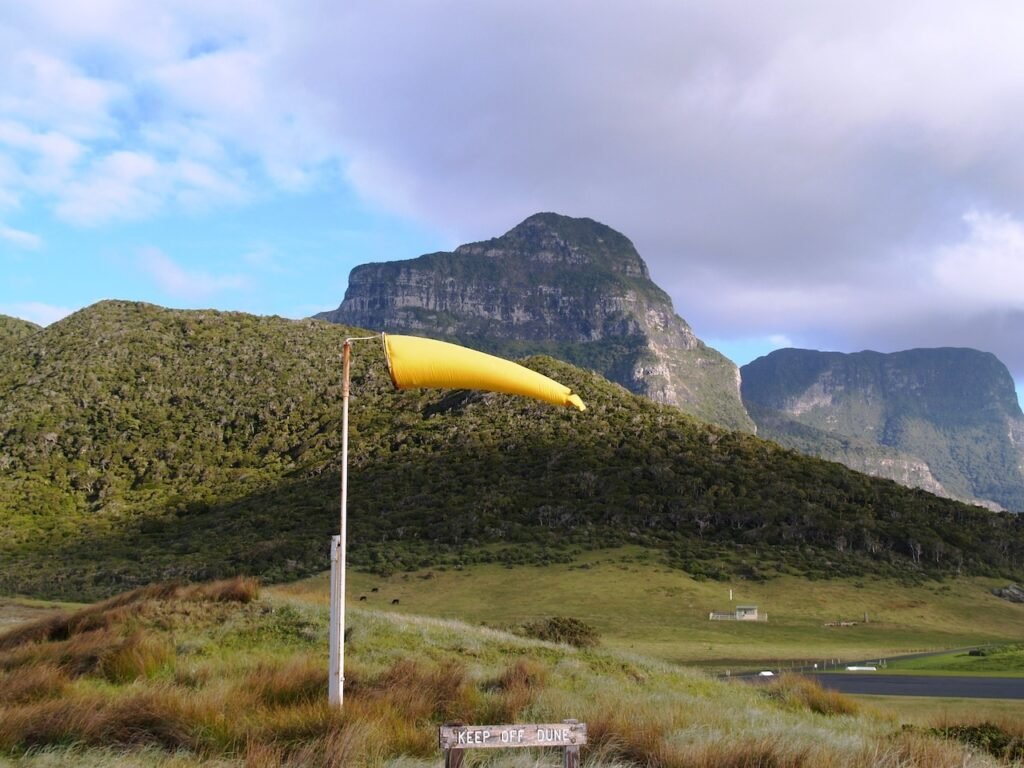
Lord Howe’s airport has the atmosphere of a communal living room. Everyone, it becomes immediately apparent, knows everyone else. All eyes — friendly, unhurried — turn to the newest arrivals. The man monitoring the arrivals hall wears an official polo shirt stencilled with CUSTOMS across the back. He is also, it turns out, the island’s only police officer. This is not a place that requires a great deal of either.
Tourism arrived slowly here. Until the airstrip was cleared in 1974, the only access was by ship or flying boat, and the island’s small permanent population grew accustomed to the rhythms of isolation. The visitor cap — 400 people at any one time — was a deliberate choice, and it has shaped the island’s character as much as the geography has. Lord Howe functions, in practice, as a living national park. The island is managed accordingly.
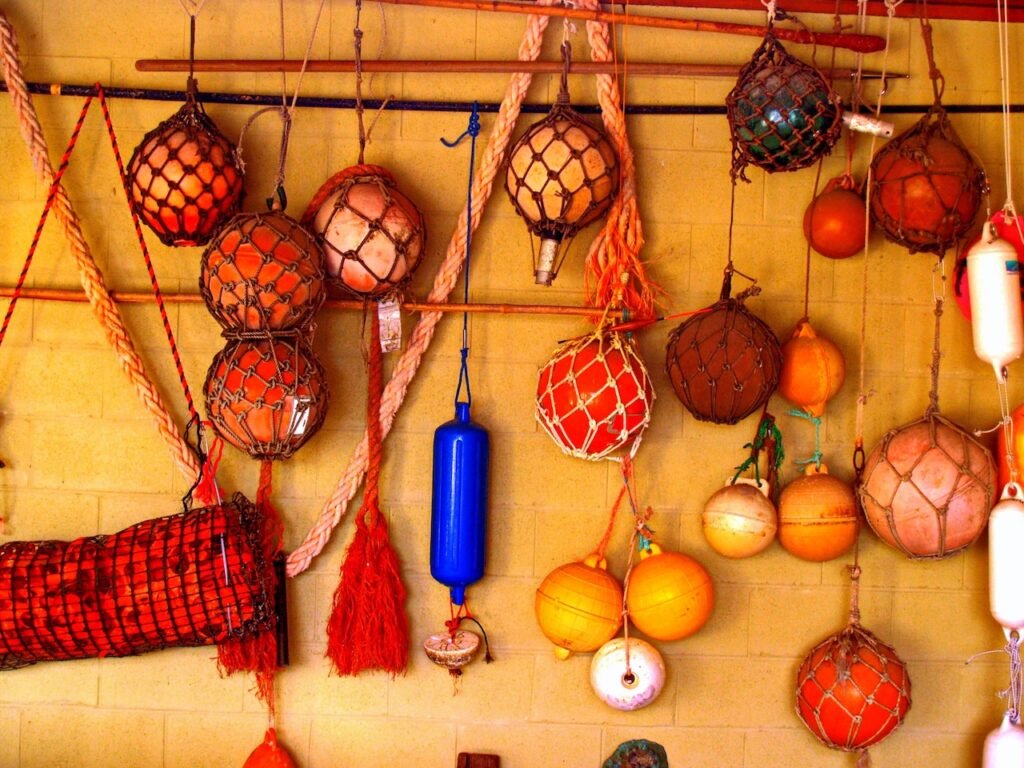
Minutes after landing, I’m cycling through park-like surrounds to Arajilla, the small resort that will be home for the next few days. There is no key to the room. The cars left outside have keys in their ignitions. The golf buggies outnumber the conventional vehicles. The 25km/h speed limit is, if anything, optimistic given the roads.
The Lagoon
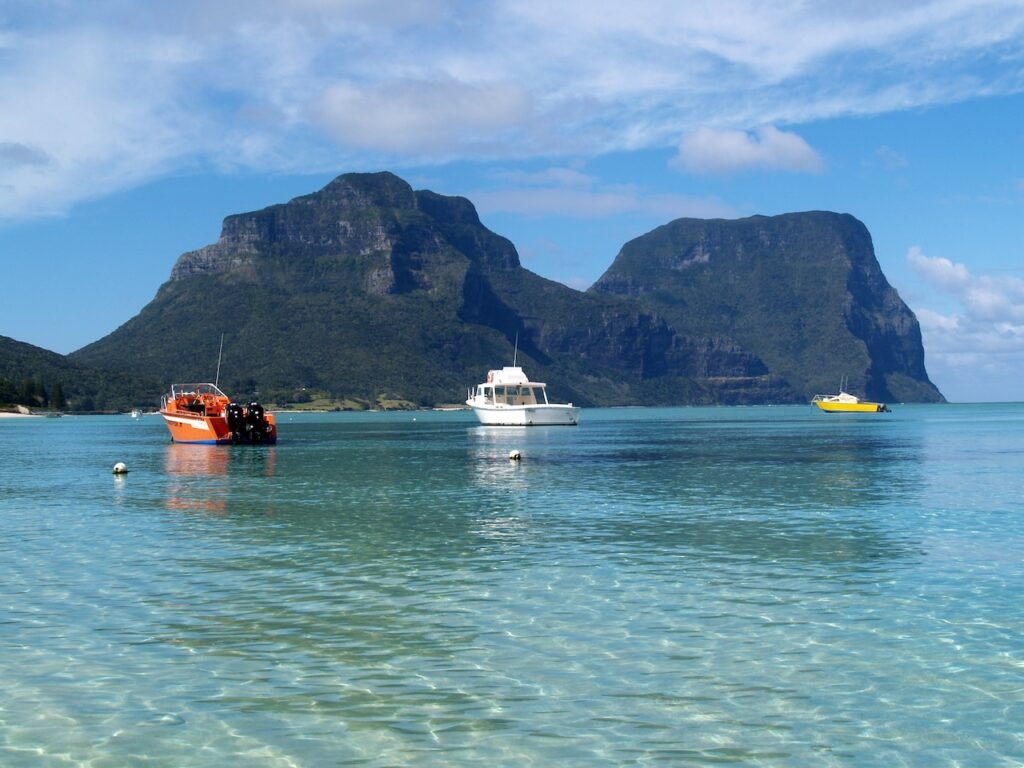
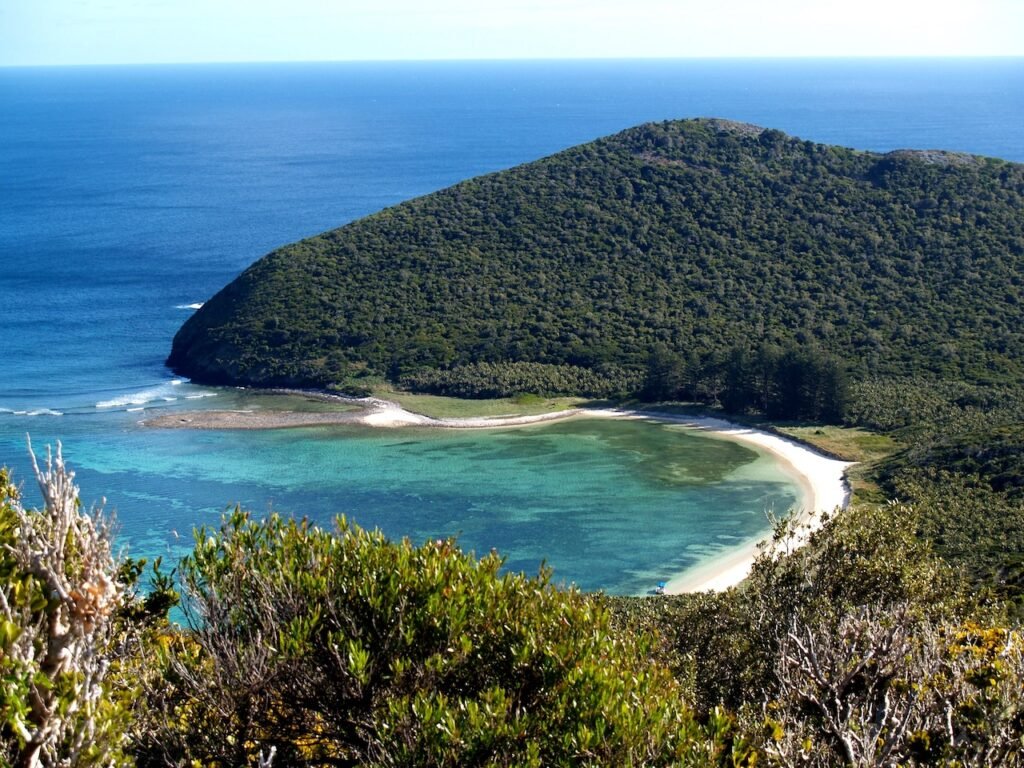
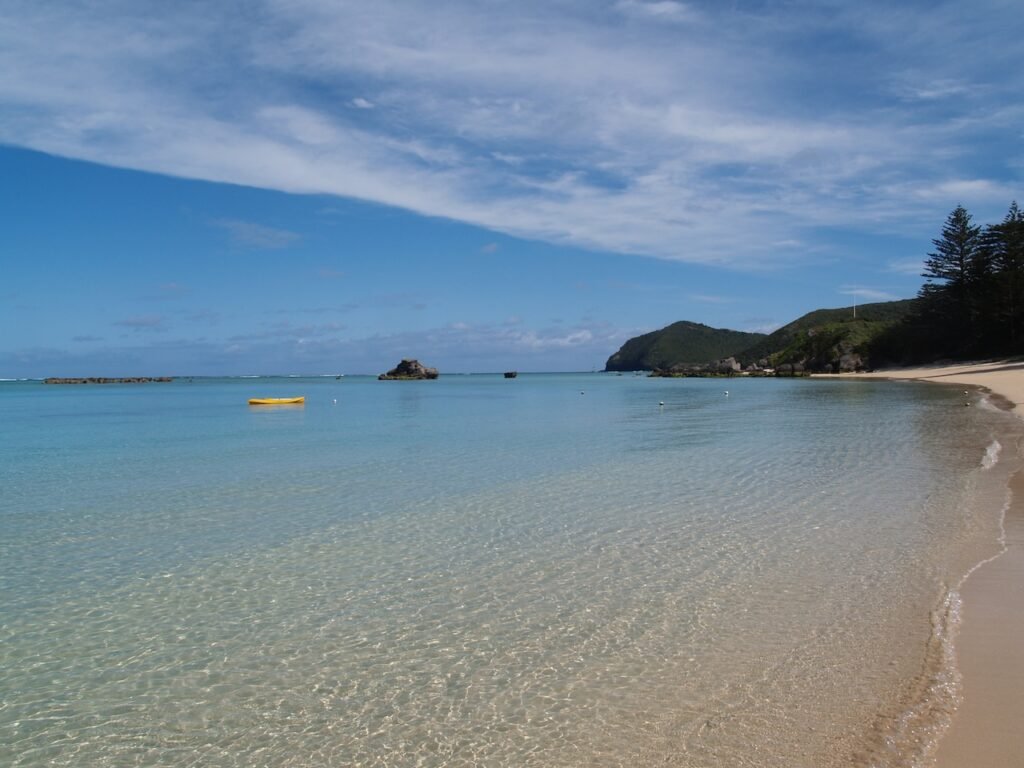
The tourist trade centres on the lagoon and its coral reefs — the southernmost coral reefs in the world, a fact that still seems improbable when you’re floating above them in water the colour of pale tourmaline. A glass-bottomed boat chugs quietly out from Ned’s Beach, the stretch of coast with the straightforward name and the extraordinary water, where black and silver fish jostle in the shallows, tamed by generations of handouts from visitors with stale bread.
Below the surface, the reef is in remarkable health, a consequence, largely, of the island’s limited human footprint. The coral formations range from things that sway like slow dancers to structures resolute against the current.
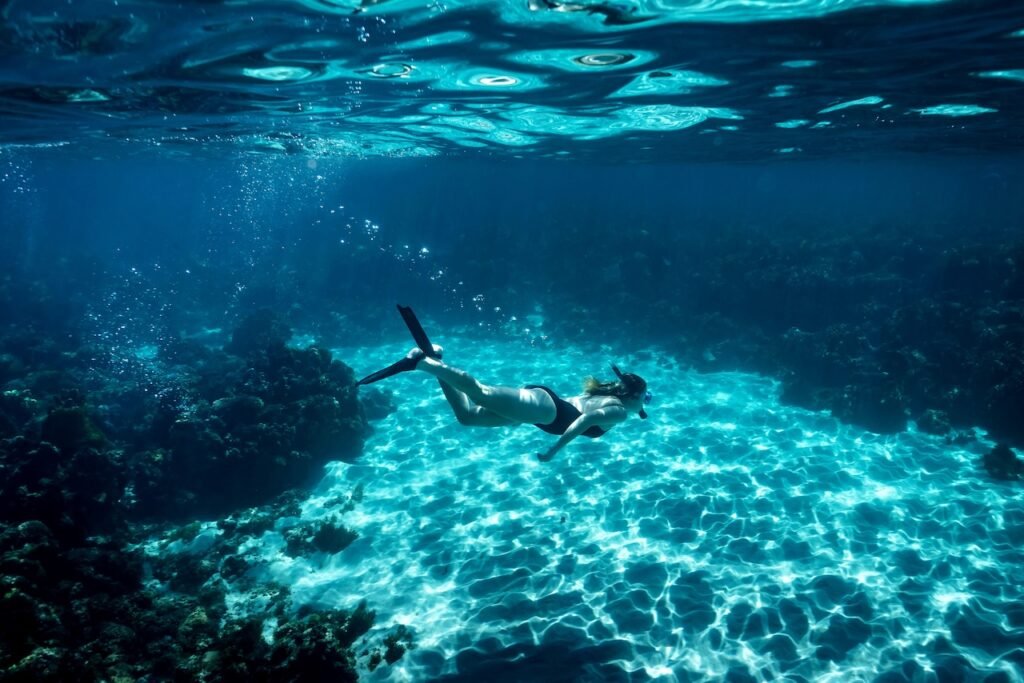
The fish that inhabit them are every conceivable colour and pattern: some the silver of mercury, others iridescent as a holographic card, darting through the water with a weightlessness that makes snorkelling here feel less like a tourist activity and more like an accidental privilege.
The larger fish have grown familiar with the boat and its Perspex viewing panel. They press up against it with a curiosity that makes the question of who is watching whom genuinely unclear.
Above the Waterline
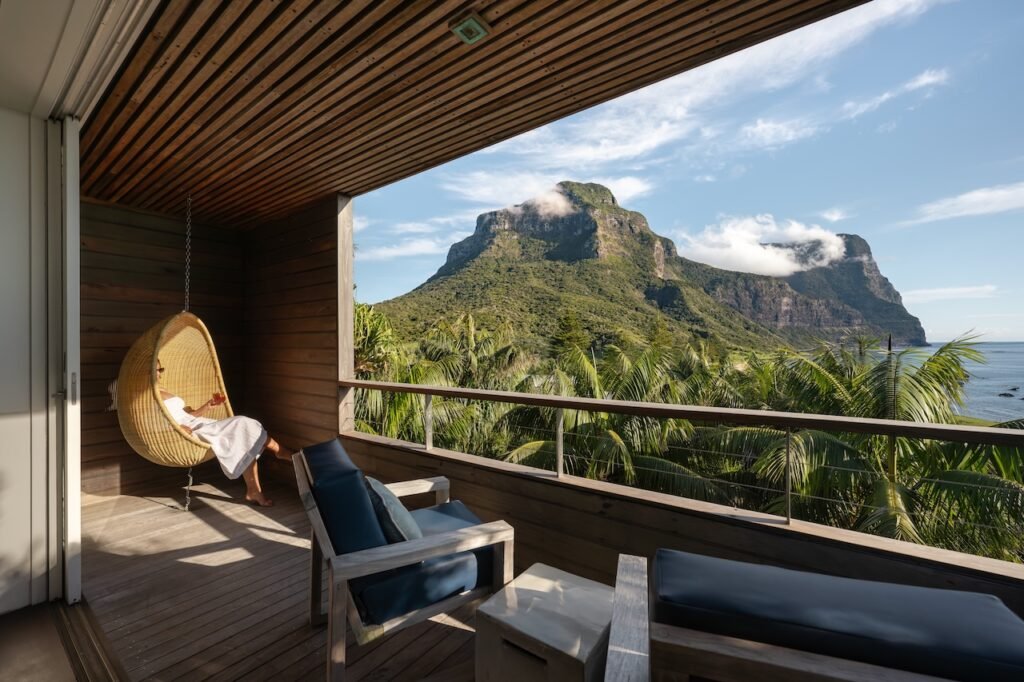
From the weightlessness of the lagoon to the considerable weight of one’s own legs on a steep hill. The walk to Kim’s Lookout is described locally as ‘a short walk’. It involves, by my count, approximately a thousand stairs cut into a bush-clad slope, and it is not short. The views at the top are, however, not negotiable as an experience. Cliffs fall sheer to breaking surf. Fat white gulls wheel in the thermals with the particular insouciance of creatures that have never had to climb anything.
Ball’s Pyramid is visible from up here, jagged, implausible, rising directly from the cold depths of the Tasman Sea. It’s one of those landforms that seems to have been arranged for dramatic effect.
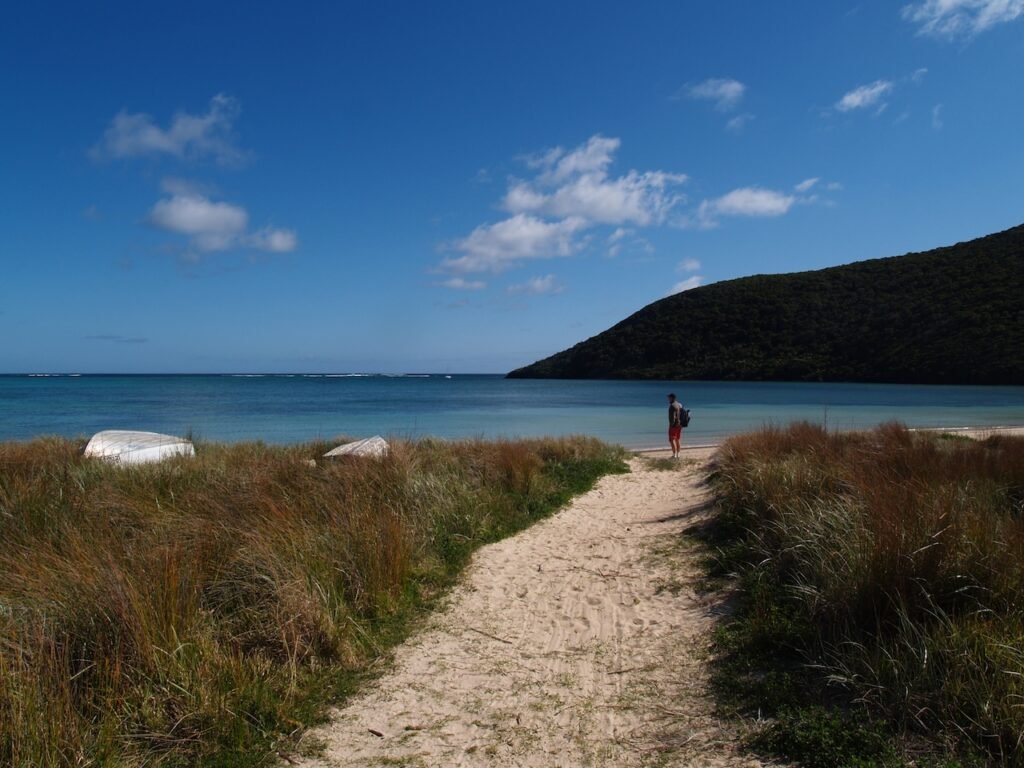
On the descent, the path passes the site of a 1948 accident in which a Catalina flying boat of the Royal Australian Air Force clipped trees during an emergency landing approach over the lagoon, came down on Old Settlement Beach, and killed seven people. There is a memorial. Lord Howe is full of these moments, places where the beauty of the island and its history arrive simultaneously, and require a moment to be held together.
The Hours Between
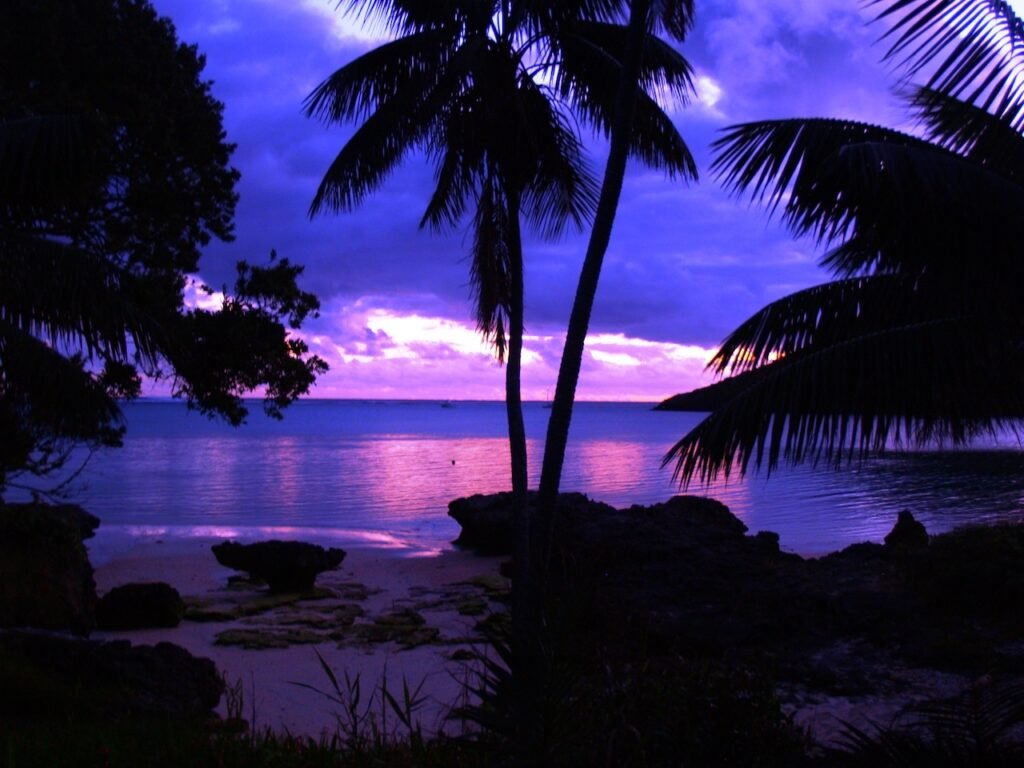
Life on Lord Howe organises itself around the light. Sunsets are not optional — they are events. The best vantage points are the beaches along the lagoon, where fingers of dark volcanic rock reach out towards the rising tide and flat stones accumulate in piles that seem to have been arranged for skimming. The sky goes through amber and rose before the darkness comes in from the east, and the sound that fills the silence is the crash of waves against the outer reef, distant and steady.
There are no tower blocks on the horizon. No aircraft contrails. No ferry traffic. The horizon is simply the horizon, a clean line between water and sky, uninterrupted in every direction.
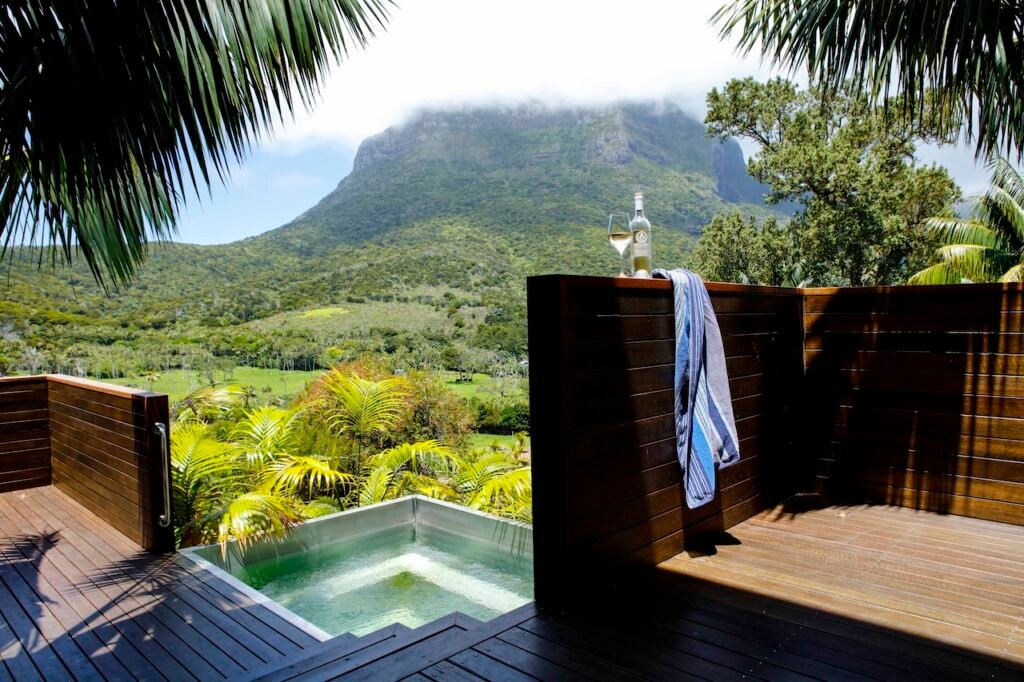
Evenings end with dinner at Arajilla. The gourmet meals are included in the tariff, which feels appropriate: after a day of cycling, snorkelling, and stair-climbing, the appetite is not in question. Sunset cocktails on the terrace, thighs still complaining from Kim’s Lookout, the sky doing its amber-to-darkness routine overhead. Another day on an island that has quietly, firmly, decided not to be anywhere else.
The magic of Lord Howe is that it has resisted the forces that have altered almost every other island of its beauty. The visitor cap holds. The speed limit holds. The reef holds. The silence holds.
For now, at least, it remains exactly what it is: a tiny, improbable paradise that requires a little effort to reach and rewards that effort considerably.
Travel Essentials
The Island at a Glance
LOCATION 700km north-east of Sydney, New South Wales
STATUS UNESCO World Heritage Site
VISITOR CAP 400 at any one time
NATIVE PLANTS 241 species, 105 endemic
BIRD SPECIES 168 recorded
NOTABLE FEATURE Ball’s Pyramid — tallest volcanic stack in the world
Getting There
Qantas operates direct turboprop flights from Sydney to Lord Howe Island (approx. 2 hours). International connections via Sydney on Cathay Pacific and other carriers.
Where to Stay
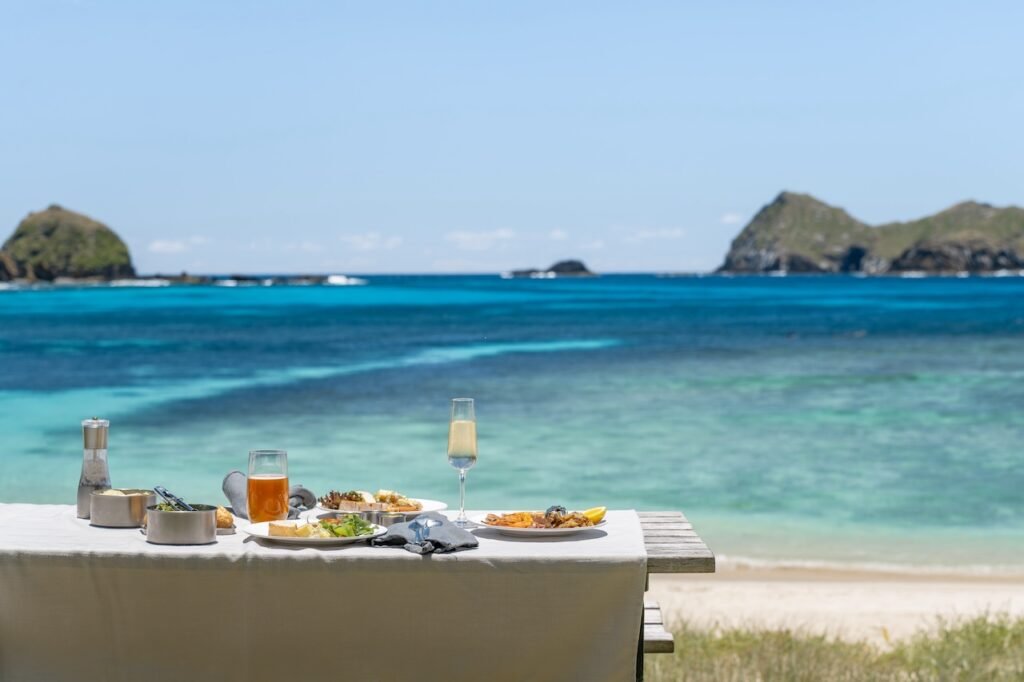
Arajilla — 10 suites and two two-bedroom apartments. Tariff includes gourmet meals, pre-dinner drinks, airport transfers, beach and bush equipment, and mountain bikes. Picnic and BBQ meals by arrangement.
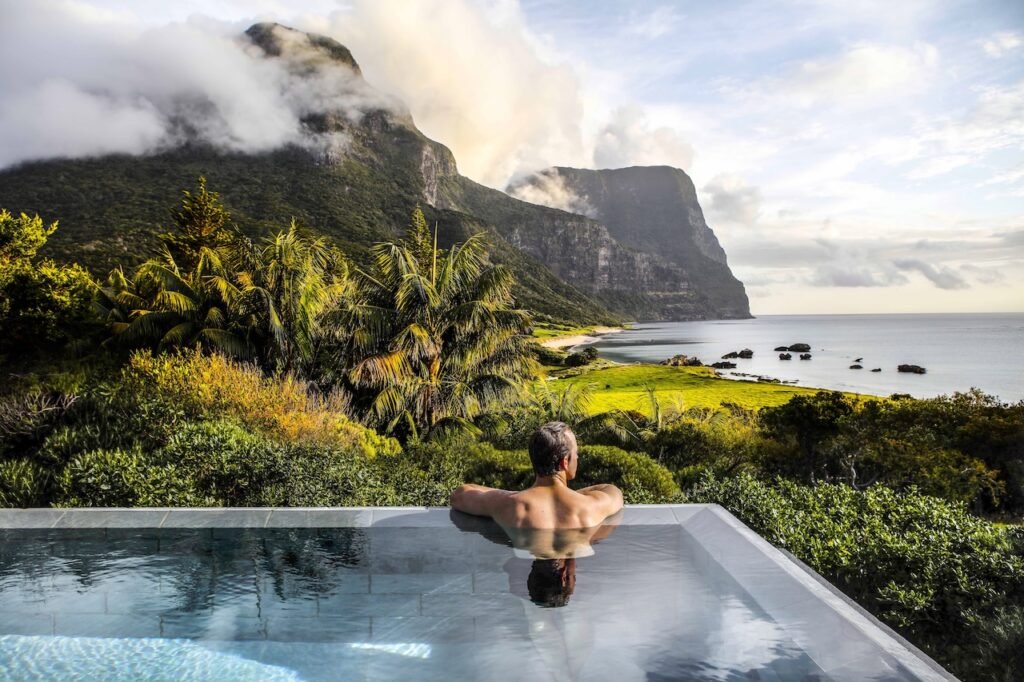
Capella Lodge — a member of Luxury Lodges of Australia, widely regarded as Lord Howe Island’s premier luxury retreat, with just nine intimate, contemporary suites offering barefoot elegance, floor-to-ceiling windows, and sweeping views of the ocean, reef, and Mounts Gower and Lidgbird.
Pinetrees Lodge — home to elegant beachfront accommodation on the lagoon with en-suite rooms, suites, and luxury garden cottages, known for exceptional all-inclusive meals (full breakfasts, lunches, and four-course dinners), personal service, and a stunning waterfront location.
When to Book
Lord Howe Island has limited luxury options due to its protected status and visitor cap. Book well in advance, especially for peak seasons, generally September to May.


