
Experience desert Africa at its best with these spectacular luxury safari camps in Namibia
Namibia is the great outlier of the African luxury safari circuit. There are no Big Five thunder-charges through dense bush, no migration river-crossings, no hippo-strewn floodplains.
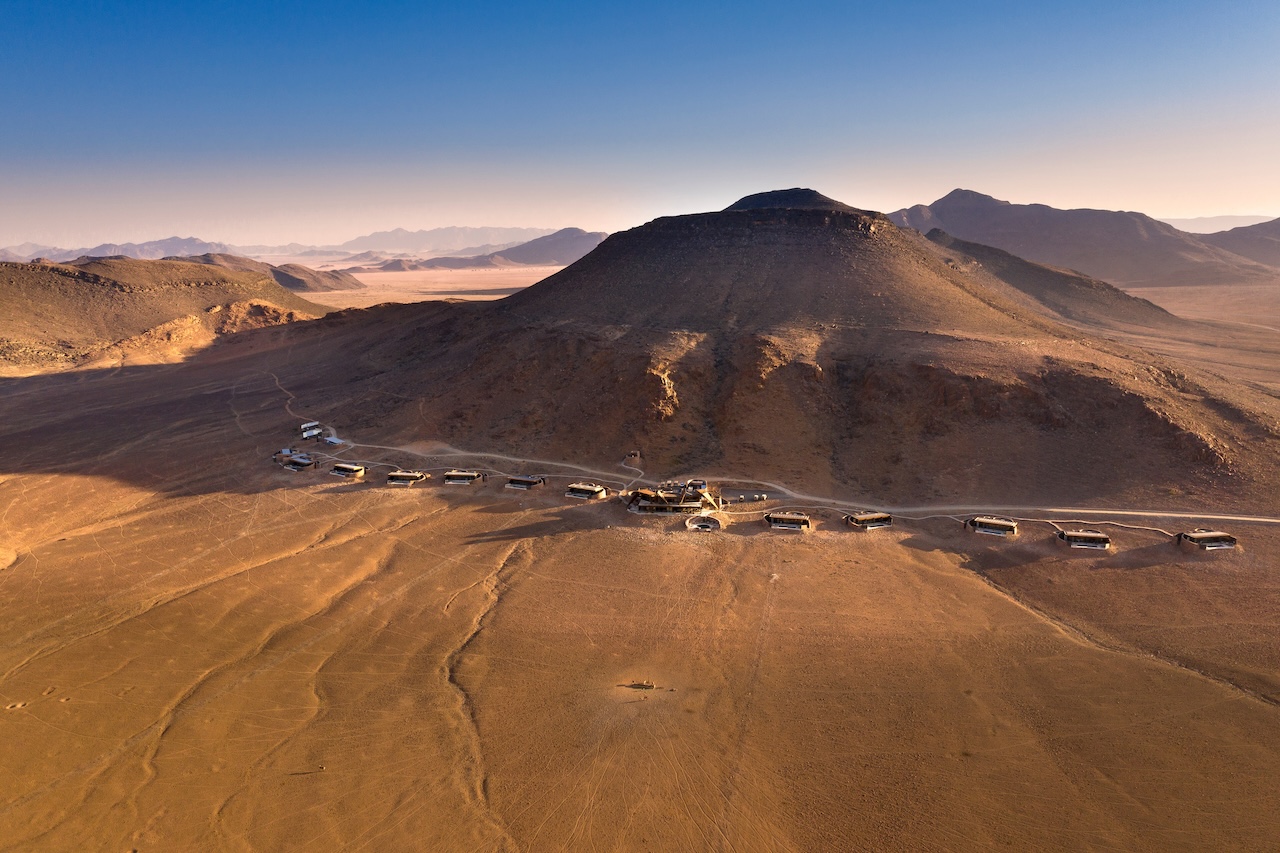
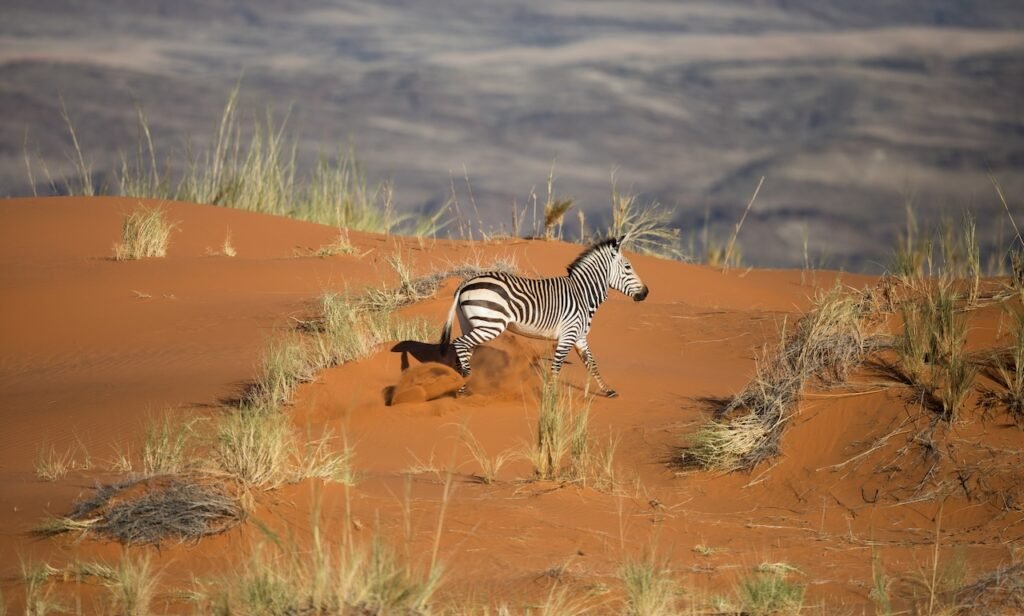
There is, instead, the oldest desert on Earth, an Atlantic coastline so spectral it is mapped as the Skeleton Coast, the highest sand dunes on the planet at Sossusvlei, an ochre-and-granite wilderness in Damaraland inhabited by the only desert-adapted elephants and black rhino in the world, and a sky so vast and unpolluted that the country contains the largest International Dark Sky Reserve on Earth.
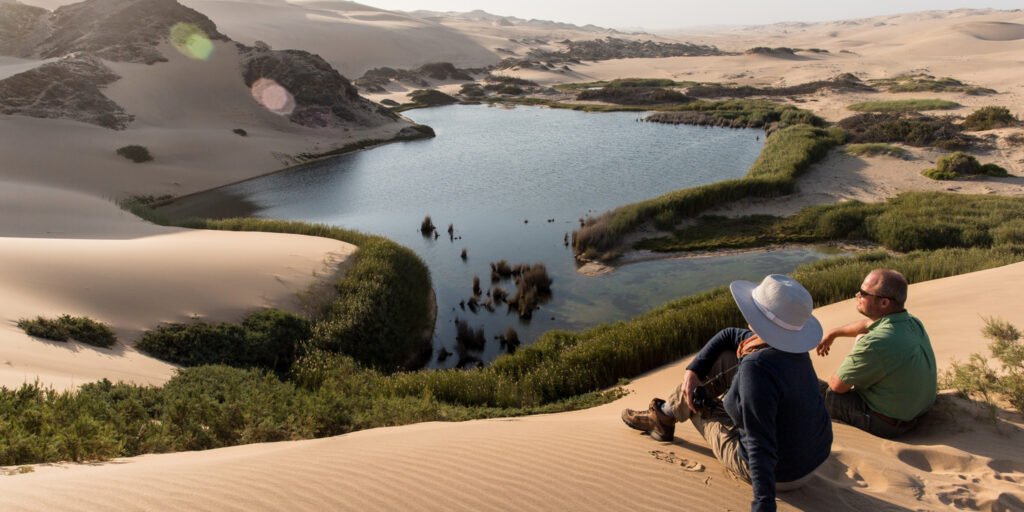
Namibia is a destination that rewards travellers willing to swap the easy thrill of dense game for something rarer: silence, scale, and a sense of geological time stretching out in every direction.
The lodges that have grown up to interpret this country are correspondingly distinctive. Many are themselves architectural pilgrimages — perched on boulder fields, hidden inside dune valleys or built to mimic the ribs of shipwrecked vessels on the coast.
True mobile camping is less developed here than in Botswana or Tanzania, in part because Namibia’s permanent lodges are already among the most remote and expedition-feeling on the continent. Where mobile safaris do exist, however — most famously the Schoeman family’s Skeleton Coast fly-in — they are the most adventurous experiences anywhere in southern Africa.
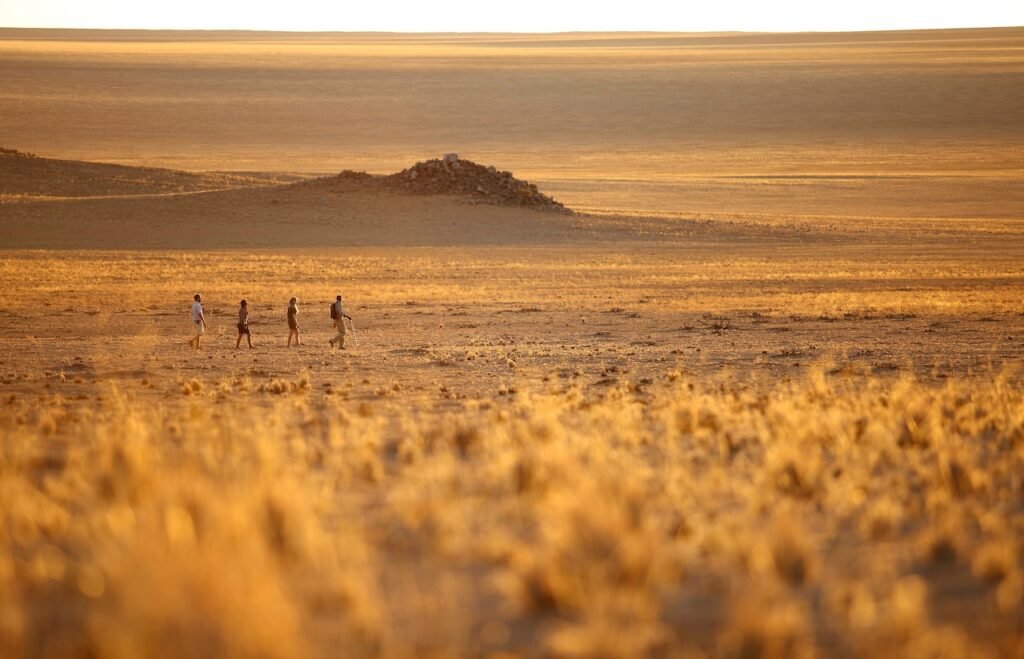
The eight properties below span the full geographic sweep of the country, from the southern dunes to the Angolan border, and represent the very best of both worlds in 2027.
The Dune Country: Sossusvlei, NamibRand and the Deep South
In the otherworldly Dune Country of Namibia, endless waves of rust-red sand rise dramatically against electric blue skies at Sossusvlei, one of the most photogenic landscapes on Earth. Nearby, the vast private NamibRand Nature Reserve offers exclusive, low-impact luxury amid ancient desertscapes and star-studded skies. Further south, the wild and windswept Deep South reveals rugged mountains, ghost towns, and untamed Atlantic coastline — a raw, soul-stirring chapter of Africa’s most majestic desert realm.
1. &Beyond Sossusvlei Desert Lodge
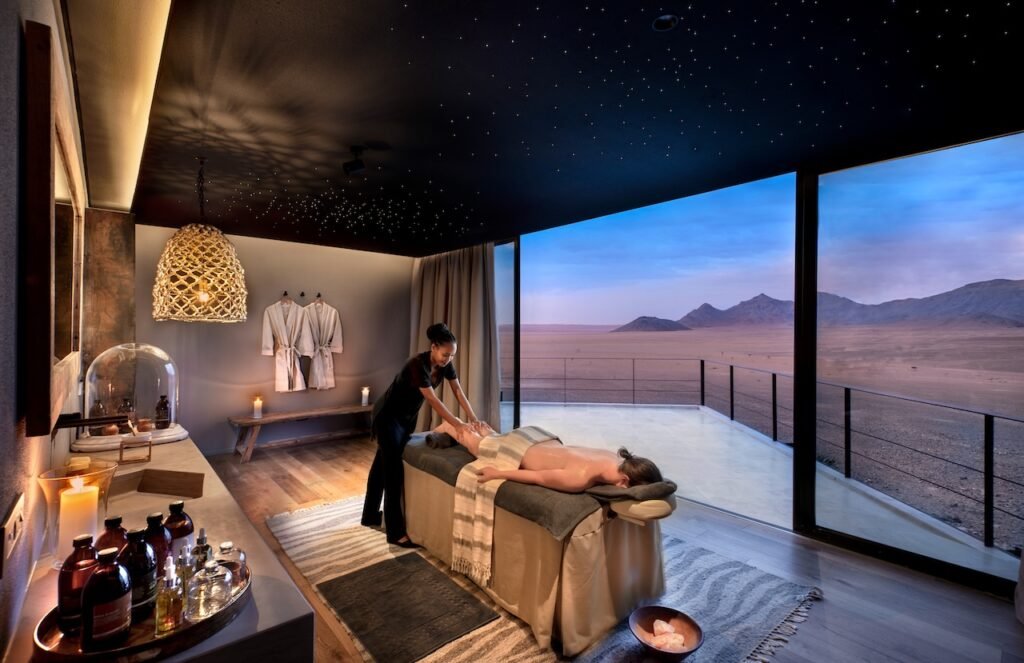
When &Beyond comprehensively rebuilt its flagship Namibian property in 2020, it produced what is now widely regarded as the most ambitious luxury lodge in the country.
Set within the 12,723-hectare private Namib Tsaris Conservancy, with direct access to the Sossusvlei dunes, the ten stand-alone glass-walled suites are sculpted into a granite kopje and oriented for total privacy and panoramic dune views.
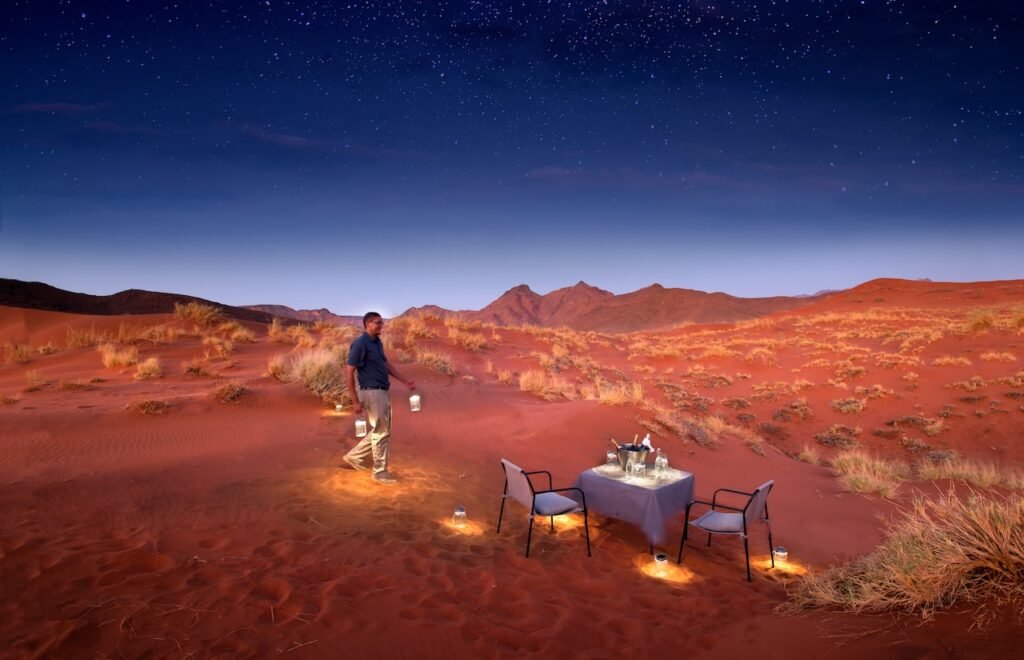
Each suite has a sliding-roof bedroom that opens fully to the night sky, a private pool, indoor and outdoor showers, and a fireplace; the on-site observatory, run by a resident astronomer, offers some of the finest stargazing on Earth.
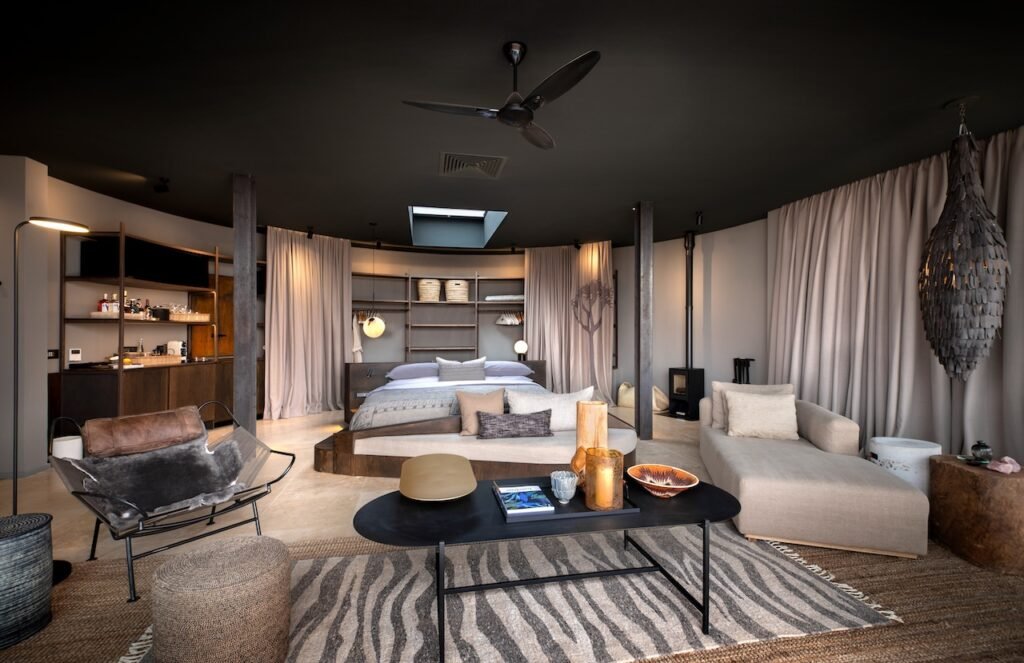
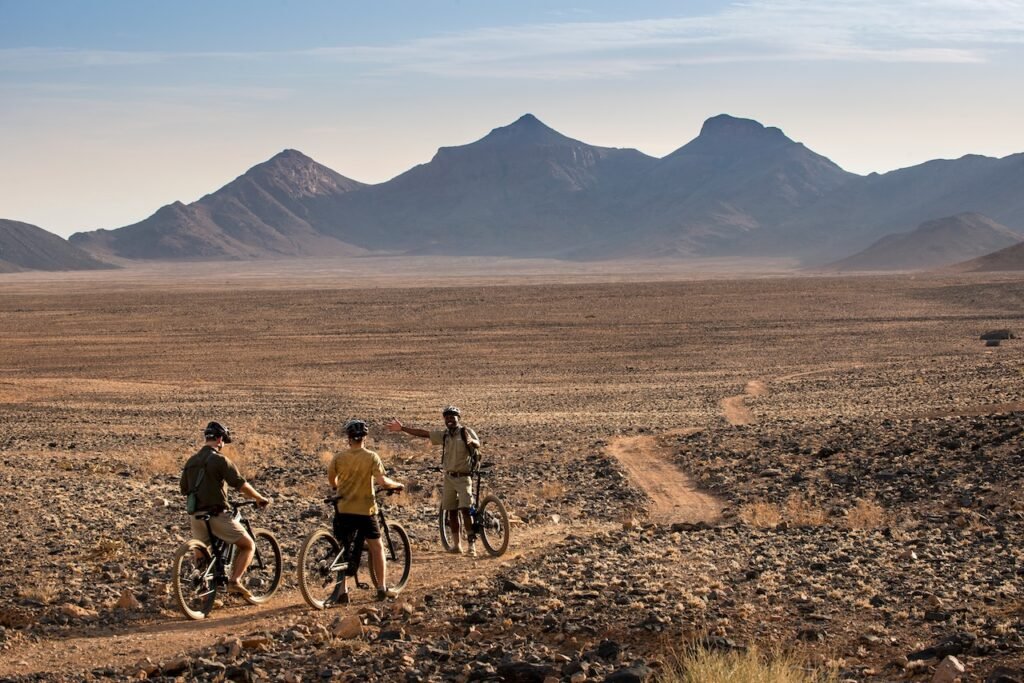
Activities include guided e-bike outings across the conservancy, hot-air balloon flights at dawn over the dunes, and a private guided dawn excursion to Deadvlei and the towering Big Daddy dune, timed to arrive ahead of the day’s tour groups. Year-round, with cool nights from May to August.
2. Wolwedans Dunes Lodge, NamibRand
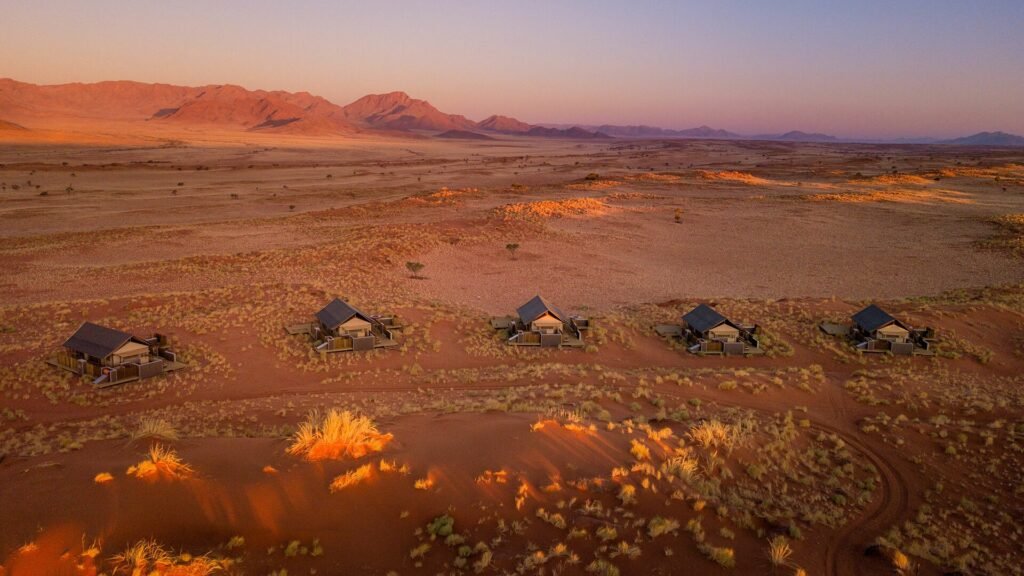
Wolwedans has been the conservation conscience of the southern dunes for more than 25 years. Set within the privately-owned NamibRand Nature Reserve — at 215,000 hectares the largest private reserve in southern Africa, and a designated International Dark Sky Reserve — the flagship Dunes Lodge comprises just nine elevated wood-and-canvas chalets perched on a dune plateau with 360-degree views over the red NamibRand sands and the distant Nubib Mountains.
The aesthetic is deliberately understated: pale linens, polished concrete, oil-lamp suppers, and a single shared dining deck where the unhurried, conservation-minded clientele tend to know one another by the second night.
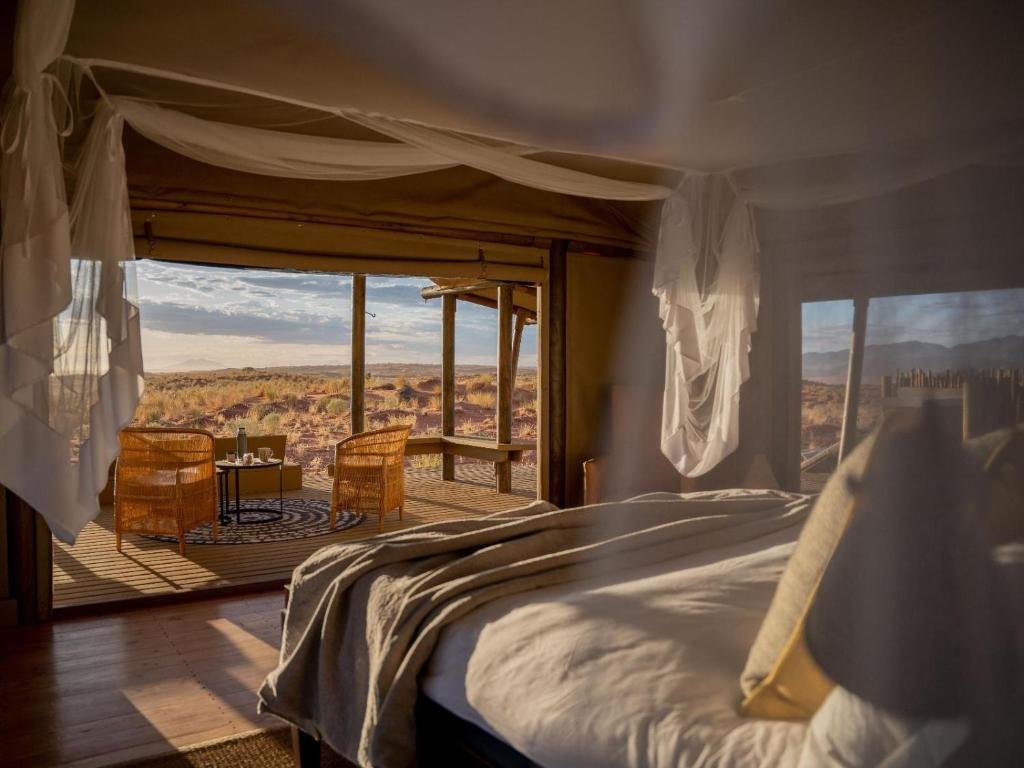
The sister Boulders Safari Camp and Wolwedans Private Camp — both four-tent properties for exclusive-use parties — operate with a near-mobile sensibility within the same reserve and are among the country’s quietest indulgences. Year-round.
3. Sonop by Zannier Hotels
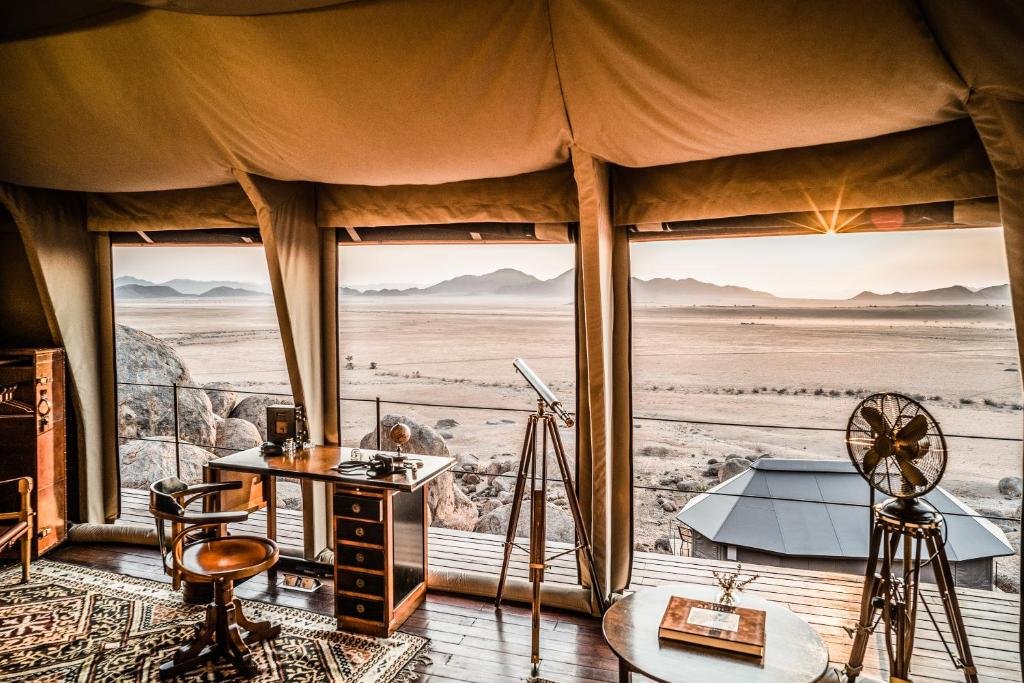
In the far south of the country, more than three hours by road from the nearest tarred surface, Zannier’s Sonop is the most theatrical luxury lodge in Namibia. Ten enormous tented suites are perched, one by one, on top of giant granite boulders rising from the desert floor — each accessed by a private wooden walkway and each looking out over the empty Karas region.
The interiors are an exuberant 1920s explorer fantasy: zebra-print rugs, Chesterfield sofas, antique writing desks, brass-bound trunks, claw-foot baths positioned for the view. A central boulder houses the lounge, library, cigar lounge, billiards room, gym and infinity pool.
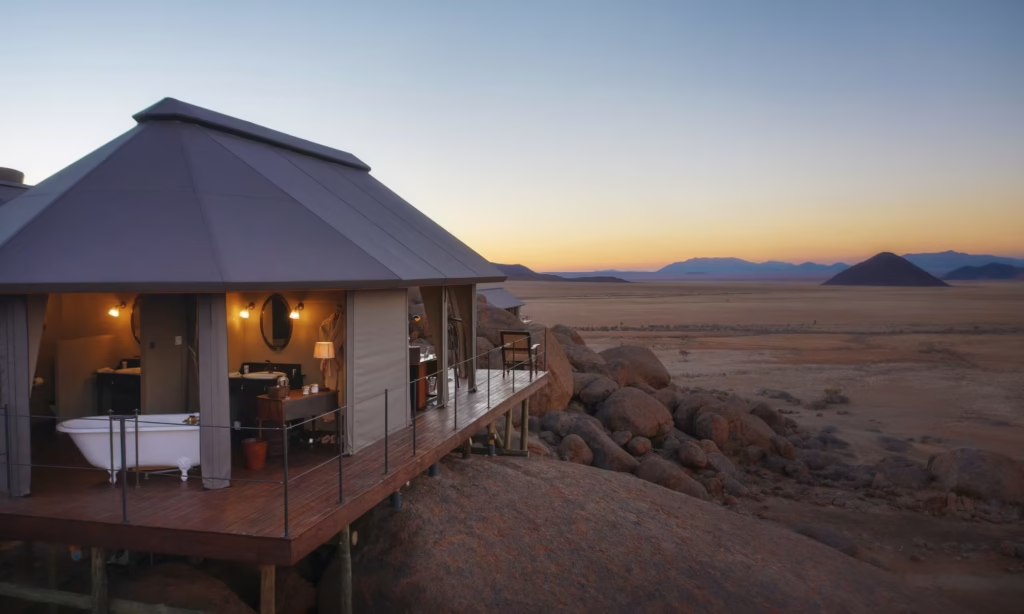
Activities focus on quad-bike excursions, horse-riding across the surrounding plain, and astronomy in some of the darkest skies in southern Africa. Sonop is a favourite of travellers who want extraordinary architecture and serious indulgence as much as they want wildlife. Year-round.
The Skeleton Coast, Kaokoland and the Kunene
Along Namibia’s infamous Skeleton Coast, the Atlantic Ocean collides dramatically with the desert, creating a hauntingly beautiful landscape of shipwrecks, thick fog, and windswept dunes. Further north lies Kaokoland, one of Africa’s last true wildernesses — a rugged realm of ancient mountains, dry riverbeds, and the proud Himba people. At the heart of it all flows the mighty Kunene River, carving through remote canyons and plunging over Epupa Falls, offering an exclusive and profoundly raw luxury experience for those seeking untouched Africa.
4. Wilderness Hoanib Skeleton Coast Camp
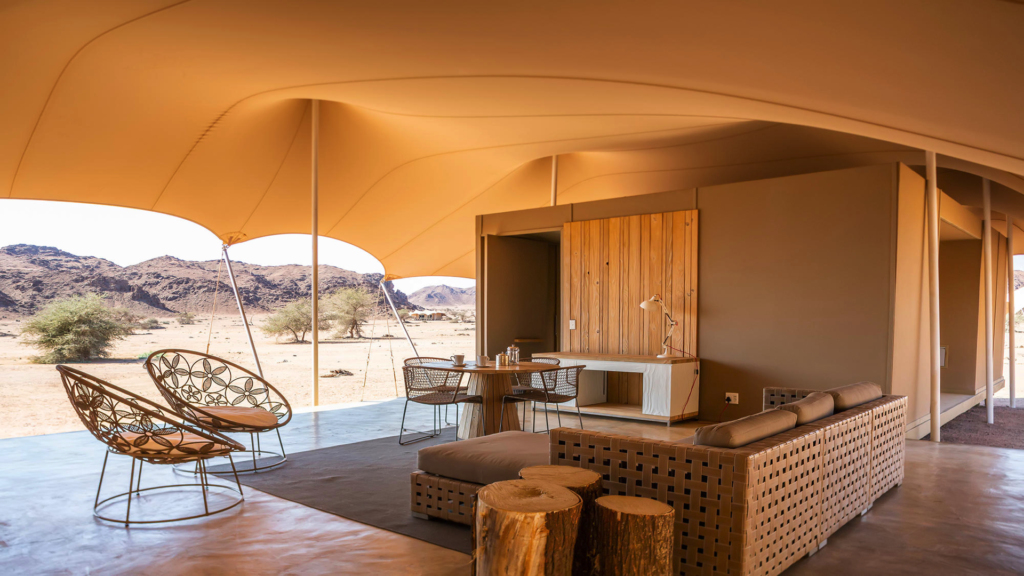
Wilderness’s Hoanib Skeleton Coast Camp may be the most sensitively-located luxury lodge in Namibia. Set in a remote tributary of the Hoanib River — accessed only by light aircraft to the camp’s private airstrip — the eight-suite property is the only commercial accommodation in a vast wilderness famous for its desert-adapted elephants, lions, giraffe and brown hyena.
The suites, finished in pale canvas, polished concrete and curved timber, are built to disappear into the ochre dune slopes, with private terraces overlooking a dry riverbed where elephants pass within metres of camp.
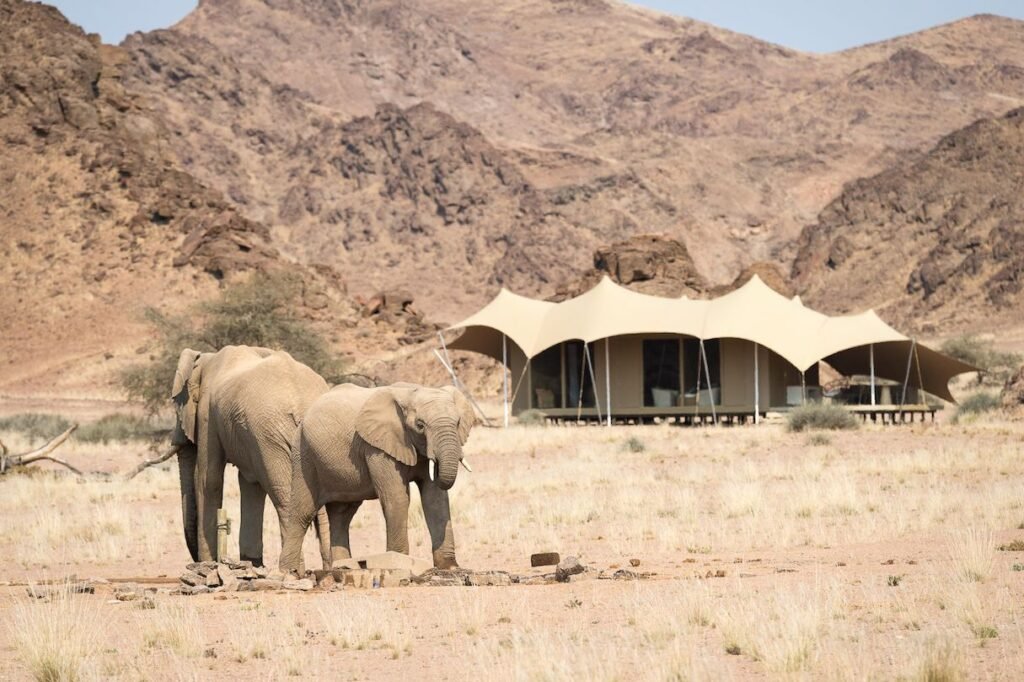
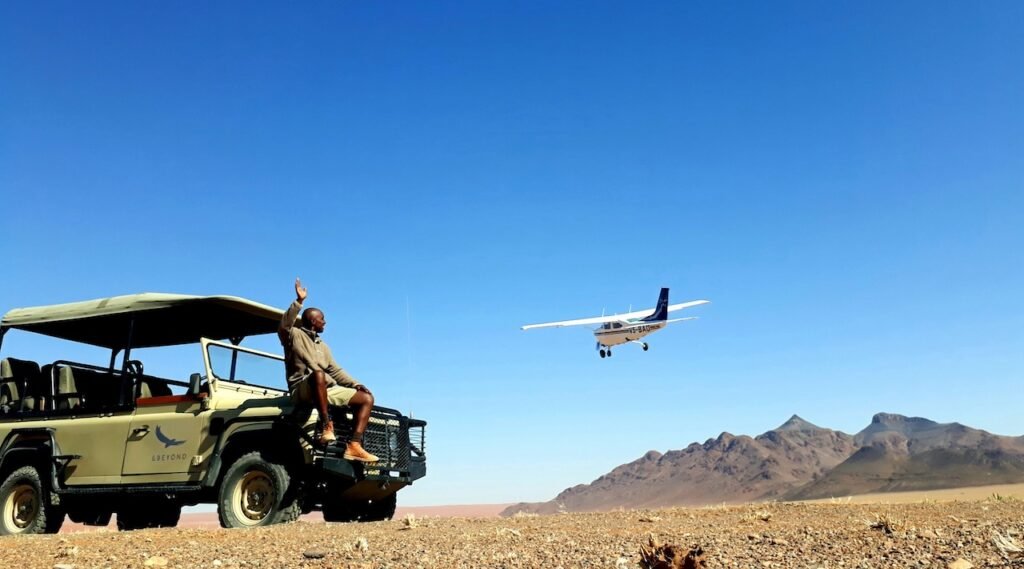
A signature day excursion takes guests by 4×4 to the Skeleton Coast itself, with a Cessna return flight over the seal colonies and shipwrecks. The level of guiding, sustainability infrastructure and on-site wildlife-research integration is among the most impressive on the continent. May to October is the cooler peak.
5. Shipwreck Lodge by Natural Selection
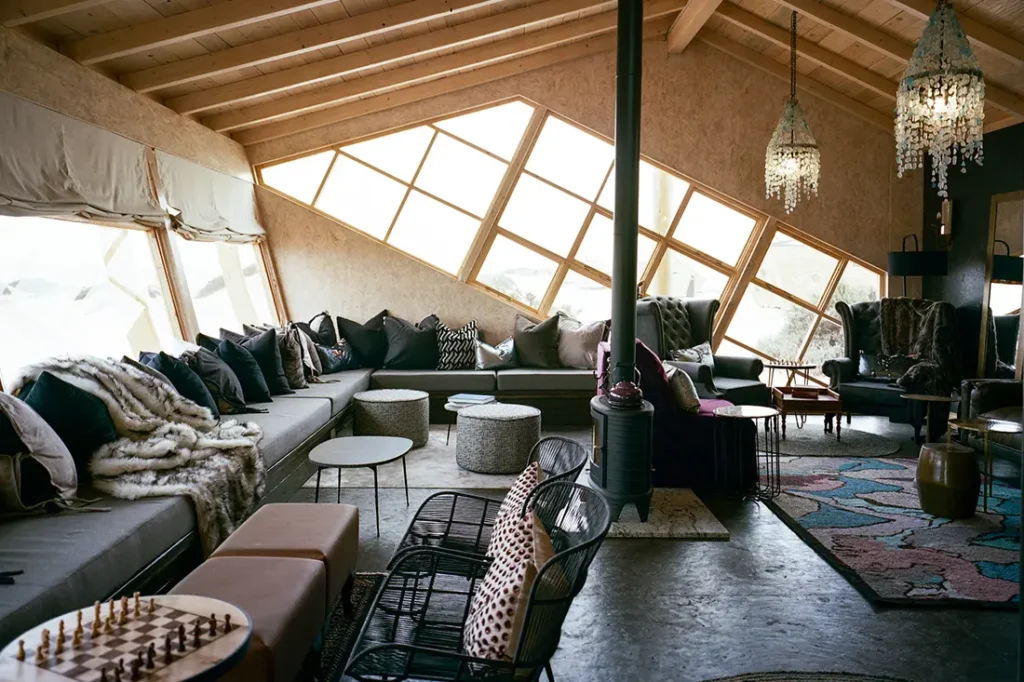
Twenty kilometres north of Möwe Bay on the actual Skeleton Coast, Shipwreck Lodge is the only lodge inside the Skeleton Coast National Park itself, and one of the most evocative architectural concepts in African safari.
The ten guest cabins are designed as the timber-clad ribs of wrecked ships, half-buried in the dunes between the cold Atlantic and the desert interior. The interior aesthetic is deliberately spartan — wood-burning stoves, sea-glass-tinted windows, navigation-themed details — and the focus of activities is unique to this corner of the country: 4×4 expeditions to the Hoarusib River, visits to the colossal Cape Cross seal colony, sand-boarding the roaring dunes, and exploring the wrecks of the Eduard Bohlen and the Dunedin Star.
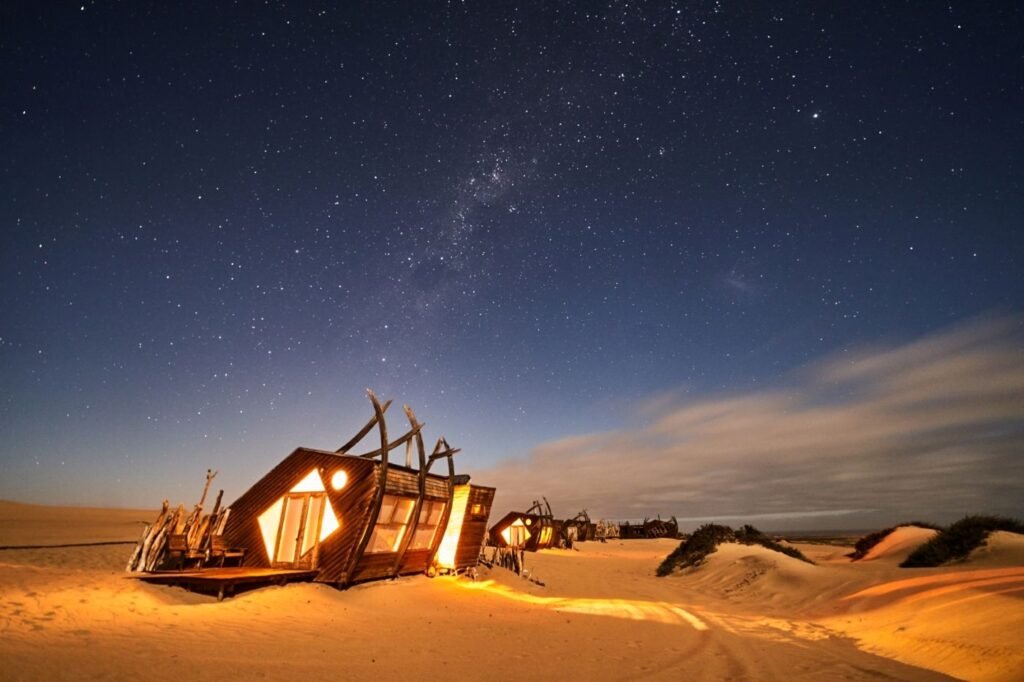
The wildlife is sparse by African standards, but the landscape and the silence are unforgettable. April to November are the most settled months on the coast.
6. Wilderness Serra Cafema
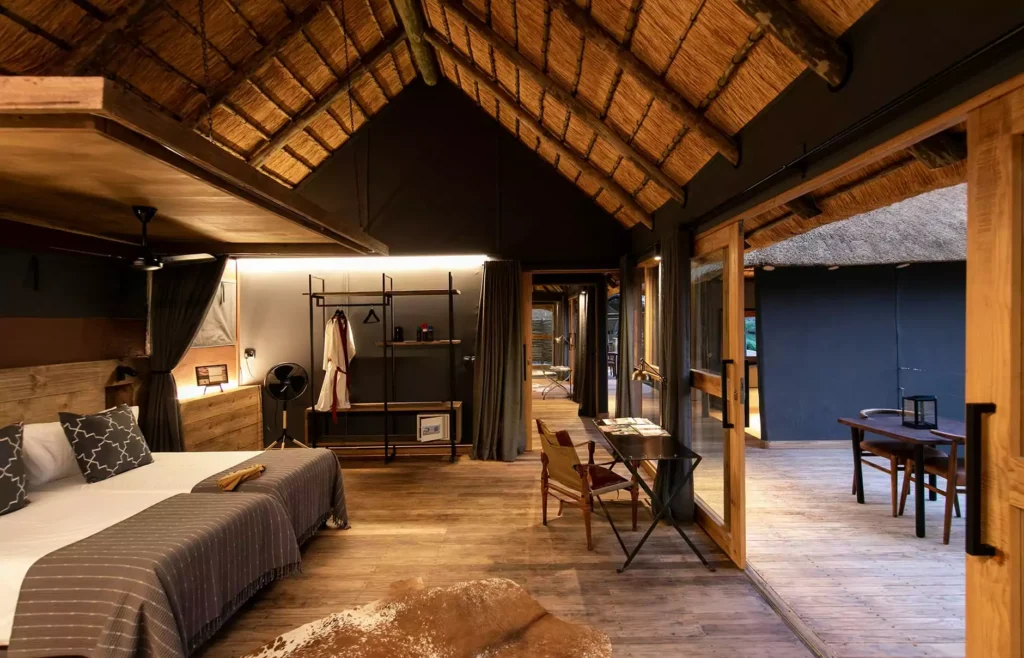
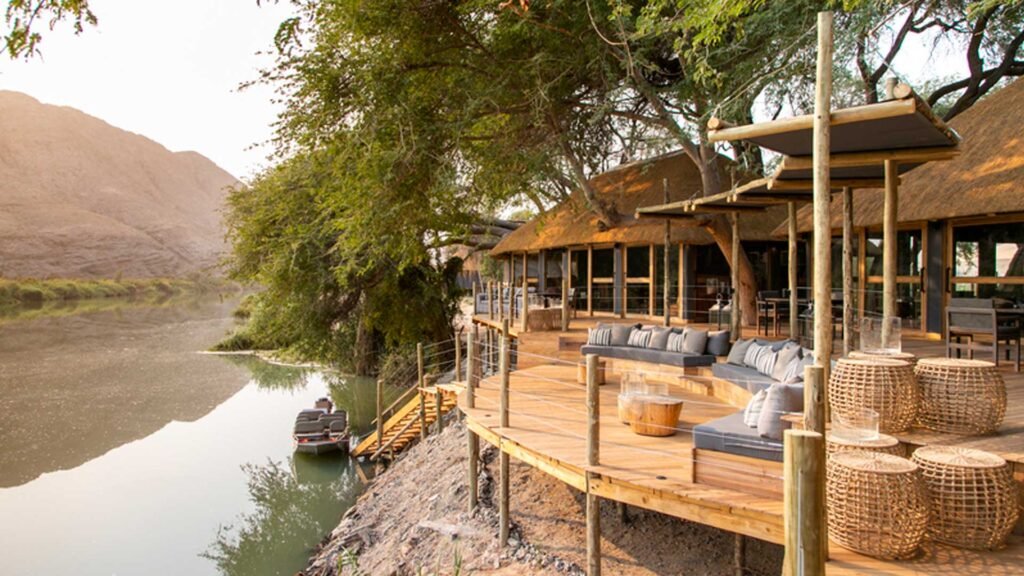
There is, in this whole list, no lodge more remote than Serra Cafema. Set on the banks of the Kunene River — the natural border with Angola, in the far north-western Hartmann’s Valley of the Kaokoland — the eight-villa camp can only be reached by a long light-aircraft flight from Windhoek, often with a refuelling stop.
The villas are built almost entirely from canvas, recycled timber and local stone, and overlook one of the few permanent rivers in this part of the desert; the contrast between the green riverine line and the bone-dry mountains beyond is one of Africa’s signature views.
The cultural component is perhaps the most distinctive in the country: visits to the semi-nomadic Himba communities of the surrounding Marienfluss are conducted with genuine sensitivity through Wilderness’s long-standing community partnerships.
Activities also include guided quad-bike expeditions across the dunes and boat trips on the Kunene. April to October is the prime window.
Etosha and the North
In the north of Namibia, Etosha National Park reigns as one of Africa’s most iconic wildlife destinations — a vast, shimmering salt pan dotted with natural waterholes where elephants, lions, black rhinos and vast herds gather under the blazing sun. Beyond the park lies the lush, water-rich North, where the Caprivi Strip (Zambezi Region) offers a striking contrast of floodplains, riverine forests, and abundant birdlife. Here, exclusive lodges and private concessions deliver refined luxury amid raw wilderness, offering privileged access to some of the continent’s most diverse and undisturbed landscapes.
7. Anderssons at Ongava
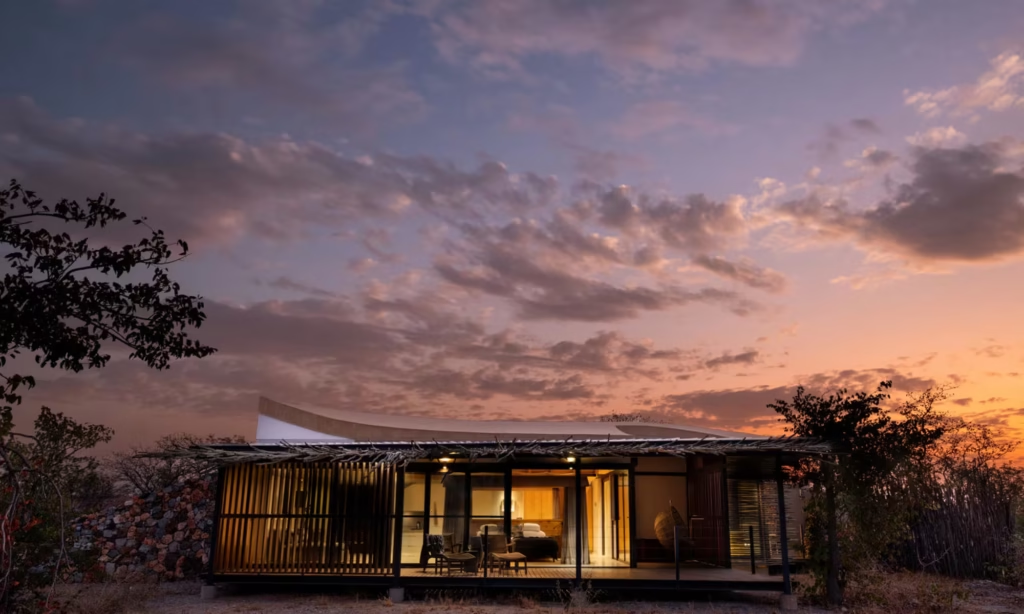
Etosha National Park is Namibia’s wildlife trump card — a 22,000-square-kilometre salt-pan ecosystem with one of the densest concentrations of black and white rhino in Africa — but most accommodation inside the park is functional rather than luxurious.
The smarter solution is the privately owned Ongava Game Reserve, which shares an unfenced 30-kilometre border with Etosha and operates four luxury lodges of which Anderssons at Ongava is the design-led standout.
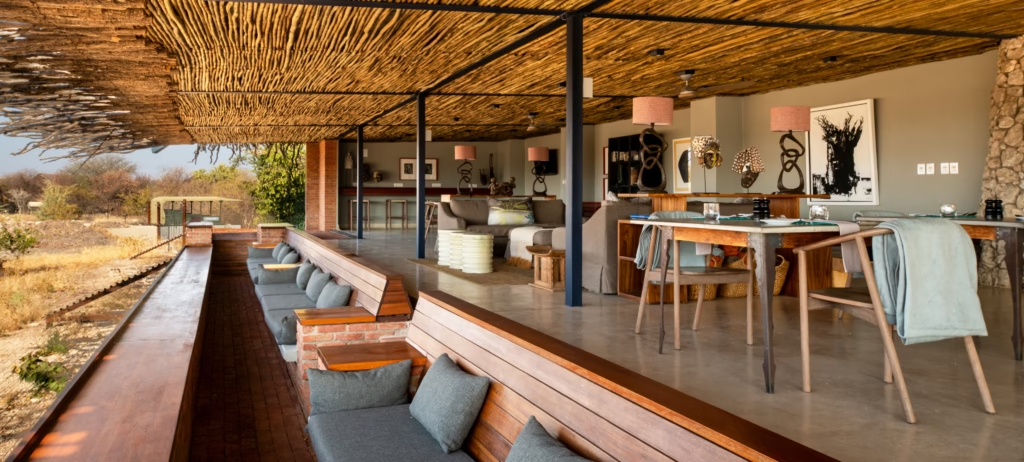
Rebuilt by Wilderness in 2020, the eight-suite camp is set behind a one-way glass screen overlooking a floodlit waterhole, where black and white rhino, lion, elephant and leopard appear with a frequency that seems, after the third night, almost staged.
An on-site Ongava Research Centre interpretation room lifts the experience well beyond a typical waterhole-camp stay. Sister-lodges Little Ongava and Ongava Lodge cater for travellers seeking, respectively, more privacy and better value. May to October is the dry-season peak.
The Mobile Expedition
To explore this vast and otherworldly landscape, take to the air on a unique flying safari
8. Schoeman’s Skeleton Coast Fly-in Safari
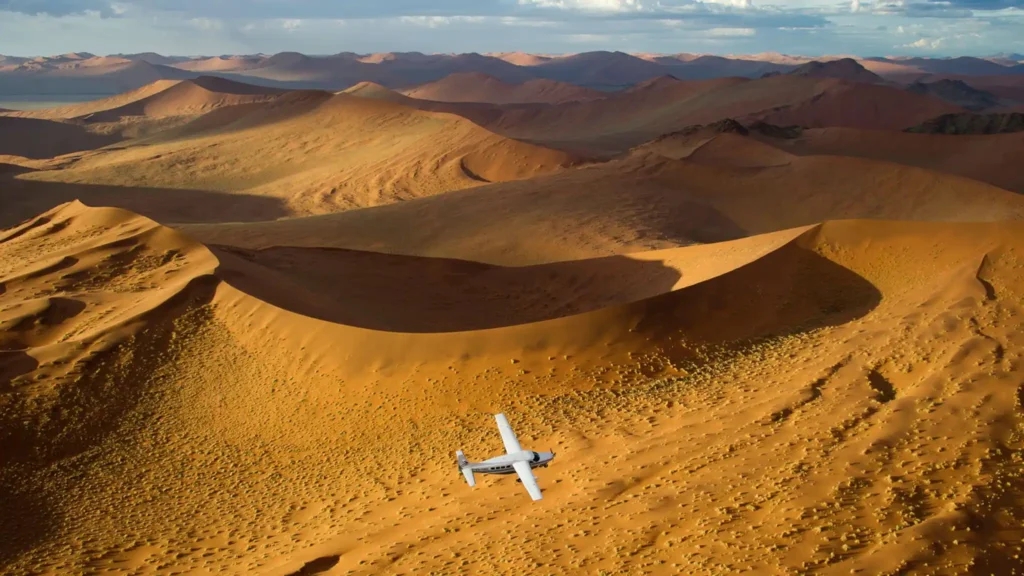
If the truest expression of African mobile safari is a tented camp pitched in a place no permanent infrastructure could ever be built, then the Schoeman family’s Skeleton Coast Fly-in Safari is its most extraordinary surviving exponent in Namibia.
Run by the second and third generations of the pioneering Schoeman family — who hold one of the only concessions permitting overnight stays in the northern Skeleton Coast Park — the four-day mobile safari takes a maximum of eight guests at a time on a privately-flown circuit between three tented camps in the dune belt, the Hoarusib canyon and the Kunene River.
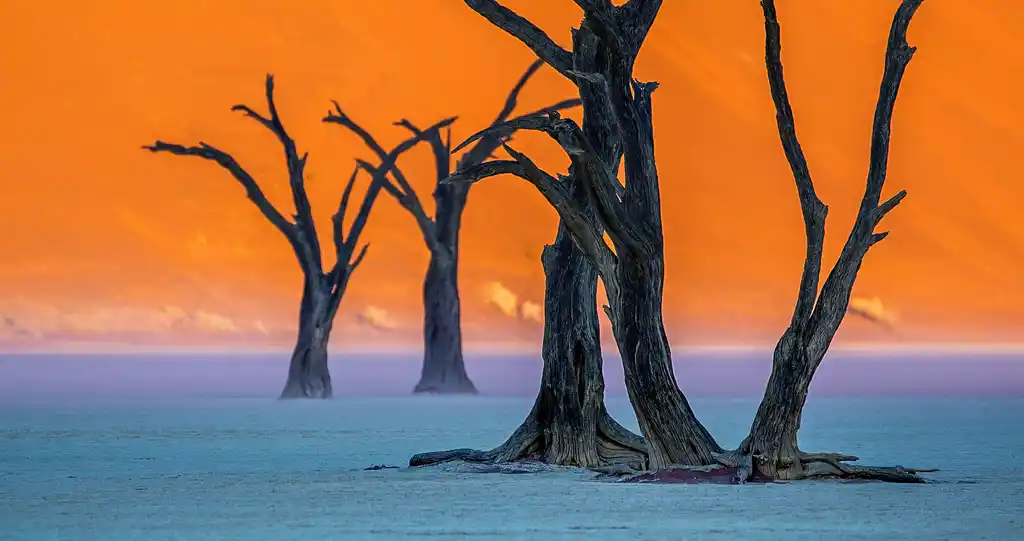
The accommodation is deliberately unfussy — proper canvas tents, hot bucket showers, simple bush dinners — but the experience is incomparable: low-flying scenic flights between camps, walks among the welwitschia plants and the roaring dunes, visits to seal colonies and Himba villages, and a level of guide knowledge that has been refined over five decades of family operation.
Available April to November, with a maximum of 8 guests per departure and itineraries that book out 18 months ahead.
Permanent Versus Mobile in Namibia
The mobile-versus-permanent distinction works differently in Namibia than in Botswana or Tanzania. The country’s permanent lodges are, by African standards, already extreme in their remoteness — Hoanib, Serra Cafema and Sonop are accessible only by hours of light-aircraft flight or rough four-wheel-drive transfer — and many already operate with the small footprint and expedition-flavoured guiding of true mobile camps elsewhere.
Conversely, true mobile safaris in Namibia are rarer than in the great savannah ecosystems further north: the Schoeman fly-in is the most established option, but bespoke mobile expeditions can also be assembled by operators such as Ultimate Safaris and SafariScapes for clients seeking a fully private, custom-routed itinerary across the deserts.
How to Plan Your Namibia Itinerary in 2027
Namibia is a long-haul destination even by southern African standards, and the country rewards generous itineraries. A two-week first-time circuit might combine three nights in the Sossusvlei dunes (&Beyond Sossusvlei Desert Lodge or Wolwedans Dunes Lodge), three nights in the Skeleton Coast or Kaokoland (Hoanib or Shipwreck Lodge), three nights at Serra Cafema, and three nights at Ongava for the wildlife finale. The Schoeman fly-in adds a four-day expedition that is best inserted in the middle of the trip, when desert legs have already been earned.
Connections from Asia run via Doha or Johannesburg to Windhoek, with onward light-aircraft transfers on Wilderness Air or Sefofane to the various lodge airstrips; private fly-in safari packages typically include the inter-camp transfers in the rate. The cool dry season from May to October is the most popular window — clear skies, manageable daytime temperatures, cold desert nights — but the green season from December to April brings dramatic skies, occasional river-flow into the Sossusvlei pan, and rates 30 to 40 per cent lower.
A handful of further names deserve mention for travellers building longer or more specialised itineraries. Onduli Ridge by Ultimate Safaris, opened in 2020 in the Damaraland heartland, is the country’s most design-forward boutique lodge and the best base for tracking desert-adapted black rhino and elephant. Hoanib Valley Camp by Natural Selection, on the upper Hoanib River, is a smaller and more value-oriented alternative to its Wilderness neighbour.
Mowani Mountain Camp delivers a romantic granite-boulder setting in Damaraland at a more accessible price point. Meanwhile, in the Zambezi Region, the country’s far north-eastern panhandle, river-front camps such as Nambwa Tented Lodge offer a wholly different Namibia of papyrus channels, hippo and elephant herds — a fitting full stop to a longer southern African circuit.
Whichever season and whichever combination you settle on, Namibia remains the southern African destination that demands and rewards the slowest pace, the longest stays and the most adventurous spirit. It is a country where the journey itself — the long flights, the longer drives, the silences in between — is as much the experience as the lodges that punctuate it.


