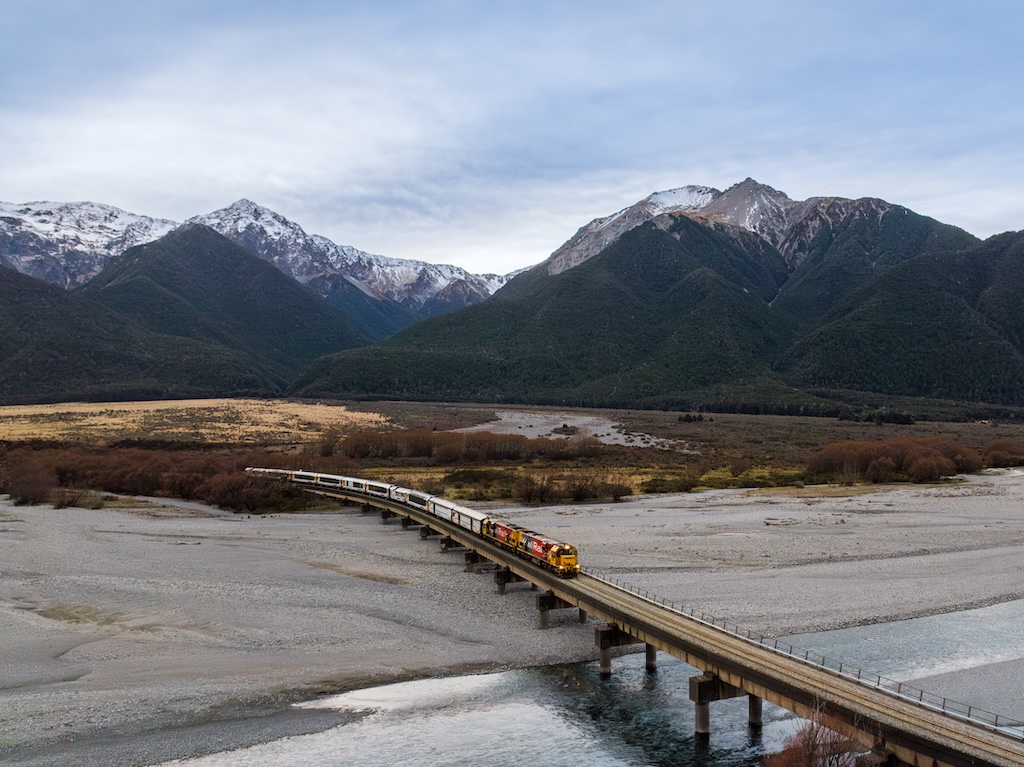

The TranzAlpine train, which passes through and below the mountain ranges of New Zealand’s South Island, remains one of the world’s most iconic rail journeys.
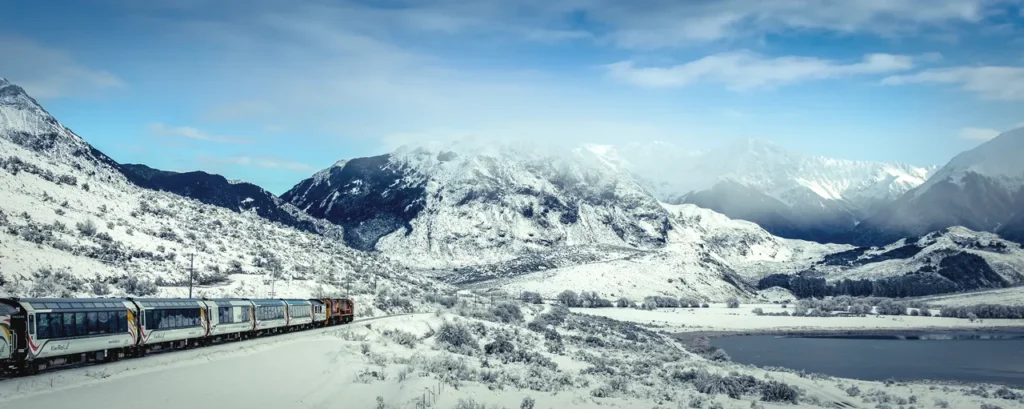
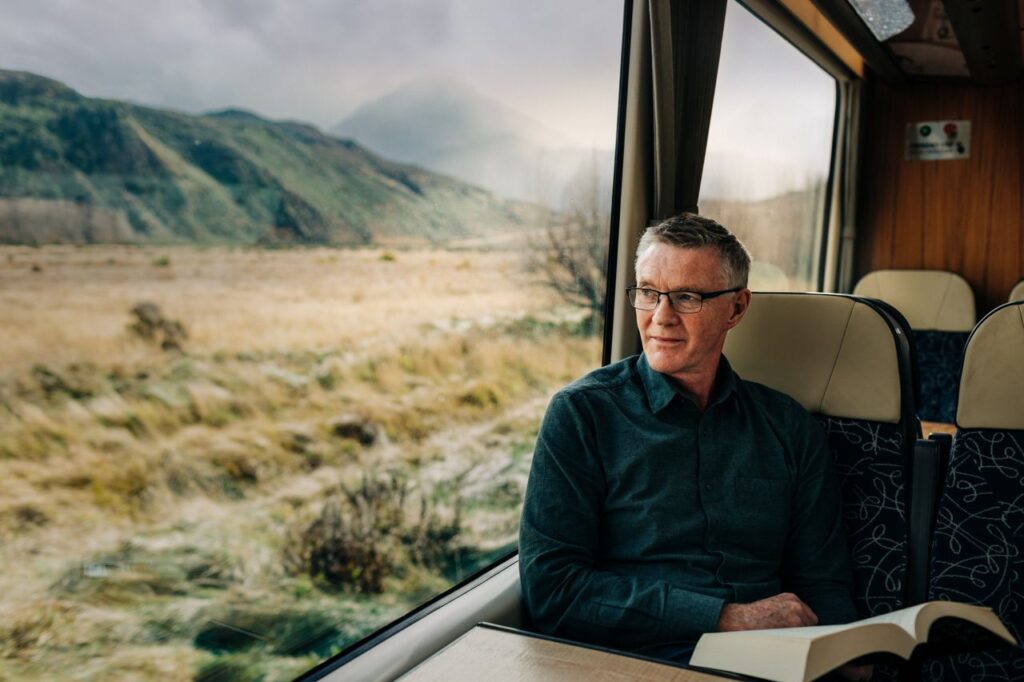
My breath fogs up the window and I have to bunch up my sleeve to wipe away the condensation that’s building the higher we climb, but the view is well worth the effort. Outside is a winter wonderland, a landscape of steep mountainsides, their peaks lost in low cloud, their flanks pasted with thick icing-sugar snow that lies in clumps beside the railway line.
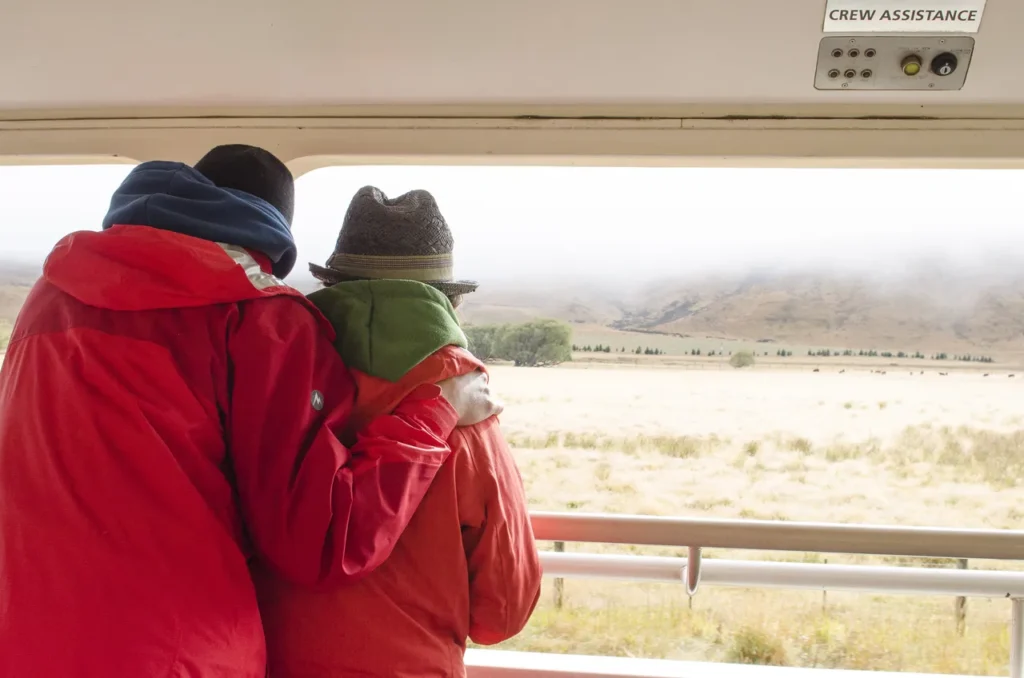
I feel like we’re at the top of the world as the TranzAlpine chugs and shrugs its way up the incline, climbing ever higher into the snowy mountains, children of all ages up and down the carriage staring out fogged-up windows, noses pressed against the glass, eyes wide.
We all remember remarkable “firsts” in our lives; it might be the first time you saw the ocean, the first time you flew in an aeroplane, or the first time you kissed your significant other. These moments stay with us for years to come. For me, it was the first time I travelled on New Zealand’s TranzAlpine railway, a four-and-a-half-hour, 223-kilometre climb through the backbone of the South Island, between the garden city of Christchurch and the weather-whipped town of Greymouth, gateway to the glaciers and ruggedly beautiful coastline of the West Coast.
A Journey Through History: From Express Train to Tourist Icon
My first time riding those rails was in 1988, only a year after the traditional Christchurch–Greymouth express trains — which had been operating since the 1920s — were replaced with a new tourist-friendly initiative designed to showcase the remarkable skyline and incredible diversity of the South Island.
The TranzAlpine was introduced on 22 November 1987, and the old rolling stock was given a vibrant new blue paint job, with larger windows and stylish dining cars added. Suddenly, staff who had been working a line used almost exclusively by farmers, students and retirees heading to and from the “big smoke” of Christchurch had to cater to international travellers who had come to ride the rails, cross the line’s four towering viaducts and play “hold your breath” through each of its tunnels.
I’ve always had a thing about trains, and I’m clearly not the only one. Thanks to the steady growth of the airline industry, we can zoom between virtually any two destinations in the world in a matter of hours, but the elegance and nostalgia of train travel still appeals to travellers from across the globe, whether it’s riding the rails through the Canadian Rockies or through the rural landscape of New Zealand.
In fact, not long after it launched, the TranzAlpine won a Tourism New Zealand award and was voted one of the top ten short train journeys in the world, a distinction it has proudly retained.
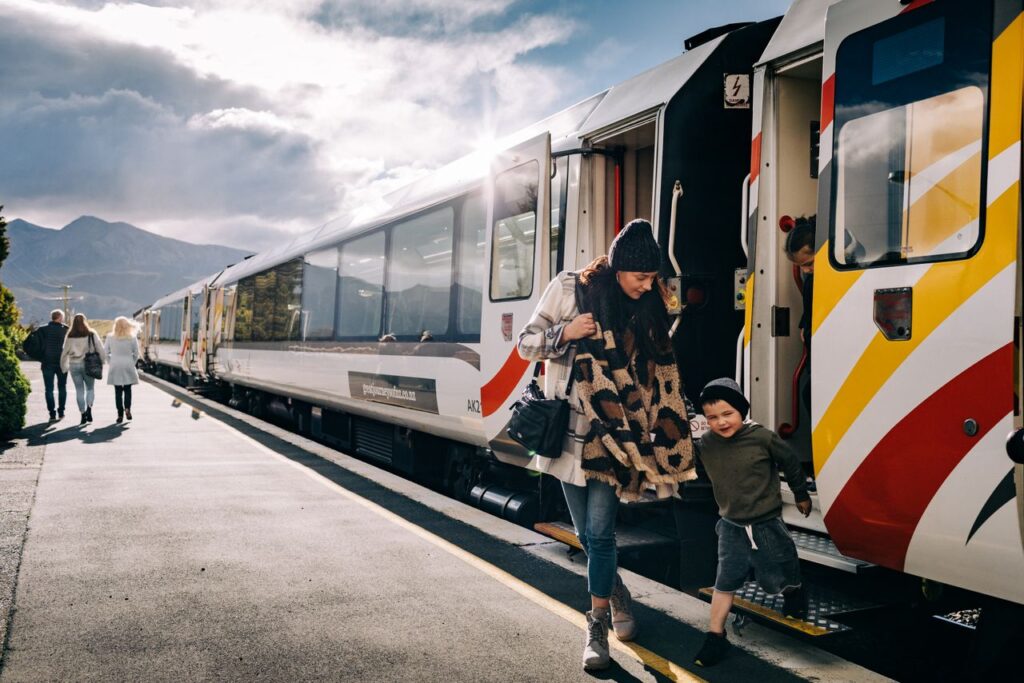
In the years since that first grandmother-escorted winter journey, I’ve travelled on the train twice again, as a teenager and as an adult, one way and return, in summer and winter, alone and with friends, and the magic remains. Under KiwiRail’s ownership, modern rolling stock was introduced in 2012, with a smoother ride and non-reflective windows on both the sides and the roof to ensure captivating views. A two-two seat configuration ensures there is space for everyone, and table seating for four is great for family or friends travelling together.
Christchurch to Arthur’s Pass: Through the Canterbury Plains and the Waimakariri Gorge
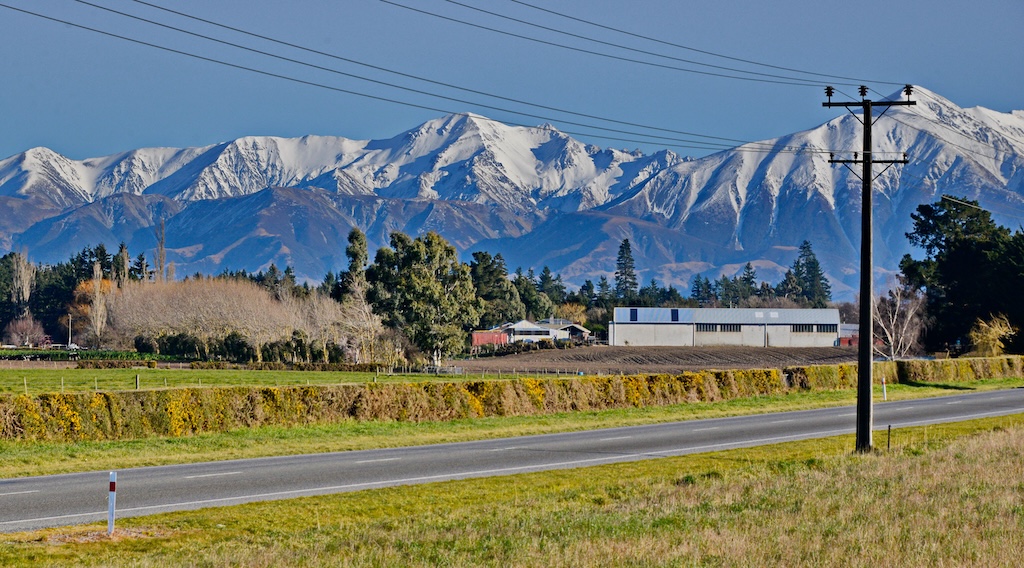
There is a sense of excitement in the air at Christchurch Railway Station as travellers congregate on the platform, finding their appointed carriage. With suburban trains having largely died out in the 1970s, the TranzAlpine remains a minor celebrity in Christchurch, and locals wave as the train chugs its way through suburbs of weatherboard houses, children’s play sets in the backyards, past timber yards and country stores.
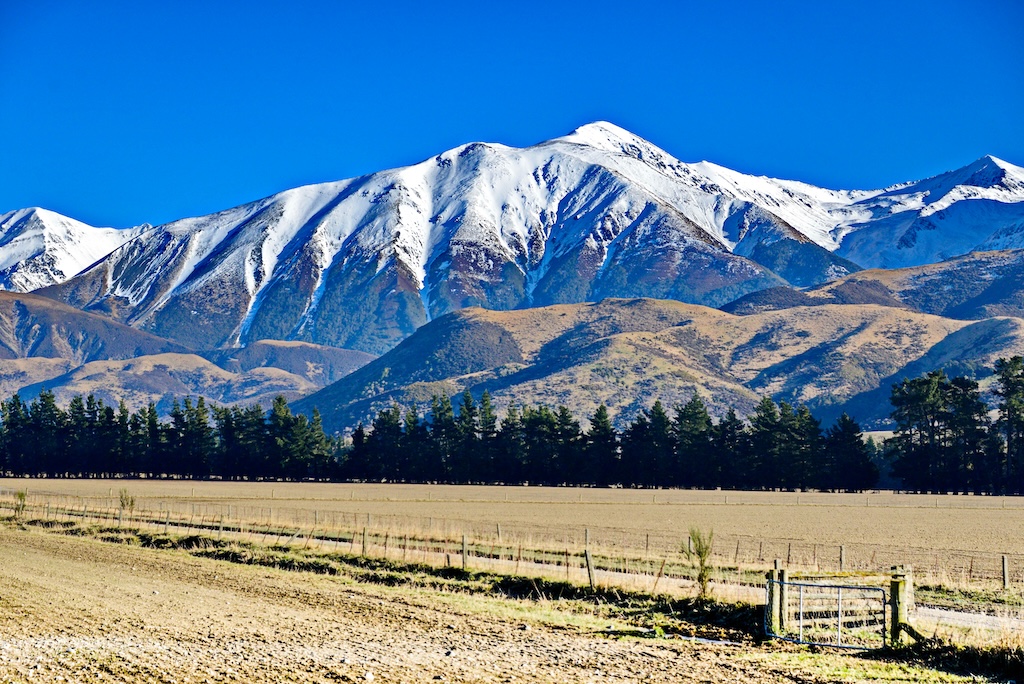
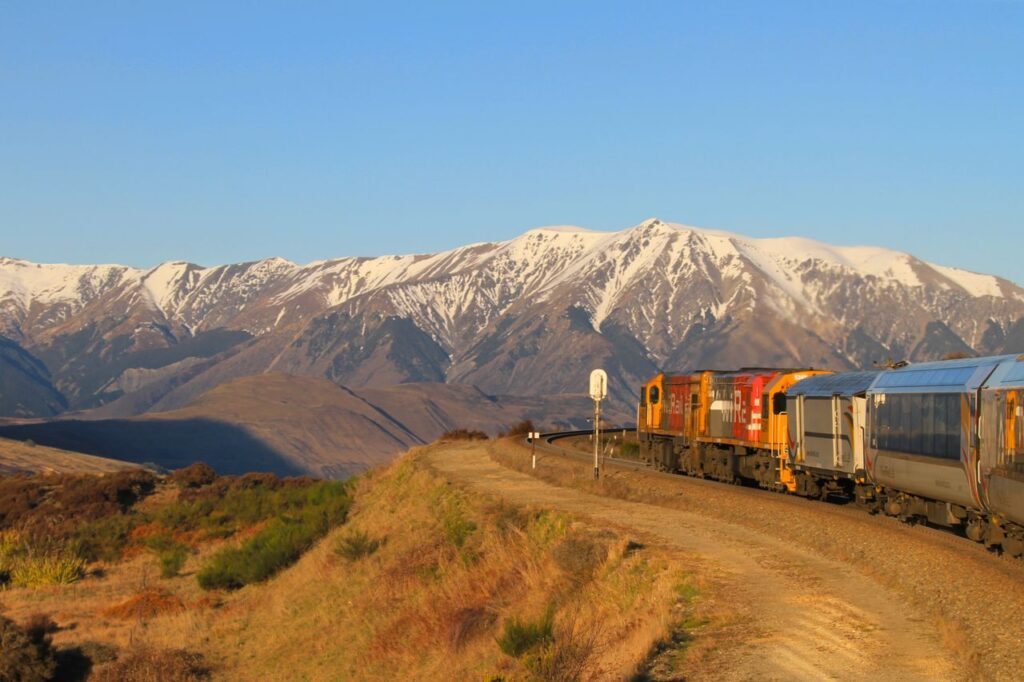
We race out across the flat Canterbury Plains — in summer a brilliant palette of golds and greens, in winter a wide-open landscape of dark earth and white snow, the lumbering line of ancient peaks that make up the Southern Alps crawling ever closer.
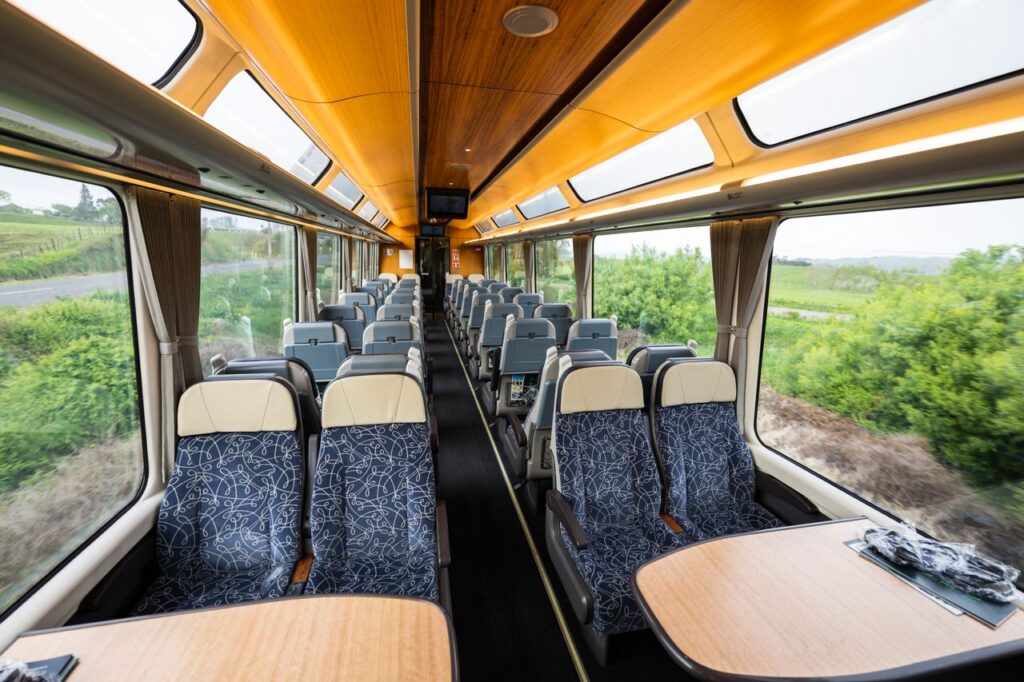
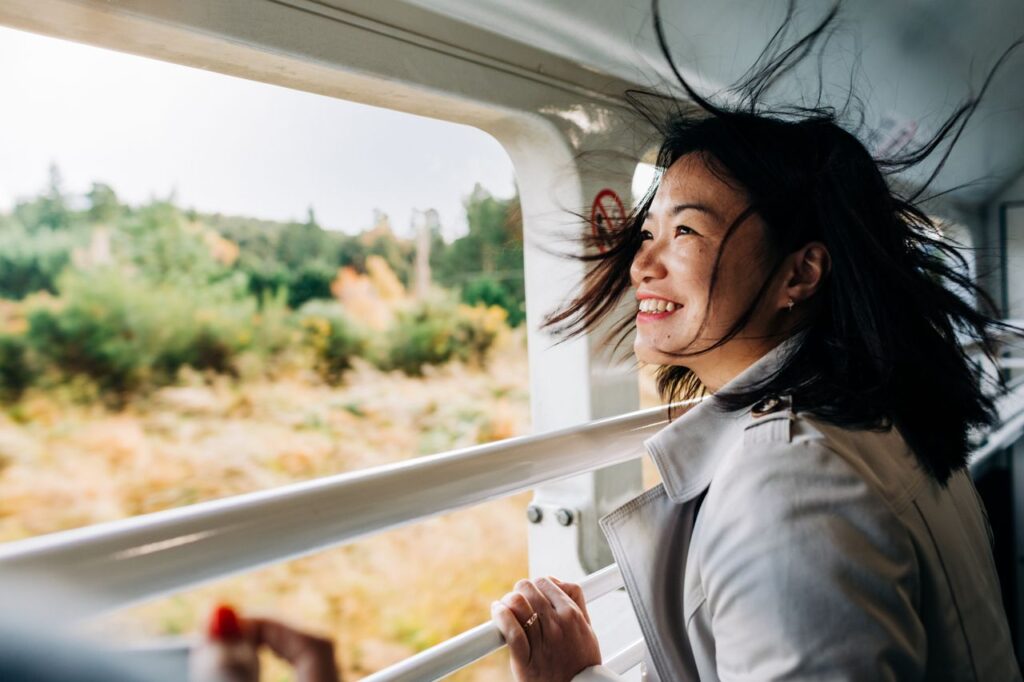
Most of my fellow passengers, in their rows of blue airline seats, are content to gaze at the scenery and daydream, plugged into the train’s GPS-triggered audio commentary system, while others, myself included, bundle up and head to the open-air observation car — certainly one of the best additions to the TranzAlpine.
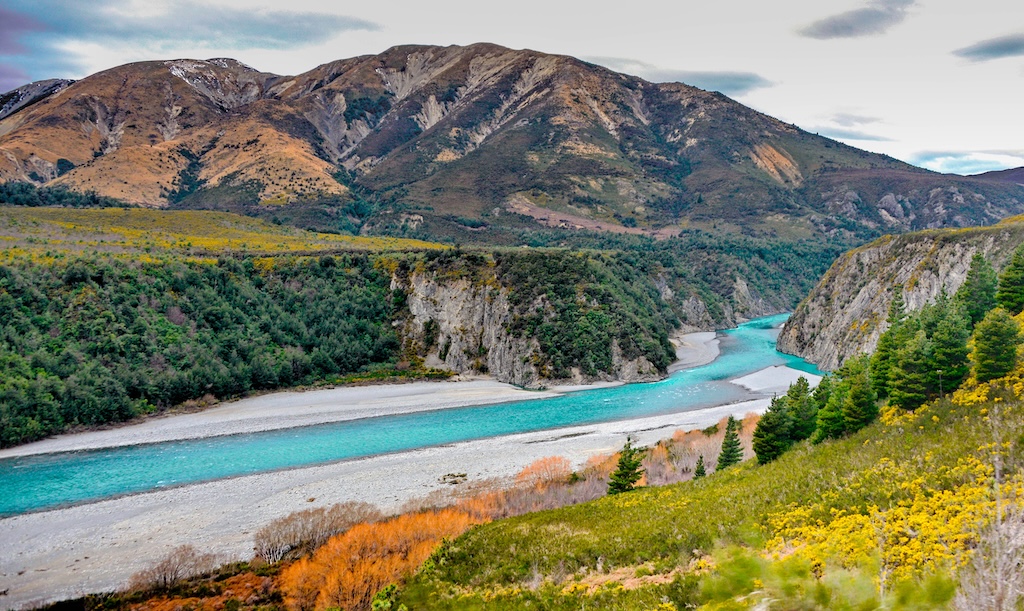
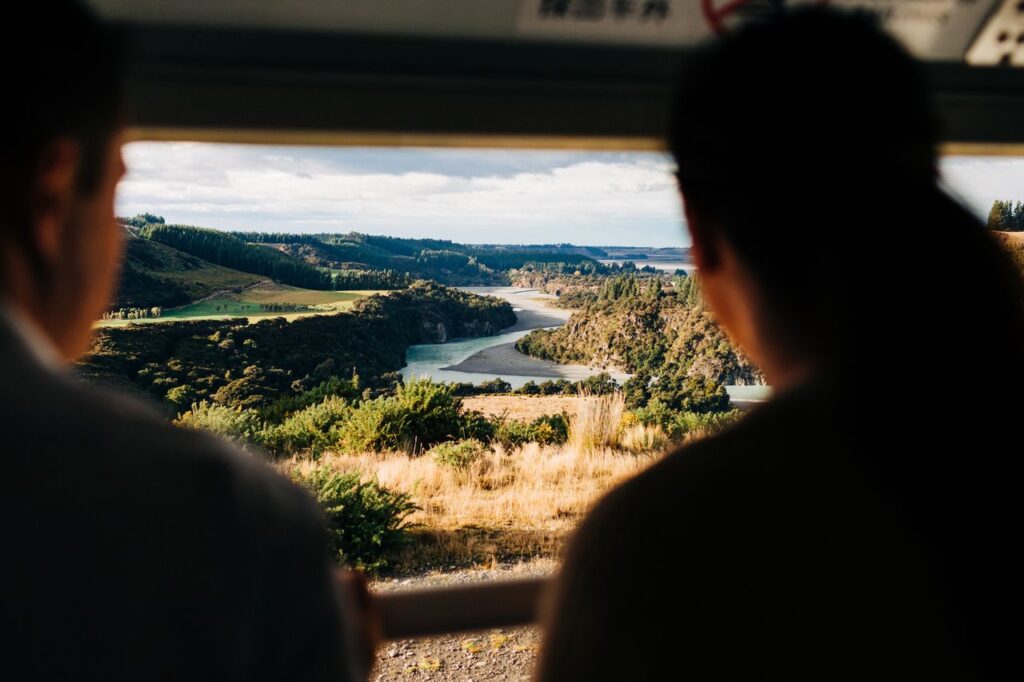
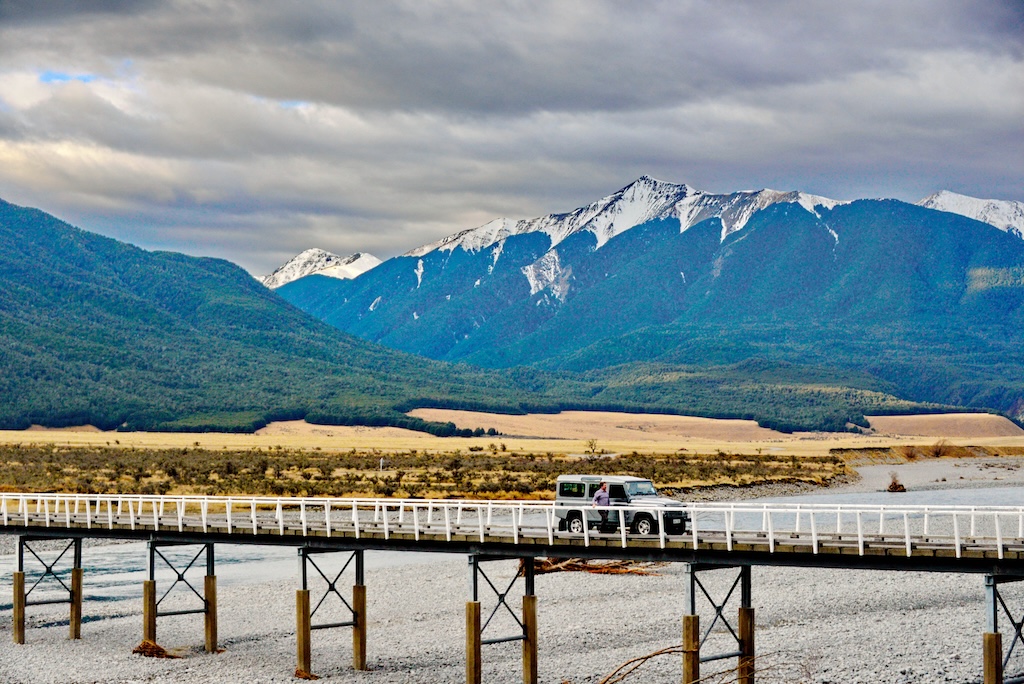
Our route slips between Lake Sarah and Lake Grasmere and then follows the course of the ice-fed Waimakariri River, its mineral-rich waters turquoise and foaming white. We charge into the Waimakariri Gorge (its name means “cold waters” in the Māori language), crossing the braided river on a low-slung bridge that cascades across white-hued river stones and a vivid streak of icy blue before reaching land again.
Not long after, we’re soaring over the formidable Staircase Viaduct, the highest viaduct on the line. It’s standing room only in the observation car as the last cool winds of winter bite at my cheeks and lips and blur my eyes, but the view is completely mesmerising.
There are also chances to step off the train, including at the journey’s summit, the tiny railway town of Arthur’s Pass, where the train halts long enough for a few photos and a stretch of the legs. Arthur’s Pass is home to only a few dozen residents today, but in the past it was an important centre during the gold rush of the 1800s.

Heading west again, we dive into the Otira Tunnel — once the longest tunnel in the British Empire — emerging high above the deep mountain valleys of the dramatic West Coast, passing through ancient rainforests and then thick groves of alpine beech on its descent toward Greymouth.
Into the West Coast: Coal Country, Lake Brunner and Greymouth
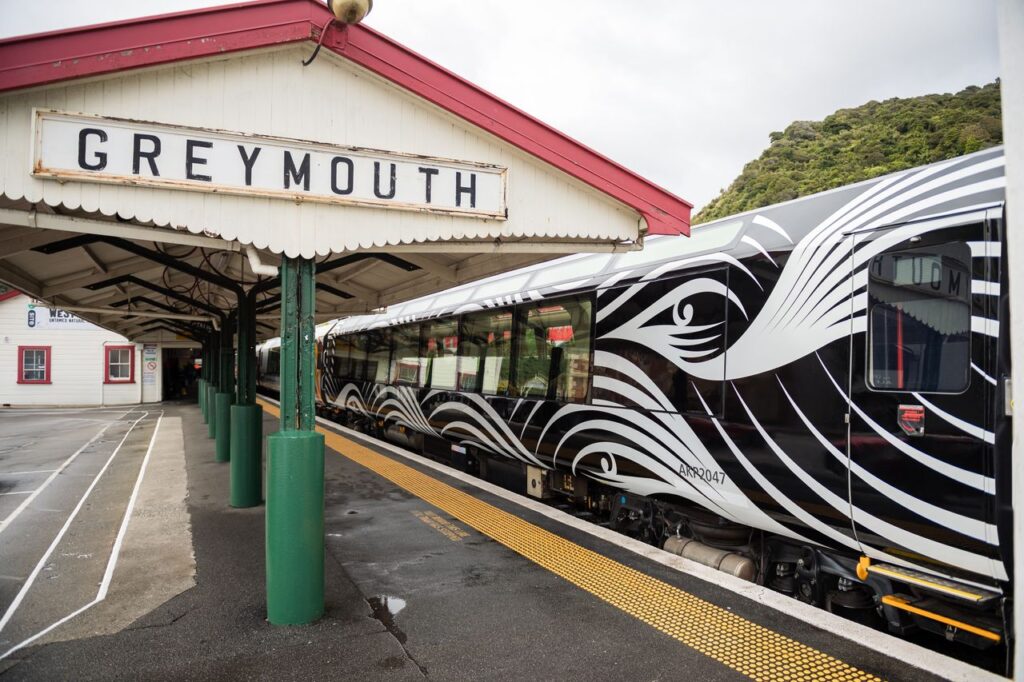
Everything is different on this side of the Southern Alps. It’s wet almost all year round as clouds from the Southern Ocean dump their rain on the climb over the peaks, and the golden plains of Canterbury are replaced by timeless rainforests, towering ferns and low cloud. This is coal country, and the TranzAlpine pauses to let lumbering coal trains cross the peaks bound for the port at Christchurch. Our journey continues as the train curls its way around Lake Brunner on the approach to Greymouth.
Here, many passengers leave the train to head for the glaciers, national parks and coastal communities of the west. In March, the TranzAlpine is a popular way to reach the annual wild food festival at Hokitika. Others, on day trips, lunch on whitebait fritters and Bluff oysters at the local pub before making their way back to the station, where the eastbound train stands ready to start the long, steady climb back into the alpine valleys and ancient peaks of the real Middle Earth.
The TranzAlpine: Your Questions Answered
Planning to ride New Zealand’s TranzAlpine train? Here are the answers to the questions travellers most commonly search before crossing the Southern Alps by rail.
How long is the TranzAlpine train journey?
The TranzAlpine covers 223 kilometres (139 miles) one-way between Christchurch and Greymouth, taking approximately 4 hours and 50 minutes. The train runs daily in both directions year-round, with a reduced four-day-a-week winter schedule typically in place from around mid-May to mid-July.
How many tunnels and viaducts does the TranzAlpine cross?
The route passes through 16 tunnels and crosses four viaducts, the highest of which is the Staircase Viaduct at approximately 75 metres. The longest tunnel is the 8.5-kilometre Otira Tunnel, which was the longest tunnel in the British Empire when it opened in 1923.
How much does a TranzAlpine ticket cost?
Scenic class fares typically range from around NZ$129 to NZ$269 (US$76-159) per adult, one-way, depending on the season and how far in advance you book. Scenic Plus, which includes premium seating and a seasonal food and beverage menu, generally costs roughly double the standard Scenic fare.
Who operates the TranzAlpine train today?
The TranzAlpine is operated by Great Journeys New Zealand, a division of KiwiRail. The service has changed operator names several times since it launched in 1987 — including InterCity Rail, Tranz Scenic and KiwiRail Scenic Journeys — before adopting its current Great Journeys New Zealand branding.
When was the TranzAlpine train launched?
The TranzAlpine was introduced on 22 November 1987, replacing the conventional Christchurch–Greymouth express trains that had run since the 1920s. It proved an immediate success, with patronage roughly doubling in its first year, and won a Tourism New Zealand award and a top-ten world short train journey ranking within its first year of operation.
What is the best time of year to ride the TranzAlpine?
Summer (December to February) offers the longest daylight hours and the best chance of clear alpine views, while winter (June to August) trades some visibility for dramatic snow-capped scenery, as described in this feature. Spring and autumn offer a good middle ground, with fewer crowds than peak summer.
Does the TranzAlpine have an outdoor viewing area?
Yes, the TranzAlpine features an open-air observation carriage, one of the most popular spots on the train for photography, offering unobstructed views (and the open alpine air) as the train crosses viaducts and gorges.
Can I stop off along the TranzAlpine route?
Yes. The train stops at Arthur’s Pass, the highest point on the journey and a popular base for hiking in Arthur’s Pass National Park, as well as at Moana (Lake Brunner) and several smaller stations. Many travellers also break their journey in Greymouth to continue on to the glaciers and coastal towns of the West Coast.
If you’re interesting in a luxury train journey, check out our guide to the world’s best luxury train journeys, the best luxury trains in Australia, and our take on what it’s like to travel through the Peruvian Andes on the Andean Explorer, and through India aboard the magnificent Andean Explorer.
Images: KiwiRail/Nick Walton/Nic Staveley