
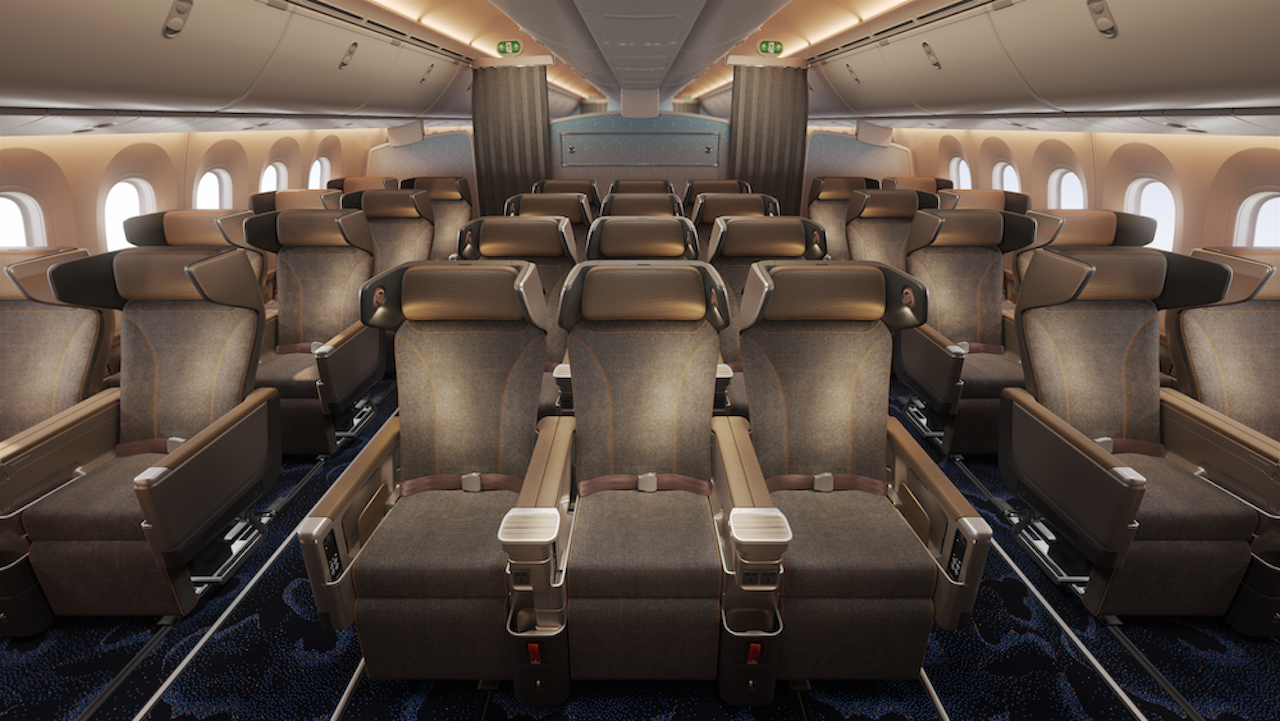

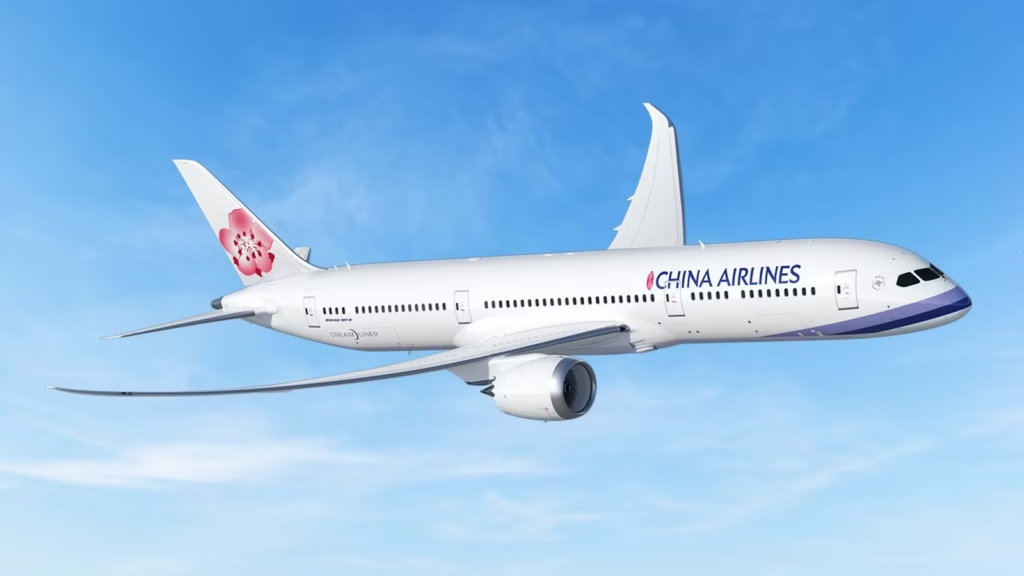
Taiwan’s flag carrier has reimagined mid-cabin flying with a Boeing 787 cabin that draws on the island’s landscapes, culture and craftsmanship — and it shows.
There is a particular frustration familiar to frequent flyers: the yawning gap between economy and business class, in price and in comfort alike. For years, Premium Economy has existed as a tentative compromise — a little more legroom, marginally better food, and not much else. China Airlines, Taiwan’s national carrier, is making a credible case that it can be something far more considered.
Aboard its incoming fleet of Boeing 787 Dreamliners, China Airlines has unveiled a Premium Economy cabin that is, in the truest sense, designed. Not merely configured. Every surface, texture and light source has been informed by a single guiding theme: Starlit Mountain City — an ode to the luminous, layered character of Taiwan’s urban landscape after dark.
The Atmosphere of Jiufen at 35,000 Feet
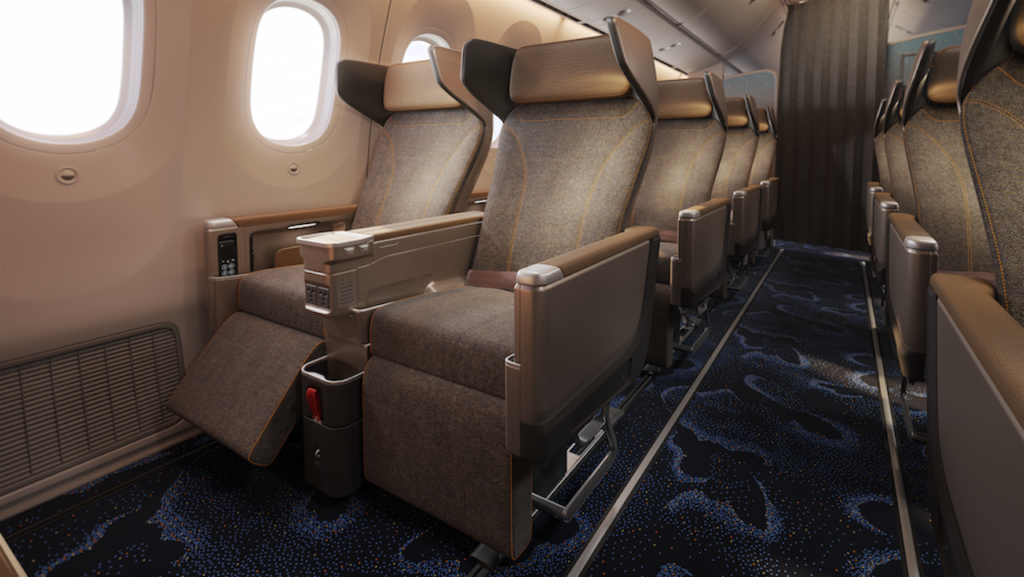
The seat covers, rendered in what the airline calls its “Mountain City Nightscape” palette, shift subtly under ambient lighting — an effect inspired by the hillside town of Jiufen, whose warren of lantern-lit alleyways has captivated visitors for decades. It is a quietly poetic touch, the kind of detail that distinguishes genuine design intent from surface-level branding.
Metallic chrome detailing sits alongside warm leather upholstery, a pairing that manages to feel both contemporary and grounded. The 28 seats are arranged in a 2-3-2 configuration across a dedicated cabin, and each comes with a six-way adjustable headrest fitted with integrated surround shielding — providing a meaningful sense of personal space without the need for a full suite. A leather footrest beneath the seat rounds out the physical comfort proposition on longer routes.
The Details That Matter
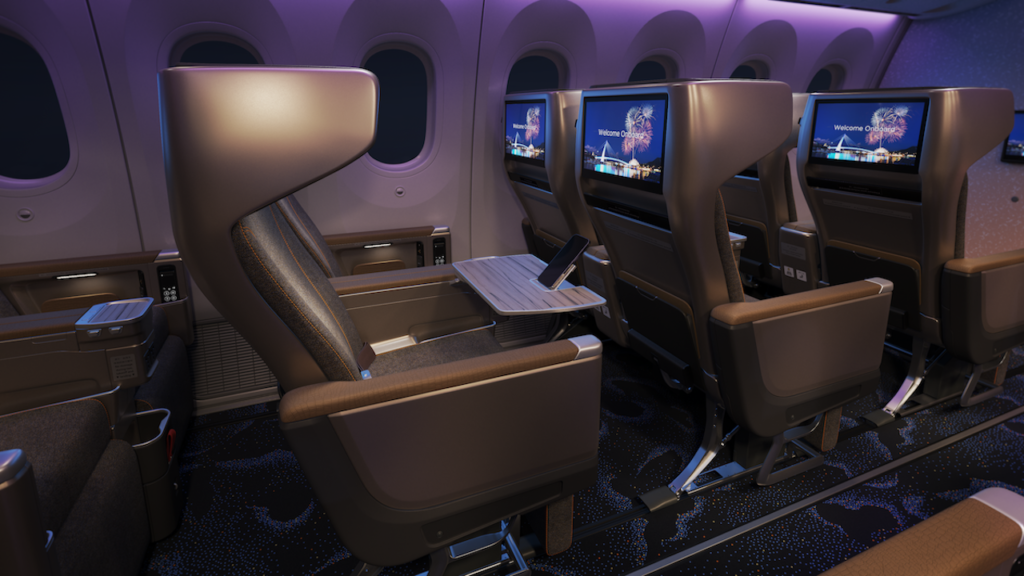
The tray table carries the persimmon wood grain finish used across China Airlines’ fleet — a nod to the persimmon’s cultural resonance in Taiwan as a symbol of good fortune and abundance. It also doubles as a stand for phones and tablets, an unremarkable feature until you consider how rarely airlines get even this right.
Entertainment is delivered via a 15.6-inch 4K display, but the more significant development is Bluetooth connectivity for personal devices — an industry first, the airline says, that allows passengers to pair their own headphones and even use a smartphone or tablet as an entertainment controller. For those who have spent long-haul flights tethered to wired airline headsets, this is a genuine quality-of-life improvement.
A rose-gold reading lamp at each seat completes the aesthetic — small, considered, and in keeping with a cabin that seems to understand the difference between luxury and fussiness.
A Business Class Experience Within Reach
Beyond the hardware, China Airlines has assembled an amenity offering that borrows liberally from the tier above. Complimentary Wi-Fi — with unlimited browsing and messaging at the same service level offered to business class passengers — is included. So are lightweight porcelain utensils, individually packaged napkins, two-toned blankets, slippers and noise-reducing over-ear headphones.
The travel kit, co-developed with Marc Jacobs and Danish skincare and lifestyle house FRAMA, brings a level of curation more commonly associated with front-cabin gifting. It is a collaboration that signals intent: China Airlines is not merely upgrading seats, but reconsidering the entire mid-cabin experience from check-in to touchdown.
For travellers unwilling or unable to pay business class fares on transpacific or European routes, the new China Airlines Premium Economy makes a compelling argument for booking early and booking well.
China Airlines operates services from Taipei Taoyuan International Airport (TPE) to destinations across Europe, North America, Asia and Oceania.


