
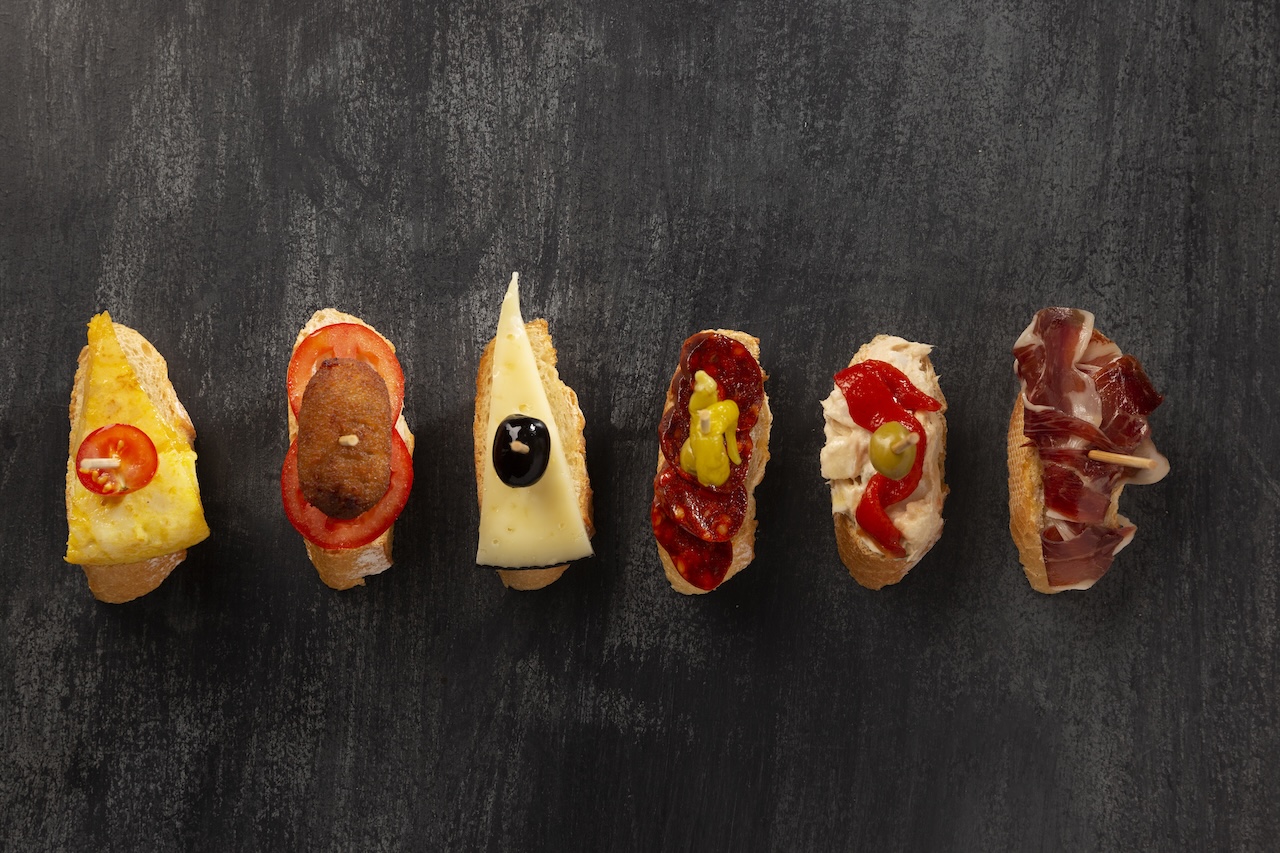

To eat tapas is to sink your teeth into Spain’s most famous tradition, and nowhere does tapas like the capital. Here’s what you need to know and where to go when you’re searching for the best tapas in Madrid.
Few things are more essentially Spanish than tapas. The ritual of gathering at a bar, ordering a cold drink, and sharing small plates of food with friends (always one of my favourite experiences in Spain) is woven into the fabric of daily life across the country — but nowhere does it with quite the same verve, variety and depth of tradition as Madrid.
Spain’s capital is home to some of the oldest tapas bars in the world, century-old taverns where the recipes, the décor and even the ordering system have barely changed in a hundred years. It is also home to a thriving new wave of gastrobars where creative chefs reimagine the format for modern palates. Between the two, there is a tapas experience in Madrid for every appetite.
What Are Tapas?
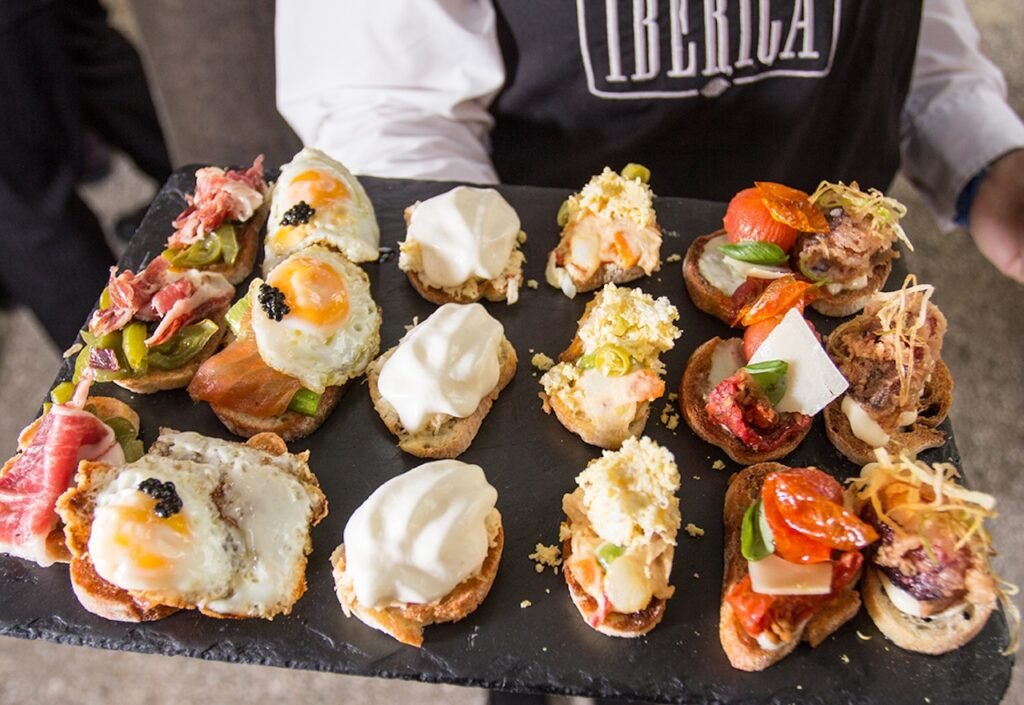
The word tapa means lid or cover, and the most popular origin story holds that tapas began as small snacks placed on top of a glass of wine or sherry to keep out the flies — a slice of bread, a few olives, a curl of jamón.
Whether or not the history is quite that tidy, the practice of eating small, shareable dishes alongside drinks has been central to Spanish social life for centuries. In Madrid specifically, the tradition of the aperitivo — the midday or early-evening drink accompanied by a snack — is so deeply embedded that entire neighbourhoods organise their daily rhythms around it.
Styles and Traditions
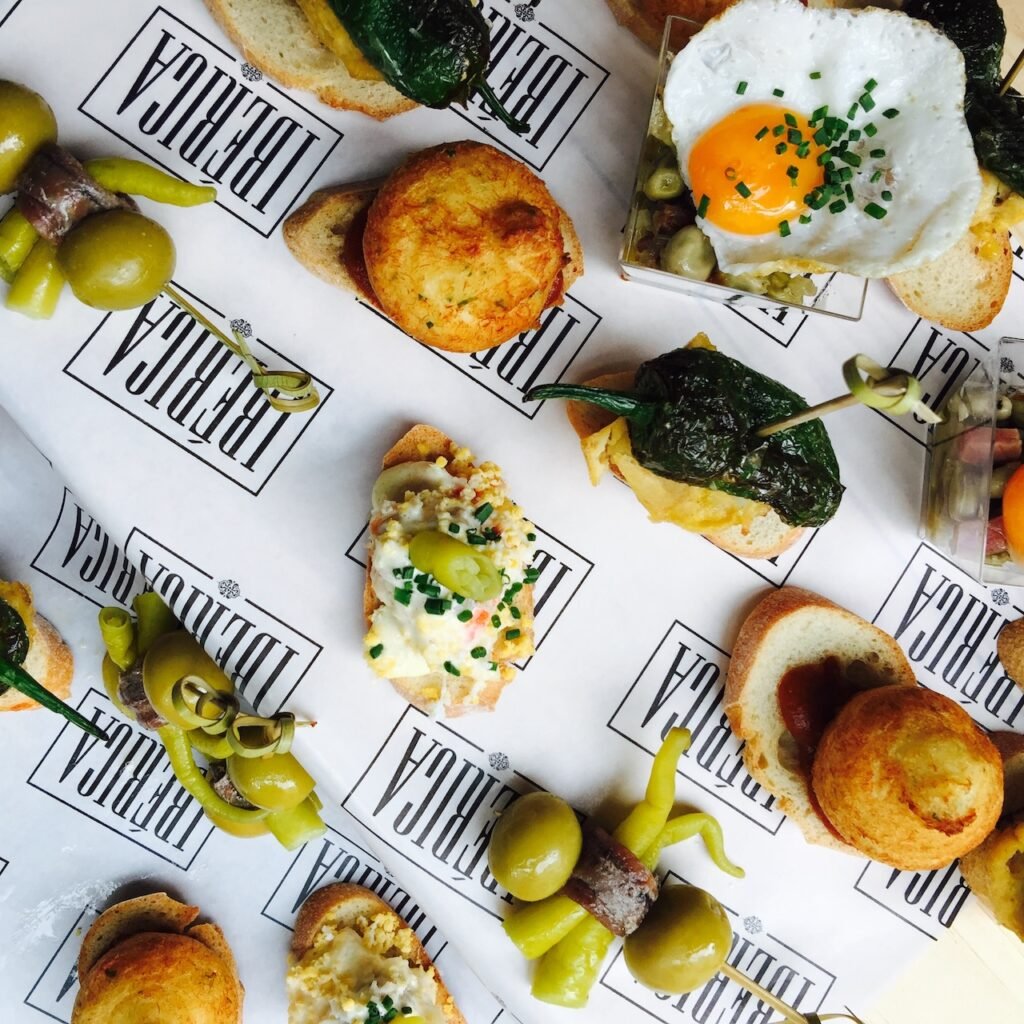
Tapas come in many forms, and understanding the vocabulary helps you order with confidence. A tapa is a small, individual portion sometimes served free with your drink in more traditional bars, particularly outside the city centre. A ración is a larger sharing plate of the same dish, better for a group. A media ración splits the difference.
Pinchos (or pintxos, in the Basque tradition), small bites mounted on bread, often skewered with a cocktail stick, are particularly associated with the bars around Cava Baja and in the Barrio de las Letras (and are still my favourites). The custom of the vermut or vermouth hour — typically between noon and 2 pm on weekends — is an especially important Madrid institution, when locals gather for a glass of house vermouth and a small bite before lunch.
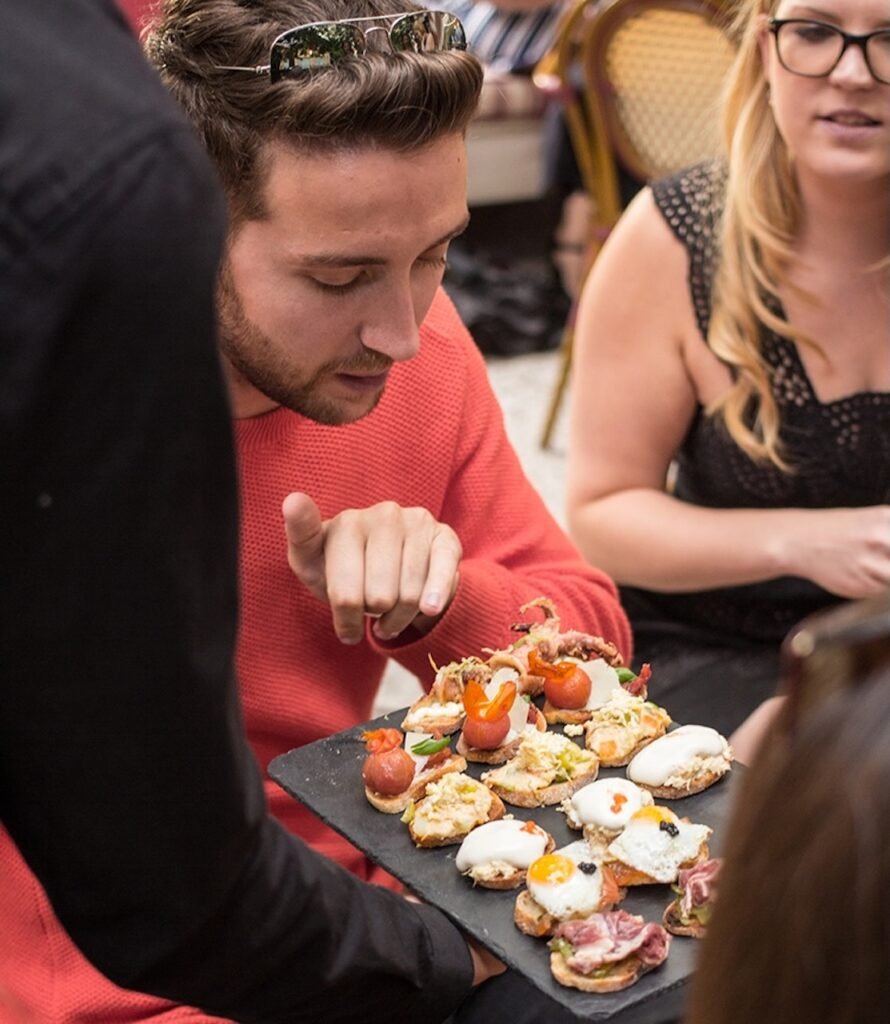
Classic Madrid tapas include gambas al ajillo (prawns sizzling in garlic-infused olive oil in a clay pot), patatas bravas (fried potatoes with spiced tomato sauce and aioli), croquetas de jamón (creamy, breadcrumbed croquettes of cured ham), tortilla española (the thick, slow-set potato omelette that sparks fierce debate about whether it should include onion), bocadillo de calamares (the beloved fried squid roll, a Madrid street-food icon), and callos a la madrileña (a hearty, richly spiced tripe stew that is as Madrileño as it gets).
The Best Areas for Tapas in Madrid
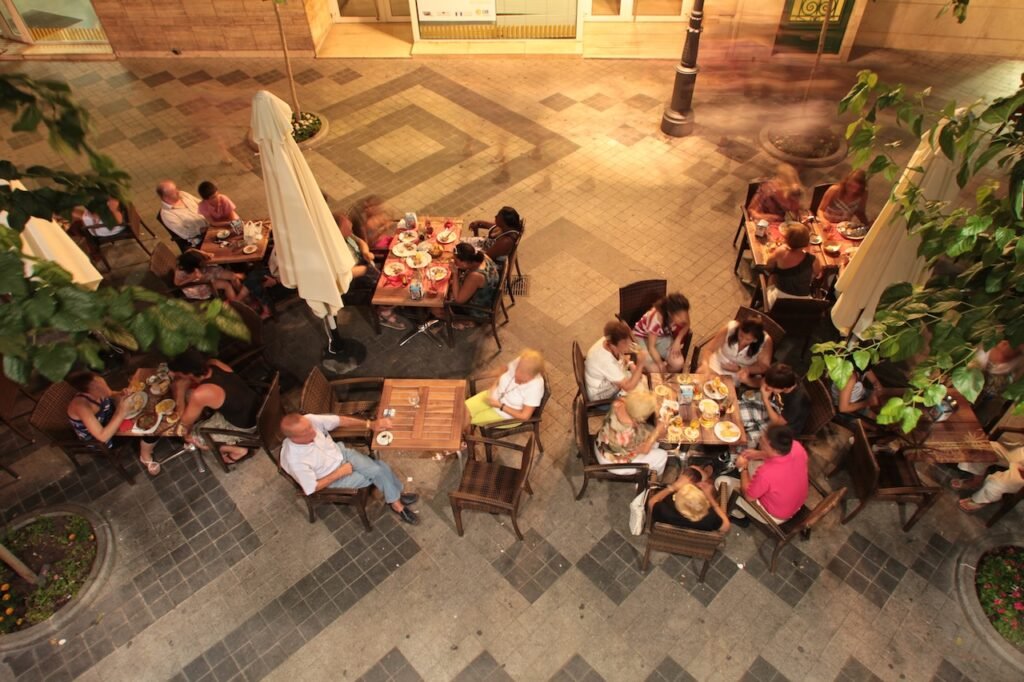
The densest concentration of classic tapas bars is found in La Latina, particularly along Cava Baja and Cava Alta, where old-school taverns and wine bars sit shoulder to shoulder on cobblestoned streets in the Habsburg quarter. The Barrio de las Letras — centred on Plaza de Santa Ana and Calle Huertas — is Madrid’s literary quarter and another stellar tapas neighbourhood, its terraces packed with locals and visitors alike on warm evenings.
For a more contemporary take, I’d suggest you make for Malasaña and Chueca, which offer a proliferation of gastrobars and creative small-plates restaurants. For a local, off-the-tourist-trail experience, the residential neighbourhoods of Chamberí and Lavapiés reward explorers willing to venture beyond the centre.
The 5 Best Tapas Bars in Madrid
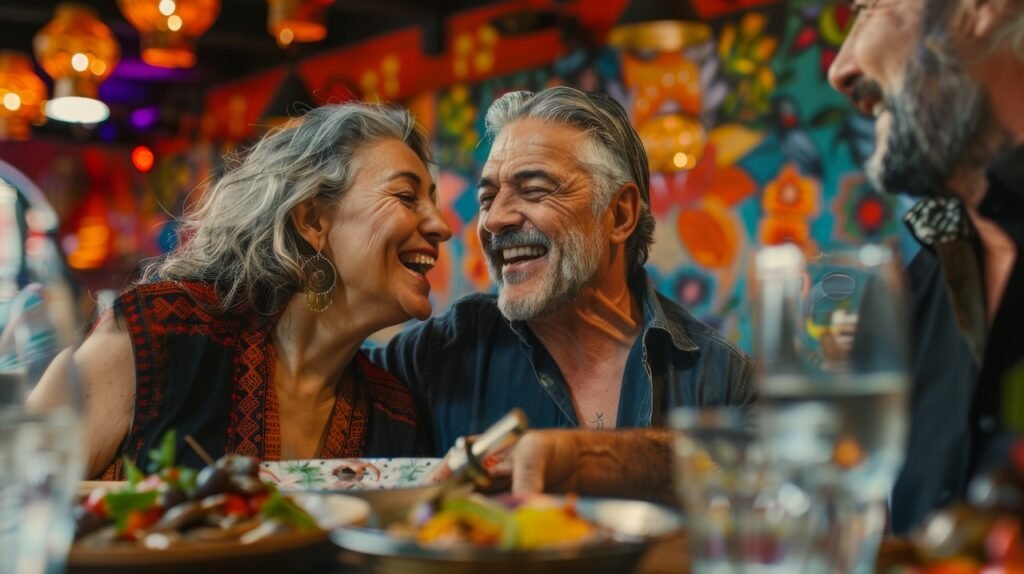
Although you’ll find tapas in every city in Spain and in virtually every corner of Madrid, there are a few top tapas bars for you to keep your eyes out for. Here are our favourites.
Although the culinary style has been exported extensively and can now be found from Nova Scotia to Cape Town, tapas remains the unofficial religion of the Spanish capital, and for good reason — nothing brings people together faster than good food, good wine and good conversation. You’ll find all three in the best tapas bars in Madrid.
1. Casa Labra
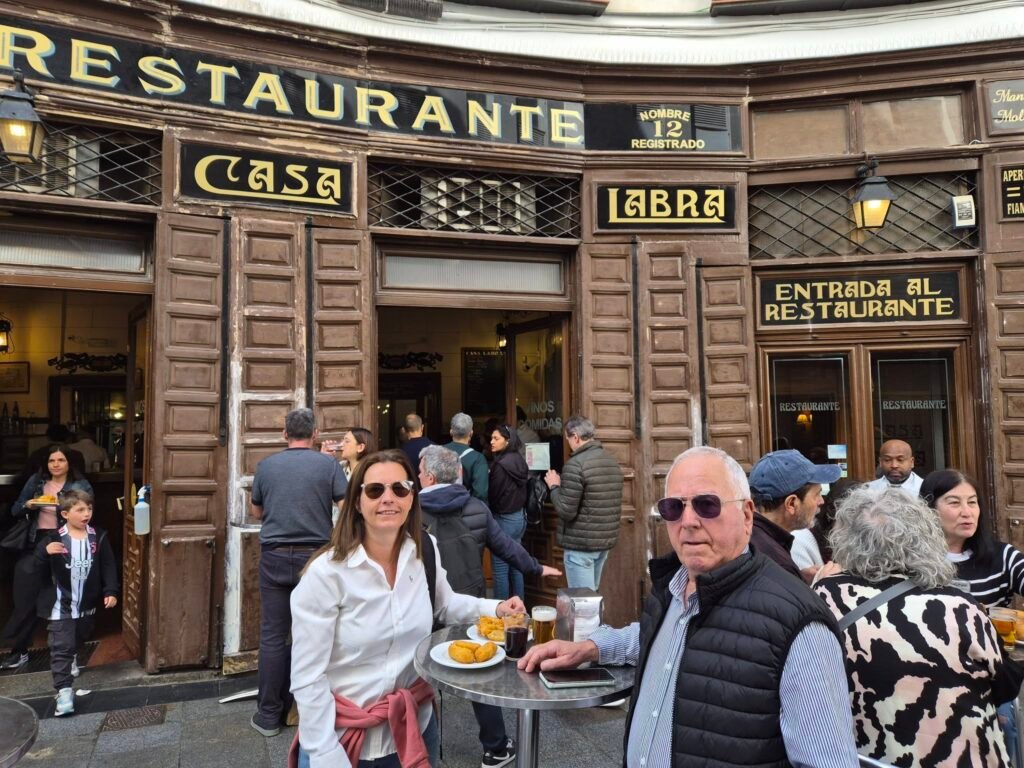
If there is one tapas bar in Madrid that every visitor should seek out, it is Casa Labra — not for the drama of its setting but for the precision of its mission. Founded in 1860 on Calle Tetuán, a narrow street just moments from Puerta del Sol, Casa Labra has been doing exactly one thing for over 160 years and doing it flawlessly: frying salt cod.
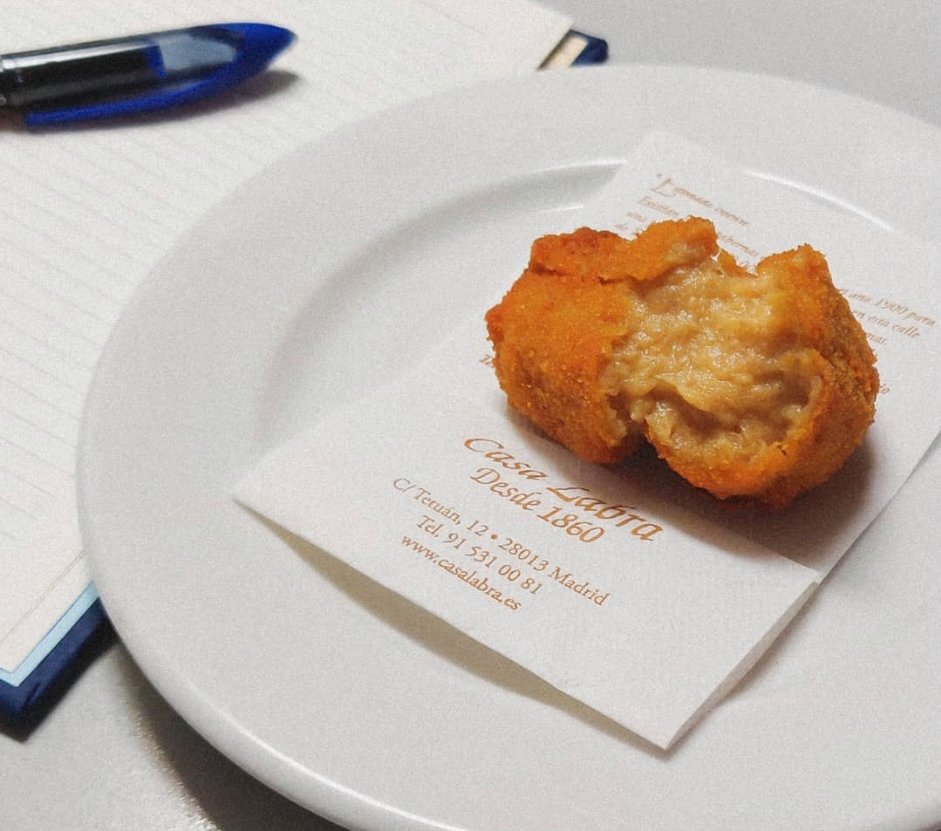
The tajadas de bacalao — thick chunks of salted cod, battered and fried until the crust shatters and the flesh steams — are among the most celebrated tapas in the city, served for a matter of a euro or two and eaten standing up at the bar, ideally with a cold caña (a small draught beer) or a glass of barrel Rioja. The croquetas de bacalao are equally revelatory: creamy, delicate and precise.
The bar itself looks almost entirely as it did in the 19th century, with its curved facade of ornate glazed tiles, its zinc counter worn smooth by generations of elbows, and its walls decorated with graffiti, engravings and sayings from Madrid’s history. A bronze plaque on the exterior commemorates the fact that it was within these walls, on 2 May 1879, that Pablo Iglesias and a group of workers secretly founded the PSOE — Spain’s Socialist Party — making Casa Labra one of the most politically significant bars in Spanish history.
Uniquely, it retains the old custom of separate ordering areas for food and drink, a practice that has vanished everywhere else in the city.
Address: Calle de Tetuán, 12, 28013 Madrid (Metro: Sol, lines 1, 2 and 3).
Opening hours: Monday–Saturday 11.30 am–3.30 pm and 5.30 pm–11 pm. Closed Sundays.
Order: Tajadas de bacalao (battered cod), croquetas de bacalao, tuna banderilla.
2. La Casa del Abuelo
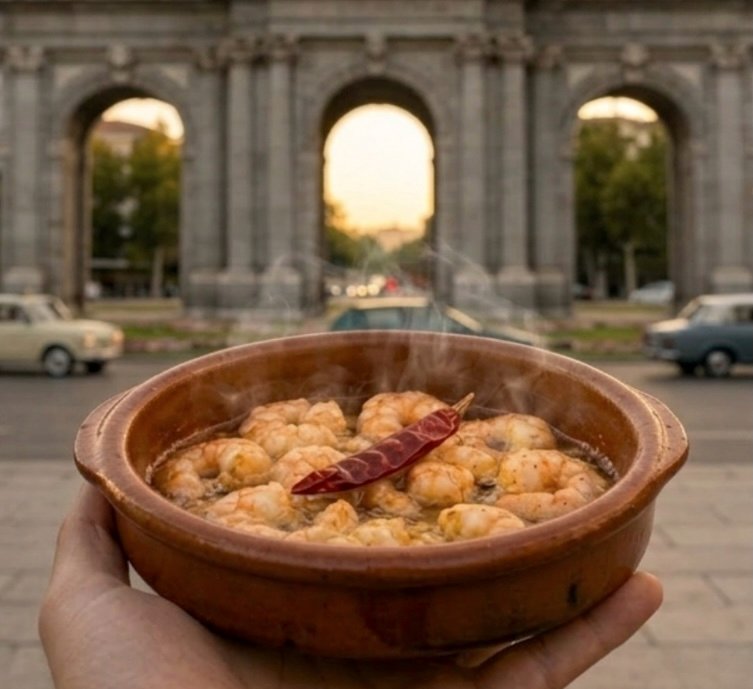
Around the corner from Plaza de Santa Ana on the tiny Calle de la Victoria, La Casa del Abuelo — The Grandfather’s House — has been devoted to one ingredient since 1906: prawns. The original family still runs it, and the essential experience remains unchanged: find a spot at the dark wooden bar or one of the marble-topped tables, order a clay pot of gambas al ajillo (prawns cooked in a furiously bubbling pool of olive oil, garlic and dried chilli), and mop up every last drop of the fiery, fragrant oil with the bread that comes alongside.
The gambas a la plancha — griddled on the flat iron until lightly charred — are, in my opinion, the only serious alternative, and both versions are near-perfect expressions of how Spanish cuisine takes a simple ingredient and elevates it through technique and quality alone.
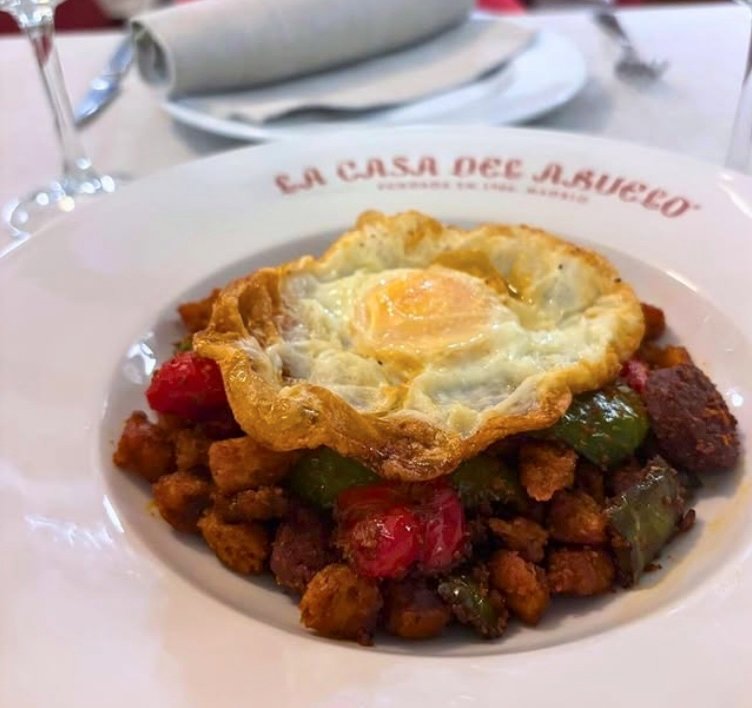
The house wine, known simply as el Abuelo (the grandfather), is a sweet, mellow red that has been poured here for more than a century and pairs remarkably well with the prawns (be careful, they serve liberally!). The bar is small, dark, and usually packed — a sea of laughter, clinking glasses and the intoxicating smell of garlic hitting hot oil. There are now several branches across the city, but the original on Calle de la Victoria is the one that retains the full charm of the institution.
Address: Calle de la Victoria, 12, 28012 Madrid (Metro: Sol, lines 1, 2 and 3).
Opening hours: Monday–Thursday and Sunday noon–midnight; Friday–Saturday noon–2 am.
Order: Gambas al ajillo (garlic prawns), gambas a la plancha (griddled prawns), and house wine, El Abuelo.
3. Mesón del Champiñón
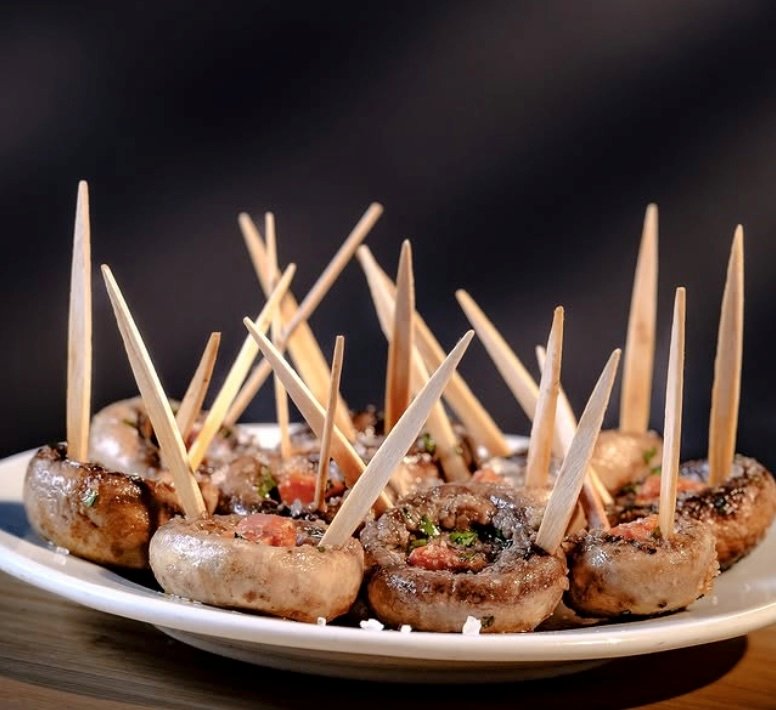
Tucked into the atmospheric Cava de San Miguel — a narrow lane that runs along the north side of Plaza Mayor, lined with some of Madrid’s oldest taverns — Mesón del Champiñón has been devoted to a single ingredient since 1964: mushrooms.
Now, I’ll admit, on the face of it, this isn’t the most glamorous of tapas specialities, but step inside the low-ceilinged, cave-like dining room and one bite of the house dish will put all such reservations to rest. The champiñones a la plancha are grilled button mushrooms stuffed with a combination of diced chorizo, garlic, parsley and a squeeze of lemon — an absurdly simple recipe executed with such care and consistency that they have become one of the most talked-about tapas in the city.
The atmosphere is as much a draw as the food: the bar has a genuine, unpolished castizo character (a Madrid word for something essentially, irreducibly local), with its stone walls, mismatched stools and the occasional live piano performance that draws the whole room into spontaneous song.
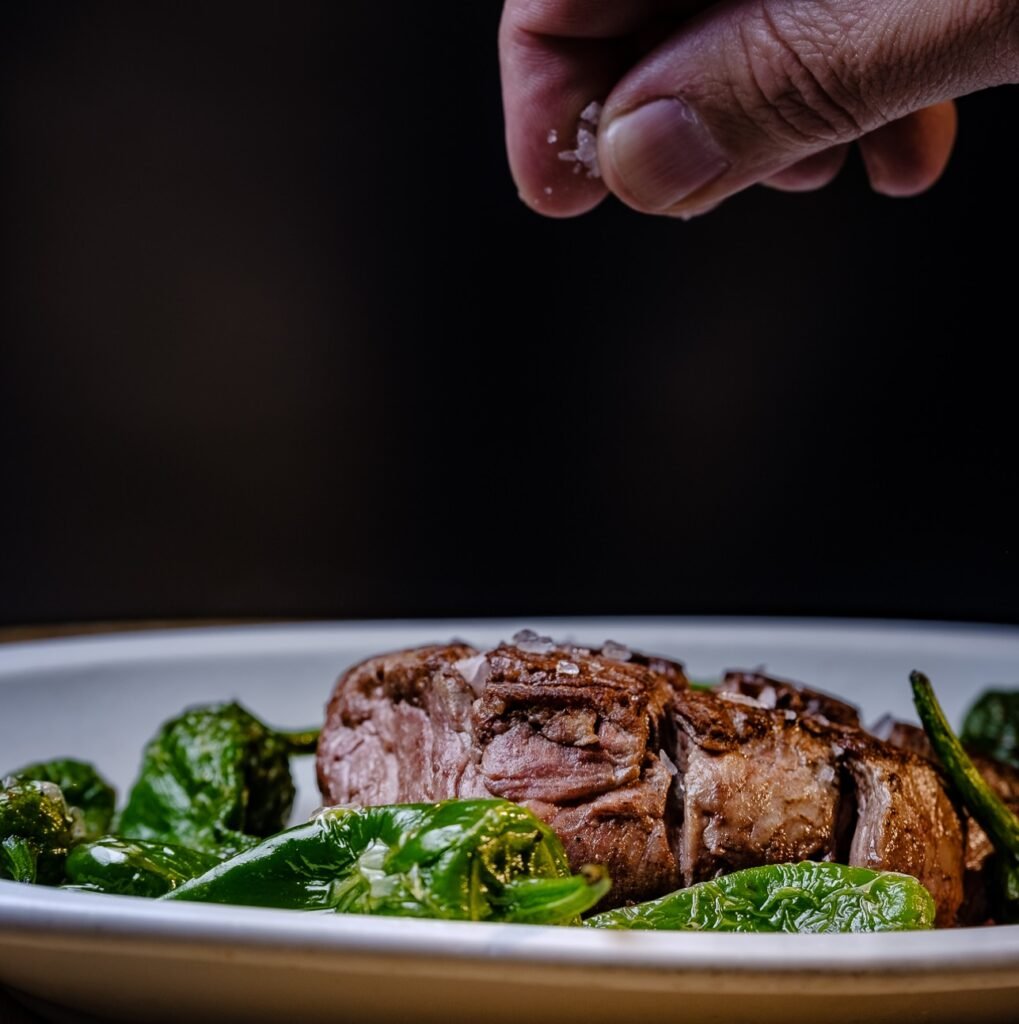
The menu extends beyond mushrooms — the pimientos de Padrón (small green peppers, flash-fried and salted), croquetas and calamares are all worth ordering — but the mushrooms are, and always will be, the reason to come. The maridaje of grilled fungi and cold beer is one of Madrid’s great casual pleasures.
Address: Calle Cava de San Miguel, 17, 28005 Madrid (Metro: Ópera, line 5; or Sol, lines 1, 2 and 3).
Opening hours: Monday–Friday 6 pm–1.30 am; Saturday–Sunday noon–4 pm and 6 pm–1.30 am (later on Friday and Saturday nights).
Order: Champiñones a la plancha (grilled stuffed mushrooms), pimientos de Padrón, house sangria.
4. Cervecería Alemana
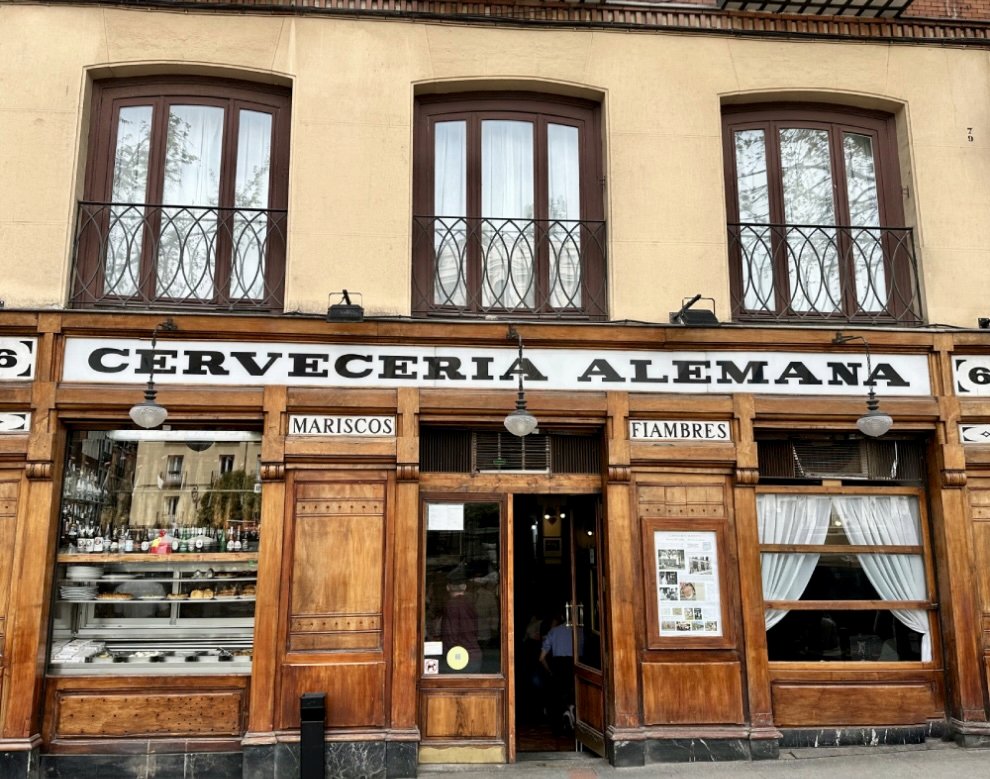
There is a window table at the Cervecería Alemana, on the corner of Plaza de Santa Ana, that Ernest Hemingway is said to have claimed as his own during his visits to Madrid in the 1920s and 30s. Whether or not the story is entirely accurate, the table is now pointed out to almost every visitor, and the bar’s literary associations have become part of its identity.
However, in my humble opinion, Cervecería Alemana deserves its reputation on far more than Hemingway’s ghost: it is one of Madrid’s most beautiful and authentic century-old drinking establishments, founded in 1904 by a group of German industrialists and recognised in 1980 by the Madrid Chamber of Commerce as a Traditional Madrid Establishment.
The interior has barely changed in over a century — dark wood panelling, marble-topped tables, fin-de-siècle paintings and the particular amber light of a bar that was built before electricity was standard.
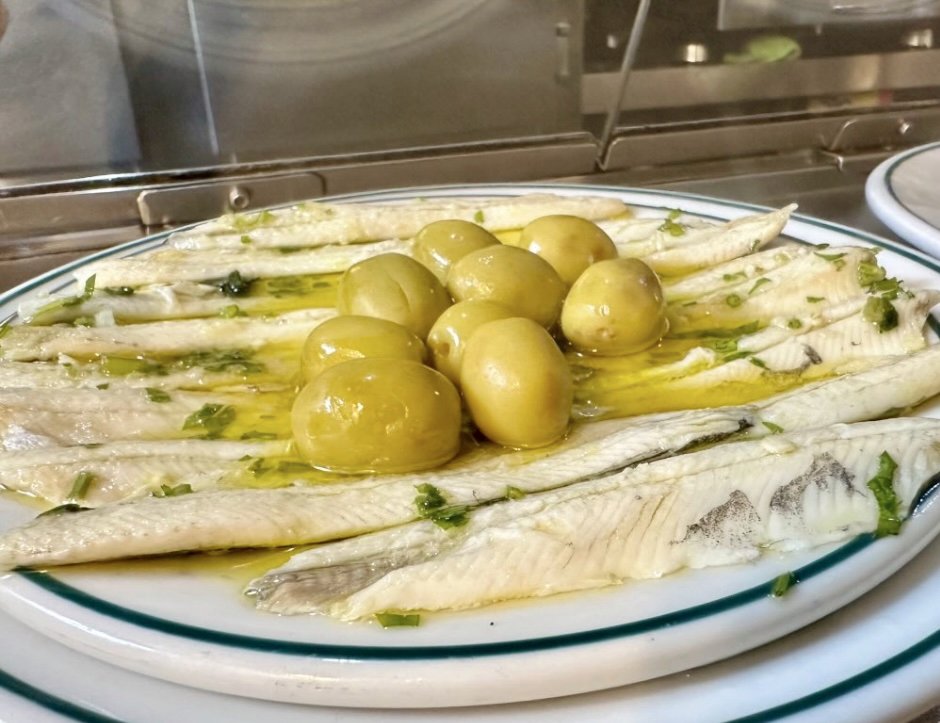
The tapas are reliably excellent rather than spectacular: the anchovies with olives are outstanding, the croquetas well-made, the tortilla española a solid rendition of the classic. But the true reason to come to the Cervecería Alemana is to sit at one of the outdoor tables on the terrace overlooking Plaza de Santa Ana, order a cold caña and a plate of anchovies, and participate in one of the great, unhurried rituals of Madrid social life. On a warm evening, there are few better places to be in the city.
Address: Plaza de Santa Ana, 6, 28012 Madrid (Metro: Sol, lines 1, 2 and 3; or Antón Martín, line 1).
Opening hours: Monday and Wednesday–Thursday 11 am–12.30 am; Friday–Saturday 11 am–2 am; Sunday 11 am–12.30 am. Closed Tuesdays.
Order: I love the anchovies with olives, croquetas, tortilla española, and cold draught beer.
5. Bodega de la Ardosa
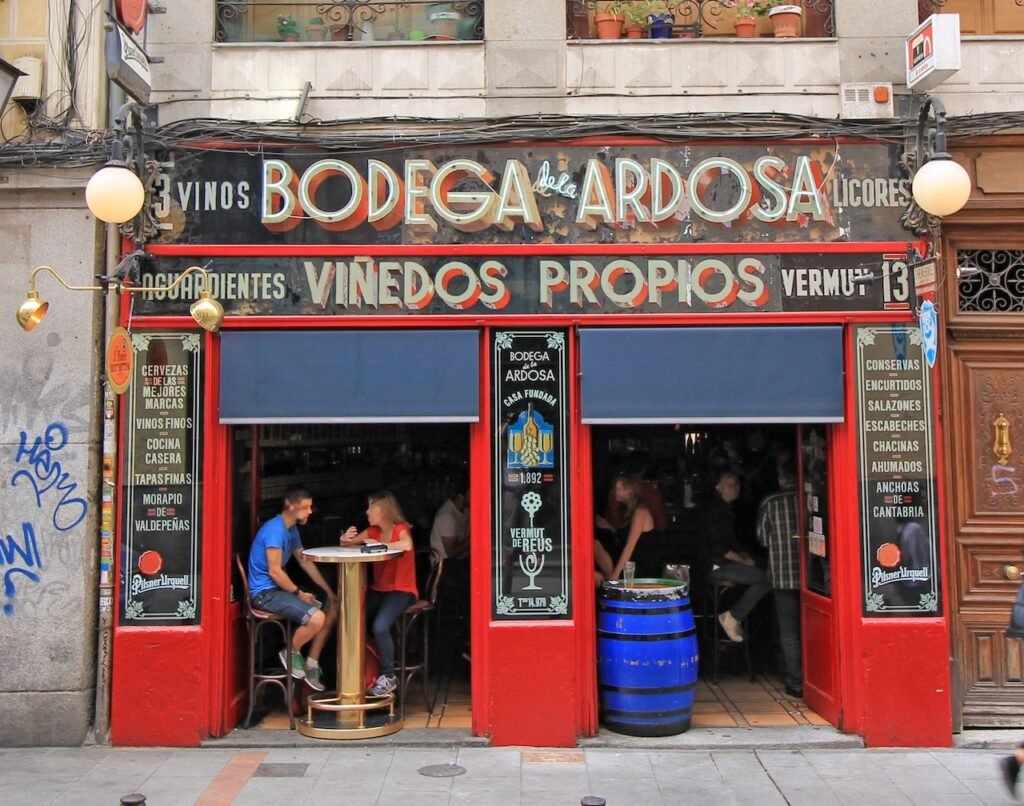
On Calle Colón in the Chamberí neighbourhood, the Bodega de la Ardosa is a tapas bar that looks and feels like a time capsule from the late 19th century — because it essentially is one. The tavern opened in 1892, and its original engraved-glass sign, hand-painted tiles, oak barrels and ceiling hung with jamón legs have been preserved with remarkable fidelity.
Here, on storied ground, the vermouth flows from a tap rather than a bottle, the wines are chalked on a board each day, and the whole atmosphere is of a bar that has absolutely no interest in being fashionable.
What makes the Ardosa exceptional among Madrid’s many historic bars is the quality of its food. The tortilla españolais revered across the city — dense, silky, made to order and deeply flavoured — and is regularly cited as one of the finest in Madrid, a city where the tortilla is taken very seriously indeed. The salmorejo, a thick, chilled Andalusian tomato and garlic soup garnished with hard-boiled egg and jamón, is equally excellent, and the selection of cured meats, cheeses and cold cuts from León is a cut above the average.
Come during the weekend vermut hour for the Ardosa at its most alive — locals propping up the bar, glasses of house vermouth in hand, arguing about football and ordering another round of tortilla.
Address: Calle de Colón, 13, 28004 Madrid (Metro: Alonso Martínez, lines 4, 5 and 10).
Opening hours: Monday–Thursday noon–2 am; Friday–Saturday noon–2.30 am; Sunday noon–2 am.
Order: Tortilla española, salmorejo, cured meats from León, house vermouth on tap.
Frequently Asked Questions About Tapas in Spain
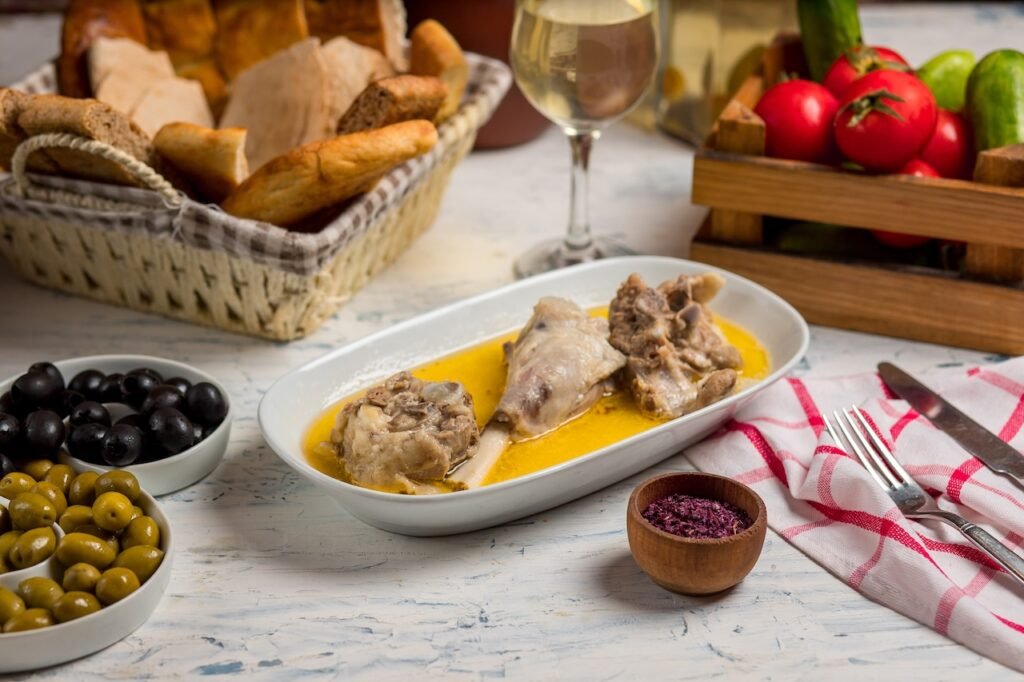
What does “tapas” mean?
This might come as a surprise, but the word tapa literally means lid or cover. The most widely repeated origin story attributes the tradition to the practice of placing a small piece of bread or a slice of jamón over a glass of wine or sherry to keep insects out, and the snack became as important as the drink. Whether or not the etymology is precisely accurate, the name has stuck for centuries.
Are tapas free in Madrid?
Not usually in the city centre, where tapas are priced individually (and to be honest, they’re pretty affordable). The tradition of receiving a free tapa with every drink is more common in cities like Granada, León and Almería than in Madrid. That said, some traditional bars in outer Madrid neighbourhoods still offer a small complimentary bite with your drink, and it is always worth checking. Some of the five-star hotels in Madrid also offer complimentary tapas bar snacks when you order a drink.
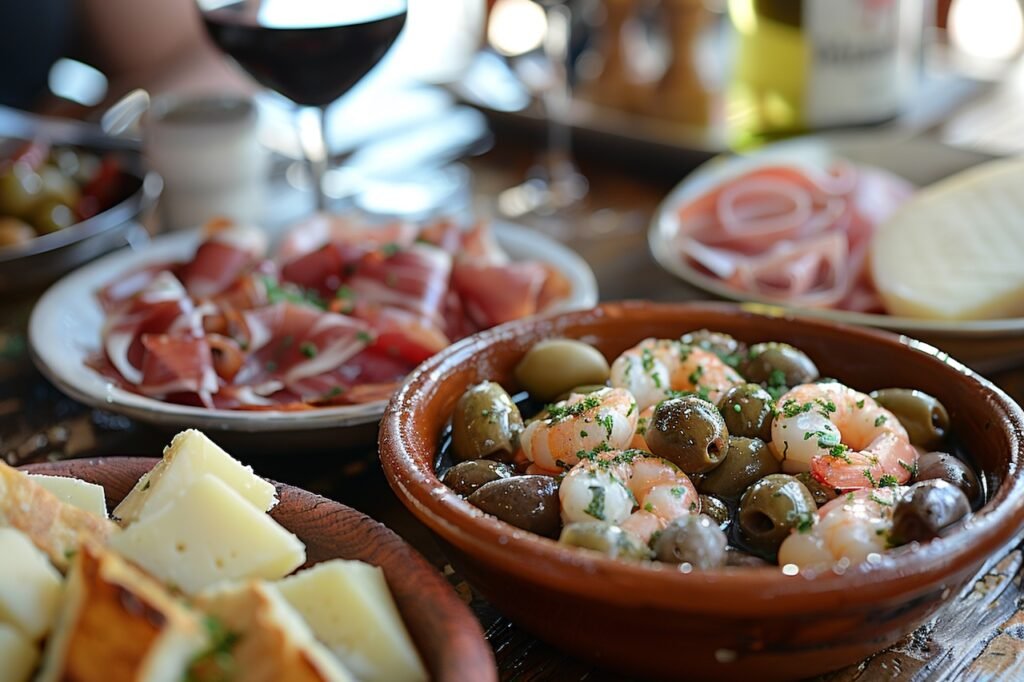
What is the difference between tapas, pinchos and raciones?
A tapa is a small individual portion, typically one or two bites. A ración is a full sharing plate of the same dish, designed for the table. A media ración is a half portion. Pinchos (or pintxos) are small bites typically served on a slice of bread, often secured with a cocktail stick — a tradition that has its roots in the Basque Country but is widely enjoyed across Spain.
What time do people eat tapas in Madrid?
Madrid runs on late hours (and it can take a little getting used to). The aperitivo or vermut hour typically falls between noon and 2 pm — especially on weekends — when locals gather for a drink and a bite before lunch. The evening tapas session begins around 8 pm and runs until 11 pm or later, with bars at their most lively between 9 pm and 11 pm. Arriving before 8 pm on a weekday evening will often mean a quieter, more relaxed experience.
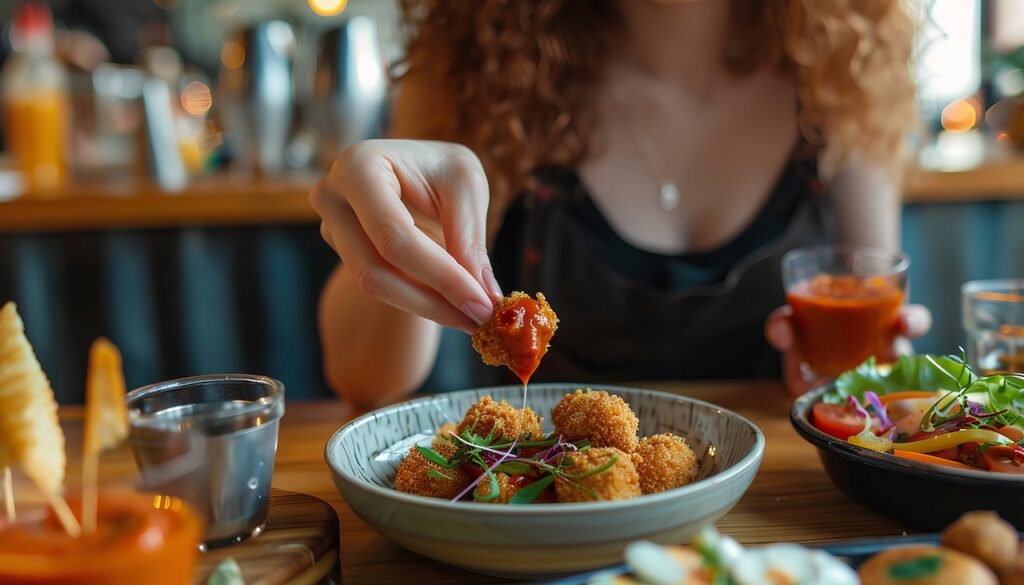
How much do tapas cost in Madrid?
Individual tapas in a traditional bar typically cost between US$2.30 and US$4.60. Sharing raciones range from around US$9.30 to US$20.90, depending on the dish and the neighbourhood, with seafood and jamón ibérico at the higher end. In the city centre, expect to pay a little more than in residential neighbourhoods. A full evening of tapas hopping — two or three stops, drinks included — will typically cost between US$23.30 and US$40.60 per person.
Do I need to book a table at a tapas bar?
At traditional stand-up bars like Casa Labra and La Casa del Abuelo, there are no reservations — you simply arrive, find a spot at the bar and order. At more modern gastrobars and anywhere you plan to visit as a group, booking ahead (especially at weekends) is advisable. If you arrive at a popular bar and find a queue (which is always a good sign, right?), it is generally worth waiting: queues at good tapas bars move quickly.
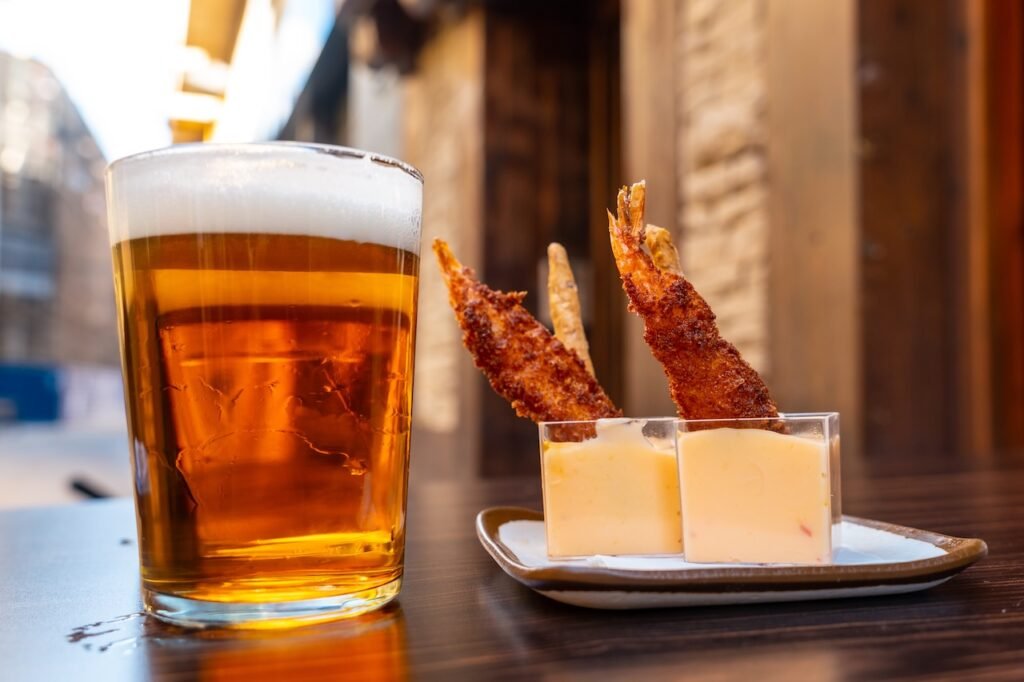
What should I drink with tapas?
A caña (a small 200ml draught beer) is my default choice and pairs well with almost everything. House vermouth (vermut), served over ice with an olive or a slice of orange, is the traditional aperitivo drink and is particularly well suited to the midday session. Rioja (red) and Albariño (white) are the most commonly ordered wines. Tinto de verano — red wine mixed with lemon soda — is a refreshing, lighter alternative in warmer weather.
What are the most typical Madrileño tapas?
Madrid has its own distinct tapas identity, shaped by its landlocked geography and its status as a city of immigrants from every region of Spain. The most specifically madrileño tapas include bocadillo de calamares (the fried squid roll eaten near Plaza Mayor), patatas bravas, callos a la madrileña (spiced tripe stew), cocido madrileño (a hearty chickpea and meat stew, technically a full dish but often sampled in smaller portions), and the tortilla española, whose preparation and precise degree of cuajado (how set the egg is) sparks passionate debate among locals.
Getting There
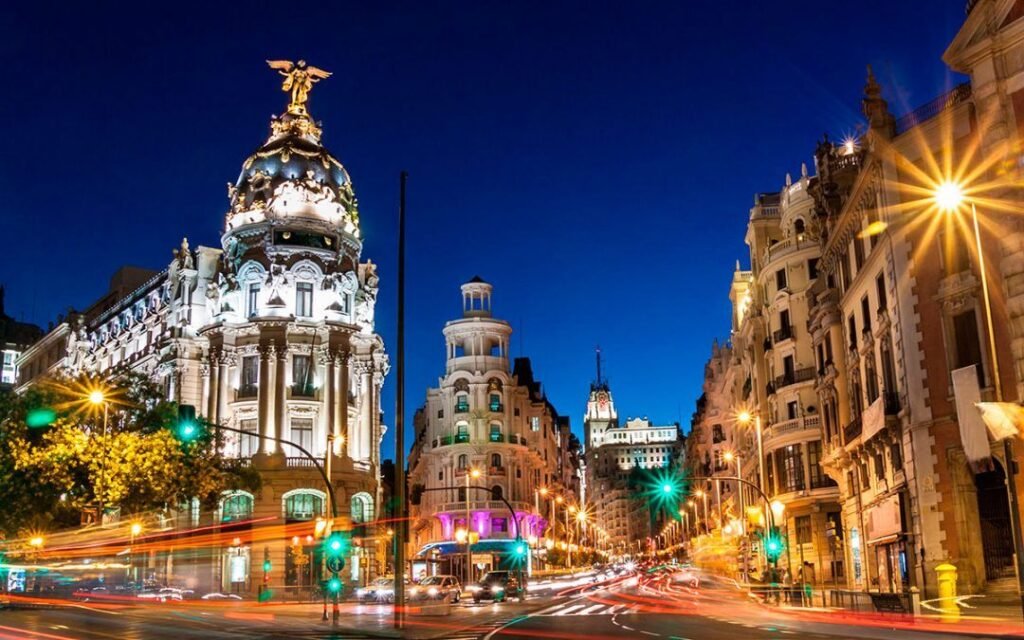
Madrid is served by a range of airlines from across Asia-Pacific, including Cathay Pacific, which recently increased its direct flights between Hong Kong and Madrid, where it links up with Iberia’s network across Europe and South America.
If you’re headed to the Spanish capital in search of authentic tapas, be sure to check out our luxury 48-hour guide to Madrid as well as our curated list of the best luxury hotels in Madrid, both of which are packed with travel essentials. If you’re a foodie on the move, don’t miss our guide to the best markets in Madrid, perfect for those tasty take-homes, and don’t forget to catch sunset at these leading rooftop bars in Madrid.


